Home Blog Page 92

Guyana nears 6000 hotel rooms by year-end – GTA Director

0

… says 15 new hotels expected post 2026

Guyana’s hospitality sector is expected to reach nearly 6000 hotel rooms by the end of 2026, with another 15 hotels projected to come on stream after this year as the country continues to expand its tourism market.
This was revealed by Director of the Guyana Tourism Authority (GTA) Kamrul Baksh during the recently concluded State of the Tourism Industry Conference (SOTIC) 2026. The conference, which was hosted in Guyana, brought together more than 300 delegates from across the Caribbean and beyond for a week of discussions, knowledge-sharing, and collaboration.
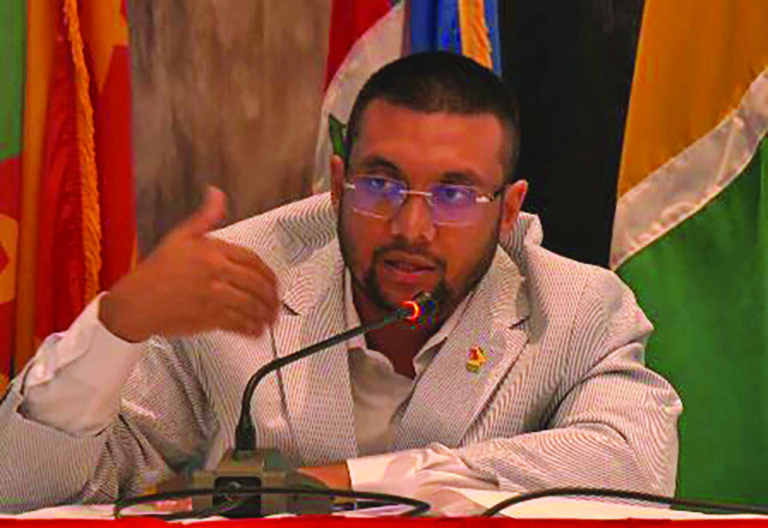
GTA Director Kamrul Baksh

“This here is the growth of the accommodation market, so if we are to accommodate additional visitors, we, of course, need rooms. That’s just simply logical, and as you could see, we had a relatively small number of rooms as of 2020. But because of an aggressive investment strategy by the Government, you can see what the expected number of rooms will be like by the end of 2026 – close to 6000 rooms – and that is pretty strong,” Baksh stated.
He added that another 15 hotels are expected to come online after this year, further expanding the accommodation sector as Guyana develops its Meetings, Incentives, Conferences, and Exhibitions (MICE) market, as well as diaspora travel and leisure tourism.
“We, of course, are expecting an additional 15 hotels to come on board post this year, so that is only going to continue to expand as we build out the MICE market and continue to build out on the diaspora travel and leisure, of course.”
Baksh also highlighted the importance of training and developing the local workforce to meet the demands of the expanding tourism industry. “At the heart of this, Guyana is at a place where we need to upscale our people at scale, and to this point, we have started that investment. We have signaled a great intention to take this to the next level through the establishment of the Hospitality and Tourism Institute, and that is going to be completed by the end of this year so our people could be trained, and they could then go back out into the industry and exercise those skill sets to provide great service delivery. That is something that we think is very, very crucial if we are to expand tourism here in Guyana.”

One of the hotels under construction

He explained that visitors attending conferences or traveling for leisure were increasingly looking for activities and experiences during their stay. “It is very good because when people are coming to the conferences, when they are coming for leisure, or whatever type of travel, they want activities, activities, activities, activities, so that is very, very important,” he said.
Baksh further noted that attracting more airlines would require improvements to airport infrastructure and passenger-handling capacity. He pointed to the Government of Guyana’s investment in a new airport terminal, Terminal Two, which is expected to increase capacity and enable the country to accommodate more airlines.
Looking ahead, he said sustainability, community development, service quality, connectivity and capacity, along with the creation of new tourism products and experiences, would remain central to the sector’s expansion. “Whatever we do in the tourism industry, it has to be for the people. It has to be for the people, it has to be for the community. We want to ensure that the people of Guyana benefit from this, and that is going to be the hallmark, you know, as we expand tourism in the next few years. Quality and service, I spoke about that. Connectivity and capacity, we need to build out that, so that we can grow, and of course, new products and experiences, so that we can give people, you know, more reasons to come to Guyana,” Baksh said.
Only recently, this publication reported that GTA Director Kamrul Baksh highlighted at the 2026 SOTIC event that approximately 80 new tours and experiences had been launched across the country over the past six years. “So, the capacity building is absolutely important. I spoke about diversifying the product portfolio, so within the last, I would say, last six years, we launched about 80 tours, 80 new experiences all across Guyana, from food experiences to adventure products to nature products, in all the major tourism circuits. I think we have done a very good job in partnership with the private sector as well. I want to at this time shout out to the private sector, and kudos for bringing additional experiences to the market,” Baksh said.


Discover more from Guyana Times

Subscribe to get the latest posts sent to your email.


Source: Guyana Times

The whole truth must be told

0

Dear Editor,
The recent passing of Robert Corbin in October 2026 must be commiserated, if only from a basic human standpoint, as death naturally ushers in a period of reflection and pause. However, with his life’s journey now concluded, I feel compelled to offer a few remarks. Why? Because it is vital for the Guyanese public to accurately contextualise Corbin’s legacy, given the significant, albeit diabolical, role he played in our nation’s history.
Predictably, we are currently witnessing a concerted effort by those within the fraternity of the People’s National Congress Reform (PNCR) to “gloss up” his image. They are fiercely promoting the narrative that he was an astute statesman, a great politician, and a man above reproach. Yet, there remains a sombre and undeniable reality concerning his political life. I posit that Corbin’s true legacy is deeply steeped in democratic subversion, a culture of systemic corruption, and an absolute ruthlessness – to the extent that he was heavily implicated in a major rape scandal.
We must recall that Corbin’s career was birthed and nurtured within the oligarchy created by Linden Forbes Sampson Burnham. Rising to become a close confidant and a literal “creation” of Burnham, Corbin actively aided and abetted the consolidation of the PNC dictatorship. He was an indispensable element in the party machinery that engineered the widely condemned and heavily rigged national elections of 1968, 1973, and 1980. Corbin was at the centre of operations throughout this era, contributing significantly to the dismantling of Guyanese democracy and serving as one of Burnham’s primary vanguards in stealing the franchise from citizens for decades.
Between 1966 and 1977, Mr Robert Corbin rose rapidly through the PNC ranks into the upper echelon, becoming the National Chairman of the Young Socialist Movement (YSM) – originally the PNC Youth Organisation. Under Burnham’s dictatorship, this arm was far more than a political brotherhood; it functioned as a paramilitary-style tool, weaponised to enforce party dominance and systematically suppress opposition voices.
During the controversial national elections of 1968, 1973, and 1980, this dreaded youth arm served as a vital instrument for election-day operations. Corbin utilised his administrative prowess and mobilisation fervour to galvanise his youth brigades, leveraging state machinery to insulate the PNC from opposition resistance, while Burnham was left unencumbered to engineer massive and repeated electoral frauds.
Editor, so deeply ingrained was Corbin’s proclivity for rigging that he manifested his “real self” again decades later during the infamous 2009 PNCR Internal Congress. At this juncture, when he was challenged for party leadership by the highly favoured Winston Murray, Corbin resorted to the exact same tyrannical tactics he had mastered in his youth as a Burnham devotee. His camp weaponised massive internal fraud, deliberately blocking genuine party delegates and supporters from entering the Congress to manipulate the voting outcome.
By disenfranchising his own party members to secure power, Corbin deeply fissioned the PNCR, proving his ultimate loyalty had descended to a state of being an obsessive narcissist whose personal survival transcended the democratic process, even within the very group that bred him.
Editor, moving from the ballot boxes, I now come to an even darker chapter of criminality and violence in Corbin’s CV. In the late 1980s, while serving as a senior Government Minister, Corbin was accused of raping a young woman. Predictably, the case was quietly dropped by the Director of Public Prosecutions (DPP) after the complainant reportedly refused to testify. It remains a horrifying testament to how the powerful evaded justice during that era.
To provide vital historical context, the collective opposition at the time – the PPP and the WPA – publicly argued that the lines between the ruling PNC and independent state institutions like the DPP’s office had been deliberately blurred. They accused the Administration of utilising the “reluctant witness” narrative as a convenient legal loophole to quietly shield a sitting Government Minister. Because the DPP possessed absolute, independent constitutional authority to discontinue criminal cases, the opposition could not easily launch a direct legal override in the courts. Instead, leaders like Eusi Kwayana demanded that the DPP file be made public, calling for open transparency on exactly why a subpoena was not issued to compel the complainant to take the stand.
Finally, we must look at the late 1990s and early 2000s, an era when Corbin weaponised aggressive “street politics”. He repeatedly orchestrated disruptive protests and instigated public disorder to deliberately destabilise the Government at a time when democracy had finally been restored to Guyana but still had to be fiercely defended.
As Guyana looks back on his passing, we must remember the complete history – not just the sanitised versions being offered today.
Yours truly,
Raymond Anderson


Discover more from Guyana Times

Subscribe to get the latest posts sent to your email.


Source: Guyana Times

Land of six races

0

Dear Editor,
“One People, One Space, One Destiny”. This caught my attention as I listened to the address of the Prime Minister of Burkina Faso to the General Assembly of the United Nations.
The audience of international delegates, and indeed the world watching on television, was told that those words comprise the motto of the Confederation of Sahel States. The aspiration, in 2016, is to further galvanise the peoples of three African nations belonging to different tribes into thinking and acting as one Confederation.
Guyana’s national motto, like others created in the 1960s as Great Britain relinquished colonial control over countries that today form the Commonwealth of Nations, reflects the coloniser leaving with goodwill and handing over to independent people the stable polity colonial management had created. Guyana’s “One People, One Nation, One Destiny” could easily have been Jamaica’s “Out Of Many, One People”.
Our national motto was not seriously intended to do more than congratulate the United Kingdom for giving the people of the former British Guiana the English language, the English education system, a British-styled civil service, and not driving on the right side of the road – but on the correct side! Unlike the AES’s motto coined in 2026 out of patriotically founded and supported military takeovers, our national motto neither generated nor fostered feelings of unity amongst Guyanese as one people over the past 60 years since independence.
It is good that we have continued to acknowledge we are a land of six races – perhaps not the same six as in 1966 – for our Portuguese-heritage brothers and sisters have never considered themselves White, although they are ever conscious that despite arriving as indentured servants, their European origin and pale skin afforded them many practical social benefits.
Guyana’s sixth race today is, in reality, made up of all who have any racial mix of Guyanese blood. Most “Puddagee” Guyanese are indeed mixed with a drop of some other Guyanese heritage.
To develop onwards and upward from this good starting position towards a true unity of Guyana’s sons and daughters, a unity that goes beyond the inherited British institutions that are an indelible part of what Guyana is, we need to truly aim to see ourselves as one Guyana.
Yes, One Guyana encompasses it all – One People, One Nation, One Destiny – in an easy two-word expression which, when uttered or even thought of, feels like Oneness… like togetherness… like just what it means: One Guyana.
Yours truly,
Ronald Bostwick


Discover more from Guyana Times

Subscribe to get the latest posts sent to your email.


Source: Guyana Times
Robert Corbin and Shared Governance

0

Robert Corbin, who passed on October 4, the day before the anniversary of the return of free and fair elections in Guyana in 1992, played an outsized role as a leader of the PNC in politics before and after that date. By the time I returned in 1988 to represent the NY-founded “Jaguar Committee for Democracy” and join the local struggle for electoral reform, Robert had become indispensable to Desmond Hoyte’s campaign to solidify his leadership of the PNC.
In the 1985 elections, he reprised the role he had played in the party since he was a teenager, working assiduously as a member, then leader, of the party’s youth wing, the YSM, to organize majorities for the PNC in the polls of 1968, then in 1973 and 1980 for Forbes Burnham. Missing a parliamentary seat because of his age in 1968, he was handed one in 1973 and occupied it for over three decades. He earned a formidable reputation as a street politician, feared only slightly less than Hamilton Green, who was eased out of the party after Hoyte calculatedly rewarded Corbin with the Deputy Prime Ministership and transferred several PM responsibilities to him.
Quite conscious by then of the snobbery of Caribbean “doctor politics, “ Corbin entered law school after the PNC’s loss in 1992 and had just finished his first year at Hugh Wooding when he rushed back to mobilize for the Dec 1997 elections. As such, he would again prove his worth as he subsequently helped organize massive rallies for Hoyte’s violent “mo fyaah; slow fyaah” campaign against Janet Jagan’s presidency.
Elected to Parliament in 2000 on the ROAR ticket after the PNC-bludgeoned, truncated PPP term, I became personally acquainted with Robert as a member of the opposition. Evidently knowing that I was vegetarian (then), he sought me out at a meal break with a particular non-meat dish, which served as an icebreaker to many discussions on several of my pet issues – including reforming and “balancing” the Disciplined Forces. To my surprise, he said he agreed with me but advised that the process would have to be carefully crafted and executed. After he became PNC leader, he vigorously supported the establishment of the Disciplined Forces Commission which, inter alia, would recommend that policy and enabling mechanisms.
Mr. Hoyte’s sudden passing in late 2002 resulted in Robert being elected PNC leader the following March – but not without much drama in the party from several quarters including Mr. Hoyte’s protégé Raphael Trotman and Team Alexander. Not long after, I received a call from Lance Carberry saying that Robert wanted a meeting, to which I agreed, at his home in South GT. I found that Robert was convinced – as Mr. Hoyte had become not long before he passed – that shared governance was the vehicle to resolve our political logjam. I informed him, however, that such a vehicle would suffer from disequilibrium in size if individuals or smaller parties were to join the PNC/R and the PPP was out. He agreed to the latter proposition and emphasized subsequently in discussions that there could be no national government without the PPP.
We parted amicably, and very soon the nation heard that talks between President Jagdeo and Opposition Leader Corbin had commenced as the latter downplayed Hoyte’s “slow fyaah; mo fyaah” strategy. This precipitated greater consternation from within and without the PNC. Sitting next to WPA’s Shiela Holder in Parliament, one day she burst out that “this is not why we put Corbin there…he was supposed to ‘ manners ‘ the PPP.”
Robert believed that Jagdeo would arrive at a modus vivendi with him at power sharing and acted accordingly. He also diligently had discussions at Watercress with the smaller opposition parties like ROAR and WPA. However, sitting next to him in early 2006 at Sash Sawh ‘s funeral at Castellani House, when Jagdeo pointedly mentioned the “intellectual authors” of Sash’s murder, Robert angrily exclaimed, “If I were the old Robert Corbin…!” There was no agreement between them and with Trotman’s AFC siphoning off five seats from Corbin’s PNC/R One Guyana in the 2006 elections, he faced more strident leadership challenges.
Robert stuck to his guns about the PNC needing an accommodative image and by 2010 announced he would not be their presidential candidate for the upcoming elections. He riled party leaders like Aubrey Norton when he engineered APNU’s formation and David Granger’s presidential candidacy. Ironically, he was peripheralized in the new APNU-AFC government, and Granger destroyed his inclusive vision by also sidelining his smaller coalition partners.
Robert Corbin demonstrated it is possible for political leaders to evolve and rise to the needs of their country.
RIP Robert.


Discover more from Guyana Times

Subscribe to get the latest posts sent to your email.


Source: Guyana Times
Whither…

0

…the UN?
Now, Dear Readers, don’t assume that because our Carolyn’s chances of becoming the next UN Secretary General are now slim to none, your Eyewitness has become stricken with the sour grapes’ syndrome!! It’s just that he stumbled across this piece that claims the UN’s approaching its breaking point – after surviving the strain of proclaiming equality among nations while reserving vetoes for five countries to do WHATEVER they want!!
The fella’s proposed escape route is a new global forum built around BRICS, drawing on the Community of Portuguese Language Countries (CPLC) – which your Eyewitness only learns about now!! – as a model of sovereign equality!! No permanent aristocracy; no exclusive veto club – and rules that might even apply to the people writing them!! Steady on…utopia??  We mustn’t frighten the international community with such revolutionary notions – but what has CPLC ever done??
To his credit, the fella identifies the exquisite obstacle to reform – changing the UN Charter requires the consent of the same five veto powers!! It’s like asking the old sugar planters to chair the committee on abolishing slavery!! What’s in it for them?? But we on the outside right now know that change has gotta come, and the only question is how!! Maybe if we put powerful states around a different table, they may discover why THEIR particular emergency requires everyone else’s understanding?? And so, include us??
The acid test would come when the proposed organisation had to discipline one of its heavyweight sponsors. Would equality survive the telephone call from the capital that pays the bills? Or would the secretariat suddenly discover the “virtues” of patience, dialogue and a further consultative process? Then there’s the dilemma of consensus, where if you give everybody the right to block a decision, you’ve created democratised obstruction!! Like with our local shared-government stalwarts’ utopia!!
Your Eyewitness’s prognosis is less a sudden funeral than a prolonged loss of authority. The danger is an institution that keeps its name, ceremonies and splendid vocabulary – while governments increasingly conduct the consequential business elsewhere!! For small countries like us, that’s gonna be no laughing matter, so we’ve got every reason to demand a stronger international system – but every reason to examine the replacement before applauding the demolition!! Small states need rules that restrain their neighbours, rather than assurances that the next collection of powerful friends are gonna be nicer!!
The fella’s right to challenge the lassitude surrounding reform, but the successor must answer the question the UN keeps dodging – what happens when the powerful refuse to comply? Until someone supplies a convincing answer, we risk replacing one diplomatic talk shop with another – even with a fresh logo, an inspiring declaration and excellent catering!!
So maybe it’s best Caroline’s being bypassed??

…Judicial forbearance
A cornered rat’s primary instinct is to run and hide, but if no escape route exists, it’s gonna do whatever it can do to escape – jump, lunge, or bite whatever is blocking its path!! Your Eyewitness – who’s had some experience with rats! – has even seen them puff up their fur, hiss, screech, or squeak to look larger and warn off a threat!!
Your Eyewitness was spurred into this meditation on cornered rats when he saw the latest move by Sanction Man’s well-paid troglodytes over social media. Realising their day of judgement is literally nigh, when he and his Daady are gonna face the Appellate Court – consisting of Chancellor George and two other justices – their hissing and screeching have reached a new, desperate, sickening crescendo!!
Imagine because one of the authoritative rulings (King) used as precedence in bias and extradition cases in our country was written by a previous Appellate Court with the present Chancellor’s father as then Chancellor – she should step aside!!
Hiss!! Hiss!! Squeak!!

…Sanctimonious Gangster’s ingratitude
At the passing of Robert Corbin – who literally made him President – the sanctimonious gangster gushed at the departed man’s statesmanship. But not a word because he slighted Corbin with no appointment after he became President!!


Discover more from Guyana Times

Subscribe to get the latest posts sent to your email.


Source: Guyana Times
FOR OUR HEALTH’S SAKE

0

By Ryhaan Shah

President Dr Irfaan Ali recently urged all Guyanese to set aside at least 30 minutes each day for physical activity as concerns continue to be raised about cardiovascular disease and other non-communicable diseases affecting the population.
Through these weekly columns, we have been learning about the absolute importance and necessity of movement and exercise if we are to stay healthy, even as we grow older. The President is right to urge everyone – young and old – to incorporate exercise into their daily routine.
Now, many of us may not be able to manage 30 minutes of exercise every day, but as we have been learning, doing as many minutes as you can will help lower the risk of developing serious and chronic illnesses.
If you are housebound and using a walker or cane, you can still do some walking for as many minutes as you are comfortable with. As we age, changes in our balance, strength, vision, hearing, and medication use can all increase the likelihood of slipping and falling.
While falls are not a normal part of ageing, they remain one of the leading causes of injury among the elderly, and injuries to arms, legs, hips, and our back can create serious issues for our mobility and our independence.
There are several precautionary measures we can take to ward off the dangers of falling, starting with our home environment. Family members can help ensure that there are clear pathways to help us move about safely and comfortably.
Walkways, stairs, and hallways should all be free of clutter, as rugs and carpets are the most common items that cause trips and slips. They should either be secured or removed completely.
Furniture placed too close together forces tight turns and awkward movements. You can rearrange rooms to create wide, direct paths for the most-used routes, such as from the kitchen to the living room area.
Lighting should also be clear and bright, and switches should be easy to reach and turn on. Grab bars should be a must in areas like bathrooms, but they can also be used in other parts of the home to ensure proper safety.
While our footwear can be stylish, they should also fit well and have soles with good grips. Loose-fitting slippers or very high heels would not be sensible options as we grow older and become unsteady on our feet.
If any medications or combinations of medications are causing dizziness or low blood pressure, these should be reviewed with your doctor to ensure you feel safer and steadier while moving about.
Head of Internal Medicine and Cardiology at the Georgetown Public Hospital Corporation, Dr Mahendra Carpen, also recently raised concerns over what he described as an apparent increase in sudden deaths among young adults in Guyana. He said cardiovascular disease was a leading cause and noted that individuals in their 20s to 40s have been dying unexpectedly, including during sleep or while engaged in routine activities.
He warned about the risks of severe uncontrolled hypertension, diabetes, high cholesterol, and smoking. He also urged people experiencing symptoms such as chest pain, shortness of breath, palpitations, or light-headedness to seek medical evaluation and encouraged everyone to get regular health checks.
The President has also called for a holistic approach to nutrition and made a case for healthier eating habits and for health education to be added to the school curriculum. At the same time, Health Minister Dr Frank Anthony highlighted unhealthy diets, consumption of sugar-sweetened beverages, smoking, alcohol consumption, and physical inactivity as factors contributing to preventable illness and disease.
Over the past months, these columns have underscored the importance of proper nutrition and exercise for the elderly. Thus, the call from the President and leading health care officials adds critical voices to the national health programme as we all try to improve our health and lower our risk of developing life-threatening illnesses such as stroke, heart attack, and type 2 diabetes.
The President has also announced plans for the government to work with religious communities on public health and primary healthcare initiatives. Such a programme would include health checks, counselling, and efforts to change lifestyles and living habits for the better.
“Give your body the energy, give your body the fuel, give your body the chance to be victorious. Give your body the chance to be optimal. Let us do this together, Guyana,” President Ali urged. It is an important call coming from our Head of State, and we should heed it for the national good and for our health’s sake.


Discover more from Guyana Times

Subscribe to get the latest posts sent to your email.


Source: Guyana Times
Guyana’s full squad set for  road race after John, Newton open campaign

0

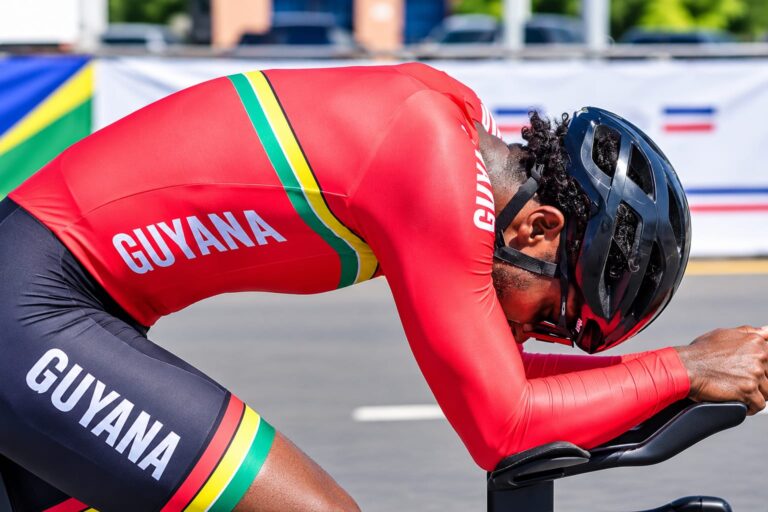
Guyana’s five cyclists will turn their attention to today’s road race at the Caribbean Cycling Union (CCU) Elite and Under-23 Championships in the Dominican Republic after Briton John and Aaron Newton completed their time-trial assignments yesterday.

John placed sixth in the Elite category, while Newton finished fifth in the Under-23 division. They will be joined by Ajani Cutting, Segun Hubbard and Andre Greene for the October 11 road race.

John clocked 46 minutes, 31.001 seconds in the individual time trial, putting him eighth in the combined standings. Newton’s time of 49 minutes, 9.792 seconds placed him 14th overall and fifth among the 11 Under-23 finishers.

Bermuda secured the top two Elite positions through Kaden Luke Hopkins and Nicholas Narraway. Hopkins won in 42 minutes, 3.239 seconds, while Narraway recorded 43 minutes, 1.017 seconds. Puerto Rico’s Christopher Morales Fontán completed the podium in 43 minutes, 1.956 seconds.

For Newton, Saturday’s result came a year after he earned Under-23 time-trial silver at the Caribbean Championships in Belize.

Today’s race will bring Guyana’s national road-race champions into action together. John holds the Elite title, while Cutting is the reigning Under-23 champion.

Greene secured his place in the final team after Alexis Mendes was ruled out through injury following the Tour de Bim in Barbados.

Cutting, Greene, Hubbard and Newton departed Guyana on Thursday to link up with John, who was travelling from the United States. The squad now has its full complement available for the road-race challenge.


Source: Kiskadee Watch

GFF/Elite League U17 Youth Ensemble: Vasconcellos double powers Santos past Police in six-goal clash

0

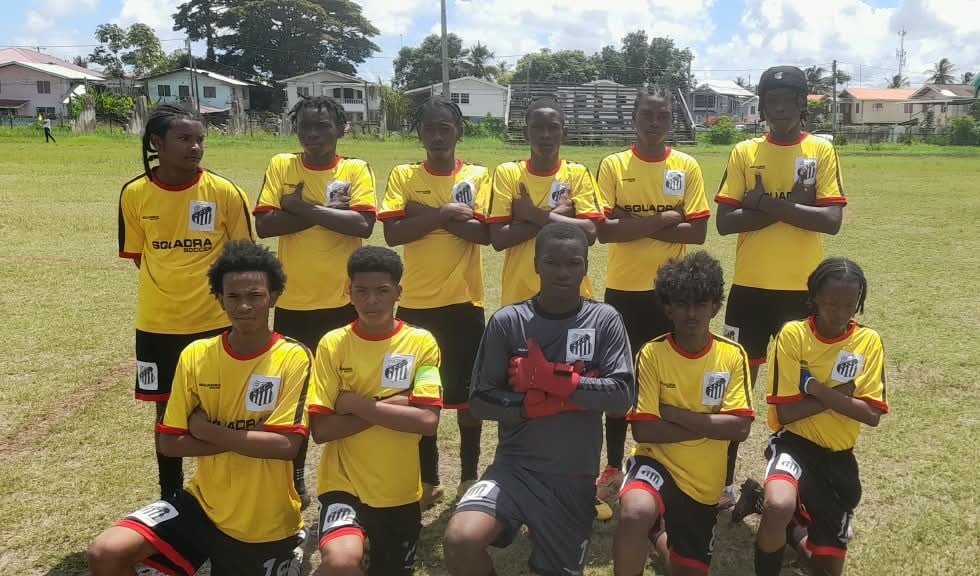
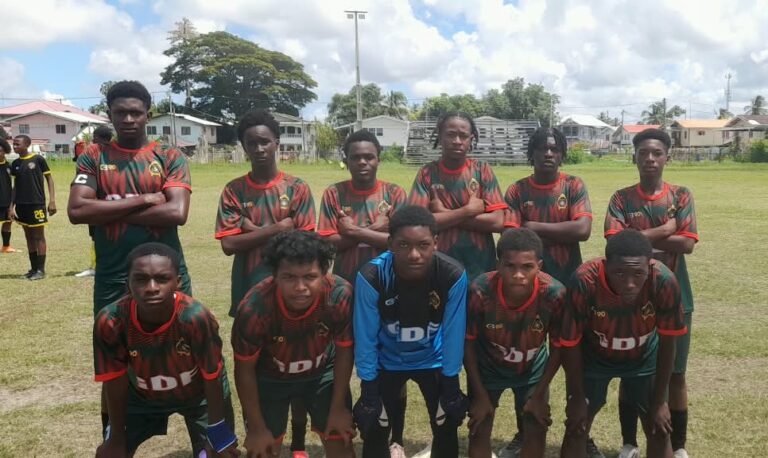
Aaron Vasconcellos scored twice as Santos’ four-goal first half paved the way for a 4–2 victory over Police in the Guyana Football Federation (GFF) Elite League U17 Ensemble competition at the Tucville Ground yesterday.

Tyrese Johnson also netted a double for Police, but his efforts were not enough to overturn Santos’ early advantage. Guyana Defence Force (GDF) were also winners in the October 10 action, beating Western Tigers 3–0.

The victorious Santos team

Santos needed just two minutes to get off the mark through Alex Bentick. Vasconcellos then struck in the 13th minute to extend the lead.

Police moved back within one goal when Johnson scored in the 22nd minute. However, Santos restored their two-goal cushion through Vasconcellos in the 31st before Cosmic Thomas made it 4–1 in the 36th.

That halftime advantage proved decisive. Johnson found the net again in the 51st minute, but Santos conceded no further goals and secured the win.

GDF’s success came through goals from Daymetrian Budhan, Brandon Parks and Ravon Vannooten, with their scoring spread across both halves.

Budhan broke the deadlock in the 20th minute, and Parks followed five minutes later to give GDF a 2–0 lead at the interval.

Vannooten extended the advantage in the 42nd minute, leaving Western Tigers with a three-goal deficit they were unable to reduce.

The league will wrap up with its final two matches next Saturday at the West Ruimveldt ground.


Source: Kiskadee Watch

Four parking areas, shuttle service arranged for Berbice drag racing fans

0

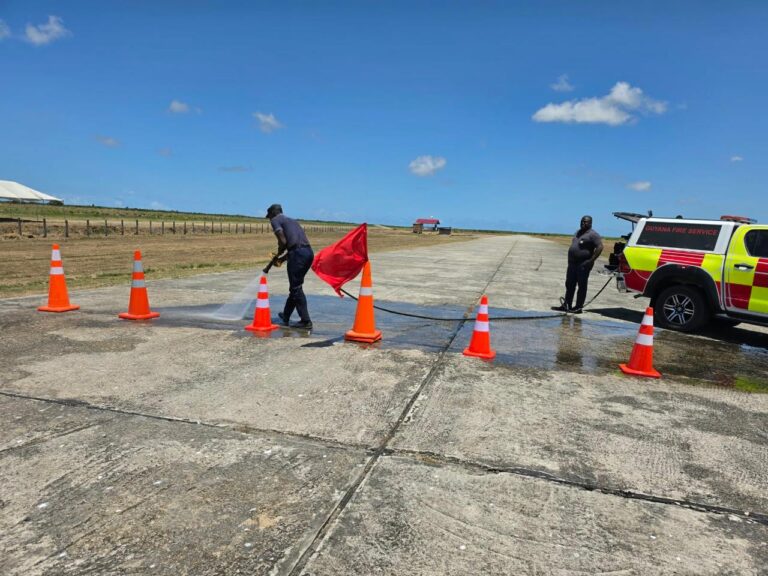
Fans heading to today’s Berbice Invasion Drag Race Meet will have access to four designated parking areas and shuttle buses as organisers prepare to welcome spectators to the Rose Hall Canje Airstrip.

The Guyana Motor Racing and Sports Club (GMR&SC) has outlined the arrangements ahead of the October 11 event, where more than 200 races are expected. Qualifying begins at 10:00 hrs, followed by elimination rounds at 12:15 hrs.

Each parking area will have a ticket booth, allowing spectators to pay before entering the venue. Signs and directions will guide motorists, while buses will transport patrons between the parking areas and the airstrip. Return trips will be provided after the meet.

Organisers will designate general and VIP parking areas and enforce no-parking zones. Fans have been urged to cooperate with security personnel and parking attendants, with illegal parking and reckless driving outside the drag strip prohibited.

Spectators should also be aware that firearms, other weapons, outside food and drinks, and unauthorised vending will not be allowed. Security checks may be carried out on both patrons and vehicles.

The club says interest from residents across Berbice has been encouraging, giving organisers confidence in a strong turnout.

A GMR&SC spokesman said preparations had been underway at the airstrip for three days.

The organising team has been working with the Guyana Fire Service, Guyana Police Force, sponsors and support staff to prepare the venue and supporting services. According to the spokesman, contact with some service providers had been renewed to get the required arrangements underway.

The GMR&SC says the preparations are aimed at delivering a successful meet for competitors and spectators.

ENet, Tropical Shipping, Castrol, GuyOil and KFC are among the sponsors supporting the event.

VIP tickets and corporate suites are available through 632-4820.


Source: Kiskadee Watch

‘Sage of Buxton’ passes away at 101

0

WPA: this ‘rare and special spirit walked among us with a deliberate purpose that touched the core of Guyana’

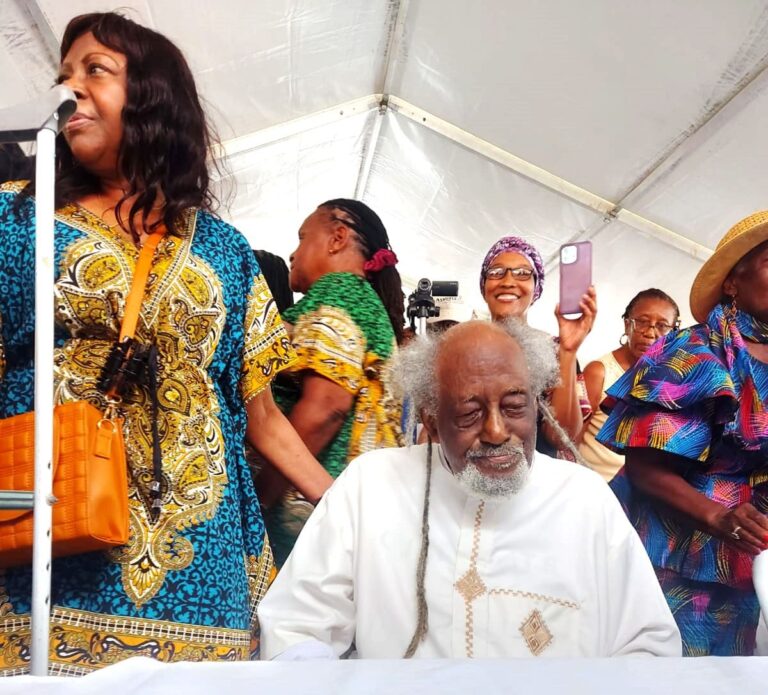
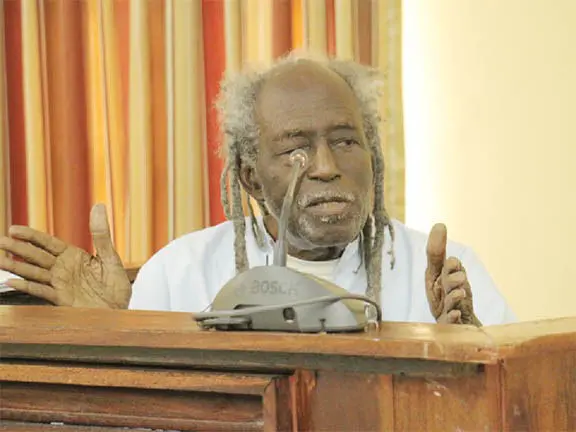
After more than eight decades in public activism during which social justice was at the centre of his work, Eusi Kwayana passed away yesterday at the age of 101, one of the last witnesses to the struggle for independence and the post-colonial period in Guyana.

Kwayana, who celebrated his 100th birthday last year in the village of Buxton with a typical call for a one-day fast for justice, has been hailed as a political leader of peerless integrity who was part of the PPP during the heady days of the 1950s before moving to the PNC following the split between Cheddi Jagan and Forbes Burnham before becoming a major figure in the Working People’s Alliance (WPA) where he was one of its premier leaders – particularly in the aftermath of the assassination of Dr Walter Rodney in 1980 – and serving it in Parliament.

A Pan-Africanist who came to be affectionately known as the `Sage of Buxton’, Kwayana was hailed for his Gandhian qualities and the equanimity with which he approached his life as politician having originally been a teacher, a vocation that never left him. Soft-spoken, Kwayana invested his time in taking up causes for those who had no access to the corridors of power.

The WPA paid a glowing tribute to him yesterday and implored the public “not to mourn Bro Eusi’s passing, but to celebrate his life and lived journey”.

In a statement, the WPA said: “Our elder, teacher, mentor, leader and inspiration has left us to go back to his ancestors. The Sage of Buxton has left this side of the river to return to the source of his spirit. His earthly duty is over. To the very end he kept the faith, cradled the civilization, protected the vulnerable, and empowered the powerless. His loss leaves an empty chair in the gallery of our Guyanese humanity.

“It is with deep sadness that the WPA joins with the Kwayana family in announcing the death of Brother Eusi Kwayana. Although we know death is inevitable and that Bro Eusi would eventually leave us, we thought this day would never come. But it is finally here. We give thanks for his life, his wisdom, his guidance and above all, his example. Guyana has lost the last of its original independence visionaries—one of Guyana’s priceless gifts to itself”.

The party said that or 101 years and six months this “rare and special spirit walked among us with a deliberate purpose that touched the core of Guyana”. Along with others and sometimes alone, the party said that he lived the Guyanese decolonization and independence narrative of freedom.

“WPA declares with certainty that our Eusi was a Founder-Pioneer of our post-colonial order. In him shone the light of the full flowering of the Guyanese, Caribbean and African fusion”, it said.

The WPA noted that in 1974 Kwayana co-founded the party  and remained a committed member until his death. Within the WPA he functioned  as Executive member, Member of Parliament and de facto editor of the party’s organs, Open Word and Dayclean.

“We remember Eusi as an excellent party organizer and mobilizer. Whenever the party was low on morale, we turned to him for confidence. We also remember him as a loyal party member who never compromised his integrity and independent praxis. It is for that reason that we label him the modern pioneer of the Independent Radical strand in modern Guyanese politics”, the WPA said.

While he gave 52 years of service to the party, the WPA noted that he also laboured in the valley for the original PPP and the PNC in which he served as Assistant General Secretary and General Secretary respectively. He served as a Member of Parliament and Cabinet Member in the 1953 PPP government. In addition to being General Secretary, he served as editor of the PNC’s newspaper, New Nation.

During the period 1964-71, the party said that Kwayana served as head of the National Land Settlement Committee; chairman of the Guyana Marketing Corporation (GMC); chairman of the Cooperative Insurance Committee; and chairman of a committee charged with converting the Guyana Cooperative Credit Society into a Cooperative Bank.

As an Africanist leader he co-founded in 1961 the African Society for Racial Equality (ASRE), which was dedicated primarily to raising cultural consciousness among African Guyanese. In 1964, the party said that he also co-founded the African Society for Cultural Relations with Independent Africa (ASCRIA), which, like ASRE, committed itself to the promotion of African pride, dignity, and culture among African Guyanese. He served as Coordinating Elder of ASCRIA and changed his name from Sydney King to Eusi Kwayana, which, in Swahili, means Black Man of Guyana.

Eusi Kwayana

African star

“He gave everything to his country and his people. Farewell African star, Guyanese treasure and Caribbean wise man. We end this initial statement by calling on Guyanese not to mourn Bro Eusi’s passing, but to celebrate his life and lived journey”, the WPA said.

Speaking at his 100th birthday celebration last April, Stabroek News reported Kwayana as saying: “As you know, in my political activity, I have gone on hunger strikes; fasting, for various causes and reasons. Right in the Caribbean we used that weapon to draw attention and public conscience to abuses of public life.

“… Tonight, after long deep consideration I must challenge people in Guyana, who listen and are concerned about themselves and the future, I challenge them now about naming a piece of activity that they can do or join me, as I can do it and what I am talking about is … a short one day fast; a hunger strike for a maximum time of one day”.

Kwayana said then  that he kept himself abreast of current affairs by listening to local news and felt that the fast was needed. 

“We can’t go on doing what we do all the time… I hope that we take on the responsibility. I thought about some activity in which I can appeal to you members of the human planet … This includes freedom of action …asking you to consider taking on responsibility, in Guyana, for change for the better of Guyana. I am talking about deep change that comes from a deep place bigger than politics,” the centenarian said.

Having gone on his first hunger strike in 1953, he said, he believed that this medium of protest helped to highlight his cause. However, he told his audience that they do not have to announce they are fasting like him, but do so in earnest and from a point where they ask their divine to bless this country”, Stabroek News reported.

In an April 7, 2025 tribute in the In the Diaspora column of Stabroek News,  Moses Bhagwan and Nigel Westmaas wrote that one of  Kwayana’s earliest politically self-conscious memories dated back to Lusignan around 1929, when he was about four or five years old.

“He vividly recalled a woman, perhaps aged between 60 and 65, sitting in a doorway on a bench in a range yard, enjoying the warmth of the sun with her legs crossed and smoking a clay pipe. Addressing him directly, she said, `Pickney, Congo ah high nation, Congo ah high nation.’ Her words, clearly affirming African pride and heritage, emphasized that the horrors of slavery could never erase the fact that Africans originated from great and dignified civilizations. Kwayana never forgot it. Kwayana and the poet Martin Carter often rode their bicycles to and from Georgetown. On one such occasion, Carter stopped at Le Ressouvenir—a site associated with the 1823 Demerara revolt—and, in a gesture echoed in the title of one of his later poems, physically listened to the land”, they related.

Eusi Kwayana

They wrote that Kwayana held the unique distinction of having composed the official songs for three major political parties in Guyana: the PPP (“O Fighting Men”), the PNC (“Battle Song”), and the WPA (“People’s Power”).

Bhagwan and Westmaas wrote that Kwayana produced hundreds of works across multiple genres—poems, critical reviews, short stories, letters to newspapers, opinion pieces, song lyrics, obituaries, court motions, parliamentary interventions (motions and speeches), editorials, political statements, essays, press releases, and plays for both theatre and grassroots events.

“His literary span stretches from The Prodigal Daughter (his first play, written in the early 1940s) to the book The Legend: Post-Emancipation Villages in Guyana, Making World History (2016), co-authored with David Hinds.

“One of his most remarkable works, Buxton-Friendship in Print and Memory, exemplifies his method—a deeply democratic respect for people from all walks of life. Published by Red Thread Women’s Press (1999), this village history illuminates the minutiae of everyday life while reinforcing Kwayana’s reverence for both the printed word and the oral tradition, the latter long marginalized in formal scholarship but deeply embedded in the cultural traditions of Guyana and the Caribbean. Kwayana also wrote several plays, including Christus the Messiah, Proclamation (on the 1823 Demerara Revolt), The King and I, and the prize-winning Promised Land (1965). During the same period, he wrote theatre reviews under the alias Kiskadee Cloud”, they wrote.

Kwayana was a prolific letter writer to Stabroek News and authored a missive to Kiskadee Watch on August 31st this year on the upholding of Donald Rodney’s appeal against his 1982 conviction.

Despite his contributions, Bhagwan and Westmaas said that Kwayana remained one of the most misunderstood figures in Guyanese political history. And no political proposal dogged him more than the call for ‘partition’ in 1961.  The plan primarily advocated ‘joint and equal Prime Ministerships,’ with partition identified as a last resort.  At the time, they said that Kwayana felt that it would bring equality of rights and power for Indians and Africans and attempt to end racial antagonism.

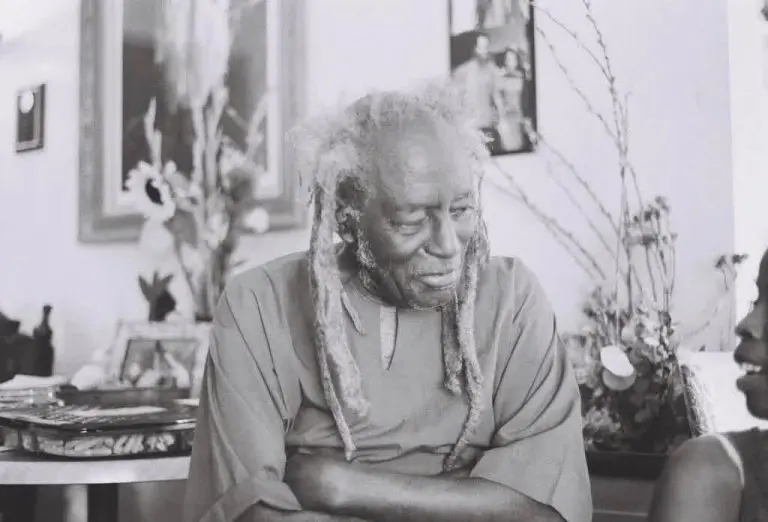
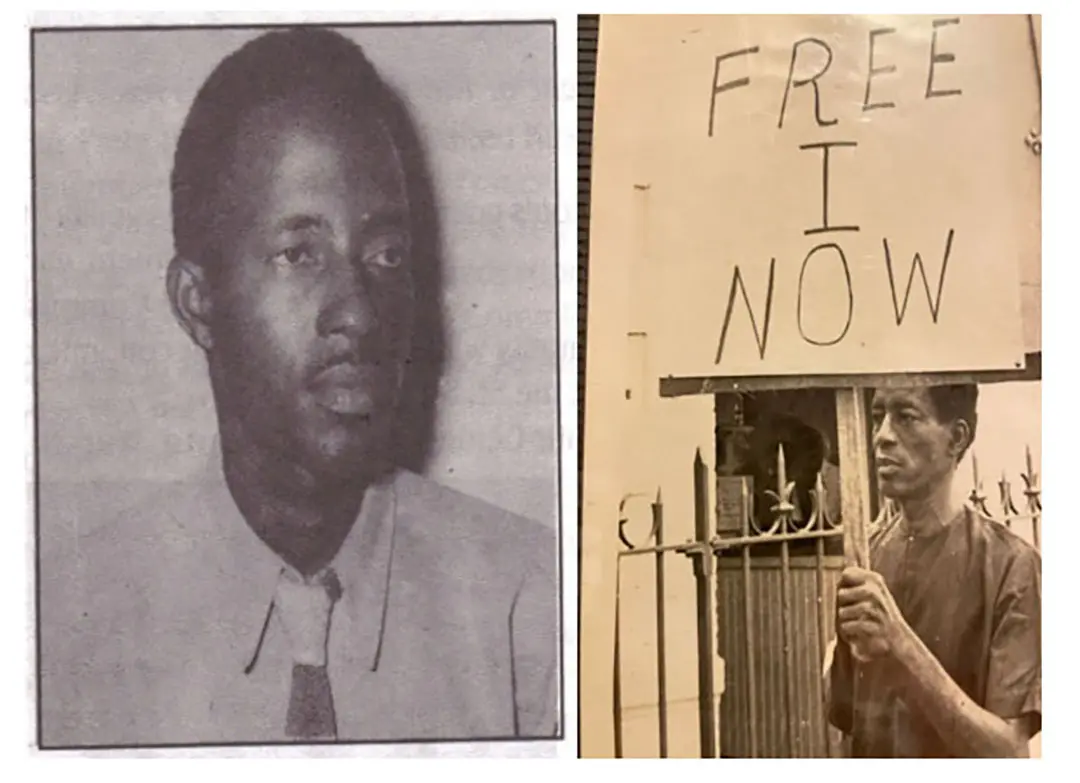
Images of Eusi Kwayana

They said that Kwayana’s philosophy of multiracialism—tailored to Guyana’s unique socio-political landscape—is best captured in his celebrated 1978 speech, Racial Insecurity and the Political System. This speech, they said, laid the foundation for a self-critical assessment of racial divisions in Guyana and became integral to the WPA’s broader philosophy of multiracialism—a legacy that continues to inform contemporary debates on race and politics, even if unacknowledged. He later expanded upon this in two major analyses of the cultural contributions of Indians and Africans at the Genesis of a Nation conference held at the Pegasus Hotel in 1988.

Because of the limitations of the 5th parliament (1986-1992) and his own preferred mode of representation, Bhagwan and Westmaas said that Kwayana made the WPA office and his frequent visits to villages and the rural areas “centres of representation,” turning Parliament into a “living forum.”

“He reopened the use of citizen petitions to the National Assembly as a means of expressing grievances.  Outside of Parliament, the WPA MP, helped by other WPA activists, assisted senior citizens; mothers due for social impact amelioration payments; farmers with water problems; and persons denied the reasonably prompt issue of passports. He visited the Georgetown hospital on several occasions, taking extensive notes of its deficiencies and speaking with patients. These were only a few of the representations he made”, they said.  

In August 1987, Kwayana stood with protesting crowds as the kero and gas crisis unfolded.

“So long as suffering of this kind is encouraged and maintained by the government my pen will not sleep in my hand, nor will my tongue cleave to the roof of my mouth”, Bhagwan and Westmaas reported him as saying.

He was also credited with an immaculate understanding of parliamentary procedure.

“What were the origins of Kwayana’s skill in the Parliament? A likely possibility was his generation’s experience from the 1940s to the 1960s, with its ingrained knowledge of the ‘system’ when fighting British control of the legislature and colony. Cheddi Jagan, Forbes Burnham, HJM Hubbard, Janet Jagan, Winifred Gaskin, WOR Kendall, Boysie Ramkarran and others all exhibited a range of parliamentary prowess during their own shifts in the Chamber. These parliamentarians were forced to be creative and knowledgeable of the system out of sheer necessity to ensure their survival against the British constitutional and colonial system”, Bhagwan and Westmaas wrote.

Yesterday, the PNCR mourned Kwayana.

“Brother Eusi entered the political arena as a youth, dedicating his life to the struggles and aspirations of the Guyanese people. He served the People’s National Congress under the leadership of its founder, Linden Forbes Sampson Burnham, contributing his intellect, energy, and convictions to the building of our Party and the advancement of an independent Guyana.

“In the years that followed, he continued to serve the nation through the Working People’s Alliance, remaining a fearless and principled voice on matters of governance, justice, and national development. As a historian, he dedicated himself to recording and preserving our country’s story, ensuring that future generations would know the journey of our people and the sacrifices made along the way.

“Eusi Kwayana was more than a politician; he was a teacher, a chronicler, and a conscience for our nation. His life spanned generations of our political evolution, and his counsel, integrity, and unwavering commitment to principle earned him the respect of friend and adversary alike”, the party said.


Source: Kiskadee Watch