Home Blog

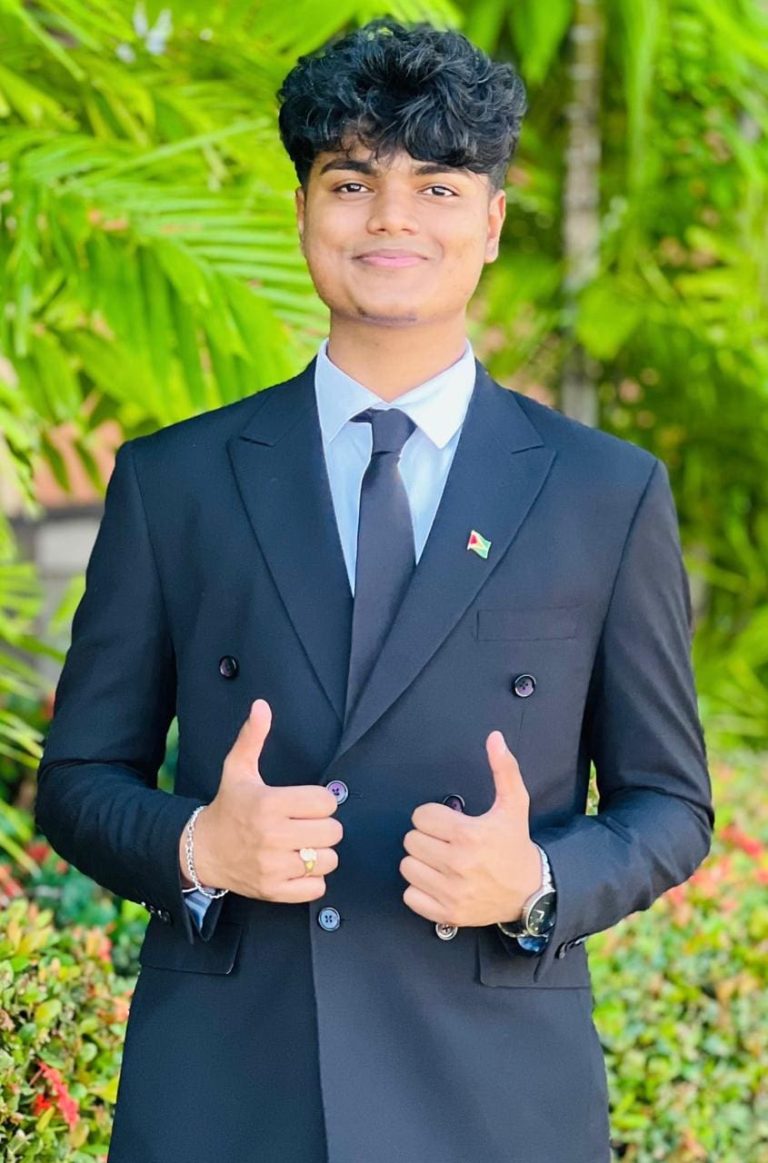
Naresh Jagnanan: From Wakenaam to UWI valedictorian

0

Financial constraints prevented Naresh Jagnanan from taking up a place at one of Georgetown’s leading secondary schools. Years later, the former Essequibo Islands Secondary School student has graduated from the University of the West Indies (UWI), St Augustine, with first-class honours and as a valedictorian of its Faculty of Social Sciences.

For the 21-year-old from Belle Plaine, Wakenaam, the journey is one he attributes to “divine intervention”.

Jagnanan earned a bachelor’s degree in economics and political science. He said he was nominated for valedictorian by the departments of economics and political science and the Guild of Students, in recognition of both his academic performance and his contribution to student life.

Reflecting on his upbringing in the farming community and the opportunities that followed, he told Kiskadee Watch that the experience was difficult to describe.

“What are the chances of a student from a C grade school with parents from a struggling humble background being chosen from among thousands of Caribbean students, to be honoured by the university? 0.001 per cent probably. It has to be God’s divine intervention. That’s the only way I see it,” he said.
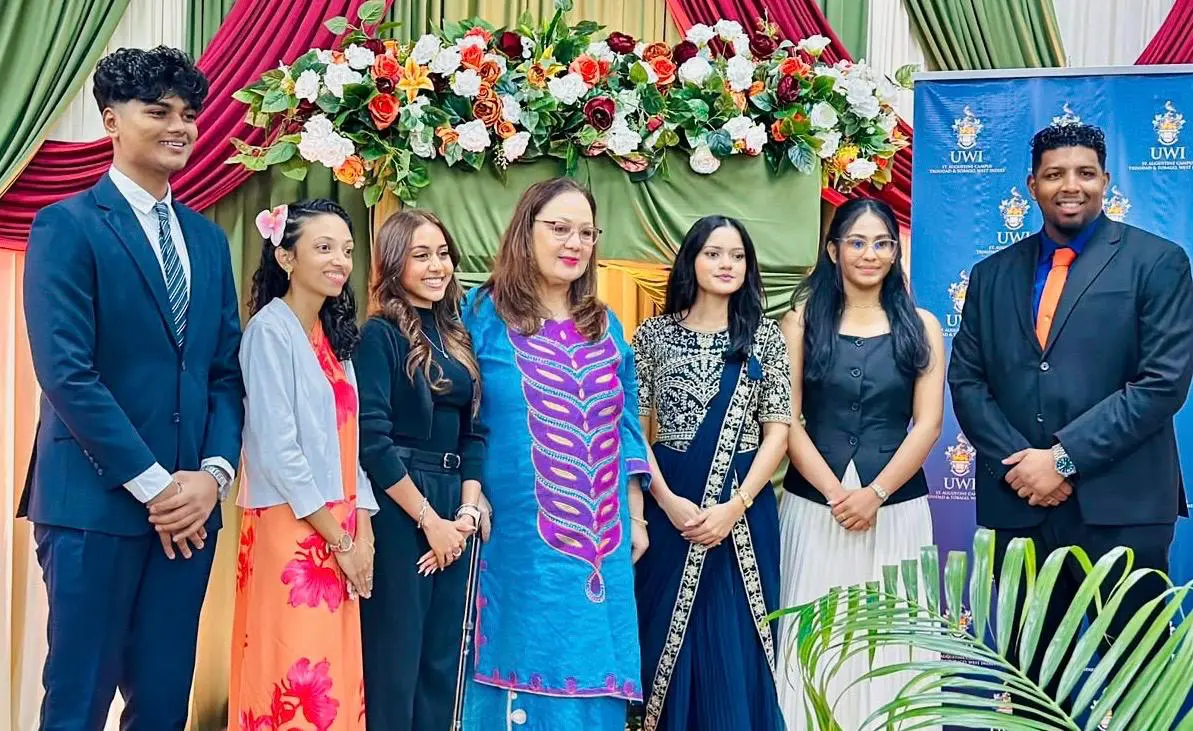
Naresh Jagnanan (left) with UWI St Augustine Campus Principal Professor Rose-Marie Belle Antoine and fellow 2026 UWI valedictorians.

Jagnanan attended San Souci Primary School and topped Wakenaam at the National Grade Six Assessment, earning a place at a leading Georgetown secondary school. His parents, however, could not afford to send their then 11-year-old son to the city, where he had no family member with whom to stay.

He instead attended Essequibo Islands Secondary School in San Souci. As the island’s top NGSA pupil, he received a bicycle, which he used to travel to school.

“The majority of students rode bicycles to school. In the mornings we ganged up and rode to school and in the afternoons, we returned home together.”

He went on to secure Grade One passes in all 11 subjects he wrote at the Caribbean Secondary Education Certificate (CSEC) examinations, a first for the school. The Caribbean Examinations Council (CXC) also named him the region’s most outstanding CSEC student in business studies that year.

“It was the first time in its 58 years of existence that a student of EISC got that award,” he said.

His performance earned him a CXC/UWI scholarship covering tuition, accommodation and a stipend at a UWI campus of his choice. He had to qualify for admission through the Caribbean Advanced Proficiency Examination (CAPE) and take up the scholarship within three years.
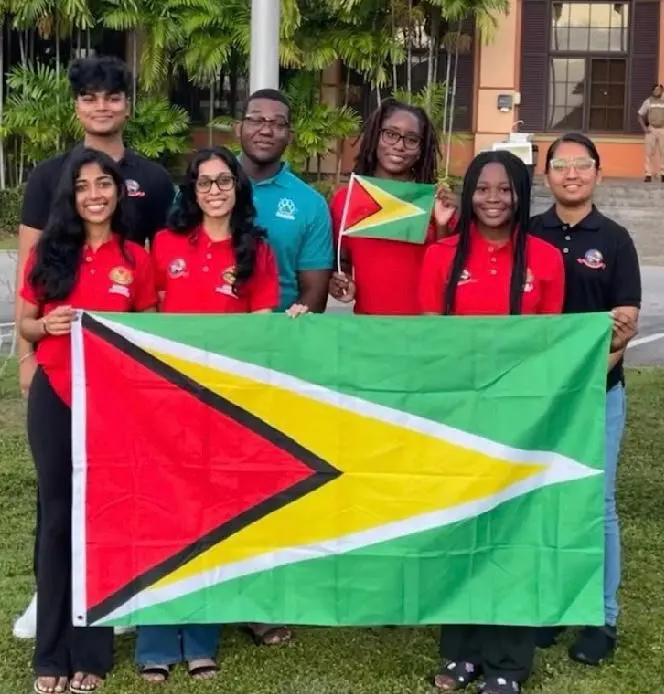
Naresh Jagnanan (left, back row) with fellow Guyanese students.

By the time the scholarship was announced in February 2022, admissions deadlines at schools offering CAPE had passed. Jagnanan said he gained entry to Queen’s College through the intervention of then Education Minister Priya Manickchand.

“So, from February I prepared to write five Unit 1 subjects for my first year of CAPE. I had very limited time to prepare for the exams. The exams were written in May 2022.”

At 16, he also had to adjust to life in Georgetown, where he stayed with a relative. He secured Grade One passes in all five units.

“I even made the merit lists,” he said, laughing.

With only a few months to prepare, he knew he could not afford to lose focus.

“There was no way I could have slacked off. It was rigorous but it taught me a lot of time management skills.”

Encouraged by those results, he took on ten units in his second year, earning nine Grade Ones and a Grade Two. He was named Guyana’s top CAPE student in August 2023, having completed 15 units over the two years.

At its 2023 awards ceremony, CXC recognised him as the Caribbean’s most outstanding CAPE student and its most outstanding CAPE student in business studies. He also received an ACCA award, while Queen’s College received the School of the Year Award for its CAPE performance.

Jagnanan said he was subsequently awarded a Presidential Scholarship. By the time it was announced, however, he was writing his first-year final examinations at UWI and chose to remain there.

“I had already made friends, and I was settled into university life, and boy I did not regret that decision to stay at UWI for a single moment,” he said.

In his valedictory address, he urged students not to allow their backgrounds or financial circumstances to limit their ambitions.

“There is no greater betrayal to yourself than abandoning your own becoming,” he said.
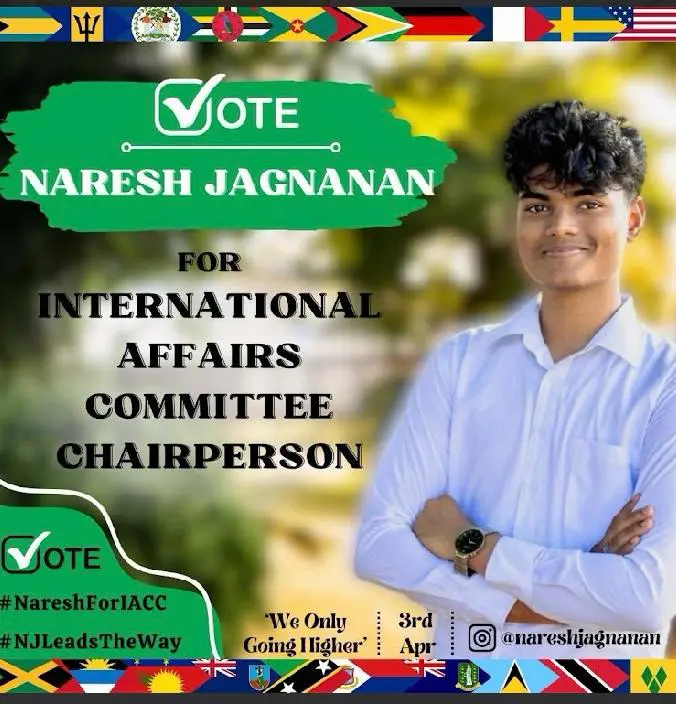
Naresh Jagnanan campaigning for the chairmanship of the Guild of Students’ International Affairs Committee.

His parents’ experiences helped shape that determination. His father is a potter who also works as a security guard, while his mother is a domestic worker. Neither completed secondary school. Jagnanan said they had been taken out of school to help with farming or household work, a practice he described as common in Wakenaam at the time.

“My mom really pushed us. She said she did not want her children to experience the same life she had,” he said.

He recalled his mother mopping and cleaning to support the family, and her wish that her children would not face the same struggle to make ends meet.

His two sisters now teach at Essequibo Islands Secondary School. His older sister, he said, faced the greatest difficulties during her school years.

“We studied late into the night with kerosene lamps. Kerosene lamps were mainly used in Wakenaam at the time because we had no electricity. We finished homework some nights using candles and even torchlights.”

He benefited from textbooks passed down by his siblings and was able to read them before reaching the classes for which they were intended. With electricity now available, he believes children on the island have an easier time studying.

University life 

At UWI, Jagnanan lived at Canada Hall, sharing accommodation with students from across the Caribbean. He said he concentrated on academics in his first year and made the Dean’s List every semester throughout his studies.

“We lived in a shared space that we called home. We got to know about community,” he said.

In his second year, he became vice-president of the Guyana Students’ Association of Trinidad and Tobago (GUYSATT). He helped organise activities involving Guyanese students at UWI and other institutions, including the Hugh Wooding Law School, the University of Trinidad and Tobago and the University of the Southern Caribbean.

The association held cultural events, pop-ups, Amerindian Heritage Month activities and a Guyana Culture Night, both on and off campus.

“We really showcased our ‘Little Guyana’ in Trinidad,” he said.

Working with other national student associations also strengthened his interest in Caribbean cooperation.

“If we can bring together associations like this in one space, what can we not do as a region?” he asked.

In his third and final year, he contested the chairmanship of the Guild of Students’ International Affairs Committee (IAC). He said he received the highest number of votes across the guild’s committees.

“That moment was a reminder that I was there for service. I was there because people believed in me and I was there because I believed that change must happen. That was the pivot that really shaped my thinking.”

The role involved representing about 1,500 regional and international students and ensuring their concerns were heard by the university administration.

Under his chairmanship, the committee organised a Caribbean Integration Season, bringing together the various national student associations. Among its activities was the transformation of the JFK Quadrangle into an airport-inspired cultural hub featuring food, storytelling, drumming, dancing and singing.

“It wasn’t just Trini or Guyanese cultures. It was the bringing together of different accents, different histories and traditions like jab jab, masquerades.”

He also led the IAC’s Hurricane Melissa relief drive, which he described as the largest organised at the St Augustine campus.

When the hurricane struck Jamaica in late October, he said, Jamaican students were preparing for examinations while worrying about their families and whether financial support from home would continue. Tuition deadlines and daily living expenses added to their concerns.

“We had to step in. I mobilised campus and university officials early and I got them to create a plan before the hurricane evolved to category five,” he said.

The response included an extension of the tuition payment deadline and university bursaries for some affected students. The committee also approached sponsors in Trinidad for assistance with food and other necessities.

Jagnanan said more than 1,000 students became involved in the three-week relief drive. The campus has 90 clubs, and he recalled participation from clubs he had not previously known about, alongside representatives of nine university departments and two Trinidadian non-governmental organisations.

The university donated 100 cartons of relief supplies for Jamaica and 100 grocery packages for Jamaican students, he said.

“That was when I saw what people can do when we come together. That was a very defining moment in my journey at UWI. It puts into perspective just how much impact we can make if we all come together.”

For his work in 2025/2026, Jagnanan was recognised as the guild’s most outstanding councillor, best team player and most outstanding committee chairperson.

He said student advocacy had changed his own outlook as much as it had helped others.

“I have seen how much advocacy can do especially in rooms with university and campus officials and how much that could literally influence and change people’s lives.”

After his final examinations in May, he returned to Guyana and is now a financial analyst at the Ministry of Finance.

He has applied to universities to pursue a master’s degree in economics and said he had been accepted by all those to which he applied. Among the institutions he is considering are the University of Oxford, the London School of Economics and Political Science, and Imperial College London.

“I’m keeping my fingers crossed that I do get through with a scholarship,” he said.

Asked where he saw himself in ten years, he said: “I’m not sure where and who I will be, but I know that I would be serving people. I am not interested in filling the pockets of corporate business.”

He chose the Ministry of Finance because he believes it can help address prices and protect vulnerable people.

“Regardless of what fancy term I’m given or fancy title I get, my mentality of helping people or serving people will remain in the front of whatever I do.”

He traces that outlook to Wakenaam and the support he received from relatives, teachers, neighbours and small shopkeepers. Teachers helped pay for his CSEC examinations, while others contributed towards his university studies or offered encouragement.

“We may not all be connected by blood, but we are connected by relationships. That is our way of life in Wakenaam.


Source: Kiskadee Watch
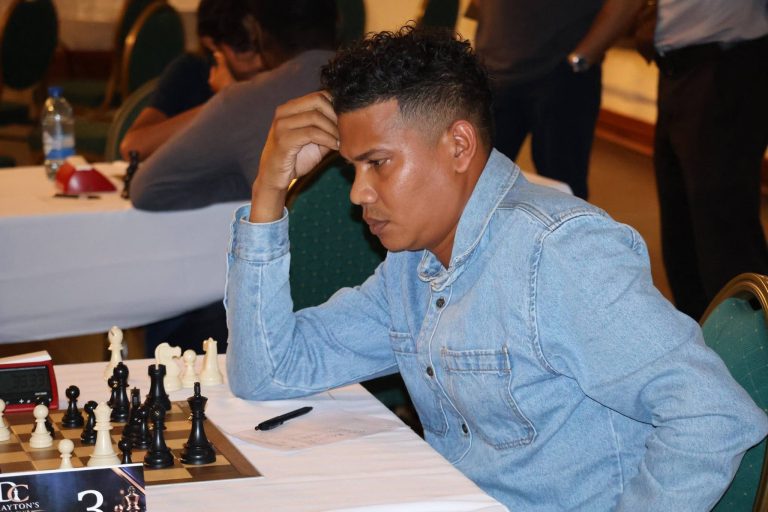
Eight share early lead as Pegasus Weekly Chess League Season 2 begin

0

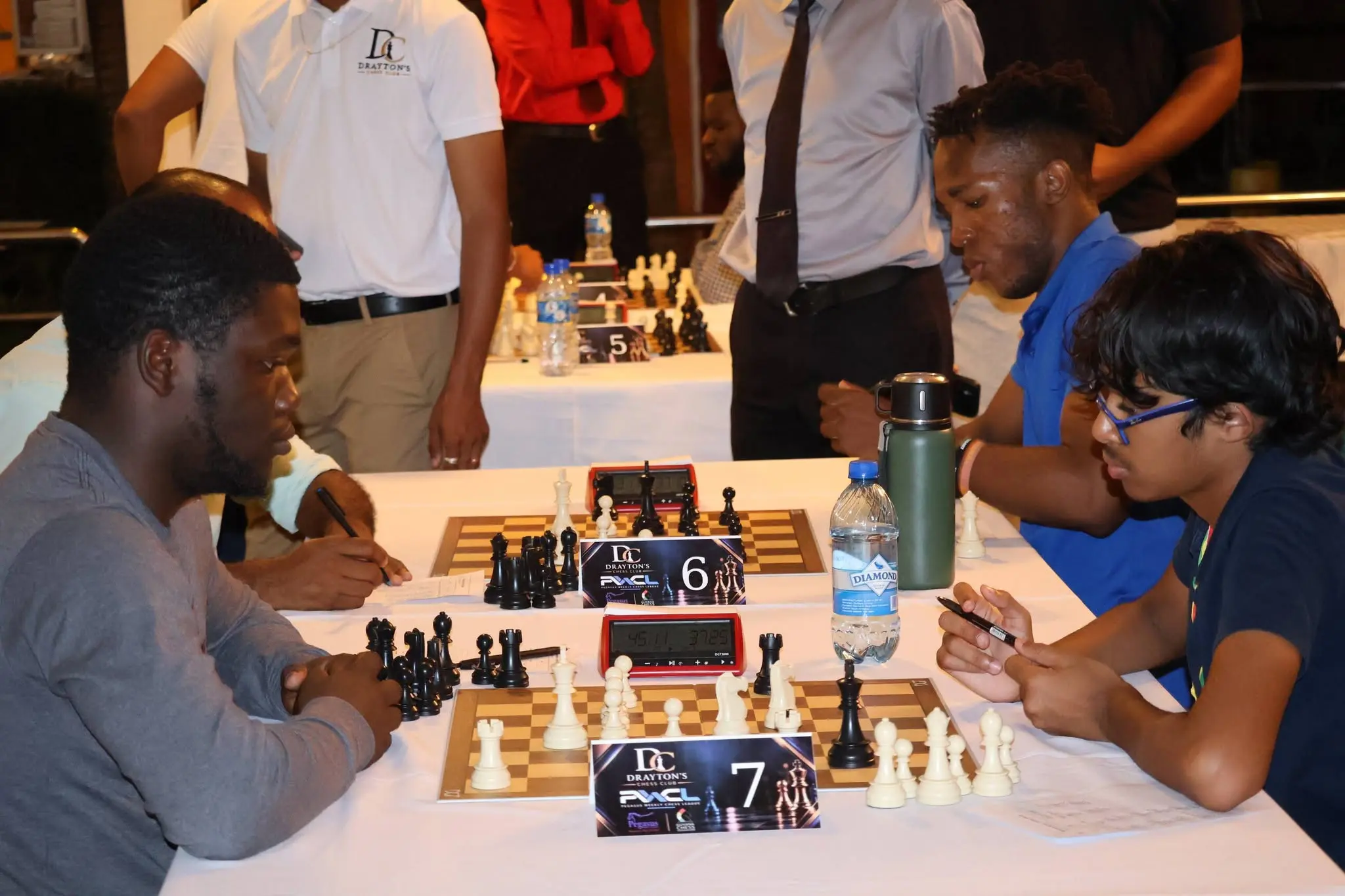
Eight players made winning starts last night, moving off the second season of the Pegasus Weekly Chess League, with six opening-round games settled over the board and two decided by forfeits.

Oluwadare Oyeyipo, Martin Poon, Odinnie Reece, Gilbert Williams, Gaven Houston and Jevaughn Grant earned victories over their opponents, while Keron Sandiford and Joshua Gopaul collected points by forfeit.

Poon defeated Ryan McKay with the black pieces, while Oyeyipo also won with black against Ephraim Blair.

Reece continued that trend by overcoming Jessica Callender, and Grant defeated Raymond Sookdeo to complete four victories for players using the black pieces.

Eight players made winning starts to the second season of the Pegasus Weekly Chess League

Williams and Houston were the two players to win over the board with white. Williams beat Jaden Taylor, while Houston secured his opening point against Sachin Beharry.

Sandiford received a forfeit victory against Seth Hugh, while Gopaul’s point came by the same route against Owen Mickle.

The results left all eight winners on one point apiece in the 16-player competition, with no draws recorded in the opening round.

Meanwhile, league administrator Anthony Drayton has launched his website draytonchessclub.com.

The league is slated to run on Mondays.


Source: Kiskadee Watch

Elite League Season VIII: Oie’s double powers Western Tigers past Anns Grove

0

Michael Oie Jr scored in either half as Western Tigers beat Anns Grove United 3–0 in the Guyana Football Federation Elite League at the National Training Centre, Providence, on Sunday night.

Kevon Woodley also found the net for the Tigers, while Santos claimed a 3–1 victory over Monedderlust in the night’s other fixture.

Oie opened his account in the 22nd minute to give Western Tigers the lead. Woodley then struck a minute before the end of regulation time in the first half, extending the advantage to 2–0.

The Tigers increased their lead after the restart when Oie scored again in the 59th minute. His second goal completed the scoring as Western Tigers finished with three goals and a clean sheet.

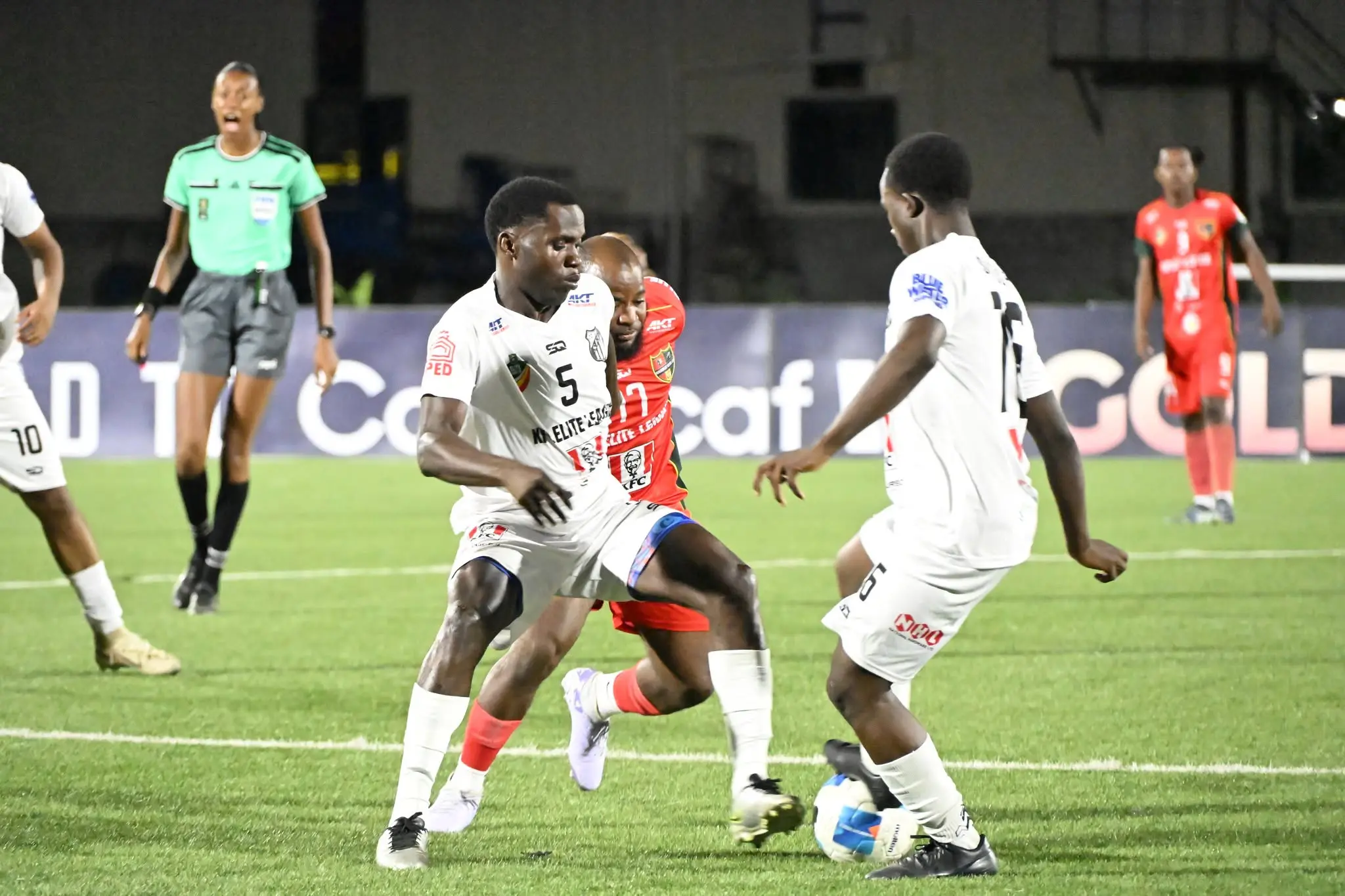
Part of the action between Santos (white) and Monedderlust (red). (Elite League photo)

Santos’ victory followed a similar start, with two first-half goals putting them ahead before Monedderlust pulled one back.

Ezekiel Frank-David struck after seven minutes, and Candel Hazel made it 2–0 in the 20th minute.

Paul McDonald gave Monedderlust hope with a goal in the 48th minute, cutting Santos’ lead to one. The score remained 2–1 until Kymani Sealey found the net in the 78th minute to secure the victory.

Elite League action continues next weekend.


Source: Kiskadee Watch

Persaud and Sukhram reach 15-title milestone at Brava Guyana Open

0

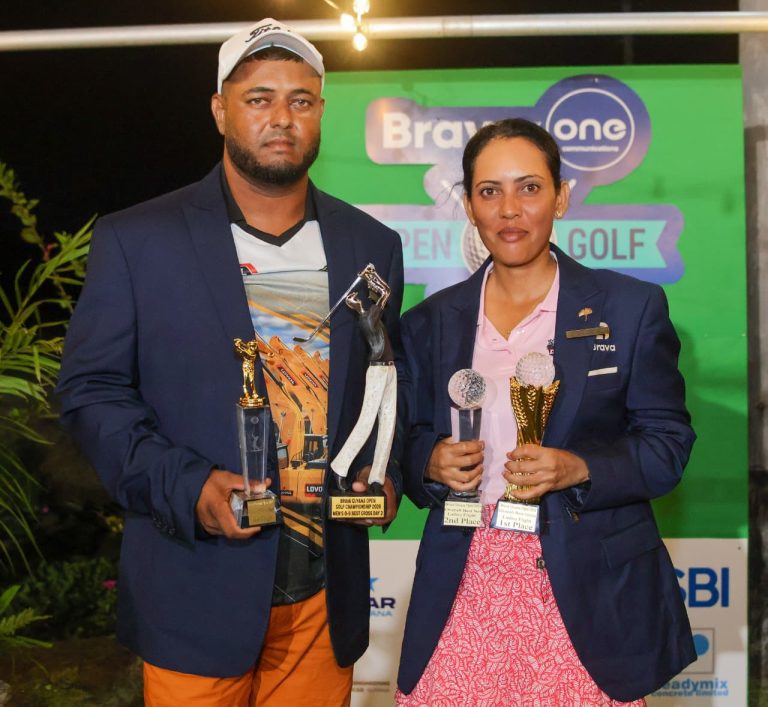
Avinash Persaud and Christine Sukhram each captured their 15th Guyana Open title as the 2026 Brava Guyana Open concluded on Sunday, November 1, at the Lusignan Golf Club.

Persaud returned a combined gross score of 156 to win the men’s championship, while Sukhram secured the ladies’ crown with 173 over the two-day tournament, which began on October 31.

Consistency carried Persaud to victory, with rounds of 78 on both days earning him the daily best gross honours in the 0–9 Flight. Marlon Abena finished second overall on 160, with Jalan Raman placing third on the same score. Mohanlal Dinanath claimed the men’s Overall Best Net title with 145.

Sukhram led the ladies’ gross competition with rounds of 83 and 90, taking the daily best gross awards on both occasions. Joaan Deo finished second overall with 188, followed by Princessa Wilkie on 204.

Wilkie won the ladies’ Overall Best Net title with 144 after recording the best net score on each day, returning 70 on Saturday and 74 on Sunday. Sukhram placed second in the net standings with 151, while Sabi Dhori was third on 153.

In the handicap divisions, Jim Peck won the 10–18 Flight with a net score of 135, ahead of Subhas Chandar on 137 and Arnold Deo on 139. Peck also claimed the division’s best gross award with 161.

Jermaine Pillay took both leading honours in the 19–28 Flight, winning with a net 133 and recording the best gross score of 177. Hilton Wong finished second on net 138, while Chet Bowling placed third with 141.

Nigel Smith topped the Senior Flight with a net score of 132. Kishan Bacchus followed on 138, with Carlos Adams completing the top three on 145.

The daily competitions produced several other award-winning performances. In the 0–9 Flight, Dinanath recorded Saturday’s best net score of 71, while Rakesh Harry took Sunday’s award with 72.

Chandar claimed both the best net and best gross honours in the 10–18 Flight on the opening day, scoring 64 and 79 respectively. Peck’s 66 earned him Sunday’s best net award, while Seepaul Sooknanan recorded the day’s best gross score of 79.

Wong returned the opening day’s best net score of 68 in the 19–28 Flight, while Bowling claimed best gross with 88. Pillay secured both awards on Sunday with a net 63 and gross 85.

In the Senior Flight, Smith recorded Saturday’s best net score of 65, with Adams matching that score to take Sunday’s award.

Myung Ja-Kim won the ladies’ nearest-the-pin prize on the first day. Deo claimed Saturday’s longest-drive award, while Wilkie earned that honour on Sunday.

Persaud added both men’s longest-drive awards to his championship success, while Danny Aldebotoe won the opening day’s nearest-the-pin prize. Value4U sponsored the men’s special awards.

Brava Solutions supported the championship as title sponsor for a fifth consecutive year. Other sponsors were SLB, Umami, Baker Hughes, Kris Persaud of Tristar, Value4U, Feroze Barakat of Odyssey Tours, Ready Mix, GYSBI, Gulf Engineering and GBTI.

The Lusignan Golf Club thanked the sponsors, golfers, officials, volunteers and spectators for their contributions to the tournament, which brought players and supporters together for two days of competition and highlighted the continued development of golf in Guyana.


Source: Kiskadee Watch

Slowe calls Greene ‘collateral damage’ in case against Mohamed

0

—questions deployment of divisional commanders at individual incidents

Former Police Service Commission chairman Paul Slowe has defended the description of Constable Ryan Greene as “collateral damage” in the surveillance-footage case involving Opposition Leader Azruddin Mohamed, alleging that Mohamed is the principal target of the authorities.

Speaking on his programme, Speaking Out: Exposing Corruption and Incompetence, Slowe said criticism of the expression made by Mohamed’s sister Hana Mohamed, overlooked its meaning: harm suffered by someone as a consequence of action directed at another person.

Hana made the comment during a heated exchange with Greene’s father who was questioning why Mohamed made the footage public instead of waiting to use it in court.

“I maintain and support this argument that the constable was collateral damage. He was not the intended target,” Slowe said.

Slowe said the use of the phrase had attracted criticism but argued that it accurately conveyed his assessment of the case.

Mohamed and Greene were remanded on October 30 after being jointly charged with Unauthorised Giving of Electronic Data under the Cybercrime Act. The case concerns police surveillance recordings of the October 12 encounter in Kitty involving Mohamed and Special Branch Head, Senior Superintendent Prem Narine.

Police allege that Greene obtained the recordings without authorisation and supplied them to Mohamed for $800,000. Mohamed has disputed paying for the footage. Their attorneys have challenged the proceedings and the refusal of bail. 

Slowe compared Greene’s position with that of other persons charged alongside him in an earlier conspiracy-to-defraud case. He said he and he now late retired assistant police commissioner Clinton Conway, both of whom were on the Police Service Commission had been the intended targets, while the others had been caught up in action aimed at removing them from the commission.

Divisional commanders

Meanwhile, Slowe criticised what he described as a tendency for divisional commanders to place themselves at individual incidents rather than maintain oversight of their entire divisions.

Referring to police deployments during King Charles III’s recent visit, he argued that commanders needed to retain the ability to coordinate responses to several incidents occurring simultaneously.

“When you are a division commander, you have to, at all times, remain in command of your division,” he said.

Slowe outlined a command structure involving gold, silver and bronze commanders, with responsibilities assigned in advance through a special operational order.

He said separate officers could oversee functions such as criminal investigations and traffic, while the divisional commander maintained an overall view of developments, communications and available resources.

Using Georgetown as an example, he questioned how a commander absorbed in managing one scene would respond if other serious incidents arose elsewhere in the division.

“You need to put yourself in a position where you maintain control of your division,” he said.

The commander, he argued, should be able to receive reports from officers managing individual incidents and arrange reinforcements or other assistance where needed.

Slowe also warned against allowing political figures to dictate where commanders should position themselves.

“Don’t let no politician tell you, ‘Let the commander go there,’” he said, maintaining that deployment decisions should preserve effective command of the division.

He urged police leaders to accept professional advice and establish clear responsibilities before operations began, arguing that concentrating senior command at a single location could weaken the response to events elsewhere.


Source: Kiskadee Watch

Any suggestion I was politically subdued or won over by President Ali gravely misrepresents my position

0

Dear Editor,

I write to condemn the unfair and misleading portrayal of my exchange with President Irfaan Ali in Dhanpaul Narine’s October 30 commentary on the President’s New York diaspora visit. Narine describes, “The political spinners were in full force”… an unnamed “dedicated disruptor” as “loud and vexatious” and declares that this person “ended up in the arms of the President.” Reflections on the  Guyanese Diaspora in NY and President Ali’s visit – Kiskadee Watch

Thousands of social media posts have made it public knowledge that the individual he is referring to is Albert Baldeo – me. Omitting my name does not prevent those familiar with the encounter from identifying me or diminish the damage caused by this disparaging and misleading portrayal.

As the person targeted, let me give my account plainly. President Ali first singled me out for negative mention. I responded by asking questions about matters of profound public concern. He subsequently asked me to say something positive about him. That exchange did not constitute a withdrawal of my questions, an abandonment of my independence, or an endorsement of everything his administration does. I assured him that I would give credit where it is due, but that he must also consider criticisms objectively.

Moreover, for Dhanpaul Narine, the President of a mandir, to recount a formal greeting as “ended up in the arms of the President,” is malicious and obscene, more the rantings of a twisted mind. 

Any suggestion that I was politically subdued or won over, gravely misrepresents my position. Courtesy towards a President does not cancel an advocate’s concerns. My independence survives both presidential criticism and presidential courtesy. After all, I was blessed to receive the highest commendations and gratitude from Dr. Cheddi Jagan, the father of the PPP and Guyana, and my affiliation precedes most today, and even President Ali and VP Bharat Jagdeo will acknowledge that I have the moral and legal right to criticize present policies and actions of its leadership today. 

The questions I raised concerned, first, the MV Barima tragedy: why the victims’ bodies had not been brought up, when recovery would take place, and what answers their grieving families could expect. These were urgent humanitarian concerns. Contemporaneous reporting confirms that the President addressed the disaster at the meeting and renewed his commitment to salvaging the vessel. The subject plainly warranted serious questioning, and, to his credit, he complied, although more is needed.

Families waiting for their loved ones’ remains deserve an advocate prepared to ask uncomfortable questions. Their grief does not become less important because a meeting is celebratory or its audience enthusiastic. Asking for dignity for the dead, answers for the living, and accountability from those in authority is a legitimate exercise of my public responsibility as a veteran, elected leader in NY.

I also asked the President to address the controversy surrounding his farm. Questions about its acquisition, financing, development, regulatory approvals and any relationship between private interests and public office are proper subjects of scrutiny. Indeed, Kiskadee Watch itself reported demands for disclosure from former EPA Executive Director Dr. Vincent Adams, the Guyana Trades Union Congress and others. A subject sufficiently serious for your newspaper to investigate cannot fairly be dismissed as mere vexation when a citizen raises it directly with the President. Indeed, many have complimented and thanked me for my “brave and necessary advocacy.”

President Ali has said that the farm was acquired before he became President, was financed through banking arrangements, and was disclosed to the Integrity Commission. The public equally deserves the opportunity to seek clarification and supporting records. Asking those questions does not presume wrongdoing; it gives accountability practical meaning.

I was prepared to stand alone if necessary to raise these concerns, a virtue missing among self-anointed pundits like Dhanpaul Narine. That willingness reflects the courage, independence and fighting spirit with which I approach public service. Dhanpaul Narine, who has borne grudges against me since I defeated him and Robby Mahadeo, combined, in the bitter 2005 City Council election that caused our community to lose our best chance of representation when they divided the diaspora’s votes by belatedly joining the race, may dislike my manner or disagree with my judgement. But to minimize its efficacy is dishonest. 

My record of advocacy extends well beyond that evening. Published accounts have documented my decades long work for our community, immigrants and marginalized communities, monetary contributions to religious organizations including Dhanpaul’s Trimurti Bhavan Mandir itself, over which he wields despotic control, with no elections.

Accordingly, I ask the Editor of Kiskadee Watch to take the following action:

  1. Publish this response with reasonable prominence and link it to the original article, so readers can consider the account of the person criticized.
  2. Review the disputed passage against any available recordings and eyewitness accounts, addressing how the exchange began, the questions I raised, and the misleading suggestion that my independence was compromised.
  3. Publish a clear correction and apology for the unfair portrayal, with an explanation of the context omitted from the original account.
  4. Apply proportionate editorial sanctions for substantiated breaches, including a formal reprimand and stronger editorial scrutiny, including suspension of Narine’s column.

These requests concern accuracy, fairness and accountability—the standards a newspaper should apply to its own contributors when it asks public officials to answer for their conduct.

I will continue to speak for grieving families, defend the diaspora’s right to question its leaders, and judge public officials by their actions. I will give credit where it is earned and demand answers where they are owed.

The MV Barima families deserve answers. The diaspora deserves respect. Kiskadee Watch’s readers deserve an honest account.

Yours faithfully,

Hon. Albert Baldeo
Community Leader and Judicial Delegate, Queens, New York
Former Magistrate, Senior State Counsel and State Prosecutor, Guyana


Source: Kiskadee Watch

The vote at the UN on Cuba’s resolution against the US embargo

0

As last week’s Kiskadee Watch Editorial described, on Wednesday October 28th “the annual vote at the United Nations on the crippling and pernicious US embargo against Cuba has again laid bare the farce of CARICOM unity.” Shamefully,Trinidad and Tobago voted with the US in opposing the resolution condemning the embargo. Guyana, Haiti and Jamaica abstained. Antigua and Barbuda, Dominica and St Lucia were absent from the room.

Kudos to Barbados, The Bahamas, Belize, Grenada, St Kitts-Nevis, St Vincent and the Grenadines and Suriname for voting to condemn the decades-long embargo.

This week we carry the Open Letter sent by the Assembly of Caribbean People (ACP) to CARICOM Heads on October 20th, one week before the UN Vote. We preface the letter with this comment from David Abdulah from the Movement for Social Justice and member of the ACP:

“In the last paragraph of our Open Letter to CARICOM Heads we said this to you “The eyes of all Caribbean People are on you and history will not absolve you if you turn your back on our Caribbean sisters and brothers in Cuba.” Seven of you have brought shame on your countries: Antigua and Barbuda, Dominica and St. Lucia by absenting yourselves from the room and cowardly not voting; Jamaica, Guyana and Haiti for abstaining and therefore in effect registering a vote against Cuba since there can be no fence sitting when it comes to the US blockade causing a humanitarian crisis; and Trinidad and Tobago doing Washington’s bidding and joining a tiny minority of 17 countries voting to continue the collective punishment of the Cuban people and with the PM,  a Senior Attorney, trying to rationalise the blockade, which the UN Human Rights Commission states, comprises “unlawful unilateral coercive measures against Cuba contravene Article 2 of the UN Charter”. Heads, how can you now demand, with a straight face, Reparation from the UK, when you are complicit in a “silent Gaza” taking place in our Caribbean Sea?”

Open Letter to CARICOM Heads of Government

The United Nations General Assembly Resolution 

by Cuba entitled 

“Necessity of ending the economic, commercial and financial embargo imposed by the United States of America against Cuba” 

Submitted, October 20, 2026

We Demand That

Every CARICOM Member State Must Stand with Cuba

Honourable Heads of Government,

The Assembly of Caribbean People is being supported by very many individuals and organisations in the Caribbean and internationally in this Open Letter to you. As you are aware, Cuba has tabled a Resolution titled “Necessity of ending the economic, commercial and financial embargo imposed by the United States of America against Cuba” for consideration by the United Nations General Assembly on October 27/28. 

This Resolution has been tabled by Cuba at the UNGA every year beginning in 1992. For the last thirty-three (33) years, Member States of CARICOM without exception have voted in support of Cuba’s Resolution. Indeed, CARICOM has consistently issued Communiques following Heads of Government Meetings calling on the United States to end the Embargo against Cuba and to also remove Cuba from the so-called list of countries that are engaged in state sponsorship of terrorism as there is absolutely no evidence to support such a designation. 

In furtherance of CARICOM’s principled position several Heads of Government have used the opportunity of addressing the General Assembly at its annual Opening Session and speaking directly to this issue by calling on the United States to end the embargo. This year was no different as Heads made this call explicitly and correctly stated that there is a humanitarian crisis in Cuba that has been caused by the US blockade and the unilateral actions by US Executive decisions, one of which is the blockade of fuel to Cuba and another is the sanctioning of third countries and financial organisations and other firms from engaging in any trade and/or financial transactions with Cuba. We congratulate those Heads for articulating this principled position at the largest international forum. 

Honourable Heads, regrettably it has become imperative for this Open Letter to be sent to you because the established policy of CARICOM to support, unconditionally, the call for the end of the Blockade has been disregarded, repudiated even, by some Member States. 

As is well known, four Caribbean states – Barbados, Guyana, Jamaica and Trinidad and Tobago – established diplomatic relations with Cuba in December 1972. At that time only Mexico in this hemisphere had diplomatic relations with Cuba. It was a bold and brave decision by these four, small and newly independent nations given not only the isolation that Cuba was facing, but also that this was at the height of the “Cold War” and moreover the fact that the US was our major trading partner. However, the Heads of Government of these four Caribbean states took the principled position that Cuba is a Caribbean nation with which we share a common history and that our foreign policy should be not shaped and determined by the national interests of others, including that of large states/powers.

As a result of our establishing relations with Cuba, CARICOM Member States have benefitted immensely. Cuba has offered thousands of university scholarships for our young people and thus contributed to the development of our human capacity and enabled young people who would not have had the financial means to access tertiary education. Indeed, some have served or still serve at very high levels of government. Cuba has provided health care professionals under its Medical Brigade agreements and these professionals have been crucial to the sustaining of quality health care to CARICOM citizens. Cuba has given us sports coaches to assist our high performing athletes. And there have been invaluable exchanges in culture and in academia. At no time has Cuba sought to extract anything in return. 

Something changed with the coming of the Trump Administration in 2025. Some CARICOM Member States then began to calculate their foreign policy, not on long established principles, but on what the US defines as its “national security interests”. This is a clear repudiation of CARICOM’s strategy best articulated by Prime Minister Errol Barrow, who was one of the signatories that established diplomatic relations with Cuba,that, “we will be friends of all and satellites of none”.

Honourable Heads, the US national security interest is explicitly stated in the 2025 National Security Strategy. It is to “restore American pre-eminence in the Western Hemisphere… We will deny non-Hemispheric competitors the ability to position forces or other threatening capabilities, or to own or control strategically vital assets, in our Hemisphere”. This strategy is to achieve the objective of ensuring US-dominance and the continuation of economic and political power predicated on the colonial and imperial model of extraction, which enabled what some call “western civilisation”.

In the words of US Secretary of State, Marco Rubio, at the Munich Security Conference “For the United States and Europe, we belong together….  We are part of one civilization – Western civilization.  We are bound to one another by the deepest bonds that nations could share, forged by centuries of shared history, Christian faith, culture, heritage, language, ancestry, and the sacrifices our forefathers made together for the common civilization to which we have fallen heir.. which gave the world the rule of law, the universities, and the scientific revolution.”

Rubio lamented the decline of the “great Western empires” in the face of “godless communist revolutions and by anti-colonial uprisings that would transform the world and drape the red hammer and sickle across vast swaths of the map in the years to come”—and said that there will be a return to “the West’s age of dominance…We in America have no interest in being polite and orderly caretakers of the West’s managed decline,” 

That analysis is of course historically wrong and is riddled with untruths. Thus, it denies the genocide of indigenous people; it does not recognise that the development of Europe and the US was built on the backs of enslaved Africans; it fails to consider the wealth extracted by colonial and imperial conquest; and it seeks to start world history with European enlightenment when there were advanced civilisations in Asia, Africa and the Americas centuries before. Rubio’s statement is fundamentally racist and Eurocentric and it rejects any other faith but Christianity, when we in CARICOM recognise our multi-cultural and multi-religious composition. 

However, this ahistorical treatise cannot be dismissed as it was the basis for the US State Department’s document “Capital of 21st Century Communism Report”. Among other Nanci Stories that Report falsely claimed that Cuba is a national security threat to the US. This is then used to continue the crime of collective punishment of the Cuban people by the more than six decades long blockade and the unacceptable Executive Orders and other actions including the blockade of fuel.

Honourable Heads, it must be restated that the blockade was always intended to punish the Cuban people in order to achieve a political outcome of regime change that the US desired. As the April, 1960 Official Memorandum of then Deputy Assistant Secretary of State for Inter-American Affairs of the United States Department of State, Lester Mallory stated: “The only foreseeable means of alienating internal support is through disenchantment and disaffection based on economic dissatisfaction and hardship… every possible means should be undertaken promptly to weaken the economic life of Cuba… a line of action which, while as adroit and inconspicuous as possible, makes the greatest inroads in denying money and supplies to Cuba, to decrease monetary and real wages, to bring about hunger, desperation and overthrow of government.”

It is therefore unconscionable for any CARICOM Member State to give support or succour to the US strategy of creating hunger and a humanitarian crisis. Ironically, as the Trump Administration intensified the blockade of Cuba because it is a “threat to US national security by spreading communism in the US”, Trump was wining and dining the leader of the largest Communist Party in the world – China. But then Cuba is a small nation so it can be bullied. China cannot. The hypocrisy is patent.

Honourable Heads, we must be under no obligation to follow the Pied Piper called the US. CARICOM has always recognised and respected that every nation has the right to decide its own economic and political system and that people have the right to self-determination. It was therefore inappropriate for CARICOM Heads to depart from this and openly call – as some did – for Cuba to make reforms to its system, while one Prime Minister denounced the Cuban system. That departure by CARICOM Heads occurred at the February Heads of Government Summit when none other than Rubio was present. It was an act of fawning to the US that showed that some are indeed prepared to be a satellite of one. 

This has been followed up by other decisions that demonstrate that some CARICOM Member States have turned their back on Cuba.

• The ending of the Cuban Medical Brigade arrangements;

• The decision by Trinidad and Tobago and Guyana not to agree with the Statement on Cuba issued by the CARICOM Council on Foreign and Community Relations (COFCOR) at its May meeting, which statement called for the ending of the Blockade by the US and the removal of Cuba from the list of countries that engage in the state sponsorship of terrorism;

• The decision by Trinidad and Tobago and Grenada to abstain on the vote at the UNGA at its meeting of July 7th, 2026 on the Resolution tabled by Cuba calling on the US to end the Embargo; and Antigua and Barbuda and Guyana absenting themselves from the room and therefore did not register a Vote

Honourable Heads, the positions by these Member States totally disregard the findings of the Report by the UN High Commissioner for Human Rights’ Special Rapporteur on Cuba which Report is accessible on the website of the UNHRC –https://www.ohchr.org/en/documents/country-reports/ahrc6329add1-visit-cuba-report-special-rapporteur-negative-impact

One Report on that website, dated September 9th, 2026 stated:

“UN human rights experts today condemned recent measures by the United States against Cuba, denouncing them as an attempt to alter the constitutional order of a sovereign State through threats and coercion. They urged the international community and civil society to act swiftly to prevent a “silent Gaza” from unfolding on the island…The humanitarian consequences are already unfolding into a full-blown crisis, threatening the rights to health, to life, to food and to development. Food must never be used as an instrument of political pressure. Measures that knowingly deprive a population of the means to survive strike at the most basic guarantees of the rights to life and diminish the core of human dignity,

The US’s unlawful unilateral coercive measures against Cuba contravene Article 2 of the UN Charter, and form part of a broader regime-change strategy encompassing the decades-long embargo on Cuba.

The US Government must cease all threats and hostile acts against Cuba’s sovereignty and revoke all measures it has imposed on the country that stand contrary to international law…The Security Council and General Assembly should urgently address these threats as a matter of international peace and security,”

These are the undisputable facts. It is also significant that the US voted against the re-appointment of the UN High Commissioner of Human Rights at the July meeting of the UNGA. It is also seeking to destroy the International Criminal Court (ICC) and has condemned the award of the 2026 Nobel Peace Prize to ICC Judge Navanethem “Navi” Pillay, who is South African and who defended Nelson Mandela. She was the United Nations High Commissioner for Human Rights and, until recently, she chaired the UN Independent International Commission of Inquiry on the Occupied Palestinian Territory. Any international institution critical of US foreign policy is not tolerated. We must always remember that the ICC was brought into existence through the tireless and courageous advocacy by Trinidad and Tobago’s former Prime Minister and President, ANR Robinson. 

The US actions against Cuba are unilateral, illegitimate and illegal. They amount to collective punishment which is an international crime. In fact what the US is doing is tantamount to genocide. There can be absolutely no reason for any Member State to abstain from supporting Cuba’s Resolution or from being absent when the vote is taken. Without exception every CARICOM Member State, in recognition of the UN Charter, and having a moral responsibility to humanity, MUST VOTE in support of the Resolution tabled by Cuba. 

The eyes of all Caribbean People are on you and history will not absolve you if you turn your back on our Caribbean sisters and brothers in Cuba.

We are,

Yours truly,

David Abdulah

Member for and on behalf of

Assembly of Caribbean People

Regional Executive Committee

1. David Abdulah, Trinidad & Tobago  5. Hilda Guerrero, Puerto Rico 

2. David Denny, Barbados  6. Cuban chapter of ACP, Cuba 

3. Camille Chalmers, Haiti  7. Claudette Etnel, Suriname

4. Robert Sae, Martinique  8. Isabel Tejada, Dominican Republic

9. Angelo Meyer, Curacao

Supported by the Signatures of some 140 persons of which signatures were on behalf of scores of organisations from CARICOM countries and other countries in the Caribbean and further afield. 


Source: Kiskadee Watch

Reparations – The struggle for justice

0

The visit of King Charles III to the Caribbean for the Commonwealth Heads of Government Conference in Antigua has created the occasion for the celebration of the relations between Britain and the Caribbean and, in particular, the countries which he has visited. It has also created the opportunity to bring the influence of the Region, and the broader Commonwealth, to bear on the British Government, through King Charles, to apologise for slavery and to grant reparations to Caribbean and African countries which have suffered grievous harm from the kidnapping, transportation and enslavement of millions of Africans and decimation of Indigenous peoples. 

The fight for reparations has taken on international dimensions. On March 25 this year, the United Nations General Assembly adopted an historic, non-binding, resolution declaring the transatlantic slave trade and racialized chattel enslavement of Africans as the gravest crime against humanity. The resolution urges UN member states to initiate dialogue regarding formal apologies, contributions to a reparatory justice and reparations fund targeting education, skill-building, and systematic inequalities, and the prompt return of looted, colonial era cultural artifacts to their countries of origin. 

In August of this year the UN Committee on the Elimination of Racial Discrimination issued a complimentary legal guidance stating that countries are legally obliged under the 1965 International Convention on the Elimination of all forms of Racial Discrimination to consider reparations for the legacy of slavery. The argument is that the systemic underdevelopment, marginalization, and racial inequalities experienced by people of African descent today are the direct, enduring results of a deliberate global economic system of human extraction and that justice requires active reparatory frameworks.

The modern era movement for reparations was launched in the US by James Forman in 1969 when he issued the Black Manifesto at the National Black Economic Development Conference in Detroit, demanding $500 million from white churches and synagogues. Demands for reparations go back as far as 1783 to the lobbying of the US Congress for pensions in 1896 by The National Ex-Slave Mutual Relief, Bounty and Pension Association, with hundreds of thousands of members across the American South. Eventually, a modest and inadequate form of reparations known as “affirmative action,” developed. But the Bakke case in the US Supreme Court dealt a blow to affirmative action rendering it barely effective. 

The demand for reparations has now grown into a worldwide movement, sanctioned by the United Nations, in which Caricom plays a very important role and has a substantial voice. The Caricom Ten-Point Plan for Reparatory Justice is a 52-page document issued in June 2026. It is defined “a document prepared principally for the governments and people of the Caribbean but conceptualised and designed to facilitate and guide the global African reparations movement. It outlines the development priorities for the Region as it demands reparations from the United Kingdom, Europe and all enslaving nations, for their role in over four hundred years of native genocide, chattel African enslavement and violent extractive colonialism.”

The ten points are as follows: 

1. Full and formal official apologies on behalf of all Africans from former enslaving nations in Europe and beyond. 

2. Reparations for Caribbean Indigenous Peoples through an Indigenous Peoples Development Programme aimed at supporting these communities, rectifying historical injustices and ensuring that they can thrive. 

3. Descendants of African slaves have a right to repatriation and resettlement in Africa and demands reparations to honour and respect the human rights of a people forcibly stolen and removed from their homeland and enslaved. 

4. Recognising culture as a cornerstone of regional identity, Caricom demands reparations and cultural restitution for the restoration and preservation of Indigenous, African-Caribbean cultural heritage and the establishment of sustainable cultural institutions. 

5. Reparations to address the existing public health crisis manifested in the high prevalence of non-communicable diseases, inadequate health care infrastructure and the health impacts of climate change. 

6. Reparations to repair the education system they inherited from colonialism. The aim is to eradicate illiteracy and foster a population that can engage with historical truths critically and constructively.

7. Reparations for the specific violations against Indigenous and African women to ensure that the multiple harms of colonialism, chattel enslavement, and systemic racism perpetrated by European enslavers against them are fully acknowledged and repaired. 

8. All enslaving states to adhere to international human rights law which recognises the principle that victims of gross human rights violations have a right to reparations in relation to the massive psychological trauma in the collective memory and psyche of millions of citizens. 

9. Caricom demands the right to complete sovereignty and development with a special focus on technology, innovation and entrepreneurship as an enforceable right. 

10. Caricom demands monetary compensation from enslaving nations, monarchies, churches, institutions, corporations and families for loss of life, uncompensated labour, loss of liberty, personal injury, mental pain and anguish and gender-based violence for the victims of Indigenous genocide, the trans-Atlantic trafficking of enslaved Africans. Caricom also demands reparations for the lingering related legacies of these crimes on the descendants of the victims, perpetrated through colonialism and cancellation of all Caricom-European bilateral debts accrued to repair the harms of the legacies of colonization and colonialism. 

The struggle for reparations has made significant headway. Britain and other European countries are on the defensive. With the British Prime Minister ready to talk about an apology, now is the time for the pressure to intensify.


Source: Kiskadee Watch

Governance & Accountability Corner Archives

0

Court ruling on the Access to Information Act: A small victory for anti-corruption and transparency advocates

On 28 September 2026,  the High Court presided over by Hon. Justice Nicola Pierre delivered her judgment in relation to a judicial review sought by Attorney-at-Law and Chartered Accountant Christopher Ram as regards the alleged failure of the Commissioner of Information to provide the necessary information requested under the Access to Information Act 2011.


Source: Kiskadee Watch

From the Conversation Tree Archives

0

Cuba

Flush from the decapitation of the Venezuelan regime by the capture of President Nicolas Maduro in a slick, midnight, military raid on Maduro’s residence in Caracas, in which 32 Cubans who were defending Maduro were killed, the US Government felt a similar strategy in Iran, but killing not capturing its leadership, would succeed. Almost


Source: Kiskadee Watch