Home Blog Page 93

‘…them life jackets was under lock and key’

0

-grief, distrust and unanswered questions dominated MV Barima CoI meeting with families 

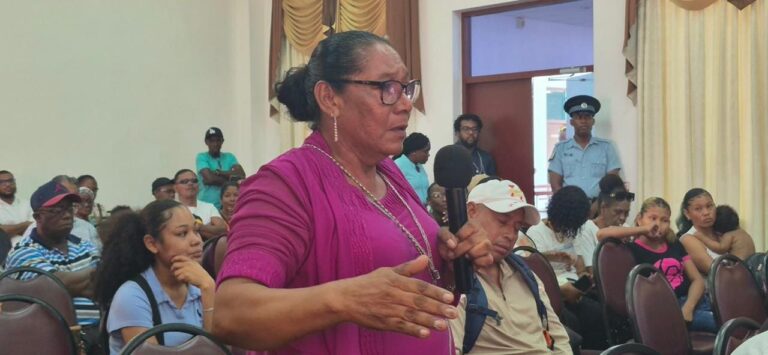
“I looked up for the life jackets. But them life jackets was under lock and key!” recalled MV Barima survivor Helena Moonsammy as she desperately tried to explain the final horrifying moments before the boat went down.  Nothing could convince her in those moments that she and the eight family members travelling with her would survive. 

“I look up; I see death; I see meh death,” Moonsammy mournfully told the five-member Commission of Inquiry (COI) investigating the July 18 disaster. 

She had been travelling with eight grandchildren who lived with her  and was showing those that were with her the coastline as they watched the lights shining from houses like “fairy lights.” 

She was lying down at the back of the boat when things started to unfold. Four guys were drinking and one of them went down to the canteen for more beers. When he came back, he casually mentioned something about sinking, so Moonsammy said she decided to get up to check on the children. Within just a short time thereafter,  the boat canted and went down.

She said the first thing she looked for was the life jackets, but unable to get to them, she recalled struggling in the water. Unable to swim, Moonsammy said she did her best to stay afloat, repeatedly  calling out to God as she fought to reach the surface.

“I drink water, drink water, I talk to God,” she recalled, eventually managing to reach the surface and holding on to a box, which she said helped her survive. In the water, she spotted another woman struggling and pulled her onto the box.

Moonsammy said she was rescued at about 7:00 am the following morning – around nine hours later – and of the eight children she was travelling with, four survived and four perished. 

Deeply emotional

Her testimony was among the deeply emotional accounts shared by survivors and grieving relatives during an informal meeting with the commissioners at the Arthur Chung Conference Centre, Liliendaal, Greater Georgetown last Thursday. 
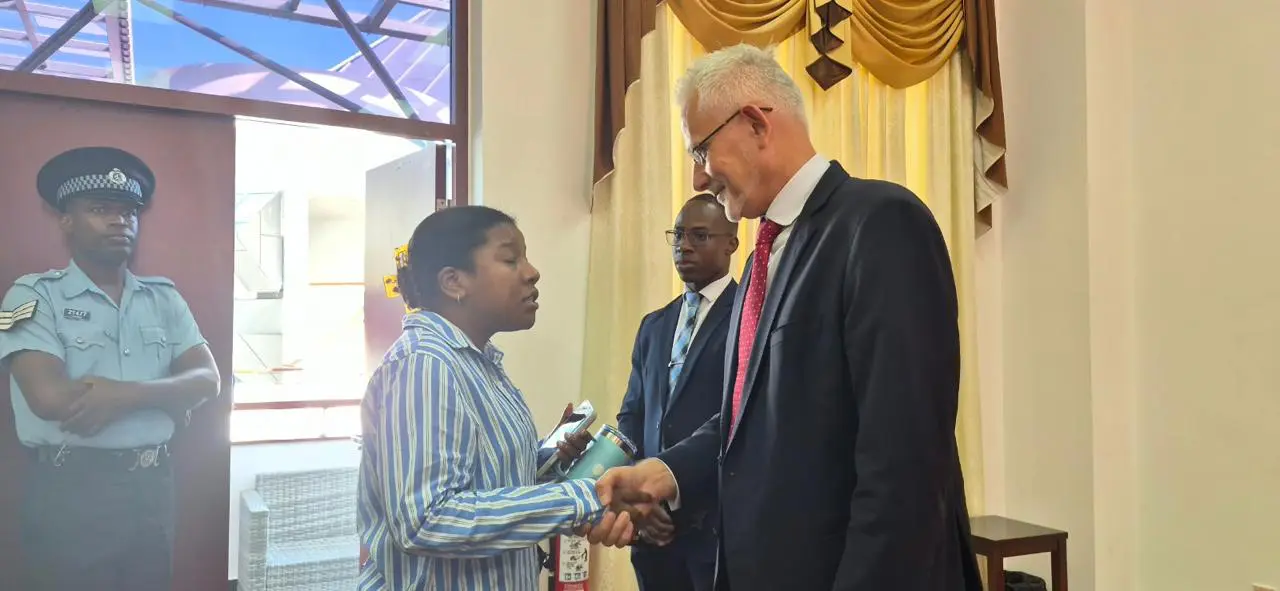
Jasmin Cort, who lost her father in the disaster, having a word with Commissioner, Dr. Andrzej Jasionowski after the meeting

The gathering was intended to provide an opportunity for an open and frank exchange between the Commission and those affected by the disaster. It was not a formal evidence-gathering session, but attendees came determined to speak about their experiences, demand answers and express their fears that the inquiry might ultimately yield no meaningful results.

For many, the pain of losing loved ones was compounded by frustration over delayed action, broken promises and a lack of confidence in the institutions responsible for investigating the tragedy.

‘How can I live knowing my baby didn’t get a burial?’

Survivor Samantha Ramitt broke down as she spoke about losing her only daughter and the lasting trauma the disaster had inflicted on her family. She said her family is continuing to struggle to cope with the loss even as she, her mother, son and two nieces had survived. 
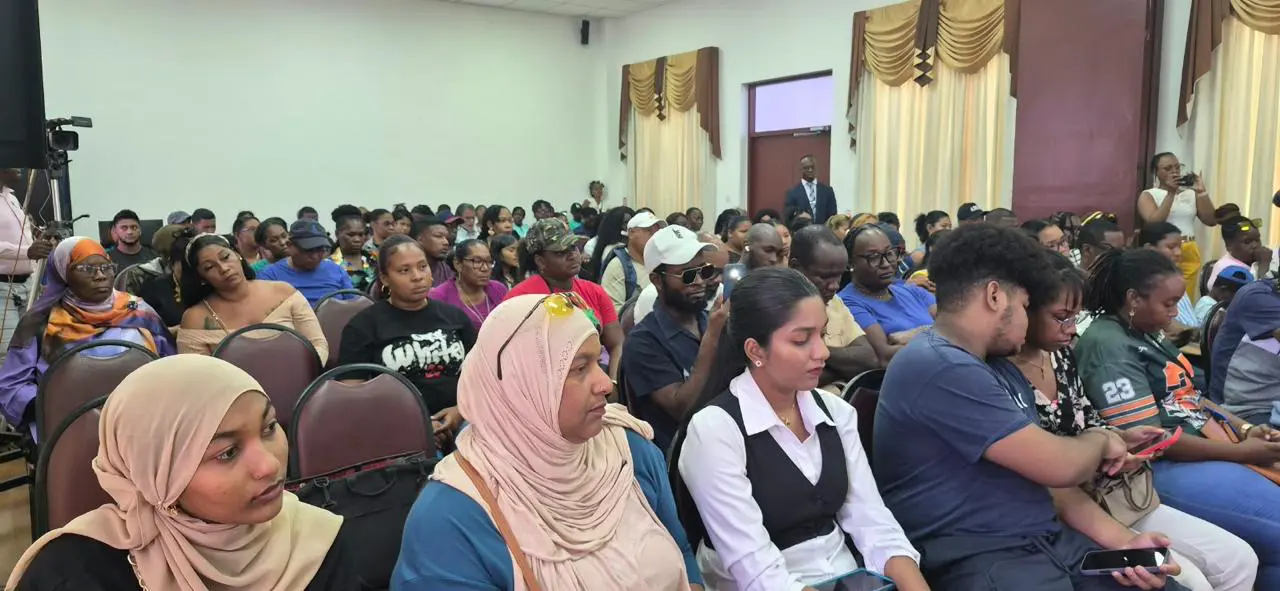
Dozens of people affected by the MV Barima tragedy showed up for the meeting on Thursday

Ramitt said she was left wondering how she could continue living with the knowledge that her daughter had died without receiving a burial. “How can I live knowing my baby didn’t get a burial? I have to live with that pain until I die,” she expressed. 

She described the deceased as loved members of the family and said she continued to cry day and night in her room, to the extent that she is unable to work.

Ramitt expressed little confidence that the inquiry would produce accountability, pointing to the Mahdia dormitory fire as an example of a tragedy after which, in her view, meaningful justice had not been delivered. She urged the commissioners to ensure that the vessel was raised from the seabed so that evidence could be recovered.

‘He was the breadwinner’

As for Dolly Cox, the disaster not only took her father but also disrupted the financial stability of her family and threatened the education of the younger children he had supported.

In tears, Cox said she felt her father’s demise was her fault as he was travelling on the MV Barima for the purpose of helping her to start a business. She recalled that she was the last person he spoke to, a memory that has left her struggling with feelings of guilt.

Cox said her father had always ensured that she received an education, but his death left four children still attending school unable to do so. “He was the breadwinner. My mother had to start working even though she is sickly. He left four children in school. They can’t go,” she said.

She also accused the government of failing to fulfil promises to support her family, including commitments to assist her mother and help the family build. “Up to now, they did nothing for us. And I don’t think y’all will do anything either,” Cox told the commissioners.

She recalled her own experiences on the vessel when its engine cut off and it was left floating, along with another incident in which the boat caught fire. 

‘Nothing will come out of this CoI’

A mother who lost her son in the disaster also challenged the authorities over the delay in raising the vessel, expressing doubt that the inquiry would provide answers.

The 64-year-old woman, who identified herself as a resident of the North West District and said she had travelled on the MV Barima for years, recalled using the vessel as recently as March.

She told the CoI team how assistance had been available to raise the boat immediately after the incident, but that the authorities seemed bent on wasting time. “The government cares nothing about raising that boat. They take too long,” she said.

The woman repeatedly expressed the view that the inquiry would achieve nothing, emphasising her point by spelling out the word “nothing” letter by letter, drawing loud applause from those in attendance. “The government is wasting our time, crawling like snails,” she said.

Primus warns commissioners against being used

We Invest in Nationhood (WIN)  Member of Parliament Odessa Primus said the families were being subjected not only to suffering but also to disrespect, questioning whether the inquiry would deliver results and noting that previous commissions of inquiry had failed to produce any kind of results. 

“We have had a series of inquiries in the past and nothing came out of them. I hope you won’t do the same to these families,” Primus said.

She said those with political responsibility for the lives lost must also be held accountable, insisting that the circumstances surrounding the disaster should not be reduced to political considerations.

Primus also referred to a 14-day period previously announced by the President in connection with the response to the disaster, questioning why the families were still waiting for meaningful action. “People are hurt. You feel the hurt every time you speak to them,” she said, adding, “If there is any dignity and humanity, do not allow this government to use you to further hurt these people.”

Responding to the concerns, Commission Chairman Belizean Justice of Appeal Godfrey Phillip Smith said the commissioners would not allow themselves to be directed by the government that appointed them. “Politicians appointed us but they can’t tell us what to do. We have to be neutral and we have to call it as we see it,” Smith said.

Ram questions scope of investigation

Attorney-at-law and commentator Christopher Ram also used the meeting to raise questions about the scope of the inquiry and whether it would examine the other operations of the Transport and Harbours Department’s ferry service.
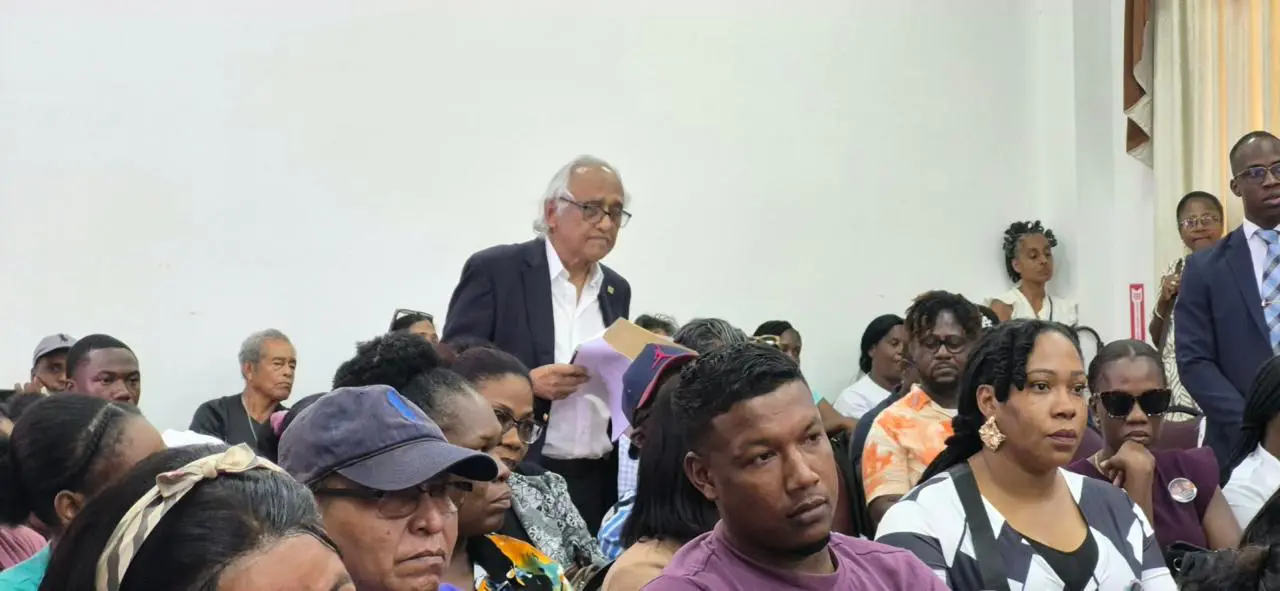
Lawyer Christopher Ram (standing) questioning the commissioners at the meeting

Ram noted that the government had not consulted the public on either the composition of the Commission or its terms of reference. While acknowledging that the same commissioners might have been selected even if consultations had taken place, he questioned whether the inquiry would go beyond the events of the night the MV Barima capsized.

He pointed to other vessels that he said had been ordered and were available, questioning why they had not been deployed.

Ram also asked whether the commissioners would engage specialists with expertise in ferry-service management, supervision, administration and operations.

In response, one of the commissioners said the matters requiring investigation fell within the Commission’s collective expertise, adding that additional specialists could be engaged if necessary.

He also said the commissioners had not been involved in the government’s selection process and had simply been invited to participate.

On the scope of the inquiry, the commissioner pointed to the terms of reference, including a provision covering matters associated with the disaster, and said relevant issues concerning both the MV Barima and the ferry-service system could be examined.

Commissioners urge confidence 

Throughout the meeting, the commissioners listened as relatives and survivors expressed anger, grief and distrust, with some openly questioning whether the inquiry would achieve anything.
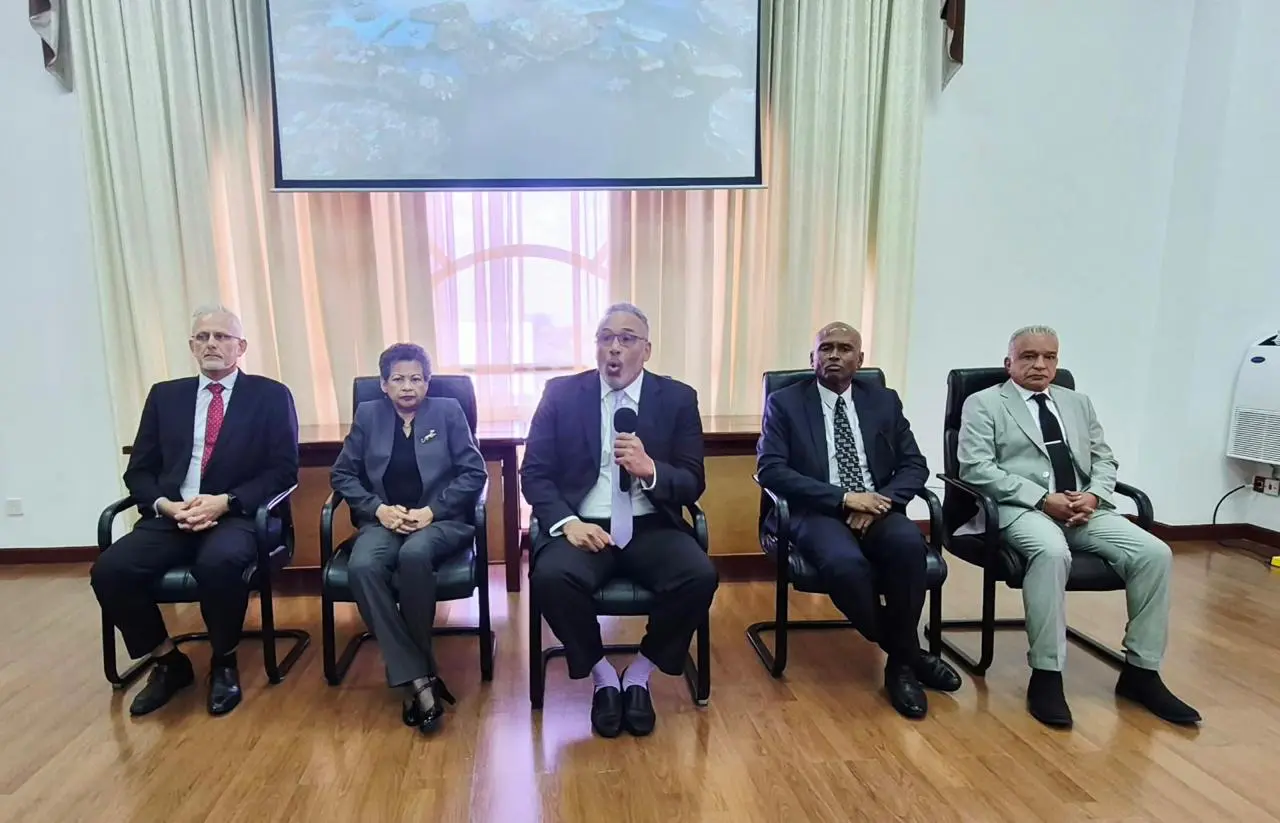
The commissioners addressing those in attendance on Thursday

Smith and the other commissioners remained composed as the concerns were raised, responding to questions and reiterating that their work would be guided by the terms of reference and the evidence.

The panel includes Smith, Polish forensic naval architect and marine engineer Dr. Andrzej Jasionowski, Nyree Dawn Alfonso of Trinidad and Tobago, Captain Hamada Fouda of Jamaica and Rear Admiral (Ret’d) Hayden Pritchard of Trinidad and Tobago. The five were sworn in on July 30, 2026.

The commissioners said they would pursue the evidence and investigate matters falling within their mandate, while acknowledging the limits of their authority.

The meeting drew people from different sections of society, including representatives of the University of Guyana, the Amerindian Peoples Association, opposition parties, civil society organisations and activist groups.

Despite the commissioners’ assurances, the families’ accounts made clear that trust remains a major challenge for the inquiry.

As the Commission prepares to hear formal evidence, the families are demanding more than assurances; they want the vessel raised, the circumstances of the disaster fully investigated and answers that can withstand public scrutiny.


Source: Kiskadee Watch
Memories

0

By Harry Husbands

Harry Husbands is a man of many parts. He was an educator, trade union leader, business executive, politician, senator, radio talk show host and a newspaper columnist. He is an ardent cricket fan, avid reader and lover of kaiso, reggae, jazz and some European classical music. He is a proud Bajan Pan-Africanist.

It’s hard to explain how much my mother loved the Mighty Sparrow. But I think I know how much. She owned two record albums and they were both by him. As much as she loved him she also cussed him out as she never forgave him for the alleged crime of singing the popular Ovaltine jingle as one of the selections on a show he held at the Globe cinema sometime during the 1960s. I said alleged because I’m not sure that she was there at the show or this was just another urban legend with which he was tarred. She would regularly sing the refrain, Ovaltine highly delicious Ovaltine/ to strengthen up your vitality/ drink plenty Ovaltine.

I consulted The Great Zuckerberg and his headline hungry twin, Meta, on this issue. They responded saying, that they could find no evidence that Sparrow ever sang a commercial with those words. That means that you might be one of the only people left who remembers the words, they concluded. But they did go on to say, (1) “highly delicious” was Ovaltine’s official print slogan in the Caribbean during the 1960s. (2) “strengthen up your vitality” is almost word for word a joke Sparrow made in Bois Bande one of his songs and (3) “drink plenty Ovaltine” is a classic calypso advert ending. As interesting as this is it still leaves unresolved the issue of whether or not he sang the commercial at a show inBarbados. Assuming that he did, my mother’s disappointment was understandable. After all she and the other patrons would have much preferred to hear one of his more salacious hits like Mae Mae, Bag ah Sugar or Salt Fish.  

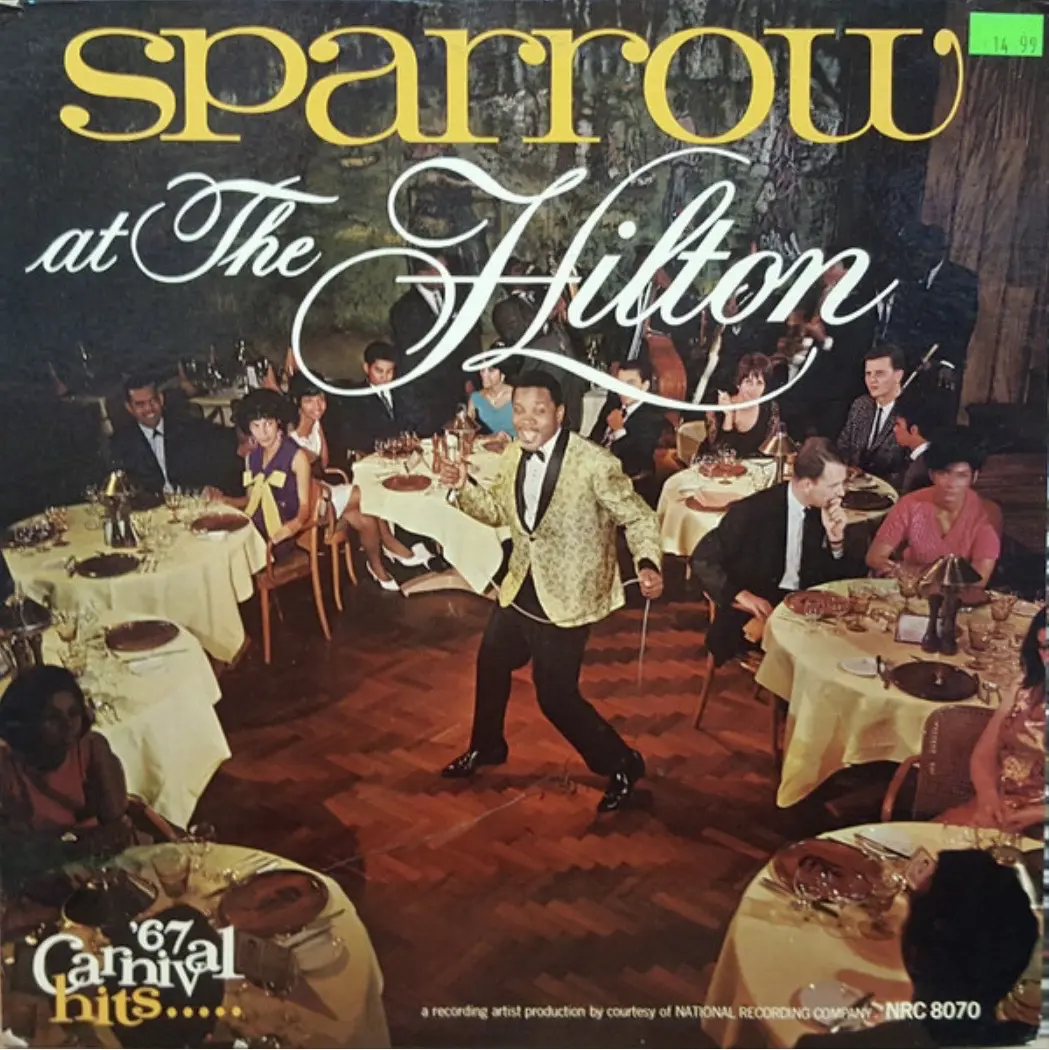
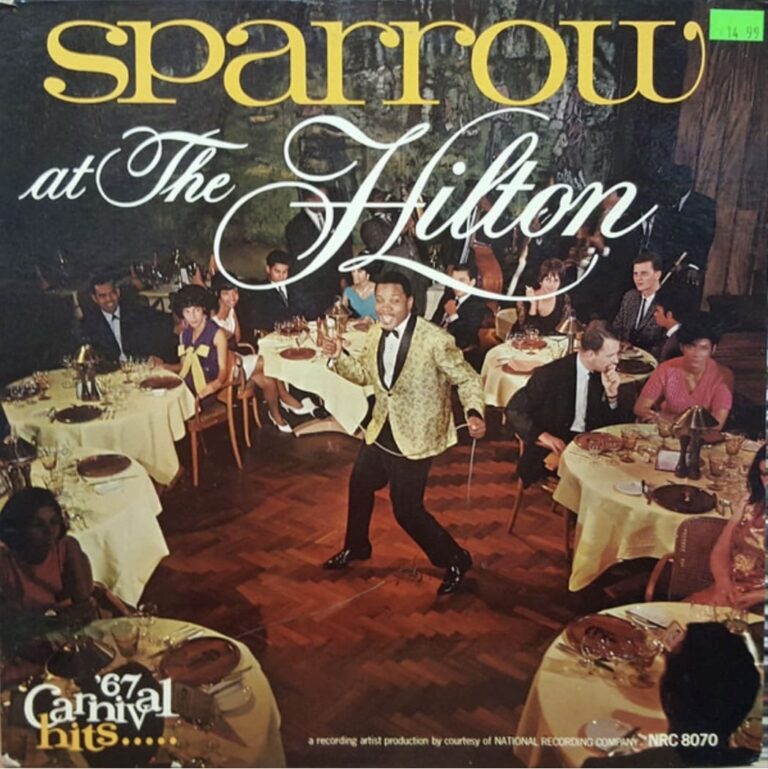
The first of the albums she owned was Sparrow at the Hilton. Although a 1967 studio recording it probably represented a step up for the calypso genre to be associated with such a prestigious and uniquely up sided down hotel as the Trinidad Hilton. The album included such hits as Rufus, Education a Must, Shango, No Money No Love and Sandra. But it was the Governor’s Ball that was my mother’s favourite. She played the stuffing out of it. Until this day I can still sing along with it, word for word, The Governor had a ball ah never see nothing so yet/ a mad woman jump the wall and invade the fete/ Prospect with the baton in hand conducting the Police Band/ he say the woman shake she waist in the Governor face/ telling everybody inside the place/ shake your baton like Mr. Prospect. 

“She bann she belly” the day she gave it away. Her Trinidad born Canadian resident step son-in-law on his first visit to Barbados begged her to let him have it. She gave him a firm NO! On his second visit he came prepared. He was teary eyed and carried a hang-dog look on his face so she gave into his carefully planned entreaties. From the moment he left, smiling, carrying her Sparrow from the Hilton to Toronto she regretted her decision. She spent many subsequent years looking for a replacement but to no avail.

The second LP in her possession was Christmas with Sparrow. It contained many Christmas classics such as Silent Night, White Christmas, Jingle Bells and Rudolph the Red Nosed Reindeer. But the banger was There’s no Place like Home for the Holidays. With the volume on the radiogram on blast I can still hear Sparrow crooning, I met a man who lived in Port of Spain/ he was heading for San Fernando and some homemade pumpkin pie/ from San Fernando folks are traveling up to Maracas Bay for sure/ to a lovely moon light picnic man the traffic is terrific/ for there is no place like home for the holidays. Lord Have Mercy (or, as the young people say, LHM)! There is no better feeling than a Christmas Eve with the radiogram speakers belting out Sparrow’s beautiful rendition of No Place Like Home, the smell of ham in the oven and freshly baked Great Cake on the dining room table. 

My mother played her Sparrow LPs on her fancy sleek Philips radiogram, a combination radio and record player both encased in a dark teak wood cabinet. She got it on hire-purchase from Mannings, a popular Barbadian department store of the time. It wasn’t just an entertainment centre, it was a status symbol. It meant that we had arrived. By today’s standards we were balling. It was a step up from the private radio and several steps up from the Rediffusion. 

Whenever my aunt’s husband visited Barbados from New York he brought along his Mills Brothers 78s singing, you always hurt the one you love/ the one you shouldn’t hurt at all/ you always take the sweetest rose and crush it til’ the petals fall. Another family member hired a car regularly on Sunday afternoon and put his radiogram in the back seat and with a few of his lady friends, made a tour visiting other friends where he would play his records.

Our radiogram was pivotal in extending my awareness and knowledge of Sparrow’s music and the wider calypso genre. It permitted us to borrow records from neighboursand to listen to Trinidadian radio stations especially at carnival time.

Many years later and with this heightened awareness I could confidently propose to my tutors at Erdiston Teachers College that I incorporate calypso music as an aide in my Social Studies lessons during teaching practice. Fortunately, the Instructional Plan I was asked to teach included a sub-theme on slavery. The first song I selected was Sparrow’s Slave. The first two lines of that kaiso, I’m a slave from a land so far/ I was caught and I was brought here from Africa, contains enough material to last an entire semester. This wasn’t banja* but Sparrow at his genius-best.

In a nutshell, we integrated Social Studies, vocabulary, mathematics, map work skills and health sciences with other areas of the curriculum. This allowed us to define the word slave and then compare and contrast slavery and freedom. From there we identified and located via map work the countries in Africa from which slaves came, identifying the names they’re called today. Additional map work located Barbados, the continents, the Atlantic and the other oceans.

In my lesson plans I applied the Socratic method to interrogate the Middle Passage. We explored a number of themes including the length of time it took a slave ship to transit the Atlantic, the number of slaves each ship carried on average, how the slaves were stored for travel, the foods they ate, what were the likely conditions on board, what health issues did the slaves confront, what materials were used in the ship construction, how were the ships propelled, how do slave ships compare and contrast with ships today?

Eventually I was successful not so much for what was achieved but more for the vision of trying something different and creative. I was a young inexperienced teacher in training and couldn’t fully pull it together. I could only scratch the surface.

When it is said that the Sparrow catalogue is like no other ranging from the comical to the spicy to the historical and highly educational I know that to be accurate. So as The Mighty Sparrow sang in praise to others we sing for him in his own words, Sparrow we will always remember/ jumping when them big band pass/ playing mas’/ sugary, peppery,you were never ever one for class/ Birdie where ever you are brother/ Just for you we gine give dem real thunder everyday/ We will always remember you with pride

*Banja/banjo: secular music if played on Sunday and/or any sexually suggestive song


Source: Kiskadee Watch

Mr Rohee’s letter overlooked many other Guyanese and international figures in the October 5th story

0

Dear Editor,

I write to respectfully reject the position advanced by Mr. Clement Rohee in his recent letter, dated October 8, 2026, and captioned “Cheddi Jagan was the central figure in the October 5th story.” His account is neither complete nor balanced, and it cannot serve as an authoritative recollection of that critical period in our nation’s life.

Mr. Rohee’s letter presents the story of October 5, 1992, as though it were almost exclusively the story of Dr. Cheddi Jagan and the PPP. This is furthest from the truth. It conveniently overlooks the many other Guyanese and international figures whose contributions, had they been absent, would have ensured that the PNC still be in office today.

The evidence points to a combination of sustained regional pressure—which created the necessary influence in Washington, D.C.—and the changing geopolitical landscape following the arrival of President Ronald Reagan and his deputy George Bush, alongside the weakening of the Soviet Union and the emergence of “glasnost and perestroika”, the two reform policies introduced in the mid-1980s by Soviet leader Mikhail Gorbachev. Were it not for the direct support of the USA, Mr. Rohee might still be holding a placard in front of the Office of the President today, and a PNC President would have been presiding over a full-fledged military dictatorship.

There are also the Caribbean leaders, namely Dame Eugenia Charles (May 1919 – September 2005), who served as Prime Minister of Dominica until 1995, and Sir James Mitchell (May 1931 – November 2021), who served as Prime Minister of St. Vincent until 2000. In 1983, Mrs. Charles was invited to Washington, D.C., to solidify the strong relationship between herself and Reagan around the Grenada issue. It was on that foundation that she and Mr. Mitchell were able to reopen doors in Washington at the highest levels to advocate for Guyana’s freedom in 1986.

Very few will recall the message they shared with President Desmond Hoyte at that 1986 meeting on the island of Mustique—a meeting that bore the permanent imprimatur of Eugenia Charles. In a speech delivered in September 2008 at the UWI Open Campus in honour of Mrs. Charles, Sir James  spoke from his private diaries. He revealed that she had personally advocated to Reagan that “it would become a contradiction in value should the election irregularities in Guyana remain unchallenged now that we have brought democracy to Grenada together.”

It was on this foundation that the Heads of Government of Dominica, St. Kitts and Nevis, St. Lucia, Barbados, Grenada, Guyana, and St. Vincent and the Grenadines met in Mustique for the first time. Dame Eugenia led the charge in that candid but tense meeting, having the full backing of Reagan to resolve the Guyana issue within the CARICOM framework. According to Sir James, she opened with this statement: “We could not have our headquarters in the capital of a country with rigged elections, nor should we tolerate keeping Guyana in the Community and sully our democratic reputation with continued indifference to repeated flagrant irregularities in the electoral process.” Others expressed similar sentiments, though without the same firmness of position as Mrs. Charles.

Sir James revealed in that speech that “Hoyte explained himself with a plethora of statistics on the elections, including references to the positive showing his party made with the Indo-Guyanese section of the population, especially the business community.” After some two hours of discussion, the Caribbean leaders secured from Hoyte an undertaking that CARICOM would be entitled to monitor the electoral process in the future, culminating in observers being permitted to be present in Guyana to determine the fairness of elections. Jagan was nowhere on the scene at that meeting and could never have secured such a commitment from Hoyte.

But Mr. Rohee appears confused because in a letter he wrote upon the passing of Dr. Yesu Persaud in January 2022, he alluded to the 1991 Washington, D.C., Mission. That Mission was led by Dr. Yesu Persaud (1928–2022) and Bishop Randolph George (1924–2016), as leading Guyanese civil society figures at the time. They successfully met with high-level U.S. State Department officials to make the case for international observers and electoral oversight, and they successfully influenced an outcome that added critical value to the process of free and fair elections in 1992.

Then there was Desmond Hoyte, who, as President, played a decisive role in the events that led to the 1992 election. Whatever one thinks of his politics, it was Hoyte who allowed the electoral process to proceed and who accepted the result. That was true statesmanship that was supported by a critical decision at a critical moment. To write about 1992 without acknowledging Hoyte’s role to democracy is to write fiction, not history. There was major support within Congress Place for the PNC to use whatever means necessary to stay in power, much like President Paul Biya of Cameroon (who has been in power from 1982 to the present). They even had a plan to institute a strategy that entailed a combination of undemocratic electoral controls, a carefully balanced security apparatus that preserved absolute loyalty to the party, and strategic management of the economic elites.

Many would not know, but Major General (retd.) Joseph Singh can attest to what took place on that fateful day in 1992, when Hoyte called him and issued instructions. Those instructions were never to suppress the will of the people or destroy their voice; they were to provide the safe space for the will of the people to be respected—to the angst of one particular former leader of the PNC, Mr. Hamilton Green, who, against the wishes of Hoyte, brought the people out onto the streets in front of the GECOM Building on Croal Street, which culminated in major burning and looting of stores on Regent Street. I listened carefully to then Senior Superintendent Paul Slowe’s programme last week, where he spoke of his personal action to contain the violence—despite his having personally voted for the PNC in 1992.  What he was clear about was the support he had from Hoyte at the time to bring peace to the land.

Beyond these few names, there were many others—politicians (including many PPP leaders, such as Pandit Reepu Daman Persaud), civil society leaders (including Clairmont Lye and Dr. Makepeace Richmond), religious figures (such as Sister Doreen Rowtie of the Catholic Church), diplomats (including President Jimmy Carter and David Carroll), and ordinary citizens—who worked with the United States Government in particular to ensure that Guyana had free and fair elections, and elections free from fear. Their efforts mattered. They helped create the conditions in which October 5, 1992, became possible.

Mr. Rohee’s letter also fails to engage honestly with the role of the United States Government in the 1992 election outcome. Without the active involvement of the USA —and the solid work done by former Ambassador Theresa Tull, Officer in Charge Denis Hays, and Ambassador George Fleming Jones—our Guyanese story would not have been the same.

Good history makes for good citizenry. But the history Mr. Rohee offers is not good history. It is a selective, self-serving narrative that elevates one man and one party while diminishing the contributions of others. It misleads people about the past and misinforms their debates about the present.

The truth matters. 

Yours faithfully,

Khemraj Harryram


Source: Kiskadee Watch

Robert Corbin’s legacy

0

It could be said that the career of Robert Corbin straddled two important eras in Guyana’s post-Independence history. The first consisted largely of the establishment and consolidation of authoritarian rule coupled with economic decline. The second consisted largely of the establishment and consolidation of democratic rule coupled with economic growth. Corbin made his mark in both eras. He was actively engaged in supporting the former and made an important impact on the latter. 

The failure to achieve a political solution after 1992, which was on Cheddi Jagan’s and the PPP’s agenda since 1978 with its adoption of proposals for a National Patriotic Front Government, was not only the PPP’s fault. It was also the PNC’s fault. Desmond Hoyte’s PNC had time only for political supremacy, not political solution, and demonstrated its policy in the streets with ‘slow fire, mo’ fire.’ No one in the PPP envisioned an approach to the PNC in those circumstances or if one did, imagined that such an approach would be entertained for more than a minute. 

Corbin assumed the leadership of the PNC just one year after Hoyte announced that he was finally convinced that the time for ‘shared governance’ had arrived. But shortly before, in 2001, Bharrat Jagdeo had won the elections. At around the same period, therefore, new leaders had assumed office. The talks between Hoyte and Jagdeo in 2001 having failed, Corbin and Jagdeo made another effort. In 2004, agreement was reached featuring the following issues: Constitutional and Anti-Defection legislation; Commitments to Linden; Local Government and Reform Dialogues; and State Media Access and Dialogue. Within a few months this attempt at dialogue was ended by the PPP, for a reason or reasons unknown.

Corbin turned his attention to building a coalition for the elections. He appears to have understood that the PNC badly needed an alliance of forces. He came up with an outfit of one-person parties which he named PNCR-1G. He faced the 2006 elections having failed to establish a viable coalition, significant opposition to his leadership within the PNC and the newly formed AFC. The PNC obtained five seats less than in 2001. The AFC won five seats. Recognising that he might not be able to overcome internal opposition to his leadership and that the AFC posed a danger, he called in David Granger. APNU, with the WPA being the main junior partner, was established. In 2011, the new opposition party, APNU, recovered the votes and seats that the PNC had lost. The AFC gained, taking away support from the PPP, which dropped to minority status. 

APNU+AFC, an electoral coalition, won the elections in 2015 but its government failed to implement constitutional reform for shared governance which had been promised in its manifesto. Having lost the elections in 2020 and there being no constitutional reform for shared governance in place, APNU lost out completely. 

It appears that at this point Corbin lost whatever influence he may have still had. An internal critic, Aubrey Norton, won the leadership and his allies swept away the entire frontline leadership, ditched the AFC, went alone to the elections, and was crushed by WIN. APNU dropped from 31 seats in the National Assembly to 12. WIN won 16 seats. PPP/C obtained 36.

Shared governance had always been premised on the PNC being the second largest party with the objective being to reduce ethnic tension and competition at election time and generally in the society. Not only did no one expect the massive loss that APNU suffered but no one expected a large-scale migration of African Guyanese support to an Indian Guyanese-led party, WIN. For reasons other than the ethnic factor, such as the possibility that WIN could potentially draw away PPP/C supporters, shared governance is no longer an option for the PPP.

What does the future hold? APNU might make a comeback as it did in 2011. The PPP/C would be happy with such an outcome. It would remove the threat of WIN potentially winning the elections by its Indian leader taking away Indian votes. And the PPP knows that without APNU having a viable coalition partner that can draw votes away from the PPP, which APNU does not have, APNU cannot win elections. It is not likely that WIN will be that partner. In the meantime, while the capacity of the government to deliver benefits to the population because of Guyana’s growing oil income continues, there are clouds on the horizon, namely, the slow trickling down of benefits, the high cost of living and allegations of corruption. Whether the PPP/C can keep WIN at bay in these circumstances is not known. Failing to pay attention to gathering clouds on the horizon in 2006-2011 caused the PPP/C to lose its majority support in 2011 and the elections in 2015.

Is this a time for overtures to the APNU? Apart from the fact that it is always helpful to be on good terms, as far as is possible, with your adversaries in politics, good relations with APNU will assist in isolating WIN. If APNU is seen to be “gaining concessions” from the government which will benefit its supporters, maybe it will regain some lost ground at the expense of WIN. The recent discussions between APNU and WIN did not appear to bear much fruit. For the PPP to take on two opponents simultaneously would not seem to be the best course when one could be susceptible to an approach. 


Source: Kiskadee Watch

Relocation of GuySuCo head office to Berbice under discussion – source

0

-workers pressing for $145m in retroactive payments

A proposed relocation of the Guyana Sugar Corporation’s (GuySuCo) head office to Berbice has not been officially communicated to employees, a senior staff member has said, as 258 non-unionised senior employees continue to press management for approximately $145 million in outstanding retroactive salary payments.

Speaking to Kiskadee Watch yesterday, the source said management had engaged head office employees to gather information about their family arrangements, personal circumstances and other obligations as it explores the feasibility of relocating the office.

“Nothing, nobody has been officially informed that the head office is being relocated,” the source said, adding that employees had not yet been formally notified of any decision to move.

The source said the corporation’s employment and labour obligations would have to be considered if a relocation proceeds, particularly if employees are required to work at a location more than 10 miles from their current workplace.

The source, who said they were also affected by the proposed move, said they were not involved in the assessment of employees’ circumstances and could not comment on the findings of the ongoing engagements.

However, the senior staff member said that while moving the head office closer to the corporation’s sugar-producing operations in Berbice could have strategic advantages, they saw no financial benefit to the move.

“Strategic-wise, it might be a good idea,” the source said, noting that approximately 75 per cent of GuySuCo’s operations are in Berbice, while the remaining 25 per cent are in Demerara.

The source added that some head office functions would still need to remain in Demerara because of the corporation’s international operations and its dealings with port authorities.

The employee stressed, however, that the relocation remained an exploratory exercise and was not yet a confirmed move.

Further, the source said the more pressing issue for the affected senior employees was the withholding of retroactive salary payments covering January to August 2025, as well as the removal of a salary increase from their pay beginning in January 2026.

In two letters dated August 20 and September 8, 2026, the 258 non-unionised senior employees appealed to GuySuCo Chief Executive Officer Dr Paul Cheong to address unequal treatment in the payment of salary adjustments.

The employees said they were excluded from the 2025 de-bunching retroactive payment, despite unionised employees receiving payments covering the same period.

According to their correspondence, the outstanding payments for the 258 employees amount to approximately $145 million, while retroactive payments to unionised workers totalled about $900 million.

The affected employees said they represent approximately 3.1 per cent of GuySuCo’s 8,300-strong workforce and that settling their claims would account for 13.8 per cent of the overall retroactive payment.

The source told Kiskadee Watch that the salary adjustment had been implemented in September 2025, with the affected employees receiving the increased salaries from September to December that year. However, the retroactive payments covering January to August 2025 were never received, while the salary increase was removed from their pay beginning in January 2026. “There is some payment that GuySuCo is contractually obligated to pay senior staff, increase in salary. That was unilaterally removed from us from January 2026,” the source said.

The employees argued in their August letter that correspondence issued to them in September 2025 outlined their new salaries for 2025 and 2026, including the retroactive payment. They said the subsequent decision to exclude them from the payment contradicted those arrangements and created an unjustifiable disparity between non-unionised senior employees and unionised workers.

The source also questioned why some senior employees, including field superintendents represented by the Guyana Agricultural and General Workers Union (GAWU), received the retroactive payments while other senior staff were excluded.

The employees contend that the disparity amounts to a breach of their employment arrangements and called on management to reconsider its position.

In their September 8 letter, the employees asked GuySuCo to confirm that the outstanding payments would be included in their September 2026 salaries.

The source said the corporation had not responded to their concerns or made the payments by the time of the interview.

The correspondence was copied to GuySuCo’s board chairman, Vice-President Dr Bharrat Jagdeo, Agriculture Minister Zulfikar Mustapha, Labour Minister Keoma Griffith and the Chief Labour Officer at the Ministry of Labour and Manpower Planning.

The employees had previously requested a favourable response within three days of their August 20 letter, warning that they could pursue further formal action to protect their contractual rights if the matter remained unresolved.

The source said the senior employees were now prepared to pursue the matter through legal channels. “We, the non-unionised senior staff, we are going to pursue this matter through a legal channel.” 

The employee also expressed concern that the Labour Ministry had not addressed the matter, despite the correspondence being copied to the Chief Labour Officer.

The source described the situation as discriminatory and said the employees believed their contractual rights had been breached.

The source further argued that GuySuCo’s difficulties extended beyond the salary dispute, contending that the corporation’s management and the way its operations are handled were contributing to its challenges.

The employee maintained that the corporation’s sugar industry had potential but said its challenges were not unique, pointing to difficulties faced by sugar-producing countries internationally.


Source: Kiskadee Watch

Campbell denies being held at CJIA, rejects reports he was `caught’  with ammo

0

A Partnership for National Unity (APNU) parliamentarian Terrence Campbell has denied reports circulating on social media that he was held at the Cheddi Jagan International Airport (CJIA) after allegedly being found with 43 rounds of live ammunition while preparing to travel to Trinidad and Tobago.

In a statement posted on his Facebook page, Campbell said he was leaving Guyana but had not been detained at the airport and was not “caught”  with any ammunition.

“I was never held at the Cheddi Jagan International Airport,” Campbell said, adding that the authorities had not “caught” him with ammunition.

Campbell said he would not comment further on the reports, which he described as sensational Facebook posts.

The parliamentarian, who said he had been involved in aviation and aviation security matters for almost three decades, suggested that some matters in the field were not suitable for public discussion.

“Very often these matters are not matters suitable for wide public discussion. Consequently, I will refrain from further public comment on the sensational Facebook posts currently circulating,” he said.

Campbell said his statement was intended to reassure his friends and followers about his wellbeing. “Last, I made this post to reassure my many friends and followers that I am ok and all is well,” he added.


Source: Kiskadee Watch

Robert Corbin demonstrated it is possible for political leaders to evolve 

0

Dear Editor,

Robert Corbin, who passed on October 4th, the day before the anniversary of the return of free and fair elections in Guyana in 1992, played an outsized role as a leader of the PNC in politics before and after that date. By the time I returned in 1988 to represent the NY-founded “Jaguar Committee for Democracy” to join the local struggle for electoral reform, Robert had become indispensable to Desmond Hoyte’s campaign to solidify his leadership of the PNC.

In the1985 elections, he had reprised the role he played in the party since he was a teenager working assiduously as a member, then leader, of the party’s youth wing, the YSM to organize majorities  for the PNC at the polls of 1968, then in 1973 and 1980 for Forbes Burnham. Missing a parliamentary seat because of his age in 1968, he was handed one in 1973 and occupied it for over three decades. He earned a formidable reputation as a street politician, feared only slightly less than Hamilton Green, who was eased out of the party after Hoyte calculatedly rewarded Corbin with the Deputy Prime Ministership and transferred several PM responsibilities to him. 

Quite conscious by then of the snobbery of Caribbean “doctor politics”, Corbin entered law school after the PNC’s loss in 1992 and had just finished his first year at Hugh Wooding when he rushed back to mobilize for the Dec 1997 elections.  As such, he would again prove his worth as he subsequently helped organize massive rallies for Hoyte’s violent “mo fyaah; slow fyaah” campaign against Janet Jagan’s presidency. 

Elected to Parliament in 2000 on the ROAR ticket after the PNC-bludgeoned, truncated PPP term, I became personally acquainted with Robert as a member of the opposition. Evidently knowing that I was vegetarian (then) he sought me out at a meal break with  a particular non-meat dish, which served as an ice-breaker to  many discussions on several of my pet issues – including reforming and “balancing” the Disciplined Forces. To my surprise, he said he agreed with me but advised that the process would have to be carefully crafted and executed. After he became PNC leader, he vigorously supported the establishment of the Disciplined Forces Commission which, inter alia, would recommend that policy and enabling mechanisms.

Mr Hoyte’s sudden passing in late 2002 resulted in Robert being elected PNC leader the following March – but not without much drama in the party from several quarters including Mr Hoyte’s protégé Raphael Trotman and Team Alexander. Not long after, I received a call from Lance Carberry saying that Robert wanted a meeting, to which I agreed, at his home in south GT. I found that Robert was convinced – as Mr Hoyte had become not long before he passed – that shared governance was the vehicle to resolve our political logjam.  I informed him, however, that such a vehicle would suffer from the disequilibrium in size if individuals or smaller parties were to join the PNCR and the PPP was out. He agreed to the latter proposition and  emphasized subsequently at discussions that there could be no national government without the PPP.

We parted amicably and very soon, the nation heard that talks between President Jagdeo and Opposition Leader Corbin had commenced as the latter downplayed Hoyte’s “slow fyaah; mo fyaah” strategy. This precipitated greater consternation from within and without the PNC. Sitting next to WPA’s Sheila Holder in Parliament, one day she burst out that “this is not what we put Corbin there…he was supposed to “manners” the PPP.”

Robert believed that Jagdeo would arrive at a modus vivendi with him at power sharing and acted accordingly. He also diligently had discussions at Waterchris with the smaller opposition parties like ROAR and WPA. However, sitting next to him in early 2006 at Sash Sawh’s funeral at Castellani House, when Jagdeo pointedly mentioned the “intellectual authors” of Sash’s murder, Robert angrily exclaimed, “If I was the old Robert Corbin…!” There was no agreement between them and with Trotman’s AFC siphoning off five seats from Corbin’s PNCR-One Guyana in the 2006 elections, he faced more strident leadership challenges. 

Robert stuck to his guns about the PNC needing an accommodative image and by 2010 announced he would not be their Presidential candidate for the upcoming elections. He riled party leaders like Aubrey Norton when he engineered APNU’s formation and David Granger’s presidential candidacy. Ironically, he was peripheralized in the new APNU+AFC government  and Granger destroyed his inclusive vision by also sidelining his smaller coalition partners.

Robert Corbin demonstrated it is possible for political leaders to evolve and rise to the  needs of their country. 

RIP Robert. 

Sincerely,

Ravi Dev


Source: Kiskadee Watch

Manickchand questions handling of Seeram case, calls for equal treatment 

0

Minister of Local Government and Regional Development Priya Manickchand has questioned the handling of National Border Patrol Director Daniel Seeram’s case following his conviction for assaulting his former wife, insisting that the law must be applied consistently regardless of an accused person’s status or legal representation.

In a statement reflecting on the advancement of women’s rights in Guyana, Manickchand said the country had made significant progress in protecting women from harm but warned against making exceptions in individual cases that could undermine those gains.

She questioned whether the usual legal procedures following a conviction and a decision to remand an accused person pending sentencing were being followed in Seeram’s case, and called on his attorney, Nigel Hughes, to clarify the legal steps being pursued. “I don’t know what the facts are between Mr Seeram and the complainant. And I don’t need to know,” Manickchand said, noting that a court had heard the matter, found Seeram guilty and remanded him pending sentence.

The minister said Seeram was entitled to pursue all available legal defences, including appeals and consequential orders that an appellate court could make. However, she asked whether any order staying the remand decision had been made or applied for, and whether the usual procedures were being followed. “Every single time we offer a ‘but this one is different’ we halt the progress we should be making. And it is time we stop,” she said.

Manickchand argued that the handling of such cases had implications beyond the individuals involved, particularly for women who might be considering reporting abuse or seeking protection through the courts. “These are public policy issues that cause shifts and changes one way or the other,” she said, adding that women needed to be confident that their rights would not be eroded when an accused person obtained high-profile legal representation.

She also said the public needed to be assured that the courts would treat cases fairly, regardless of who appeared before them.

Seeram, who serves as National Border Patrol Director, was found guilty on October 2 of assault causing actual bodily harm against his former wife, Farzana Hamid, following a trial before Magistrate Abigail Gibbs at the Sparendaam Magistrate’s Court. He was remanded to prison pending sentencing, which is scheduled for November 2.

Seeram’s attorney subsequently challenged the magistrate’s decision to remand him, arguing that the decision effectively predetermined a prison sentence before the completion of the sentencing process.

On October 5, High Court Justice Joy Persaud-Singh dismissed Seeram’s application for judicial review, finding no indication that the magistrate had acted unlawfully, irrationally or outside her jurisdiction. The ruling upheld the decision to refuse bail. Seeram’s legal team subsequently indicated that it would approach the Court of Appeal in a further attempt to secure his release pending sentencing.  Since then, it has not been clear where Seeram is being kept. His lawyer and the police have said nothing. On Friday the Guyana Prison Service confirmed that Seeram was not in its custody.

The case arose from a complaint concerning an incident at the former couple’s Cummings Lodge apartment on September 11, 2023. Hamid testified she was awakened by a sharp pain to her head and realised Seeram was hitting her. She said she began recording the incident on her phone, which was subsequently taken from her and damaged.

The magistrate found that the prosecution had proved its case beyond reasonable doubt and rejected Seeram’s account that he had merely pushed Hamid while attempting to leave the apartment. 

In her statement, Manickchand also reflected on her admission to the Bar in 2000, describing the changes in the legal system and society’s response to domestic violence over the past 26 years. She recalled an experience early in her legal career when a magistrate questioned whether a man should be removed from his home for a “mere slap”.

Manickchand said the exchange demonstrated a lack of understanding of the nature of domestic violence, which she explained often involves repeated incidents of abuse before a victim seeks legal intervention.

She noted that the Domestic Violence Act was four years old at the time and that the Sexual Offences Act had not yet been enacted. The latter was passed in 2010 following a national advocacy campaign known as “Stamp It Out”, she said.

The minister said access to finances, education, training, home ownership and political representation for women had improved significantly, crediting advocacy by political organisations, non-governmental organisations, religious leaders and members of the public. However, she maintained that progress would be undermined if laws and principles designed to protect women were applied inconsistently.

Manickchand said the Seeram matter highlighted the importance of ensuring that the rights of women were protected without compromising an accused person’s entitlement to due process. She also questioned whether the public was receiving sufficient clarity about the legal steps being taken in the case, saying the difficulty of separating facts from social media commentary underscored the need for fair and responsible reporting.

The minister called for greater transparency about whether the ordinary legal process was being followed and, if not, why any departure had occurred. “Our country and her people deserve more. And want more,” she said.

The Guyana Police Force has provided no explanation for why Seeram was not handed over to the prisons.


Source: Kiskadee Watch

Parika Ferry Stelling 15% completed

0

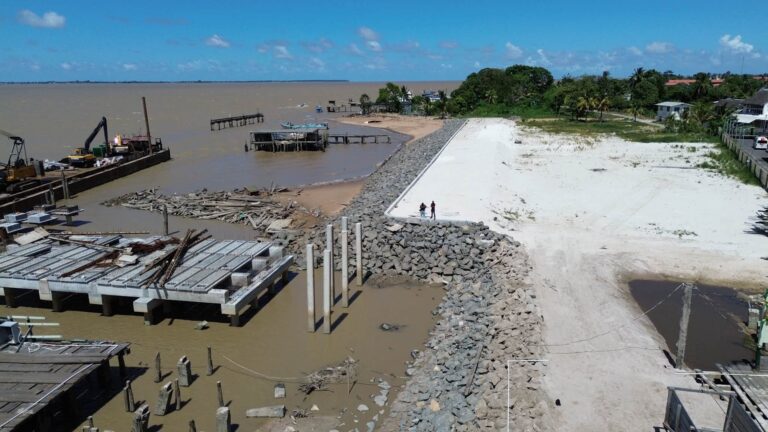
The transformation of the Parika Ferry Stelling continues to take shape, according to a release yesterday from the Ministry of Public Works.

Minister within the Ministry of Public Works, Madanlall Ramraj, yesterday inspected the ongoing works, where river defence works have significantly advanced, with the area now fully sealed to protect against flooding.  He was accompanied by Minister within the Ministry of Agriculture,  Vickash Ramkissoon. 

Construction of the stelling is approximately 15% completed, with pile cap works underway ahead of the installation of precast beams. 

Further, the diversion route has been completed, allowing cargo exceeding 20 tonnes to once again be transported through the facility, the release added.


Source: Kiskadee Watch

Guyana’s  capacity to approach 6,000 hotel rooms by yearend – DPI

0

Guyana’s tourism sector is poised for further growth, with the country’s accommodation capacity projected to approach 6,000 rooms by the end of 2026, the Department of Public Information (DPI) reported yesterday.

Director of the Guyana Tourism Authority, Kamrul Baksh, spoke on the sector’s expansion while addressing the State of the Industry Conference (SOTIC) 2026, noting that the country’s room stock has grown significantly from the relatively small number of rooms available in 2020.

The expansion has been supported by increased investment in the hospitality industry, including the entry of international hotel brands such as Hyatt, AC by Marriott, Four Points by Sheraton and others, alongside the development of additional accommodation properties, DPI said.

The director said a further 15 hotels are expected to come on stream after 2026, signalling continued growth in the country’s capacity to accommodate visitors.

DPI said that the increased room stock is particularly important as Guyana strengthens its meetings, incentives, conferences and exhibitions (MICE) market.

Baksh noted that the country had hosted more than 20 conferences and exhibitions during 2026, attracting significant numbers of visitors and generating business for restaurants, bars and other tourism-related services.

He noted that the Hospitality and Tourism Institute is expected to be completed by the end of 2026, providing an important foundation for developing the skilled workforce required to support the expanding industry.

Questions have been raised about the occupancy rate at some hotels given the increased competition. Critics have said that the government has at great cost sought to host conferences as a means of boosting occupancy but that this is not sustainable.


Source: Kiskadee Watch