Home Blog Page 73

Guyanese Sean Pike Released After Five Years in Russian Prison

0

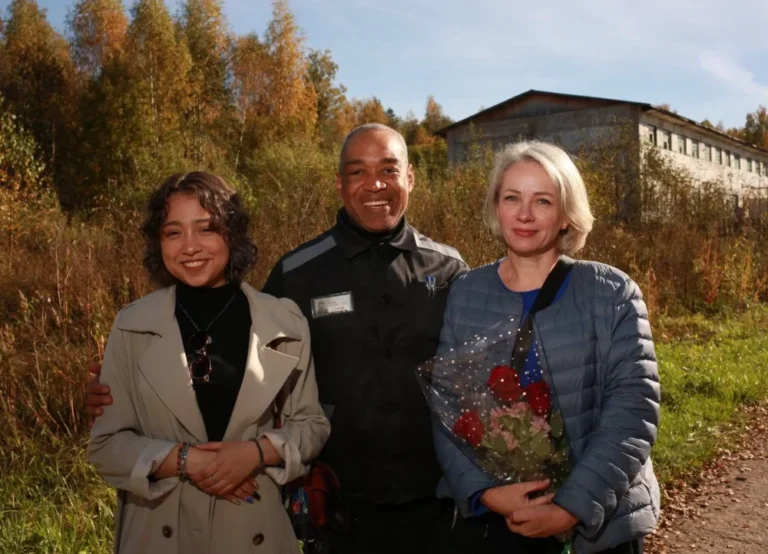
Guyanese-born Jehovah’s Witness Sean Pike has been released from a Russian prison after serving five years for alleged extremist activity linked to his faith, ending a lengthy incarceration marked by reported harsh detention conditions and his lawyer’s allegations of racial discrimination.

Pike, who was born in Georgetown in 1971 and lived in Russia for more than two decades, was released on October 2, 2026, from Penal Colony No. 9 in Russia’s Novgorod Region, according to reports published by Jehovah’s Witnesses.

His case has drawn attention to religious freedom in Russia, as well as allegations about the treatment he experienced while in custody.

Lawyer alleges racial discrimination

Pike was detained in Moscow in 2021 over his religious activities. According to an account of his detention, on August 27, 2021, when he was 49, he was placed in an overcrowded cell at Detention Centre No. 7 in Kapotnya, Moscow.

Although he was given a mattress, he was reportedly forced to sleep on the floor because of the conditions in the cell.

His lawyer attributed the treatment to what he described as everyday racism, arguing that Pike’s professional background and personal conduct did not justify the conditions in which he was held.

“High-class specialist Sean Pike is not a murderer, not a thief, and not involved in drugs. He’s a decent man. The attitude towards him is caused only by the color of his skin, this is just everyday racism,” his lawyer said.

The allegation adds a racial dimension to a case that has also raised concerns among Jehovah’s Witnesses about the treatment of members of their faith in Russia. The lawyer’s claim represents an allegation about the reasons for Pike’s treatment; the information available does not independently establish that racial discrimination was the cause.
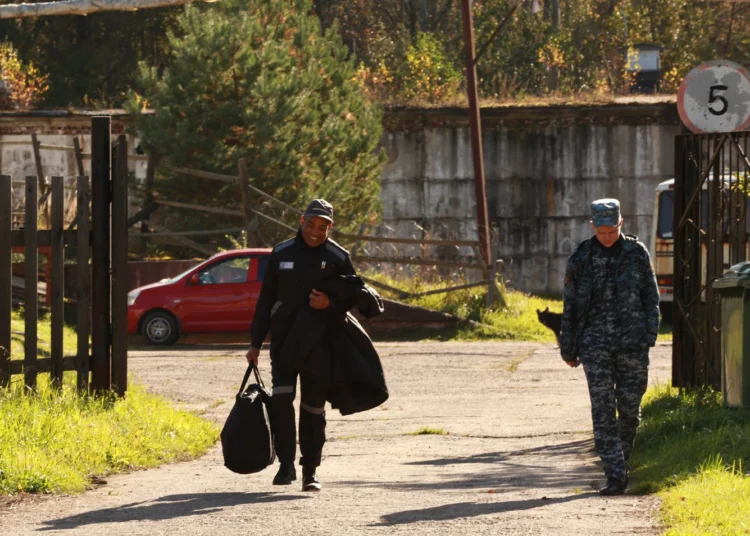
Sean Pike (leaving the correctional institution- Jehovah Witness Russia. org photo

Conviction and imprisonment

Russian authorities prosecuted Pike for allegedly organising the activities of an extremist organisation, a charge linked to his association with Jehovah’s Witnesses.

He was convicted in December 2023 and sentenced to seven years in prison. His appeal was rejected in June 2025.

The prosecution followed Russia’s 2017 Supreme Court decision to ban the religious organisation and designate its entities as extremist. Jehovah’s Witnesses maintain that their members are being punished for practising their faith peacefully, while Russian authorities have pursued cases under laws relating to extremist activity.

Health concerns in custody

During his imprisonment, Pike reportedly contracted COVID-19 and developed hypertension. Following his release, he indicated that he needed a medical examination.

His release ends the prison term imposed by the Russian court, although reports indicate that he remains subject to a further year of restriction of freedom.

It has not been established whether he has returned to Guyana or intends to do so.

From Guyana to Russia

Pike was born in Georgetown in 1971 and studied at the Peoples’ Friendship University of Russia, also known as RUDN University. He previously worked for Guyana’s Ministry of Transport before spending more than 20 years in Russia.

He is married to Tatyana and has two teenage daughters.

His release brings an end to years of imprisonment and separation from his family, but questions surrounding his reported detention conditions and his lawyer’s allegations remain part of the wider debate over religious freedom and the treatment of minorities in Russia.

For Pike and his family, completing the sentence marks a significant turning point after years of uncertainty. His case also illustrates the profound consequences that criminal prosecution can have on individuals and their loved ones when religious activities become the basis for legal action.


Source: Village Voice News
Thomas Street Project Sparks Row Over Local Government’s Role

0

By Mark DaCosta-The Georgetown City Council was involved in the initial planning of the Thomas Street redevelopment but was subsequently sidelined from key decisions concerning the project’s final design and execution, a city councillor has disclosed, raising serious questions about transparency, accountability and respect for local government.

The concerns have been reinforced by former Mayor and Prime Minister Hamilton Green, who, in a letter published on October 7, 2026, criticised what he viewed as the failure to meaningfully involve municipal authorities in decisions affecting the capital.

At the heart of the controversy is a troubling question: what value does consultation have if an elected municipal authority participates in the early planning of a project but is excluded when critical decisions are made?

In an interview with Village Voice News, the councillor said the Council participated in the initiative’s initial planning, which involved a company that had collaborated with the King’s Foundation. Early discussions focused on improvements to the city’s markets and the wider urban environment.

However, the councillor informed that City Hall was left out as the initiative advanced to its final design and implementation. The councillor also argued that ideas developed through the municipality were subsequently pursued by the People’s Progressive Party/Civic (PPP/C) Government without adequate recognition of City Hall’s contribution.

The account raises concerns about whether the council was treated as a genuine partner or merely involved at the preliminary stage before decisions affecting the municipality and its residents were taken elsewhere.

Projects within Georgetown may require central government input and approval, but that makes coordination with City Hall more important, not less. The councillor said the municipality was not represented when the foundation followed up on the initiative, leaving questions about its involvement in the final arrangements.

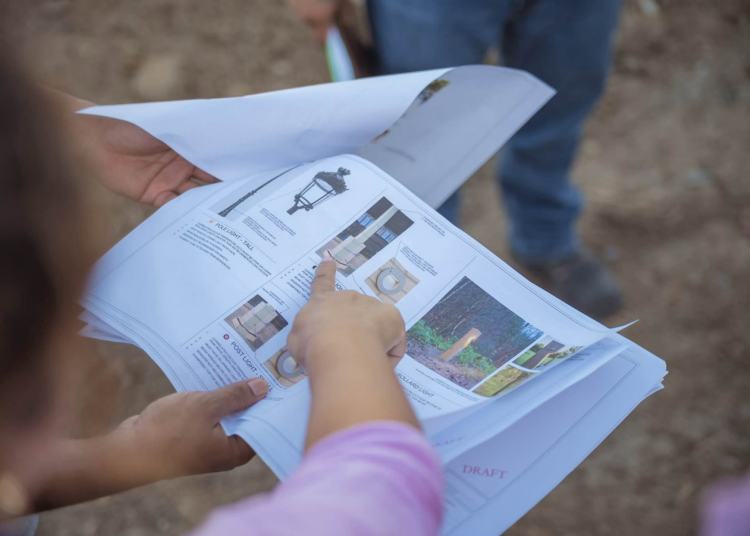
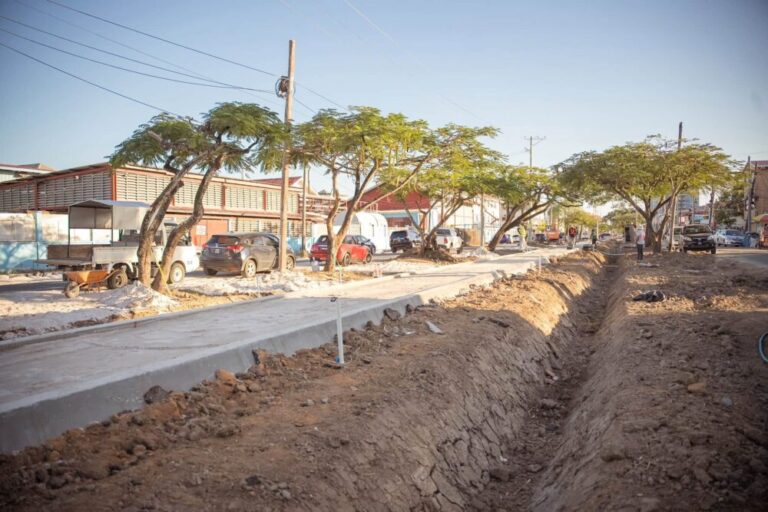
Thomas Street project (President Ali’s facebook)

Green warns of democratic erosion

Green’s criticism extends beyond the details of the Thomas Street project to the principles of inclusionary democracy and the role of local government in national development.

In his letter, he described the situation as:

“A flagrant breach of a principal provision and the spirit of our constitution, which speaks of inclusionary democracy”.

Article 13 of Guyana’s Constitution provides for citizens’ participation in the decision-making processes of the State, particularly where decisions affect their well-being. Green’s concerns centre on whether that principle is being respected when decisions affecting Georgetown proceed without meaningful municipal involvement.

His remarks also reflect a broader concern about the relationship between central government and local authorities. When municipal leaders feel excluded from decisions affecting their communities, questions arise about whether local governance is being treated as a meaningful democratic institution or an administrative formality.

Green expressed his frustration in pointed terms:

“When will we stand up to be men and women and not mice?”

The rhetorical question conveys his concern that citizens and institutions are failing to challenge decisions they believe undermine democratic participation. His argument is that public involvement cannot be reduced to appearances or preliminary discussions; it must carry weight when decisions are made.

The former mayor also questioned whether Guyana was abandoning the principles and institutions established by earlier generations in the country’s journey towards independence.

“Why are we destroying the foundations which our fore-bearers built in our journey to independence?”

For Green, the implications extend well beyond the appearance of a renovated street. They concern the preservation of democratic values, the authority of elected local representatives and the right of communities to have a meaningful voice in decisions that shape their surroundings.

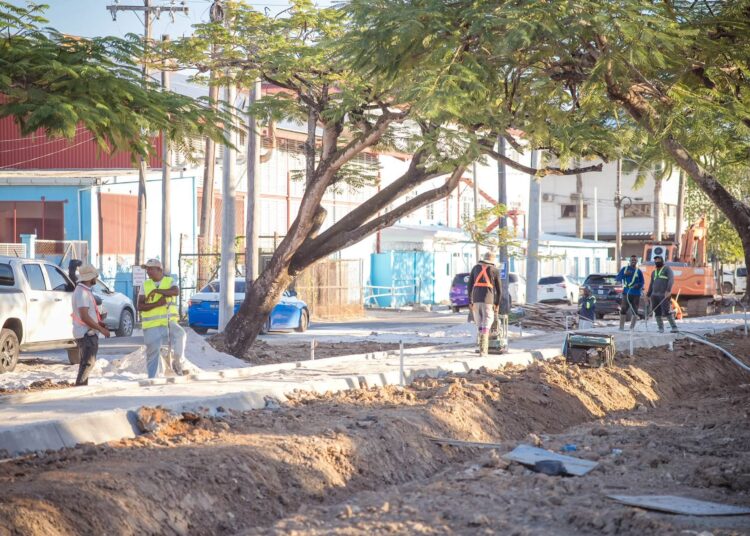
Thomas Street project (President Ali’s facebook)

Beyond appearances

The Thomas Street redevelopment forms part of the Healthy Streets Initiative, which aims to create more pedestrian-friendly public spaces, introduce greenery and strengthen climate resilience along the corridor from Lamaha Street towards Church Street. The initiative is also aligned with Guyana’s Low Carbon Development Strategy 2030.

These objectives could improve the urban environment for residents, pedestrians and businesses. However, the value of the project will depend not only on its design but also on transparent decision-making, effective coordination and a credible plan for long-term maintenance.

The councillor questioned whether sufficient attention had been given to the resources and arrangements needed to maintain the area, including waste collection, cleanliness and ongoing upkeep. Without clear responsibility and adequate funding, a redeveloped public space can deteriorate after the initial investment.

A project should therefore be judged not simply by how it looks when completed, but by whether it remains clean, accessible and functional in the years ahead.

Thomas Street must be about more than appearances. It must also be a test of whether the Government respects local democracy, consults elected representatives and accounts to the public for how development decisions are made.

If City Hall is expected to help maintain the upgraded area, it should not be treated as an afterthought in the decisions that shape it. Georgetown’s residents deserve a project that delivers lasting public value, while the municipality deserves a meaningful role in determining the future of the city it is elected to serve.


Source: Village Voice News
Robert Corbin: A Warrior Who Understood the Value of Respect

0

Much has been said, and will continue to be said, about Robert Corbin since his passing on October 4. Today, I take the opportunity to reflect on the man I knew-a man who, despite political differences and disagreements, remained civil, respectful and willing to engage others without hostility.

In a political culture where disagreement is increasingly treated as disloyalty, where independent thought can invite personal attacks, and where too many confuse power with authority, Corbin demonstrated that one could hold firm convictions without surrendering the basic principles of respect and decency.

I first met Robert Corbin in 1968 in Linden, while he was campaigning to become General Secretary of the youth arm of his party, the People’s National Congress (PNC). We discussed several issues, agreeing on some and disagreeing on others. Yet, our differences did not prevent the development of a relationship that continued over the years.

On our second occasion of meeting in Kwakwani, Corbin had already secured his position in the Young Socialist Movement. Our engagement continued for a number of years, and I had reason to telephone him on several occasions during his time in the PNC Government and later as Leader of the Opposition.

One of Corbin’s strengths was his willingness to listen. Regardless of our differences, he would sit, listen intently to what was being said, and, when the appropriate time came, offer his response. He was a keen and intense listener, so much so that some might have mistaken his silence for disengagement. Those who knew him understood otherwise.

I listened to Corbin’s responses to presentations made in his capacity as Leader of the Opposition. On occasions when he visited me at the Guyana Trades Union Congress (GTUC) to discuss issues of common nature he would suggest that we continue our discussions in an informal and cordial setting. He understood that meaningful engagement did not always require a public platform, a confrontation or an audience.

Although Corbin and I, and at times leaders of the trade union movement, disagreed on issues, he was never discourteous in his dealings with us. He did not appear to carry grudges simply because another person held an independent position. That is a quality worth remembering, particularly in a society where too many public engagements have deteriorated into personal attacks and political hostility.

I want to believe that Corbin’s disposition was shaped not only by the family that raised him with what we call “grace and manners,” but also by the political culture in which he was nurtured.

Those of us who have been active in national life since the 1980s can recount countless instances of public disagreement with the political establishment, whether in government or opposition. Differences were not absent then, nor were political struggles without their difficulties. But the degree of personalised hostility that increasingly characterises political engagement today was not accepted by all as an honourable or necessary feature of public service.

There was an understanding that one could disagree with the government, challenge the opposition, defend workers’ interests or advance an independent position without automatically becoming a personal enemy. Political office did not relieve anyone of the obligation to respect others, and disagreement did not have to destroy the possibility of dialogue.

Corbin belonged to that tradition, and those characteristics remained evident in his conduct until the end.

During my last telephone conversation with Robert, we discussed our concerns about the declining conditions in our country and the growing intolerance in our national life. As was his nature, he listened attentively, interjected where necessary and offered his perspective. He impressed upon me that the circumstances confronting us represented challenges associated with Guyana’s politics, while encouraging me to stay the course and continue the fight.

Those words resonated with me because the struggle for workers’ rights, social justice, dignity and accountability does not end when the political circumstances become difficult. The trade union movement has a responsibility to continue speaking out, defending the rights of workers and challenging conditions that undermine the welfare of our people. That responsibility cannot be abandoned simply because the road ahead is difficult.

Corbin was a man, with the shortcomings that come with being human. I do not pretend that we agreed on everything or that he was without imperfections. But I can speak to my experience: he was civil and cordial in his engagements with me and with the trade union movement. He understood that disagreement was part of public life and that respect for another person’s right to hold a different view was essential.

Today, Robert Corbin’s work on earth is done. His passing provides an opportunity not merely to remember the political offices he held, but to reflect on the personal qualities he demonstrated and the value of preserving civility in our national discourse.

May his soul rest in eternal peace.

I extend my condolences to his wife, Carol, his children, other family members, and the People’s National Congress, the party he led and called his political home.

Farewell, warrior. May your contribution to Guyana’s political life, and the memory of the man who could disagree without disrespect, endure.


Source: Village Voice News

Bandits rob Canje businessman of over $10M cash

0


Three armed and masked men carted off with more than $10 million in cash after robbing a 57-year-old businessman at his No. 2 Village, East Canje, Berbice property.

The robbery occurred at about 19:35h on Saturday (October 10, 2026).

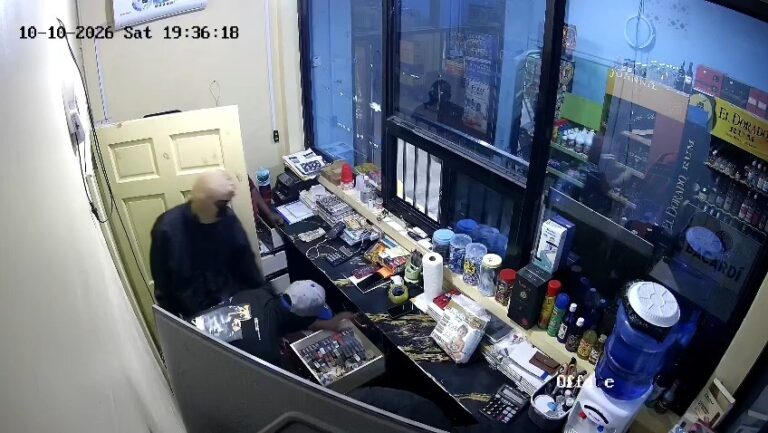
The Canje, Berbice, business that was robbed

According to police reports, the businessman was in the cashier area of his beverage depot, located on the lower flat of his premises, when three masked males, one armed with a handgun and the others with a baseball bat and cutlass, entered the establishment.

The suspects reportedly confronted the businessman and demanded money before relieving him of a quantity of cash, after which they fled the scene in a dark-grey motor car, making good their escape.

This publication was told that the bandits were able to get their hands on over $10 million in cash.

Nevertheless, police say no shots were fired and no injuries were reported during the incident.

CCTV footage was obtained and is being reviewed as part of the ongoing investigation.


Discover more from INews Guyana

Subscribe to get the latest posts sent to your email.


Source: INews Guyana

Kairuni man killed in Linden

0

Last Updated on Sunday, 11 October 2026, 11:12 by Written By Denis Chabrol

A 28-year old man of Kairuni,Linden-Soesdyke Highway was Saturday night stabbed to death in Amelia’s Ward, Linden.

The dead man has been identified as Romel Toney.

The Guyana Police Force said the stabbimg incident at about 9 PM stemmed from a disagreement.

“Preliminary information revealed that Toney was involved in an altercation with another male, during which he sustained an injury to his neck. He subsequently died,” police said in a statement.

Police said they were conducting investigations into the circumstances surrounding the incident.


Source: Demerara Waves

Masked armed bandits rob Corentyne businessman

0

Last Updated on Sunday, 11 October 2026, 10:56 by Written By Denis Chabrol

A Corentyne businessman was allegedly robbed of cash by three masked men early Saturday night, police said.

The Guyana Police Force did not say how much money was stolen or the name of the 57-year old businessman.

Police said Closed-Circuit Television (CCTV) footage was obtained and was being reviewed as part of the ongoing investigation.

Investigators said no shots were fired and no one was injured during the reported robbery under arms that occurred at 7:35 PM Saturday, October 10  at Number 2 Village, East Canje, Berbice.

Police were informed that the businessman was in the cashier area of his beverage depot, located on the lower flat of his premises, when three masked males, one armed with a handgun and the others with a baseball bat and cutlass, entered the establishment.

“The suspects reportedly confronted the businessman and demanded money before relieving him of a quantity of cash, after which they fled the scene in a dark-grey motor car, making good their escape,” police also said in a statement.


Source: Demerara Waves

Close to US$1B flowed into oil account in September

0


(Kaieteur News) – Guyana’s Natural Resource Fund (NRF) or its oil account in September received close to one billion US-dollars, resembling earnings from the previous month.

According to the receipt published by the Bank of Guyana (BoG), the country received a whopping US$768 million last month in profit oil. The document does not specify how many barrels were produced and sold during the month. It however details a withdrawal from the account by the GoG amounting to US$200M or GYD$41.7B in September.

Consequently, the closing balance at the end of September was approximately US$5.5B.Close to US$1B flowed into oil account in September

The country is now receiving 39.8% of profits generated in the Stabroek Block and an additional 2% royalty.

Guyana’s share of profits finally grew in August when the country collected US$778M using an exchange rate of $208 for one USD. The revenue for August included profit oil and a signing bonus payment.

It was reported that ExxonMobil has recovered its US$55B investments in Guyana, positioning the country to receive a higher share of profits from the oil produced in the Stabroek Block.

Currently, four projects are producing about 900,000 barrels of oil per day (bpd). The company is progressing development activities to bring the additional projects on stream by 2029. Guyana’s production will surpass one million barrels per day before the end of 2026 as the fifth project, Uaru will add approximately 250,000 barrels. The Floating Production Storage and Offloading vessel (FPSO) for that project has already arrived in Guyana.

But while the country enjoys increased revenues from the sector, its sudden bounty could be impacted by oil prices. While a sudden change in oil prices is beyond the control of the state, government can take steps to prevent the profits from falling again. If the GoG approves more projects for Exxon without changing the existing arrangements, Guyana’s share of profits could again slide from 39.8% to a meagre 12.5%.

The oil contract and cost recovery  

In accordance with the terms of the 2016 Production Sharing Agreement (PSA), Exxon was allowed to take out 75% of the oil produced in Guyana each month until all of the company’s investments were repaid.

The remaining 25% of oil each month was split between Guyana and the contractors, with the country receiving half of the “profit oil” or 12.5%. The country’s profit share has now increased since the cost of all projects approved to date have been repaid; but this does not mean the cost bank is empty as operational, exploration and other expenses still exist. Consequently, the President said 20% of production has been set aside in the new formula for costs.

In the meantime, ExxonMobil is currently pursuing at least two new projects in the Stabroek Block – its eighth and ninth, which will add more expenses to the cost bank. Without implementing new systems like a ring-fencing provision, Guyana’s profit share could again fall to allow the operator to finance these multibillion U.S-dollar projects.

As such, President Irfaan Ali assured that the GoG will seek expert advice on the financing of future developments.  Kaieteur News specifically asked the Head-of-State to explain how new projects would be governed, whether Guyana would allow its share of profits to be invested into upcoming developments and if government would then seek a greater share of revenue as an investor.


Source: Kaieteur News

‘Seeram in Camp St. jail’ – Prison authorities confirm

0


(Kaieteur News) – Following days of public scrutiny and silence from State officials, the Guyana Prison Service last night confirmed that National Border Patrol Director, Daniel Seeram was transferred to the Camp Street penitentiary Friday night.

Seeram’s lawyer, Nigel Hughes also confirmed that the former Region Four Chairman is in jail.  Speaking with Kaieteur News, Hughes addressed the controversy surrounding the execution of the judicial remand order, confirming that Seeram is serving his pre-sentencing detention within a prison facility in accordance with the rulings of both the Magistrate’s Court and the High Court.

‘Seeram in Camp St. jail' - Prison authorities confirm

Daniel Seeram

The confirmation follows a week of speculation ignited when public commentators, media reports, and opposition figures highlighted delays and official silence surrounding Seeram’s transfer from police detention into the correctional system. Seeram was convicted by Magistrate Abigail Gibbs at the Sparendaam Magistrate’s Court for assault causing actual bodily harm.

‘Seeram in Camp St. jail' - Prison authorities confirm

Caption: National Border Patrol Director, Daniel Seeram is said to be in one of the cells in the Camp Street Prison.

The conviction stemmed from a September 11, 2023 domestic violence incident involving his former wife. Upon delivering the verdict, Magistrate Gibbs ordered Seeram remanded to prison pending his sentencing, scheduled for November 2. In response to the magistrate’s order, Hughes immediately mounted an urgent High Court application for judicial review seeking pre-sentencing bail. However, High Court Judge Joy Persaud Singh dismissed the motion, ruling that Magistrate Gibbs acted lawfully and within her jurisdiction. Justice Singh’s decision explicitly reinforced the lower court’s directive for Seeram to remain in prison custody.

Despite the ruling, confusion escalated throughout the week after senior prison and police officials repeatedly declined to comment on when or if Seeram had been formally processed into a correctional facility. The lack of official clarity prompted Opposition Leader Azruddin Mohamed to conduct physical checks at both the Lusignan and Camp Street facilities, where he reported that prison officers could not verify Seeram’s presence. Addressing the legal steps forward, Hughes indicated that the defence team intends to challenge High Court Judge Joy Persaud Singh’s refusal of bail by taking the matter to the Court of Appeal. Seeram’s formal sentencing hearing is on November 2.


Source: Kaieteur News

Canter slams into GPL pole at Mahaica

0


(Kaieteur News) – A canter truck crashed into electrical infrastructure belonging to the Guyana Power and Light Inc. (GPL) along the Mahaica Public Road, East Coast Demerara, on Saturday, prompting renewed concerns about road safety and damage to the company’s network.

The vehicle, bearing registration number GAJ 7505, was driven by Mohan Deonarine of Kumaka, Mabaruma, Region One (Barima-Waini). The collision occurred at approximately 13:00hrs while the truck was travelling east.

Canter slams into GPL pole at Mahaica

The canter after the collision.

In a statement posted on its Facebook page, GPL said it continues to be concerned about incidents involving vehicles damaging its electrical infrastructure. Deonarine was taken into custody at the Mahaica Police Station, and an investigation has been launched into the incident.

GPL said its investigator visited the scene and photographs were taken as part of the investigation. The company added that the driver had indicated his willingness to compensate for the damage caused. “The investigation remains ongoing,” GPL stated.

The company warned that collisions involving its electrical infrastructure could result in serious injuries or loss of life, damage to critical network components, and electricity service interruptions affecting customers. GPL also cautioned that damaged electrical infrastructure could pose significant safety risks to members of the public and other road users. The company urged motorists to exercise caution and remain alert while using the nation’s roadways, reminding drivers that careless driving increases the risk of accidents. GPL said it remains committed to maintaining a safe and reliable electricity network and will continue to cooperate with the Guyana Police Force and other relevant authorities as the investigation progresses.


Source: Kaieteur News

Attack on Saudi airport leaves 12 dead, dozens wounded

0


Reuters — The third attack this week on Riyadh’s international airport left 12 people dead on Saturday and dozens wounded, according to three people familiar with the matter, with all flights diverted and Western governments telling citizens to avoid the area.

There was no immediate claim of responsibility for the incident but Yemen’s Iran-aligned Houthis have been escalating their missile strikes on Saudi Arabia, and claimed responsibility for the two earlier attacks this week.

The spate of deadly strikes have exposed vulnerabilities in the kingdom’s ability to defend itself as it wages an air campaign against the Houthis to support a ground war by the Yemeni government against the Iran-backed group.

Attack on Saudi airport leaves 12 dead, dozens wounded

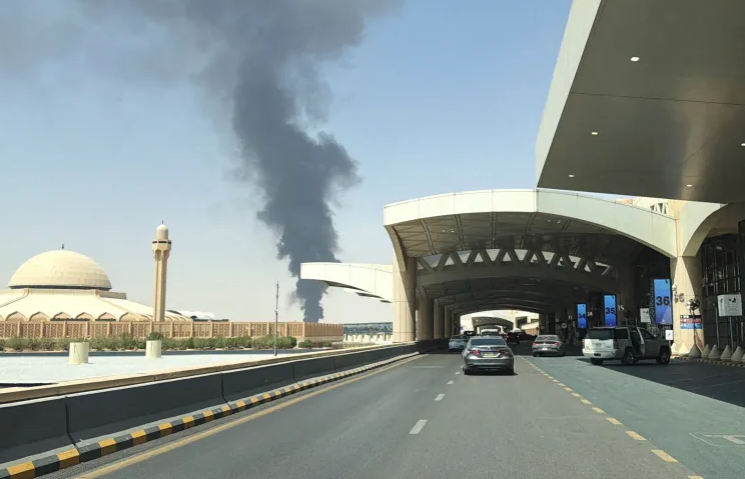
A plume of black smoke rises from the fuel storage area at King Khalid International Airport, in Riyadh, Saudi Arabia, after a Houthi attack last month [File:Aljazeera]

The Saudi government’s media office did not immediately respond to questions on the incident and the casualty toll.

There has been no official toll given.

The people briefed on the matter, who include two Western officials, warned that the number of dead and wounded was not a final toll. The strike occurred without warning, with no alert issued by Saudi Arabia’s threat warning system.

The wounded were evacuated to hospitals by ambulance and helicopter, with some in critical condition, the people said.

Operations at the kingdom’s busiest airport, servicing a city of around 8 million people, were temporarily suspended, the civil aviation authority said.

After the attack occurred, the Houthi military spokesperson retweeted his own post from before the attack, saying only pre-approved humanitarian flights were allowed to land at Riyadh airport, adding the words: “a reminder.”

The Houthi strikes earlier in the week left four people dead and heavily damaged a Saudi commercial airliner.

US President Donald Trump, speaking to reporters outside the White House, was asked whether Washington planned to join Saudi strikes on the Houthis.

“We may. We’re going to look at it. We just found out about the recent attack, so we’ll make a decision. We move very quickly,” he said.

One eyewitness at the airport on Saturday reported seeing an explosion and then multiple people lying injured on the ground inside. More than a dozen ambulances were seen rushing toward the facility. A video verified by Reuters showed ambulances at the airport.

An injured traveler told Reuters they saw something fly across the sky outside the airport before part of the ceiling near a departure gate collapsed.

The US Embassy in Riyadh said it was “aware of attacks” and “strongly recommends all US citizens avoid this airport and surrounding areas.”

The UK and Irish embassies in Saudi Arabia said in statements on X that they were also aware of a “serious incident” at the airport. The Canadian Embassy said that “ongoing military activity” had impacted operations at the airport.

Flight-tracking site flightradar24 showed all flights to Riyadh had either been diverted or canceled, with only a helicopter hovering over the airport at one point.

Kuwait Airways said it had canceled flights to and from the Saudi capital due to what it described as the closure of Riyadh airport because of the “security situation” there.

Etihad Airways and Qatar Airways earlier canceled multiple flights between their respective hubs and Riyadh, with some cancellations extending into Monday.

Houthi attacks on Thursday and earlier in the week had already prompted a number of carriers to suspend or cancel services to the Saudi capital, shortly before Riyadh is due to host major energy and investment conferences.

Organizers of those conferences said on Saturday they would go ahead as planned, and they sought to reassure attendees of their security.

The Houthis have said airliners should avoid Saudi airspace, declaring it a zone of military operations after the Saudi-backed Yemeni government launched an offensive against the group earlier this month.

With Riyadh under fire, the forces it backs in Yemen have also faced a setback as the Houthis tightened a siege on the country’s third-largest city, Taiz.

Saudi and Yemeni authorities, meanwhile, claimed that they had retaken the Bab el-Mandeb, a maritime chokepoint overrun by the Houthis in a lightning offensive last month.


Source: Kaieteur News