Home Blog Page 47

Guyana Cricket Board hails CWI batting camp

0

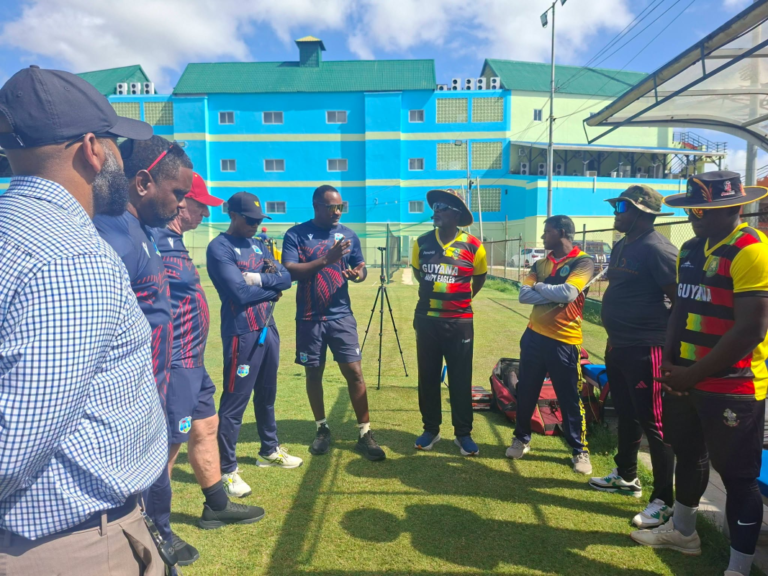
The Guyana Cricket Board (GCB) has welcomed the benefits of the Cricket West Indies (CWI) territorial batting camp, which concluded at the National Stadium on Friday, October 9.

In a press release, it said that ten batters and more than a dozen local coaches benefited from the specialised programme.

The camp, which began on Tuesday, October 6, was led by CWI batting consultant Bob Carter and featured three net sessions. It focused on refining individual batting skills, improving technique and enhancing players’ ability to execute different shots against pace and spin bowling.

President of the Guyana Cricket Board, Bissoondyal Singh, welcomed the camp, emphasising that such specialised programmes are integral to the Board’s broader vision of establishing a structured and sustainable development pathway for Guyanese cricketers and, by extension, West Indies cricket.

“Player development cannot be achieved in isolation. It requires a coordinated approach involving technical training, coaching education, talent identification and continuous exposure to modern cricketing methodologies. This initiative by Cricket West Indies complements the GCB’s ongoing efforts to strengthen our cricket development structure, ensuring that both our players and coaches are equipped with the knowledge, skills and opportunities necessary to achieve excellence.”

The release said that Singh further underscored the importance of collaboration between the territorial boards and Cricket West Indies in developing a unified cricketing pathway.

“The development of West Indies cricket begins at the territorial level. When we strengthen our coaching capacity, improve our players’ technical abilities and create clearly defined opportunities for progression, we are not only building stronger Guyanese teams but also laying the foundation for a more competitive and successful West Indies cricket team,” Singh emphasised.

GCB Cricket Operations Manager Anthony D’Andrade said the initiative provided valuable technical guidance for the  batters while also offering local coaches the opportunity to gain exposure to batting development.

“The focus mainly was on tweaking basic things for the batters, like setup and execution of different types of shots, and facing pace and spin bowling,” D’Andrade said, according to the release.

The camp also provided a learning opportunity for more than 12 coaches drawn from franchise, county and association levels, including representatives from Linden, Essequibo and Berbice.

D’Andrade said that the programme offered coaches a different perspective on structuring training sessions, particularly because of its emphasis on batting.

“Most of those coaches would not have had the opportunity to be in a setup of that nature, whereas the coaching programmes that we would have done would have had focus on batting, bowling, and fielding,” he explained.

He added that the format allowed coaches to observe how batting could be developed through more targeted training methods.

“So this camp being a specific batting camp, it gave them the opportunity to see how they can set up batting programmes in a different way,” D’Andrade said.

The release said that the  GCB views the involvement of both players and coaches as an important component of its continued efforts to strengthen cricket development across Guyana. By exposing batters to focused technical instruction and providing coaches with practical insight into specialised training methods, the initiative is expected to contribute meaningfully to the development of players at various levels of the game.

The Board reaffirmed its commitment to working with Cricket West Indies and other stakeholders to establish a sustainable and progressive cricket development pathway that will benefit Guyanese cricketers and contribute to the long-term success of West Indies cricket.

The GCB also extended special thanks and appreciation to Dwain Gill, CWI High Performance Manager, for his support, coordination and commitment to the successful implementation of this initiative.


Source: Kiskadee Watch

Gov’t vows full force of law over Mohamed incident, says US Justice Dep’t being informed

0

The government last evening said the full force of the law would be applied following Monday night’s incident involving Opposition Leader Azruddin Mohamed and Special Branch Head, Senior Superintendent Prem Narine, and disclosed that the United States Department of Justice was being kept informed.

In a statement accusing persons of attempting to distort the circumstances, the government linked the incident to Narine’s role as a critical witness in the extradition proceedings involving Mohamed and his father, Nazar Mohamed.

It said multiple serious criminal offences arose for consideration and that law enforcement investigations were continuing.

“The State has a duty to protect its justice system from interference and perversions. Witnesses are key to any justice system. They must always feel safe when they testify. It is the State’s duty to protect them. The State will do so. The full force of the law will be applied,” the statement said.

The government described its account as factually verifiable and said neither obfuscation, fabrication nor “Facebook trolling” would be allowed to contradict it. It maintained that the law must be allowed to take its course.

According to the statement, Mohamed and two other men were, by his own admission, filming Narine’s Barr Street, Kitty home around midnight from a dark-coloured, heavily tinted car.

The government asserted that gunshots came from the vehicle and that spent shells were found on the road near Narine’s residence. It said Narine fired at the car with his service handgun, after which law enforcement officers pursued and intercepted it.

Mohamed was in the back seat and the two other occupants were in the front, the statement said. It added that an unlicensed firearm was found in the vehicle and that all three men were arrested and remained in custody.

The assertion that shots came from the car goes beyond the wording of the police statement issued earlier yesterday. Police said Narine heard what appeared to be a gunshot as the vehicle approached his home for a second time, took cover and fired towards it. That statement did not identify who allegedly fired the initial shot.

Police identified the other occupants as Mario Mohamed and driver Eugene Thorne. The force reported finding a .32 Taurus pistol without a serial number and three live rounds in the car, as well as one .32 spent shell and four 9mm spent shells at Barr Street. Mohamed’s sister, Hana Khamelia, disputed the firearm discovery and alleged that the weapon had been planted.


The Government emphasised that Narine was currently giving evidence in the Mohameds’ extradition case at the Georgetown Magistrate’s Court. It also referred to photographs of Narine and his family, including his minor son, with President Irfaan Ali which, it said, had been posted on Mohamed’s Facebook page to insinuate impropriety.

The government said Narine had consequently told the presiding magistrate, under oath, that he feared for his life and his family’s safety.

It further cited his testimony describing Mohamed as a national security threat and alleging that police information implicated him in killings.

Kiskadee Watch previously reported that, under cross-examination, Narine acknowledged that Mohamed had not been charged with the alleged killings and other offences cited in support of that assessment, and that he knew of no court finding of wrongdoing against him in relation to those allegations.

The government additionally alleged that witnesses had died in murder investigations implicating Mohamed. It did not identify those witnesses, the investigations concerned or evidence supporting that assertion.

It argued that the incident had implications not only for the safety of witnesses in the Guyana extradition proceedings but also for the United States’ criminal justice system.

The statement described the local proceedings as preliminary to a criminal trial which could take place in the United States if Mohamed is extradited. It did not announce any new charges arising from Monday night’s incident.

“The Department of Justice of the United States is being kept informed of these startling developments,” the government said.


Source: Kiskadee Watch

APNU backs pension lawsuit, calls for settlement of arrears

0

A Partnership for National Unity (APNU) has backed the High Court challenge over alleged underpayments to minimum-rate National Insurance Scheme pensioners and called on the government and the National Insurance Board to promptly settle any arrears found to be due.

In a statement, APNU said pension payments were legal entitlements rather than government favours and argued that Guyana’s economic growth must translate into greater financial security for its elderly citizens.

“These payments are not acts of charity or government favours; they are entitlements protected by law,” the partnership stated.

The judicial review application was filed on October 9 by attorney Christopher Ram, pensioner Kalicharan Heera, the Union of Agricultural and Allied Workers, the United Minibus Union and the Guyana Market Vendors Union, Kiskadee Watch reported. The applicants are represented by Ram and attorney Khemraj Ramjattan.

The applicants contend that Regulation 4(b) of the NIS Benefit Regulations requires the minimum old-age pension to be at least 50% of the Public Service minimum wage.

They calculate that the current minimum should therefore be $51,173 monthly, compared with the $43,075 being paid—a shortfall of $8,098. They estimate that persons who received the minimum pension throughout the relevant period since 2021 could each be owed approximately $510,300.

The application seeks a declaration that the statutory floor is mandatory, an order requiring payment at that rate, and an accounting and payment of arrears with interest, including sums due to the estates of deceased pensioners.

APNU said the matter had previously been raised in Parliament. It recalled that Annette Ferguson tabled a motion in 2024, seconded by Juretha Fernandes, seeking retroactive payments to minimum-rate pensioners for 2021 to 2023.

According to the partnership, Speaker Manzoor Nadir disallowed the motion, preventing parliamentary consideration of the issue. APNU accused the PPP/C administration of allowing the matter to remain unresolved.

“It is morally indefensible that in one of the world’s fastest-growing economies, elderly Guyanese should be forced to approach the courts to obtain pension payments to which they contend they are legally entitled,” the statement said.

The partnership argued that rising oil revenues and economic growth should improve living standards and purchasing power, particularly for retirees facing higher household costs.

It said development must be measured not only by roads, bridges and buildings but also by the protection of legal rights and the provision made for poor, elderly and vulnerable citizens.

APNU called on the government and the Board to urgently review the claims, establish the extent of any outstanding entitlements, make the necessary financial provisions and introduce safeguards against future underpayments.

The court action followed an October 1 letter from Ram and 10 unions demanding that the Board account for alleged underpayments and identify and compensate affected pensioners.

As Kiskadee Watch reported, the letter said the regulation was amended in 2015 to raise the pension floor from 40% to 50% of the Public Service minimum wage. Ram contended that the requirement was last met in 2020, when the minimum wage was $70,000 and the minimum NIS pension was $35,000.

The letter also argued that subsequent pension increases did not extinguish arrears already accrued and questioned why retroactive Public Service wage increases had not produced corresponding pension adjustments.

NIS Chairman Ramesh Persaud declined to comment when contacted by Kiskadee Watch on October 5 about the demand. He said he had no comment on the matter at that time.

APNU said the NIS’s responsibility was to protect contributors and beneficiaries and that public institutions must be held accountable for fulfilling their statutory obligations.

“Our senior citizens deserve more than expressions of appreciation. They deserve fairness, respect, financial security and the full protection of the law,” it stated.


Source: Kiskadee Watch

No comparison should be entertained between killing of Yohance Douglas and shooting involving Opposition Leader

0

Dear Editor,

I have tried my best to distance myself from social and political commentary concerning Guyana. 

Not because I have stopped caring, but because there is only so much frustration one can carry when watching the same issues repeat themselves, the same families plead for justice, and the same political figures condemn a system one day and defend it the next. 

Following developments in Guyana can be emotionally exhausting, particularly when accountability seems to depend on who is involved.

However, after reading Randy Gopaul’s October 13, 2026, article published by Village Voice News, titled “Prem Narine Reminds Guyana of the Ugly Period When Yohance Douglas was Murdered by Police,” I felt compelled to write.

I found the comparison between the killing of Yohance Douglas and the recent shooting incident involving Opposition Leader Azruddin Mohamed deeply troubling and disrespectful to Douglas’s memory.

Let me make something clear from the outset. 

I am not defending Senior Superintendent Prem Narine, nor am I suggesting that any police officer has the authority to discharge a firearm at someone merely because that person’s behaviour appears suspicious. 

The incident involving Mohamed warrants an independent and transparent investigation. 

If an officer acted unlawfully, there must be consequences. 

That position does not change because the person involved is a politician, an ordinary citizen, or someone accused of wrongdoing.

But surely we have not reached the point where every confrontation involving a political figure and the police must be compared to the killing of an innocent young man whose circumstances were materially different.

On March 1, 2003, Yohance Douglas was travelling with friends when police opened fire on their vehicle. 

He was a young university student who had been going about his life. 

His friend Ronson Grey was also shot. Douglas did not deliberately position himself outside the residence of a police officer with whom he had an existing dispute. 

He was not conducting surveillance or attempting to document the activities of an officer. 

He was simply travelling with his friends when his life was taken.

Now consider what has been reported about the incident involving Mohamed.

According to Mohamed’s own account, he and two other men went to Barr Street, Kitty, to document what they believed was an excessive police presence outside Narine’s private residence. 

This occurred late at night, against the background of an existing dispute involving the officer and Mohamed’s legal proceedings.

I am not suggesting that Mohamed threatened Narine. 

I am asking why the circumstances that led to this confrontation are being treated as though they are comparable to those surrounding Douglas’s death.

Mohamed has reportedly acknowledged the reason for his presence. 

That decision forms part of the sequence of events leading to the confrontation. It does not justify unlawful gunfire, but it cannot simply be omitted when examining how the incident developed.

There are conflicting accounts about who fired first, the circumstances under which shots were discharged, and the firearm allegedly recovered from the vehicle. Those matters require investigation. 

Yet some have already characterised the incident as an assassination attempt. 

On what established evidence has that conclusion been reached? 

An allegation, however serious, is not a finding of fact.

What concerns me even more is the selective use of Guyana’s painful history.

The period during which Yohance Douglas was killed remains one of the darkest chapters in our country’s history. 

Many young men, particularly Afro-Guyanese men, lost their lives amid allegations of extrajudicial killings, police abuses, and politically connected violence. Families were left to bury their sons, demand answers, and confront institutions in which they had little confidence.

Some families are still waiting for accountability. 

Others have lived for decades without the answers they deserve. 

Some relatives of missing persons have never even had the opportunity to recover and bury their loved ones.

These are not historical footnotes to be conveniently retrieved whenever a contemporary political argument requires an emotional comparison.

And since we are invoking that period, I believe we should be prepared to examine the political history surrounding it in its entirety.

What were the positions of Azruddin Mohamed and his family, including his father, Nazar Mohamed, toward the political establishment during those years? What positions did they take concerning allegations of police abuses and extrajudicial killings? 

When did their relationship with the political establishment change, and what accounts for that change?

These are questions worth examining, particularly when the suffering of that period is now being invoked in arguments concerning Mohamed. 

We cannot discuss the political history of police violence selectively while ignoring the political relationships and allegiances that existed at the time.

For years, I have watched political figures speak passionately against injustice while in opposition, only to become remarkably quiet about similar concerns when political circumstances change. I have also watched people defend institutions they once condemned, depending on whose interests were at stake.

This inconsistency is one reason public confidence in both the police and political leadership has suffered.

Justice cannot depend on political convenience.

The killing of Yohance Douglas deserves examination because of what happened to Yohance Douglas, not because his death can be used to strengthen an argument concerning Azruddin Mohamed.

If the intention of the Village Voice article was to highlight the longstanding dangers of unchecked police power, that argument could have been made without suggesting that these two incidents arose under comparable circumstances. 

There is more than enough documented history of police abuses in Guyana to support a serious discussion about institutional accountability.

Indeed, I have been equally disturbed by the recent death of young Altaf King following a police chase. 

My concern has been the conduct of the officers, particularly the manner in which his injured body was reportedly handled and what assistance was rendered following the crash. 

Regardless of the circumstances leading to that incident, the conduct of the police must be independently examined.

That is what consistency looks like. 

We examine the actions of law enforcement, the circumstances of each incident, and the evidence available. 

We do not decide who deserves scrutiny based on political affiliation, public standing, or personal popularity.

I have no difficulty demanding an investigation into the shooting involving Mohamed. 

I have difficulty drawing comparisons with people whose lives were lost under very different circumstances.

Yohance Douglas never had the opportunity to tell his side of the story after the shooting. 

His family was left to speak for him.

That difference alone should encourage greater sensitivity in how his name is used.

I am particularly troubled by how easily the suffering of ordinary Guyanese becomes political currency. 

When a family loses a child, that grief does not belong to the government, the opposition, or any political movement. It belongs to the people who must live with that absence long after the headlines disappear.

We owe those families more than selective remembrance.

We owe them an honest examination of the institutions that failed them, the political environment in which those failures occurred, and the accountability that has too often remained elusive.

Investigate the incident involving Prem Narine and Azruddin Mohamed. 

Establish the facts, including who fired first, whether the use of force was lawful, and whether any criminal offences were committed. Let the evidence determine responsibility.

But please, let us stop treating the memory of Yohance Douglas as a convenient comparison whenever political circumstances make his story useful.

His life mattered in 2003. 

His life matters today. 

It should not require a confrontation involving an opposition leader for Guyana to remember that.

Yohance Douglas was somebody’s son before he became a name in Guyana’s history of police violence. 

His family deserves to have his memory treated with that understanding and respect.

Yours faithfully,

Nakisha Sinclair (Martian Nella)

Writer and Social Advocate


Source: Kiskadee Watch
Calls for confirmation ignore judiciary’s fundamental problems

0

-Business and Economic Commentary by Christopher Ram


The renewed calls for the substantive appointment of Guyana’s Chancellor and Chief Justice are understandable, given the prolonged reliance on acting appointments to fill the Judiciary’s two highest offices. While this constitutional impasse ought to be resolved, the concentration on confirmation overlooks more fundamental problems of judicial performance, management and accountability. Even if both acting officeholders were confirmed tomorrow, there is little reason to believe that such appointments, without accompanying reforms, would significantly improve the administration of justice.

Over recent years, the Judiciary has benefited from additional judges, improved facilities, electronic filing, virtual hearings and other modernisation initiatives, while the Civil Procedure Rules introduced in 2017 were intended to improve the efficiency of civil litigation. These developments are welcome, but increased resources must ultimately be judged by results rather than by expenditure or the number of appointments.

The Judiciary’s own statistics raise disturbing questions. Page 30 of its 2023 Annual Report records that the Demerara Judicial Registry’s clearance rate for Statements of Claim fell from 54.8% in 2021 to 4.7% in 2023, while the rate for Fixed Date Applications declined from 88.3% in 2022 to 25.4% in 2023. In actual numbers, Statements of Claim concluded fell from 204 in 2021 to just 16 in 2023, while Fixed Date Applications concluded declined from 1,653 in 2022 to 486 in 2023.

The Court of Appeal presents an equally concerning picture, with page 26 of the same report recording 361 matters filed in 2023 but only 163 disposed of, representing a ratio of disposals to new filings of approximately 45%, compared with 76% in 2021. These are not allegations by dissatisfied litigants but figures published by the Judiciary itself, which require explanation and, where necessary, corrective action.

There may be explanations involving changes in reporting methodology, staffing or case classification, but the Judiciary should provide them, together with comparable information for 2024 and 2025. The public is also entitled to know the number and age of outstanding cases, the duration of reserved judgments and the measures being taken to reduce delays. Judicial independence protects judges against interference in deciding cases; it does not exempt the administration of the courts from scrutiny.

The temporary appointments of Justices Arif Bulkan and Rafeek Khan demonstrated the contribution that experienced and productive judges can make to reducing outstanding work, suggesting that the issue is not simply the number of judges but how effectively judicial resources are deployed.

The Judiciary enjoys constitutional financial and administrative autonomy under Articles 122A and 222A, including funding through a direct charge on the Consolidated Fund, while Article 223 requires the Auditor General to audit the accounts of all courts. Financial independence is essential, but it cannot become an exemption from accountability.

The Supreme Court’s 2022 Annual Report records approximately G$3.59 billion in funding and G$3.20 billion in expenditure, supported by financial schedules but without an identifiable accompanying independent audit opinion. The Auditor General’s 2024 Annual Report identifies completed audits of the Supreme Court’s financial statements for 2015, 2016 and 2017, without identifying corresponding audits for subsequent years. The obvious questions are whether later financial statements were prepared and audited, and where the resulting reports may be examined.

Reporting has also been delayed, with the 2022 Annual Report laid before the National Assembly in January 2024 and the 2023 report not laid until November 2025. Reports for 2024 and 2025 are not currently listed on the Judiciary’s website.

As an officer of the court, I regard judicial independence as indispensable, but the Judiciary cannot insist that other public authorities comply with the law and account for public funds while treating its own obligations as secondary. Having more money is no substitute for proper financial management.

Article 127 requires agreement between the President and the Leader of the Opposition for substantive appointments, but acting officeholders acquire no automatic entitlement to confirmation. Appointments to the Judiciary’s highest offices should follow a transparent, merit-based process assessing legal competence, integrity, experience, administrative ability, demonstrated leadership and a commitment to meaningful judicial reform, rather than treating incumbency as sufficient qualification.

The claims of other qualified candidates deserve consideration. Justice Deo Rishi Persaud was appointed to the High Court in 2004 and to the Court of Appeal in 2017, whereas the present acting Chief Justice, Navindra Singh, was appointed to the High Court in 2012 and to the Court of Appeal in 2025. These differences do not automatically determine who should be appointed, but they demonstrate why confirmation should not be treated as a foregone conclusion. Neither seniority nor incumbency should replace a proper assessment of merit.

The constitutional appointments impasse should certainly be resolved, but its resolution must not be mistaken for judicial reform. If the acting Chancellor and Chief Justice were confirmed tomorrow, outstanding cases would remain outstanding, reserved judgments would still require delivery, and the questions surrounding judicial performance and financial accountability would remain unanswered.

The fundamental problem is not the absence of substantive titles but the need for effective leadership, efficient judicial administration and meaningful accountability. Unless these deficiencies are addressed, confirmation is unlikely to produce any significant improvement in the delivery of justice.


Source: Kiskadee Watch

Opposition Leader’s office seeks diplomatic scrutiny of shooting, arrests

0

The Office of the Opposition Leader has urged diplomatic missions and international partners to monitor the shooting incident involving Azruddin Mohamed and two members of his staff, and called for an impartial examination of their arrests and the disputed discovery of a firearm in their vehicle.

In a diplomatic brief dated October 13, the office said Mohamed, Eugene Thorne and Mario Mohamed categorically denied firing at Special Branch Head, Senior Superintendent Prem Narine, during Monday night’s incident.

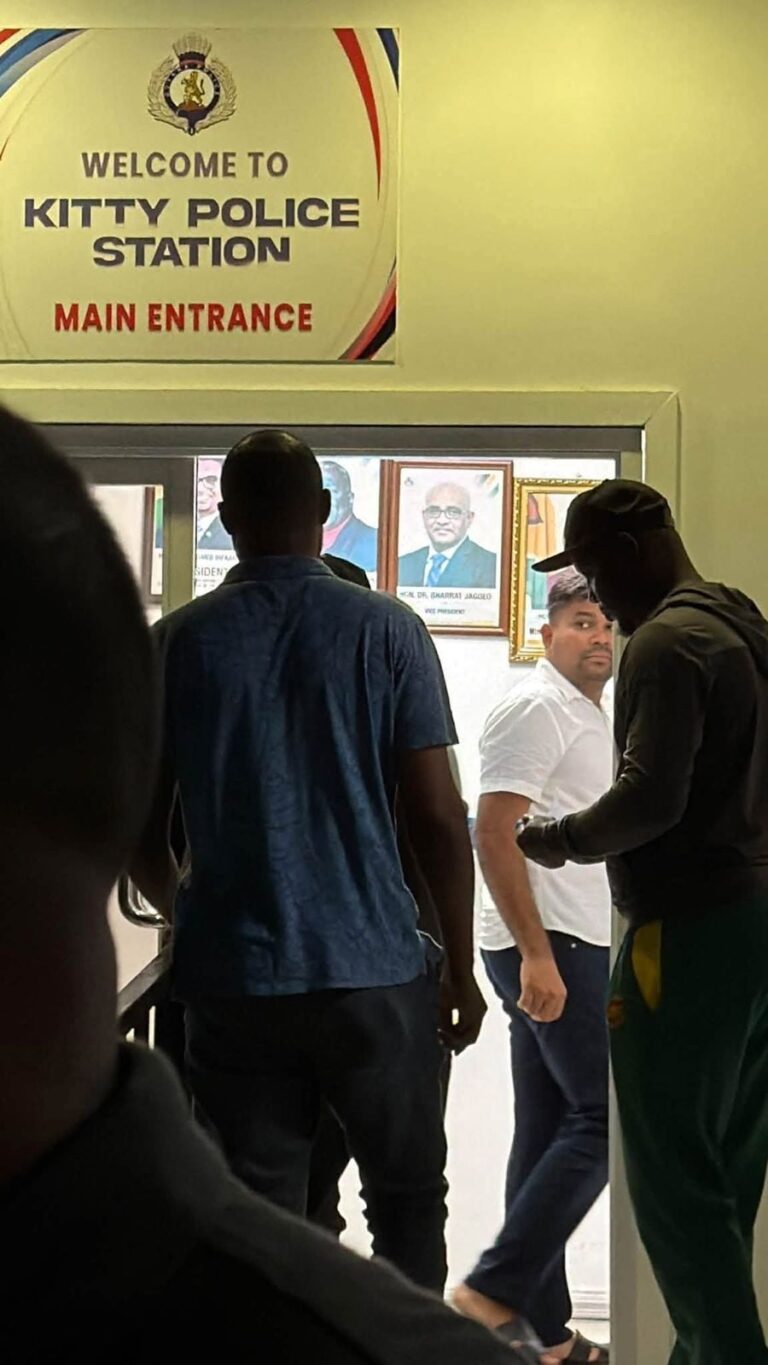
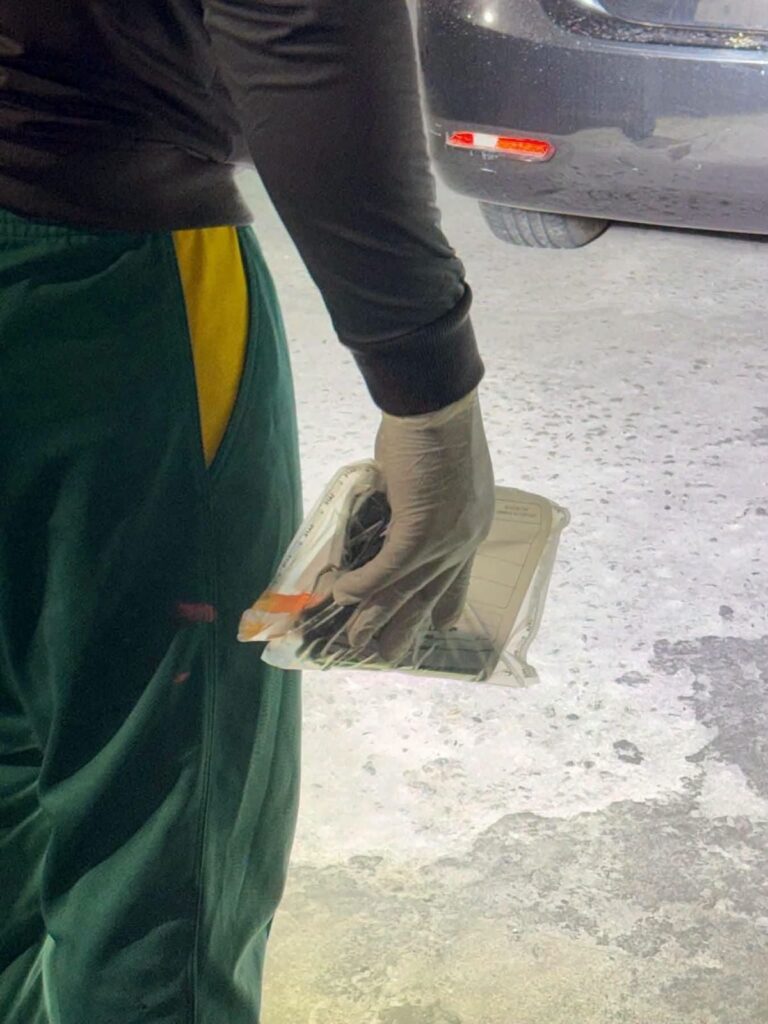
It raised concerns about their safety, alleged police mistreatment and the handling of the vehicle before a weapon was reportedly discovered at the Kitty Police Station.

The brief, addressed to diplomatic missions and international partners, said the men had spent approximately 17 hours in custody at the time it was prepared. It stated that their vehicle was struck by five bullets reportedly from the direction of Narine’s house, but that none of the occupants sustained injuries.

“The fact that no one was physically injured does not diminish the gravity of an incident in which a vehicle carrying the country’s principal opposition leader and members of his staff was struck by multiple bullets,” the office said.

According to the brief, the vehicle was initially searched along Vlissengen Road and no weapon was found. The office alleged that the occupants were physically assaulted during that search and that Narine pointed a firearm at Mohamed.

It further stated that an individual reportedly associated with Narine drove the vehicle to the Kitty Police Station, despite Mohamed objecting to anyone else driving it because he did not trust them.

A weapon was subsequently reported to have been discovered after the vehicle reached the station, the brief said.

“The sequence of events raises serious questions about how the weapon came to be found in the vehicle after the initial search,” the office stated.

It said the possibility of evidence being planted could not be dismissed without an independent and thorough examination. It called for investigators to establish who had access to the car between the initial search and the reported discovery, and to scrutinise the integrity and chain of custody of any recovered evidence.

The office also alleged that Special Branch personnel regularly followed Mohamed and that the vehicle was known to police. It questioned whether security personnel associated with Narine’s residence would have recognised it.

The account differs from the police statement which said Narine observed the car pass his Barr Street, Kitty residence and return shortly afterwards. On its second approach, he heard what appeared to be a gunshot, took cover and fired several rounds from his service weapon towards it.

The force said the vehicle was later intercepted at Vlissengen Road and Sandy Babb Street and that a search conducted in the occupants’ presence uncovered a .32 Taurus pistol without a serial number and three live rounds. Police reported recovering one .32 spent shell and four 9mm spent shells at Barr Street.

The diplomatic brief described Narine as claiming he had been shot at first. The police statement, however, said Narine heard what appeared to be a gunshot and did not identify who allegedly fired it.

Mohamed’s office called for a thorough, impartial and transparent examination of the shooting, including who fired and the motive; the legal basis for the arrests; and the treatment of the men in custody.

It also requested examination of records, photographs, videos and witness accounts of the initial search; the vehicle’s movements and chain of custody; the origin of the firearm; and any forensic evidence linking it to the occupants.

All relevant CCTV footage, ballistic evidence, police records and witness statements should be preserved, the office said.

The brief argued that the Opposition Leader’s ability to engage citizens and perform parliamentary duties without threats to his safety was fundamental to democratic government.

It alleged a broader pattern of victimisation against Mohamed and We Invest in Nationhood, accusing state institutions of being used to intimidate political opponents. Those assertions were presented as the office’s assessment.

Diplomatic missions were asked to seek clarification from the Guyanese authorities, encourage a transparent process safeguarding evidence and due process, and raise concerns about the security of opposition officeholders. The office also urged international partners to remain engaged with developments affecting political participation and the rule of law.

 In a separate statement last night, the government asserted that shots had come from Mohamed’s vehicle, pledged to apply the full force of the law and said the United States Department of Justice was being kept informed. It linked the incident to Narine’s role as a critical witness in the Mohameds’ extradition proceedings.

Mohamed’s office maintained that the circumstances required clarification and accountability.

“Guyana must not drift towards a political environment in which violence, intimidation, or the perceived misuse of state institutions undermines the ability of elected representatives to fulfill their constitutional mandate,” it said.


Source: Kiskadee Watch

Seeram case exposes rank hypocrisy of Nandlall and so many others

0

Dear Editor,


On the next occasion that Guyana’s Hon Attorney General, Mohabir Anil Nandlall, SC, MP opens his book of wisdom and expounds on the rule of law and respect for the law (and of laws, not men), I have a humble addition for inclusion in his encyclopedia.  There is Daniel Seeram.  He deserves not a page, but a whole volume by himself.


Whenever mischievous spirits enter the head of Guyana’s President Ali and inspire him to utterances about untainted governance and immaculate leadership, I found a spirit of my own to give to him.  There is Mr. Daniel Seeram.  He stands as the poster boy of clean governance and credible leadership.


Then, there is Guyana’s man of steel and might, Vice President, Bharrat Jagdeo, who recently had his incantation about breaches of the law and the consequences that could follow, I have some kind words for him.  There is Professor Daniel Seeram.  A man now authorized to travel local lecture circuits and give Guyanese law symposia.


The next time that Guyana’s Hon Prime Minister, former man of war, Ret’d Brigadier General Mark Phillips, decides to provide a public exhibition of his love for music at high volume (noise) I have something for him.  There is Music Master and Noisemaker Daniel Seeram.  His label is an impressive one: PPP Productions.  It may not be Motown, but Georgetown is as good as any backstreet in Detroit that once awarded itself the title of Hitsville, USA.


Last but not least on the political side, there is the Hon Minister of God and Glorious Guyana Works, Cardinal General, Juan Edghill.  For a man who doesn’t deal in antichrists, I have a prayer and a hymn for him.  Ah shucks, the divinely haloed Cardinal Edghill already guessed the name.  There is Daniel Seeram.  A man who has his own gods, may even fancy himself to be a god, too.


For the time being, Guyana’s Hon Minister of Policing, Oneidge Walrond, is given the caring and compassionate treatment, for she just came out of a thunderstorm, all wet and soggy.  She has SOCU on her hands, so it would be unconscionable to place Daniel Seeram on her plate.


Now, it’s time to insert the foreign dimension into this conversation.  There’s the illustrious U.S. Ambassador to Guyana, Excellency Nicole D. Theriot and that other American who has achieved his own strain of Guyanese immortality, Mr. Alistair Routledge.  When they wax profusely and elegantly about democracy’s sparkle and the grandeur of PPP governance in Guyana, there’s that man to set right ambassador.  Daniel Seeram is the name, and freedom is his game.  I should pause, but I can’t leave out Exxon’s Sam Houston. There’s CEO, Darren Woods, a man given to excesses of dribbling platitudes about the quality of leadership and governance in Guyana when Pres Ali puts that bearhug on his elbow.  There’s the irrepressible and uncatchable Daniel Seeram.  My Lord, my God!  This feels like Mexico and the Alamo again.


One verdict.  One penalty.  One man.  Mr. Nandlall, where is this law of which so much is spoken, counsel?  Mr. Jagdeo, what about the consequences that slipped past the lips, doc?  General Phillips, what about a little noise, sir?  Deacon Edghill, how about a cry to heaven for the wretched of Guyana, Lordship?  I deal with the people that matter.  Guyanese can figure out why another was bypassed.  I help: what’s the use of dealing with showbiz and Entertainment Today when serious stuff is on the agenda?


My last word on this grand affair is this.  If Mr. Daniel Seeram still wore his PNC stripes, already he would have been tossed headfirst into a small unlit cell.  Then, chained hand and foot, with an iron bracelet strapped tightly across his waist, and all while fastened to a wall.  Perhaps, Anil Nandlall, SC, may be interested in telling Guyanese more about that, and his laws, courts, holdings, and to whom they apply (and don’t).


Sincerely,

 GHK Lall


Source: Kiskadee Watch

Mohamed was highlighting alleged misuse of resources, sister says as supporters demand release

0

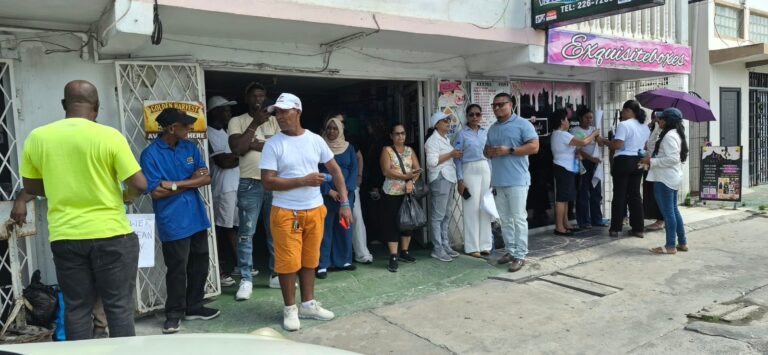
Opposition Leader Azruddin Mohamed was highlighting alleged misuse of state resources outside Special Branch Head Prem Narine’s residence when the confrontation leading to his arrest occurred, his sister Hadiyyah Mohamed said yesterday as relatives and supporters protested for his release outside the Kitty Police Station.

Speaking to Kiskadee Watch at a protest outside the Kitty Police Station, Hadiyyah questioned the deployment of police officers around Narine’s residence and called for the release of her brother and two members of his staff.

Mohamed, Mario Mohamed and driver Eugene Thorne remain in custody. Family members and supporters gathered outside the station were demanding their immediate release. Late last night it was reported that the Thorne and Mario Mohamed were removed and taken to separate police stations while the Opposition Leader remained at the Kitty Police Station.

Hadiyyah said her brother had been drawing attention to alleged corruption involving Narine and had not entered the officer’s property.

She maintained that he was carrying out his responsibilities as Opposition Leader by questioning the use of public resources, contrasting the police presence around Narine’s home with other public safety needs.

According to her account, Narine spotted Mohamed and pursued his vehicle at high speed. She said Mohamed and his staff, who were unarmed and without security, fled before Narine and three masked men surrounded their car.

Hadiyyah alleged that several shots were fired, leaving bullet holes in the sides and roof of the vehicle. She further alleged that the occupants were pulled out, beaten, handcuffed and forced to the ground.

She accused an officer of stepping on Mario Mohamed’s neck and alleged that Narine pointed a firearm at the Opposition Leader.

Her account differs sharply from the police statement issued hours after the incident. by

Police said Narine was at his Barr Street, Kitty residence at approximately 11.45 pm when a black Toyota Allion, registration PXX 5300, passed slowly and returned shortly afterwards. According to the force, Narine heard what appeared to be a gunshot on the second approach, took cover and fired several rounds from his service weapon towards the vehicle.

The car was subsequently intercepted at Vlissengen Road and Sandy Babb Street. Police said a search conducted in the occupants’ presence uncovered a .32 Taurus pistol without a serial number and three live rounds. Another of Mohamed’s sisters, Hana Khamelia, alleged in an earlier Facebook post that the weapon had been planted after previous searches found nothing.

Hadiyyah said the family was still awaiting clarity on whether charges would be laid and when the men might be released.

She also questioned why Mohamed had missed a court appearance scheduled for yesterday morning, saying his clothes had been delivered and his lawyer was at the station to accompany him.

“There’s no reason for why he missed it,” she said, adding that the family had received no explanation.

Hadiyyah raised concerns about conditions in the holding cell, saying Mohamed had asked police for cardboard boxes on which the men could lie. The family subsequently bought boxes for them, she said.

Narine is one of the main witnesses in the extradition proceedings involving Mohamed and his father, Nazar Mohamed. He had previously told the court that he considered the Opposition Leader a threat to society and national security.

The police statement issued yesterday morning said the three men were being investigated in connection with the alleged discharge of a loaded firearm with intent and possession of an unlicensed firearm and ammunition. It did not announce charges or address the allegations of assault, threats or the planting of the weapon.


Source: Kiskadee Watch

‘Sanko Boy’: We must stop treating domestic violence as a private matter

0

Dear Editor,

As Guyana continues to grapple with daily occurrences of domestic violence, sexual abuse and femicide, I find myself reflecting on the lyrics of our traditional folk song, “Sanko Boy”:

“Sanko boy you betta run,
Sanko boy big fat police a come.
Sanko lick he lova pon de dam and de gyal ah holla fuh murder.”

While the song may have been intended as humorous folk entertainment, I am struck by the image of a woman crying “murder” while the man is warned that the police are coming. What was once accepted as cultural humour invites an uncomfortable question today: Have we sometimes trivialised women’s distress while making light of men’s sexual behaviour?

I am not suggesting that this song causes or endorses violence against women. Rather, I believe it offers an opportunity to examine the attitudes our society tolerates. When a woman’s cries of distress become part of a humorous refrain, we should ask whether we are sufficiently sensitive to the distinction between consensual intimacy and coercion, romantic pursuit and abuse, or masculine confidence and domination.

This reflection is particularly relevant as Guyana confronts alarming reports of violence against women, including femicide. Behind every statistic is a human tragedy, a family shattered and a society forced to confront its failures. We must stop treating domestic violence as a private matter, blaming victims for remaining in abusive relationships, or excusing aggressive behaviour as simply the way men behave.

Our cultural heritage deserves preservation, but tradition must never become an excuse for indifference. We can celebrate “Sanko Boy” as part of our folk tradition while teaching our children that consent is essential, that a woman’s refusal must be respected, and that cries for help must never be dismissed as entertainment.

Perhaps the most important question is not whether we should continue singing “Sanko Boy,” but whether we have progressed sufficiently as a society to recognise when the humour of yesterday intersects with the injustices of today.

We must preserve our songs without perpetuating harmful attitudes. A nation’s cultural maturity is measured not only by the traditions it celebrates, but also by the dignity, safety and respect it affords its women.

Sincerely,

Keith Bernard


Source: Kiskadee Watch

Barima families question BK’s salvage experience, demand recovery date

0

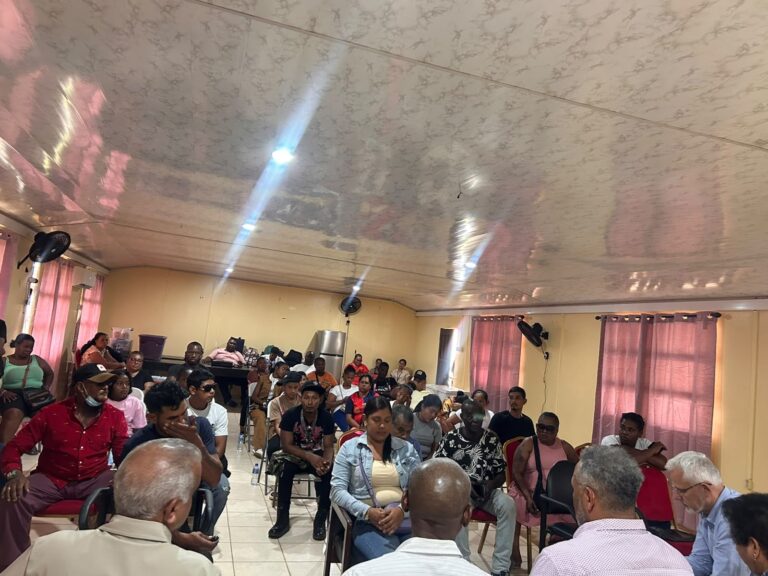
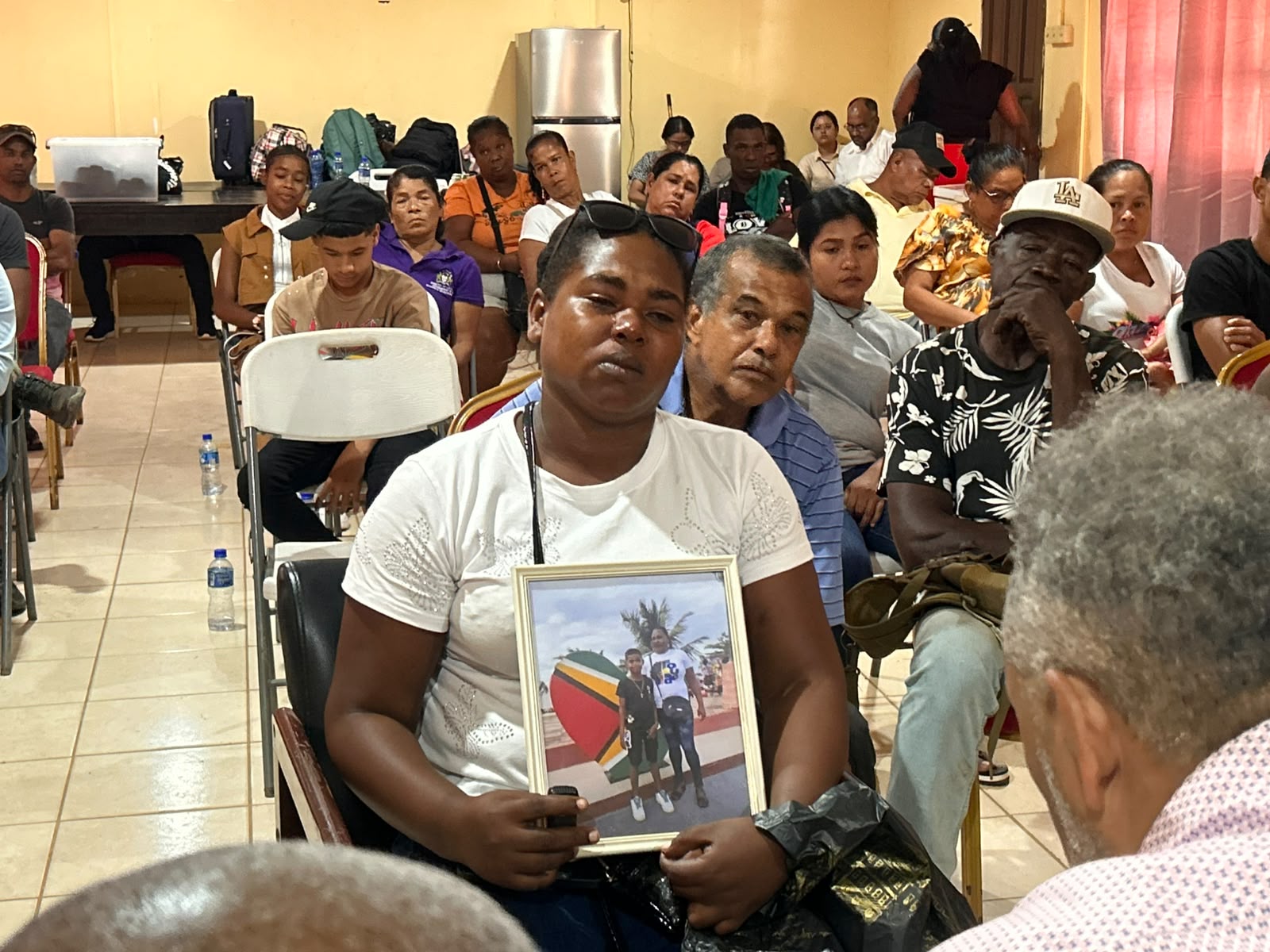
Relatives of victims of the MV Barima disaster yesterday questioned BK International’s experience in raising sunken vessels and called for a firm recovery date, saying the wreck could hold crucial evidence and the remains of loved ones still missing.

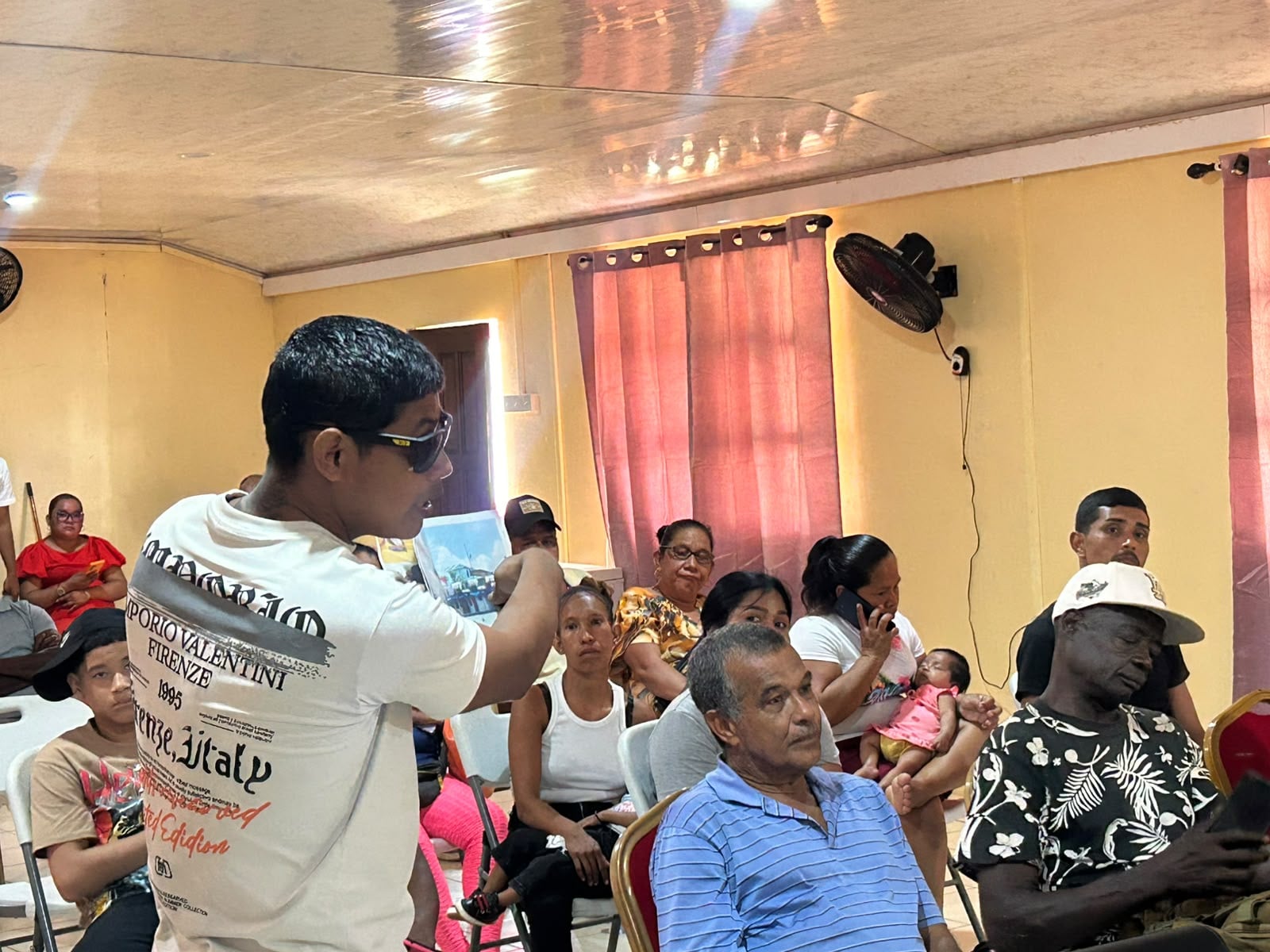
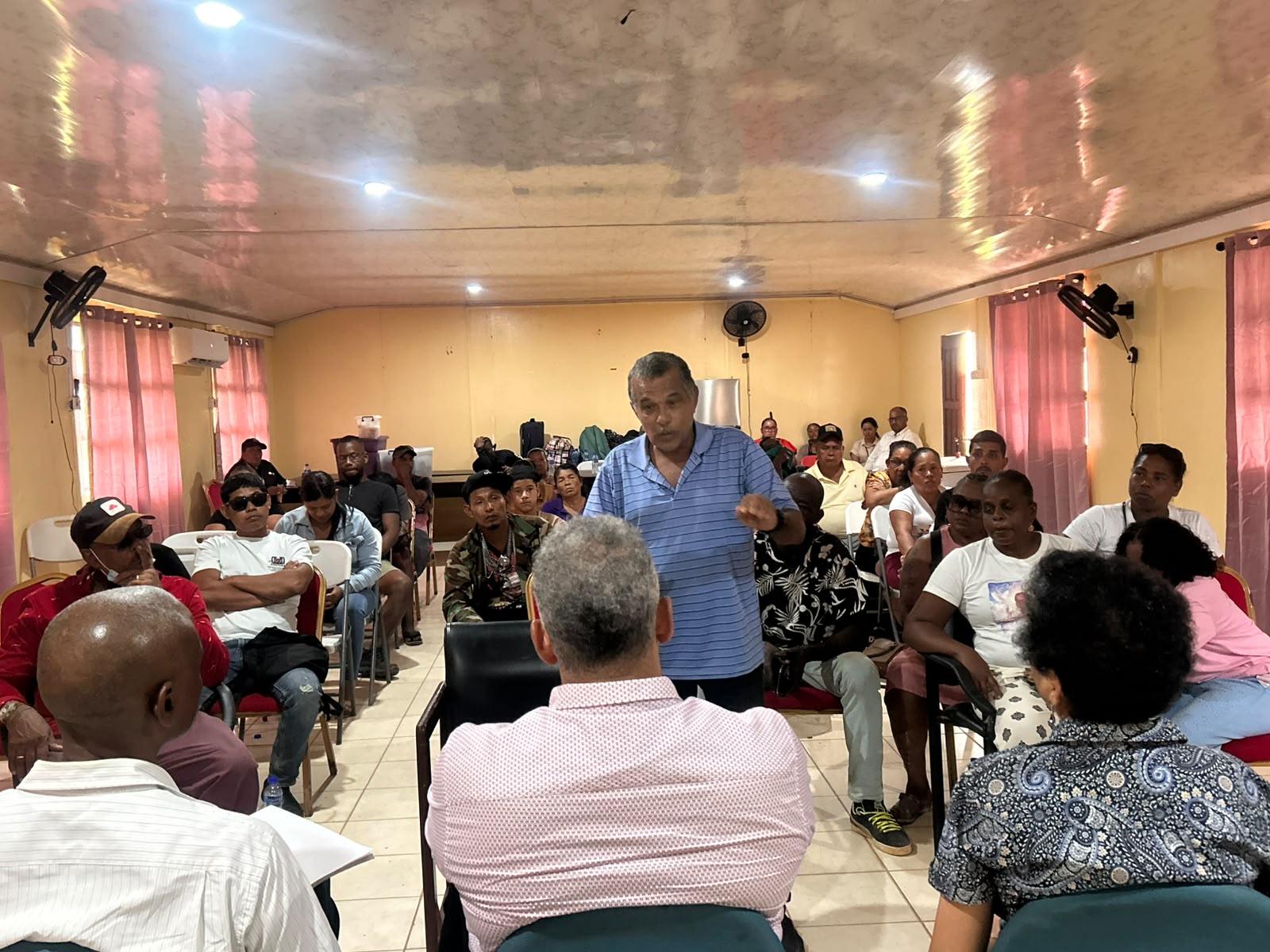
At a Commission of Inquiry (CoI) meeting in Port Kaituma, survivors and relatives also recounted concerns about the vessel’s condition, passenger and cargo loading, safety equipment and the initial search-and-rescue response.

Some said they wanted BK to proceed with the recovery but questioned whether it had the necessary expertise. They urged that the operation not be subjected to further months of delay.

Tiffany Beharry holds a photograph with her son and mother who died in the tragedy

The company was referred to as BK Quarry during the meeting. Kiskadee Watch previously reported that BK International had been selected to salvage the vessel and that Opposition Leader Azruddin Mohamed had questioned its experience and the selection process at an October 7 meeting with the commission.

Kevon Thomas, whose brothers Kyle and Brian Thomas were aboard the vessel, said families could not continue waiting for the wreck to be raised. Kyle’s body was recovered, but Brian remains missing.

Thomas called for a definite date and said the recovery should not be pushed back for another six months. Investigators needed to examine the vessel to help establish what happened, he said, while relatives needed the opportunity to recover and bury those still missing.

Kevon Thomas

Thomas, who said he had travelled on the Barima more than 10 times, raised concerns about cargo loading and the space available for passengers. He also urged investigators to interview three men he identified who are currently in jail and examine the availability of life jackets and the safety of transport serving Region One.

Another relative, who also identified Kyle and Brian as his brothers and said his mother survived the sinking, described previous mechanical problems, including an alleged fire.

He presented photographs which he said showed the vessel on fire while in port, including around the engine room, and questioned whether reports of earlier problems had prompted sufficient action.

The accounts come against the backdrop of previously documented defects. Kiskadee Watch reported that maintenance records from November 2025 to March 2026 listed mechanical and electrical problems aboard the Barima, including an out-of-service generator, leaking engine exhaust and overheating machinery, with several matters marked for urgent attention.

Overcrowded

Survivor Bernard Young, who said he had experience with boats and engines, described the vessel as overcrowded on its final journey, with passengers sleeping between cargo.

Bernard Young makes a point to the commissioners

He said one engine stopped, restarted and then cut out again without restarting. Young questioned why the vessel continued in rough Atlantic conditions, recalling waves washing over the deck.

According to his account, a larger wave struck the vessel, which tilted to the left as cargo shifted in that direction before it sank. He described escaping from a hammock and finding himself in the water, where he grabbed a plank which helped him survive.

Tiffany Beharry, who lost her mother and 10-year-old son, criticised what she considered an inadequate early response to the search.

She said she began seeking information at approximately 3 am but was not initially taken out by the authorities and their vessels. She subsequently joined private boat operators, leaving Charity at about 8.30 am and returning between 5.30 pm and 6 pm after searching around Shell Beach and nearby islands.

Beharry said she also helped recover bodies and questioned why private operators appeared to be undertaking such an extensive part of the search while families waited desperately for information.

She recalled being told by divers that attempts to lift the wreck had failed after ropes broke and underwater visibility proved difficult.

Beharry said recovery was necessary to establish whether the vessel had a hole, whether cement was aboard and what caused it to sink. She also called for scrutiny of the decisions governing the loading of passengers and cargo.

Survivor Benita George, who said she had travelled on the Barima three times, recalled less space on the final voyage than on her previous journeys.

Goods, including potatoes and onions, were aboard, while bags, children and other passengers occupied the available space. George said she was asleep when the incident occurred and recalled waking in the water.

Trader Sherry Adams, who left the vessel before its departure, described finding it packed with passengers, children, mattresses and cargo.

Adams said she loaded goods on Thursday, July 16, and Friday, July 17, ahead of the scheduled 3 am departure on Saturday. When she returned to collect her bags, she could find neither a seat nor free floor space.

She estimated that more than 200 persons were aboard, although that figure was her own assessment. She also raised concerns about access to toilets, hygiene and life jackets, some of which she said were positioned above passengers’ heads.

Adams said chickens, large engines and a generator were among the cargo and that the vessel appeared to sit low in the water.

She further alleged that she heard the captain ask a man identified as Mr Clark to remove items, but that loading continued after the captain received a telephone call.

Unable to find space, Adams left and arranged to travel by air, losing the goods she had intended to transport.

Andyar Deally, whose son Andriel Bautista died in the July 18 MV Barima sinking, said passengers were kept waiting as cargo continued to be loaded before the vessel departed for Port Kaituma.

Passengers were initially told it would leave at 1 pm, she said, but departure was delayed. From a window, she recalled seeing the vessel leave and return three times while loading continued.

When she boarded, benches were occupied by cargo, including bags of onions and potatoes, leaving little room for passengers. More goods were loaded after passengers boarded, she said.

Deally said she became concerned when she noticed the vessel leaning to one side. During the journey, her son alerted her to water in its lower section and recorded a video. When passengers questioned crew members, she said, they were told the water was normal because they were travelling at sea.

The Barima sank off the Essequibo Coast on July 18 while travelling from Georgetown to Port Kaituma. Seventy-three persons were confirmed dead, while others remained unaccounted for.

Yesterday’s meeting formed part of the commission’s preliminary visits and discussions with affected communities. Formal evidence-taking is scheduled to begin at the Arthur Chung Conference Centre in Georgetown today. The commission’s secretary had previously explained that the community meetings preceding that sitting would not constitute formal evidence-taking.


Source: Kiskadee Watch