Home Blog Page 265

Venezuela border controversy: ICJ ruling can usher in new era of Guyana-Venezuela relations – Pres Ali tells UN   – Guyana Times

0

Venezuela border controversy: ICJ ruling can usher in new era of Guyana-Venezuela relations – Pres Ali tells UN  

– says Guyana went to ICJ after decades of bilateral efforts
– urges Venezuela to abide by upcoming ruling as interim President calls for fresh negotiations

With the International Court of Justice (ICJ) expected to deliver a decision in the coming months on the border controversy between Guyana and Venezuela, President Dr Irfaan Ali has renewed calls for the Spanish-speaking nation to abide by the court’s decision, saying that it will set the stage for new neighbourly relations.
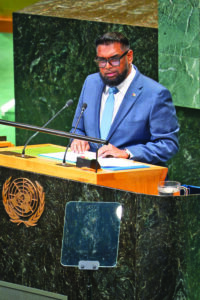
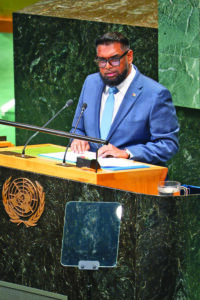
President Dr Irfaan Ali addressing the 81st United Nations General Assembly on Thursday in New York

The Guyanese leader made remarks during his address at the 81st United Nations General Assembly on Thursday in New York, United States.
“We urge Venezuela to abide by the forthcoming ruling in accordance with their obligation under the UN Charter, as Guyana will do. We look forward to a new era of neighbourly relations in the interest of our peoples, the development of our countries, and the stability and prosperity of our region,” President Ali stated.
His comments come just one day after his Venezuelan counterpart, acting President Delcy Rodriguez, called for the two neighbouring nations to return to the negotiation table to settle the decades-long border controversy, even as she reaffirmed her country’s claims to two-thirds of Guyana’s 83,000 square miles.
“Here, I appeal to the Cooperative Republic of Guyana to resolve the issue and to return to negotiations as stipulated by the Geneva Agreement,” Rodriguez stated during her address to the UN Assembly, even as she wore a brooch that contained Guyana’s Essequibo region as part of the Venezuelan map.
According to the interim Venezuelan President, “Agreements that last the longest are those that emerge from bilateral negotiations. They last longer and function better than those imposed by external bodies.”

Recourse to World Court
But President Ali on Thursday reminded us that it was under that very Geneva Agreement that the UN Secretary General (UNSG) referred the border controversy to be settled by the World Court.
“The matter was referred to the International Court of Justice by the Secretary General, acting pursuant to the Geneva Agreement… Recourse to the ICJ came after decades of efforts to resolve the controversy bilaterally, including through a mixed commission and the Good Offices of the UNSG. In full respect for international law, Guyana participated and encouraged Venezuela to participate in the proceedings of the ICJ. Now that we have both participated in the hearings, which were completed in May 2026, we urge Venezuela to abide by the forthcoming ruling.”
“Guyana has always advanced the peaceful settlement of the controversy regarding our border with Venezuela. Despite the historical truth – clearly outlined in the Arbitral Award of 1899 that determined the full, perfect, and final settlement of our border with Venezuela – we endured long and repeated provocations and aggression,” the Guyanese Head of State noted.
Venezuela is seeking claims to more than two-thirds of Guyana’s landmass and a section of the country’s Exclusive Economic Zone (EEZ).

Back in March 2018, Guyana approached the ICJ seeking a final and binding settlement of the 1899 Arbitral Award, which demarcated the boundary with Venezuela.
The Spanish-speaking nation is laying claims to more than two-thirds of Guyana’s landmass and a portion of the country’s Exclusive Economic Zone (EEZ), where over 11 billion barrels of oil equivalent (boe) have been found, and production as well as other exploration activities are ongoing.
Back in 2018, and based on the recommendation of UNSG António Guterres following years of failed diplomacy between the two countries, Guyana had approached the ICJ, seeking a final and binding settlement of the 1899 Arbitral Award, which establishes the boundaries with Venezuela.
The case wrapped up back in May of this year after both countries were given two opportunities to make oral arguments on the merits of their respective cases at the Peace Palace in The Hague, Netherlands. The ICJ is now deliberating on its decision, which is expected to be delivered early in the new year.
President Ali had previously said that the ICJ’s pending ruling will give finality to the border controversy with Venezuela, and Guyana will wait with patience and dignity for that decision – something of which he is confident will be in his country’s favour.

 Peaceful resolution of global conflicts
Meanwhile, the Guyanese leader’s push for a peaceful settlement of the border controversy with Venezuela aligns with Guyana’s longstanding position for the stability and prosperity of the region.
In fact, he used the opportunity to call for an end to the crises facing countries within the Latin American and Caribbean region. In Haiti, he said resolving the multidimensional challenges remains central to achieving democracy, stability, peace, and prosperity for the Haitian people.
According to Ali, the sustained support of the international community through the provision of key financial and material resources is critical to realising these objectives. However, he stressed that the future of Haiti must ultimately be Haitian-led and Haitian-owned.
Similarly, he reiterated calls for a viable solution for Cuba – one that is peaceful, people-centred, development-focused, and allows for the full aspirations of the Cuban people to be realised. He underscored the Caribbean Community’s (CARICOM’s) offer to play a meaningful role in achieving this objective.
Turning his attention to ongoing conflicts around the world, the Guyanese leader renewed Guyana’s call for a just and lasting solution to the crisis in the Middle East that will not only bring an end to the suffering of innocent civilians but also recognize the Palestinian people’s legitimate right to self-determination and to a secure homeland of their own.
“We reiterate our support for the two-state solution,” President Ali posited. In the same breath, he also advocated for an end to the Russia-Ukraine war and the war in Sudan and for a peaceful resolution of all conflicts that continue to consume lives, uproot families, and extinguish the hopes of millions in other parts of our world.
“We have the possibility of silencing the guns through dialogue and diplomacy. The world does not need more sophisticated instruments of destruction; it needs a more sophisticated capacity for peace,” the head of state noted.


Discover more from Guyana Times

Subscribe to get the latest posts sent to your email.


Source: Guyana Times
Full Court clears way for state to take possession of VAMED hospital sites  – Guyana Times

0

Full Court clears way for state to take possession of VAMED hospital sites 

The Full Court has set aside five preservation orders made against the State in the legal dispute involving Austrian engineering company VAMED Engineering GmbH, clearing the way for the Health Ministry to take possession of the affected hospital sites, containers, and equipment.

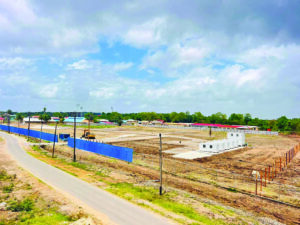
Construction site of the New Amsterdam Hospital Campus

According to a press release issued Thursday by the AG (AG)’s Chambers, the Full Court on September 22, 2026, allowed the AG’s appeal against the preservation orders made by Justice Renita Singh on August 6, 2026.
The dispute concerns the Ministry of Health’s termination of construction contracts for the Georgetown Paediatric and Maternal Hospital (GPMH) and the New Amsterdam Hospital Campus (NAHC).
The appeal was heard by Acting Chief Justice Navindra Singh and Justice Zamilla Ally-Seepaul, who issued orders directing the Ministry of Health to preserve the two hospital sites, along with 52 containers and equipment located at the GPMH site.
The Ministry was also ordered not to open or otherwise interfere with the containers or equipment. One of the orders has also restricted access to the GPMH site, allowing VAMED Engineering’s security personnel to enter only for the purpose of securing the containers and equipment.
The Health Ministry was further ordered to preserve contractors’ documents, property designs, plans, and intellectual property. In its decision, the Full Court found that the preservation orders could not stand, stating that they were inconsistent with Justice Renita Singh’s findings and that their legal foundation had not been adequately established.
The Full Court held, “…the preservation orders cannot stand. They are inconsistent with the learned trial Judge’s findings. Their legal foundation was inadequately established, and their substantive effect was not properly considered.”
The Full Court ruled that Section 16 of the State Liability and Proceedings Act prohibits injunctions against the State in proceedings of this nature. It found that the statutory prohibition could not be circumvented by describing orders regulating the State’s conduct as preservation orders or by relying on the Civil Procedure Rules.
The Judges also found that the preservation orders lacked the necessary statutory basis under the Arbitration Act 2024. They noted that the orders conflicted with the trial Judge’s findings that there was no urgency and that damages would have been an adequate remedy.
However, the Full Court’s decision did not disturb the High Court’s refusal of VAMED’s applications for conservatory and restraining orders. The High Court’s order referring the underlying contractual dispute to arbitration also remains in place. The Full Court awarded the AG $500,000 in costs.
The AG’s Chambers said the ruling means the Ministry of Health is now cleared to take possession of the sites, containers, equipment, and associated construction materials and to proceed with the projects as it sees fit.
The State was represented by AG Anil Nandlall SC, together with Deputy Solicitor General Shoshana Lall, and attorneys Prithima Kissoon and Joshua Cullen of the AG’s Chambers. VAMED Engineering was represented by attorney Nigel Hughes.
The Government terminated both hospital contracts with the Austrian company on July 23, 2026, citing breaches of the agreements and significant delays in the completion of the projects.
The Government had made repeated efforts to engage the contractor and have the works completed while also seeking to resolve the outstanding disputes amicably. However, those efforts did not result in the contractor fulfilling its contractual obligations.
By the time the contracts were terminated, the works on both projects had fallen significantly behind the schedules stipulated under the agreements. Following the termination, the Government took steps to secure both hospital sites and the materials located there, in keeping with provisions contained in the contracts.
The Government also moved to call in the performance bonds associated with the two contracts.
Each contract was backed by a €15 million performance bond, placing the combined value of the two bonds at €30 million. The bonds were issued by the Bank of Austria.
The two projects represent major investments in Guyana’s healthcare infrastructure. The US$161 million New Amsterdam Hospital Campus in Region Six is being developed as a 230-bed, Level Five healthcare facility, with advanced diagnostic services, specialised care, and five operating theatres.
The €149 million Georgetown Paediatric and Maternal Hospital at Ogle is designed as a 256-bed specialised facility focused on maternal and child healthcare. The project includes surgical facilities, an intensive care unit, imaging services, and oncology services.
The contractual dispute is to be resolved through arbitration, with the Paris, France-based International Chamber of Commerce (ICC) set to conduct the arbitration hearings in Guyana.


Discover more from Guyana Times

Subscribe to get the latest posts sent to your email.


Source: Guyana Times
Yarrowkabra teen drowns while crossing Siparuni River – Guyana Times

0

Yarrowkabra teen drowns while crossing Siparuni River

A 16-year-old boy from Circuitville, Yarrowkabra, along the Linden-Soesdyke Highway, reportedly drowned in the Siparuni River in Region Eight (Potaro-Siparuni) after allegedly disappearing underwater while attempting to cross the river.

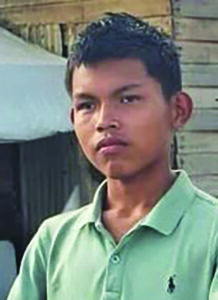
Dead: Bentley Joseph Jr

The teen, identified as Bentley Joseph Jr, had reportedly travelled with several others from their camp to an area known as “Tunnel” to engage in mining activities.
Reports indicated that on Sunday, Joseph and his cousin were attempting to cross the Siparuni River on foot at an area known as Rock Bar when he fell into the rapidly flowing water.
Although he reportedly attempted to swim, Joseph went under and did not resurface. An alarm was raised, prompting a search for the teenager. His body was discovered floating in the river on Tuesday.
Police were summoned to the scene, and an examination of the body revealed no visible marks of violence which suggested foul play was involved.
Joseph’s body was subsequently transported to Memorial Gardens Funeral Home, where it is awaiting a post-mortem examination. Police investigations into the circumstances surrounding the teen’s death are ongoing.


Discover more from Guyana Times

Subscribe to get the latest posts sent to your email.


Source: Guyana Times
Pres Ali lobbies UNSC Permanent Members to support Amb Rodrigues-Birkett for UN top post – Guyana Times

0

Pres Ali lobbies UNSC Permanent Members to support Amb Rodrigues-Birkett for UN top post

– says her experience uniquely positions her to navigate challenges confronting organisation

President Irfaan Ali appealed to the United Nations Security Council and the wider body to support Ambassador Carolyn Rodrigues Birkett’s candidacy for Secretary General (SG), as she possesses the experience and leadership skills necessary to give greater voice to small states like hers and rebuild trust in an increasingly fractured international order.
“In the humblest of ways, I call on the P5, the Security Council, and every member here to look beyond the small country that nominated her,” the President said in his address yesterday morning in New York, as the 81st session of the United Nations General Assembly (UNGA) continued.
“CARICOM, as a body, has endorsed her. And let us rise to the challenge of giving this indigenous woman the chance to help us craft together the United Nations we want to see succeed. The responsibility for recommending the next Secretary General rests, in the first instance, with the Security Council, and we therefore respectfully place before its members the candidature of Carolyn Rodrigues Birkett,” he added.
And as Rodrigues Birkett sat with Guyana’s delegation, the President reasoned that the organisation’s future credibility depends on leadership capable of championing multilateralism at a time when geopolitical tensions, armed conflicts, widening inequalities, and global insecurity continue to test international institutions, and she embodies this inclusive, principled skill set.
Embracing this “new and invigorated multilateralism”, he said, would see a UN capable of confronting the turbulence of the present era while defending the rules-based international order, but the reforms needed cannot happen without strong leadership.
“The United Nations needs its next Secretary General to work with all member states to restore confidence in the organisation, mobilise its energies, and turn the language of multilateralism from aspiration into action,” he stated.
Rodrigues Birkett, he described, is a leader whose career and experience uniquely position her to navigate the challenges confronting the organisation. “It is in this spirit that Guyana has put forward the candidature of Her Excellency Carolyn Rodrigues Birkett for the office of Secretary General of the United Nations,” he posited.

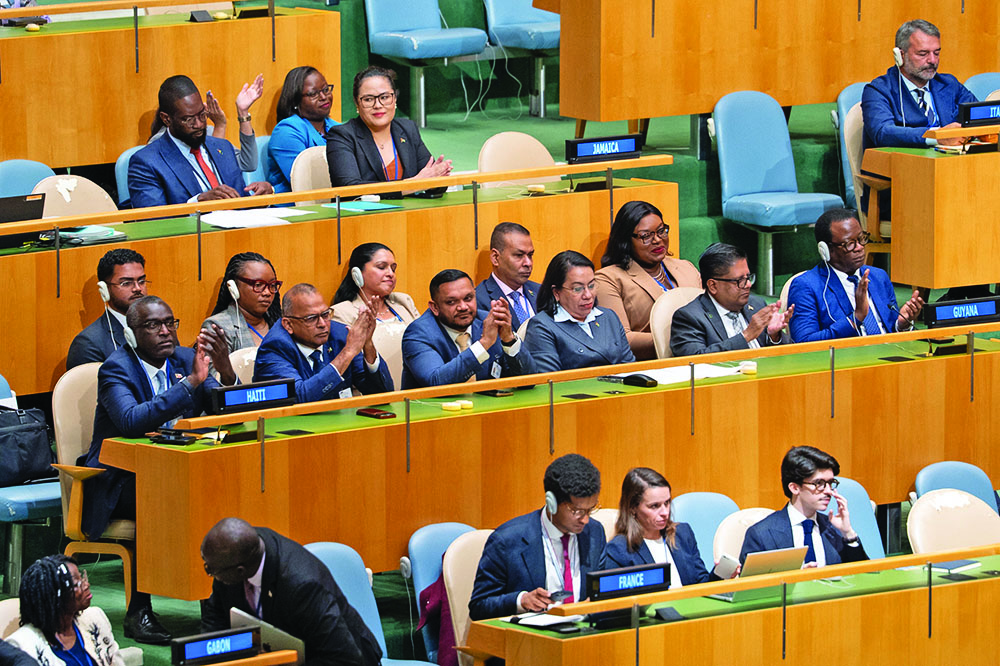
Ambassador Carolyn Rodrigues Birkett and other Guyanese Ministers of Government at the UN General Assembly

Ali also highlighted her service to Guyana, her advocacy on behalf of developing countries, and her extensive work within the multilateral system.  “She has served her country, represented the developing world, and worked within the multilateral system with a deep understanding of both its promise and its imperfections,” he told delegates.
According to the President, her qualities align closely with the demands of the current moment.
“We believe that her experience, her convictions, and her record of service speak directly to the kind of leadership this moment demands,” he said.
Ali suggested that the significance of her candidacy extends beyond Guyana itself, presenting it as a symbol of the aspirations of smaller states and developing nations that seek greater inclusion within international decision-making structures.
He noted that the UN requires leadership capable of bridging growing divides between rich and poor nations, major powers and smaller states, and the developed and developing worlds.
“We need leadership capable of restoring trust without compromising principle; of listening without surrendering conviction; of building bridges across the widening chasms between North and South, between large states and small, and between the developed and developing worlds,” he said.
The President further argued that the SG must be willing to uphold the UN Charter consistently and courageously.
“We need a Secretary General who will defend the Charter not only when it is politically convenient but precisely when its principles are under pressure,” he stated.
A significant portion of Ali’s appeal centred on Rodrigues Birkett’s personal story, which he portrayed as emblematic of resilience, determination, and social mobility.
Describing her as an Indigenous woman who emerged from a small Indigenous village to attain positions of national and international leadership, Ali said her life experience gives her a unique appreciation of the struggles faced by many across the developing world. “An indigenous woman coming from a small indigenous village, defying the odds – the odds against indigenous persons, the odds against women, the odds against poverty – defying every challenge and rising to the top amidst those challenges,” he said.
Her character, he added, has been shaped by «struggle, sacrifice, and commitment», while her achievements have been grounded in her sense of humanity.
The President, whom Rodrigues Birkett has said encouraged her to take up candidacy and who has been “very, very supportive” and has the blessings of his Government, stated that his personal assessment of Rodrigues Birkett is that she is a figure of exceptional integrity and dedication.
“This is an individual of exceptional qualities, not because she is Guyanese or because she comes from Guyana, but because I know her personally,” he said.
He noted that many diplomats stationed at the UN were already familiar with her record and character.
“The Permanent Representatives here in New York know her character, her integrity, her will, her commitment, her love for humanity, and her love for this world,” he said.
And if the UN’s 193 countries want to ensure peace and security, the protection of human rights, and fostering international cooperation continue for generations to come, they would choose Rodrigues Birkett. Said the President, “I know that this world will be a better place with Carolyn Rodrigues as the Secretary General of the United Nations.”


Discover more from Guyana Times

Subscribe to get the latest posts sent to your email.


Source: Guyana Times
The FAO Faces a New Agricultural Revolution – Guyana Times

0

The FAO Faces a New Agricultural Revolution

Humanity faces a paradox. We have never had so much scientific and technological knowledge to produce food, yet the need to transform the way we produce it has never been more evident.
The Green Revolution was one of the great successes of the 20th century. Increased agricultural yields made it possible to feed billions of people and avert the famines that many considered inevitable. But that success came at a cost. The intensification of agriculture also contributed to soil degradation, increased use of water and inputs, and environmental impacts.
The challenge of the 21st century is different. We must produce more with less. More food with less land. Higher productivity through more efficient water use. Greater prosperity for farmers, but also more carbon stored in the soil, greater biodiversity, and healthier ecosystems.
This transformation must be at the heart of the next phase of the Food and Agriculture Organization (FAO) of the United Nations. Latin America and the Caribbean have much to contribute. The region is one of the pillars of global food security and a vast laboratory for agricultural innovation.
Argentina, Brazil, and other countries have developed production systems that incorporate science, technology, precision agriculture, no-till farming, genetic improvement, and new natural resource management practices.
The biome known as the “Brazilian Cerrado” is an extraordinary example. Scientific research and decades of innovation made it possible to transform a region once considered to have limited agricultural potential into one of the world’s major food-producing centres.
The lesson is not to mechanically transplant that model to other regions. The lesson is that science can transform natural constraints into opportunities for development.
Africa today needs its own agricultural revolution. There is no universal recipe. But there is a universal principle: science must guide decisions.
I have dedicated much of my scientific life to demonstrating that soil health is inextricably linked to the health of plants, animals, people, ecosystems, and, ultimately, the planet. There can be no lasting food security with degraded soils.
That is why I consider the experience of “Living Soils of the Americas” to be particularly important – an initiative we developed together with the Inter-American Institute for Cooperation on Agriculture (IICA) during the tenure of Argentine Manuel Otero.
The initiative brought together science, Governments, farmers, businesses, and civil society organisations around a fundamental idea: increasing production and protecting the environment are not conflicting goals. Healthy soils can store carbon, conserve water, strengthen biodiversity, improve resilience, and, at the same time, sustain agricultural productivity.
The experience gained in the Americas then began to extend to Africa. Innovations developed over decades in places like Brazil’s Cerrado can offer valuable insights for the African savannas. This exchange epitomises what modern international cooperation should be: not imposing models, but sharing knowledge and building solutions.
The FAO possesses an extraordinary combination of knowledge, international presence, and the ability to bring people together. But international institutions only fully justify their existence when that capital is transformed into concrete benefits for their member countries and for the people they are meant to serve. In agriculture, that means reaching the producer.
The FAO of the future must be closer to farmers, scientists, businesses, universities, and decision-makers. It must identify solutions that work, connect them with those who need them, and help adapt and scale them up. We need to bridge the gap between knowledge and the field.
During my years of collaboration with IICA, I had the opportunity to work closely with Manuel Otero and observe his approach to agricultural cooperation.
Otero promoted partnerships among scientists, producers, Governments, and the Private Sector, and advocated for international cooperation focused on concrete results. Our joint experience showed that an international organisation can act as a bridge between science and public policy and transfer knowledge from one region to another.
This kind of experience takes on particular relevance in light of the challenges facing the FAO.
The organisation needs to deepen its ties with its member countries, place farmers at the centre of its actions, strengthen partnerships with the scientific community and the private sector, and more effectively share best practices.
Otero’s track record offers a concrete perspective on how to approach this transformation. His potential candidacy for Director General of the FAO would provide a comprehensive set of solutions to the challenges the organisation faces.
But the challenge goes beyond any single individual. What is at stake is what kind of FAO the world needs.
We need an organisation capable of leading a new agricultural revolution: one grounded in science, that enables us to produce more with less, that restores soils rather than degrading them, and that generates prosperity.
The knowledge already exists. So do the examples. We need the ability to turn them into action.
By Rattan Lal
Director of the Lal Center for Carbon Management and Sequestration (C-MASC) at Ohio State University. World Food Prize laureate


Discover more from Guyana Times

Subscribe to get the latest posts sent to your email.


Source: Guyana Times
Guyana Development Bank and how Guyanese could access loans – Guyana Times

0

Guyana Development Bank and how Guyanese could access loans

Dear Editor,
The establishment of the Guyana Development Bank (GDB) is another great vision of His Excellency Dr Mohammed Irfaan Ali, which will be creating a new opportunity for Guyanese citizens who have viable business ideas but have traditionally struggled to obtain financing from commercial banks and/or other lending institutions. This is a new financing initiative which will certainly benefit our Guyanese entrepreneurs, farmers, and small businesses.
The Bank is expected to be launched on October 5, 2026 (a significant month in Guyanese political history), following the signing and gazetting of the Commencement Order on September 16 by the Honourable Senior Minister Dr Ashni Singh. The Government has announced that the bank will begin with a US$100 million (which is approximately GY$20 billion) capital injection.
One of the central features is access to loans of up to GY$3 million with zero interest and without any collateral for eligible borrowers. This programme is intended particularly to assist small and medium-sized enterprises, young entrepreneurs, women, farmers, agro-processing, manufacturers, tourism, and other entrepreneurs.
The Government has also stated that financing will be accompanied by business mentorship, training, technical assistance and support with business planning. This means the programme is intended to provide more than money. It is designed to give entrepreneurs assistance in developing businesses capable of generating income and repaying their loans.
This PPP/C Government has also encouraged people who are interested to begin preparing their business plans before the bank becomes fully operational. However, it is my view that while you do not have to present any form of collateral in the borrowing of the GY$3 million, you must have to present a good business plan which could convince the bank of your ability to repay the interest-free loan based on the bank’s repayment operating rules.
Agriculture, for example, could represent one of the areas where the GY$3 million facility could have a significant impact.
A farmer could potentially invest in areas such as:
Vegetable production
Poultry
Livestock
Aquaculture
Farm machinery
Greenhouses and shade houses
Hypophonic Agriculture
Crop production
Storage
Food processing such as fruit juice, pepper sauce, etc.
Packaging
Transportation
A GY$3 million investment could potentially help an entrepreneur acquire small-scale processing and packaging equipment, block making, manufacturing, tourism, etc.
The Development Bank is specifically intended to improve access to financing for young entrepreneurs. This could provide an alternative pathway for young Guyanese who want to become entrepreneurs rather than relying solely on traditional employment.
Take another example: a trained electrician could establish an electrical contracting company. A trained mechanic could establish a repair workshop. A trained chef could establish a catering business. A trained computer technician could establish an information-technology business.
The fundamental requirement will be transforming the skill or idea into a viable business proposal, especially now in a fast-developing country where these essential services are urgently required.
Women are also among the groups specifically identified as beneficiaries under this initiative. The facility could potentially support women operating or establishing businesses in areas such as catering, food production, garment manufacturing, beauty salons, etc.
There have already been several outreaches by Government ministers and senior Government officials concerning the Development Bank and its benefits to the Guyanese people. For Region 10, my region, the financing opportunity could be particularly relevant as Linden and surrounding communities seek to diversify beyond their historic dependence on bauxite and logging.
Finally, a successful business venture can create employment, support farmers, provide services to communities, generate income for households and contribute to national development and economic activity. The forthcoming Guyana Development Bank represents a significant new financing mechanism for eligible Guyanese entrepreneurs and small businesses.
With the bank scheduled to launch on October 5, 2026, the immediate opportunity for prospective entrepreneurs is to prepare carefully, develop realistic business plans and identify productive ventures capable of generating sustainable income.
Yours sincerely,
Andrew Forsythe


Discover more from Guyana Times

Subscribe to get the latest posts sent to your email.


Source: Guyana Times

Mangrove & Guyana’s coastal defence – Guyana Times

0

Mangrove & Guyana’s coastal defence

The expansion of Guyana’s mangrove coverage during the first half of 2026 is a significant development in the country’s ongoing efforts to strengthen coastal resilience and protect communities, agricultural lands, and economic activity from the effects of erosion and climate change.
According to the Government’s 2026 mid-year report, mangrove coverage increased from 21,053 hectares in 2025 to 21,377 hectares by June 2026, representing an expansion of 324 hectares, or approximately 3.24 square kilometres. The increase provides further evidence of the value of sustained investment in nature-based approaches to coastal protection.
Guyana’s geographical circumstances make the preservation of its coastal environment particularly important. Much of the country’s population, agricultural production, infrastructure and commercial activity is concentrated along the Atlantic coast, making coastal areas vulnerable to erosion, flooding and other climate-related pressures. In this context, mangrove ecosystems provide a natural layer of protection alongside conventional sea-defence infrastructure.
Mangroves help reduce the energy of waves before they reach the coastline, while their extensive root systems trap and stabilise sediment. This contributes to the formation and retention of coastal soils and can help reduce the rate at which shorelines are worn away by waves, currents and tidal action. Mangrove vegetation therefore has an important role in limiting coastal erosion while strengthening the stability of vulnerable shorelines.
Mangrove ecosystems provide habitat and breeding areas for a range of marine and terrestrial species, contributing to biodiversity and supporting the ecological health of coastal and estuarine environments. Healthy mangrove systems can also contribute to carbon storage, making restoration an important component of broader climate-resilience efforts.
The latest expansion is particularly noteworthy because it combines natural coastal protection with engineered infrastructure. The Government’s 2026 Public Sector Investment Programme includes a $284.5 million Mangrove Management project, covering restoration between No. 39 and No. 59 Villages, together with the construction of armour rocks and rubble-mound groynes.
The classification of the project as critical reflects the importance of maintaining effective coastal protection in areas exposed to erosion and other environmental pressures. Mangrove restoration cannot replace engineered sea defences in every location, just as sea walls, groynes, and other structures cannot provide the full range of ecological benefits delivered by healthy mangrove ecosystems. The combination of both approaches therefore provides a more comprehensive framework for coastal management.
Sustained mangrove restoration should remain an important component of national development planning. Long-term monitoring, protection of established mangrove areas, appropriate management of coastal activities and continued assessment of shoreline conditions are necessary to ensure that restored areas survive and continue providing their protective functions.
The increase recorded during the first half of 2026 also highlights the importance of measuring the results of environmental investments. Regular assessments of mangrove coverage can provide useful information on the effectiveness of restoration programmes and help guide future interventions. Such monitoring can also identify areas where additional restoration or complementary coastal-defence measures are required.
The addition of 324 hectares in six months is an expansion of a natural coastal asset that helps protect the shoreline, reduce erosion, support biodiversity and contribute to climate resilience.
Continued investment in mangrove restoration, together with the maintenance and upgrading of sea and river defences, should remain central to the protection of Guyana’s vulnerable coastal zone. This sustained and integrated approach will provide stronger protection for communities, productive lands and national infrastructure while preserving ecosystems that are an important part of the country’s natural defence against the sea.


Discover more from Guyana Times

Subscribe to get the latest posts sent to your email.


Source: Guyana Times
Team CAMS using this race weekend as test for November – Guyana Times

0

Team CAMS using this race weekend as test for November

Team CAMS (Caribbean American Motor Sports) is officially on board with this weekend’s opening round of the Guyana Motor Racing and Sports Club (GMR&SC) National Championships.
The two-day event begins on Saturday with qualifying before Sunday’s 10:00h race day start.

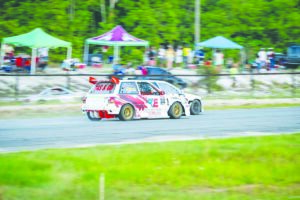
CAMS Team Leader Afraz Allie in action
Team CAMS will be using this weekend’s competition as a test

And the CAMS team, according to team leader Afraz Allie, is using the September 26 and 27 event as a gauge for the November 1 season finale.
“The team is going to be competitive because we’re putting our best foot forward, treating this just like November, like I said. You know, we need to push the cars to the extent of where we want to be for November and then see how things line up, if something breaks or whatever happens,” he said.
According to Allie, the team, which includes him in Groups Two and Three and the Starlet Cup classes, is gearing up for competition. The team will use a Honda Civic in Group Two and a Toyota Starlet in the other two classes.
“We’re going to be giving it our all, and we expect to be very competitive. So, we just hope everything works out as planned, but it should be fun. Looking forward to this,” he added.
The team also has Neil Persaud driving a Honda Civic in group two and a Honda CRX in group three, Kemal Rahaman driving the Sport Tuner Class (1600cc) Class in groups two and three, and Damian Singh in groups two and three.
Admission is $4000 for adults and $2000 for children.
The 2026 championship is supported by the Ministry of Culture, Youth and Sport, One Guyana, GUYOIL, Enet, KFC, and Tropical Shipping.


Discover more from Guyana Times

Subscribe to get the latest posts sent to your email.


Source: Guyana Times
Colts, Pacesetters open GABA Legacy with wins – Guyana Times

0

Colts, Pacesetters open GABA Legacy with wins

The Georgetown Amateur Basketball Association (GABA) Legacy Knockout Tournament got underway at the Cliff Anderson Sports Hall (CASH) on Wednesday night with two competitive opening-round matchups, as the Colts and Pacesetters emerged victorious in the Under-23 and Senior divisions, respectively.

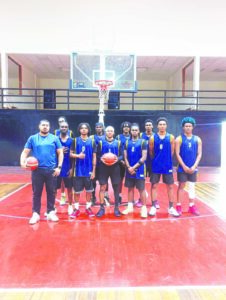
Colts Basketball Club got a W on the opening night

Colts Hold Off Eagles in U-23 Opener
The Under-23 Division tipped off the tournament with the Colts defeating the Eagles 75–69 in a hard-fought contest.
The Colts established an early advantage and maintained control through much of the opening stages. The Eagles responded strongly in the third quarter, finding their rhythm and cutting into the deficit.
The Colts, however, remained composed down the stretch and held on for the six-point victory.
KimoL Grimmond led the Colts with 24 points, while Carmelo Mansohing added 17. Jaden Simon contributed 13, with Domitre Rankin scoring 12 and Kellon Phillips adding nine.
For the Eagles, Gevon Ross paced the scoring with 17 points. Derron Venture and Leandre Abrams scored 11 points each. Alafin Joseph scored 10, while Brandon McKay finished with seven.
Pacesetters Rally Past Mambas
The night’s Senior Division encounter provided another closely contested battle, with the Pacesetters overcoming the Mambas 71–65.
The Pacesetters controlled much of the game and built a steady lead, but the Mambas fought back during the fourth quarter to make the finish competitive. The Pacesetters ultimately held their nerve to secure a six-point victory.
Jared Sears led the Pacesetters with 13 points, followed by Nathan Samuels with 12. Tafawa Daly and Jaheel Duke each contributed eight, while Troy David also scored eight.
The Mambas were led by Jether Harris, who scored 14 points. Jafar Gibbons added 12, Mourad Belhachan scored nine, and Judah Stephany and Shayne Joseph contributed seven apiece.
With two entertaining games setting the tone, the GABA Legacy Knockout Tournament continues its campaign under the banner of community, development and opportunity, with teams in both divisions looking to advance through the competition.


Discover more from Guyana Times

Subscribe to get the latest posts sent to your email.


Source: Guyana Times

Windies players set for 25% pay cut as CWI announces financial restructuring

0

https://kiskadeewatch.com/sports/cricket/windies-players-set-for-25-pay-cut-as-cwi-announces-financial-restructuring/

Cricket

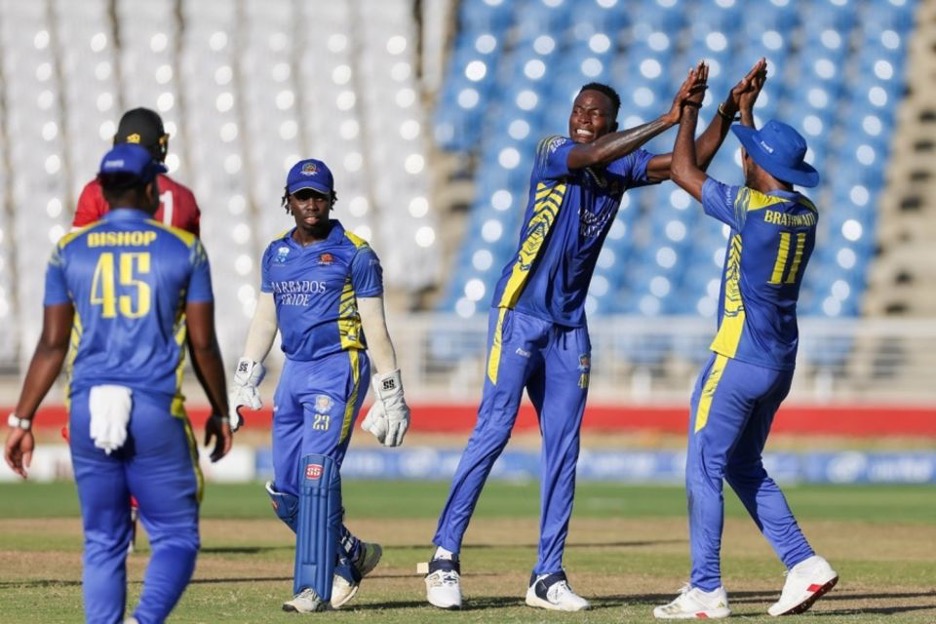
Windies players set for 25% pay cut as CWI announces financial restructuring


Cricket West Indies photo

(ESPN) West Indies’ players are set to endure a pay cut, with Cricket West Indies (CWI) announcing a 25% reduction in retainer fees as part of a wide-ranging series of steps being undertaken in what the board has termed “a comprehensive counterattack against all the challenges we face financially, developmentally and competitively”. While international players will remain on 12-month contracts, domestic players will now be on retainer contracts reduced to seven months.

West Indies has been at the forefront of a global trend towards players rejecting central contracts in order to pursue careers as T20 franchise freelancers. CWI’s latest move seems likely to accelerate this trend.

“We appreciate the spirit of cooperation of the West Indies Players’ Association and the players who have demonstrated their understanding of the circumstances we all face,” CWI chief executive Chris Dehring said in a statement. “While not ideal, it is a necessary step towards financial stability.”

Dehring also announced a restructuring of domestic tournaments in the Caribbean, with this year’s editions of the men’s Super50 tournament and the women’s T20 Blaze suspended. CWI has cited operational costs as the primary reason behind that decision.

“Our domestic tournaments as structured historically, where Cricket West Indies bears the entire cost of every national team and tournament – whether it is age-group, development or senior for both men and women – including salaries, match fees, airfares, hotels and event staging costs, are simply unsustainable,” he said. “The high cost of domestic travel and accommodation absorbs too much of our scarce resources every year instead of being deployed for the direct benefit of our cricket.

“Indeed, over eighty million US dollars has been spent by Cricket West Indies with domestic airlines over the past 15 years, without a reciprocating dollar of sponsorship from those beneficiaries. We must also deal with the immediate cash crunch brought about by years of bearing this burden and the crippling financial losses that emanate as a result.”

Some of CWI’s financial pressures, Dehring said, also stemmed from the terms of an ICC loan to the board.

“In July of this year the ICC approved a loan facility to Cricket West Indies totaling US$16 million to provide temporary relief to our chronic cashflow challenge, available in 3 tranches over the next year,” the statement said. “As with any other lender, this loan comes with terms of repayment and conditions that will require Cricket West Indies to attain critical metrics in order to access those funds starting this month.”

With the Super50 tournament suspended, a crucial step in the pipeline to the West Indies men’s ODI team has now been lost. West Indies missed out on qualification for the last ODI World Cup in 2023, and are due to take part in a qualifier, in February-March 2027, for next year’s edition. CWI has announced that it will focus on preparing the ODI players for the World Cup qualifiers by arranging a series of white-ball matches against a visiting England A team in November, followed by an ODI team camp.

West Indies’ unique position in global cricket – as a composite team of independent nation-states – is set to be put to test over the next two years, with individual nations set to send teams to the Pan American Games in Lima next year and to the Olympic Games in Los Angeles in 2028. The top-four finishers from the 2025-26 Super50 tournament have been announced as the qualifiers for the men’s event at the Pan American Games – though that will be a T20 rather than 50-overs tournament – and the top-four finishers from the 2025-26 T20 Blaze will take part in the women’s event.

In place of the suspended Super50 and T20 Blaze, CWI has announced qualification tournaments for the men’s and women’s events at the 2028 LA Olympics. The costs for these tournaments will be borne by the cricket boards of the individual nations.

“These replacement tournaments will be by invitation to the 10 countries under the aegis of Cricket West Indies that qualify for Olympic participation,” Dehring said. “We are excited by these new invitational tournaments, the dates for which are being finalized, as given the higher stakes and prestige, it’s an opportunity for individual countries to galvanize national resources to chase Olympic glory, with the responsibility and cost of participation falling on their respective national cricket & Olympic associations, private sectors, governments and people, hopefully fulfilling a desire to make a meaningfully contribution to their national team’s hunt for Olympic Glory.

“The winners of those tournaments will qualify for the ICC Olympic Qualifying tournaments for a spot in Los Angeles in 2028.”

Next year’s edition of the Women’s Super50, meanwhile, will be replaced by a Best vs Best development tournament. The West Indies Championship, the four-day domestic tournament, will continue with the bilateral-series, 12-game format that was followed in 2025-26. Each team played just one bilateral series of three games with one opponent, with the top three teams on a composite table qualifying for the playoffs.

You reached the end of this article without encountering a paywall.

That is deliberate. We believe reliable journalism about Guyana should be available to everyone from the hinterland to the coast, including those who cannot afford to pay for it. But investigating, reporting and publishing every story takes time, energy and resources. Keeping our journalism open depends on the commitment of readers who can chip in and contribute to help cover the cost for everyone.

Please join the Kiskadee family by taking a subscription. Every contribution counts to our commitment to our journalists, to our readers, and to independent, public-interest journalism.

And please spread the word. One one dutty build dam!


Become a supporter


Source: Kiskadee Watch