https://kiskadeewatch.com/guyana/cocaine-profits-moving-into-illegal-gold-mining-interpol/







https://kiskadeewatch.com/guyana/cocaine-profits-moving-into-illegal-gold-mining-interpol/
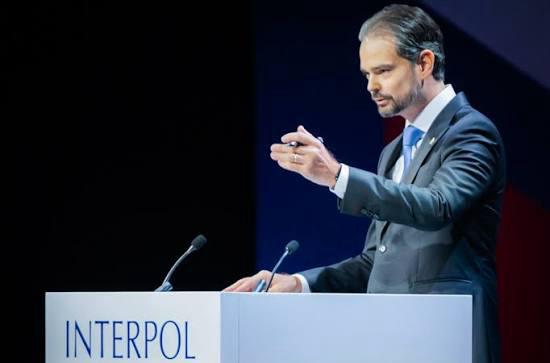
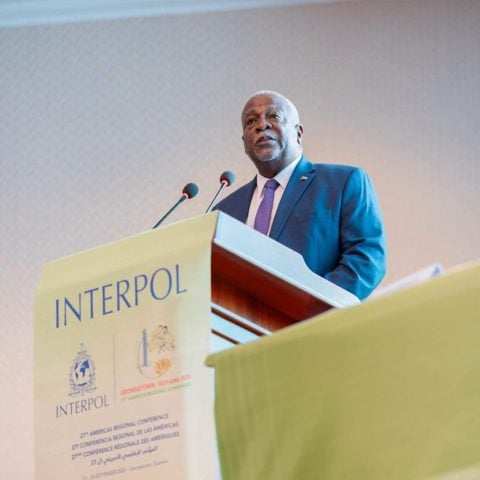
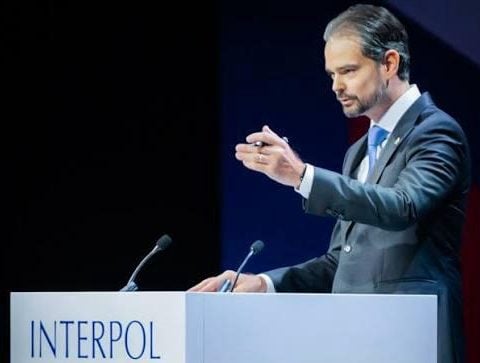
Criminal syndicates in the Americas are increasingly using illegal gold mining to move and conceal profits from the cocaine trade, INTERPOL Secretary General Valdecy Urquiza told a regional police conference in Georgetown on Wednesday.
Speaking at the opening of the 27th INTERPOL Americas Regional Conference, Urquiza described criminal groups that operate across several illicit markets at once. The same routes used to transport narcotics, he said, could also carry trafficked people, firearms and wildlife, while profits from cyber fraud could move rapidly through cryptocurrency networks.
“A growing number of syndicates are solving this by moving their drug capital straight into illegal gold mining,” he said after describing the difficulty traffickers face in moving and concealing cash.
Urquiza pointed to Operation Guyana Shield, conducted last December by authorities in Guyana, Brazil, French Guiana and Suriname, as an example of what investigators could uncover by following both the goods and the money. Officers seized gold and timber and traced mercury supplies and the proceeds behind them, he said.
“Seizures take away their cargo and following the money takes away their business,” he told delegates.
INTERPOL reported in January that the operation involved more than 24,500 checks on people and vehicles and led to 198 arrests across the four jurisdictions. Among those detained were three men in Guyana suspected of gold smuggling and money laundering. INTERPOL said they were found with unprocessed gold and US$590,000 in cash; the allegations against them remain allegations. Officers also seized mercury in Guyana and Suriname, including cylinders concealed in solar panels.
Urquiza said INTERPOL was developing a regional task force model to help police map criminal networks, identify senior targets and plan operations. He spoke of one task force based at its regional bureau in Buenos Aires and another dedicated to the Caribbean. Under the model, national authorities would choose targets and plan actions, with INTERPOL providing support.
He also said 14 countries from the Americas were participating in the pilot of INTERPOL’s Silver Notice system, which helps police seek information about assets linked to crime. He expressed hope that members would support making it a permanent capability at the organisation’s General Assembly later this year. The system is already operating as a pilot; its first notice was published in 2025.
INTERPOL President Lucas Philippe, addressing the same conference, said illegal mining increasingly intersected with firearms and drug trafficking, illicit finance and exploitation of people. He described Operation Guyana Shield as an illustration of that mix of crimes: officers looking into illegal gold mining also encountered firearms, cash, drugs, mercury and mining equipment.
Philippe urged the region’s law enforcement organisations to make their systems work together and avoid duplicating one another’s efforts. The task force approach, he said, was intended to bring limited personnel, expertise, data and funding into a common operational effort.
The two-day conference also placed financial crime high on its agenda. According to INTERPOL’s conference statement, fraud-related alerts across the Americas and Caribbean rose by 40% between 2024 and 2025. The meeting was due to examine money laundering, criminal use of cryptocurrencies and the tracing and recovery of assets.
Source: Kiskadee Watch
https://kiskadeewatch.com/opinion/letters/mv-barima-families-must-not-be-coerced-into-signing-away-their-rights/
Dear Editor,
The reported attempts to condition compensation to the family of MV Barima Chief Engineer Paul Seepersad upon signing documents absolving the Government of responsibility is deeply disturbing. The Guyana Government must publicly address and stop this illegal practice immediately, if this is so.
Compensation for death, funeral expenses, lost income, children’s support, trauma and other losses is not a political favour. It cannot lawfully or morally be used to purchase silence, obstruct accountability or pressure grieving families into surrendering their rights before the facts are fully investigated.
We have strongly cautioned all affected families against rushing into “full and final” settlement documents, because signing these agreements without independent legal oversight could permanently strip victims of their right to pursue future litigation or additional claims.
Moreover, this flagrantly contradicts what President Irfaan Ali has promised that the financial relief distributed under the state’s HEART Initiative is an “expression of national solidarity” and not formal legal compensation, and that it shouldn’t require an admission or waiver of liability.
The Seepersad family has stated clearly that they will not sign away their rights. Every affected family should receive the same protection.
No family should be asked to execute a release before:
Any immediate humanitarian or funeral payment should be made without prejudice, meaning that families retain every legal right and remedy. The Government should publish the compensation framework, disclose whether releases have already been signed and confirm whether different families have been offered different amounts or conditions.
The reported arrangement is especially troubling because families remain without complete answers, the Commission of Inquiry has apparently not obtained statements from some relatives, and the vessel and other crucial evidence must be properly preserved and examined. The State cannot conduct or control an inquiry while simultaneously attempting to secure releases shielding itself from liability.
Paul Seepersad reportedly served aboard vessels for more than two decades and had previously expressed concerns about unsafe conditions. His family deserves truth, dignity, independent representation and fair compensation—not a document designed to extinguish its rights.
President Irfaan Ali’s Government must immediately prohibit coercive, deceptive and/or cajoled releases, appoint an independent compensation administrator, provide equal treatment to every victim and allow all families to participate meaningfully in the Commission of Inquiry.
The victims’ families are entitled to compensation and accountability. They must never be forced to choose between financial survival and justice.
They will not-and must not-sign away their rights.
Yours faithfully,
Hon. Albert Baldeo
Former Magistrate, Senior State Counsel and State Prosecutor (GUYANA); Community Leader, Judicial Delegate (NY,USA); President, Guyana Beyond Borders
Source: Kiskadee Watch
https://kiskadeewatch.com/opinion/letters/guyanas-judiciary-now-operates-in-fear-it-is-detectable/
Dear Editor,
At last! At last, someone with the courage.
To contemplate and question, even challenge, the mighty American Eagle. Who knows what next it will swoop to destroy? My thanks to Justice Courtney Abel, in his silver headed years, the head of the UG Department of Law spoke. He said what had to be said. Squeeze Justice Gino Persaud yesterday, there could be others today. Definitely some hesitancy tomorrow. Will this ruling please the president? How will the U.S. ambassador react to a judgment away from public sight? What will the U.S. State Dept do?
In my first writing in the immediate aftermath of the “visa review” development impacting Justice Persaud, I alluded to the chilling effect on the fraternity. Looking over its shoulder with tentativeness, in timidity. Second-guessing itself. Less for judicial sagacity and acumen, and more of where would the U.S. stand on this? Bluntly, Guyana’s judiciary now operates in fear. It may not be palpable; but it is audible. It is detectable. Fear has its own smell.
This is now less a matter of judicial independence, and more of this. What merit, what standing, national sovereignty? The U.S. barged into Caracas and took out a president. The U.S. put in its own president. In Guyana, the U.S. reached above and around Guyana’s president, Guyana’s Judicial Service Commission, and Guyana’s chancellor and effectively sidelined a sitting judge. Is Guyana still a country, or is it the doormat and toilet of the U.S? If President Ali has any salt left in him, he should raise that question with Ambassador Nicole D. Theriot in their next face-to-face encounter. I would have grabbed the nearest phone, and let her hear that in the sharpest terms. But the so-called special relationship reminds of the limitations to what he signed onto, his role. A bit player, a nobody, in the Great American chessboard.
Hon Attorney General Anil Nandlall faced the public from his cyberspace den and had his say. The PPP government is not pleased with Justice Persaud’s rulings. But the PPP government’s hands are clean. No involvement in U.S. “view review”. Neither initiation tabled nor hint whispered off the record. What to make of the Hon Anil Nandlall’s representation in this instance? I struggle. For he is the same scholarly citizen, who has told many (and himself) that Guyana is a country where the rule of law reigns, and respect for law and order is paramount. When I look at what Guyanese have for law, and how men feature dominantly in how that law is sometimes applied, sometimes weaponized, and oftentimes wielded, there is difficulty reconciling the PPP Government being hands-off re visa review, despite its disagreement(s) with Justice Persaud.
Of greater concern to me is how the U.S. can swoop and savage a sitting Guyanese jurist. If there, then where else, and with what limit? Where is the Guyana Bar Association?Where is the Judicial Service Commission? Did the chancellor speak and I didn’t read? I have read about cultural imperialism. Now I come across the blatant and arrogant projection of American imperialism into the very heart of the Guyana construct. The Ugly American is back. He is uglier than before. Go ahead! Mark me. Make my day.
What is Guyana and Guyanese today? Sitting ducks or turkeys in a barrel? A pack of bleating sheep just shorn of its wool, and left with only its meow? There is passive and there is docile. Good Lord! Does it have to be of the most obsequious and odious variety. Americans can be attracted to and approve money launderers in Venezuela, but is full of righteous wrath re Gino Persaud.
Whatever this “visa review” entails, it had better be good. Wherever other Guyanese are, there was Justice Courtney Abel. And next to him, little ole me.
Sincerely,
GHK Lall
Source: Kiskadee Watch
https://kiskadeewatch.com/guyana/delayed-intelligence-gives-cross-border-criminals-advantage-pm/
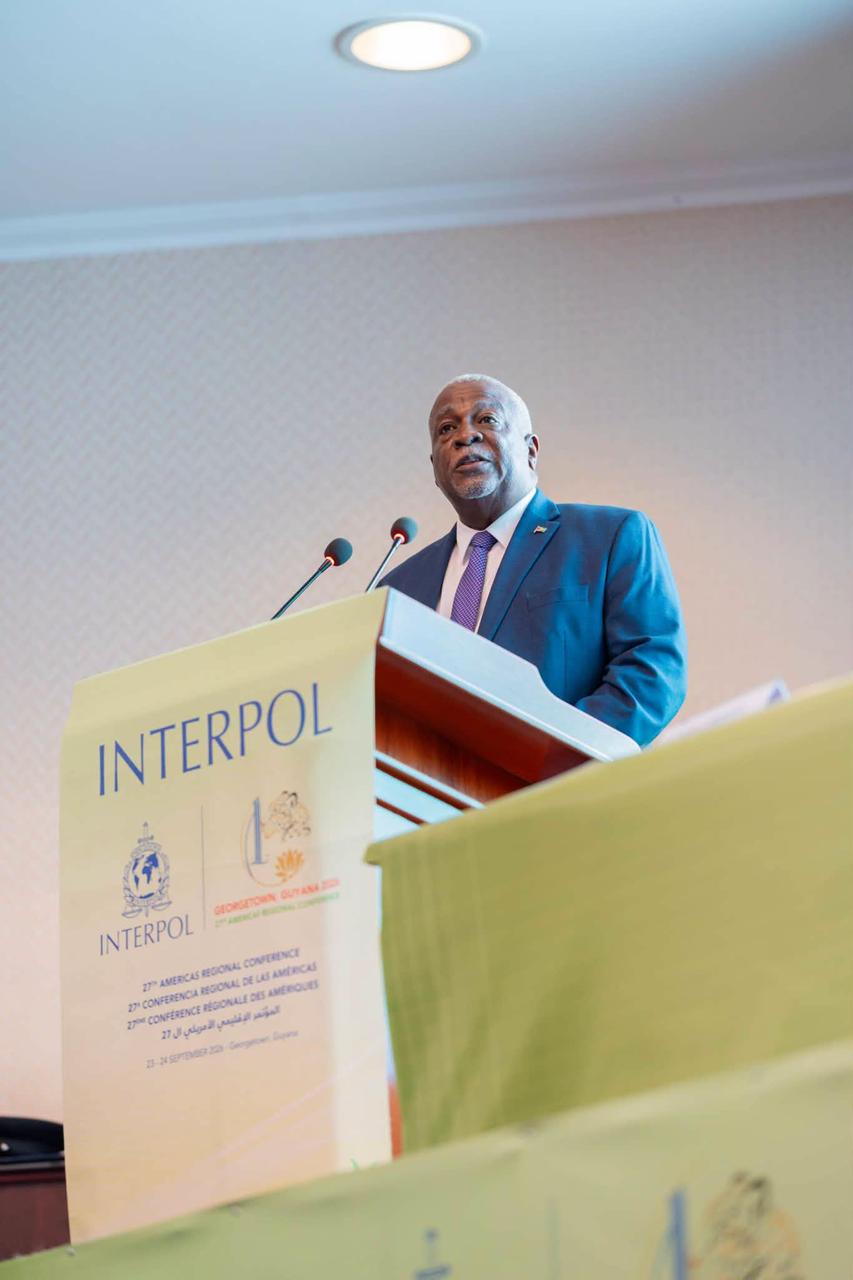
Information gathered through international police cooperation must reach the officers who can act on it in time to make a difference, Prime Minister Mark Phillips told the INTERPOL Americas Regional Conference on Wednesday.
Opening the two-day meeting at the Arthur Chung Convention Centre, Lilendaal, Phillips warned that criminal organisations could move people, money and illicit goods across several jurisdictions before investigators established the connections between their cases.
“Once an investigation crosses a national boundary, any delay can shift the advantage to the offender and place justice further out of reach,” he said.
He said INTERPOL’s secure communications network, notices and diffusions could help an officer checking a person at a border or police station discover a connection to an investigation elsewhere. Such systems would be effective only if the information was accurate, available when needed and used in accordance with the law, he added.
“Intelligence cannot protect the public when it fails to reach the official required to act upon it,” Phillips said.
He cited December’s Operation Guyana Shield as an example of coordinated action. Authorities in Guyana, Brazil, French Guiana and Suriname conducted more than 24,500 checks and made 198 arrests during the operation against illegal gold mining and related crime, according to INTERPOL. Phillips said its importance lay not only in those results but in showing that authorities could pursue criminal activity spanning several territories when they worked together.
Phillips also referred to Guyana’s extradition of Harry Narine Rajkumar to Canada in February 2025. Rajkumar had been arrested following an INTERPOL Red Notice, and the extradition allowed him to face criminal charges there.
Those examples did not remove weaknesses in the system, Phillips said. Intelligence could be delayed by poor coordination or uncertainty about which agency had authority to act. He called for clearer channels among the police, immigration authorities, the Customs Anti-Narcotic Unit and their overseas counterparts.
He placed particular emphasis on safeguards. Information shared by another country had to be protected and used lawfully if partners were to trust one another, he said. Governments had to respond to organised crime while remaining accountable for the powers they exercised.
Phillips asked delegates to use the meeting to identify obstacles to cooperation and settle how an officer handling an urgent case could obtain help from another jurisdiction. A conference agreement, he said, would have value only if it led to a faster response when a real investigation crossed a border.
Source: Kiskadee Watch
https://kiskadeewatch.com/guyana/president-lobbies-strongly-at-un-for-rodrigues-birkett-as-sg/
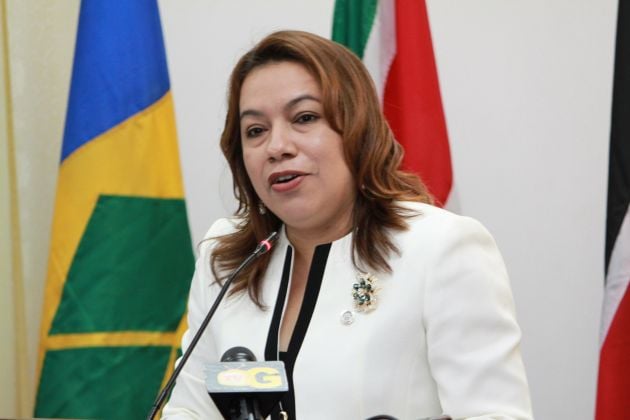
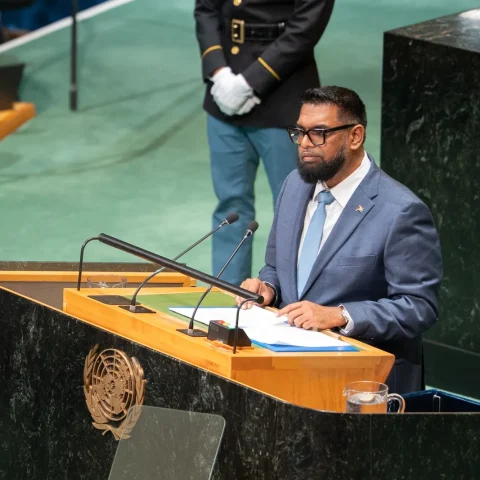
President Irfaan Ali yesterday made an unusually personal appeal at the UN General Assembly for Carolyn Rodrigues-Birkett to become the organisation’s next Secretary-General, urging the Security Council’s permanent members to look beyond the size of the country that nominated her.
Ali first linked her candidacy to his argument that the UN needs leadership capable of restoring trust and defending its Charter at a time of conflict and division.
“Guyana has put forward the candidature of Her Excellency Carolyn Rodrigues-Birkett for the office of Secretary-General of the United Nations,” he said. “She has served her country, represented the developing world, and worked within the multilateral system with a deep understanding of both its promise and its imperfections.”
He said the next Secretary-General must be able to bridge differences between rich and poor countries and between large and small states, while defending the UN Charter “not only when it is politically convenient, but precisely when its principles are under pressure”.
Ali then departed from a conventional account of her qualifications to speak about her life and character.
“An indigenous woman coming from a small indigenous village, defying the odds—the odds against indigenous persons, the odds against women, the odds against poverty—defying every challenge and rising to the top amidst those challenges,” he said. “Her character is built on struggle, sacrifice, and commitment.”
He told delegates that fellow permanent representatives at the UN knew her “character, her integrity, her will, her commitment, her love for humanity”.
“And I know that this world will be a better place with Carolyn Rodrigues as the Secretary-General of the United Nations,” he said.
“In the humblest of ways, I call on the P5, the Security Council, and every member here to look beyond the small country that nominated her,” Ali continued. He pointed to CARICOM’s endorsement and asked that she be given the opportunity to help shape the UN’s future.
As Ali spoke about Rodrigues-Birkett, the video shared on his Facebook page panned to Ministers Deodat Indar and Ashni Singh and Foreign Secretary Robert Persaud seated next to her and clapping loudly.
The speech was of added significance because of a reported US objection to her candidacy. According to The New York Times (NYT) Washington opposes Rodrigues-Birkett over her characterisation of Israel’s actions in Gaza. The NYT reported that the United States had signalled it would veto her.
The Security Council must recommend a candidate to the General Assembly, and any of its five permanent members—the United States, Britain, France, China or Russia—can prevent a recommendation by using a veto.
Three informal Council straw polls have so far failed to establish a clear front-runner. Former Costa Rican vice-president Rebeca Grynspan led in two, while Rodrigues-Birkett led in one. Earlier this year, Rodrigues-Birkett delivered her vision statement and told member states that she would be open and accessible if chosen to lead the organisation.
Source: Kiskadee Watch
https://kiskadeewatch.com/guyana/fuel-prices-up-again-at-three-georgetown-gas-stations/
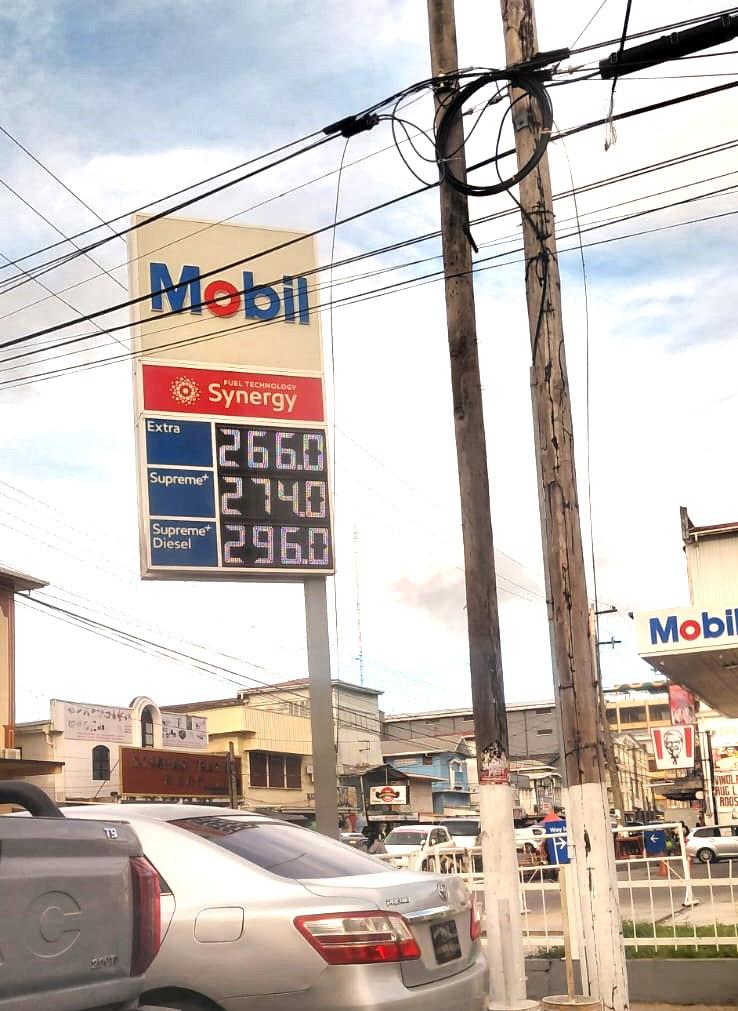
At least three gas stations in Georgetown, have upped prices with motorists now paying more for diesel and, at one location, all three grades of fuel.
At the Guyoil gas station on Regent Street, the price of diesel has increased, while the prices of gasoline remain unchanged.
A representative of the station told Kiskadee Watch on Thursday that regular gasoline is currently selling for $273 per litre, while ultra-low sulphur diesel (ULSD) is being sold at $330 per litre.
Before the increase, ULSD was priced at $290 per litre, while regular gasoline was $238 per litre. The representative said there has been no increase in the price of gasoline at that location.
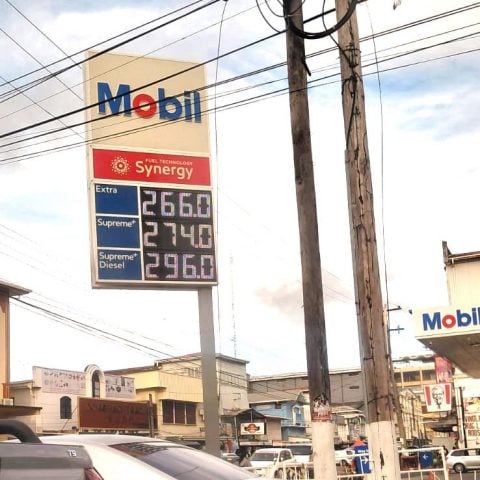
At the Mobil gas station on Vlissengen Road, though, prices for all three types of fuel increased as of last Wednesday.
According to a representative, as of yesterday morning, Extra was selling at $255 per litre, Supreme at $273 and diesel at $295. Kiskadee Watch could not reach the Mobil gas station on Regent Street, but prices have also been increased at this location as could be seen from their fuel tariffs board.
The increases triggered by the Iran war and other conflicts come in the face of continuing concerns over the cost of living and rising operating costs in Guyana.
President Irfaan Ali has acknowledged that global energy and other cost pressures are affecting the economy. At a recent press conference, he said Finance Minister Dr Ashni Singh was seeking tens of billions of dollars in additional financing for Guyana Power and Light to meet increased fuel costs without passing those costs on to consumers.
The Government has also attributed some of the country’s cost-of-living pressures to factors including imported inflation, retailer mark-ups and changes in consumer behaviour.
The Government said it has been pursuing measures aimed at reducing the impact of rising prices, while Ali has also pointed to the country’s dependence on imported refined petroleum products as a vulnerability. Guyana produces crude oil but continues to import refined products, exposing the domestic market to international price movements.
The latest increases at the three Georgetown stations are therefore likely to add to concerns among motorists and businesses already facing higher transportation and operating expenses.
Source: Kiskadee Watch
https://kiskadeewatch.com/guyana/president-urges-venezuela-to-accept-icj-ruling/
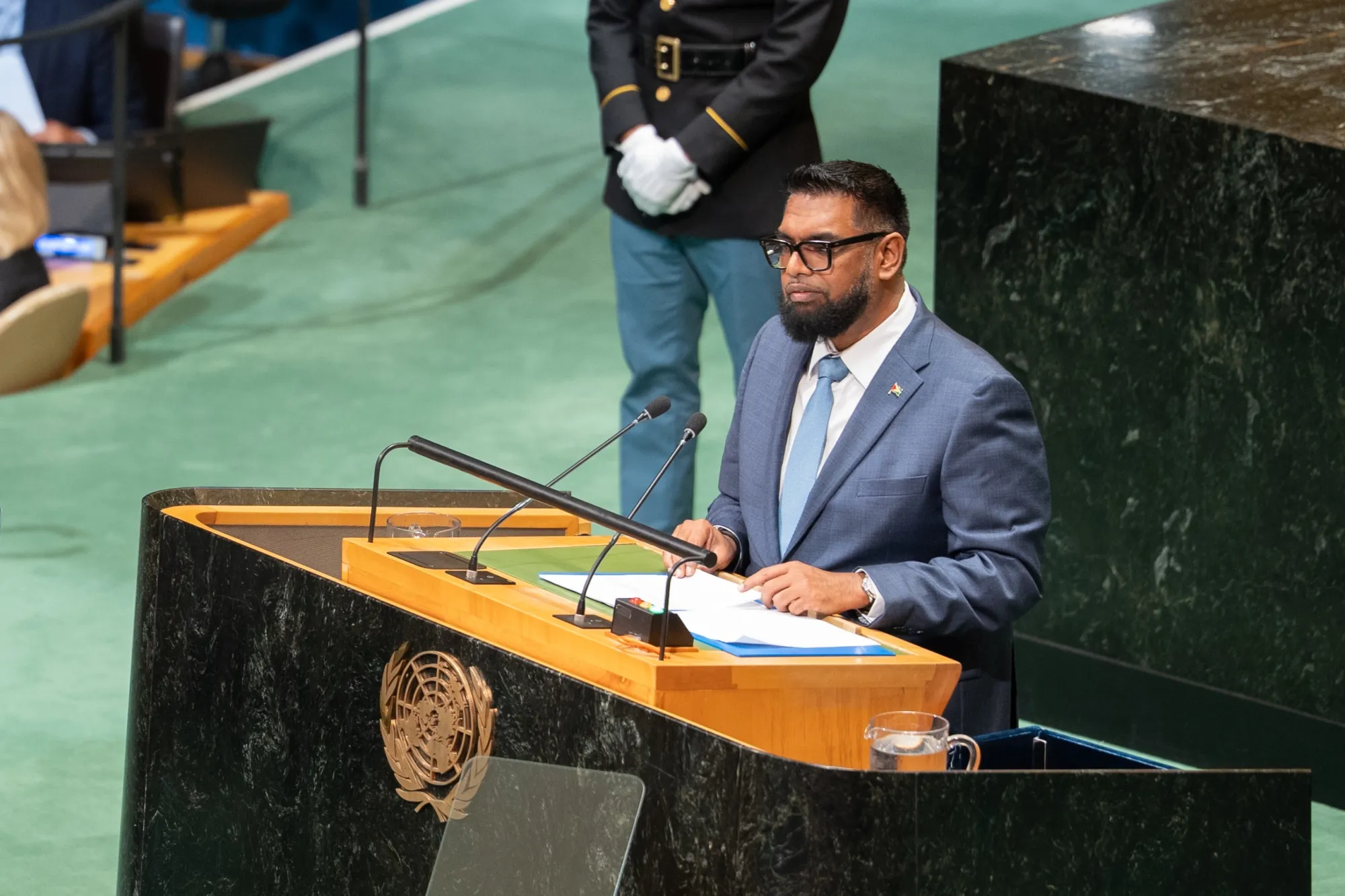
-after Rodríguez calls for renewed talks
President Irfaan Ali yesterday urged Venezuela to abide by the International Court of Justice’s forthcoming decision on the border controversy between the two countries, a day after Venezuelan acting President Delcy Rodríguez used the same United Nations forum to call for renewed bilateral negotiations.
In his address to the 81st session of the UN General Assembly, Ali said Guyana had long pursued a peaceful settlement despite what he described as repeated Venezuelan provocations and aggression. He maintained that the 1899 Arbitral Award had settled the boundary between the two countries.
“Despite the historical truth—clearly outlined in the Arbitral Award of 1899 that determined the full, perfect and final settlement of our border with Venezuela, we endured long and repeated provocations and aggression,” he said.
Ali said the controversy had been referred to the ICJ by the UN Secretary-General under the 1966 Geneva Agreement. That step followed decades of attempts to resolve it through a mixed commission and the Secretary-General’s Good Offices process, he told the Assembly.
“The Court twice pronounced on its jurisdiction to hear the matter,” he said. “Recourse to the ICJ came after decades of efforts to resolve the controversy bilaterally.”
With both countries having participated in hearings completed in May, Ali said the next step was for them to respect the Court’s decision.
“We urge Venezuela to abide by the forthcoming ruling in accordance with their obligation under the UN Charter, as Guyana will do,” he said.
He added: “We look forward to a new era of neighbourly relations in the interest of our peoples, the development of our countries and the stability and prosperity of our region.”
Ali’s remarks were a clear reference to Rodríguez’s address on Wednesday. Rodríguez renewed Venezuela’s claim to Essequibo and appealed to Guyana “to return to negotiations as stipulated by the Geneva Agreement”. She argued that agreements arising from bilateral talks lasted longer and worked better than those “imposed by external bodies”. Kiskadee Watch also reported that she wore a pin showing Essequibo as part of Venezuela
The Good Offices process began in 1990 and continued for years without a settlement. In January 2018, UN Secretary-General António Guterres chose the ICJ as the means of resolving the controversy; Guyana filed its application two months later. Venezuela has maintained that the Geneva Agreement calls for negotiations, while Guyana has argued that the Secretary-General acted under the authority that agreement gave him.
The Foreign Affairs Ministry said the oral hearings in May concerned the merits of Guyana’s case, including the validity of the 1899 Award. Ali did not suggest yesterday that a date had been set for the judgment.
The President has repeatedly brought Venezuela’s actions before the General Assembly. In his address last year, he accused Caracas of threats of annexation despite the case before the Court.
Source: Kiskadee Watch
https://kiskadeewatch.com/guyana/ram-chides-edghill-walrond-over-state-of-road-at-friendship/
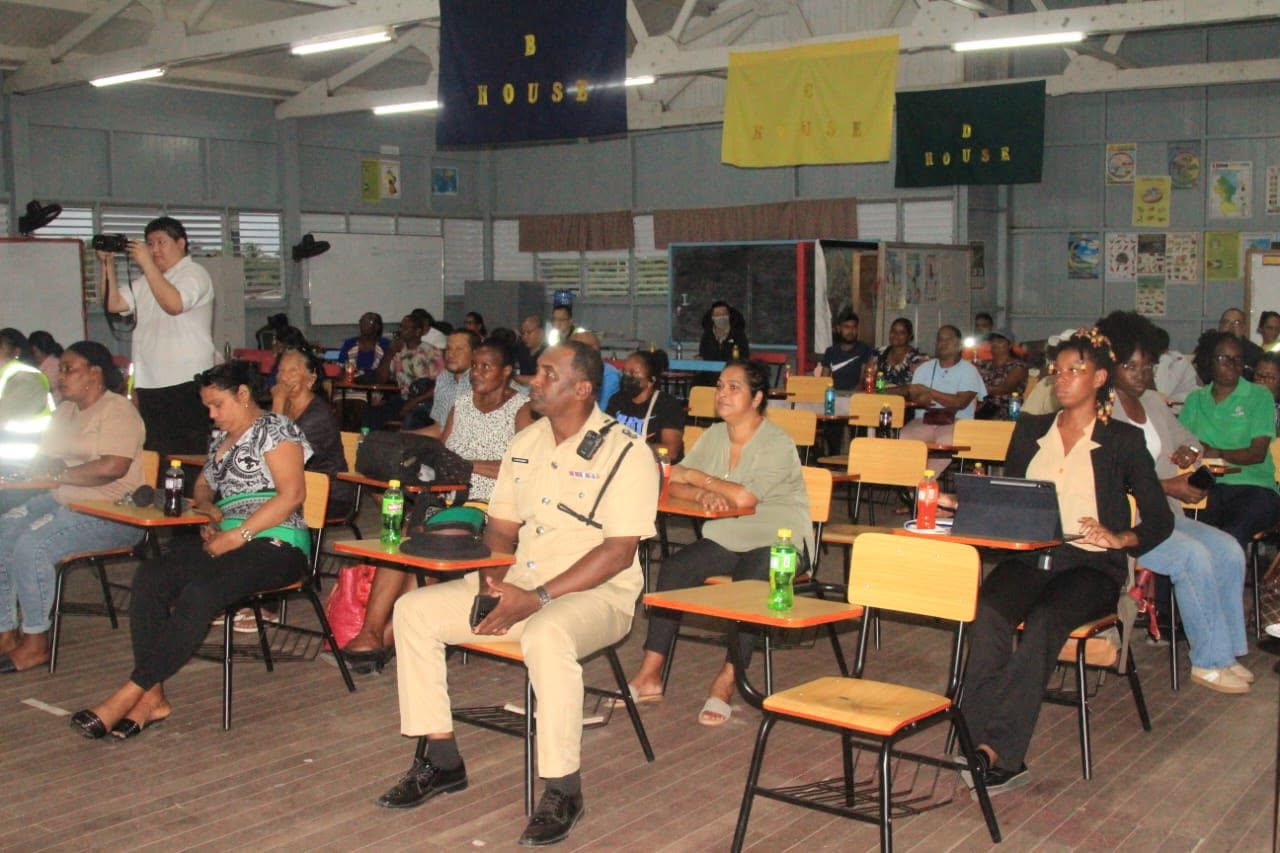
Commentator Christopher Ram has chided two government ministers over the state of the East Bank road at Friendship and the dislocation it is continuing to cause to commuters.
In an open letter to Minister of Public Works Juan Edghill and Minister of Home Affairs Oneidge Walrond, Ram said that he returned to Guyana on Wednesday evening after a journey involving nearly twenty hours.
He said that everything went well until he reached Friendship on the East Bank.
“What followed was among the most chaotic and mismanaged public sector activities imaginable. For the better part of an hour there was little movement of traffic in either direction. Heavy and construction vehicles competed for road space, government vehicles with sirens forced their way through, and there appeared to be no system for keeping traffic moving”, Ram said.
He pointed out that Edghill is responsible for road construction and for managing its consequences.
“Where are the signs, controlled diversions and arrangements for construction vehicles entering and leaving the roadway? Where are the personnel to ensure that road works do not themselves bring traffic to a standstill? Have these responsibilities been farmed out along with the construction contracts?”, he asked.
Commuters have long complained about the state of the East Bank road which has seen work done in segments over long periods.
Addressing Walrond, Ram asserted that the Police cannot be spectators.
“The road traffic legislation expressly empowers the Police to intervene where abnormal traffic requires directions to relieve congestion and prevent obstruction. Traffic management and enforcement are plainly police responsibilities”, he asserted.
He said that the two Ministries cannot pass responsibility between themselves. Public Works must manage the consequences of construction and the Police must manage and enforce the movement of traffic, he contended.
“Even if you are insensitive to the hardship and frustration inflicted on the public, you cannot be unaware of the serious economic cost and reputational damage. Thousands of persons losing thirty minutes or an hour each day means thousands of productive hours lost. Fuel is wasted, employees arrive late, deliveries are delayed and costs ripple through the economy.
“And consider the message to visitors. They arrive in a country celebrated for extraordinary economic growth and massive infrastructure spending, only to leave the airport and encounter stationary traffic, construction vehicles, inadequate signage and unmitigated disorder”, Ram said.
He added that what makes the situation particularly unacceptable is that it is neither new nor temporary.
“It has persisted for years. After all that time, the continuing chaos can no longer be explained away as inconvenience caused by development. It represents a sustained failure of planning, coordination and ministerial oversight. Ministers, on traffic management your performance has moved beyond poor administration to something approaching dereliction of responsibility”, Ram declared.
He challenged the ministers to tell the public who is responsible, what arrangements exist between Public Works, its contractors and the Police and, more importantly, what they are going to do about it.
Source: Kiskadee Watch
https://kiskadeewatch.com/guyana/ali-floats-caricom-role-in-finding-solution-for-cuba/
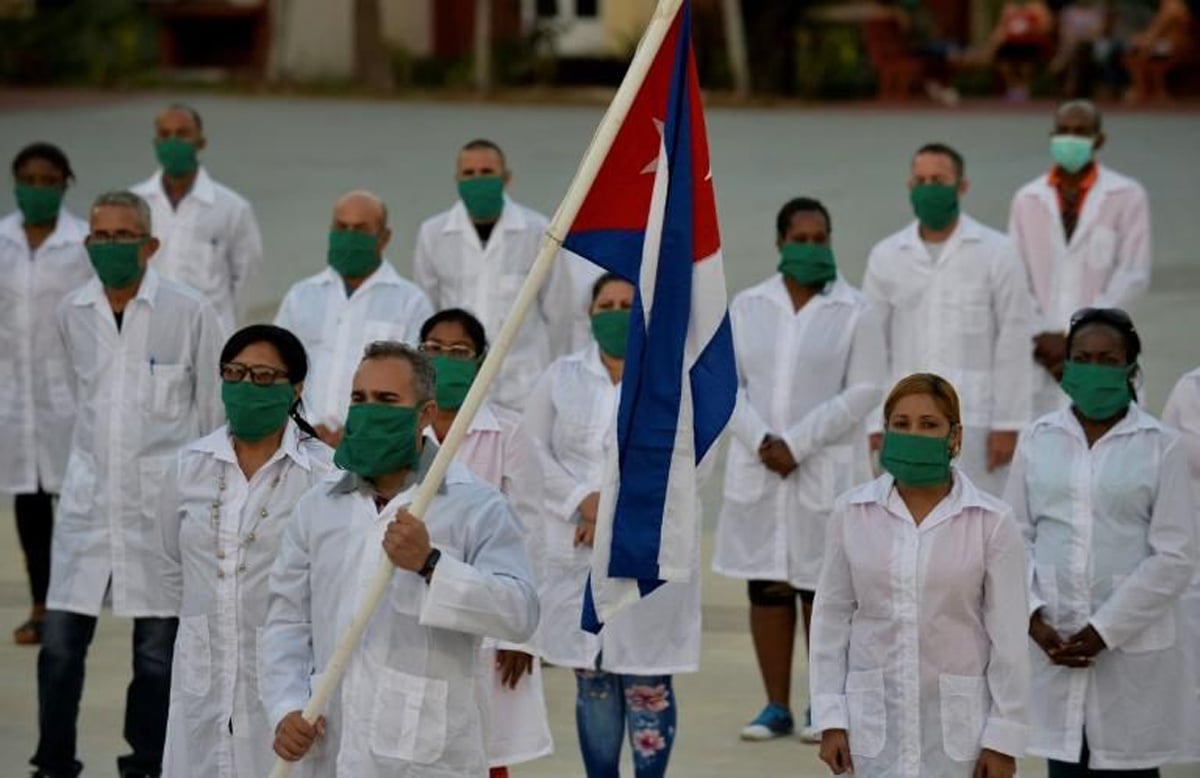
President Irfaan Ali yesterday told the UN General Assembly that CARICOM remained ready to help find a peaceful solution to Cuba’s difficulties, one that would allow Cubans to realise their aspirations.
“We reiterate our call for a viable solution for Cuba, one that is peaceful, people centred, development-focused and allows for the full aspirations of the Cuban people to be realised,” he said. “Guyana reiterates CARICOM’s offer to play a meaningful role in achieving this objective.”
Ali gave no details of what role the regional grouping might play or whether discussions with Cuba or the United States had advanced. He also did not explicitly call for the lifting of the US embargo in yesterday’s address, although he has done so from the same UN platform in previous years.
Stabroek News reported that Ali raised the lifting of the embargo in his 2025 General Assembly address. In 2023, he described the embargo as unacceptable and called for it to be dismantled. His latest appeal-maintained support for a solution for Cuba while placing the emphasis on a peaceful and development-focused outcome.
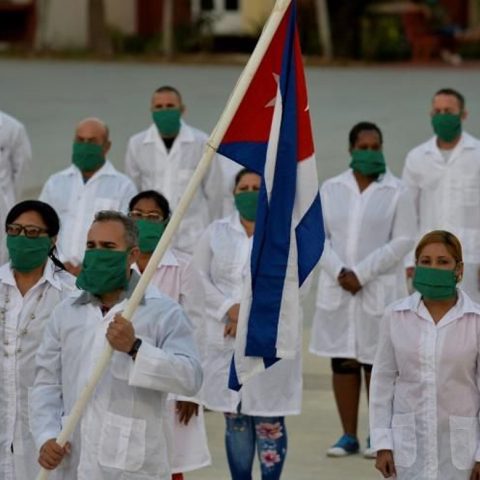
The speech came after a change in Guyana’s longstanding medical arrangements with Cuba. In February, Stabroek News that the government-to-government medical partnership had been terminated. The government indicated that scholarships for Guyanese students to study in Cuba would continue.
The medical arrangements had come under scrutiny after Washington expanded a visa restriction policy aimed at people it said were involved in Cuba’s overseas labour programme, particularly its medical missions. The Guyana government said in March 2025 that it would seek clarity from the United States about the policy and its possible implications.
Ali subsequently defended Guyana’s treatment of Cuban medical professionals, saying they were paid directly and worked under local labour laws. He said that position had been conveyed to the United States.
Source: Kiskadee Watch
https://kiskadeewatch.com/guyana/court-sets-aside-orders-preserving-vamed-hospital-sites-and-equipment/

The Full Court has set aside orders that required the Ministry of Health to preserve two hospital construction sites and prevented interference with 52 containers and equipment at one of them, in the continuing dispute between the government and contractor VAMED Engineering GmbH.
Chief Justice Navindra Singh and Justice Zamilla Ally-Seepaul allowed an appeal by the Attorney General on Tuesday against five orders made by Justice Renita Singh on August 6. The orders concerned the unfinished Paediatric and Maternal Hospital at Goedverwagting, East Coast Demerara, and the New Amsterdam Hospital Campus.
The ruling does not decide whether the government was entitled to terminate VAMED’s contracts or whether either side owes the other money. Those questions remain for arbitration. The Full Court also left undisturbed Justice Renita Singh’s refusal to grant VAMED the other interim orders it had sought.
According to the court’s oral ruling, Justice Renita Singh had refused VAMED’s applications to prevent the ministry from taking possession of the sites, excluding its personnel and enforcing performance securities. She found that the proposed orders were, in substance, injunctions against the State prohibited by the State Liability and Proceedings Act. She also found that VAMED had not established the necessary urgency and that damages would be an adequate remedy.
Despite those findings, the judge ordered the preservation of both sites. She also barred the ministry and VAMED from opening or interfering with 52 containers and equipment at the Goedverwagting site, allowed VAMED security personnel access there, and required the ministry to preserve the contractor’s documents, designs, plans and intellectual property.
The Full Court found that the legal effect of those orders could not be changed by calling them “preservation orders”. Preventing the ministry from interfering with equipment and requiring it to allow VAMED personnel onto a site regulated the State’s conduct, the court said.
“Their description as Preservation Orders does not alter their legal effect,” Chief Justice Singh said in delivering the ruling.
The court also found that the statutory requirements for interim measures in aid of arbitration had not been established. In particular, it pointed to the earlier finding that there was no real urgency requiring the sites and property to be preserved until an arbitral tribunal was appointed.
The judges acknowledged that disputed ownership of the containers might have justified a preservation order if the necessary legal and factual basis had been established. They found that it had not been established in this case. Some of the orders were also too broadly worded, the court said, including the direction to preserve both construction sites without specifying what conduct was prohibited.
“The Preservation Orders cannot stand,” the court concluded. It set aside orders four through eight of Justice Renita Singh’s August 6 decision and awarded the Attorney General $500,000 in costs.
In a statement yesterday, the Attorney General’s Chambers said the ruling cleared the Ministry of Health to take possession of the sites, containers, equipment and associated construction materials and proceed with the projects as it sees fit.
The two design-and-build contracts have a combined value of €299 million: €149 million for the Paediatric and Maternal Hospital and €150 million for the New Amsterdam Hospital Campus. President Irfaan Ali said in August that the contracts had been terminated on July 23 and that International Chamber of Commerce arbitration proceedings began on July 28th.
VAMED has accused the government of failing to pay for completed work and allowing an export-credit arrangement supporting the maternal and paediatric hospital to expire. It has put its claims at €45.53 million, including sums it says were certified for payment. The government disputes VAMED’s characterisation of those amounts and says the contractor failed to meet milestones, mobilise sufficient resources and maintain the required pace of work.
The 256-bed Paediatric and Maternal Hospital was originally projected for completion around August 2024. In February this year, Health Minister Dr Frank Anthony told the National Assembly that changes in VAMED’s ownership and management had contributed to delays. He said at the time that government engineers and company representatives were working on revised plans and completion schedules for both hospital projects.
Attorney General Anil Nandlall SC appeared for the State with Shoshana Lall, Prithima Kissoon and Joshua Cullen. Nigel Hughes represented VAMED.
Source: Kiskadee Watch


Discussion