Home Blog Page 237

Bound to a wheelchair… The auto painter who refuses to put down a spray gun

0


By Shervin Belgrave

(Kaieteur News) – Two tragic accidents changed his life, one of them leaving him in a wheelchair but 75-year-old Neville Richards of A-Field Sophia, Greater Georgetown refuses to stop spray painting and restoring cars, a job which he has been doing for decades.

Bound to a wheelchair... The auto painter who refuses to put down a spray gun

Richards and his youngest daughter Kim

The highlight of his career as an automotive paint technician was when he was called in to surprise Guyana’s former President, Linden Forbes Burnham by restoring his (Burnham’s) crashed Austin Princess, a car Burnham received as gift after becoming Prime Minister in 1964.  That car now sits in the Walter Roth Museum in Georgetown.

Since then, Richards has had many highs and lows as a spray painter but none could compare with a tragic accident in 2019 that changed his life forever. Not only did it almost cost him his life and left him in a wheelchair but it almost took away his livelihood.

Bound to a wheelchair... The auto painter who refuses to put down a spray gun

Richards whips up paint for a coating

Richards however refused to give-up despite his disability and the numerous set-backs.

“Nuff people used to seh Neville yuh foot bad, yuh foot bad but I does tell them is nah ma foot is ma hand a does use to do the job”, Richards told this publication while spray painting a Fielder Wagon for a woman, Marcia Girard, who motivated him to continue his exceptional work when he was at the point of giving-up.  He took two weeks to complete the job.

Following his most recent accident in 2019, it was almost over for Richards. He did part-time security work and one morning while he was heading to his work place, tragedy struck.

A truck reportedly struck him down and ran-over his right leg as he was crossing the road in the vicinity of “DSL Turn” located at the junction of Mandela Avenue and the East Bank Public Road.

Richards sprays on a coat of blackRichards sprays on a coat of black

Coincidently that accident occurred only a few kilometers away from the first one in 1977 (in the vicinity of the Well, West Ruimveldt Back-Road) which claimed the life of his reputed wife at the time leaving him to raise three daughters ages 5, 3 and 1 as a single parent. He was 26-years old then and had sustained a severe injury to his right arm. Doctors had to place steel in it for the arm to function properly but he was still able to spray paint cars but in 2019, his injury was much more severe that it threatened his livelihood.

“They de put in steel (in his right leg) but it started getting infected and so they take it out and they wanted to tek a piece of bone from my hip to put there and me ain’t want that because is two problem I will get there so I never go back to get the surgery done”, Richards recounted.

He explained that at first, he began moving around with the use of a walker but then his injured leg became so bent that he could not walk on it anymore.

It was then that his troubles began. Clients stop giving him work because of his condition except for one man, George Union, who still believed in him.

Sadly, George Union passed away in 2025 and so did the spray-painting jobs for Richards.

He was forced to survive on his pension and whatever little his three daughters could “brace him with”.

The wait for new jobs turned into months and Richards was at the point of giving-up his passion for spray painting.

“I seh well I will sell out all my equipment rather than sit down watch dem stay there and rotten”, he related but then he met Marcia Girard who wanted to spray paint her Fielder Wagon.

Speaking with Kaieteur News she said, “After I met him and heard that he is planning to sell his equipment, I told him not to give up because you have an exceptional skill.”

Bound to a wheelchair... The auto painter who refuses to put down a spray gun

In two weeks, a wheelchair bound Richards restored Marcia Girard’s Fielder Wagon.

Bound to a wheelchair... The auto painter who refuses to put down a spray gun

Girard gave him the job to restore her car and promised to promote his business free of cost.

She invited the newspaper to witness Richard at work despite being in wheelchair.

When this publication visited his residence, Richards was finishing-up the job with the help of his youngest daughter Kim Richards, 50 and a man he employed to help him.

Richards during his chat with The Waterfalls made it clear that he knows being in a wheelchair limits him physically but not his capability to do the job because he can train youths from his neighbourhood and employ them to assist with his work.

He related that his daughter was one of his first students. He trained her from a very young-age to spray-paint cars and now she is equally good as him.

Following his accident, Kim Richards had to stop spray painting and doing other jobs such as catering, etc. to take care of him and now that he is working again, she has decided to return to spray painting.

She explained that she returned to help him out because, “He tell he-self he doesn’t want to depend on us. He wants to do something to help himself.”

“Although she is my daughter, I don’t mek she work for free, I does mek sure I pay her,” her dad added.

As he mixed up a coating for Girard’s car during, he was asked how long he was doing auto spray painting.

Richards recounted that his love for spray-painting began at the age of 18 when he first started learning the trade under a man he identified as Ronald Seymour.

Richards was employed with a government ministry at the time and ended up working there for 16 years before leaving his post at ministry to work independently.

He said he left because the money was small at the time and raising his three daughters as a single parent after the death of his wife in a tragic accident, was not easy.

As a result, he ventured out to work on his own in order earn a little more.

He fondly recalls the highlight of his career when Kit Nascimento, a former politician approached him to restore Burnham’s car, the Austin Princess after its involvement in an accident.

“He (Burnham) used to live up in Belfield and he come down at the Cuffy Square and then he go in the residence, but when he come down, there was this car and he was so surprised to see this car working and suh” Richards recounted before adding. “He invited us in the residence there and we had a little drink and so and then we go back to work”.

If anyone would like to support, Richard’s spray-painting business, they can call, 671-6069.


Source: Kaieteur News

CBS News New York’ reporter of Guyanese parentage shares her life-or-death brain aneurysm scare

0


CBS News – When it comes to medical reporting, some stories hit very close to home. This is the case with our friend and colleague, Jennifer Bisram.

Bisram is a mother, daughter, wife, and an award-winning journalist. Now, she’s telling her own story about a life-or-death health scare.

CBS News New York' reporter of Guyanese parentage shares her life-or-death brain aneurysm scare

Jennifer Bisram shares her life-or-death brain aneurysm scare.

She was off the air for several weeks this past spring, dealing with a serious health issue that started with headaches.

“I remember it was, like, to the left, the side [of my head] here. And it was just like the same place, and it just wouldn’t go away,” Bisram told CBS News New York’s Cindy Hsu. “My husband always equates it to you’re not sleeping enough and you’re not hydrating enough, which, to be fair, is probably true most of the time.”

Bisram said the headaches persisted and lasted for months, so she pushed for an MRI. She was shocked to learn she had a brain aneurysm, which is when a blood vessel in the brain swells, developing a bulging or balloon-like shape.

“I felt like I was a walking time bomb,” she said.

NYU Langone Health Long Island neurointerventionalist Dr. Charlotte Chung said Bisram’s aneursym was “a little bit more dangerous than many other ones.”

00:00

“I was so scared that I wrote out my wishes,” Bisram said. “Just in case I didn’t come back home.”

Chung performed a procedure called a flow diversion, redirecting the blood in Bisram’s brain using a mesh tube or stent that was inserted in a vein through her wrist.

CBS News New York' reporter of Guyanese parentage shares her life-or-death brain aneurysm scare

CBS News New York’ reporter of Guyanese parentage, Jennifer Bisram.

Thankfully, the surgery was a success.

“Once we put the stent in, we’re gonna give it half a year, one year for it to disappear,” Chung said.

After several days in the hospital and rest at home, Bisram was ready to get back to her passion – sharing stories, including her own.

“I feel like I would be doing an injustice if I didn’t tell my story,” she said. “I felt like I had to come back and prove something to people, that you will be OK, too … I think part of me wanted to prove it to myself.”

She has been posting updates on social media and volunteered at the annual Brain Aneurysm Foundation Long Island Run/Walk.

“I was like, yes, sign me up. [They asked me] do you want to speak? Yes, sign me up,” Bisram said.

She added, “I love life and I feel like there’s so much to live, and I wanna make sure that I live it out until that day.”

In the United States, nearly 1 in 50 people live with an unruptured brain aneurysm with no symptoms at all. Annually, about 30,000 people will suffer from a brain aneurysm that ruptures, and half of them will die.


Source: Kaieteur News

A fate-altering mishap gave rise to a fine chef, Quincy White

0


By Shermon Hawker

(Kaieteur News) – An overseas-based Guyanese is stirring things up both at home and abroad. Not in the context of mischief, as “stirring things up” is so regularly interpreted, but masterfully, as a chef. Quincy White, 38, is a sous chef, to be exact.

From a French etymological background, sous chef means “under chief,” and such a person is responsible for the operation of a specific kitchen, but functions within the purview of a head or executive chef. He or she assumes that capacity in the absence of the head chef.

A fate-altering mishap gave rise to a fine chef, Quincy White

Chef Quincy White prepares a meal at George hotel by Best Western, Lichfield City Birmingham, England

White is a freelance chef for an agency, Constellation, based in England, but is currently back home in Guyana on vacation and also to lend his professional perspective and culinary savviness to his hometown, New Amsterdam. As part of the New Amsterdam Town Week activities, he has been tasked with overseeing the second annual Food Festival.

Hours of binge-watching the hit TV cooking series MasterChef would whet the idea of being a cook that had taken root in him, until it became a full-blown desire.

BACKGROUND

Our featured chef sprouts from the New Amsterdam soil of Region Six. His parents, Deslyn and Osric White, brought forth two other children alongside him.

He enrolled at St. Mary’s Nursery School and proceeded to St. Aloysius Primary School, before closing his academic life in Guyana at the Berbice Educational Institute (BEI), after which he departed for another hemisphere in 2006.

TWIST OF FATE

“I always enjoyed cooking. The inspiration came from my grandmother and my mom. When she (mother) was younger, she did some Carnegie (School of Home Economics), she did some home economics training when she was younger.”

While his fervor for the kitchen prevailed, White initially had his thoughts fixed on engineering. This was not to be, it seemed. But this was not on account of impulses that flatlined or flailing enthusiasm. Circumstances governed his redirection, but it would all eventually work out positively for him.

“I did not start the culinary arts when I went to England. I started doing my engineering, because engineering was my main focus before I became a chef. I have a diploma in engineering and welding…I had an injury to my eyes, so I had a career change before I became a chef,” he told Kaieteur News.

A PIECE OF CAKE

“I went to one of the colleges one day and just registered to do the culinary arts programme, and I was successful in gaining entry.”

He received further education at South Birmingham City College from 2009 to 2011 in Birmingham, England, from which he obtained a Level 1 & 2 Diploma in Professional Chef, a National Vocational Qualification (NVQ) 1 in Hospitality and Catering, for which he trained for two years, and a Food Safety Certificate. Armed with those credentials, White began firing on all cylinders.

A fate-altering mishap gave rise to a fine chef, Quincy White

Chef White fine-tunes delicacies at a private function in Wales.

Elements of the course, its techniques and arrangements, were mostly familiar to him already, having observed his mother and grandmother back home in Guyana as a child.

White took up permanent residency in England, but his demanding yet fulfilling line of work saw him crisscrossing between England and New York in the United States for approximately five years at the French company, Elior Group.

The veteran chef rehearsed a series of procedures that occur way before a match is put to the stove. For him, the cooking begins mentally, and the ingredients are carefully thought garnished with a conservative dash of creativity on a platter of consistency.

“When you’re cooking and you’re producing something, sometimes you might go from a dream to an idea, and then you practice it. You put it into motion, you put it on a plate and then it goes out to a customer, and after the customer has it, they either give you a good or bad review. You always get that inspiration that pushes into making it better, or that joy that you did create something for them to enjoy.”

SERVING SIMPLICITY

His mindset transcends discipline in the kitchen to everyday life as he strives to strike a balance.

A fate-altering mishap gave rise to a fine chef, Quincy White

Chef White at the New Amsterdam Food Festival last week.

“My philosophy is treat people the way you would like to be treated, and keep things simple. In the chef trade, you’re working those long hours, you’re working in a diverse team, and sometimes from different backgrounds, different cultures, sometimes you might be in their position, they might be in your position. You have to treat them the way you would like to be treated. Sometimes, in the kitchen, you spend more time there than at home, and it’s like your second family. You get to be close with everyone.”

White’s profession did add extraordinary flavours to his life. A major highlight among many for him was the opportunity to meet celebrity chef Gordon Ramsay, of the very cooking show to which he had previously been glued. White would also engage other renowned chefs from that show, facilitated by the college, and expanded his own experience.

SIGNATURE DISH

Despite the exposure and adjustment to a rather diversified culture in England, White never divorced himself from his Guyanese heritage. One of his signature dishes is pepperpot wings with farine and cassava bread, a concept which was well received, according to him. He also experimented with pistachio and vermicelli cheesecake, another one of his unique creations.

ALL’S WELL THAT ENDS WELL

Perhaps not in the context he envisioned while the embers of his post-high-school game plan glowed, as he migrated with his engineering passion intact, but taking into account that his present profession as a chef entails designing, building and maintaining in considerable ways, it can be summed up that our featured individual is an engineer of sorts. His station: the kitchen.

And in the end, it would be an ironic unfolding that, due to injured eyes, he was allowed to see a clearer path for his future.

He would, in no time, discover that with prudent, purposeful preparation, life can, at times and in some instances, be a piece of cake. Since then, he has had, positively so, a lot on his plate, literally.


Source: Kaieteur News

Guyana: A Tale of Two Cities, Divided by Deceit

0

Guyana has three great rivers—the Essequibo, Demerara and Berbice—but the country’s deepest divide is not geographical. It is the widening gulf between the Guyana its leaders describe and the Guyana its people are forced to endure.

One Guyana exists behind podiums. It is prosperous, transforming, booming, modernising and marching confidently into a golden future. Billions are flowing. Projects are announced. Contracts are signed. Ribbons are cut. Speeches are made.

Then there is the other Guyana. It is waiting for electricity. Waiting for roads to be fixed. Waiting for public services to work. Waiting for answers when things go wrong. Waiting for promises to become reality. And increasingly, waiting for leaders to stop talking long enough to actually solve something.

This is a country awash with money but increasingly starved of competent management, accountability, critical thinking and honest leadership. The dichotomy cannot be ignored.

Guyana’s 2026 Budget is $1.558 trillion—the largest in the nation’s history. Yet citizens are being told that the next six months will be “critical” to stabilising electricity after years of promises that the power crisis was being fixed. How many six-months does a crisis require before it becomes evidence of a failure to plan?

The problem is not simply money. It is what happens to money when competence is absent.

The Auditor General’s reports have repeatedly exposed weaknesses in procurement, contract management, documentation and financial controls. These are not abstract accounting problems. They are symptoms of a state machinery that can spend enormous sums while struggling to demonstrate that every dollar produces the value citizens were promised.

And there is something even more troubling. Guyana appears increasingly afflicted by the dangerous belief that certification is competence. A certificate may prove that someone completed a course. It does not prove that the person can think under pressure, interrogate a bad proposal, identify waste, anticipate consequences or solve a complicated national problem. Neither does political loyalty. Neither does proximity to power. Neither does shouting the loudest.

Yet our public discourse increasingly resembles a permanent quarrel in which evidence is replaced by insults, questions are treated as attacks and disagreement is answered with the political equivalent of a fistfight. The cuss-out has become a substitute for critical thinking.

Accountability is increasingly being replaced by an elaborate art of explanation—explaining why yesterday’s promise cannot be delivered today, why failure must be blamed on someone else, and why citizens who dare to ask questions are dismissed as “haters.” Questioning is not hatred. It is citizenship. Demanding answers is not sabotage. It is civic responsibility. And listening to those questions is not weakness. It is a basic obligation of leadership.

The tragedy is that the masses continue looking upward. They look to presidents, ministers, parliamentarians, technocrats and political leaders for direction because that is what leadership is supposed to provide. Instead, too many are being offered spectacle. Too many are being offered political warfare. Too many are being offered excuses dressed as explanations.

And while those at the top argue, ordinary Guyanese absorb the consequences: higher costs, poor wages, lost productivity, unreliable services, wasted time, deteriorating confidence and the quiet desperation of people who know that the country’s extraordinary wealth should have produced a very different quality of life.

This is not an argument that Guyana lacks intelligent people. It does not. It is an argument that intelligence is useless when institutions reward obedience over questioning, credentials over competence and political allegiance over performance.

Guyana cannot spend its way out of poor governance. It cannot announce its way out of incompetence. It cannot cuss its way out of failure. And it certainly cannot deceive itself into development.

The three rivers will continue carrying Guyana’s waters to the Atlantic. But another current is carrying the country somewhere else—the widening river between what leaders say and what citizens live. That is the real tale of Guyana’s two cities. One is being built in speeches. The other is drowning in reality.


Source: Village Voice News

Guyana’s Oil Wealth Must Reach the Power Grid

0


Guyana exports crude and imports much of the fuel it uses. Meanwhile, an overloaded grid still leaves households and businesses in the dark. Petroleum wealth gives us the means to address both problems.

By Dr. Karen Abrams, MBA AA

(Kaieteur News) – At the opening of the International Building Expo 2026, President Dr. Irfaan Ali said Guyana’s economy was on course to grow by more than 30 per cent this year. By the end of June, the Natural Resource Fund’s market value had reached US$4.294 billion. Then came a line that deserved the applause it received; “Our story is not an oil story.” He described a future of diversification, sustainability, and world-class healthcare, education and infrastructure. That ambition needs practical tests. Dependable, affordable electricity is one of them.

Guyana’s Oil Wealth Must Reach the Power Grid

Director of STEM Guyana, Karen Abrams

In its recent Caribbean Economics Quarterly, the Inter-American Development Bank (IDB) reported that, although Guyana has been a net oil exporter since 2019, about 90 per cent of its energy is produced from imported oil. Guyana exports crude but does not refine it locally into the fuels used by vehicles, generators and much of the electricity system. We earn substantially more from petroleum exports than we spend on imported fuel, yet we remain exposed to international fuel prices.

The disruption of oil flows through the Strait of Hormuz shows why that exposure matters. A shock at a distant shipping route can raise prices across global fuel markets, even for buyers whose own supplies come from elsewhere. Guyana’s petroleum earnings give us financial capacity to respond, but a higher fuel bill can still affect electricity, transport and production costs.

That is a separate issue from the recent blackouts. According to Guyana Power and Light (GPL), it has enough generating capacity to meet current demand, but rapid growth in electricity use is straining transmission and distribution equipment. Feeders and other parts of the network can become overloaded, causing outages even when generating units are available. The company has also reported that peak demand reached 242.6 megawatts this year, up from 221 megawatts in 2025.

We should therefore resist the easy assumption that imported fuel is causing the lights to go out. Buying more fuel will not repair an overloaded feeder. Similarly, adding generating capacity will not guarantee reliable service if the network cannot deliver that electricity to customers. Generation, transmission and distribution must be planned and built together.

For families, these distinctions do not lessen the hardship. A blackout stops a water pump, turns off a fan on a punishingly hot night and can damage appliances. For a bakery, barber, welder or agro-processor, it can stop work altogether. Larger firms may spread the cost of generators, fuel and maintenance across thousands of sales. A small business must recover those costs from far fewer customers. Repeated outages can therefore make it harder for local enterprises to expand and compete.

This is where the oil money matters. Guyana has resources to invest in a dependable system. GPL says approximately US$800 million in grid investments are underway, including substations, transmission upgrades and new distribution infrastructure, with significant relief expected by mid-2027. The scale of that programme deserves recognition. It also warrants public benchmarks: which overloaded feeders will be strengthened first, when will each project enter service, and how will reductions in outage frequency and duration be measured?

The Gas-to-Energy project at Wales addresses another part of the challenge. It is intended to use offshore natural gas to produce up to 300 megawatts of electricity, with government projecting a substantial reduction in electricity costs. The offshore pipeline is complete, while the power plant and natural gas liquids facility have taken longer than originally promised. The public needs clear commissioning dates and regular reports on construction costs, power delivered and the eventual effect on tariffs. Crucially, the grid must be ready to receive and distribute the additional power.

The IDB also warns of Dutch disease; when oil-driven spending pushes up local costs faster than farms, factories and other businesses can increase their output. It notes, however, that real exchange-rate appreciation remained subdued through 2025 and that macroeconomic risks were largely contained. The lesson is to invest in productivity, skills, housing, food production and reliable electricity. It is no argument for holding down the wages of workers already facing higher living costs.

El Niño raises the stakes for farmers, who may need more irrigation and more electricity during prolonged dry conditions. Higher energy costs and unreliable supply can then feed into food prices. Energy, water and agriculture need to be considered in the same development plan.

Government has already cushioned households through fuel tax relief and electricity subsidies. Those measures help. But subsidies cannot strengthen a feeder or prevent a transformer from failing. Petroleum revenue offers an opportunity to do that work, and to measure whether the spending produces a service people can rely on.

A quarterly public energy dashboard would make the promise measurable. It should report available generation, peak demand and reserve capacity; outages and their causes; losses; grid upgrade milestones; Gas-to-Energy costs and commissioning; and the timetable for tariff reductions. It should also show how much of Guyana’s energy needs can realistically be met from domestic gas and renewables by 2030.

These are national development questions. Guyana’s story will be larger than oil when petroleum earnings help farms and small businesses compete, when households can count on the lights staying on, and when dependable power is an ordinary service rather than a promise tied to the next project.


Source: Kaieteur News

St Pius stun SJTB; West R/veldt, St Gabriel’s, Tucville move to top

0


– In Courts Pee Wee U11 Football tournament

(Kaieteur News) – St Pius Primary delivered one of the biggest shocks of Round Two, handing Bartica powerhouse St John the Baptist Primary its first defeat in the Courts Optical Pee Wee Under-11 Boys Football Championship on Saturday at the Ministry of Education ground.

Steve Fiedtkou struck in the sixth minute before Leviticus Linch added the second in the 40th as St Pius produced a clinical 2-0 victory to derail St John the Baptist’s early momentum.

St Pius stun SJTB; West R/veldt, St Gabriel’s, Tucville move to top

Goals from Nathel Ion, Simon Scott and Xavier Montage keep St Gabriel’s Primary perfect against Soesdyke Primary heading to Round III.

The defeat has opened up the qualification race, while St Pius, with a win and a draw from its two matches, strengthened its position with one game remaining in the group stage.

Tucville Primary also kept its hopes of advancing alive with a convincing 2-0 victory over Potaro Primary in Group E. Devon Bapiste opened the scoring in the seventh minute before Roger Jason doubled the advantage in the 22nd, giving Tucville another valuable three points and keeping the Georgetown side firmly in contention for one of the top-two qualifying spots.

In Group G, Redeemer Primary survived a tense encounter against Goed Fortuin Primary before Elijah Naughton produced the decisive moment in the 38th minute to secure a 1-0 victory.

F.E. Pollard Primary and St Theresa’s Primary also bounced back from opening-round setbacks with important victories.

Malik Thorington found the breakthrough for F.E. Pollard against St Aloysius Primary, scoring the only goal of the contest, while Brandon Henry struck twice to guide St Theresa’s to a comfortable 2-0 win over Ann’s Grove Primary.

St Pius stun SJTB; West R/veldt, St Gabriel’s, Tucville move to top

Pee Wee action! St Pius player evading St John’s enforcement during their round two clash on Saturday.

Ann’s Grove will now need a strong response in Round Three after another disappointing outing.

Meanwhile, St Gabriel’s Primary and West Ruimveldt Primary continued to stamp their authority on the group stage, both recording their second straight victories.

St Gabriel’s were particularly impressive, sweeping aside Soesdyke Primary 4-0. Nathel Ion was again at the center of the attack, scoring twice in the fifth and 27th minutes, while Simon Scott and Xavier Montage completed the rout.

St Pius stun SJTB; West R/veldt, St Gabriel’s, Tucville move to top

Steve Fiedtkou and Leviticus Linch score for St Pius in 2-0 win against St John the Baptist Primary.

West Ruimveldt were equally commanding, brushing aside Georgetown International Academy Team 2 by a 3-0 margin. Jahmiel Favourite opened the scoring in the 18th minute before Malachi Murray added a brace to keep West Ruimveldt unbeaten and firmly positioned at the top of their group.

GIA Team 1 recorded another notable result, edging St Stephen’s Primary 1-0 through Yoseph Rivas’ 40th-minute winner.

Genesis Academy stumbled to round two defeat, Plaisance Orphanage recording a comfortable 2-0 victory, with Antwone Scott and Keon St Hill finding the net.

With Round Two now in the books, the battle for the coveted Round of 16 places is intensifying, with every goal and point carrying greater weight as the group stage approaches its decisive phase.

Round Three is set for next Saturday at the Ministry of Education ground.

Courts Optical continues as the tournament’s title sponsor, with support from the Ministry of Culture, Youth and Sports, Sterling Products Limited, MVP Sports, SkyTec Enterprise and Demerara Mutual Life.


Source: Kaieteur News

Borderline Personality Disorder: Fear of Abandonment

0


By Dr. Telford Layne Jr. PsyD, MSc. Postgrad, BSc.

(Kaieteur News) – Borderline personality disorder (BPD) affects how individuals experience themselves, regulate emotions and form relationships. Their feelings are real, but they may become so intense that the person has difficulty thinking calmly or responding proportionately. A small disagreement feels like complete rejection. A delayed telephone call may be interpreted as abandonment. Emotional distance may awaken the terror of being unwanted.

Borderline Personality Disorder: Fear of Abandonment

Dr. Telford Layne Jr.

BPD is one of the most misunderstood and stigmatised mental-health conditions. People living with BPD are sometimes unfairly labelled as “dramatic,” “manipulative,” “attention-seeking” or “difficult.” Beneath the behaviour, however, there is frequently a person struggling with intense emotional pain, an unstable sense of identity and a profound fear of rejection or abandonment.

Core features

As clinical psychologists our, diagnosis requires a persistent pattern across different situations, significant distress or impairment, and careful assessment is done along a standard framework. An individual needs at least five of the following nine features must be present:

  1. Emotional instability and extreme sensitivity to rejection. Rapid emotional changes and strong mood reactivity.
  2. An uncertain or rapidly changing sense of identity.
  3. Intense and unstable relationships up or down, that alternate between idealisation and devaluation.
  4. Fear of abandonment. Frantic efforts to avoid real or imagined abandonment.
  5. Impulsive and self-damaging behaviour. Impulsivity in potentially harmful areas, such as spending, sex, substance use, reckless driving or binge eating. Recurrent suicidal behaviour, threats, gestures or self-injury.
  6. Difficulty controlling anger. Intense anger or difficulty controlling anger. Throwing, breaking up things starting fights physically abusive.
  7. Feelings of chronic emptiness, shame, worthlessness.
  8. Black-and-white thinking—seeing someone as entirely good or entirely bad. Difficulty holding a balanced image of oneself and others during conflict.
  9. During stressful moments paranoia or severe dissociative experiences become dominant. Accusing others of wrong doings plotting to do evil.

Some people with BPD struggle to integrate the loving and disappointing qualities of the same person. When feeling secure, they idealise someone: “You are the only person who understands me.” When hurt, the same person suddenly is cross or completely uncaring. This is a defensive process, called “splitting,” it protects the individual temporarily from painful emotional contradictions while destabilizes relationships.

Having one or two characteristics does not establish BPD. The condition can also resemble, or occur alongside, trauma disorders, depression, anxiety, ADHD, substance-use disorders and bipolar disorder. Diagnosis should never be based on a social-media checklist. The diagnosis of BPD is arrived at after the age of 18 years and is most prevalent in females than males.

Where does BPD come from?

BPD is best understood as developing through an interaction of biological sensitivity, temperament, attachment experiences and the person’s social environment. Many—but not all—people with BPD had childhood traumas and are unresolved, emotional abuse, emotional neglect, absent fathers, unstable or inconsistent parenting, parental conflict, repeated separations or experience of parental divorce and sexual abuse at an early age. Growing up in an environment where children must be seen and not heard, relationships in which their feelings were ignored or punished. Genetic and neurobiological vulnerabilities may also contribute.

Trauma does not automatically produce BPD, and not everyone with BPD has an identifiable trauma history. Later triggers such as criticism, separation, perceived betrayal, emotional unavailability, conflict, infidelity, loss or feeling excluded. The adult event may activate an earlier emotional memory. The person is therefore responding not only to the present situation but also to accumulated experiences of insecurity, shame and abandonment in childhood.

Consequences of Untreated BPD

Unstable self-identity: – struggles to maintain a consistent understanding identity, purpose and direction

Intense fear of abandonment: –produce repeated calls, accusations, emotional withdrawal, threats, attempts to prevent the other person from leaving.

Unstable relationships: Repeated conflicts, breakups and reunions follow.

Poor emotional regulation: Anger, shame, anxiety, sadness and jealousy become overwhelming.

Impulsive and self-defeating behaviour: – reckless spending, unsafe sexual behaviour, binge eating, substance misuse, dangerous driving or abruptly leaving jobs and relationships.

Self-harm and suicidal behaviour: – self-injury to manage unbearable emotions. Suicidal thoughts, threats and attempts.

Chronic emptiness and loneliness: Even when surrounded by others, emotionally disconnected, unreal or internally “empty.” persist.

Anger and aggression: -abandonment fears and shame emerge as verbal attacks, property damage, controlling behaviour or, in some cases, physical aggression.

Dissociation and suspiciousness: Under severe stress, feelings are detached causing highly suspicious and misinterpret another person’s intentions.

Occupational and financial instability: Emotional crises, interpersonal conflict, repeatedly quitting job, overreacting to criticisms, and impulsive decisions disrupt education, employment and financial security.

Co-occurring mental-health difficulties: Depression, anxiety, PTSD, eating disorders and substance-use problems continues

Repetition of unresolved trauma: –unconsciously recreate familiar childhood dynamics by choosing unavailable, inconsistent or abusive relationships.

Family and parenting difficulties: Without intervention, insecure attachment and emotional dysregulation are transmitted across generations.

Loss of support: Repeated crises, boundary violations and unresolved conflict exhaust partners, friends and relatives.

Building a stronger self-identity

Recovery involves developing an identity that remains stable even when relationships become uncertain.

Keep an identity journal describing your values, strengths, needs, boundaries and long-term goals.

Ask, “What am I feeling?” before deciding, “Who am I?” An emotion is a temporary state—not your entire identity.

Build Self Approval. Practice making small decisions without depending entirely on another person’s approval.

Separate facts from fears: “What happened, and what meaning did I attach to it?”

Develop interests, friendships and goals outside romantic relationships.

Replace self-condemnation with accountable compassion: “I am responsible for my behaviour, but I am not beyond repair.”

Learn to tolerate mixed realities: someone may love you and still disappoint you.

Commence psychotherapy. Structured psychotherapy is the primary treatment. Dialectical behaviour therapy strengthens emotional regulation, distress tolerance and interpersonal skills.

BPD is not a defective personality or a life sentence. It reflects an understandable but painful way of surviving overwhelming emotions and insecure relationships. With sustained treatment, self-reflection, boundaries and reliable support, people can develop a more stable identity, experience intimacy without losing themselves and build relationships based on communication rather than fear.


Source: Kaieteur News
South African police probe mining feud, business rivalry after shootings kill 27

0

https://kiskadeewatch.com/world/south-african-police-probe-mining-feud-business-rivalry-after-shootings-kill-27/

South African police probe mining feud, business rivalry after shootings kill 27


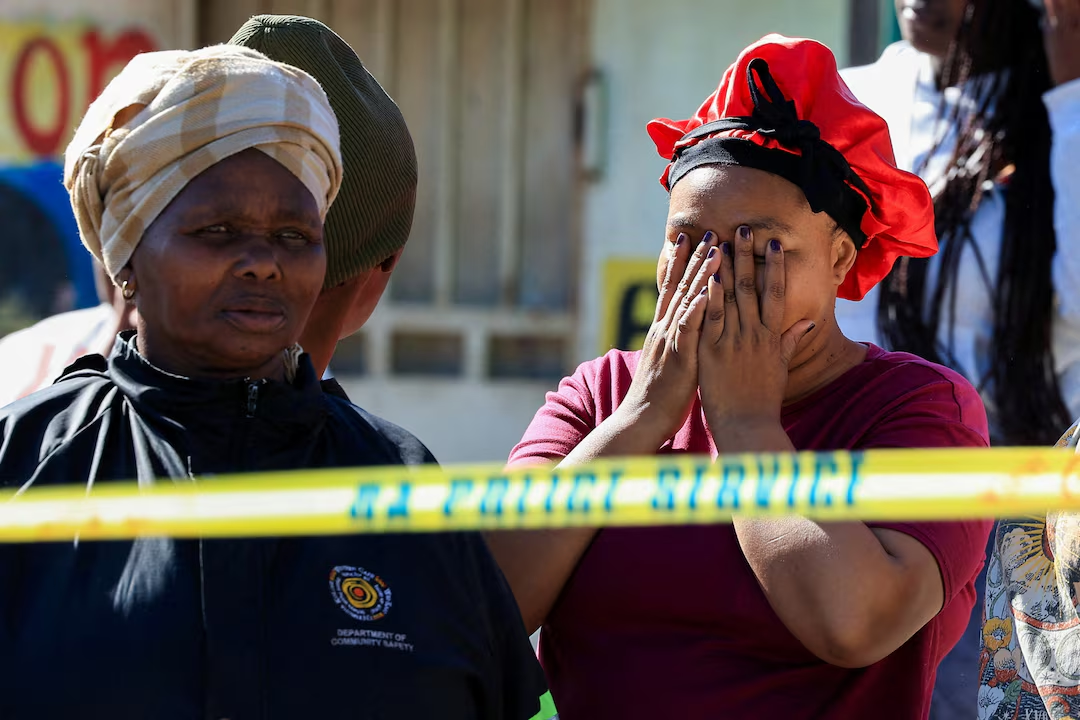
JOHANNESBURG/CAPE TOWN, (Reuters) – South African police were today hunting the perpetrators of two separate shootings that killed 27 people within hours of each ‌other, highlighting the country’s gun violence problem.
“This cannot go on like this,” President Cyril Ramaphosa said of the incidents, which came only days after another shooting killed 11 people at a house party near Durban.
Authorities were still working to establish the motives for the shootings near Johannesburg and Cape Town, but initial investigations suggested one could be a turf war between illegal miners and the other a business rivalry.
“This is the level of criminality that we must bring down, and our security forces are now going to continue pulling out all stops,” Ramaphosa told local media channels.
Violent crime is rife in South Africa, ⁠despite efforts to curb one of the world’s highest per-capita murder rates.
In Wedela township, about 80 km (50 miles) from Johannesburg, 17 people were killed and 15 injured at a tavern when suspects armed with AK-47 rifles opened fire at around 9:30 p.m. (1930 GMT) on Saturday, police said.
Ramaphosa said police had images of the suspects in that incident and were working to track them down.

SHOOTING COULD BE RETALIATION
Residents were reluctant to speak about the incident, but one said that illegal miners, known locally as zama zamas from an isiZulu expression for “taking a chance”, live in the area, where powerful gangs control the illicit gold mining trade.
The province’s police commissioner Tommy Mthombeni told reporters that one line of inquiry was that the shooting was a “turf war in terms of illegal mining”.
Saturday’s shooting could be retaliation for another at the same tavern about a month ago, he added.
Soldiers and police pathologists had arrived in the township, where there were two burnt vehicles and the tavern where the shooting ‌took place ⁠had a sign saying “No weapons allowed”.
THREAT TO DEMOCRACY
At the scene of the shooting in Lwandle on the outskirts of Cape Town, onlookers gathered behind police lines but did not want to speak to journalists, saying they feared for their safety.
In that incident, gunmen opened fire in a venue selling grilled meat at around 2:00 a.m. on Sunday, killing 10 people and injuring 11.
An eyewitness video from the venue shows people dancing and singing in a crowded outdoor area when a burst of shots rings out and screams are heard.
A police ⁠official said, “A business jealousy might have been the issue,” as there were reports that people had been buying alcohol in cheaper places and going to the venue to drink.
No arrests have been made yet and detectives are working to find the gunmen, police said in statements.
Crime is expected to be a major issue for voters in municipal elections in November, when ⁠the African National Congress is facing further erosion of voter support. Fear and anger over high rates of femicide have risen after the discovery of women’s bodies near Johannesburg since July.
Ramaphosa said earlier this year that organised crime had become the biggest threat to South Africa’s democracy, and deployed the army to help police in some ⁠areas.
“South Africa has a serious illegal firearms problem, and firearms are frequently used by organised criminal groups as well as in gang-related and other violent crimes,” crime expert Yusuf Abramjee told Reuters.
“Authorities need to look at the wider networks behind the violence,” he added.

JOHANNESBURG/CAPE TOWN,  (Reuters) – South African police were today hunting the perpetrators of two separate shootings that killed 27 people within hours of each ‌other, highlighting the country’s gun violence problem.

“This cannot go on like this,” President Cyril Ramaphosa said of the incidents, which came only days after another shooting killed 11 people at a house party near Durban.

Authorities were still working to establish the motives for the shootings near Johannesburg and Cape Town, but initial investigations suggested one could be a turf war between ​illegal miners and the other a business rivalry.

“This is the level of criminality that we must bring down, and our security forces are ​now going to continue pulling out all stops,” Ramaphosa told local media channels.

Violent crime is rife in South Africa, ⁠despite efforts to curb one of the world’s highest per-capita murder rates.

In Wedela township, about 80 km (50 miles) from Johannesburg, 17 people were killed and 15 ​injured at a tavern when suspects armed with AK-47 rifles opened fire at around 9:30 p.m. (1930 GMT) on Saturday, police said.

Ramaphosa said police had images of ​the suspects in that incident and were working to track them down.

SHOOTING COULD BE RETALIATION

Residents were reluctant to speak about the incident, but one said that illegal miners, known locally as zama zamas from an isiZulu expression for “taking a chance”, live in the area, where powerful gangs control the illicit gold mining trade.

The province’s police commissioner Tommy Mthombeni told ​reporters that one line of inquiry was that the shooting was a “turf war in terms of illegal mining”.

Saturday’s shooting could be retaliation for another at ​the same tavern about a month ago, he added.

Soldiers and police pathologists had arrived in the township, where there were two burnt vehicles and the tavern where the shooting ‌took place ⁠had a sign saying “No weapons allowed”.

THREAT TO DEMOCRACY

At the scene of the shooting in Lwandle on the outskirts of Cape Town, onlookers gathered behind police lines but did not want to speak to journalists, saying they feared for their safety.

In that incident, gunmen opened fire in a venue selling grilled meat at around 2:00 a.m. on Sunday, killing 10 people and injuring 11.

An eyewitness video from the venue shows people dancing and singing in a crowded outdoor area ​when a burst of shots rings ​out and screams are heard.

A police ⁠official said, “A business jealousy might have been the issue,” as there were reports that people had been buying alcohol in cheaper places and going to the venue to drink.

No arrests have been made yet and detectives are working to ​find the gunmen, police said in statements.

Crime is expected to be a major issue for voters in municipal ​elections in November, when ⁠the African National Congress is facing further erosion of voter support. Fear and anger over high rates of femicide have risen after the discovery of women’s bodies near Johannesburg since July.

Ramaphosa said earlier this year that organised crime had become the biggest threat to South Africa’s democracy, and deployed the army to help police in some ⁠areas.

“South Africa has ​a serious illegal firearms problem, and firearms are frequently used by organised criminal groups as ​well as in gang-related and other violent crimes,” crime expert Yusuf Abramjee told Reuters.

“Authorities need to look at the wider networks behind the violence,” he added.

You reached the end of this article without encountering a paywall.

That is deliberate. We believe reliable journalism about Guyana should be available to everyone from the hinterland to the coast, including those who cannot afford to pay for it. But investigating, reporting and publishing every story takes time, energy and resources. Keeping our journalism open depends on the commitment of readers who can chip in and contribute to help cover the cost for everyone.

Please join the Kiskadee family by taking a subscription. Every contribution counts to our commitment to our journalists, to our readers, and to independent, public-interest journalism.

And please spread the word. One one dutty build dam!


Become a supporter


Source: Kiskadee Watch

Execution-Style Murders -Sgt Bascom Exonerated

0

By GHK Lall- Was former Guyana Police Force Sergeant Dion Bascom, a victim of government foul play?  Was he made into the sacrificial lamb so that another could be protected, saved?  So that seniors in the Police could carry on with their side businesses?  So that the PPP Govt could maintain its lucrative criminal relationships?  I don’t know.  Nor do I claim to know.  But this is what I know, as sifted from the facts that recently made their way into public space.

Fact One: there were six execution-style murders.  Fact Two: one party has been fingered as the perp alleged in all six of those capital felonies.  Fact Three: the discloser of those facts is, ironically, high up in the Guyana Police Major Crimes Dept.  Fact Four: Sgt Bascom had alleged coverup in murder, which may or may not include the six execution-style murders.  Those mentioned by one who I have no choice but to identify as an approved Guyana Police and PPP Govt whistleblower.  Fact Five: Sgt Bascom had feared for his life, as he stated.  Fact Six: Sgt Bascom has claimed he was being setup, part of a frameup and coverup, by the Guyana Police.

GHK Lall

Considering the jolting revelations about six execution-style murders from one of the Guyana Police Dept’s Finest, Snr Supt, Prem Narine, I submit that former Sgt Dion Bascom now stands exonerated.  This man is owed an apology from the Police Top Cop, and the top-ranking leaders in the PPP Govt.

The first apologies should come from the Police Commissioner and the Hon Minister of Home Affairs, though new to the job.  In mentioning the Minister of Home Affairs, I look deeper, and go further.

Whoever was the minister(s) holding that sensitive portfolio during that execution-style murder season, it is pushing reason to the brink to think that he would not have known.  Nor would not have had an interest in bodies falling, and murder numbers rising.

Suspended for the moment is the traditional political management of the Guyana Police by different governments in different years, without a single year excluded.  As a matter of sheer routine, administrative curiosity, management updates, and the minister’s own regard for the murder record on his watch, I tender that he had to have some knowledge.

It would be a gross evasion of duty, if the Top Cop didn’t so engage and inform the hon minister.  In identical fashion, it would rise to the level of gross negligence if that now armed Minister of Home Affairs kept what he knew to himself, and decided (on his own) that that’s neither the PPP Cabinet’s, or the PPP Govt leadership’s, business.

It’s time for Fact Seven in this conversation.  The remarkable fact that the sole suspect, with evidence to match (the super said so, not I) was almost like an unappointed PPP Prime Minister, had to drive the then Minister of Home Affairs to share around that hottest of scorching potatoes.  Perhaps, a better reference is an unpinned grenade.  No one man-not even a powerful minister, no matter how much of a demolisher or inheritor of the role he may have been-wants to be remembered as the sole owner of that situation.

Having said all of that, it shocks that there were no capital charges.  Yeah, money talks, bull walks.  Friendship counts, the law is counted out.  Are Guyana’s top lawmen listening, feeling the heat generated by this sordid situation?  Is the president, whoever that was at the time, and those since?  Six families were mocked with the unclosed loss of loved ones via violent crimes.

The Guyana family was scorned though murder evidence managed away from it.  Sgt Dion Bascom was putout and put away with extra energy and ferocious determination.  All the while, six execution-style murders stayed unsolved because the PPP Govt had an asset to protect, a dog in its crime detection dog-and-pony show.

I recommend a medal and proper reward for Sgt Bascom.  Cybercrime charges were blown up to blow him away.  He dodged a bullet.  Snr Supt Prem Narine should get a special medal.  The Order of Silence.


Source: Village Voice News

A $200,000 Wage Pledge Is Not a Wage Policy Without the Unions

0

Dear Editor,

When the A Partnership for National Unity (APNU) released its statement on 25 September rejecting government claims that public-sector wage increases risk hyperinflation, I found myself agreeing with the historical argument while growing steadily more uneasy about what followed it. The coalition is right that Guyana’s own record undercuts the hyperinflation warning. It is wrong, I believe, to think that citing history absolves it of explaining how it arrived at the number it wants to replace that warning with.

The facts APNU cites check out. Guyana’s parliamentary record confirms that public servants received a 31.06 per cent salary increase in 1999 and a 26.66 per cent increase in 2000, awarded through the Armstrong Arbitration Tribunal following a prolonged strike. Compounded, that is a rise of close to two-thirds in two years, in an economy with no oil revenue to cushion it.

Inflation did not spiral in response; it eased in the years that followed. On the narrow point of whether large wage adjustments automatically produce runaway prices, the evidence does not support the government’s framing, and APNU deserves credit for making that argument with real numbers rather than slogans.

My difficulty is with what the statement does next. Having spent several paragraphs building an evidence-based case, APNU ends with a single unsupported line: that the minimum public-service wage should be G$200,000 a month. No fiscal modelling accompanies it. No reference is made to current public expenditure, to productivity, or to what the Treasury can sustainably absorb alongside existing commitments.

Most tellingly, no reference is made to the unions whose members this figure would actually govern — not the Guyana Public Service Union, not the the Guyana Teachers  Union, not any of the bodies that exist specifically to negotiate wages on behalf of nurses, teachers and the wider public service.

That silence is not a minor drafting oversight. It goes to the heart of what has, for years, been the substance of the complaint against the People’s Progressive Party/Civic’s (PPP/C ) approach to public-sector pay. The criticism levelled at successive government wage announcements has rarely been that increases were too generous or too stingy in isolation; it has been that they arrived as decisions handed down, typically timed to elections or budget cycles, with little visible negotiation and no published rationale for why a particular percentage was chosen over another. Workers have often learned the size of their increase from a podium rather than a bargaining table.

If that is the objection — and I think it is a fair one — then a rival political party proposing its own wage figure through an identical mechanism does not answer the objection. It repeats it with a larger number attached. Setting a wage floor by press statement, however well-intentioned, is not meaningfully different in process from setting one by budget announcement. Both bypass the institution that is supposed to mediate between the state as employer and the workforce as represented labour. A coalition seeking to distinguish itself from the government’s record on this specific point needs to show its working, not simply outbid it.

There is a practical dimension to this too, separate from principle. A minimum wage figure produced through genuine negotiation with unions would carry information that a unilaterally announced figure cannot: an assessment, from the people who represent the affected workers, of what is fair given current living costs, and an implicit commitment from government or opposition to defend that figure once in office, having already tested it against the union’s own expectations.

A number produced without that process is politically costless to announce and correspondingly harder to guarantee once the arithmetic of governing actually has to be done. Guyana has watched wage pledges made during election campaigns prove difficult to fully honour before; a minimum-wage figure with no visible negotiating trail behind it risks joining that list, whichever party is making the promise.

None of this is an argument against a higher minimum wage. Guyana is, as APNU rightly notes, now an oil-producing economy with substantially greater fiscal capacity than it had in 1999, and there is a serious, legitimate conversation to be had about what that capacity should mean for the people who keep hospitals, schools and government offices running. But that conversation is better had, and better won, through the institutions built for it.

If APNU wants to demonstrate that its approach to public-sector pay is genuinely different from the government’s, the next step is straightforward: publish the basis for G$200,000, and say clearly whether the unions have been, or will be, consulted before that figure is defended as policy rather than offered as a press release.

Until a number like that has been through that process, it remains a pledge rather than a plan — and pledges, however large, are not what public servants ultimately get paid. Public servants want plans, not random pledges.

In other words, the lawlessness that the APNU accuses the government of perpetuating is not mitigated by the opposition by them proposing a higher number; it is compounded by it.

Nowhere in the statement by the second largest parliamentary opposition force is consultation mentioned; nowhere is collective bargaining mentioned, nowhere is the historical or contemporary roles of the unions considered, nowhere do we see a difference in the process of negotiation. In fact, we see just just a higher arbitrary number being proposed to be imposed. So, where is the difference between the alleged heavy hand of the current arrangement and the arbitrary number of the Opposition? Where is the place of collective bargaining to be placed? That is the question.

Yours truly,
Mark DaCosta

Source: Village Voice News