Home Blog Page 174

YBG U15 Basketball Team wing off to St. Maarten for Paradise Int’l Tournament

0


(Kaieteur News) – A selected Youth Basketball Guyana (YBG) Under-15 Schoolboys team departed Guyana on Friday evening for Philipsburg, St Maarten, where the 11-member squad will compete in the annual Paradise International Basketball Tournament from October 3 to 7.

The team brings together some of Guyana’s promising Under-15 student-athletes from seven schools that participated in this year’s National Schools Basketball Festival (NSBF).

The players have undergone several weeks of intensive training and preparation ahead of the tournament, which will provide them with an opportunity to test themselves against regional competition while gaining valuable international exposure.

YBG U15 Basketball Team wing off to St. Maarten for Paradise Int’l Tournament

YBG U15 School Boys Select Team off to St. Maarten for International Tournament

Beyond their preparation on the court, the tour has also brought together players from different schools and communities, fostering a strong sense of camaraderie and shared purpose among the young athletes.

The team is led by Head Coach Warren Wilson, with Judah Stephney and Calix Bernard serving as Assistant Coaches. Leona Kyte is the team chaperone, while Chris Bowman serves as Team Manager.

Bowman said the team’s participation represents more than another basketball competition, noting that the experience is part of YBG’s broader approach to player development.

“Participation in the tournament represents much more than simply another basketball competition. It provides valuable international exposure for young student-athletes while allowing YBG to assess the level of junior competition within this part of the Caribbean,” Bowman said.

He added that the tour is intended to establish a model that can be replicated, creating regular opportunities for international exposure at a critical stage of player development.

Bowman also acknowledged the individuals and organisations whose support helped make the trip possible, with principal partner G-Boats Guyana contributing almost half of the tour’s budget.

“From the moment the idea of taking a youth team overseas was shared, G-Boats committed to providing almost half of the tour’s budget,” Bowman said.

“The company continues to be one of YBG’s most important development partners, supporting competitions, coach development, player development and now international exposure for our young athletes.”

YBG also expressed appreciation to the Ministry of Culture, Youth and Sport for its financial contribution towards the team’s participation.

The organisation extended further thanks to the players’ parents and their wider networks for the support provided throughout the preparation for the tour.

“Several have gone far beyond what might ordinarily be expected in supporting their own child, extending that same parental care, generosity and kindness to the entire team,” YBG said in a release.

Special acknowledgement was also extended to Mr and Mrs Hillaire, Oslyn Richards and James Singh for their contributions.

YBG also thanked those who supported its fundraising barbecue, made donations or provided assistance in other ways. The organisation recognised the Chief of Staff of the Guyana Defence Force for assistance with transportation to the airport, as well as the management of the Royal Hotel for allowing the team to use its facilities ahead of departure.

The organisation also expressed gratitude to Ambassador Deppo and the Embassy team for their assistance in ensuring that the players and coach were able to make the journey with the rest of the delegation.

For YBG, however, the value of the tour extends beyond results on the basketball court.

“At YBG, our definition of winning goes further. Winning is building young men and women who can succeed on and off the court,” the organisation said.

The release also stated that: the international experience represents another step in its effort to establish a reliable pathway for youth basketball development at the grassroots level—one that extends beyond tournaments and championships by using basketball to create opportunities, develop character and inspire young people to pursue a better future.


Source: Kaieteur News

Update: Police say motorcyclist died after colliding with two cars – News Room Guyana

0

A police investigation has revealed that Chatram Brigbasie of Lot 59 Lesbeholden North, Corentyne, Berbice died after his motorcycle collided with two cars along the Manchester Public Road.

The News Room previously reported that Brigbasie left his home around 18:00h on Friday and shortly after, his wife, Ratna Satran received a call that he was involved in an accident. However, when she arrived at the scene, he was already pronounced dead.

Police said the man was riding motorcycle CH 298 with 33-year-old Devindra Satram of Lot 78 Lesbeholden North as the pillion rider. Police said neither man was wearing a safety helmet and Bridgbasie was not licensed to operate the motorcycle.

Police said motorcar PAN 7003 was travelling west along the southern drive lane of the Manchester Public Road when Bridgbasie, who was allegedly travelling at a fast rate, attempted to overtake the vehicle.

The motorcycle reportedly lost control and collided with the right rear portion of PAN 7003. Bridgbasie then collided with the right side of another motorcar PAH 1597, which was travelling in the opposite direction. The impact threw both motorcycle occupants onto the roadway.

Public-spirited citizens transported them to the Port Mourant Public Hospital, where a doctor pronounced Bridgbasie dead on arrival. His body was subsequently taken to a funeral home pending a post-mortem examination.

Satram sustained lacerations to his body and was later transferred to the New Amsterdam Public Hospital. His condition is reportedly stable.

The drivers of both cars were taken to the Whim Police Station, where they underwent breathalyser tests. Both recorded zero readings, and the drivers remain in police custody assisting with the investigation.

Brigbasie leaves behind his wife, a seven-year-old daughter and an unborn child, along with other relatives and friends.

Police investigations are continuing.


Source: NEW ROOMS SITE

Thank You, Guyana: Mings Products & Services Marks 35 Years of Service – Guyana Graphic – Current & Historical Events & Figures

0

Mings Products & Services Ltd. (MPS), the Georgetown based company founded by Mr. Stanley Ming and Dr. Michele Ming, celebrated its 35th anniversary on August 8, 2026, under the theme “Thank You, Guyana.” The milestone caps three and a half decades of growth for a business that started small and became one of the country’s most trusted names in quality products and technology.

From Urquhart Street to a Household Name

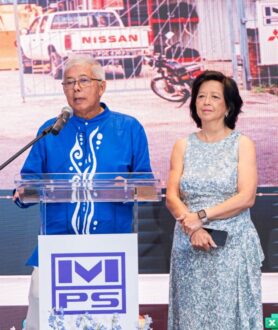
Stanley and Dr. Michelle Ming

MPS began in 1990 as a three person company led by Mr. Stanley and Dr. Michele Ming, operating out of space rented on Urquhart Street from June Mendes of Farfan and Mendes. From that modest beginning, the Ming family built a company grounded in a simple belief: MPS’s success would depend on the upliftment of the Tiger Bay community and on providing genuinely high quality services and products to its customers.

Thirty five years and multiple generations later, MPS says it remains deeply indebted to its staff, its countrywide customers, and the Tiger Bay community for everything they have contributed to the company’s story.

A Business Built on Trust

According to the company, MPS has thrived for 35 years because thousands of customers across all ten regions of Guyana have repeatedly trusted it with their patronage. Rather than simply reselling products, MPS researched, tested, and imported unique, world renowned products from manufacturers in the USA, Canada, Japan, China, Taiwan, Thailand, and India. Over the last five years, the company has also explored joint ventures in production and processing, renewable energy, and commercial scale construction, ensuring it continues to meet the evolving needs of its customers.

MPS has long prided itself on being an innovative business. In its sixteenth year, the company was awarded a replica Samurai sword for its sterling performance across Latin America and the Caribbean. Over the years, MPS has marketed and sold the Yamaha brand of outboard engines, motorcycles, all terrain vehicles, generators, water pumps, fiberglass boats and water vehicles, all backed by after sales service the company says is unmatched in Guyana and beyond.

In May 1997, a message from the Yamaha Motor Co. in Japan praised the company directly, stating that MPS’s administration, communication, and response to requests from Yamaha Motor Co. was once again second to none, and complimenting the entire team at MPS as among the most pleasant and professional in the Caribbean and worldwide.

MPS also credits the partnerships it has built along the way, including those with School of the Nations, led by the O’Toole family; German’s Restaurant, led by Clinton and Hubert Urling; Mings Optical, led by Director Dr. Michele Ming; Mattai’s Supermarket, led by Mr. Harry Mattai; and the Guyana Foundation, led by Supriya Singh Bodden, among many other groups working to make Guyana a better place for its citizens.

Tiger Bay: More Than a Neighbor

Few relationships define MPS’s history the way its bond with the Tiger Bay community does. The company describes Tiger Bay as a reliable force behind its success, a community that provided MPS with a safe environment to work in and that taught the company what a community can become when someone believes in it.

Over the years, MPS was able to provide health insurance for the children of Tiger Bay and, in partnership with School of the Nations, helped fund extra classes in computer science and other subjects.

One moment stands out in the company’s history. When MPS’s premises caught fire in 2011, residents of Tiger Bay took control of the situation, moving vehicles, motorcycles, and equipment to the compound of School of the Nations to keep them safe. When the company later reconciled its inventory, every single item that had been removed from the site was accounted for, and MPS was able to reopen the very next day. MPS calls it a remarkable confirmation of the trust and loyalty between the company and the residents of Tiger Bay, adding that the community is part of the company’s DNA and that this anniversary is just as much about Tiger Bay as it is about MPS.

Investing in People

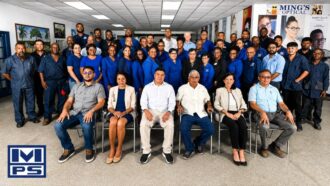
Mings Products and Services Staff

MPS also used the anniversary to pay tribute to its staff, some of whom have spent their entire working lives with the company. MPS describes itself as a diverse company that values inclusion and equity, a meritocracy with an authentic family work environment where everyone, regardless of rank, mixes freely in the company’s dining areas.

The company points to leadership management training, mentorship, private health and life insurance, tuition reimbursement, maternity leave, and internal promotions as investments it has made in its people over the years. Of MPS’s sixty six total staff members, twenty eight have served the company for more than ten years, including seven staff with more than 30 years of service, four with more than 20 years, four now celebrating their 20 year milestone, six with 15 years and over, and seven more with over 10 years.

The company also acknowledged the sacrifices its staff made during the COVID pandemic and honored the memory of its late Technical Director, Colin Ming, who was tragically lost after being struck by a reckless ambulance driver following years of dedicated service to MPS.

Serving Guyana’s Waterways

With the entire range of Yamaha products, along with the products and services of FMC Products & Services, the M Group, MDepot, and Mings Optical, the MPS Group of Companies says it has proudly served communities along the Berbice, Demerara, Essequibo, and Pomeroon rivers for decades. In some instances, MPS has worked alongside Banks DIH, along with support from Mr. Clifford Reis and Shell Antilles, to provide boats, engines, fuel, and life jackets at no charge so that school children living along riverain communities could commute between their homes and schools.

A New Chapter of Leadership

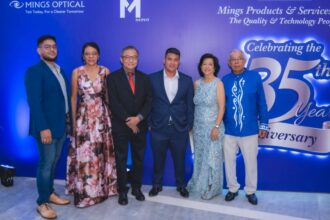
MPS Leadership from Left to Right: Samuel Ming, Audrey Ford, John Chin - CEO , Calvin Ming - new Chairman, Dr. Michele Ming and Stanley Ming
MPS Leadership from Left to Right: Samuel Ming, Audrey Ford, John Chin – CEO , Calvin Ming – new Chairman, Dr. Michele Ming and Stanley Ming

The 35th anniversary also marks a transition in leadership. MPS’s future is now guided by Calvin Ming as Chairman and John Chin as Chief Executive Officer, supported by Directors Audrey Ford, Samuel Ming, and Michele and Stanley Ming. The team says it is already working to expand the company’s products and services portfolio, with further announcements expected soon.

Central to that future is ISIKA, an Amerindian word meaning “to give” or “to share.” MPS describes ISIKA as its vision for a state of the art, inclusive, multicultural, and multireligious community on the Essequibo River, planned to break ground in 2027, complete with schools, hospitals, a marina, and more, owned and operated by the very people who will call it home.

Guyana Is Home

In closing out its anniversary message, the Owners, Management, and Staff of MPS expressed their gratitude to all Guyanese for the opportunity to serve the country over the past 35 years, describing the milestone as only one step in a longer journey and thanking everyone who has helped make the company successful.

MPS’s associated companies include FMC Products & Services Inc., The M Group (Guyana) Ltd., Mings Optical, and MDepot.


Source: Guyana Graphic

From Tragedy to Transformation – Guyana Graphic – Current & Historical Events & Figures

0
Guyana Must Turn the MV Barima Disaster into a National Safety Reckoning

After the country’s deadliest maritime disaster, Guyana faces a choice — let institutional failure fade from memory, or use it to rebuild a culture of safety strong enough to match the pace of national development.

After the MV Barima capsized in the Atlantic off Guyana’s coast, the reckoning is only beginning. As of early August, seventy-six people are confirmed dead, thirty more are missing and presumed dead, and seventy-two survived, out of an estimated 179 passengers and crew who boarded the 87- year-old ferry for a routine crossing from Georgetown to Port Kaituma on July 18. The captain and two other crew members have been charged with murder in connection with the deaths and are due back in court on September 7. A five-member Commission of Inquiry, chaired by Belizean jurist Justice Godfrey Philip Smith, has been sworn in with the power to determine what failed and to recommend prosecutions and maritime reform. Under sustained public pressure — including protests by civil society groups, University of Guyana students and the parliamentary opposition — government has agreed to raise the wreck from the ocean floor to preserve evidence for that inquiry.

To the families who lost loved ones on that voyage, and to a nation grieving alongside them, no words can ease this loss. But the greatest tribute Guyana can pay the dead is to ensure their deaths become the catalyst for real change.

As Guyanese Mourn, We Must Also Learn

This is not simply a maritime story, and it is not only a criminal case now working its way through the courts. It is a story about whether Guyana’s institutions can keep pace with the country’s own growth.

Development Brings New Responsibilities

Guyana is living through one of the most significant periods of economic growth in its history. New roads, bridges, housing, energy projects and business investment are transforming the national responsibilities. As economies grow, so does their complexity — more vehicles, bigger infrastructure, expanding industries, greater public services. All of it demands stronger institutions, better-trained
personnel, tighter supervision and a culture that values safety and accountability as much as speed. When growth outpaces institutional capacity, the gap does not stay hidden for long. It surfaces as accidents, operational failures, project delays and declining public trust. The challenge before Guyana is not simply how to grow, but how to grow safely.

The MV Barima and Our Roadways Tell a Similar Story

The circumstances differ, but the lessons from a sinking ferry and from the continuing toll on our roads rhyme. Too often, public discussion of tragedy stops at immediate cause. National development demands harder questions: Are our systems adequate? Are safety procedures robust and consistently enforced? Are people properly trained? Are risks identified and managed before disaster strikes, and are leaders held accountable for the outcome? These questions apply as much to road safety, workplace safety and emergency response as to maritime transport — and they cannot be answered through blame alone. They require honest evaluation, institutional learning and sustained commitment.

Safety Is a Shared Responsibility

It is tempting to see every failure as government’s alone. Government carries the central role: strong regulation, effective oversight, professional public services and enforcement are indispensable, and the Commission of Inquiry’s mandate to recommend prosecutions and reforms is a welcome step in that direction. But safety does not end with government. It needs businesses and operators that comply with safety standards, investment in training and maintenance, and practise ethical, disciplined leadership. It needs communities that stay vigilant and stridently report unsafe conditions. And it needs citizens who drive responsibly, respect the rules, and accept personal accountability for their own conduct. No law, regulation or ministry can fully compensate for a society that tolerates recklessness, complacency or slackness, as we would say.

The Missing Ingredient Is The Human Side of Development – Entrenched in the Culture

The clearest lesson from nations that have made the leap to developed status is that development is cultural as much as it is infrastructure and economic. Developed societies are not simply wealthier with better roads, bridges and hotels — they are societies that have institutionalised professionalism, discipline, accountability, excellence, respect for standards, and respect for human life through families, schools, workplaces, faith institutions, NGOs, Cooperatives, and public life.

If Guyana is to become a truly developed nation, it must deliberately cultivate a culture of excellence and accountability, beginning in homes and schools and continuing through adult life. Our schools should teach personal responsibility, civic duty, road safety, risk awareness and emergency preparedness as systematically as they teach mathematics, because a nation that teaches safety builds safer communities. How is it that the Oil and Gas companies who employ Guyanese can report excellent safety record while meeting their production goals?

Leadership Is the Real Test – It Is “Where the Buck Stops”

Perhaps the most important lesson of all is that safety is a leadership issue, not merely a regulatory one. Leadership is not the exercise of authority; it is the acceptance of responsibility. Leaders in government, private companies, transportation, schools and communities must understand that their decisions carry consequences for human lives, and must routinely ask what could go wrong and what should be fixed before it does…risk assessment and mitigation measures. The measure of leadership is not only how well one responds to a crisis, but how effectively one prevents it — a standard the MV Barima inquiry will now test against Guyana’s maritime sector, and one every institution in the country should apply to itself.

A National Call to Action

Guyana should measure development not only by GDP growth, construction activity and new investment, but by safety, accountability, institutional effectiveness and public trust. Concretely, the country should:

  • Strengthen transportation safety oversight and enforcement;
  • Expand civic and safety education in schools;
  • Build stronger accountability systems and national safety performance indicators;
  • Professionalise operational leadership across public agencies; and
  • Ensure the workforce entrusted with public safety is properly trained, motivated and fairly paid.

These reforms will take effort, investment and patience. They will also save lives.

Turning Grief Into National Renewal

The lives lost aboard the MV Barima can never be replaced, and the grief of their families cannot be erased. But Guyana can choose how it responds. We can allow this tragedy to fade, as painful chapters sometimes do, into national memory. Or we can treat it as a turning point — a moment to strengthen our institutions, elevate our standards, and build a culture that values safety and accountability as highly as it values growth. Development is not only about roads, bridges, ports and industries. It is also about building people, institutions, trust and national resilience. If Guyana learns the right lessons, acts with courage, and insists that every sector and leadership accept its share of responsibility, something meaningful can still come from this tragedy: a safer Guyana, a stronger Guyana, and ultimately, a more developed Guyana.

One People, One Nation, One Destiny. One Future. Shared Responsibility and Shared Prosperity.

Cosford A. Roberts, MBA


Source: Guyana Graphic

Trans Guyana Airways Aircraft Runs Off Mabaruma Runway – Guyana Graphic – Current & Historical Events & Figures

0

A Trans Guyana Airways Cessna 208B Grand Caravan, registration 8R-GCC, was forced off the runway while landing at Mabaruma Aerodrome on Thursday, September 17, 2026, after an animal entered the runway, according to a statement issued by the airline.

Trans Guyana Airways said the incident caused “considerable damage” to the aircraft and endangered passenger safety. The company’s September 18, 2026 press release did not identify the type of animal involved, provide the number of passengers and crew aboard, or report any injuries.

The runway excursion has placed renewed attention on a problem that Trans Guyana Airways says it had formally raised with the Guyana Civil Aviation Authority months before Thursday’s accident: animals, wildlife and other incursions at Guyana’s hinterland aerodromes.

The documents released by the airline indicate that concerns about Mabaruma were neither new nor confined to a single incident.

Warnings dating back to June

In a June 16, 2026 safety report to the Director General of the Guyana Civil Aviation Authority, Trans Guyana Airways warned of what it described as an “escalating trend” of runway incursions, malicious interference and infrastructure failures at interior airstrips.

The report documented eight incidents between May 21 and June 15 at Lethem, Mabaruma and Imbaimadai.

Among them was a June 9 report of cows grazing alongside the runway at Mabaruma. The photographic evidence attached to the report includes two images on page five specifically captioned “Cows grazing at Mabaruma,” showing cattle immediately adjacent to the airstrip.

Other incidents documented by TGA included horses on the runway at Lethem, a missed approach because of a horse, departure delays caused by horses, cattle near the Imbaimadai runway, a bag containing a dead dog placed on the Lethem runway, rocks deliberately positioned on the runway, and a damaged perimeter fence.

The June report characterized the obstructions as presenting a high risk of aircraft damage, loss of control or engine ingestion, particularly during takeoff and landing. TGA recommended security inspections, repairs and reinforcement of perimeter fencing and access gates, intervention by local authorities and stronger pre-arrival runway inspection procedures.

The airline concluded that the situation had reached what it called a “critical threshold.”

Mabaruma warning issued eight days before accident

More significantly, Trans Guyana Airways sent another safety report to the GCAA on September 9, just eight days before the runway excursion involving 8R-GCC.

That report focused specifically on increased wildlife activity and bird and vulture hazards at interior airstrips, identifying Mabaruma as the location “most seriously affected.”

TGA reported that during the preceding four weeks there had been at least four reported bird strikes involving its aircraft operating into Mabaruma and other locations. It also reported at least one missed approach after vultures were observed occupying the runway while an aircraft was approaching, forcing the crew to go around and make another landing attempt.

The airline warned that vultures gathering on or near runways created the potential for multiple-bird strikes during the critical takeoff and landing phases.

TGA also raised a broader infrastructure concern. Its September report said interior airstrips, including Mabaruma, generally had limited or no wildlife-control infrastructure, such as perimeter fencing, deterrent systems or dedicated ground personnel.

According to the airline, this meant individual aircraft operators had limited ability to manage the hazard themselves.

TGA told the GCAA that it had instructed its flight crews to exercise heightened vigilance at Mabaruma and other affected airstrips and was reviewing its internal reporting and go-around procedures.

However, the airline argued that the underlying problem required action at the airport-authority level.

Among its recommendations were an assessment of wildlife attractants around Mabaruma, including waste disposal sites, abattoirs, drainage and agricultural activity; stronger wildlife-management measures; runway inspections before scheduled operations; active deterrence of vultures and other wildlife; and a broader wildlife-hazard assessment of Guyana’s interior aerodrome network.

TGA links accident to longstanding concerns

In its statement following Thursday’s accident, Trans Guyana Airways directly connected the runway excursion with its earlier warnings.

The airline said animal and human intrusion at government-owned and operated hinterland airports represented a continuing threat to commercial and private aircraft using those facilities.

TGA specifically pointed to its correspondence of June 16 and September 9 to the GCAA, releasing both documents publicly following the Mabaruma accident.

Taken together, the documents establish a timeline that will likely become important in determining what occurred at Mabaruma and whether the accident could have been prevented.

On June 9, TGA documented cattle grazing alongside the Mabaruma runway. On June 16, it formally reported animal incursions and other runway hazards to the GCAA. On September 9, it issued another warning, this time identifying Mabaruma as particularly affected by wildlife activity and requesting specific mitigation measures. Eight days later, according to the airline, 8R-GCC was forced off the Mabaruma runway because of an animal incursion.

Questions now facing aviation authorities

The documents supplied by TGA establish that the airline reported the hazards. They do not establish what action, if any, the GCAA, airport management or other government agencies took in response before the September 17 accident.

That distinction is important.

The available documents also do not identify the animal involved in Thursday’s incident, explain exactly how it entered the operational area, establish whether the runway was inspected immediately before 8R-GCC landed, or indicate whether fencing or other wildlife-control measures were in place and functioning at the time.

Those issues will require answers from the GCAA and the agencies responsible for operating and maintaining Mabaruma Aerodrome.

Among the central questions are whether the June and September warnings resulted in a formal hazard assessment, whether corrective measures were ordered, whether runway inspections were increased, and what procedures existed for keeping animals and wildlife away from the runway.

The condition of 8R-GCC and the circumstances of the excursion will also require technical examination before conclusions can responsibly be drawn about the accident sequence.

Trans Guyana Airways said it remains available to work with the GCAA, other licensed aircraft operators and the Aviation Operators’ Association of Guyana to address the problem urgently.

For Guyana, where interior aviation provides an essential transportation link to communities that cannot depend on the country’s road network, Thursday’s accident raises a larger safety question: whether development of hinterland aviation infrastructure is being accompanied by adequate runway security, wildlife management, inspections and operational oversight.

The September 17 runway excursion did not create those questions. Trans Guyana Airways’ own correspondence shows that some of them had been formally raised months earlier.

Trans Guyana Airways (TGA) Press Release: RE Accident at Mabaruma Airstrip 18.09.26

Trans Guyana Airways (TGA) – Flying wildlife occurrences at Aerodromes

Trans Guyana Airways (TGA) Report to the GCAA reference RWY Incursions by Animal


Source: Guyana Graphic

Mia Mottley and the Power of Principled Leadership – Guyana Graphic – Current & Historical Events & Figures

0

Prime Minister Mia Amor Mottley of Barbados has developed a rare quality in international diplomacy. She can speak with the moral urgency of an advocate, the precision of a lawyer and the pragmatism of a head of government, often within the same address.

The excerpt of her speech at the United Nations earlier today (September 24, 2026) featured in the accompanying video below is another example of a style that has become increasingly familiar on the international stage. Mottley asks nations to confront uncomfortable history, but she does so without making history a prison from which present generations cannot escape. She uses it instead as evidence, a record of human choices whose successes and failures should inform the choices being made today.

That distinction matters. Mottley has repeatedly returned to a simple proposition throughout her years in office: a world governed primarily by power will inevitably disadvantage countries that possess little of it. Small states therefore have a profound interest in international law, functioning multilateral institutions, equitable access to finance and rules that apply with reasonable consistency to powerful and vulnerable nations alike.

This is not a theme Mottley discovered recently. As early as her 2018 address at the Global Climate Action Summit, shortly after becoming Prime Minister, she argued that the physical survival of Caribbean island states was threatened by climate change.

At the United Nations in 2019, she spoke of the need for “fairness, equity” and an international order capable of accommodating the different circumstances of nations. She also argued that multilateralism provides small states with protection against the unrestricted exercise of power by larger countries. That argument has matured rather than disappeared.

From Climate Vulnerability to Global Equity

Mottley’s speeches over the years reveal remarkable thematic consistency. Climate change, debt, development finance, inequality, colonial history, institutional reform and the vulnerability of small states might initially appear to be separate subjects. In Mottley’s international advocacy, they form parts of the same argument.

Her contention has been that the international system was largely constructed under political and economic circumstances very different from those confronting developing nations today.

That argument became particularly visible in her advocacy for reform of international development and climate finance through what became known as the Bridgetown Initiative. The initiative sought changes to the global financial architecture so that vulnerable and developing countries could obtain financing on terms better suited to climate shocks and development needs. The United Nations subsequently described the Bridgetown agenda as an effort to make finance work for “people, planet and prosperity.” This is where Mottley has moved beyond rhetoric.

It is relatively easy for political leaders to tell international institutions that the system is unfair. Humanity has accumulated a formidable supply of speeches explaining what is wrong with humanity. The more difficult task is proposing mechanisms through which it might be changed. Mottley has attempted to do that.

Bold Without Abandoning Diplomacy

One of the most interesting characteristics of Mottley’s international speeches is her willingness to challenge powerful countries and institutions without routinely turning those challenges into personal attacks. That is a difficult political balance.

Diplomacy can become so cautious that nothing meaningful is said. Political rhetoric can move in the opposite direction, becoming so confrontational that audiences who might otherwise listen simply retreat to their respective positions. Mottley frequently operates somewhere between those extremes.

At the 2022 United Nations General Assembly, for example, she questioned the structure of the Bretton Woods institutions, challenged the representativeness of the G7 and G20, and called for reform of the Security Council and its veto structure. These were substantial criticisms of institutions dominated by the world’s most powerful states. Yet her broader argument was about inclusion rather than exclusion. That distinction helps explain her effectiveness.

Mottley can criticize the architecture of international power while continuing to engage those who benefit from that architecture. She can demand greater consideration for developing countries without suggesting that cooperation between wealthy and developing nations is either impossible or undesirable.

Her diplomacy therefore seeks something more useful than agreement with her diagnosis. It seeks participation in the remedy.

History Without Permanent Hostility

Another important feature of Mottley’s rhetoric is her use of history. For Caribbean societies, discussions about slavery, colonialism, exploitation and economic inequality can quickly become politically charged. There is no legitimate reason to sanitize that history. Equally, recounting historical injustice without identifying a path forward can leave nations arguing indefinitely over inherited grievances. Mottley’s approach frequently asks a different question. What can history teach us about the institutions we should construct now?

That allows her to discuss colonialism, slavery, racial inequality and economic exploitation while still appealing to countries on different sides of that history to participate in building something better. It is an important diplomatic skill because empathy cannot simply be demanded. It often has to be cultivated.

Effective diplomacy requires a leader to explain the experience of one society in terms that another society can understand without requiring either side to surrender its identity. Mottley has demonstrated an unusual ability to do precisely that.

Her message to wealthy countries is rarely that prosperity itself is objectionable. Her argument is that the international system should provide poorer and vulnerable countries with a realistic opportunity to achieve prosperity themselves.

Her climate argument follows much the same construction. Small island states contributed relatively little to the accumulated greenhouse gases driving climate change, yet they face disproportionately severe consequences. The answer, in her formulation, is not simply assigning blame. It is constructing financial mechanisms that allow vulnerable countries to survive, adapt and develop.

The United Nations itself has recognized the reach of that advocacy. In 2021, Mottley was named a UN Champion of the Earth for Policy Leadership, with the UN Environment Program highlighting her advocacy for vulnerable developing states and climate finance.

A Voice Larger Than Barbados

Mottley became Barbados’ eighth Prime Minister and its first female Prime Minister following the 2018 general election. Her political career, however, stretches back decades. She was first elected to Parliament in 1994 and previously served in portfolios including education, home affairs, economic affairs and as Attorney-General and Deputy Prime Minister. That experience is evident when she speaks internationally.

She does not sound like a leader who suddenly discovered foreign policy after becoming Prime Minister. There is an understanding of institutions, law, economics and political negotiation beneath the rhetoric.

It also helps explain why a country with a population and economic weight that could easily be overlooked in international affairs has acquired such visibility in debates over climate finance and reform of the international financial system.

UN Secretary-General António Guterres has publicly described Barbados as an influential regional leader and praised Mottley’s international advocacy, particularly on climate change, debt, development and the circumstances facing small island developing states.

Her 2025 address to the 80th United Nations General Assembly extended the same philosophy into another increasingly fractured international environment. She addressed overlapping financial, social, geopolitical and climate crises while again questioning whether existing global institutions remain capable of responding effectively. The consistency is important.

Political charisma can command a room. It cannot by itself sustain an international policy agenda. Mottley’s influence has increasingly rested on combining rhetoric with specific proposals.

Leadership From a Small State

Guyana Graphic’s assessment is that Mia Amor Mottley represents one of the most consequential political voices to emerge from the modern Caribbean.

That is an editorial judgment, rather than a measurable fact. Political leadership should ultimately be assessed against domestic outcomes as well as international reputation, and Barbadians themselves will continue to judge her government’s record. But her international contribution can be examined separately.

On that stage, Mottley has demonstrated an unusual combination of charisma, intellectual command, political instinct and diplomatic discipline. More importantly, she has refused to accept the proposition that the size of one’s country should determine the size of one’s voice.

Barbados cannot compel the major powers to change the international financial architecture. It cannot dictate climate policy to the world’s largest economies. It cannot independently restructure the United Nations.

Mottley nevertheless behaves as though Barbados has both the right and responsibility to participate fully in those debates. That may ultimately be one of the most important examples she offers other Caribbean leaders. Small countries need not behave as spectators in the international system.

An Ambassador for the Vulnerable

There is also something broader occurring in Mottley’s diplomacy. When she speaks about climate vulnerability, debt or access to development financing, Barbados frequently becomes a platform for concerns shared by countries thousands of miles beyond the Caribbean.

Pacific island nations threatened by rising seas, African countries confronting debt and development constraints, Caribbean economies repeatedly exposed to hurricanes and other developing states struggling with the cost of capital can recognize elements of their own circumstances in her arguments.

She has consequently become an important advocate for a constituency much larger than Barbados. Her strongest speeches do something particularly difficult. They challenge without automatically alienating. They remind without simply accusing. They demand change while leaving space for those being challenged to become participants in that change. There is firmness, but there is also an invitation. That is diplomacy at its most useful.

The Lesson for the Caribbean

The Caribbean has produced many formidable international figures. Its small population has never prevented the region from contributing disproportionately to diplomacy, literature, economics, law, culture and political thought.

Mottley belongs within that tradition. Her example also offers a lesson for contemporary Caribbean leadership. A small country’s influence does not have to correspond to its population, military strength or gross domestic product. Influence can come from preparation, intellectual credibility, consistency and the ability to articulate an argument that other countries recognize as relevant to their own circumstances.

The speech featured here demonstrates that principle again. Mottley is prepared to confront the failures of the international system, but she does not appear interested in destroying international cooperation. She wants that cooperation to work better.

She invokes history, but her destination is the future. She speaks for Barbados, yet deliberately broadens the conversation to include countries and peoples whose economic and political influence often leaves them unheard.

And perhaps that explains much of her international appeal. Mia Mottley does not ask the world to forget its history. She asks it to understand that history well enough to avoid repeating its failures.

For a world again confronting war, inequality, climate disruption, economic uncertainty and growing distrust of international institutions, that is a message worth examining, regardless of one’s political perspective.

The measure of leadership is ultimately found not in applause following a speech, but in whether ideas survive after the room has emptied.

Mia Amor Mottley’s ideas have increasingly entered the international conversation. For Barbados, for the Caribbean and for developing societies seeking a meaningful voice in determining the rules under which they must live, that alone is significant.


Source: Guyana Graphic

New pathology, mammography and oncology services to strengthen cancer care

0


Breast cancer diagnosis and treatment services are being expanded across Guyana, with regional hospitals gaining access to diagnostic imaging and specialised oncology care.

Mammography services are now available at Suddie, Linden, New Amsterdam and Lethem regional hospitals, complementing services at the Georgetown Public Hospital Corporation (GPHC).

The expansion is allowing women in the regions to access breast screening closer to home, reducing the need to travel to Georgetown for diagnostic imaging.

At GPHC, the establishment of a new pathology laboratory is also strengthening the diagnosis of breast cancer. The facility is capable of distinguishing between different types of breast cancer, providing information that can help guide treatment decisions.

Oncology services have also been strengthened, with the oncology clinic at GPHC expanded and a new oncology clinic established at New Amsterdam Hospital.

Alongside improvements in diagnosis and treatment, community education initiatives are being used to promote breast health and encourage early detection, which can support timely access to care.

International partnerships are also contributing to the development of cancer services, including collaboration with Mount Sinai to strengthen specialised care and support efforts towards the establishment of a national oncology centre.

The expansion of services forms part of a broader effort to improve access to breast cancer care, particularly by increasing diagnostic and treatment capacity outside Georgetown.

The effectiveness of these investments can be assessed through indicators such as the stage at which patients are diagnosed, waiting times for diagnosis and treatment, treatment completion rates and long-term survival outcomes. [DPI]


Source: INews Guyana

GDF, Brazilian Armed Forces advance border security partnership

0


The Guyana Defence Force (GDF) continues to enhance its strategic partnership with Brazil.

Just recently, the 29th Regional Military Exchange between the GDF and the Brazilian Armed Forces was held in Boa Vista, Brazil. Captain (CG) Vernon Burnett, MSM, and Commander of the 1st Jungle Infantry Brigade of the Brazilian Army, Brigadier General Roberto Pereira Angrizani, co-chaired the meeting.

The bilateral engagement brought together military representatives from both nations, all committed to strengthening defence cooperation along the shared frontier.

This annual forum enables both forces to align operational priorities and coordinate critical security measures along Guyana’s southern border. During the exchange, discussions focused on tackling pressing cross-border issues, including illicit trafficking, illegal mining, and transnational criminal networks.

By sharing operational information and evaluating common border challenges, both delegations advanced their defence diplomacy, sharpened joint situational awareness, and reinforced the long-standing professional relationship between the two militaries.

Through continued dialogue and active collaboration, the GDF remains committed to safeguarding our national borders and maintaining regional peace and stability.


Source: INews Guyana

Hope 162* beats Rahul 129* as West Indies pull off record chase – News Room Guyana

0

A terrific unbeaten century from Shai Hope usurped KL Rahul’s efforts as West Indies hunted down 352 in New Chandigarh to win the final ODI. Rahul smashed his highest ODI score to power India to 351-7, but Hope opened the innings despite keeping wickets for 50 overs and still managed to stay right until the end to finish unbeaten on 162 to guide his side to a consolation win with 10 balls to spare.

Opting to bat after winning the toss in the dead rubber, India handed Anshul Kamboj a debut. This time, there were no heroics up top for India as Shubman Gill and Virat Kohli were both sent packing in just the third over. Gill, who had already smashed a century and a double century in the series, edged a delivery down the leg side to fall for one and Kohli departed for a golden duck in the same over by Jayden Seales.

Rohit Sharma and Ruturaj Gaikwad then stemmed the rot with a watchful stand initially as India were 28-2 after 11 overs. The fact that they breached 350 from here was remarkable with Rohit kickstarting the recovery. Rohit switched gears with a six whereas Gaikwad was living a charmed life with the West Indies fielders repeatedly putting him down.

Rohit managed to bring up his fifty and went on a boundary-hitting spree to boost India’s run rate, with Gaikwad also catching up with his third six of the innings. Rohit looked well on course to bringing up another ODI century but he mistimed a pull to fall eight short of three figures.

Gaikwad at the other end went past fifty but luck did eventually run out, leaving the onus on Rahul to guide the innings further.

The Indian wicketkeeper had Naman Dhir for company and both batters counterattacked to put West Indies on the backfoot but the visitors sensed an opportunity when Dhir and Nitish Reddy failed to make a substantial impact. After bringing up his fifty, Rahul had to rally around India’s tail at the back end of the innings and he pulled off a sublime job.

Kamboj contributed with a couple of sixes before departing and Gurnoor Brar did his bit to ensure Rahul was on strike for the major part of the final five overs. Clubbing a six over deep midwicket to move into the nineties, Rahul went berserk in the final two overs of the innings hammering four sixes and a four to help India finish with another 350 plus total in ODI cricket.

Even though there was a daunting target in front of them, West Indies once again made a top start. John Campbell kickstarted the chase with a couple of boundaries in the very first over and Hope picked on Kamboj for successive boundaries. Two more boundaries followed suit in the next over as the visitors raced to 33-0 in just three overs.

Mohammed Siraj then gave India a timely breakthrough by castling Campbell but Amir Jangoo and Hope didn’t let the start go to waste as they stabilised the chase. At one point, Jangoo took on the scoring mantle and even surpassed Hope enroute his third successive fifty-plus score in the series.

By the end of the 20th over, the century partnership had laid the platform for the chase. Ironically, it was a misfield that paved the way for a dismissal that saw Jangoo depart for 67 but it didn’t deter West Indies. Hope continued to make merry and was involved in another half-century stand that kept his side afloat.

Hope went past three figures for the 21st time in his ODI career after the departure of Sherfane Rutherford, and then took a backseat with Keemo Paul taking charge. With their confidence sky high after posting over 400 last game, West Indies didn’t cave in as the equation came down to 81 from the final 10 overs with a well-set Hope and Paul in the middle.

India found an opening when Paul took on a short ball and found the fielder and Kuldeep came back to pile on the pressure with the wicket of Matthew Forde. With Jewel Andrew injured and not walking out to bat, West Indies briefly felt the pinch following these two dismissals. But once again, the skipper stood tall and absorbed the pressure.

He took on Kuldeep in his final over for a six and a four before taking full toll on India being penalised for a slow over rate that forced an extra fielder inside the circle. His calculated assault saw him find the boundary off successive deliveries against Brar before a 22-run Kamboj over pretty much sealed the deal. (Cricbuzz)


Source: NEW ROOMS SITE

Saudi Arabia opens E-Visa, Visa-on-Arrival access to Guyanese passport holders – Guyana Times

0

Saudi Arabia opens E-Visa, Visa-on-Arrival access to Guyanese passport holders

…comes as a result of intensified bilateral relations, discussions between 2 nations – Govt

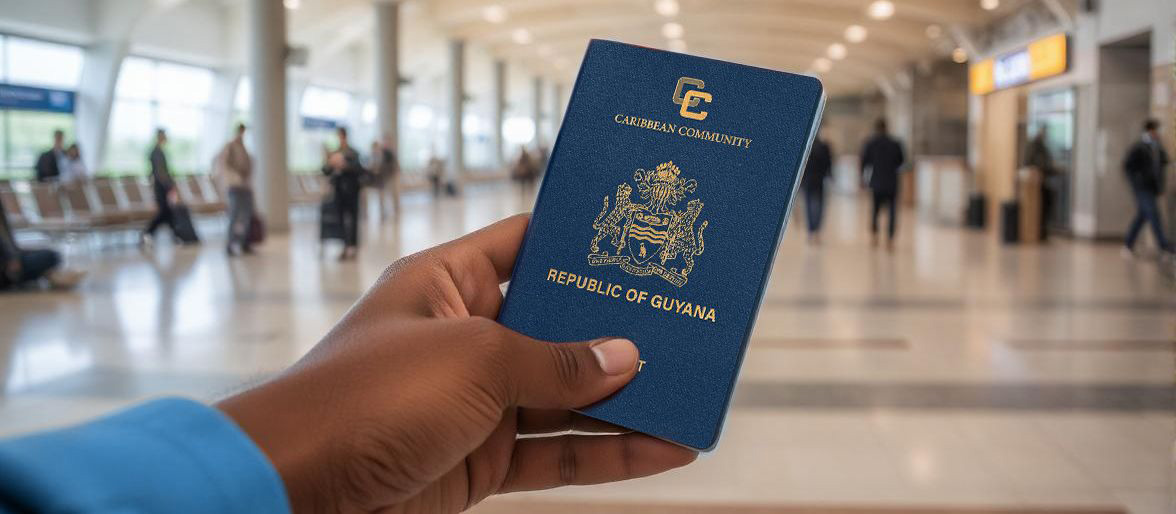
Travel to Saudi Arabia has now been made easier for Guyanese passport holders, who no longer need to have a visa beforehand.
Previously, Guyanese were required to go through an embassy or agent to obtain a visa before travelling to the Middle Eastern country or have a valid United States (US), United Kingdom (UK), or Schengen visa in order to qualify for a visa on arrival or electronic visa (e-visa).
But through strengthened bilateral relations between Guyana and the Kingdom of Saudi Arabia, Guyanese will now benefit from the e-visa or visa on arrival without needing any prerequisites, according to the Foreign Affairs and International Cooperation Ministry on Saturday.
In a statement, the Foreign Ministry said this development is a consequence of the intensified bilateral relations and discussions between the two nations.
This is further coupled with the two countries’ mutual interest in expanding and advancing cooperation in trade, economic partnerships, investments, tourism, etc, as well as the strengthening of their bilateral relations centered on people-to-people contact.
As a result of this new development, Guyana is now the only country in South America whose passport holders can enter Saudi Arabia with a visa on arrival or an electronic (e-) visa, devoid of needing a US, UK, or Schengen visa in their passport.
“That requirement is no longer needed,” Takuba Lodge said in the statement. “Consequently, this makes travelling from Guyana to Saudi Arabia much easier-whether you’re travelling for Umrah, tourism, visiting family or friends, or simply visiting Saudi Arabia for any other purpose.”
Citizens travelling to the Middle Eastern country only need their Guyanese passports and the required visa fee/payment, for which they could apply for the e-visa or obtain the visa on arrival.
According to the Foreign Ministry, this recent development is very symbolic and bodes well for the further fostering, promotion and consolidation of our bilateral relationship.
It went on to say that the Guyana Government is determined and has been making concerted efforts to enhance features on Guyana’s Machine-Readable Passports, consistent with satisfying global standards and requirements and will continue in these endeavours.
Over the years, the Guyana Government has been in talks with a number of bilateral partners, including Canada and India. Additionally, some countries like the United Arab Emirates (UAE) have also introduced visa-free travel for Guyanese passport holders. Guyana’s passport currently allows for visa-free or visa-on-arrival access to nearly 90 countries and territories around the world.
The latest Henley and Partners Passport Index, released in July 2026, ranked the Guyanese passport higher than some of its major Caribbean neighbours. The index puts Guyana’s passport at 55th globally-a one-spot drop from last year’s ranking of 54th with access to some 91 countries.
But even though the country dropped one spot down from last year, the Guyana passport still ranked higher than some of its Caribbean neighbours that are major tourist destinations, including Jamaica and the Dominican Republic.
But even with this 55th ranking and visa-free access to 88 countries, the Henley Index highlighted that Guyana still does not have visa-free access to Europe’s Schengen area. The Schengen area, consisting of 29 European countries, includes Austria, Belgium, France, Germany, Italy, Spain, and others, allowing for seamless travel across the region. For years, the Guyana Government has been pushing for visa-free travel to Schengen countries.
Back in November 2022, the UK’s Government lifted the visa requirement for Guyanese passport holders. President Dr Irfaan Ali subsequently disclosed that at least five European countries have agreed to support Guyana’s bid for visa-free travel to the Schengen area, but no further progress has been reported.
Nevertheless, the opening of the French Embassy in Georgetown in September last year paved the way for the submission and processing of Schengen visa applications in Guyana, something that had long been pushed for. Previously, Guyanese wanting to obtain a Schengen visa would need to travel to neighbouring Suriname to complete the application process.
Back in May, French Ambassador to Guyana, Olivier Plançon, said his office is working to enhance the visa application and issuance process in the country.
“Please also be mindful of the fact that the Schengen visa is a gateway to no less than 27 countries, and our visa policy has to be coordinated with all of them. That being said, we are constantly striving to streamline the visa issuance process and we are well aware that improvements are needed and expected,” Plançon noted.
The French Ambassador had previously explained that while the long-term goal is visa-free travel between the two countries and the wider European Union (EU), the number of Schengen visas issued has doubled since the opening of the embassy here last year, moving from about 150 to now some 350.


Discover more from Guyana Times

Subscribe to get the latest posts sent to your email.


Source: Guyana Times