https://kiskadeewatch.com/world/us-supreme-court-to-kick-off-term-with-bid-by-big-oil-to-toss-climate-suits/







https://kiskadeewatch.com/world/us-supreme-court-to-kick-off-term-with-bid-by-big-oil-to-toss-climate-suits/

WASHINGTON, (Reuters) – The US Supreme Court begins its new nine-month term tomorrow with arguments in a major case involving a bid by oil companies ExxonMobil and Suncor Energy to scuttle a lawsuit by officials in Boulder, Colorado, seeking monetary damages for harms caused by climate change.
It is the first of several important cases already teed up for the term, with disputes involving issues such as President Donald Trump‘s immigration policies and state-level bans on assault-style rifles to be heard in the coming months. The court’s 6-3 conservative majority has moved US law dramatically rightward in recent years.
The top US judicial body, as is its custom, opens its term on the first Monday in October.
US-based Exxon and Canada-based Suncor appealed after the Colorado Supreme Court let Boulder’s lawsuit accusing them of state law violations proceed. The Trump administration has backed Exxon and Suncor, arguing that federal law precludes Boulder’s claims.
Boulder’s city and county governments have accused the two companies of helping drive climate change and misleading the public about the risks of fossil fuels. Boulder aims to hold the companies liable for past and future costs associated with climate change such as infrastructure repairs, environmental damage, emergency management and harms to public health.
The burning of fossil fuels releases greenhouse gases including carbon dioxide into the atmosphere, trapping heat and raising average global temperatures over time.
Nearly 60 state and local governments have brought similar suits seeking billions of dollars from fossil fuel companies, with more continuing to be filed, Exxon and Suncor told the justices. A ruling by the Supreme Court in favor of the companies could lead to many of those cases being dismissed.
Monday’s arguments mark the latest example of energy-sector companies asking the justices to block climate-related liability or limit federal environmental regulation.
Backers of the oil companies argue that if Boulder’s most far-reaching claims are allowed to proceed, it could give states sweeping power over conduct occurring far outside their borders.
Energy companies and trade groups, along with states allied with them, have built a largely winning record before the justices over the past two decades in cases involving climate liability and the reach of federal environmental regulation.
Exxon and Suncor argue, among other things, that Boulder’s claims intrude on an area governed by the Clean Air Act.
Justice Samuel Alito has recused himself from participating in the case. Alito owns stock in several oil and gas companies but not Exxon or Suncor, according to his financial disclosure forms.
The Supreme Court’s decision is expected by the end of June.
Source: Kiskadee Watch
(Kaieteur News) – Attorney-at-law Christopher Ram says repeated complaints from pensioners prompted him to initiate the legal challenge against the National Insurance Scheme (NIS), warning that the matter will be taken to the High Court if the Scheme fails to provide an acceptable response.
Ram, commenting on the move by himself and several trade unions to demand compliance with the statutory minimum pension and payment of arrears, said he decided to act after hearing complaints from pensioners while he was in the United States.
“Responding to repeated complaints from pensioners while I was in the USA, I decided to act on the minimum pension which this Administration has violated for six years,” Ram said.

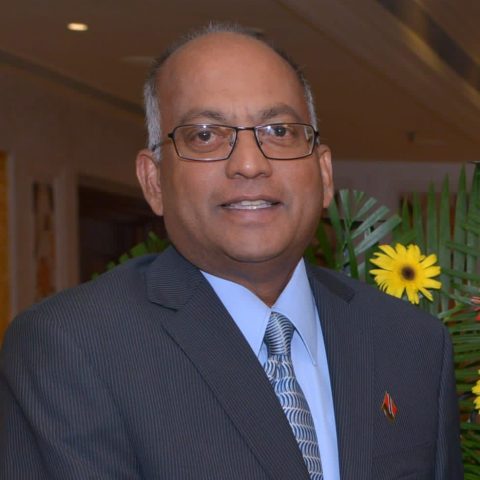
Attorney, Christopher Ram
Following his return to Guyana, Ram said he invited the Guyana Trades Union Congress (GTUC) and its affiliates to join the initiative, with 10 unions eventually responding.
On 1st October, the group wrote the National Insurance Board demanding compliance with the statutory minimum pension and payment of arrears allegedly owed since 2021.
Ram said the group has given the Board until next Friday, 9th October, to respond before High Court proceedings are filed.
However, he said he does not expect the NIS to provide a satisfactory response.
“We do not expect one,” Ram said, citing what he described as his experience with the Scheme when dealing with disputed benefits.
“In my experience, the NIS Administration’s answer on disputed benefits is not only no, but never,” he said.
Ram pointed to another recent matter in which he wrote the NIS on 28th September seeking payment for one claimant and temporary relief for another.
According to Ram, the NIS Corporate Secretary responded the same day, advising him to take the matter to court.
“It was probably the first time in the Scheme’s almost sixty years that it answered a letter on the day it was received,” Ram said.
He criticised that response, arguing that the NIS should not be treating pensioners and other beneficiaries in such a manner.
“That is not how a social security institution should treat the people it exists to serve,” he said.
“If court is the only language the NIS understands, then court it will be,” Ram added.
Ram said the proposed case is based on three principal grounds—the wording of the relevant regulation, what he described as a legitimate expectation created by the NIS’s past practice of linking the minimum pension to the Public Service minimum wage, and the principle established in the Teemal case that acquired pension rights cannot subsequently be taken away.
Meanwhile, Ram expressed disappointment that several major unions have not joined the initiative.
He specifically named the Guyana Public Service Union, headed by Patrick Yarde, the Guyana Teachers’ Union and the Clerical and Commercial Workers Union.
He said the Guyana Agricultural and General Workers Union, NAACIE and the Guyana Labour Union, headed by Carvill Duncan, have also not communicated any interest since the initiative was announced.
“I have stood with these unions on the Picket Line from time to time, most recently the Guyana Teachers Union,” Ram said.
He questioned the decision by those unions not to participate, particularly since many of their members could eventually depend on the minimum NIS pension.
“That these unions would not join an initiative for their own members, many of whom retire on the minimum pension, raises questions about whose interest they serve,” Ram said.
Ram also disclosed that, based on what he described as conservative assumptions, pension arrears for the period 2021 to 2025 could exceed $5 billion, before interest.
“The true figure is likely far higher, and only the NIS knows it,” he said.
The dispute centres on the statutory minimum pension and whether successive increases in the Public Service minimum wage should have resulted in corresponding increases in the NIS minimum pension.
The unions and Ram have given the NIS seven days to state its position and, if it disputes liability, provide the precise legal basis for its position.
Failure to provide a satisfactory response could result in legal proceedings being filed on 9th October.
Source: Kaieteur News
LONDON, Oct 2 (Reuters) – King Charles will not shy away from Britain’s involvement in the transatlantic slave trade when he tours the Caribbean later this month, but will not formally apologise for “the darkest days of our past”, Buckingham Palace said on Friday.
Charles and his wife Queen Camilla will visit the Bahamas and Guyana, before heading to Antigua and Barbuda where he will attend the Commonwealth Heads of Government Meeting (CHOGM) which is being held from 1st-4th November this year.
The trip comes amid growing clamour from Caribbean and African nations for Britain and other colonial powers to pay reparations for their involvement in slavery, with the issue likely to be prominent at CHOGM.

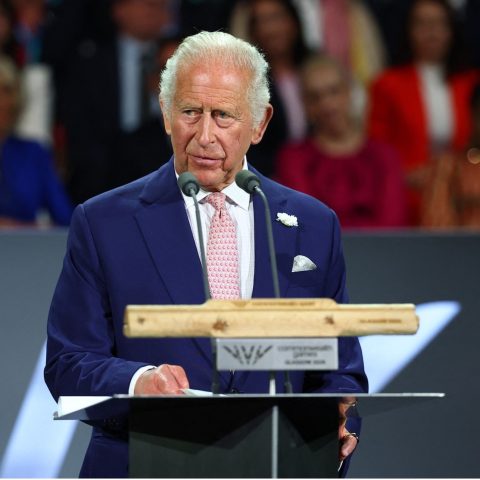
King Charles
The British government has ruled out paying any reparations though Charles, who remains the head of state of a number of Caribbean nations including both the Bahamas and Antigua and Barbuda, has previously expressed his sorrow about slavery.
As such, both reparations and apologies were a matter for the government, a palace spokesperson said.
“There are important discussions taking place in various fora about colonial legacy and the intergenerational impact of the transatlantic trade in enslaved persons,” the Buckingham Palace spokesperson said, adding the visit was coming at an important time in the relationship between Britain and Caribbean nations.
“The visit programme will therefore not shy away from ‘the darkest days of our past’, as his majesty has described them, but – in keeping with the wishes of our host nations – will principally be oriented to the vibrant present and promising future of each country.”
From the 15th to the 19th century, at least 12.5 million Africans were abducted and sold into slavery by European merchants, with Britain responsible for transporting an estimated 3.2 million people, making it the second most active European nation after Portugal.
Charles, who is head of the Commonwealth group of 56 nations – mainly former British colonies – encompassing some 2.7 billion people, has backed research into the British monarchy’s own historical links to the trade.
Last month, the Jamaican government also formally asked him to seek legal advice on whether Britain should pay reparations and said it was “encouraged” by the engagement of Buckingham Palace.
“It is important to note here the work his majesty himself has done over many years both to acknowledge the wrongs of the past and to find creative ways to right inequalities that endure,” the palace spokesperson said.
“As you would therefore expect, opportunities will be found during the visit to reflect and renew his personal, wholehearted, and continuing commitment to that process.”
In February, Commonwealth Secretary-General Shirley Botchwey told Reuters she expected its members to make progress towards beginning negotiations on reparations.
Source: Kaieteur News
(Kaieteur News) – Guyana and Uganda have moved to deepen cooperation in civil aviation with the signing of a Memorandum of Understanding (MoU) aimed at strengthening aviation safety, technical capacity and regulatory standards in both countries.
The agreement was signed on Thursday by Director General of the Guyana Civil Aviation Authority (GCAA), Lt. Col. (ret’d) Egbert Field, A.A., and Deputy Director General of the Uganda Civil Aviation Authority (UCAA), Mrs. Olive Birungi Lumonya.

The MoU was signed by Lt. Col. (ret’d) Egbert Field, A.A. for Guyana and Mrs. Olive Birungi Lumonya, Deputy Director General of the Uganda Civil Aviation Authority.
According to the GCAA, the MoU provides a framework for expanded technical collaboration, knowledge sharing and the adoption of best practices in the management, modernisation and maintenance of civil aviation systems.
The two aviation authorities are expected to collaborate in several key areas, including safety surveillance and oversight, aircraft certification, State Safety Programmes, Safety Management Systems, personnel licensing and training, aerodrome and airworthiness management.
The agreement also provides for cooperation in institutional strengthening, human resources development, as well as regulation and economic oversight of air transport.
Under the arrangement, Guyana and Uganda could exchange technical information and deploy experts and instructors for training programmes and technical missions. The authorities will also undertake studies and other joint initiatives aimed at strengthening their respective aviation systems.
The GCAA said each collaborative initiative will be supported by the resources and personnel agreed upon by the two parties.
The agreement also contains provisions governing confidentiality and intellectual property, while requiring all joint activities to comply with the laws and regulations of Guyana and Uganda.
Field described the agreement as a significant step towards improving aviation standards in both countries.
“This collaboration paves the way for improved aviation safety and operational excellence. Through this MoU, we are taking decisive action to raise the bar for civil aviation in both Guyana and Uganda,” he said.
The GCAA said the agreement represents a commitment by both countries to strengthen international cooperation and uphold high standards in civil aviation.
Source: Kaieteur News
(Kaieteur News) – The Forward Guyana movement has issued a strong call on the authorities to ensure that a criminal investigation involving Deputy Commissioner of Police Fizal Karimbaksh proceeds without delay, rejecting arguments that the absence of a constituted Police Service Commission (PSC) stalls legal action.
In a public statement issued Friday, the movement addressed growing concerns over whether high-ranking law enforcement officers can face criminal accountability during administrative voids.

Leader of Forward Guyana Movement, Amanza Walton
“Are we then to accept that a Deputy Commissioner of Police is above the law because the Government has failed to constitute the Police Service Commission? Certainly not,” Forward Guyana declared. “The absence of the Commission suspends disciplinary proceedings against officers of his rank. It does not suspend the criminal law. The criminal investigation must continue without delay.”
To highlight its point, Forward Guyana highlighted the speed with which state authorities have acted in other recent high-profile cases, specifically pointing to the maritime tragedy involving the MV Barima.

Deputy Police Commissioner, Fizal Karimbaksh
“The State has already shown how quickly it can act when it chooses to,” the group noted. “The MV Barima sank on 18th July. Within ten days, the Guyana Police Force had obtained the advice of the Director of Public Prosecutions and charged three crew members with murder. Whatever view one takes of those charges, the Police and the Director of Public Prosecutions demonstrated that a file can be investigated and reviewed in a matter of days.”
Forward Guyana argued that the same level of speed and diligence applied to the Transport and Harbours Department employees must apply across all levels of public office. “Three employees of the Transport and Harbours Department were charged within ten days. The State owes a Deputy Commissioner of Police no greater patience,” the group asserted, insisting that upon completion, the full investigative file must be submitted to the Director of Public Prosecutions (DPP) pursuant to Article 187 of the Constitution.
Addressing the operational leadership of the Special Organised Crime Unit (SOCU), Forward Guyana emphasised that administrative measures remain within the immediate authority of top police management.
“The Commissioner of Police commands the Force and assigns its officers. He can relieve Mr. Karimbaksh of command of SOCU, the unit in which the complainant served, without altering his rank or office and without any Commission,” statement urged. “That would be an operational decision, not a disciplinary one, and the Commissioner should make it today.”
Concluding its statement, Forward Guyana stressed the balance between fundamental rights and the rule of law. “Mr. Karimbaksh is entitled to the presumption of innocence. The complainant is entitled to the protection of the law. This Government has yet to show that it understands the second.”
Source: Kaieteur News
(Kaieteur News) – The Food and Agriculture Organization (FAO) is urging Guyanese to support local farmers and fishers and encourage young people to view agriculture as a sector of innovation, entrepreneurship and opportunity, as the country observes Agriculture Month 2026.
Under the theme, “Innovate, Nourish, Grow: Building a Strong and Sustainable Guyana,” this year’s observance is highlighting the transformation of Guyana’s agrifood systems and the growing importance of technology, research, mechanisation, precision agriculture and climate-smart practices.

FAO Representative in Guyana, Dr. Gillian Smith
FAO Representative in Guyana, Dr. Gillian Smith, said Agriculture Month provides an opportunity to recognise the contribution of farmers, fishers, agro-processors, agricultural institutions, communities, women, youth and other partners to the country’s food systems.
“This is an important month for all of us. It provides an opportunity to reflect on and celebrate the hard work and dedication of farmers, fishers, agro-processors, agricultural institutions, organisations, communities, women, youth and partners across Guyana,” Smith said.
She also highlighted what she described as Guyana’s leadership and strategic vision in advancing sustainable agricultural development across the Caribbean Community (CARICOM) region.
According to the FAO, agriculture extends beyond food production, playing a critical role in food security and nutrition, livelihoods, rural development, healthy communities and the sustainable management of natural resources.
The organisation said farmers across Guyana are increasingly adopting innovation and new technologies to improve productivity, strengthen resilience and contribute to sustainable development.

Shoppers at the Farmer’s market im Sophia
FAO said its work in Guyana is aligned with these priorities, including efforts to strengthen climate resilience, enhance agricultural value chains, promote digital innovation and support rural livelihoods.
The organisation is also placing particular emphasis this year on the contribution of women to agriculture and the wider food system.
FAO noted that 2026 has been designated the International Year of the Woman Farmer, providing an opportunity to recognise women working as farmers, fishers, processors, traders, beekeepers and rural entrepreneurs.
“From production and fisheries to processing, marketing and trade, women continue to help feed families, create livelihoods, strengthen local economies and support national development,” the FAO said.
The organisation is encouraging Guyanese to participate in Agriculture Month activities and become more aware of where their food comes from, while sharing agricultural knowledge and experiences.
It is also calling on consumers to support local producers by buying from farmers and fishers.
FAO said it remains committed to working with Guyana in developing sustainable, inclusive and resilient agrifood systems, while contributing to the Sustainable Development Goals.
The organisation said the Agriculture Month theme reflects the broader objective of achieving “better production, better nutrition, better environment and a better life” for all.
This version keeps the FAO attribution clear, gives the story a stronger local-news lead, and avoids making the release read like a straight institutional announcement.
Last week the Ministry of Agriculture announced that they are introducing a weekly farmers’ market at Sophia Market starting Wednesday, giving consumers access to affordable produce while helping farmers earn more from their crops.
Minister of Agriculture, Zulfikar Mustapha announced the initiative at the launch of Agriculture Month 2026 being held under the theme “Innovate, Nourish, Grow. Building a sustainable Guyana”.
He said the market would operate every Wednesday, alongside monthly farmers’ markets in various regions.
The initiative follows instructions from President Dr. Mohamed Irfaan Ali and commitments in the PPP/C’s manifesto.
“You are invited to go there, and you will have very cheap products,” the agriculture minister said.
He said the markets will help address concerns that farmers were not receiving a fair return for the time and effort they invested in food production.
“Farmers are early in the field, and late in the evening they are still in the field. But sometimes they are not getting the kind of reward that they have to get. We must now allow the farmers to get their benefit, get their reward,” he said.
The markets form part of a wider programme of activities for Agriculture Month, which will give citizens opportunities to engage directly with farmers and other participants in the sector.
The programme includes the inaugural Farmers’ Conference, the annual Honeyfest and World Food Day activities.
Minister Mustapha said the observances should reinforce efforts to build an agricultural sector that can withstand challenges, compete effectively and provide opportunities for a wider range of producers.
He called for continued collaboration to improve farmers’ livelihoods, strengthen communities and support Guyana’s contribution to regional food and nutrition security.
“The future of Guyana’s agriculture is filled with tremendous opportunities. Let us work together to seize these opportunities,” the minister said.
Source: Kaieteur News
Senior Energy Governance, Policy & Strategy Advisor; formerly Director of Geology and Geophysics, Trinidad and Tobago Ministry of Energy; Amoco Trinidad and BPTT Manager responsible for Exploration and Appraisal / Gas Field Development / Oil Production
(Kaieteur News) – Part I argued that before Guyana decides how large its next gas pipeline should be, or where it should land, the country needs an independently understood picture of what gas will become available, from which reservoirs, when it can be produced and under what constraints. That is only half of the problem. Once gas becomes available, Guyana has to decide what it wants those molecules to do.
The urgency is increasing. Government is reviewing the Field Development Plan and production-licence application for Longtail, described as the Stabroek Block’s first development centred heavily on gas production. Unlike the Wales Gas-to-Energy project, which uses associated gas already being produced with oil from the Liza developments, Longtail could mark a new phase in which gas itself becomes a principal development objective.

T&T Energy expert, Anthony Paul
The prospective market is also expanding. Government says the existing 12-inch Wales pipeline can transport up to 120 million cubic feet per day and is expected eventually to support 600 MW of power generation, alongside fertiliser, data-centre and other developments. A second, considerably larger pipeline is planned for Berbice, where petrochemicals, Natural Gas Liquids, power generation and other industrial activities are being considered.
Guyana is therefore moving from the question of whether it can use gas towards a more difficult one: which uses create the greatest and most sustainable national value?
Different users create different kinds of value and make different demands on the gas system. A fertiliser plant uses gas primarily as feedstock; a power station burns it as fuel; petrochemical developments may create pathways into further manufacturing; while a data centre primarily consumes electricity rather than gas itself. A million cubic feet committed to one use is no longer available for another.
Some industries create substantial employment or domestic supply chains; others are highly capital-intensive. Some substitute imports or earn foreign exchange, while others consume large gas volumes but employ relatively few people. Reliability requirements also differ, and a large fertiliser or petrochemical facility may depend on predictable feedstock for twenty or thirty years.
The policy question should therefore not be simply how much gas an investor wants, but what Guyana receives in return for committing part of a finite resource and the infrastructure required to deliver it. Revenue matters, but so do electricity cost, employment, foreign exchange, import substitution, domestic-company and supply-chain development, technological capability and opportunities for further downstream activity.
Trinidad and Tobago’s experience is useful here, although Guyana should not reproduce the T&T model mechanically. Natural gas supported electricity generation and became feedstock for ammonia, fertiliser and methanol; it helped underpin steel and other manufacturing; and ports, industrial estates, pipelines and supporting infrastructure developed around the gas economy. Local engineering, construction and operating capabilities expanded, while firms entered supply chains and later carried expertise into other countries. LNG eventually became another major outlet.
The significance was not simply the industries selected, but the attempt to extract several forms of national value from the same resource. Trinidad also provides the warning: industries built around expectations of abundant gas become vulnerable when the upstream resource can no longer sustain accumulated demand. Falling production then appears not merely as reduced upstream revenue, but as curtailed factories, idle capacity, weaker exports, employment pressure and underused infrastructure.
Guyana’s lesson is therefore not to be timid about industrialisation, but to keep industrial ambition grounded in a credible and continuously updated understanding of the resource base. The objective should not be to consume as much gas as possible, but to maximise sustainable national value from the gas available.
That leads to an institutional question which becomes more important with every additional project. The upstream authorities, including GGMC and MNR, concentrate on exploration, reservoirs and field development. The electricity sector focuses on generating capacity, reliability and tariffs; industrial policymakers seek investment and jobs; Finance considers expenditure and fiscal exposure; environmental agencies have their own responsibilities; and each private investor evaluates its own project.
Every institution can perform its mandate competently and the national gas system can still become misaligned.
Guyana therefore needs a continuing coordinating capability with access to the technical, commercial and economic information required to see the whole system, and the capacity to use it effectively. Capability means the knowledge, skills, judgement, experience and authority needed to make sound decisions. Capacity means having the organisational resources to apply that capability reliably and at the required pace: enough people and time, appropriate support staff, technology and data, and systems and procedures that turn individual expertise into repeatable institutional performance.
Governments sometimes confuse the two. A ministry may employ excellent professionals and still lack capacity if the same small group is reviewing field development plans, negotiating agreements, assessing infrastructure and handling routine regulatory demands. Effective capacity also depends on standard operating procedures, quality-control and review processes, internal risk-management and escalation systems, and retaining institutional knowledge rather than relying on a few individuals.
Nor does every surge in workload justify permanent recruitment. Some expertise must reside continuously within the State; other needs are episodic. A strong permanent core should be able to draw quickly on independent specialists and consultants when workload or expertise requires it, much as multinational operators routinely supplement their own teams.
At any point, somebody acting for the resource owner should know how much gas is available, how much is committed, what future supply is sufficiently assured to justify investment, how much pipeline capacity exists and how much prospective demand is contracted rather than merely proposed. The same institutional system must test what happens when reality departs from the plan. This requires more than an occasional inter-ministerial committee or a Gas Master Plan produced every few years; it requires enduring capability, sufficient operating capacity, reliable systems and flexible access to specialist expertise.
As the number of projects and institutional interfaces grows, that coordinating capability will increasingly need to operate as an owner-side programme-management function, giving Government a continuous view across schedules, risks, commitments and dependencies rather than relying on each project or agency to manage only its own part.
Guyana needs more than a catalogue of proposed projects. It needs a living national gas-development programme connecting subsurface resource assurance, field-development schedules, pipeline capacity, electricity demand, industrial development, gas pricing, financing and national capability.
Such a programme must be scenario-based. It should test what happens if associated gas remains necessary for reinjection longer than expected, if Longtail or another development produces more or less gas than forecast, if industrial projects proceed more slowly than planned, or if another discovery creates options that do not presently exist.
The purpose is not to predict the future perfectly. It is to avoid making long-lived infrastructure and contractual decisions as though only one future were possible. That matters before a second pipeline is committed, because Guyana is moving towards multiple sources of gas, competing users and infrastructure decisions that will shape industrial development for decades.
The question is therefore no longer simply whether another pipeline can be built to Berbice. It is whether it forms part of a coherent architecture in which the resource base, reservoir stewardship, power generation, industrial demand, pricing, infrastructure investment and national value have been considered together.
Guyana’s oil development has moved with remarkable speed, and gas development need not be made artificially slow. But speed and planning are not opposites. Good preparation allows a country to move quickly without repeatedly reopening fundamental decisions after infrastructure and contracts have already fixed the available choices.
The first pipeline asked whether Guyana could bring gas ashore. The next phase asks something more important: what does Guyana want the gas to do once it gets there, and who is responsible for keeping the whole system aligned?
Even with a good answer, another problem remains. Projects do not always arrive together, contracts distribute the consequences of delays, and governments may change direction after investments have been committed. That is where the next article begins: “When Gas Projects Fall Out of Step: Who Pays?”
Source: Kaieteur News
(Kaieteur News) – With the evolution of futuristic vehicle models especially premium EVs (Electric Vehicles) HSM Motors has teamed with GAC (Guangzhou Automobile Group Co., Ltd.) to commence a new era for Guyana’s automotive industry.
The new ear kicked off on Friday evening when HSM Motors officially launched GAC Motor and AION Electric Vehicles in Guyana at the Pegasus Hotel and Corporate Suites, Georgetown.

HSM motors Located at the corner of Red Road and Heroes Highway, East Bank Demerara (EBD)
Scores turned-up to view and even test drive a line of vehicles with a futuristic look and advanced technology satisfying the taste vehicle lovers and car fanatics.
Speaking with The Waterfalls prior to the launch CEO of HSM Motors, Mikhail Hosein said, “So GAC is actually a combination of three different brands you have GAC you have AION and you have HYPTEC”.
According to the CEO, his company unveiled six different models in Guyana.
“We gonna have under GAC, the EMZOOM, which is very sporty, we are gonna have the EMKOO” Hosein said while adding that for its EV Models launched in Guyana are the AION UT, AION D and the AION ES.

GAC’s EMZOOM &EMKOO models in the background
The sixth model is a premium EV model and is none other than a HYPTEC flagship model. “The HYPTEC looks very much futuristic and it comes with “gull wings door”, so the door opens sideways and up; it is definitely gonna be one of the best cars, it is premium luxury”, Hosein explained.
He continued “The AION UT is for economical every day drivers and the AION D is a little bit more premium a large SUV and its fully electric, The Aion ES is a sedan, if yuh looking for a fully electric sedan”
The GAC EMZOOM and EMKOO models, further explained Hosein are powered by full gasoline motors.

An Aion Model with a plush Burgundy finish
These six models of vehicles also come with one of the best warranty offers in the Caribbean.
“We are offering eight years and 160,000 kilometers bumper to bumper warranties on our Gasoline powered models and our EVs are eight years and 200,000 kilometers bumper to bumper warranties”, Hosein said before adding, “you can resell this car in 5 years and the customer that buying the car will also have warranty”
Apart the best Warranty in the Caribbean, Hosein pointed out that his company is bringing one of the top Chinese brands (GAC) to Guyana.
He said, “They are ranked on the Global fortune 500 company, they are ranked at 252”
“It is a very very powerful company, GAC manufactures all Toyota and Honda in China. They are known as the Toyota and Honda Manufacturer, so GAC is bringing that quality and durability here in Guyana with this launch”, Hosein added.
He posited too, “The Fact that GAC has a lineage since 2004 “, it brings an experience level of durability to its vehicles that other brands do not have.
For customers interested in being part of this futuristic experience, Hosein noted that they can visit his company’s office and showroom at the corner of Red Road and Heroes Highway to choose a model that suits their respective tastes.
“At HSM we have partnered with all of the banks here in Guyana Republic Bank GBTI, Demerara Bank, so financing is easily available for all customers” he revealed.
HSM motors will also help customers with registering their vehicles in a seamless process which will see them driving on the road in three days after purchase. For more information GAC representatives can be reached at: Address: Corner Red Road & Heroes Highway. Phone: 632-1068 Email: guyanagac@gmail.com. (SPONSORED)
Source: Kaieteur News
(Cricinfo) – Shai Hope spent the entirety of this seemingly never-ending match on the field, hobbling for the last third of his innings after having kept for 50 overs, and sealed West Indies’ highest-successful chase in ODIs days after they experienced the agony of losing despite scoring 405.
That West Indies chased down 352 with remarkable ease despite losing one of only five specialist batters to injury even before Hope started to struggle leaves us with a tantalising “what if”. Not to mention a controversial decision against Sherfane Rutherford, which necessitated an excellent innings of 44 from Keemo Paul, batting in the top five for the first time in ODIs.

Shai Hope became the first wicketkeeper-captain to score 150 in men’s ODIs (AFP/Getty Images)
This was the only time West Indies got to chase in this series, and the chase-friendliness of the conditions in New Chandigarh were even more stark. After the first 10 overs of the match yielded 28 for 2, with India deciding to challenge themselves by batting first after winning their third toss, the rest of the match produced 675 runs at 7.64 per over. Despite all the batting records India posted, including KL Rahul’s personal best in this ODI, their bowling in the absence of Jasprit Bumrah and Hardik Pandya will give them little confidence less than a year before the World Cup. What if they hadn’t won all the tosses and West Indies had got to chase sooner in the series?
Led by Hope’s 162 off 143, this was a superbly paced chase: the first time the asking rate went past eight an over was at the end of the 38th over. That was also the time when Hope was struggling with his fitness. Unable to put pressure on the fielders or manage the big hits, Hope went 42 balls without a boundary in this period. The bringing up of his 21st ODI century gave him little joy. Among his team-mates past and present, only Chris Gayle has more.

Amir Jangoo was the third-highest run-getter of the series with a tally of 239 at a strike rate of 136 (Associated Press)
However, much like Amir Jangoo had done for the second wicket, Paul dominated the scoring and made sure Hope could bide his time and aim to gather a second wind towards the end of the match. Paul had also taken the big wicket of Rohit Sharma on 92 in the 25th over, when Rohit was done with the struggle and threatened another big hundred. Had he got there, it would have been his third in four innings.
Rohit used all his experience after Jayden Seales, West Indies’ best bowler of the series, took out Shubman Gill and Virat Kohli in successive legal deliveries to reduce India to 4 for 2. Gill gloved one down the leg side, and Kohli missed a straight ball, losing his middle stump.

Jayden Seales removed Shubman Gill and Virat Kohli in his second over (BCCI)
India needed all the skill of Rohit and Rahul and then some given how batting seemed easy once the pitch settled down. It is remarkable that West Indies won not just despite the injuries and the questionable selection, but also despite at least six dropped catches, ordinary ground fielding and the bowling going to pieces when Rahul decided it was time to maximise the last few overs.
Rahul added 40 and 61 with debutant Anshul Kamboj and No. 9 Gurnoor Brar after executing a second rebuild of the innings when Rohit and the incredibly lucky Ruturaj Gaikwad, who was dropped four times, fell within 19 runs of each other. Gaikwad’s luck took a nasty lifter from Seales to end for 57 off 69.
Rahul stayed calm, went deep into the innings, and fully cashed in on the last three overs bowled with an extra fielder in the circle thanks to a tardy over rate. He scored 42 off the last 12 balls he faced as India took 50 off the last three overs. This was Rahul’s ninth ODI hundred, fourth in just 36 innings from No. 5.
If the dropped catches were not enough, one that stuck, from Naman Dhir who looked promising in his 30 off 21, injured the opening batter Jewel Andrew so badly that he had to go to hospital for scans. No fracture was revealed, but the pain was so bad it was decided Andrew would bat only if needed. As it turned out, he wasn’t.
Even though the returning Mohammed Siraj bowled last match’s centurion John Campbell with a wobble-seam ball early, the start from West Indies was good enough to stun India and the crowd. The revelation of the series, Jangoo, relished a move up to No. 3, getting to now exploit the field restrictions as well.
Dropped on 34 by Kohli no less, Jangoo scored 67 off 56 in a 109-run second-wicket stand with Hope. The pair batted with ease, hit others and milked Kuldeep Yadav for a run a ball, but a run-out off a misfield by Kohli ended Jangoo’s series at 239 runs off just 176 balls.
Just one wicket away from bowling allrounders and bowlers, having played a significant part in the run-out of Jangoo, Hope, 62 off 62 at this point, had to regroup if West Indies were to have any chance in the chase even though 202 in a little under 30 overs looked straightforward looking at how the last 60 overs had gone.
Hope responded with three fours in the next eight balls he faced. During this onslaught, India lost Brar momentarily to a calf injury. In his absence, Dhir did a decent job, but Hope kept getting the boundary whenever needed, the most notable one of them a straight back-foot six as a response to three straight dots to Dhir in the 26th over.
Rutherford joined the party soon enough but when given out on the field for 24 off 25 to make it 206 for 3 in 30 overs, the DRS review failed to convince the third umpire that the ball had not hit his bat even though replays did confirm the bat hitting the pad at the same time. The third umpire couldn’t see a “clear gap” between bat and ball needed to overturn the on-field call, but many an observer felt otherwise.
An ask of 146 in 20 overs with seven wickets in hand is a cakewalk in this era, but West Indies didn’t have Roston Chase, who was left out for Gudakesh Motie and still ended up spending half the bowling innings on the field after Vitel Lawes walked off injured.
Aided by Paul’s leg-glance-filled innings, Hope decided to take the game as deep as he could, even aware that India’s over rate was slow and that India would also need to bowl with an extra fielder in. Despite the slowdown in the intervening period once Brar came back to get the wicket of Paul, Hope made sure he was there and able to play a lone hand at the end.
The highest the asking rate got was 11.2 for the last five overs, and Hope was not getting much support from Motie at the other end. Hope had himself scored just 38 in the last 48 balls. Then he started to pull the trigger. After hitting a straight six off the first ball of Kuldeep’s last over, he achieved another small win by sweeping a wrong’un, a ball that had got him out in both the previous matches, for four.
India had to bowl the last four overs with the over-rate penalty in play, and it was their turn to go to pieces. Hope sliced a couple of fours off Brar in the 47th before Gill chose to bowl Kamboj in the 48th even though Siraj had two overs left. Kamboj looked to reprise his IPL method of going round the wicket and bowling wide yorkers to right-hand batters, but not only did he miss, he also bowled a no-ball to finally give Hope a helping hand now that he didn’t really need it.
Source: Kaieteur News

The queen and her court. Miss Amerindian Heritage 2026, Alliah Simon is surrounded by the runner up contestants of the pageant.
(Kaieteur News) – For the first time in the 25-year history of the Miss Amerindian Heritage pageant, the coveted crown was captured by Region Four delegate Alliah Simon. Simon, a native of St. Cuthbert’s Mission/Pakuri was crowned Miss Amerindian Heritage at the National Cultural Centre, on Wednesday, marking an incredibly proud moment for those involved.
The crowning moment encapsulated beauty, confidence, culture and heritage represented by each of ten delegates in the competition. Along with Simon the 1st Runner-Up prize went to Mariella Courtman of Region Two, Tracey Winters of Region Nine copped 2nd Runner-Up , 3rd Runner-Up: Laura Carvalho of Region 8 and 4th Runner-Up: Venezia Adrain of Region Five.

Alliah Simon made history as first delegate from Region Four to cop the crown the 25-year history of the Miss Amerindian Heritage pageant.
This year’s heritage queen is a biologist and a public relations / project management coordinator pursuing an MSc in Project Management. She is also a co-founder for the University of Guyana Indigenous Students Society.
In a congratulatory message to its co-founder, the Society said “Alliah has made us incredibly proud as she takes on this new title and platform. Her dedication to Indigenous representation, leadership and advocacy continues to inspire us all, and we are so happy to celebrate this well deserved achievement with her.”
“From being one of the driving forces behind UGISS to now representing Indigenous heritage on an even bigger platform, we are excited to see all that this new journey brings,” the society added.

Alliah Simon delivered a passionate performance during her talent piece.
The St. Cuthbert’s Mission/Pakuri Village Council joined in celebrating the win, In a Facebook post, the council announced that the entire community in celebrating a historic achievement.
In a message a new day dawns, “Our very own Alliah Simon has been crowned Miss Amerindian Heritage Queen 2026, marking a significant moment for our community and one that will be proudly remembered in our history.”
The council noted that the achievement is a source of immense pride for her family, our village and the wider Indigenous community. Alliah’s accomplishment represents the dedication, confidence, cultural pride and determination of a young woman who has carried the name of Pakuri with distinction.

Alliah Simon stunned during the evening gown competition.
The Village Council extended its heartfelt congratulations and best wishes to Queen Alliah on her outstanding achievement.
“As a community, we look forward to welcoming our Queen home and celebrating this historic occasion together.”
In other messages online, Simon was praised for her discipline, humility, resilience and willingness to learn. “Wear your crown with dignity, honour your heritage. And always remember the young woman who worked tirelessly behind that crown.
Now go forth and make your reign count,” one supporter urged.
Source: Kaieteur News




Discussion