https://kiskadeewatch.com/guyana/judicial-independence-must-not-mean-isolation-eastern-caribbean-cj-tells-ccj/







https://kiskadeewatch.com/guyana/judicial-independence-must-not-mean-isolation-eastern-caribbean-cj-tells-ccj/

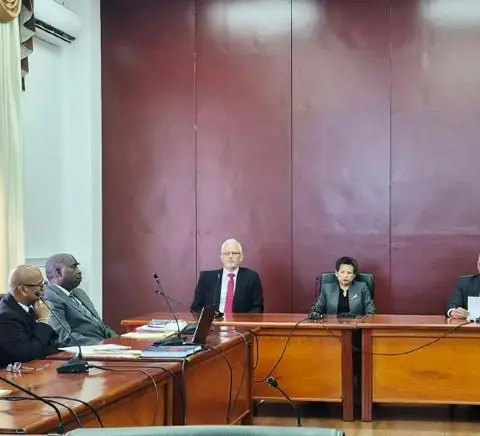
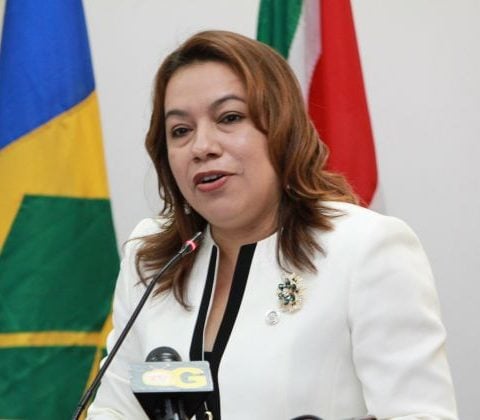
Chief Justice of the Eastern Caribbean Supreme Court, Justice Margaret Price Findlay yesterday urged the Caribbean Court of Justice (CCJ) to safeguard its independence while remaining engaged with the people it serves, saying constructive relationships with lawyers, governments and communities could strengthen public confidence.
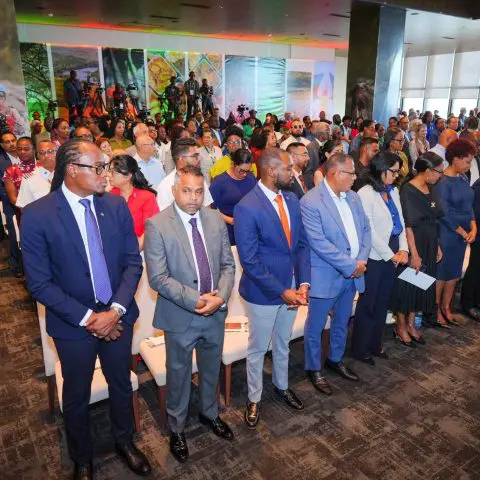
Speaking at the opening of the CCJ’s first itinerant sitting in St Lucia yesterday, which marked the commencement of its 2026–2027 judicial year, Justice Price Findlay said Caribbean citizens increasingly expected courts to deliver justice in a timely, transparent and responsive manner.
Drawing on the experience of the Eastern Caribbean Supreme Court, which serves several jurisdictions, she offered a pointed observation on the relationship between judicial independence and engagement.
“If we may impart any learning from our own experiences as a sub-regional judiciary, it is that while you safeguard your independence, let it not be in isolation,” she said.
There were valuable contributions to be gained from the legal profession, governments, academic professionals and the communities served by the courts, she added.
“Engaging constructively with these stakeholders will strengthen your court’s capacity to meet their needs and to bolster public confidence while observing the necessary constitutional boundaries that preserve the separation of powers”, she added.
Justice Price Findlay said technological and economic changes, together with evolving societal needs, were making the legal landscape increasingly complex. The CCJ therefore had to remain steadfast in its constitutional mandate while ensuring that its approach to justice kept pace with conditions across its jurisdictions.
She said the opening of a judicial year should involve more than preparing a schedule of hearings and judgments. It was also an opportunity to reconsider approaches in light of earlier challenges and build on the court’s successes.
The CCJ and the Eastern Caribbean Supreme Court faced common difficulties as regional judicial institutions, she noted, and could benefit from exchanging knowledge and experience.
She identified technological innovation, case management and changes to practice and procedure as areas in which the experience of one judiciary could assist another.
“Whether it be in relation to technological innovation, novel approaches to case management, or revisions to practice and procedure, our experiences as individual judiciaries can be useful and vicarious lessons for each other in tackling the many facets of the administration of justice,” she said.
Justice Price Findlay welcomed the decision to hold the sitting in St Lucia, saying it allowed citizens to experience in person the regional court at the apex of their judicial system.
St Lucia became the fifth CARICOM member state to accept the CCJ’s appellate jurisdiction in 2023. The court has previously held itinerant sittings in Barbados, Belize, Guyana and Jamaica.
The Chief Justice described the visit as an affirmation of the CCJ’s commitment to accessibility and its connection with regional communities.
She also acknowledged the staff of both courts who had worked over several months to prepare for the sitting, and expressed the hope that the new judicial year would bring renewed purpose, stronger regional relationships and continued judicial excellence.
Source: Kiskadee Watch
https://kiskadeewatch.com/guyana/mohamed-questions-bk-internationals-barima-salvage-contract/
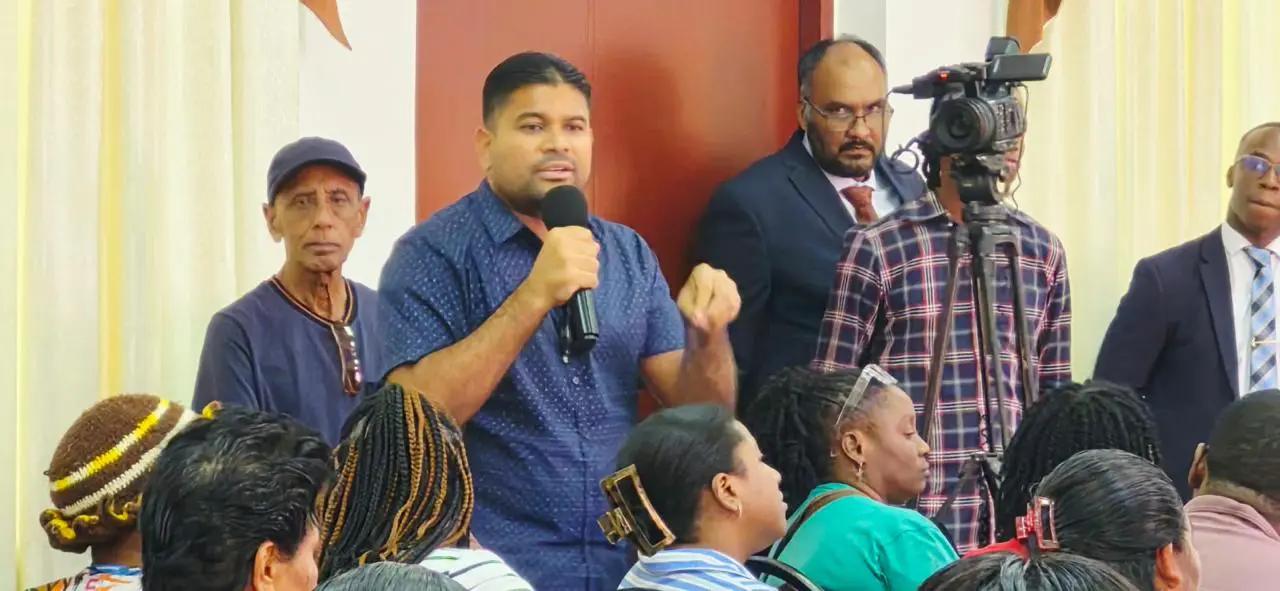
Opposition Leader Azruddin Mohamed yesterday demanded answers from the Commission of Inquiry (CoI) into the MV Barima disaster over the awarding of the contract to salvage the vessel to BK International, questioning the experience of the company and the process that was used in the selection.
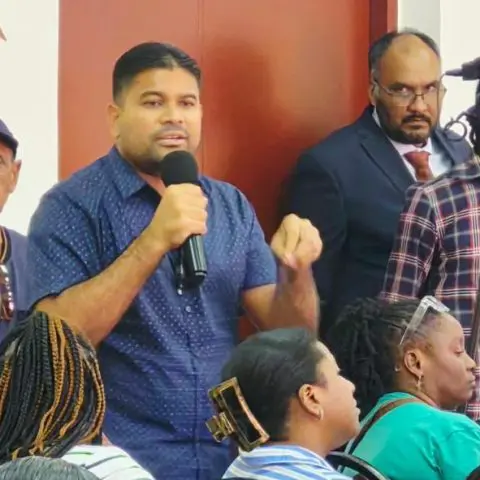
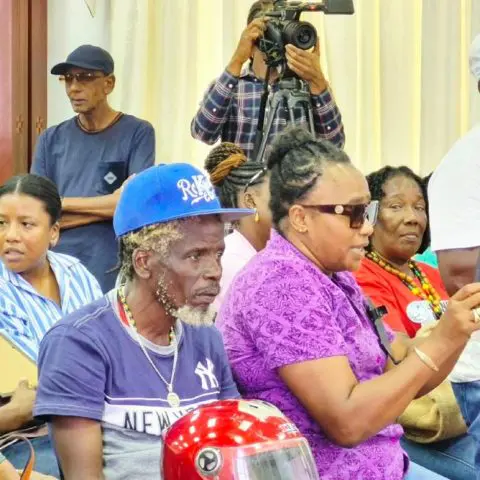
He raised the issue during an interactive session with relatives of victims and the commissioners at the Arthur Chung Conference Centre, Liliendaal, Greater Georgetown, where he also challenged the credibility and independence of the inquiry.
Mohamed questioned how long the salvage process had taken and queried when the contract was awarded, who secured it and what experience the successful contractor had in raising vessels.
He further questioned the circumstances surrounding the selection, suggesting that the contractor may have known it had secured the job before the award was publicly disclosed.He also pondered whether the company had the necessary experience to undertake the recovery of the MV Barima, which has remained underwater since the July 18 disaster.
Mohamed observed that the recovery of the vessel was critical to determining what happened and should take precedence before the inquiry proceeds further. “I think the CoI should hold off. Let us get the Barima first,” he remarked.
He questioned why the vessel, which he said was lying approximately 40 feet under water, had not yet been raised, particularly when Guyana’s offshore oil operations involve recovering resources from thousands of feet beneath the seabed. “We have Exxon pumping our oil 6,000 feet down. And now you are telling me we can’t float this boat?”
He said the vessel, which weighs approximately 500 tonnes, should be recoverable and that its continued presence under water posed a risk to evidence that could help establish the cause of the disaster.
Mohamed also expressed no confidence in the independence of the commissioners, raising concerns about possible connections of two commissioners to persons associated with the Government and questioning whether those relationships could affect public confidence in the inquiry.
Further, he called for the three men charged with 73 counts of murder in connection with the disaster to be released, noting that their continued detention could affect the commission’s ability to obtain information from them. “I’m worried you’re going to pin everything on the three men,” he said, adding that the men could be reluctant to provide information or documents while facing criminal charges.
Mohamed further called for $5 million in interim payments to each affected family, saying relatives continue to face significant financial and other hardships as they deal with the aftermath of the tragedy.
He said some families were struggling even to secure transportation to attend proceedings and other engagements connected to the disaster.
Mohamed also demanded that the commission’s final report be made public, arguing that Guyanese taxpayers are funding the inquiry and therefore have a right to see its findings.
“The report must be given to the people of Guyana,” he said.
The MV Barima sank on July 18 while travelling from Georgetown to Port Kaituma, resulting in the deaths of dozens of passengers and crew members, with several persons still unaccounted for.
Source: Kiskadee Watch
https://kiskadeewatch.com/guyana/ccj-filings-rise-40-justice-anderson-says-court-must-deepen-regional-reach/

Caribbean Court of Justice (CCJ) President Justice Winston Anderson yesterday reported a recent overall 40% increase in filings before the court and said the institution must deepen its reach and strengthen its impact after spending its first two decades building its foundations.
Addressing the opening of the court’s first itinerant sitting in St Lucia, Justice Anderson outlined plans to improve efficiency, modernise procedures and expand public access as the CCJ began its 2026–2027 judicial year.
“We have spent the first two decades building the Court. Now we must deepen its reach and strengthen its impact,” he said.
His address comes against the background of the public dispute arising from leaked correspondence among CCJ judges in August. The emails raised concerns about his leadership, consultation, judicial panel assignments and the handling of cases. Justice Anderson has rejected allegations of panel manipulation and improper influence.
Sitting with him in St Lucia are Justices Maureen Rajnauth-Lee, Denys Barrow, Peter Jamadar Chantal Ononaiwu, Chile Eboe-Osuji, and Arif Bulkan.
Yesterday, Justice Anderson did not directly discuss the controversy, focusing instead on the court’s work, accessibility and relationships across the region.
He said judicial independence and impartiality, technological innovation and a commitment to service remained central to its operations.
According to Justice Anderson, the court delivered 70 judgments in its appellate jurisdiction during the last judicial year, arising from appeals and special leave applications from the five states which use it as their final appellate court.
Since its establishment, he said, the CCJ had heard and determined more than 500 matters across its original and appellate jurisdictions.
He also reported that the court had delivered judgments in nine matters from St Lucia since that country accepted its appellate jurisdiction in 2023. These concerned issues including property rights, taxation, the detention of funds, judicial review and breach of contract.
Justice Anderson said there had been a 600% increase in judgments issued for St Lucia compared with a corresponding period when the country used the Judicial Committee of the UK Privy Council. He did not set out the underlying figures for that comparison in the supplied transcript.
The President acknowledged that other countries had not accepted the court’s appellate jurisdiction as quickly as had been hoped.
“The pace of accession to the appellate jurisdiction by other member states has not been as swift as we would have hoped,” he said.
Nevertheless, he maintained that the court had continued to develop Caribbean jurisprudence and provide accessible and efficient justice.
Looking ahead, Justice Anderson said nine appeals and 14 special leave applications were before the court in its appellate jurisdiction, while judgments had been reserved in eight matters.
“As the Court’s case load continues to grow, we will rigorously apply our case management and judgment delivery procedures to ensure the efficient and timely administration of justice,” he said.
He outlined measures intended to make the institution easier to use and its decisions easier to understand. These included an online payment system introduced in August, a redesigned website and a chatbot to help users find information.
The court had also introduced videos explaining cases before judgment delivery and summaries afterwards, while continuing to livestream hearings and publish judgments.
Justice Anderson said the CCJ’s travelling sittings were important to maintaining its connection with Caribbean people.
“When the Court travels, we are reminded that justice is not simply administered from the bench. It also requires us to remain connected to the people whom we have the privilege and responsibility to serve,” he said.
The visits allowed judges to engage with litigants, attorneys and other stakeholders, while providing opportunities to listen and learn.
The assurances about the court’s work follow the disclosure of internal correspondence which exposed disagreements over a proposed judicial dress code and wider concerns about its administration.
In his August response, Justice Anderson acknowledged removing Justice Eboe-Osuji from a panel hearing a preliminary application following a disagreement over courtroom attire. He maintained that the decision had nothing to do with the judge’s views and acknowledged that he might have handled the dress-code issue too forcefully.
The Organisation of Eastern Caribbean States Bar Association and the Organisation of Commonwealth Caribbean Bar Associations called for investigations into both the allegations and the disclosure of the correspondence, while reaffirming their support for the court.
The Regional Judicial and Legal Services Commission said the concerns should be addressed through established governance mechanisms and a transparent and independent review. It subsequently clarified that it had neither confirmed the allegations nor said that it had ordered a review. The court also changed its panel arrangements to require all judges to sit in matters unless excused for a legitimate reason.
Closing his substantive remarks yesterday, Justice Anderson said the court would enter the new judicial year with a renewed commitment to its mandate and service to the region.
Source: Kiskadee Watch
https://kiskadeewatch.com/guyana/president-urges-regional-transport-investment-warns-against-tourism-complacency/
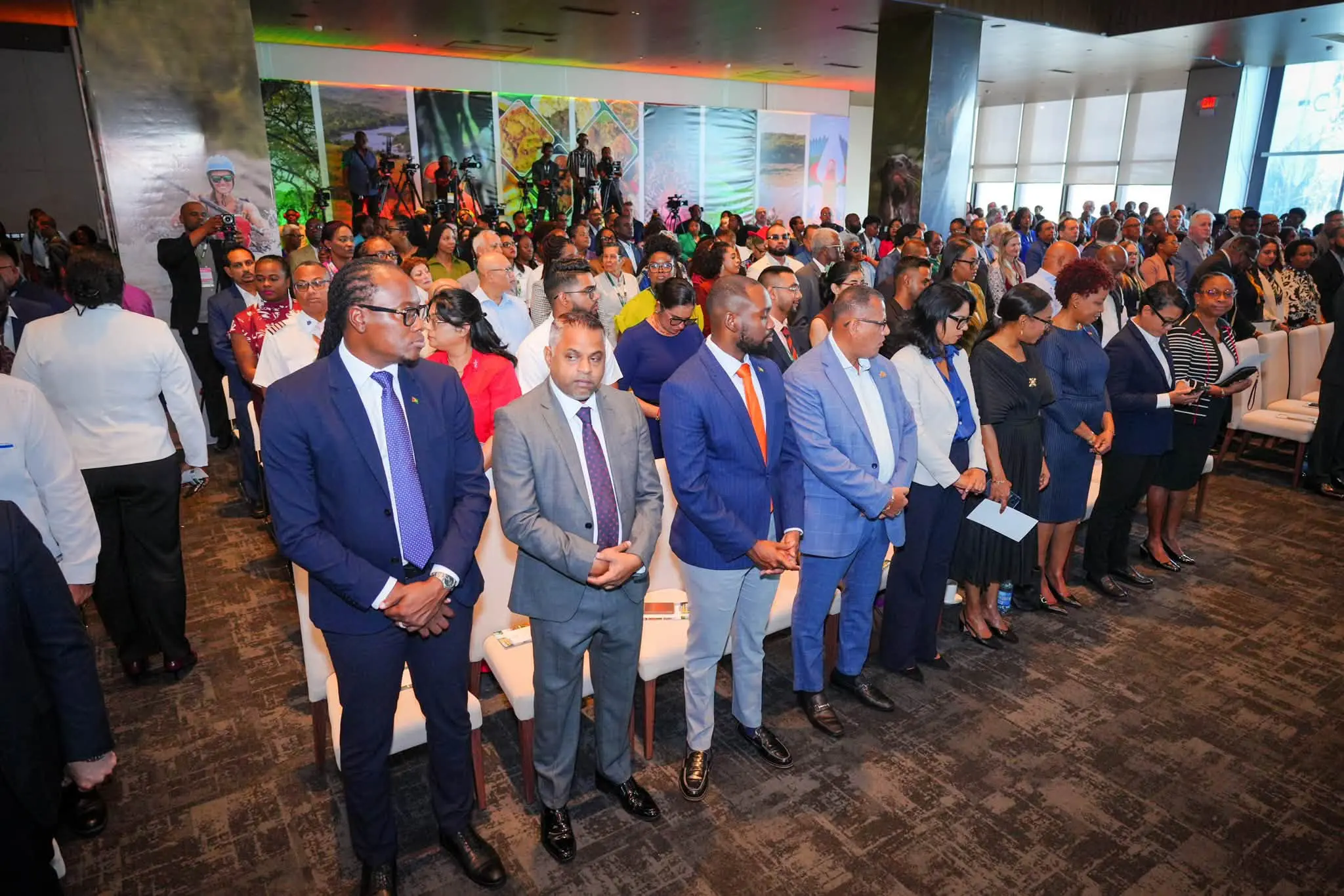
President Irfaan Ali yesterday urged Caribbean governments and investors to develop an integrated regional transport system and expand their approach to tourism investment, warning that the region’s natural attractions would not be enough to protect its competitiveness.
Addressing the opening of the Caribbean Tourism Organisation’s (CTO) State of the Tourism Industry Conference (SOTIC) in Georgetown, Ali called for a regional vision extending to 2035, supported by better connectivity, new partnerships and stronger preparations for disasters.
“For tourism to succeed, compete, and stay alive in this region, we have to scale up our thinking, scale up our infrastructure, scale up our commitment,” he said.
Guyana is hosting the conference for the first time under the theme “Tourism Futures: Smart, Sustainable and Inclusive”. The week’s activities run from October 5 to 9, with the main conference sessions on October 7 and 8.
Ali’s address was preceded by a rich cultural performance featuring Guyanese songs, dances and drumming, showcasing the country’s culture, creativity and diversity. The ceremonial opening took the form of tourism ministers bursting coconuts and tasting pieces of the flesh, in place of the customary ribbon-cutting.
Setting aside his prepared remarks at the outset, Ali said there needed to be a stronger connection among investment, investors and governments if Caribbean tourism was to withstand emerging challenges.
He identified transport links as a major regional disadvantage and said countries elsewhere were investing heavily in infrastructure to secure their place in the global tourism market.
“The only thing that can take us forward by scale is integrated infrastructure, starting with an integrated transport system,” he said.
Ali argued that visitors attracted to Caribbean beaches could also be interested in travelling to Guyana, Suriname or Belize, but the region needed the connections to make those combined experiences possible.
He also renewed his call for regional tourism branding to reflect the Caribbean’s forests, rivers and biodiversity alongside its island attractions.
The President warned that satisfaction with the region’s natural advantages could leave it poorly positioned for changes in visitor expectations and international competition.
“Our natural product and our natural beauty are important assets. But if we are complacent about the way we retool, reorganize, reorient, revalue, reposition this asset, we are not going to optimize its value in the future,” he said.
Drawing
Drawing a comparison with West Indies cricket, he said the region had once dominated that sport through its natural talent, but could not assume that an earlier advantage would endure without adaptation.
Much of his address examined investments in the Middle East and Latin America, which he said Caribbean policymakers and businesses needed to study more closely.
He pointed to luxury resorts, sports, entertainment, conferences, cultural attractions and digital tourism as areas receiving substantial investment. The region, he said, should consider partnerships with destinations whose financial resources made direct competition difficult.
Ali urged the CTO to help identify major international events which the Caribbean could collectively seek to host over the coming decade, with infrastructure developed around those objectives.
He also challenged investors to create new attractions, suggesting that Guyana could provide the land and scale for a world-class tropical forest night safari.
“We need the conference to deliver to the people of the region a vision to 2035, in which CTO places itself central to that vision, connecting to new partnership and new markets and integrating into those new partnership and markets,” he said.
Turning to Guyana, Ali cited the planned second terminal at the Cheddi Jagan International Airport, Timehri, proposed airports in Lethem and Berbice, road links and a deep-water port as elements of a connected development programme.
He said airports should themselves offer visitors an experience and communicate something about the destination.
“That is why we’re investing in Terminal 2, not only as a new terminal, but as a terminal that will tell the story of Guyana and where Guyana aspires to be,” he stated.
Stabroek News reported in February that the Ministry of Public Utilities and Aviation had invited proposals for the design, construction and financing of municipal airports at Rose Hall, Canje, and Lethem.
Ali also linked tourism development to Guyana’s efforts to position itself internationally through biodiversity. He said the country had applied to host COP in 2030 with CARICOM’s backing and would hold a second Global Biodiversity Alliance summit later this month.
The alliance was launched at an inaugural summit in Georgetown in July 2025. Stabroek News reported that its priorities included conserving land and marine areas, incorporating biodiversity into development planning, mobilising finance and supporting Indigenous peoples and local communities.
The President also criticised the region’s failure to make learning Spanish compulsory, saying this had limited its ability to build closer tourism links with Latin America.
Towards the end of his address, he turned to European visa procedures, criticising arrangements which required applicants to travel to Trinidad or Suriname to submit biometrics.
“In a day of digitization and AI, we have the EU that is operating from a Stone Age kind of operation,” he said.
Ali argued that the time and expense involved complicated participation in international conferences and were inconsistent with the opportunities offered by modern technology.
He said tourism’s recovery from the COVID-19 pandemic demonstrated the industry’s resilience, but that this now had to be reinforced through infrastructure, investment, partnerships and a coordinated regional strategy.
Source: Kiskadee Watch
https://kiskadeewatch.com/guyana/man-gets-21-years-for-murdering-cummings-lodge-woman/
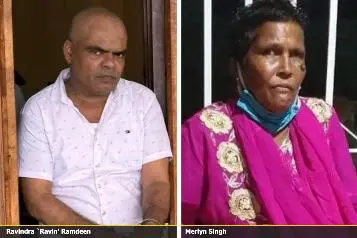
East Coast Demerara resident Ravindra “Ravin” Ramdeen has been sentenced to 21 years and four months in prison for the 2020 murder of 53-year-old Merlyn “Jean” Singh, with whom he was in a relationship.
Ramdeen, 57, was sentenced by Justice Priscilla Chandra-Hanif at the High Court in Demerara after pleading guilty to the murder, bringing an end to the case arising from Singh’s death at her Cummings Lodge home.
The court heard that Ramdeen, a father of four, and Singh were acquainted and had been in a relationship. The killing occurred between December 10 and 11, 2020, at Singh’s home at Lot 415, Eighth Street, South-East Cummings Lodge.
Justice Chandra-Hanif said the evidence showed that Ramdeen and Singh initially engaged in consensual sexual activity.
Afterwards, the two spoke and Ramdeen indicated that he wanted to have sex with Singh again. When she refused, the judge said Ramdeen grabbed her, causing her to strike her head.
He then placed his hands around her neck to prevent her from calling out and proceeded to have sexual intercourse with her while choking her.
Ramdeen subsequently left the house, leaving Singh unconscious and without rendering assistance.
Singh’s lifeless body was later discovered in her bedroom.
The judge said the violence caused Singh’s death, with the post-mortem establishing manual strangulation and head trauma as contributing causes.
Ramdeen was arrested and charged with murder before being brought before Magistrate Alisha George at the Sparendaam Magistrate’s Court. As the charge was indictable, he was not required to enter a plea at that stage and was remanded to prison before eventually being committed to stand trial at the Demerara Criminal Assizes.
During the sentencing hearing, defence attorney Ronald Bostwick urged the court to consider Ramdeen’s guilty plea, personal circumstances and lack of previous convictions.
Bostwick described Ramdeen as remorseful and said there had been no animosity between him and Singh. He also highlighted Ramdeen’s difficult upbringing, noting that he began working at a young age following the separation of his parents.
Ramdeen had maintained steady employment and most recently worked as a security officer.
Bostwick further submitted that Ramdeen’s actions stemmed from selfishness arising from his desire to have sex when Singh did not want to. He asked the court to consider those circumstances when determining the sentence.
Ramdeen also addressed the court and expressed remorse.
“I want to say I’m sorry about the whole situation. I should have known better,” he told the court.
He said he had spent years in prison trying to rehabilitate himself and become a better person, and appealed for leniency because of his children.
“I love my family very much,” Ramdeen said, asking for an opportunity to return to society and be a responsible father.
Singh’s brother described her as a loving and caring person, saying it hurt him to know that Ramdeen, who was acquainted with their family, had raped and killed his sister.
State prosecutors Aleria Heywood and Nelissa Peterkin urged the court to impose a substantial sentence, emphasising the seriousness and prevalence of rape and the circumstances surrounding Singh’s death.
They maintained that the killing occurred in the course of a sexual assault and pointed to the cause of death and the violence inflicted on Singh.
The prosecutors also rejected Ramdeen’s account that Singh enjoyed being choked, insisting that the evidence established that she was murdered.
In determining the sentence, Justice Chandra-Hanif placed significant emphasis on the circumstances surrounding Singh’s death and the sexual violence that preceded it.
The judge said the case involved the violation of Singh’s bodily autonomy and her right to refuse sexual activity.
“Sexual violence accompanied by fatal violence requires emphatic denunciations,” Justice Chandra-Hanif said.
She added that the sentence must make clear that “a person’s refusal of sex is imperative” and that force, coercion and violence would not be tolerated.
The judge found that Singh’s refusal was clear, yet Ramdeen used significant force against her. She noted that the violence began after Singh refused to engage in further sexual activity and ultimately resulted in her death.
Justice Chandra-Hanif also considered the sustained nature of the strangulation and the head trauma suffered by Singh. The fact that the violence occurred inside Singh’s home, where she was entitled to feel safe, was also treated as an aggravating factor.
Another aggravating factor was Ramdeen’s conduct after the attack.
The judge noted that he did not seek assistance for Singh despite observing that she was unresponsive.
Justice Chandra-Hanif adopted 35 years as the starting point for the sentence, having regard to the seriousness of the offence and the aggravating circumstances.
She then deducted three years for mitigating factors, bringing the sentence to 32 years.
The judge subsequently applied a one-third reduction for Ramdeen’s early guilty plea, amounting to a further deduction of 10 years and eight months.
The final sentence was therefore 21 years and four months in prison.
The time Ramdeen has already spent in pre-trial custody is to be deducted by the Guyana Prison Service.
Source: Kiskadee Watch
https://kiskadeewatch.com/opinion/letters/cheddi-jagan-was-the-central-figure-in-the-october-5th-story/
Dear Editor,
From October 5, 1992, and the present, many Guyanese are only vaguely familiar with the story about October 5,1992, its antecedents and that it was Cheddi Jagan who was the central figure at the time and up to his passing as President in March 1997.
Many nowadays may recognize the value of free and fair elections and why democracy matters, but few can recall the details and even fewer would recognize that October 5th and the events that followed thereafter are central to our country’s contemporary political history.
Evidential and scientifically-based poll-findings are rarities in Guyana. Take for example the question; how many young people in Guyana have an interest in politics and know about Cheddi Jagan and the role he played in the struggle for national unity, our country’s independence, the protection and maintenance of Guyana’s territorial integrity and national sovereignty and a foreign policy based on peaceful co-existence, the right of nations to self-determination, mutual respect and rule of international law.
Surely, these are historical facts and principles we must live by and even take to our graves. The story about Jagan’s fight for Guyana’s freedom documented in ‘The West on Trial’ must be told over and over again to each and every generation just as the epic stories about Buddha in the Jatakas, about Ram in the Ramayana, about Jesus in the Bible and about Mohammed in the Quran. In each of them, there are stories about mortals and immortals that must never stop being told.
The tenuous grasp of the meaning and significance of Jagan’s contribution to the realization of October 5th is regrettable if unsurprising, given that only thirty-four years have passed, since that epochal event and more-so, since Jagan’s call for a New Global Human Order was made to help deconstruct the deplorable state of affairs prevailing in the world today.
To visualise the story behind October 5th, one would have to create an interactive time-lapse map of Jagan’s and the PPP’s years of struggle for Guyana’s freedom, independence, and democracy, interrupted only by utopian, unrealistic and inapplicable economic and social experimentations, persistent rigged elections and dictatorial rule that delayed Guyana’s ability to carve out for itself what should have been a progressive and un-interrupted march towards peace and social progress. Instead, we lost many valuable years.
In retrospect, it was perhaps destined for us as a nation to pass through the chequered stages of our nation’s political history.
But in the final analysis, it is perhaps, better for us to be faithful to the past in which Jagan stood out as the primus inter pares in the pro-democracy struggles and the country’s political life steeled in the conviction that an informed populace is essential to democracy.
Good history makes for good citizenry. A history that glosses over the real hero and heroes of the struggle for freedom, independence and national democracy is partial, in both senses of the word. It misleads people about the past and misinforms their debates about the present.
While continuing on the current path characterized by an impressive but transformative developmental trajectory, and, as we chart a course for the future, we Guyanese would do well to put our country back on the map as one that stands in firm solidarity with the oppressed and suffering peoples of the world especially those of Cuba, Haiti and Palestine.
As Jagan had unforgettably pointed out; “In our international relations, we should maintain a balance between conformity and transformation. While we are under pressure to conform from external forces which have their own agendas, at the same time, we have our own ideas and principles based on a well thought out vision of a world order in which small developing states like Guyana will have a clearly defined place and role in the sun.”
Yours faithfully,
Clement J. Rohee
Source: Kiskadee Watch
https://kiskadeewatch.com/guyana/man-pleads-guilty-to-attempted-murder-in-kwakwani/
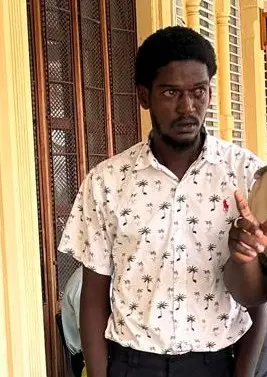
Earlon “Orlando” Towler yesterday pleaded guilty to attempting to murder Lancelot Captain during a November 2024 stabbing in Kwakwani.
Towler appeared before Chief Justice Navindra Singh, represented by attorney-at-law Clyde Forde. State Counsel Christopher Belfield and Praneta Seeraj represented the prosecution.
He was indicted for attempting to commit murder. An alternative charge of wounding with intent was withdrawn.
According to the agreed facts, Towler and Captain were consuming alcohol at a Kwakwani ball field on November 2, 2024, when Towler took Captain’s drink, slapped him and left.
Captain later went to Towler’s residence, complained to Towler’s mother and asked her to tell Towler to stay away from him.
As Captain walked home, Towler allegedly approached him from behind and stabbed him twice in the back. A scuffle followed as Captain tried to retrieve the knife, during which he sustained eight additional stab wounds.
Captain collapsed and was taken to Kwakwani Hospital before being transferred to the Linden Hospital Complex. He was transferred to the Georgetown Public Hospital on November 5, 2024, where he underwent surgery.
A medical report listed five stab wounds to his back, one each to his right and left shoulders, one to his left forearm, one to the left lateral aspect of his thorax and a penetrating wound to his right thoracic region. The injuries were deemed life-threatening.
Towler was arrested on November 2, 2024.
Before accepting the plea, the court questioned Towler about his understanding of the charge and the consequences of pleading guilty. He initially said he did not know what was happening, claimed Captain had attacked him first at the ball field, and said he was being forced to plead guilty because his attorney had told him to do so.
After further questioning, Towler confirmed that the agreed facts were true, that he understood he was giving up his right to a trial and that he wished to plead guilty. He also confirmed that he had not taken any drugs, alcohol or medication that could affect his understanding.
The court was told that Forde advised Towler that the offence carries a maximum sentence of 15 years and that his guilty plea, probation reports and evidence of remorse could be considered during sentencing.
The court accepted the plea.
Towler is scheduled to be sentenced on November 16, 2026, before Chief Justice Navindra Singh.
Source: Kiskadee Watch
https://kiskadeewatch.com/guyana/exxon-to-undertake-pipeline-maintenance-off-crane/

—further testing needed to determine nature of issue
ExxonMobil Guyana yesterday announced that it will undertake maintenance on a near-shore section of the Gas-to-Energy pipeline off Crane, West Coast Demerara, to address an unspecified finding identified during inspections earlier this year.
The work is scheduled to begin on October 14 and continue until around December 1, ahead of the start of Gas-to-Energy operations.
Asked in the company’s media WhatsApp group what the “finding” referred to in the statement was, Keisha Gilkes, Media Relations Advisor in ExxonMobil’s Public and Government Affairs department, said: “Further testing and evaluation will be done to confirm the exact nature of the issue.”
The company’s statement did not describe the finding or explain what maintenance would be required. It also did not indicate whether the work is related to the bubbling highlighted by Opposition Leader Azruddin Mohamed in July, when he alleged that the pipeline had ruptured.
ExxonMobil said the pipeline is currently pressurised with nitrogen, an inert gas, and is not yet operational. On that basis, the company said it poses no risk to the public or the environment.
“The work will address a finding on a near-shore section of the pipeline identified by inspection activities earlier this year, and is part of our commitment to maintaining the safety, integrity and reliability of the infrastructure,” the statement said.
It added that the activities would be conducted in accordance with international standards and would help ensure the pipeline’s long-term integrity.
“We aim to complete this work before startup of Gas-to-Energy operations to minimize potential for maintenance interruptions in the future,” ExxonMobil stated.
The company said it is coordinating with relevant stakeholders and that the Maritime Administration Department (MARAD) would issue a marine notice providing information for vessels operating in the area.
Kiskadee Watch reported on July 10 that Mohamed had released videos from a boat approximately two miles off the Marriott Hotel in Kingston. He alleged that the pipeline had been ruptured for more than three months and accused the government of concealing the matter.
Mohamed claimed that bubbling on the water’s surface marked the pipeline’s location. He questioned its placement in an area traversed by vessels and the adequacy of feasibility studies, while raising concerns about what could happen if damage occurred once natural gas was flowing
In a joint response, the Environmental Protection Agency (EPA) and MARAD rejected the rupture allegations but acknowledged a “slight anomaly” which they said had been investigated. They said the line was not operational and contained no natural gas.
The agencies also disclosed that ExxonMobil had been conducting scheduled inspections since May, involving five vessels along the West Coast of Demerara. Further checks were continuing to confirm the pipeline’s integrity, they said.
Former EPA Executive Director Dr Vincent Adams subsequently told Kiskadee Watch that the reported anomaly warranted an independent investigation and scrutiny of emergency preparedness before natural gas was introduced into the line. He warned that an incident during gas operations could have more serious consequences than one involving nitrogen.
The pipeline is intended to transport associated natural gas from the Liza offshore development to Wales, West Bank Demerara, to supply a 300-megawatt power plant and a natural gas liquids facility.
Source: Kiskadee Watch
https://kiskadeewatch.com/guyana/business/colombians-scouting-investment-opportunities-here/
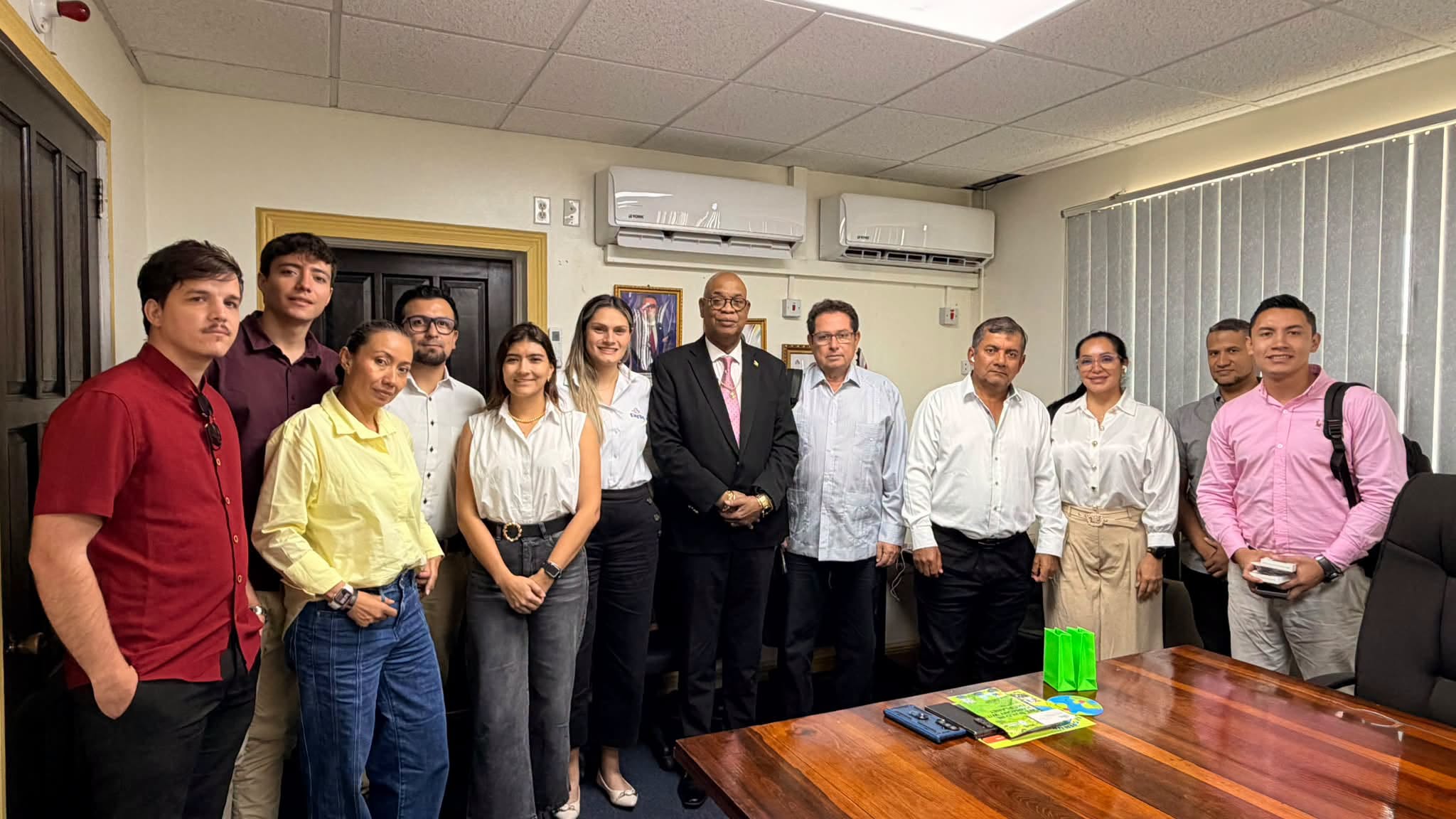
A delegation from the Guyana-Colombian Chamber of Commerce yesterday paid a courtesy call on the Minister of Public Works, Juan Edghill, to discuss potential investment opportunities and strategic collaboration across Guyana’s construction landscape, recycling sector, and related infrastructure industries.
During the engagement, chamber representatives presented their members’ key areas of interest and technical capabilities, according to a release from Edghill’s office.
In response, Edghill outlined Guyana’s public procurement framework and the required tendering procedures for international companies seeking to participate in national development projects.
Edghill stated that the Government of Guyana remains fully open to integrating additional, reliable suppliers and contractors into the local market. He stressed that expanding the vendor pool is critical to upholding strict quality standards and delivering maximum value on public infrastructure executed for the Guyanese people.
Encouraging the delegation to move from interest to concrete action, Edghill highlighted the timing of their visit:
“You are now in Guyana at a good time. We [Government] are finalizing the budget for 2027. Follow along closely and from there, you will have a clear idea of how to best invest and play a meaningful role in Guyana’s development. Many delegations visit, but it is critical to move from conversations to formal proposals to determine how your expertise aligns with what Guyana needs”, he said.
Source: Kiskadee Watch
https://kiskadeewatch.com/guyana/forensic-toxicology-training-under-way-for-cops-others/
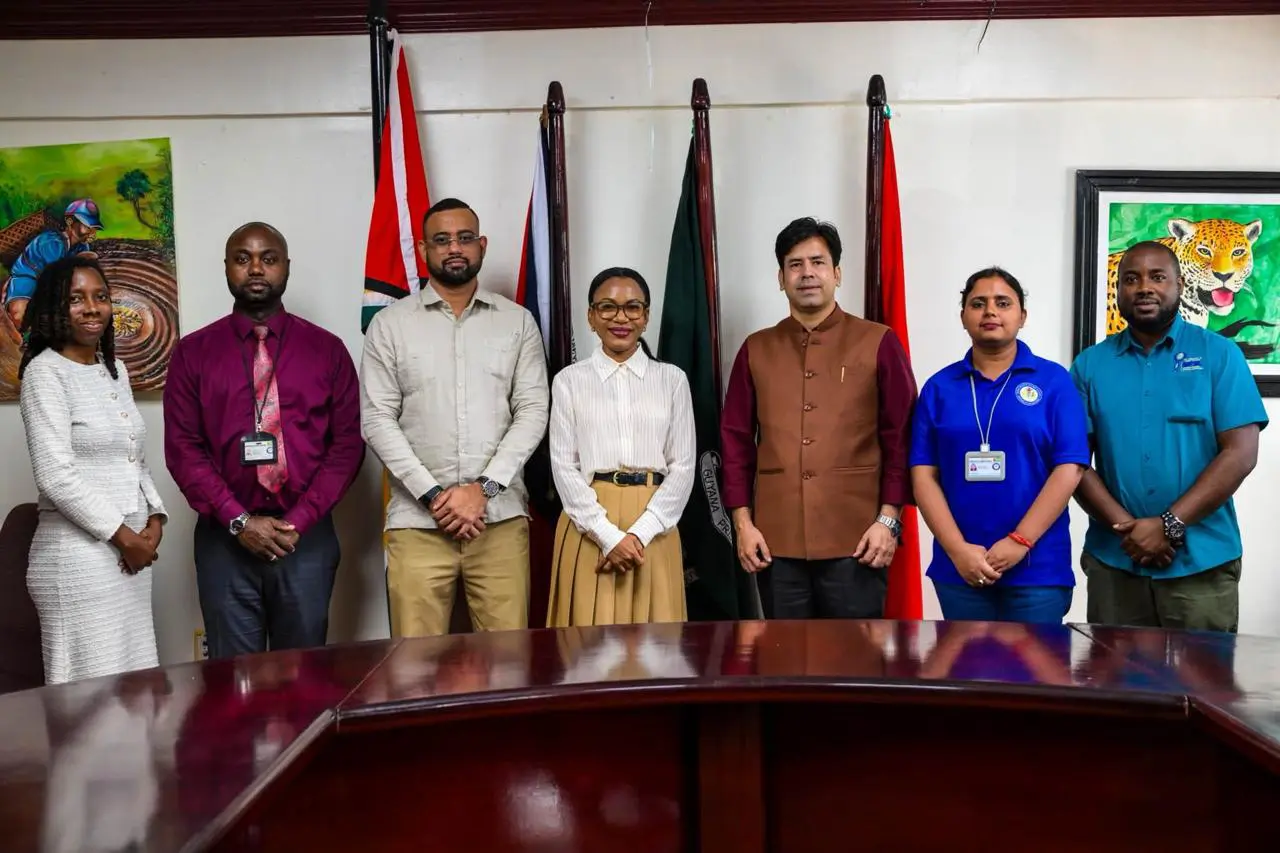
Nine persons from the Guyana Police Force and the Guyana Forensic Science Laboratory are undergoing a four-week training programme aimed at expanding local forensic toxicology testing and reducing the time investigators wait for results, Home Affairs Minister Oneidge Walrond said yesterday.
In a post on her Facebook page, Walrond said the programme is being conducted in collaboration with India’s National Forensic Sciences University. Three police personnel and six laboratory staff are participating.
The training builds on toxicology testing already undertaken in Guyana and is intended to reduce the need to send samples overseas.
Forensic toxicology can help establish whether drugs, alcohol, poisons or other substances are connected to a crime or death. According to the post, faster results could assist investigators in determining what occurred and moving cases forward.
“Behind every forensic result is an investigation, and often a victim or family waiting for answers. The longer investigators wait for critical evidence, the longer a case can take to move forward,” Walrond said.
“We are building the expertise here in Guyana so that more testing can be done locally and results can be available sooner. That means stronger investigations, better evidence before the courts and a justice system better equipped to deliver timely outcomes.”
The programme also brings investigators and laboratory personnel together to strengthen the collection, preservation, analysis and use of evidence.
Walrond said the training forms part of the government’s wider efforts to strengthen forensic capabilities and support criminal investigations with timely and reliable scientific evidence.
Source: Kiskadee Watch




Discussion