https://kiskadeewatch.com/opinion/letters/an-important-record-of-nationalisation-has-been-restored/
An important record of nationalisation has been restored
Dear Editor,
A nation’s institutional memory is important. In the 1970’s a wave of nationalisation swept across Guyana. The assets of Alcan, Jessel and Bookers were acquired by the State. The Canadian company Alcan operated in the bauxite sector. JesselSecurities had various holdings and assets, among them the iconic Sandbach Parker building on Water Street, which later housed the administrative offices of the Guyana National Trading Corporation (GNTC). Bookers was, of course, the behemoth; dominating the sugar industry through its estates and having its flagship store on Main Street.
My father played a key role in the nationalisations and he wrote a record of the negotiations with Bookers. At the time, it was meant to be a confidential government document and so, for decades, it was largely unknown. Moreover, what was available was a single copy, its pages faded and the text blurry, difficult to read. Earlier this year, through the initiative and industry of Mr. Christopher Ram and a small group of law students, the manuscript was reconstructed and reprinted in crisp, clear type. Nothing was changed in terms of the content.
On May 25 this year, at the University of Guyana, there was a Commemorative Service to mark the 50th year of Dr. Shahabuddeen’s “Nationalisation of Bookers: On the Legal Front”. I was invited to make some brief remarks at the event. Here is a link to a short video of my speech. It is self-explanatory and it tells you more:
At the UG event, four copies of the reconstructed record were donated; one to the University of Guyana Library, one to the National Library, one to the Walter Rodney National Archives and one to the Attorney General’s Chambers. On June 14 this year, Mr. Ram did an excellent review of the book on his blog. Here is the link:
Sincerely,
Sieyf Shahabuddeen







Source: Kiskadee Watch
Schoonord mother fears for life after fifth arson attack
https://kiskadeewatch.com/guyana/schoonord-mother-fears-for-life-after-fifth-arson-attack/
Schoonord mother fears for life after fifth arson attack
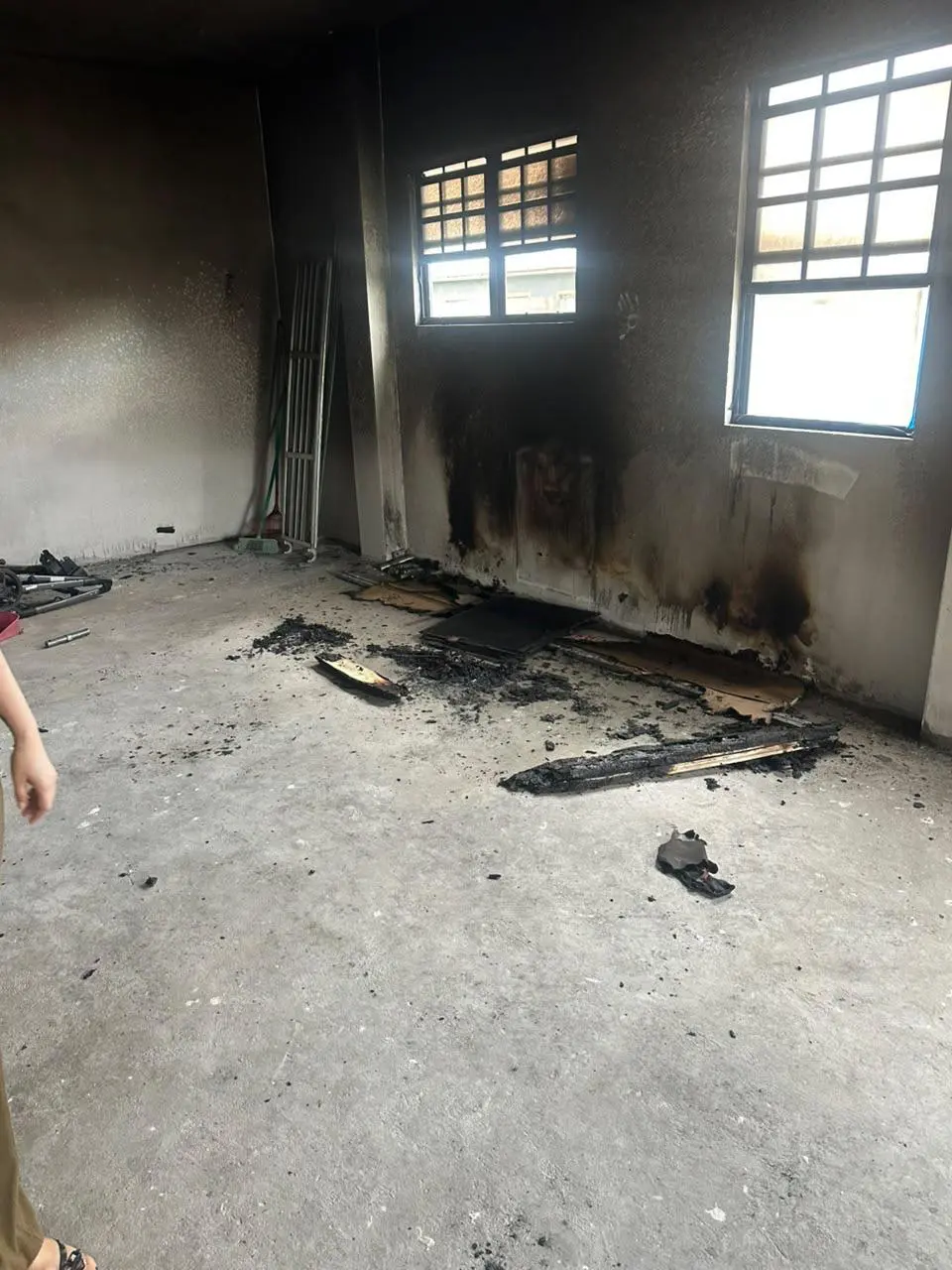
-former partner is prime suspect
A 29-year-old mother of one says years of abuse, threats and attacks by a former partner have left her living in fear that the violence could eventually cost her life.
The latest incident occurred at about 3:43 a.m. on Sunday, when an unfinished home being built for the mother and child at Schoonord, West Bank Demerara, was set on fire.
A source told Kiskadee Watch that the latest incident is suspected to be connected to the mother’s former partner, a 39-year-old major state contractor who is currently out of the country.
Efforts by Kiskadee Watch to contact the man for a response to the allegations were unsuccessful.
The source said the latest fire has heightened fears that the situation is escalating beyond attacks on property.
“Whenever he do this thing, he leave the country. He don’t be here. He’s an American,” the source said.
The source said there is now fear that the attacks could eventually be directed at the mother herself.
The Schoonord fire is being described as the fifth arson attack involving the mother or members of the immediate family.
On August 24 and 28, 2025, separate fires targeted the Middle Road, La Penitence home of the mother’s 78-year-old grandmother, where the mother’s disabled mother also lives.
The source said fires were set at the entrance gate on both occasions, creating fears that occupants could have been trapped inside.
Reports were subsequently made at the Ruimveldt Police Station.
Minibus
The source said another incident occurred in August 2025 when a minibus belonging to a brother-in-law was completely destroyed by fire at La Grange, West Bank Demerara.
Later that same night, after family members returned home from checking on the burnt vehicle, another vehicle used by the family was set on fire outside the residence.
The source said the family managed to extinguish that fire before the vehicle was completely destroyed.
The attacks form part of what the source described as a much longer pattern of physical, verbal and psychological abuse during and after a six-year relationship.
The source said multiple reports were made to police, senior law enforcement officials and child protection authorities.
The source confirmed that reports were made to the police and said there is still an expectation of meaningful intervention.
The source also said a court-issued restraining order was obtained in March 2026 but alleged that the order has been breached repeatedly without effective intervention.
The source further alleged that the former partner’s wealth, status as a major contractor and political connections have made it difficult to obtain protection.
Concerns were also raised about alleged connections to government officials.
Determine
The source said assistance was sought from several influential persons, including Opposition Leader Azruddin Mohamed, who reportedly indicated that time was needed to determine how the matter could be addressed and that efforts were being made to assist.
The source also raised concerns about the response of officials responsible for domestic violence and child protection.
The Opposition Leader’s statement questioned the response of Minister of Human Services and Social Security Dr. Vindhya Persaud and Minister of Home Affairs Oneidge Walrond, asking how many more women must report threats, endure abuse and live in fear before meaningful action is taken.
The source also alleged a series of surveillance and intimidation tactics. According to the source, mechanics discovered hidden microphones and GPS tracking devices spliced into the dashboard wiring of a Toyota Tacoma.
The source said the surveillance equipment was connected to secondary batteries, allowing the devices to continue operating even when the vehicle was switched off.
The source further alleged that pen-style recording devices were planted inside the home. There are also allegations that private WhatsApp messages, phone records and SIM-card information were accessed through contacts at local telecommunications providers, and that fake TikTok, Instagram and Facebook accounts were created using the mother’s name.
In another incident, the source said the former partner entered the kitchen, picked up a meat cleaver and damaged the truck, smashing the windshield and side mirrors.
The source also alleged that a physical assault occurred on a bed while the infant child was present.
In another frightening incident, the source said remote vehicle kill-switches were activated while driving at night, leaving the mother stranded on public roads.
The source further alleged that the former partner repeatedly took the child without consent for weeks at a time, including taking the child across international borders to Suriname, Brazil and the United States.
The source said assistance was sought from the Child Care and Protection Agency, immigration authorities and police, but the complaints did not result in the protection being sought.
Equal rights
According to the source, an officer repeatedly stated that both parents had equal rights and required arrangements to accommodate the child’s father.
The source also alleged that during an intervention at the Child Care and Protection office, $300,000 had to be paid to replace vehicle tracking wires that had been removed before the child could be retrieved.
The source said direct reports were also made to senior commanders within the Guyana Police Force and other high-ranking officials.
Despite those reports and the restraining order, the source said fear remains that another attack could occur.
The situation has now prompted calls for an independent investigation into how the complaints were handled.
Opposition figures, including Shadow Minister for Human Services Natasha Singh, are calling for an investigation into the conduct of Division 4A police officers and the Child Care and Protection Agency.
Questions are also being raised about the responsibility of the Ministry of Human Services and Social Security particularly in relation to allegations that persons with significant business and political connections can evade accountability while victims of domestic abuse struggle to obtain protection.




Discussion
Source: Kiskadee Watch
Bharrat appointed to EITI Board to represent Latin America, Caribbean
https://kiskadeewatch.com/guyana/bharrat-appointed-to-eiti-board-to-represent-latin-america-caribbean/
Bharrat appointed to EITI Board to represent Latin America, Caribbean

Minister of Natural Resources Vickram Bharrat has been appointed to the international Board of the Extractive Industries Transparency Initiative (EITI), where he will represent Guyana and the wider Latin American and Caribbean region for the 2026–2029 term.
In a statement issued yesterday, the Ministry of Natural Resources said Bharrat was appointed on October 6 as a Principal Member of the EITI Implementing Country Constituency. His selection had first been announced on June 30.
Bharrat is currently in Brussels, Belgium, where he participated in the 68th EITI Board meeting at the Centre Albert Borschette, ahead of the EITI Global Conference scheduled for October 8–9.
According to the ministry, he will participate in a panel entitled “Golden opportunities: Securing shared benefits from artisanal and small-scale gold mining”. The discussion will examine how the sector can provide more equitable benefits while supporting livelihoods and responsible mining.
The ministry said the conference would provide an opportunity for Bharrat to share the region’s experiences in natural resource governance and contribute to discussions on transparency and accountability.
“Our countries have different experiences, but we share a common responsibility to manage our natural resources transparently and ensure that their benefits reach our people and communities,” Bharrat said.
“As members, we must continue to focus on practical ways to support livelihoods and strengthen accountability across the extractive sector.”
The conference brings together representatives of governments, industry, civil society and international organisations to discuss governance of the extractive industries.
Guyana joined the EITI in October 2017. The initiative promotes transparency in the management of oil, gas and mineral resources, including disclosure of revenues and oversight involving government, companies and civil society.
Guyana’s implementation of the initiative has, however, faced reporting delays and disputes over civil society representation. Stabroek News reported in February 2023 that the country had been suspended for failing to publish its report covering 2020. The suspension was lifted on June 30, 2023, following publication of the outstanding report.
More recently, Stabroek News reported in November 2025 that Policy Forum Guyana had questioned the impartiality of Bharrat’s appointment of Dr Ivor English as convenor of the civil society component of the local EITI process, citing English’s mining connections and concerns about the selection of representatives.
Bharrat rejected the suggestion of a conflict of interest, saying English was no longer mining and would not serve on the Multi-Stakeholder Group. The ministry also maintained that civil society organisations would set their own selection rules and choose their representatives independently.
In June, Kiskadee Watch reported controversy over the failure to notify opposition parliamentarians of a meeting with visiting EITI representatives. Clerk of the National Assembly Sherlock Isaacs apologised and attributed the omission to a staff member. WIN Chief Whip Tabitha Sarabo-Halley said only two opposition MPs were able to attend, but the visiting team agreed to a further engagement to accommodate more parliamentarians.
Discussion
Source: Kiskadee Watch
What goes for Guyanese peasant must also go for the PPP aristocracy.
https://kiskadeewatch.com/opinion/letters/what-goes-for-guyanese-peasant-must-also-go-for-the-ppp-aristocracy/
What goes for Guyanese peasant must also go for the PPP aristocracy.
Dear Editor,
Interested in accountability? There’s a guarantee. Excellency Ali delivered that commitment six years ago. Given that span, accountability in national institutions, in government and leadership, should be well-refined. It is. But in the wrong direction. For there is the cry and call for accountability in the matter of a rape allegedly by a senior police officer, and this is what it looks like. Silence. Distance. Wait a week. Then the trailer of the bizarre in the making. A minister taking the bit between her teeth, and left with reddened lips. It’s not lipstick.
Here’s a Common Entrance level question. A poor man, a labourer, an unconnected citizen is named as the perpetrator of a felony, do the Police rush into action? True or False. Beginning and ending of test. From the textbook and classroom to the thoroughfares of real life. A senior police officer is alleged by the victim to be her attacker. What happens? The wheels of justice are drained of energy. The guardians of justice and fairness-what’s due to all parties in a sordid development-all fall silent, are suddenly busy with other challenges. Phone calls not answered, not returned. WhatsApp questions ignored, as though to answer would give away too much, maybe improperly jeopardize the interests of the accused. Point taken.
But there is a victim, as claimed. There is a process that should have kicked into high gear. After all the training delivered, all the solemn oaths sworn, all the broadcasts of how much has been done, and how much progress has been made, this cannot be where Guyana is. Where the Guyana Police Force is. Where the Guyana Government is.
Why is it that so many things that have crime written across their faces have to diminish to the weak, to the walking back of leadership guarantees, and to the wretched left hanging in the wind? There is no intention of pronouncing on guilt or innocence in this rape allegation. Too many unknowns. Too many layers. My sole interest is in consistent standards. Go back to the one-question Common Entrance test. What goes for Guyanese peasant must also go for the PPP aristocracy. One exception would be too many. One dodge, one delay, one double-dealing, one doubletalk would be fatal. Opens the door to every disbelief and rejection, no matter how clean and pristine.
Guyana is a country with a constitution and sacred rights. Or it is a criminal construct; one subject to the cleverness of the crafty, sinister, and sick. Where smaller citizens-workers, women, wretched-are seen as prey by predators. Those wearing suits. Those who may be uniformed or not. When government circles the wagons with silence and haze, it leaves its behind exposed, and gathers mud on its face.
The victim is entitled to protection and peace of mind. Justice is being pursued; the law followed. The alleged rapist is afforded every right, free of stench or taint, at present. This is what accountability looks like. This is how it’s delivered. Last, if the man cannot be sent home, then the minister can arrange secondment to her office and place him in a comfortable backroom, until every last straw is examined. Accountability 101.
Sincerely,
GHK Lall
Discussion
Source: Kiskadee Watch
Mahatma Gandhi’s role in ending indentureship
https://kiskadeewatch.com/opinion/letters/mahatma-gandhis-role-in-ending-indentureship/
Mahatma Gandhi’s role in ending indentureship
Dear Editor,
Nearly a hundred and ten years (March/May 1917) after the end of recruitment of indentured labourers from India and nearly 106 years after the abolition of indentureship in British colonies, the contribution of Mahatma Gandhi to the campaign against that dehumanizing system remains an important chapter in the history of India and the making of the Indian diaspora that is spread across the globe. The abolition of indentureship stands as a significant milestone in the history of the Indian diaspora.
The struggle of Gandhi and other Indian freedom fighters was critical in ending that exploitative labour system. Gandhi’s opposition to indentureship developed from his experiences in observing that repressive, predatory labour system in South Africa where he spent considerable years opposing it and the ill-treatment of Indians and Blacks. He led a campaign against racism in South Africa and later became involved in the national campaign in India to end indentureship of Indian laborers overseas.
Indentureship was a system under which Indian workers (girmitiyas) entered contracts to labour for fixed periods in British colonies and other imperial territories (of France, Holland, Denmark). The Indian indentureship period began in 1828 first to (French) Reunion Island where indentureship and slavery existed side by side and where Indians, according to reports, also served as slaves alongside Africans. Indentured labourers were sent to Mauritius in 1834, BritishGuiana in 1838, and other territories thereafter. Some 1.5 million Indians were transported to places including South Africa, Fiji, Mauritius, British Guiana, Trinidad, Jamaica, French Guiana, Grenada, Martinique, Guadeloupe, Suriname, St. Lucia, St. Vincent, Belize, St. Croix, Seychelles, Kenya, Uganda, Tanzania, Malawi, and other colonies. Workers were promised (low) wages and other benefits (that were not delivered especially in British colonies in the Caribbean), and many faced difficult labouring conditions, restrictions on movements and cultural practices, poor nutrition, diseases that killed many, inadequate pay and at times no payment, fines if they ‘violate’ the contract, and very harsh, oppressive treatment. The system became increasingly controversial and was condemned by Indian nationalists (championing India’s independence) as an affront to human dignity. It was criticised for its coercive character as labourers could not venture more than two miles from the estate and the dead (Hindus) could not be cremated. Workers could face penalties for breaches of labour regulations and faced restrictions on movement and difficult working conditions. Reports of abuse and exploitation gradually attracted attention in India and among reformers in the colonies.
Gandhi’s personal experience in South Africa gave him an intimate understanding of the problems faced by indentured labourers and confronting indentured Indians and their descendants overseas.
One of the major issues in South Africa was a burdensome £3 tax imposed on former indentured workers who remained in Natal after completing their contracts. Gandhi opposed the tax because it placed an unfair burden on workers who had completed their period of indenture and wanted to engage in free labour. His wider South African campaign eventually contributed to the abolition of the tax and other measures affecting the Indian community. The 1914 settlement between Gandhi and the White South African authorities not only abolished the £3 tax but also recognized Indian marriages. Recognition of Indian marriages in Guyana and other territories came much later.
Gandhi’s South African experience strengthened his conviction that indentureship had to end altogether. After returning to India in January 1915, he turned his attention to the continuing recruitment of Indian labourers for overseas colonies. He joined the growing campaign against indentured emigration. He was not alone as political leaders, reformers, journalists and community organisations had already been raising concerns about the system. His campaign coincided with growing criticism of indentureship throughout the Caribbean and India. Reports about the conditions of workers overseas had created increasing pressure on the colonial authorities.
Pandit Madan Mohan Malaviya, in particular, played an important role in pressing for abolition. Gandhi’s contribution was to bring additional public energy and moral force to the campaign.
In 1916, the Indian nationalist Pandit Madan Mohan Malaviya moved a resolution in the Imperial Legislative Council calling for abolition of indentureship. Although the British Government indicated that the system would eventually end, Gandhi believed that an indefinite promise was insufficient. He argued that India should demand a definite date for abolition.
In early 1917, Gandhi began a determined campaign to build public opinion against indentured emigration. He travelled to major centres and addressed public meetings, urging Indians to reject a system that he considered degrading to the country’s dignity. CF Andrews, a lay preacher and sympathizer of Indians and a supporter of Gandhi, was sent abroad by the Indian leadership to look into conditions of the indentured labourers. CF Andrew’s visited Guyana and other colonies. He reported that the indentured labourers and their descendants were treated very poorly. Gandhi himself acknowledged that public agitation and the work of other campaigners were important factors in securing the result.
A significant moment came during Gandhi’s visit to Calcutta in March 1917. At a large public meeting at the Town Hall, he supported demands for the immediate abolition of indentured emigration. He insisted that India could not continue to tolerate the system while discussions and official procedures were repeatedly used to postpone action. The campaign helped create strong public pressure on the Government.
The British Government subsequently moved towards ending recruitment. The suspension of indentured recruitment was announced in March 1917, although reports say it was May 25, and the system was abolished on January 1, 1920.
The abolition of indentureship was also the result of the courage and persistence of some of the workers themselves, as well as the efforts of many activists, politicians, journalists and reformers.
Yours truly,
Vishnu Bisram
Discussion
Source: Kiskadee Watch
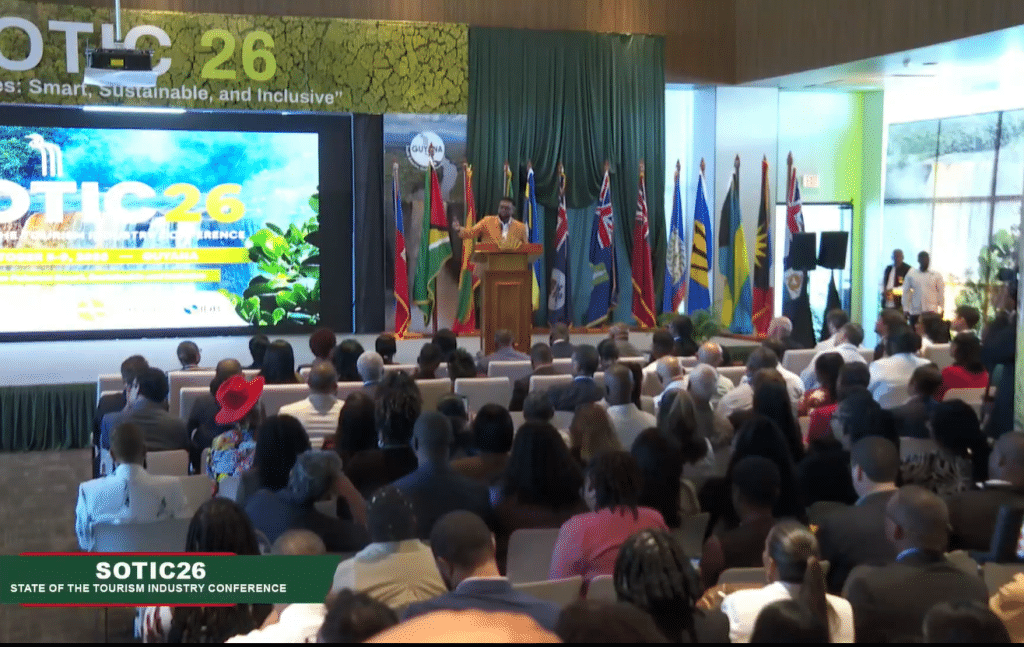
 President Irfaan Ali on Wednesday openly expressed disgust at the protracted delay it was taking for the European Union (EU) to decide on processing Schengen visas in Guyana.


Discussion