Home Blog Page 135

Holding… – Guyana Times

0

Holding…

…still

Your Eyewitness lives and learns!! Two hundred years ago, a Frenchman pointed a camera out of his window and changed the world!! Nicéphore Niépce’s “View from the Window at Le Gras” – dated to 1826 – is the oldest surviving camera photograph. It shows buildings and rooftops – rather than anything particularly exciting. Humanity’s great photographic adventure began, reassuringly, with somebody photographing the view from home!!
Think about this – before photography, having your likeness preserved usually required an artist, money, and a heck of a lotta patience!! Posterity favoured folks who could afford to sit around looking important – so photography opened the family album to the rest of us!! Ordinary shmoes acquired something once reserved for the privileged – a face that could outlive them!!
And what faces they left! Those stiff family portraits – with everyone looking as though smiling might spoil the photograph – became household treasures!! In Guyanese homes, a framed wedding picture or a fading portrait could preside over the front room for decades!! Generations grew up beneath the gaze of an ancestor who clearly disapproved of the world!!
But photography gave our migration a human face, too, didn’t it?? A picture arriving from “outside” showed the baby had grown, the son had married, or the daughter was standing beside SNOW!! Relatives inspected the background almost as carefully as the person – was that REALLY his house? And who was the woman next to him?!! The camera also enlarged our world by making places most folks would never visit become visible!!
Photographs also gave history details that official accounts often overlooked – an old street photograph preserves Georgetown’s shop signs, the clothes, the transport, and the people passing through an ordinary afternoon!! The photographer may’ve intended to capture Big Market – a century later, we’re peering at the fellow standing in front!!
Then came the domestic suspense of the film camera. You took your pictures, handed over the roll, and waited to discover whether you had recorded a holiday or 24 variations of your thumb!! Now, the smartphone’s made almost everyone a photographer – while demanding that everything’s gotta be documented. At a birthday party, the cake waits, the candles burn down and somebody shouts, “One more!” – as especially our meals have become models!!
Yet beneath all this cheerful excess lies photography’s extraordinary gift – it lets us return to a face, a place, a moment, making a blurred snapshot of someone we loved more valued than the finest picture in a gallery! The camera can’t keep people with us – but it can preserve the way they stood in a doorway, held a child, or laughed before anyone told us to pose!!
Two hundred years on, that remains a small miracle!!

…development banner
For many ordinary Guyanese, starting a business has meant confronting a familiar puzzle – to borrow the money needed to get ahead, you’ve gotta first prove you’re already comfortably ahead!! Bring collateral, bring financial statements, and bring this document, and that document!! And by the time you finish bringing things, the business idea might qualify for a pension!!
So, the Government deserves kudos for opening a more promising door through the Guyana Development Bank – which offers eligible small and medium-sized businesses loans of up to GY$3 million, without interest or collateral, across all 10 Regions!! We’ve got no shortage of folks with “growable” business opportunities – there’s the black-pudding vendor whose orders have outgrown her kitchen; the mechanic who needs equipment to establish his own workshop; the farmer who could earn more by processing what he grows; and the young graduate with a clever business idea but no property to pledge!!
Now the interest-free loans up to $3M and business coaching can put them to work and spread the wealth!!

… black assets
From our own history, we know about CIA agents being funded to work undercover. But your Eyewitness didn’t realise the scale of the funding.
One agent admits stealing US$200M – including $40M in gold bars found in home!!


Discover more from Guyana Times

Subscribe to get the latest posts sent to your email.


Source: Guyana Times
Caribbean tourism, natural beauty & bigger vision – Guyana Times

0

Caribbean tourism, natural beauty & bigger vision

The Caribbean has long enjoyed an enviable advantage in the global tourism industry. Its beaches, tropical climate, biodiversity, culture and distinctive communities have made the region a sought-after destination for travellers from around the world. But as competition intensifies and the expectations of travellers change, those natural advantages can no longer be treated as sufficient in themselves.
This is the central message from President Dr Irfaan Ali at the opening of the Caribbean Tourism Organization’s State of the Tourism Industry Conference (SOTIC) 2026 in Georgetown. Themed “Tourism Futures: Smart, Sustainable, and Inclusive,” the conference has brought together governments, investors, tourism businesses and other stakeholders to examine the direction of an industry that remains critical to the Caribbean economy.
President Ali’s call for the region to “scale up” its thinking deserves serious consideration. The issue is about developing tourism products that respond to where the international market is heading, while ensuring that the benefits of tourism reach wider sections of Caribbean societies.
The global tourism market is changing and travellers are increasingly seeking distinctive experiences, high-quality hospitality, entertainment, sporting events, wellness facilities, cultural encounters and nature-based attractions. Countries and regions that recognise these changes and invest accordingly will be better positioned to capture a greater share of international tourism spending.
Countries in the Middle East have invested in luxury hospitality, major sporting events, entertainment and supporting infrastructure to establish themselves as global tourism destinations. The Caribbean may not possess the financial resources to replicate those investments individually, but that should not prevent the region from adopting the underlying principle, think bigger, plan strategically and invest in products that can compete internationally.
This is where regional cooperation becomes particularly important.
The Caribbean consists of small individual markets, many of which face limitations in land, capital, transportation and infrastructure. Collectively, however, the region possesses a remarkably diverse tourism offering. Greater cooperation could allow Caribbean countries to market multiple destinations as part of a broader tourism experience while jointly pursuing major international events.
President Ali’s suggestion that the region could identify a number of major events to pursue collectively by 2035 provides one example of the type of strategic thinking required. Such an approach would demand investment in airports, roads, ports, hotels, entertainment facilities and other infrastructure. It would also require coordination among governments and the private sector.
Connectivity must be at the heart of the region’s tourism strategy as it is of little benefit to promote a diverse Caribbean tourism experience if moving efficiently between destinations remains difficult or expensive. A stronger regional tourism product requires easier movement of visitors, better air and sea links and more integrated travel arrangements.
Important also is the need to encourage investment in experiences beyond the traditional hotel-and-beach model.
Guyana is particularly well positioned to explore this approach as its rainforest, rivers, biodiversity, wildlife and Indigenous communities provide the foundations for tourism products that can distinguish the country from more established Caribbean destinations. President Ali’s proposal for a world-class tropical forest night safari is precisely the kind of concept that demonstrates how natural assets can be transformed into innovative commercial experiences rather than simply admired as attractions.
This does not mean sacrificing sustainability for development. On the contrary, the future of Caribbean tourism depends on protecting the very resources that make the region attractive. The conference’s emphasis on smart, sustainable and inclusive tourism recognises that development and conservation must advance together.
Natural beauty is an asset, but an asset must be developed, promoted and continually enhanced to maintain its value. Other destinations are investing heavily in infrastructure, technology and new experiences. Standing still, therefore, amounts to falling behind.
The private sector has an important role to play in this transformation. Governments can provide policy, land, infrastructure and incentives, but sustainable tourism development requires investors prepared to identify opportunities and take calculated risks. The region must create an environment in which innovative tourism concepts can attract serious capital.
SOTIC 2026 comes at an appropriate time and should use the conference as a platform for establishing measurable regional priorities towards 2035. Research, market intelligence, investment, connectivity, technology and sustainability must translate into defined programmes with deadlines and accountability.
President Ali’s fundamental point is straightforward; the Caribbean cannot depend indefinitely on what nature has already provided. It must build upon those advantages.


Discover more from Guyana Times

Subscribe to get the latest posts sent to your email.


Source: Guyana Times

New timing system introduced for Sunday’s showdown: Up to 300 races on cards for Berbice drag meet – Guyana Times

0

New timing system introduced for Sunday’s showdown: Up to 300 races on cards for Berbice drag meet

Motor racing fans could be treated to as many as 300 races when the Guyana Motor Racing and Sports Club (GMR&SC) stages its latest drag-racing event at the East Canje, Region Six (East Berbice-Corentyne) airstrip in Region Six on Sunday.

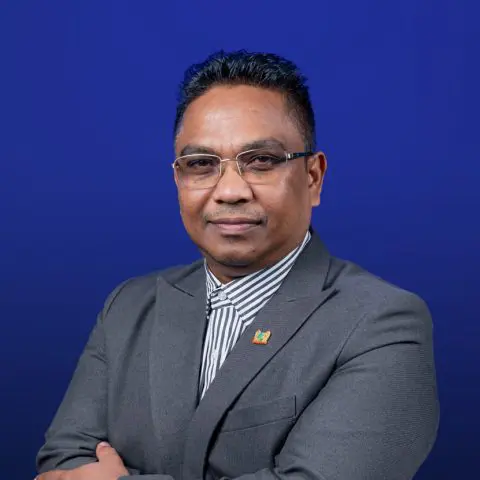
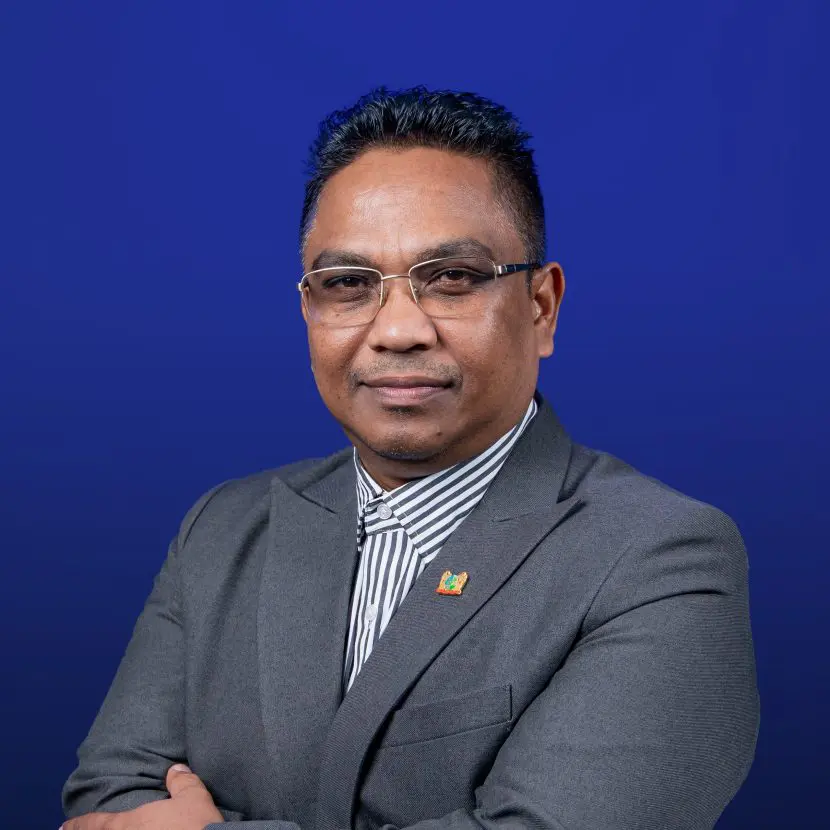
GMR&SC President Mohamad Shairaz Roshandin

The October 11 event is expected to feature both cars and motorcycles battling over the quarter mile, with organisers also introducing a new timing-based system to determine the classes in which competitors will race.
GMR&SC President Mohamad Shairaz Roshandin said more than 100 competitors registered for last year’s event, and the elimination format means the number of races could increase significantly as the competition progresses.
“The last time we had over 100 competitors registered, so it’s two cars going down together. So just for all of them to have at least one race, you’re looking at 50,” Roshandin explained.
“And for elimination purposes, that will multiply tremendously. It will reach maybe 200 to 300 races.”
One of the major changes for this year’s event is the method being used to classify competitors.
Last year, cars were grouped according to the cubic capacity of their engines. This time, Roshandin said, a timing system will classify competitors according to how quickly they complete the quarter mile.
“The last time we did what we did, we were just classing cars according to the cubic capacity of the engine. This time around we’re working with a timing system which classes you depending on how fast you can finish a quarter mile,” he explained.

A look at the Canje airstrip that will be ignited this Sunday

The system will allow cars to be grouped into classes ranging from 16 seconds down to 11 seconds, with organisers also considering a 10-second class.
Motorcycles, meanwhile, will compete in 600cc and 1000cc classes.
Roshandin noted, however, that the surface at the East Canje airstrip will place some limitations on the type of high-powered cars that can compete.
“The surface down here is not asphalt; it’s concrete. It’s a bit rough, so the higher-power cars can’t really drive on it,” the GMR&SC boss explained.
Nevertheless, he said organisers intend to have the highest-powered machines that are suitable for the surface participate in Sunday’s event.
The GMR&SC is hoping to build on the success of last year’s staging and establish the Berbice drag meet as an annual event.
Roshandin said apart from providing entertainment for motor-racing enthusiasts in Berbice, the event has the potential to contribute to the county’s tourism sector and wider economy by attracting patrons and competitors from other parts of Guyana and neighbouring Suriname.
“We want to bring the entertainment and excitement for the people of Berbice and also let that help with the tourism sector and also help with the economy in Berbice, where people will come from Georgetown; those will come across from Suriname, and, you know, it will add to the economy in Berbice,” he noted.
Organisers are also seeking to improve arrangements for patrons after assessing the system used during last year’s event.
Roshandin explained that vehicles were previously parked along the road, with shuttle buses transporting patrons into the venue.
This time, designated parking areas are being identified, and signs will be erected to guide motorists. Shuttle buses will again be used to transport patrons from the parking areas to the airstrip.
“We’re trying to improve on that,” Roshandin shared. “We’re going to put up parking signs… so you know that area you can go park, and there will be a shuttle bus there or two to just shuttle you all the way in.”
He described last year’s arrangements as a “trial”, noting that organisers are seeking to improve the system this time around.
Safety and security arrangements are also being put in place.
The East Canje airstrip has dams on both sides, with a canal alongside the racing area. According to Roshandin, spectators will be positioned beyond fencing on the dams, providing separation between them and the racing strip.
Police will also be on hand to direct and control activities in the area, while private security personnel are expected to assist with ensuring the smooth movement of vehicles.
Tickets for Sunday’s event will be sold at the gate.
The gates are scheduled to open at 07:00h, while qualifying and racing will get underway at 10:00h. (G-4)


Discover more from Guyana Times

Subscribe to get the latest posts sent to your email.


Source: Guyana Times
Linden Masters champions Isun Health Conscious O40 Football – Guyana Times

0

Linden Masters champions Isun Health Conscious O40 Football

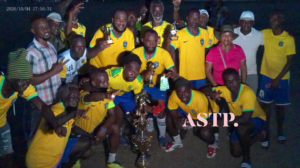
The Linden Masters football team were the last men standing over the weekend as they outplayed every opposition they faced, en route to a championship win in the Isun Health Conscious-sponsored “One Love” Over-40 Football.
In the semi-finals, Beacon Football Club (FC) masters pulled off a 2-0 victory against Riddim Squad FC Masters. Sherwin Rose and Anthony “Awo” Abrams found the back of the net for Beacon Masters.

Linden Masters celebrate their victory

Then, in the second semi-final, Linden Masters set up a date with the Georgetown side after defeating Guyana Defence Force (GDF) Masters. Following a stalemate after regulation time, the contest was plunged into penalties, where Linden Masters eventually prevailed 10-9 in sudden death kicks.
GDF Masters, however, redeemed themselves in the third-place playoff, overcoming 4-2 on penalties to grab the $60,000 third-place prize. The encounter had also ended in a stalemate. Additionally, Riddim Squad were rewarded with $40,000 for finishing fourth.
In the grand finale, Linden Masters held firm for a 3-1 victory over Beacon Masters. Andrew Edwards netted a brace for Linden alongside a solitary strike from Carlos Grant while Abrams had accounted for Beacon’s consolation.
The Linden side, therefore, walked away with the $200,000 grand prize, while Beacon had to settle for the $100,000 second prize.
Linden Masters’ Garfield Shepard was recognised as the tournament’s Most Valuable Player (MVP), while GDF Masters’ Delroy Fraser was the highest goal scorer. Linden Masters carted off the Best Midfielder, Best Defender, and Best Goal Keeper prizes in Travis Waterton, Julian Davidson, and Linden Dennis, respectively. The Best Coach, Randy King, came from GDF.
Tournament organiser Junior Junior Forrester extended gratitude to the tournament’s sponsor Isun-Health Conscious. Thanks were also extended to the Guyana Responsible Parent Association and Ministry of Health, who provided free prostate cancer tests and eye test vouchers.


Discover more from Guyana Times

Subscribe to get the latest posts sent to your email.


Source: Guyana Times
Gaffur century propels Cotton Tree to victory – Guyana Times

0

Gaffur century propels Cotton Tree to victory

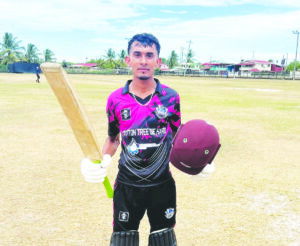
Skipper Rashaad Gaffur was large and in charge at the Bush Lot United Sports Club Ground when he led his side, Cotton Tree, to a comfortable win in Die Hard.
Gaffur struck a fine unbeaten 120 as Cotton Tree secured a 55-run win in the Berbice Cricket Board (BCB) intermediate 40-overs tournament.

Gaffur scored a fine century

Earlier, Cotton Tree won the toss and opened to bat first, scoring 272-7 in their allotted 40 overs.
Rashaad Gaffur’s 120 stood out, supported by Suraj Bissoondyal, who made 27, and Arif Khan made 20.
Bowling for Bush Lot United, Altaf Ali had two for 35 from eight overs. Akash Ramdewar went for 11 runs per over, claiming two for 77 from seven overs.
Bush Lot replied with 217 all out. Justin Doobay offered great resistance with a brave unbeaten knock of 86. Altaf Ali scored 32, while Lakeraj Hemraj made 23.
Bowling for Cotton Tree, Fawaz Gaffoor had three for 31 from eight overs, while Rashaad Gaffur returned two for 40 from eight overs. Hamchan Ragbeer chipped in with two for 41 from 6.3 overs as Cotton Tree now advances to the next round.


Discover more from Guyana Times

Subscribe to get the latest posts sent to your email.


Source: Guyana Times
Shreyas Iyer’s maiden ton hands India crushing win

0

https://kiskadeewatch.com/sports/cricket/shreyas-iyers-maiden-ton-hands-india-crushing-win/

Cricket

Shreyas Iyer’s maiden ton hands India crushing win


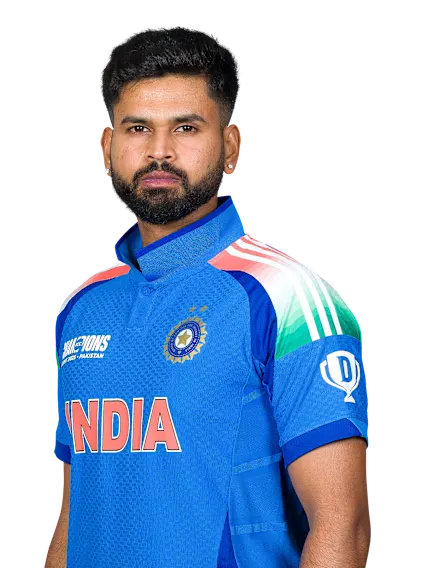
Shreyas Iyer

(ESPN) India’s three spinners took eight wickets between them to help the hosts take their winning streak in T20Is to 10. Axar Patel started India’s domination with a double-wicket maiden to end the powerplay, Kuldeep Yadav came back from an expensive over to take two wickets, but the jack in the box was T20I debutant Naman Dhir, who bounced back from being hit for a six with an immediate wicket three times on his way to figures of 4-0-31-3.

With half-centuries from Shai Hope and Sherfane Rutherford, West Indies managed to get to 171, which might have tested India had the visitors been able to capitalise on the rare early dismissals of both the India openers Abhishek Sharma and Sanju Samson. However, they ran out of bowling that could exploit the grip in the surface, and Shreyas Iyer blitzed his way to a maiden T20I hundred to end the chase in 14.4 overs.

Hope floats

Having lost his fourth toss of the tour, which also made it 14 tosses out of 17 for Iyer as international captain, Hope again found himself batting at a less-than-ideal time. However, he hadn’t missed a beat since the ODI series in which he hit two centuries. He hit Mayank Yadav for four fours in the second over to take West Indies to 21 for 0.

Arshdeep Singh started pulling West Indies back as he went to yorkers as early as the third over. Axar continued his good run of form with the ball in limited-overs cricket with a fourth over that went for just eight. Arshdeep was asked to continue for a third straight over. Wide yorkers kept coming out. On one of those, international debutant Kamil Pooran played on.

And then Axar dealt the big blow with a maiden over in which two wickets fell. Shimron Hetmyer was unlucky to have his bat bounce up on a dive. It made its first contact with the ground short of the crease so it never landed inside for even a second. Axar followed it up by stifling Rovman Powell, who then picked a straight ball to slog at but still missed it completely. A powerplay of 44 for 3 is usually it in India.

The next five overs produced 56 runs, giving West Indies a second wind. There were two big wins in this period. Rutherford hit two lovely sixes in Kuldeep’s second over, and they also took18 off the 11th over, bowled by Axar. India were now forced to look at their fifth bowler.

Dhir, who showed enough control of length in the ODIs, continued doing simple things and benefited from the bigger square boundaries. After Hope hit him for a six third ball into his career, he slowed the ball down and managed to get Hope caught at deep midwicket. When Romario Shepherd took him down, he did the brave thing of tossing the next ball slow and wide, drawing a mishit to long-off. The same trick worked with Shamar Springer, this time the catch going to long-on.

From 100 for 3 in 11 overs, West Indies felt they were short by 20 runs even though they didn’t think it was a 200 kind of pitch.

Spin tests India

Abhishek and Samson came out full of intent, but Roston Chase and Akeal Hosein managed to extract just about enough from the pitch to draw catches from them. At 36 for 2 in four overs, West Indies would have had reason to believe but they were up against a line-up that had Axar batting at No. 8. They needed more testing bowling.Iyer ends the game

India hit back immediately with Ishan Kishan taking down Chase and Iyer hitting three fours of Joseph to make it 62 for 2 by the end of the powerplay. It seemed like a calculated chase by the halfway point. Iyer was 45 off 25, Kishan 25 off 16, and India needed 70 off the last 10 overs.

All of a sudden, a switch flicked, and Iyer went on a rampage to score 57 of the remaining runs. He hit six sixes in the next 18 balls he faced, taking Matthew Forde for 24 runs in the 14th over. Kishan did his job by turning the strike over, and Iyer just kept smashing flat sixes to bring up his second hundred in Lucknow this year, but first in international T20s.

You reached the end of this article without encountering a paywall.

That is deliberate. We believe reliable journalism about Guyana should be available to everyone from the hinterland to the coast, including those who cannot afford to pay for it. But investigating, reporting and publishing every story takes time, energy and resources. Keeping our journalism open depends on the commitment of readers who can chip in and contribute to help cover the cost for everyone.

Please join the Kiskadee family by taking a subscription. Every contribution counts to our commitment to our journalists, to our readers, and to independent, public-interest journalism.

And please spread the word. One one dutty build dam!


Become a supporter


Source: Kiskadee Watch

MV Barima families vent frustrations in meeting with commissioners 

0

https://kiskadeewatch.com/guyana/mv-barima-families-vent-frustrations-in-meeting-with-commissioners/

MV Barima families vent frustrations in meeting with commissioners 


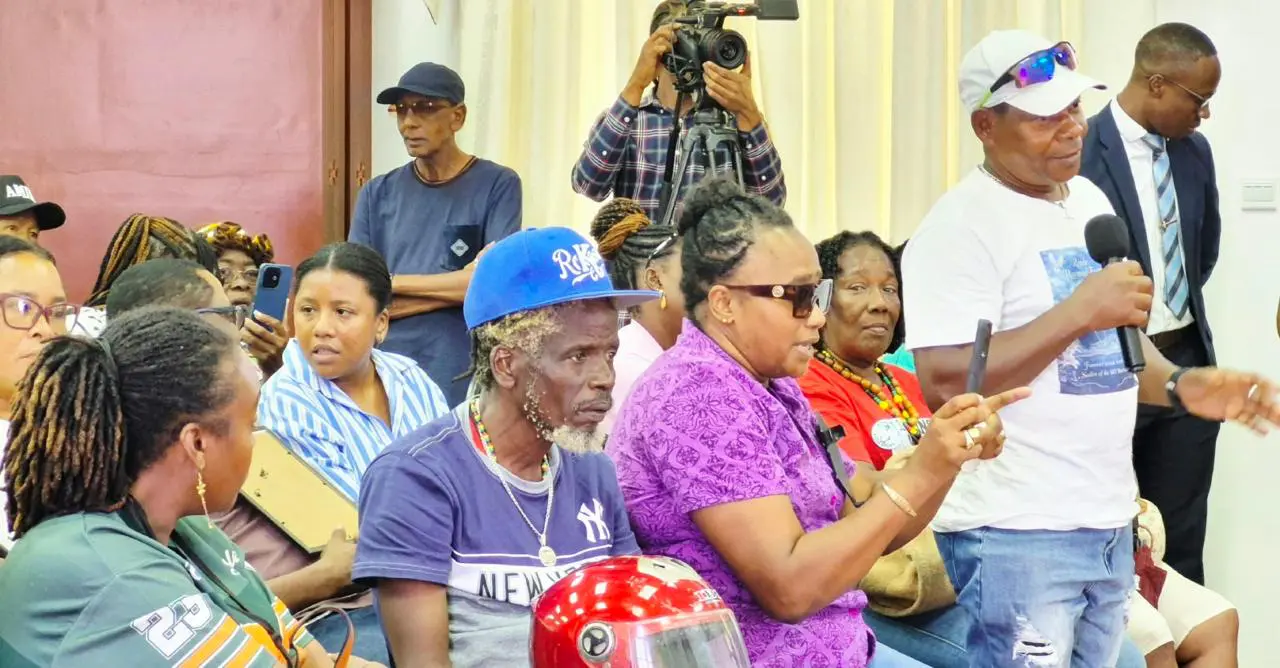
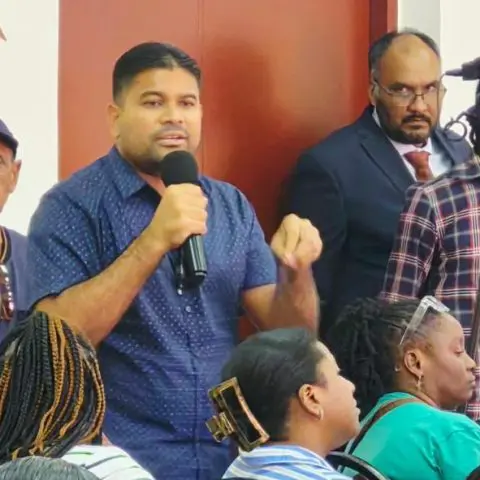
Royston Frank (standing with mic) addressing the commissioners yesterday
 

-raise ferry before CoI moves ahead – urges father of missing sailor 

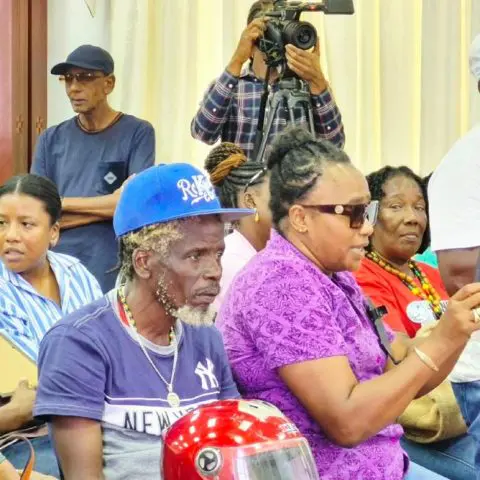
Emotions ran high yesterday as families of the MV Barima victims met Commissioners who will investigate the sinking of the ferry and a key demand was the raising of the vessel.

Royston Frank, whose son Rawle Frank died in the MV Barima disaster, yesterday told the Commission of Inquiry (CoI) that the investigation should not be rushed ahead without first raising the boat, noting that its recovery is critical to obtaining the “proper” evidence needed to determine what caused the tragedy.

Frank, who poignantly identified his son as a crew member and sailor who perished in the July 18 disaster, spoke to the commissioners during an interactive session with relatives of victims, expressing frustration over the more than two-month wait for the vessel to be salvaged.

Speaking at the Arthur Chung Conference Centre, Liliendaal, he said he appreciated the work the commissioners had begun but he wanted to know how a full inquiry could proceed without the MV Barima being brought up.

He said he was not calling for the inquiry to be rushed but wanted the process to be conducted properly and with all available evidence. “We don’t want to force a Commission of Inquiry. We don’t want to hurry a Commission of Inquiry. We just want everything to go in the right process, and in the right manner, so that we could get enough evidence,” he expressed. 

Frank then questioned when the contract for the salvage had actually been awarded, who had won it and what experience the successful company had in raising vessels.

“We are just like sailors in this room here today. To be honest, we don’t know nothing that is going on,” Frank told the commissioners, referring to the families’ lack of information about the salvage process.

He said relatives had heard about a bidding process but were unaware of who had ultimately been selected, the contractor’s experience or how long it would take to raise the MV Barima.

Frank also questioned whether the contractor had the necessary expertise, pointing out that the vessel had been under water for more than two months.

His concerns came after the commissioners disclosed that BK International had been selected to undertake the salvage operation. This announcement was not made by the government.

Commissioner Dr. Andrzej Jasionowski had earlier said the salvage preparations were under way and could take another week or two. He said careful planning was necessary to ensure that the vessel was raised without destroying or altering evidence.

Central

Frank, however, maintained that recovering the vessel must remain central to the inquiry.

The commissioners explained that they do not have the authority to award the salvage contract or determine the qualifications of the contractor, further noting that they could not suspend all other investigative work while waiting for the vessel to be raised.

They said significant background work was already in train, including the examination of documents from agencies responsible for maritime and ferry operations.

Frank acknowledged that work but maintained that the recovery of the vessel was essential to obtaining the evidence necessary for the inquiry.

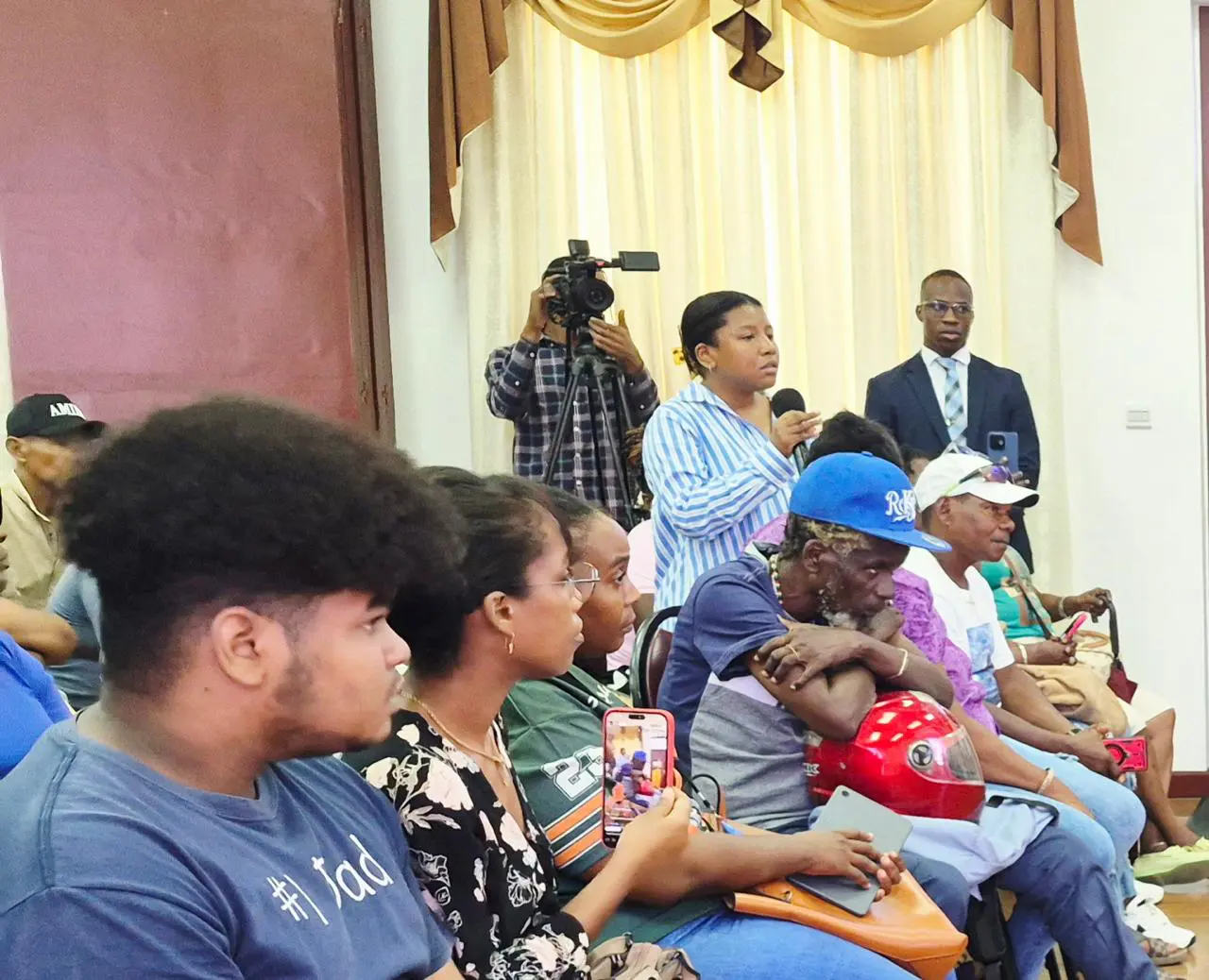
Jasmin Cort did not go to yesterday’s meeting with the commissioners  simply to listen. She turned up with a notebook of questions and a photograph of her dad and uncle – two of the persons still unaccounted for after the vessel sank. She passed the photograph to the commissioners so that they could see what her father and uncle looked like.

One after another, Cort pressed the commissioners on what the inquiry would examine, why the MV Barima had not yet been salvaged, whether the delay could have affected the recovery of the missing and the preservation of evidence, and whether the commission would look beyond the vessel itself to examine possible systemic failures in Guyana’s maritime and ferry operations.

Jasmin Cort (standing with mic) questioning the commissioners at yesterday’s meeting
 

Cort first put the issue of the salvage directly to Chairman    of the inquiry, Justice Godfrey Phillip Smith, referring to his earlier statement that the commission was prepared to examine “all the circumstances” surrounding the tragedy. She asked whether that would include the decision-making surrounding the continued delay in raising the MV Barima.

She also wanted to know whether the delay could have affected both the recovery of her missing relatives – her dad Neil Cort and uncle Kenrick Cort – and the preservation of evidence that could be critical to the inquiry.

Justice Smith explained that raising the vessel itself was not within the commission’s powers or terms of reference.

Commissioner Nyree Dawn Alfonso stepped in to explain that she had raised the importance of salvaging the vessel from the very day she was appointed to the commission. She said her nearly 30 years of experience in salvage operations could be useful in ensuring the vessel is recovered in a way that protects evidence.

She acknowledged that she was not a pathologist and therefore could not speak to whether the vessel’s recovery would assist in recovering human remains but said the condition of the MV Barima could provide important evidence about what happened.

At the same time, she cautioned against rushing the operation. Given the age of the vessel, Alfonso said, a poorly planned salvage could damage the MV Barima and destroy evidence that the commission may need.

Dr Jasionowski then provided Cort with an explanation of what exactly was happening with the salvage. He shared that the operation was going ahead and that he had personally met with the team involved in preparing the salvage plans.

The objective, he explained, was to ensure the vessel could be raised without destroying or altering potential evidence. Dr Jasionowski said the preparations could take another week or two and that the commission expected to receive daily reports from the team.

Cort then asked directly which company was chosen to do the salvaging and Dr Jasionowski identified BK International. 

Cort pointed out the identity of the salvage operator had not previously been publicly disclosed despite the government’s earlier announcement that the vessel would be salvaged. She said it was the first time this information was being disclosed after families had been trying to find out for weeks. 

There were voluble expressions of support for her from the audience.

Cort then asked whether the commission would examine the MV Barima’s history of mechanical failures, maintenance and repairs, inspection certifications, overcrowding and any warnings that may have been raised about its condition before its final voyage. The commissioners assured her that their examination would extend well beyond the final hours of the July 18 voyage.

Further, if the inquiry was examining whether there had been institutional or systemic failures, she asked if it would also examine other vessels operating in Guyana. Justice Smith said that where the same institutions were responsible for the vessels and domestic ferry services, the commission would examine those institutions to determine whether any problems were systemic.

He said the inquiry would look at the organisations responsible for providing the ferry services and how those services were managed.

Meanwhile, Dr Jasionowski went further, revealing that the commission had already begun requesting documents relating not only to the MV Barima but to vessels operating throughout Guyana. He said requests had been sent to institutions including the Demerara Harbour Bridge and the Maritime Administration Department (MARAD), with some documents already received and reviewed. And he disclosed the commission had only last week sent another comprehensive request for information covering “pretty much the entire fleet” operating in Guyana.

That an 87-year-old ferry was plying the Atlantic has been a major source of contention following the sinking. 

You reached the end of this article without encountering a paywall.

That is deliberate. We believe reliable journalism about Guyana should be available to everyone from the hinterland to the coast, including those who cannot afford to pay for it. But investigating, reporting and publishing every story takes time, energy and resources. Keeping our journalism open depends on the commitment of readers who can chip in and contribute to help cover the cost for everyone.

Please join the Kiskadee family by taking a subscription. Every contribution counts to our commitment to our journalists, to our readers, and to independent, public-interest journalism.

And please spread the word. One one dutty build dam!


Become a supporter


Source: Kiskadee Watch

Guyana should move aggressively to acquire these decommissioned Point Lisas nitrogen assets

0

https://kiskadeewatch.com/opinion/letters/guyana-should-move-aggressively-to-acquire-these-decommissioned-point-lisas-nitrogen-assets/

Letters To The Editor

Guyana should move aggressively to acquire these decommissioned Point Lisas nitrogen assets

Dear Editor,

The recent report on Kiskadee Watch detailing Canadian fertilizer giant Nutrien’s decision to indefinitely shutter its nitrogen operations in Trinidad, placing more than 300 skilled jobs on the line, is a sobering reminder of the shifting energy landscape in the Caribbean. Yet, behind Trinidad’s industrial setback lies a powerful, time-sensitive strategic opening for Guyana.

At its core, Trinidad’s crisis is not a failure of market demand or engineering capability, but a direct consequence of domestic natural gas shortages. Natural gas is the primary feedstock needed to manufacture ammonia and urea fertilizers. Point Lisas has the physical plant capacity but lacks the gas to feed it. Guyana, on the other hand, stands at the threshold of a new energy era, with our Gas-to-Energy initiative and vast offshore reserves promising an abundance of gas without the downstream facilities to fully utilize it.

Rather than letting this specialized infrastructure gather rust, Guyana, whether through government action or a regional private-sector consortium, should move aggressively to negotiate the acquisition or relocation of these decommissioned Point Lisas assets.

The economic logic for Guyana is immediate and compelling. Constructing a modern chemical processing facility from scratch demands years of environmental permitting, massive capital expenditure, and lengthy construction delays. Acquiring existing, high-capacity machinery slashes both the capital hurdle and the lead time needed to establish domestic downstream manufacturing.

More importantly, bringing fertilizer production home directly aligns with Guyana’s ambition to serve as the agricultural breadbasket of the region. High input costs for nitrogen fertilizers remain one of the biggest burdens on local rice, sugar, and crop farmers. Producing our own fertilizer using domestic natural gas would insulate local agriculture from volatile global commodity markets, lower food production costs, and give real momentum to CARICOM’s food security agenda.

Crucially, this is also an opportunity to anchor regional talent. The plant engineers, process technicians, and operators in Trinidad represent decades of specialized industrial knowledge. By creating a new home for these operations in Guyana, we can absorb this skilled workforce, prevent a damaging brain drain from the region, and accelerate the technical training of our own young Guyanese workforce.

Trinidad’s industrial downturn offers a clear lesson for our own economic planning: raw natural gas should not merely be used for electricity or exported as a basic commodity. It should be converted into high-value chemical products that build long-term industrial strength. By turning Trinidad’s point of friction into Guyana’s next industrial stepping stone, we can secure both our energy future and our agricultural independence.

Sincerely,

Keith Bernard

You reached the end of this article without encountering a paywall.

That is deliberate. We believe reliable journalism about Guyana should be available to everyone from the hinterland to the coast, including those who cannot afford to pay for it. But investigating, reporting and publishing every story takes time, energy and resources. Keeping our journalism open depends on the commitment of readers who can chip in and contribute to help cover the cost for everyone.

Please join the Kiskadee family by taking a subscription. Every contribution counts to our commitment to our journalists, to our readers, and to independent, public-interest journalism.

And please spread the word. One one dutty build dam!


Become a supporter


Source: Kiskadee Watch

MV Barima CoI still unsure if Edghill, Indar will testify

0

https://kiskadeewatch.com/guyana/mv-barima-coi-still-unsure-if-edghill-indar-will-testify/

MV Barima CoI still unsure if Edghill, Indar will testify


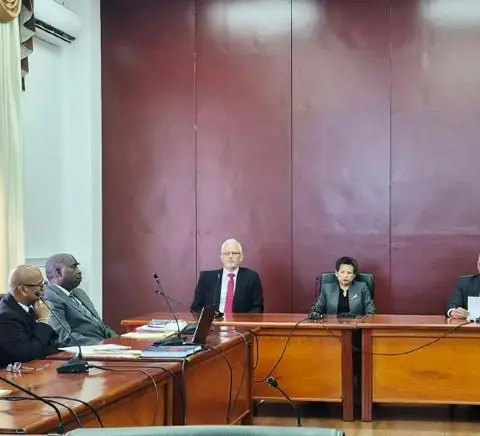
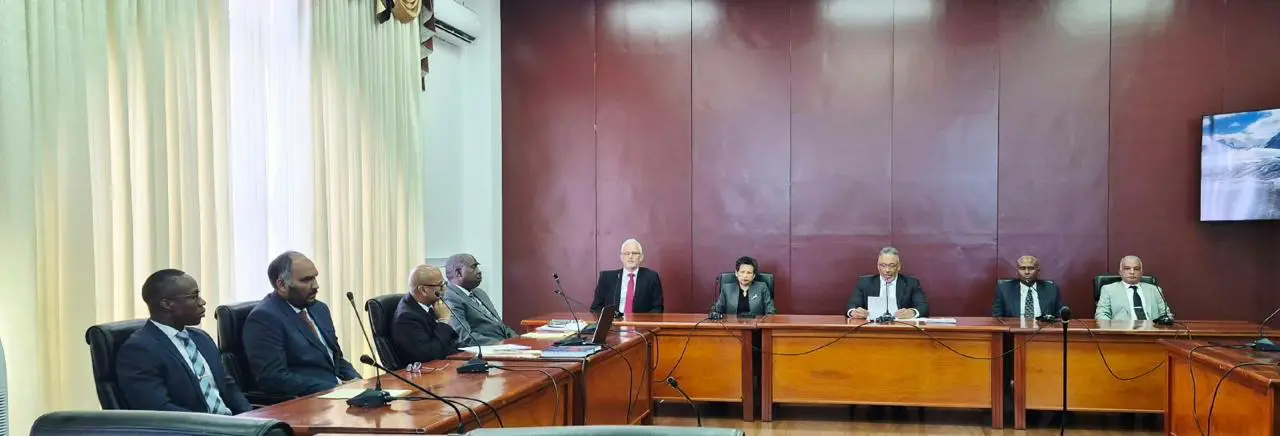
Members of the Commission of Inquiry into the MV Barima disaster during yesterday’s proceedings. Seated at the head table from right to left are Captain Hamada Fouda of Jamaica; Rear Admiral (Ret’d) Hayden Pritchard of Trinidad and Tobago; Chairman Belizean Justice of Appeal Godfrey Phillip Smith; Nyree Dawn Alfonso of Trinidad and Tobago; and Polish forensic naval architect and marine engineer Dr. Andrzej Jasionowski. At left, from left to right, are Legal Officer Dishon Harris, COI Secretary Javed Shaddick, and lawyers Arudranauth Gossai and Teni Housty.

More than two months after the MV Barima disaster, the Commission of Inquiry is still unable to say whether Public Works Minister Juan Edghill and Minister of Public Utilities Deodat Indar will be called to testify, with commissioners saying yesterday that they have not yet reached that stage of their investigation.

As the commissioners officially marked the opening of the CoI proceedings  at the Arthur Chung Conference Centre, Liliendaal,  Kiskadee Watch asked if the two ministers should not in fact be among the key persons being called upon to give testimony. 

Chairman, Belizean Justice of Appeal Godfrey Phillip Smith responded that the commissioners had not yet reached the stage of deciding which ministers, if any, would appear before the inquiry.

“We have not reached that stage yet…We are still drawing up a list of witnesses; still examining the evidence,” he said. 

He nevertheless assured that the commissioners would follow the evidence wherever it leads and would call a minister if the evidence shows that his testimony is necessary. “If it becomes clear that we require the evidence of a minister, they will be asked to come before the commission.” 

Smith said yesterday that the commissioners would not make assumptions about responsibility before completing their examination. “We are not going to jump to conclusions; we won’t make a rush judgement. We don’t come with any predetermined conclusion,” he said.

He acknowledged that members of the public are anxious for answers but said the inquiry must be conducted in a manner that is “organized, procedurally fair and transparent.”

The five-member commission formally opened its proceedings and later met with relatives of survivors and victims from the coastland. 

Smith, Dr. Andrzej Jasionowski, Nyree Dawn Alfonso, Captain Hamada Fouda and Rear Admiral (Ret’d) Hayden Pritchard were sworn in on July 30 to investigate the July 18 sinking of the state-owned MV Barima. The two lawyers for the CoI are Teni Housty and Arudranauth Gossai. 

President Irfaan Ali had declined to say whether action would be taken against the ministers, saying he would await the findings of the CoI. However, public calls for their removal intensified after the disaster, with protesters and opposition figures arguing that both ministers should be held accountable. 

Edghill, whose ministry has responsibility for the Transport and Harbours Department, was among the officials who addressed the public in the immediate aftermath of the disaster. Questions have subsequently been raised about the vessel’s seaworthiness, maintenance, loading and regulatory oversight.

Internal maintenance and defects records documented several mechanical and electrical problems aboard the 87-year-old MV Barima between November 2025 and March 2026, including an out-of-service generator, leaking engine exhaust, overheating machinery, defective cooling equipment and deteriorated batteries.

Tender documents have reportedly outlined approximately $124.5 million in proposed repairs to the MV Barima, including work on its hull plating and framing, cargo hatches, propulsion and steering systems, sea valves, propeller shafts, stern tubes and other components. 

Questions have also been raised over the accuracy of the vessel’s passenger manifest, its loading and the regulatory systems governing domestic ferry operations. Edghill had initially said the vessel was not overloaded, while later developments established that the official manifest did not accurately reflect the number of people aboard. 

The CoI’s mandate includes examining the circumstances surrounding the sinking, including the vessel’s condition, loading and operation, compliance with safety and legal requirements, possible negligence or institutional failures, and accountability.

The commission’s formal evidence-taking is expected to begin next Wednesday, October 14, with more than 100 potential witnesses reportedly identified for processing. Its secretary, Javed Shadick, also said he could not yet say whether Edghill and Indar would be among those called. 

You reached the end of this article without encountering a paywall.

That is deliberate. We believe reliable journalism about Guyana should be available to everyone from the hinterland to the coast, including those who cannot afford to pay for it. But investigating, reporting and publishing every story takes time, energy and resources. Keeping our journalism open depends on the commitment of readers who can chip in and contribute to help cover the cost for everyone.

Please join the Kiskadee family by taking a subscription. Every contribution counts to our commitment to our journalists, to our readers, and to independent, public-interest journalism.

And please spread the word. One one dutty build dam!


Become a supporter


Source: Kiskadee Watch

Suriname Customs seizes Guyanese rice shipment; importer mounts court challenge

0

https://kiskadeewatch.com/guyana/suriname-customs-seizes-guyanese-rice-shipment-importer-mounts-court-challenge/

Suriname Customs seizes Guyanese rice shipment; importer mounts court challenge


Agriculture, Livestock and Fisheries Minister Mike Noersalim

Surinamese Customs has seized a shipment of approximately 385 tonnes of rice from Guyana over allegedly missing import approvals, while the importer has taken the State to court seeking inspection and release of the cargo.

Starnieuws reported yesterday that Customs seized the parboiled rice imported by entrepreneur Bhagwatpersad Ramadhin on Monday evening. It was subsequently placed aboard the vessel Falk under supervision and guard.

Efforts by Kiskadee Watch to get a comment from the Guyana Rice Development Board (GRDB) yesterday proved futile.

Ramadhin’s urgent civil action was heard on Tuesday and is scheduled to continue today, October 8. The State is opposing his application on the grounds that the required permissions had not been obtained when the shipment entered Suriname.

The seizure follows an earlier announcement by Agriculture, Livestock and Fisheries Minister Mike Noersalim that the rice would be returned to Guyana.

According to Starnieuws’ October 4 report, the shipment arrived aboard the MV Falk and was destined for B. Ramadhin’s rice factory in Nickerie. A phytosanitary certificate issued by Guyana’s National Plant Protection Organisation on September 29 recorded the cargo as 384,800 kilogrammes.

Noersalim said certification from the exporting country did not replace the prior phytosanitary permission required from Surinamese authorities. Part of the rice had already been cleared and removed from the port before the missing approval was discovered, prompting its recall.

Ramadhin wants the authorities ordered to inspect the rice and permit its clearance if no phytosanitary risk is established. He is also seeking to prevent the State from returning, destroying or otherwise disposing of the cargo, with a penalty of SRD1 million per day for non-compliance with the orders requested.

Starnieuws reported that Ramadhin disputed attempting to obstruct inspections. His petition states that he returned the rice to the port following discussions with officials and remained available for further checks.

Economic Affairs, Entrepreneurship and Technological Innovation Minister Andrew Baasaron raised a separate issue over an allegedly missing import licence. He said rice required prior licensing and no application for the shipment appeared in the relevant electronic system.

Baasaron announced plans for the Economic Control Service to seize the cargo and said it would not be returned to Guyana, differing from Noersalim’s earlier position. He also called for scrutiny of the Customs officers who had authorised the initial release.

Yesterday’s report said Customs ultimately carried out the seizure. Starnieuws reported that Economic Affairs inspectors had not received permission from the Public Prosecution Service to do so.

Citing a Customs record, the outlet said poor internet connectivity initially prevented officers from checking all supporting documents. An importer’s representative reportedly assured them that the necessary paperwork had been uploaded, and part of the cargo was released.

Once access was restored, officers found required documents missing, stopped further release and recalled the rice already removed. The reported dispute concerns import approvals; the reports cited do not identify a finding that the rice was contaminated.

The vessel also carried urea for the same enterprise. Starnieuws cited a September 17 pro forma invoice from Guyana’s Nand Persaud and Company Limited for 600 tonnes, comprising 12,000 bags, valued at US$600,000. Baasaron said an application was recorded for the urea. The invoice identified Nand Persaud as the fertiliser supplier, rather than establishing who supplied the disputed rice.

Noersalim also warned that cheaper imported parboiled rice sold for animal feed could reduce demand for locally produced broken rice, placing further pressure on Suriname’s farmers.

You reached the end of this article without encountering a paywall.

That is deliberate. We believe reliable journalism about Guyana should be available to everyone from the hinterland to the coast, including those who cannot afford to pay for it. But investigating, reporting and publishing every story takes time, energy and resources. Keeping our journalism open depends on the commitment of readers who can chip in and contribute to help cover the cost for everyone.

Please join the Kiskadee family by taking a subscription. Every contribution counts to our commitment to our journalists, to our readers, and to independent, public-interest journalism.

And please spread the word. One one dutty build dam!


Become a supporter


Source: Kiskadee Watch