Home Blog Page 9

Commonwealth projects worth US$52b submitted to investors — Botchwey

0

—Antigua PM reports funding pledges for nature, health initiatives

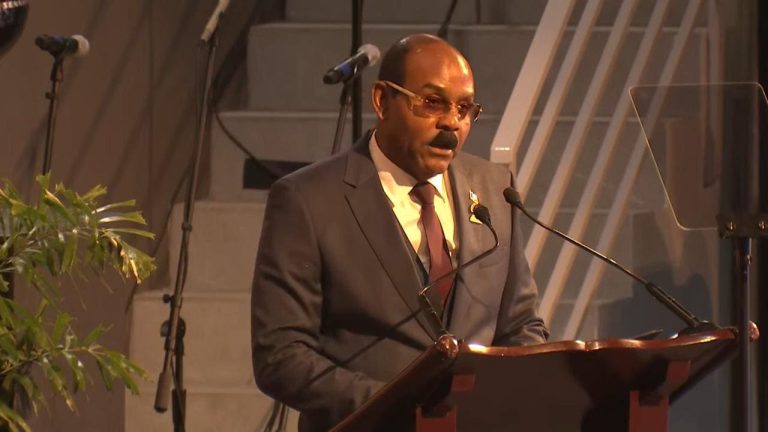
Commonwealth member countries have submitted investment-ready projects valued at US$52 billion, Secretary-General Shirley Botchwey said as leaders gathered in Antigua and Barbuda for a summit focused on turning partnerships into investment and jobs.

Addressing the opening of the Commonwealth Heads of Government Meeting (CHOGM), Botchwey said leaders were being connected directly with investors, with a trade and investment conference planned for next year to advance that work.

Host Prime Minister Gaston Browne, meanwhile, said the Commonwealth Nature Initiative had raised more than $200 million and an iHealth forum had secured pledges exceeding US$1.3 billion. He did not specify the currency of the nature initiative’s funding in his remarks.

Browne said partnerships had already been formed and substantial funding pledged, arguing that the meeting was beginning to deliver on its promise of practical results.

Botchwey, attending her first CHOGM as Secretary-General, said the Commonwealth needed a new model of cooperation capable of responding to the scale of challenges confronting its members.

“Our members have submitted bankable projects valued at 52 billion United States dollars, and this week we are connecting leaders directly with investors,” she said.

The proposed conference would bring together trade, finance and investment ministers with chief executives to reduce barriers and advance the goal of US$2 trillion in trade between Commonwealth countries.

Working with trade and investment advisory groups, the organisation expected the conference to help facilitate investment across its membership, she said.

Botchwey argued that traditional divisions between the responsibilities of governments and businesses needed to be reconsidered.

The Commonwealth’s network of 56 countries and 2.7 billion people was large enough to pursue change globally while retaining relationships that could help deliver it, she said.

“Our people will judge this meeting by what it delivers for them,” she told heads of government.

Both Botchwey and Browne called for changes to international financing arrangements, saying debt rules and restrictions on concessional funding were holding countries back.

Browne said national income alone could not adequately measure a country’s vulnerability or its ability to withstand repeated shocks.

A single hurricane could destroy infrastructure and livelihoods while forcing governments to redirect money from education, healthcare and economic development to recovery, he said.

He urged wider use of the Multidimensional Vulnerability Index alongside existing financing criteria, faster access to climate finance and debt arrangements that allowed countries room to recover.

“No nation should be forced to mortgage its future simply to survive the present,” Browne said.

Countries with capital, technology and influence in international financial institutions had a responsibility to help advance those reforms, he added.

Botchwey said the Commonwealth was working towards a common platform to press for changes to the international financial system.

She also outlined work with private-sector partners to improve access to renewable energy financing, accelerate insurance payments after disasters and restore damaged habitats through the Commonwealth Nature Initiative.

Countries least responsible for climate change continued to face some of its gravest consequences, she said, pointing to hurricane destruction in Barbuda and Jamaica.

Browne similarly called for investment in renewable energy and resilient infrastructure, saying it could protect communities, reduce dependence on fossil fuels and create business opportunities. Such investment must be accompanied by efforts to cut global emissions, he said.

On reparatory justice, Browne urged leaders to carry forward the commitment made at the previous summit in Samoa to a meaningful, truthful and respectful conversation.

“We must now carry that commitment forward in inclusive dialogue on the enduring consequences of slavery and colonialism with a determination to make progress and a willingness to build consensus,” he said.

Browne argued that the Commonwealth’s relevance must be demonstrated through results rather than history or sentiment.

He called for simpler customs procedures, stronger transport links, improved access to trade finance and predictable investment arrangements, particularly to support small and medium-sized businesses.

“The resources are there. The needs are there. What is required is the collective will to connect them,” he said.

He also urged clear responsibilities, realistic timelines and measurable outcomes, with progress reported between summits. 

Both speakers emphasised opportunities for young people. Botchwey said private capital was being mobilised to expand distance education to millions, while Browne called for scholarships, research partnerships, professional exchanges and access to digital technology.

Women must have equal access to those opportunities, Browne added.

As Commonwealth Chair-in-Office, he pledged to work with member governments, the Secretariat and Botchwey to advance the agenda.

“Let us ensure that the Commonwealth is not simply an association we inherited, but an institution whose value we continually prove,” he said.


Source: Kiskadee Watch
Democrats win control of House & Senate

0


Democrats have won control of Congress after flipping Republican-held House and Senate seats in Texas, South Carolina, Iowa, Michigan and Kansas in the midterm elections.

The results are being seen as a major rebuke to US President Donald Trump’s Republicans, who were previously in control of both houses of Congress.

All 435 seats in the House of Representatives and 35 of the Senate’s 100 seats were contested in Tuesday’s elections, including special elections in Florida and Ohio to fill the seats vacated by Secretary of State Marco Rubio and Vice President JD Vance.

Voters in 36 states also elected governors, as well as state legislators and local officials.

Counting continued throughout Tuesday evening and night in the US. Results in some races may, however, not be known until Wednesday or later.

Democrats have won 228 seats in the House of Representatives so far, according to the Associated Press’s tally, and are leading in 34 others. That means they could end up with in excess of 260 seats in the House, the party’s biggest strength since 1990, when the Democrats won 267 seats in the lower chamber.

The Republicans held 220 seats in the House after the 2024 elections, while the Democrats had 215.

In the Senate, the upper chamber of Congress, Democrats have won 54 seats and are leading in another, while the Republicans have won 44 seats and are leading in one. To control the Senate, a party needs 51 seats. In the 2024 midterm elections, the Republicans had a majority with 53 seats, while the Democrats won 47 seats.

The Democrats have not had such a clear majority in the Senate since 2008, when the party won 56 seats in the slipstream of Barack Obama’s historic first presidential election.

Amid governors leading in each state, Democrats now have 28 governors, while 20 governors are from the Republican Party. Races in two states currently remain uncalled. Following the 2024 midterms, 27 governors of states were Republican while 23 governors were Democrats.

Not all seats have been called, and Democrats are projected to win more, but they have already flipped 25 seats in the House of Representatives from the Republicans – more than the 21 they took in 2008 when they last held the largest majority in Congress.

Trump loses both houses of Congress

This is the first time in 20 years that a Republican president has lost control of both houses of Congress, after George W Bush in 2006.

But Trump’s losses are far deeper than Bush’s: In the 2006 midterms, the Republican strength in the House went down from 232 to 202, while the party’s numbers in the Senate fell from 55 to 49.

This time though, the party is projected to fall short of 180 seats in the House, and is not expected to win more than 45 seats in the Senate.

In the House, in 18 of the 20 midterms held from 1946 to 2022, voters have taken House seats away from the party in power. The average loss was 26 seats across both houses. Only Bill Clinton’s Democrats in 1998 and George W Bush’s Republicans in 2002 bucked that trend by gaining seats or holding them all.

In the Senate, the governing party has lost seats in 13 of the 20 midterms since 1946 but lost overall control of the chamber in only six: 1946, 1954, 1986, 1994, 2006 and 2014.

In the current midterms, while President Trump’s name was not on the ballot, he regularly urged voters to imagine that it was, and the results are seen as a verdict on his presidency. (Al Jazeera)


Discover more from INews Guyana

Subscribe to get the latest posts sent to your email.


Source: INews Guyana

Over 100 Days Since Mv Barima Tragedy, Families Of Victims Still Mount Calls For Salvage Vessel – HGPTV – Guyana’s Nightly News and Entertainment Channel

0

By Antonio Dey | HGP Nightlty News |

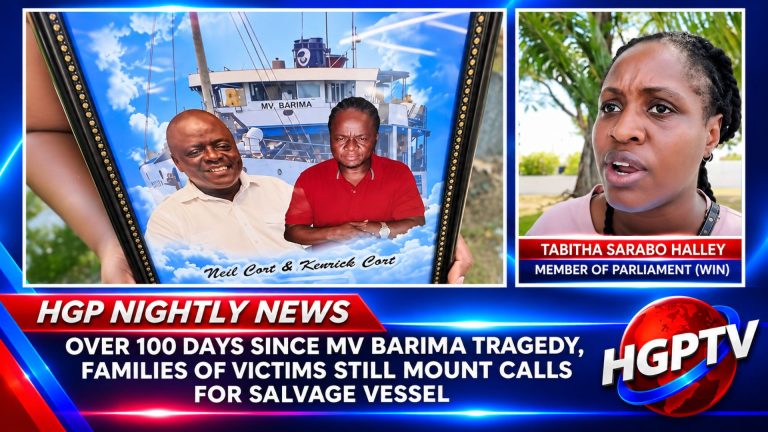
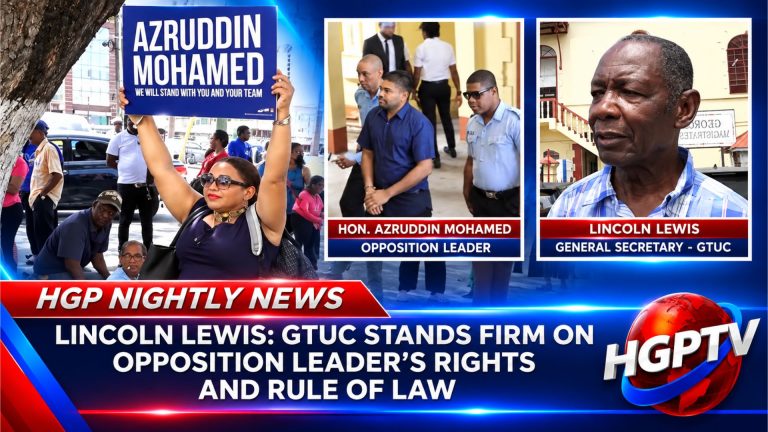
GEORGETOWN, GUYANA — More than one hundred days after the catastrophic sinking of the state-operated ferry MV Barima claimed over 70 lives off the Essequibo coast, grieving relatives of those who perished returned to Shiv Chanderpaul Drive outside the Office of the President, mounting persistent picketing demonstrations to demand accountability, institutional transparency, and the immediate salvage and recovery of the sunken vessel.

The demonstration reflected deep public dissatisfaction among affected families who argue that despite the passage of more than three months since the July 18, 2026 maritime disaster, critical questions surrounding the ferry’s structural integrity, cargo loading practices, and emergency response remain unanswered.

Carrying placards and portraits of deceased and missing loved ones, relatives insisted that leaving the ferry at the bottom of the Atlantic Ocean compromises the pursuit of justice, asserting that forensic examination of the hull and cargo hold is essential to determine the definitive cause of the disaster.

Families Demand Recovery: ‘The Wreck Holds the Answers’

For the relatives gathered along the roadway outside the nation’s executive seat, the passage of time has done little to soothe their loss:

  • Forensic Necessity: Relatives maintain that recovering the physical vessel is critical to establishing whether structural hull failure, severe overloading, or improper mechanical maintenance caused the ferry to capsize off the Pomeroon coast near Iron Punt.
  • Unrecovered Remains: Family members highlighted that retrieving the vessel remains deeply personal, as several bodies of missing victims are believed to remain trapped within lower cabins and submerged compartments.
  • Voice of the Grieving: Among those on the picket line was Jasmine Cort, daughter and niece of victims Neil and Kenrick Cort, alongside Brian Thomas, father of the late Brian Thomas Jr., both expressing frustration over state delays and lack of direct communication with affected families.

“We want the vessel brought to the surface. It cannot simply be left at the bottom of the ocean while we are left without closure and without answers.” — Family Picket Representative

Civic and Political Outcry: Activists and Opposition Join Demonstration

The continued demonstrations outside the Office of the President have garnered broad support from Indigenous rights advocates, civil society groups, and parliamentary opposition figures:

  • Indigenous Advocacy: Amerindian rights activist Laura George joined the picket line, pointing out that the MV Barima was a lifeline for predominantly Indigenous communities traveling between Georgetown and Region One (Barima-Waini). She criticized what she described as institutional neglect and a sluggish official response toward hinterland travelers.
  • Parliamentary Criticism: Member of Parliament for We Invest in Nationhood (WIN), Tabitha Sarabo-Halley, along with former Member of Parliament and former Junior Minister of Public Infrastructure, Annette Ferguson, called on the administration to end administrative foot-dragging, demanding that resources be deployed immediately to retrieve the hull and preserve vital physical evidence.

Commission of Inquiry Adjourned to November 10

The ongoing street actions take place against the backdrop of the presidential Commission of Inquiry (COI), which formally commenced its public hearings on October 14, 2026:

  • Scope of the Probe: The COI was empaneled to investigate all aspects of the maritime tragedy—including the 87-year-old vessel’s seaworthiness, operational oversight by the Transport and Harbours Department (T&HD), cargo manifests, weather warnings, and the adequacy of search-and-rescue operations.
  • Current Status: After taking initial evidence and sworn statements from regulatory personnel and maritime witnesses, the Commission adjourned its public sittings to November 10, 2026.
  • Families’ Call for Transparency: Relatives and their legal representatives stressed that the COI’s findings will remain incomplete unless technical salvage divers and naval surveyors are allowed to examine the submerged hull first-hand.

As the November 10 resumption date approaches, the families of the victims have reaffirmed their intention to maintain their public vigils and picketing exercises until the Government of Guyana provides definitive commitments regarding the salvage of the MV Barima and accountability for those who perished.


  • Source: HGP Nightly News / HGPTV