Home Blog Page 6

Police Must Answer for Douglas’ Death

0

Dear Editor,

The death of 32-year-old Gavin Kennard Douglas, who died while in police custody at the Vreed-en-Hoop Police Station on Saturday, October 31, 2026, is another deeply troubling incident that demands the attention of every Guyanese.

My deepest condolences are extended to his mother, father,  family, friends and loved ones, who are now left to grapple with the pain of losing someone dear to them under circumstances that demand serious answers.

Let us be clear: regardless of the allegations against Mr. Douglas, he was presumed innocent under the law. Being arrested does not mean that a person forfeits his constitutional rights, dignity or right to life.

When an individual is taken into police custody, the State assumes responsibility for that person’s safety and well-being. The Guyana Police Force therefore has a fundamental duty to protect, not endanger, the lives of those placed in its care.

What makes this incident particularly disturbing are the findings of the post-mortem examination conducted by Government Pathologist Dr. Nehaul Singh on November 2, 2026. The examination determined that Gavin died from a brain haemorrhage caused by blunt trauma. Additionally, two Taser studs were removed from his body and lodged as exhibits.

These findings raise serious questions that cannot be brushed aside.

How did a young man who was taken into police custody alive sustain injuries resulting in a fatal brain haemorrhage? What exactly transpired inside the police station? Was the force used against him necessary and proportionate? Were established procedures followed? Were there adequate safeguards to protect his life while he was detained?

These are not unreasonable questions. They are questions that the family and the Guyanese public deserve to have answered.

I note that six police ranks have reportedly been placed under close arrest as the Office of Professional Responsibility (OPR) continues its investigation. While this development is acknowledged, arrests alone are not accountability. The public must be assured that the investigation will be thorough, independent, impartial and transparent, and that no attempt will be made to shield anyone from responsibility.

I am particularly concerned about the growing public anxiety surrounding deaths in police custody. The deaths of Jordan Payne, Hemat Kumar Mohamed and now Gavin Kennard Douglas have brought renewed attention to the treatment of persons detained by the Guyana Police Force.

How many more families must be left grieving before there is meaningful accountability?

The Minister of Home Affairs, Ms. Oneidge Walrond, has publicly promised a thorough and impartial investigation. I welcome that commitment. However, the people of Guyana must see concrete action, not merely assurances.

I stand in support of the call for:

  1. An independent investigation into the circumstances surrounding Gavin Douglas’s death, with appropriate external oversight.
  2. The preservation and examination of all CCTV footage, station records, custody registers, medical records and other relevant evidence.
  3. A transparent account of the events leading to his injuries, including the circumstances in which force and Taser equipment were used.
  4. The timely disclosure of the investigation’s findings to the family and the public, subject to the requirements of the law.
  5. Appropriate disciplinary and criminal proceedings against anyone found responsible, in accordance with the law.
  6. A comprehensive review of police detention procedures, the use of force and the protection of persons in custody.

The Guyana Police Force must understand that public confidence cannot be maintained through statements and promises alone. It must be earned through professionalism, respect for human rights, transparency and accountability.

The right to life is fundamental. No person should enter a police station alive and leave in a coffin without the circumstances surrounding that death being fully and credibly explained.

This is not about defending criminality or interfering with the work of law enforcement. It is about defending the rule of law and insisting that those entrusted with enforcing the law must also be accountable to it.

Gavin Kennard Douglas was someone’s son, someone’s brother and a member of our society. His life mattered. His family deserves justice, and the people of Guyana deserve answers.

Justice Must Not Only Be Promised; It Must Be Seen To Be Done.

When will it end?

Yours truly,
Annette Ferguson


Source: Village Voice News

Renewed Protest Over Azruddin Mohamed’s Detention

0

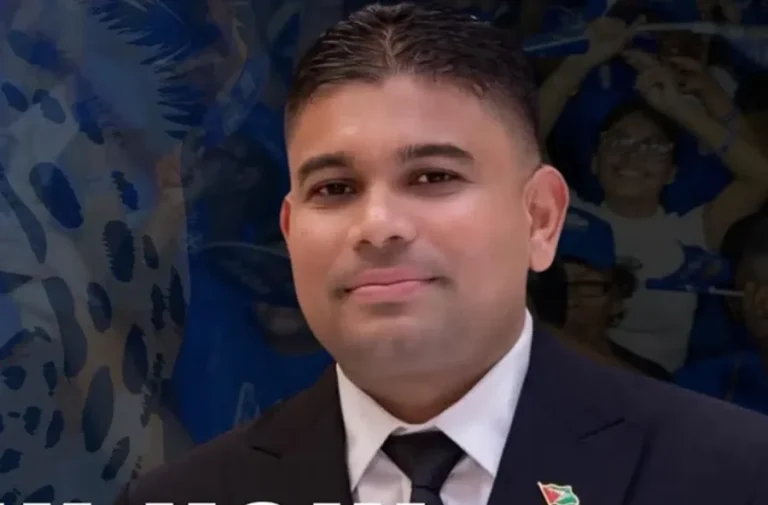
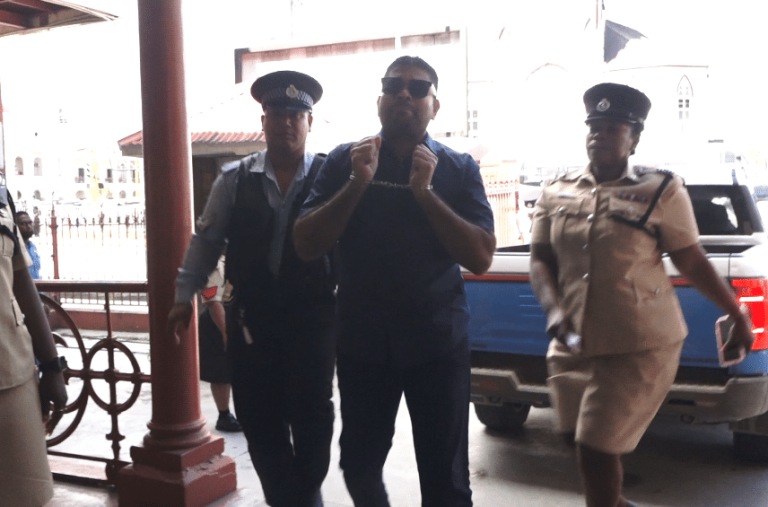
By Mark DaCosta- Calls for the release of Opposition Leader Azruddin Mohamed echoed again outside Georgetown’s High Court on Wednesday, 4 November 2026, as supporters of the We Invest in Nationhood (WIN) party, among them parliamentarian Gobin Harbhajan, gathered to protest his imprisonment. What began as a demand for one man’s freedom widened into a broader appeal for fairness, due process and respect for citizens’ rights. The protest is also joined by other members of the parliamentary opposition and civil society.

Mohamed is being held on a charge of attempting to bribe a public official in connection with leaked police surveillance footage. Police Constable Ryan Greene was charged alongside him, with both men denied bail at the Sparendaam Magistrates’ Court on October 30 and remanded until November 24. The case has since widened, with Constable Ashton Chappell also charged on Tuesday, November 3, for the same offence and remanded to prison. Mohamed’s legal team has since approached the High Court seeking to overturn the bail refusal and secure his release. All three accused are presumed innocent, and the allegations remain to be tested before the courts.

Demonstrators voiced displeasure at his detention, but their grievances reached further. They spoke of human rights, equal treatment under the law and the need for accountability in how citizens are handled by the justice system.

The episode lands amid considerable legal turbulence for the opposition chief. He and his father, Nazar Mohamed, remain the subject of a United States extradition request on fraud and money-laundering allegations, and he has separately faced local tax-related charges, all of which he has contested. Earlier this month, he was also granted bail on other charges after his legal team accused the police of fabricating evidence.

For Guyanese, the standoff poses a delicate test. A sitting Opposition Leader behind bars raises questions about the independence of our institutions and the public’s confidence in them. Whether the courts grant bail or the remand holds, the outcome will be watched closely as a measure of both the rule of law and the health of our democracy.


Source: Village Voice News
Mohamed Gets His Own Voice in High Court Bail Battle

0

By Mark DaCosta- The High Court has ruled that Opposition Leader Azruddin Mohamed may swear an affidavit in his own name in support of his bail application, a procedural decision with real consequences for a case that rests on competing accounts. Delivered on Wednesday 4 November by Justice Priscilla Chandra-Hanif, the ruling lets Mr Mohamed answer, through attorneys Siand Dhurjon and Roysdale Forde S.C, the matters raised in the affidavit his mother, Bonita Mohamed, filed on his behalf. It also signals that the court intends to pare that earlier document back to what is strictly necessary, and that the State must keep his detention from becoming oppressive.

The question of removing parts of the application by Mohamed’s mother drew the sharpest exchange. Attorney General Anil Nandlall urged the court to strike out roughly 33 of the affidavit’s 50 paragraphs, describing them as scandalous, vexatious and beyond the deponent’s personal knowledge. Affidavits are meant to carry facts a witness can attest to directly, and courts routinely cut passages that drift into argument or hearsay. Allowing Mohamed to speak for himself offers a practical remedy, since the contested assertions can now be restated by the person best placed to make them. The judge will rule separately on what is deleted.

The route to this point began on 2 November, when Bonita Mohamed filed a Fixed-Date Application asking the High Court to quash Magistrate Abigail Gibbs’s decision of 30 October refusing her son bail, and to admit him to bail on terms set by the court. Her affidavit argued that the magistrate misread the Cybercrime Act. In her account, the prosecution’s own particulars cast Azruddin Mohamed as the recipient of footage rather than the person who accessed a protected computer system and passed the data on. She contended that he had lawful justification, because the cameras were public and the recordings bore on his defence to earlier charges. She also questioned the 25-day remand, saying it exceeded a 21-day limit under the Criminal Law Procedure (Paper Committals) Act 2024, and alleged apparent bias, citing a claimed relationship between the magistrate and a police officer involved in the investigation. None of these claims has yet been tested in court.

The charge carries serious penalties on indictment: a fine of up to G$8 million and five years’ imprisonment. It stems from the alleged downloading of police footage of the 12 October shooting incident by Police Constable Ryan Greene, who is jointly charged, and its passage to Mohamed. Both men have pleaded not guilty and were remanded until 24 November. On November 3, Constable Ashton Chappelle faced the same charges and was remanded until November 24 when the trio will appear in court. Mohamed is separately on bail, alongside two others, for firearm and obstruction charges arising from the same incident. The video, which he played at a press conference last month, is said to challenge aspects of the Government’s version of events and prompted the police inquiry. Senior Superintendent Prem Narine, the officer at the centre of the incident, is also a key witness in the extradition proceedings involving Mohamed and his father. The matter therefore sits where security-sector conduct, an opposition leader’s liberty and a foreign extradition request meet, and our nation is watching how evenly the courts handle it.

Conditions of detention also came before the judge. Senior Counsel Forde told the court that Mohamed spends all but ten minutes of each day in what amounts to solitary confinement, in a poorly ventilated cell, and asked for an order against oppressive treatment. Attorney Dhurjon sought a transfer to police lock-ups and said a bright light shone on his client amounted to psychological abuse. Nandlall countered that Mohamed is held in a high-profile cell and produced photographs. The judge made no finding but said she expected the State and the prison service to ensure that his conditions are not oppressive.

The implications are twofold. Procedurally, the ruling widens the evidence on which bail will be argued while improving its quality, because a first-hand affidavit is harder to dismiss as hearsay. More broadly, the court’s remarks on detention remind us that remand does not suspend an accused person’s rights. Mohamed is presumed innocent, and the allegations against him and Constable Greene remain unproven. How the judge treats the disputed paragraphs, and then bail itself, will show whether our courts can handle a politically charged case with both rigour and restraint.


Source: Village Voice News

Explainer: Five ways US foreign policy may change with a Democratic Congress

0

WASHINGTON, (Reuters)  – Democrats secured control of the US Senate and House of Representatives in Tuesday’smidterm elections, giving them an important slice of power in Washington after two years of Republican control.

During the campaign, Democrats had argued that Republicans ceded Congress’s constitutional war-making and spending powers to the administration of President Donald Trump. They are now expected to curb those powers.

Here are some ways a Democratic Congress could hem in Trump’s foreign policy.

CURB THE IRAN WAR

Trump did not secure approval from Congress before he launched the war with ‌Iran alongside Israel on February 28, and Democrats have voted repeatedly to end the fighting unless he seeks congressional authorization. One of these resolutions passed both the House and Senate with support from a handful of Republicans, but Trump’s administration ignored it.

With their new influence, Democrats could cut defense spending or hold up nominations to pressure Trump to obtain permission from Congress to continue the war. They could also require administration officials to keep lawmakers and the public informed, including at public hearings, about their plans.

FRESH SUPPORT FOR UKRAINE

Trump has largely halted direct financial and military aid to Ukraine, which is fighting a Russian invasion, despite broad support for the US assistance from Democratic and Republican lawmakers.

Most recently, he has angered ⁠members of Congress, including many Republicans, by lifting sanctions on Russian diesel and waiving sanctions on Russian energy, weeks after signing them into law.

With control of both chambers starting in January, Democrats will be able to decide what gets voted on and when. That could allow them to approve new aid to Ukraine, which likely would pass with the two-thirds majorities needed to overcome a Trump veto. Democratic aides have said assisting Kyiv is a priority.

They could also target other Trump activities. For example, Democratic Representative Gregory Meeks of New York, who is likely to chair the House Foreign Affairs Committee, has introduced bipartisan legislation to block Trump’s plan to bring Russian diesel back into the global market.

While the final size of the Democratic majorities has not been determined, backing for Ukraine has been so strong in the past from both that party and many of Trump’s Republicans that Congress may be able to muster majorities large enough to override a Trump veto.

END MILITARY AID TO ISRAEL

Support for Israel has plummeted among Democrats over its conduct in the Gaza war, which has killed tens of thousands of Palestinian civilians. The ‌ongoing violence ⁠in the Israeli-occupied West Bank and Israeli Prime Minister Benjamin Netanyahu’s close alliance with Republicans have also been factors.

Democrats could limit or end military aid to Israel, which includes a base $3.8 billion per year, plus billions of dollars more since the October 7, 2023, Hamas attacks that led to the devastating Israeli campaign in Gaza.

Nearly half of House Democrats voted this summer to cut off aid to Israel. Some of those who voted against that effort, such as Meeks, have backed limits on providing weapons like heavy bombs to Israel.

LIMIT MILITARY SPENDING AND RESTORE FOREIGN AID

Democrats are far more likely than Trump’s Republicans ⁠to limit military spending. Trump asked for an unprecedented 67% increase in the military budget this year, to $1.5 trillion, but Democrats blocked it in the Senate, citing his refusal to consult Congress about the Iran war and his steep cuts to social programs.

Trump has also withheld or canceled billions of dollars in foreign aid approved by Congress. Many Democrats have been angered by the cuts and say they will ⁠try to restore funding. In the past, including during Trump’s first term as president, both Democrats and Republicans strongly supported foreign aid.

MORE SCRUTINY OF LATIN AMERICA POLICY

Trump has been far more aggressive in the western hemisphere than recent presidents, including the US military’s ousting of Venezuela’s president and more than a year of deadly strikes on boats off the country’s coast.

He also has ⁠imposed sanctions seeking to hurt Cuba’s communist government, with threats of military action to force a change in government. The US administration has also sought to influence elections in Honduras, Argentina, Colombia and Brazil.

Some Democrats have called for investigations and hearings on Trump’s actions in Venezuela. Others have denounced what they term cruel sanctions punishing civilians in Cuba and called for an end to involvement in foreign elections.


Source: Kiskadee Watch

High Court adjourns Mohamed’s bail hearing to next Thursday

0


The High Court in Demerara has postponed the hearing of an application filed by Bonita Mohamed, mother of Opposition Leader Azruddin Mohamed, challenging the refusal of bail to her son on a cybercrime charge. The matter was called on Wednesday, November 4, before Justice Priscilla Chandra-Hanif.

However, the defence was granted additional time to correct deficiencies identified in the supporting affidavit, and the proceedings were adjourned to November 12 for hearing. A ruling on the bail application is scheduled for November 13. The substantive judicial review application is scheduled to be heard on November 23.

The adjournment followed objections by Attorney General Anil Nandlall who described the affidavit as “one of the worst drafted affidavits” he had encountered. He argued that it contained inadmissible hearsay, scandalous assertions and irrelevant material. He also complained that the State had been given only about 24 hours to respond.

Bonita Mohamed is seeking to quash Magistrate Abigail Gibbs’ October 30 decision refusing bail and have her son admitted to bail.

Her affidavit argued that the Section 9 Cybercrime Act charge was improperly framed because the prosecution identified Azruddin Mohamed as the recipient of electronic data, rather than the person who accessed the protected computer system and supplied the footage.

She maintained that receiving the recordings did not establish the offence and that her son had lawful justification to obtain and disclose them because they were relevant to his defence in the case arising from the October 12 shooting incident outside Senior Superintendent of Police Prem Narine’s Kitty home.

Narine is the head of the Special Branch Unit. The application also challenged his 25-day remand, alleging that it exceeded the 21-day limit under the Criminal Law Procedure (Paper Committals) Act 2024.

The application also alleged bias on the part of Magistrate Gibbs, claiming that she was in a romantic relationship with Deputy Superintendent of Police Jamine Bacon, the investigating officer in the case.

Senior Counsel Roysdale Forde and attorneys Siand Dhurjon and Damien DaSilva represented Azruddin Mohamed.

The defence told Justice Chandra-Hanif that it needed additional time to correct deficiencies in the original affidavit and sought permission to file a supplementary affidavit from Azruddin Mohamed himself to support the bail challenge.

Justice Chandra-Hanif subsequently directed that Mohamed’s supporting affidavit be filed by 18:00h on Wednesday, November 4, 2026. Forde said the defence chose judicial review under Section 20 of the 2022 Bail Act to challenge the magistrate’s refusal of bail through a more direct legal process, arguing that the charge against Mohamed was classified by statute as a non-serious offence.

Named as respondents in the judicial review proceedings were the Director of Public Prosecutions, Magistrate Abigail Gibbs and the Attorney General of Guyana.

Mohamed and Police Constable Ryan Greene were jointly charged with unauthorised granting of access to or giving of electronic data, contrary to Section 9 of the Cybercrime Act 2018.

Neither was required to plead to the indictable charge, and both were remanded until November 24. Constable Ashton Chappelle was subsequently charged and remanded to prison by Magistrate Gibbs in connection with the matter.

The opposition leader remained on bail in the separate extradition proceedings. He was also on bail in the criminal proceedings stemming from the October 12 incident outside Senior Superintendent Narine’s Kitty residence, in which he was jointly charged with his driver, Eugene Thorne, and videographer, Mario Mohamed, with unlawful possession of a firearm, unlawful possession of ammunition, and attempting to obstruct the course of justice.


Discover more from INews Guyana
Subscribe to get the latest posts sent to your email.


Source: INews Guyana
Guyana hosts 22nd CANQATE Conference

0
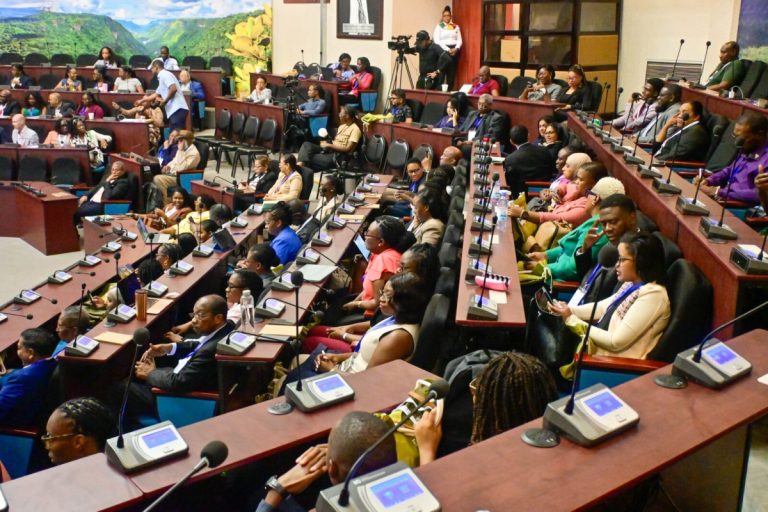
Participants at the CANQATE conference

The 22nd Caribbean Area Network for Quality Assurance in Tertiary Education (CANQATE) Conference opened on Wednesday at the Arthur Chung Conference Centre in Liliendaal under the theme “Education for Impact: Quality Assurance as a Catalyst for Social and Economic Transformation.”

It brings together education leaders, policymakers, accreditation professionals, and other stakeholders from across the Caribbean and beyond to explore how quality education, innovation, and strong education systems can support human development, economic competitiveness, and regional transformation.

In a pre-recorded address to participants, Minister of Education Sonia Parag urged them to remain focused on the purpose and impact of their work.

“This year’s theme asks us to consider a question that should remain central to every decision we make in education and what difference our work makes in the lives of the people we serve,” she emphasised, stating that “We have a duty to make that promise worthy of their trust.”

The minister underscored that behind every programme reviewed and every accreditation decision is an individual whose future will be shaped by the standards established.

Minister of Education Sonia Parag

Highlighting Guyana’s commitment to expanding access to tertiary education, Minister Parag noted that under the leadership of President Dr Mohamed Irfaan Ali, Guyanese students are benefitting from tuition-free tertiary education.

Established in 2004 as a sub-network of the International Network for Quality Assurance Agencies in Higher Education, CANQATE’s mission is to enable members to share information about the maintenance, evaluation, accreditation and improvement of higher education and disseminate good practices in the field of quality assurance.

CANQATE President Dr Sherlene Enriquez-Savery

CANQATE President, Dr Sherlene Enriquez-Savery emphasised the importance of quality assurance in ensuring that tertiary education delivers meaningful outcomes for students and contributes to social and economic transformation.

She highlighted the government’s commitment to expanding access to higher education through free tuition at the University of Guyana and thousands of online scholarships, noting that increased access must be matched by high academic standards and quality programmes that adequately prepare graduates for the workforce.

Dr Enriquez-Savery also challenged institutions to ensure students can think critically, question information and demonstrate genuine understanding.

The delegates were advised to use the conference to review existing approaches in CANQATE’s role in promoting regional cooperation and sharing expertise on quality assurance, and to listen to students’ concerns and develop practical commitments to strengthen higher education across the Caribbean.

CATEGORIES
TAGS


Source: Department of Public Information (DPI)