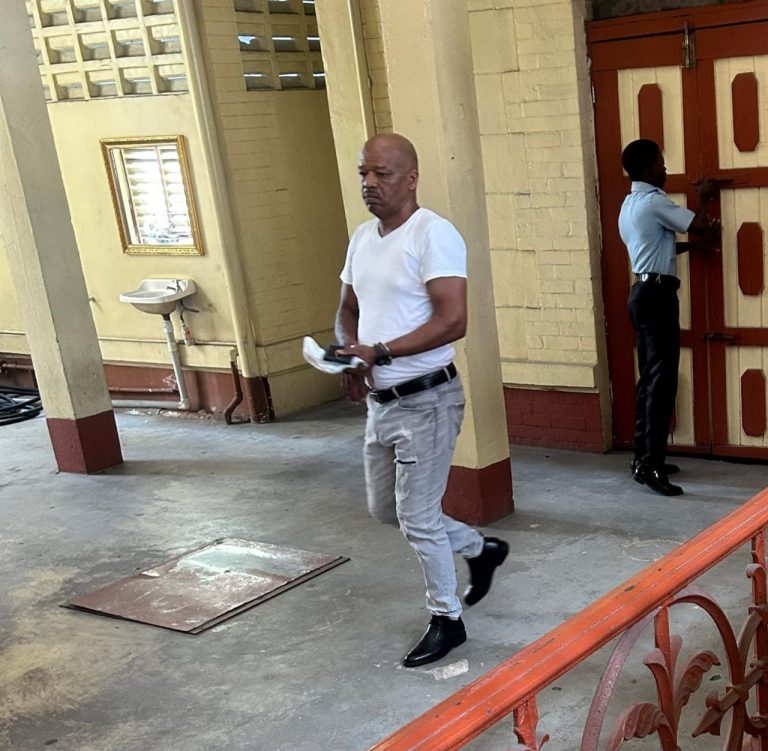
Minibus driver Andre Cameron was yesterday fined a total of $60,000 for failing to stop at a marked stop sign and dropping off a passenger at an unauthorised point.
Cameron appeared before Chief Magistrate Judy Latchman at the Georgetown Magistrate’s Court on charges arising from his driving on October 12, 2026, at Avenue of the Republic, Georgetown. He was also charged with failing to display the required fare structure and was placed on $20,000 bail.
Addressing the court, Cameron said he had not displayed the fare structure on his windscreen because it could distract him while driving.
He also offered an explanation for the passenger’s exit, saying traffic was heavy as he turned to make a stop and the passenger opened the door and jumped out while the vehicle was turning.
The prosecutor said Cameron was cautioned and arrested after the offences were observed and offered no objection to bail.
Cameron told the court that he had no other pending matters and had never been convicted of a traffic offence.
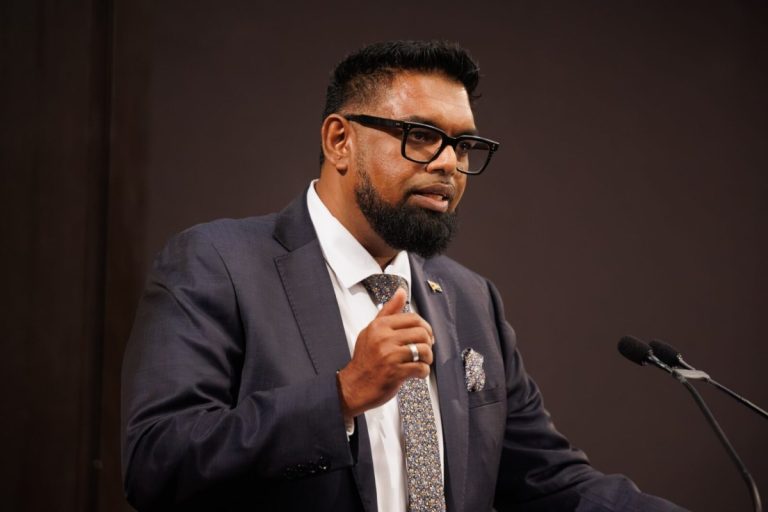
President Dr Mohamed Irfaan Ali’s continued advocacy for biodiversity conservation and sustainable development has earned him a distinguished international appointment as a Commonwealth Champion of Biodiversity, further recognising Guyana’s growing influence in shaping the global environmental agenda.
The appointment, announced on Wednesday, acknowledges the head of state’s efforts to mobilise international partnerships and advance an approach to conservation that transforms the protection of nature into tangible economic opportunities and lasting prosperity for people and communities across the Commonwealth and beyond.
President Dr Mohamed Irfaan Ali
President Ali is currently attending the Commonwealth Heads of Government Meeting (CHOGM) in Antigua and Barbuda, where the recognition adds to Guyana’s growing profile in international environmental leadership.
Central to this vision is the president’s establishment of the Global Biodiversity Alliance (GBA), an initiative designed to bring governments, institutions and global partners together to accelerate biodiversity financing and turn environmental commitments into measurable results.
The initiative has recorded significant expansion since its establishment in July 2025 with 17 founding members. It now boasts 149 members, including major countries such as China, India, France, Colombia, the United Arab Emirates and Panama.
The Desert Vipers also made history as the first global sports team to join the alliance.
In October, Guyana hosted the second GBA Summit at the Arthur Chung Conference Centre (ACCC), which was attended by His Majesty King Charles III, alongside international leaders and stakeholders.
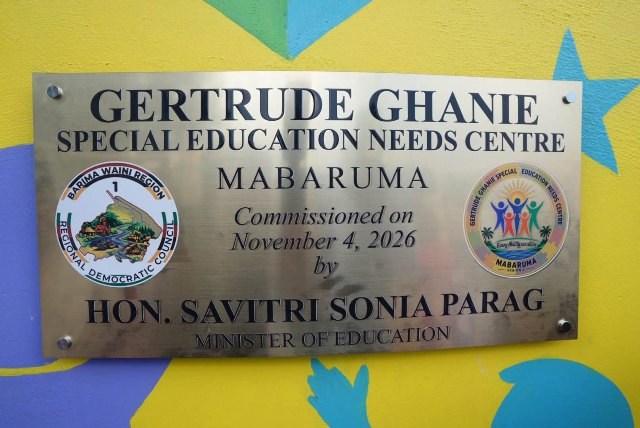
The Government of Guyana continues to advance its commitment to inclusive and specialised education with the official opening of Region One’s first Special Education Needs and Disabilities (SEND) school in Mabaruma.
The opening marks a significant milestone in expanding access to specialised educational services, ensuring that learners with diverse needs across the region are provided with greater opportunities to learn, develop and reach their full potential.
The facility is named in honour of Gertrude Ghanie, a former teacher whose unwavering dedication to education went beyond the call of duty. The tribute recognises her invaluable contribution to the sector and the lasting impact she made on the lives of learners across the region.
The school was officially commissioned on Wednesday afternoon by Hon. Sonia Parag, Minister of Education, in the presence of Hon. Collin Croal, Minister of Housing; Regional Chairman, Mr Brentnol Ashley; Deputy Chief Education Officer (Administration), Ms Tiffany Harvey; Assistant Chief Education Officer – Special Education Needs and Disability, Dr. Keon Cheong; Chief Schools’ Inspector, Ms Renita Barnes and other regional officials.
Constructed at a cost of $37 million, the facility is equipped to provide a supportive and inclusive learning environment for children with special educational needs and disabilities. It is staffed with a trained teacher in SEND-ADE and supported by teacher aides, ensuring that learners receive the individualized attention, care and educational support necessary to reach their full potential. The center has the capacity to accommodate 30 learners.
In her feature address, Minister Parag emphasised that the establishment of the school in Mabaruma reflects the government’s broader vision of bringing specialised educational services closer to communities, eliminating the need for families to travel long distances to access the support their children require.
She further underscored the government’s commitment to decentralising essential services and ensuring that educational opportunities are accessible to every child, regardless of geographical location or individual learning needs.
Meanwhile, Minister Croal highlighted the importance of investing in facilities that serve the needs of communities, noting that the establishment of the school represents a meaningful step towards ensuring that children with special educational needs are supported and provided with opportunities to thrive. The ceremony also saw the commissioning of a specially equipped bus to transport learners with special educational needs and disabilities, further improving access to education while easing the transportation burden on students and their families.
Following a community engagement Wednesday evening, Minister within the Ministry of Agriculture Vikash Ramkissoon has reaffirmed the government’s commitment to addressing community concerns and ensuring continued follow-up on issues affecting residents of Noitgedacht, Canal No. 1, West Bank Demerara.
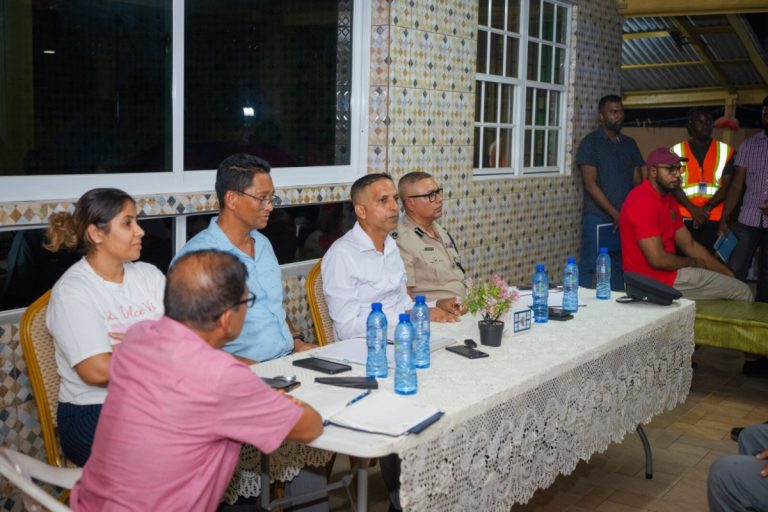
The minister, accompanied by GuySuco CEO Paul Cheong and Commander Khali Pareshram, met with residents and representatives from several government agencies to discuss outstanding concerns relating to drainage, roads, water, street lighting, public safety and community development.
(From left) Vice Chair of Noitgedacht, GuySuCo CEO Paul Cheong, Minister within the Ministry of Agriculture Vaikash Ramkissoon and Police Commander Khali Pareshram
Minister Ramkissoon assured residents that the issues raised would be reviewed by the relevant agencies, with the aim of providing relief and ensuring continued engagement with the community.
“We will go back, dissect the issues that we have, and we will try to bring relief to you,” the minister said.
Another resident of the community voicing her concerns to the minister
The minister emphasised that community engagement remains an important part of the government’s approach to development, noting that residents must be involved in identifying the challenges affecting their communities.
“Policies can only be formulated with an understanding of the challenges and the issues that you face,” Minister Ramkissoon stated.
Moreover, the minister underscored that the government remains accessible to residents and committed to ensuring that development initiatives respond to their needs.
“Everything that we do, it is centred around the people,” minister said.
Minister Ramkissioon also addressed concerns relating to agricultural land clearing, urging farmers to ensure that lands cleared through government-supported initiatives are used for productive purposes.
The agriculture minster explained that the resources allocated to land clearing are intended to support agricultural production and contribute to the continued development of the sector.
Minister Ramkissoon addressing a resident of Noitgedacht
“We cannot reutilise resources for people who will not utilise it for productive purposes,” Minister Ramkissoon said, emphasising the importance of making productive use of cleared lands.
During the engagement, residents also raised concerns about the use of community spaces, public safety, road conditions and the need for improved infrastructure.
Minister Ramkissoon assured residents that the relevant agencies would continue working with them to address the issues raised, reiterating that the government remains committed to maintaining dialogue and following up on community concerns.
The engagement brought together representatives from the Guyana Police Force, the National Drainage and Irrigation Authority (NDIA), the Neighbourhood Democratic Council (NDC) and the Ministry of Public Works to hear residents’ concerns and identify possible solutions.
The government is working to strengthen the local content framework to create more opportunities for Guyanese businesses to participate and grow in the oil and gas sector.
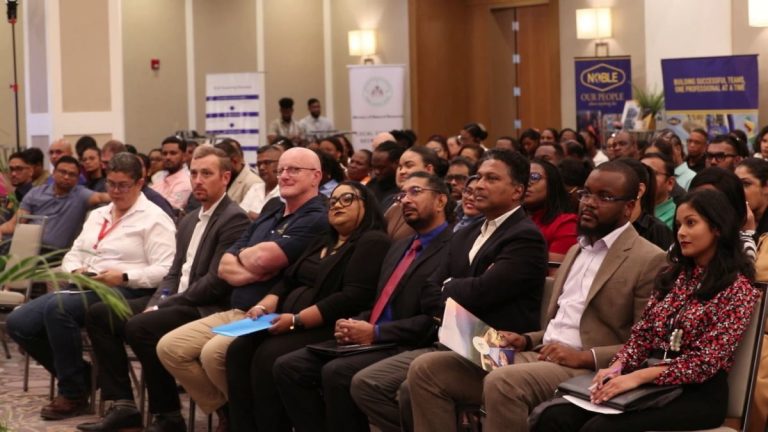
This was according to the Director of the Local Content Secretariat, Michael Munroe while delivering the keynote address at the Guyana Supplier Forum 2026 on Wednesday.
Director of the Local Content Secretariat, Michael Munroe
He said the focus has shifted from determining whether local businesses can participate in the petroleum industry to ensuring they achieve sustainable growth and long-term competitiveness.
“The capability conversation is out the door, more or less,” he noted, emphasising the importance of building resilient Guyanese businesses that can expand their services and compete regionally.
The forum, hosted by the Centre for Local Business Development in collaboration with ExxonMobil Guyana and its prime contractors, was held under the theme “From Capability to Growth: Building Guyanese Businesses for Long-Term Success.”
Munroe said government, industry operators and local businesses must work together to ensure participation in the petroleum sector translates into meaningful and lasting economic benefits for Guyanese.
He identified several areas requiring greater attention from industry operators, including providing early information on upcoming procurement opportunities, structuring contracts to facilitate local participation and investing in suppliers that have demonstrated the capacity to deliver.
The director also highlighted the importance of ensuring that procurement requirements do not create unnecessary barriers for local businesses, while encouraging companies to provide opportunities for upskilling and strengthening supplier capabilities.
For Guyanese businesses, Munroe stressed that securing contracts must be supported by sound business models, investment in technology, stronger organisational systems and workforce development.
He also encouraged local companies to pursue genuine partnerships with Guyanese and international businesses, noting that such arrangements must ensure meaningful ownership, control and value remain with the Guyanese participants.
Turning to the government’s role, Munroe said an enabling regulatory framework is necessary to facilitate business growth and support the continued development of the petroleum industry.
“Government regulation must be nimble,” he said, emphasising the need for timely responses that support business activity rather than create unnecessary obstacles.
He confirmed that government is looking to amend the Local Content Act, following five years of experience implementing the legislation.
Munroe said the Local Content Secretariat is examining opportunities to expand the areas in which Guyanese businesses can participate, although the specific additions are still being considered by policymakers.
The Local Content Act, enacted in 2021, established requirements to prioritise Guyanese nationals and businesses in petroleum-sector employment and procurement. The Secretariat operates under the Ministry of Natural Resources and is responsible for administering the legislation.
The Supplier Forum brought together local businesses, industry representatives and key stakeholders to discuss procurement processes, upcoming contracting opportunities and the standards required to participate in the sector.
Participants also received procurement insights for 2027 from ExxonMobil Guyana and its prime contractors, including SBM Offshore, MODEC, SLB, Baker Hughes, Halliburton, Guyana Shore Base Inc., Saipem, Stena Drilling and TechnipFMC.
The programme also examined strategies for strengthening local enterprises, improving business readiness and building competitive and sustainable Guyanese businesses.
The engagement forms part of ongoing efforts to connect local suppliers with industry opportunities while supporting the continued development of Guyana’s petroleum sector.
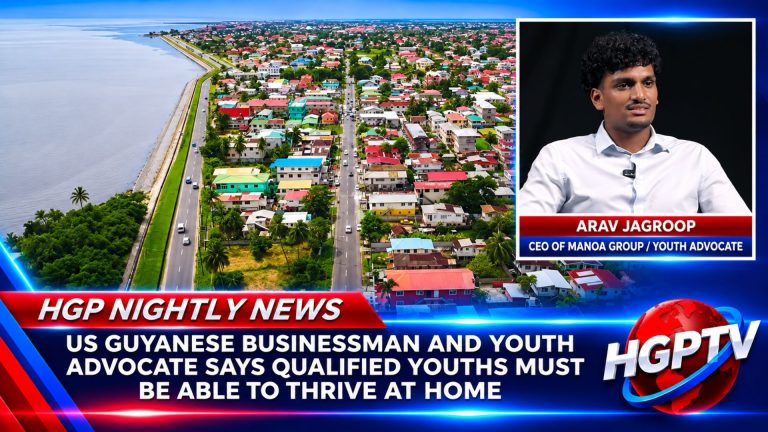
‘Guyana Must Build Social Infrastructure, Not Just Physical Structures’: 22-Year-Old Princeton Graduate and Manoa Group CEO Arav Jagroop Calls for Sustainable Career Pathways to Curb Brain Drain
By Antonio Dey | HGP Nightly News |
GEORGETOWN, GUYANA — As Guyana’s hydrocarbon-driven economy undergoes rapid transformation, 22-year-old entrepreneur, youth advocate, and CEO of Manoa Group, Arav Jagroop, is urging policymakers and private sector leaders to broaden the definition of national development beyond physical construction, insisting that qualified young Guyanese must be provided with viable, competitive opportunities to thrive at home rather than seeking greener pastures abroad.
Jagroop, a Guyanese-born Ivy League scholar who graduated from Princeton University in 2025 with a major in Politics and a minor in Finance, returned to Guyana intending to invest in his homeland through technology, workflow automation, and enterprise support.
However, in an in-depth interview with HGP Nightly News, the young corporate executive cautioned that building modern highways, commercial high-rises, and industrial facilities will yield limited long-term progress if the country fails to develop its human capital and retain its domestic intellectual talent.
Beyond Asphalt and Concrete: Investing in ‘Social Infrastructure’
While acknowledging that massive infrastructural upgrades across the country are essential to support macroeconomic growth, Jagroop argued that national progression fundamentally depends on social cohesion, public institutional investment, and grassroots human development:
Foundational Classrooms and Communities: The entrepreneur stressed that true societal advancement starts directly in educational classrooms, community youth programs, and athletic development rather than strictly on construction sites.
Creating an Inclusive Economy: Jagroop maintained that national progress must ensure everyday citizens feel connected to the country’s economic expansion, cautioning against growth models where rapid modernization outpaces public participation.
“Infrastructure is a very important aspect of Guyanese development… Having these different roads and different facilities are key, but we also have to think about social infrastructure. That is something very key to the progression of the Guyanese society—that has to start in our classrooms, social programmes, and our sports.” — Arav Jagroop, CEO of Manoa Group
Stemming the Brain Drain: Competitive Careers Over Rhetoric
Addressing the historical pattern of Guyanese professionals emigrating to North America, Europe, and neighboring territories, Jagroop asserted that reversing the brain drain requires concrete economic opportunities rather than patriotic appeals:
Practical Career Progression: Qualified graduates from the University of Guyana and technical institutions need competitive compensation packages, structured career mobility, and modern tools to build financial stability within Guyana’s borders.
Participatory Growth: Emphasizing that youth should not be mere spectators to foreign investment, Jagroop argued that the domestic market must empower local founders and young professionals to take ownership of expanding supply chains.
“Guyanese people need more experiences and opportunities to grow themselves rather than just the construction that is happening in the country. We need to construct a more sustainable country where everyone feels they are more part of it and they have the opportunity to succeed.”
Gen-Z at the Policy Table: ‘This Place Is Your Home’
Turning to generational representation, Jagroop underscored that Generation Z holds an essential stake in policy formation, governance, and long-term economic planning:
Youth Representation in Governance: The 22-year-old emphasized that younger generations must have a direct voice in civic dialogue and legislative policy, pointing to the growing civic consciousness among Guyanese youth regarding current affairs.
Manoa Group’s Mission: Through Manoa Group—which focuses on business automation and digital systems for small and medium-sized enterprises (SMEs)—Jagroop aims to demonstrate that young Guyanese can build globally competitive technical solutions locally while giving back to their homeland.
“That is very important: to create a society where young people have a say and where [it is] ultimately deserved… This is what I hope to express through Manoa and vocalising myself: this place is your home, this place is my home.”
As Guyana balances short-term construction booms with long-term economic planning, Jagroop’s perspective raises a pivotal question for national leaders: how can economic development translate into lasting social infrastructure and domestic opportunities that keep Guyana’s brightest minds at home?
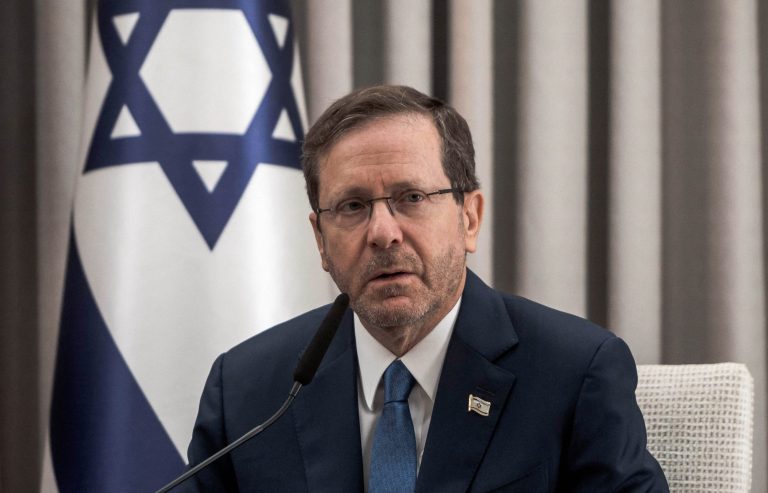
Israeli President Isaac Herzog on Wednesday accepted as legally binding the certified results from last week’s parliamentary elections and said he would begin consultations with party representatives on the formation of a new government.
Herzog’s acceptance of the results as valid dealt a blow to Prime Minister Benjamin Netanyahu’s effort to discredit the vote in which his religious-nationalist bloc lost its majority in the Israeli parliament, or Knesset, while Arab-led parties made historic gains.
Netanyahu and his supporters have repeatedly made unsubstantiated claims that the Arab-led parties had “stolen” the election, possibly with foreign assistance.
The Israeli president is required now to sit down with various party leaders to determine who to name as prime minister-designate — a process that could potentially bring Netanyahu’s opponents to power.
Israel’s election commission said earlier on Wednesday that after a thorough investigation of all parties’ claims of fraud it had found “no evidence of irregularities that compromised the integrity of the election or affected its results.”
Netanyahu’s Likud party did not respond to a request for comment.
A separate investigation by the Shin Bet intelligence service, which is headed by David Zini, a Netanyahu appointee and loyalist, into allegations of foreign interference in the election is still ongoing.
Israeli President Isaac Herzog
In a private meeting Wednesday of the election committee’s members, its head, Supreme Court Justice Noam Sohlberg, read out an intelligence assessment from the Shin Bet saying the agency believed there had been a “widespread phenomenon involving the influx of substantial funds into Israel from foreign states,” including from countries hostile toward Israel.
The Shin Bet provided no evidence to explain its assertion. The Associated Press obtained a transcript of the assessment from a person who attended the meeting. The person requested anonymity to discuss a closed-door meeting.
The committee has previously said that while claims about foreign actors seeking to influence the election are serious and under investigation, it does not believe that any such interference affected the results — even if it had happened.
Sohlberg reiterated that stance on Wednesday.
“At this stage, these are merely suspicions, and even if they are substantiated, the scope of their potential impact is limited,” he said during a ceremony to present the certified election results to Herzog.
Sohlberg added that it was dangerous to cast doubt on the results and said they are legally binding.
Public trust in the electoral process is “easy to destroy, yet very difficult to repair,” he warned.
In the Oct. 27 vote, neither Netanyahu’s bloc nor the bloc of allies of his chief rival, opposition leader Gadi Eisenkot, secured a parliamentary majority needed to form a new government, raising the possibility of an alliance between the two rivals or an alliance between Eisenkot and some of the Arab-led parties.
Israel’s president is now expected to begin a series of sit-downs with political parties. The meetings are expected to unfold over the next several days.
Herzog is then to choose the candidate — most likely Netanyahu or Eisenkot — who he believes is most likely to be able to form a coalition government, setting the stage for weeks of negotiations. If neither man can put together a government, the country would hold a new election early next year.
The Shin Bet had requested approval from Israel’s attorney general on Tuesday to interrogate several elected officials as part of the agency’s separate probe, including the Ra’am party leader Mansour Abbas and other senior Arab lawmakers, Israeli media reported.
The request was sharply rejected. “It is not permissible to interrogate citizens or elected officials without evidence to justify such action,” Attorney General Gali Baharav-Miara said.
The Joint List of Arab parties condemned the request, calling it a “campaign of incitement” by Netanyahu and his allies designed to delegitimize the Arab vote.
A far-right ally of Netanyahu, Itamar Ben-Gvir, rejected the committee’s findings that the elections were valid.
He called on the Shin Bet, over which he has no jurisdiction, to “arrest all the leaders of the Arab political parties” and to interrogate them in “basement interrogation cells until these suspicions are fully clarified.”
Herzog said Wednesday that the Shin Bet investigation into possible foreign interference should play out. But he cautioned that Arab Israeli voters “must not be smeared.” “I condemn the coarseness and racist expressions that we have heard recently,” Herzog said. (NBC)
Discover more from INews Guyana
Subscribe to get the latest posts sent to your email.
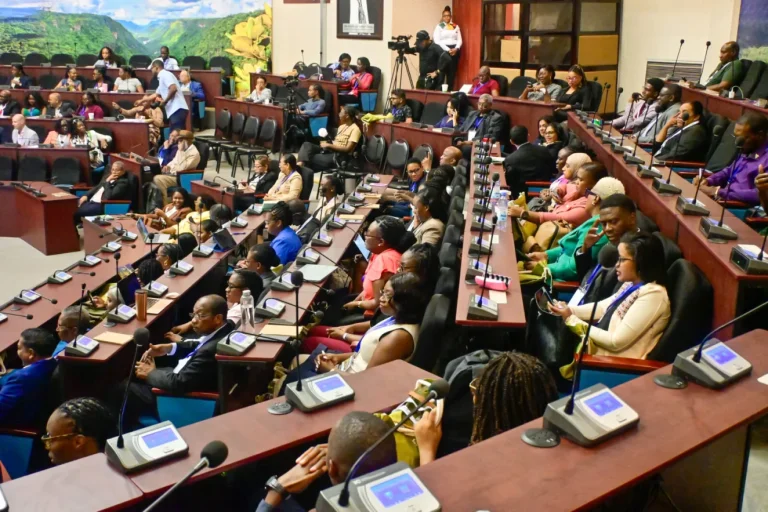
The 22nd Caribbean Area Network for Quality Assurance in Tertiary Education (CANQATE) Conference opened on Wednesday at the Arthur Chung Conference Centre in Liliendaal under the theme “Education for Impact: Quality Assurance as a Catalyst for Social and Economic Transformation.”
It brings together education leaders, policymakers, accreditation professionals, and other stakeholders from across the Caribbean and beyond to explore how quality education, innovation, and strong education systems can support human development, economic competitiveness, and regional transformation.
In a pre-recorded address to participants, Education Minister Sonia Parag urged them to remain focused on the purpose and impact of their work. “This year’s theme asks us to consider a question that should remain central to every decision we make in education and what difference our work makes in the lives of the people we serve,” she emphasised, stating that “We have a duty to make that promise worthy of their trust.”
The minister underscored that behind every programme reviewed and every accreditation decision is an individual whose future will be shaped by the standards established.
Highlighting Guyana’s commitment to expanding access to tertiary education, Minister Parag noted that under the leadership of President Dr Mohamed Irfaan Ali, Guyanese students are benefitting from tuition-free tertiary education.
Established in 2004 as a sub-network of the International Network for Quality Assurance Agencies in Higher Education, CANQATE’s mission is to enable members to share information about the maintenance, evaluation, accreditation and improvement of higher education and disseminate good practices in the field of quality assurance.
CANQATE President, Dr Sherlene Enriquez-Savery emphasised the importance of quality assurance in ensuring that tertiary education delivers meaningful outcomes for students and contributes to social and economic transformation.
She highlighted the government’s commitment to expanding access to higher education through free tuition at the University of Guyana and thousands of online scholarships, noting that increased access must be matched by high academic standards and quality programmes that adequately prepare graduates for the workforce.
Dr Enriquez-Savery also challenged institutions to ensure students can think critically, question information and demonstrate genuine understanding.
The delegates were advised to use the conference to review existing approaches in CANQATE’s role in promoting regional cooperation and sharing expertise on quality assurance, and to listen to students’ concerns and develop practical commitments to strengthen higher education across the Caribbean.
Discover more from INews Guyana
Subscribe to get the latest posts sent to your email.
The Environmental Protection Agency (EPA) notes with considerable amusement the latest attempt to manufacture controversy over its investment in training and human resource development, as reported in sections of the media.
See full statement below:
It is frankly laughable that investing in the very capacity necessary to effectively regulate Guyana’s rapidly expanding economy is now being portrayed as something scandalous
For years, some of these same detractors have repeatedly claimed that the EPA lacks the capacity to regulate the oil and gas sector, often relying on outdated assessments and perceptions dating back to 2018. Now, when the Agency invests in strengthening its technical expertise and human resources, that too becomes a problem.
So, what exactly do these critics want?
An EPA that remains stagnant, under-resourced and dependent on yesterday’s knowledge? An EPA that cannot competently assess complex developments? Or an EPA that simply prevents development because it lacks the expertise to properly regulate it?
One cannot credibly demand stronger regulatory capacity while simultaneously condemning the investments necessary to build it.
And the facts speak for themselves.
EPA Head Kemraj Parsram
In 2025, 144 EPA employees participated in 77 distinct training programmes, representing 418 training participations. These included training in environmental legislation, compliance inspections, environmental risk assessment, oil spill response, emergency planning, incident command, radiological environmental impact assessment and public procurement.
These are not frivolous activities. They are competencies directly relevant to the Agency’s responsibility to assess environmental impacts, manage risks, enforce compliance and respond to environmental emergencies.
The reported expenditure of approximately $13.8 million must therefore be considered in that context. Where is the evidence that this investment was unnecessary or wasteful? Where is the analysis of the competencies developed or the regulatory needs addressed?
An increase in training expenditure is not evidence of waste, and a sensational headline is not a credible assessment of institutional performance.
Perhaps more concerning is that some detractors appear to believe the EPA should be in the business of stopping development altogether. Once again, they are missing the bigger picture and the vision for Guyana’s future.
Guyana needs to develop. Our people deserve economic opportunities, improved infrastructure, better services and a higher standard of living.
The EPA’s mandate is not to indiscriminately prevent development. It is to ensure that development is properly assessed, that significant environmental impacts and risks are identified and appropriately managed, and that projects proceed with the necessary environmental safeguards. Where risks are unacceptable or cannot be adequately managed, the Agency must exercise its regulatory authority accordingly.
Environmental regulation is not about automatically saying yes or no to development. It is about making sound, science-based decisions that protect the environment while enabling responsible development.
And that is precisely what our investment in capacity is helping us to achieve.
The world has moved on. We are living in an era of artificial intelligence, satellite-based environmental monitoring, advanced technologies and increasingly complex industrial development. Environmental regulators must continuously learn, adapt and innovate to remain effective.
How is institutional resilience built? Certainly not by standing still. It is built through continuous learning, investment, innovation and improvement.
Yet some critics seem determined to keep the EPA frozen in 2018, as though Guyana’s economy, technology and regulatory institutions have remained unchanged.
An assessment from eight years ago cannot be treated as a permanent verdict on an institution’s capabilities. Capacity is not static, and neither is development.
There is a lesson here from innovators such as Elon Musk, whose achievements demonstrate the value of challenging conventional thinking, investing in expertise and refusing to remain constrained by yesterday’s limitations.
Unfortunately, some commentators appear more comfortable with the thinking of the last century than the realities of this one. Like dinosaurs, they risk becoming relics of an era the world has already moved beyond.
The EPA has no intention of joining them. We do not claim perfection. We recognise that strengthening regulatory capacity is a continuous process, and we remain committed to investing in our people, technology, scientific expertise and institutional systems.
Criticism is welcome when grounded in facts, evidence and a genuine understanding of environmental governance. But repeatedly questioning the Agency’s capacity while attacking its efforts to strengthen that very capacity is contradictory and intellectually unconvincing.
The EPA is not investing in capacity to prevent Guyana’s development. We are investing to ensure that development is properly assessed, responsibly managed, and subject to effective environmental safeguards.
Those who want to remain trapped in the thinking of 2018 are free to do so. The EPA has no intention of joining them.
Guyana is moving forward, and its environmental regulator must move forward with it. The real scandal would not be an EPA investing in its capacity. It would be an EPA that failed to do so.
Discover more from INews Guyana
Subscribe to get the latest posts sent to your email.
The discovery of vaping devices in the possession of primary schoolchildren has prompted a fresh call for urgent government intervention, with Forward Guyana Movement (FGM) Regional Democratic Council (RDC) councillor Tinifa Stoll questioning the pace of action following President Irfaan Ali’s announcement of restrictions on vaping products last month.
Fast raised the concern following Wednesday’s, November 4, 2026, meeting of the Region Four RDC Education Committee, where the presence of vaping products among schoolchildren, including those at the primary level, was identified as an ongoing problem.
Her intervention comes just over two weeks after President Ali, on October 17, announced that his Government would restrict the importation of vaping products into Guyana, citing growing concerns about their accessibility and use among children and teenagers, particularly within the school system.
During a national address, Ali said Finance Minister Dr Ashni Singh would sign an order under the Customs Act, Chapter 82:01, prohibiting the importation of vaping products, except those approved by the Minister of Health or the relevant tobacco control authorities.
The President described the proposed restriction as a measure to protect children and the wider population, declaring: “We have to protect our children. We have to protect our schools. We have to protect our society.”
However, the latest concerns raised at the Region Four Education Committee indicate that the problem of children’s access to vaping products remains a pressing issue, raising questions about the effectiveness of existing safeguards, enforcement against retailers and the timeline for implementing the announced restrictions.
Stoll is now demanding that the Government move beyond its announcement and provide a definite implementation schedule, while calling on consumer protection authorities to take action against supermarkets and other establishments selling vaping products to minors.
In her statement, she said:
Today’s meeting of the Education Committee of the Region 4 Regional Democratic Council, November 4, 2026, highlighted an ongoing and troubling problem where vapes are being found in the possession of schoolchildren, including children at the primary level. The government has indicated that it intends to introduce measures to address this issue. I urge it to expedite those measures and provide a clear timeline for implementation.
The issue also raises questions about the enforcement of existing legislation. Guyana’s Tobacco Control Act of 2017 already provides a regulatory framework for electronic delivery systems, including restrictions on sales where a purchaser’s age has not been verified, alongside requirements governing packaging, labelling and advertising.
Meanwhile, Attorney General and Minister of Legal Affairs Anil Nandlall subsequently explained that the Government had considered different approaches, including legislation outlawing vaping and possession of vaping products, but had opted to pursue restrictions on importation through the Customs Act.
The distinction is significant. Restricting imports may limit the entry of additional products into the country, but it does not, by itself, explain how authorities will address vaping devices already in circulation or prevent retailers from selling them to children.
Fast is insisting that meaningful penalties and effective enforcement must form part of the Government’s response.
The presence of these products among primary schoolchildren underscores the urgency of protecting children from accessing them. The government and the relevant consumer protection authorities must address the sale of vaping products to children by supermarkets and other establishments, with meaningful penalties and effective enforcement.
She also placed responsibility on parents and guardians, warning that vaping products kept in households can find their way into schools if adults fail to secure them properly. She urged parents to have direct conversations with their children about the risks associated with vaping.
Parents and guardians also have a critical responsibility. Adults who use vaping products at home must keep them securely out of children’s reach to prevent children from accessing them and taking them to school. Families should also speak with their children about the risks associated with vaping.
President Ali, when announcing the proposed restrictions, had cited warnings from the World Health Organization about potential exposure to toxic substances, respiratory problems and nicotine addiction, including the potential effects of nicotine on brain development in children and adolescents.
The Government has also indicated that legitimate medicinal and therapeutic applications could be exempted, subject to approval by the relevant health authorities.
Stoll’s latest intervention therefore places renewed attention on whether the announced measures will be accompanied by a comprehensive enforcement and public education programme addressing the supply of vaping products, their availability in communities and children’s access to them.
She concluded by demanding that the Government respond promptly to the concerns raised by educators and regional officials.
The concerns raised at today’s Education Committee meeting require a prompt response. I call on the government to move swiftly from announced intentions to implementation, supported by enforcement and education for retailers, parents and schoolchildren.
FGM holds one seat in Guyana’s 65-member National Assembly, giving the party a parliamentary platform through which to raise matters of public policy and accountability.
The latest concerns present a challenge that extends beyond school discipline. While schools can introduce rules and educate pupils, preventing children from obtaining vaping products also requires effective regulation of commercial outlets, enforcement of existing laws and accountability from those supplying the devices.
With primary schoolchildren now being identified among those possessing vaping products, the central question is no longer simply whether the Government intends to act, but when its announced measures will become enforceable and how authorities will ensure that children are protected.