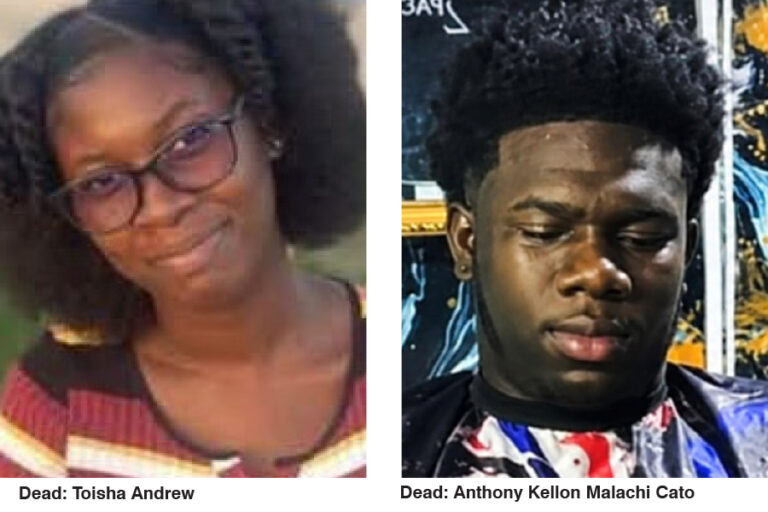
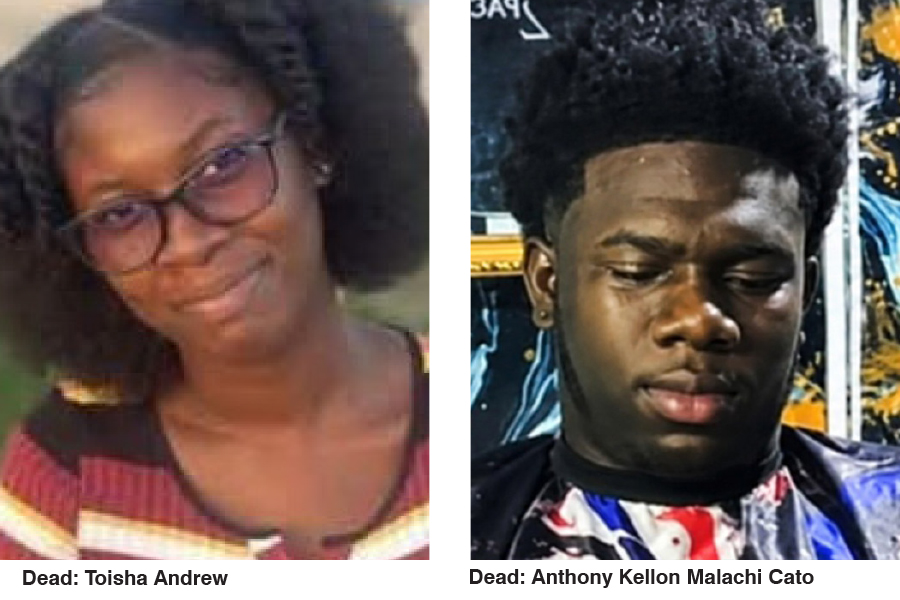
A 17-year-old student and her 21-year-old boyfriend were killed in a shooting at Block 22 Squatting Area, Wismar, Linden, on Monday afternoon.
Dead are Toisha Andrew, a student of the Linden Technical Institute, who resided at Block 22 Squatting Area, and Anthony Kellon Malachi Cato, a 21-year-old 10-day worker of Phase 3, Murphy Street, Amelia’s Ward, Linden.
According to preliminary information, Andrew had just returned home from school at about 16:30h when Cato approached her armed with a handgun.
Cato reportedly discharged one round, striking Andrew to her forehead, causing her to fall to the ground.
He then turned the firearm on himself and discharged a round before falling to the ground and becoming motionless.
Andrew was taken to the Linden Hospital Complex, where she was pronounced dead on arrival.
Cato’s body remained at the scene, with a handgun reportedly found next to it.
Police have since launched an investigation into the circumstances surrounding the shooting.
Discover more from Guyana Times
Subscribe to get the latest posts sent to your email.
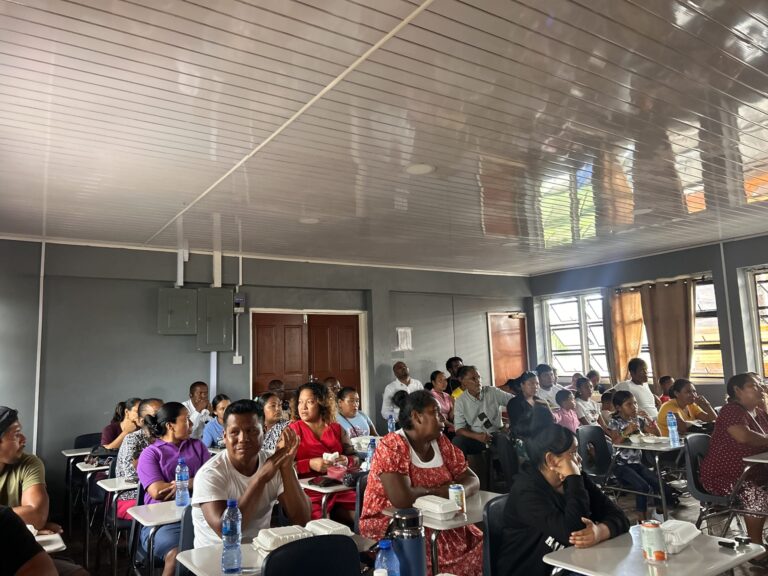
Ahead of the commencement of formal hearings on Wednesday, the Commission of Inquiry (CoI) into the sinking of the MV Barima visited Mabaruma, Region One (Barima-Waini) on Monday to hear firsthand from survivors and encourage them to give evidence before the Commission.
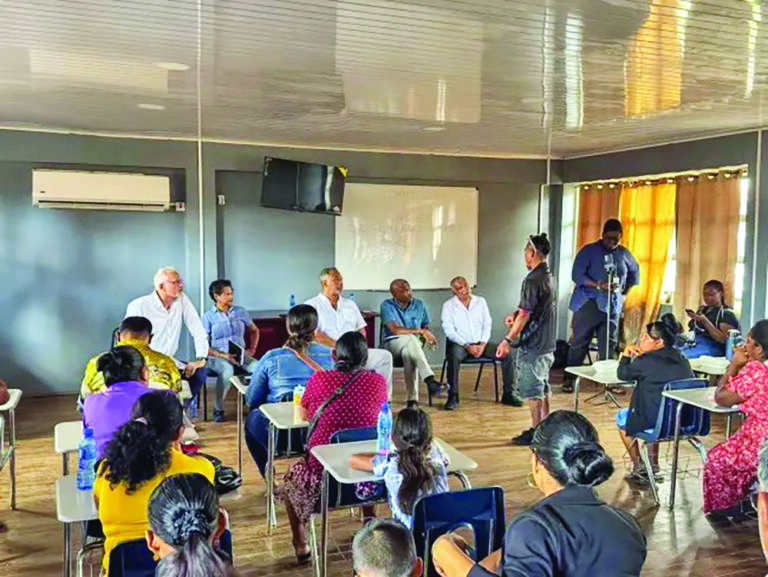
COI Commissioners during the Mabaruma, Region One (Barima-Waini) visit on Monday
During the community engagement at the Narei Extension Centre, Commissioners assured survivors that appropriate arrangements would be made for those who choose to testify at the hearings in Georgetown.
According to a Department of Public Information (DPI) report, while the meeting was not a formal hearing or a session for taking testimony, it allowed survivors and bereaved families to meet the five Commissioners, discuss the inquiry’s objectives and raise questions about the investigation.
About 36 persons from Mabaruma and surrounding communities in Barima-Waini attended, some travelling long distances.
Among them was Andre Cox, Toshao of White Water, who raised questions on behalf of families he said were unable to attend.
They wanted to know how long the investigation would take and when the sunken vessel would be raised.
The DPI reported that Commission Chairman, Justice Godfrey Smith said the team anticipated taking about six months to complete its findings and submit a report to President Dr Mohamed Irfaan Ali.
Raising the MV Barima, however, was outside the commission’s responsibility, he explained, noting that it as a matter rested with the Government.
Cox also asked what was planned for those who had been aboard the vessel and remained unaccounted for.
Justice Smith acknowledged the question, but said he did not have an answer.
The Toshao told Commissioners that a psychologist visits White Water every Monday to provide support to survivors and affected families.
Alongside questions about the investigation came deeply personal accounts of survival and loss.
Leon Murray, the DPI reported, recounted his struggle to survive that night. He pointed to his son, seated at the back of the room, who had also survived. His wife and other children did not.
His voice cracked as he spoke, and many in the room could not hold back their tears.
Commissioners listened attentively, took notes and asked questions to clarify details.
Asked afterwards about the visit, Murray said he “thanked God they came to investigate what happened and how it happened,” adding that he “was pleased that they came”.
For fellow survivor Ormon Cox, the memories were of long hours in the water, surrounded by pitch darkness.
He described removing his belt and using it to strap empty plastic bottles together to help him stay afloat.
After the meeting, Cox said recounting the ordeal often brought on intense headaches.
Even so, he felt it was important to meet the Commissioners. He said he had much more to tell them and looked forward to giving testimony before the inquiry.
Leroy Jerome’s visit coincided with a painful milestone: his son, who died when the Barima sank, would have turned three on Monday.
Jerome travelled from Barima to paint his son’s tomb and meet the Commissioners. He said he was “happy that the Commissioners came to meet the survivors and families”.
Maria Bowring and her husband, Albert Wells, lost their daughter and her children. They said their daughter, who had lived in Georgetown for years, was coming to visit them. She never made it home.
According to the DPI report, at the close of the engagement, many stayed behind to personally thank the Commissioners for undertaking the investigation.
Several pledged to attend the hearings in the coming weeks, if not to give testimony, then to show their support.
Appointed by President Ali, the Commission is tasked with investigating what went wrong and recommending measures to prevent a similar tragedy.
Its community engagements and facility visit form part of its work to better understand the circumstances surrounding the sinking and its impact.
During the Mabaruma visit, Commissioners also conducted a walkthrough of the wharf and cargo area before returning to Georgetown.
The MV Barima departed Georgetown on July 18, bound for Mabaruma before continuing to Port Kaituma.
The journey from Georgetown to Mabaruma usually takes between 14 and 24 hours. The vessel sank late that night.
Justice Smith, of Belize, a former Justice of Appeal, chairs the five-member inquiry. Serving alongside him are Captain Hamada Fouda, an Egyptian residing in Jamaica and a maritime surveyor and safety specialist; Nyree Dawn Alfonso of Trinidad and Tobago, an attorney specialising in maritime law; Dr Andrzej Jasionowski of Poland, a naval architect and marine engineer; and retired Rear Admiral Hayden Pritchard of Trinidad and Tobago, an expert in maritime operations and security.
The Commission is scheduled to visit Port Kaituma today.
Discover more from Guyana Times
Subscribe to get the latest posts sent to your email.
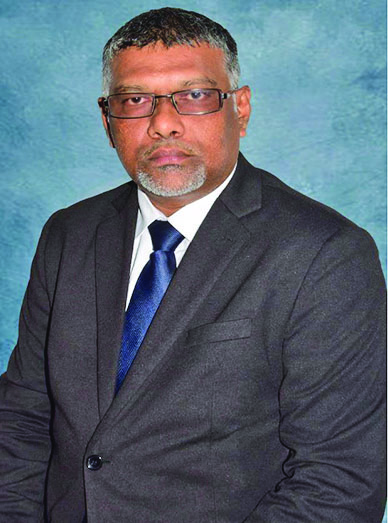
The Prosecution has filed its response to an application seeking to halt the murder proceedings against three Transport and Harbours Department (T&HD) employees charged over the July 18, 2026 MV Barima disaster, with Magistrate Ravindra Mohabir set to deliver his ruling next Monday.
Prosecutor Mandel Moore handed over the State’s reply when the matter was called on Monday at the Charity Magistrate’s Court. After confirming that the submissions had been laid over, Magistrate Mohabir scheduled October 19 at 10:00h to determine the application.
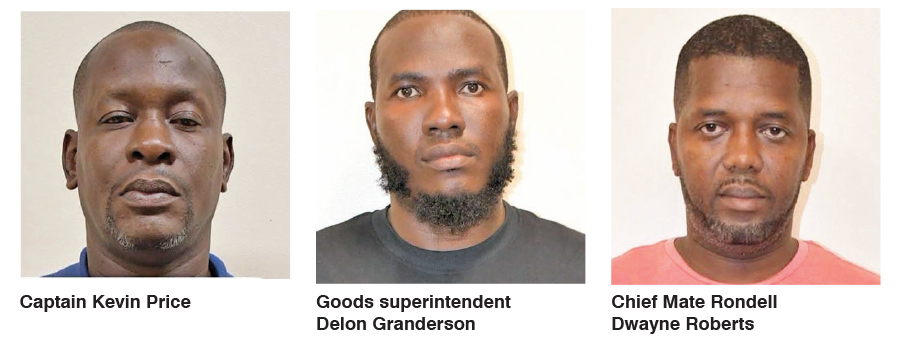
The application was brought by Defence Attorney Dexter Todd, who represents Captain Kevin Price, also known as “KP”, 40, of Melanie Damishana, East Coast Demerara, and goods superintendent Delon Granderson, 33, of Fellowship, West Coast Demerara.
Chief Mate Rondell Dwayne Roberts, 42, of Grove Public Road, East Bank Demerara, is represented by Attorney Everton Singh-Lammy. The three accused appeared virtually via Zoom and were further remanded to prison until the next hearing.
Todd is seeking a stay of the prosecution on grounds of abuse of process, arguing that the circumstances surrounding the disaster raise legal questions about the relationship between criminal proceedings and marine casualty investigations.
The defence has pointed to legislation, including the Shipping Act, which it contends governs the investigation of marine casualties. Todd previously argued that his clients had not been able to benefit from, or be guided by, the relevant investigations and should be afforded the protections available under the law.
He has also indicated that the application rests on several legal grounds and draws on legislation and case authorities concerning marine casualty investigations. The challenge, he suggested, could have wider implications for how such matters are addressed within Guyana’s legal system.
The case is at the preliminary stage, with paper committal proceedings scheduled to begin on November 16. Magistrate Mohabir has previously indicated that he intends to conclude the process by the end of November. During a paper committal, the Magistrate examines written statements and other documentary evidence to determine whether there is sufficient evidence to send the accused to the High Court for trial. Witnesses do not ordinarily give oral testimony or face cross-examination during this process.
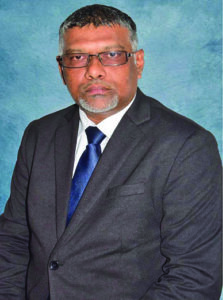
Magistrate Ravindra Mohabir
At a September 9 hearing, Moore told the court that the State had completed full disclosure of the evidence and material information gathered during the investigation. The defence was subsequently given time to review the material and to decide whether to file statements on behalf of the accused.
The three men were jointly charged with murder following legal advice from Director of Public Prosecutions, Shalimar Ali-Hack, SC. The DPP’s office has maintained that the decision followed an assessment of the evidence and applicable legal principles, including case law from the United Kingdom and other Commonwealth jurisdictions, authorities from the European Court of Human Rights and public policy considerations.
Price, Roberts, and Granderson first appeared before Chief Magistrate Judy Latchman at the Georgetown Magistrates’ Courts on July 28, 2026. They were not required to plead to the indictable charges and were remanded before the case was transferred to the Charity Magistrate’s Court.
Police allege that the men murdered passengers aboard the MV Barima when the vessel capsized on July 18, approximately 9.3 nautical miles off Devonshire Castle on the Essequibo Coast.
Following the tragedy, Prime Minister, Brigadier (Retired) Mark Phillips disclosed that two crew members had tested positive for marijuana during medical examinations conducted after the sinking.
The passenger and cargo ferry had left the T&HD Kingston Goods Wharf, Georgetown, around 15:15h, for its scheduled journey to Port Kaituma, Region One (Barima-Waini).
At approximately 23:01h, it transmitted a distress signal after encountering difficulties near the mouth of the Pomeroon River. There were 179 people aboard, including 18 crew members.
The disaster claimed 73 lives, while 76 persons survived. Approximately 30 others remain unaccounted for. The criminal case is proceeding alongside a separate Government-appointed five-member Commission of Inquiry (CoI) into the tragedy. The DPP has maintained that the two processes can run concurrently because they serve different legal purposes.
The CoI is expected to examine the circumstances surrounding the sinking, including regulatory oversight and the emergency response, and recommend measures to prevent a similar disaster.
Discover more from Guyana Times
Subscribe to get the latest posts sent to your email.
Kaieteur News- The Guyana Police Force (GPF) so far has failed to respond to claims that its ranks shot at the Opposition Leader Azruddin Mohamed while he was reportedly driving past the Head of Special Branch, Senior Superintendent Prem Narine’s home in an attempt to film what he called misuse of state resources by having heavy police security presence at his (Prem Narine) personal property.
Opposition Leader, Azruddin Mohamed deatined at the Kitty Police Station.
Mohamed was subsequently arrested along with two others and taken to the Kitty Police Station where they remain in police custody. The Opposition Leader claims that he was assaulted during the arrest.
Kaieteur News had reached out to the Corporate Communication Unit (CCU) of the GPF for clarification on the alleged shooting and arrest Mohamed but it failed to respond.
According to information reaching Kaieteur News, Azruddin Mohamed and his companions were driving along Barr Street, Kitty, near Prem Narine’s residence, attempting to record video footage highlighting the heavy security presence at the GPF Special Branch Head’s residence.
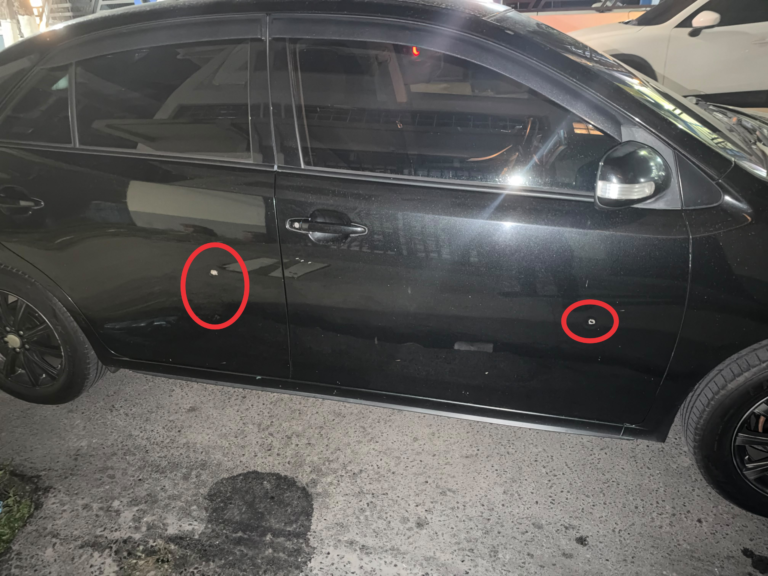
Reports indicate that during their second pass around the block, between five to seven gunshots were fired at their vehicle. Fearing for their lives, Mohamed’s driver sped away from the area. Three bullets struck the vehicle, leaving visible ballistic damage.
At the junction of Sandy Babb Street and Vlissengen Road, the vehicle was intercepted by a police pickup. Senior Superintendent Prem Narine, who previously referred to Mohamed as a “threat to national security” during court appearances in the extradition proceedings involving Azruddin and his father, personally exited the police vehicle and allegedly discharged additional shots toward the car, and forced the occupants out at gunpoint.
Azruddin Mohamed, Eugene Thorne, and Mario Mohamed were then reportedly beaten at the scene before being taken into custody.
Following the interception, the vehicle was transported from Vlissengen Road to the Kitty Police Station by Narine and his team. Initial checks of the vehicle had yielded nothing; however, a firearm was subsequently reported found inside the vehicle after its arrival at the station. Mohamed has vehemently denied any connection to the weapon, alleging that it was planted by Narine and his officers during transit.
All three men remain detained at the Kitty Police Station with Attorney-at-Law Siand Dhurjon present.
The alleged shooting incident comes some three hours after the GPF released a statement where action was taken in connection with an ongoing investigation into reports of dangerous driving by a vehicle travelling along the Cornelia Ida Public Road, West Coast Demerara to uplift Mohamed from Parika, East Bank Essequibo (EBE).
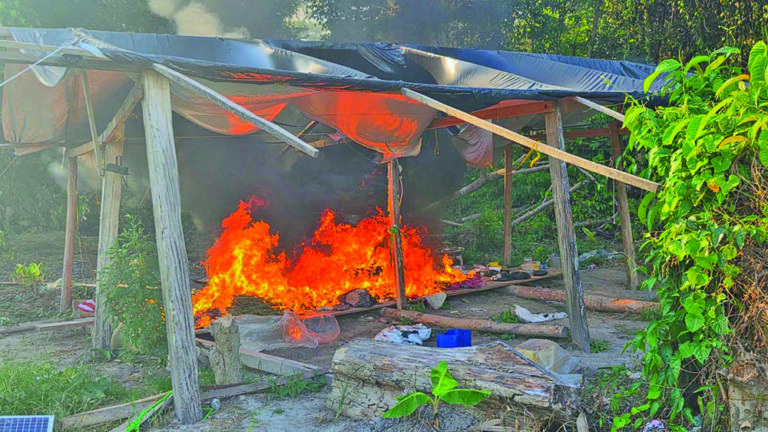
A 12-hour drug eradication exercise at Wiruni, Upper Berbice River, on Sunday has led to the discovery and destruction of four cannabis fields measuring approximately seven acres in total.
The first cultivation measured approximately two acres and contained about 15,000 cannabis plants ranging between four and six feet in height. A makeshift camp containing approximately 40 pounds of dried cannabis was also discovered.
The second cultivation measured approximately one acre and contained about 4000 ganja plants ranging between five inches and one foot in height.
The third field measured approximately two acres and contained about 10,000 cannabis plants ranging between five and six feet in height while the fourth farm measured approximately two acres and contained about 8000 cannabis plants ranging between six inches and two feet in height.
The cannabis plants, dried cannabis, and makeshift camp, valued at $26,832,112, were destroyed by fire. At the time of the operation, no arrests were made. Investigations are ongoing.
Discover more from Guyana Times
Subscribe to get the latest posts sent to your email.
Dear Editor,
Christopher Ram and others have raised the matter that the National Insurance Board has failed to pay the minimum old-age pension in accordance with the “NIS Benefit Regulations.” As it happens, I am one of those pensioners.
The Regulations require that the minimum pension paid must not be less than half (50%) of the Public Service minimum wage. However, the Public Service minimum wage has increased since 2021 but the minimum old-age pension has not accordingly increased as required by the Regulations.
For me, it seems a simple enough matter to fix, and the National Insurance Board should take immediate steps to do so. It should not have been necessary for this matter to have gone to Court.
Yours sincerely,
Kit Nascimento
Discover more from Guyana Times
Subscribe to get the latest posts sent to your email.
The Health Ministry’s decision to introduce random checks at hospitals and healthcare facilities is a practical step that can help strengthen the delivery of health care across Guyana.
The initiative, announced by Health Minister, Dr Frank Anthony, will see teams from the Ministry randomly reviewing patient records to determine whether doctors and nurses are adhering to established clinical guidelines, including those for common conditions such as diabetes and hypertension.
This approach is important because clinical guidelines exist for a reason and they provide healthcare professionals with evidence-based standards to guide diagnosis, treatment and follow-up. While individual patients may require different approaches, there must be a consistent standard of care against which healthcare delivery can be assessed.
The proposed checks should not be viewed simply as an exercise in finding fault since their greater value lies in identifying gaps in practice and providing an opportunity for those deficiencies to be corrected.
Dr Anthony explained that facilities found to be compliant will receive recognition, while those with deficiencies will be informed of where improvements are required and given time to address them. Follow-up checks will then determine whether corrective measures have been implemented.
That creates an important cycle of assessment, correction, and improvement.
It also provides an opportunity to strengthen accountability without making accountability synonymous with punishment. A professional healthcare system must be able to identify shortcomings honestly and respond to them systematically. Where standards are being met, that performance should be acknowledged. Where they are not, the objective should be to ensure that the necessary improvements are made.
There is value in applying this principle across the public service, as only a few weeks ago, Human Services and Social Security Minister, Dr Vindhya Persaud made a similar approach in her ministry, with checks designed to assess how services were being delivered. That exercise yielded results, demonstrating that direct oversight can help identify weaknesses, encourage compliance and improve the experience of citizens accessing Government services.
The lesson is applicable to health care, where the consequences of inconsistent service can be particularly significant.
Guyana has invested substantially in healthcare infrastructure, including the construction and upgrading of facilities and the expansion of medical services. Those investments are important and necessary. However, modern infrastructure can only achieve its full value when supported by strong clinical practices and a workforce committed to maintaining professional standards.
A new hospital cannot, by itself, guarantee better health care; neither can modern equipment. The ultimate measure is whether patients receive timely, appropriate and professional treatment from trained personnel who follow established procedures.
This is why the emphasis on continuous professional development is equally important. Medical knowledge and best practices evolve, and healthcare professionals must continue to update their skills and apply what they learn. Training has limited value if the knowledge acquired is not reflected in everyday patient care.
Patients do not encounter the healthcare system as statistics or medical records; they encounter it as people seeking assistance, often at difficult moments in their lives. The manner in which they are treated, therefore, forms an important part of the quality of service.
Improving health care consequently requires attention to both clinical competence and the human side of service delivery.
Random checks can help bring these elements together by establishing a mechanism through which actual practices are assessed rather than assumed. They can also provide policymakers and health administrators with useful information about where additional training, resources or management intervention may be necessary.
Importantly, this should be implemented consistently as the objective should ultimately be straightforward – better care for patients.
As Guyana continues to build out its healthcare infrastructure and expand access to services, the focus must increasingly shift to ensuring that every investment translates into quality outcomes.
A healthcare system worthy of the country must be one in which quality is not left to chance.
Discover more from Guyana Times
Subscribe to get the latest posts sent to your email.
Dear Editor,
I am compelled to ask “Who in the world is former EPA Head Dr Vincent Adams, and what in the world is he saying?’ I was livid when I flagged his latest concoction in the press, where he claimed that the “Govt. breached environmental law with Wales gas project” (Oct 11, 2026)
I must remind Guyanese that Dr Adams’s own air is murky, and so too are his pronouncements. While he postures as an authentic ‘champion of environmental law’ and ‘regulatory purity’, the public needs to be instructionally reminded of his actual dismal track record. No question about it – His tenure as Executive Director of the Environmental Protection Agency (EPA), under the APNU+AFC coalition administration was marked by the very political compromises, administrative failures, and procedural breaches he now seeks to condemn, as his assumptions convey the impression, that Mr Khemraj (and by extension, the PPP,) is perpetuating what used to be Adams’ norms.
Let me illustrate a few of these well-documented failures, starting with financial and procurement breaches and irregularities. We all recall that under his watch, established state procurement and financial procedures were severely compromised. Clandestine ways of doings things were the norm. Most notably, we recall how internal audits highlight that over US$47,000 of the EPA’s state funds was improperly approved and surreptitiously diverted to cover the private medical expenses of an entity official. This ghost remains totally ensconced.
Furthermore, there was that heinous complicity during the 2020 election crisis. Dr Adams still serves as a high-ranking executive member of the Alliance For Change (AFC), and critics and citizens well remember his complete failure to condemn documented attempts by coalition officials to derail the democratic process during the tense, five-month post-election standoff in 2020. This overt political alignment heavily and permanently compromised his ‘claimed objectivity’ as an independent public servant. He now is most caustic, seeking to condemn what he cannot prove, thinking that maybe the public has forgotten his duplicity.
We must necessarily also examine his environmental double standards. Dr Adams has morphed into a dis-liker of the PPP Government. He is now ‘weaponising environmental laws’ only after losing his state apparatus position. During his actual leadership under the APNU+AFC administration, he repeatedly failed to aggressively enforce statutory rules or challenge omissions occurring under his own government. His environmental “crusade” only materialised after his contract was terminated in late 2020. Pathetic!
Finally, there was a stark failure to build up the agency capacity, but yet he is frequently criticising the current EPA’s technical competence. In fact, Dr Adams left the agency virtually unchanged. He failed to legally structure or expand the EPA’s human and technical capacity, leaving it entirely dependent on foreign interventions to audit complex offshore operations instead of establishing true local institutional independence.
Therefore, I urge the public to view Dr Adams’ current commentary not as objective technical analysis, but as highly politicised rhetoric. It is designed to distract from his own historical failures and administrative shortcomings. He is part of a cabal, whose members, after failing, are now condemning.
Yours truly,
Jaideo Jairam
Discover more from Guyana Times
Subscribe to get the latest posts sent to your email.
Dear Editor,
GHK Lall’s latest column, “MV Barima CoI in ICU”, is an absolute exercise in prolix grandiloquence –a piece of sheer verbiage that requires laborious parsing just to extract what ultimately amounts to ungrounded suspicions and partisan fumes.
This phrase-monger boldly asserts that the Guyanese public has zero trust in the nation’s leadership, claiming the commissioners must have noticed this “low gutter” of trust while interacting with grieving communities. He then slide-steps into near-litigious territory, intimating that while Chairman Justice Godfrey Smith promised to place responsibility wherever it belongs, doing so would mean “biting the hand that feeds him.” This is a direct, unsubstantiated slur, implying the Commission is being ‘bought off’ to shield the People’s Progressive Party (PPP) Administration.
For GHK Lall, the Commission of Inquiry (CoI) has been declared a failure even before it has even properly begun. It is clear that no matter the outcome, he has pre-programmed himself to view this genuine vessel for accountability as a political tool. I hope he soon tires of his own self-inflicted ennui.
Let us contrast Lall’s gobbledygook with the incontrovertible facts.
First, unlike those who hide behind a façade to mask past Gold Board scandals, questionable ties to wealthy families, or unverified Wall Street credentials, the appointed Commissioners are international figures of transparent, unassailable integrity. This five-member panel blends the absolute pinnacle of legal, technical, and maritime engineering expertise from across the Caribbean and Europe:
Justice Godfrey Phillip Smith, SC (Belize) — Chairman: A highly distinguished jurist serving as Caricom’s High-Level Representative for Law and Criminal Justice, and an Ad Hoc Justice of Appeal for the Eastern Caribbean Court of Appeal.
Dr Andrzej Jasionowski (Poland) — Naval Architect & Marine Engineer: A world-renowned authority on maritime safety and ship stability who specialises in forensic casualty investigations for major global maritime disasters.
Captain Hamada Fouda (Jamaica) — Senior Maritime Surveyor: A veteran compliance auditor with the Maritime Authority of Jamaica.
Ms Nyree Dawn Alfonso (Trinidad and Tobago): A prominent Attorney-at-Law specialising exclusively in Admiralty and Maritime Law.
Rear Admiral (Retired) Hayden Pritchard (Trinidad and Tobago): A retired military commander and veteran of regional naval defence and security protocols.
This panel is meticulously qualified for every single aspect of this inquiry. For an ink hornist like Lall to cast spidery aspersions on their character is pure effrontery – especially given the glass house of his own disputed academic, ecclesiastical, and professional claims. A sham is a shame, and he should stay quiet.
Furthermore, Lall’s claim that the CoI is stagnant or “in ICU” is a flat-out lie. The Commission is operating in overdrive. It has already proactively completed physical inspections of dry docks and maritime facilities along the Demerara River. The Commissioners are moving swiftly ahead of their legally scheduled public evidentiary hearings, which begin this Wednesday, October 14, 2026.
I now come to President Ali and his administration, as they have been bold, transparent, and broad-based in establishing the parameters of this probe. Invoking the Commissions of Inquiry Act, the President mandated a “comprehensive, independent, and impartial” investigation covering six expansive areas:
Seaworthiness and Safety of the Vessel
Passenger and Cargo Operations
Crew Competence and Conduct
Search, Rescue, and Recovery Operations
Regulatory and Institutional Oversight
Systemic Reforms
To completely disarm political opportunists, Chairman Justice Godfrey Smith has explicitly clarified the legal boundaries of the Terms of Reference (ToR). The CoI is not a criminal court and cannot sentence individuals, though it holds the power to refer criminal evidence directly to Prosecutors. Additionally, it does not award financial compensation. It is a strictly factual fact-finding mission currently based at the Arthur Chung Conference Centre.
Finally, President Irfaan Ali took the most ethical, legally-sound route possible by bypassing the Maritime Administration Department (MARAD). While MARAD typically handles routine casualty investigations, the unprecedented scale of the MV Barima tragedy – which claimed 73 lives – demanded a shift away from internal State actors. Because MARAD regulated the vessel, it could not legally or ethically audit itself.
By bringing in independent, unaligned global experts to investigate State oversight impartially, President Ali has guaranteed a transparent process. This fact alone should permanently silence GHK Lall and his echo chamber.
Yours truly,
Somar Sahadeo
Discover more from Guyana Times
Subscribe to get the latest posts sent to your email.
White Water Village Toshao Andrew Cox yesterday pressed the members of the MV Barima Commission of Inquiry (COI) on when their investigation would be completed, whether it could help families obtain promised assistance, and about those who still remain missing.
The COI had convened another field meeting at the National Agricultural Research and Extension Institute building in Mabaruma, Region One.
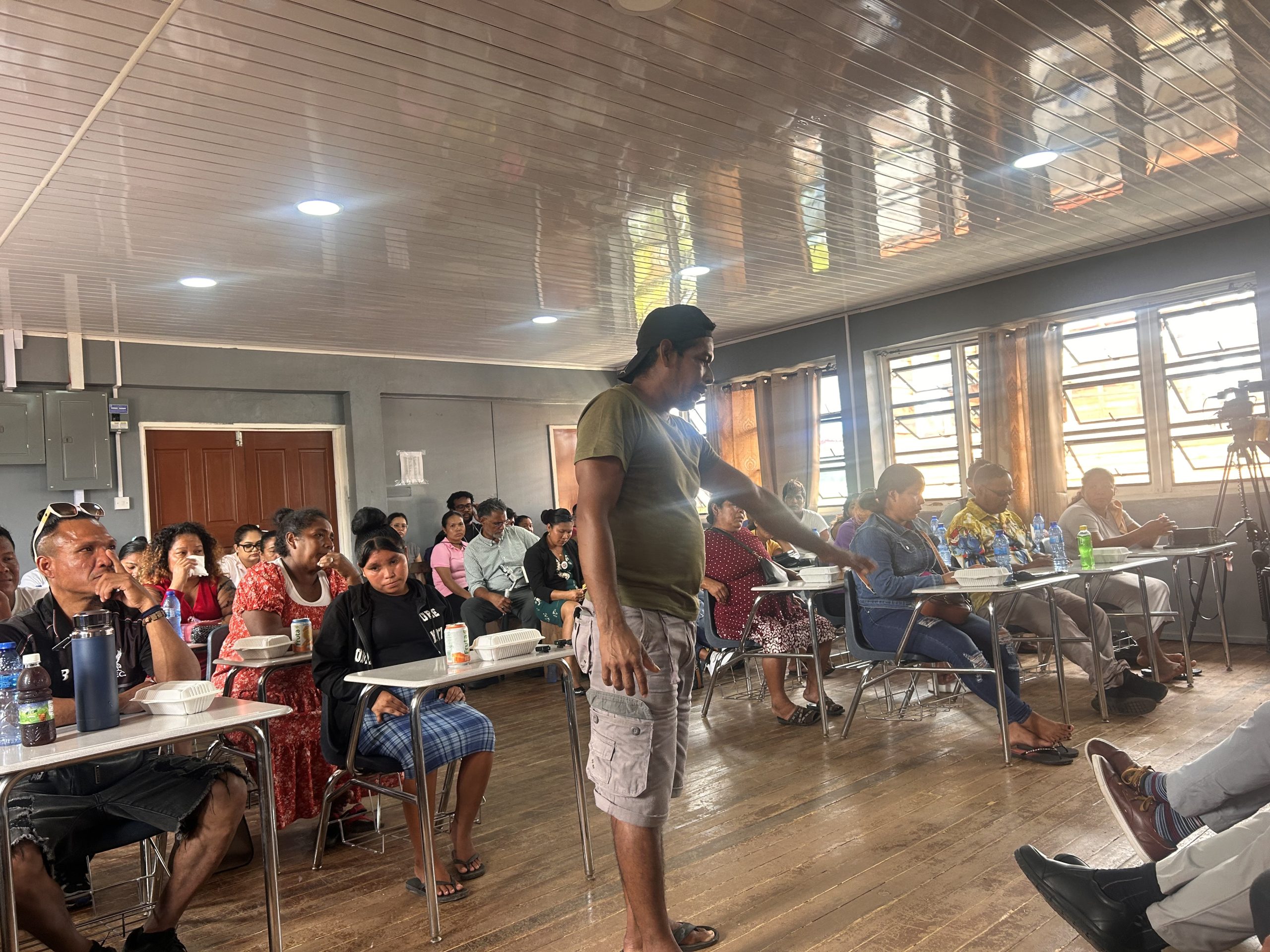
Survivors of the July 18 sinking also recounted engine failures, darkness and desperate attempts to stay afloat, while grieving families still seeking answers about missing relatives related that assistance was promised was yet to reach them.
Roselle Smith, who survived the disaster along with her husband Grenville Smith, described poor conditions aboard the vessel, saying passengers did not have proper seating and some had to sit or lie on the floor.
Smith recounted the confusion surrounding the incident and the difficulty of navigating after the vessel went down. “Where it’s dark, you can’t see anything,” she said, describing the conditions faced by those struggling in the water.
Another survivor said the boat had been rocking before a sudden wave struck it sideways. The engine had reportedly stopped earlier in the journey, around 5 pm, then around 9 pm, before the vessel capsized at about 10 pm.
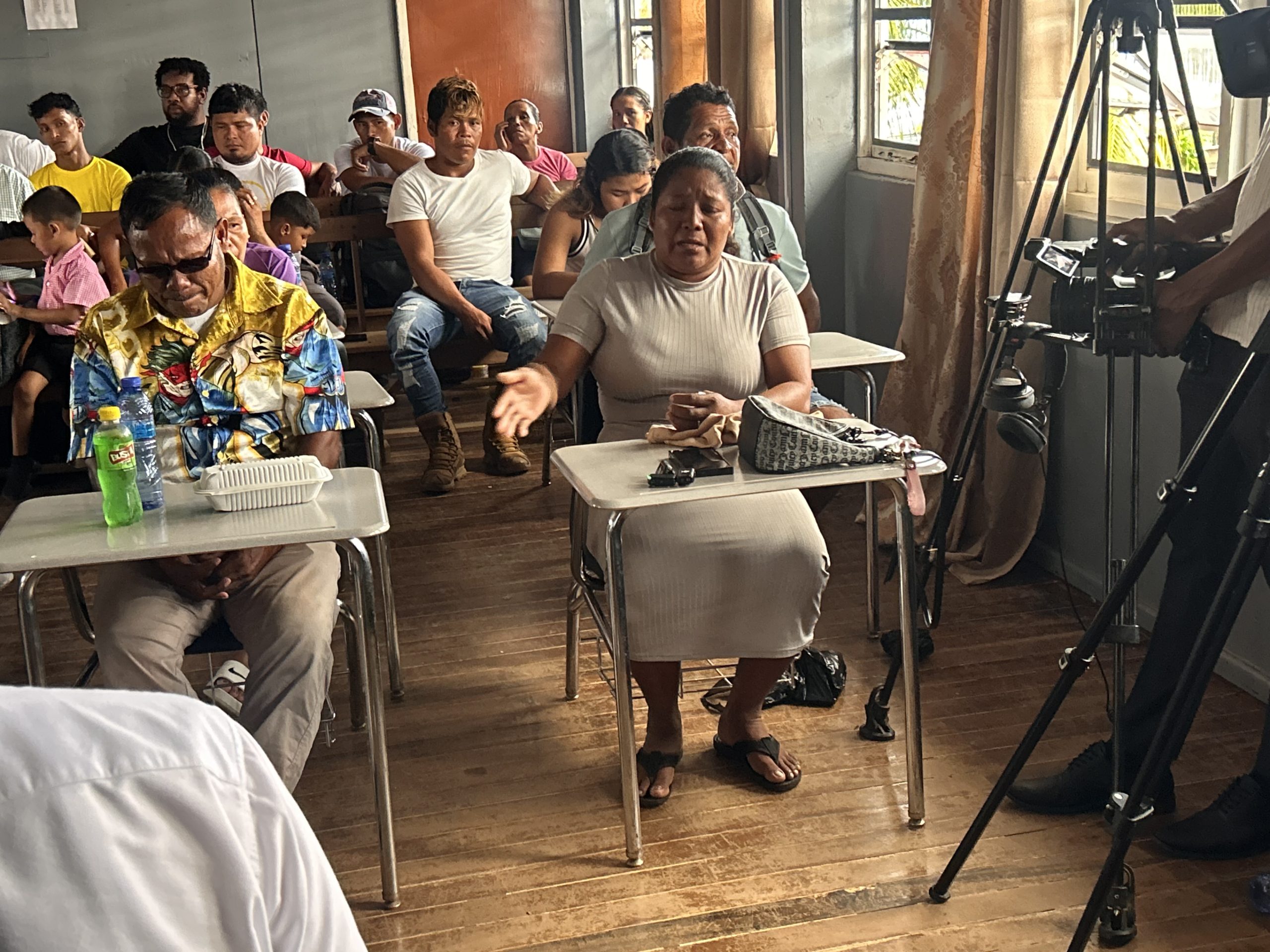
A survivor (seated at right) relives her experience during the sinking of the MV Barima
The survivor said the MV Barima had appeared lower in the water and heavier than on a previous trip, with substantial cargo, including gas bottles, on deck.
A father, who lost his son, Jacob Jerome, said yesterday would have been the child’s birthday. He said he intended to return to paint his son’s tomb after the meeting. The father, who lives in the Barima River area, said travelling to Mabaruma cost the family an estimated $30,000 to $40,000 in fuel, with food and other expenses bringing the total to about $50,000.
Despite those costs, he said he had made the journey because he wanted the commission to hear the concerns of affected families.
The father, who is visually impaired, appealed for authorities to do more for those affected, stressing the need for people to support one another during difficult times. He also questioned whether the Commission’s visit would lead to immediate assistance or whether families would have to wait months. He appealed to the commissioners to remind the authorities about commitments made to survivors and relatives of those who died.
The father said he had heard reports that more than $100 million was expected to be made available to support survivors and bereaved families. “We don’t know where the money is going,” he said.
The accounts highlighted concerns about how assistance is being delivered and whether families understand what support is available to them.
Meanwhile, Cox asked the commission how long the investigation would take and when residents could expect clarity about the tragedy.
The chairman said a six-month period was estimated, with March next year as its target, while stressing that the commissioners wanted to work as quickly as possible without compromising the investigation.
A survivor (standing) gestures as he recounts his experience
The chairman also explained that the commission was not the government and could not directly provide the assistance being sought. However, he said he could bring the families’ concerns to the relevant authorities.
“What I as the chairman can do, is to pass on a message to say, I came here, and all the people are saying they’re not getting the help that was promised,” he said.
He added that he would relay the concerns “forcefully”.
Cox also asked when the MV Barima would be raised, but the chairman said that responsibility rested with the government. He said he understood that the government was looking at finding a company to undertake the operation, but could not say how quickly it would be done.
The Toshao further sought clarity on the missing, including whether raising the vessel would allow their families to obtain answers.
The chairman said recovering the vessel could lead to a complicated forensic process, while explaining that the commission’s work extended beyond determining what happened on July 18.
He said the inquiry was also focused on preventing a similar tragedy, including examining rules governing vessels, passenger limits and whether those limits were being respected.
He added that the commission would try to use its influence to bring forward concerns that fell outside its direct control.
Cox spoke of the emotional toll on survivors from questioning by police and other officials, saying some residents felt pressured when they were asked the same questions repeatedly.
He said he understood the need for the investigation but wanted the process completed as quickly as possible because the continued uncertainty was affecting people who had already suffered losses.
Rosita Persaud, sister of Leonardo Persaud, shared the circumstances in which her family learned that he had been aboard the ill-fated vessel.
Persaud said her brother had been travelling home without informing relatives because he wanted to surprise them. The family only learned that he was aboard the MV Barima after villagers in White Water alerted them.
His journey home, intended as a surprise for his family, instead became the beginning of a period of uncertainty and anguish as relatives sought answers following the sinking.
The meeting in Mabaruma heard accounts of survival, bereavement and the practical challenges facing families in remote communities who must travel considerable distances to attend meetings and seek help. For those survivors and relatives, the investigation is one part of a longer process of seeking answers and trying to rebuild their lives after the tragedy.
The COI’s field meetings are scheduled to continue today in Port Kaituma, Region One.
 During the community engagement at the Narei Extension Centre, Commissioners assured survivors that appropriate arrangements would be made for those who choose to testify at the hearings in Georgetown.