Home Blog Page 52

GAWU calls on GuySuCo to immediately pay over workers’ credit union savings

0


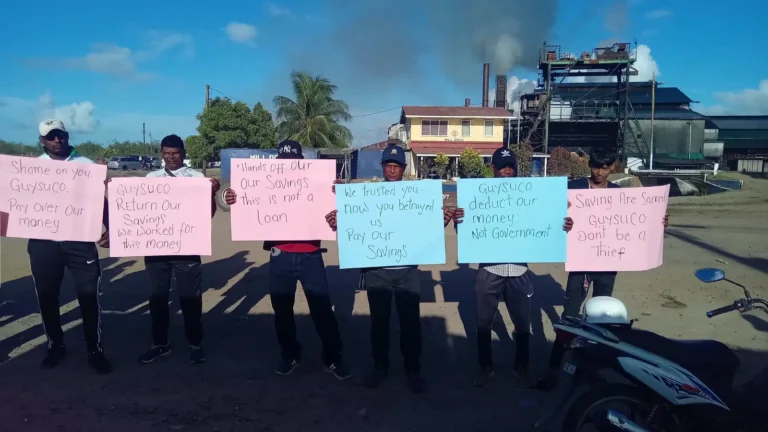
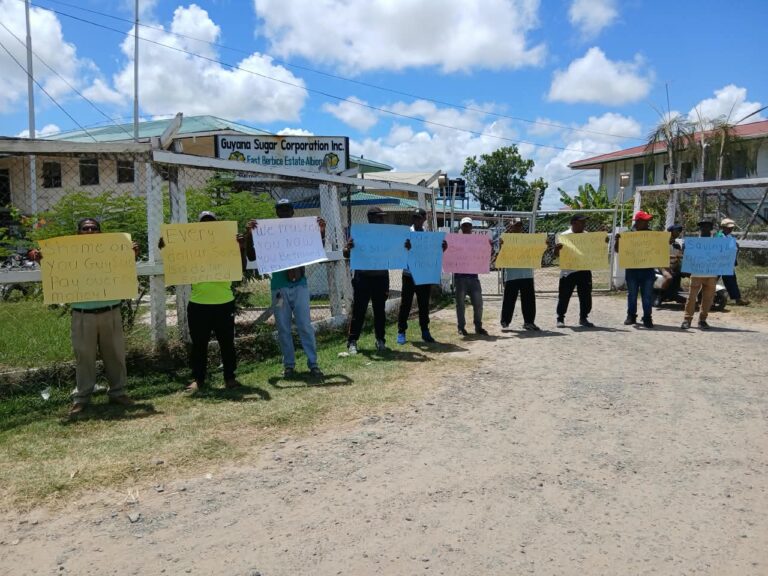
The Guyana Agricultural and General Workers (GAWU) Cooperative Credit Union Society Ltd, along with its members from four sugar estates, conducted a peaceful picketing exercise on Monday demanding that GuySuCo immediately remit the outstanding savings from workers’ wages that have been deducted for the Credit Union.

Since March of this year, GuySuCo has been consistently deducting Credit Union savings from sugar workers’ weekly wages but has failed to remit these funds to the GAWU Cooperative Credit Union. These funds do not belong to the Corporation; they represent the hard-earned savings of workers, who sacrifice part of their wages week after week to save for their families’ future.

Despite repeated commitments from GuySuCo’s management, including a written promise on August 27, 2026, to pay 50% of the outstanding amounts, the Corporation has not fulfilled its obligations. Not a single dollar from the promised payment has been made. Instead, GuySuCo continues to use workers’ savings to cover its operational deficiencies.

The impact of this non-payment is devastating. Workers are being denied access to their own money needed for crucial expenses, such as school fees, medical bills, and basic household needs. Furthermore, the GAWU Cooperative Credit Union is facing a severe liquidity crisis due to withheld funds, which threatens its ability to provide essential financial support to thousands of workers and their families.

GAWU calls on the Management and Board of GuySuCo to immediately release these funds. We also urge the Minister of Agriculture and the Government of Guyana to intervene urgently to ensure that GuySuCo fulfills its obligation to the workers by promptly remitting their savings.

The continued withholding of these funds is unacceptable and is causing significant hardship.


Discover more from INews Guyana

Subscribe to get the latest posts sent to your email.


Source: INews Guyana

Guyana sugar workers protest over unremitted savings, credit union says

0

Sugar workers from four estates have staged protests demanding that the Guyana Sugar Corporation remit savings deducted from their wages, a credit union said, warning that the outstanding payments were causing financial hardship and a severe liquidity shortage.

The Guyana Agricultural and General Workers Cooperative Credit Union Society Ltd said its members held peaceful pickets on Monday over deductions it said GuySuCo had been making from workers’ weekly wages since March without transferring the money to the credit union.

The credit union said GuySuCo had repeatedly promised to settle the outstanding payments, including a written commitment on August 27 to pay half the amount owed. It said none of that promised payment had been received.

The statement did not specify the total outstanding amount or identify the four estates. GuySuCo has not responded to the protest.

The credit union accused the corporation of using workers’ savings to cover operational shortfalls. That allegation could not be be immediately verified.

It said the failure to transfer the deductions had left workers unable to access savings needed for school fees, medical bills and household expenses, while threatening its capacity to provide financial support to thousands of workers and their families.

“These funds do not belong to the Corporation; they represent the hard-earned savings of workers,” the credit union said.

It called on GuySuCo’s management and board to release the money immediately and urged the agriculture minister and the government to intervene.


Source: NEW ROOMS SITE

Trinidad to increase electricity costs, add VAT on Netflix and other streaming services

0

Trinidad and Tobago plans to impose a 12.5% value-added tax on digital services supplied by foreign providers and a surcharge on high residential electricity consumption as part of measures expected to raise TT$1.18 billion in fiscal 2027.

Finance Minister Davendranath Tancoo announced the proposals in Parliament on Monday while presenting the 2027 budget, despite earlier government assurances that household electricity rates would remain unchanged.

The digital services tax, scheduled to take effect on March 1, 2027, would cover streaming platforms such as Netflix, Hulu, Apple TV, HBO Max and Disney+. It is expected to generate TT$18 million.

Tancoo said foreign suppliers would be able to register, collect and remit VAT electronically through a simplified system.
“This measure will broaden our tax base, strengthen the collection of VAT and promote more consistent tax treatment between services supplied from abroad and those supplied domestically,” he said.

Residential customers would also face a surcharge of five Trinidad and Tobago cents per kilowatt-hour on consumption above 3,000 kilowatt-hours during a two-month billing period, beginning on January 1, 2027.

The surcharge is projected to raise TT$17.8 million. Tancoo said households with moderate electricity consumption would remain unaffected and the proceeds would help fund existing subsidies for those with very low usage.

The announcements followed Prime Minister Kamla Persad-Bissessar’s response of “No taxes” when Guardian Media asked before the budget presentation whether the package would include new taxes.

Public Utilities Minister Barry Padarath had also reaffirmed a campaign pledge in May 2025 to keep electricity and water rates unchanged.
The streaming tax and electricity surcharge together account for TT$35.8 million of the revenue expected from nine new measures. The full package represents about 1.97% of projected government revenue of TT$59.729 billion.

The largest anticipated contribution, TT$430 million, would come from limiting the accumulated losses businesses can use to reduce taxable profits.

Tancoo proposed capping the use of carried-forward losses at 75% of chargeable profits in any income year. He said the change sought to balance support for businesses recovering from financial difficulties with the need for profitable companies to contribute to government revenue.


Source: NEW ROOMS SITE

MV Barima survivors allege crew drinking, engine failures ahead of sinking

0

Survivors of the MV Barima disaster told a Commission of Inquiry in Mabaruma on Monday that crew members drank alcohol and smoked cannabis during the voyage, the ferry’s engine stopped twice and lifejackets were locked in a wooden cage.

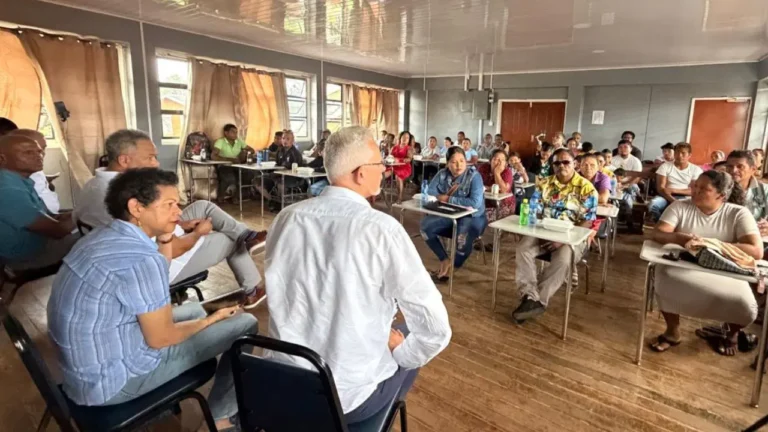
The accounts emerged during a meeting with survivors and bereaved families in Region One, ahead of public hearings scheduled to begin on Wednesday, October 14. The allegations have yet to be determined by the commission.

Survivor Eve Jermone raised concerns about the crew’s conduct and described two engine stoppages during the journey.

“They drinking and smoking up they weed,” she told the commission.

Survivors Eve Jerome and Leon Murray at the meeting (Photo: News Room/ October 12,2026)

Commissioner Nyree Dawn Alfonso asked, “the crew?” Jermone confirmed that she was referring to crew members.

“Yea because me hear them seh ‘cappy dont tek it too much bai’. If you see how them drinking, if you see beer pun the freezer top,” she said.

Jermone said the engine first stopped at about 5 p.m. and was restarted, before stopping again at about 9 p.m.

“…them meh she, ‘oh god how the engine cutting out suh tek kay we sink eh.’ Like me heart a beat quick quick…then they start up back again,” she recounted.

She said the ferry had been rocking, but she had not expected it to sink so suddenly.

“The boat didn’t rocking like…fah sink it suh sudden. It rock, yea, but one, one rocking and meh seh praise God we going safe…right weh the boat gone fah right suh is pun that side we been pun,” she said.

Another survivor told the commission that the vessel carried “nuff” lifejackets, but they were “lock up in a wood cage”.

He described struggling in darkness, unable to identify those around him.

“No light, somebody talking right deh to you, you cant see if is your brother or sister nothing,” he said.

Leon Murray, who lost six family members, said only he and his son survived from their family group aboard the ferry.

“This thing ain’t tek four minutes and gone down. I gone down with the boat. When me come out me done been bad already,” he told the commission.

Commission chairman Justice Godfrey Smith said the inquiry would investigate why the ferry capsized and sank, whether mistakes were made and whether established procedures were followed.

He stressed that the commission operated independently of the government.

“We are appointed by the President, but we do not form a part of the government. We are not an arm of the government,” Smith said.

He encouraged survivors and relatives to give evidence.

“You will help us and we will help you by trying to get to the truth of what happened,” he said.

Survivors and affected families at the meeting held in Mabaruma (Photo: News Room/ October 12,2026)

White Water Village Toshao Andre Cox sought answers about people still missing, compensation for affected families and plans to salvage the ferry.

Smith said raising the vessel fell outside the commission’s remit.

“We are not involved in the rising of the vessel…we know that the government is looking at it….We don’t know how quickly that can be done,” he said.

During their visit, commissioners inspected the Kumaka waterfront, where the ferry docked on journeys from Georgetown, and the Kumaka packaging facility, where loading and weighing take place.

The inspections followed visits last Friday to the Transport and Harbours Department’s goods wharf, the department itself and the Maritime Administration Department.

The five-member commission is examining the vessel’s loading, passenger boarding, conditions aboard, seaworthiness, maintenance history and crew competence, alongside the search, rescue and recovery operations.

During their visit, commissioners inspected the Kumaka waterfront (Photo: News Room/ October 12,2026)

It will also determine whether laws and operating procedures were followed and whether negligence, misconduct, dereliction of duty or other failures contributed to the disaster.

Initially given two months to complete its work, the commission now has six months. More than 100 witnesses, including officials, survivors and relatives, are expected to give evidence.

Public hearings are scheduled to begin at the Lula Room of the Arthur Chung Conference Centre in Liliendaal.


Source: NEW ROOMS SITE

ERC seeks review of investigative powers in constitutional reform

0

The Ethnic Relations Commission (ERC) on Tuesday called for a review of its investigative powers as part of Guyana’s constitutional reform process, saying its inability to compel people to attend could delay investigations.

ERC Chairman Shaikh Moeenul Hack raised the issue during a consultation at the Arthur Chung Conference Centre in Liliendaal, Greater Georgetown, on constitutional reform and proposed revisions to the commission’s Glossary of Ethnically Sensitive Terms.

Hack said many people cooperated willingly with investigations into discrimination complaints and matters affecting ethnic relations. However, the absence of a general mechanism to compel attendance could hamper that work.

“From the Commission’s experience, one area merits consideration – investigative tools,” he said.

Hack called for an examination of whether the existing legal framework provide the powers and safeguards the ERC needed to fulfil its responsibilities effectively.

He said constitutional reform offered an opportunity to assess whether the country’s constitutional framework continued to serve all Guyanese fairly.

“As our economies expand and our societies evolve, it is right that we ask whether our constitutional framework continues to serve every Guyanese fairly and effectively,” Hack said.

A constitution must reflect people’s aspirations and retain their confidence, he said, adding that broad participation by communities and constituency bodies was essential to the legitimacy of the reform process.

Participants were also invited to review the latest draft of the ERC’s glossary, a public education resource intended to promote responsible language relating to ethnicity, race, religion and nationality.

The commission is gathering recommendations from its constituency bodies and invited members of the public on constitutional reform and ethnic relations.

Hack said the submissions would be recorded, analysed and consolidated into a report for the Constitution Reform Commission before the 31 December 2026 deadline.


The report would also include recommendations based on the ERC’s institutional experience and its assessment of issues relevant to its constitutional mandate.


Source: NEW ROOMS SITE

Highlights of the 2026 Mid-Year Report on the performance and state of affairs of the economy (Part II)

0

Last week, we began a discussion of the 2006 Mid-Year Report on the performance and state of affairs of the economy.  The report is, however, yet to be laid in the National Assembly although Section 67 of the Fiscal Management and Accountability Act requires this to be done within 60 days of the close of the half-year. This is because the Assembly was in recess from 10 August to 9 October. It is unclear when it will resume sitting to enable the report to be laid. The 2025 Auditor General’s report on the public accounts is also due for presentation to the Assembly.  


We pointed out that by the time the Assembly reconvenes it will be too late for legislators to consider the report and to take appropriate action based on any significant variance in relation to planned performance as reflected in the National Budget, or any new developments that might have emerged since the approval of the Budget. Additionally, in the past, there was no discussion or debate on the report in the Assembly, which is significant shortcoming in our system of public financial management and accountability. In this regard, we suggested that the Minister consider presenting to the Assembly future Mid-Year Reports at the end of July to enable the Assembly to consider them. We also stated that it seems inappropriate for the Assembly to spend approximately three weeks every year to consider a draft National Budget before approving it but the half-yearly results on its execution is not made available to them in a timely manner.


Former Minister of Finance Winston Jordan in a text message to me pointed out that the mid-year reports for 2016, 2017 and 2018 were all presented to the Assembly within the statutory deadline of 29 August. The 2019 report was, however, not presented until 9 September 2020 but was prepared and released on 9 August 2019. There was no mid-year report for 2020. The former Minister acknowledged the need for the report to be debated in the Assembly as in the case of Trinidad & Tobago and Jamaica. We again call on the authorities to ensure that all future mid-year reports are prepared, tabled and discussed/debated on by the Assembly before it goes into recess.


So far, we dealt with the real growth in the Gross Domestic Product (GDP), sectoral performance and the performance of the extractive industries. The overall real GDP growth was 33.3 percent, while the non-oil economy grew by 10.1 percent. In terms of sectoral performance, the agriculture, forestry, and fishing sector contracted by 0.5 percent, while the sugar and rice growing subsectors expanded by 19.3 percent and 4.4 percent, respectively. Similarly, the livestock, fishing and forestry subsectors grew by 17.5 percent, 4.1 percent and 15.4 percent, respectively. The other crops subsector, however, contracted by 6.4 percent.


The mining and quarrying sector grew by 40.7 percent, with the oil and gas industry expanding by 41.3 percent. The bauxite and gold mining subsectors also expanded by 7.3 percent and 11.3 percent, respectively, while the manufacturing, services and construction sectors grew by 3 percent, 7.2 percent and 24.7 percent, respectively.

Since the extraction and production of crude oil in 2020, there has been a significant emphasis on total GDP growth when in fact 87.5 percent of that growth relates to oil production that leaves our shores since it belongs to ExxonMobil and its partners. That apart, crude oil is a finite resource that is subject to fluctuation in production and volatility in prices, especially considering the war in the Middle East. In the circumstances, a more realistic measure for the long-term growth and development of the country is the non-oil GDP growth. Greater emphasis should therefore be placed in having a sufficiently diversified economy to cushion possible adverse effects as regards oil production. As the saying goes, ‘do not put all your eggs in one basket’.


In today’s article, we conclude our discussion of the 2026 Mid-Year Report.


Balance of Payments


The Current Account recorded a surplus of US$3,340.3 million, compared with US$197.9 million in the first half of 2025. This was mainly due to an increase in merchandise trade. Crude oil earnings expanded by 82.1 percent on account of increases in world market prices, while non-crude oil exports increased by 24.6 percent. On the other hand, there was a significant increase in the deficit in the Capital Account from US$175.1 million in the first half of 2025 to US$3,624.7 million. This was due mainly to a net increase in foreign direct investment outflows arising from an increase in cost recovery from the Stabroek Block on account of higher oil prices and increased production.

Taking the above into account, the overall Balance of Payments recorded a deficit of US$293.9 million in the first half of 2026, compared with a surplus of US$10.3 million for the corresponding period last year.

Inflation

The inflation rate was 4.0 percent in June 2026, compared with 4.2 percent in June 2025. Food prices increased by 6.7 percent, due mainly to imported inflation, increased demand for food supplies, retail markups, and unfavourable weather conditions. The end-of year inflation is projected at 4.3 percent. The reality on the ground, however, tells a different story with the unprecedently high cost of living. While the cash grants offer some measure of relief, it is a stop-gap approach to dealing with the rising cost of living and is not sustainable.  

Interest rates

Interest rates remained stable at the end of the first half of the year, compared with the position at the end of 2025. The yields on 91-day, 182-day and 364-day Treasury Bills were 1.10 percent, 0.99 percent, and 1.09 percent, respectively. At the commercial banks, the savings rate and the weighted average lending rate were 0.81 percent and 7.72 percent, respectively.

Exchange rates

The official exchange rate of the Guyana dollar to the US dollar remained at $208.5. However, the market mid-rate from $220.6 to $223.7 over the period under review. Recently, there has been a significant shortage of foreign currencies, with commercial banks rationing whatever little they had. Such shortages have the effect of increasing the exchange rates – arguably a devaluation of the Guyana dollar – and the continued increase in the cost of goods and services which the consumer ultimately has to bear. All of this is happening at a time when the value should have appreciated, considering the significant increase in foreign inflows arising from Guyana’s share of oil production. Are we not therefore witnessing the reverse effects of the Dutch disease as it relates to exchange rates?

Central Government revenue

Current revenue collections for the first half of the year, inclusive of Natural Resource Fund (NRF) withdrawals, GRIF inflows and carbon credits, amounted to $493.9 billion, slightly less than the amounts collected for the corresponding period last year. Tax and non-tax revenue accounted for $279.5 billion, an increase of $44.1 billion compared with the corresponding period last year. NRF withdrawals amounted to $212.1 billion, compared with $249.6 billion in the first half of 2025, a decrease of $37.5 billion. The projection for revenue for 2026 remains the same at $1.067 trillion, as per the original budget.

Central Government expenditure

Total Central Government expenditure increased by 11.5 percent from $537.8 billion to $599.8 billion in the first half of 2026, compared with the position in the corresponding period last year. Current expenditure was $351.0 billion while capital expenditure accounted for $248.8 billion. Total expenditure is projected to reach $1.574 trillion by the end of the year, exceeding the budgetary allocation of $1.519 trillion. It therefore means that a supplementary estimate of $55 billion will have to be approved by the Assembly later in the year.

Employment costs amounted to $77.8 billion, an increase of 18.8 percent. This was due mainly to the eight percent salary increase as well as additional recruitment. Expenditure on goods and services was $107.3 billion, an increase of 22.5 percent resulting mainly from the payment of the $100,000 cash grant and additional spending on goods and services.

In relation to capital expenditure, amounts totalling $248.9 billion were expended, representing a marginal increase compared with the corresponding period last year. Total expenditure for 2026 is projected at $829.7 billion, an increase of $50.1 billion on the original budget. This is due to additional investment in power generation and distribution, housing, and public infrastructure projects.

Taking the above into account, the fiscal deficit for the first of 2026 was $195.9 billion and is expected to reach $507.4 billion at the end of the year.

Public debt

The total public and publicly guaranteed debt was US$8.573 billion at the end of June 2026. The external debt amounted to US$3.306 billion, accounting for 38.6 percent of total debt. The domestic debt was US$5.267 billion, or 61.4 percent of the total debt, of which Treasury Bills accounted for about 84.4 percent. There was, however, no mention of the debt-to-GDP ratio which is a measure to assess the sustainability of the debt.

In past reports, this ratio was calculated using the total GDP which resulted in a lower debt-to-GDP ratio compared with a situation where the non-oil GDP is used instead. Knowledgeable persons have calculated the debt-to-GDP ratio using the non-oil growth and came up with a ratio of 150 percent, raising serious questions about the sustainability of the debt should oil production as well as oil prices decline significantly in the medium- to long-term.

Natural Resource Fund

During the first half of 2026, Guyana received US$1.779 billion and US$218.4 million in oil revenues and royalties, respectively. The balance on the NRF at the end of June 2026 was US$4.294 billion, after taking into account withdrawals totalling US$1.020 billion.

According to the report, ‘rapid development and elevated crude oil prices accelerated cost recovery in the Stabroek Block… As gross revenue increases and the cost bank reduces, the cost-oil deduction falls toward current operating costs. Guyana will receive more profit oil, consistent with the Agreement’. The report, however, emphasised that the clearing of the historical cost bank balance does not by itself deliver a 50 percent share of gross revenue to the Government, and that the Stabroek Block partners would continue to recover current costs, lower than 75 percent of gross revenue, with the Government receiving more than 12.5 percent of gross revenue in profit oil.

With the additional lifts and higher crude oil prices, petroleum deposits for the year are projected to be US$6.498 billion. Guyana is expected to earn US$5.973 billion from the sale of its share of profit oil, and US$508.1 million in royalties. Withdrawals are expected to be US$2.374 billion in accordance with the NRF Act 2021.

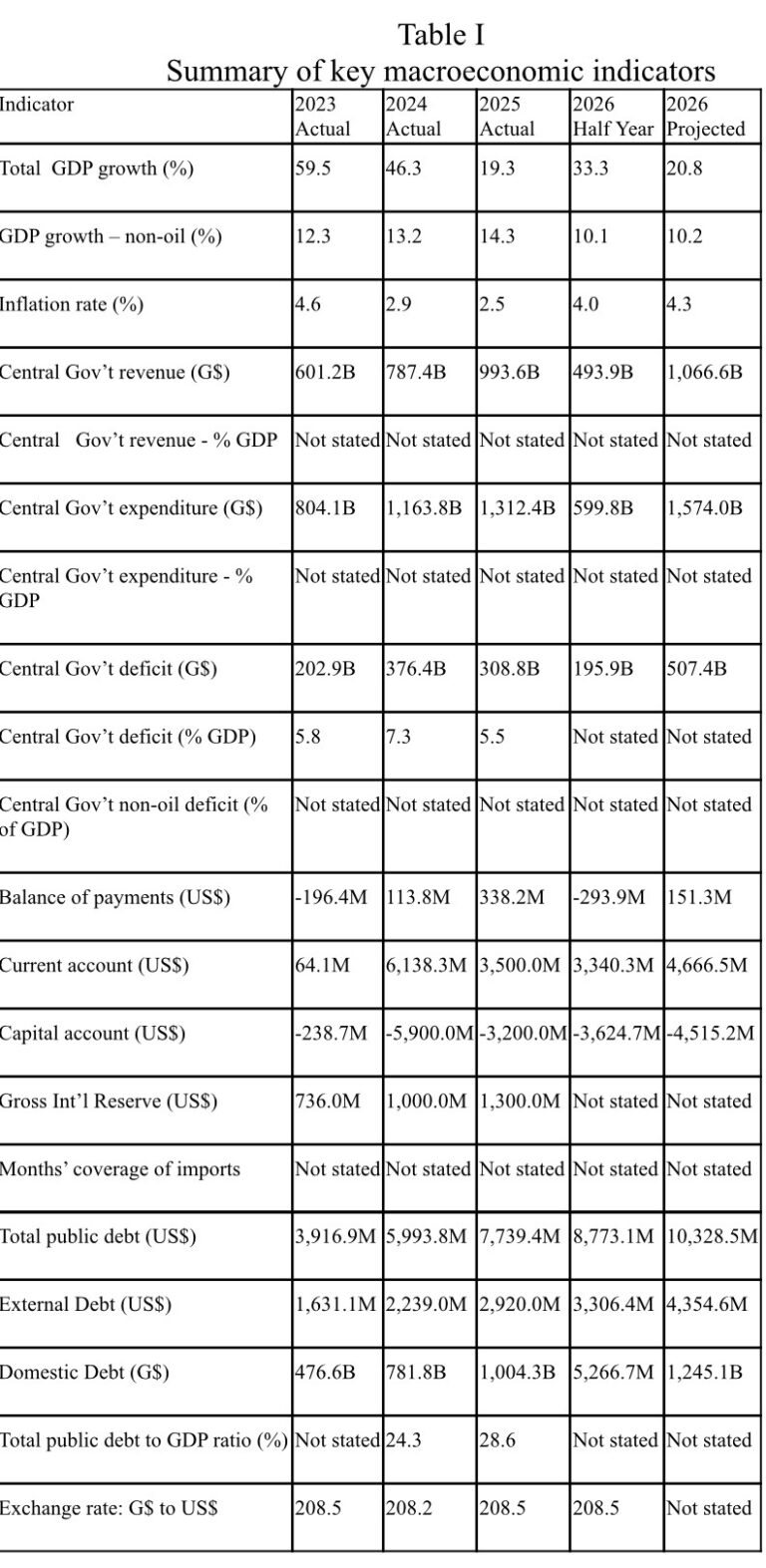
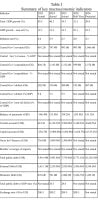
Summary of key macroeconomic indicators

Table I provides a summary of the key macroeconomic indicators for the years 2023 to 2025 along with the results for the 2026 half year and projections for 2026.


Source: Kiskadee Watch
Strong Berbice turnout prompts plans for annual drag race meet

0


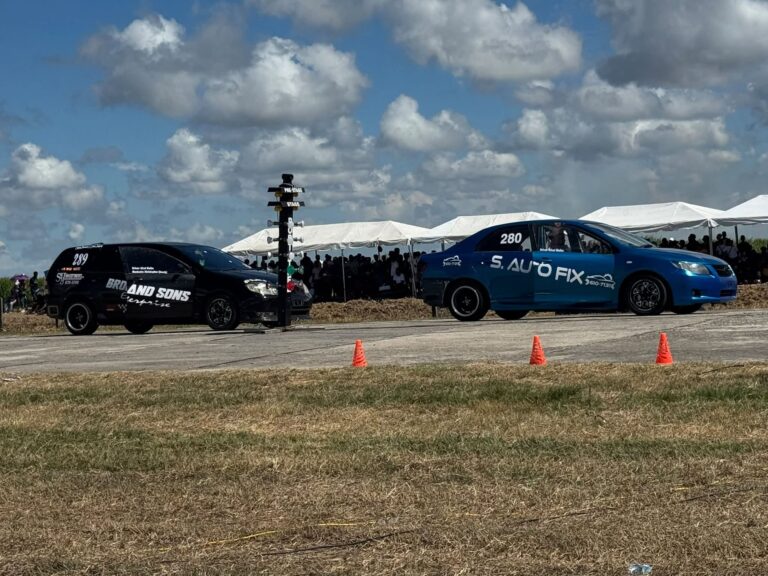
The October 11 meet marked the first time the venue hosted time-bracket drag racing in the club’s modern history. According to the GMR&SC, the crowd was among the largest for any of its events held outside the South Dakota Circuit.

Club President Mohamed Shairaz Roshandin said the response from fans, racers and their families demonstrated strong support for motorsport in the Ancient County.

“The support and love the ancient county gave GMR&SC left me speechless; I and the team were heartened by the enthusiasm for the event,” Roshandin said.

He added that the turnout had encouraged the club to return yearly. While acknowledging some setbacks, he said organisers overcame them to complete a successful day of racing across the various classes. Competition produced winners in seven car brackets, a female category and three motorcycle classes.

Imran Mohamed Ally won the nine-second class in his Tesla Plaid, car number 1998, while Paramdeo Seeram took the 11-second category in his Toyota Allion 4WD, number 216.

Sayyad Ramcharran secured the 12-second title in a Toyota Corolla EE90, number 137, and Roshandin also enjoyed success on the track, winning the 13-second class in his Mitsubishi Evolution X, number 30.

Romaine Henry claimed the 14-second category in a Toyota Celica, number 81. Ramesh Persaud won the 15-second class in a Toyota Corolla Fielder Wagon, number 484, while Afzal Maiku took the 16-second bracket in another Toyota Corolla Fielder Wagon, number 289.

Ashley Persaud-Jewanram won the female category in her Toyota GT-86, car number 162.

Among the motorcyclists, Shem Chattersingh claimed the 600cc Superbike title aboard a Suzuki GSX-R, number 1011, while Stephon Vishmon won the 1000cc Superbike category on a BMW 1000 RR, number 342. Steven Chung completed the winners’ list with victory in the 125cc–212cc motorcycle class on bike number 251.


Discover more from INews Guyana

Subscribe to get the latest posts sent to your email.


Source: INews Guyana

Guyana building legal framework for deepwater port, modern harbour, gas sector

0


…sweeping amendments coming for community concerns – AG

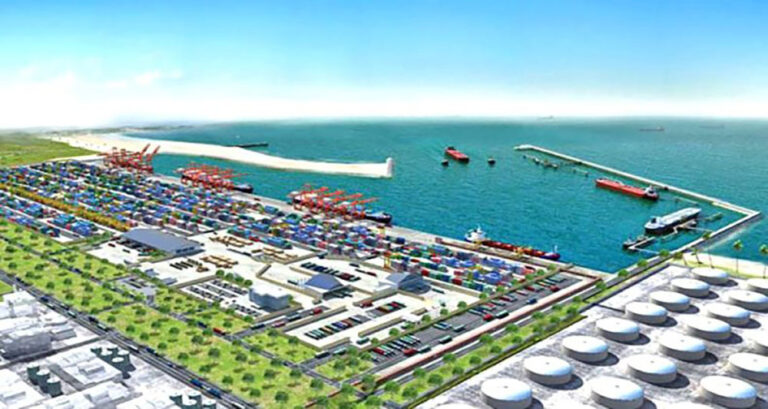
As the Guyana Government actively pursues the development of a deepwater harbour and modern port facilities, the legislative architecture to govern these operations is already being built out.

This is according to Attorney General and Legal Affairs Minister Anil Nandlall during an appearance on a recent episode of the Starting Point podcast.

“Every aspect of Guyana is under transformation and we have legislations moving with the state of development. For example, the President [Dr Irfaan Ali] would have spoken at length about the deepwater harbour, about modern port facilities. We don’t have the legislative and architecture to govern those undertakings. We are working on that right now,” he stated.

Currently, the Government is upgrading the Parika Ferry Stelling into a modern, state-of-the-art port and waterfront development, and the works are already advancing.

Set for completion in 2028, the US$20 million Parika Modern Port and Waterfront Development Project will transform the old Parika Stelling into an international port of entry and a major regional hub for tourism, agriculture, and shipping.

An artistic impression of the Parika International Port which is being developed

On the other hand, the Government has also been touting the establishment of a deepwater port in Berbice, Region Six. A study is currently being undertaken by the United States-based Bechtel Corporation on the proposed Berbice deepwater project. That study is expected to be completed in the coming months after which Government will determine how to move forward with the project.

Just last month, Natural Resources Minister Vickram Bharrat had told Guyana Times that an Expression of Interest (EOI) is among the options Government is considering in order to ascertain the potential interest from local and foreign investors. In fact, he noted that there has already been significant interest in the project from international investors as well as Guyana’s Private Sector.

In fact, the US Export-Import (EXIM) Bank has already offered to finance the deepwater port facility – a project that the Guyanese Government has been pushing in recent years to position the country as a major regional hub.

The EXIM Bank is the official export credit agency of the US. Back in July 2022, Guyana and the EXIM Bank signed a Memorandum of Understanding (MoU) for financing of up to US$2 billion for projects in several sectors, including infrastructure, energy, telecommunications, water treatment and sanitation, and agriculture.

Legislation for gas sector

Already, the US financial institution has injected some US$527 million into the transformative Gas-to-Energy (GtE) Project, which is being executed by Houston-based contractor Lindsayca Inc at Wales, West Bank Demerara.

The Gas to Energy project site [Lindsayca Guyana photo]

The GtE project comprises a 300-megawatt power plant and a Natural Gas Liquids (NGL) facility, utilising gas that will be piped onshore from the Stabroek Block. With the gas being produced, Government plans to set up a cooking gas bottling facility and a fertiliser plant.

In fact, AG Nandlall says that legislation is also being finalised to govern the use of the country’s natural gas resources.

“[For] the natural gas plant that is being constructed, we have a legislation that is completed and is going through some final stages of consultation that will regulate that sector,” he indicated during the podcast.

Nandlall was at the time speaking about the slew of legislative reforms that were introduced over the years to complement, and in some cases support, Guyana’s unprecedented economic development.

“We have no choice but to have a legislative agenda that is commensurate with and consistent with that developmental agenda of the Government as it is unfolding. And of course, we also have to keep our focus on the social issues that are important to people. Oftentimes, our ordinary citizens may not be able to relate to the mega concepts that we speak about. They are more concerned about garbage dumping in front of their homes, their drains are being clogged, their neighbours playing music or creating an environment that’s creating noise nuisance to them. Those are issues that we are alive to as well,” the Attorney General asserted.

Community issues

Against this backdrop, the Legal Affairs Minister disclosed that his office has completed a series of legislative updates that seek to address concerns within communities ranging from noise nuisance to garbage collection.

“The Attorney General chambers have completed a wide menu of amendments that are going to speak to noise nuisance, garbage collection, dumping of debris and placement of garbage on public roadways, etc.,” Nandlall stated.

According to the Minister, these comprehensive legislative amendments will be punitive in nature, attracting penalties that will include community service. These concerns were among the issues residents had raised during the widespread consultation President Ali had led for his Model Village initiative.

Launched in August 2026, the Model Village is aimed at transforming communities across Guyana by improving infrastructure, public spaces, safety and the overall quality of life of residents.

In the current pilot phase, the project is being rolled out in some 23 communities across Regions Two, Three, Four, Five and Six. However, the Government plans to eventually implement this initiative in every community across the country so that citizens can benefit from cleaner, greener, safer and more aesthetically pleasing environments.

Nandlall was among the team of Government Ministers who had accompanied President Ali during a series of public consultations to discuss with residents the vision under the Model Village Initiative as well as get feedback from them on other improvements they would like to see in their surroundings.


Discover more from INews Guyana

Subscribe to get the latest posts sent to your email.


Source: INews Guyana