Home Blog Page 33

Magistrate Abigail Gibbs Applies a Consistent Standard for the Rule of Law

0

Dear Editor,
Magistrate Abigail Gibbs deserves recognition for her intelligence, impartiality and adherence to the rule of law.
When Daniel Seeram was found guilty of assaulting his former wife and remanded, many members of the public welcomed the court’s decision. Now that Opposition Leader Azruddin Mohamed has been remanded in a separate matter, some of those same voices appear to have a problem with the magistrate’s decision.
The public should apply one standard to everyone. A magistrate must consider the law, the evidence and the circumstances before the court, regardless of whether the accused is a public official, a political supporter or an opposition leader.
In Mr Mohamed’s case, the public record includes his designation under United States sanctions, ongoing extradition proceedings and separate firearm, ammunition and obstruction charges for which he was granted bail. These matters do not prove that he committed the offences now before the court, and he is entitled to the presumption of innocence. But they are part of the wider context that the court may consider when deciding questions such as bail.
Some people may see the pattern of legal troubles as showing a lack of respect for the law. That is a public judgment, not a verdict on the current charges. The proper course is to let each case proceed through the courts and to challenge decisions through lawful channels.
Magistrate Gibbs should not be condemned simply because her decision is unpopular with some people. The same respect for due process that many showed when Daniel Seeram was remanded should also be shown now. An independent judiciary can only command public confidence when we accept that the law must apply consistently, without fear or favour.

Yours faithfully,
Quincy Anderson


Discover more from Guyana Times

Subscribe to get the latest posts sent to your email.


Source: Guyana Times

GHRA calls on authorities to cease `harassment’ of Opposition Leader

0

The Guyana Human Rights Association (GHRA) yesterday called on the governing authorities to cease what it said was a campaign of harassment of the Leader of the Opposition.

In a statement it called on the governing authorities to respect the results of national elections which “unquestioningly confirmed his right to the respect and privileges due to the Leader of the Opposition. We equally issue a similar call to all Agencies of the State to resist any attempts to subvert their political independence”.

The GHRA statement came in the wake of Friday’s hurried transporting of Mohamed before the Sparendaam Magistrate’s Court at 4.30 pm even as his lawyers were before a High Court judge in habeas corpus proceedings. 

Mohamed was charged in relation to the corrupt obtaining of CCTV footage of a shooting in Kitty in which he was fired at by the Head of the Police Special Branch. After the charge was read to Mohamed he was remanded by Magistrate Abigail Gibbs.

He was then taken to the Lusignan Prison where his family members have complained that he has been kept in solitary confinement with a bright light directed on him all day and in generally inhumane conditions. This claim by the family was denied yesterday by the Guyana Prison Service (GPS) which however did not explain why he was in solitary confinement or why a light was being shone on him.

In its statement yesterday, GHRA charged that the Guyana Police Force (GPF) and the Magistracy “have colluded in disgraceful violation of the rights of the Leader of the Opposition, Azruddin Mohammed, who holds the constitutional status of a person with the standing of a Minister. These agencies ensured that the Leader of the Opposition would spend the week-end in prison by convening a hasty legal hearing at 4.30 p.m. on a Friday afternoon in order to ensure he spent the week-end detained in prison”.

GHRA said that the move against Mohamed is the latest in a “catalogue of police harassment against him by the ruling party”. 

It charged that under the current ruling party – the PPP –  criminal investigation has occupied a low priority within the Guyana Police Force. 

“The popular perception is that political opponents frequently supplant criminals as the targets of police activity with the distinction between common criminals, subversives, political opposition, labour organizations and disadvantaged sectors adjustable. Criminal investigation, therefore, has been rendered seriously dysfunctional by a Government that does not wait for proof to target its perceived ‘enemies’, nor is concerned by evidence of illegal behaviour by its ‘friends’. Investigations are supplanted by surveillance operations to collect information for purposes of political advantage rather than use in court trials. The ruling party have never respected Mohamed winning substantial support in national elections, nor his occupying an office of State, namely the Leader of the Opposition”, the GHRA charged.  

It added that the strategy of harassment of Mohamed appears complex, “related to friendships in high places turned sour, evasion of taxes, and the extradition proceedings against him and his father”. 

Addressing the international legal principles governing extradition, the GHRA said that the first of these  is that of the sovereignty of the requested State and the protection of its national interest.

“In other words, extradition is not obligatory, it is always discretionary and at the behest of the State. It should also be noted that the national interest is distinct from mere partisan interest of the political Executive”, the GHRA said.

Secondly, it said that the Judiciary must also keep in mind the open and public political clash between the Governing Party constituting the Executive and the accused. 

“In these circumstances, we submit, the Judiciary must take on the role of guardian of justice for the accused to neutralize partisan interests of the Executive”, the GHRA asserted.

Thirdly, even when extradition is approved, the GHRA said that the timing of its implementation is consequential to good governance such a move would trigger. Extradition, it said,  may be postponed until the political responsibilities, exercised by the accused person, are completed.

Accusations

Mohamed’s sister, Hana Khamelia on Friday night made a series of accusations about the conditions under which Mohamed was being kept at the Lusignan Prison.

In a video post  Hana Khamelia outlined what she said was a plan by the government to incarcerate him at Lusignan. She related that after he had been detained for 48 hours without charge at the Kitty Police Station, habeas corpus proceedings were launched in the High Court on Friday before Justice Nicola Pierre.

She said that just before Justice Pierre was to issue her orders the court was notified that Mohamed had been charged and was to appear at the Sparendaam Magistrate’s Court at 4.30 pm when the court is usually no longer functioning.

She said that his counsel had to scramble to get to the court in the midst of heavy traffic. After being charged and denied bail by the magistrate, Hana Khamelia said that Mohamed was hustled into a patrol van and through side streets away from his supporters who were demanding his immediate release.

She said that he was taken to the Lusignan prison  in handcuffs and shackles as the PPP wanted to punish and humiliate him. She added that an entire floor of the building was cleared so he could be in solitary confinement. She stated  that there was no ventilation,  no windows and there is a bright light on 24 hours without any access to a light switch. The facility was called a punishment room, preventing him from sleeping or even thinking.

She said that he told them during a brief visit on Saturday  morning that it was mentally draining. She also related what were described as intolerable conditions in the prison which also saw  blackouts on Friday.

The GPS yesterday rejected allegations of inhumane or degrading treatment, maintaining that his accommodation and supervision are determined by his security classification and are not intended as punishment.

Kiskadee Watch understands that Mohamed is permitted only 20 minutes with visitors, with visits restricted to Saturdays. His lawyers will approach the High Court today to seek bail, while a protest calling for his release is planned outside the Magistrate’s Court this  morning.

His extradition proceedings alongside his father, Nazar Mohamed, are also scheduled to resume today before Chief Magistrate Judy Latchman.

In its statement, the Prison Service acknowledged that claims had circulated concerning isolation, inadequate ventilation, continuous lighting, restrictions on exercise and limitations on contact with other prisoners.

It maintained that Mohamed was being managed “in accordance with established prison procedures, having regard to his classification, security requirements, safety and welfare.”

According to the GPS, Mohamed was admitted on Friday, October 30, and assessed through the Prison Management Offenders System as a high-profile prisoner.

“That classification informs decisions concerning his placement, accommodation and level of supervision. It is a security and management determination and is not intended as punishment,” the Service stated.

While rejecting the allegations collectively, the statement did not specifically explain the lighting arrangements or say whether the light in his cell area remains on continuously.

The GPS said Mohamed was examined by a medical officer and seen by a welfare officer upon admission. It added that the Officer-in-Charge of Lusignan Prison briefed him on the institution’s rules and the conditions governing his detention.

The Service also said reasonable access to family visits and communication had been facilitated.

According to its account, acting Assistant Director of Prisons for Operations, Deoraj Gyandat, met Mohamed’s mother and two sisters on Saturday, October 31, to explain arrangements for visits and telephone communication. They were subsequently permitted to visit him.

The statement did not specify the duration of that visit or whether Saturdays are his only permitted visiting days.

Following the visit, relatives requested permission to supply Mohamed’s meals because of concerns about his safety, the GPS said. The request was approved, subject to security procedures, with a designated family member authorised to deliver the food.

The Service further stated that Director of Prisons Nicklon Elliot and Lusignan Prison Officer-in-Charge Seon Charles visited Mohamed later that day to assess his welfare and reinforce the requirements governing his conduct in custody.

During that interaction, Mohamed requested permission to telephone his son ahead of the child’s birthday on Sunday, November 1. The GPS said the request was granted.

He also asked for a fan serving his cell area to be adjusted, and the Service said the adjustment was made.

“A prisoner’s public profile does not diminish those protections, nor does it exempt that prisoner from the security procedures applicable to his classification,” the GPS stated.

It said his conditions would continue to be monitored and that access to medical care, welfare services, family contact and other entitlements would be facilitated under established procedures.

The GPS maintained that its responsibility includes safeguarding prisoners’ dignity, safety and welfare, and said it remained committed to applicable human-rights standards, including the principles reflected in the Nelson Mandela Rules.

Meanwhile, We Invest in Nationhood (WIN) General Secretary Odessa Primus has called on diplomatic missions, international human rights organisations and the wider international community to scrutinise Mohamed’s treatment and what the party describes as a pattern of political persecution.

“What is happening to the Leader of the Opposition, Mr. Azruddin Mohamed, is no longer simply about one individual,” Primus said in a statement.

“It is about the future of our democracy, the freedom of political opposition, and the right of elected representatives to hold the Government accountable without fear of intimidation or persecution.”

Primus cited a series of arrests, investigations and seizures involving Mohamed over the past year, beginning with his arrest alongside his father in October 2025, shortly before Parliament’s first sitting.

Her account also referenced a February operation by the Special Organised Crime Unit at the family’s former business premises, during which she said cash, documents and electronic devices were seized.

She cited further attempts in March to challenge his continued bail over alleged breaches of police-reporting requirements, an August arrest following a joint-services operation involving his vessel at Friendship, and a September arrest concerning allegations surrounding drone activity and security protocols.

Primus further referenced his detention for approximately 81 hours following the October 12 incident involving Head of Special Branch Prem Narine, and his latest arrest and remand alongside a police constable over allegations surrounding the release of surveillance footage.

WIN characterises those events as political persecution. That remains the party’s allegation.

Primus also alleged that bank accounts belonging to WIN parliamentarians had been closed, affecting elected representatives’ ability to function.

“What began with repeated arrests and investigations has now escalated to the incarceration of the Leader of the Opposition,” she said.

“We are calling on the international community, including diplomatic missions and international human rights organizations, to pay attention, speak out, and hold this Government accountable.”

Primus maintained that allegations against Mohamed must be tested through the courts and that he is entitled to due process.

“The rule of law must apply equally to everyone. It must never become an instrument for intimidating, punishing, or silencing political opponents. Allegations must be tested in court, and every accused person is entitled to due process and a fair hearing,” she said.

She urged supporters to remain vigilant and participate in protest action when called upon.

“Whenever we call on you to stand up and protest, we expect you to come out in numbers and make your voices heard,” Primus stated.

A Partnership for National Unity (APNU) on Friday  called for scrutiny of the decision to refuse Mohamed bail on a cybercrime charge, while accusing the government of using state institutions to constrain political opponents.

In a statement, APNU said respect for the law must be accompanied by consistency, impartiality and protection of the presumption of innocence.

“The law must never be an instrument against political opponents, nor a shield for those who enjoy favour or proximity to power,” the partnership stated.

Mohamed and Police Constable Ryan Greene were remanded that day by Magistrate Gibbs at the Sparendaam Magistrate’s Court after being jointly charged with Unauthorised Giving of Electronic Data under the Cybercrime Act. The matter was adjourned to November 24. 

APNU described the charge as non-violent and noted the defence’s position that it was bailable. It argued that pending allegations could not be treated as convictions or displace an accused person’s entitlement to due process.

The partnership said the basis for refusing bail deserved close scrutiny and expressed confidence that any High Court application would be determined independently and on the evidence.

“No person, whatever their office, wealth or influence, is above the law, and APNU does not condone the breaking of it,” the statement said.

“Where allegations are made, they must be tested in a court of law and, if proven, the law must take its course. But the same law protects every person, with the presumption of innocence, due process and a fair hearing.”


Source: Kiskadee Watch

Home Affairs Minister says death of prisoner at police station requires urgent probe

0

Home Affairs Minister Oneidge Walrond says allegations surrounding the death of Gavin Kennard Douglas following his detention at the Vreed-en-Hoop Police Station are serious and cannot be dismissed, and has called for an urgent and impartial investigation.

In a statement on the 32-year-old’s death, Walrond acknowledged the state’s responsibility for the safety of persons in police custody and said wrongdoing, if established, must be followed by appropriate action.

“When someone is taken into police custody, the state assumes the responsibility for that person’s safety and well-being,” she said.

Douglas’s family has raised allegations about his treatment at the station and reported observing marks on his body.

Walrond said she was aware of the allegations but stressed that the evidence must establish what occurred.

Home Affairs Minister Oneidge Walrond

“Those allegations are serious and cannot be dismissed. At the same time, we must allow the evidence to establish exactly what occurred,” she stated.

The minister confirmed that the Office of Professional Responsibility (OPR) had commenced an investigation.

“I expect that investigation to be thorough, impartial, and conducted with urgency. There must be accountability wherever the evidence leads. If wrongdoing is established, appropriate action must follow.”

Extending condolences to Douglas’s family, Walrond acknowledged their grief and need for answers. She said the investigative process must establish the truth about his death and assured relatives that the matter would be treated with the seriousness it demanded.

Douglas, of Crane, West Coast Demerara, had been detained after police reportedly stopped the car he was driving at a roadblock in connection with an alleged robbery.

His mother, Colette Jones, an inspector attached to the Special Constabulary Department, told this publication that no one had contacted her to explain what had happened. She said she found her son already lying motionless at the station.

Jones reported observing swelling on the left side of his neck and frothing at his mouth. She also said she subsequently heard at the West Demerara Regional Hospital that he had allegedly been tasered three times. That allegation had not been independently established. 

His sister, Reanna Douglas, said relatives received differing information about the reason for his detention. She described him as a father of one who worked as a taxi driver and sometimes in construction.

WIN parliamentarian Gordon Barker had also called for an independent and transparent investigation, while cautioning against premature conclusions.


Source: Kiskadee Watch

Prison officer, 20, dies following boat collision near Bartica

0

A 20-year-old prison officer died following a boat collision on the Essequibo River near Third Avenue, Bartica, yesterday morning, according to statements from the Guyana Prison Service and Home Affairs Minister Oneidge Walrond.

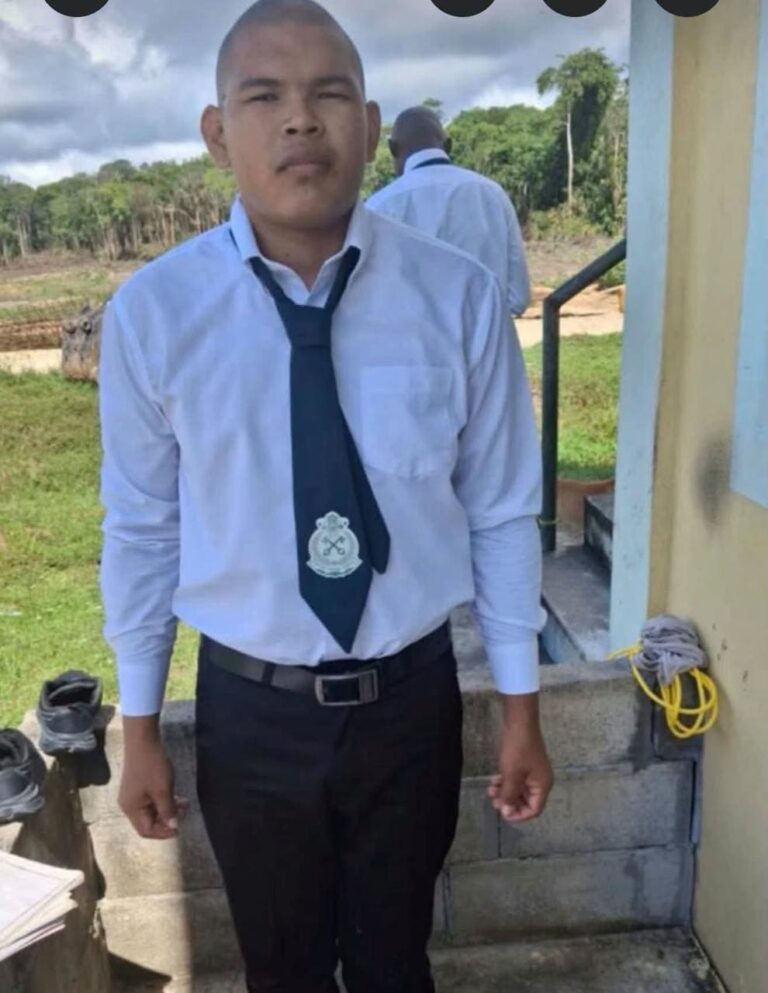
The Prison Service identified him as Shalom Andrews, of Swan Village, Soesdyke-Linden Highway, who was attached to the Mazaruni Prison.

In a statement on its Facebook page, the service said the circumstances surrounding the November 1 collision were being investigated by the Guyana Police Force. It did not provide details of the vessels involved or how the collision occurred.

The Director of Prisons, officers and ranks extended condolences and support to Andrews’ family, describing his death as a profound loss to his relatives, colleagues and the service.

Walrond, in a separate Facebook statement, said she had spoken with Andrews’ family, expressed condolences and offered her support.

“Officer Andrews was just 20 years old, a young man with so much of life ahead of him who had chosen to serve his country as a member of the Guyana Prison Service,” she stated.

She described his passing as a painful loss to his family and community, his colleagues at the Mazaruni Prison and the wider Home Affairs Ministry.


Source: Kiskadee Watch

No official word on Karimbaksh rape probe weeks after announcement

0

Weeks after police announced an investigation into allegations of rape and threatening behaviour against Deputy Commissioner Fazil Karimbaksh, there has been no official update on its outcome, while indications are that the Special Organised Crime Unit (SOCU) head remains on the job.

Reports reaching Kiskadee Watch indicate that an investigation file was completed and forwarded to the Office of the Director of Public Prosecutions (DPP). Efforts to obtain a comment from that office have been unsuccessful, with an inquiry remaining unanswered.

There has therefore been no confirmation from the DPP’s office on whether it has received the file, issued advice or requested further investigations.

The continuing silence follows uncertainty over Karimbaksh’s duty status after Commissioner of Police Clifton Hicken withdrew a letter granting him leave prior to retirement. Police had announced on October 8 that he had been sent on leave pending the investigation into the allegations made by a female police inspector. 

As Kiskadee Watch reported on October 23, a nine-page legal opinion provided by the Attorney General’s office expressly recommended that Hicken rescind his leave letter and that the President address the matter.

The opinion, dated October 12—the same date as Hicken’s withdrawal letter—said the “Commissioner would be required to rescind his letter in respect of leave” and the “President would be required to address the letter”. It has not been confirmed whether Hicken acted on that advice.

The document argued that the Commissioner’s independent disciplinary powers under Article 212(3) of the Constitution were confined to officers below the rank of Inspector and did not extend to a Deputy Commissioner. It nevertheless acknowledged that he could act under another valid legal authority, including a lawful delegation where permissible.

The opinion also distinguished leave, suspension, disciplinary proceedings and removal from office, cautioning that the relevant power and constitutional safeguards had to be identified for each measure. Although supplied by the Attorney General’s office, it did not identify its individual author or carry a signature. It did not determine the allegations against Karimbaksh or report on the criminal investigation. 

Hicken’s original October 7 letter concerned 174 days of annualised vacation leave prior to retirement, commencing November 8. Karimbaksh’s attorney, Rizwaun Mohamed, challenged the Commissioner’s authority and disputed the calculation, saying his client was entitled to 118 days. 

In separate correspondence on October 12, Mohamed also protested an alleged instruction preventing Karimbaksh from entering his office that morning and threatened urgent court proceedings. He maintained that no separate written decision placing his client on administrative leave or suspending him had been supplied.

Hicken subsequently withdrew the leave letter, citing further consideration of the constitutional and legal framework governing authority over a Deputy Commissioner. His withdrawal did not expressly address Karimbaksh’s access to his office or explain how it affected the force’s earlier announcement that he had been sent on leave pending investigation. 

Police first publicly acknowledged the investigation on October 2, after Home Affairs Minister Oneidge Walrond confirmed the complaint during the Starting Point podcast. The initial police statement did not name the accused, identify the investigators or provide a timetable.


Source: Kiskadee Watch

Study finds serious infections in one in five adults with advanced HIV

0

A study of 112 adults with advanced HIV disease receiving care in Guyana found that one in five had at least one opportunistic infection, with approximately one-third of those affected showing no obvious symptoms.

The research also identified gaps between testing and treatment, with fewer than seven in 10 participants starting antiretroviral therapy and fewer than four in 10 receiving tuberculosis preventive treatment, according to findings shared by the Georgetown Public Hospital Corporation (GPHC).

Dr Tariq Jagnarine presented the findings at the 19th Guyana Medical Research Conference, held under the theme “The Evolution of Medicine Through Technological Advancements and Beyond the Stethoscope.”

The study examined rapid testing for tuberculosis (TB), cryptococcosis and histoplasmosis among adults receiving HIV care at seven healthcare facilities between February 2024 and March 2025. These opportunistic infections can cause serious illness in people whose immune systems have been weakened by HIV.

Twenty-four participants, or 21.4 per cent, had at least one of the infections. TB was the most frequently detected, affecting 15.2 per cent of participants, followed by cryptococcosis at 6.3 per cent and histoplasmosis at 2.7 per cent.

The detection of infections in patients without obvious symptoms underscored the importance of screening people with advanced HIV rather than relying solely on signs of illness, GPHC said.

Patients who tested positive also experienced higher mortality during follow-up. Within 30 days, 20.8 per cent of those with positive screening results had died, compared with 6.8 per cent of those who tested negative. At 90 days, the proportions were 37.5 per cent and 11.4 per cent, respectively.

The presentation identified failure to initiate antiretroviral therapy (ART) as the strongest independent predictor of adverse outcomes among the factors examined. The reported adjusted odds ratio was 2.23, with a 95 per cent confidence interval of 1.38 to 3.68, indicating higher odds of an adverse outcome among participants who had not started treatment.

Other factors associated with adverse outcomes included a CD4 count below 50 cells per cubic millimetre, disseminated histoplasmosis and hospitalisation. Higher haemoglobin levels were associated with lower odds of an adverse outcome.

“Delayed ART, not diagnosis, is the strongest driver of adverse outcomes,” the presentation’s summary stated.

The findings nevertheless showed that access to testing did not consistently translate into treatment. All participants completed CD4 testing, which assesses immune function, while 85 per cent completed the full rapid diagnostic screening panel.

However, 69.3 per cent initiated ART, the medication used to control HIV; 60.6 per cent received cotrimoxazole, also known as Septrin; and 38.3 per cent received TB preventive therapy.

The presentation described TB preventive treatment as the most critical gap in the delivery of advanced HIV care, noting a progressive fall-off across the stages of care.

Researchers recommended routine screening of eligible patients entering or returning to HIV treatment services, improved access to diagnostic tests, reliable medicine supplies and stronger arrangements for treatment and follow-up.

According to GPHC, the study demonstrated that rapid screening for several opportunistic infections could be implemented across participating facilities. Its limitations included the relatively small sample size.


Source: Kiskadee Watch

Shame on Ali administration for acting like subjects of the King instead of upholding rights of all free people

0

Dear Editor,

Although the visit of the King is important it does not mean that the rights and voices of Guyanese citizens must be neglected. Although the alliance with the U.S. is important it does not mean that the rights of our old friends from Cuba must be neglected. We the Guyanese people are no longer subjects of the King and we have no intention of becoming subjects of the U.S. If Irfaan doesn’t understand and appreciate our history and the struggles of our ancestors for independence and self-determination, then he is no longer fit to lead our nation. 

If our leaders cannot accept that our people have ideas of their own, have love for our country and are motivated to do what Guyanese think is best for our country without being limited by outside powers, then those would be leaders are unfit to lead. The rights of the citizens affected by the MV Barima tragedy are important, the rights of members of the opposition are important and the rights of every Guyanese are important. There is a thin line between democracy and dictatorship when ensuring a successful visit to Guyana results in the suppression of citizens’ concerns with the unnecessary use of excessive force and the thwarting of the rule of law. Shame on those involved in what could only be viewed as the suppression of freedom. 

Shame on the Ali administration for preferring to act as subjects of the King instead of upholders of the rights of all free people. They have thrown away the sacrifices of our foreparents and ancestors in preference for kowtowing to those with money, power, and influence. And they have done so even though close allies and fellow citizens suffer as a result. Take not the ways of your past oppressors for if you do you too shall be at risk of being oppressed! 

With utmost disapproval,

Mr. Jamil Changlee

Chairman

The Cooperative Republicans of Guyana


Source: Kiskadee Watch

Protesters should have considered wider national interest during King’s visit

0

Dear Editor,

As a public communications analyst, I was looking forward to the state visit of His Majesty King Charles III to Guyana, given its historical significance and the opportunity it presented for Guyana to showcase its growth, development, and standing as a modern republic.

However, the visit was overshadowed by various protests and demonstrations involving citizens expressing dissatisfaction with several national issues.

To be clear, freedom of speech and the constitutional right to peaceful public assembly are not in question. These are fundamental democratic rights that must be respected and protected.

Guyana has undergone significant economic transformation and has increasingly positioned itself as an important contributor to regional development within the Caribbean. Consequently, international engagements of this magnitude provide opportunities to demonstrate national progress, institutional maturity, and our capacity to welcome international partners.

Nevertheless, public unrest and heightened political tensions during such an important diplomatic engagement risk projecting an image of national division to the international community.

Every citizen must have the opportunity to express their opinions, concerns, and dissatisfaction. However, civic responsibility also requires that demonstrations be conducted peacefully, respectfully, and with consideration for the wider national interest, regardless of the cause being advocated.

National pride and freedom of expression should not be mutually exclusive. We must find a balance between exercising our democratic rights and demonstrating the maturity expected of a developing nation with growing international influence.

Sincerely,

Mr Blane R Bunbury 

Public Communications Analyst 

& community advocate 


Source: Kiskadee Watch

‘Consider us equal partners’ – Indigenous leaders call for land rights, meaningful role in biodiversity decisions

0

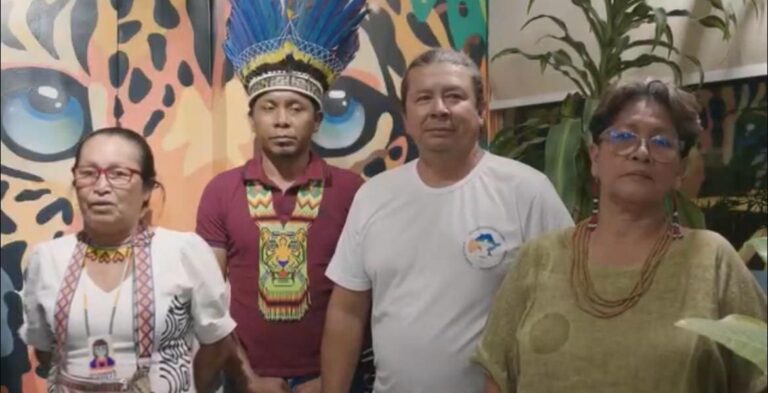
Some indigenous leaders are calling on the government to resolve longstanding land claims and include them in decisions affecting their territories, saying Guyana’s international conservation ambitions must be accompanied by respect for the people who have protected its forests for generations.

In a video posted on the North Pakaraimas District Council’s Facebook page, village leaders and representatives of the Amerindian Peoples Association (APA) raised concerns about mining concessions, delays in land titling and their participation in biodiversity discussions.

Their statements came against the backdrop of the second Global Biodiversity Alliance Conference and Financing Forum, held on October 30 and 31 at the Arthur Chung Conference Centre.

Alma Marshall, Toshao of Kamarang-Warawatta and chairwoman of the Upper Mazaruni District Council, said Indigenous communities continue to face difficulties over lands being allocated for extractive activities.

She called on the government to consult communities before decisions are taken and ensure that they have a meaningful role in determining what happens within their territories.

“We would like to be a part of the decision-making processes,” Marshall said.

Marshall also referred to a land case which she said had remained unresolved for more than two decades. She appealed to the state for a resolution that would recognise full ownership of the communities’ lands, including subsurface rights.

Turning to the biodiversity conference, she expressed concern that leaders from her district were not present to make their presentations.

“We need to be consulted, we need to be a part of decision-making processes as people, because we’re the ones, the true custodians of the forest, and that is our concern,” she said.

Edward McGarrell, Toshao of Chenapou and chairman of the North Pakaraimas District Council, similarly called for recognition and respect for Indigenous territories.

He contrasted the lengthy wait communities face when seeking land demarcation and extensions with what he described as the speed at which mining interests obtain concessions.

“We’ve been making applications for demarcation and extension, and have to be waiting for years to receive it. Sometimes we do not receive it at all, but people are applying to get mining blocks, concessions, they get it within weeks, within days,” McGarrell said.

“This is something we want to fix as Indigenous people. We are not obstacles of development.”

McGarrell argued that recognition should extend to communities’ traditional territories, rather than only small portions of the lands they have occupied and used for generations.

He described forests as essential to Indigenous livelihoods, providing food, medicine and places for hunting, fishing and other community activities.

“We know that these forests that are on the land are our supermarkets,” he said.

Wapichan representative Kid James also stressed the connection between Indigenous identity and ancestral territory, saying that communities with generations of experience caring for biodiversity-rich ecosystems should help shape conservation decisions.

James said Indigenous peoples were willing to engage with government and conservation organisations and contribute their knowledge to discussions about the country’s future.

“We are very willing to sit at that table, to share, to contribute, to make sure that the future is for the benefit of everybody,” he said.

“Consider us as equal partners,” James urged, calling for space for Indigenous peoples to contribute to ongoing dialogue.

Repeatedly

APA Executive Director Jean La Rose said the organisation had repeatedly raised concerns about respect for Indigenous land and territorial rights.

She urged the government to ensure that its commitment to conserve 30 per cent of Guyana’s lands and waters by 2030 respects those rights.

“Increasingly, however, we see our lands are being given away to mining companies,” La Rose said.

She also questioned the disparity between the pace at which concessions are granted and the time taken to rectify Indigenous land titles or issue new ones.

La Rose identified poor demarcation, inadequate land descriptions and overlaps with conservation activities among the problems affecting communities.

“And we want all of these addressed. We want them to be addressed by the communities, with the communities, in consultation with the communities, through decision-making by the communities and their leadership,” she said.

She called on the government to work with Indigenous peoples to improve legislation and policies governing their lands and territories.

The concerns place community participation and territorial rights alongside the financing proposals advanced at the biodiversity conference.

Kiskadee Watch previously reported that President Irfaan Ali used the opening of the conference to propose common fiscal incentives and regulations to attract biodiversity investment. He also challenged participating countries to prepare at least one project for financing before their next gathering. 

Ali said the proposed conservation of the Acarai–Rupununi Corridor would respect community interests, with further engagement, management planning and biodiversity monitoring guiding the process towards permanent protection, according to that report. 

In separate coverage, Kiskadee Watch reported that the Bezos Earth Fund, Andes Amazon Fund, Nia Tero and Rainforest Trust pledged an initial US$12.5 million for conservation in Guyana. Support for the proposed corridor, covering more than one million hectares, is conditional on permanent legal protection against mining, industrial logging and other incompatible activities, as well as safeguards for Indigenous rights, including free, prior and informed consent. 

Rainforest Trust Chief Executive Officer Dr James Deutsch also emphasised that Indigenous peoples and local communities must be meaningfully involved in conservation planning, governance and management, Kiskadee Watch reported. 


Source: Kiskadee Watch

PNCR/APNU calls for independent probe into diver’s death during MV Barima salvage work

0

The PNCR/APNU has called for an independent investigation into the death of Venezuelan diver Luis Martinez during maritime salvage work, questioning the emergency arrangements and the reported decision to transport him to Georgetown rather than seek medical assistance in Region Two.

In a statement issued yesterday, the party also urged the government to clarify whether the operation was directly connected to the MV Barima salvage contract and identify the company and contractors involved.

Police yesterday disclosed the incident, four days after Martinez reportedly became unresponsive during diving operations approximately 10 nautical miles off Anna Regina.

According to the police account previously reported by Kiskadee Watch, Martinez left Kingston Wharf, Georgetown, at about 5.14 pm on October 28 with other crew members for an operation to refloat a vessel.

He entered the water at the location but failed to resurface after approximately 20 minutes. Crew members pulled him up using a rope attached to his body and found him motionless and frothing at the mouth.

He was taken to the Transport and Harbours Department wharf at Stabroek, where ambulance personnel were summoned. A doctor pronounced him dead at approximately 2.30 am on October 29. His body was taken to Memorial Gardens Funeral Home pending a post-mortem examination.

The police statement did not name the vessel being salvaged, identify Martinez’s employer or detail the emergency assistance available. 

Yesterday PNCR/APNU expressed condolences to his family and colleagues, while calling for a transparent examination of the circumstances of his death.

“It is therefore reasonable to ask: Was there a qualified medical team on board? What emergency medical equipment and supplies were available? What emergency response protocols were established? Who was responsible for ensuring that the operation met the necessary safety requirements?” the statement said.

The PNCR/APNU argued that a medical emergency involving a diver was a foreseeable risk which should have been addressed before a complex underwater operation commenced. It called for disclosure of the medical personnel, oxygen supplies, resuscitation equipment, first-aid provisions and other emergency resources available.

The statement did not establish which of those arrangements were in place. It said that if basic safeguards were absent, the government and those supervising the operation should account for that failure.

The party also questioned whether consideration had been given to seeking assistance at Suddie Hospital or another suitable facility in Region Two.

“Was the decision to transport the individual to Georgetown based on medical advice, operational considerations or the absence of adequate medical facilities in Region Two?” it asked.

It urged the government to explain the decision and whether the time spent travelling to Georgetown could instead have been used to obtain emergency treatment on the Essequibo Coast.

Linking its concerns to the recovery of the MV Barima, the PNCR/APNU said the salvage operation carried responsibilities extending beyond the execution of a contract, particularly to bereaved families awaiting answers.

It called for publication of the relevant contract details, including the operational plan, safety requirements, timelines, allocation of responsibilities and monitoring arrangements. It also sought regular, verifiable updates on the recovery effort.

The party criticised what it described as a delay of several days before police publicly disclosed the fatal incident, saying the public was entitled to timely information.

Its proposed independent investigation would examine the circumstances of Martinez’s death, the emergency response and the adequacy of the safety procedures governing the diving operation.

“Those undertaking the salvage operation deserve proper protection, and the Government has a responsibility to ensure that no further lives are unnecessarily placed at risk,” the party stated.


Source: Kiskadee Watch