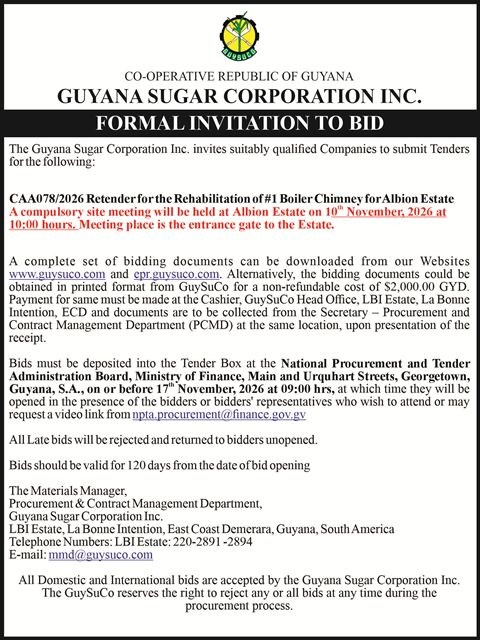
“Tourism Is everybody’s business” – Rodrigues urges shared responsibility
…as Tourism Awareness Month launched
With Georgetown placed at the centre of this year’s Tourism Awareness Month observance, subject Minister Susan Rodrigues has pointed out that every Guyanese has a shared responsibility towards ensuring the capital city delivers quality visitor experiences. She made these remarks on Saturday evening during the launch of Tourism Awareness Month 2026 at the Aiden by Best Western Hotel in Georgetown.
Held under theme “Tourism is Everybody’s Business,” this year’s November observance spotlights the transformation across Georgetown, and its growing importance as a centre for business travel, conferences and cultural experiences.
During her feature address, Minister Rodrigues noted the importance of delivering quality visitor experiences, strengthening skills and professional development, improving infrastructure, and maintaining clean and welcoming public spaces.
“We are pleased to see Georgetown transform. We are pleased to see our skyline changing with the addition of modern infrastructure… and I think it’s time that we celebrate the progress that we’ve seen in the city which greatly impacts the tourism sector here in Guyana,” the Tourism Minister declared.
“Keeping our city clean is therefore not only a municipal concern, but it is also a matter of civic pride, environmental responsibility, and the reputation of our destination,” she urged.
Tourism, livelihoods and development
According to Rodrigues, tourism extends beyond hotels, tour operators and traditional tourism businesses, highlighting the sector’s ability to create economic opportunities for Guyanese across all communities.
From farmers and fisherfolk to transportation providers, artisans, Indigenous communities and young entrepreneurs, the Minister underscored that tourism creates valuable linkages that support livelihoods and contribute to national development.
“Sectors like Tourism will be the enduring soul, the renewable lifeblood and the sustainable anchor of the Guyanese economy long after the wells run dry… A successful community tourism enterprise can support an entire network of local workers and businesses. This is what it means for tourism to be everybody’s business,” Rodrigues noted.
To this end, she reaffirmed Government’s commitment to advancing tourism as a key pillar of economic diversification while ensuring that the sector’s growth creates meaningful opportunities for Guyanese, and protects the natural and cultural assets that make ‘Destination Guyana’ unique.
This is being demonstrated through initiatives such as the Tourism Licensing and Regulatory Management Portal and the national destination booking engine that are currently being advanced to improve access to tourism services and connect visitors with experiences across the country.
Additionally, the Hospitality and Tourism Training Institute is also expected to commence operations in 2027.
Citizens to be part of tourism success
Minister Rodrigues called on businesses, communities, young people and every citizen to play an active role in advancing Guyana’s tourism industry, emphasising that the quality of the visitor experience depends on collective responsibility, collaboration and national pride.
“Tourism is not just the Government’s business. It is not just the private sector’s business. Tourism is everybody’s business,” she declared.
This year’s observance comes as Guyana’s tourism industry continues to record significant growth, with 360,623 visitor arrivals recorded by September 2026, representing a 10 per cent increase over the corresponding period in 2025. The country is working towards welcoming more than 500,000 visitors by the end of the year. Also in attendance at Saturday’s Tourism Awareness Month launch were Permanent Secretary (PS) of the Ministry of Tourism, Industry and Commerce, Roger Rogers; Director of the Guyana Tourism Authority (GTA), Kamrul Baksh; and President of the Tourism and Hospitality Association of Guyana (THAG), Mitra Ramkumar. The event was also attended by members of the Diplomatic Corps, staff of the Ministry and the GTA, Indigenous leaders and Toshaos, private sector representatives, industry stakeholders, and other special invitees.
Throughout November, a series of activities will be held to celebrate Tourism Awareness Month, including tourism specials, international promotional engagements, the Tourism Village at GuyExpo 2026, and initiatives to promote new tourism products and increase public awareness of the opportunities available within the sector.
According to the GTA Director, the November campaign will place greater emphasis on making tourism relevant to every community through public engagement, digital promotions and discounted domestic travel packages.
Baksh further noted that the programme will also feature a tourism mascot – unveiled as ‘Carl the Capybara’ during Saturday’s launch – and opportunities for citizens to contribute creative interpretations of the national theme.
Discover more from Guyana Times
Subscribe to get the latest posts sent to your email.
Source: Guyana Times
Prison Service rejects false mistreatment claims about US-sanctioned LOO
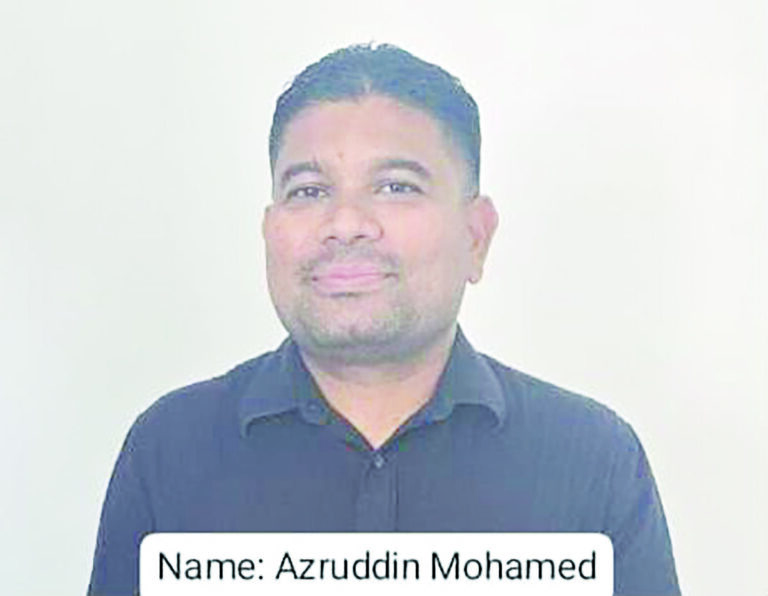
…says Mohamed allowed family visits, home-prepared meals, fan adjustment, telephone call to wish son happy birthday
The Guyana Prison Service (GPS) has rejected allegations circulating on social media that United States-sanctioned and indicted Opposition Leader Azruddin Mohamed is being subjected to inhumane treatment at Lusignan Prison.
The statement, issued on Sunday, followed claims circulated by Mohamed’s relatives and some members of the We Invest in Nationhood (WIN) parliamentary team alleging that he was being held in solitary confinement, shackled in a small cell and denied adequate ventilation, exercise and contact with other prisoners.
Other claims suggested that Mohamed was experiencing a medical emergency, that there were attempts to kill him and that prison authorities had intensified restrictions against him to the extent that he might not live to attend court on November 2.
However, the Prison Service said Mohamed was being managed according to his classification, security requirements, safety and welfare, and rejected suggestions that he was being subjected to punitive or degrading treatment.
According to the GPS, Mohamed was admitted to Lusignan Prison on Friday, October 30, and was assessed and classified as a high-profile prisoner through the Prison Management Offenders System. The classification determines his placement, accommodation and level of supervision and, according to the authorities, is a security and management measure rather than a form of punishment.
The Prison Service said that upon admission, Mohamed was examined by a medical officer and seen by a welfare officer. He was also briefed by the Officer-in-Charge of Lusignan Prison on the institution’s rules and the conditions governing his detention.
Addressing concerns about access to family members, the GPS said reasonable communication and visitation arrangements had been facilitated.
On Saturday, Assistant Director of Prisons, Operations (Acting), Deoraj Gyandat, met with Mohamed’s mother and two sisters and explained the arrangements for visits and telephone communication. The relatives were subsequently allowed to visit him.
The family later requested permission to provide meals for Mohamed, citing concerns about his safety. The Prison Service said the request was accommodated, subject to security procedures and a designated family member was authorised to deliver his meals.
The GPS further disclosed that Director of Prisons Nicklon Elliot, accompanied by Lusignan Prison Officer-in-Charge Seon Charles, personally visited Mohamed later that day to assess his welfare and reinforce the requirements governing his conduct while in custody.
During the interaction, Mohamed requested permission to telephone his son ahead of the child’s birthday on Sunday. The request was granted.
He also raised concerns about the fan serving his cell area, prompting prison officials to make the necessary adjustment.
The Prison Service said Mohamed’s conditions would continue to be monitored and that access to medical care, welfare services, family contact and other entitlements would be facilitated in keeping with established procedures.
The public statements and allegations surrounding Mohamed’s detention come as he remains on remand following his appearance before Magistrate Abigail Gibbs at the Sparendaam Magistrates’ Courts on Friday.
Mohamed and Police Constable Ryan Greene were jointly charged with unauthorised granting of access to or giving of electronic data, contrary to Section 9 of the Cybercrime Act, in connection with the alleged unauthorised extraction and transfer of sensitive police surveillance footage.
The two were denied bail and remanded until November 24. However, the prison service did not say if the same courtesies extended to Mohamed was also extended to the Greene.
The prosecution alleged that Greene, who was attached to the Guyana Police Force’s Command Centre, obtained surveillance recordings and supplied them to Mohamed in exchange for $800,000. The alleged transaction reportedly occurred on October 24.
The recordings relate to an October 12 shooting incident outside the Kitty, Georgetown, residence of Senior Superintendent of Police Prem Narine, Head of the Special Branch Unit and a witness in the extradition proceedings involving Mohamed and his father, Nazar Mohamed.
During the bail hearing, the prosecution raised concerns about the possibility of further offences and pointed to ongoing investigations and other pending matters involving Mohamed. These included his extradition proceedings and separate charges of unlawful possession of a firearm and ammunition and attempting to obstruct the course of justice.
The Prison Service, meanwhile, said it remained committed to the humane treatment of all prisoners and the human rights standards governing persons deprived of their liberty, including the United Nations Standard Minimum Rules for the Treatment of Prisoners.
It maintained that a prisoner’s public profile does not exempt that individual from security procedures applicable to their classification, while emphasising that the rights and welfare of all persons in custody must be protected.
Discover more from Guyana Times
Subscribe to get the latest posts sent to your email.
Source: Guyana Times
20-year-old prison officer dies in Bartica boat collision
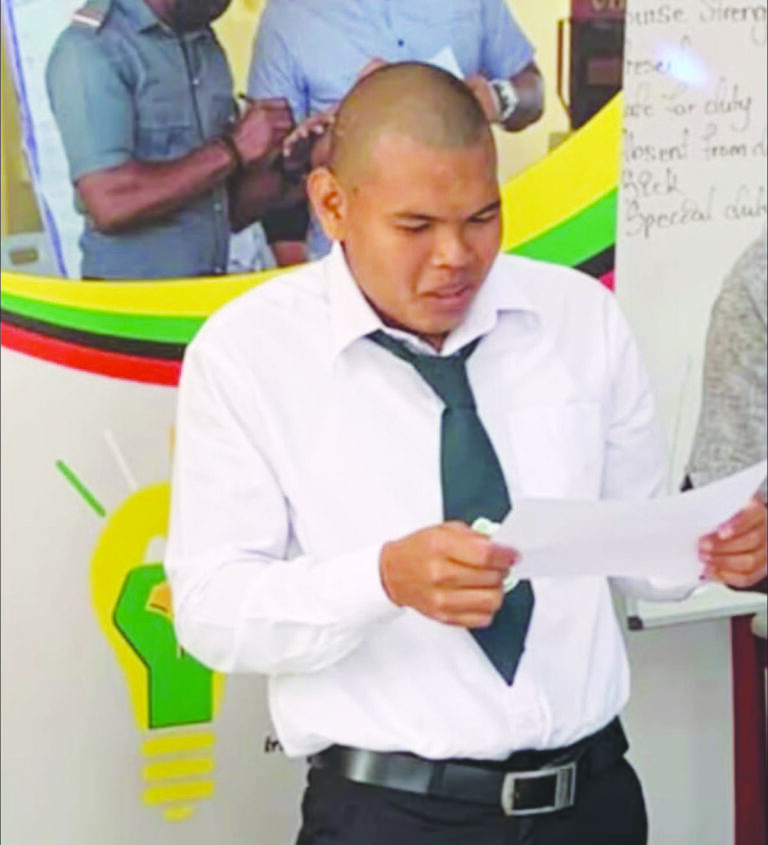
Twenty-year-old Prison Officer Shaloam Andrews died on Sunday morning following a boat collision on the Essequibo River near Third Avenue, Bartica.
Andrews, of Swan Village, Soesdyke-Linden Highway, was attached to the Mazaruni Prison. The Guyana Prison Service (GPS), in a statement, expressed condolences to Andrews’ family, friends and colleagues and said that the circumstances surrounding the collision are being investigated by the Guyana Police Force (GPF).
“His untimely passing at such a young age is a profound loss to his family, colleagues and the entire Guyana Prison Service,” the GPS said.

Home Affairs Minister Oneidge Walrond also expressed condolences following the officer’s death.
In a social media post, Walrond said she was saddened by Andrews’ death and noted that the 20-year-old had chosen to serve the country as a member of the GPS.
She said his death was a loss to his family and community in Swan Village, his colleagues at Mazaruni Prison and the wider Ministry of Home Affairs.
Walrond said she had spoken with Andrews’ family to extend her condolences and offered her support.
Discover more from Guyana Times
Subscribe to get the latest posts sent to your email.
Source: Guyana Times
GDF marks 61 years with call for modernisation, readiness, professionalism
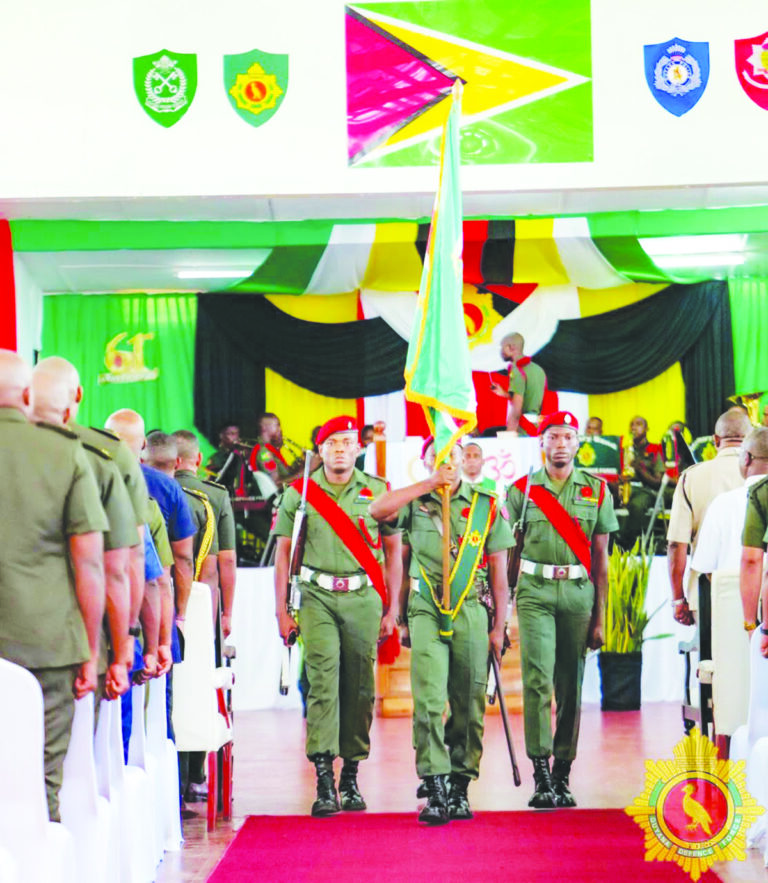
The Guyana Defence Force (GDF) has opened its 61st anniversary celebrations with an inter-faith service at Base Camp Ayanganna, where Chief of Defence Staff Brigadier Omar Khan underscored the importance of modernisation, operational readiness and professionalism as the Force prepares to meet emerging defence and security challenges.
The service, held on Sunday at the auditorium of Base Camp Ayanganna, brought together senior military officers, representatives of the Joint Services, members of the diplomatic corps and other officials to reflect on the Force’s 61-year history and its responsibilities as it enters its 62nd year of service.
In his feature address, Brigadier Khan reflected on the achievements of the Force since its establishment, paying tribute to the pioneers and veterans whose contributions laid its foundation. He also recognised the sacrifices made by military families in supporting the work of serving officers and ranks.
He reaffirmed the GDF’s dual mandate of defence and development, stressing that the protection of Guyana’s sovereignty and territorial integrity, alongside its contribution to national development, remain central to its responsibilities.
Looking ahead, the Chief of Defence Staff highlighted the need for the Force to continue modernising and adapting to changing security threats. He called on officers and ranks to maintain high standards of professionalism, integrity and patriotism, noting that the GDF’s ability to fulfil its mandate depends on the competence and conduct of its personnel.
The service also provided an opportunity for members of the Force to give thanks for God’s guidance and protection throughout its history and seek continued blessings as it undertakes another year of national service.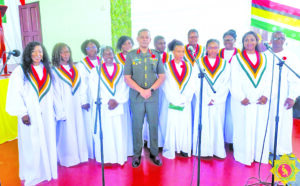
The sermon focused on the relationship between faith and duty, drawing on Isaiah 6:8, which states, “Here am I; send me.” The biblical passage was used to highlight the willingness to answer a call to service, with the message drawing parallels between the prophet’s commitment and the responsibility of military personnel to serve their country with faith, courage and dedication.
A Colour Party also formed part of the proceedings, led by Colour Ensign Lieutenant Delmar Headley, with Warrant Officer Class Two Mirza Shah serving as Colour Warrant Officer. Staff Sergeant Jamal Johnson and Senior Petty Officer Paul David served as Colour Escorts.
The anniversary observances come as the GDF enters its 62nd year, with the Force expected to build on the experience and sacrifices of previous generations while strengthening its capacity to respond to present and future defence challenges.
According to the GDF, the occasion also renewed the emphasis on maintaining a professionally developed and operationally prepared Force capable of safeguarding Guyana’s sovereignty and territorial integrity while carrying out its wider defence and security responsibilities.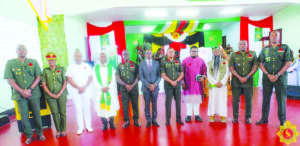
Among those attending were Director of the National Intelligence and Security Agency (NISA), Colonel Sheldon Howell; Director of Prisons Nicklon Elliot; Chief Fire Officer Gregory Wickham and Commander of Regional Division 4’A, Assistant Commissioner Simon McBean. The GDF’s senior leadership was represented by Colonel General Staff Colonel Kenlloyd Roberts, Adjutant General Colonel Lloyd Souvenir, Colonel Administration and Quartering Commander Roger Nurse, and Inspector General Colonel Natasha Stanford-Francis.
Also present were Colombian Liaison Officer Colonel Rodrigo Mezú and Brazilian Military Attaché to Guyana Colonel Luciano De Oliveira, along with other senior GDF officers and former Defence Military Attaché Colonel (Ret’d) Julius Skeete.
Discover more from Guyana Times
Subscribe to get the latest posts sent to your email.
Source: Guyana Times
Diver dies during salvage operation in Essequibo River

A 66-year-old Venezuelan national died after failing to resurface during a diving operation in the Essequibo River, approximately 10 nautical miles off Anna Regina, Region Two (Pomeroon-Supenaam).
Dead is Luis Martinez, who was employed as a diver and was part of a crew engaged in an operation to refloat a vessel when the incident occurred on Wednesday.
According to the Guyana Police Force (GPF), preliminary investigations revealed that Martinez departed Kingston Wharf, Georgetown, at about 17:14hrs aboard a vessel with several other crew members to participate in the operation.
Upon reaching the location, Martinez reportedly entered the water to carry out diving activities. However, after approximately 20 minutes, he failed to resurface, prompting concern among the other crew members.

The crew subsequently used a rope attached to Martinez’s body to pull him from the water. He was reportedly motionless and frothing at the mouth when retrieved.
He was then transported to the Transport and Harbours Department Wharf at Stabroek, Georgetown, where ambulance personnel were summoned.
Martinez was pronounced dead by a doctor on duty at about 02:30hrs on Thursday, October 29.
Police said an examination of the body revealed no marks of violence on the exposed parts. His remains were subsequently escorted to Memorial Gardens Funeral Home, where they are awaiting a post-mortem examination.
While police have not identified the vessel involved in the incident, details of the salvaging operation have also not been released.
The incident comes as Guyana awaits the recovery of the sunken MV Barima, which capsized and sank on July 18, resulting in the deaths of approximately 100 people.
On October 8, Guyana Times reported that salvage operations to recover the vessel could commence before the end of October, following confirmation that BK International had been awarded the contract.
During a preliminary public hearing of the Commission of Inquiry (CoI) into the tragedy, forensic naval architect Dr Andrzej Jastrzenowski, a member of the commission, said he had met with the preferred salvage team to discuss the recovery operation and preservation of evidence.
He had indicated that the operation could begin within days, although no confirmed commencement date was provided.
The commission is examining several aspects of the tragedy, including the vessel’s passenger capacity, cargo arrangements, loading procedures, stability and the availability of lifesaving equipment. Police investigations into Martinez’s death are ongoing.
Discover more from Guyana Times
Subscribe to get the latest posts sent to your email.
Source: Guyana Times
Where… in the pecking order??

Your Eyewitness has been observing the goings-on around the visit of King Charles III with a mixture of wonder and knowing head shaking!! It helped illustrate an old truism that’s been proven time and again as to what motivates folks in our fastest growing economy in the world!! We’ve been hearing a lot about GDP growth increasing the economy writ large and at the same time complaints that the individual incomes ain’t growing as fast as folks think they ought to – with an old, outdated 48% poverty rate thrown in for good measure!!
The truism is that while Guyana might’ve discovered oil – the real scarcity remains a place close enough to somebody important to get into the photograph!! Now don’t get your Eyewitness wrong, – prosperity brings benefits but it ain’t true that money makes the world go-round!! If we wanna be honest about it – real satisfaction for most folks depends heavily on where they stand relative to others!! Or, when as we just saw, when royalty arrives who gets the chance to show how elegantly they can bend!!
King Charles’s visit – complete with the requisite State House reception and an engagement with business representatives – provided a splendid setting for contemplating the national pecking order!! Did you hear the Opposition kvetch how they weren’t given invitations??!! It all had to do with the social possibilities – a handshake becomes an heirloom; a brief exchange becomes “my conversation with His Majesty” and an accidental appearance behind the royal shoulder becomes a profile picture with a longer reign than several governments!!
In our imagined society drawing room, the questions practically ask themselves: Who got invited? Who was introduced? Who merely waved? And who committed the unforgivable social offence of being photographed beside somebody who wasn’t anybody? The curtsy, in this economy, offers an impressive return. A modest investment of the knees can produce weeks of social appreciation.
Now we’ve spent six decades celebrating independence – one reason for Charles’ visit! – yet the prospect of royal recognition clearly awakened a (not-so-) touching enthusiasm for the old grading system!! The empire might’ve departed but the anxiety about admission to its drawing room appears to’ve retained permanent residency!! Of course, welcoming a visiting monarch is ordinary diplomacy – the comedy begins when an invitation becomes evidence of personal elevation, and someone else’s invitation becomes a private constitutional crisis!!
Oil can finance roads, hospitals and schools – but it can’t arrange for everybody to stand nearest the King. That particular resource that confers the status over our neighbours, friends and family remains stubbornly finite.
And there lies our predicament, innit? We wanted prosperity so we could stand tall but somehow, the competition became on who gets to curtsy!!
…in the cloud?
Our Global Biodiversity Alliance, launched last year and now holding its second conference, seeks to turn conservation into income. President Ali’s argument is sensible: forests, rivers and wildlife provide services from which the world benefits, while the countries protecting them are expected to survive on congratulations. This week, he challenged biodiversity-rich countries to prepare investment-ready projects – even the forest must now arrive with a business plan.
But across the technological frontier, as global data-centre electricity consumption double between 2025 and 2030 trillions are being invested to keep our data in “the cloud”!! That’s a wonderfully weightless expression but it got plumbing since the data centres consume water through cooling, to reach 1.2 trillion litres by 2030!! Thus, the grand irony – we struggle to finance the ecosystems that regulate water and climate while racing to finance infrastructure that adds to demands on both!!
A standing forest gotta prove its financial return – but a server farm promising to transform -civilization opens chequebooks with alacrity!!
…is the loyalty?
Looks like Sanction Man’s party’s Political Director – his sissie Hana – is preparing to take over the party after he’s extradited. Today’s she’ll be courting arrest while protesting in front of the Georgetown Magistrate court!!
In Gucci dark glasses!!!
Discover more from Guyana Times
Subscribe to get the latest posts sent to your email.
Source: Guyana Times
The newly-developed political system and its fundamental constituent elements

Dear Editor,
Upon further reflection and careful consideration of the ceremony, the most poignant and resonant speech delivered during the late Robert Corbin’s wake was undoubtedly the one offered by Dr Bharrat Jagdeo, who currently serves as the General Secretary of the People’s Progressive Party (PPP).
Dr Jagdeo’s speech was promised to be a deeply memorable and historic occasion for everyone in attendance. However, it turned out to be a truly impressive and impactful address not merely because of his delivery, but because within those words, he spoke with profound sincerity, articulated things that he fundamentally believed to be true, and shared his authentic convictions with the audience.
Dr Jagdeo has recently identified and articulated a definition that appears to be both logical and deeply resonant within our current context. In my estimation, this interpretation suggests that we function collectively as a cohesive political family, bound together by a shared history and a common set of fundamental values. And that observation holds profound truth: if the Guyanese people truly constitute a singular political family, then we must possess the empathy to recognise that a significant number of our members are currently enduring great pain and facing immense struggles. Consequently, if we are truly going to learn and gain a deep understanding, we must actively do it by listening attentively to the words around us.
When we fail to listen attentively to others, we inadvertently create significant barriers to effective communication and mutual understanding, which often leads to unnecessary misunderstandings and a profound sense of emotional disconnection between individuals.
If you truly desire to become an exceptionally effective and influential leader, it is absolutely essential that you commit yourself to making the practice of learning through active listening one of your most important and non-negotiable strategic priorities in your daily professional life.
This work systematically examines and analyses the evolving political systems in modern capitalist and socialist societies.
The newly-established political system functions to maintain social stability as a cohesive organism. This structure is centrally administered by a legitimate authority that ensures order across the social framework.
Therefore, the primary task in analysing this system is to isolate its components to observe their function, development, and interaction.
Socialist democracy is a comprehensive framework that extends beyond politics to encompass economic, social and cultural systems. It integrates democratic principles into production management and sociocultural life for all citizens.
The socialist economic system is driven by a democratic spirit, prioritising the people’s material and cultural needs to ensure equitable distribution and collective well-being. Democratic principles also guide economic management through the participation of the masses and diverse sectors in developing state economic and social plans.
Genuine democracy pervades the developed socialist political system, which is based on the principle of popular sovereignty.
Lenin was a prominent political leader and theorist, frequently characterising politics as both a science and an art.
What are the specific underlying factors and historical conditions that significantly increase the Party’s strategic importance and the profound sense of responsibility throughout the current stage of social development? The first factor is the complexity of building a democratic society, a task addressed by the working class and the intelligentsia.
Lenin once profoundly observed:
“The greater the scope and the broader the overall extent of significant historical events, the greater is the total number of people who are actively participating in them. Furthermore, and contrariwise, the more profound and fundamental the structural change we wish to bring about within society, the more we must strive to rouse a genuine interest and foster a deeply intelligent, conscious attitude toward it. It is essential that we work to convince more millions and even tens of millions of people of the absolute necessity of such a transformation, ensuring they understand why it is necessary for progress.”
These complex and evolving circumstances necessitate a further, substantial increase in the overall level of the Party’s political and organisational leadership, while simultaneously requiring a comprehensive improvement in the professional training and ideological education of the personnel across all diverse spheres of work.
This phenomenon is primarily rooted in the exceptionally diverse and multifarious creative activities undertaken by the people. Currently, the entire population is actively enlisted and deeply involved in managing the national economy, as well as participating in various other essential forms of state governance and socio-political activity. This widespread general interest in public affairs, coupled with an effervescent and growing sense of local initiative, inevitably places further significant demands on the Party leadership. Consequently, the leadership must strive to make much fuller and significantly better use of the colossal, untapped creative potential that resides within the masses of the people.
Since moral values are fundamentally shaped and refined by one’s personal upbringing, the continuous action of the surrounding social environment, and deliberate conscious activity, they serve as an indispensable and powerful regulator of human acts and decisions. These internalised values function as a comprehensive standard or a moral compass by which individuals evaluate and judge the complex behaviour of other people, while also providing a framework for assessing the underlying principles and ethical foundations of socio-political organisation in modern society.
Value systems play a substantive and multifaceted role in shaping political behaviour, manifesting notably in crucial processes such as elections to the legislative and executive organs of power, as well as in the public’s evaluation of political and party leaders. While certain segments of the population are inherently more concerned with the complex problems of society’s internal development—focusing on socio-economic equity, infrastructure, and domestic welfare—others may be predominantly preoccupied with matters of national security, international prestige, or the pursuit of national greatness, among other strategic priorities.
Models of social and political behaviour designate specific cognitive schemata or established modes of activity that serve as essential means for satisfying people’s diverse interests and complex demands in strict conformity with their internal system of values. Such conceptual schemata or behavioural stereotypes are usually carefully adapted to specific social situations and are often systematically reiterated in the long-standing customs and daily habits adopted by a given society, socioeconomic class or organised group. Such, for example, is the instinctive and often visceral negative reaction to a public speech delivered by a representative of an opposing political party, contrasted with the unwavering and automatic support for the members of one’s own political party during public discourse.
Culture significantly influences the various dimensions of socio-political life, operating both through established models of individual behaviour and through the complex structure of political institutions and diverse forms of political relations. It shapes how citizens perceive their roles within society while simultaneously defining the foundational norms that govern institutional interactions and the broader dynamics of power and governance.
Sincerely,
Sherwood Clarke
General Secretary
Clerical and Commercial Workers’ Union (CCWU)
Discover more from Guyana Times
Subscribe to get the latest posts sent to your email.
Source: Guyana Times
Reparations: apology a start

As King Charles III jetted off to the 28th Commonwealth Heads of Government Meeting (CHOGM) in St. John’s, Antigua and Barbuda, Britain appears ready to consider saying sorry. But paying for what it is sorry about remains another matter. Britain’s Prime Minister Andy Burnham’s recent declaration of an openness to a formal apology for chattel slavery in the Caribbean marks a significant diplomatic advance. But his continued rejection of reparations on behalf of his government exposes the distance between acknowledging an injustice and accepting responsibility for repairing it. As Caribbean leaders assemble for the Commonwealth summit in Antigua and Barbuda, that distance will define the negotiations.
The CARICOM Reparations Commission deserves credit for bringing the argument this far. Established in 2013 under Sir Hilary Beckles, it has helped turn a demand routinely dismissed as historical grievance into a sustained regional campaign. CARICOM’s revised reparations programme, approved in July, encompasses health, education, cultural recovery, Indigenous development, debt cancellation and monetary compensation. This is a programme for rebuilding societies, rather than merely distributing cheques. CARICOM, however, has noted they were unable to secure unanimous agreement from all Commonwealth members to advance structured foreign-minister talks on historical slavery harms. We have to continue lobbying on the sidelines.
The central argument of the revised 10-Point Plan for Reparatory Justice is compelling. The British state legislated for slavery, protected the plantation economy and compensated enslavers when emancipation deprived them of their human “property”. The people whose labour had generated the wealth received no corresponding compensation. Britain recognised an obligation to the owners while leaving the “owned” to finance their own freedom.
The major objection touted that today’s Britons personally enslaved nobody misses the point since states inherit obligations as well as assets. A country cannot celebrate centuries of accumulated institutional wealth while declaring the liabilities attached to its acquisition extinguished by the deaths of the original beneficiaries.
Jamaica has now added a potentially consequential legal dimension. Its petition, referred by Charles III to the Judicial Committee of the Privy Council, asks whether slavery as practised in Jamaica was lawful, whether it violated international obligations and whether Britain owes a reparatory remedy. There is considerable irony in asking an institution associated with imperial authority to examine the empire’s unpaid account but it is Britain that has insisted through the centuries of colonization that the procedure is as consequential as the substance.
Nevertheless, expectations require discipline since an advisory opinion is not an enforceable compensation award. Establishing legal responsibility, defining remedies and securing implementation remain separate hurdles. A favourable opinion, however, could strengthen Caribbean bargaining power without opening the British Treasury automatically.
But we also need to do some stocktaking for not every contemporary Caribbean failure arise from slavery. Our governments remain accountable for corruption, waste and poor policy and we they should commit themselves to the proposition that reparations will be dealt with through transparent administration, measurable benefits and public scrutiny. Those requirements will strengthen the reparations claim by making repair credible.
What, then, can this summit that is now underway realistically deliver? A comprehensive financial settlement looks highly unlikely while Britain expressly rejects reparations. A formal apology is more plausible, although openness to considering one is still short of issuing it. The most useful attainable advance would be negotiations with an agreed agenda, named representatives and deadlines. PM Burnham has indicated openness to structured dialogue regarding a formal state apology and debt-relief assistance.
Our CARICOM leaders should welcome movement without permitting an apology to become a receipt marked “paid in full”. Health and education funds, technology partnerships and debt measures could offer practical routes forward. But ordinary development assistance must not simply acquire a reparations label, and assistance must reach vulnerable Caribbean states routinely excluded by income classifications.
The Commission’s achievement is that Britain increasingly has been forced to answer the question and it is now the leaders’ task to ensure that the conversation that will be launched in Antigua produces obligations. Our ancestors supplied enough unpaid labour and their descendants should not be offered an indefinitely unpaid promise.
Discover more from Guyana Times
Subscribe to get the latest posts sent to your email.
Source: Guyana Times
Legitimate concerns deserve serious economic analysis, not an oversimplified narrative

Dear Editor,
The Peeping Tom column published in Kaieteur News on October 30, 2026 offers a simplistic and misleading interpretation of Guyana’s economic development.
While its appeal to our colonial history may be rhetorically compelling, it obfuscates the realities of modern economic development, the strategic choices facing a small developing country, and the deliberate policies being pursued to ensure that Guyanese benefit from our nation’s resources.
The central flaw in the argument is its apparent conflation of foreign investment with foreign domination.
Economic sovereignty does not require a country to own, finance and operate every aspect of its productive sectors. Rather, it requires the capacity to make decisions in the national interest, negotiate partnerships, regulate investment and ensure that the resulting benefits accrue to its citizens. There is a fundamental difference between colonial exploitation and sovereign nations voluntarily entering into commercial partnerships.
This distinction is particularly important in the oil and gas sector. Developing offshore petroleum resources requires enormous capital investment, sophisticated technology, specialised expertise and the assumption of considerable commercial and operational risks. For Guyana to independently finance and construct the infrastructure necessary to undertake these activities would impose extraordinary costs on the public purse, diverting scarce resources from education, healthcare, housing, transportation and other national priorities. Not to mention the time this would take to put into place, therefore delaying how fast Guyana would have seen revenues from the sector.
Moreover, such an approach would expose the country to the considerable risk of being left with stranded assets as the global energy transition accelerates and countries pursue their net-zero emissions commitments.
Why should Guyanese taxpayers shoulder billions of dollars in investment risks when strategic partnerships with international companies can provide the necessary capital, technology and expertise? The prudent course is not to reject foreign participation but to structure it in ways that maximise national returns while limiting the country’s financial exposure.
Equally misleading is the suggestion that Guyanese businesses are destined to remain on the margins of the petroleum industry. Guyana has enacted Local Content legislation precisely to safeguard and expand Guyanese participation in the sector. The Local Content Act establishes requirements for the procurement of specified goods and services from Guyanese companies and creates opportunities for local employment, enterprise development and capacity-building. These are not merely expressions of political aspiration; they are statutory obligations designed to ensure that the development of our petroleum resources generates tangible domestic economic benefits.
Importantly, the Government’s approach to indigenous enterprise development begin and end with oil and gas. The Guyana Development Bank initiative is intended to improve access to financing and support for Guyanese entrepreneurs, including those operating outside the petroleum sector. Such measures recognise that genuine economic independence rests on building a diversified domestic private sector, rather than concentrating national ambition exclusively on ownership of extractive industries.
Further, the column also overlooks another fundamental economic reality, which is that Guyana faces significant labour shortages. Our expanding economy requires workers across construction, engineering, manufacturing, agriculture, hospitality and numerous other sectors. The pace of development has created demands for labour and specialised skills that the domestic workforce alone cannot immediately satisfy. Foreign expertise, investment and, where necessary, labour are therefore not necessarily symptoms of economic subordination. They can be essential complements to domestic capacity as Guyana invests in training and workforce development.
Indeed, it would be economically counterproductive to insist that development proceed only at the pace permitted by existing domestic resources. The objective should be to use international partnerships to accelerate growth while systematically expanding Guyanese skills, ownership, entrepreneurship and institutional capacity.
None of this suggests that foreign investment should escape scrutiny or that contractual arrangements cannot be improved. Transparency, accountability, effective regulation and the equitable distribution of national wealth remain indispensable. But these legitimate concerns deserve serious economic analysis, not an oversimplified narrative in which every foreign investor is cast as a modern-day colonial master.
Guyana’s economic independence will not be measured by the nationality of every investor, contractor or financial institution operating within its borders. It will be measured by the country’s ability to exercise sovereign authority, capture value from its resources, develop its people, strengthen domestic enterprise and convert finite natural-resource revenues into lasting national prosperity.
Sovereignty is not diminished by partnership. It is strengthened when partnerships are pursued strategically, regulated effectively and made to serve the national interest.
Sincerely,
Attiya Baksh
Discover more from Guyana Times
Subscribe to get the latest posts sent to your email.
Source: Guyana Times