Home Blog Page 263

‘Guyana will abide by ICJ ruling on Venezuela border’

0


…President urges Venezuela to do the same

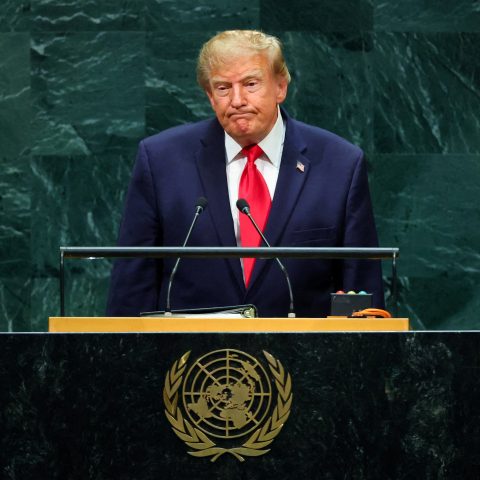
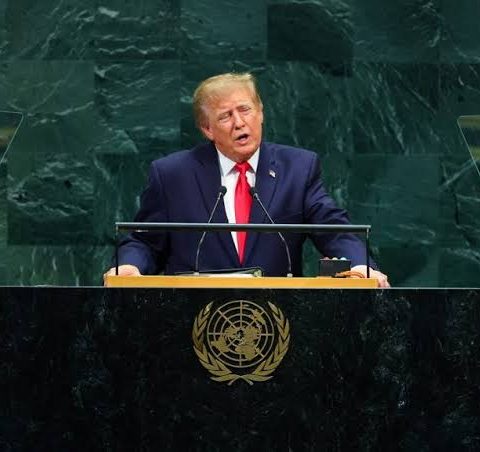
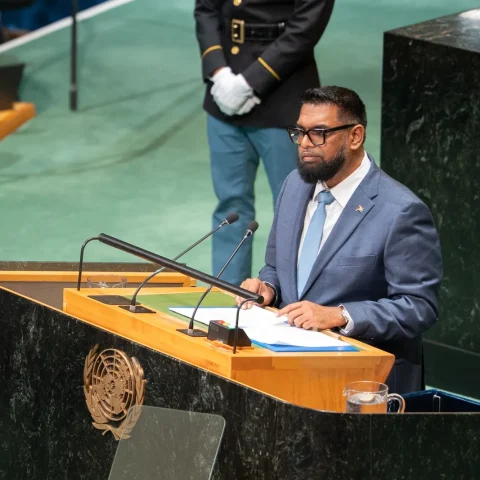
(Kaieteur News) – President Irfaan Ali told the United Nations General Assembly (UNGA) on Thursday that Guyana will abide by the International Court of Justice ruling on the border controversy with Venezuela and urged the Bolivarian Republic to do the same.

Ali made this statement hours after Venezuela’s acting President Delcy Rodríguez in her address to the assembly spoke of country’s desire to return to the negotiation table rather than rely on the court’s decision.

‘Guyana will abide by ICJ ruling on Venezuela border’

President Irfaan Ali

In his address, President Ali noted that Guyana has always advanced the peaceful settlement of the controversy.  “Despite the historical truth – clearly outlined in the Arbitral Award of 1899 that determined the full, perfect and final settlement of our border with Venezuela, we endured long and repeated provocations and aggression. The matter was referred to the International Court of Justice by the Secretary General, acting pursuant to the Geneva Agreement, and the Court twice pronounced on its jurisdiction to hear the matter,” Ali told the UNGA.

‘Guyana will abide by ICJ ruling on Venezuela border’

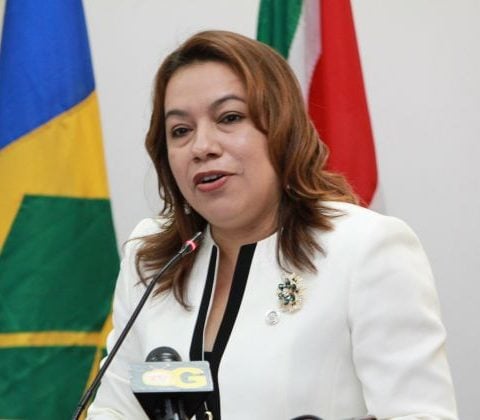
Venezuela’s acting President, Delcy Rodriguez

He stressed that the recourse to the ICJ came after decades of efforts to resolve the controversy bilaterally, including through a mixed commission and the Good Offices of the UN Secretary General. The Head-of-State said in full respect for international law, Guyana participated and encouraged Venezuela to participate in the proceedings of the ICJ.

“Now that we have both participated in the hearings which were completed in May 2026, we urge Venezuela to abide by the forthcoming ruling in accordance with their obligation under the UN Charter, as Guyana will do. We look forward to a new era of neighbourly relations in the interest of our peoples, the development of our countries and the stability and prosperity of our region,” he said.

On Wednesday, Rodriguez spoke to world leaders at the UNGA  while wearing a brooch that includes the Essequibo region as part of Venezuela’s map. She said: “Here, I appeal to the Cooperative Republic of Guyana to resolve the issue and to return to negotiations, as stipulated by the Geneva Agreement. Agreements which last the longest are those that emerge from bilateral negotiations. They last longer and function better than those imposed by external bodies”

Guyana remains steadfast in defending its sovereignty and territorial integrity as it awaits the final judgment of the ICJ in the border controversy with Venezuela. Guyana’s submissions before the world court have now been fully completed, with oral hearings concluding on 11th May, leaving only the Court’s deliberations and final ruling. While no date has yet been announced, the Court generally takes between six and eight months after oral hearings conclude to issue a judgment, placing a likely ruling between November 2026 and January 2027.


Source: Kaieteur News

2026 Commander-in-Chief T20 Cup… Benn cameo, Budhram 3-fer pilot GPF Officers to 7-wicket win over Fire Service

0


(Kaieteur News) – The Guyana Police Force (GPF) Officers maintained their impressive run after arresting the Guyana Fire Service (GFS) squad by 7 wickets on Wednesday at the Police Sports Club Ground, Eve Leary, when action in the Commander-in-Chief T20 tournament continued.

Taking first, GFS were dismissed for 97 in 17.1 overs, with Captain, Assistant Commissioner ‘Administration’ Ravindradat Budhram producing an outstanding spell which yielded 3-8 from 3 overs.

2026 Commander-in-Chief T20 Cup…  Benn cameo, Budhram 3-fer pilot GPF Officers to 7-wicket win over Fire Service

The GPF Officers continued their unbeaten run in this tournament with another decisive win over GPS XI. (GPF Photo)

All-rounder Stephen Harris also impressed with the ball, taking 1-11 alongside Kewis Gravesande 1-6 and Troy Benn (1-24).

Chasing 98 for victory, the defending, unbeaten champs GPF Officers then made light work of the target, strolling to their final score of 102-3 in a mere 8.2 overs.

2026 Commander-in-Chief T20 Cup…  Benn cameo, Budhram 3-fer pilot GPF Officers to 7-wicket win over Fire Service

GPF Officers Captain/ Assistant Commissioner ‘Administration’ Ravindradat Budhram led his team with 3 wickets. (GPF Photo)

The veteran Benn returned with bat in hand to lead the charge with a blistering 41off 14 deliveries, smashing 7 fours and a six.

Harris followed up his contribution with the ball by blasting a 5-ball knock of 18 (1×4, 2×6), one four and two sixes.

Trevor Benn (16) also chipped in some useful runs, mirroring the efforts of Vice-Captain Ronald Alli, who also scored a solid 16.

After beating GPS, the Officers have now secured back-to-back wins in the tournament, following their 35-run victory over GPS in their opening match.


Source: Kaieteur News

Costa Rican Foreign Minister dismissed after attending a Trump security meeting

0

https://kiskadeewatch.com/world/caribbean/costa-rican-foreign-minister-dismissed-after-attending-a-trump-security-meeting/

Caribbean

Costa Rican Foreign Minister dismissed after attending a Trump security meeting


Manuel Tovar Rivera, Minister of Foreign Trade of Costa Rica, speaks during a press conference at the OECD Headquarters in Paris, France, June 4, 2025. REUTERS/Benoit Tessier/File Photo

SAN JOSE,  (Reuters) – Costa Rica President Laura Fernandez dismissed Foreign Minister ​Manuel Tovar yesterday after he ‌attended a high-level regional security meeting led by US President Donald Trump without notifying her, ​preventing her from participating in the ​gathering.

Several right-wing Latin American presidents participated in ⁠a Tuesday meeting of the Shield of ​the Americas, an anti-cartel coalition launched in ​March by the Trump administration.

  • Tovar’s dismissal has taken effect immediately, Costa Rica’s government said in a ​statement.
  • The government added that Tovar’s negligence ​caused significant strategic damage by preventing Fernandez from participating ‌in ⁠the meeting.
  • The Shield of the Americas is a US-led multinational coalition focused on combating drug trafficking and organized crime.
  • Costa Rica ​views the ​coalition as ⁠fundamental to its national and public security policy, the government ​said.
  • Indiana Trejos, Costa Rica’s current Minister ​of ⁠Foreign Trade, has been named acting Foreign Minister.
  • Trejos will assume the role upon ⁠returning ​from her mission at the ​United Nations General Assembly.

You reached the end of this article without encountering a paywall.

That is deliberate. We believe reliable journalism about Guyana should be available to everyone from the hinterland to the coast, including those who cannot afford to pay for it. But investigating, reporting and publishing every story takes time, energy and resources. Keeping our journalism open depends on the commitment of readers who can chip in and contribute to help cover the cost for everyone.

Please join the Kiskadee family by taking a subscription. Every contribution counts to our commitment to our journalists, to our readers, and to independent, public-interest journalism.

And please spread the word. One one dutty build dam!


Become a supporter


Source: Kiskadee Watch

Guyana Rejects Some U.S. Deportees As Two-Year Resettlement Deal Takes Effect – HGPTV – Guyana’s Nightly News and Entertainment Channel

0

By Travis Chase | HGP Nightly News |

GEORGETOWN, GUYANA — Guyana is not functioning as an open-ended receiving depot for third-country deportees removed from the United States, with local security authorities already exercising their sovereign discretion to reject several candidates submitted by Washington under the contentious bilateral resettlement arrangement.

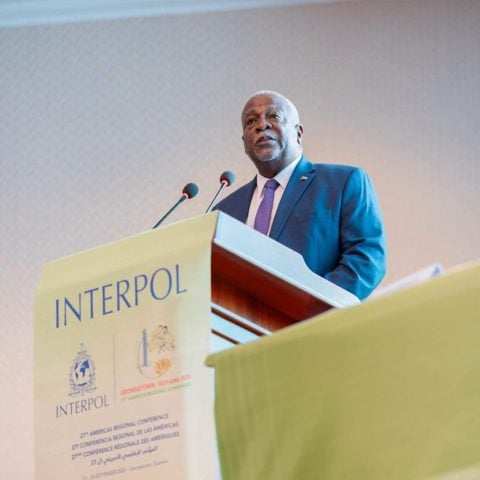
The disclosure was made by United States Ambassador to Guyana Nicole Theriot on the sidelines of the 27th INTERPOL Americas Regional Conference in Georgetown.

Clarifying operational terms that had remained largely shielded from public view, Ambassador Theriot confirmed that the bilateral pact spans a binding two-year operational window, underwritten by US$7.8 million in direct federal funding from the United States to finance housing, healthcare, vocational integration, and administrative needs for accepted transferees.

Strict Screening: Georgetown Vetoes Names from Washington’s Transfer List

Ambassador Theriot revealed that Guyana possesses and actively exercises an absolute vetting mechanism over every individual proposed for deportation to its shores:

  • List Pruned by Domestic Authorities: The initial manifest transmitted by American immigration authorities contained considerably more candidates than the six third-country nationals who landed in Guyana three weeks ago.
  • Independent Local Vetting: Guyanese intelligence and immigration officers conducted autonomous background assessments and systematically rejected multiple candidates on the roster.
  • The Criminal Exclusion Rule: Ambassador Theriot affirmed that the Government of Guyana established a non-negotiable benchmark prohibiting the transfer of any individuals with confirmed criminal convictions.

“Guyana has made it clear that it will not accept individuals with criminal records,” Ambassador Theriot stated, addressing public anxieties regarding national security.

The US$7.8M Financing Package and the Role of the IOM

Addressing the economic mechanics of the bilateral arrangement, Ambassador Theriot confirmed that Washington has earmarked US$7.8 million over the life of the agreement to prevent the initiative from becoming a financial burden on Guyanese taxpayers:

  • Comprehensive Support Architecture: The US$7.8 million allocation is structured to cover the complete logistical continuum—including private accommodation leases, essential sustenance, emergency healthcare, language translation, and psycho-social assistance.
  • Multilateral Oversight via IOM: The International Organization for Migration (IOM) has been contracted as the primary operational partner tasked with managing field welfare, monitoring human rights compliance, and facilitating transition services for accepted transferees.
  • Temporary Staging vs. Permanent Residency: Transferees may reside in Guyana on a temporary status while multilateral agencies negotiate travel documents and repatriation corridors back to their countries of origin. Alternatively, transferees may petition for permanent legal residency in Guyana, though Ambassador Theriot emphasized that any grant of permanent domestic status rests exclusively at the discretion of the Government of Guyana.

Mounting Demands for Full Disclosure

Despite Ambassador Theriot’s public clarifications, the arrangement continues to encounter intense pushback across Guyana’s political spectrum:

  • Transparency Concerns: Parliamentary opposition parties—including the APNU+AFC—alongside legal commentators and civil society organizations have criticized the administration for refusing to formally table the signed memorandum of understanding (MoU) or treaty text in the National Assembly.
  • Security Anxieties: Critics have questioned whether domestic law enforcement can adequately monitor non-citizens whose historical intelligence files remain foreign, particularly given regional precedents where smaller Caribbean jurisdictions declined similar resettlement requests from the United States.

With the two-year arrangement now in active execution, the administration faces sustained parliamentary calls to present the comprehensive resettlement framework before the National Assembly to institutionalize oversight over incoming flights.


  • Source: HGP Nightly News / HGPTV

    Open Letter to Ministers Edghill and Waldron – Who is in charge of Guyana’s traffic?

    0

    Dear Ministers,

    I returned to Guyana yesterday evening after a journey involving nearly twenty hours. Immigration and Customs were a breeze. Everything went well until we reached Friendship on the East Bank.


    What followed was among the most chaotic and mismanaged public sector activities imaginable. For the better part of an hour there was little movement of traffic in either direction. Heavy and construction vehicles competed for road space, government vehicles with sirens forced their way through, and there appeared to be no system for keeping traffic moving.


    Minister Edghill, you are responsible for road construction and, surely, for managing its consequences. Where are the signs, controlled diversions and arrangements for construction vehicles entering and leaving the roadway? Where are the personnel to ensure that road works do not themselves bring traffic to a standstill? Have these responsibilities been farmed out along with the construction contracts?


    The Roads Act, Cap. 51:01, is not concerned merely with constructing roads. It contemplates their supervision and management. Contractors cannot simply be permitted to occupy and interfere with public roads while motorists and the public are left to fend for themselves.


    Minister Walrond, the Police cannot be spectators. The road traffic legislation expressly empowers the Police to intervene where abnormal traffic requires directions to relieve congestion and prevent obstruction. Traffic management and enforcement are plainly police responsibilities.


    The two Ministries cannot pass responsibility between themselves. Public Works must manage the consequences of construction; the Police must manage and enforce the movement of traffic. What we see instead is an extraordinary failure of coordination between two arms of the same Government.


    Even if you are insensitive to the hardship and frustration inflicted on the public, you cannot be unaware of the serious economic cost and reputational damage. Thousands of persons losing thirty minutes or an hour each day means thousands of productive hours lost. Fuel is wasted, employees arrive late, deliveries are delayed and costs ripple through the economy.


    And consider the message to visitors. They arrive in a country celebrated for extraordinary economic growth and massive infrastructure spending, only to leave the airport and encounter stationary traffic, construction vehicles, inadequate signage and unmitigated disorder.


    What makes the situation particularly unacceptable is that it is neither new nor temporary. It has persisted for years. After all that time, the continuing chaos can no longer be explained away as inconvenience caused by development. It represents a sustained failure of planning, coordination and ministerial oversight. Ministers, on traffic management your performance has moved beyond poor administration to something approaching dereliction of responsibility.


    Minister Walrond, you were recently moved from Tourism to Home Affairs. What would the Minister of Tourism have said about the impression being created by the traffic management for which the Minister of Home Affairs now shares responsibility?


    Guyana boasts one of the fastest-growing economies in the world. Yet on one of the country’s principal arteries, between its international airport and its capital, traffic management can be among the slowest and worst imaginable. That contradiction should embarrass a government spending hundreds of billions of dollars on infrastructure.


    Ministers, this is not an occasional inconvenience. It is a prolonged and serious management failure. Please tell the public who is responsible, what arrangements exist between Public Works, its contractors and the Police and, more importantly, what you – individually and together – are going to do about it.

    Yours truly

    Christopher Ram


    Source: Village Voice News

    Memorial service to be held for Dr Ian McDonald on September 30th

    0

    https://kiskadeewatch.com/guyana/memorial-service-to-be-held-for-dr-ian-mvdonald-on-september-30th/

    Memorial service to be held for Dr Ian McDonald on September 30th


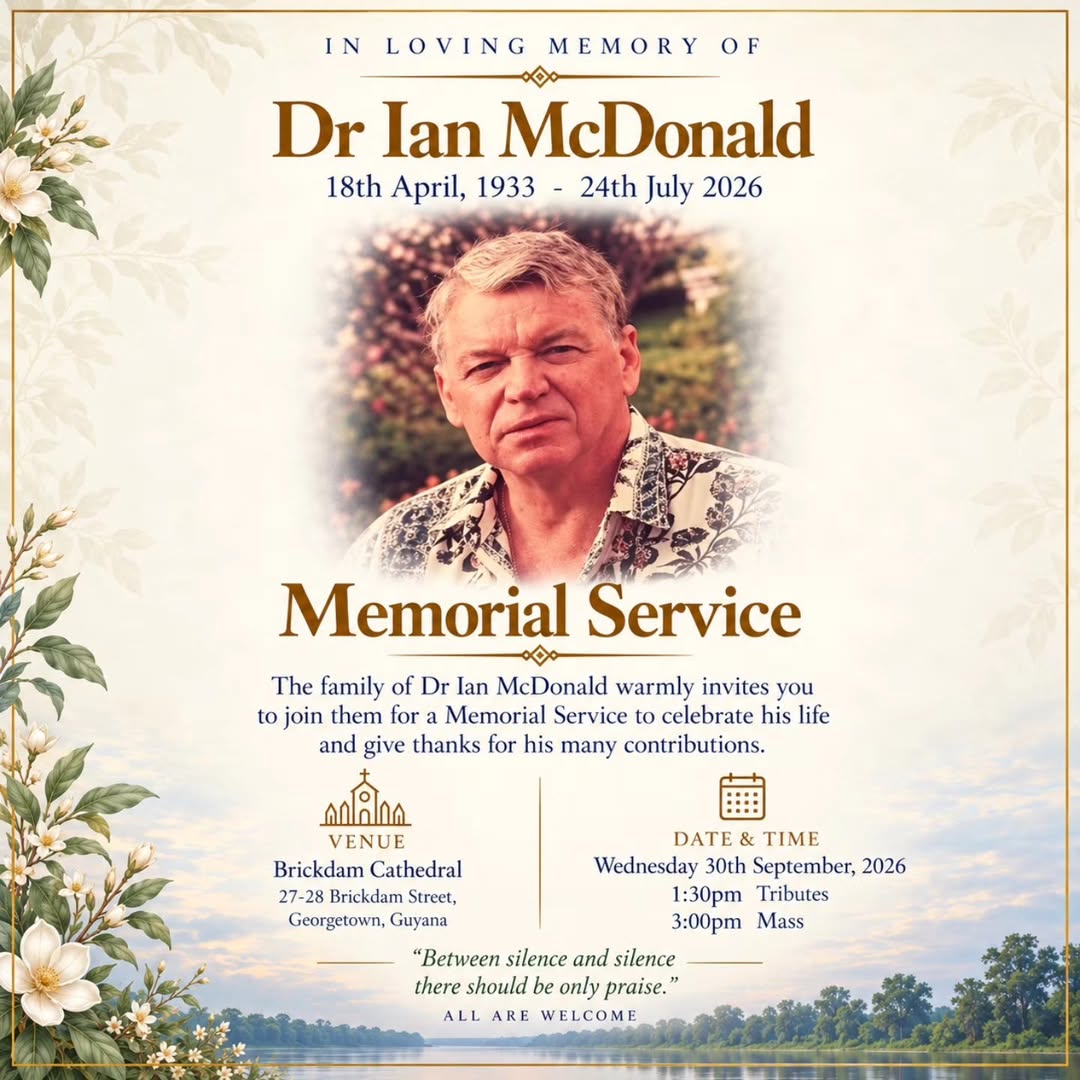
    A memorial service is to be held on Wednesday, September 30th at the Brickdam Cathedral at 1.30 PM for the late poet, author, columnist and GuySuCo executive, Dr Ian McDonald.

    McDonald, considered to be the quintessential Caribbean man, passed away at the age of 93 in Canada.

    A funeral was held in Toronto on July 29th and his cremated remains have been brought back to Guyana.

    You reached the end of this article without encountering a paywall.

    That is deliberate. We believe reliable journalism about Guyana should be available to everyone from the hinterland to the coast, including those who cannot afford to pay for it. But investigating, reporting and publishing every story takes time, energy and resources. Keeping our journalism open depends on the commitment of readers who can chip in and contribute to help cover the cost for everyone.

    Please join the Kiskadee family by taking a subscription. Every contribution counts to our commitment to our journalists, to our readers, and to independent, public-interest journalism.

    And please spread the word. One one dutty build dam!


    Become a supporter


    Source: Kiskadee Watch

    ERC Engages Port Kaituma Stakeholders, Supports Families Affected By Mv Barima Tragedy

    0

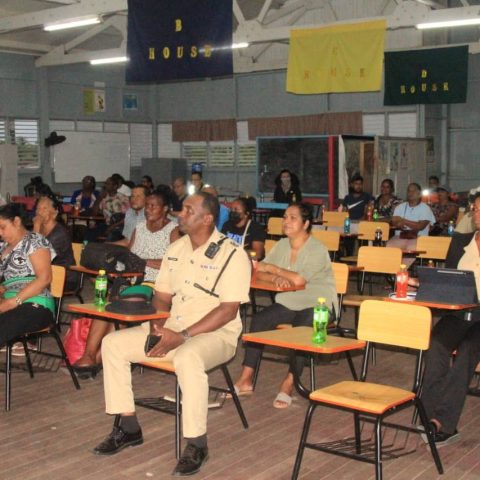
    The Ethnic Relations Commission (ERC) hosted an interactive stakeholder engagement on  Wednesday, September 23, 2026, at the Port Kaituma NDC Compound, bringing together more  than 70 residents, community leaders and stakeholders from across the Matarkai Sub-region,  Region One (Barima-Waini). 

    The engagement brought together residents from a wide cross-section of communities, including  Waterfront-Port Kaituma, Canal Bank, Citrus Grove, Fitzburg, Matthew’s Ridge, Falls Top, Log  Pond, Turn Basin, Oronoque, Arakaka, and the One, Two, Three and Four Miles areas. 

    The delegation was led by ERC Chairman Shaikh Moeenul Hack and included Commissioners  Norris Witter, Ashton Simon, Rev. Rodwell Porter, Ras Khafra (Mr. Deon Dick), Mrs.  Chandrowtie Sarran and Pandit Krishn Sharma, alongside Chief Executive Officer (ag), Ms. Oma  Devi-Sukhu. 

    The engagement provided a platform for stakeholders to share concerns, experiences and  perspectives on matters affecting ethnic relations, community development and social cohesion.  The Commission also used the opportunity to provide information on its constitutional mandate  and functions, while hearing directly from residents about issues affecting their communities. 

    ERC Supports Families Affected by MV Barima Tragedy 

    A significant component of the Commission’s visit was its engagement with family members and  other persons affected by the MV Barima tragedy. The Chairman and Commissioners listened to  their concerns and offered support as they continue to cope with emotional and economic  challenges following the loss of loved ones. 

    As part of this outreach, the Commission distributed hampers to bereaved families and other people affected by the tragedy, providing practical assistance while reinforcing the ERC’s commitment  to supporting affected communities during this difficult period. 

    The ERC will continue to engage affected families as part of its follow-up efforts, including  facilitating further engagement where necessary and assisting with matters that fall within the  Commission’s mandate. 

    Chairman Shaikh Hack, who is also a member of the Hope, Empathy, Aid, Resilience, and Trust  (H.E.A.R.T.) Initiative, a national framework established to provide long-term, sustained support 

    to survivors and bereaved families of the MV Barima tragedy, noted that continued support will  also be provided through the initiative. 

    ERC Expands Harmony Clubs in Region One 

    The stakeholder engagement followed a series of educational and community outreach activities  conducted by the ERC earlier in the week. 

    On Monday, September 21, 2026, a team from the Commission’s Public Education and Awareness  Unit (PEAU) visited students at Falls Top Primary School, where they provided information on  the ERC’s constitutional mandate, functions and role in promoting harmony and good relations  among Guyanese. 

    On Tuesday, September 22, 2026, the ERC, in continued collaboration with the Ministry of  Education, launched a Harmony Club at Port Kaituma Primary School. More than 30 pupils  participated in activities focused on tolerance, mutual respect and appreciation for Guyana’s ethnic  and cultural diversity. Headteacher Ms. Leslyn Bobb welcomed the initiative and expressed  support for the establishment of the Club. 

    District Education Officer for the Matarkai Sub-region, Ms. Oshelle Bartrum, speaking on behalf  of the Ministry of Education, also welcomed the Harmony Club as a complementary initiative that  encourages students to develop positive relationships with their peers, families and wider  communities. 

    The Port Kaituma launch represents another step in the ERC’s expanding Harmony Club  programme, which has now reached hundreds of students across participating schools nationwide. 

    Following pilot initiatives in the capital city of Georgetown at Stella Maris, St. Gabriel’s,  Comenius, St. Ambrose and North Georgetown Primary, the programme has expanded to Mahdia  and Micobie in Region Eight, Kamarang in Region Seven, Kuru Kururu in Region Four and now  Port Kaituma in Region One. 

    Through the initiative, the ERC seeks to equip young people with values of tolerance, mutual  respect and appreciation for diversity, while encouraging them to carry these principles beyond  the classroom and into their homes, families and wider communities. 

    The ERC will continue its regional outreach and stakeholder engagements as part of its  constitutional responsibility to promote harmony, peaceful coexistence, mutual respect and good  relations among all Guyanese. 


    Source: Village Voice News

    The Chamber Asked for More Information on Oil Contracts. The Law Has Ordered It Published Since 2021.

    0
    Quick summary: Georgetown Chamber of Commerce and Industry President Kathy Smith asked the government on 24 September 2026 to monitor foreign oil contractors more closely and to tell Guyanese firms more about coming work. Section 11(5) of the Local Content Act has required the state to publish an extract of every approved local content plan since 2021.

    Kathy Smith, President of the Georgetown Chamber of Commerce and Industry, asked the government to watch foreign and regional oil contractors more closely. She spoke on 24 September at the Chamber’s third energy luncheon, themed “Beyond the Barrel”, at the Marriott Hotel in Georgetown. The Chamber wants “more monitoring and observation from the government’s standpoint”, she said, OilNOW reported.

    Her test was what the contractors are here to do. Companies coming to Guyana, Smith argued, must understand that they are here to build Guyanese businesses and the wider economy, not only their own operations.

    Part of what she asked for is already a statutory duty. Section 11(5) of the Local Content Act 2021 reads: “The Secretariat shall cause to be published an approved extract of a Local Content Plan on the website of the Ministry responsible for petroleum or on any other media of wide circulation and that publication shall not include any confidential or proprietary information.”

    What has the Chamber actually asked for?

    Two things. The first is information. Smith questioned why regional and international companies often appear better briefed on developments in the petroleum sector than the Guyanese contractors chasing the same work. Local firms, she said, need clarity on coming contracts, technical requirements, certification, insurance and financial controls. She objected to Guyanese companies being left out of conversations about opportunities, and urged them to form partnerships and consortiums to bid for larger assignments.

    The second is oversight. Smith named no contractor and alleged no wrongdoing. Her point was that monitoring should make sure the benefits of expanding operations reach local firms. She acknowledged the Chamber’s working relationships with ExxonMobil, the Centre for Local Business Development and the government, while saying too little information reaches domestic firms.

    What does the Act require the state to publish?

    Provision What it requires
    Section 11(5) The Secretariat shall publish an approved extract of a Local Content Plan on the petroleum ministry’s website or other media of wide circulation, excluding confidential or proprietary information
    Section 6(9) The Secretariat shall cause the Local Content Registers to be published on the ministry’s website or other media of wide circulation
    Section 18(1) and (3) The Secretariat reports to the Minister on each contractor’s, sub-contractor’s and licensee’s performance, the objectives not yet attained and the reasons given; the Minister shall cause a report to be laid before the National Assembly
    Section 19 A Contractor, Sub-Contractor or Licensee shall allow the Secretariat unrestricted access to facilities, records, reports, documents, data and information for monitoring, assessing, evaluating, investigating, auditing and verifying compliance

    Source: Local Content Act 2021, No. 18 of 2021, as gazetted on 31 December 2021.

    The petroleum ministry’s document library is not thin. It carries the Canje and Block S4 petroleum agreements, the Liza Phase 1 production licence and its Phase 2 addendum, the Whiptail and Hammerhead licences, both Stabroek cost recovery audit reports, the model production sharing agreements for deepwater and shallow water, and the Liza and Payara Gold crude assays. Under local content it carries submission guidelines and report templates. It does not carry an extract of any approved plan.

    The Local Content Register is at localcontent.gov.gy and opens on a login. This newspaper set out the position in August, in Guyana Approved Local Content Plans for More Than Forty Companies, reporting that no list of approved companies exists on any government site. Section 11(5) settles what that absence means: the publication is a duty, not a courtesy.

    The Act allows publication in other media of wide circulation as an alternative to the ministry website, so an extract placed in a newspaper would satisfy it. None has been found.

    What has the government said it is doing?

    The Ministry of Finance’s 2026 Mid-Year Report sets out the position at the half year.

    Measure What the report says
    Spending in prioritised sectors Preliminary estimates indicate approximately US$466.2 million was spent on procuring goods and services in the sectors prioritised for greater Guyanese participation in the first half of 2026
    Registrations Approximately 500 Guyanese businesses registered through the Secretariat in the first half
    First schedule Stakeholder engagements on revising the first schedule continued, with an additional 20 areas identified for consideration, potentially for inclusion under goods and services
    Online portal Launched in the first half. New applications from wholly Guyanese companies and partnerships are processed within 15 working days and renewals within 10; other firms, 21 and 15

    Source: Mid-Year Report 2026, Ministry of Finance, paragraphs 3.66, 3.74 and 3.75.

    Two points there are narrower than they are often reported. The US$466.2 million is described in the report as a preliminary estimate. The 20 additional areas are identified for consideration and potential inclusion, which is a stage before a decision.

    The portal that was launched speeds up certification of Guyanese suppliers. It is the registration side of the system, not the compliance-monitoring side.

    What can the Secretariat do when a contractor falls short?

    Enter the premises and read the files, then prosecute. Section 19 gives unrestricted access to facilities, records, reports, documents, data and information. The penalties on summary conviction run from one million Guyana dollars for a late document, through five and ten million for false or misleading information, to fifty million for carrying out petroleum operations without meeting the minimum local content requirement. Failing to satisfy the content requirement of an approved plan carries ten million.

    What the Act does not do is make an operator answerable for its sub-contractors. Contractor, Sub-Contractor and Licensee each carry their own duties and their own liability throughout. There is no joint and several liability anywhere in the Act.

    How do other producers handle the same problem?

    Ghana wrote the monitoring duty in 2013 and has been measured against it since. Regulation 44 of the Petroleum (Local Content and Local Participation) Regulations, L.I. 2204, reads: “The Commission shall monitor and investigate the activities of each contractor, subcontractor, licensee and other allied entity to ensure the achievement of the purpose of these Regulations within the framework of the national policy on local content.”

    A United Nations University WIDER working paper on Ghanaian local content law and practice found the results mixed, and named three causes: the low capacity of local firms, discrimination against them by international oil companies through vertical integration, and the weak regulatory capacity of the Petroleum Commission itself. A monitoring duty on paper is not monitoring.

    Nigeria publishes its refusals. The Nigerian Content Development and Monitoring Board processed 1,603 expatriate quota applications, approved 1,417 and rejected 186 for non-compliance, allAfrica reported in March 2026, with the approved quota carrying 13,833 employment commitments. That is a number a local contractor can hold a regulator to.

    Mozambique built the mechanism Guyana’s Act lacks. Law No. 9/2026 of 3 June, its first binding local content law, requires covered entities to ensure through contractual mechanisms that their sub-contractors comply, failing which they are jointly and severally liable, LEX Africa reported. That liability operates in accordance with regulations still to be issued, so it is a lever built and not yet pulled. The same law creates a Local Content Authority with its own legal personality, administrative and financial autonomy and sanctioning power, where Guyana’s Secretariat sits inside the Ministry of Natural Resources.

    Mozambique is the closest analogue for the reason Smith raised. Its law answers a complaint that gas megaprojects had not reached local firms and workers. Brazil’s Petrobras signed a two-year memorandum with Mozambique’s state hydrocarbons company this week, reported in Brazil’s Oil Company and Mozambique’s Signed a Deal in Rio.

    Where does gas come into it?

    Smith said engagement matters most as Guyana prepares to develop its gas resources, and named power generation, manufacturing, industrial development and downstream activity as areas where local firms could take part. She asked for talks on widening the existing local content categories and for more information on the Berbice port. She asked Deodat Indar, Minister of Public Utilities and Aviation and the luncheon’s feature speaker, to relay her concerns to his Cabinet colleagues.

    The categories are where the Chamber’s members meet the Act. It reserves forty categories for companies that are 51 per cent Guyanese owned, running from 90 per cent of catering down to 5 per cent of engineering, set out in Guyana’s Oil Law Reserves 90 Per Cent of the Catering for Local Firms. Two gaps in that schedule have been reported here already: the software that runs a US$12.7 billion field, in ExxonMobil Bought Software to Run a US$12.7 Billion Field, and the offshore vessels, in Guyana Reserves a Fifth of Offshore Aviation Support for Local Firms.

    Next door, Suriname has required local preference since 1990 without percentages or categories, covered in Suriname Has Required Local Preference Since 1990. In mining, Guyana has promised five companies that if the law changes the state pays, in Guyana Has Promised Five Mining Companies That If the Law Changes, the State Pays.

    The Chamber itself has been busy on the regional front, signing two Trinidad agreements in nine weeks, reported in The Georgetown Chamber Signed Two Trinidad Agreements in Nine Weeks.

    What would show the position has changed?

    Three things, each of them checkable without anyone’s cooperation. An extract of an approved local content plan appearing on the ministry’s website under section 11(5). The Local Content Registers appearing there under section 6(9). And the Secretariat’s impact assessment report being laid before the National Assembly under section 18(3), where any member can read what each contractor committed to and what it did not attain.

    What the title card shows

    • Section 11(5): the provision of the Local Content Act 2021 requiring the Secretariat to publish an approved extract of every Local Content Plan on the petroleum ministry’s website or in other media of wide circulation.
    • Forty-plus plans approved, none published: the ministry’s document library carries petroleum agreements, production licences, cost recovery audits, model production sharing agreements and crude assays, and no plan extract.
    • US$466.2 million: preliminary estimate of spending on goods and services in prioritised sectors in the first half of 2026, with about 500 Guyanese businesses registered. Mid-Year Report 2026, Ministry of Finance.
    • G$50 million: the maximum fine on summary conviction, for carrying out petroleum operations without meeting the minimum local content requirement.
    • No joint and several liability: the Act gives Contractor, Sub-Contractor and Licensee separate duties and separate liability. Mozambique’s new law makes operators answerable for their sub-contractors, subject to regulations still to be issued.

    Frequently Asked Questions

    What did the Chamber’s president ask for?

    Closer government monitoring of foreign and regional oil contractors, and better information for Guyanese firms on coming contracts, technical requirements, certification, insurance and financial controls. She named no contractor and alleged no wrongdoing.

    Does the law already require the plans to be published?

    Yes, in part. Section 11(5) of the Local Content Act 2021 requires the Secretariat to publish an approved extract of a Local Content Plan on the petroleum ministry’s website or in other media of wide circulation, excluding confidential or proprietary information. Section 6(9) requires the Local Content Registers to be published the same way.

    What powers does the Secretariat have?

    Section 19 requires contractors, sub-contractors and licensees to allow it unrestricted access to their facilities, records, reports, documents, data and information for monitoring, investigating, auditing and verifying compliance. Penalties on summary conviction run up to fifty million Guyana dollars.

    Is an operator responsible for its sub-contractors?

    Not under Guyana’s Act, which gives each of Contractor, Sub-Contractor and Licensee its own duties and its own liability. Mozambique’s Law No. 9/2026 takes the other approach, making covered entities jointly and severally liable where their sub-contractors do not comply, subject to regulations still to be issued.

    How much local content spending has been recorded this year?

    Approximately US$466.2 million in the first half of 2026 on goods and services in prioritised sectors, described in the Ministry of Finance’s Mid-Year Report as a preliminary estimate, with about 500 Guyanese businesses registering through the Secretariat in the same period.

    La Caribeña News


    Source: Village Voice News

    Fibre Cable Damage Causes Temporary Service Disruption to Mobile Data and Fibre Internet Customers

    0

    One Communications experienced a mobile data and fibre service disruption after a private company not associated with One Communications was conducting construction works along Carifesta Avenue damaged a critical section of the company’s fibre network infrastructure.

    At approximately 3:16 PM on September 23, 2026, contractors damaged one of the company’s fibre cables, affecting both mobile data and fibre internet services.

    Upon identifying the issue, technical teams immediately initiated restoration efforts and implemented network rerouting measures to minimize customer impact. Services were restored at a reduced capacity approximately one hour after the incident, with temporary full restoration achieved at 12:05 AM.

    While services have been restored, the damaged cable remains in a temporary configuration. Engineering teams are currently assessing the most appropriate window to complete a permanent repair while minimizing any potential impact on customers and businesses.

    Telecommunications infrastructure is critical to modern life, supporting personal communications, businesses, financial services, healthcare, education, government operations, and emergency communications. Protecting this infrastructure is essential to national resilience, public safety, and economic stability.

    As a long-standing partner in Guyana’s development and digital transformation, One Communications remains committed to delivering reliable connectivity that supports economic growth, business operations, and communities across the country.

    Abraham Smith, Chief Executive Officer of One Communications, thanked the Government of Guyana and the company’s technical teams for their support throughout the incident. “I would like to express our sincere appreciation to the Office of the Prime Minister, the Telecommunications Agency, and Minister Juan Edghill for their support and engagement throughout the restoration process. We are also deeply grateful to our engineers, technicians, and operations teams who worked tirelessly through the night to restore services as quickly and safely as possible. Their dedication, professionalism, and commitment were instrumental in returning our customers to service.”

    Jasmin Harris, Community and Government Relations Manager at One Communications, emphasized the importance of protecting critical telecommunications infrastructure. “Our telecommunications network spans communities and businesses throughout Guyana, with critical infrastructure located both above and below ground. Damage to these facilities can result in widespread service disruptions affecting thousands of customers. We encourage all contractors, developers, and individuals planning excavation or construction work to contact us before digging so that these assets can be properly identified and protected.”

    For asset location and infrastructure inquiries, the company encourages persons and organizations to email plannedworks@onecommgroup.com or contact 0777 before commencing excavation or construction activities.

    One Communications thanks its customers, business partners, and stakeholders for their patience and understanding during the restoration effort and remains committed to strengthening and protecting the infrastructure that keeps Guyana connected.


    Source: Village Voice News

    Former Belize Judge Warns Persaud’s Visa Action Raises Judicial Independence Questions – HGPTV – Guyana’s Nightly News and Entertainment Channel

    0

    ‘A Sanction Need Not Announce Its Name’: Former Belize Judge Warns U.S. Visa Action Against Justice Gino Persaud Threatens Judicial Independence

    By Travis Chase | HGP Nightly News |

    GEORGETOWN, GUYANA / KINGSTON, JAMAICA — The international controversy surrounding the unexplained United States visa review affecting High Court Judge Justice Gino Persaud has been placed squarely into a regional debate on judicial independence, the reach of foreign executive power, and subtle pressures facing Commonwealth jurists.

    Addressing the Commonwealth Magistrates’ and Judges’ Association (CMJA) Annual Conference in Jamaica, prominent Guyana-born jurist and former Belize High Court Judge Professor Justice Courtney Abel warned that the travel restriction imposed on a sitting judge cannot simply be dismissed as a routine consular matter.

    Justice Abel, who currently serves as Head of the Department of Law at the University of Guyana, argued before the international assembly of judges that while there is no definitive proof connecting Washington’s decision to Persaud’s bench rulings, the confluence of timing, context, and official silence creates a chilling dynamic for the wider judiciary.

    ‘Operates Like a Sanction’: The Miami Airport Bar

    Justice Abel recounted the sequence of events that disrupted Justice Persaud’s intended transit on Saturday, September 19, 2026, as he attempted to travel through Miami International Airport to attend the CMJA conference:

    • The Airport Block: Airline personnel at the Cheddi Jagan International Airport informed Justice Persaud that his name had been electronically flagged, that his U.S. visa had been placed under administrative review, and that he was barred from boarding the flight.
    • The Nature of Coercion: While Washington has not designated the move as an official sanction, Abel submitted that the real-world effect of an unexplained travel ban on a serving superior court judge mirrors one.

    “A sanction need not announce its name,” Justice Abel declared to the conference.

    Sensitive Jurisprudence: The Mohamed Tax Cases and Executive Criticism

    Turning to the domestic backdrop, Justice Abel observed that Justice Persaud has presided over several high-profile, politically contentious matters in the Supreme Court of Judicature of Guyana:

    • Rulings Adverse to the State: Persaud delivered key judgments against the state and the Guyana Revenue Authority (GRA), including litigation involving members of the prominent Mohamed family and disputed duty valuations on imported luxury motor vehicles.
    • Executive Displeasure: Abel pointed out that certain decisions rendered by Justice Persaud had previously attracted open, sharp public criticism from senior government officials, including the President of Guyana.
    • Allegations of Domestic Collusion: Acknowledging persistent public speculation that domestic political actors may have fed derogatory dossiers to foreign embassies to trigger retribution, Abel emphasized that such claims remain unproven. Washington has offered no official justification, and the Government of Guyana has formally denied having any role or influence in U.S. visa determinations.

    “Suspicion is not evidence. But neither is silence an answer,” Justice Abel said.

    ‘The Modern Assault May Leave No Fingerprints’

    In one of the most resonant passages of his address, Justice Abel warned Commonwealth magistrates and judges that contemporary threats to the rule of law rarely present themselves as overt threats or crude instructions:

    • The Architecture of Intimidation: External pressure is rarely applied by directly instructing a jurist how to decide an active docket. Instead, unchecked sovereign actions create an insidious climate where judges learn that certain rulings against power carry personal consequences.
    • Beyond One Individual: Abel noted that while judges enjoy no special immunity from immigration statutes, the unexplained closure of travel corridors to a serving judge sends an intimidating signal to peers handling politically sensitive litigation.

    “The modern assault may leave no fingerprints,” Abel warned, emphasizing that an environment can be engineered wherein judicial officers subtly internalize the hazards of ruling against powerful interests.

    Abel concluded that while the U.S. review might ultimately turn out to be administrative, mistaken, or entirely unrelated to judicial output, the absence of an appropriate, transparent process leaves a profound constitutional shadow over the administration of justice:

    “Judicial independence requires that the judge—and not government, opposition, the press, a foreign power or any other outside force—remain the true author of the judgment.”


  • Source: HGP Nightly News / HGPTV