Home Blog Page 242

MV Barima Families Still Wait as 30+ Remain Missing and Salvage Questions Persist

0

Seventy-three lives have been lost, 76 people survived and at least 30 remain unaccounted for, but more than two months after the MV Barima sank, the families left behind are still waiting for answers about what happened and why.

The 87-year-old state-owned passenger and cargo vessel sank on July 18, 2026, while travelling from Georgetown to Port Kaituma. What began as a maritime disaster has since developed into a criminal investigation, a Commission of Inquiry and continuing demands from grieving families for greater transparency and the recovery of the wreck.

The scale of the disaster itself remains striking. Prime Minister Mark Phillips told the National Assembly that authorities ultimately determined that 179 passengers and crew were aboard, despite many not appearing on the official passenger manifest.

That discrepancy has become one of the central questions surrounding the tragedy.
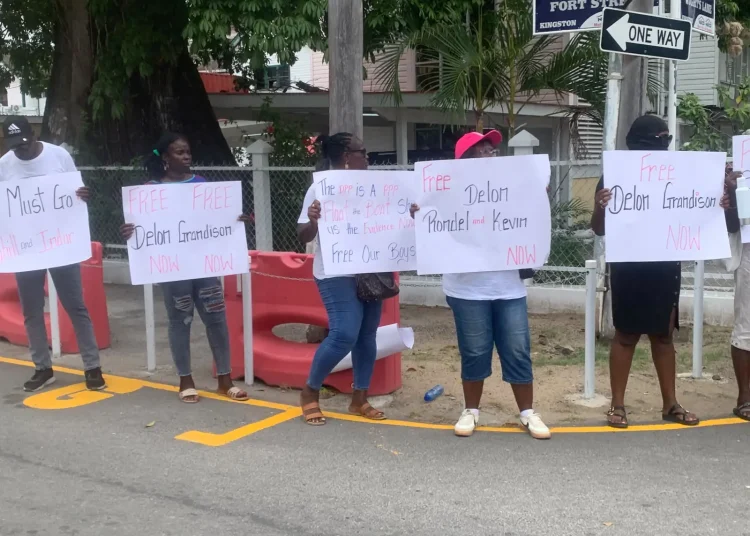
MV Barima protest on September 22, 2026 at Minister Juan Edghill’s office

Three men — Captain Kevin Price, Chief Mate Rondell Dwayne Roberts and Goods Superintendent Delon Granderson — have been charged with murder arising from the deaths. The prosecution has completed disclosure, with paper committal proceedings expected to begin on November 16.

The criminal proceedings are running alongside a five-member Commission of Inquiry headed by Belizean Justice Godfrey Phillip Smith. The commission is examining the circumstances surrounding the sinking and is expected to make recommendations on maritime safety, emergency response and regulatory and institutional reforms.

Yet families continue to demand something the legal processes cannot immediately provide — the return of their loved ones and physical evidence from the wreck.

Government announced that the Barima would be salvaged, with the recovery intended to assist the Commission of Inquiry and preserve evidence. Several bids were reportedly received as the salvage process advanced.
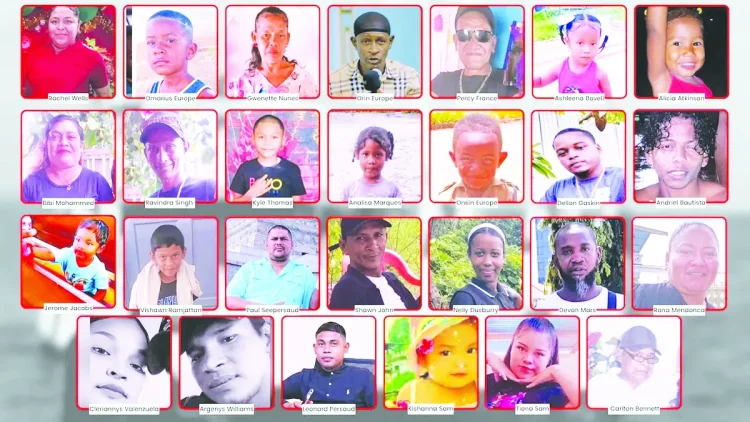
The uncertainty has fuelled repeated protests. Relatives and supporters have called for the vessel to be raised, for the missing to be recovered and for greater accountability from the authorities responsible for maritime safety and the operation of the vessel.

The disaster has also exposed the human cost of weaknesses in the system. The fact that dozens of people were not recorded on the official manifest has raised questions about passenger controls, oversight and the ability of authorities to establish quickly who was actually aboard a government-operated vessel.
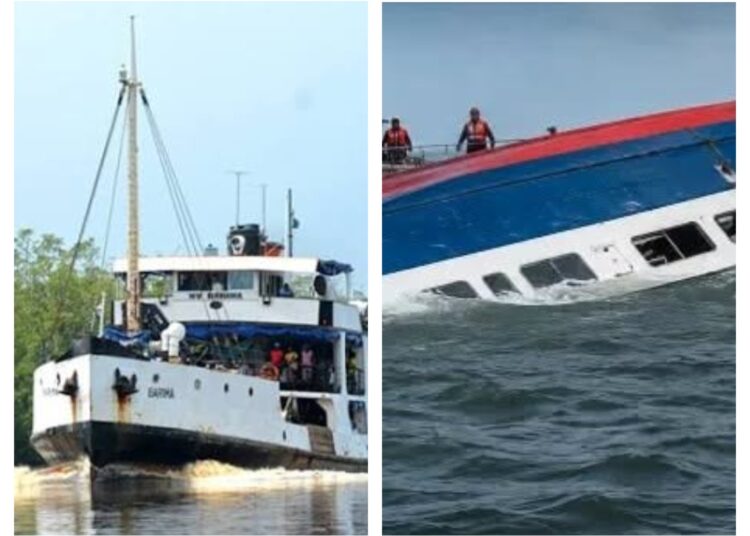
MV Barima (Left the 87-year-old vessel, and the capsized vessel) Vessel capsized July 18, 2026

The Director of Public Prosecutions has said the criminal proceedings can proceed alongside the Commission of Inquiry and that the two processes will operate independently.

Government has also said it is developing longer-term support for affected families, including social, emotional, medical, legal, mental-health and spiritual assistance.

But for families still waiting for relatives who remain missing, assistance cannot substitute for answers.

The Barima disaster has therefore become more than a question of how a vessel sank. It is now a test of whether Guyana can establish the full truth, account for every person aboard, preserve the evidence and provide grieving families with the answers they have been demanding since July 18.


Source: Village Voice News
Guyana Shatters 50-Year-Old 4x100m Record at South American Games

0

Guyana’s men’s 4×100-metre relay team produced one of the country’s biggest athletics moments in decades on Friday, winning bronze at the 2026 South American Games while breaking a national record that had stood since 1975.

The quartet of Akeem Stewart, Onesi Dunn, Revon Williams and Shamar Horatio clocked 39.23 seconds in the final in Santa Fe, erasing the previous Guyanese record of 39.59 seconds set at the 1975 Pan American Games in Mexico City.

Colombia won the gold medal in 39.09 seconds, while Venezuela took silver in 39.14, leaving Guyana only 0.14 seconds behind the winners.

The performance capped a strong showing by Horatio, who had earlier secured bronze in the men’s 200m after running a personal-best 20.53 seconds.

Ceili Peterson

Horatio’s 200m medal was itself significant, but his contribution to the relay delivered another podium finish for Guyana and helped rewrite a national record that had survived more than half a century.

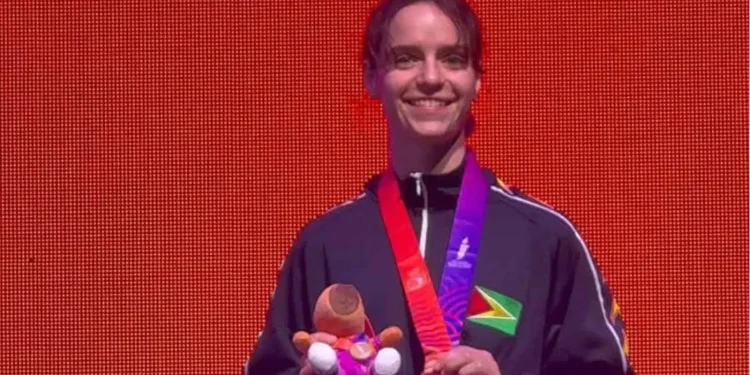
Guyana also collected a bronze medal in taekwondo, where Ceili Peterson defeated Argentina’s Priscila Rodriguez 2-0 in the women’s under-49kg bronze-medal contest after losing her semifinal to Colombia’s Andrea Ramírez.

The athletics success comes as Guyana competes against some of South America’s strongest sporting nations at the Games.

The relay result provides another landmark achievement for Guyanese athletics and places a new benchmark of 39.23 seconds on the national record books.


Source: Village Voice News
US$3 Billion Sandals Deal Triggers Questions Over Jamaican Jobs and Workers

0

A US$3 billion partnership between Jamaican-born Sandals Resorts and global cruise giant Royal Caribbean Group is raising questions in Jamaica about what the landmark investment will mean for workers, local businesses and the share of tourism wealth retained in the country.

Royal Caribbean announced on September 23 that it will acquire a 50 percent equity interest in Sandals and Beaches Resorts for approximately US$3 billion. The transaction is expected to close in early 2027, subject to regulatory approvals and other conditions.

While the deal has been presented as an expansion opportunity, Jamaica’s Tourism Minister Edmund Bartlett says the Government wants greater clarity on its implications for Jamaican workers and businesses.

“We look forward to engaging the leadership of both companies to understand their plans for Jamaica, including their investment priorities, the implications for workers, and the scope for stronger local supply relationships,” Bartlett said.

His intervention comes as Sandals prepares to enter a new phase under a partnership that combines its Caribbean resort operations with Royal Caribbean’s global customer base and distribution network.

Bartlett said discussions should examine opportunities to increase procurement from Jamaican farmers and manufacturers, expand business for attractions and creative enterprises, and strengthen training and career development for tourism workers.

The questions are significant because the transaction places a US$3 billion value on a 50 percent stake in one of the Caribbean’s best-known homegrown tourism enterprises. The deal implies an overall valuation of roughly US$6 billion, while financial analysis reported by the Jamaica Gleaner indicates the transaction implies annual forward EBITDA of about US$600 million for Sandals as a whole.

Workers assured

Sandals Executive Chairman Adam Stewart has sought to reassure employees that the transaction will not immediately alter their jobs.

Staff have been told that their roles, responsibilities and day-to-day operations will continue as usual. Stewart has described the partnership as the beginning of a growth strategy designed to expand Sandals and Beaches into new markets and destinations.

The companies have also said existing reservations, loyalty programmes and resort operations will continue as usual.

Sandals currently operates resorts across several Caribbean destinations, while Beaches serves the family-oriented segment. The partnership is expected to provide additional capital and access to Royal Caribbean’s extensive international customer base.

Who benefits from the growth?

That expansion raises a broader economic question for Jamaica — whether increased international investment will translate into sustained gains for Jamaican workers, farmers, manufacturers and other local businesses.

Bartlett has specifically placed local linkages at the centre of the Government’s response, saying future growth must strengthen Jamaican participation in tourism and retain more economic value within the country.

Sandals, meanwhile, says it already maintains significant local purchasing relationships. Stewart said more than 80 percent of the fruits and vegetables used by Sandals in Jamaica come from local farmers.

The company is also undertaking a reported US$200 million redevelopment of three Jamaican properties, adding another layer to the potential employment and procurement impact of the investment.

The transaction therefore goes beyond a change in corporate ownership. Its significance for Jamaica will also be measured by whether the promised expansion produces more stable employment, stronger opportunities for Jamaican suppliers and greater participation by local communities in the wealth generated by the tourism industry.

The US$3 billion partnership is expected to close in early 2027. Until then, the central issue for Jamaica remains how the new investment structure translates into tangible benefits for the workers and businesses that underpin the country’s tourism economy.


Source: Village Voice News
Venezuela president returns from US visit with no deals, no firm election date

0

https://kiskadeewatch.com/world/latin-america/venezuela-president-returns-from-us-visit-with-no-deals-no-firm-election-date/

Latin America

Venezuela president returns from US visit with no deals, no firm election date


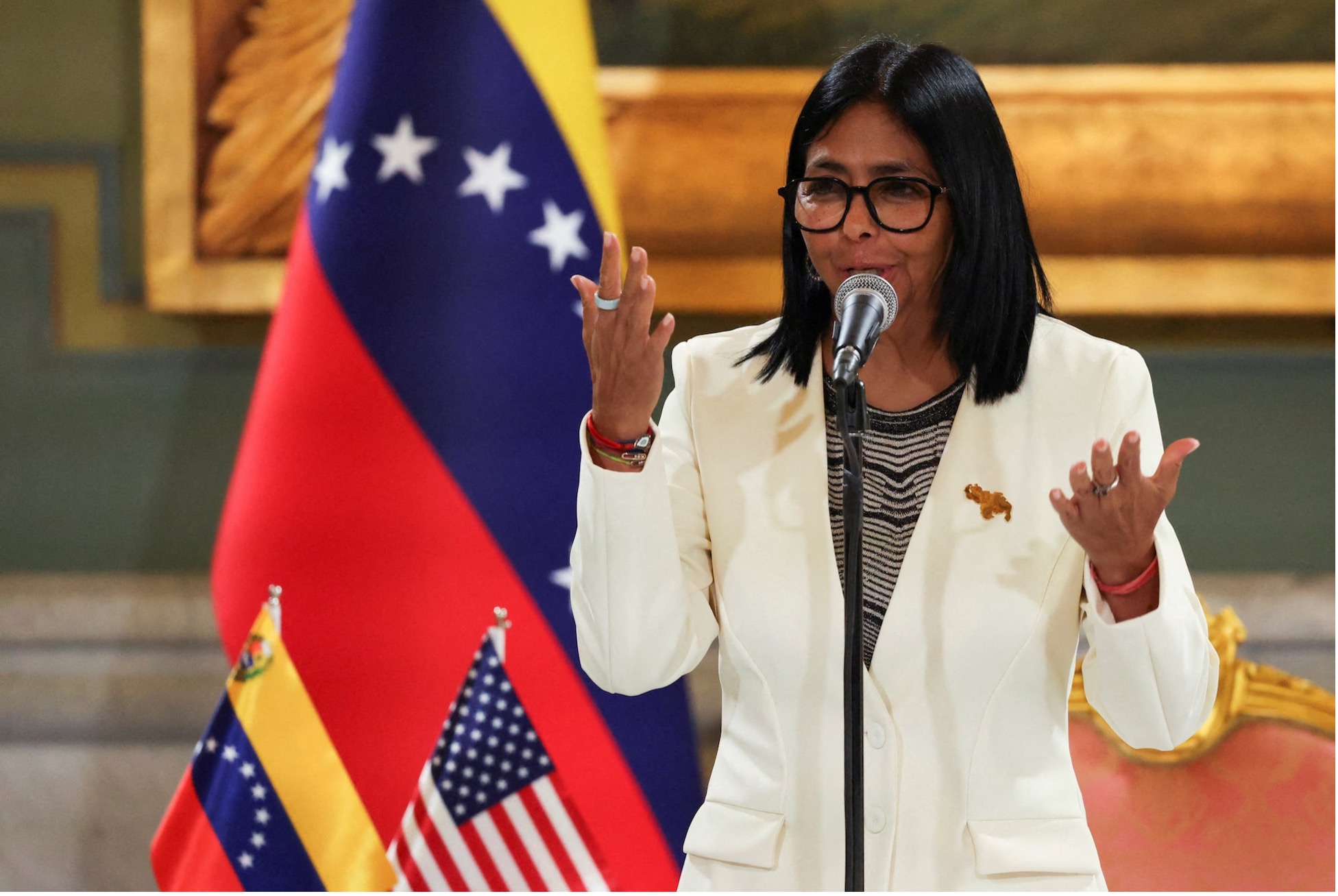
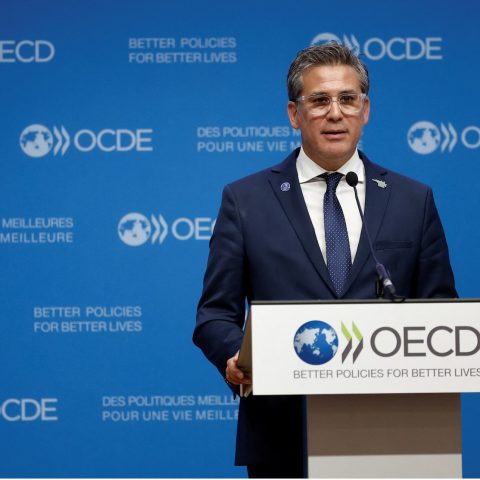
Venezuelan acting President Delcy Rodriguez

NEW YORK, (Reuters) – Venezuela’s interim President Delcy Rodriguez arrived in New York this week for the UN General Assembly seeking business deals on debt, energy and ​mining, to demonstrate the once sanctioned country was open for business again after US forces removed her predecessor in January.

She pledged in her speech before the UN that the South ‌American OPEC member would hold elections as part of a transition to “full democracy.” She left with photographs of herself alongside US President Donald Trump, but obtained no concrete agreements.

It was her first visit to the US since American forces captured then-President Nicolas Maduro in a January raid. It demonstrated Washington’s deep control over her administration and showed Venezuela’s need for new alliances to align with Trump’s aspirations, analysts said.

“Rodriguez enjoyed a week of high visibility. Yet, when we make a list of concrete results, ​the outcome is modest. Where are the disbursements, the reconstruction package or the business deals? They did not materialize on the scale that would have allowed New York to be portrayed ​as Venezuela’s great financial comeback,” said Washington-based analyst Antonio De La Cruz.

“To the victor belong the spoils,” Trump said in a Tuesday address to the assembly ⁠as Rodriguez listened, reminding her that the US stood ready to use its “unmatched military might.”

Trump did not mention Rodriguez by name in his speech, and no readout was published on his brief “pull-aside” meeting with her. ​Leftist leaders from other nations who once backed Maduro kept their distance, while Venezuelans living in the US protested outside the UN with signs depicting Rodriguez in a jail-style orange jumpsuit.

De La Cruz said Trump showed ​Washington is shaping the new Venezuelan landscape, while Rodriguez demonstrated she is the key interlocutor. “But she now bears an additional consequence: she will have to explain when Venezuelans will actually vote.”

For nine months, Rodriguez had avoided giving signals about an election, while US officials kept expectations at bay by saying it would take time to materialize. Analysts and Venezuelan opposition parties now say the clock is ticking to set a date, while experts estimate it will take at least 12 months ​to appoint reliable authorities and organize the voting.

The White House and Venezuela’s information and foreign affairs ministries did not reply to requests for comment about a possible election and details of the bilateral talks.

MUCH NOISE, ​NO DEALS

Talks with US officials, multilateral lenders, allied governments and energy and mining companies were expected to produce signed agreements, even if preliminary, sources had said ahead of the Venezuelan delegation’s trip. As of Saturday, none had been announced.

The ‌head of the ⁠Inter-American Development Bank said the multilateral was working to secure approval for a $2.5 billion bridge loan for Venezuela. But some members of the IDB board oppose making the loan, Reuters reported on Tuesday.

Inside the UN, the Venezuelans were largely on their own. The Cuban delegation, once the South American nation’s closest ally, walked out of the hall when Trump’s speech turned to Cuba, while Rodriguez stayed as he called Maduro an “outlaw dictator.” Officials from Caracas and Havana avoided each other, sources said.

When Rodriguez crossed the floor to greet Spanish Prime Minister Pedro Sanchez, he awkwardly finished a phone call before standing to receive her. Sanchez later described the greeting as “normal.”

Meanwhile, ​a source told Reuters that the Russian delegation sought ​out a meeting with Foreign Minister Felix ⁠Plasencia to discuss the country’s stakes in oil projects in Venezuela. There have been reports that ExxonMobil has had negotiations for a return into the large Petromonagas development, partially owned by Russia’s state firm Roszarubezhneft.

Russia’s foreign ministry, its mission to the UN in New York and its embassy in Caracas did not immediately reply to requests ​for comment.

Brazil’s President Luiz Inacio Lula da Silva, the region’s most prominent leftist leader, told CNN that the US treats Rodriguez as if it were ​her boss and that, in her ⁠place, he would call elections.

Outside, more than 50 protesters carried signs reading “New Face, Same Regime” and chanted that Rodriguez should join Maduro in the Brooklyn jail where he is being held pending trial.

Following Rodriguez’s meeting with Trump, US Secretary of State Marco Rubio said the two discussed restructuring Venezuela’s sovereign debt and that Washington pressed for political change, both hard topics for her administration. “For this project to be successful, it culminates in a free and ⁠fair election,” Rubio ​said.

While Rodriguez visited the US, media reports said Venezuelan opposition leader Maria Corina Machado, who could be a strong candidate ​in an eventual election, was again prevented from returning to her country from Panama.

Nicmer Evans, political analyst and former supporter of late leftist President Hugo Chavez, theorized on X that Rodriguez had allowed herself to be “doubly humiliated” in exchange for Trump withholding support to ​Machado.

“There will be elections, but when the United States sees fit,” Evans wrote.

You reached the end of this article without encountering a paywall.

That is deliberate. We believe reliable journalism about Guyana should be available to everyone from the hinterland to the coast, including those who cannot afford to pay for it. But investigating, reporting and publishing every story takes time, energy and resources. Keeping our journalism open depends on the commitment of readers who can chip in and contribute to help cover the cost for everyone.

Please join the Kiskadee family by taking a subscription. Every contribution counts to our commitment to our journalists, to our readers, and to independent, public-interest journalism.

And please spread the word. One one dutty build dam!


Become a supporter


Source: Kiskadee Watch

Migration policy to prepare Guyana for three million people moving through its economy by 2030 – Pres Ali

0

Migration policy to prepare Guyana for three million people moving through its economy by 2030 – Pres Ali

The government is crafting a migration policy to meet the labour demands of Guyana’s transforming economy.

This is according to President Dr Mohamed Irfaan Ali.

Speaking in a special interview with journalist Kiana Wilburg on Guyana-Qatar relations, the president said the country is already depending on foreign workers to sustain its growth, particularly in construction.

“Can you imagine a construction sector without the foreign workers now?” he asked.

The head of state pointed to Qatar, which built its economy with the help of imported talent, noting that the Gulf nation sits close to large labour markets in India, Pakistan, Bangladesh, the Phillipines, and China.

President Dr Mohamed Irfaan Ali

“Here in Guyana, we are far away from large labour markets. But as a matter of necessity, we now have labour that is being imported,” he said.

President Ali projected that the number of people entering Guyana for business, leisure and work will climb sharply by the end of the decade.

“I see an economy by 2030 where at least three million people willl be passing through this economy…And that by itself creates it own demand,” he said.

He explained that the new policy must be able to supply the human capital needed as Guyana brings its natural gas onshore to power new industries, including a large-scale urea plant, an alumina plant and hyperscale date centres.

“We have to have a flexible, dynamic, modern migration policy to deal with what would be our needs and requirements in the future,” President Ali stated.

The head of state also said Guyanese overseas are central to the plan, with many already returning home to open businesses and find their place in the country’s development.

CATEGORIES
TAGS


Source: Department of Public Information (DPI)

Guyanese gaining meaningful employment through transport vessels – Min Indar

0

Guyanese gaining meaningful employment through transport vessels – Min Indar

The country continues to see increased participation of Guyanese in the oil and gas sector, particularly through maritime operations and onshore services supporting offshore activities.

Minister of Public Utilities and Aviation, Deodat Indar, highlighted the growing number of vessels supporting these offshore activities.

He noted that approximately 65 transport vessels, including tugs, platform supply vessels and fast vessels, are currently operating offshore.

Minister Doedat Indar

He said several Guyanese are employed on these vessels, while others are working aboard drill ships, Floating Production Storage and Offloading (FPSO) vessels and construction vessels involved in subsea activities.

“Generally, a lot of Guyanese work offshore on those vessels. But then you have a lot of them onshore, too, that are working in the sector,” Minister Indar said.

The minister pointed to the growing range of services now being provided locally to support offshore operations, including logistics, transportation, warehousing, engineering, welding, lifting, rigging, crane operations and other specialised activities.

SBM Offshore’s Sheriff Street office

“Every single thing that is needed offshore is provided on an onshore basis. And it comes through Guyana,” he said.

Meanwhile, the minister also noted that some components used in offshore operations, including construction items such as risers and jumpers.

These are now being fabricated in Guyana and transported directly offshore.

“So it’s not transported from another place and gone offshore. It’s transported from Guyana, made in Guyana, sent right offshore,” he explained.

Minister Indar said the growing involvement of Guyanese in offshore and onshore activities demonstrates the economic participation being generated through the country’s expanding oil and gas industry.

CATEGORIES
TAGS


Source: Department of Public Information (DPI)