Home Blog Page 239

The best way to silence your critics is not by arguing but by achieving more success – Guyana Times

0

The best way to silence your critics is not by arguing but by achieving more success

Dear Editor,
The Auditor General and the staff of the Audit Office deserve congratulations for presenting the Report of the Auditor General for the fiscal year 2025 before the statutory deadline.
This marks the sixth consecutive year in which Auditor General Deodat Sharma, has presented his report to the Public Accounts Committee (PAC) ahead of the September 30 deadline. What makes this record especially significant is the extraordinary conditions under which it was achieved. From the chaos of the COVID-19 pandemic to the present, the Auditor General has not failed once to submit his report on time.
During the pandemic, when most were compelled to retreat indoors and public services were disrupted, the Audit Office remained engaged in the demanding work of examining how public funds were spent. While others would have found convenient excuses for delay and non-performance, the Audit Office continued to review Government spending to determine whether public funds were utilised in a transparent and accountable manner. For the Audit Office, it appears as though accountability did not catch COVID.
The scale of the challenge did not end with the pandemic but increased in line with the rapid expansion in Government spending since 2020. The four-fold increase in Government spending from $329.5 billion in 2020 to $1.382 trillion in 2025 virtually created more projects, transactions and documents for the Auditor General and his staff to scrutinise. Instead of retreating from his responsibility and hiding behind excuses, the Auditor General shepherded his team to ensure compliance with the constitutional obligation of his office by submitting annual reports within nine months of the close of each fiscal year.
This contrasts with the years 1982 to 1989, which is difficult to ignore because no audited financial statements were presented when the economy was virtually at a standstill and Government spending was flatlining. For almost an entire decade, no audit report was presented. During this period, the country’s public accounts appear to have taken an extended hiatus, without any approval from taxpayers. In other words, transparency and accountability were Absent Without Leave (AWOL) and probably disappeared into an administrative Bermuda Triangle.
It is therefore a little remarkable that a former Auditor General associated with that era of prolonged darkness now appears deeply concerned about the current Auditor General’s performance. The former officeholder has found considerable energy to criticise Mr Sharma and to advocate for his removal. This is certainly a refreshing display of concern for accountability, albeit one that seems to have arrived several decades after it was most urgently needed.
One must therefore ask: where was this passion for transparency when audited financial statements were not produced? Where was the outrage when taxpayers were literally left in the dark? Why only now is the Audit Office being attacked when it is complying with its constitutional mandate?
I suspect the answer may be found in a famous African proverb, “It is only the tree loaded with fruit that people throw stones at,” which means that successful and productive people often face criticism, envy, and attacks from those who are not successful. In other words, only fruit-bearing trees are targeted because they have value worth trying to knock down.
Editor, I want to end by once again congratulating the Auditor General and his staff for their hard work and to encourage them to continue along this path so we can know whether our tax dollars are being spent in a transparent and accountable manner. I also wish to remind them that the best way to silence your critics is not by arguing with them but by achieving more success. Macte virtute et successeur, which means to go forward in courage and success!

Kind regards,
Kevin Persaud


Discover more from Guyana Times

Subscribe to get the latest posts sent to your email.


Source: Guyana Times
Court must not be the vehicle for Mohameds’ 5-year delay plan for extradition – Guyana Times

0

Court must not be the vehicle for Mohameds’ 5-year delay plan for extradition

Dear Editor,
When Azruddin Mohamed declared in November 2025 that his extradition proceedings would take another five years, many Guyanese were alarmed by the confidence with which he appeared to predict the course of a case that had barely begun.
His reported words were chilling: “It will take another five years and four other Magistrates.”
Many questioned how Mohamed could speak with such certainty about a matter controlled by the courts, asking why he appeared to believe he was “in charge of the court.”
Months later, the country must confront an uncomfortable question: has Azruddin Mohamed found a willing participant in his publicly declared plan to frustrate the extradition proceedings for five years?
The United States is seeking the extradition of Azruddin and his father, Nazar, to face an 11-count federal indictment in the Southern District of Florida. The charges include allegations of conspiracy, mail and wire fraud, money laundering and customs-related offences arising from an alleged international gold-export scheme.
These are grave allegations involving Guyana’s gold resources, public revenue, state institutions and international reputation. The seriousness of the case demands an efficient and disciplined judicial process.
Through its continued delays, the court risks being viewed as a willing participant in the very strategy Mohamed openly announced. That perception is damaging, corrosive and dangerous to public confidence in the administration of justice.
This matter has already travelled through the Magistrates’ Court, the High Court, the Court of Appeal and the Caribbean Court of Justice. On July 29, 2026, the CCJ dismissed the Mohameds’ challenge to the Authority to Proceed and cleared the way for the extradition hearing to continue. The CCJ confirmed that ruling in its official release.
The entire judiciary is now under the microscope. reach.

Yours truly,
Ayinde Sampson


Discover more from Guyana Times

Subscribe to get the latest posts sent to your email.


Source: Guyana Times
Exceptional address at United Nations General Assembly – Guyana Times

0

Exceptional address at United Nations General Assembly

Dear Editor,
I write to commend His Excellency President Irfaan Ali for delivering an exceptional address at the 81st Session of the United Nations General Assembly. It was a speech that reflected Guyana at its best and underscored our nation’s steadfast commitment to principled multilateralism.
President Ali struck a careful balance between realism and hope. He candidly acknowledged the grave challenges of our time (climate change, conflict, food insecurity, inequality, and the erosion of multilateralism), yet reminded us that humanity has always found the means to rise above its difficulties. His call for a “new and invigorated multilateralism” was both timely and necessary.
I was proud to see Guyana’s consistent advocacy for the peaceful resolution of disputes, respect for international law, and the legitimate rights of all peoples. Our reaffirmation of commitment to the International Court of Justice in the border controversy with Venezuela demonstrated a continuity of policy across all Guyanese Governments. Guyana will remain principled, patient, and peace-loving on this matter, even amid repeated provocations.

The President’s emphasis on sustainable development, biodiversity leadership through the Global Biodiversity Alliance, and our Low Carbon Development Strategy further showcased Guyana as a responsible global citizen. These are commitments backed by action, including our stewardship of our parts of the Amazonia Basin, one of the world’s last remaining lungs.
Most significantly, I fully support President Ali’s nomination of Her Excellency Carolyn Rodrigues-Birkett for Secretary General of the United Nations. Her remarkable journey embodies the very best of Guyana and the Caribbean, and CARICOM’s endorsement of her candidature speaks volumes.
I commend President Ali for a speech well done, and I respectfully urge the international community to give serious consideration to Ambassador Carolyn Rodrigues-Birkett’s candidacy.

Yours sincerely,
Sasenarine Singh
Ambassador


Discover more from Guyana Times

Subscribe to get the latest posts sent to your email.


Source: Guyana Times
‘Critic’, Spectre pump stations still to be completed

0

https://kiskadeewatch.com/guyana/critic-spectre-pump-stations-still-to-be-completed/

‘Critic’, Spectre pump stations still to be completed


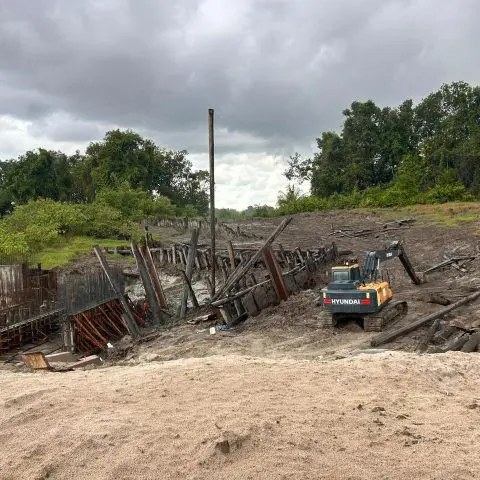
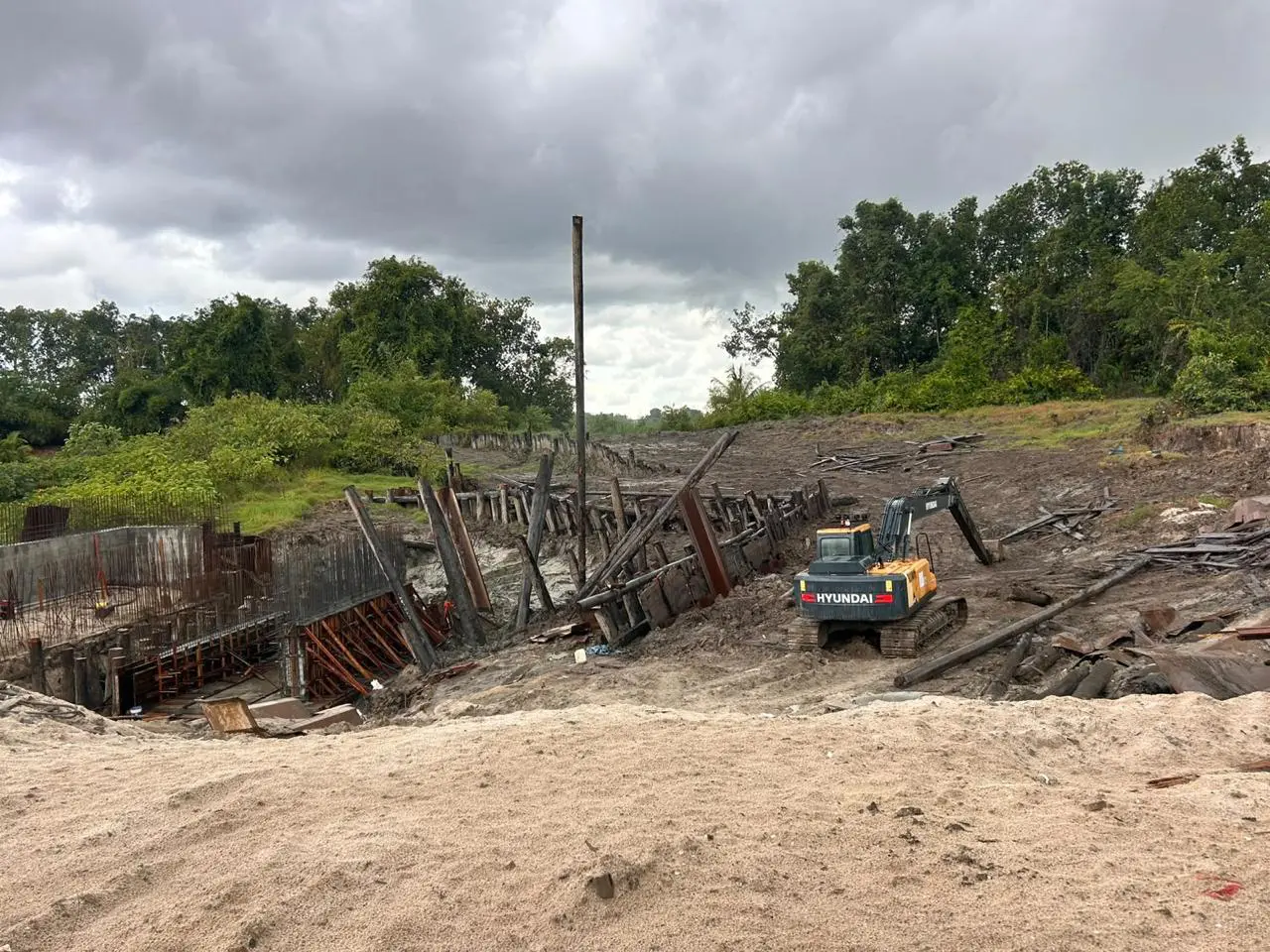
The Belle Vue site

-Belle Vue finish pushed into 2027

Two major pump station projects on the West Bank of Demerara remain incomplete, with the Belle Vue facility now projected to be completed in March 2027 and become operational the following month, while the Pouderoyen project remains unfinished more than two years after construction began.

At Belle Vue, during a recent site visit by the political party VPAC, GAICO Construction and General Services Inc. CEO Komal Singh explained some of the technical challenges that have contributed to delays at the $865m project.

Singh said the site, which is located close to housing and the river dam, has presented significant difficulties because of tidal activity, the rainy season and saturated soil. 

Singh said the excavation extends more than 25 feet deep and that crews removed approximately 500 loads of soil after encountering unusual ground movement, including soil that was heaving upward from below rather than simply collapsing from the sides.

Singh said several stepped layers of revetment have since been installed along the riverside to help hold back the water and protect the dam.

Singh’s explanation will raise further questions about whether geotechnical investigations of the area were done prior to the project being designed.

He maintained that the structural design is strong, with numerous piles driven into the ground and a significant factor of safety incorporated because of the uncertainty surrounding the soil conditions.

Singh said the project has become more manageable during drier conditions and told VPAC that the project should be completed by March 2027, with the facility potentially becoming operational by April 2027.

In July this year, Singh had assured Kiskadee Watch thatthe project would finally be completed in December 2026. This is yet a further delay of a contract that was controversially awarded to  Tepui Group Inc headed by social media personality Mikhail Rodrigues who had never built a pump station before. Works were subsequently placed under GAICO as a subcontractor arrangement when Tepui fell far behind the deadline. Tepui remains contractually responsible for the project.

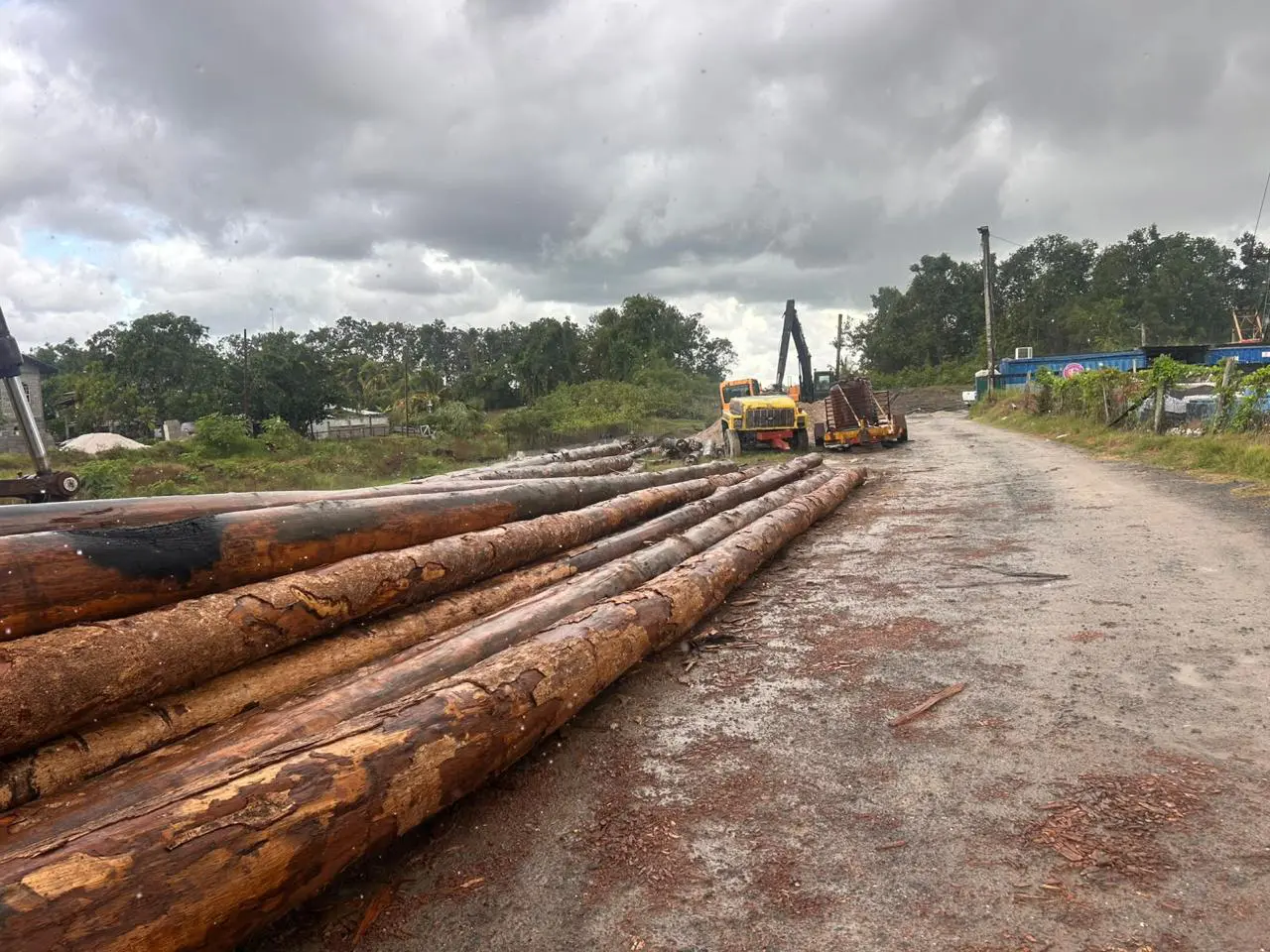
Logs on the Belle Vue site

The project has previously come under scrutiny, including findings by the Public Procurement Commission and issues raised by the Auditor General concerning payments and the recovery of monies from the original contractor.

The contract, signed on September 22, 2023 with Rodrigues, carried an original completion period of 18 months.

The 2024 Auditor General’s Report noted that 93.7 per cent of the mobilisation advance paid to the original contractor, Tepui Group Inc., had not yet been recovered.

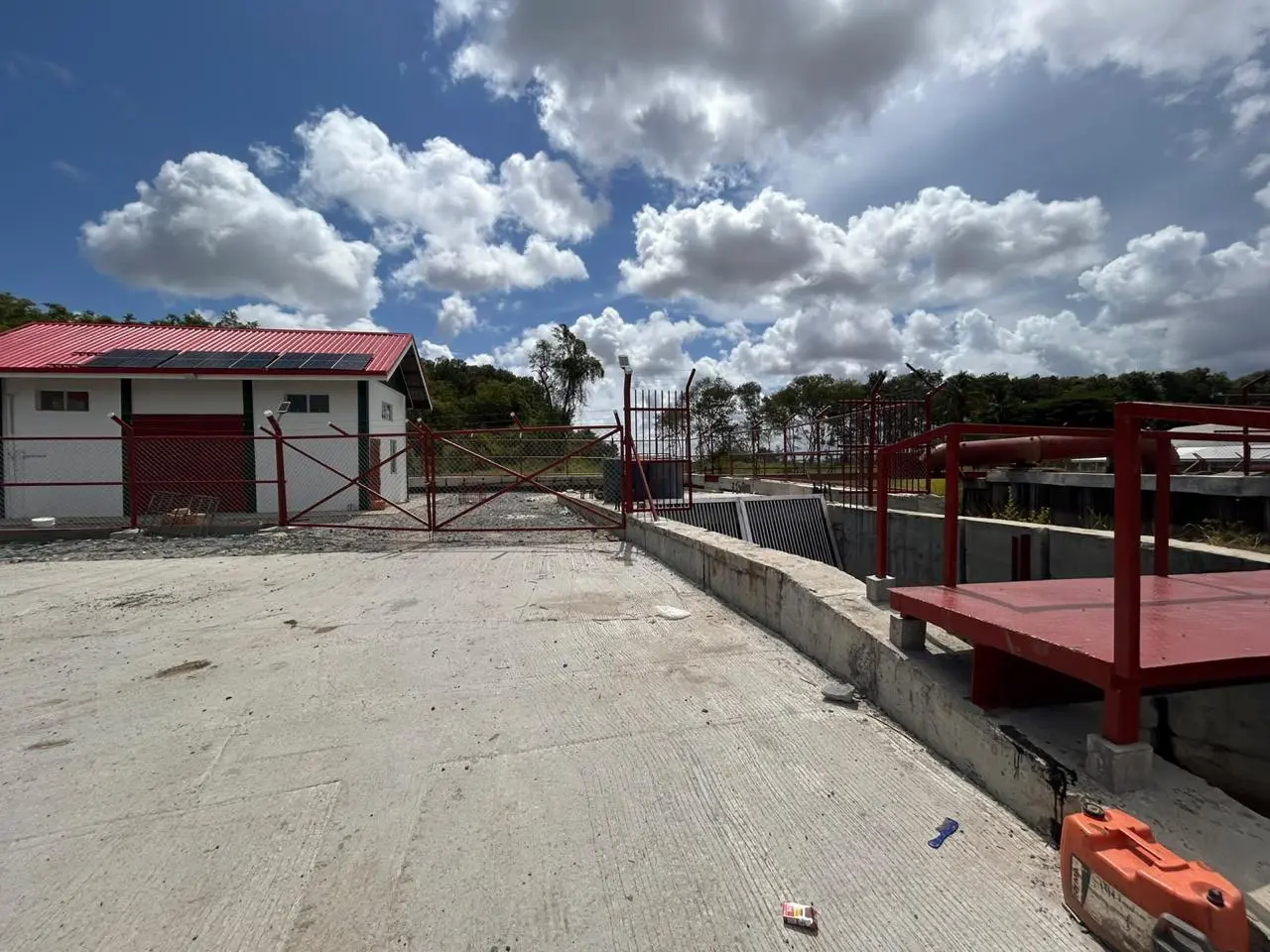
The incomplete Pouderoyen pump station.

Kiskadee Watch had contacted Auditor General Deodat Sharma, in July this year who confirmed that engineers within his office were currently examining the figures as part of the preparation of the 2025 Public Accounts Report which was submitted on Friday to Parliament office.

Sharma said the report will address the outstanding mobilisation advance paid under the Belle Vue pump station contract.

According to the 2024 Auditor General’s Report, the contract was awarded for $870.563 million against an engineer’s estimate of $779.199 million. The report also found that Tepui failed to satisfy nine of the 18 qualification requirements contained in the evaluation criteria. It further revealed that the initial award of $865.544 million was rescinded before the same contractor was re-awarded the project for an increased sum of $870.564 million, approximately $5 million higher than its original bid.

The Auditor General also reported that by August 2024, $160.894 million had been paid to the contractor despite limited physical progress on the project.

Visited

Meanwhile, Kiskadee Watch visited the Pouderoyen pump station, where construction remains incomplete.

The $981.2 million project was awarded to Spectre Construction Inc. and was originally an 18-month contract, with completion expected in July 2025.

Kiskadee Watch was told by a source that Spectre Construction was subsequently granted an extension to complete the project.

Construction began in January 2024, and the project has faced a series of delays, with difficult site conditions including high tides, fluctuating water levels, heavy rainfall and the fragile condition of the nearby dam previously identified as challenges.

The Auditor General’s report recorded that $332.419 million had been paid to the contractor as of August 31, 2025, while earlier physical verification found works still ongoing, including revetment, excavation, earthworks and piling.

The delays have continued to concern residents in the area, particularly because flooding remains a problem.

During Kiskadee Watch’s visit, residents complained that whenever rain falls, flooding still occurs in the area.

One resident said it has now been more than two years that the pump station has been sitting at the site.

A source familiar with the project also told Kiskadee Watch that, despite the length of time the facility has been under construction, “there is nothing operational about it as yet it’s just a shell sitting here”.

The Pouderoyen facility was among several pump stations identified as part of efforts to strengthen drainage capacity and mitigate flooding in vulnerable communities along the West Bank of Demerara.

The project has also previously attracted scrutiny over its procurement and Spectre Construction’s experience. At the time of earlier reporting, the company had not previously constructed a pump station, although it had undertaken other government projects.

The Auditor General also reported that the project’s advance-payment bond and performance bond had expired.

Although the Agriculture Ministry reported in February 2026 that the Pouderoyen sluice and pump station was 89% complete, Kiskadee Watch’s latest visit found that the facility remains unfinished and, according to a source, is not yet operational.

With both projects still incomplete, residents along the West Bank continue to await the full operation of two major pieces of drainage infrastructure intended to help reduce flooding in their communities.

You reached the end of this article without encountering a paywall.

That is deliberate. We believe reliable journalism about Guyana should be available to everyone from the hinterland to the coast, including those who cannot afford to pay for it. But investigating, reporting and publishing every story takes time, energy and resources. Keeping our journalism open depends on the commitment of readers who can chip in and contribute to help cover the cost for everyone.

Please join the Kiskadee family by taking a subscription. Every contribution counts to our commitment to our journalists, to our readers, and to independent, public-interest journalism.

And please spread the word. One one dutty build dam!


Become a supporter


Source: Kiskadee Watch

Who Writes the Judgment

0

https://kiskadeewatch.com/opinion/diaspora-voices/who-writes-the-judgment/

Diaspora Voices

Who Writes the Judgment

The Airport Gate The Acting Appointment The Algorithm

Professor Justice Courtney Abel

Professor of Law (Legal Practice), University of Guyana; retired Justice of the Supreme Court of Belize; Overseas Master of the Bench of the Inner Temple

Delivered as a panel presentation in Session 9, Current Tensions Between Judicial Independence and the Rule of Law, at the Annual Conference of the Commonwealth Magistrates’ and Judges’ Association, Kingston, Jamaica, on Wednesday 23 September 2026. Conference theme: Sustainable Justice: For Today, For Tomorrow, For All.

 Abstract 

This paper examines contemporary pressures upon judicial independence from the perspective of small postcolonial Caribbean states. Taking as its point of departure the reported travel restriction affecting Justice Gino Persaud of Guyana, it considers how foreign executive power, domestic political criticism and institutional uncertainty may influence the conditions within which judges work, even where no direct command or threat is made. The paper then examines Guyana’s prolonged reliance upon acting appointments to the offices of Chancellor and Chief Justice, the constitutional demand for political agreement, and the limits of the Caribbean Court of Justice in resolving institutional stalemate. It argues that modern threats to judicial independence may operate through atmosphere, insecurity, anticipation and digital amplification. Against this background, freedom is developed as judicial and collective authorship: the judgment must remain the judge’s own, bounded by law, evidence, precedent, principle and reason. Artificial intelligence may assist judgment, but must never become its hidden author. 

Keywords: judicial independence; rule of law; Caribbean constitutionalism; Guyana; acting judicial appointments; Caribbean Court of Justice; artificial intelligence; freedom as authorship 

An unwritten judgment hangs suspended. No outside command. No visible threat. Yet a shadow looms: external power insinuates itself, never even touching the pen. When the judgment is complete and the final story told, who is the author – and who merely the scribe?

Chair, distinguished colleagues, ladies and gentlemen:

I will speak about current tensions between judicial independence and the rule of law from the perspective of the Caribbean.

Conceptually, there should be no tension. Judicial independence is not opposed to the rule of law. It is one of its indispensable conditions. Without independent judges, law may become merely the language through which power speaks.

The tension lies elsewhere: between constitutional principle and the realities of power.

A Caribbean condition

The Caribbean is more than a geographical location. It is a constitutional condition: small states, inherited institutions, intimate political societies and powerful neighbours.

Judicial independence is written into our constitutions. Vulnerability is written into our history – and often into our circumstances.

The matter I will address is sensitive and still developing. I have therefore prepared my remarks in writing. Where facts remain uncertain, restraint is not weakness. It is discipline.

The airport gate

Even as we travelled to Jamaica – particularly those of us travelling from Guyana – an episode unfolded that might almost have been designed as a demonstration of the tension we have assembled to discuss.

I had prepared one presentation. Circumstances required another.

On Saturday, 19 September 2026, Justice Gino Persaud, a serving judge of the High Court of Guyana and a member of this Association, was due to travel to this Conference. His journey was routed through Miami. At the airport, airline personnel reportedly told him that his name had been flagged, that his United States visa was under review, and that he could not board the flight.

The restriction mattered. Without passage through Miami, he could not make the journey as booked.

The United States has not publicly called the measure a sanction. Yet an unexplained restriction imposed by a foreign power upon a serving judge, preventing him from travelling, operates as a sanction in practical effect.

A sanction need not announce its name. Why has this caused concern?

Justice Persaud has decided politically sensitive cases. They included revenue proceedings concerning members of the Mohamed family and the taxation of imported luxury vehicles. One member of that family was subsequently elected to Parliament and became Leader of the Opposition. Justice Persaud’s rulings were adverse to the State and the Guyana Revenue Authority. Senior governmental figures, including the President, publicly criticised aspects of those decisions. The ordinary constitutional response remained available: appeal.

The context is more charged still. Members of the Mohamed family have been sanctioned by the United States and are the subjects of American extradition proceedings. The action affecting the judge therefore lies at the meeting point of domestic politics, judicial decision-making and American executive power.

It has been publicly alleged that persons within the Guyana Government may have encouraged, or supplied information leading to, the American action. That allegation is unproved. The United States has given no public reason. The Guyana Government has acknowledged no such role.

There is chronology. There is context.

There is concern.

There is not yet proof.

Suspicion is not evidence. But neither is silence an answer.

When an unexplained exercise of foreign executive power materially affects a serving judge after politically sensitive decisions, at what point does a private immigration matter become a public question of judicial independence?

The question is larger than Justice Persaud. It concerns the judge who comes next. What message does the unexplained closing of one gate send to every judge who must later approach another?

Power and atmosphere

I speak not only as a constitutional lawyer, but from lived experience. I too have served as a foreign judge in a small jurisdiction. I learned that pressure seldom arrives wearing a name badge.

Power does not always command.

More often, it arranges the atmosphere.

It may prolong an acting appointment until expectation and insecurity merge. It may criticise a judgment without confronting its reasons. It may unsettle relationships with staff. It may alter security arrangements, leaving the judge to wonder who protects, who observes and who reports.

No direction is given. No threat is recorded. The judge remains in office. The salary is paid. The courtroom opens.

The appearance of independence survives. But does its substance?

A judge may remain legally independent and become humanly exposed. Judicial independence should not depend upon judicial heroism. The law should not require every good judge to become a constitutional martyr.

The airport gate reveals another vulnerability. A judge in a small postcolonial state lives within an unequal international order. The state may face sanctions, diplomatic pressure or economic consequences. The judge may have to travel through a larger state and submit to immigration decisions for which no explanation need be given.

Each encounter may be lawful. Each question may be routine. Judges do not acquire diplomatic immunity by purchasing an airline ticket.

But context matters. Timing matters.

Silence matters.

A constitution may protect a judge from the executive at home. Who protects the judge from the collateral power of an executive abroad?


Permanent temporariness

That brings me to the senior judiciary of Guyana.

The Chancellor is head of the Judiciary and President of the Court of Appeal. The Chief Justice leads the High Court. Article 127 of the Constitution requires the President to obtain the agreement of the Leader of the Opposition before either office may be filled substantively.

The aspiration is noble. The highest judicial offices should command confidence across the political divide. The design, however, demands consensus without providing an effective means of overcoming its absence.

The result has been an impasse lasting more than twenty years. Governments have changed. Opposition leaders have changed. Acting arrangements at the summit of the Judiciary have endured.

An acting appointment may be lawful. It may be necessary. But permanent temporariness is a contradiction with constitutional consequences.

Can the head of a judiciary be wholly secure while political actors retain the power to decide whether the office will ever become substantive? At what point does a constitutional bridge become a constitutional waiting room?


The CCJ and the problem of consensus

The Caribbean Court of Justice is Guyana’s final appellate court. Successive Presidents of the Court have repeatedly – and creatively – urged Guyana’s political leaders to secure substantive appointments to the offices of Chancellor and Chief Justice. All to no avail.

The Court may interpret the Constitution, correct legal error and expose institutional failure. But it cannot itself make the appointments. It cannot compel political agreement. It cannot manufacture constitutional maturity.

Nor are courts themselves immune from the difficulty of achieving consensus. That shared vulnerability points towards a wider Caribbean lesson. We must move beyond inherited adversarial habits in which disagreement becomes deadlock and compromise appears to be surrender.

We must author more conciliatory methods: indigenous, relational and truly Caribbean. Methods that place us in a circle, rather than permanently opposite one another as combatants. Methods that preserve principle while making agreement possible.

A court may show us the road. It cannot make us walk upon it. But it may remind us that constitutional progress begins when adversaries learn to become authors together.


Freedom as judicial authorship

The airport gate and the acting appointment are different events. Yet they reveal the same anxiety: a judge’s formal authority may remain intact while the conditions surrounding judgment are shaped by powers the judge does not control.

Can lawful powers, accumulated and strategically exercised, create a culture hostile to judicial independence? Can the rule of law be weakened through powers conferred by law?

The old assault was visible. The judge was removed. The court was closed. The judgment was ignored.

The modern assault may leave no fingerprints. It may never tell the judge what to decide. It may merely teach the judge what decisions are costly.

We therefore need to understand judicial independence in its modern form. I approach it through the postcolonial Caribbean idea of freedom as self-authorship and collective authorship.

This freedom arises from our struggle against colonial rule. It is the capacity to become the responsible authors of our lives, rather than characters in a script written by others. Collective freedom is the capacity of a people to author the institutions, laws and purposes of their common life.

That hard-won inheritance requires the judge to remain the true author of the judgment. Not the Government.

Not the Opposition.

Not the press.

Not a foreign power.

And not an algorithm.

Judicial authorship is not personal licence. It is bounded by law, evidence, precedent, principle and reason. But within those boundaries, the judgment must belong to the judge.

Once fear writes even one sentence, independence has already been diminished.

The algorithm

And now artificial intelligence enters the story.

Generative AI can research, summarise, translate and draft. It can widen access to justice. It can also fabricate authorities, imitate voices, manufacture images and tear fragments of judgments from their reasoning.

A political whisper may become a digital chorus before the judge returns to court the following morning.

Power once whispered through corridors.

It can now whisper through a million screens.

There is a further danger. If a judge surrenders reasoning to a machine, external power need not seize the pen. The judge may voluntarily hand it over.

AI may assist judgment.

It must never become its hidden author.

Keeping justice out of the shadows

I offer no complete programme today. A fifteen-minute presentation should not attempt to solve the constitutional problems of the Commonwealth. That would require at least twenty – and considerably stronger coffee.

But the questions must be asked.

The action affecting Justice Persaud may prove routine, mistaken, justified or unrelated to his judicial work. If so, appropriate process should disclose that. Until then, its constitutional significance lies not only in what may have happened, but in the message an unexplained action may send.

Judicial independence is no longer threatened only by dismissal, imprisonment or an envelope pushed beneath a chamber door.

The modern threat may be lawful in form, temporary in appearance, administrative in language, foreign in origin, digital in transmission and psychological in effect.

Its subtlety does not make it unreal.

It makes vigilance more difficult – and more necessary.

Perhaps those who chose this Conference topic possessed a little Caribbean obeah. While we travelled here to discuss sustainable justice, a serving judge encountered, at an airport gate, the very tension we assembled to examine.

The airport gate.

The acting appointment.

The appellate court.

The algorithm.

Four sites of power.

One question of authorship.

Judicial independence preserves the judge’s freedom to author the judgment. The rule of law preserves our collective freedom to author the constitutional order.

Neither freedom is self-sustaining. Both require vigilance. Both require courage. In this increasingly complex world, both require imagination.

Where reasons end, shadows begin.

Our task, as judges, citizens and members of the Commonwealth, is to keep justice out of the shadows.

For when the judgment is complete and the final story told, the judge must remain its author – and never merely its scribe.

You reached the end of this article without encountering a paywall.

That is deliberate. We believe reliable journalism about Guyana should be available to everyone from the hinterland to the coast, including those who cannot afford to pay for it. But investigating, reporting and publishing every story takes time, energy and resources. Keeping our journalism open depends on the commitment of readers who can chip in and contribute to help cover the cost for everyone.

Please join the Kiskadee family by taking a subscription. Every contribution counts to our commitment to our journalists, to our readers, and to independent, public-interest journalism.

And please spread the word. One one dutty build dam!


Become a supporter


Source: Kiskadee Watch

More equitable agreement on sharing of total oil revenue must be found!

0

https://kiskadeewatch.com/opinion/letters/more-equitable-agreement-on-sharing-of-total-oil-revenue-must-be-found/

Letters To The Editor

More equitable agreement on sharing of total oil revenue must be found!

Dear Editor,

Guyana is expected to earn US$6.5 Billion from the country’s share of profit oil and royalties in 2026 (Bank of Guyana (BoG) report section 3.64 on page 21, (https://finance.gov.gy/wp-content/uploads/2026/09/Mid-Year-Report-2026.pdf ).

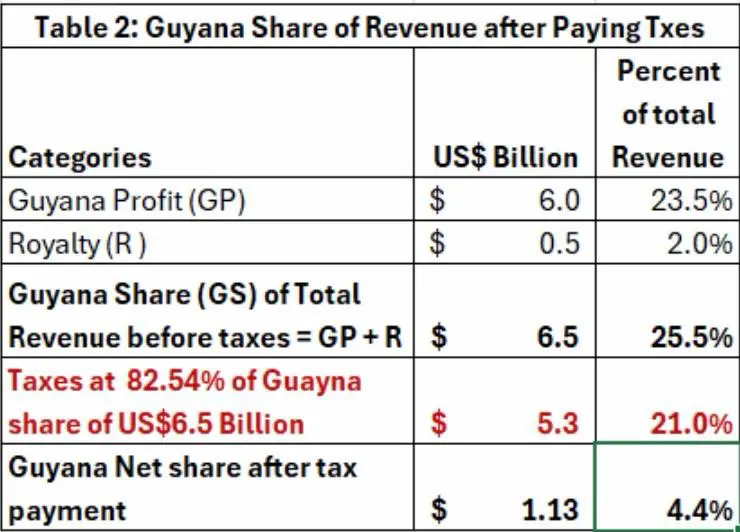
While US$6.5 Billion is a significant amount, and it is much larger than what Guyana has collected in any year in the past, the question is: Will Guyana  earn 14.5% for first-half 2026; and thereafter, earn 41.8% for the second-half 2026? In reply to this question, and without introducing some other production and revenue considerations, the answer to this  question is that Guyana will not receive  41.8 % of total revenue in the second half of 2026, but only 25.5% of total revenue; and this 25.5% of total revenue in 2026 is  before Guyana pays the taxes for the consortium (ExxonMobil Guyana Limited, Hess/Chevron and CNOOC) from its share of total revenue. Consequently, after paying the consortium taxes, Guyana’s share of total revenue in real terms will only be US$1.13Billion or 4.4 percent of total revenue, which is derived below.  

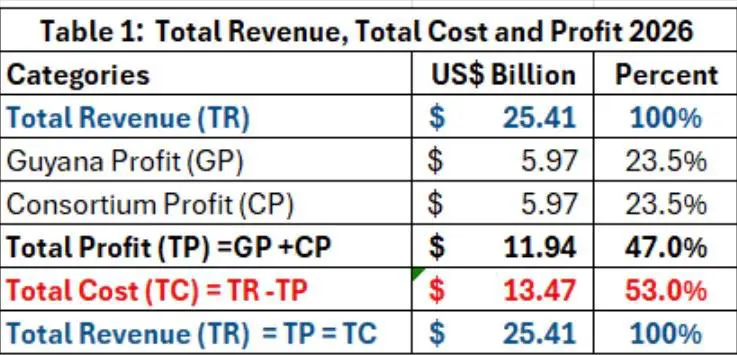
It is reported that an amount of US$508.1 Million will be collected as royalty, which is equal to 2 percent of Total Revenue (BoG Report, section 3.64, page  22). As result, the total revenue (TR) for 2026 is estimated at US$25.41 Billion ( = US$508.1 Million ÷ 2%).   In the referenced article above, Guyana’s profit share is estimated at US$5.97 Billion or 23.5% of total revenue before taxes in 2026; and since the consortium will receive the same profit amount as Guyana, the total profit for the year will  be US$11.94 Billion, while total cost will be US$13.47 Billion or 53 percent of total revenue (Table1). 

On the issue of taxes which Guyana pays for the consortium from its share of revenue, no information on this amount is available at this time. However, during the period 2020 to 2024 when Guyana received a total US$6.3 Billion in oil revenue, the tax amount that Guyana paid from its share of total revenue on behalf of the consortium was US$5.2 Billion, or 82.54 percent ( https://www.oggn.org/2026/05/09/end-the-tax-and-oil-profit-giveaway/). Applying this same tax rate to the earning that Guyana is expected to receive will result in a tax amount of US$5.3Billion  for which Guyana will have to issue tax receipts to the Consortium. Therefore, the net amount that Guyana receives in real terms is only US$ 1.13 Billion or 4.4 percent of total revenue (Table2). 

n conclusion, it is likely that Guyana will receive  in real terms only 4.4% of total revenue in 2026; and with new projects being added to the cost bank, together with no ring fencing being applied, it is contended that  41.8 % of total revenue for Guyana in the second half of 2026 will not be achieved. Therefore, a more equitable approach and an agreement on the distribution of total revenue must be found. Wake up Guyana! 

Sincerely,

C. Kenrick Hunte

Joe Persaud

Darsh Khusial

On behalf of OGGN a 501(c)(3)

You reached the end of this article without encountering a paywall.

That is deliberate. We believe reliable journalism about Guyana should be available to everyone from the hinterland to the coast, including those who cannot afford to pay for it. But investigating, reporting and publishing every story takes time, energy and resources. Keeping our journalism open depends on the commitment of readers who can chip in and contribute to help cover the cost for everyone.

Please join the Kiskadee family by taking a subscription. Every contribution counts to our commitment to our journalists, to our readers, and to independent, public-interest journalism.

And please spread the word. One one dutty build dam!


Become a supporter


Source: Kiskadee Watch

PAC must get back to work in October despite Edghill dispute– Panday 

0

https://kiskadeewatch.com/guyana/pac-must-get-back-to-work-in-october-despite-edghill-dispute-panday/

PAC must get back to work in October despite Edghill dispute– Panday 


PAC Chairman Vishnu Panday

Public Accounts Committee (PAC) Chairman Vishnu Panday said on Tuesday that the committee will seek to develop strategies to aggressively tackle its substantial backlog when it resumes meetings on October 10, after failing to meet during the parliamentary recess.

Panday had floated the possibility of meeting during the recess to help ease the backlog but noted that this could not happen largely because of the unavailability of government members, with Minister of Parliamentary Affairs and Governance Gail Teixeira indicating that the period traditionally provides an opportunity for parliamentarians to take vacations, travel abroad and attend to personal matters.

“What was important was to have the government side, because remember the PAC deals with a quorum,” Panday told Kiskadee Watch. 

“From initial discussion, Minister Gail Teixeira, who is a member, did say that it is during this time that people go on their vacation, maybe some may go abroad and they have their personal things to do and they would have planned all year round for the recess period. And because of that, I did not relentlessly pursue the issue because I thought it would have been one opportunity”, he said.

“We intend whenever we meet, recommencing from the 10th of October, that we will map out some strategies how we can move relentlessly forward to ensure that we minimise the backlog,” Panday shared. 

He expressed optimism that the committee could make progress, saying his experience from the meetings held so far has indicated that members are prepared to work towards reducing the outstanding workload. “I’m very optimistic, because from the few times we met, I’m seeing the indication that people are willing to really reduce the backlog,” he said.

However, he identified the position of APNU members Ganesh Mahipaul and Juretha Fernandes as a potential obstacle, particularly over their objection to Public Works Minister Juan Edghill continuing to sit on the committee. “If Mr Edghill continues to sit on the committee and they continue to demonstrate what they have demonstrated in the last meeting, then that’s a problem,” Panday said.

Mahipaul and Fernandes walked out of an August PAC meeting after Panday ruled that Edghill could not be compelled to leave the committee. Their departure left the committee without a quorum and resulted in it being aborted.

Panday said he has not received any indication from the two APNU members about whether they intend to maintain their position when the committee resumes. “I believe that when we recommence from the 10th of October, that would be the best signal or perhaps the best time to evaluate what their intentions are,” he said.

Panday believes that the political demand for Edghill’s removal must be separated from the specific mandate of the PAC. “The PAC does not have the authority to put Mr Edghill out of office or to put him out of the committee,” he said.

He added that while he personally shared the concerns being raised about Edghill and Minister Indar, the committee’s immediate responsibility was to scrutinise the Auditor General’s reports. “I still believe that one should consider the forum of which we are sitting, that’s the PAC. We are there to ensure that we peruse the Auditor General’s document or his reports over the years.”

Panday has previously warned that the committee was about six years behind in examining the Auditor General’s reports. He said in August that, given the historical pace of completing approximately one year of reports in a year, a sequential approach could leave the PAC dealing with the backlog until 2032.

On Friday, at the handing over of the Auditor General’s Report for 2025, Edghill signalled that he had a proposal to address the backlogged accounts which are still to be examined by the PAC.

You reached the end of this article without encountering a paywall.

That is deliberate. We believe reliable journalism about Guyana should be available to everyone from the hinterland to the coast, including those who cannot afford to pay for it. But investigating, reporting and publishing every story takes time, energy and resources. Keeping our journalism open depends on the commitment of readers who can chip in and contribute to help cover the cost for everyone.

Please join the Kiskadee family by taking a subscription. Every contribution counts to our commitment to our journalists, to our readers, and to independent, public-interest journalism.

And please spread the word. One one dutty build dam!


Become a supporter


Source: Kiskadee Watch

Gore grabs Group Four pole for GMR&SC National Championships opener

0

https://kiskadeewatch.com/sports/gore-grabs-group-four-pole-for-gmrsc-national-championships-opener/

Gore grabs Group Four pole for GMR&SC National Championships opener


Tommi Gore will start from pole position in the Group Four category when the Guyana Motor Racing and Sports Club’s 2026 National Championships gets underway today.

Tommi Gore will start from pole position in the Group Four category when the Guyana Motor Racing and Sports Club’s 2026 National Championships gets underway today.

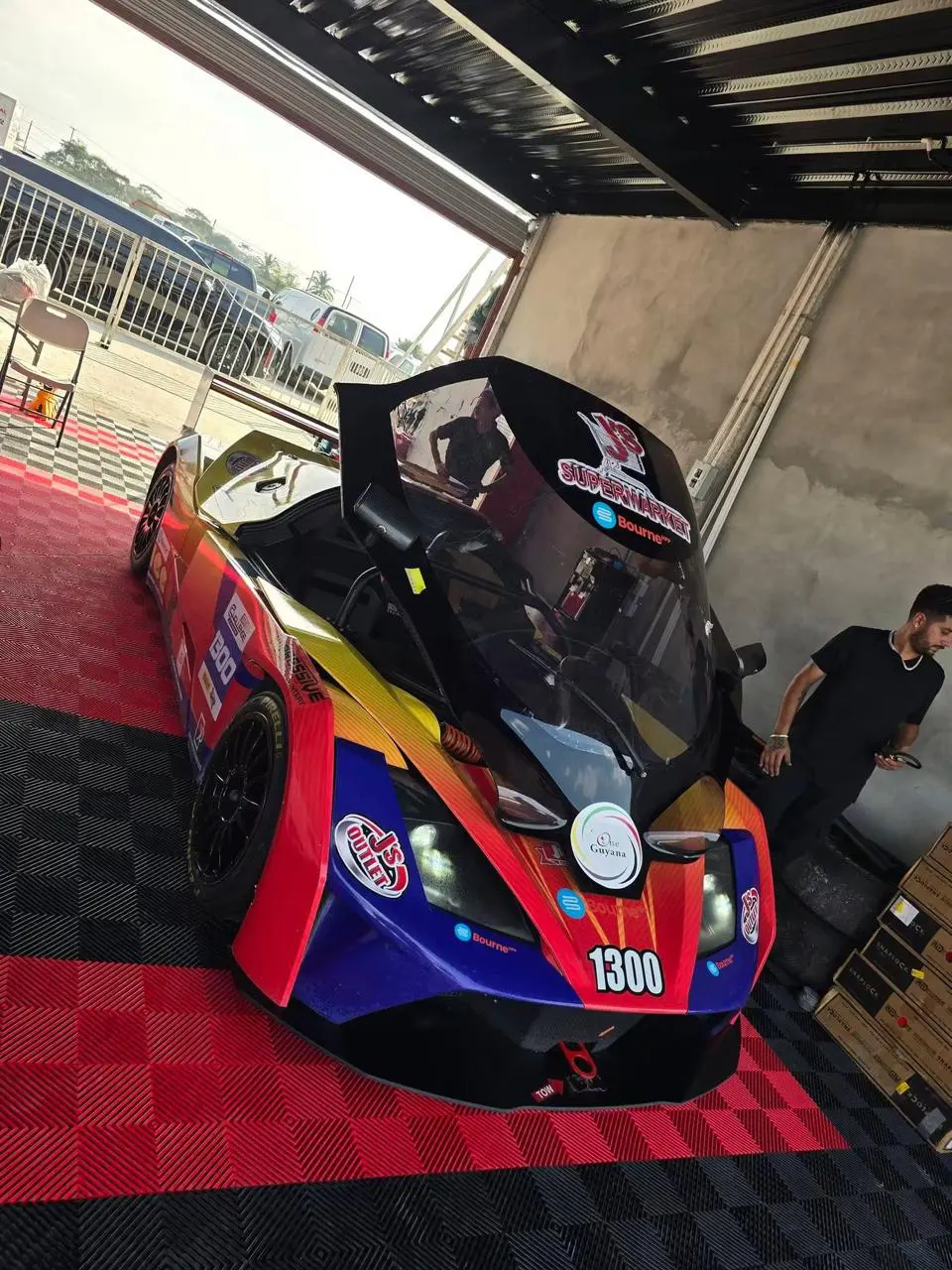
Gore, the son of legendary Jamaican driver Doug Gore, recorded the fastest qualifying time of one minute, 15.609 seconds in the J’s Supermarket KTM X-Bow around the 2.632-kilometre circuit.

Rameez Mohamed secured second place on the starting grid with 1:18.989, while veteran driver Andrew King qualified third in 1:21.071.

Jerry Da Silva led the Street Class Bikes with 1:20.239, narrowly beating Salim Azeez, who clocked 1:20.356. Denzel Hopkinson was third in 1:22.984, followed by Christopher Bridgmohan in 1:25.895 and Nathan Patterson in 1:35.766.

Matthew Vieira topped the Superbikes 600cc class with 1:17.616. Elan Rahaman qualified second in 1:20.560, while Junior Da Silva was third with 1:23.000.

Kevin Persaud claimed pole in the Superbikes Open category after clocking 1:16.345. Alain Hopkinson finished second in 1:18.890, while Adrian Mohar secured third with 1:20.514.

In Group Three, Anand Ramchand recorded the fastest qualifying lap of 1:24.747. Anthony Evelyn was second in 1:26.662, while Neil Persaud finished third in 1:29.118.

Nasrudeen Mohamed secured the top starting position in Local Group Two with 1:25.250. Mohamed Shairaz Roshandin was second in 1:26.858, ahead of Neil Persaud in 1:27.147, Damian Singh in 1:27.934 and Ryan Rahaman in 1:29.529.

Malicia Lawrence was the only competitor to qualify in the Female Class, recording a time of 1:35.068.

Joshua Ramdehol led the Rookie A Class with 1:29.600, while Nicholas Sawh topped Rookie B in 1:30.102. Allan Roberts was second in Rookie B with 1:43.855, followed by Kunal Persaud in 1:50.200 and Devesh Singh in 2:00.520.

Ravin Ramoutar secured pole in the Vitz Cup A Class after posting 1:32.723. Mikhail Persaud was second in 1:33.140, Zachary Persaud third in 1:34.123 and Mickelly Rahaman fourth in 1:36.639.

Devesh Singh led Vitz Cup B with 1:35.291, followed by Ryan Ramoutar in 1:36.521 and Shivan Ragnauth in 1:38.313.

The Ryan Rahaman/Jad Rahaman entry recorded the quickest time in the Street Tuner 1500cc category with 1:28.595. Amjad Rahaman was second in 1:29.776, followed by Jad Rahaman in 1:31.865, Ravin Ramoutar in 1:32.764, Shivan Ragnauth in 1:35.343, Zachary Persaud in 1:35.559 and Ryan Ramoutar in 1:36.966.

The J’s Supermarket KTM XBOW

Mohamed Saifudeen Roshandin led the Sports Tuner 1600cc class with 1:31.225, while Shan Seejatan qualified second in 1:36.209.

Steven Nobrega claimed pole in the Starlet Cup after producing a lap of 1:24.569. Ramchand was close behind in 1:24.826, while Evelyn finished third in 1:25.958. Afraz Allie secured fourth in 1:26.180, with Allan Da Silva fifth in 1:28.734.

Admission to the event is G$4,000 for adults and G$2,000 for children.

The 2026 championship is supported by the Ministry of Culture, Youth and Sport, One Guyana, GuyOil, ENet, KFC and Castrol.

You reached the end of this article without encountering a paywall.

That is deliberate. We believe reliable journalism about Guyana should be available to everyone from the hinterland to the coast, including those who cannot afford to pay for it. But investigating, reporting and publishing every story takes time, energy and resources. Keeping our journalism open depends on the commitment of readers who can chip in and contribute to help cover the cost for everyone.

Please join the Kiskadee family by taking a subscription. Every contribution counts to our commitment to our journalists, to our readers, and to independent, public-interest journalism.

And please spread the word. One one dutty build dam!


Become a supporter


Source: Kiskadee Watch