Home Blog Page 235

INTERPOL follows the money, drug profits flowing into illegal gold mining – News Room Guyana

0

by Sharda Bacchus

[email protected]

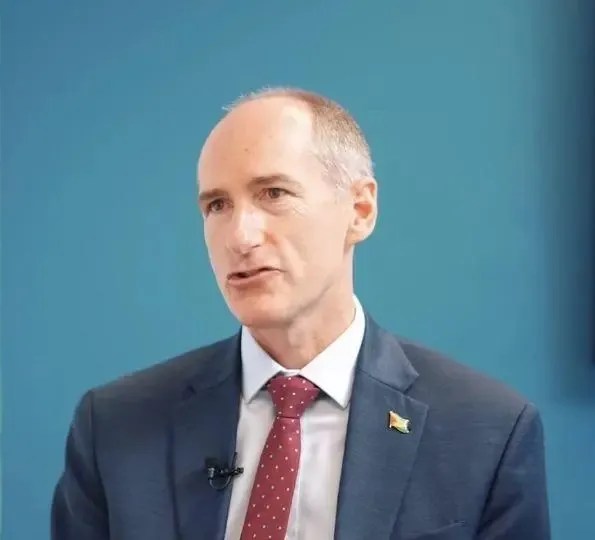
Criminal syndicates in the Americas are increasingly turning to illegal gold mining to move and conceal profits generated from the cocaine trade, INTERPOL Secretary General Valdecy Urquiza revealed on Wednesday.

Urquiza made the disclosure during the opening of the 27th Americas INTERPOL Regional Conference at the Arthur Chung Conference Centre, highlighting the growing connection between drug trafficking and illicit mining as criminal organizations seek new ways to manage their proceeds.

“Cocaine remains the financial lifeblood of groups across central and south America,” Urquiza said.

He explained that the enormous scale of the cocaine trade creates a major challenge for criminal organizations: how to move, hide and clean the large amounts of illicit cash generated from drug trafficking.

According to Urquiza, a growing number of criminal syndicates are addressing that problem by moving their drug capital directly into illegal gold mining.

The development highlights how criminal enterprises can use legitimate-looking commodities and economic activities to move or conceal money generated through other forms of illegal activity.

However, Urquiza stressed that removing illegal commodities from the criminal supply chain is only part of the response. He said authorities also need to identify and pursue the money generated by those activities.

“Seizures takes away their cargo and following the money takes away their business,” Urquiza said.

His remarks point to a broader law enforcement challenge – criminal organizations are not necessarily keeping the proceeds of drug trafficking in cash. Instead, they can seek alternative ways to invest, move or conceal those proceeds through other illicit economic activities.

Rather than focusing only on the drugs or other illegal commodities being transported, authorities are being urged to trace what happens to the money after those commodities are sold.

The INTERPOL General Secretary message was direct: disrupting the flow of criminal money could strike at the underlying business model that allows organized crime groups to continue operating.

“Seizures takes away their cargo and following the money takes away their business,” he said.


Source: NEW ROOMS SITE

Loose animals putting flights at risk; owners face jail, $1M fine – News Room Guyana

0

Owners who allow their animals to wander onto airport runways could face prosecution, a fine of up to $1 million and six months in prison, as the Guyana Civil Aviation Authority (GCAA) raises concern over an increase in animals crossing aerodromes across the country.

The GCAA issued the warning on Friday, saying animals entering runway areas pose a direct safety risk to passengers, flight crews and aircraft.

According to the Authority, the deliberate or negligent release of animals onto aerodrome property can obstruct aviation operations and compromise the safety of flights.

The GCAA said it will not tolerate conduct that puts aviation operations at risk and warned that those found responsible could face legal action.

The Authority pointed specifically to Section 83(1) of the Civil Aviation Act 2018, which makes it an offence for a person to trespass on land forming part of an aerodrome or to cause an animal to trespass on such land.

The provision states that a person convicted summarily can be fined $1 million and imprisoned for six months.

The warning comes as the GCAA says it has observed an increasing frequency of animals crossing aerodrome runways across Guyana.

The Authority stressed that aerodromes are safety-critical areas and urged members of the public, particularly animal owners living near airports and airstrips, to ensure their animals do not enter restricted areas.

The GCAA said it is working with law enforcement to ensure that persons responsible for compromising aviation safety are dealt with under the law.

It is also asking the public to report suspicious activity or threats to aerodrome operations to the relevant authorities.

Reports can also be made anonymously through the GCAA hotline at 608-4222.

The A


Source: NEW ROOMS SITE

Brazil’s Lula bans online gambling ahead of presidential election – News Room Guyana

0

[BBC] – Brazilian President Luiz Inácio Lula da Silva has announced a ban on online gambling, just days before an election in which he is seeking a fourth term as the country’s leader.

The left-wing leader, who is running against the son of the incarcerated former Brazilian President Jair Bolsonaro, signed a provisional order on Friday that “prohibits all sports betting and online casinos”.

The online gambling industry in Brazil was legalised in 2018 and has since been blamed for widespread household income losses due to addiction.

Flávio Bolsonaro accused his rival of playing politics, while Brazilian football teams said the ban could lose them income due to betting firms pulling their sponsorships.

Lula described the industry as a “cancer” in his announcement, adding that “either we remove the tumour, or it kills us”.

The move comes just over a week before the first round of Brazil’s presidential election. Recent polls have the 80-year-old leader almost neck-and-neck with the younger Bolsonaro.

Lula also separately signed a bill to establish criminal offences related to fixed-odds betting – the most common type of online sports betting.

Punters and bookies will have until 5 October to withdraw any existing funds from online betting accounts, while new deposits have been barred.

The new measures must receive congressional approval within 120 days to remain in force.

Lula acknowledged online betting was allowed under the former President Michel Temer’s administration but said that it had grown “without regulation under Bolsonaro’s management”.

He said in a statement on X that there were “no restrictions” particularly for preventing children and teenagers from accessing online betting.

“We won’t allow betting companies to profit at the expense of Brazilian families’ income and lives,” the president added.

Lula described how he had heard from families who had sold everything in their houses because of their gambling addictions.

Earlier this week at the UN General Assembly, Lula accused the industry of “transforming addiction into profit”.

But Flávio Bolsonaro called the gambling crackdown “populist, hypocritical and politically motivated” during a campaign rally in Rio de Janeiro on Friday, according to Reuters.

Grêmio, one of the so-called “big twelve” Brazilian football teams, noted ahead of Lula’s announcement that sports betting firms had become “one of the main sources of revenue for sports” since they were made legal.

It said a change in the law “will not only be an open door for illegal betting, but a fatal blow to Brazilian football, leading many clubs to insolvency”.

The main clubs were paid 1.1bn Brazilian reais ($212m; £160m) by sports betting firms in 2025, while the industry took in 62.5bn reais at the same time, broadcaster Globo reports.

Most types of gambling, such as casinos and slot machines, are illegal in Brazil, but ever since online betting was legalised in 2018, it has exploded in popularity.

About 59.9% of Brazilian adults support banning internet betting, a survey by Atlas and Bloomberg published this week has found.

The Brazilian Institute for Responsible Gaming (IBJR), a trade body representing around 75% of the domestic betting sector, said a total ban on fixed-odds betting jeopardised the industry as a whole – and potentially 58-73bn real in revenue.

“The ban also doesn’t eliminate existing demand,” it said in a statement, adding that anyone turning to illicit betting would no longer have “access to protection mechanisms provided in the regulated environment”.

It urged the federal government to strengthen betting regulations rather than outlaw online and fixed-odds betting entirely.


Source: NEW ROOMS SITE

Constitution Reform Commission invites proposals on what should change in Constitution – News Room Guyana

0

The Constitution Reform Commission (CRC) is asking Guyanese to submit proposals on what should be changed in the country’s Constitution, with the deadline for submissions set for December 31, 2026.

The Commission is inviting views on issues ranging from fundamental rights and freedoms and Indigenous and children’s rights to elections, GECOM, the judiciary, public funds and local government.

The CRC says it was established under the Constitution Reform Commission Act 2022 to review the Constitution and make recommendations on changes needed to address the current and future rights, duties, liabilities and obligations of Guyanese.

The Commission will receive, consider and evaluate the submissions before preparing recommendations for the Parliamentary Standing Committee for Constitutional Reform, which can then transmit proposals to the National Assembly.

What the CRC wants Guyanese to weigh in on

Among the areas identified for consideration are:

  • protection of fundamental rights and freedoms;
  • the rights of Indigenous peoples;
  • children’s rights;
  • eliminating discrimination;
  • improving race relations;
  • ethnic security and equal opportunity;
  • electoral reform and the functioning of GECOM;
  • economic, social and cultural rights;
  • the independence of the judiciary;
  • protection of public funds;
  • integrity in public life;
  • the functioning of the National Assembly; and
  • the effectiveness of local government.

The Commission stressed that the listed areas do not restrict the scope of the review, meaning members of the public can raise other constitutional issues they believe require reform.

The call comes as the Commission faces a low response to its initial invitation for written submissions.

Attorney General and CRC member Anil Nandlall said earlier this month that only six submissions had been received.

According to Nandlall, the Commission was also told that the submissions received so far largely did not relate to constitutional reform.

He said the limited response could force the Commission to consider another approach to generating public participation, including whether written submissions should remain a prerequisite before wider public consultations begin.

The Commission had planned a two-stage consultation process.

The first stage is the written submission process now underway. The second involves public engagements in all regions of Guyana and with Guyanese in the diaspora.

People who submit proposals could also be invited to participate in face-to-face discussions where the Commission believes their submissions require further consideration.

How to submit

Written proposals must be clearly labelled:

“Written Proposal on Constitutional Reform.”

The Commission requires contributors to provide their full name, address, email address and other contact information, together with a scanned copy of valid photo identification.

Submissions can be delivered to:

Office of the Secretariat
Constitution Reform Commission
5th Floor, 211 Camp and Lamaha Streets
Georgetown

They can also be emailed to [email protected].

The deadline is December 31, 2026.

The constitutional review covers the rules that govern the functioning of the State, the distribution of power and the rights and obligations of citizens. The Commission’s work is therefore intended to produce recommendations that could ultimately result in amendments to Guyana’s supreme law.


Source: NEW ROOMS SITE

Venezuela president returns from US visit with no deals, no firm election date – News Room Guyana

0

(Reuters) – Venezuela’s interim President Delcy Rodriguez arrived in New York this week for the UN General Assembly seeking business deals on debt, energy and ​mining, to demonstrate the once sanctioned country was open for business again after US forces removed her predecessor in January.

She pledged in her speech before the UN that the South ‌American OPEC member would hold elections as part of a transition to “full democracy.” She left with photographs of herself alongside US President Donald Trump, but obtained no concrete agreements.

It was her first visit to the US since American forces captured then-President Nicolas Maduro in a January raid. It demonstrated Washington’s deep control over her administration and showed Venezuela’s need for new alliances to align with Trump’s aspirations, analysts said.

“Rodriguez enjoyed a week of high visibility. Yet, when we make a list of concrete results, ​the outcome is modest. Where are the disbursements, the reconstruction package or the business deals? They did not materialize on the scale that would have allowed New York to be portrayed ​as Venezuela’s great financial comeback,” said Washington-based analyst Antonio De La Cruz.

“To the victor belong the spoils,” Trump said in a Tuesday address to the assembly ⁠as Rodriguez listened, reminding her that the US stood ready to use its “unmatched military might.”

Trump did not mention Rodriguez by name in his speech, and no readout was published on his brief “pull-aside” meeting with her. ​Leftist leaders from other nations who once backed Maduro kept their distance, while Venezuelans living in the US protested outside the UN with signs depicting Rodriguez in a jail-style orange jumpsuit.

De La Cruz said Trump showed ​Washington is shaping the new Venezuelan landscape, while Rodriguez demonstrated she is the key interlocutor. “But she now bears an additional consequence: she will have to explain when Venezuelans will actually vote.”

For nine months, Rodriguez had avoided giving signals about an election, while US officials kept expectations at bay by saying it would take time to materialize. Analysts and Venezuelan opposition parties now say the clock is ticking to set a date, while experts estimate it will take at least 12 months ​to appoint reliable authorities and organize the voting.

The White House and Venezuela’s information and foreign affairs ministries did not reply to requests for comment about a possible election and details of the bilateral talks.

MUCH NOISE, ​NO DEALS

Talks with US officials, multilateral lenders, allied governments and energy and mining companies were expected to produce signed agreements, even if preliminary, sources had said ahead of the Venezuelan delegation’s trip. As of Saturday, none had been announced.

The ‌head of the ⁠Inter-American Development Bank said the multilateral was working to secure approval for a $2.5 billion bridge loan for Venezuela. But some members of the IDB boardoppose making the loan, Reuters reported on Tuesday.

Inside the UN, the Venezuelans were largely on their own. The Cuban delegation, once the South American nation’s closest ally, walked out of the hall when Trump’s speech turned to Cuba, while Rodriguez stayed as he called Maduro an “outlaw dictator.” Officials from Caracas and Havana avoided each other, sources said.

When Rodriguez crossed the floor to greet Spanish Prime Minister Pedro Sanchez, he awkwardly finished a phone call before standing to receive her. Sanchez later described the greeting as “normal.”

Meanwhile, ​a source told Reuters that the Russian delegation sought ​out a meeting with Foreign Minister Felix ⁠Plasencia to discuss the country’s stakes in oil projects in Venezuela. There have been reports that ExxonMobil (XOM.N), opens new tab has had negotiations for a return into the large Petromonagas development, partially owned by Russia’s state firm Roszarubezhneft.

Russia’s foreign ministry, its mission to the UN in New York and its embassy in Caracas did not immediately reply to requests ​for comment.

Brazil’s President Luiz Inacio Lula da Silva, the region’s most prominent leftist leader, told CNN that the US treats Rodriguez as if it were ​her boss and that, in her ⁠place, he would call elections.

Outside, more than 50 protesters carried signs reading “New Face, Same Regime” and chanted that Rodriguez should join Maduro in the Brooklyn jail where he is being held pending trial.

Following Rodriguez’s meeting with Trump, US Secretary of State Marco Rubio said the two discussed restructuring Venezuela’s sovereign debt and that Washington pressed for political change, both hard topics for her administration. “For this project to be successful, it culminates in a free and ⁠fair election,” Rubio ​said.

While Rodriguez visited the US, media reports said Venezuelan opposition leader Maria Corina Machado, who could be a strong candidate ​in an eventual election, was again prevented from returning to her country from Panama.

Nicmer Evans, political analyst and former supporter of late leftist President Hugo Chavez, theorized on X that Rodriguez had allowed herself to be “doubly humiliated” in exchange for Trump withholding support to ​Machado.

“There will be elections, but when the United States sees fit,” Evans wrote.

Reporting by Marianna Parraga, with additional reporting from Jarrett Renshaw in Washington and Vivian Sequera in Caracas; editing by Nathan Crooks and David Gregorio


Source: NEW ROOMS SITE

ExxonMobil pushes back against calls for ring-fencing new oil projects

0


…says current structure maximizes value for the country

(Kaieteur News) – After almost six years of producing oil, Guyana is now finally enjoying a greater share of profits from the Stabroek Block as the investments made by ExxonMobil have been recovered.

The company is however chasing approval from government for an additional two projects that could again cause Guyana’s profits to slide from the current 39.8% to just 12.5% if the Government of Guyana (GoG) fails to ring-fence these upcoming developments.

Ring-fencing the projects would prevent Exxon from using profits that should flow into the Natural Resource Fund (NRF) or Guyana’s oil account to finance the developments.

ExxonMobil pushes back against calls for ring-fencing new oil projects

ExxonMobil Guyana President, Alistair Routledge

President Irfaan Ali has committed to seeking expert advice on whether there should be changes to the current financing arrangement that allows ExxonMobil to delay Guyana’s profits to pay for these projects but the President of ExxonMobil Guyana Limited (EMGL), Alistair Routledge is fiercely against any changes.

During an Energy Luncheon hosted by the Georgetown Chamber of Commerce and Industry (GCCI) on Thursday, Routledge in remarks recognised calls echoing across the country for ring-fencing of future projects. While he acknowledged that countries around the world have applied this provision, the Exxon representative said nations with deepwater basins like Guyana should be cautious.

“Some have raised questions about ring-fencing. Should every project be ring-fenced? In some places that happens. I would say in deep water, which is what we are talking about here, that is something we should be cautious about,” he said.

Routledge went on to explain that if Guyana had ring-fenced each project, it would have “seriously undermined” the company’s ability to make certain “strategic investments” such as the Vreed-en-Hoop shorebase and the Guyana Technical Training Centre in Port Mourant which is helping to develop the local workforce.

Furthermore, he argued, “Ultimately, ring-fencing does not change, if you do exactly the same number of projects you would have done with or without ring-fencing, it doesn’t change the gross revenue that the government sees, that the country sees. What it does is just change the timing.”

Routledge added, “I think, with my hypothesis which time will play out is that overtime in deepwater, putting the ring-fencing at a block level actually maximizes value for the country. First of all, because of these strategic investments I talked about, secondly because there are some resources in this deepwater environment that are actually very marginal and if you ring-fence them, they probably would never be developed.”

Institutions urge Guyana to ring-fence

While ExxonMobil believes Guyana should be “cautious” in its decision to ring-fence, numerous independent institutions have already urged the country to implement this provision.

Kaieteur News previously reported that in three separate reports dated 2017, 2018 and 2019, the International Monetary Fund (IMF) urged Guyana to ring-fence its oil fence its projects. In one of the reports, the IMF stated: “This asymmetrical treatment of profit and cost oil will benefit the contractor at the expense of delaying government revenue.”

Meanwhile, the United Nations Development Programme (UNDP), along with another international expert, Chatham House and the World Bank called on Guyana to include a ring-fencing provision for each project.  Director of Financial Analysis for the Institute for Energy Economics and Financial Analysis (IEEFA), Tom Sanzillo painted a more graphic picture in one his reports on Guyana.

He said, “The lack of contract protections means that every time Guyana announces it has received more revenue, it is actually being shortchanged…the country may never see the promised annual revenues in the billions of dollars.”

Guyanese demand ring-fencing

Since the Chief Executive Officer (CEO) and Chairman of Exxon Mobil corporation announced that the company has recovered its US$55B investments made in Guyana, stakeholders across the country began renewing calls for the GoG to implement a ring-fencing provision to ensure the country’s profits are not shortened to develop in more oil projects.

One Member of Parliament (MP) from the A Partnership for National Unity (APNU), Saiku Andrews even suggested that the country should seek a greater share of profits from the deal if it will be investing its share of profits into the additional projects.

Leader of the APNU, Aubrey Norton also threw his support behind ring-fencing, insisting that Guyana must also reap benefits under the deal rather than allow Exxon to continue milking the country’s resources.

“I accept the argument that at the beginning of this process, there were risks and therefore those risks had to be catered for. Now that the risks are reduced and we have a better idea of what the situation is, action should be taken to ensure that Guyana benefits more and that we do not allow any company, Exxon is just one to use our resources to milk profits. We know that they must get profits, but not to milk us and our people are left poorer,” Norton said to justify his position.

Similarly, Leader of the Opposition, Azruddin Mohamed has demanded that the GoG ring-fence future projects in the Stabroek Block, given the substantial changes that have occurred.

He said, “The government should therefore obtain independent petroleum, financial, and legal advice and pursue mutually agreed, project-specific improvements -including a greater government take, stronger ring-fencing, and tighter cost controls before approving future projects. Future developments must deliver a fairer share of value to the Guyanese people.”

Gov’t to seek expert advice

During a press conference President Ali told reporters that government will seek expert advice on the financing of new projects in the Stabroek Block. Kaieteur News specifically asked the Head of State to explain how new projects would be governed, whether Guyana would allow its share of profits to be invested into upcoming developments and if government would then seek a greater share of revenue as an investor.

To this end, the President said, “Now that we are at this new phase in the development of our oil and gas sector, there are ongoing internal discussions and of course we will also seek expert advice on this matter to make a determination on how the next phase of projects will be treated having regard for the state of the global sector and of course the need for investment, the structure of that investment, where that investment is coming from and of course all the other exploration that is going to take place.”

Should the GoG implement a ring-fencing provision, the cost of new projects will only be recovered by Exxon when the specific operation comes online. This means that the project will pay for itself and ensure Guyana continues to receive a larger share of the pie.


Source: Kaieteur News

All overpayments recovered or cleared by contractors, Auditor General reveals

0


(Kaieteur News) – Public sector contractors have fully repaid or cleared all state overpayments identified in previous audit cycles, Auditor General Deodat Sharma revealed on Friday as he submitted his 22nd annual report on the nation’s public accounts to Speaker of the National Assembly Manzoor Nadir.

The disclosure comes as the Audit Office moves toward real-time auditing of state disbursements, including public assistance cash grants and pension payments, to catch financial irregularities as they occur rather than relying solely on post-payment reviews.

“In terms of the overpayment for the past couple of years, if you notice, all overpayments have been recovered or the contractors have done their work,” Sharma said during a media conference following the formal presentation to Speaker Nadir, Clerk of the National Assembly Sherlock Isaacs, and members of the Public Accounts Committee.

All overpayments recovered or cleared by contractors, Auditor General reveals

Auditor General, Deodat Sharma

The presentation of the report marks the 15th consecutive year the Audit Office of Guyana has met its statutory September 30 deadline. Alongside the main public accounts report, Sharma submitted a performance audit on the Implementation of the Solar Home Energy Program in Guyana’s Hinterland and Riverine Communities, bringing the total number of performance audits conducted under his tenure to 19.

The Auditor General emphasized that the Audit Office has had to rapidly scale its institutional capacity and technical capabilities to match Guyana’s expanding national budget, which has grown from G$883.1 billion in 2021 to a record G$1.558 trillion in 2026.

To keep pace with the influx of large-scale infrastructure projects, engineers within the Audit Office’s Works and Structures Division have completed Project Management Professional training to evaluate complex contract delivery, resource allocation, and contractor performance. The Public Service Commission also recently approved three additional engineer positions to strengthen structural project scrutiny.

Other capacity-building developments detailed in the submission include a comprehensive review of Central Government audit planning conducted by 31 senior managers, supervisors, and auditors, alongside technical training for 24 audit clerks. Three officers participated in Information Systems Audits and Digital Public Infrastructure training in India under the ITEC Programme, while 20 officers underwent data protection and cybersecurity training.

Sharma also announced plans to resubmit a proposal to the Public Service Commission to establish a specialized Oil and Gas Division within the Audit Office. He explained that while the office currently audits managing entities like the Natural Resource Fund, the Environmental Protection Agency, and the Guyana Geology and Mines Commission, a dedicated unit is required to handle the technical complexities of the sector.

During the media segment, Sharma fielded questions regarding several high-profile state projects and ongoing investigations. He confirmed that the Audit Office is currently conducting special forensic investigations at the Guyana Revenue Authority and the Ministry of Culture, Youth and Sport concerning vouchers.

On the Gas-to-Energy project and regional infrastructure like the Bellevue pump station and the Region 1 wharf, Sharma confirmed that his office is actively monitoring these developments, though specific findings remain confidential until the report is formally laid before the National Assembly. Addressing concerns regarding the seaworthiness of state ferries operated by the Transport and Harbours Department, Sharma noted that while financial statement audits are ongoing, physical vessel assessments are evaluated during financial examinations.

When questioned about claims that he had sought a two-year extension of his tenure past retirement age from President Irfaan Ali, Sharma declined to elaborate, stating, “No comment. You can ask the President.”

The complete Auditor General’s Report will become public record once it is officially laid on the table of the National Assembly.


Source: Kaieteur News

Fuel prices jump 13% at Guyoil

0


(Kaieteur News) – The Guyana Oil Company Limited (Guyoil) on Saturday increased fuel prices by as much as 13% as the war in the Middle East continues to affect global supplies.

This newspaper confirmed that the cost per litre of gasoline jumped from $228 to $258- forcing consumers to pay an additional $30 more for an already expensive commodity. Diesel prices also climbed significantly from $278 to $318.

Guyana Oil Company

Other service stations also upped their prices due to the strain in supply.  Kaieteur News visited Mobil service stations which were retailing gasoline at $265 and diesel at $297.

A Rubis service agent told this newspaper on Saturday afternoon that there has not been any increases yet to prices; as such gasoline was being retailed at $260 and diesel at $290 per litre. The last major fuel price increase was recorded across the country in March this year when products at GUYOIL climbed by 12%. It was reported that President Irfaan Ali during an address at the 136th Annual General Meeting of the Georgetown Chamber of Commerce and Industry (GCCI) highlighted financial challenges being experienced by GUYOIL as a result of the ongoing Middle East conflict.

Fuel prices jump 13% at Guyoil

Fuel prices have increased at Rubis Service stations across the country.

He explained that the oil company at the time was operating at a deficit and will need to at least break even to help stabilise the market. The price of petroleum products has climbed due to the war in Iran. On February 28, the state media in Iran confirmed that Supreme Leader Ayatollah Ali Khamenei was killed at his office in the Israeli-U.S. attacks on Iran.

Al Jazeera reported that Iran’s counterattacks triggered air-defence interceptions in several countries where airbases with U.S. assets are hosted, including Kuwait, Qatar, the United Arab Emirates and Bahrain. Since then, cargo ships, mainly oil and gas tankers, have been blocked from transiting the strait of Hormuz by the Israeli-U.S. war against Iran after Tehran closed the key maritime passage.

The shortage of fuel supply is likely to continue, thereby affecting global prices as several oil and gas facilities have been bombed which can take years to be rebuilt.

Fuel prices jump 13% at Guyoil

Mobil Service stations like the other outlets have increased fuel prices.

Recently, President Ali underscored Guyana’s challenge as an oil producing nation exporting approximately 900,000 but still vulnerable to external shocks as the nation lacks critical infrastructure to refine its crude oil.

“We produce crude oil, but we import all refined oil, our gasoline and everything. So, we import back all the price differentials. Since the war, you know what has been happening,” he noted.

“We cannot have crude oil and don’t have security of supply, one and security brings with it stability and then give us some shield against shocks that are currently existing,” Ali noted, further disclosing that there are interests in the construction of an oil refinery in Guyana. “We’re hoping that we can have investment in that refinery,” he added. Discussions over an oil refinery in Guyana have been ongoing for years however there have been no material movement in this direction with the country only moving to sign Memorandums of Understanding (MOUs) to date.


Source: Kaieteur News

Iran insists on diplomatic solution after Trump rejects peace plan

0


WASHINGTON/UNITED NATIONS/CAIRO, Sept 27 (Reuters) – Iran on Sunday insisted that only diplomacy can solve its conflict with the ​United States and Israel after US President Donald Trump said he rejected an Iranian proposal to reopen the Strait of Hormuz and ‌end fighting.

“Our conditions are clear, and any move toward reopening the Strait of Hormuz is contingent on these conditions being met,” Iranian Foreign Minister Abbas Araqchi posted on social media. “Only a negotiated solution can get them out of this deadlock.”

Iran insists on diplomatic solution after Trump rejects peace plan

An Iranian woman shouts during a march in Tehran, Iran, September 25, 2026

Iran announced a peace proposal earlier this week at the UN General Assembly in New York, saying it had been transmitted to the Americans via Qatari ​mediators. Trump on Saturday said he rejected the plan and argued that desperation drives the Iranians’ push for an agreement on the key waterway. “They want ​to make a deal to open the Hormuz Strait immediately because they’re losing so badly,” Trump told reporters at the White House.

Despite Trump’s public statements, mediators facilitating US-Iran talks with the United States have not officially relayed a US rejection of the plan, according to Araqchi.

“We are waiting ​for the mediators to convey the definitive views to us, and we will make a decision based on them,” Araqchi posted. The US has imposed an economic blockade ​on Iran to put pressure on Tehran to stop Iranian attacks on vessels in the Strait of Hormuz, which have drastically reduced shipping through the area even as Trump repeatedly asserts that the US controls the waterway. The Wall Street Journal first reported that Trump had rejected the Iranian proposal, citing unnamed US officials. It said Trump was privately skeptical that Iran would meet his demands and ​had told his staff that he sees a renewed bombing campaign as likely after the November US midterm elections. A US official had said earlier that discussions ​with Iran through mediators were “positive and constructive”.

CONFLICT HAS DISRUPTED OIL FLOWS, HARMED GLOBAL ECONOMY

The Iranians also engaged their Saudi rivals regarding the Strait of Hormuz, underscoring the stakes of a month-old conflict that has disrupted oil flows through a critical shipping lane and taken a toll on the global economy.

Araqchi told reporters at the United Nations on Friday the proposed deal would trigger a seven-day countdown to reopening the strait and a pause in regional fighting.

“If there is seriousness on the US side to come to a deal and reopen the Strait of Hormuz, everything is now prepared,” Araqchi said. If the US were to agree, the warring parties could start wider talks “on mutually agreed ​subjects.”

That could potentially include discussions of Iran’s ​nuclear program. Trump has said Tehran must never acquire a nuclear bomb, while a senior Iranian official told Reuters that Iran would show no flexibility, over its nuclear program even if the US accepted its peace deal.

Iran would grant no concessions over its rights, including enriching uranium or shipping ​its highly enriched uranium out of the country, the official said.

Iranian President Masoud Pezeshkian, in an interview with the ​CBS show “Face the Nation”, said Tehran was ready for talks on its nuclear program and other issues, but would not accept “bullying or coercion”.

“Iran is not seeking war, but will defend itself against pressure, threats and attacks,” Pezeshkian said, adding that it had already agreed that “we’re not supposed to develop nuclear weapons”.

Previous attempts at diplomacy have failed to end the war, which began on February ​28 with US and Israeli attacks. Since then the war has alternated between pauses and renewed strikes, ​killing thousands while degrading Iran’s conventional forces and damaging Iran’s already ailing economy. Iran and its allies have retaliated by extending the conflict throughout the region. Iran has struck US allies in the Gulf ​with drones and missiles while its Houthi allies in Yemen have targeted Saudi interests.


Source: Kaieteur News

GCAA warns animal owners: Runway trespass could mean $1M fine, jail

0


(Kaieteur News) – Owners who allow animals onto aerodrome runways could face prosecution, a $1 million fine and up to six months in prison, the Guyana Civil Aviation Authority (GCAA) warned on Friday.

The warning comes amid what the Authority described as an increasing frequency of animals crossing aerodrome runways across the country, raising concerns about the safety of passengers, flight crews and aircraft.

In a statement, the GCAA said the deliberate or negligent release of animals onto runways poses a “direct and unacceptable threat” to aviation operations and will not be tolerated.

The Authority said such incidents constitute offences under the Civil Aviation Act 2018, with Section 83(1) specifically providing that a person who trespasses on land forming part of an aerodrome, or causes an animal to trespass on such land, commits an offence.

On summary conviction, the offender is liable to a $1 million fine and six months’ imprisonment.

The GCAA said it will work with law enforcement to identify and prosecute persons responsible for compromising aviation safety.

“The safety and security of the aviation sector remain paramount,” the Authority said, adding that it will pursue “rigorous enforcement and decisive action” against offenders.

The GCAA is also urging members of the public to report suspicious activity or threats to aerodrome operations to the relevant authorities or anonymously via its hotline at 608-4222.

“See something, say something, do something,” the Authority urged.

Last week a black dog running onto the Mabaruma runway during the landing of a Trans Guyana Airways (TGA) aircraft forced the pilot to take evasive action, sending the aircraft off the runway and triggering renewed concerns about safety at Guyana’s hinterland aerodromes.

The Cessna Caravan, registered 8R-GCC, was landing with 12 passengers aboard when, according to TGA, the pilot spotted an animal entering the aircraft’s path during the landing roll. The pilot reportedly applied the brakes aggressively, after which the aircraft skidded off the runway and came to rest sideways.


No injuries were reported, although the passengers were taken for medical assessment. The aircraft, however, sustained significant damage and was rendered inoperable, according to TGA.

The incident had also prompted TGA to renew its call for urgent action to address what it described as the recurring problem of animals and even people—gaining access to government-owned and operated hinterland airports. In a statement, the airline said the incident represents a “considerable concern” because such incursions pose a continuing threat to commercial and private aircraft using the aerodromes.

TGA said it had already raised the issue with the Director General of the Guyana Civil Aviation Authority (GCAA), including in correspondence dated September 9 and June 16, 2026.

The airline called for the matter to be urgently addressed, particularly as several hinterland airports are undergoing significant expansion and development. TGA said it remains available to work with the GCAA, other licensed aircraft operators and the Aviation Operators’ Association of Guyana (AOAG) to find a solution.


Source: Kaieteur News