https://kiskadeewatch.com/guyana/mabaruma-man-spurns-5m-offer-by-govt-for-six-relatives-killed-in-mv-barima-tragedy/







https://kiskadeewatch.com/guyana/mabaruma-man-spurns-5m-offer-by-govt-for-six-relatives-killed-in-mv-barima-tragedy/
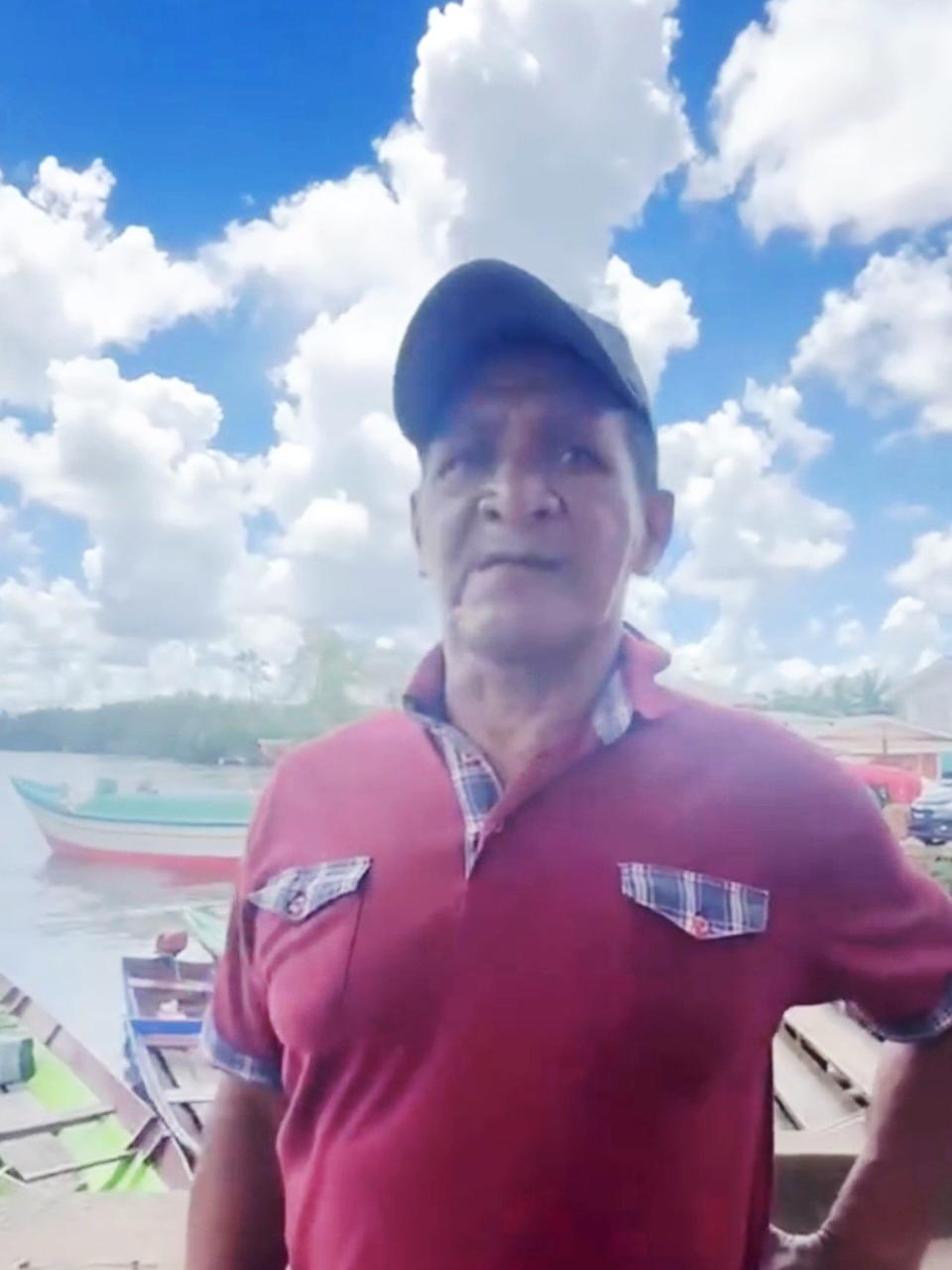
Leon Murray, who lost six members of his family in the MV Barima tragedy last July 18, says he has rejected a proposed $5 million payment from the government because he was being asked to accept the amount for the loss of all six relatives.
Murray, of Mabaruma, Region One (Barima/Waini) said he was approached by a lawyer about the payment but refused to accept it, saying he is seeking justice for his family.
“I said no, me ain’t deh pon duh cause I lost nuff family. I said no and just walked out. I am not doing that; I am looking for justice,” Murray expressed.
Just last week, the family of MV Barima chief engineer Paul Seepersad, from Berbice, had also been presented with a document and was reportedly asked to sign it in connection with compensation, but the Seepersad family was concerned that signing the document could absolve the Government of responsibility and potentially affect the family’s ability to pursue legal action or additional claims. The family has said it will not sign away its rights.
Lawyers and others involved in assisting affected families have cautioned relatives against signing settlement or release documents without first obtaining independent legal advice.
Meanwhile, families have also expressed concerns that the government’s promised long-term assistance has not reached them consistently. Diane Cort, whose husband Neil Cort remains missing, said even a social worker who had previously visited her home had not returned.
These concerns have also drawn comparisons with the 2023 Mahdia Secondary School dormitory fire, where families of children who died have subsequently challenged settlement arrangements in court.
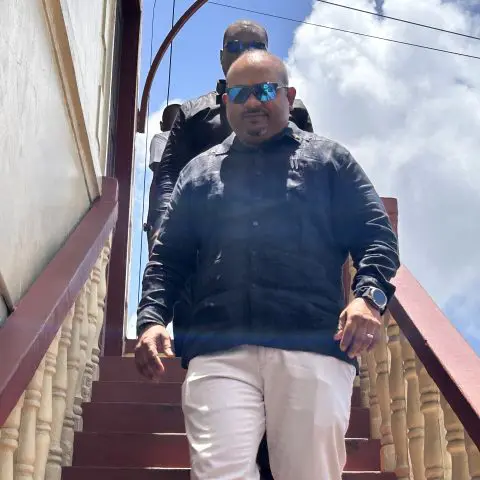
Opposition Leader Azruddin Mohamed made that comparison while speaking about Murray’s experience in a video on his Facebook page yesterday.
He alleged that Indigenous families affected by the Mahdia tragedy were pressured into signing documents accepting $5 million for each child who died. Those claims are however disputed by the State, which has maintained in the Mahdia litigation that the families were not compelled to accept the agreements.
Mohamed described the reported offer to Murray as “cruel” and questioned how $5 million could be offered for the loss of six members of one family.
He also criticised the continued delay in salvaging the vessel.
The MV Barima sank off Guyana’s north-western coast while travelling from Georgetown to Port Kaituma. Seventy-three people have been confirmed dead, while 76 survived. Around 30 people remained unaccounted for after the active search and recovery operation ended.
The tragedy has generated continuing demands from families for answers, compensation, long-term assistance and the recovery of the vessel.
The Government has established a Commission of Inquiry to investigate the circumstances surrounding the sinking, including the causes of the disaster, possible failures, compliance with maritime safety requirements and issues of accountability. The delayed proceedings of the COI have also drawn criticism from family members and the public.
The wreck remains submerged as the Government pursues a process to secure a contractor to salvage it. Relatives of missing passengers have repeatedly called for the vessel to be brought up although no updates on the salvaging have been forthcoming from the government.
Source: Kiskadee Watch
https://kiskadeewatch.com/opinion/letters/citizenship-reform-should-be-fair-and-grounded-in-guyanas-needs/
Dear Editor,
Attorney General Hon. Anil Nandlall deserves credit for initiating a review of Guyana’s citizenship and immigration laws. His call for stronger checks and greater scrutiny is commendable and timely. Citizenship carries force, lasting rights and responsibilities, and Guyana must not be reluctant to assert its sovereignty over this issue, and set the standards by which it is granted.
I urge the Attorney General to publish proposals that require five continuous years of lawful residence before a discretionary grant of citizenship by naturalisation, verified through reliable immigration records. Applicants should demonstrate good character and lawful conduct, provide proof that they have filed returns and paid taxes where legally required, and show a practical ability to communicate in English, with accessible instruction and reasonable exceptions. Decisions should follow published criteria, individual assessment and a fair process, similar to US standards.
The review must address the law as it stands. Guyana already imposes residence and good-character requirements for naturalisation; the Citizenship Act provides for five years of residence in aggregate within an earlier seven-year period, followed by twelve months of residence immediately before application, while allowing ministerial exceptions. Citizenship by birth, descent and marriage follows distinct legal rules, including constitutional protections. Mr. Nandlall is the most learned functionary to identify which changes Parliament can make by ordinary law and which would require constitutional reform.
Guyana also needs a separate, transparent skilled-worker programme. Employers should identify genuine shortages, advertise opportunities to Guyanese first, verify foreign qualifications and employment terms, and meet tax and labour obligations. Recruitment can reach the Caribbean, Suriname, Brazil, India and other countries, not only Venezuela. Proven skills should be central to a targeted work-permit programme; they should not become a blanket test that excludes spouses or other people who qualify for citizenship under different laws. Guyana’s employment-permit process already calls for documents including credentials, a vacancy advertisement and tax-compliance information.
Our country has every right to manage migration responsibly, protect its labour market and plan for the demands on housing, schools and public services. It should publish reliable figures on arrivals, permits, naturalisations and workforce needs. Venezuela’s territorial claim must be opposed firmly, and Venezuelan individuals should be judged by the same lawful standards as everyone else, not held responsible for their government’s actions.
Our nation must, nevertheless, be careful not to allow the proverbial Venezuelan Trojan horse to manifest itself, and avoid running the risk of an overrun by allowing a disproportionate number of Venezuelans to plant roots in Guyana.
I commend Attorney General Nandlall for opening this review. Mr. Nandlall, let its result be a clear, enforceable and fair framework that safeguards Guyanese citizenship while welcoming the people and skills Guyana genuinely needs.
Yours faithfully,
Hon. Albert Baldeo
Community Leader and Judicial Delegate, LITTLE GUYANA, New York;
President, Guyana Beyond Borders; Fmr. Magistrate, Senior State Counsel, Police Legal Advisor, Guyana
Source: Kiskadee Watch
https://kiskadeewatch.com/guyana/prosecution-witness-pleads-guilty-to-manslaughter-in-henry-cousins-case/
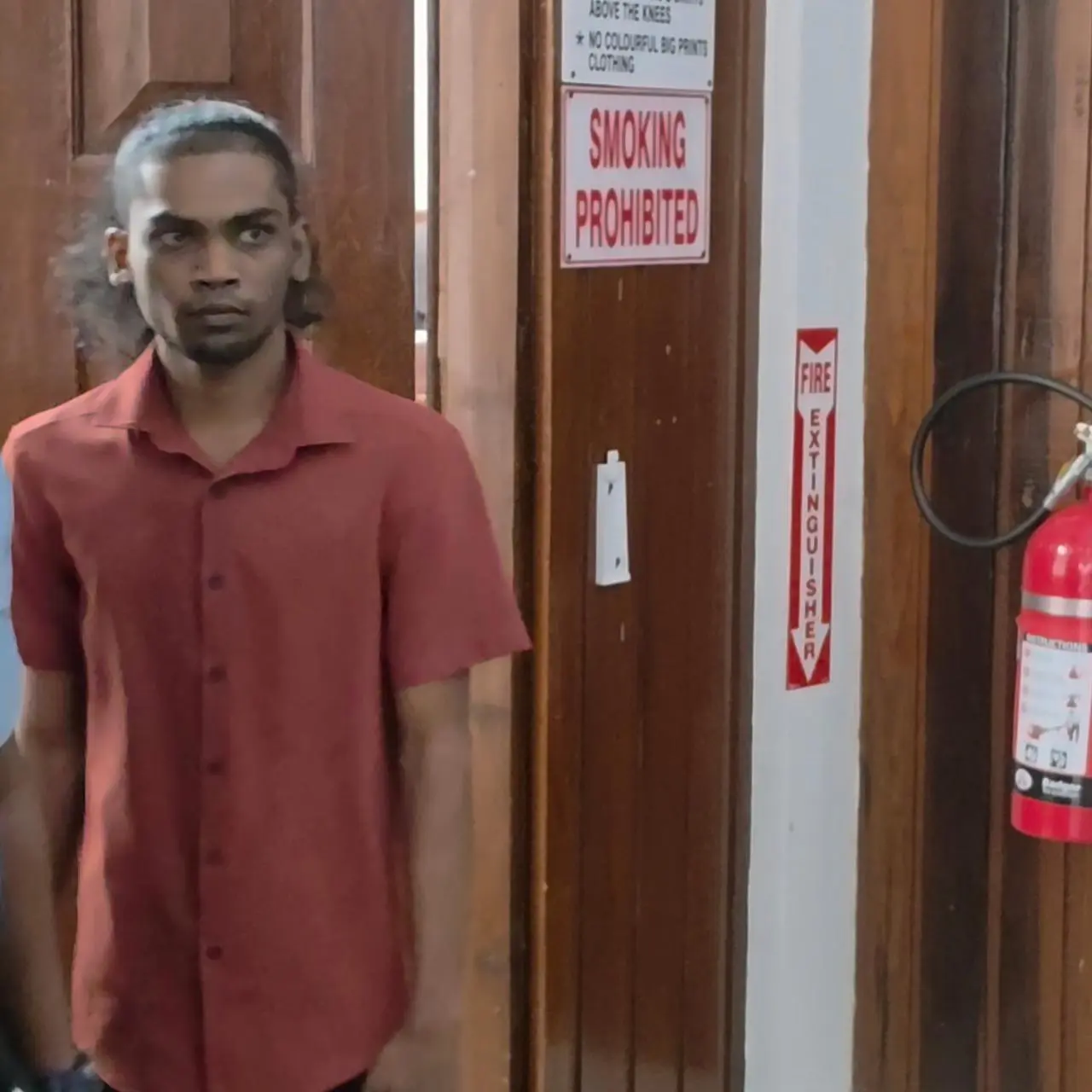
Akash Singh, whose testimony was central to the prosecution’s case against the two men convicted of murdering cousins Joel and Isaiah Henry, yesterday pleaded guilty to two counts of manslaughter at the Berbice Assizes.
Singh, of Zeelugt Squatting Area, East Bank Essequibo, denied the murder charges when he appeared before Justice Gino Persaud but admitted the lesser offences. Sentencing was adjourned to November 25.
Vinod Gopaul and Anil Sancharra were found guilty of the cousins’ murders in June and sentenced the following month to life imprisonment. They must each serve 35 years before becoming eligible for parole. Singh was the prosecution’s principal witness at their trial.
Joel Henry, 18, and Isaiah Henry, 16, of Number Three Village, West Coast Berbice, left home on September 5, 2020, for the backlands. Their mutilated bodies were found the following day. The killings sparked protests and unrest along the West Coast Berbice.
State Prosecutor Marisa Edwards told the court that Singh was at a marijuana camp in the Cotton Tree backdam with Gopaul and Sancharra when he awoke to the sound of people talking. He saw the two men with boys later identified as the Henry cousins.
According to the prosecution’s account, one of the men said the marijuana farm had been sprayed, prompting the boys to laugh. One cousin was chopped when he tried to stand and the other when he attempted to flee.
Edwards said Gopaul and Sancharra threatened Singh with the same fate if he did not help them. Singh then took a cutlass and chopped one of the boys on the head. At a co-offender’s direction, he also marked an X on a victim’s head, the court heard.
After the cousins stopped moving, Singh helped tie their bodies onto horses so they could be removed from the camp, the prosecutor said. He later burned the camp and disposed of the cutlasses and clothing in a koker on the instructions of the other men.
Post-mortem examinations found that both cousins died from haemorrhage and shock due to multiple incised wounds. Edwards said Singh subsequently gave investigators an audio-video interview under caution and took them to the scene, where he recounted what had happened.
Singh was represented by attorney Horatio Edmondson. After accepting the guilty pleas, Justice Persaud requested victim impact statements, submissions on aggravating factors, and probation, prison conduct and psychiatric reports ahead of sentencing.
Source: Kiskadee Watch
https://kiskadeewatch.com/sports/guyana-finish-132nd-in-open-152nd-in-womens-chess-olympiad/
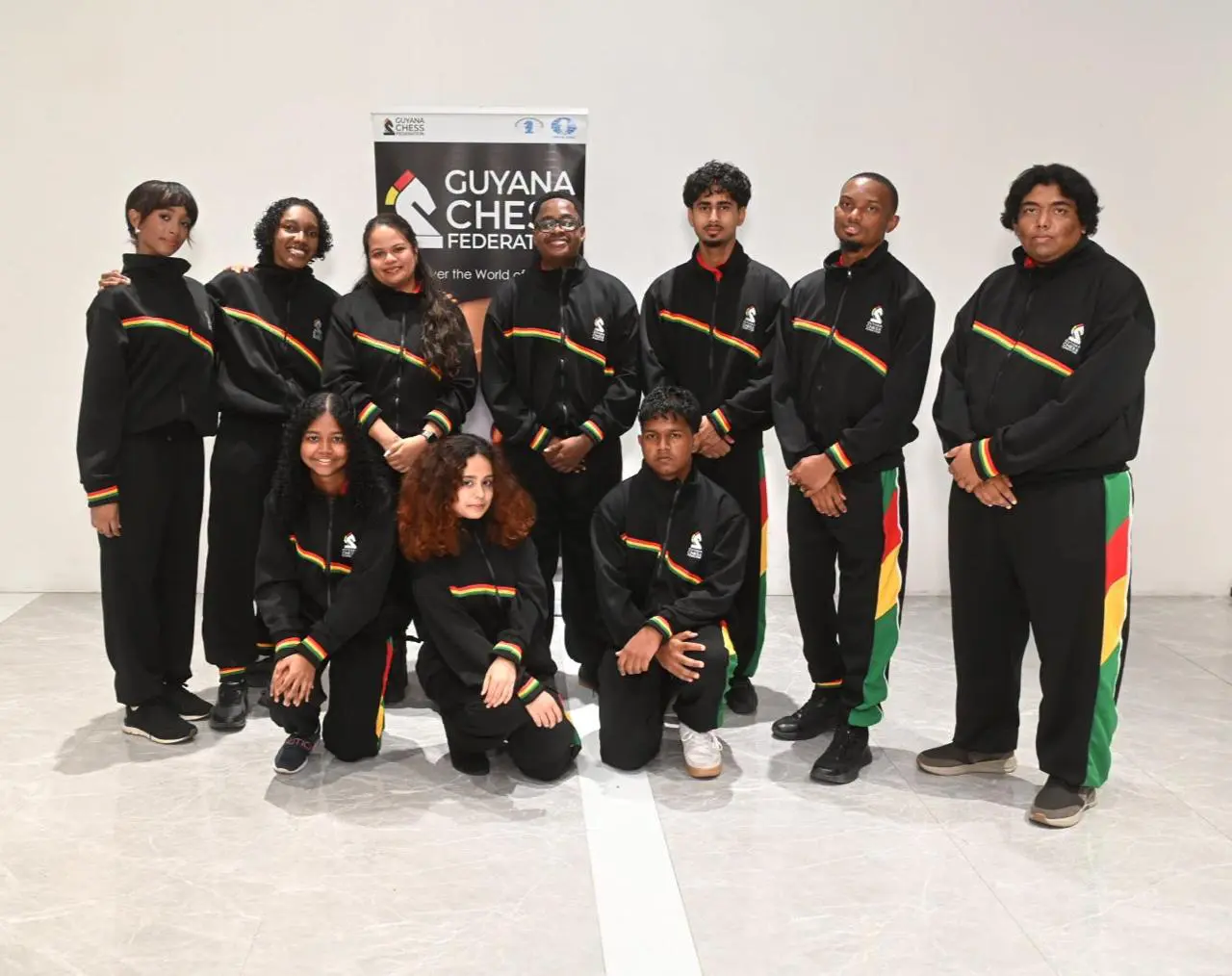
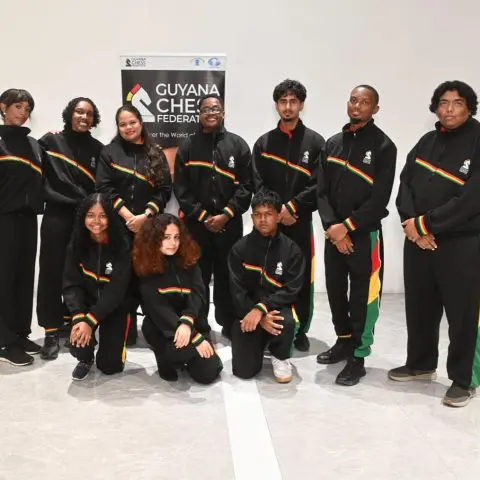
Guyana ended the 2026 Chess Olympiad with contrasting final-round results, finishing 132nd in the Open division and 152nd in the women’s competition after play concluded on Sunday in Samarkand, Uzbekistan.
The Open team beat Jersey 2½–1½ to close with 10 match points among 206 teams. The women lost 3–1 to The Bahamas and finished with eight match points in a field of 189.
Guyana’s Open placing was five positions above their starting rank of 137th. The women, who began ranked 146th, finished six places lower.
Sasha Shariff provided the women’s lone victory in their closing match. Playing with black on board three, the Woman Candidate Master defeated fellow Woman Candidate Master Daijah Johnson.
The Bahamas won the other three boards. Woman FIDE Master Polina Karelina defeated Woman Candidate Master Aditi Joshi on board one, Woman Candidate Master Nelissa Thomas overcame Kataleya Sam on board two, and Woman Candidate Master Chika Pride beat Woman Candidate Master Jessica Callender on board four.
That result prevented Guyana from following up their 3–1 victory over San Marino in the previous round. The women, under captain Georg Mohr, finished with four wins, seven defeats and 18½ board points.
Their earlier victories came against Saint Vincent and the Grenadines, Somalia and Mali. The 4–0 win over Mali was their biggest success, with Joshi, Sam, Ciel Clement and Callender all contributing victories.
In the Open division, Kyle Couchman and FIDE Master Anthony Drayton supplied the two wins that helped Guyana recover from a narrow penultimate-round defeat to Jamaica.
Couchman defeated Paul Carpenter with black on board two, while Drayton won with white against Gary Clark on board three. Candidate Master Sachin Pitamber drew with Candidate Master Jem Gurner on the top board, giving Guyana the additional half-point needed for victory.
Jersey’s only win came on board four, where James Auckland defeated Keron Sandiford.
The result brought captain Aleksa Strikovic’s team to five victories and six defeats, with 19½ board points. Guyana’s other wins were against New Caledonia, Macau, China, Togo and Mali.
Couchman, Drayton and Pitamber each finished with 4½ individual points. Joshi and Clement led the women’s scoring with four apiece.
At the top of the final standings, Uzbekistan claimed the Open title, with India second and Germany third. China won the women’s competition ahead of Kazakhstan and India.
The 11-round Olympiad ran from September 16 to 27.
Source: Kiskadee Watch
https://kiskadeewatch.com/guyana/mv-barima-accused-ask-court-to-halt-murder-proceedings/

Attorneys for two of the three men charged with the murder of 73 passengers in the MV Barima disaster are asking the Charity Magistrate’s Court to stay the criminal proceedings, arguing that the prosecution amounts to an abuse of the court’s process.
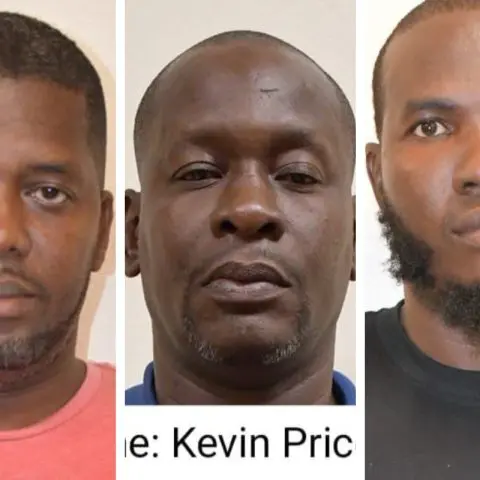
Written submissions filed on Monday, by attorneys Dexter Todd, Dexter Smartt, Eden Corbin, Keona Higgins and Acacia Carroll on behalf of Captain Kevin Price and Goods Superintendent Delon Granderson argue that the State proceeded with the murder charges before the marine-casualty investigation contemplated under the Shipping Act had been properly undertaken.
The defence contends that the Shipping Act provides a specialised statutory framework for investigating the loss of a vessel and loss of life arising from a maritime accident, including powers to examine the vessel, its machinery and equipment and to determine issues such as serious negligence and compliance with statutory duties.
According to the submissions, the MV Barima disaster falls squarely within that framework.
The attorneys argue that issues central to the murder case including what caused the vessel to capsize, its condition and seaworthiness, its loading, navigation, safety requirements and the acts or omissions that contributed to the deaths are precisely the matters contemplated by the specialised marine-casualty investigation process.
They contend that requiring the accused to defend murder allegations while those underlying circumstances remain under investigation creates a risk of premature attribution of responsibility, conflicting findings and prejudice to the defence.
The defence is also pointing to the Commission of Inquiry established into the disaster, arguing that the criminal proceedings and the inquiry create overlapping investigative processes dealing with substantially the same factual circumstances.
“The defendants ought not to be required to navigate two parallel statutory processes concerning the same factual subject matter,” the attorneys submitted.
The defence, however, expressly acknowledges that the Director of Public Prosecutions has constitutional authority to institute criminal proceedings and says it is not asking the court to determine the accused men’s guilt or innocence.
Instead, the attorneys are asking Magistrate Ravindra Mohabir to stay the proceedings until the appropriate investigative mechanism is clarified and the outstanding maritime investigative issues are resolved.
The application follows a preliminary challenge raised by counsel at the September 14 court hearing. Magistrate Mohabir had directed the defence to file its written submissions by September 28, with the prosecution to respond by October 12.
The magistrate has indicated that he intends to rule on the application on October 19.
The defence submissions also state that the prosecution confirmed on September 7 that full disclosure had been made to the defence. The attorneys were given seven days to indicate whether statements would be filed, with any such statements due within 45 days, by October 19.
The paper committal proceedings are scheduled to commence on November 16.
Price, Chief Mate Rondell Dwayne Roberts and Granderson were each charged with 73 counts of murder following the July 18 sinking of the MV Barima while the vessel was travelling from Georgetown to Port Kaituma.
The charges were instituted following advice from the Office of the Director of Public Prosecutions after its review of the police investigation.
The defence’s application does not seek to terminate the prosecution, but rather to pause the proceedings pending what it describes as the “proper resolution” of the investigative issues arising from the disaster.
Source: Kiskadee Watch
https://kiskadeewatch.com/sports/cycling/persaud-earns-two-podium-finishes-at-carlton-wheelers-road-race/
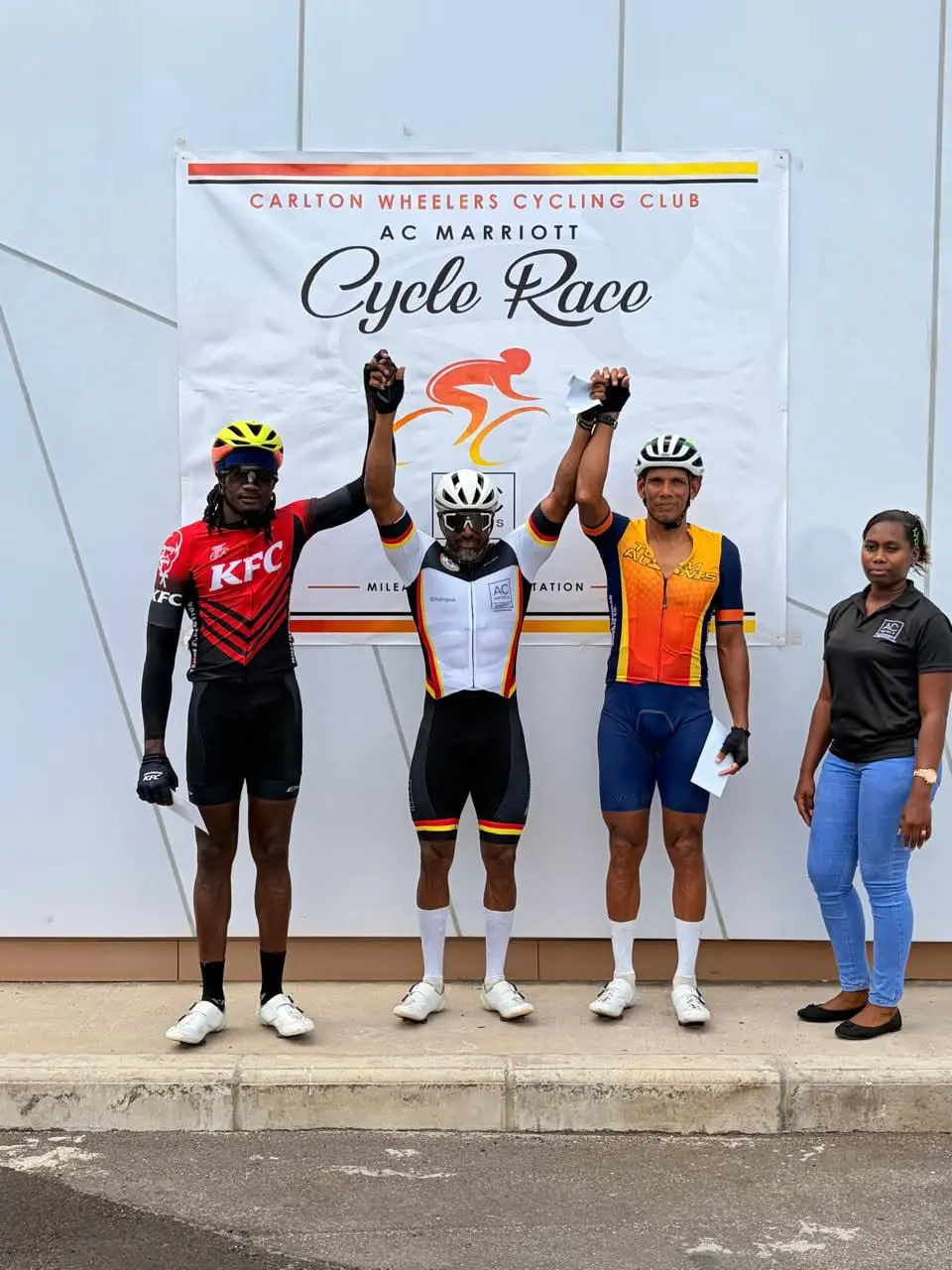
Robin Persaud delivered one of the standout performances at Sunday’s AC Marriott/Carlton Wheelers Cycling Club Road Race, winning the Masters 35-and-over category and placing second in the Open event.
Persaud, a member of the host club, secured the Masters victory ahead of Segun Hubbard and Paul Choo-Wee-Nam. In the Open race, he finished behind champion Christopher Griffith, while Andre Greene claimed third place.
Ajani Cutting secured fourth in the Open category, followed by Aaron Newton in fifth and Alexander Leung in sixth.
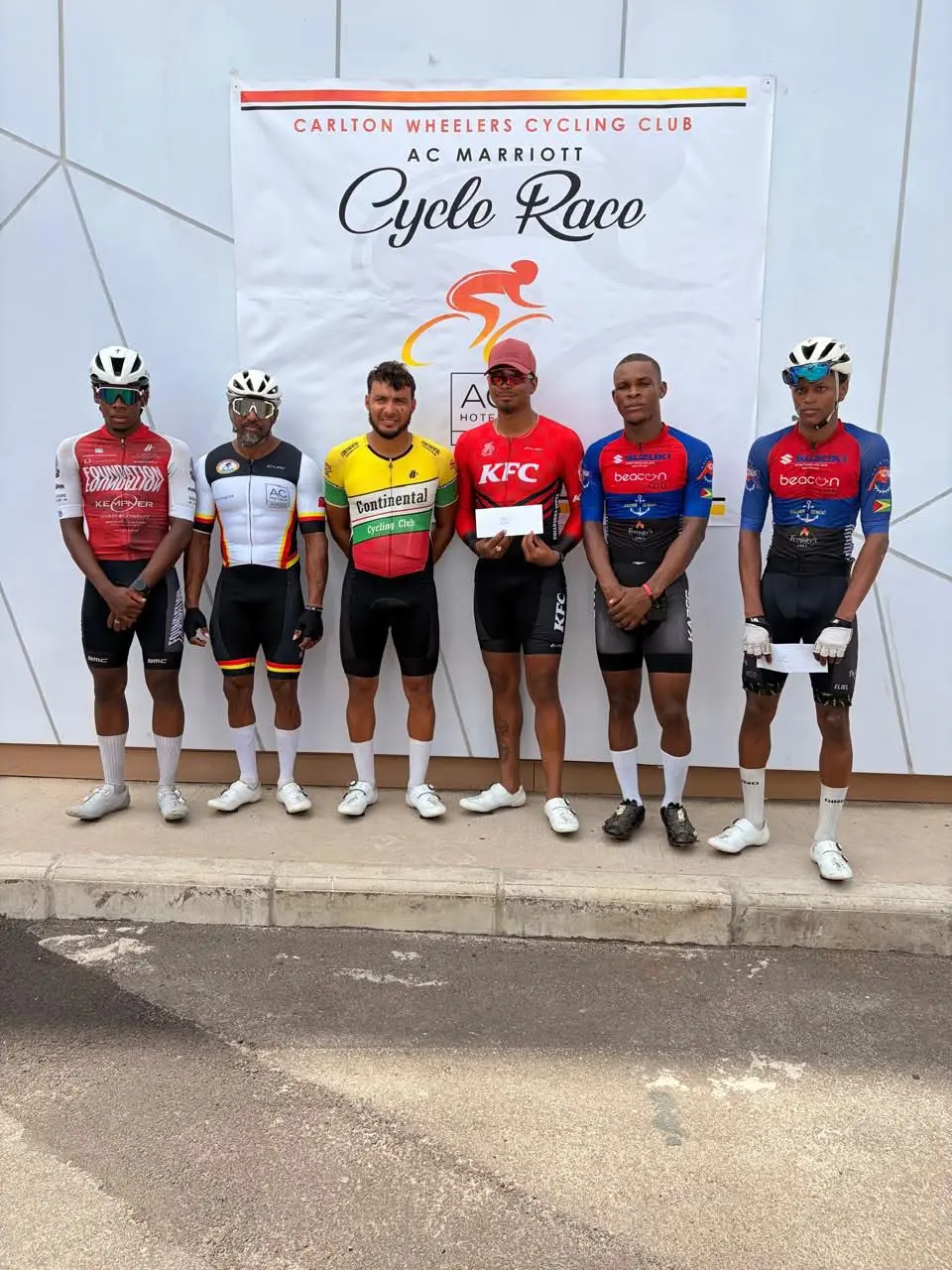
Leung later claimed the Junior title, finishing ahead of Kevin Stephen.
Tandeia Noel emerged as the winner of the Female category, with Alicia Benjamin taking second place.
In the Masters 50-and-over division, Mark Spencer secured the top position ahead of Talim Shaw and Ray Harlequin.
Kevin Edwards led the Category Four finishers, while Leon Koulen and Collis Williams placed second and third, respectively.
Source: Kiskadee Watch
https://kiskadeewatch.com/guyana/guyanese-novelist-jan-lowe-shinebourne-dies/

Guyanese novelist Jan Lowe Shinebourne, whose childhood at the Rose Hall sugar estate in Berbice shaped much of her writing, has died. Her passing was announced in a tribute shared by Rod Westmaas on behalf of the diaspora discussion group Guyana SPEAKS.
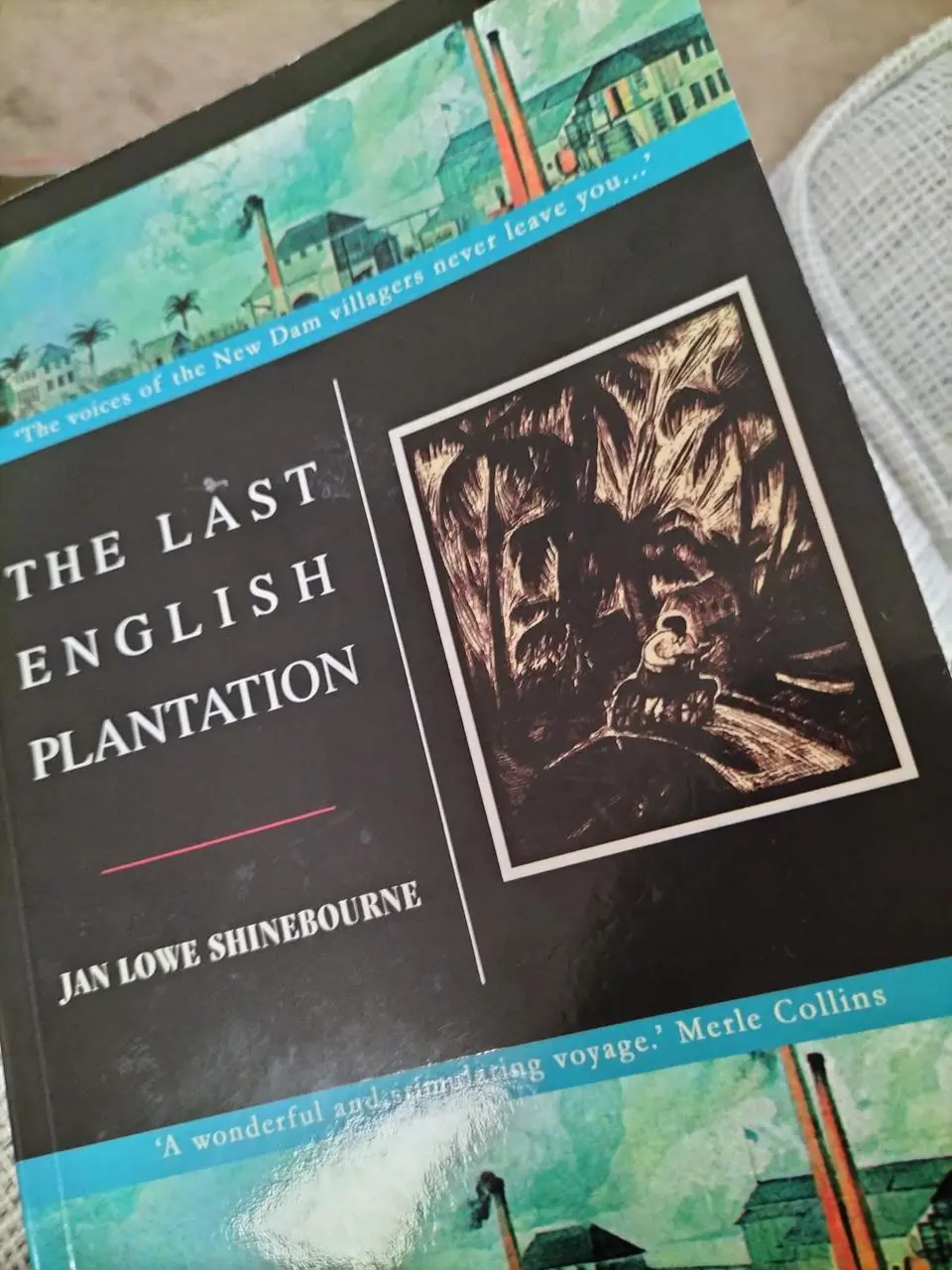
Shinebourne wrote four novels—Timepiece, The Last English Plantation, Chinese Women and The Last Ship—and the short-story collection The Godmother and Other Stories. Her first novel, Timepiece, won the Guyana Prize for Literature’s Best First Book of Fiction award in 1987. According to her publisher, Peepal Tree Press, she was the first woman to win a Guyana Prize.
Guyana SPEAKS called her “one of Guyana’s most fearless, incisive, and influential literary figures”, saying her novels and essays examined the country’s history, identities and divisions with honesty and intellectual rigour. Members of the group had discussed her work in book circles and public forums over the years, it said.
For Shinebourne, the starting point of that work was Rose Hall. In an essay titled “I’m a product of the sugar estate”, shared in 2019 and included with the tribute, she argued that the plantation was part of a history shared by many Guyanese whose ancestors had been brought to the country through slavery or indentureship. She wrote that her colonial education had taught her little about those histories, leaving people to understand one another through racial stereotypes.
She recalled growing up beside two estate logies and spending much of her childhood with the Mahabir family, whose home became a second home to her. She remembered playing with other children in the rain, swimming in the canal and eating meals prepared by Ivy Mahabir, to whom she was especially close. Those memories, she explained, gave her a lasting attachment to Rose Hall even as she came to examine the estate’s inequalities more critically in her fiction.
“So yes, I feel connected to Rose Hall by an umbilical cord that attaches my inner life to it,” she wrote, “and the inner life is where a writer’s imagination lives.”
After leaving Berbice to live and work in Georgetown in 1966, Shinebourne said she struggled to feel settled. Writing Timepiece helped her explore that dislocation. Its central character leaves her rural community for a job in the capital at a time of political upheaval and growing migration, but remains deeply attached to the village she has left behind. Shinebourne called the fictional village Pheasant to signify Rose Hall.
She said critics initially tended to read the novel as a story about a young woman’s coming of age, while overlooking what she regarded as central to it: the pull of a rural home amid Guyana’s social and political changes. The Last English Plantation returned to Rose Hall in the 1950s, while Chinese Women, she wrote, confronted the harsher conditions of estate life and the injustices of colonialism.
Her fourth novel, The Last Ship, drew on another part of her family history. Shinebourne wrote that she had sometimes been challenged about why she had not written more about Guyana’s Chinese community. The novel follows a Chinese family’s arrival in British Guiana and was informed in part by the story of her grandmother, Sarah Wong, who came to live and run a shop at Rose Hall. Stabroek News described the book, which was shortlisted for the Guyana Prize in 2015, as a work about three generations of a Chinese family in Guyana
In the essay, Shinebourne also recounted travelling to Guyana with novelist Wilson Harris in 1987, when both received Guyana Prizes. Their conversations about the hold that Guyana retained on Harris’s imagination helped her reflect on her own relationship with Rose Hall. She wrote that a writer could feel the need for distance from a place while remaining profoundly connected to it.
Born in Berbice, Shinebourne attended Berbice High School and the University of Guyana. She worked as a reporter in Georgetown, contributed to the literary magazine Expression and began writing in the mid-1960s, according to Peepal Tree Press.
Guyana SPEAKS extended condolences to her family, friends and colleagues, saying that her work would continue to inform discussions about Guyana and its past.
Shinebourne lived for many years in Ealing, West London, before moving to West Sussex in 2006, according to her publisher.
Source: Kiskadee Watch
https://kiskadeewatch.com/guyana/narine-denies-prior-surveillance-of-azruddin-mohamed/

Special Branch head Senior Superintendent Prem Narine yesterday denied that Azruddin Mohamed was under surveillance before his October 31, 2025 arrest, despite acknowledging that he had deployed police ranks to locate the Opposition Leader shortly before the detention.
Narine was under cross-examination before Chief Magistrate Judy Latchman in the extradition proceedings involving Azruddin Mohamed and his father, Nazar Mohamed, when defence attorney Siand Dhurjon questioned him about how police located Azruddin Mohamed on the day he was arrested.
Narine said that after obtaining the arrest warrants, he checked several locations where the Mohameds were normally expected to be but did not find Azruddin Mohamed there.
He subsequently said he caused his ranks to search for Azruddin Mohamed.
According to Narine, one of the ranks later telephoned him and reported that Azruddin Mohamed was on Smyth Street.
Narine testified that he then left the Georgetown Magistrate’s Court and travelled to the location to execute the arrest.
Asked whether the rank’s call was what caused him to leave court and arrest Azruddin Mohamed, Narine responded, “Yes.”
He said he reached Azruddin Mohamed in less than a minute after receiving the information, explaining that traffic was backed up in both directions and that he used the siren of a police patrol vehicle to get through.
But the defence questioned how Narine could have reached Azruddin Mohamed so quickly if the police had only learned his location after he was already at Smyth Street.
Dhurjon suggested that a Special Branch rank had been stationed outside Azruddin’s Houston residence and followed him when he left for court.
Narine said he could not recall having anyone stationed outside Azruddin Mohamed’s home. He also denied that the vehicle allegedly stationed there had followed Azruddin Mohamed to Smyth Street.
The defence has been seeking to establish that Azruddin Mohamed was being monitored by Special Branch before the United States’ extradition request was received.
Narine denied that he had caused surveillance of Azruddin Mohamed and his family and associates before the arrest.
He also denied a suggestion that surveillance of the Mohameds had been intensified from the night before October 31.
During Monday’s cross-examination, Narine was asked about several alleged surveillance operations involving Azruddin Mohamed during political outreach activities in 2025.
He repeatedly said he could not recall those operations.
The defence also suggested that Special Branch had used several vehicles to monitor Azruddin and his family, including vehicles allegedly registered to the Ministry of Home Affairs.
Narine rejected those suggestions, saying he was not aware of the vehicles and did not cause them to be used to monitor Azruddin Mohamed.
The defence further suggested that Narine had been acting as part of a wider government effort against the Mohameds and that state agencies had been involved in the extradition process before October 31.
Those suggestions were denied or, in several instances, disallowed by the court.
The defence also attempted to question Narine about the manner in which Azruddin Mohamed was arrested, including the use of multiple firearms, more than 15 masked police officers, rifles being chambered in the direction of those arrested, tight handcuffs and Azruddin Mohamed being placed in the tray of a pickup and driven through Georgetown.
The Magistrate ruled that those questions were irrelevant to the extradition proceedings and did not allow them.
Narine was also asked whether Azruddin Mohamed had told him, when contacted, that he was on his way to court.
He said he could not recall.
His cross-examination was deferred and will resume Tuesday at 9 a.m.
Source: Kiskadee Watch
https://kiskadeewatch.com/guyana/ggmc-shuts-down-unlicensed-gold-trading-shop-at-tamakay-landing/
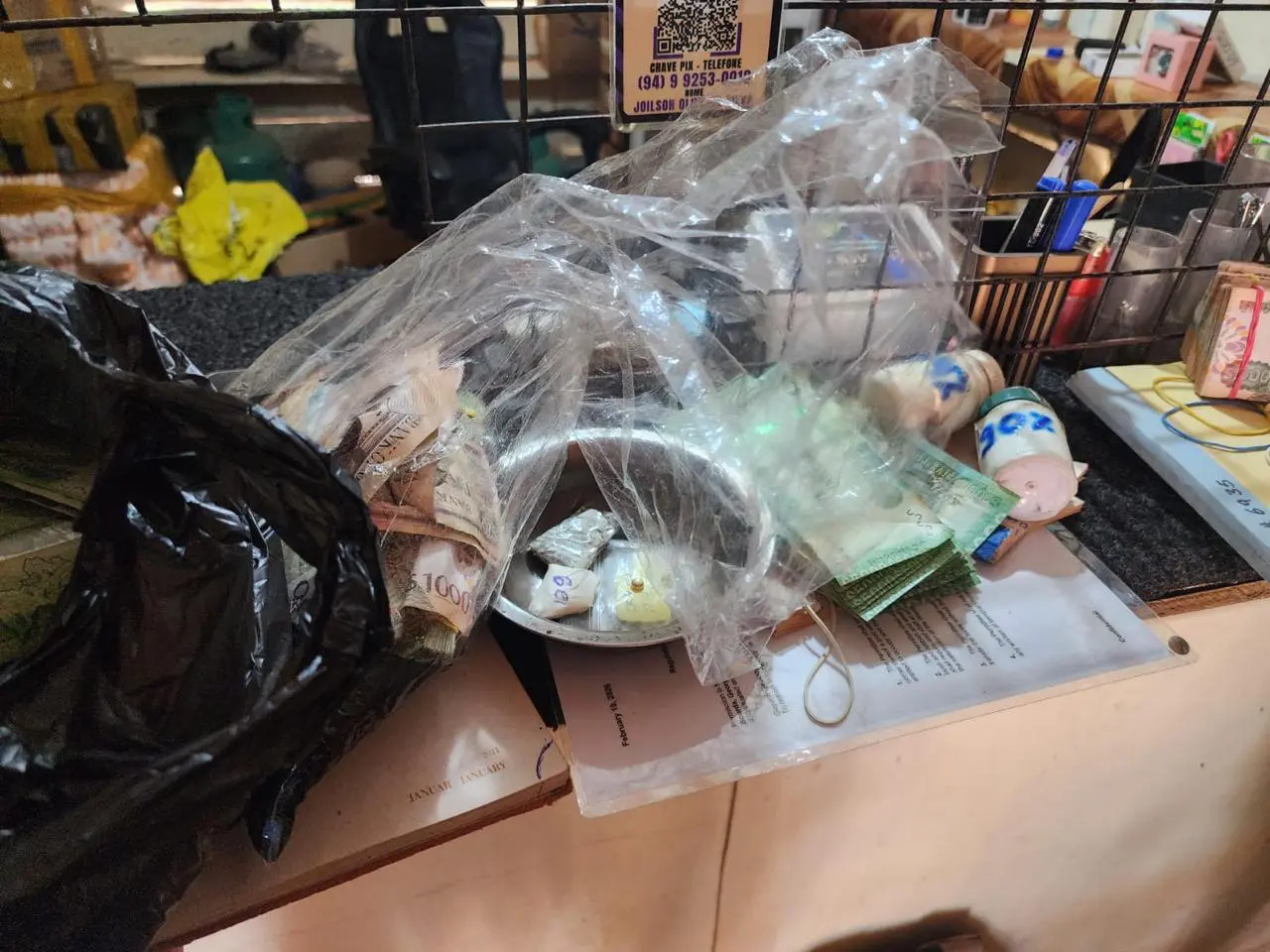
The Guyana Geology and Mines Commission (GGMC) yesterday shut down a shop at Tamakay Landing in the Mazaruni Mining District after finding that it was trading gold without the required licences and approvals.
The GGMC Enforcement Team, during an inspection on September 28, seized a quantity of gold, equipment and cash from the operation, according to the Ministry of Natural Resources.
Two people were also detained by police as investigations into the operation continue.
The ministry said the enforcement action forms part of its ongoing crackdown on illegal mining and related activities across Guyana’s mining districts.
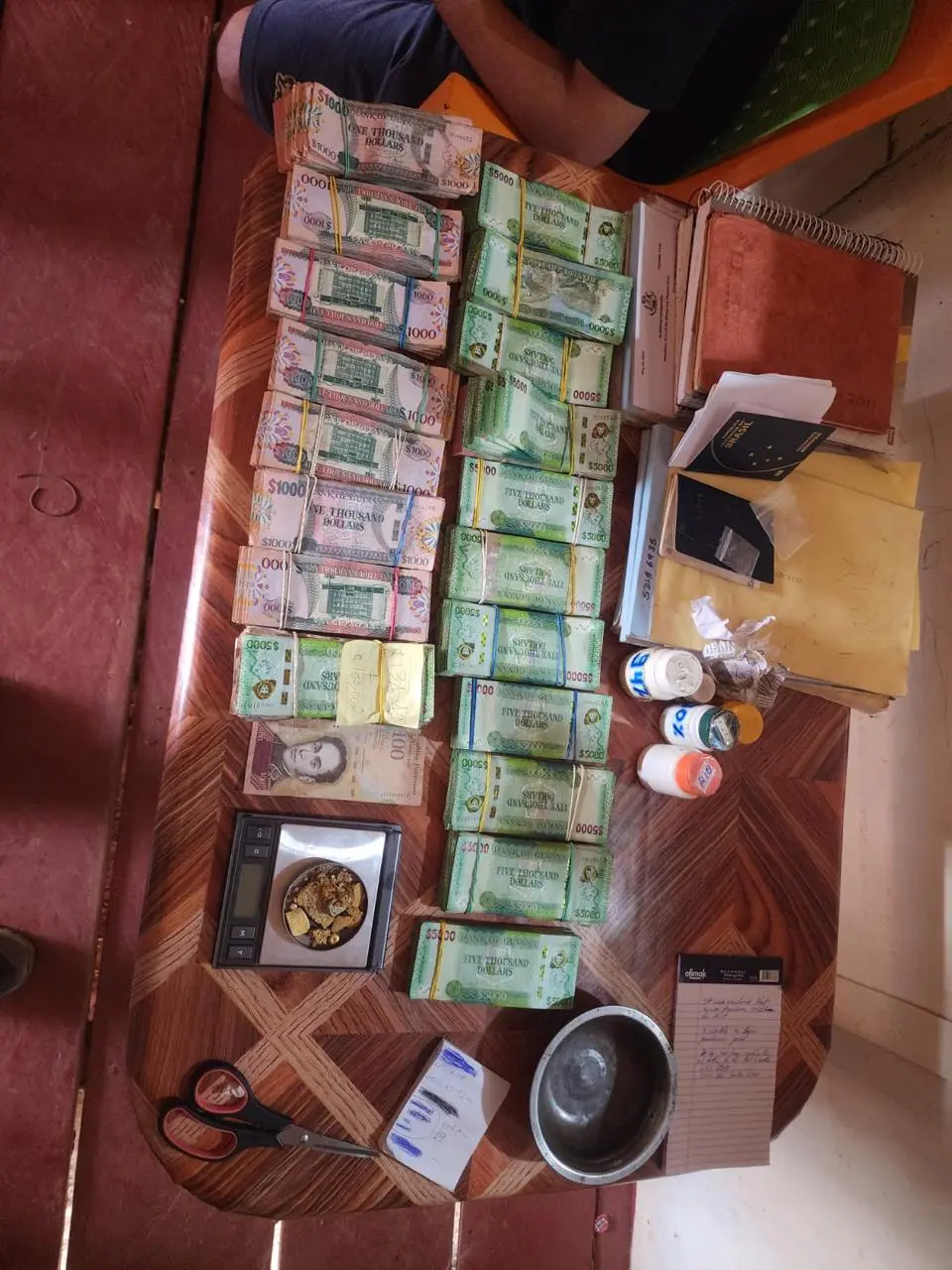
It has urged miners and other stakeholders in the sector to ensure that their operations comply with the country’s laws and licensing requirements.
The GGMC’s enforcement teams are continuing monitoring and enforcement operations in mining areas.
Source: Kiskadee Watch
https://kiskadeewatch.com/guyana/man-21-dies-after-car-turns-over-at-no-6-public-road/

A 21-year-old man died following an accident on Saturday night at No. 6 Public Road, West Coast Berbice.
Dead is Afridi Rahaman of Lot 39 Bath Plantation, West Coast Berbice. He was the driver of motor car #PAB 8323.
According to reports, at about 8:20 pm, the car, which is owned by Jamaladeen Rahaman, was proceeding west along the southern side of the public road when the driver reportedly lost control while negotiating a right turn.
The vehicle veered to the northern side of the road, toppled several times, and came to rest in a trench.
Rahaman and his front-seat passenger, 19-year-old Parveena Brijemal of Lot 39 Bath Settlement, West Coast Berbice, had to be removed from the wreckage by public-spirited citizens.
Both were rushed to the Fort Wellington Regional Hospital, where Rahaman was pronounced dead on arrival. Brijemal was admitted for observation and her condition is listed as stable.
Police investigations are ongoing.
Source: Kiskadee Watch






Discussion