https://kiskadeewatch.com/guyana/exxonmobils-operations-miners-welfare-on-parliament-committee-agenda/







https://kiskadeewatch.com/guyana/exxonmobils-operations-miners-welfare-on-parliament-committee-agenda/

When it resumes work this month, the Parliamentary Sectoral Committee on Natural Resources is set to focus on the working conditions and security of small-scale mining workers, oversight of Guyana’s oil and gas sector and ExxonMobil’s operations and earnings among other areas.
We Invest in Nationhood (WIN) Member of Parliament (MP) and committee member Dr Ryan Richards believes that the committee should prioritise issues affecting workers in Guyana’s mining sector and that particular attention should be paid to the working conditions of Guyanese employed by mining companies.
He called attention to the reports received by the committee that have raised concerns about the provision of personal protective equipment (PPE), food and other working conditions.
Speaking with Kiskadee Watch last week, Richards is proposing that the committee engage the companies to address those concerns and ensure that workers’ welfare is adequately considered. He also identified the oil sector as another area requiring attention, noting that Minister of Natural Resources Vickram Bharrat had previously raised the possibility of ExxonMobil appearing before the committee to provide information on its operations.
According to Richards, while an attempt had reportedly been made in the past to have ExxonMobil appear before the committee, it was not successful. He said he would like to see the company’s executives engage with the committee in the interest of transparency and accountability and provide a formal report on developments in the oil sector.
Richards also highlighted concerns about the pay of workers operating in Guyana’s interior regions, saying consideration should be given to the additional risks associated with such employment. He said workers in the interior can face hazards including dangerous wildlife and other risks that are not encountered to the same extent by employees working in Georgetown and other urban areas.
Further, Richards said the committee could consider discussions with the Ministry of Labour on whether workers in high-risk interior locations should receive additional compensation, such as a risk allowance or adjustments to their pay scales.
Minister Bharrat told Kiskadee Watch that the committee has agreed to dedicate its next three meetings to the country’s three main natural resource sectors – oil and gas, mining and forestry.
He shared that he will make presentations on each sector and take questions from members of the committee to ensure that they are updated on developments, noting that this approach was agreed upon by all committee members at their last meeting.
Also speaking with Kiskadee Watch, another committee member, WIN MP Odessa Primus shared some similar sentiments, noting that the committee is expected to focus on a range of issues affecting Guyana’s mining sector, particularly the challenges facing small-scale miners.
She noted that the committee members are currently engaging small-scale miners to identify and compile the challenges they face before determining how those issues should be addressed. Among the issues raised are the process for registering and obtaining documentation required to continue their operations.
Primus observed that miners are now required to provide extensive documentation, in a process that is similar to requirements imposed on larger companies. She said the concern is not necessarily the documentation itself, but the process involved in obtaining it.
According to Primus, if new requirements are introduced, there should be adequate engagement with miners to determine whether they are prepared to meet those requirements, along with centralised locations where they can obtain assistance. She said many small-scale miners have been unable to operate for extended periods while trying to determine what documents are required, where to obtain them and how to complete the process.
Primus also identified land-related disputes as another concern raised by miners, noting that miners have complained about their lands being seized while other individuals are subsequently allowed to operate on those lands, with some miners allegedly facing charges when they attempt to address the situation.
She also highlighted security as a major concern among small-scale miners, citing reports of robberies and people being killed in interior locations. Miners, she said, have expressed concerns about their safety while operating in remote areas and believe more attention needs to be paid to security in those locations.
Meanwhile, APNU Member of Parliament Sharma Solomon, who was elected Vice Chairman of the committee, told Kiskadee Watch that several priority areas have been identified to be considered when the committee resumes its work.
Share of earnings, new contracts
Solomon said the committee has agreed to hold three meetings before the end of 2026, beginning in October and continuing through November and December, noting that members are reviewing the previous committee’s work programme while identifying additional areas of interest for consideration.
Among the issues he identified are Guyana’s oil and gas sector, the Natural Resource Fund, ExxonMobil’s operations and the country’s earnings from petroleum production. He said recent developments in the oil sector, including ExxonMobil’s declarations, have raised questions about Guyana’s position in relation to its share of earnings, new contracts and other aspects of the country’s petroleum arrangements.
Solomon said the committee intends to examine where Guyana stands now that ExxonMobil has entered the profit area of its operations.
The Gas-to-Energy project is also expected to receive attention, particularly regarding discussions surrounding developments in Region Six and the Berbice area. Solomon said the committee intends to visit the Wales area to examine the project and also plans to visit an ExxonMobil rig as part of its oversight work.
The committee will also examine contracts across the natural resources sector, including agreements relating to oil, gas, energy and mining. He said attention will also be paid to several large-scale mining operations expected to come on stream in Regions Seven and Eight.
According to Solomon, the committee has not yet seen the contracts for some of those operations and intends to request access to them and potentially visit the locations.
Further, he said uranium mining is another issue the committee is expected to examine, especially as questions were raised about the country’s preparedness and position regarding uranium mining.
He also raised concerns about the Guyana Extractive Industries Transparency Initiative (GYEITI), particularly Guyana’s participation on the international board and concerns over the independence of the tripartite process involving government, the private sector and civil society.
Solomon said he is concerned about government dominance in representation within GYEITI and argued that the initiative’s independence is important because it provides oversight of the natural resources sector.
The treatment of small-scale miners and the issue of Amerindian lands are also expected to feature prominently in the committee’s work. Solomon said the committee has received complaints from small miners about access to mining concessions and alleged incursions into Amerindian lands. He also pointed to concerns about disparities between small miners and larger mining companies in access to concessions.
Solomon also raised concerns about oil exploration, particularly plans relating to the Takutu Basin, noting that the committee had previously asked about whether the government intended to pursue oil exploration in the Takutu Basin in the Rupununi, and the response at the time was that there were no such plans.
According to Solomon, a subsequent announcement indicated that the government was considering the area and would consult communities as part of efforts to explore its resource potential. He said the opposition is not opposed to the development of natural resources, including oil and gas, but wants greater attention paid to the manner in which such development is pursued.
The other committee members include Minister of Public Utilities and Aviation Deodat Indar, Minister in the Ministry of Local Government and Regional Development Pauline Sukhai, Minister within the Ministry of Housing Vanessa Benn, and MP Thandi McAllister (Alternate). WIN MP Dr. Andre Lewis was also on the committee but he has since resigned.
Source: Kiskadee Watch
https://kiskadeewatch.com/opinion/letters/mid-year-report-2026-is-masterpiece-of-deception-guyana-experiencing-classic-resource-curse/
Dear Editor,
I fully endorse the sentiments expressed by one of the WIN Party leaders, Mr. Charles Sugrim in yesterday’s edition of Kiskadee Watch captioned “Reckless borrowing by Guyana gov’t will see our oil wealth pledged away to banks, other creditors”. I wish to add further evidence found in the Ministry of Finance’s Mid-Year Report 2026.
The fiscal deterioration is worse than projected
Mr. Sugrim correctly notes that the Overall Deficit After Grants deteriorated from negative $35 billion in HY 2025 to negative $105 billion in HY 2026. The picture is worse when examining the Non-Financial Public Sector deficit of $108.9 billion, which includes public enterprises. GPL and GuySuCo are leaders in the plunder of people’s money—spent on Turkish businessmen and big contractors now cutting canes. The small man gets very little.
The Natural Resource Fund is being depleted
The NRF received US$2,063.8 million in HY 2026 but withdrew US$1,020 million. The Report warns: “As additional projects are approved, and their development costs enter the cost bank, the profit-oil ratio will move again.” Yes—downwards! With four more oil projects awaiting approval, the next four years will bring economic hardship. That is President Irfaan Ali’s legacy – hardship on the poor people of Guyana.
Debt sustainability: The elephant in the room
Borrowing tripled between HY 2025 and HY 2026:
The Report’s claim of a 28.6% debt-to-GDP ratio is deeply misleading. Oil accounts for 81.2% of GDP and is temporary. Strip out oil, and the debt-to-non-oil-GDP ratio exceeds 150%; worse than under President Jagdeo. This is not prudence; it is masking insolvency behind oil-inflated figures.
Interest payments rose by GUY$5 billion in HY 2026 to GUY$13.8 billion. At this pace, annual interest will exceed GUY$20 billion by year-end. This is our money flowing to lenders, not the citizens.
Agriculture: The silent crisis
Agriculture contracted by 0.5% in HY 2026; “other crops” fell 6.4%. This sector employs the largest share of Guyana’s population and could feed the oil boats but is failing at this essential task.
The Report blames rainfall. But after eight years of oil wealth, the government has failed to invest sensibly in drainage. It was Cheddi Jagan who dreamed of an effective MMA Scheme and Black Bush Polder Scheme. Under Zulfikar Mustapha and Irfaan Ali, that dream has been destroyed. Only $24.7 billion of $82 billion budgeted for drainage was spent; a 30% execution rate. Minister Mustapha’s performance is an “F” grade.
El Niño conditions are expected in H2 2026. The government’s response? “Shade houses” and “climate-smart planning.” This is a confession of unpreparedness. Another “F” Grade.
Labour shortages: A self-inflicted wound
The Report admits: “the binding constraint faced is no longer the creation of jobs, but the supply and composition of the skills available to fill them.” The government launched an $829.7 billion Public Sector Investment Programme with deficient human capacity, the programme’s main ingredient. This shows the Irfaan Ali Government has lost its competence to think; a far cry from the Jagdeo era when the State Planning Secretariat under Mr. Clyde Roopchand got more done with less through old-fashioned monitoring and evaluation. Who is monitoring this $829 billion? Ghost?
The result: contractors robbing the Government and getting away with this highway robbery because they have friends in Office of the President, project delays, cost overruns, and slow impact on people’s lives. Manpower studies are slated for H2 2026. This is more of the PPP boys and girls trying to close the gates after the programme has begun. This is backwards planning, a direct reflection of President Ali, a man with a Degree in Planning.
BIT trained only 706 persons; GOAL graduated 3,800. These numbers are microscopic. The government is building hospitals, roads, and bridges without training enough doctors, nurses, engineers, and technicians. The Cabinet and Permanent Secretaries are running around like headless chickens, reacting to crises rather than implementing a 10-year plan that is shared with the people.
Conclusion
The Mid-Year Report 2026 is a masterpiece of deception; impressive numbers masking a Ponzi Scheme. When it crumbles, only the poor will suffer since some of these senior government officials are now multi-billionaires and have generational wealth after six years in Office. Guyana is experiencing a classic resource curse: rapid GDP growth driven by oil, rising debt, declining agriculture, institutional bottlenecks, and opaque fiscal transfers.
The NRF is being depleted. The debt-to-non-oil-GDP ratio is alarming – 150%. Labour shortages are delaying projects. Agriculture is contracting. Inflation is hurting the poor.
Like everything in life, boom must be followed by bust, and our bust is here already. What is even worse, the PPP/C has no plan for it.
Finally, it is good to see the WIN Party as the main opposition writing on these policy defects. This must be continued to ensure the people know that there are people out there in the opposition who can understand the crisis and can create a plan to take the nation out of this economic crisis affecting the poor people of Guyana. This letter from Mr. Charles Sugrim warms my heart since it means that the opposition does have people who are thinking on the big issues.
Yours faithfully,
Surujdai Juglall
Source: Kiskadee Watch
https://kiskadeewatch.com/guyana/companies-take-610-6m-fertilizer-contract-dispute-to-ppc/
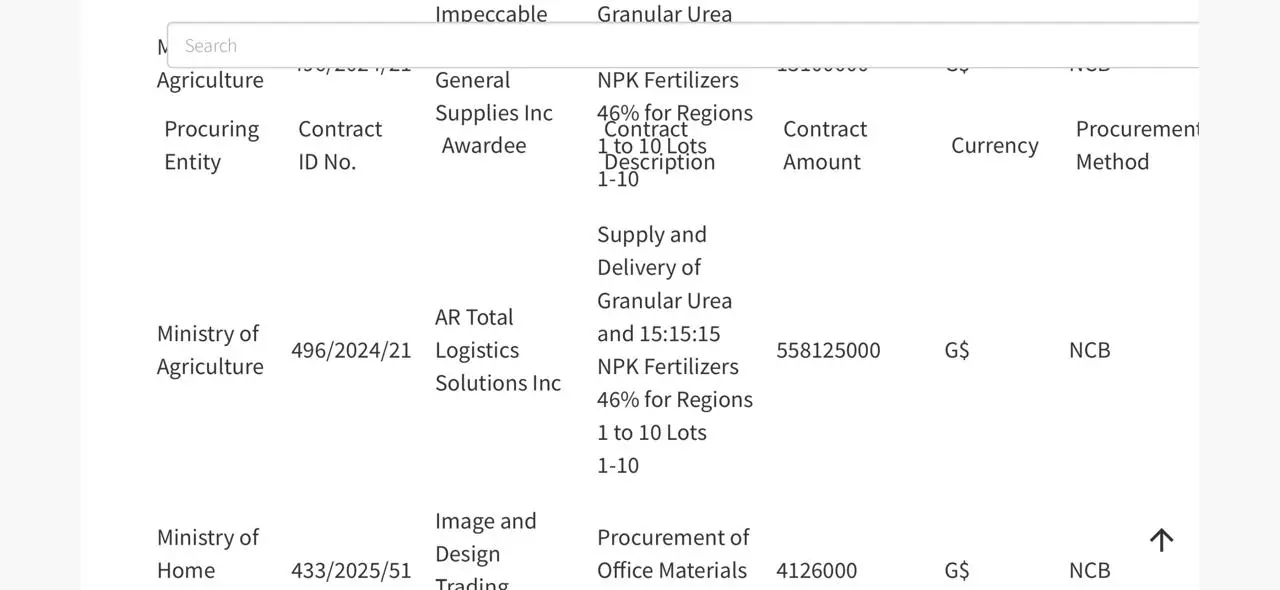
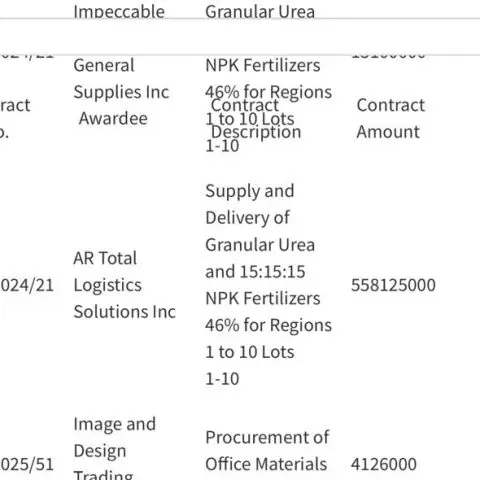
Company Secretary of Impeccable Construction & General Supplies Inc. Ayodele Roache says the company and AR Total Logistics Solutions Inc. have lodged a formal complaint with the Public Procurement Commission (PPC) over more than $610.6 million in fertilizer contracts they say were awarded to them but were never handed over for execution.
Roache, who is also a director of AR Total Logistics Solutions Inc., told Kiskadee Watch last week that the contracts were properly tendered and the awards were subsequently advertised by the National Procurement and Tender Administration Board (NPTAB).
In fact, she said she happened to be at NPTAB when she saw a procurement officer from NAREI collecting the contracts. However, the contracts were not subsequently handed over to the companies for execution and they were instead told that the Ministry of Agriculture was awaiting additional funding before the contracts could proceed.
“The ministry never gave the contracts over to our company. Instead, they said that they’re holding it until they have enough money,” Roache recalled, adding that the companies were told that they had to wait until the National Assembly approved additional funds.
The companies have been seeking clarification from the ministry since September last year but continued to receive the same explanation about funding. They subsequently sent formal letters to the Permanent Secretary, the Minister of Agriculture, NAREI’s procurement department and the NAREI Chief Executive Officer seeking information on when the contracts would be issued and when the works could be executed.
But Roache said that none of the letters was acknowledged.The companies, she continued, eventually met with the NAREI CEO, who indicated that, to his knowledge, the works associated with the contracts had already been carried out by another company. “We indicated to him that, no, we did not execute the contract,” Roache said.
The companies had maintained regular contact with the ministry and NAREI and had visited the relevant offices at least once or twice a month, making it unlikely that the authorities were unable to reach them, she noted. So they are now seeking to determine what happened to the contracts and whether the works were subsequently carried out by another contractor.
The companies have also sought clarification from NPTAB on whether the publication of their awards was the result of an error, but NPTAB made it clear that there had been no mistake in publishing the companies as successful bidders and that no correction had been issued.
Roache said the companies are now awaiting a response from the PPC and, depending on the outcome, could pursue legal action. “Upon advice, we were told to send a complaint to the Public Procurement Commission,” she said. “So we’re waiting to hear back from the Public Procurement Commission. And if it’s not satisfactory to us, then we’re going to move to the courts.”
The Public Procurement Commission has not been reconstituted since its life expired. A secretariat is in place.
The issue involves more than $610.6 million in fertilizer contracts awarded by the Ministry of Agriculture after a procurement exercise for the supply and delivery of granular urea and 15:15:15 NPK fertilizer to Regions One to 10.
Documents identify the Guyana Rice Development Board (GRDB), under the Ministry of Agriculture, as the procuring entity. The tender called for the supply of 13,750 metric tonnes of granular urea and 2,000 metric tonnes of 15:15:15 NPK fertilizer across 10 lots.
The tender closed on January 21, 2025, while the awards were subsequently published on the NPTAB website on November 21, 2025.
AR Total Logistics Solutions Inc. was identified as the successful bidder for Lot 6, valued at $558.125 million, while Impeccable Construction & General Supplies Inc. was identified as the successful bidder for four other lots with a combined value of $52.5 million.
AR Total Logistics Solutions says it submitted bids for all 10 lots and was subsequently identified as the successful bidder for Lot 6.
After learning of the published award, the company says it contacted the Ministry of Agriculture to determine when the contract would be available for signing and when it could begin fulfilling its obligations.
In anticipation of the contract being executed, AR Total Logistics says it engaged suppliers and transportation providers and made other logistical arrangements based on the quantities and delivery requirements associated with Lot 6.
The company says the continued absence of a signed contract has resulted in financial uncertainty and loss of a business opportunity, including profits it had anticipated from the $558.125 million award.
Roache said the companies cannot simply allow the matter to remain unresolved because preparing bids and making the necessary logistical arrangements involve significant expenditure. “It’s not a case where we can just sit back and allow this to go without any proper explanation or any compensation,” she said.
Kiskadee Watch contacted Agriculture Minister Zulfikar Mustapha, along with the NPTAB office for comment but was unsuccessful.
Source: Kiskadee Watch
https://kiskadeewatch.com/guyana/guyanese-can-now-enter-saudi-arabia-with-e-visa/
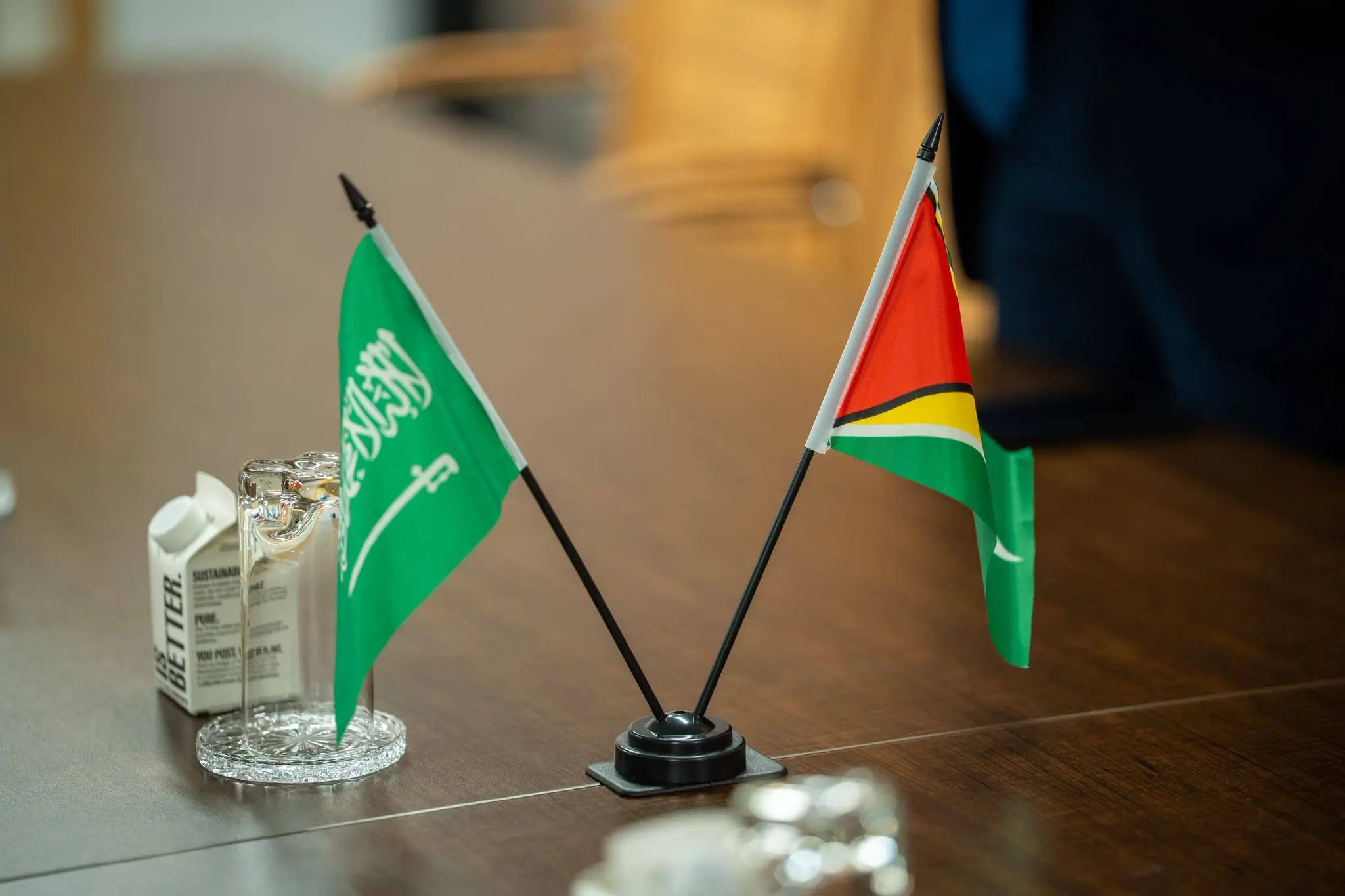
Guyanese passport holders can now travel to Saudi Arabia using an electronic visa or visa on arrival without first having to hold a valid United States, United Kingdom or Schengen visa, President Irfaan Ali announced last night.
The Ministry of Foreign Affairs and International Cooperation said the change makes Guyana the only country in South America whose passport holders can access Saudi Arabia under the simplified arrangement without having one of those third-country visas.
The ministry said the development follows intensified bilateral discussions between Guyana and the Kingdom of Saudi Arabia, with both countries seeking to expand cooperation in trade, economic partnerships, investment and tourism while strengthening people-to-people ties.
Previously, Guyanese passport holders seeking a Saudi e-visa or visa on arrival were required to have a valid US, UK or Schengen visa in their passport.
The ministry said Guyanese travellers will now be able to apply for the Saudi e-visa or obtain a visa on arrival using their Guyanese passport and paying the required visa fee. The new arrangement is expected to make travel easier for Guyanese visiting Saudi Arabia for Umrah, tourism, family visits or other purposes, while also eliminating the need to use an agent or visit a Saudi embassy to obtain the visa.
The government described the development as significant for Guyana-Saudi relations, saying it is expected to further promote and consolidate bilateral ties.
The announcement comes shortly after Ali met Saudi Arabia’s Minister of State for Foreign Affairs Adel al-Jubeir in New York on the sidelines of the 81st United Nations General Assembly.
The September 22 meeting at Guyana’s Permanent Mission to the United Nations focused on advancing investment cooperation and strengthening relations between the two countries.
Further, the government and the Saudi Fund for Development signed two loan agreements in 2023 totalling US$150 million. One US$100 million facility was intended to finance roads, water, electricity and other infrastructure associated with approximately 2,500 housing units across three regions, while another US$50 million was allocated for a new four-lane bridge at Wismar, Linden.
The first phase of the Saudi-financed housing programme was subsequently launched at Leonora East on the West Coast Demerara, while the Wismar bridge was reported to be nearing completion in December 2025.
Saudi Arabia has also shown interest in expanding cooperation with Guyana beyond development financing. Al-Jubeir visited Guyana earlier this year for an energy conference, where he expressed Saudi Arabia’s interest in investment, knowledge-sharing and responsible energy development.
The Guyanese government has also committed land for the establishment of a Saudi embassy in Guyana. The government said the new visa arrangement is both a practical travel benefit for Guyanese and a further indication of the strengthening relationship between Georgetown and Riyadh.
The government also said it remains focused on upgrading features of Guyana’s Machine Readable Passports to ensure they remain consistent with international standards and requirements.
Source: Kiskadee Watch
https://kiskadeewatch.com/guyana/continued-us-shortage-reflected-in-western-union-limits-uggi-survey/
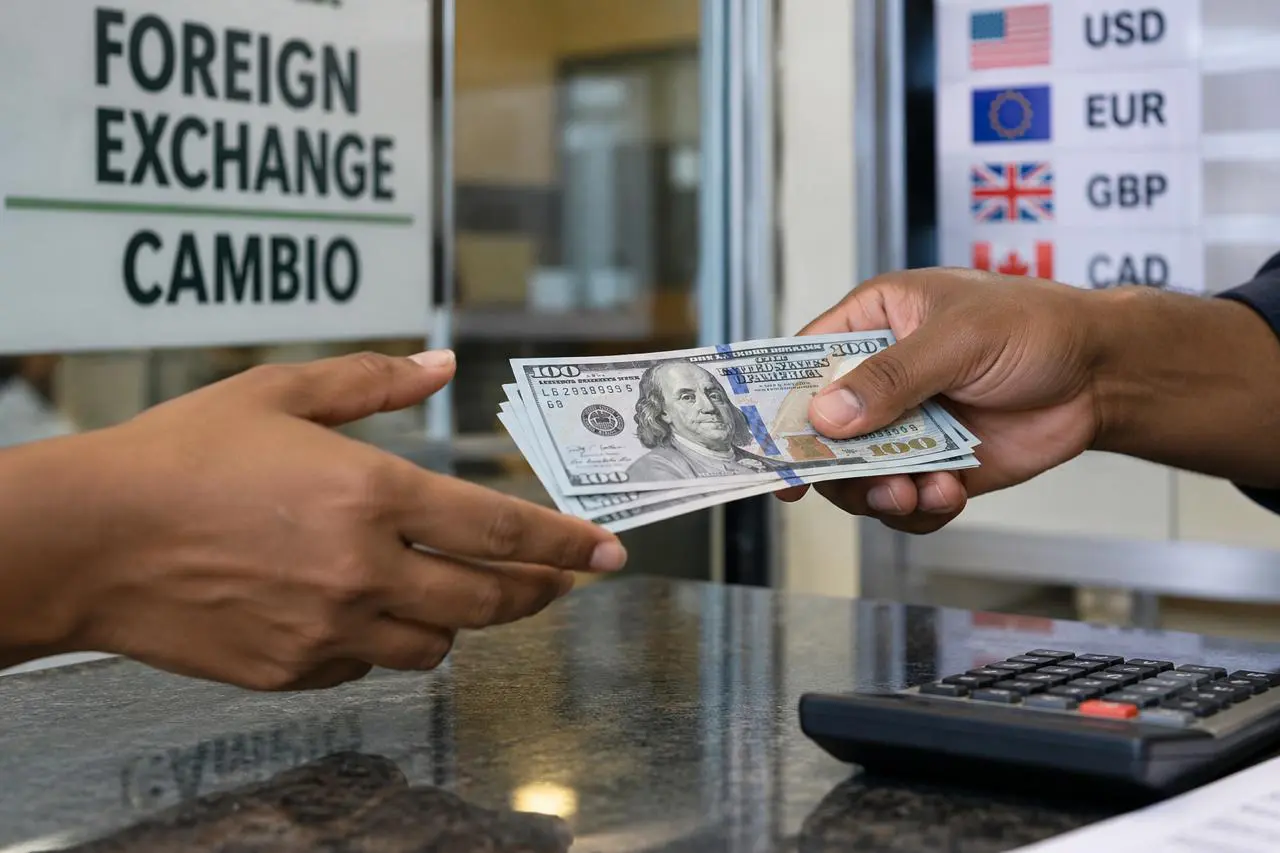
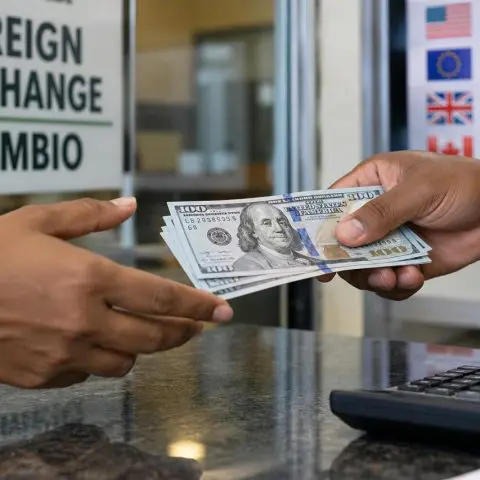
The shortage of US currency continues to affect access to foreign exchange in Guyana, with a Western Union representative sharing on Friday that several locations are now reaching their daily limits by late morning and that some limits have recently been reduced in the face of the continuing foreign exchange situation.
The representative told Kiskadee Watch that the limits vary by location and that most locations reach their daily limit by around 11 a.m. or noon.
She noted that some locations had higher limits in the past, but those limits have since been reduced due to the current foreign exchange situation. Some Western Union locations, she noted, reach their limits even earlier because of their popularity or location.
Two leading cambios in Georgetown on Friday quoted different rates for US currency, but both reflected the continued tightness in the foreign exchange market. One cambio was buying US dollars at $230 and selling them at $233, while another was buying at $233 and selling at $240.
The rates remain substantially above Guyana’s formal exchange rate of about $209 to US$1, particularly on the selling side. The latest findings are consistent with data from the University of Guyana Green Institute (UGGI), which found that the median rate in the parallel foreign exchange market increased to $238.30 per US$1 in September, from $236.75 in August.
UGGI’s September survey also recorded a mean rate of $238.27, compared with $237.22 in August, while the most frequently reported rate increased from $236.50 to $239.20.
The survey recorded September rates ranging from $235.40 to$241.10. The 25th percentile was $236.70 and the 75th percentile $239.80, producing an interquartile range of $3.10.
Meanwhile, UGGI cautioned that its survey is not intended to produce statistically representative estimates of foreign exchange rates, but rather provides indicative evidence of pricing conditions and market sentiment across transaction channels.
The latest developments follow months of reports by businesses and individuals of difficulties obtaining US dollars through the formal banking system.
In August, some customers reported waiting for weeks for foreign exchange transactions to be processed through commercial banks. One customer said a wire transfer initiated in July was held for about a month because US currency was unavailable, forcing the person to cancel the transaction and make alternative arrangements for travel. That customer also reported sourcing US dollars at $238 per US$1 at the time.
A businessman from a local cambio had told Kiskadee Watch that he was not experiencing a shortage of US dollars at the cambio, although he said the situation could be different at commercial banks. He had reported rates around $237 per US$1, with the price varying according to the denomination of the US notes.
President Irfaan Ali had disclosed in September that outstanding demand for foreign currency in the banking system was just over US$200 million, noting that commercial banks had reported that unmet requests were being carried forward from month to month because they could not satisfy all the demand.
He also said commercial banks purchased US$2.279 billion in foreign currency during the first half of 2026, compared with US$1.798 billion during the corresponding period in 2025, while Bank of Guyana foreign exchange injections increased from US$642 million to US$836 million over the same period.
Source: Kiskadee Watch
https://kiskadeewatch.com/features/exam-pressure-weaker-family-connections-affecting-childrens-mental-wellness-psychologist-wil-campbell/
An excessive focus on examinations, reduced parental engagement and growing dependence on electronic devices are depriving children of experiences important to their mental and emotional development, clinical and educational psychologist Wil Campbell says.
In a recent interview with Kiskadee Watch, Campbell called for parents and educators to give greater attention to children’s overall development, including time for play, social interaction, physical activity and spiritual life.
He also expressed concern about vaping among primary and secondary schoolchildren and urged greater parental engagement and education about its dangers.
Campbell said that over the past 20 to 30 years, changes in family and community relationships, coupled with consumerism, individualism and social media use, had contributed to the mental health challenges he was seeing among young people.
“We have moved away from the days when the village raised the child, and it’s now where everybody fights for oneself. We’ve become very consumeristic, parents spend less time with their children, and there is less guidance and nurturing. Some of us believe that if we give our children the things that we did not get, they will be better off than us.”
Providing material possessions, he argued, could not replace the guidance, nurturing and personal connections children needed.
Campbell heads the International Centre of Excellence for Education, Innovation and Leadership and Development within the University of Guyana’s Faculty of Education and Humanities. A former schoolteacher, he also lectures at the university and has practised clinical and educational psychology locally for more than ten years.
He explained that educational psychology examines the mental, emotional and social processes that support or inhibit learning, and helps teachers understand how children and adolescents learn.
Campbell said the pressure surrounding the National Grade Six Assessment (NGSA) and Caribbean Secondary Education Certificate (CSEC) examinations often left children with little opportunity to develop outside the classroom.
“Lots of time, the pressure to perform is unnecessary. Children are going to succeed whether they attend Queen’s College or not. Children are going to succeed whether they get five subjects or 25. With the increasing pressure to perform, they lose a lot of play time and social interaction is lost.”
He described schedules in which children left home early for classes, spent the day at school, attended afternoon lessons and then returned home to homework and further study. Such routines, he said, left little room for unstructured interaction with other children.
“Play is an extremely vital component of the developmental process particularly for younger children.”
Through games such as “sal-out”, “catcher” and “war break”, children learnt to take turns, negotiate, settle disagreements and find solutions to problems, he said.
While organised sporting activities were valuable, Campbell said they did not always provide the same opportunities for children to work things out independently.
“In the structured setting there is always a more knowledgeable adult or a coach telling you what to do and the learning opportunity among young people finding solutions to their own problems is lost.”
He urged parents not to withdraw children from clubs, swimming classes or church activities simply to make more time for extra lessons.
Campbell supported additional tuition where a child was struggling and needed individual attention, but questioned the practice of enrolling children in lessons for every subject.
“I believe in targeted intervention but not the broad brush of going to lessons for all the subjects because everyone else is doing it.”
The emphasis on examination results, he said, extended from government and schools to parents, with success frequently measured by national rankings, the number of subjects passed and places on honours lists.
He argued that this left little space for those advocating a broader approach to children’s development.
Campbell also encouraged teachers to limit homework to what was needed to reinforce learning, allowing children time for other activities.
“Minimise homework so that children have more time for other developmental activities.”
Excessive
He said excessive reliance on phones and other devices was another concern, particularly where virtual relationships displaced personal contact.
“So, the cell phone has become an appendage and children’s social connections are virtual which do not have the psychological benefits of real connections. We depend on these connections. When they are depressed, which one works? A hug emoji or a real hug?”
Children needed to build relationships with people who could provide support when they were distressed, he said.
Campbell also linked some bullying behaviour to feelings of rejection and a lack of effective guidance.
“They say bullies are cowards. I want to say that bullies are people who feel rejected. They feel that the only way to be seen, heard and appreciated is to throw their weight around.”
On vaping, Campbell said the practice was occurring in both primary and secondary schools and required greater attention from parents and the education and health authorities.
“Children who have better information make better decisions.”
He called for legislative intervention to prevent sales to children. However, Guyana’s Tobacco Control Act 2017 already prohibits the sale of electronic delivery systems and their components to anyone under 18. The Act covers both nicotine and non-nicotine electronic delivery systems.
Campbell said teachers’ mental wellness also required attention, given the emotional demands of their work and the expectations placed on them.
During professional development sessions, he sought to help teachers protect their own mental health while applying psychological principles in the classroom.
“I also try to help them understand how they can apply psychological principles to maximise the teaching and learning experience without psychologically injuring the children. That includes the way we discipline them.”
Teachers were expected to establish relationships with many children each day, often without sufficient resources or recognition, he said.
Campbell reported that research he and a colleague conducted two years ago found that more than 40 per cent of the local teachers studied were experiencing burnout.
“Teachers are underrated, underestimated and they don’t get the respect they deserve. Very often they don’t get the resources they require or deserve and yet they are expected to produce at a higher level.”
He said the strain arose partly from the sustained emotional connections teaching required, alongside increasing demands on the profession.
Turning to adults, Campbell said weaker community relationships had reduced the informal support people once received from neighbours and others around them.
He recalled communities in which families could turn to neighbours for food or assistance with supervising children. Increasing individualism, he said, had weakened those networks.
The pressure to acquire larger houses, more vehicles and other possessions was also affecting relationships, he argued.
“Acquiring more has become our focus, and we don’t have time for social connections. When we do meet socially, it is more of a competition than connection. I think these have led to the increase in mental illness among the adult population.”
Campbell called for more comprehensive mental health services, alongside greater investment in prevention.
People experiencing mental illness needed support beyond medication, while families needed practical guidance on maintaining mental wellness and adapting their parenting approaches, he said.
“We need to support parents and help them to understand what it means to be a good parent.”
He said parents should be helped to respond to present-day challenges without feeling that they had to abandon the principles with which they were raised.
Campbell also called for a broader approach to suicide prevention, saying that awareness activities should extend beyond designated observances.
“It is much more than stopping people from taking their own lives. It is more about helping people improve their mental wellbeing. It is more than locking up the chemicals and more than medicating those who are depressed.”
He identified poverty, alcohol misuse and inadequate support as issues requiring attention, and urged a more proactive response.
“There are so many factors and I am not sure we are covering all the bases in Guyana. We are more reactive instead of proactive. We need to have a more holistic approach to suicide prevention in Guyana.”
Campbell nevertheless said he believed progress had been made through greater awareness, increased access to practitioners and the decentralisation of mental health services.
He also believed reduced access to agricultural chemicals had contributed to improvements.
When he returned to Guyana about 12 or 13 years ago, he recalled, there were only two psychiatrists and four or five psychologists. While those numbers had increased, he said more practitioners were still needed.
More workplaces were providing counselling opportunities, and organisations were using mental health observances to educate their members, he noted.
“We still have a way to go in destigmatising mental illness, but we have improved.”
Source: Kiskadee Watch
https://kiskadeewatch.com/guyana/dr-ifill-calls-for-labour-situation-to-be-managed-as-migrant-workforce-grows/

Senior academic and historian Dr. Mellissa Ifill has raised concerns about the displacement of Guyanese workers from customer-service jobs, particularly women, as Spanish-speaking migrant workers become increasingly visible in stores, supermarkets, malls and other businesses in Georgetown.
In a statement on her Facebook page yesterday, Ifill said she has personally decided to boycott businesses that have “fired or let go” of most or all of their Guyanese customer-service workers and replaced them with Spanish-speaking employees.
She noted that her position is primarily driven by concerns about the fate of the Guyanese workers who have lost their jobs, many of whom she said are women who depended on the income to support their families. “I often wonder how these women are feeding their families,” she said, questioning whether the displaced workers have found alternative employment and whether they received severance payments to which they may have been entitled.
She also raised concerns about the possible exploitation of migrant workers by businesses seeking to reduce labour costs.
According to her, some businesses may be replacing Guyanese employees because they can pay migrant workers less and avoid statutory obligations, including pension and medical contributions and overtime payments.
Ifill further contended that some businesses deliberately employ Spanish-speaking workers without proper work permits or documentation, allowing them to exploit their vulnerable circumstances by paying them very low wages, denying benefits, requiring excessively long working hours or dismissing them without cause.
She also questioned the quality of customer service being provided by some businesses, noting that employers have failed to adequately train their customer-service workers and that language barriers have further compounded the problem.
She said businesses that do not retain workers who can effectively communicate with local customers to provide assistance, answer questions or take orders do not demonstrate sufficient regard for their customers.
However, she said that her concerns should not be interpreted as opposition to immigration or migrant workers. “I’m not anti-immigrant,” she said, describing herself as “very, very sympathetic to economic migrants.”
She pointed to Guyana’s own history of migration, noting that many Guyanese have relatives or friends who migrated overseas in search of economic opportunities and to support their families. She also rejected the idea that her position was based on opposition to migration across national borders, arguing that migration and movement between communities have long been part of the region’s history.
Instead, she said the country is facing a situation that needs to be managed before tensions increase. “We have a dilemma folks and lest empathy and goodwill evaporate, the situation must be managed and not left to drift and deteriorate.”
Source: Kiskadee Watch
https://kiskadeewatch.com/opinion/letters/independent-commissioner-for-public-investment-and-contract-accountability-needed/
Dear Editor,
Guyana’s growing economy demands full transparency, clear responsibility and effective accountability for public resources. Citizens should be able to establish who received and receives public money, why an award was made, what its conditions require and whether the promised benefits were delivered. Present contracts must not be exempted.
I propose an independent Commissioner for Public Investment and Contract Accountability to monitor and audit public investments, grants and government contracts from planning and award through completion. Its purpose would be to protect taxpayers’ money, promote fair competition, prevent corruption and secure timely, quality delivery.
Guyana already has a Chief Investment Officer and separate procurement and oversight institutions. The proposed Commissioner must have a distinct scrutiny and accountability mandate, coordinated with these bodies. Attracting investors, awarding contracts and independently investigating those awards must remain separate responsibilities.
A single, searchable public register should cover ministries, agencies, state-owned enterprises and publicly funded projects. It should identify funding sources, recipients, contractors, beneficial owners, selection criteria, award reasons, contract and grant values, payments, deadlines and variations. Investments involving public land, concessions or guarantees should disclose the public commitments and expected benefits.
Information must be free, understandable, downloadable and available through regional and local offices for citizens without reliable internet. Any disclosure exceptions should be narrowly justified in law, with protection for personal information and a means of challenging unjustified secrecy.
The Commissioner should examine procurement records, inspect projects and verify that payments correspond to independently certified work, goods or services. Substantial price increases, extensions and scope changes should require documented justification and independent review. Every project should have a named official, awardee and/or beneficiary responsible for delivery, and completion.
The office should investigate undisclosed interests, suspicious bidding, patterns of repeated awards warranting examination and evidence of favouritism or political interference. Contractors’ capacity and existing commitments should be checked before awards. Whistleblowers should be protected, and affected parties given a fair opportunity to respond.
Where credible evidence indicates serious irregularity or an imminent loss of public funds, expressly granted legal powers could permit temporary suspension of affected payments or procurement processes. Such action must carry written reasons, strict time limits and prompt independent review.
Suspected offences should be referred to the competent investigative authorities. Recovery of overpayments, contractual penalties and contractor debarment should proceed through lawful, fair procedures.
The Commissioner should have a transparent, merit-based appointment process, a fixed term, protected funding and mandatory financial disclosures. The office should employ procurement specialists, forensic accountants, engineers, lawyers and data analysts.
Its enabling legislation must clearly coordinate its functions with existing procurement and audit institutions, preserve their independence, and provide parliamentary scrutiny and judicial review. Automated monitoring should cover every contract, while intensive audits concentrate on high-value and high-risk awards.
Quarterly reports should explain delayed projects, cost increases, corrective action, outstanding recommendations and verified recoveries in plain language. Public accountability requires demonstrable follow-through when shortcomings are identified.
Every public dollar must be traceable. Every contract must be accountable. Every project must deliver value to the people of Guyana.
Yours faithfully,
Hon. Albert Baldeo, Community Leader and Judicial Delegate, LITTLE GUYANA, New York;
President, Guyana Beyond Borders; Fmr. Magistrate, Senior State Counsel, Police Legal Advisor, GUYANA
Source: Kiskadee Watch
https://kiskadeewatch.com/guyana/canu-finds-contraband-items-at-house-rented-out-by-ernesto-choo-a-fat/
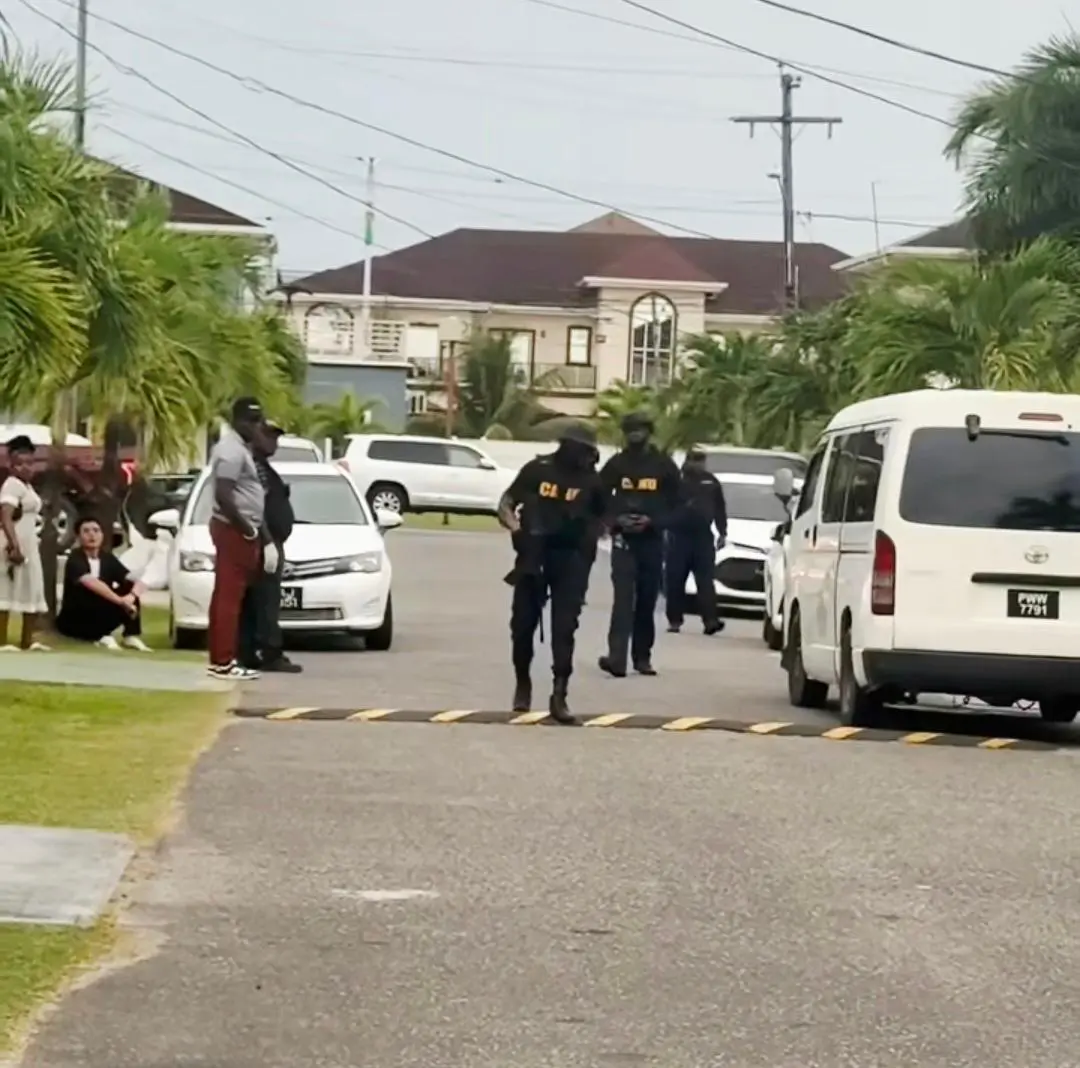
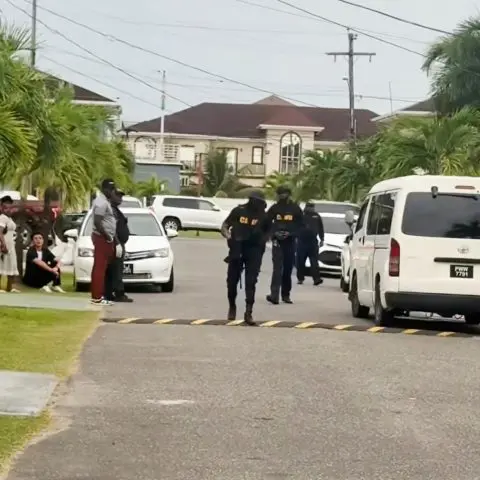
The Customs Anti-Narcotic Unit (CANU) yesterday conducted an operation at a house belonging to businessman Ernesto Choo-a-Fat at Lot 62 Windsor Estates,East Bank Demerara and said it found a quantity of uncustomed alcohol.
“No narcotics were found during the search,” CANU said in a press statement, adding that during the operation, three persons were arrested and escorted to CANU headquarters for further questioning.
“One of the persons arrested stated that he rents the property from Mr. Ernesto Choo.
Mr. Ernesto Choo was not the subject in this operation, and not the subject of any investigations of the Unit,” CANU explained.
Opposition Leader Azruddin Mohamed publicised the operation on his Facebook page showing CANU officers stationed outside the property.
Mohamed described Choo-a-Fat as a “close friend of President Irfaan Ali”. He made a number of other statements that attracted attention from Choo-a-Fat’s lawyer.
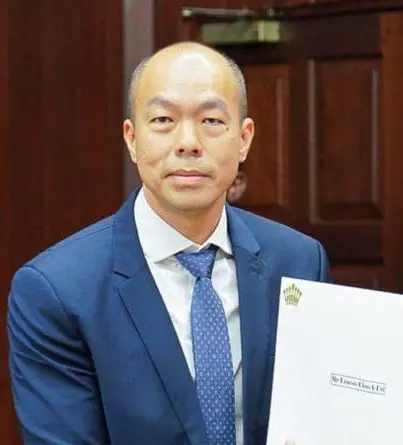
Attorney-at-Law Sase Gunraj in a statement said that he had been retained by Choo-a-Fat to challenge the allegations made by Mohamed.
“A post was made on the Facebook page of Azruddin Mohamed, Leader of the Opposition, earlier today the 3rd October, 2026, regarding a raid conducted by the Customs Anti-Narcotics Unit (CANU) on a property owned by our client; the said property has been rented for in excess of 3 (three) years and therefore our client is not in possession or control thereof,” Gunraj said.
“As a consequence, the statements contained in the said post are false, malicious and defamatory, and have the effect of seriously impugning our client’s reputation,” he continued, adding, “We are instructed to immediately institute legal proceedings against the said Azruddin Mohamed in relation to the defamatory comments made therein.”
In response, Mohamed told Kiskadee Watch that he did not understand why legal proceedings were being instituted as CANU verified the details in his post, such as that the property belongs to Choo-a-Fat and that contraband items were found.
“Everyone knows Ernesto is close to the president. So what are you suing me for? I think the post made is an honest and sincere post without any lies,” Mohamed said, adding, “They are hoping to silence me but that won’t happen. They can’t muzzle me. It is my duty as Opposition Leader…I received information from whistleblowers and residents from Windsor Estate…indeed I confirmed and made checks, and the property indeed belongs to Ernesto Choo.”
Source: Kiskadee Watch
https://kiskadeewatch.com/opinion/from-the-conversation-tree/differences-explode-among-ppp-seniors-over-the-ukraine-war/
As reported in Kiskadee Watch on Friday last, differences within the PPP have exploded in a public spat over the Ukraine war. The PPP has historically developed positions on most important internal and external issues. The discussions would create platforms for disparate views to be aired internally in confidential debates. Once a position is arrived at, members are expected to support the Party’s position, whatever their personal views. Where the party has not taken a position, but the Government has, the party would be expected to follow the Government’s position. In the case of Ukraine, the party has not taken a position, and the Government has merely called for peace. In view of the Government’s pro-US stance in foreign affairs, Hydar Ally probably felt that it was safe to publicly castigate the Russians by calling for a withdrawal of troops and the end of the war by Russia. In the absence of an official position on Ukraine by the party and the walkout by the Government on Netanyahu at the UN, Donald Ramotar may have concluded that it was safe to hint at pro-Russian and pro-Palestinian support.
It is now clear that with the de-ideologization of the PPP and the adoption of a pro-US stance in foreign policy, some friction would have been likely to occur. But this ought not to be taken as some kind of deep schism within the PPP. The ‘old guard,’ to whom Kiskadee Watch referred no longer exists, if by ‘old guard’ Kiskadee Watch intended to refer to the left in the PPP which, until well into the 2000s, held sway. That leadership group of Janet Jagan, Donald Ramotar, Clement Rohee, Moses Nagamootoo, Komal Chand and many others, have mostly passed on or are no longer active in PPP politics. Donald Ramotar, and maybe one or two others, are lone voices of the left remaining within the leadership of the PPP. Their positions are becoming daily more uncomfortable. The egregious shift in posture by the Government on Cuba must have been a bitter pill to swallow.
The Government of Guyana faced difficult choices in 2020. At that time, it was clear that the PNC will forever remain a threat to democracy in Guyana. They appeared that they would be forever wedded to stealing elections, unable to take their hands out of the cookie jar of election rigging. And oil had begun to flow under what many had complained was an agreement excessively favourable to the oil companies. It is not known whether the PPP switched gears in relation to renegotiating of the oil contract as a quid pro quo, silently or otherwise, for the American role in halting the rigging or whether it did so for some other reason. It never explained until it came upon and deployed the alleged principle of ‘sanctity of contact,” which relates to the violation of a contract, not the voluntary renegotiation of its terms.
But at the same time, Guyana was facing what many believed to be the imminent threat of invasion by Venezuela. Guyana had no military means of resisting Venezuelan threats and it is clear that the only way the Government conceived that it could secure Guyana’s borders from Venezuelan aggression was by a close alliance with the US. This alliance was sealed when US Secretary of State, Marco Rubio, visited Guyana in March 2025 and Rubio reaffirmed the US’s strong support for Guyana’s sovereignty and territorial integrity and issued a warning against Venezuela aggression. It is difficult to find fault with a strategy designed to protect Guyana from certain dismemberment that would inevitably result in a Venezuela invasion, not to mention the capture of its oil industry. It is also difficult to conceive why the Guyana Government has to throw Cuba to the wolves when it has done so much for Guyana, for African liberation and for many other developing countries.
Whether or not the supporters of Russia’s action in Ukraine have as their baseline the USSR’s intervention in Eastern Europe in the days of the Cold War, Russia’s explanation for its invasion of Ukraine has to do with its security. It has explained that NATO’s decision to admit Ukraine into NATO at its Bucharest Summit in 2008 posed an existential threat to its security. Russia felt that the presence of nuclear weapons on its borders could not be tolerated. The momentum to implement this decision was accelerated with the coup in Ukraine, backed by the US, in February 2014. This led to the Russian takeover of Crimea to prevent access by NATO to its ports and the outbreak of civil war in Ukraine with the seceding of the Eastern, Russian-speaking, provinces and several massacres in those areas. The Minsk 2 agreement, brokered by European countries, was described by former Chancellor of Germany, Angela Merkel, as a ruse to give Ukraine time to build up its forces. As late as March-April 2022, when productive negotiations took place in Istanbul, British Prime Minister, Boris Johnson, traveled to Kiev, reportedly to persuade Ukraine not to sign a deal and promise Western support in the war.
With the position taken by Guyana on Cuba, which helped the PPP government as far back as 1962-1964 when it was under siege, Guyana can no longer be considered to be part of the non-aligned nations of the world. For the future, its foreign policy is expected to be aligned largely to the policy choices of the US.
Source: Kiskadee Watch









Discussion