https://kiskadeewatch.com/guyana/two-challenges-lodged-to-epas-waiver-of-impact-study-for-uranium-exploration/







https://kiskadeewatch.com/guyana/two-challenges-lodged-to-epas-waiver-of-impact-study-for-uranium-exploration/

Two appeals have been lodged with the Environmental Assessment Board against the Environmental Protection Agency’s decision to exempt proposed uranium exploration at Kurupung, Region Seven, from an Environmental Impact Assessment, with the objectors questioning the safeguards, consultation process and Guyana’s capacity to regulate the activities.
Both documents, dated September 25, challenge the exemption for Lia (Guyana) Inc.’s Kurupung Mineral Exploration Project. They call for disclosure of the environmental management arrangements and the evidence supporting the EPA’s conclusion that the anticipated impacts would be temporary, reversible and manageable.
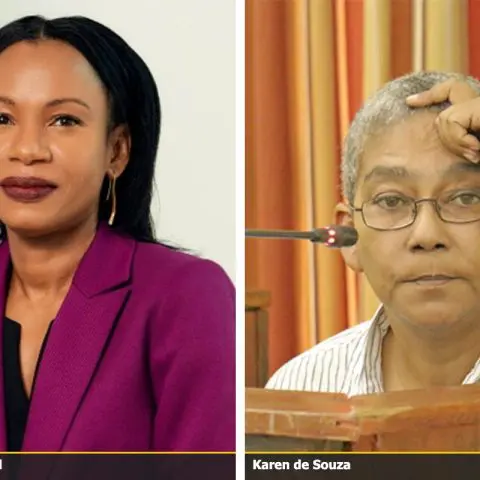
One appeal lists 40 individuals and four organisations, including the Guyana Organization of Indigenous People, the Oil and Gas Governance Network, the Organization for the Victory of the People and the Greenheart Movement. Among the individual signatories are Dr Vincent Adams, Dr Laura George, Sherlina Nageer and Vanda Radzik.
The other was signed by Danuta Radzik on behalf of individuals and organisations including Red Thread, the Greenheart Movement and the Organization for the Victory of the People. Its listed supporters include Neville Trotz, Norris Witter, Joel Simpson, Frederick Collins and Vidyaratha Kissoon.
The appeals concern prospecting licences GS14: L-1003/000/23 and GS14: L-1003/001/23. According to the second document, the EPA published its exemption notice on August 26.
The first appeal expressly acknowledges that the application is for exploration and does not cover commercial mining, ore processing, mine construction or radioactive tailings facilities. It nevertheless argues that drilling, handling uranium-bearing samples and storing waste require greater scrutiny than the exemption allows.
A central objection in both documents concerns the Environmental Management Plan referenced in the EPA’s notice. The objectors say the plan has not been made available for public scrutiny and question the basis on which the agency concluded that fuel, waste, drilling fluids and uranium-bearing cores could be safely contained and managed.
“What data convinced the Agency that spills and waste are expected to be temporary, reversible, and capable of being effectively managed?” the first appeal asks.
Its signatories also contend that the notice’s reference to an EPA-approved management plan suggests that approval preceded public consideration of the no-EIA decision. They argue that this would undermine the process required by the Environmental Protection Act.
Similarly
The second appeal similarly questions how the management arrangements were developed without an impact assessment and calls for the plan to be shared with Indigenous communities and the wider public.
That appeal sets out 19 grounds of objection. It disputes the EPA’s assessment of the project’s scale, pointing to proposed accommodation and a mess room for 40 people, a diesel generator, fuel storage, a water well, treatment tanks and septic facilities.
It also identifies access-road works and questions the description of the activities as temporary, citing the duration and possible extension of the prospecting licences. The objectors argue that the infrastructure and waste-management arrangements warrant an EIA under the Environmental Protection Act.
On hazardous waste, they say the project summary refers to lubricants and hydrocarbons being collected in barrels and batteries and electronic waste being sent to a certified management facility, without identifying that facility or explaining its treatment arrangements.
Both appeals raise concerns about drill cores remaining from earlier exploration near the Aricheng airstrip. Citing the project summary, they refer to approximately 88,000 metres—about 54 miles—of historical core material.
The first alleges that the material has been stored without adequate shielding or warning signs. The second questions its condition and whether exposure to weather could have allowed contaminants to reach surrounding land and waterways. Neither document supplies radiation measurements establishing contamination at the site.
The first appeal distinguishes this historical material from the proposed developer’s activities, noting that it was produced by a previous company. Its signatories argue, however, that further exploration would add to the material requiring safe storage and oversight.
The objectors also question the experience of U92 Energy Corp and seek clarity on the respective responsibilities of that company and Lia (Guyana) Inc. The second appeal calls for evidence that Guyana has the specialist personnel and regulatory arrangements needed to oversee uranium exploration, including radiation monitoring, inspections and waste management.
Consultation with Indigenous communities is another principal ground of objection.
The first appeal says that although the licences cover lands governed by the state, Kapong and Pemon communities have traditionally occupied and used the area and retain cultural and spiritual connections to it. It maintains that residents were not consulted beforehand and that many learnt of the plans through media reports.
“Until these communities have been consulted, given the opportunity to ask questions, fully understand the risks related to this project, and provide their free, prior, and informed consent,” permission should not be given for the prospecting activities, the document states.
The second appeal also argues that newspaper notices and limited objection periods do not provide meaningful access for hinterland communities facing difficulties with connectivity and basic services. It calls for information and consultation before authorisation, rather than expecting residents to assess a technically complex project without sufficient support.
The appeals follow objections reported by Kiskadee Watch in June, when the Amerindian Peoples Association called for the uranium plans to be halted. The APA said affected Mazaruni communities had not been consulted and questioned both the company’s experience and the adequacy of Guyana’s regulatory framework.
Laura George had also told the publication that she became aware of the project through U92’s announcements. The APA urged consultation beginning in the Kurupung area and warned that the Mazaruni river system was already under pressure from mining.
Lia is the local subsidiary through which Canadian company U92 controls the project. As Kiskadee Watch reported on September 12, the application covers exploration for uranium, other radioactive minerals and rare earth elements. The programme proposes approximately 5,000 metres of diamond drilling from about 30 platforms, soil sampling, rehabilitation of an existing access road and a temporary camp.
The EPA said disturbance would be localised and that erosion, dust, noise, waste and spills could be managed through safeguards and progressive rehabilitation. It required secure containment and monitoring of uranium-bearing samples under a management plan and radiation-safety conditions.
The agency stressed that the exemption was not approval for uranium mining. Activities could not begin without an environmental permit and other statutory approvals, while any future mining or processing proposal would require a separate application and assessment.
The second appeal seeks the suspension of uranium activities pending disclosure of information and demonstration of the necessary regulations and expertise. The first asks that no prospecting permission be granted until affected communities have been consulted and given an opportunity to provide free, prior and informed consent.
Source: Kiskadee Watch
https://kiskadeewatch.com/guyana/young-leaders-to-help-influence-caribbean-tourism-future-at-sotic-2026/

Young people from across the Caribbean will take centre stage this week as Guyana hosts the Caribbean Tourism Organization’s State of the Tourism Industry Conference (SOTIC) 2026, with 19 participants in the Regional Tourism Youth Congress.
Senior Manager of Product Development at the Guyana Tourism Authority (GTA) Candace Phillips said the Youth Congress is intended to give young people an active role in influencing the future of Caribbean tourism.
Speaking to Kiskadee Watch yesterday at the Atlantic Suites by Hyatt, Kingston, she shared that the youth programme forms part of the activities being held alongside SOTIC 2026, which officially opened in Guyana yesterday.
“This is the Regional Tourism Youth Congress Orientation Ceremony,” Phillips said, explaining that participants are between 14 and 17 years old and were selected through competitions in their respective countries to represent them at the regional event.
The young representatives have earned the designation of “Junior Minister of Tourism” for their respective territories and will participate in the Youth Congress on Thursday. The orientation was designed to give participants an overview of what they can expect during the week and prepare them for the competition.
At the Youth Congress, participants will deliver a three-minute presentation on a tourism-related topic they selected beforehand and they will also compete in a mystery round, during which they will be given a topic and one minute to speak on it.
Participants will be judged on areas including debating ability, eloquence and content, and the participant who emerges as the overall winner will earn the title and recognition as the region’s winning Junior Minister of Tourism, along with a scholarship and other prizes.
Phillips said the competition is expected to be highly competitive, particularly because participants are being encouraged to think beyond their individual territories and consider the future of tourism across the Caribbean. “The ultimate goal is to recognise that youths have an active part in shaping the future. And tourism is no different,” she said.
The programme allows young people to examine the current state of Caribbean tourism, consider how it aligns with their countries’ tourism strategies and offer their own perspectives on how the industry can evolve.
Phillips said the Youth Congress can also provide an avenue for innovative ideas to emerge from young people. “You see the youths really pushing out there with new pathways, new thoughts of how we can do tourism effectively,” she said, adding that countries across the region can learn from one another.
She pointed to the Future Leaders Forum held earlier in the day as an indication of the level of engagement expected from the young participants during the Youth Congress.
Phillips said the youths brought “so many questions, viewpoints, and different perspectives” to discussions about how tourism can be developed.
The Youth Congress is one of several activities being held during SOTIC 2026, which is being hosted in Guyana for the first time from October 5 to 9.
More than300 delegateshave registered for the conference, including13 Caribbean tourism ministers, according to organisers.
The conference brings together tourism ministers, industry leaders, policymakers and other stakeholders from across the Caribbean and beyond to examine the performance of the regional tourism industry and discuss priorities and opportunities for future growth.
Source: Kiskadee Watch
https://kiskadeewatch.com/guyana/nis-chairman-declines-to-comment-on-alleged-pension-underpayments/

National Insurance Scheme (NIS) Chairman Ramesh Persaud yesterday declined to comment on a demand by civil society activist Christopher Ram and 10 trade unions for the National Insurance Board (NIB) to account for alleged pension underpayments that could amount to $5 billion.
Persaud told Kiskadee Watch that he had no comment on the matter at the moment when contacted about the allegations and a letter sent to the NIB by Ram on October 1.
Ram, acting on what he said were complaints received from pensioners, is calling on the NIB to comply with Regulation 4(b) of the NIS Benefit Regulations and pay arrears allegedly owed to minimum-rate old-age pensioners.
The regulation was amended in 2015 to increase the statutory minimum old-age pension from 40 per cent to 50 per cent of the Public Service minimum wage.
According to Ram, the last year in which the requirement was met was 2020, when the Public Service minimum wage stood at $70,000 and the minimum NIS pension was $35,000. He contends that although the Public Service minimum wage has increased several times since then, the NIS has failed to make corresponding adjustments to the minimum pension.
“On the published figures, pensioners on the minimum rate have therefore been paid below the statutory minimum for substantial periods from 2021 onwards,” Ram stated in his letter.
The letter points to the 2026 National Estimates, which place the Public Service minimum wage at $102,346. Fifty per cent of that amount is $51,173, while the published NIS minimum pension remains $43,075.
Ram therefore calculates a monthly shortfall of $8,098 for each minimum-rate pensioner, arguing that any subsequent increase in the minimum pension would not eliminate arrears that had already accrued. “Nor is the default cured by a later increase,” the letter contends, noting that where Public Service minimum-wage increases were made retroactive, the NIB must identify the legal basis for not adjusting the corresponding pension entitlement from the same effective date.
Ram has given the Board seven days to state its position on the alleged underpayments from 2021 to the present and to account for the amounts by which minimum-rate pensioners were allegedly paid below the statutory minimum. He is also calling on the Board to identify every affected pensioner, calculate the arrears and make payment.
If the NIB disputes liability, Ram wants it to state the precise legal basis on which it considers payments below the statutory minimum to have been lawful.
Source: Kiskadee Watch
https://kiskadeewatch.com/guyana/guyana-backs-us-led-statement-condemning-iran-for-terrorist-actions/

Guyana yesterday joined a US-led initiative condemning Iran for terrorist actions and other malign activity in this hemisphere.
A release from the US State Department said that on October 5th the Governments of the United States, Argentina, Canada, Colombia, Costa Rica, the Dominican Republic, Guyana, Paraguay, Peru and Trinidad and Tobago condemned the terrorist actions and other malign influence operations in this hemisphere by Iran and its terrorist proxies.
“These hostile efforts include a range of Iranian and proxy-sponsored lethal plotting, illicit fundraising, political interference and foreign influence activities, and operations meant to bolster terrorist networks, coerce perceived enemies, compromise legal or administrative processes, and harm regional security. We stand united in our determination to protect our countries and our people against such threats. The Islamic Republic of Iran and its proxies must halt these actions now”, the statement read.
The statement commended the work of countries within the region to counter these malign Iranian activities, including lethal plotting.
“We are together resolved to undertake further measures to halt them, and pledge to enhance our coordination and cooperation to address this threat”, the statement said. It did not identify any specific malign Iranian activity.
The statement also noted that last month the United States and Paraguay co-hosted the Countering Transnational Terrorism Forum to enhance law enforcement cooperation among partners in the hemisphere on disrupting Iranian terrorist activity in the region.
“This is part of the Trump Administration’s ongoing efforts to reinforce our joint resolve to safeguard our hemisphere’s safety and security”, the statement added.
Source: Kiskadee Watch
https://kiskadeewatch.com/guyana/president-urges-protection-of-democracy-on-anniversary-of-1992-polls/

President Irfaan Ali has called for Guyana’s growing wealth to translate into better lives for all citizens, saying the anniversary of the October 5, 1992 elections should serve as both a reminder of the struggle for democracy and a commitment to national unity.
In a Facebook video on Sunday, ahead of yesterday’s 34th anniversary, Ali said safeguarding the right to freely choose a government remained an obligation to future generations.
“It is not enough to accumulate national wealth. We must convert that wealth into better lives, better opportunities, and a more secure future,” he said.
“The democratic dividend must become a national dividend.”
The President is presently being accused of holding up preparations for local government elections by not responding to correspondence from the Opposition Leader, Azruddin Mohamed on the nomination of commissioners to the Guyana Elections Commission.
Ali described the 1992 elections as the culmination of a prolonged struggle against electoral manipulation, authoritarianism and economic hardship. He credited the PPP/C, other political and civic organisations, religious bodies, trade unions and international supporters with contributing to the restoration of free and fair elections.
“The Guyanese people did not inherit democracy on October 5th, 1992. They fought for it, they suffered for it, they sacrificed for it, and ultimately they reclaimed it,” he said. Ali was 12 years old in 1992.
The 1992 elections brought then Opposition Leader Dr Cheddi Jagan and the PPP/C to office, ending the PNC’s uninterrupted period in government since 1964. That period had seen rigged elections in 1968, 1973, 1980 and 1985.
The 1992 elections followed electoral reforms and international observation, including a delegation headed by former United States President Jimmy Carter.
Ali recalled demands for ballots to be counted at polling places, a new voters’ list, a restructured Elections Commission and local and international observers.
He acknowledged the international community’s role but said democracy had not simply been handed to Guyana by outsiders.
Stabroek News’ reporting has documented the wider domestic campaign for electoral reform, including the Patriotic Coalition for Democracy, the Guyana Human Rights Association, GUARD, the independent media and religious, professional, business and labour representatives.
Ali devoted part of his address to the economic difficulties facing the country before 1992, pointing to heavy external debt, deteriorating infrastructure, weakened public services and migration.
He argued that restoring democratic legitimacy created the conditions for national reconstruction and subsequent development.
“Democracy is not an ornament to development. It is one of its foundations,” he said.
Economic reform, however, had begun before the change of government. In a December 2012 Stabroek News column, accountant Christopher Ram recalled that Hoyte and then Finance Minister Carl Greenidge had already embarked on a market-based Economic Recovery Programme supported by the International Monetary Fund and other international partners. Greenidge’s 1992 budget presentation reported real economic growth of 6.1% in the preceding year, following three years of contraction.
Closing the address, Ali pledged to devote the remaining years of his presidency to visiting villages and communities and seeking opportunities to bring the country together. He said citizens would ultimately judge how he had used his time in office.
“Let us build a Guyana in which democracy is secure, prosperity is shared, opportunity is accessible, and national unity is a lived reality,” he said.
Source: Kiskadee Watch
https://kiskadeewatch.com/opinion/letters/guyanese-must-see-development-bank-as-opportunity-to-participate-directly-in-building-countrys-economic-future/
Dear Editor,
The next chapter of Guyana’s progress must not only be about what we build, but about how many Guyanese are empowered to benefit from and contribute to the opportunities before us.
The Government of Guyana is investing at an unprecedented pace in roads, bridges, hospitals, schools, housing, agriculture and new industries. Yet one of the most consequential investments we can make is in the productive capacity of our people—giving ordinary Guyanese the means to become entrepreneurs, employers and producers in our rapidly expanding economy.
This is why the establishment of the Guyana Development Bank is both timely and potentially transformative.
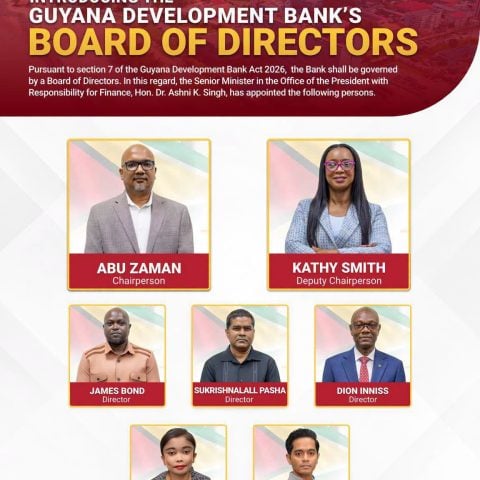
Encouragingly, the newly appointed Board reflects a breadth of experience suited to that mission. Under Chairman Abu Zaman and Deputy Chairperson Kathy Smith, the seven-member Board brings together expertise spanning banking and financial management, entrepreneurship and SME development, law, public finance, corporate leadership, governance, institutional reform and youth empowerment. That diversity matters. A Development Bank serving aspiring entrepreneurs cannot be guided by financial considerations alone; it must understand business realities, sound governance, risk, innovation and the practical challenges facing citizens seeking to turn ideas into sustainable enterprises.
Drawing perspectives from both the public and private sectors, the Board will, therefore, add considerable value, as this varied expertise is translated into sound policy, prudent lending, effective oversight and an institution that remains responsive to the people it was created to serve.
Economic growth alone does not guarantee broad-based prosperity. The real test will be whether our farmers, tradespeople, young professionals, small businesses and aspiring entrepreneurs can convert new opportunities into viable enterprises, jobs, productive assets and improved livelihoods.
For too many Guyanese, the obstacle is not a shortage of ideas, skills or ambition—it is access to affordable capital. A farmer may be ready to expand production but cannot finance machinery. A skilled tradesperson may have customers but cannot afford better equipment. A young entrepreneur may have a promising idea but lack the collateral demanded by conventional lenders.
This is the gap the Guyana Development Bank will help close.
The Development Bank is designed to provide financing that enables citizens to establish and expand businesses, increase production and create employment. Just as importantly, it can help channel Guyana’s present economic gains into productive activity capable of generating benefits long into the future.
Citizens, however, must see the Bank as more than another place to borrow money. It is an opportunity to participate directly in building the country’s economic future.
The possibilities are considerable. Farmers can invest in mechanisation, shade houses, livestock, aquaculture and agro-processing. Tradespeople and contractors can acquire equipment and expand their operations. Entrepreneurs can pursue opportunities in manufacturing, tourism, transportation, technology, renewable energy and the maritime economy.
Citizens should also look beyond individual borrowing and consider forming partnerships and consortia to combine capital, skills, experience and business opportunities. By working together, small entrepreneurs may strengthen their ability to access greater levels of financing, share risk and undertake investments beyond the capacity of any one individual. Such arrangements could allow Guyanese businesses not only to expand small enterprises, but also to participate in larger ventures and emerging sectors of the economy that might otherwise remain beyond their reach.
Citizens are encouraged to access this facility and use the finances responsibly. These loans should support activities capable of generating income, employment and lasting value—not merely consumption. Borrowers must, therefore, approach these opportunities with sound business plans, proper financial management and a commitment to repayment.
The success of the Guyana Development Bank would not be measured simply by how much money it lends, but by the sustainable businesses it helps create, the jobs generated, increases in local production and the enterprises that grow into competitive companies.
The opportunity is now before us, and Guyanese must seize it. Farmers, tradespeople, young professionals, creatives, small-business owners and aspiring entrepreneurs should begin preparing viable ideas, sound business plans and productive investments. Government can open the door to capital; we must be prepared to walk through it. Let us use this opportunity not simply to borrow, but to build—to build businesses, create jobs, strengthen communities and secure better livelihoods for ourselves and the generations that follow.
Yours faithfully,
Hon. Thandi McAllister, M.P.
Source: Kiskadee Watch
https://kiskadeewatch.com/guyana/fired-ministry-employee-charged-with-assaulting-gas-station-attendant/
Andika Ferrier was yesterday granted $100,000 bail and ordered to stay away from the female gas station attendant he is accused of assaulting.
Ferrier appeared in court to face a charge of assault causing bodily harm stemming from an incident at the Rubis gas station at Soesdyke, East Bank Demerara.
He is accused of striking the female attendant after she reportedly declined to assist him with loading cooking-gas cylinders onto his truck.
As part of his bail conditions, Ferrier was ordered to stay away from the woman and report to a police station while the matter remains before the court.
The incident had previously drawn the attention of Home Affairs Minister Oneidge Walrond, who publicly indicated that criminal charges would follow.
Walrond had also recommended that Ferrier’s employment with the Ministry of Home Affairs be terminated over the incident.
Ferrier is expected to return to court on October 26, 2026.
Source: Kiskadee Watch
https://kiskadeewatch.com/opinion/wickets-hitting/an-encouraging-week-for-west-indies-cricket/
About The Writer: Guyana-born, Canada-based Tony McWatt’s articles on Caribbean and Canadian cricket have now spanned well over thirty years. He is the son of the late former Guyana and West Indies wicket-keeper batsman Clifford “Babyboy” McWatt.
Against all expectations, the West Indies men’s cricket team fashioned an incredible, morale-boosting One Day International ODI victory against India, the International Cricket Council’s (ICC) current number one ranked ODI team. A totally unexpected outcome that has certainly made this period one of the most encouraging for West Indies cricket within recent memory!
Before the recently concluded series, the last time the West Indies won an ODI match in India against the home side was as far back as December 15, 2019. As such, the scheduled home-turf, three-match series against their cellar-dwelling, ninth-ranked Caribbean visitors was widely expected to be a cakewalk for the number one-ranked Indians.
Against all expectations, and to the delight of their millions of beleaguered fans both at home in the Caribbean and abroad in the diaspora, the “men in maroon” surprised everyone by winning the third ODI. India’s comfortable wins in the first and second ODIs had secured the much-anticipated series victory. Still, the eventual 2-1 margin was far closer than anyone would have imagined at the outset! It also comes as a welcome boost for the West Indies team as it heads into February’s ICC 2027 ODI World Cup Qualifier.
South Africa, Zimbabwe, and Namibia will jointly host the fourteenth edition of the quadrennial ICC ODI World Cup next year, from 2 October to 21 November 2027. The tournament will comprise fourteen teams playing a total of 57 matches. Co-hosts South Africa and Zimbabwe, along with the top eight ranked ICC ODI countries: Afghanistan, Australia, Bangladesh, England, India, New Zealand, Pakistan and Sri Lanka have already qualified for the tournament. The remaining four places will be decided at a qualification tournament from 26 February to 21 March 2027, jointly hosted by Namibia and South Africa.
Since winning both the England-hosted 1975 Inaugural and 1979 second ICC World Cups and finishing as losing finalists to India in the 1983 third, West Indies fortunes have plummeted precipitously, so much so that they have failed to automatically qualify in each of the last three editions of the ICC ODI World Cup.
In 2019 the West Indies finished second in the preceding year’s Zimbabwe-hosted Qualifier, thereby advancing to the ensuing 2019 World Cup a year later. They then, however, failed to progress beyond the Group Stage Preliminary Round. A dismal record of six losses, two wins, and one rain-affected no-result left them on just five points. This secured their ninth Group Stage exit.
If 2019 was bad, 2023 was even worse. West Indies failed to even advance from the 2022 Qualifiers to the actual 2023 World Cup.
Now, four years later, the once all-conquering West Indies have once again had to take the scenic route to an ICC ODI World Cup that was once quadrennially considered theirs to lose. To have won even one of the three matches against the formidable top-ranked India in what will be their only preceding encounters before next February’s all-important World Cup Qualifier should, therefore, again serve as a major morale booster.
Even more importantly, the India three-match series would have provided West Indies Chief Selector and all-formats’ Head Coach Daren Sammy with some of the most useful, vitally important qualification squad-selection information. As a result of the performances in each of the three matches, Sammy and his supporting coaching cadre should now have a clear idea of the likely composition of his best possible fifteen-member squad for the Qualifier. Optimistically assuming qualification, perhaps even beyond to the actual October 2 – November 21, 2027 World Cup.
During the three-match India series, the Caribbean batters posted totals of 295/7 off 50 overs in the first match, a record-breaking 405/7 in the second, and an equally impressive best-ever victory target of 352/5 in the third. Their top four batters, Shai Hope, Amir Jangoo, Justin Greaves and John Campbell ended the series with respective averages of 139.00, 119.50, 101, and 57.66!
As such, Sammy should now know the exact composition of the West Indies top-order batting heading into the February 2027 WC Qualifier. Hope, Campbell, Greaves and Jangoo should undisputedly be the top four batters for the West Indies!
West Indies captain Shai Hope scored back-to-back centuries in both the second and third matches of the India Series. The biggest and best of the three (162 not out), however, came when he opened the batting alongside John Campbell, replacing the injured Justin Greaves and later the out-of-form Keacy Carty.

Hope currently averages 60.7 as an opener, but only 49.9 when batting at number four. Of the 21 ODI centuries he has scored for the West Indies to date, 12 have been as an opener. By comparison, only 3 when batting at four. It now seems a no-brainer that Hope and Campbell should open the batting, with Greaves possibly at three and the ever-consistent Jangoo at four.
Sherfane Rutherford underperformed in both matches he batted in during the series. Scoring just twenty-four runs at a miserly average of 12. Shimron Hetmyer’s far more consistent performances of late, albeit in the shorter T20 format, suggest he might be a worthy replacement for Rutherford at number five.
From an all-rounder perspective, so too would the far more experienced, typically economical and productively penetrative, Jason Holder. Instead of the India series-proven less effective Kemo Paul and Matthew Forde.
On the West Indies front, the India series should also have confirmed to Sammy and Co the reality that Gudakesh Motie and Roston Chase are our best available spinners. Likewise, most unfortunately, the teenage Vital Lawes isn’t quite ready to be thrown into the den of such an intense pressure cooker as a World Cup Qualifier. Lawes was expensive and wicketless during the India series. His 15 overs bowled went for 127 runs at an economy rate of 8.4!
Equally, Sammy will also now know that the West Indies ODI bowling attack should henceforth be led by Jayden Seales. With four of the only eight Indian wickets captured to his name, Seales was by far the West Indies’ leading bowler throughout the series.
The two Josephs, Alzarri and Shamar, should accompany Seales to comprise the West Indies Zimbabwe Qualifier squad’s frontline bowling. Along with the aforementioned spinners Roston Chase and Gudakesh Motie.
In terms of the Zimbabwe Qualifier squad’s eventual composition, the only remaining question for Sammy and Co to answer is the final allrounder. Which of Matthew Forde, Keemo Paul or possibly Romario Shepherd should be selected as the squad’s fifteenth member? My personal choice is Shepherd for his explosive, potentially match-changing lower-order batting.
As such, Shai Hope captain, John Campbell, Justin Greaves, Amir Jangoo, Shimron Hetmyer, Sherfane Rutherford, Roston Chase, Jason Holder, Romario Shepherd, Gudakesh Motie, Alzarri Joseph, Shamar Joseph, Jayden Seales, Keacy Carty and Sherfane Rutherford would be my provisional West Indies World Cup Zimbabwe Qualifier fifteen-member squad. Barring any unforeseen injuries or otherwise determined unavailability.
What say ye, Dear Readers? To what extent do you think Daren Sammy should and would agree?
Source: Kiskadee Watch
https://kiskadeewatch.com/guyana/journalist-demands-karimbaksh-steps-aside-following-rape-allegation/
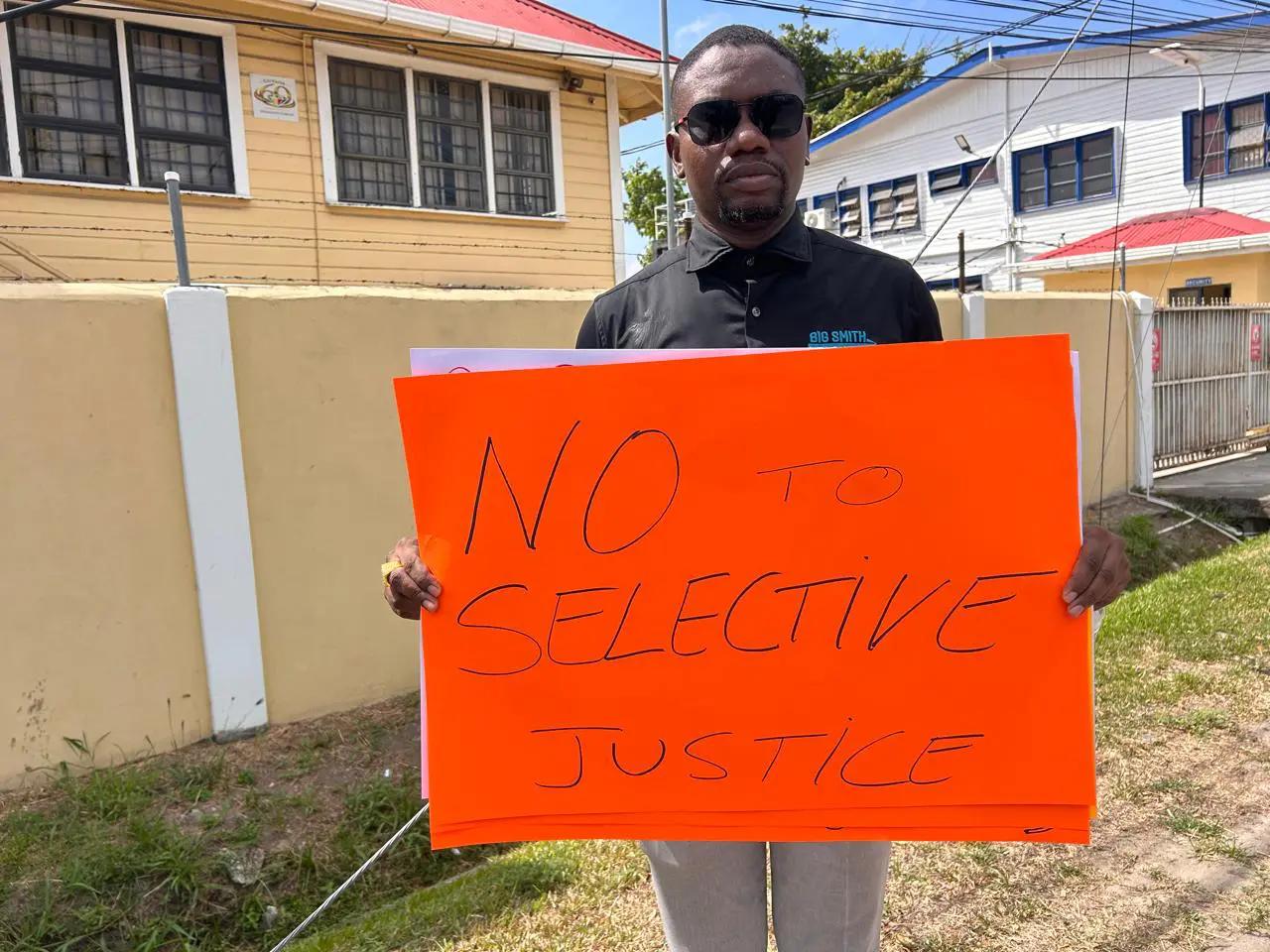
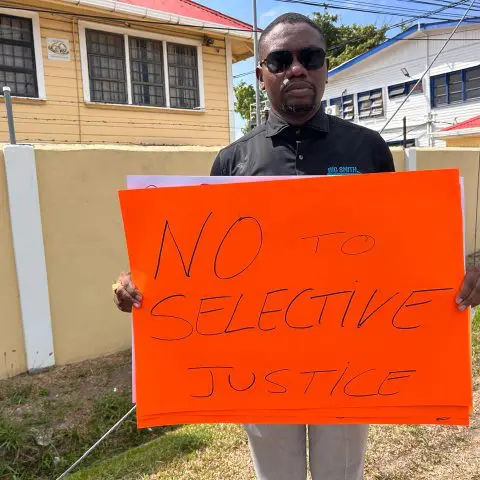
Journalist Leroy Smith yesterday picketed outside the Special Organised Crime Unit (SOCU) headquarters on Camp Street, calling for Deputy Commissioner Fazil Karimbaksh to step aside while a rape allegation against him is investigated.
Smith, who previously raised the allegation on his media platform, said he took his protest to the SOCU headquarters because he believes the Guyana Police Force must act.
He pointed to previous cases involving senior police officers, arguing that officers had previously been removed from duty over allegations he described as being of a lesser nature.
Smith said the absence of a Police Service Commission should not prevent Karimbaksh from being removed from operational duties.
“There is nothing lawfully that is stopping Karimbaksh from proceeding on leave to facilitate this investigation in a fair manner and in an environment free from fear also and intimidation,” he said.
Smith also argued that the Commissioner of Police, Minister of Home Affairs and President all have roles that could facilitate Karimbaksh stepping aside.
He said Karimbaksh’s continued presence in a senior position was damaging the morale of junior ranks and sending the wrong message within the force.
“The longer Karimbaksh stays in his position, the more damage it has been creating for the force,” Smith said.
Smith rejected suggestions that his protest was motivated by a personal legal dispute between himself and Karimbaksh.
He acknowledged that he has an ongoing court matter involving Karimbaksh but said the protest was about accountability.
“This has nothing to do with whatever’s going on between myself and Karimbaksh in the court. This has to do with principle and it has to be with morale and it has to be with holding people accountable,” Smith said.
The protest comes after Home Affairs Minister Oneidge Walrond publicly confirmed that a rape complaint had been made against Karimbaksh and said an investigative team had been established.
Walrond also said she believed Karimbaksh should be placed on administrative leave pending the investigation, while acknowledging that the Police Service Commission, which is yet to be constituted, would ordinarily have a role in the matter.
Source: Kiskadee Watch

Upholding a decision by Magistrate Abigail Gibbs to remand the National Border Patrol Director Daniel Seeram to prison, High Court Judge Joy Persaud-Singh this afternoon dismissed an application filed by Seeram for Judicial Review.
Seeram filed the application hours after he was found guilty of assaulting his ex-wife, and remanded to prison on Friday.
Justice Persaud-Singh, however, ruled that the application did not meet the criteria for Judicial Review.
“The Court finds no indication that the Magistrate acted unlawfully, irrationally or outside of her jurisdiction. Accordingly, the application for Judicial Review is dismissed. The decision of the Learned Magistrate to refuse bail is upheld,” Justice Persaud-Singh ruled.
Justice Persaud-Singh’s ruling was handed down minutes after Seeram’s Attorney, Nigel Hughes, who appeared alongside Attorney-at-Law Tifaine Rutherford, and the Deputy Solicitor General, Shoshanna Lall – Counsel for the Director of Public Prosecutions (DPP), and the Attorney General – argued that Magistrate Gibbs erred in law when she remanded Seeram to prison ahead of his November 2 sentencing.
As he made a case for the Magistrate’s decision to be reviewed and overturned, Hughes argued that Magistrate Gibbs made two fatal errors, when she decided to remand Seeram to prison ahead of sentencing, and before she had the benefit of the probation report, the impact statement, and the mitigating and aggravating factors. Hughes submitted that by remanding Seeram, Magistrate Gibbs in effect sentenced him to prison, and in doing so demonstrated a clear bias in the absence of critical reports and statements.
“The remand, which is effectively sentencing to a period imprisonment indicates a bias before the Court had the benefit of all those matters the Court had ordered produced. So, long before the Court had a probation report, long before the Court had the mitigating factors, long before the Court had the benefit of the victim impact statement, and long before the Court had the benefit of the aggravating factors, the Court made a finding and effectively imprisoned [the defendant] while waiting on the matters,” Hughes argued.
Hughes told the Court that although none of the grounds of Section 9 of the Bail Act of Guyana had been established, the lower court did not allow Seeram to retain his liberty pending his sentencing. He had been previously placed on bail.
He submitted further that the nature of the eventual sentence whether custodial or non-custodial was a matter to be determined at sentencing after full submissions.
The State Counsel, who from the onset acknowledged that domestic violence remains a “serious” issue in Guyana, and that Seeram was found guilty of assaulting his wife, also argued that the Magistrate erred in law.
Lall submitted to the Court that “Section 9 of the Bail Act was not engaged at all.” She submitted that there is no mandatory sentence that is imposed by law for offences relating to assault, and by remanding Seeram, the Court would have in effect sentenced him, ahead of the actual sentencing.
“And really and truly your honour, on a matter of law, the Magistrate has erred. That’s our respectful submission…We respectfully say that she fell into grave error when she determined the offence mandated a mandatory term of imprisonment, that’s what she read into the Act your honour,” Lall said.
Lall said it is as if, the Learned Magistrate has shown her hands.
But the arguments put forward by both Hughes and Lall were not sufficient to secure a review of Magistrate Gibbs decision to remand Seeram.
Seeram, who since Friday, was being held at the Sparendaam Police Station pending today’s hearing, is now expected to be handed over to the prison authorities.
Seeram, a former Region 4 Regional Chairman, was found guilty assaulting his ex-wife Farzana Hamid resulting in actual bodily harm. Hamid suffered injuries to her head, eyes, left arm and thigh, and breast among other sections of her body during an altercation with her ex-husband on September 11, 2023 while at their Cummings Lodge apartment.
Source: News Source Guyana







Discussion