https://kiskadeewatch.com/guyana/sbas-compulsory-for-2027-csec-candidates-ministry/








https://kiskadeewatch.com/guyana/sbas-compulsory-for-2027-csec-candidates-ministry/
-orders school monitoring
The Ministry of Education has directed all secondary schools to continue School-Based Assessments (SBAs) for students taking the 2027 Caribbean Secondary Education Certificate (CSEC) examinations, and ordered education officers to monitor compliance ahead of the March submission deadline.
Schools are prohibited from offering Paper 3 as a substitute for the prescribed SBA component or advising students and parents that such an arrangement is permitted.
The instructions are contained in Memorandum 21 of 2026, dated October 2 and signed by Chief Education Officer Saddam Hussain. They were reiterated in a ministry release posted on Facebook yesterday.
“For the avoidance of doubt, the MoE wishes to make it unequivocally clear that no secondary school is authorised to implement Paper 3 as an alternative to the prescribed SBA component during the 2026–2027 academic year,” the memorandum states.
The directive follows changes announced by the Caribbean Examinations Council (CXC), under which 13 CSEC subjects will move from SBAs to the Alternative Paper 032 by May–June 2028.
CXC’s July guidance provides for either the SBA or Paper 032 to be accepted in those subjects during the May–June 2027 transition, with schools deciding which approach to use. Guyana’s ministry has directed secondary schools to retain the prescribed SBAs for that examination cycle.
The memorandum requires all Grade 11 students pursuing subjects with an SBA component to continue and complete their assessments with immediate effect.
Headteachers must ensure that students receive sufficient instructional time, guidance and supervision, and use the ministry’s schedule to monitor completion before the March 2027 deadline.
They must also obtain regular departmental updates, identify students falling behind and arrange appropriate assistance. Challenges affecting completion must be brought promptly to the relevant education officer’s attention.
Teachers are required to explain assessment requirements and deadlines, maintain up-to-date progress records and provide timely feedback. Students at risk of not completing their SBAs must be identified and reported to the relevant head of department.
The memorandum also places responsibility on teachers to take reasonable measures to verify that submissions are authentic and comply with CXC’s requirements on academic integrity and student ownership.
Heads of department must ensure that guidance does not compromise the authenticity or independent nature of students’ work.
“Teachers are expected to use the available instructional time effectively so that students are not required to complete their SBA requirements at the last minute,” it states.
Education officers must visit schools, review assessment schedules and progress records, and verify that SBA activities have commenced or resumed. They must identify schools, subjects and student groups at risk of missing the deadline and provide support where difficulties arise.
Persistent or serious compliance concerns must be escalated to the relevant Regional Education Officer or Principal Education Officer. Officers must also confirm that schools are not implementing Paper 3 as an alternative and submit periodic compliance reports.
The ministry has directed regional and principal education officers to circulate the memorandum immediately, obtain acknowledgement from headteachers and ensure follow-up where schools fail to comply.
Headteachers must bring its contents to all staff and obtain their signatures and dates confirming that they have read and understood it.
The memorandum warns that schools must take sustained action to prevent students being disadvantaged by failure to complete their prescribed assessments on time.
CXC said its regional reforms were intended to strengthen assessment integrity in response to the rise of generative artificial intelligence, while retaining SBAs for practical subjects where projects and hands-on work assess competencies that conventional examinations cannot adequately capture.
The 13 subjects scheduled to move to Paper 032 are Additional Mathematics, Caribbean History, Economics, English A, English B, Human and Social Biology, Information Technology, Mathematics, Office Administration, Principles of Accounts, Principles of Business, Religious Education and Social Studies.
Source: Kiskadee Watch
https://kiskadeewatch.com/guyana/man-76-charged-with-murdering-boy-at-parika/

Seventy-six-year-old Quan Sheng Li appeared before Magistrate Omadatt Chandan at the Leonora Magistrate’s Court yesterday charged with the murder of six-year-old Zi Feng Cao at Parika, East Bank Essequibo.
Li, a Chinese national and cook, was not required to enter a plea to the indictable offence.
The court was told that investigations are still incomplete, with Police awaiting the post-mortem examination and further statements and submissions.
The matter was subsequently put down for November 5, 2026, before Magistrate Chandan.
Cao, a student of Precious Lamb Primary School, was fatally attacked on September 30 at Kenny’s Ocean Restaurant, the family’s business at Johnson Street, Parika.

The six-year-old had just returned from school and was still dressed in his school uniform when he entered the premises and approached Li, who was known to the family.
According to information obtained by Kiskadee Watch, a dispute over the sum of 3 Million USD allegedly preceded the attack. Li, a father of four, reportedly told investigators that he had gone to the restaurant to collect money he claimed he had invested in the business.
Police said Li was later arrested at Parika Police Station and subsequently led investigators to an area near Parika Junction, where a chopper was recovered from a drain.
Cao was taken to De Kinderen Regional Hospital, where he was pronounced dead on arrival. His body was subsequently taken to Ezekiel Funeral Home.
The child was laid to rest on Sunday, October 4, 2026.
Cao has since been remembered in the Parika community as kind-hearted and always willing to help, while his former Hydronie Nursery School also paid tribute to him.
The Minister of Human Services, Dr Vindhya Persaud has also met with Cao’s parents and pledged support to the family during their bereavement.
Source: Kiskadee Watch
https://kiskadeewatch.com/guyana/walrond-walks-back-from-confrontation-remark-after-criticism-by-red-thread/
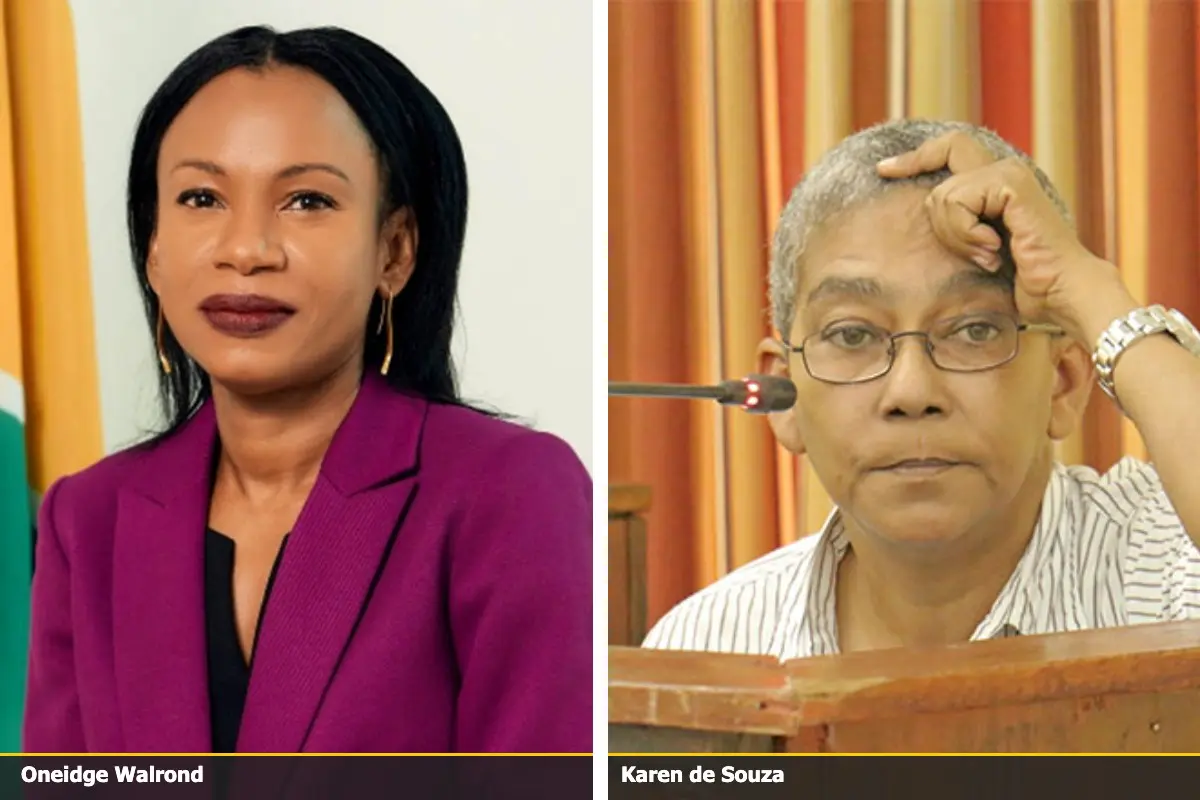
Home Affairs Minister Oneidge Walrond has rejected Red Thread’s criticism of her remarks on the investigation into allegations against Deputy Commissioner of Police Fazil Karimbaksh, saying she neither mandated a confrontation between the complainant and the accused nor instructed investigators to breach the Sexual Offences Act.
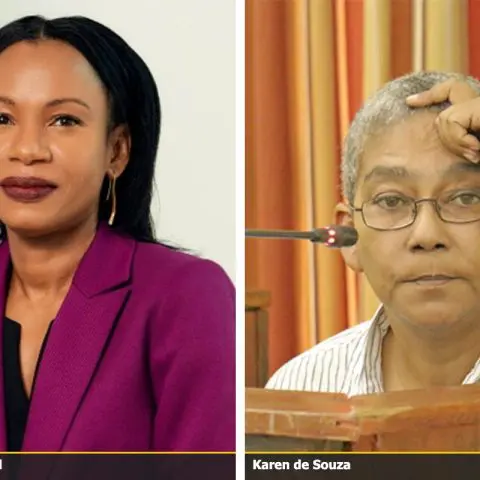
In a statement, Walrond accused the organisation of mischaracterising her comments and engaging in selective advocacy. Her response followed comments by Red Thread’s Karen De Souza to Kiskadee Watch, expressing alarm at the proposed confrontation and questioning the independence of the investigative arrangements.
“For the avoidance of doubt, I did not say that the complainant would be confronted by the accused. I did not mandate such a confrontation, and I have issued no instruction directing investigators to subject the complainant to any procedure contrary to the Sexual Offences Act,” Walrond stated.
She said she had communicated information provided to her about the investigative process and that criminal investigations were the responsibility of investigators acting within the law.
“I neither design nor direct the day-to-day investigative procedures of the Guyana Police Force,” she said.
During the Starting Point podcast, however, Walrond had expressly referred to a “formal confrontation” as a step in the investigation.
As reported by Kiskadee Watch, she said: “I can confirm that she (the complainant) has given a statement. I am informed from the Commissioner (of Police) that a team has been set up to deal with this investigation. The investigation would entail getting statements from the other persons in whom they think would be appropriate to get statements and statements from the accused who is the Deputy Commissioner Karimbaksh and to hold a formal confrontation”.
Asked whether this was a process followed for any rape allegation, Walrond said: “The fact is that Mr Karimbaksh is at the helm of the police force, he is a Deputy Commissioner and so there is a particular procedure that has to be followed and so … the confrontation that would be held from the team that would be assigned after that confrontation then the matter will be adjudicated whether its disciplinary action or criminal action that would be for the criminal investigation department to determine and this team who is doing the investigation”.
Her latest statement denies directing a confrontation but does not explain what the proposed “formal confrontation” would involve, whether it remains part of the investigation or whether the complainant has requested it.
Section 42(1) of the Sexual Offences Act protects a complainant from being required to recount her complaint, or any part of it, in the accused’s presence unless she wishes to do so. Subsection (2) also restricts requiring her to view or be in the alleged perpetrator’s presence, except for identification under arrangements sensitive to her wellbeing.
Responding to questions from Kiskadee Watch, De Souza had said: “Red Thread is in fact appalled that the minister, who is also a legal practitioner … would even as a slip of the tongue suggest that there would be a confrontation between the complainant and Mr Karimbaksh”.
De Souza’s criticism concerned the minister’s suggestion that a confrontation would occur. She did not describe Walrond’s remarks as an instruction to investigators to violate the complainant’s rights.
She also questioned the internal investigative team established by Commissioner of Police Clifton Hicken.
“I do not think that we have a whole lot of confidence. In fact, I know we do not have lots of confidence in the reported investigating committee that has been set up by the commissioner of police. That’s foolishness. That’s nonsense,” De Souza said.
“The fact that the accused is still on the job, still in a position to exert influence in all kinds of ways is not a good sign,” she added.
In her response, Walrond said Red Thread had falsely converted her remarks into an instruction to violate a complainant’s rights.
She also accused the organisation of showing greater urgency in its criticism of the PPP/C government than on other matters of national concern.
“Advocacy is important in a democracy. Selective advocacy, however, does not entitle anyone to manufacture a position and then condemn the Government for holding it,” she stated.
Walrond further said: “Conveniently absent from this latest attack is the fact that I publicly stated that, in my view, Deputy Commissioner Karimbaksh should be placed on administrative leave pending the investigation. That position could hardly be clearer.”
Kiskadee Watch’s report on De Souza’s comments did include the minister’s stated preference for administrative leave. It also recorded that Walrond had referred to the absence of a constituted Police Service Commission and indicated that she and the commissioner would have to discuss how to proceed.
In the podcast, Walrond had said: “It is my view and I hold this strong view that he (Karimbaksh) should be sent on administrative leave pending the investigation.
Her latest release does not announce that Karimbaksh has been placed on leave.
De Souza had questioned why the commission remained unconstituted and called for the accused to be removed from any position in which he could influence investigators or other persons who might wish to come forward.
“If it’s never constituted, does that mean that he remains in that position collecting taxpayer dollars while he is accused of abusing taxpayers?” she asked.
She also urged protection for the complainant, a serving police officer, and recognition of the difficulty of reporting allegations against a senior officer.
“The public has to keep an eye on this case. We have to be vigilant and we have to maintain some pressure with the expectation that the provisions of the Sexual Offences Act will be implemented,” she said.
Walrond had stated that the complainant was transferred at her own request. The police subsequently announced an investigative team but did not identify its members or provide a timetable for its work.
In her latest statement, the minister said both the complainant’s legal protections and the accused’s entitlement to due process must be upheld.
“This is a serious criminal allegation involving a senior member of the Guyana Police Force. It deserves a serious investigation—not political theatre, manufactured controversy or trial by public commentary,” she said.
“I remain resolute that the investigation must be professional, impartial and thorough. Let the investigators investigate. Let the evidence determine the outcome. And let the law take its course.”
Walrond has not spoken to the independent media on this case but chose the government-aligned podcast to make her remarks.
Source: Kiskadee Watch
https://kiskadeewatch.com/guyana/ccj-president-says-courts-jurisprudence-remains-strong-as-new-judicial-year-opens/

—message follows controversy over leadership, judicial independence
Caribbean Court of Justice (CCJ) President, Justice Winston Anderson has said the court’s jurisprudence remains “strong, principled, and respected” as it begins its 2026–2027 judicial year, following the recent public dispute over its leadership and allegations of interference in judicial decision-making.
In a video posted on the court’s Facebook page marking the opening of the judicial year yesterday, Justice Anderson reaffirmed the institution’s independence and commitment to serving the Caribbean. The message did not directly address the controversy arising from leaked correspondence among its judges.
“What does it mean to be CCJ? It means being the court of the Caribbean, for the Caribbean, independent in judgment, steadfast in purpose, committed to serve,” Anderson said.
“The court is fully engaged, fully dedicated, and ready for the 2026–2027 judicial year and the years beyond.”
He said the opening provided an opportunity to reflect on the court’s achievements and look ahead to its work in serving the people of the region.
The message comes ahead of a ceremonial opening in St Lucia on October 7, where Justice Anderson said he would speak in greater detail about the past year’s work and the court’s plans.
St Lucia will host the court’s itinerant sittings for the first time on October 7 and 8. It became the fifth CARICOM member state to accept the CCJ’s appellate jurisdiction in 2023. Previous itinerant sittings have been held in Barbados, Belize, Guyana and Jamaica.
Also speaking in the video, Hilary Wyke, Legal Officer in the President’s Chambers, said the institution had spent 21 years building a foundation of judicial independence, integrity, excellence and service.
She said its strategic plan, “Harnessing Growth, Deepening Caribbean Jurisprudence,” called for more accessible justice, better use of technology, stronger regional engagement and continued investment in judges and staff.
According to Wyke, the court recorded an increase in case filings over the last judicial year and delivered judgments that developed Caribbean law. She did not provide figures for the increase.
The court also received its first referral from a national court, translated a judgment into Dutch and introduced new ways of explaining its decisions to the public, she said.
“Our work on increasing accessibility and public engagement will continue with bolder and more modern ways of explaining the court’s judgments, showcasing our extrajudicial activities, and raising overall awareness of the court,” Wyke stated.
She said the St Lucia proceedings would allow litigants, attorneys, judicial officers and members of the public to observe appellate hearings and the delivery of judgments firsthand.
“That matters because the court should never feel distant from the people it serves,” she said.
The assurances follow the disclosure in August of internal correspondence revealing serious disagreements among judges over Justice Anderson’s administration of the court.
As reported by Kiskadee Watch, Trinidad’s Sunday Express published extracts from emails in which judges raised concerns about consultation, judicial panel assignments and the handling of cases. A dispute over a proposed judicial dress code widened into allegations concerning judicial independence and the court’s internal working environment.
The reported exchanges included concerns from Justices Peter Jamadar and Chile Eboe-Osuji about the handling of proceedings involving Opposition Leader Azruddin Mohamed and his father, Nazar Mohamed. These were allegations contained in the correspondence, rather than findings of an independent investigation.
Justice Anderson subsequently rejected allegations of panel manipulation and improper influence. He acknowledged removing Justice Eboe-Osuji from a panel hearing a preliminary application in the D’Almada matter following a disagreement over courtroom attire, but maintained that the decision had nothing to do with the judge’s opinions.
He also acknowledged that he might have handled the dress-code issue too forcefully, while defending his responsibility to maintain the court’s established practices.
The Regional Judicial and Legal Services Commission had announced that it would undertake a transparent and independent review of the allegations.
Mohamed’s office called for Justice Anderson, who also chairs the Commission, to be excluded from every aspect of that process, including the selection of investigators and determination of its terms of reference.
The court subsequently revised its panel-assignment arrangements, requiring all judges to sit in every matter unless formally excused for a legitimate reason.
Kiskadee Watch reported that the opposition welcomed the change but maintained that it did not resolve questions concerning the earlier Mohamed proceedings. Justice Anderson said there had been complete unanimity among the seven judges on dismissing that appeal, although they differed on aspects of the reasoning.
On July 29, the court dismissed the Mohameds’ challenge to the Authority to Proceed issued in response to the United States’ extradition request and lifted a stay on the proceedings.
Justice Anderson also faced criticism over his private engagement with President Irfaan Ali and then Opposition Leader Aubrey Norton concerning substantive appointments to Guyana’s two highest judicial offices.
In his August response, he acknowledged that it would have been better to confine himself to public commentary, as his predecessors had done. He maintained that his involvement was motivated by concern for judicial independence and the constitutional integrity of Guyana’s judiciary.
Closing the opening-year message, Justice Anderson said the court’s efforts to deliver accessible and efficient justice, advance the rule of law and protect rights would demonstrate its continued commitment to the people of the region.
Source: Kiskadee Watch
https://kiskadeewatch.com/guyana/gender-equality-commission-questions-police-response-to-sexual-allegations-against-senior-cop/

`This case represents a test of Guyana’s institutions on whether they are capable of holding the ‘powerful’ accountable’
The Women and Gender Equality Commission has questioned the police leadership’s response to sexual assault allegations against Deputy Commissioner Fazil Karimbaksh, saying the case tests whether Guyana’s institutions can hold powerful persons accountable.
The statement, signed by Commission Chairperson Indranie Chandarpal and headed “Culture of Sexual Misconduct and Impunity”, expressed concern about what it described as the “deafening silence” of the force’s executive management.
It questioned whether the accused officer – who it did not name – had been relieved of his duties and called for protection of the complainant, a serving police officer.
“No one in this country should ever be made to choose between their safety, their dignity and their livelihood,” the commission said.
“This case represents a test of Guyana’s institutions on whether they are capable of holding the ‘powerful’ accountable.”
The commission said it had spent several years educating the public, particularly persons in the workplace, about sexual harassment and sexual offences, while encouraging reporting despite the fear and embarrassment complainants may experience.
It described allegations of sexual abuse within the police force as particularly unacceptable, given the institution’s responsibility to serve and protect the public.
The commission praised the officer for coming forward but questioned the action taken after her report to the minister.
“Was the high-ranking officer relieved from duty as is customary in this type of case?” it asked.
The statement said the complaint appeared to have resulted in the officer being transferred. Walrond, however, stated during the Starting Point podcast that the transfer was made at the complainant’s request.
Confrontation
The commission’s statement does not examine Walrond’s announcement that investigators would obtain statements from relevant persons and Karimbaksh, followed by a “formal confrontation”.
Section 42 of the Sexual Offences Act protects a complainant from being required to recount her complaint in the accused’s presence unless she wants to do so. It also restricts compulsory encounters with the alleged perpetrator to identification procedures conducted under arrangements sensitive to the complainant’s wellbeing.
Walrond did not explain whether the complainant had requested a confrontation or how the proposed procedure would comply with those protections.
Kiskadee Watch reported on October 3 that the police statement issued after Walrond’s disclosure did not name the accused, identify the investigative team, provide a timetable or announce whether Karimbaksh had been placed on leave. Police pledged a professional and impartial investigation and due process for all parties.
The gender equality commission said ministers, agency heads and law enforcement officials had a particular responsibility to protect the rights of those under their care.
“Human Rights are meaningless if those who violate it are protected by the very institutions charged with upholding said rights,” it said.
Karimbaksh has not publicly responded to the current allegation.
Source: Kiskadee Watch
https://kiskadeewatch.com/world/caribbean/350-more-jobs-on-the-line-in-tt-after-fertilizer-plant-announces-indefinite-shutdown/

(Trinidad Guardian) Approximately 350 employees at Nutrien’s Point Lisas nitrogen complex face retrenchment as the Canadian fertiliser giant moves to indefinitely shut down its Trinidad operations.
Workers were informed of the decision during a staff meeting yesterday, where management, which is headed by president CEO Ken Seitz, announced plans to begin cutting jobs as the company winds down its nitrogen business in Trinidad by year-end.
The move marks the culmination of a strategic review launched after Nutrien implemented a controlled shutdown of the Point Lisas facility on October 23, 2025, citing restricted access to port facilities and the lack of a reliable and economically viable natural gas supply.
The shutdown was initially presented as temporary, with the company indicating it would continue discussions with stakeholders while assessing options for the operation’s future.
Within days of the closure, around 350 contract workers were sent home, although permanent employees remained on staff.
The situation worsened in January when the National Gas Company (NGC) isolated the gas meters serving the facility following the expiration of Nutrien’s gas supply agreement on January 1. At the time, Guardian Media reported that roughly 400 permanent workers and 100 contractors remained attached to the operation.
Nutrien subsequently explored several strategic alternatives, including a possible sale of the facility, maintaining throughout the review that there was no predetermined outcome.
In its first-quarter 2026 financial report, the company confirmed there had been no production from its Trinidad and New Madrid facilities since the October 2025 shutdown. It also said it was evaluating options for the Trinidad nitrogen business with the aim of improving earnings quality and free cash flow.
That review has now ended with the decision to indefinitely suspend the Trinidad operation.
The closure comes amid a prolonged dispute with National Energy over port charges. In May, Guardian Media reported that National Energy was still pursuing millions of dollars in disputed fees from Nutrien despite the plant being shut down.
A revised demand reduced the claim from US$28 million (about TT$190 million) to TT$157 million (approximately US$23 million). The amount covers port fees dating back to September 2025 and stems from a disagreement over rates charged to the company.
Despite the shutdown, Nutrien has said its 2026 nitrogen sales forecast remains unchanged because production from Trinidad had already been excluded from its projections. The company also maintains it can meet customer demand through increased output from its North American operations.
The closure delivers a significant blow to the Point Lisas industrial estate. Nutrien’s local operation includes four ammonia plants with a combined production capacity of 1.8 million tonnes annually and a urea plant capable of producing 600,000 tonnes per year.
Beyond the direct loss of jobs, the shutdown is expected to affect contractors, suppliers and service providers linked to the operation, while Trinidad and Tobago stands to lose valuable export earnings and foreign exchange generated by the facility.
Nutrien’s impact on T&T
Nutrien was one of Trinidad and Tobago’s largest ammonia and fertiliser producers, operating from the Point Lisas Industrial Estate and contributing significantly to exports, employment and foreign exchange earnings before it commenced a controlled shutdown of its five-plant operations on October 21, 2025.
The Canadian company cited port access issues and a lack of reliable and economic natural gas supply.
Key facts and figures:
2018: Nutrien Ltd was formed through the merger of PotashCorp and Agrium, bringing Trinidad’s PCS Nitrogen assets into the new company.
Point Lisas operations produced ammonia and urea for export markets around the world.
1.79 million tonnes: Nameplate capacity of four plants
85,000 tonnes: Average monthly ammonia exports from Trinidad before the shutdown.
55,000 tonnes: Average monthly urea exports from Trinidad.
140,000 tonnes: Combined monthly exports of ammonia and urea products.
Nearly 600 jobs: Employees and contractors supported by the operation.
788,470 metric tonnes: Ammonia produced by Nutrien’s four Trinidad plants during the first nine months of 2025.
788,470 metric tonnes: Ammonia exported during the first nine months of 2025.
30 countries: Export destinations served by Nutrien’s Trinidad operations.
October 23, 2025: Nutrien begins idling its Trinidad nitrogen operations, citing natural gas supply constraints and port access restrictions.
October 5, 2026: Nutrien shuts down its Trinidad operations, with staff being informed that retrenchment is about to begin.
Source: Kiskadee Watch
https://kiskadeewatch.com/opinion/letters/guyanas-oil-wealth-must-create-inclusive-development/
Dear Editor,
President Irfaan Ali has spoken of Guyana experiencing a movement of people that could bring the country’s population to about three million by 2030. That statement must place migration squarely within the national conversation.
Migration itself is not the problem. The concern is what happens when large numbers of people enter the country while Guyanese continue to leave in search of better wages, education, healthcare and opportunities elsewhere—and whether Guyanese will retain a meaningful economic, political and social stake in the country they built.
We cannot be indifferent to the possibility that Guyanese could become a smaller proportion of the population while simultaneously being pushed to the margins of their own country’s economic and political life. In a society already struggling with division and questions about inclusion, such a demographic and economic shift demands serious national discussion rather than political silence.
Guyana cannot pretend that all is well while the country’s wealth expands, its population changes and its people remain divided along political, ethnic and economic lines. A nation cannot call itself developed while its own citizens increasingly question whether they have a meaningful stake in the wealth beneath their feet, the opportunities created by that wealth and the decisions determining their future.
Our history of ethnic rivalry and political tension should have taught us that exclusion breeds resentment, destroys trust and weakens the bonds that hold a society together. Instead of confronting these dangers honestly, Guyana risks allowing economic inequality, political division and unequal access to opportunity to deepen.
Guyana’s oil wealth and other natural resources must not produce a country in which citizens are spectators to prosperity. Development must mean more than impressive economic statistics, large infrastructure projects and rising national revenues. It must mean Guyanese having access to decent work, owning businesses, participating in decision-making, securing opportunities for their children and having confidence that their country has a place for them.
If these matters are not confronted now, the consequences could become far more difficult to reverse.
The trade union movement therefore places renewed emphasis on advancing international charters, conventions and laws and putting programmes in place that make social cohesion meaningful through greater inclusion, civic participation and opportunities for upward mobility.
The United Nations describes social cohesion as “the glue that holds society together.” Its analysis rests on three important values: social inclusion, social capital and social mobility. It is a condition for Guyana’s survival as a stable and democratic society.
Social inclusion means every citizen and group has a genuine opportunity to participate in the economic, social and political life of the country. Guyana’s Constitution calls on us to “Celebrate our cultural and racial diversity and strengthen our unity by eliminating any and every form of discrimination.”
Inclusion must be visible in who gets jobs, who benefits from national resources, who participates in decision-making and who has access to opportunity.
The Guyana Trades Union Congress (GTUC) is on record repeatedly calling for constitutional protections covering inclusionary democracy, economic development, freedom of association, protection from discrimination and trade union participation in State decision-making. These obligations are reinforced by Guyana’s international commitments on human and labour rights.
Social capital is about trust between citizens and trust in institutions. That trust cannot survive if Guyanese believe that political connections, ethnicity or privilege determine who benefits from the country’s transformation. The GTUC has in the public domain a Labour’s Platform for Guyana that advances sustainable development, decent jobs and full employment, stronger democracy and governance, and social and labour rights.
Social mobility means having a real opportunity to improve one’s circumstances. Migration exposes this challenge. Guyanese continue to leave because of wages, limitations in health and education and the search for professional opportunities. The loss of graduates and skilled workers is a national development issue. Guyana must create conditions that retain its human capital and encourage those abroad to return.
Gender equality is part of that equation. Women are performing strongly in education, yet qualified women remain underrepresented in decision-making. At the same time, declining educational outcomes among Guyanese boys require urgent attention. A country cannot afford to leave either half of its population behind.
Guyana must also modernise its data systems so decisions are driven by evidence rather than convenience, and establish an equitable tax system in which the privileged few cannot avoid their fair contribution to national development.
Guyana is becoming richer, but that does not automatically mean Guyanese are becoming more secure, included or empowered. Oil wealth gives us an opportunity to break from the failures of the past. But if wealth is concentrated, opportunity restricted and citizens excluded from decisions affecting their future, economic growth could intensify the very divisions social cohesion is meant to overcome.
Guyana therefore needs more than development; it needs inclusive development. The nation’s wealth must create decent work, broaden opportunity, strengthen institutions and give every Guyanese a reason to believe they belong in the future being built.
Yours faithfully,
Lincoln Lewis
Source: Kiskadee Watch
https://kiskadeewatch.com/sports/track-field/aag-names-inter-guiana-games-qualifiers-after-september-trials/

Guyana’s athletics contingent for the Inter-Guiana Games has begun to take shape after 26 athletes met the qualifying requirements during the Athletics Association of Guyana’s trials on September 26.
Thirteen girls and 13 boys emerged from the trials, with a number of athletes earning qualification in more than one event across the track and field programme.
The girls’ list is headed by sprinters Tesianna Harris and Tierra Lekha, who both qualified in the 100 metres and 200 metres. Alyse Jacobs and Ronessa Johnson qualified for the 400 metres.
The middle-distance events will feature Kunusasha Medas-King and Adanya Glenn, with both qualifying in the 800 metres and 1500 metres. Esther McKinnon and Areana Bart secured places in the 3000 metres.
In the field, Esther Blair and Russheeda Hartley both qualified in the high jump and long jump. Tasianna Benjamin will compete in the shot put, while Shanea Moore qualified in the shot put and discus. Christina Lindor earned qualification in the javelin.
On the boys’ side, Micheal Browne booked places in both the 100 metres and 200 metres, while Ezekiel Millington qualified in the 100 metres. Ade Sealey earned qualification in the 200 metres and 400 metres, joining Alvin Richmond in the latter event.
Jonathon Bristol qualified over 800 metres and 1500 metres, while Jadel Liverpool secured a 1500-metre spot. Ebo McNeil earned places in both the 1500 metres and 5000 metres, with Timothy Smith also qualifying for the 5000 metres.
David Williams will contest the long jump and triple jump, while Michael Kyte qualified in the triple jump and Keimal Gishard in the high jump. In the throws, Nathalie Samaroo qualified in the shot put and javelin, while Akeem Barnes earned spots in the shot put and discus.
The qualifying group gives Guyana representation across sprints, distance races, jumps and throws as preparations continue for the Inter-Guiana Games.
Source: Kiskadee Watch
https://kiskadeewatch.com/sports/cycling/greene-leung-lead-guyanas-charge-as-tour-de-bim-campaign-ends/
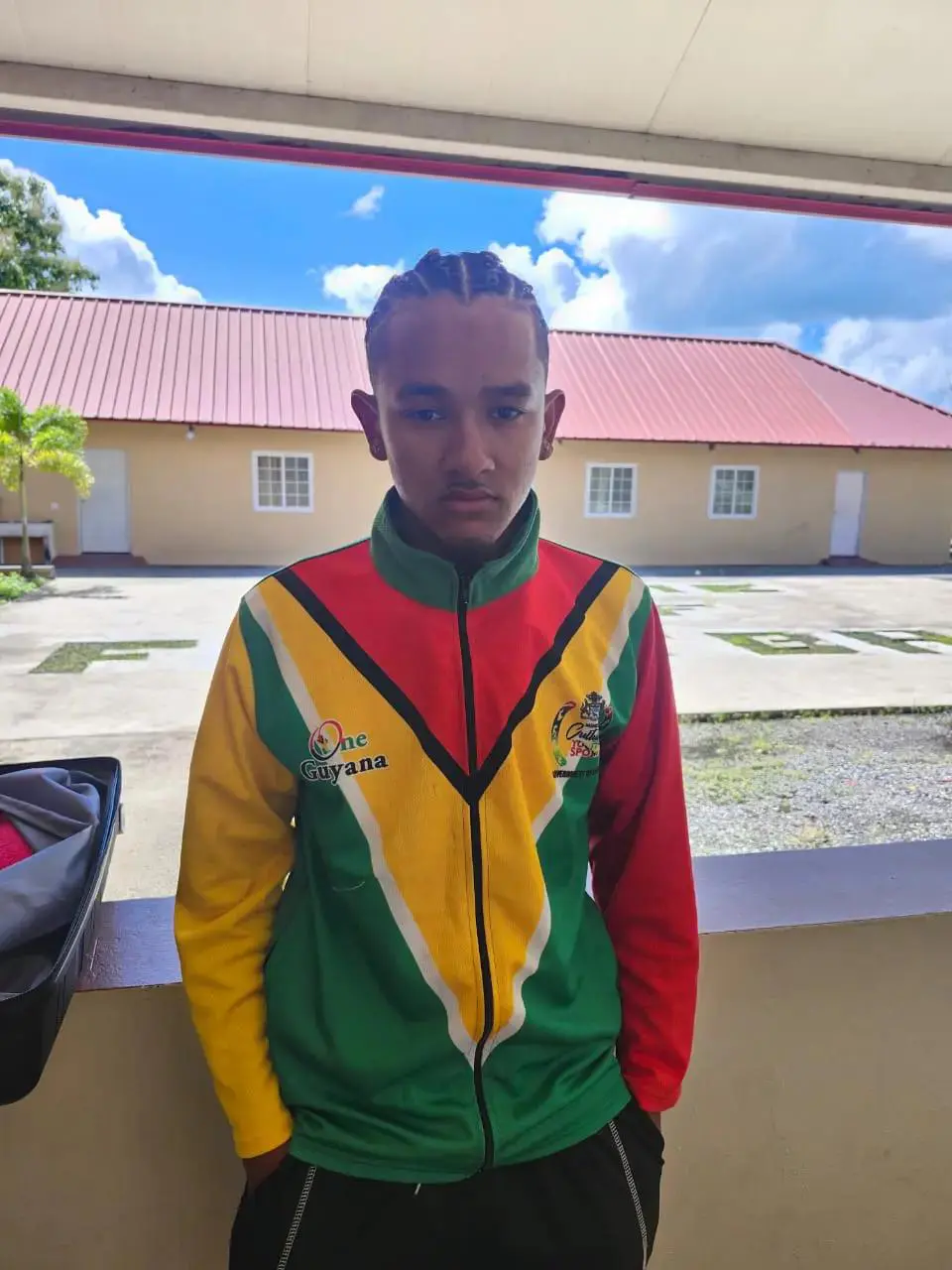
Andre Greene and Alexander Leung were among Guyana’s leading performers at the 2026 Tour de Bim, with the local contingent securing several high finishes across three days of racing in Barbados.
Greene delivered one of Guyana’s biggest results when he won Division Two’s Stage Two ahead of compatriot Leung, while Alexis Mendes completed an impressive Guyanese sweep of the top three overall positions.
Segun Hubbard also enjoyed a solid outing in the stage, placing seventh overall, while Christopher Griffith finished 19th. Mark Spencer was 24th, Tandeia Noel placed 44th and Kwame Fortune finished 53rd.
Guyana’s strong Division Two showing continued into Sunday’s 142-kilometre Stage Three, where Leung narrowly missed victory. He placed second in the Male Open 24-34 race, only 0.41 seconds behind Luis Yoel Torres Gonzalez.
Greene finished seventh in that category, while Griffith placed 12th.
Tandeia Noel, Guyana’s junior female representative, finished sixth in the women’s section of the final stage. Alexandra Terrero won the category, with Dahlia Reine second and Laura Milena Soto Castillo third.
Segun Hubbard also secured a podium placing in the Masters 35-49 category, finishing third in Stage Three. Alexis Mendes was listed as a non-finisher, while Quincy Ridley was also among Guyana’s representatives in the division.
Mark Spencer added another podium result for Guyana by placing third in the Masters 50+ category. Kwame Fortune was listed among the non-finishers in the same division.
In Division One, Briton John emerged as Guyana’s most consistent performer. He finished sixth overall in both Stage One and Stage Two, with his Stage Two performance placing him fifth among the Male Cat 1 Pro/Elite riders.
John then finished ninth in the final 142-kilometre stage in 3:22:02.44. Joseph Ramirez won the stage in 3:01:44.06, while Guyana’s Aaron Newton and Ajani Cutting did not finish.
Guyana’s contingent comprised John, Cutting and Newton in the Elite category; Greene and Griffith in Senior; Leung in Junior; Mendes, Ridley and Hubbard in Masters 35-49; Fortune and Spencer in Masters 50+; and Noel in the female junior division.
Source: Kiskadee Watch
https://kiskadeewatch.com/opinion/letters/does-sanctity-of-contract-also-apply-to-exxon/
Dear Editor,
President Ali frequently parrots the “sanctity of contract” in discussions of the Stabroek Block Petroleum Agreement (PSA) to convey that Guyana cannot change the contract. Yet the agreement was amended on April 26, 2019, by President Granger, to ensure that the 2% royalty could not be treated as a recoverable cost (see Stabroek News). Thus, the contract has changed since it was initially signed on June 27, 2016. President Ali is either misleading the Guyanese people or is unaware that the most important business contract in Guyana’s history has been modified.
Additionally, in Article 32 of the PSA, the stability clause of the 2016 Stabroek Block Production Sharing Agreement, expressly contemplates negotiation and amendment of the contract. Article 32.1 permits amendments with the contractor’s prior written consent, while Article 32.4 specifically provides for negotiations that may result in an amendment to the Agreement. Thus, “sanctity of contract” does not mean—and never has meant—that the parties are prohibited from negotiating mutually agreed changes to the contract.
On September 19, 2026, we published a letter, see https://kiskadeewatch.com/opinion/letters/apparent-discrepancy-of-us604m-in-oil-revenues-for-first-half-of-this-year/, referencing Section 15.6 of the Stabroek Block Petroleum Agreement, which states in part: “…royalty of two percent (2%) of all Petroleum produced and sold … Cash payment shall be due quarterly, thirty (30) days following the end of each calendar quarter.” At the time, we reviewed the 2026 Natural Resource Fund (NRF) reports available through July and identified an apparent difference in the royalty payments for the first half of 2026.
Those NRF reports showed that US$219 million had been paid in royalties. But using figures from the Bank of Guyana report, however, the implied royalty for the first half of 2026 is approximately US$302 million: US$92.50 per barrel × 163.3 million barrels × 2% royalty. That leaves an apparent difference of about US$83 million between the calculated royalty and the amount reported as paid by the NRF.
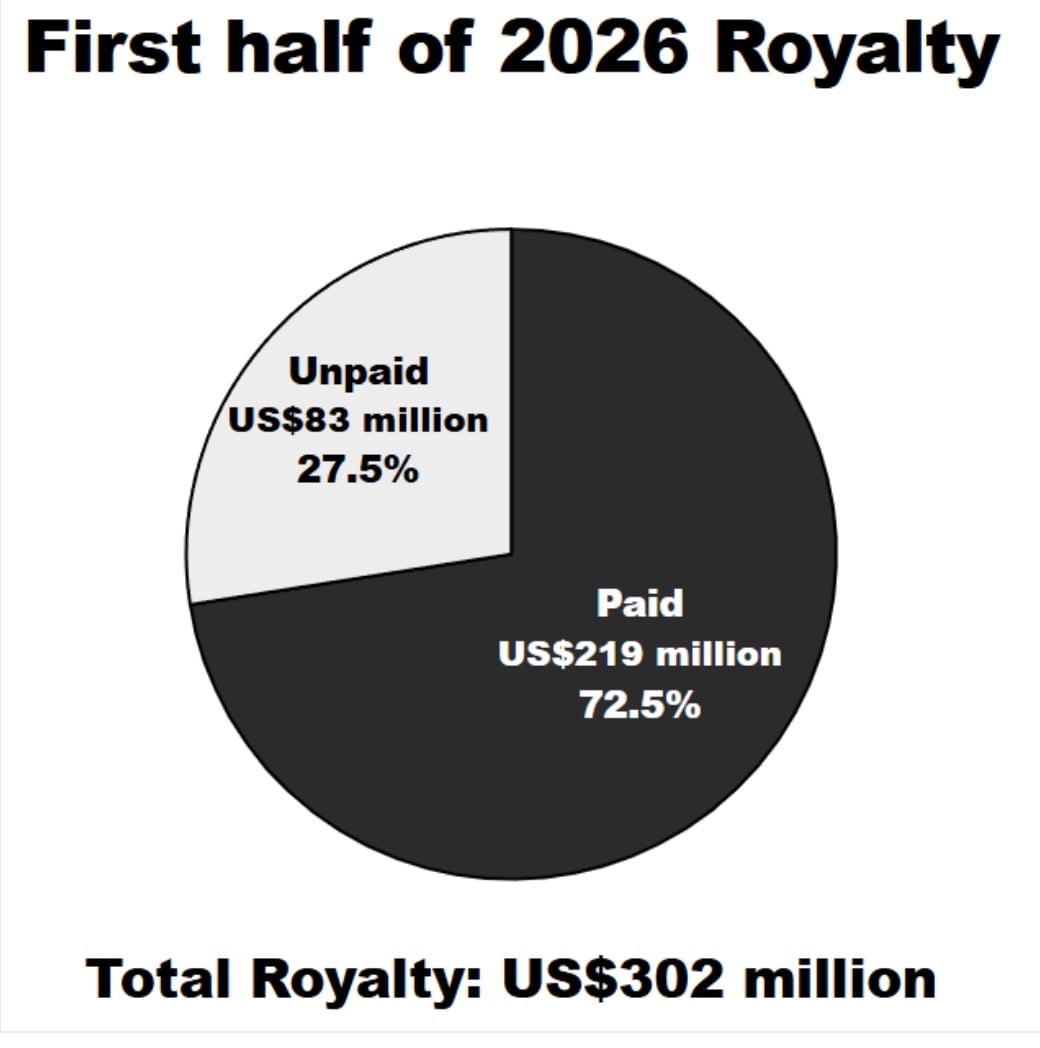
The August 2026 NRF report was released a few days ago. We had expected it to include an adjustment that would reconcile the US$83 million difference, but no such adjustment appeared.
If the principle of sanctity of contract is to be applied consistently, it should apply to all parties to the agreement, including Exxon and its partners. We would therefore like President Ali to explain the discrepancy: if the full royalty amount was due under Section 15.6, has the Stabroek Block Petroleum Agreement been complied with by Exxon and its partners? If so, what accounts for the US$83 million difference?
Yours faithfully,
Darsh Khusial
Alfred Bhulai
Kenrick Hunte
Joe Persaud
on behalf of OGGN (www.oggn.org/about )
Source: Kiskadee Watch

















Discussion