Home Blog Page 147

Labour shortage pushes farmers towards agricultural drones – Guyana Times

0

Labour shortage pushes farmers towards agricultural drones

Agriculture remains a major economic activity in Berbice (East Berbice-Corentyne), but as farmers grapple with difficulties finding workers, technology is increasingly being presented as an alternative.
The scale of the challenge was underscored on Monday, when Labour and Manpower Planning Minister Keoma Griffith, speaking at the induction of the Guyana Technical Training College’s sixth cohort at Port Mourant, cited the 2023 Guyana Workforce Assessment, as summarised by the International Labour Organisation, which projects that agriculture will require more than 12,000 additional workers by 2028.
At the just concluded Berbice Expo, that projected labour demand met one possible technological response, with agricultural drones being showcased for tasks ranging from spraying and spreading to crop monitoring.
Joel Singh of GuyDrones said farmers are already showing interest in the technology, with the availability of labour emerging as a major concern.
“Well, a lot of farmers are interested in the drone because, well, manpower. They’re complaining that manpower is a major issue right now. People are not coming out to work. So the farmers are reaching out to us either to utilise the service or to purchase their own drone,” Singh said.
Among the equipment displayed was an agricultural drone which, according to Singh, can carry up to 50 kilogrammes when spreading and 40 litres when spraying.
“The T50 is the payload capacity, which it could carry up to 50 kilogrammes weight when it’s been spreading. However, when it’s doing spraying, it’s 40 litres,” he explained.
Singh said the drone is also equipped with obstacle-avoidance technology which alerts the operator when objects are detected in its path. With a change of tank, he said, the equipment can be used to spread seed or fertiliser.
The technology extends beyond those applications, with systems also available for monitoring crops and identifying particular vegetation in fields.
“If there’s a certain vegetation that you’re looking for in the field, a certain type of leaf or anything, we have the technology,” Singh said.

Singh also said operators are required to maintain visual contact with their drones, citing requirements of the Guyana Civil Aviation Authority. He said persons purchasing the agricultural equipment are trained in its operation, while the company assists with the paperwork associated with importing the drone.
The Expo’s emphasis on innovation and technology, however, extended beyond the agriculture sector, with another exhibitor presenting a different approach to housing.
Chef Pro Guyana showcased prefab units incorporating a range of features during the construction process. Manager Ruben Samnolsing said the company offers units ranging from offices and single units to two-, three- and four-bedroom homes and two-flat structures.
“All our units come outfitted with electrical, plumbing, security grills, water heater, smart sink, camera system, alarm system, fire system,” he said.
According to Samnolsing, the structures are also treated with a rust-protective coating and anchored to their foundations. He said other features include gable roofing, an emergency side door and an air-conditioning unit.
Samnolsing said a two-bedroom unit is being offered for $5 million, installed on the customer’s property.
He said demand in Guyana is not confined to persons seeking individual homes, with prefab units also being used for larger residential projects.
“Right now, we have a lot of projects going on throughout. We are doing some projects in Linden, in Annandale, in parts of Georgetown, where persons are doing housing developments with our homes. So it’s not just persons are buying to live in. Persons are also buying apartment complexes,” Samnolsing said.


Discover more from Guyana Times

Subscribe to get the latest posts sent to your email.


Source: Guyana Times
Chinese cook charged with murder of 6-year-old boy – Guyana Times

0

Chinese cook charged with murder of 6-year-old boy

Seventy-six-year-old Chinese cook Quan Sheng Li has been charged and remanded to prison for the murder of six-year-old Zi Feng Cao at Parika, East Bank Essequibo (EBE)
Li appeared before Magistrate Omadatt Chandan at the Leonora Magistrate’s Court on Monday and was not required to plead to the indictment.
Nevertheless, during the court proceedings, the prosecution related that the post-mortem report and witness statements are still outstanding from the case file and requested time to complete same. As such, Li was remanded to prison until November 5, 2026.
It was reported that the child was chopped to the neck and was pronounced dead at the De Kinderen Regional Hospital last Wednesday after he was rushed to the institution by his parents.
The suspect, upon his arrest, did not only confess but also led investigators to the area where he had disposed of the murder weapon – a 12” stainless steel blade.
During interrogation, the elderly man reportedly stated that he had visited the Kenny’s Ocean Restaurant owned by the now dead lad’s parents to collect money he claimed was owed to him. He stated that he had invested money in the business and wanted it returned.
However, while at the premises, an argument broke out between him and the child’s parents after they allegedly told him they would not give him any money. He further claimed that he felt cornered and repeatedly asked for his money so that he could return home.
In his confession, the suspect told detectives via a translator that during the confrontation, the child had returned from school, and upon seeing him, he whipped out a knife from a bag and fired one chop towards him. He confessed to chopping the child in the area between the shoulder and head.
After committing the act, he left the premises, and as he walked onto the roadway, he discarded the weapon in a drain before proceeding to the Police Station.
He later accompanied Police to the location and assisted them in recovering the weapon. He was later charged with the heinous crime. The lad was cremated on Sunday.


Discover more from Guyana Times

Subscribe to get the latest posts sent to your email.


Source: Guyana Times

Democracy’s… painful reinstatement – Guyana Times

0

Democracy’s… painful reinstatement

October 5 has come and gone, but your Eyewitness is adamant that it didn’t bring back democracy to our country. It might’ve been the day that Jimmy Carter made that call to President Clinton at the White House – who had Hoyte call in the army to quell the riots at GECOM HQ to overturn the results. But it simply ushered in a long, brutal and bloody struggle to REALLY bring back democracy here!!
The New PPP Government was barely in place when Hoyte screamed the PPP was the “ethnic cleansing” of the public services!! When they were simply bringing in their own Permanent Secretaries that’s the practice in all Westminster Governments!! And of course, Hoyte pretended amnesia when it was under HIS watch that the IMF mandated a reduction in the Public Service – which the PPP halted!! Then there was Blackie London and his gang, who robbed Banks and Cambios, kidnapped Indian businessmen and demanded ransoms – but was yet draped with the flag of Guyana by Desmond Hoyte at his funeral!!
This was followed by the “Wild Men”, who founded the “Peoples Liberation Army” and helped spring the Mash 5 – including London’s lieutenant Douglas – from Camp Street Jail and set them up in Buxton!! Following up on his strident and hysterical moves to tag the PPP as “racial”, Hoyte upped the ante and segued into his “slow fyaah; mo fyaah” strategy that brought unprecedented violence into Guyanese politics. Some “political sophisticates” indOctoberrinated the Buxton “Freedom Fighters” to kill Policemen and Indians from surrounding villages with impunity – and even chased out Eusi Kwayana from the village where he’d lived and nurtured for over 50 years!! Yet Hoyte went into Buxton and announced the PPP was maligning Buxtonians by claiming there were criminals there!!
If we had real democracy after October 5, 1992, the authority of the lawfully elected PPP Government should’ve been recognised, and it should’ve never come to a point where drug lords had to “bring order” to the anarchy!! This was simply because the armed forces were unwilling to confront the “Freedom Bandits”!! Guyana became a killing field with bloody massacres by bandits at Lusignan and Bartica and counter-massacres by bandits at Agricola and the armed forces at Lindo Creek!! Peace was only returned after the Buxton bandits were wiped out after 2008.
And in the face of this frontal attack on the democratic state, the PPP upheld the tenets of democracy by holding elections in 2011, where their majority was reduced, and finally, they were voted out in 2015!! We can never forget that the PNC-as-APNU returned to its old habit of rigging elections to subvert democracy in 2020!!
Yes.., our democracy was birthed in blood – and we gotta protect it, always!!

…and majority rule
The Opposition is once again screaming that the Westminster principle of the winner of democratic elections assuming office – which is what our constitution demands – ain’t “democratic”!! They insist that the Opposition’s gotta be brought into the Executive, given Ministerial position – and perks!! – and this “shared governance” is the only kinda democracy for Guyana!! But your Eyewitness has gotta point out that even though they’d been singing this tune for decades – even Desmond Hoyte had joined the chorus just before he died! When they voted out the PPP in 2015, they didn’t bring in the PPP!!
And they even miniaturised the AFC that had brought them into power by agreeing to a coalition!! Previously, when the just departed PNC leader Corbin had made his pitch, the PPP of Bharat Jagdeo had said that there first had to be “trust” developed between the parties seeking shared governance!! The PNC of Granger’s treatment of Ramjattan and Nagamootoo from the AFC showed he had ample reason for being sceptical!!
What has changed since??

…discipline
What history has shown us is that democracy insists on a discipline of recognising that to ever “right” – which most like to demand – there is a reciprocal and PRIOR “obligation”!! In Guyana, we gotta follow before we can lead!!


Discover more from Guyana Times

Subscribe to get the latest posts sent to your email.


Source: Guyana Times

PRESIDENT IRFAAN ALI CAN LEAD FIGHT AGAINST CANCER IN GUYANA AND IN THE WORLD – Guyana Times

0

PRESIDENT IRFAAN ALI CAN LEAD FIGHT AGAINST CANCER IN GUYANA AND IN THE WORLD

Like the rest of the world, Guyana faces a severe cancer burden. In the first six months of 2026, there were 704 new cancer cases diagnosed. This means that Guyana could see almost 1500 new cases for 2026 alone, an incidence rate of about 160 per 100,000 persons. Prostate, breast, cervical, colorectal, and endometrial cancers were the top five cancers in Guyana so far in 2026. In 2025, 34 children were diagnosed with cancer. With improving diagnostics, the story can be even more frightening for Guyana. But this is also the global story, with every country affected.
President Irfaan Ali can use the Commonwealth Heads of State 2026 meeting in November in Antigua and Barbuda to lead a Commonwealth-led global fight against cancer. He and the First Lady are leading advocates in the fight against gender-based cancers, prostate, and cervical cancers in Guyana. President Irfaan Ali, in partnership with the Minister of Health and Men of Mission (MoM), has intensified the fight against prostate cancer. The First Lady has been a leading advocate in the fight against cervical cancer in Guyana and in the Caribbean Region. The Commonwealth Heads Meeting will be a good opportunity for both to become global leaders, not only in the fight against prostate and cervical cancers, but against all cancers.
President Irfaan Ali has instructed Minister Frank Anthony to work with Mount Sinai of New York to ensure the establishment of a comprehensive cancer centre in Guyana for world-class diagnostics, treatment and care services by 2030. The Minister of Health himself has intensified the fight against cancer. In part the increased diagnosis of prostate cancer and other cancers in Guyana reflects the improved diagnostic testing available and the aggressive screening campaign that the government has been leading. The planned comprehensive cancer centre can revolutionise the fight against cancer in Guyana.
The WHO 2026 Global Status Report on cancer portends a frightening future for the world. Globally, there were 19.5 million new cancer diagnoses (20.6 million including nonmelanoma skin cancer) in 2024, with 9.9 million men and 9.6 million women receiving such a diagnosis and 9.7 million cancer deaths. There were 400,000 new cancer diagnoses in children. The Global Cancer Observatory (GLOBOCAN) projects that new cancer cases will reach 35 million annually and cancer deaths will reach 18.6 million by 2050, with the largest increases in incidence and mortality rates occurring in low- and middle-income countries. These figures must serve as both a warning and a call to action. Unless we change the current trajectory, one in five people globally will develop cancer, and 92 per cent of the global population will be affected.
Guyana, CARICOM and other Commonwealth countries must ensure they utilise the full arsenal of tools already available but still not accessible to most of the developing countries. We must change this ugly dispensation now. President Ali can lead a paradigm shift empowering developing countries to access all cancer-fighting tools utilised in developed countries.
Use of existing scientific knowledge and tools – particularly in high-income countries – guided by the WHO 90-70-90 targets for cervical cancer elimination has led to impressive progress in the elimination of cervical cancer. Already, several high-income countries are on the verge of eliminating cervical cancer by 2050. If Commonwealth leaders support the optimal use of these tools based on the roadmap proposed in the recent Lancet Oncology Perspective, their countries can contribute to the first-ever elimination of a cancer. Lessons from cervical cancer can also be applied to hepatitis B-linked liver cancer and other pathogen-linked cancers.
Indeed, use of existing science-based knowledge and tools can prevent up to 40 per cent of cancers today. A GLOBOCAN study attributed 7.1 million (37.8 per cent) of 18.7 million cancer cases to 30 modifiable risk factors. Similarly, we already have the knowledge and tools at our disposal to reduce incidence, morbidity and mortality across the cancer control continuum of risk management, screening and prevention, early detection and diagnostics, treatment (including chemotherapy, radiotherapy and surgery), survivorship, palliation and end-of-life support. Utilising the framework proposed in the Lancet Commonwealth Cancer Roadmap Perspective, the Commonwealth and the world can change the present projections for cancers by 2050.
While additional knowledge and tools will further improve the trajectory of elimination, financing the optimal use of existing knowledge and tools represents a “best buy” for health and development. In a brief for the Lancet Commissioners, Rifat Atun and colleagues demonstrated a significant percentage of averted deaths and a return on investment of $16 to $24 for every $1 invested in the cancer control continuum, regardless of geography or economic status.
Taking leadership to combat cancer, if it happens, will not be the first time Guyana has taken health leadership in the world. Between 2001 and 2010, Guyana became a leader in the fight against HIV and AIDS. Guyana was among the first developing countries to use a cocktail of medicines to reduce and eliminate mother-to-child transmission of HIV. When Guyana introduced vaccines such as the rotavirus, pneumococcus and human papillomavirus (HPV) vaccines between 2008 and 2010, Guyana became a lead country in the expansion of childhood immunisation. Guyana was among the first developing countries to screen transfused blood for hepatitis C and for Zika.
These and several other initiatives demonstrate that even when we were a resource-poor country, Guyana was not afraid to take global leadership in fighting for the right to health and for better health for all citizens. Cancer has been a major global health threat for a long time now. It is time for a global battle to curb the cancer threat. Guyana must take the lead, and this can start with the Commonwealth Heads Meeting in Antigua and Barbuda in November.


Discover more from Guyana Times

Subscribe to get the latest posts sent to your email.


Source: Guyana Times

Adapting to AI age without losing human core – Guyana Times

0

Adapting to AI age without losing human core

The rapid advancement of artificial intelligence is forcing education systems around the world to reconsider long-standing assumptions about teaching, learning and assessment. Guyana cannot afford to remain outside that conversation.
President Dr Irfaan Ali’s intervention on the growing use of AI in education therefore raises an issue that extends well beyond technology. It goes to the heart of what education is intended to achieve and how learning should be measured in an environment where information, answers and even polished assignments can increasingly be generated within seconds.
Speaking on Monday during Teachers’ Day celebrations, President Ali acknowledged both the opportunities and challenges presented by AI. His central message was clear: technology should support education, but it cannot replace the teacher.
That distinction is important as AI can assist educators with lesson preparation, the development of teaching materials, adaptation of instruction and the creation of more interactive learning experiences. These possibilities could be particularly valuable as Guyana continues to expand digital technology in classrooms and seeks to equip students for a rapidly changing economy.
A teacher recognises when a student is struggling. A teacher can identify potential that may not yet be visible in examination results. A teacher can encourage, challenge, motivate and provide the patience required to help a child overcome difficulties. Those human relationships are central to effective education and cannot be reduced to an algorithm.
President Ali’s remarks are particularly relevant in the area of assessment as traditional assignments can no longer automatically be regarded as reliable evidence of individual understanding when students have access to increasingly sophisticated AI tools capable of generating essays, solving problems and producing other forms of academic work.
UNESCO has similarly identified the disruption of traditional assessment as one of the major consequences of generative AI. The organisation has argued that education systems must place greater emphasis on higher-order thinking, creativity and ethical reasoning rather than relying excessively on tasks that can be readily completed by machines.
That does not mean abandoning written assignments, examinations or established forms of assessment. It means ensuring that assessment continues to measure what education is actually supposed to produce: understanding, reasoning, application, creativity and the ability to solve problems.
The more important question is whether the student understands the material and can demonstrate independent thought. This requires a change in teaching practices as well as assessment methods. More classroom discussion, oral presentations, practical projects, problem-solving exercises and assignments rooted in local circumstances can provide opportunities for students to demonstrate genuine understanding. Assessments can also require students to critique AI-generated material, identify errors, evaluate competing arguments and explain the reasoning behind their conclusions.
Such an approach would make responsible use of the technology part of the learning process.
That approach is consistent with UNESCO’s AI competency framework for teachers, which identifies human-centred thinking, ethics, AI foundations, AI pedagogy and professional learning among the competencies educators increasingly require.
Guyana therefore has an opportunity to ensure that technological advancement is accompanied by investment in teacher capacity. President Ali has already pointed to the importance of continuous professional development as educators navigate an increasingly digital classroom.
Teacher training must now include sufficient exposure to AI tools, their limitations, ethical considerations and practical applications. Educators should not be expected to confront technological changes without the necessary knowledge and institutional support.
The objective cannot be to shield young people from AI as students will enter workplaces where AI is likely to be commonplace. Education must instead prepare them to use the technology responsibly while retaining the ability to question information, exercise judgement and think independently.
The president’s call to reconsider what learning means in the age of artificial intelligence is therefore timely. The education system must evolve because technology has evolved. But evolution must not come at the expense of the human purpose of education.
The classroom of the future should be one in which teachers are better equipped by technology to educate, guide and inspire, while students become more capable of thinking critically and using technology responsibly.
Guyana’s education transformation must embrace that balance.


Discover more from Guyana Times

Subscribe to get the latest posts sent to your email.


Source: Guyana Times

Dr Cheddi Jagan: The champion of the poor, the defender of democracy – Guyana Times

0

Dr Cheddi Jagan: The champion of the poor, the defender of democracy

Dear Editor,
There are some figures in a nation’s history whose contributions cannot be measured merely by the years they occupied public office. Their significance lies in the principles they fought for, the lives they touched, and the possibilities they opened for future generations. For Guyana, Dr. Cheddi Jagan remains one such figure.
For more than five decades, Dr. Jagan was at the centre of Guyana’s political, social and economic struggles. From the earliest days of the labour movement and the fight for universal adult suffrage, through the struggle for independence and the long campaign for democratic elections, his political life was closely intertwined with the aspirations of ordinary Guyanese.
Above all, Dr. Jagan became identified with the cause of working people, farmers, the poor and those who believed that the resources of Guyana should serve the wider population rather than a privileged few. Guyanese came to regard him as the champion of the poor and working class—a description that remains central to how his legacy is remembered.
Perhaps no chapter of Dr. Jagan’s life carries greater historical significance than his role in the restoration of democratic government. The October 5, 1992 general election was a watershed moment in Guyanese history. It was the first election in 28 years to be internationally monitored and accepted by observers as free and fair. The Carter Center described it as the first credible election in Guyana in 28 years, while international observers recorded that it resulted in a peaceful transfer of power.
His return to the presidency was not simply the culmination of a personal political journey. It represented the return of electoral democracy after decades in which Guyanese had lived through deeply contested elections and restrictions on political and civil liberties. Historical accounts record that elections during the earlier period were fraudulent and that human rights and civil liberties had been suppressed.
The restoration of credible elections therefore carried meaning far beyond the victory of one political party. It restored to Guyanese citizens the fundamental democratic right to have their votes genuinely determine who governed them.
Dr. Jagan understood the significance of that moment. In his October 9, 1992 inaugural address, he called on Guyanese to rebuild the country together, without rancour, recrimination or victimisation, and spoke of a democratic and humane order based on the rule of law, the eradication of poverty and human development.
The Guyana Dr. Jagan inherited in 1992 was not a prosperous country waiting for a new government to simply administer it. It was a country emerging from a prolonged period of economic and institutional decline.
The inherited burden was immense. Contemporary government material described an external debt of approximately US$2.1 billion in October 1992, with debt servicing consuming an extraordinary share of government revenues. Health and education were under severe pressure, while the country’s physical and social infrastructure required extensive rehabilitation.
The historical record also describes widespread emigration, a depleted population, deteriorating infrastructure and an education system that had fallen into serious disrepair. In the language of ordinary Guyanese, Dr. Jagan inherited a country that had been left economically barren and socially exhausted. But he did not use the condition of the country as an excuse for inaction.
Instead, his government embarked upon a programme of reconstruction. Water systems, electricity generation, roads, schools and health facilities became priorities. Accounts of the period point to substantial investment in social infrastructure, including new schools and health centres in rural and Amerindian communities.
The objective was not simply to make the economy grow. It was to ensure that economic recovery translated into a better quality of life for ordinary citizens. That distinction was fundamental to Dr. Jagan’s philosophy.
Dr. Cheddi Jagan will always occupy a distinctive place in Guyana’s history. He will be remembered as a leader who fought for universal suffrage, independence, democracy, economic justice and social development. He will be remembered for returning to the presidency through the historic 1992 election and for inheriting a country burdened by debt, deteriorating infrastructure and deep social and economic problems. He will be remembered for placing education, health, housing, agriculture, infrastructure and the welfare of working people high on the national agenda.
Dr. Cheddi Jagan will always remain the champion of the poor and working-class people of Guyana. His greatest legacy is not simply a list of projects or policies. It is the enduring proposition that a nation’s progress must be judged by the dignity, freedom and well-being of its people.
Those who carry Dr. Jagan’s political tradition forward can look back with pride at the distance travelled since his historic return to office in 1992. That journey has continued under the leadership of General Secretary Dr. Bharrat Jagdeo, who has helped guide, strengthen and evolve the movement that Dr. Jagan built, while playing a consequential role in the remarkable transformation of Guyana’s political and economic landscape.
Yours sincerely,
Rajiv Kadarnauth
Regional Councillor
Essequibo Islands/ West Demerara


Discover more from Guyana Times

Subscribe to get the latest posts sent to your email.


Source: Guyana Times

History!: Boyce, Xavier to represent Golden Arrowhead at Commonwealth Cue Sports Championship – Guyana Times

0

History!: Boyce, Xavier to represent Golden Arrowhead at Commonwealth Cue Sports Championship

The Cue Sports Association Guyana (CSAG) has announced a historic milestone for Guyanese cue sports as Andre Boyce and Anthony Xavier prepare to represent Guyana at the 2026 Commonwealth Cue Sports Championship, scheduled for October 8-10, 2026, in Ahmedabad, India.

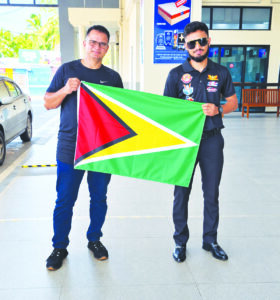
Andre Boyce and Anthony Xavier prior to their departure for the 2026 Commonwealth Cue Sports Championship in India

According to the Association, this landmark participation will mark the first time Guyana has representatives competing on the international stage in pool, making the occasion a defining moment in the development of cue sports locally.
Boyce and Xavier will proudly carry the Golden Arrowhead as they compete alongside players from across the Commonwealth. Their selection reflects years of dedication, discipline and commitment to the sport and demonstrates the growing standard of competitive pool in Guyana.
CSAG President Steven Persaud stated, “This is a proud and historic moment for cue sports in Guyana. For the first time, our pool players will step onto the international stage carrying the Golden Arrowhead. Andre and Anthony are not only representing themselves and CSAG; they are representing every Guyanese player who dreams of one day competing for their country. We encourage them to embrace this opportunity, compete with confidence, show respect and sportsmanship, and give their very best for Guyana.”
CSAG believes this historic appearance will inspire young and emerging players throughout Guyana and further strengthen efforts to develop structured competition, training and international opportunities for local athletes.
The Association extended its sincere best wishes to Boyce and Xavier for a successful championship and a safe journey. “Regardless of the results, their participation has already created a new chapter in the history of Guyanese cue sports,” the Association noted.


Discover more from Guyana Times

Subscribe to get the latest posts sent to your email.


Source: Guyana Times

Serious concerns exist about if there is enough water for Amaila Falls hydro project

0

https://kiskadeewatch.com/opinion/letters/serious-concerns-exist-about-if-there-is-enough-water-for-amaila-falls-hydro-project/

Letters To The Editor

Serious concerns exist about if there is enough water for Amaila Falls hydro project

Dear Editor

Sharma Solomon MP has re-opened questions about the economic viability of the Jagdeo-era proposed Amaila Falls hydropower dam on the Kuribrong River in Region 7 (‘Solomon seeks disclosure of Amaila Falls costs’, Kiskadee Watch, October 02 2026). In addition to doubts about the viability of this small generator (165 megawatts), the government also needs to revisit the data about the amount of water.  Amaila Falls was mentioned in Monenco’s survey of national hydropower potential in 1976.  The pooja-shop owner Fip Motilall acquired an interim licence to construct in 2002 and sold out the licence to Sithe Global in October 2009.  Sithe signed an engineering and construction agreement with China Railway First Group in September 2012 but the State-owned Chinese company was not willing to take a BOOT contract (build, own, operate, transfer).  The APNU+AFC coalition did not support the PPP government in carrying the financial risk under a different arrangement, so the deal collapsed and the licence expired in December 2013, after Kaieteur News had published a photograph in October of the almost dry river.

Norway was still supporting the first four versions of the Low Carbon Development Strategy and through NORAD funded a project review of the Amaila Falls proposal by the consultancy Norconsult which reported in December 2016.  Chapter 5 covers Hydrology and mentions the direct river flow measurements in June-July 1975 and June-August 2011.  Sithe Global restarted flow measurements in 2011 but stopped in 2013 when the scheme was ended.  Norconsult wrote (page17, section 4.1.3) ‘The live storage capacity in the AFHP reservoir is limited. The operation of AFHP will therefore follow a next to run-of-river pattern. The inflow estimate to the AFHP reservoir in the dry months is uncertain. It is clear, however, that the low season inflow will not be sufficient for continuous full capacity generation’. And on page 21, chapter 5: ‘We recommend that the programme for continuous water flow measurement is resumed as soon as possible and before a new main sponsor would be ready to take the front seat. 2-3 additional years of continuous flow data would provide a more reliable basis for an updated energy production simulation and thereby reduce the risks for both parties…’  Since the Norconsult report was made public, the hinterland of Guyana has begun to experience the effects of global climate heating, with longer dry-season droughts as well as more severe storms, and overall a decline in rainfall.  I have not found any report by Hydromet to show that the recommended continuous water flow measurements in the Kuribrong River have been restarted, so the dam project again looks like another infrastructural white elephant.

Moreover, Amaila Falls was under discussion before Exxon announced the discovery of the Liza-1 offshore oilfield in May 2015, and long before the proposals for gas-to-energy facilities at Wales and now in Berbice.  I am sure that we understand the attachment of Vice President Jagdeo to projects like the bagasse generator at Skeldon (which he was personally going to ‘fix’), and to the tilting concrete slab at Wales, but do we really need an intermittently functioning generator at Amaila in his portfolio?

Yours truly,

Janette Bulkan

You reached the end of this article without encountering a paywall.

That is deliberate. We believe reliable journalism about Guyana should be available to everyone from the hinterland to the coast, including those who cannot afford to pay for it. But investigating, reporting and publishing every story takes time, energy and resources. Keeping our journalism open depends on the commitment of readers who can chip in and contribute to help cover the cost for everyone.

Please join the Kiskadee family by taking a subscription. Every contribution counts to our commitment to our journalists, to our readers, and to independent, public-interest journalism.

And please spread the word. One one dutty build dam!


Become a supporter


Source: Kiskadee Watch

World Bank stresses oil wealth must benefit wider population

0

https://kiskadeewatch.com/guyana/world-bank-stresses-oil-wealth-must-benefit-wider-population/

World Bank stresses oil wealth must benefit wider population


-says economy will expand 23.7%

The World Bank projects that Guyana’s economy will expand by 23.7 per cent this year, leading Latin America and the Caribbean, but says the country’s rapid oil-driven growth underscores the need for stronger institutions and public investment management to ensure that the wealth produces inclusive development.

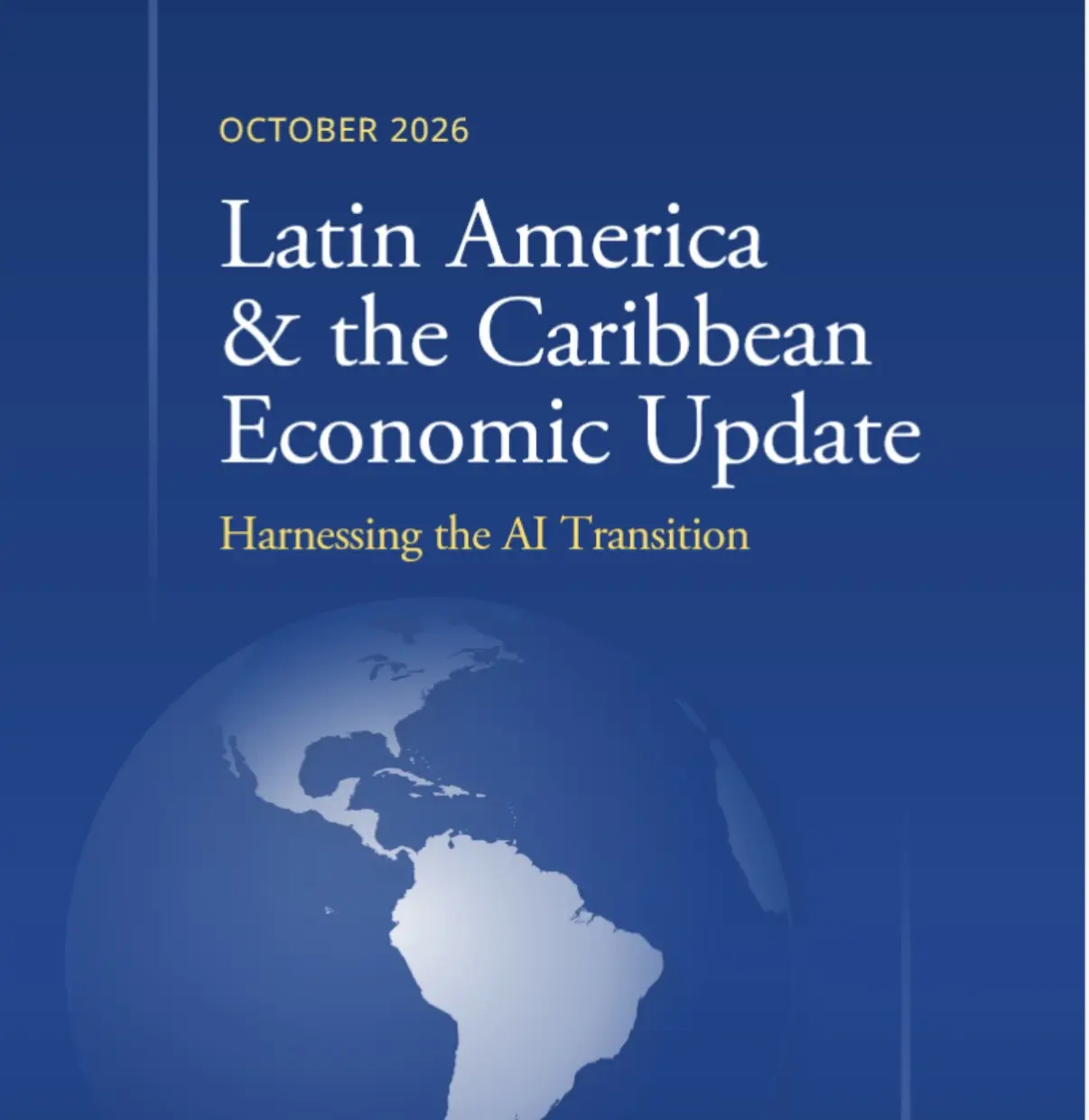
In its October economic update, Harnessing the AI Transition, the Bank identifies Guyana as the only country in its regional table projected to achieve double-digit growth in 2026. The wider region is expected to expand by 2.2 per cent, compared with 2.4 per cent in 2025.

The report says Guyana’s expansion has brought rising government revenues, improved external balances and a declining public-debt-to-GDP ratio. Alongside those gains, however, it stresses the importance of “ensuring that oil wealth translates into broad-based and inclusive development.”

It also cautions that oil-producing countries such as Guyana face the task of managing revenue volatility and avoiding spending patterns that amplify economic booms and downturns as public finances expand.

The Bank attributes Guyana’s exceptionally rapid and sustained growth since 2020 to the scaling up of offshore oil production.

Its forecasts put growth at 18.7 per cent in 2027 and 15.3 per cent in 2028, following the projected 23.7 per cent this year. The report records expansion of 19.3 per cent in 2025, 43.8 per cent in 2024 and 33.8 per cent in 2023.

The figures use information available up to September 23. The 2026 rate is a full-year projection rather than growth already recorded.

Guyana’s forecast substantially exceeds the next-highest rates in the regional table—4.7 per cent for both the Dominican Republic and Paraguay, 4.5 per cent for El Salvador and 4.2 per cent for Panama.

The report describes a divergence within the Caribbean, with Guyana’s oil-led expansion lifting subregional averages while tourism-dependent economies face more tempered growth, high transport costs and vulnerability to energy prices.

Suriname is projected to grow by 3.9 per cent this year and 4.6 per cent in 2027, before accelerating to 21.5 per cent in 2028.

Above

The World Bank’s projection for Guyana is 2.9 percentage points above the government’s revised full-year forecast of 20.8 per cent.

According to the Department of Public Information (DPI), the government estimated that the economy expanded by 33.3 per cent in the first half of 2026, while the non-oil economy grew by 10.1 per cent. Its September assessment projected full-year non-oil growth of 10.2 per cent. 

Stabroek News reported in January that Finance Minister Dr Ashni Singh had initially forecast overall growth of 16.2 per cent when presenting the G$1.558 trillion budget.

The budget provided for a G$495 billion transfer from the Natural Resource Fund and a G$779.6 billion Public Sector Investment Programme, including expenditure on roads, bridges, energy infrastructure, schools, hospitals and housing. The scale of that investment provides context for the World Bank’s emphasis on strengthening the management of public expenditure. 

Construction grew by 24.7 per cent during the first half, supported by government expenditure and private investment, while services expanded by 7.2 per cent.

The performance was uneven. Agriculture, forestry and fishing together contracted by an estimated 0.5 per cent, as above-normal rainfall affected other crops despite gains in several subsectors. 

Rapid economic expansion has also occurred alongside rising consumer prices. According to the government’s mid-year assessment, prices increased by 4.4 per cent between December 2025 and June 2026, largely because of higher food prices.

The twelve-month inflation rate stood at four per cent in June, while the government revised its year-end inflation forecast to 4.3 per cent. 

Wider region

For the wider region, the World Bank warns that volatile energy prices could slow the decline in inflation and prolong high real interest rates, restricting credit and investment. Heavy debt and interest payments also limit governments’ capacity to invest.

Climate shocks present further risks. Damage to agriculture, transport networks and access to markets can increase food prices and erode purchasing power, particularly among poorer households which spend a larger share of their income on food.

The report also examines how artificial intelligence could improve productivity, while stressing that technology alone will be insufficient without stronger workforce skills, management capacity and businesses able to incorporate the tools into their operations.

It recommends technical training, assistance to small and medium-sized enterprises and stronger digital government and data systems.

You reached the end of this article without encountering a paywall.

That is deliberate. We believe reliable journalism about Guyana should be available to everyone from the hinterland to the coast, including those who cannot afford to pay for it. But investigating, reporting and publishing every story takes time, energy and resources. Keeping our journalism open depends on the commitment of readers who can chip in and contribute to help cover the cost for everyone.

Please join the Kiskadee family by taking a subscription. Every contribution counts to our commitment to our journalists, to our readers, and to independent, public-interest journalism.

And please spread the word. One one dutty build dam!


Become a supporter


Source: Kiskadee Watch

MV Barima CoI to begin evidence-taking on Oct.14

0

https://kiskadeewatch.com/guyana/mv-barima-coi-to-begin-evidence-taking-on-oct-14/

MV Barima CoI to begin evidence-taking on Oct.14


MV Barima

-may run for six months

The Commission of Inquiry (CoI) into the MV Barima tragedy is expected to begin taking evidence next week Wednesday, with more than 100 potential witnesses identified for processing, while Secretary to the Commission Javed Shadick said yesterday that he could not say whether Public Works Minister Juan Edghill and Minister of Public Utilities and Aviation Deodat Indar will be called to testify.

Shadick made the disclosure during a press conference at the Arthur Chung Conference Centre, Liliendaal, Greater Georgetown, where he spoke about the Commission’s schedule for the coming days and its plans for the formal taking of evidence.

Asked by Kiskadee Watch whether Edghill and Indar would be among the persons summoned before the Commission, Shadick said he was unable at this stage to say whether either minister would be called.

The Commission will hold an opening session this morning, after which, in the afternoon, they will meet with families of survivors and victims from Regions Three (Essequibo Islands/West Demerara), Four (Demerara/Mahaica) and Five (Mahaica/Berbice).

Tomorrow, they will tour the Kingston Wharf at about 9 a.m., as well as facilities operated by the Maritime Administration Department (MARAD) and the Transport and Harbours Department (THD), while on Friday, they will visit two dry-docking facilities on the East Bank Demerara -Guyana Ports Inc. at Supply and Gopie Investment Inc. at New Hope.

The commissioners will then travel to Mabaruma on Monday to visit the wharf facility and meet with survivors and families from surrounding communities, while they will conduct similar visits and meetings at Port Kaituma the following day. However, no evidence will be taken during any meeting before the first official sitting.

The Commission, Shadick said, has also made arrangements for interpreters to assist persons who do not speak English, and counsel to the Commission are responsible for interviewing persons who may have information relevant to the inquiry.

Shadick said, however, that relatively few people have so far come forward voluntarily, noting that only one person has contacted the secretariat to indicate an intention to give evidence.

The secretariat has divided potential witnesses into several categories, including first responders, officials, survivors and families of people who died in the tragedy. Its initial list contains more than 100 persons who will have to be processed and interviewed.

The Commission will subsequently determine whether witnesses from hinterland and coastal communities will be required to travel to Georgetown or whether some sittings will be held in those communities.

Asked by Kiskadee Watch about the revised timeline, following an earlier indication that the inquiry could be completed within two months, Shadick estimated that the entire process could take approximately six months, although the final duration will depend on how long it takes to complete the evidence-taking process and prepare the report.

He said that all of the resources needed are at the CoI’s disposal as the inquiry is a presidential one. Several commissioners, he said, have expertise in the maritime sector and have already guided the secretariat on the documents and technical information required for the investigation, with the majority of those documents already acquired.

The MV Barima capsized off Guyana’s coast on July 18, resulting in the deaths of 73 people, while 76 others survived. Dozens more are still missing. 

The Commission is expected to examine the circumstances surrounding the tragedy and determine the factors that contributed to the loss of life, as well as make recommendations arising from its findings.

The sittings are scheduled to run from 9 a.m. to 4 p.m. daily.

You reached the end of this article without encountering a paywall.

That is deliberate. We believe reliable journalism about Guyana should be available to everyone from the hinterland to the coast, including those who cannot afford to pay for it. But investigating, reporting and publishing every story takes time, energy and resources. Keeping our journalism open depends on the commitment of readers who can chip in and contribute to help cover the cost for everyone.

Please join the Kiskadee family by taking a subscription. Every contribution counts to our commitment to our journalists, to our readers, and to independent, public-interest journalism.

And please spread the word. One one dutty build dam!


Become a supporter


Source: Kiskadee Watch