https://kiskadeewatch.com/guyana/our-responsibility-is-to-follow-the-evidence-wherever-it-leads-and-to-frankly-and-fearlessly-report-our-findings-chairman-of-mv-barima-inquiry/








https://kiskadeewatch.com/guyana/our-responsibility-is-to-follow-the-evidence-wherever-it-leads-and-to-frankly-and-fearlessly-report-our-findings-chairman-of-mv-barima-inquiry/
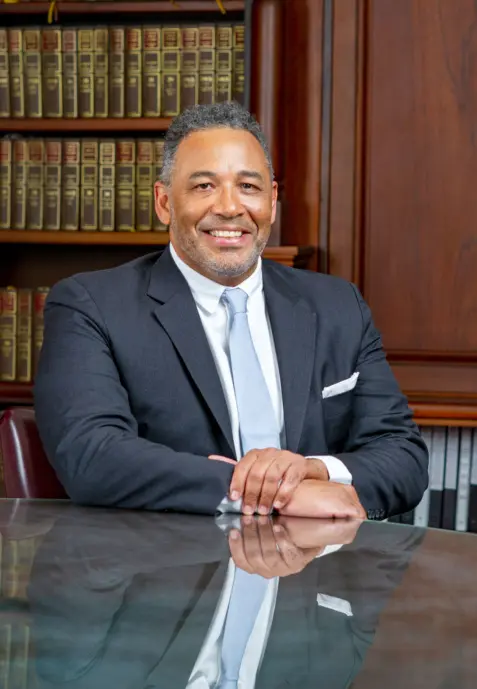
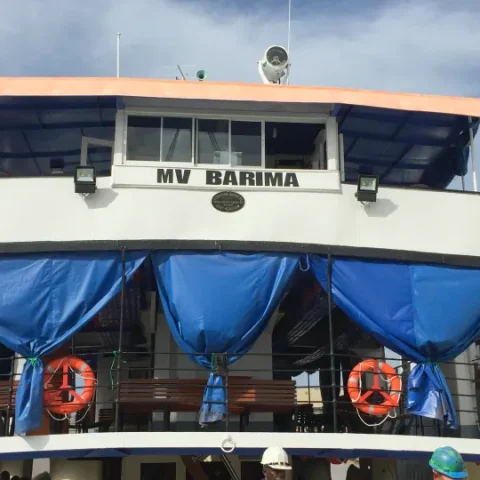
Godfrey P Smith, the Chairman of the Commission of Inquiry into the MV Barima sinking, today said the task of the commissioners is to follow the evidence wherever it leads and to “frankly and fearlessly” report their findings.
He was at the time delivering an opening address at the Arthur Chung Conference Centre where the long-awaited inquiry into the July 18 sinking of the MV Barima and the loss of around 100 lives will be held.
He said that the Terms of Reference require the commissioners to undertake a thorough, independent and impartial public inquiry into the circumstances surrounding the capsizing and sinking of the MV BARIMA, the loss of lives, the response to the tragedy, and all matters reasonably connected with it.
“They require us, so far as the evidence reveals, to establish the full facts and sequence of events; to determine the immediate, direct and contributing causes of the casualty; to identify operational shortcomings or failures; to assess compliance with applicable legal and safety requirements; to consider accountability where warranted; and to propose reforms necessary to strengthen maritime safety and prevent the possibility of recurrence. Our mandate is therefore not confined to the final moments of the voyage but includes the circumstances which existed before, during and after the casualty occurred”, he stated.
Smith also said that major casualties rarely come from one isolated circumstance but may stem from the interaction of several factors such as physical conditions, human decisions, organizational systems, systemic failures, inadequate regulatory controls and failures of communication or oversight that may have built up over a long period of time.
“Our responsibility is to identify and examine those matters fairly and precisely, to follow the evidence wherever it leads and to frankly and fearlessly report our findings”, he declared.
PRELIMINARY HEARING
Chairman’s Opening Statement
7 October 2026
Introduction
Fellow Commissioners, counsel, distinguished guests, representatives of interested parties, survivors, relatives and loved ones of those who lost their lives in the BARIMA tragedy, witnesses, members of the media, citizens of Guyana: On 30″ July 2026, H.E. Dr. Mohamed Irfaan Ali appointed us as Commissioners to inquire into, and report on, the circumstances surrounding the capsizing and sinking of the BARIMA on the night of 18″ July 2026 and the tragic consequences that followed. Since our appointment, we, together with the Commission’s counsel and personnel, have been gathering important technical maritime documentation and analyzing it, conducting investigations, drawing up a list of potential witnesses and interviewing them, drafting procedural rules to guide the conduct of the Commission’s work and other preparatory work necessary for the full and efficient discharge of this solemn public duty we have been entrusted with. Today’s hearing is a preliminary hearing to introduce ourselves, key personnel of the Commission and to explain how the Commission intends to go about its work, before we begin calling witnesses to give oral evidence at the substantive hearings. By way of introduction then, I am Godfrey Smith, Senior Counsel, and a former judge of the Eastern Caribbean Supreme Court. I will serve as the Chairman of this Commission of Inquiry. I will now ask my fellow Commissioners to introduce themselves. I will now ask Counsel to the Commission to introduce themselves and their team. The BARIMA tragedy has inflicted immeasurable human loss to families, to communities and an extensive circle of people whose lives have now been permanently changed. The loss of lives, persons who remain unaccounted for and those who survived, are not merely the statistics of a maritime casualty but are the loss and cause of deep suffering experienced by many families and, by extension, the nation. We therefore open these proceedings expressing our sorrow for those whose lives were lost, compassion for and empathy with the bereaved, and for those who survived, Put in plain language, our task is to find out what happened to the BARIMA and why it happened? What circumstances permitted it to happen? Were there warning signs? Were there failures? Were laws, regulations and safety procedures complied with? Were they adequate? Were they properly administered and enforced? Who is responsible and what is to be done about it? Having answered those questions, as far as the evidence reveals, we must then consider what is to be done to reduce the possibility of such a tragedy occurring again? These are complex and difficult questions. But they are questions which this Commission has been mandated to answer and which, given the collective expertise of the Commissioners, it has the competence to answer.
Purpose of this Inquiry
This Commission derives its authority from the Commission of Inquiry Act and, in particular, from the comprehensive Terms of Reference issued to us. The Terms of Reference require us to conduct a thorough, independent and impartial public inquiry into the circumstances surrounding the capsizing and sinking of the BARIMA, the loss of lives, the response to the casualty, and all matters reasonably connected with it. They require us, so far as the evidence reveals, to establish the full facts and sequence of events; to determine the immediate, direct and contributing causes of the casualty; to identify operational shortcomings or failures; to assess compliance with applicable legal and safety requirements; to consider accountability where warranted; and to propose reforms necessary to strengthen maritime safety and prevent the possibility of recurrence. Our mandate is therefore not confined to the final moments of the voyage but includes the circumstances which existed before, during and after the casualty occurred. Major casualties rarely arise from one isolated circumstance. They may arise from the interaction of several factors such as physical conditions, human decisions, organizational systems, systemic failures, inadequate regulatory controls and failures of communication or oversight that may have built up over a long period of time. Our responsibility is to identify and examine those matters fairly and precisely, to follow the evidence wherever it leads and to frankly and fearlessly report our findings.
The Six Main Areas of Inquiry
Our Terms of Reference require us to address a number of interrelated areas.
The seaworthiness and safety of the vessel
We will examine the condition and seaworthiness of the BARIMA. That includes matters relating to its physical condition, stability, machinery, maintenance, certification, inspection, operational condition and compliance with applicable safety and other regulatory requirements. We will ask whether the BARIMA was fit for the voyage on which she embarked and whether the conditions in which she operated were consistent with the requirements imposed upon her.
Passenger and cargo operations
We will examine the circumstances and methodology by which passengers boarded the vessel and cargo was loaded. Questions concerning passenger numbers, manifests, cargo quantities, cargo placement, loading procedures, stability, the carriage of potentially hazardous material, the availability and adequacy of lifesaving equipment, and compliance with regulations will all be inquired into. I emphasize that we will not approach these questions with any predetermined conclusion but will attempt to establish the facts based on hard evidence.
The crew — qualifications, competence, conduct and decision-making
The qualifications, training, experience and operational readiness of the master, officers and crew will be examined as well as their conduct before and during the voyage and their actions when the emergency arose. What information was available to those persons manning the BARIMA? What decisions were taken by them? What alternatives, if any, were available? And were those decisions taken reasonable in the circumstances as they existed at the relevant time?
Search, rescue and recovery
We will inquire into the adequacy, timeliness, coordination and effectiveness of the search, rescue and recovery operations which will require examination of the actions of the relevant public authorities, emergency services, maritime agencies and other persons who responded. We will consider the information available to them, the resources available, the communications received and transmitted, the decisions made, and the manner in which the response unfolded. The purpose is to determine whether the response, rescue and recovery efforts were adequate in the circumstances and, if not, why not.
Regulatory and institutional oversight
We will inquire into the systems of supervision and oversight applicable to the BARIMA. This will include consideration of the roles and responsibilities of relevant state institutions, including the Transport and Harbours Department and the Maritime Administration Department. We will examine inspection, certification, maintenance systems, operational procedures, supervision, staffing, training, enforcement and regulatory oversight where those matters are relevant. What rules existed to ensure passenger safety and whether, and to what extent, were they implemented and enforced?
Human factors and emergency decision-making
We will inquire into the human dimensions of the casualty such as workload, training, communication, situational awareness, command structure, risk assessment and emergency decision-making where relevant. The purpose is to understand how decisions were made and how systems functioned in the real circumstances confronting those involved.
This is an Inquiry, not a Trial
From the outset, it is important that the public understands the character of these proceedings. This is a Commission of Inquiry. It is not a criminal trial. In many ways, a Commission of Inquiry may appear to resemble a court, but it is not. It does not sit as a criminal court and will not determine the criminal guilt of anyone. Nor will the Commission determine civil liability like a court exercising civil jurisdiction. Our task is to establish facts, make findings within the scope of our mandate, identify causes and contributing factors, identify shortcomings or failures in a way that the court system does not, and make recommendations. Our recommendations are not legally binding, and it will be for the government or other relevant public bodies and organizations to decide what action will be taken in response to our report. If evidence emerges which properly requires referral to another competent authority, the Commission will deal with that evidence in accordance with its Terms of Reference and the law. The report of a Commission of Inquiry may therefore be the catalyst for civil and criminal proceedings to follow.
The Importance of Procedural Fairness
The Commission has adopted and published Rules of Procedure to ensure that its work is conducted in a manner that is open, transparent, orderly, fair and effective. We have the power to summon witnesses, require the production of relevant documents and other material, require and even compel persons possessing relevant information to give evidence. Any person wishing to participate in the Inquiry as an Interested Party may apply to the Commission for standing by writing to the Secretary of the Commission. The Commission will then consider all applications and may grant standing if it is satisfied, for example, that an applicant has played or may have played, a direct and significant role in relation to the subject matter of the Inquiry or has relevant evidence or information relating to the subject matter of the Inquiry; has a substantial, personal or direct interest in the subject-matter of the Inquiry whether as a witness, survivor, family member of a victim or otherwise; or may be subject to explicit or significant criticism during the proceedings of the Commission or in its Report. Where the Commission considers that any person, institution or organization may be subject to, or who has been subject to, adverse criticism in these proceedings, or who may be subject to adverse criticism in its report, such person or organization shall be afforded the earliest practicable opportunity to fully and adequately respond in accordance with the Rules and the principles of natural justice.
The Families of the Deceased
To those who lost loved ones, we acknowledge that you have endured the worst consequence of this tragedy. For many of you, this Inquiry will bring back painful memories. You may hear accounts which differ from your own understanding of what occurred. You may even hear things which raise further questions rather than answering the questions you already have. We cannot promise that every question you may have will have an answer. But we will endeavor to find answers to the questions we have been asked, in our terms of reference, to inquire into. We shall keep at the forefront of our minds that the reason for this inquiry is the tragic loss of so many precious lives. They were parents, children, spouses, siblings, friends, and members of communities. They were citizens of Guyana. The dignity of those people, as well as the survivors, will remain at the centre of these proceedings.
Witnesses
Since our appointment, we have gathered substantial documentary and technical maritime material that provides a sound foundation for our investigative work and we have been carefully considering this material. However, the taking of evidence from witnesses is one of our core roles. Witness evidence may provide the crucial means for obtaining a full understanding of the facts and issues by filling in any gaps and building on the documentary evidence. In early September, we issued a general notice inviting members of the public, government and non-government organizations, private and public entities, indeed anyone who may possess knowledge or relevant information or documents to approach the Secretariat of the Commission and provide such information. Today, we reiterate that call for potential witnesses to contact the Secretariat of the Commission to assist us by offering evidence voluntarily. The Secretariat has been interviewing witnesses and preparing witness statements and this rolling programme of taking evidence will continue throughout. We therefore urge you to come forward with relevant information. However, the fact that a particular document has been obtained and reviewed does not mean that its contents have been accepted. Similarly, the fact that a witness has been identified and has provided a witness statement does not mean that the witness’s account has been accepted. Each document and each witness will be carefully and scrupulously examined to determine how reliable they may be and what weight should be given to a particular account.
A public inquiry
The capsizing and sinking of the BARIMA and the consequent loss of life is a national tragedy. The public has a legitimate interest in understanding what occurred and why. It is therefore appropriate that this inquiry is a public inquiry and that its proceedings and processes are transparent. In this regard, the Commission’s website should be the public face of the inquiry; it will be the mechanism by which members of the public are informed of the inquiry’s work. We had hoped to have the website ready and accessible by now. Regrettably, it is not yet ready, but we shall double our efforts to have it ready as soon as possible. Our aim is for members of the public to be able to access the terms of reference, the Commission’s Procedural Rules, any hearing timetables, key pieces of evidence, witness statements, rulings and transcripts; and for the website to serve as the primary record of the Commission’s work. In the meantime, copies of the Terms of Reference, and Procedural Rules may be obtained by emailing the Secretary of the Commission. We do not intend to take short cuts, jump to conclusions or deliver a rushed report. We hope to earn the confidence of the public by demonstrating that the process by which conclusions are reached is fair, rigorous, comprehensive and independent; that conclusions are based on solid evidence which has been carefully evaluated and tested. That is the process we intend to follow and our aim is to complete this in about six months.
Independence and Accountability
The Commission is of course conscious of the intense public interest surrounding this tragedy and that different views may have formed about what happened. We approach our task with no predetermined view and will objectively interrogate all the circumstances surrounding the sinking of the BARIMA without fear or favour. While we have been appointed by His Excellency the President, have received our Terms of Reference from him and will in due course deliver a report to him, we are not an arm of the Government or indeed of any other institution or entity. Our allegiance is to the law, to our Terms of Reference, to procedural fairness and, above all, to the truth as established by credible, tested evidence. If the evidence establishes that a person, institution or system failed in its duties, we will say so. Equally, if the evidence does not establish such a failure, we will say so.
The Need for Reform
We appreciate that, unlike any other Caribbean country, transport by water forms an indispensable pillar of your very existence. Whether domestically or commercially, the maritime space is at the center of not just your daily life but your future development. Accordingly, when this perspective is combined with the realities and implications of the tragedy, the need to closely examine current arrangements takes on added significance. There is one further aspect of our mandate which deserves particular emphasis. This Commission has not been established merely to record and determine the tragic circumstances under which the BARIMA sank. Our Terms of Reference require us to make recommendations for reforms necessary to strengthen maritime safety and prevent a recurrence. That means that when this Inquiry is complete, the country should know more than simply what happened on the night of 18 July 2026. It should know what lessons can properly be learnt from the tragedy. We will therefore be looking at identifying and recommending legislation and regulations that require amendment and strengthening, institutional responsibilities that require clear delineation and enforcement, policy changes that must be implemented, training and certification that may be needed and how emergency response arrangements can be improved and any infrastructure and systems that may, over time, need to be put in place. If we see a need to do so in the interest of public safety, we are resolved to make interim recommendations to His Excellency the President before submitting our final Report. ;
The Way Forward
The people of Guyana, especially the bereaved families, are entitled to know what happened to the BARIMA, why the tragedy occurred and whether and how it could have been prevented. This Commission cannot erase the pain, loss and suffering of the survivors and the bereaved, but we will undertake our responsibility with the utmost seriousness and dedication and will endeavor to undertake our mandate honestly, fairly and objectively. Importantly, we are committed to making recommendations to reduce the possibility of other families and communities experiencing this kind of loss. If, through this Inquiry, we can identify the causes of this tragedy, expose the weaknesses that permitted it to happen, recognize the failures that contributed to it, and recommend measures aimed at making Guyana’s maritime transportation system safer, then we will have discharged an important part of the responsibility entrusted to us.
This afternoon we will be meeting with some of the survivors here in Georgetown. On Thursday and Friday, we will be visiting the Kingston Goods Wharf, MARAD, the Transport and Harbours Department and Dry Dock facilities. Then on Monday and Tuesday we are planning to visit communities in Mabaruma and Port Kaituma which were most grievously affected by this tragedy. Thereafter we intend to commence substantive hearings with the calling of witnesses.
I now declare the public hearings of the Commission of Inquiry into the Capsizing and Sinking of the M/V Barima formally open.
Thank you.
Godfrey P. Smith
Chairman
Source: Kiskadee Watch
Guyana has assumed the Chairmanship of the Caribbean Aviation Safety and Security Oversight System (CASSOS) for the 2026–2028 term, placing the country at the centre of regional efforts to strengthen aviation safety, security and cooperation.
Director General of the Guyana Civil Aviation Authority (GCAA), Lt. Col. (Ret’d) Egbert Field, A.A., presided over the 29th CASSOS Board of Directors Meeting on Friday, October 2, 2026, at the Aiden by Best Western Hotel in Georgetown.
The meeting marked the first session chaired by Guyana under Field’s leadership and brought together representatives from all CASSOS member states.
Discussions focused on several key issues affecting the region’s aviation sector, including the full implementation of the CARICOM Multilateral Air Services Agreement (MASA), strategic restructuring of CASSOS, measures to strengthen the organisation’s financial sustainability and further development of the One Stop Security initiative.
The deliberations reflected the member states’ continued efforts to strengthen regional cooperation and ensure that Caribbean aviation systems remain aligned with international safety and security standards.
CASSOS is a specialised unit within CARICOM responsible for supporting aviation safety and security oversight across the Caribbean. Its work includes promoting regional cooperation and helping member states maintain compliance with international aviation standards and best practices.
The organisation’s regional role has become increasingly important as Caribbean states seek to improve connectivity, streamline aviation security procedures and strengthen regulatory capacity.
Guyana’s two-year chairmanship provides an opportunity for the country to contribute to the direction of regional aviation policy while working with other member states on common safety, security and operational priorities.
The Georgetown meeting also provided a platform for member states to address the organisational and financial sustainability of CASSOS, alongside initiatives aimed at improving the efficiency of air travel and security arrangements across participating countries.
The One Stop Security initiative, one of the items discussed, is intended to strengthen cooperation among participating states by reducing duplication in aviation security procedures while maintaining appropriate security standards.
With Guyana holding the CASSOS Chairmanship through 2028, the country is expected to continue supporting regional coordination on aviation safety, security oversight and the implementation of CARICOM aviation initiatives.
Source: Village Voice News
https://kiskadeewatch.com/opinion/letters/special-independent-prosecutor-must-be-appointed-in-case-of-deputy-commissioner-of-police-karimbaksh/
Dear Editor,
Men in positions of power across the spectrum in Guyana, including those with ministerial positions, or exercising leadership roles in political parties including the political party in Government have to take responsibility and action for their continuing and appalling, disgusting, abusive and criminal behaviour towards women who they work with, or who work for them, who they live with, have relationships with, marry and or have families with.
Two of the most recent reported cases of men in such positions include Fazil Karimbaksh, Deputy Commissioner of Police and head of SOCU, and Daniel Seeram, former Chairperson of the Regional Democratic Council for Region 4 and now in his latest appointment as National Coordinator of the Border Patrol Unit.
Criminal behaviour directed towards women continues to be widespread throughout Guyana, affecting women of diverse ethnicities, regions, economic status, age, marital status, profession and other status. This violence continues despite laws, programmes, services and continuous training for police officers and other frontline workers.
The Ministry of Human Services and Social Security has reportedly engaged in another programme – the National Gender Empowerment Seal- to address sexual violence in the public sector among other forms of gendered discrimination. Clearly more needs to be done, better, more efficiently, and based on empirical evidence, measuring the impacts and successes of these programmes not in numbers trained but in improved outcomes. Outcomes which also mean accountability for the abusers who have connections and who are in positions of power.
It is well known that behind each reported case of sexual and gender based violence lies a history of abuse by the perpetrator.
The first public reports are often the result of a history of abuse, including sexual assault, rape, sexual harassment, indecent assault, stalking, physical violence, or any of the other forms and types of gender based violence meted out by these perpetrators against women and others.
We know that allegations of gendered abuse were previously made against Deputy Commissioner Fazil Karimbaksh.
What is this saying about the Guyana Police Force when it seems there are no accountability measures when senior policemen face allegations of abuse? What message is this sending to the many survivors, victims and perpetrators of sexual and gender based violence.
Minister of Home Affairs Walrond has reportedly said that the Police Service Commission (PSC) has been defunct since July. How then are citizens supposed to hold the police accountable when the Government is not urgent about the institutions of accountability?
Minister Walrond’s lament that the lack of a working PSC makes it difficult to know what steps to take against a senior police officers is unacceptable and reeks of a cover up. Surely it does not matter if a President or an unemployed person commits a sexual offence, the law must apply without fear or favour.
Minister Walrond must answer these questions. Why is Deputy Commissioner Fazil Karimbaksh still on the job at SOCU even though Minister Walrond had recommended he be placed on administrative leave? An arrest and charge should take care of any uncertainty about if to send the senior officer on leave or not.
Why is special treatment being afforded to the accused Deputy Commissioner? The Sexual Offences Act (SOA) has clear processes to be followed in sexual offences cases, including paper committals and the exchange of all statements by both prosecution and defence lawyers. Can the complainant, Guyanese organizations and citizens have confidence in police investigating police, especially when the accused is a very senior Deputy Commissioner of Police? Justice must not only be served it must appear to be served; therefore, a special independent prosecutor should be appointed immediately to investigate and prosecute this case.
Most alarming and shocking is a report that a confrontation between the accused Deputy Commissioner and the survivor was/is to be held by the police. The Ministry of Home Affairs must account for their ignorance of the Sexual Offences Act (SOA) 2010 which has abolished confrontations. Section 42 of the SOA explicitly dictates that once a report is made, investigators cannot require a complainant to recount their allegations or any part of them in the presence of the accused.
We expect the Ministry of Human Services and Social Security and Minister of Home Affairs to demonstrate compliance in ensuring that the Sexual Offences Act (SOA) 2010 is followed to the letter.
Meanwhile, in all of these cases, we urge the men who are bystanders, the men who remain silent as their colleagues, bosses, friends abuse others, to speak out. Men’s violence against women and others happens in an atmosphere where other men refuse to hold men accountable for this violence. This silence and lack of accountability also prevent abusive men from recognizing the nature of their abusive behaviour, the first step towards behaviour change.
We call on the Commissioner of Police to collaborate with the Ministry of Human Services and Social Security and other groups and organisations to ensure that training of senior officers also includes the publishing of protocols and procedures by which all ranks of the Guyana Police Force can be held accountable. Training without accountability does not result in improved compliance with the law.
Deep respect and empathy must be given to the female police inspector and survivors for finding the courage and strength to refuse to be silent victims of abuse but instead to confront and report the violence. Choosing to do this is a gruelling, difficult and traumatic experience for all survivors. Every effort must be made towards supporting these survivors including psycho-social and trauma counselling so that healing can begin.
We demand that a special independent investigation and prosecutor be appointed for the Karimbaksh case. We demand that the Sexual Offences Act (SOA)2010 be complied with and any confrontation immediately cease as set out in section 42, and if not, those conducting such a confrontation be themselves charged with an offence under the Sexual Offences Act (SOA) 2010.
Yours sincerely,
Alissa Trotz
Amerindian Peoples Association (APA)
Arianne Harris
Blossom Inc.
Breadfruit Collective- Christine Samaroo
Carol Ann Marcus
Citizens Against Rape
Colette McDermott
Colin Klauky
Danuta Radzik
Darsh Khusial
Denise Dias
Desmond Ali
Dr Raquel Thomas
Elizabeth Cox
Ferlin Pedro
Fred Collins
Guyana Organization of Indigenous People (GOIP)
Guyana Presbyterian Church -Rev Patricia Sheerattan Bisnauth
Halima Khan
Immaculata Casimero
Indigenous Peoples Delegation of Guyana – Mark Anthony Rodrigues
Janette Bulkan
Jocelyn Dow
Joe Persaud
Kenrick Hunte
Linda Hustler
Ludex Mc Donald
Makushi Research Unit
Margo Boyce
Melissa De Santos
Mellissa Ifill
Mike Persaud
Nicola Noel
Renuka Anandjit
Reshma Persaud
Sexualities, Women and Genders (SWAG)
Sherlina Nageer
Sonia Noel
Terry Carsar
Transparency International Guyana (TIGI)
Trudie Daniels
Vanda Radzik
Vidyaratha Kissoon
We The People
Wintress White
Source: Kiskadee Watch
(Kaieteur News) – More than five years after a British consultant flagged the misuse of US$214 million of Guyana’s oil money by ExxonMobil, the stalemate has landed before the International Chamber of Commerce (ICC).
This was confirmed by Minister of Natural Resources, Vickram Bharrat in a brief telephone interview with Kaieteur News on Tuesday. The minister told this publication, “Yes the ICC will make a decision on a sole expert.”
The two sides were unable to agree to a sole expert to resolve the dispute on the first audit of US$1.6 billion in expenses racked up by Exxon during the period 1999 to 2017.
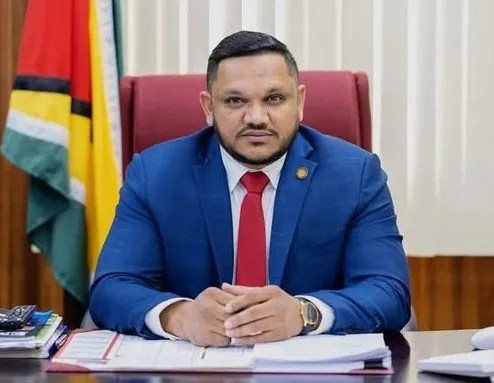
Minister of Natural Resources, Vickram Bharrat
As such, Bharrat said the procedure laid out in the 2016 Production Sharing Agreement (PSA) has been followed where the two parties are currently before the international body awaiting the appointment of a sole expert to determine the way forward on the US$214 million dispute.
He was unable to state how soon a decision from the body is likely. “It’s already with the ICC. We have to wait on them. No fixed timeframe as yet,” Bharrat added.
In June this year, Exxon’s vice president and business services manager, John Colling hinted that the dispute may land before the ICC.
Colling said, “So we’re in discussion currently with the government of Guyana regarding the selection of the sole expert. We have not yet landed on a sole expert but have discussed a process to ultimately arrive at one.”
As such, he noted, “If we’re unable to arrive at a mutual selection, that can be referred to the ICC to make the selection, which very well may be the next step in the process.”
The discussions to appoint a sole expert have been ongoing between the two sides for over a year now. Vice President Bharrat Jagdeo during a press conference in September 2024, disclosed that the time for discussions over the US$214 million disputed expenses of Exxon had expired, triggering the next step stipulated under the PSA.
“We now have to trigger the provisions under the PSA. Which means some form of a mediated settlement or arbitration. So, we have gone past the issue of clarifying between the two parties’ costs. We have a dispute over $214 million that should not be part of the cost bank,” the chief policymaker for the sector said.
Exxon said the two parties have been working diligently to find a sole expert acceptable to both sides.
When asked whether Exxon and the government agreed to a timeline to identify the sole expert before proceeding to ICC, Colling said, “We are willing to work with the government as long as it takes to bring this matter to resolution. I think ultimately all parties would like to move forward.”
He maintained, “As sole experts are considered they must meet a number of qualifications that are acceptable to both parties and certainly objectivity is one of them so that is one of the criteria that we are discussing with the government as well as relevant experience which is another key factor.”
The US$214 million in question was flagged by the British Consultant, IHS-Markit, in an audit conducted of Exxon’s expenses incurred between 1999 and 2017. Exxon submitted a bill of US$1.6 billion to Guyana for the period.
The audit report was completed and handed over to the GoG since March 2021. The consultant advised that “GoG has reasonable grounds to dispute $214.4 million plus overhead adjustments of the costs currently included by EEPGL (now EMGL) in the cost bank. This amount represents 12.8% of the cumulative cost recovery balance as of Q4 2017 Statement.”
Article 26 of the Petroleum Agreement states that if the parties fail to agree on a sole expert within 30 days, such expert shall be appointed by the ICC in accordance with its rules for the appointment of experts and neutrals.
That timeline has long expired with some stakeholders accusing government of dragging its feet on the matter.
The oil contract states at Article 26.10 “…the parties shall cooperate fully in the expeditious conduct of such expert determination and provide the expert with access to all facilities, books, records, documents, information and personnel necessary to make a fully informed decision in an expeditious manner. The sole expert shall act as an expert and not as an arbitrator or mediator, and shall endeavour to provide an opinion on the dispute within thirty (30) days of his appointment, but no later than sixty (60) days after his appointment…”
While the first audit drags on, two other audits of the company still remain to be concluded as well. The second audit, for the period 2018 to 2020 was conducted by VHE consulting. The local audit team found that another US$65 million of the US$7.2 billion in expenses was incorrectly charged to Guyana.
Questions still remain on whether the full report was published by the GoG for the US$7.2 billion audit. Meanwhile Exxon’s third and largest audit, on record to date, amounts to a whopping US$19.6 billion. It was conducted by the same local group, VHE. Although government received that report since May 2025, it has refused to make the document public. The administration is also not inclined to highlight the disputed costs flagged by the auditors.
Source: Kaieteur News
(Kaieteur News) – Surinamese authorities have rejected a 384.8-tonne shipment of rice from Guyana and ordered that it be returned to the country of origin after discovering that the importer had failed to obtain the required authorisation before taking the agricultural product into the country. Suriname’s Minister of Agriculture, Livestock and Fisheries (LVV), Mike Noersalim, told […]
The post Suriname rejects 384.8 tonnes of Guyana rice over missing import approval appeared first on Kaieteur News.
Source: Kaieteur News
(Kaieteur News) – The Commission of Inquiry (CoI) into the MV Barima disaster will likely take up to six months to complete its work and produce a final report, despite a two-month timeframe initially mandated by the president.
Commission Secretary Javed Shadick at a press briefing on Tuesday explained that interviewing over 100 potential contacts, managing cross-examinations, and conducting regional field visits mean the two-month deadline is unrealistic. An interim or final report is now expected within six months.
The extended timeline coincides with a low initial turnout of witnesses, alongside deep hesitation from victims’ families over the sunken ship itself. According to Shadick, only one person has formally approached the secretariat to indicate an intent to provide evidence as sittings and site visits begin.
“I would say now that not many persons have stepped forward. Only one person has met with the secretariat, informing us of their intent to step forward,” Shadick stated.
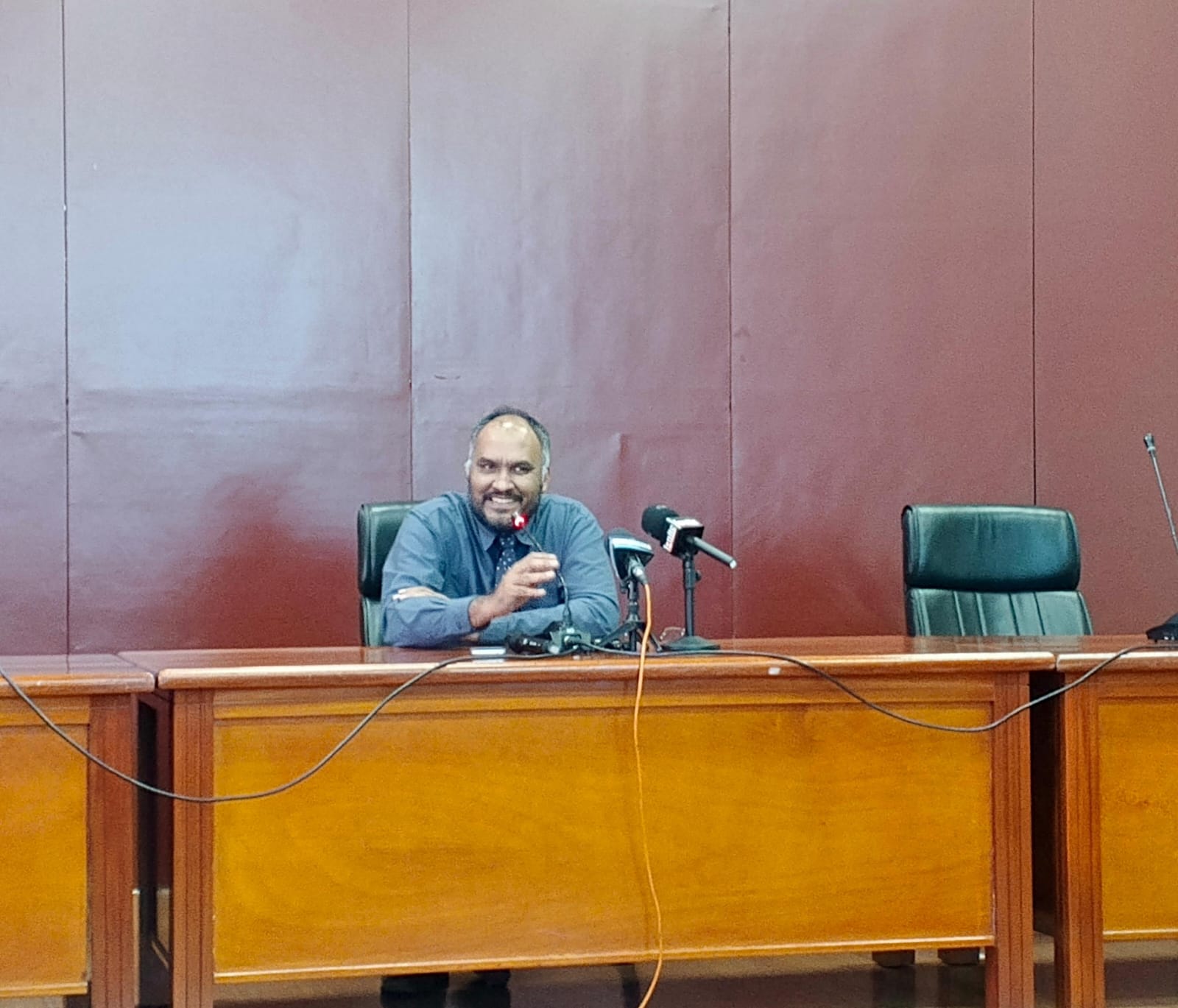
Secretary Javed Shadick
The low participation follows strong pushback from grieving relatives. Speaking to Kaieteur News during their weekly protest outside the office of the president, family members of the deceased stated they are unwilling to participate in the CoI because the MV Barima has not been salvaged. They contend that a thorough investigation into seaworthiness and capacity is impossible without a physical inspection of the vessel’s hull.
Furthermore, members of the crew and the captain, including those currently remanded or facing legal proceedings, are eligible to testify. “They are most welcome to [give evidence],” Shadick noted, adding that constitutional protections against self-incrimination will apply.
The commission’s legal team, led by counsel Arudranauth Gossai and Teni Housty, alongside maritime technical experts on the panel, will interview witnesses grouped into distinct categories, first responders, maritime officials, technical experts, and survivors.
The commission has outlined an intensive upcoming itinerary to begin its work. Sittings will commence with an initial open listening session at 10:00 AM on Wednesday, followed by an afternoon meeting with survivors and families of the victims. On Thursday at 09:00 AM, the panel will conduct a site inspection of Kingston Wharf, followed by visual inspections at the Maritime Administration Department (MARAD) and the Transport and Harbours Department (T&HD) on Friday. Sittings will then expand next week to include field outreach visits in Mabaruma and Port Kaituma.
Reporters raised additional procedural hurdles facing the six-month probe, including incomplete passenger manifests, potential crew fatigue, and communication challenges with non-English speaking survivors or families.
The secretariat confirmed that translation services and counseling support are being put in place for foreign-language participants. To address missing manifest data and overcrowding claims, commissioners with specialized maritime expertise will analyze all available operational documentation gathered by legal counsel.
To overcome the high aviation costs that prevent Region One residents from traveling to Georgetown, the commission will consider taking its sittings directly to Mabaruma, Port Kaituma, and surrounding hinterland communities depending on “the numbers”.
Source: Kaieteur News
(Kaieteur News) – Attorney Selwyn Pieters has confirmed that he warned Opposition Leader Azruddin Mohamed that legal action could be taken over a social media post concerning President Irfaan Ali, while denying any involvement in the subsequent removal of several Facebook pages associated with Mohamed.
The disclosure followed public statements by Mohamed and Pieters concerning a series of telephone calls on October 3, 2026, after Mohamed published a post about a Customs Anti-Narcotic Unit (CANU) raid at a property linked to Ernesto Choo.
According to Mohamed, his attorney, Siand Dhurjon, was contacted by Pieters on the evening of October 3. Mohamed said Dhurjon asked Pieters who he was representing, to which Pieters replied: “His Excellency the President.”
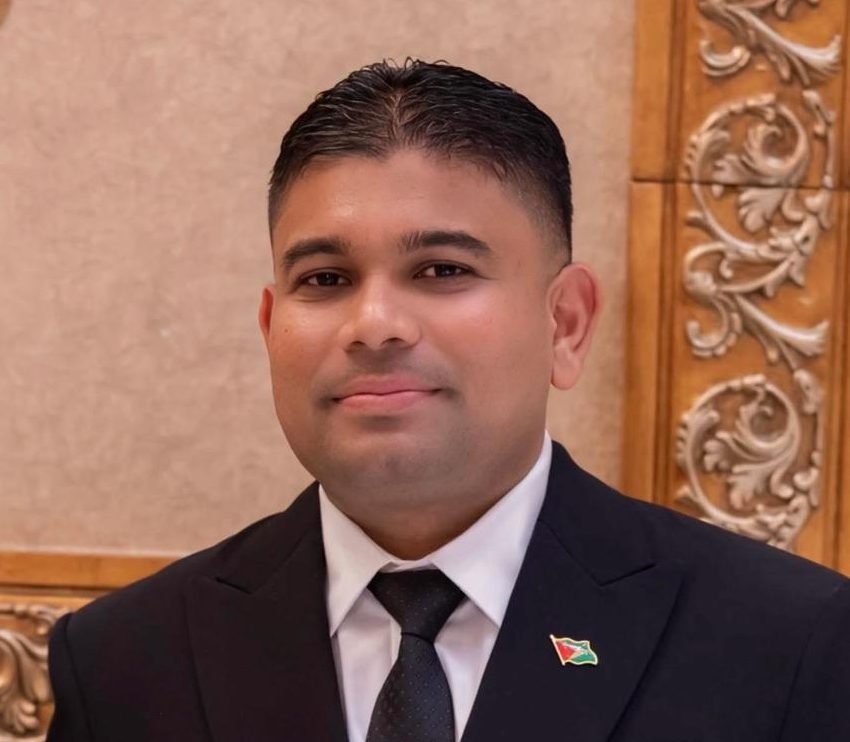
Azruddin Mohamed, Leader of the Opposition
Mohamed further claimed that Pieters issued a direct warning during the conversation.
“Let me be very clear. If those defamatory comments are not removed, particularly the reference to His Excellency, Dr. Mohamed Irfaan Ali, I will have to deal with this in the context of defamation. Mr. Mohamed cannot cry victimization if I am forced to have Meta suspend his page. Again.”
Kaieteur News subsequently contacted Pieters and asked him directly whether those were his words during the conversation with Dhurjon.
“Yes, yes,” Pieters responded, confirming the statement.
Mohamed has since pointed to the subsequent removal of three major Facebook pages associated with him-Team Mohamed’s, which had approximately 540,000 followers; We Invest in Nationhood, with about 40,000 followers; and Azruddin Mohamed, leader of the opposition, with approximately 59,000 followers-as evidence of political censorship.
“When those in power seek to silence the opposition leader because they object to what is being said, democracy itself is under threat,” Mohamed said. He described the development as “authoritarianism” and the conduct of a “dictatorship.”

Attorney, Selwyn Pieters
He said efforts are currently underway to restore the main pages, while his team is operating through an alternate Facebook page, Hon. Azruddin Mohamed, Leader of the Opposition, which has about 14,000 followers.
However, Pieters has rejected Mohamed’s allegations “out of hand,” maintaining that he had no role, directly or indirectly, in the earlier deactivation of the primary Team Mohamed’s Facebook page.
Pieters challenged Mohamed to produce concrete evidence to support the allegation, including any official correspondence from Meta outlining the reasons for the initial suspension.
He also pointed to conflicting explanations previously offered by Mohamed and his team for the page’s removal, including claims involving the Guyana Police Force and allegations of copyright infringement.
Pieters acknowledged, however, that he personally reported the specific post at the centre of the October 3 dispute to Meta.
He said the decision was made independently in his capacity as legal counsel authorised to represent President Ali in matters involving alleged defamation on social media.
“In my considered professional judgment, the contents of that post were defamatory and went beyond the bounds of legitimate political criticism,” Pieters said.
“I exercised the authority vested in me as counsel… and submitted the matter to Meta for its consideration under its applicable processes and policies. Meta independently considered the submission and took whatever action it deemed appropriate.”
Pieters maintained that freedom of expression and press freedom, while fundamental rights, do not protect individuals from the consequences of defamatory statements.
“Where I determine, in the proper exercise of my professional judgment, that my client’s legal rights have been infringed, I am entitled and professionally obligated to pursue the lawful remedies available to him,” he said.
Source: Kaieteur News
 habeeb
She knows fully well, she cannot say bad things about Israel and their genocide
deeds in GAZA. That is taboo for the USA. Israel is our baby.
Whilst Irfan Ali is toeing the line in the sand with USA, his bosom buddy, other
reps of Guyana, must/should “engage brain before open mouth”.
Source: Kaieteur News
habeeb The GoG have the backs of (a), a convicted Danny Boy for beating up on wifey.
(b) an accused high profile Police Commissioner of SOCU, allegedly for rape
of a subordinate female under his charge ? “willie on overtime” ?
Separation of Powers is just a name only. Does not apply to PPP/C Government
and their ministers.
Visa Reviews for the Magistrate and High Court Judge in Danny’s case ?
Why not ?
Source: Kaieteur News
(Kaieteur News) – The Environmental Protection Agency’s (EPA) decision to exempt uranium exploration activities at the Kurupung Uranium Project in Region Seven from an Environmental Impact Assessment (EIA) is facing a fresh challenge, with 15 individuals and three organisations formally appealing the decision and calling for the immediate suspension of all activities at the site.
According to a letter dispatched to the Chairman of the Environmental Assessment Board (EAB), by Danuta Radzik on behalf of 15 individuals and three organisations. Citing an August 26th notice published by EPA exempting Lia (Guyana) Inc. from an EIA for a mineral exploration project at the Kurupung Uranium Project the signatories questioned the grounds EPA listed for its exemption, that the agency’s decision violates the section of the Environmental Act, the lack of information on the company’s track record, lack of consultation with indigenous communities, the public, health and environmental risk concerns as well as questioning the agency’s capacity to monitor such project and Guyana lacking specific regulations for uranium exploration or mining.

Canada-based firm U92 Energy Corp. owns the Kurupung Uranium Project through its wholly owned subsidiary, Lia (Guyana). The project area spans approximately 92.2 square kilometres and carries a historical resource estimate of 20.6 million pounds of uranium.
EPA has cleared U92 to conduct soil sampling and approximately 5,000 metres of diamond drilling from about 30 drill platforms. The company can also conduct limited access-track works, rehabilitation of approximately 12 kilometres of an existing access road, a temporary exploration camp and secure drill-core storage.
The first ground listed in the appeal against the EPA’s decision contends that the agency’s decision to exempt the exploration project from an EIA and its identifying reasons for its decision stating that the project’s impacts is small, temporary and manageable, “clearly violates” the Environmental Protection Act, Part IV which sets out very clearly projects requiring EIAs.
Notably, EPA in its notice explained that following the review of the application, it determined that the proposed exploration activities are “not likely to significantly affect the environment” and are therefore exempt from the requirement to conduct an EIA. The agency explained that the its decision was based on several factors, including that the project is limited to exploration and does not involve mining or mineral processing. Another factor stated is that land disturbance will be localised and mainly confined to small drill pads, access routes and temporary facilities.
However, the letter pointed to Part IV of the EP Act which states that project requiring EIAs includes those involving activities like mineral extraction, long-term liquid storage and wastewater treatment, which they argued the exploration project involves all three the aforementioned.
Another point raised is that the EP Act requires EIAs for the construction of roads, as the project’s infrastructure works include construction and upgrading of access roads to the project site.
“We also object to the EPA’s practice of exempting projects from EIAs, arguing that such exemptions limit scrutiny, inhibit public participation, and weaken environmental oversight,” the letter stated, outlining that EPA is mandated to ensure environmental risks are assessed before project authorization or permitting.
Concerns was also raised about transparency, pointing to the narrow interpretation of statutory publication requirements, which result in a single newspaper notice and limited time for stakeholders to object arguing that it does not meet the spirit of public participation envisioned by Environmental Protection Act.
Other grounds outlined in the letter were centered on environmental and health risks of uranium exploration and environmental impacts of uranium mining.
As it relates to the risk of uranium exploration, the letter noted that extracting and handling drill cores containing radioactive materials introduces localized environmental and safety hazards including through groundwater contamination, surface contamination and waste, which if left exposed to wind and rain, radioactive dust can spread, or rainwater runoff can wash contaminants into nearby soil and streams.
Notably, while the letter outlined several points on environmental risks associated with environmental impacts of uranium mining – it should be noted that EPA’s exemption for an EIA the EPA’s decision to exempt the exploration from an EIA does not constitute approval of commercial mining, ore extraction or processing, mine construction, or the establishment of radioactive tailing facilities – as it is only for exploration activities at the uranium project.
Another ground stated in the letter is that while the EPA in its notice said that the project is limited to exploration, they outlined safety guidelines by the International Atomic Energy Agency (IAEA) on uranium mining, which require that comprehensive management systems be in place covering the entire lifecycle —from exploration to mining, processing, and closure.
Other grounds raised includes the lack of consultation by EPA, the Guyana Geology and Mines Commission (GGMC), Lia Guyana or U92 Energy to engage with the Indigenous First Nation communities living in the Mazaruni/ Kurupung area to recognize and uphold Free Prior, and Informed Consent (FPIC) guidelines.
They further questioned the company’s experience, noting that Lia (Guyana) Inc. was purchased from its holding company Lia Industries Pte. Ltd incorporated in Singapore by U92 Energy Corp a Canadian company established in 2024. “This company has no track record or involvement in any form of mining far less uranium mining anywhere in the world. It appears that U92 Energy was founded specifically for this project which raises serious red flags due to its lack of experience in this the most environmentally challenging type of mining,” it was stated.
Further, they argued that Guyana has no specific regulations for uranium exploration or mining, adding that EPA lacks necessary expertise on many environmental matters including on radiation and uranium mining. The letter outlines that there is nothing to assure the Indigenous First Nations in the Mazaruni/ Kurupung area or the Guyanese public, that the EPA has acquired the necessary expertise to monitor or regulate this or any project on uranium exploration or mining.
Additionally, the letter also highlight that Guyana’s Radiation Safety and Security Act (RSSA), which has designated the Minister of Health with responsibility for the RSSA is still to appoint an independent RSSA Board. “This Board does not appear to be fully operational according to the Act, neither have suitably qualified inspectors based on established qualifications and training requirements been appointed as far as we know,” it was stated.
Other points raised point to information revealed in the project summary, including the extensive period of uranium exploration, which will run for three years until April 18, 2027, and can be extended to five years.
The signatories outlined that the exploration period had already commenced before the public notice was issued on August 26, 2026, raising questions about the temporary timeframe of the project. “Let us remember that full environmental permits for mining activities are by law limited to a 5-year period,” it was stated.
It was also outlined that the exploration activities will require a full working camp and not just drill sites. Pointing to plans which include housing, a diesel generator, drum fuel storage on a concrete slab, a water well with treatment tanks, and septic tanks that drain into the soil, noting that the scale does not fit the EPA’s description of the impacts as minor and temporary.
Another point raised was in relation to the Environmental Management Plan (EMP), which is supposed to monitor and manage fuel, waste, drill fluids and uranium-bearing core samples. The letter notes that the EMP is nowhere to be found on the EPA website, has not been shared with the general public and, as such, cannot be scrutinised.
Further, it was outlined that the concept of EMPs is nowhere to be found in Guyana’s Environmental Act. “In extractive mining projects an EMP usually is dependent on the findings of an EIA for operational rules and accountability. But here there is no EIA so how there can be an EMP, what would this be based upon. This is putting the cart before the horse,” they argued.
Another concern listed was in relation to the 88,000 metres of drill core, equivalent to 54 miles, from prior drilling. Pointing to information in the project summary, the signatories outlined concerns about how badly these core drill samples were stored.
“So we have serious concerns that these may have already leached into the surrounding areas and caused serious environmental risks to flora, fauna, waterways including air dispersion which could have affected communities and people using this airstrip over a period of many years,” it was noted.
“…as concerned Guyanese, environmental defenders, and Indigenous First Nations demand the immediate suspension of all aspects of uranium exploration and mining by Lia (Guyana) Inc. Mineral Exploration Project– Kurupung Project until full disclosure, public information, environmental regulations and necessary expertise is made available to all Guyanese,” the letter concludes.
The letter was signed by: Abbyssinian Carto, Bonita Harris, Charlene Wilkinson, Desmond Ali, Frederick Collins, Joel Simpson, Jeremy Peretz, Kamini Bulkan, Ludex Mcdonald, Neville Trotz, Norris Witter, Raphael Singh, Vanda Radzik, Vidyaratha Kissoon, Greenheart Movement, Organization for the Victory of the People (OVP) and Red Thread.
Source: Kaieteur News

Discussion