Home Blog Page 131

Sophia home goes up in flames

0


Several persons were displaced after a fire of unknown origin destroyed their Plum Park, Sophia Greater Georgetown home on Thursday. The Guyana Fire Service stated that it responded to a house on fire at Block E Plum Park Sophia Greater Georgetown.

A Water Tender and Water Carrier from Headquarters were deployed to the scene with their respective teams. Upon arrival, firefighters observed that a flat wooden house was fully engulfed in flames. With the swift and coordinated efforts of the firefighters, the fire was extinguished. However, the building and its contents were destroyed. Investigations into the cause of the fire are ongoing.


Source: INews Guyana

MV Barima COI Chair Justice Godfrey Smith: Our Allegiance Is To The Law, Not Government – HGPTV – Guyana’s Nightly News and Entertainment Channel

0

By Marvin Cato | HGP Nightly News |

LILIENDAAL, GREATER GEORGETOWN — Rejecting public skepticism regarding state influence over executive inquiries, Chairman of the Presidential Commission of Inquiry (CoI) into the deadly MV Barima tragedy, Justice Godfrey P. Smith, declared unequivocally on Wednesday, October 7, 2026, that the five-member panel will not function as an arm of the Government.

Delivering remarks at the formal opening ceremony of the inquiry at the Arthur Chung Conference Centre (ACCC), the eminent jurist emphasized that despite being empaneled by President Dr. Irfaan Ali, the Commission owes allegiance solely to the rule of law, procedural fairness, and sworn evidence.

The proceedings mark the official start of the inquiry into the July 18, 2026 maritime disaster, which claimed more than 100 lives when the state-operated ferry went down, leaving only 76 known survivors.

Uncompromising Independence: Following the Evidence Wherever It Leads

Addressing bereaved relatives, legal counsels, state officials, and observers, Justice Smith made clear that the tribunal’s findings will be shaped exclusively by verifiable facts rather than political expediency:

  • Separation from Executive Authority: Acknowledging that the Commission’s instrument of appointment originated from the Office of the President, Justice Smith drew a firm line between state appointment and judicial independence, stating that the Commission does not report to or answer to the executive administration.
  • Core Investigative Mandate: The Chairman stated that the tribunal’s primary duty is to reconstruct the exact chain of events aboard the vessel, assess what triggered the sinking, and establish who permitted critical safety or operational failures to occur.

“Our task is to find out… permitted it to happen,” Justice Smith affirmed during his opening address.

“They require us so far… causes of the casualty.”

Scrutinizing Systemic Failures and Regulatory Oversight

Justice Smith stressed that the CoI’s investigative purview extends beyond the immediate crew and the physical vessel, reaching deep into the bureaucratic architecture governing maritime transport in Guyana:

  • Institutional Accountability: The Commission will interrogate the wider safety, regulatory, and maritime oversight systems to evaluate whether systemic negligence, regulatory non-compliance, or lax enforcement by agencies like the Transport and Harbours Department (T&HD) contributed to the casualty.
  • Preventing Recurrence: A foundational pillar of the inquiry’s terms of reference is examining institutional culpability to ensure structural vulnerabilities are rectified so such a disaster is never repeated in Guyanese waters.

“To consider accountability… possibility of occurrence,” Justice Smith stated, summarizing the Commission’s responsibility to evaluate both fault and systemic reform.

The Path Forward: Hearings and Rural Outreach

With opening statements concluded, the Commission begins its multi-phase operational calendar ahead of full public hearings:

  • Family Engagement: Commissioners commenced closed engagements with bereaved coastal relatives across Regions Three, Four, and Five at the ACCC.
  • Hinterland Fact-Finding: An on-site inspection visit to the wharves and affected families in Mabaruma and Port Kaituma (Region One) is scheduled for early next week.
  • Public Testimonies: Formal evidentiary public hearings—led by Commission Counsels Arudranauth Gossai and Teni Housty, with more than 100 witnesses slated to take the stand—will officially commence on Wednesday, October 14, 2026.

  • Source: HGP Nightly News / HGPTV

    BK wins $1.3B contract to salvage MV Barima

    0


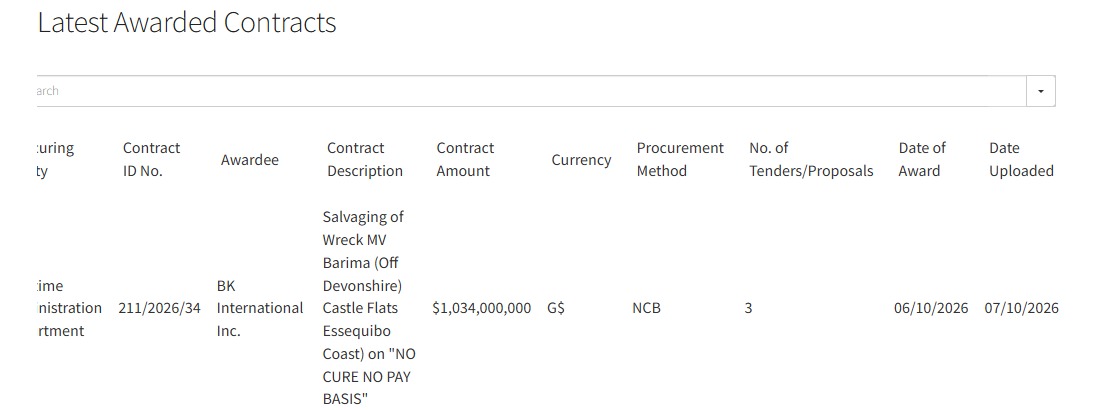
    (Kaieteur News) – The National Procurement and Tender Administration Board (NPTAB) has awarded GYD $1.034 billion contract to local infrastructure firm BK International Inc. to raise the wreck of the MV Barima.

    The selection raises sharp questions about technical capability and government transparency, BK International, a company that previously had to rely on state-funded intervention to clear its own sunken barge from the Demerara River bed, has been entrusted with a delicate, high-stakes forensic salvage operation on a “No Cure, No Pay” basis.

    The contract award was neither announced in a government press release nor disclosed by the Maritime Administration Department (MARAD). Instead, media houses visiting NPTAB’s website after the disclosure discovered the upload independently.

    According to official NPTAB records dated October 7, 2026, BK International Inc. was awarded Contract ID 211/2026/34 for the “Salvaging of Wreck MV Barima (Off Devonshire Castle Flats Essequibo Coast)” at a total sum of G$1,034,000,000 under National Competitive Bidding (NCB). The secrecy surrounding the award mirrors the initial evaluation phase, where the government failed to publish the shortlist of bidders until reporters pressed NPTAB directly.

    BK wins $1.3B contract to salvage MV Barima

    NPTAB listing uploaded on Wednesday

    The choice of BK International has raised immediate concern within maritime and legal circles. In November 2014, BK International’s barge, the Darren B, sank in the main channel of the Demerara River. Rather than executing a swift recovery, the company left the sunken vessel abandoned as an active navigational hazard until the government contracted international salvors, Dutch firm Koole Contractors, to clear it out at taxpayer expense.

    Now, BK International has been selected over specialised competitors, including Netherlands-based KMS B.V. (Koole Contractors), which submitted a USD $2.035 million (approx. GYD $2.035B) bid, and Industrial Fabrication Inc., which submitted a GYD $1.895 billion bid. MARAD’s original tender specifications required prospective salvors to demonstrate 5 to 10 years of proven marine salvage experience in regional waters under severe tidal and zero-visibility conditions.

    Confirmation of BK’s selection came during a line of questioning by daughter and niece of still missing Neil and Kenrick Cort, Jasmin Cort to Commissioner Dr. Andrzej Jasionowski, Maritime Consultant of the Commission of Inquiry investigating the tragedy.

    When Cort pressed the commissioner to state who will be executing the recovery, Dr. Jasionowski revealed “It is one of the three, BK.” This was the first time the public had been made aware of such a decision taken by NPTAB.

    Addressing the delicate nature of the salvage, Dr. Jasionowski emphasised that the recovery must be executed with extreme care to avoid destroying critical forensic evidence needed to explain how the 87-year-old ferry capsized on July 18, 2026, taking over 100 lives. “We speak to them, I met with them personally yesterday to discuss those plans… so that no damage to the evidence, no damage will be done, and that the plan will be careful, because if you rush it, it’s very easy to break it, and once that happens, the recovery becomes a recovery of cut and scrub metal and whatever remains within,” Dr. Jasionowski explained.

    “So it has to take its time, and as far as the team is concerned, I’ve met the salvage masters and the engineers. They are operating full days, even before they are contracted, they are preparing for this.”

    Dr. Jasionowski noted that operational timelines are being established, with daily updates expected “Right now, as of a few days, it will take maybe another week, another two weeks or so. We will be getting daily reports, that’s what they promised, so we will be involved in making sure that as far as our terms of reference and getting evidence is concerned, it is capable of salvaging.”

    The intact recovery of the MV Barima is crucial. Earlier attempts, by the administration to deem the wreck a permanent submerged memorial were met with fierce public backlash from victims’ families, who accused officials of attempting to cover up regulatory failures and abandon the search for answers.

    While heavy demolition techniques, such as those previously used by Koole Contractors on the cargo ship Miss Elissa, are capable of clearing river hazards quickly, MARAD’s tender strictly mandates a non-destructive lift. The vessel must be raised intact and placed upright onto a barge so forensic investigators can inspect the hull and internal structures.

    With the contract now officially awarded to BK International under “No Cure, No Pay” terms, the firm faces mounting public scrutiny to prove it possesses the engineering expertise required for one of the most complex, evidence-sensitive salvage operations in Guyana’s maritime history.


    Source: Kaieteur News

    Exxon to repair gas-to-energy pipeline off Crane

    0


    …but won’t disclose nature of defect  

    (Kaieteur News) – ExxonMobil Guyana Limited (EMGL) will be conducting maintenance activities on the 220-kilometre subsea pipeline it built for the Gas-to-Energy (GTE) project at Wales, West Bank Demerara.

    In a statement on Wednesday, the company said it will soon undertake work to address “a finding” on a near-shore section of the pipeline, offshore of Crane, West Coast Demerara, as it maintains its commitment to the safety, integrity and reliability of the infrastructure.

    Responding to a media query on what the finding was, EMGL’s media advisor Kwesi Isles said further testing and evaluation will be conducted to confirm the “exact nature of the issue” with the pipeline.

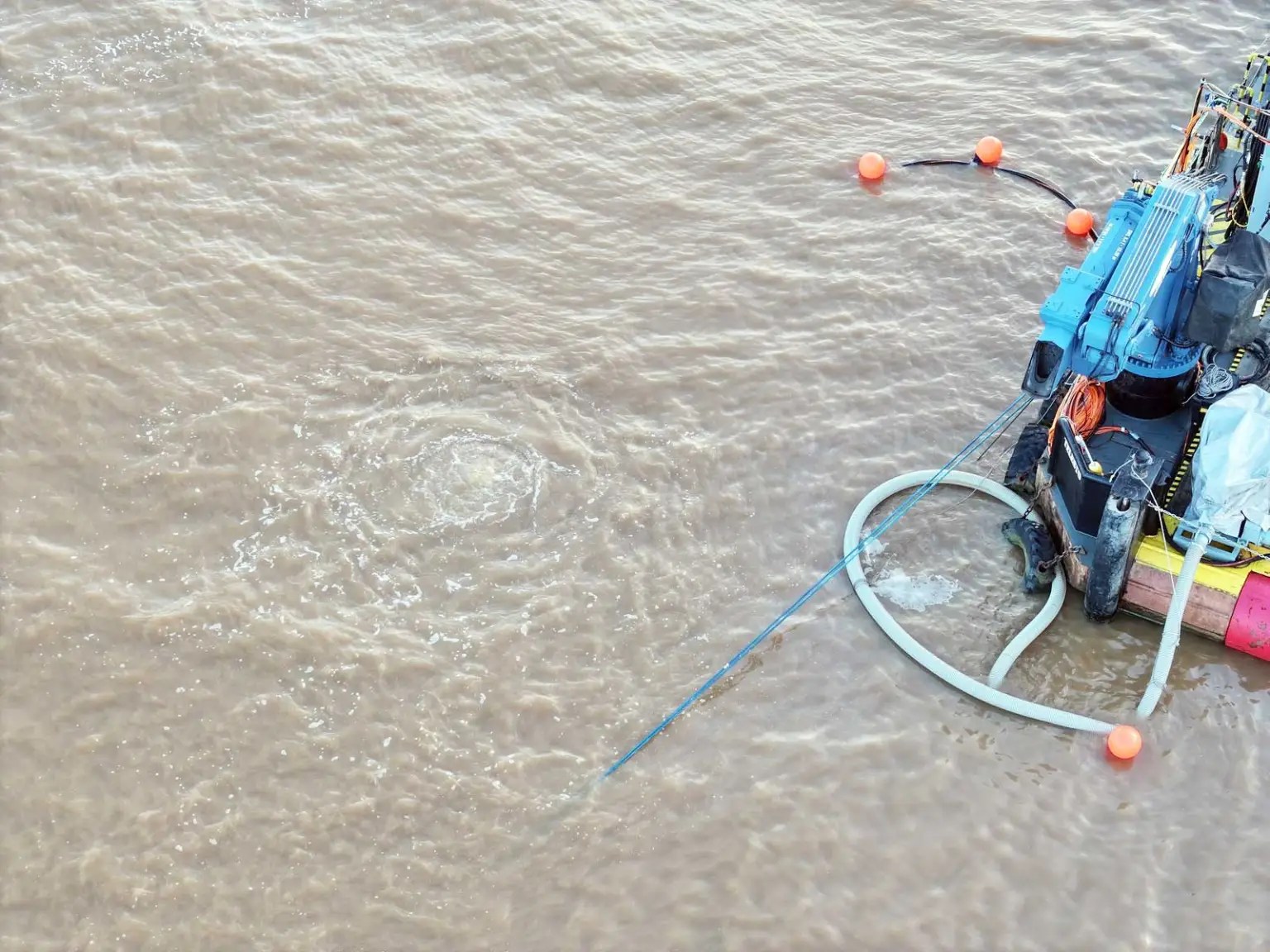
    Exxon to repair gas-to-energy pipeline off Crane

    Photo of disruption beneath the surface of the Atlantic Ocean – July 2026 photo

    Meanwhile, in its statement, the company noted that the finding was identified through inspection activities earlier this year. EMGL completed the pipeline in December 2024 for the GTE project, which has repeatedly failed to meet promised deadlines, with the project now expected to deliver only a fraction of its intended power output by the end of 2026.

    The maintenance activities are scheduled to commence on 14th October, 2026, and are expected to continue until around 1st December, 2026, as Exxon aims to complete the work before the start-up of GTE operations, “to minimise potential for maintenance interruptions in the future.”

    Exxon further noted, “The pipeline is currently pressurised with inert gas (nitrogen) and is not yet in operation. As a result, it does not pose a risk to the public or the environment.” The company also said it is coordinating with relevant stakeholders regarding the activities, while reminding that it is committed to conducting its operations safely, responsibly and in compliance with applicable regulatory requirements. EMGL added that a marine notice containing information for mariners operating in the area will be issued by the Maritime Administration Department (MARAD). Following reports circulating in the media alleging that the pipeline had ruptured, a joint statement was issued in July by the Environmental Protection Agency (EPA) and MARAD rejecting the claims.

    The agencies stressed that the pipeline was not active and that no gas was flowing through it. “As there is no gas passing through the line, there can be no leak or damage of the nature suggested in these reports,” it was stated. In that statement, it was noted that since May 2026, ExxonMobil had been conducting a scheduled inspection of the subsea pipeline, an exercise expected to span approximately three months. While the agencies rejected claims that the pipeline had ruptured, they confirmed that a report relating to the pipeline had been received and investigated. EPA and MARAD said that following the joint assessment, the matter was determined to be a “slight anomaly”, but noted that, out of caution, further inspections were being conducted to confirm the continued integrity of the pipeline, consistent with standard safety protocols.


    Source: Kaieteur News

    ‘Who is responsible?’ — Barima COI Chairman vows to follow evidence wherever it leads

    0


    (Kaieteur News) – The Commission of Inquiry (CoI) into the fatal capsizing and sinking of the M/V Barima officially opened its public proceedings on Wednesday morning, with commission chairman Godfrey Smith, SC, pledging a thorough and independent investigation into the circumstances surrounding the tragedy.

    Delivering his opening statement at the preliminary hearing at the Arthur Chung Conference Centre in Georgetown, Smith emphasised that the tribunal’s mandate extends far beyond the vessel’s final moments, promising to examine operational failures, regulatory compliance, and individual accountability without fear or favour.

    “Put in plain language, our task is to find out what happened to the BARIMA and why it happened,” Chairman Smith declared. “What circumstances permitted it to happen? Were there warning signs? Were there failures? Were laws, regulations and safety procedures complied with? Were they adequate? Were they properly administered and enforced? Who is responsible and what is to be done about it?”

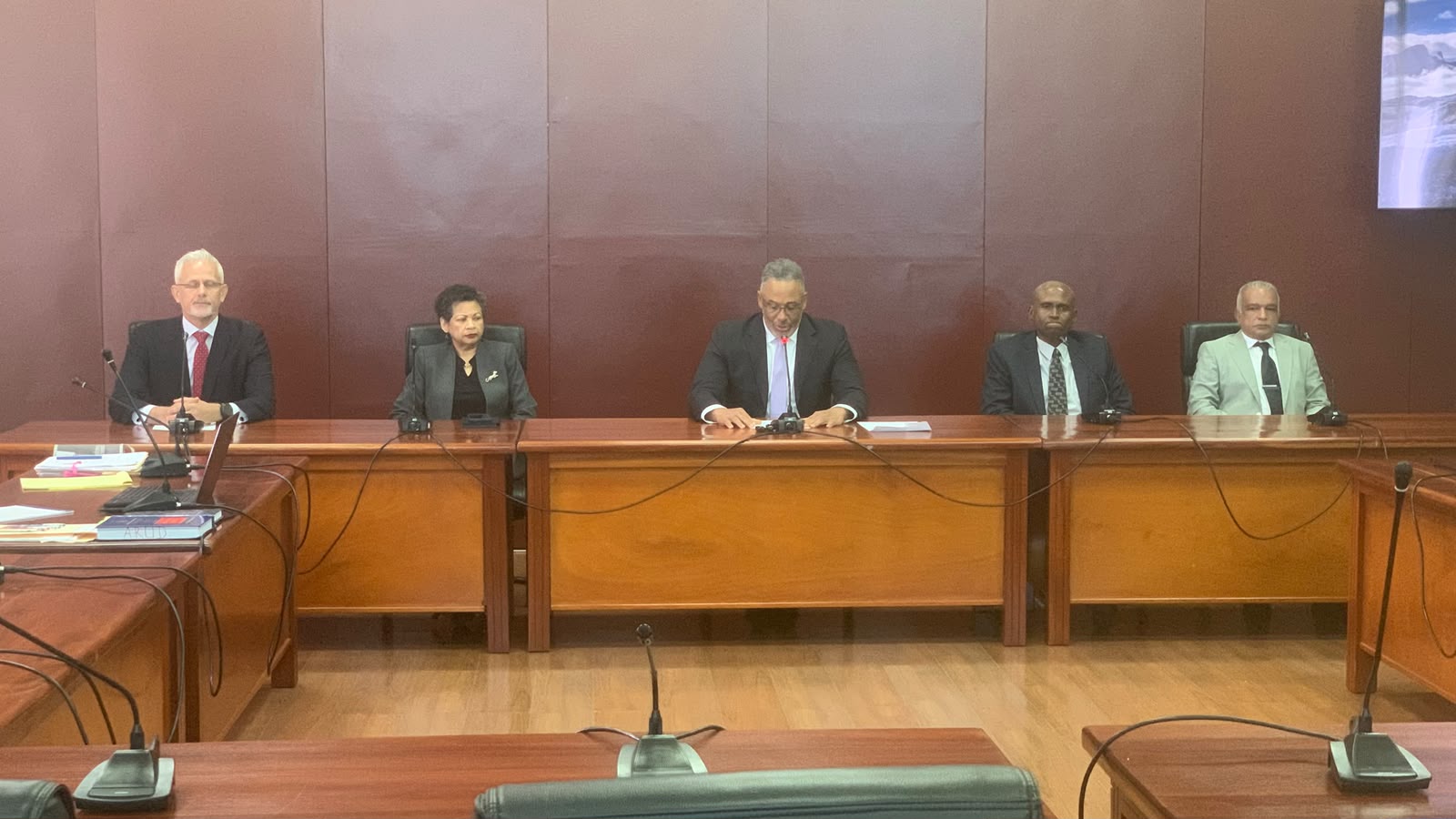
    ‘Who is responsible?’ — Barima COI Chairman vows to follow evidence wherever it leads

    Commissioners of the COI, Chairman of the Commission of Inquiry, Justice Godfrey Smith (centre) along with members of the Commissioners Dr. Andrzej Jasionowski (far left), Nyree Alfonso (left), Rear Admiral (Ret’d) Hayden Pritchard (right), and Captain Hamada Fouda (far right) during their opening ceremony on Wednesday.

    The M/V Barima sank on the night of July 18, 2026, inflicting severe loss of life and leaving numerous persons unaccounted for. Following the disaster, President Irfaan Ali appointed the commission on July 30 under the Commission of Inquiry Act, tasking the body with investigating the casualty, the emergency response, and the broader maritime oversight system.

    Addressing the scope of the probe, Smith outlined six interrelated areas of inquiry, the seaworthiness and physical stability of the vessel, passenger and cargo loading procedures, the qualifications and decisions of the crew, the effectiveness of search and rescue operations, human factors during the emergency, and the regulatory oversight provided by State entities such as the Transport and Harbours Department and the Maritime Administration Department.

    Smith, a former judge of the Eastern Caribbean Supreme Court, sought to clarify the legal nature of the proceedings, stressing that the commission holds statutory powers to summon witnesses and compel evidence, yet does not sit as a court of law.

    “From the outset, it is important that the public understands the character of these proceedings,” Smith said. “This is a Commission of Inquiry. It is not a criminal trial. In many ways, a Commission of Inquiry may appear to resemble a court, but it is not. It does not sit as a criminal court and will not determine the criminal guilt of anyone. Nor will the commission determine civil liability like a court exercising civil jurisdiction.”

    He noted, however, that if evidence of criminal or civil wrongdoing emerges during the hearings, the commission will refer its findings to the appropriate authorities, meaning the inquiry’s report could act as a catalyst for future legal proceedings.

    To guarantee procedural fairness, the tribunal has enacted formal rules of procedure allowing individuals, organisations, or affected families to apply for interested party standing, while ensuring that any party facing adverse criticism is afforded a full opportunity to respond.

    Reiterating a public call for evidence, Smith urged survivors, witnesses, and knowledgeable members of the public to come forward and submit statements to the commission’s secretariat, assuring that all documentary and testimonial evidence will be scrupulously examined.

    The commission began field work, meeting with survivors in Georgetown on Wednesday afternoon before conducting physical inspections on Thursday and Friday at the Kingston Goods Wharf, MARAD, the Transport and Harbours Department, and dry dock facilities. Early next week, commissioners will travel to Region One to engage affected residents and families directly in Mabaruma and Port Kaituma.

    Chairman Smith stated that the commission expects to complete its work within approximately six months and noted that the tribunal stands ready to issue interim safety recommendations to the president prior to submitting its final report if urgent risks to public safety are uncovered.

    “We do not intend to take short cuts, jump to conclusions or deliver a rushed report,” Smith affirmed. “Our allegiance is to the law, to our terms of reference, to procedural fairness and, above all, to the truth as established by credible, tested evidence.”


    Source: Kaieteur News

    Maduro to face new U.S. charges over alleged torture of Americans, official says

    0


    (Reuters) – Ousted Venezuelan President Nicolas Maduro and his wife Cilia Flores are expected to face new criminal charges in the U.S. over the alleged torture of ​Americans held in the South American country, a ​U.S. official said on Wednesday.

    The new charges could come as ⁠soon as Thursday, according to the official, who was briefed on ​the investigation.

    Maduro and Flores were captured by the U.S. military ​from their homes in Caracas on 3rd January and brought to New York to face drug trafficking charges. They have pleaded ​not guilty.

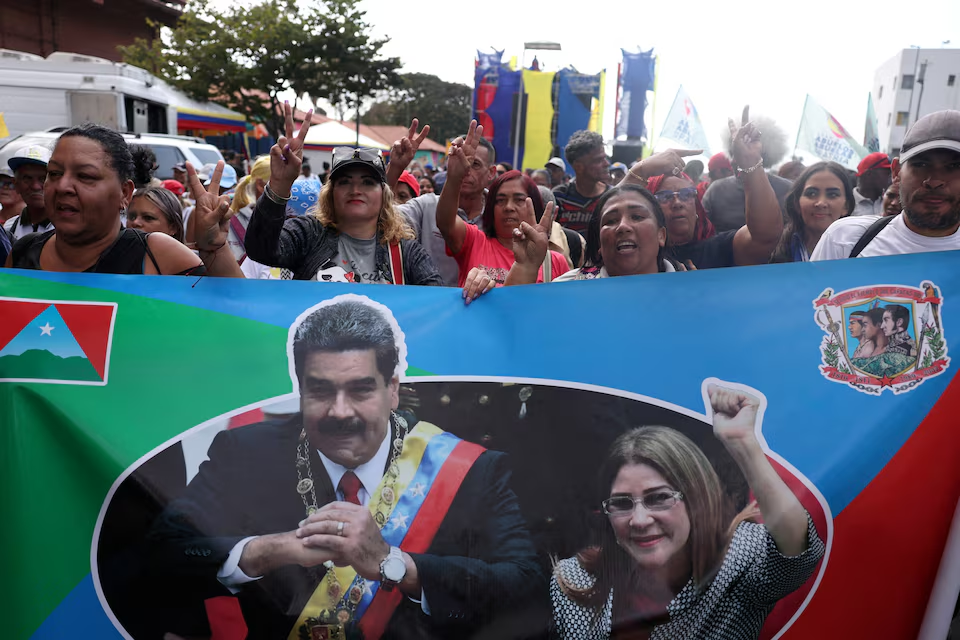
    Maduro to face new U.S. charges over alleged torture of Americans, official says

    Supporters of Venezuela’s government rally to demand the release of ousted President Nicolas Maduro and his wife, Cilia Flores, two months after their capture by the U.S., in Caracas, Venezuela March 3, 2026.

    A spokesperson for the Manhattan U.S. Attorney’s office, ​which brought the charges, declined to comment.

    Lawyers for Maduro and Flores did ⁠immediately respond to requests for comment.

    The possibility of new charges was first reported by CNN on Wednesday.

    Details of the new charges, including the identities of the alleged torture ​victims, were not ​immediately available.

    Maduro’s ⁠13 years in power in oil-rich Venezuela were marked by tensions with the United ​States. Washington said that several of its ​citizens ⁠were wrongfully detained in the South American country during his tenure.

    Venezuela has been led since Maduro’s capture by his ⁠former ​vice president, Delcy Rodriguez, who has ​increased cooperation with the Trump administration.


    Source: Kaieteur News

    President Ali blasts visa barriers, says Caribbean cannot build tourism with ‘stone age’ system

    0


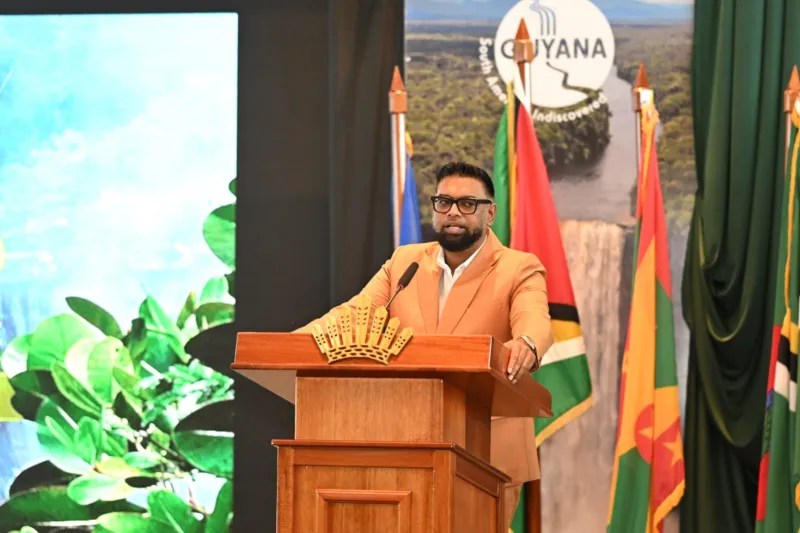
    (Kaieteur News) – President Irfaan Ali on Wednesday criticised visa barriers facing Caribbean travellers, noting that visa and biometric requirements are undermining tourism, regional connectivity and the hosting of international conferences.

    Speaking at the State of the Tourism Industry Conference 2026 (SOTIC), held at the Atlantic Suites by Hyatt in Georgetown, President Ali compared the Caribbean’s travel connectivity with that of other regions, particularly the Middle East and Europe.

    President Ali blasts visa barriers, says Caribbean cannot build tourism with ‘stone age’ system

    President Irfaan Ali

    He pointed to the availability of electronic visas in the Middle East, pointing out that the Caribbean and its international partners must modernise how visitors access the region.

    “The European Union is still backward in this region. We have to travel to Trinidad and Suriname to get biometrics to do it.”

    The Guyanese leader said the requirement for travellers to spend several days completing visa procedures makes it difficult to build tourism partnerships and attract visitors to major international events.

    “In a day of digitisation in AI, we have the EU that is operating from a stone age kind of operation, and they’re our friends. We can tell them frankly, but it’s the truth,” he said.

    “We can’t have people have to go two days and three days. We can’t build partnership and friendship like that, where people gotta spend four days to get a visa before they travel to your country,” the president added.

    He said the issue becomes even more significant when countries seek to host international conferences and other major events.

    He addressed the practicality of inviting people to conferences while requiring them to spend several days securing a visa before they can travel.

    The president said modern technology should allow authorities to verify a traveller’s identity and background quickly, rather than relying on lengthy processes.

    He told delegates that the region must decide whether it is prepared to take bold steps to improve connectivity or remain on the defensive.

    Ali also stressed the need for Caribbean countries to determine together which major international events they want to attract, stating that regional cooperation is critical to making that possible.

    Using the Middle East as an example, he pointed to the ease of movement between countries across a wider regional network, including Greece, India, Bangladesh, Pakistan, China and the Philippines, as well as the Gulf Cooperation Council (GCC) states such as Qatar, Oman, Saudi Arabia and the United Arab Emirates.

    “That entire circuit flights almost every hour, between one hour flight to two and a half, three hours,” he said.

    The president said such connectivity was not accidental, but the result of countries investing in infrastructure and building an ecosystem that allows travel, business and tourism.


    Source: Kaieteur News

    Life expectancy takes centre stage as massacre convict asks CCJ to cut parole period

    0


    By Renay Sambach

    (Kaieteur News) – Justices at the Caribbean Court of Justice (CCJ) on Wednesday heard an appeal filed by attorneys for Michael Caesar, who earlier this year had his sentences for the Lusignan and Bartica massacres reduced by the Guyana Court of Appeal (COA).

    A significant part of the hearing was focused on the question of life expectancy in Guyana, which is one of the grounds being argued by the appellant, who is contending that by the time he becomes eligible for parole, he will be well beyond the average life expectancy in Guyana.

    Attorneys-at-law Nigel Hughes and Kiswana Jefford have appealed to the CCJ, challenging the sentences imposed by the COA following Caesar’s convictions for manslaughter arising from his involvement in the Lusignan and Bartica massacre killings.

    Life expectancy takes centre stage as massacre convict asks CCJ to cut parole period

    Some of the CCJ justices at a Ceremonial Sitting to commemorate the opening of the 2026/2027 Judicial Year held in St. Lucia.Some of the CCJ justices at a Ceremonial Sitting to commemorate the opening of the 2026/2027 Judicial Year held in St. Lucia.

    On March 11, 2026, the COA delivered its ruling, which reduced the sentences originally imposed by the High Court against Caesar and Clebert Reece, another convict in the massacres.

    The COA found that the trial judge’s sentencing approach was excessive and inconsistent with established legal principles. The Court resentenced both appellants, substituting sentences of life imprisonment with defined parole eligibility periods in place of the original determinate sentences, which the appellants argued effectively exceeded the statutory maximum.

    For Caesar, the COA imposed life imprisonment with the possibility of parole after serving 30 calendar years on each of the eight counts relating to the Lusignan killings, and life imprisonment with the possibility of parole after serving 40 calendar years on each of the 12 counts relating to the Bartica killings. All sentences run concurrently from the date of the original sentencing on December 8, 2016.

    However, while the COA effectively imposed a reduced sentence on Caesar, his legal team is now before the CCJ contending that these minimum periods 30 and 40 years are excessive, as their client would be approximately 75 years old before becoming eligible for parole.

    Life expectancy takes centre stage as massacre convict asks CCJ to cut parole period

    It should be noted that their appeal is confined solely to the determination of the appropriate minimum periods to be served before parole eligibility. The appellant argued that the COA failed to give sufficient consideration to Caesar’s advanced age and prospects for rehabilitation.

    The in-person hearing was held in St. Lucia. Speaking before the CCJ justices, Hughes said, “We are not challenging the conviction; we do not remotely attempt to challenging the gravity they were particularly horrendous, we do not challenge the imposition of life imprisonment and we certainly do not challenge the power of Court of Appeal to fix minimum parole periods.”

    The essence of their move to the CCJ is that the minimum periods arrived at by the COA were reached by an “unlawful, unprincipled, and disproportionate exercise of the sentencing discretion.”

    He said the COA fell into error in its application of a sentence of life without the possibility of parole until after 40 years, which is “erroneous.”

    Hughes outlined that Caesar’s conviction arose from a plea of guilty to manslaughter, which was accepted by the State. He noted that in this case, the maximum penalty is life imprisonment, adding that the reduced sentence by the COA took rehabilitation into account, citing the Court’s decision to impose a period of eligibility for parole.

    However, he argued that the period for eligibility for parole had to be a realistic period, saying he believes the COA fell into error when applying the principles governing the period for eligibility.

    Hughes’ argument was based on the consideration that the mere possibility of parole by the COA opened the door to the belief that rehabilitation is possible.

    Life expectancy

    Another argument Hughes introduced was based on life expectancy, arguing that if it had been a case of life without parole, it would show that rehabilitation is not possible. “For example, if you are 60, a 40 years sentence would be unlawful, because it exceeds the maximum,” he noted.

    While he did not offer a prognosis on when his client is likely to die, Hughes explained that with his client being 35 at the time of sentencing, Caesar would be approximately 75 years old before becoming eligible for parole. “Life expectancy is 62, the Court of Appeal accepted that figure. A sentence where the court thinks parole is part of the sentence ought to be consistent with the average lifespan of Guyanese at that time,” Hughes said.

    Heinous crimes

    On the other hand, the Director of Public Prosecutions maintains that the sentences imposed were appropriate and befitting the gravity and heinous nature of the offences.

    In her address, Deputy Director of Public Prosecutions Diana O’Brien pointed to statistics by the World Health Organisation (WHO) and noted that using life expectancy in a sentencing process is not recommended.

    “We are respectfully saying that using that as part of the mathematical exercise as a justification is fundamentally unstable because of the fluctuations…” she said, pointing to statistics used by the applicant based on statistics from the WHO, which most recent figures are based on 2021. A male’s average life expectancy was 63 years old and generally 66 years.

    O’Brien, however, contended that the aforementioned would have taken into account the COVID-19 pandemic, which would have caused a decline in overall life expectancy.

    “By comparison for instance in 2016 when the appellant would have been convicted the male life expectancy was 64.3 and overall, it would have been 67.6…” she noted.

    O’Brien argued that life expectancy being a major consideration in the case “is a moving goal post”, adding that it can vary.

    She further noted that their position is based on jurisprudence which defines life as natural life. The Deputy DPP acknowledged that there is jurisprudence suggesting that where a sentence could be as high as 70 years, it may be appropriate to impose life imprisonment instead.

    O’Brien added that while several countries in the region have legislation, case law or sentencing guidelines specifying periods that would be equivalent to a life sentence, it is not the same for Guyana.

    Natural life

    However, she said Guyana has no such established figure, noting that even in cases where the issue of a sentence exceeding life imprisonment has been discussed, no precise period has been set for Guyana, where the position remains that life imprisonment means natural life.

    “But the reality is in Guyana that we don’t have such a figure coming out even in the cases that have been discussed as to what exceeds life, there is nothing that has been set out precisely for Guyana to say in Guyana this would exceed life because the position remains life is natural life…” the Deputy DPP said.

    Further, she noted that while the maximum penalty is deemed to be life imprisonment, case law deems life as natural life, but there is still no figure in terms of what natural life equates to.

    It was proposed that stakeholders become involved in determining the proper jurisprudential principles on which to base life imprisonment without parole.

    For his part, Hughes said he is in favour of scientific consultations and recommendations, noting that as much as the public is entitled to their views, it will have to be captured in a scope that will be used to identify principles.

    Meanwhile, O’Brien did not disagree with the Court getting inputs from stakeholders on the question of life expectancy. She expressed concerns about how it would be done, whether hypothetically and how directly it can be applied to the appellant at this stage, but noted that consultations with different arms of society are not opposed.

    The CCJ justices are President of the CCJ Winston Anderson, Justice Maureen Rajnauth-Lee, Justice Denys Barrow, Justice Peter Jamadar, Justice Chantal Ononaiwu, Justice Chile Eboe-Osuji and Justice Arif Bulkan.

    The matters before the Court involved Mark Royden Williams, Dennis Williams, Clebert Reece and Michael Caesar.

    On January 26, 2008, the men were involved in the Lusignan massacre, one of the most brutal killings in Guyana’s history. During that attack, 11 people between the ages of four and 52 were shot and killed in their homes.

    Later, on February 17, 2008, the gunmen attacked Bartica, firing at police officers at the Bartica Police Station and elsewhere in the community. The gang eventually fled using a boat moored at the Bartica Stelling. Before leaving, one of the gunmen opened fire on passengers at the stelling, ordering them to lie face down before escaping. Twelve people were killed that day, including three members of the Guyana Police Force.


    Source: Kaieteur News

    13 children benefit from paediatric cardiac procedures

    0


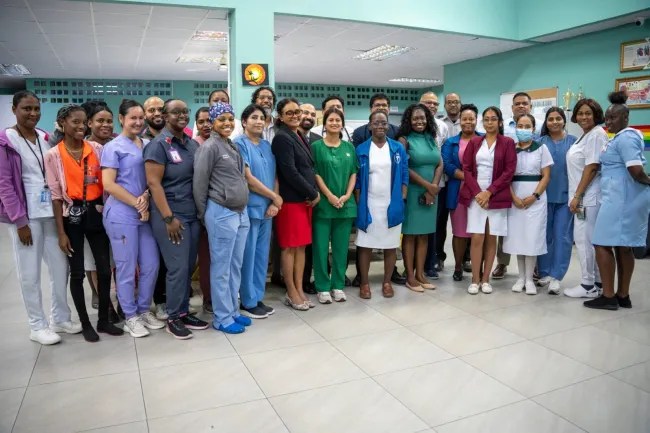
    Thirteen children have benefitted from specialised cardiac care at the Georgetown Public Hospital Corporation (GPHC), following a series of paediatric cardiac procedures performed through a collaboration between local and international medical specialists.

    13 children benefit from paediatric cardiac procedures

    Minister of Health Dr. Frank Anthony interacts with one of the patients.

    Minister of Health Dr. Frank Anthony visited the children at the hospital’s Paediatric High Dependency Unit, where he interacted with them, their families, and received updates on their recovery.

    Procedures were conducted from 28th September to 2nd October by an 18-member team from Apollo Hospitals in India, working alongside more than 50 GPHC healthcare professionals. A total of 16 procedures were completed, including 10 complex open-heart surgeries, three catheter-based device closures and three diagnostic catheterisations. Some of the 13 patients underwent diagnostic catheterisation before receiving corrective surgery. Of the 13 children treated, three remain hospitalised for continued care, while the others have since been discharged.

    13 children benefit from paediatric cardiac procedures

    The team of healthcare professionals who performed the paediatric heart surgeries.

    The initiative is part of the government’s efforts to expand access to specialised treatment for children with congenital heart defects, allowing patients to receive complex cardiac care closer to home. Beyond the procedures themselves, the collaboration also provided an opportunity for local healthcare professionals to work alongside visiting specialists and strengthen their practical experience in paediatric cardiac care. (DPI)


    Source: Kaieteur News

    Widespread distrust in MV Barima inquiry as survivors, families demand answers

    0


    (Kaieteur News) – The overarching theme of Wednesday’s consultation with the commissioners of the MV Barima Commission of Inquiry was a profound lack of trust in presidential inquiries, as speakers repeatedly questioned whether the process could deliver justice and accountability for the families of those who died.

    The meeting, held at the Arthur Chung Conference Centre, turned to vivid eyewitness accounts as survivors recounted the sheer terror of the capsizing, shedding further light on the chaotic conditions on board.

    Diane Cort, whose husband operated the ship’s canteen and perished alongside his brother, delivered an agonising testimony describing how the vessel was forced to set sail despite severe, pre-existing mechanical failures. She revealed that the ship had been operating on only one working engine during its return journey from Region One and was severely overloaded prior to its final departure.

    “Me and my husband were down there since Wednesday preparing. Only one engine was working on that boat – one engine,” Diane testified. “They still decided to load it. The hatch was full of goods, and the engine room was packed. The minister sent a standby generator that Friday, and the engineers didn’t even know where to put it because the boat was already overloaded. They had to force space for two big generators on a boat that was already taking in water.”

    Widespread distrust in MV Barima inquiry as survivors, families demand answers

    Wednesday’s meeting between MV Barima families and Commissioners of the MV Barima CoI, the Commission will start public hearings next week.

    Diane shared that her husband frequently complained about water leaking into the hull and pipes breaking, often paying out of his own pocket for sealant because authorities claimed there was no money for basic repairs. “The second engineer told me, ‘Auntie Diane, only one engine working.’ My husband told me that morning, ‘Diane, they pushing this boat to go, and this boat is in no condition to go.’ But they didn’t have a choice because of their jobs. The last thing my husband was doing that night in all that water was cooking for the passengers.”

    Cort also criticised the State’s post-disaster relief efforts, revealing that a social worker visited her home offering a $20,000 stipend. “My husband was my breadwinner. What can $20,000 do for me now? Who will pay my bills? Guyanese don’t get justice. Everything just disappears.”

    Dolly Cox, who lost her father, the sole outboard mechanic for Port Kaituma, expressed deep anger over broken government promises to support surviving dependents. She testified that her sickly mother was forced to seek employment, while four school-aged siblings have been unable to attend classes regularly due to the loss of their family’s primary income provider, “Ah doan trust y’all and ah doan trust this government”.

    “My father left four children in school who can’t go to school every day because of what this government did. They promised to help my mother, promised to fix our house, told us to bring a list of materials, and then did nothing. What should I say to my four-year-old sister who is still asking for her father? We have to go to the seaside and drop flowers in the water just to grieve.”

    One female survivor, Samantha Ramit, who was traveling with eight of her grandchildren, four of whom survived while four tragically perished, including an infant who remains missing, recalled the desperate struggle to stay afloat after being plunged into the dark water.

    “I couldn’t swim, but I just keep pulling up, pulling up in my hand, I’m kicking and I reach up to the surface and there was a box,” she recounted. “I don’t know, God was in that place because a box was just stable… I see a hand went struggling, I don’t know if it was a man, a woman, a child, or whatever, but I snatched down and I placed the hand from the box… when I watch as this lady will pull up, it’s a lady. I ask her one question, I say, ‘You got strength?’…”

    She described the horrifying realisation that life jackets were completely out of reach for passengers in the centre of the boat, leaving families helpless as the vessel went down. “I tried to reach the life jacket, but it was on top of the rack and I couldn’t get it. I drank water, drank water, drank water, and prayed to God for strength. We lost four children that night, and we still haven’t found the baby.”

    “This boat was overloaded, fully packed,” one survivor explained to the panel. “When you operate with only one working engine, that engine is supposed to push the boat under normal conditions. But when water starts merging into the hull, one engine cannot handle that load or give you the power needed to manoeuvre out of danger. Once that happened, there was no coming back. It became an arm of death.”

    He further criticised the decision to load two heavy standby generators onto the vessel at the last minute, “The generator was the very last thing put on that key, forced onto a boat that was already weighed down. It was a disaster waiting to happen.”

    Opposition Member of Parliament, Odessa Primus criticised the government’s post-tragedy actions, highlighting an outreach trip conducted by the subject minister to Region One shortly after the disaster.

    Addressing the commissioners directly, Primus pointed out a glaring contradiction in the State’s handling of the disaster: while three low-level crew members face criminal charges, the broader institutional and administrative decision-makers have escaped scrutiny. “We have three innocent men sitting in prison, but you don’t ask to figure out who really caused this or who is liable,” the MP stated, calling on the Commission to issue bold, unvarnished recommendations. “If the minister is responsible, say it clearly in your report that he has caused failure systemically. If he is not, say clearly, he is not. We are depending on you not to shroud this in fancy words.”

    In response, commission members acknowledged the legal complexity created by concurrent criminal proceedings. Chair of the commission, Godfrey Smith explained that under standard legal protections against self-incrimination, individuals facing criminal charges cannot be compelled to testify before an inquiry, which limits direct oral testimony from those key figures. However, the panel stressed that it remains committed to examining all surrounding evidence to determine systemic responsibility.

    Commissioners also reiterated their personal and professional independence from local partisan politics. “Each of us is outside the politics of Guyana,” Commissioner Nyree Alfonso noted, reassuring the audience that panel members were selected for their technical expertise from international jurisdictions, including Trinidad and Tobago, Belize, Poland, and Egypt. “Nobody is going to vote for us…no one is voting for us in an election. Whatever went wrong, and wherever the evidence leads, it will be revealed fearlessly.”

    Leader of the Opposition Demands C0I Halt, Citing Conflicts of Interest and Systemic Corruption

    Addressing the session, the Leader of the Opposition Azruddin Mohamed delivered a critique of both the government’s post-disaster handling and the integrity of the Commission of Inquiry, declaring a total lack of confidence in the proceedings.

    The opposition leader also raised serious allegations regarding the salvage procurement process, claiming that contractor selection was pre-determined long before formal announcements: “Before this contract was awarded to the grasshopper… the person that had to get the contract to bring in the wire ropes already, done ordered wire ropes a month or two months ago. They already knew that the contract was awarded.”

    Calling for the immediate dismissal of criminal charges against the three crew members currently in jail, warning that they are being used as scapegoats while senior decision-makers escape accountability and urging immediate $5 million interim payouts per affected family to cover severe economic hardships, alongside adequate transportation, food, and basic support during official consultations.

    Relatives, community elders, and legal representatives argued that completing an investigation without inspecting the sunken hull is fundamentally flawed, as crucial physical evidence, including cargo weight distributions, machinery, and the trapped remains of victims, remains underwater.

    Commissioners conceded that retrieving the ship represents the ideal condition for gathering evidence, stating that panel members have repeatedly pushed State authorities to expedite salvage efforts. However, the Chairman cautioned that the Commission itself lacks statutory power or operational equipment to physically raise the vessel.

    “There is no disconnect between what you are asking for and what we are asking for,” a Commissioner explained. “We are of the strong view that raising the vessel offers the best possible circumstance for evidence. However, if that does not happen, our terms of reference still require us to investigate systemic failures so that this never happens to another family.”

    Civil society members countered that the commission must advocate publicly and forcefully for the vessel’s retrieval, warning that any final report delivered while the wreck remains submerged will lack legitimacy in the eyes of the public.


    Source: Kaieteur News