https://kiskadeewatch.com/sports/football/eight-schools-chase-republic-bank-title-and-kfc-goodwill-berth/








https://kiskadeewatch.com/sports/football/eight-schools-chase-republic-bank-title-and-kfc-goodwill-berth/
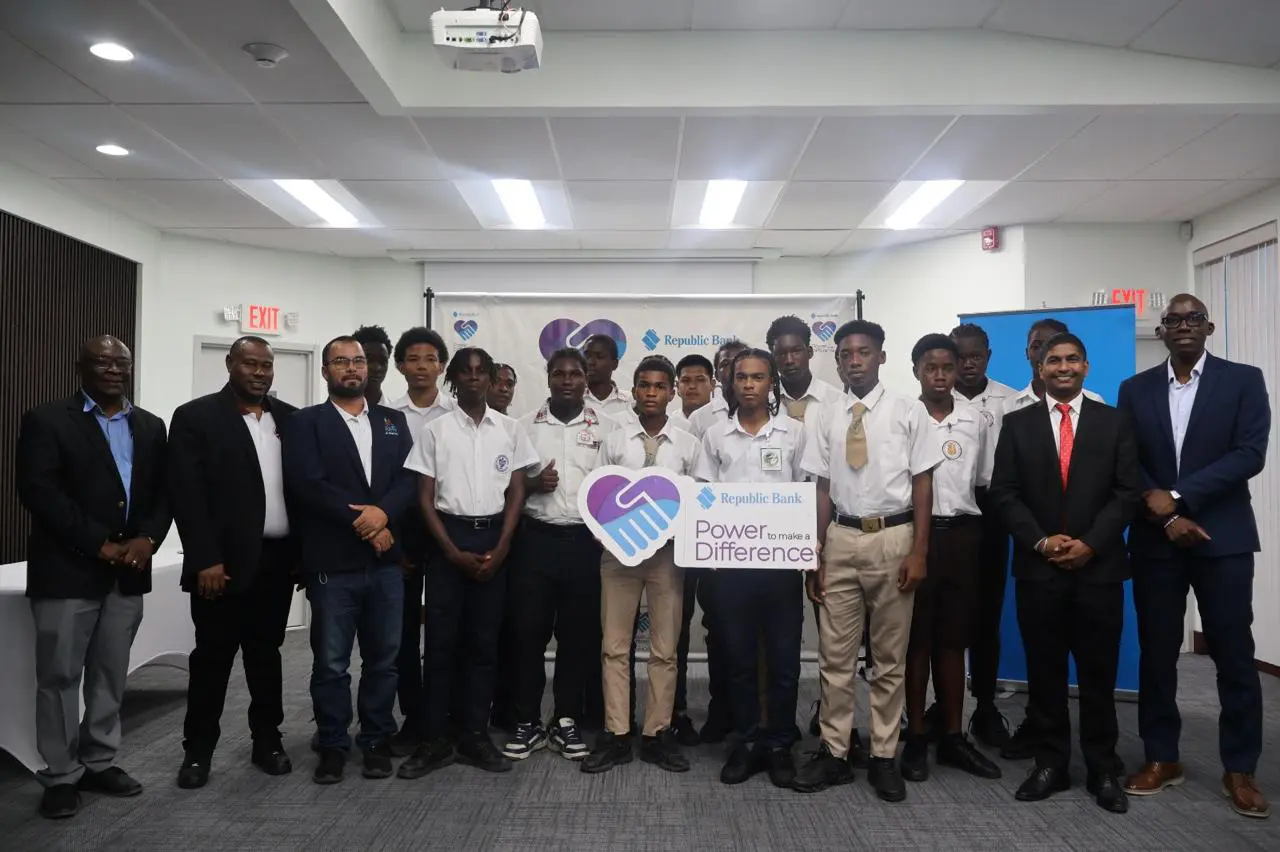
Eight schools will battle for the Republic Bank Schools Football League title and one qualifying spot in December’s KFC International Goodwill Tournament when the competition begins on October 18 at the Ministry of Education Ground.
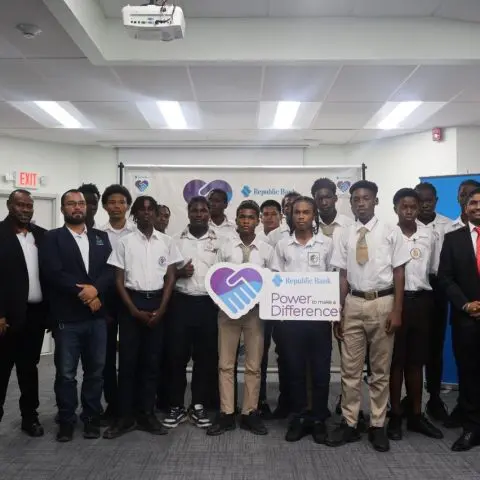
Organised by the Petra Organisation, the league was launched yesterday, at Republic Bank’s head office on New Market Street in Georgetown. The competition will run until November 29, with matches starting from noon at the Carifesta Avenue venue.
Defending league champions Chase Academic Foundation will compete alongside Santa Rosa Secondary, Three Miles Secondary, New Amsterdam Secondary, Annandale Secondary, Charlestown Secondary, West Ruimveldt Secondary and St. Joseph High School.
The league winners will earn the available KFC Goodwill berth. However, Chase are already assured of entry as defending champions of the international competition. If they also retain the Republic Bank league title, the qualifying place will pass to the runners-up.
Chase set a strong standard in 2025, winning all seven league matches to finish with a maximum 21 points. West Ruimveldt Secondary finished second.
The champions completed their campaign with a 3–0 victory over Dolphin Secondary, with Isaiah Ifill, Bryan Wharton and Shaquan David scoring in their final fixture.
Yesterday’s launch programme included a tournament review by Petra Co-Director Troy Mendonca and sponsor’s remarks by Republic Bank Managing Director Dr. Toussant Boyce. Ministry of Education Unit of Allied Arts Administrator Nicholas Fraser and Member of Parliament and Director of Youth Suresh Singh also delivered words of encouragement.
The competition is sanctioned by the Ministry of Education and backed by Republic Bank through its Power to Make a Difference programme. Additional support comes from the Ministry of Culture, Youth and Sport, MVP Sports, Yellow Steel Inc., Guyana Beverages Inc. and Busta.
Source: Kiskadee Watch
https://kiskadeewatch.com/guyana/security-guard-shot-dead-at-sussex-st-supermarket/
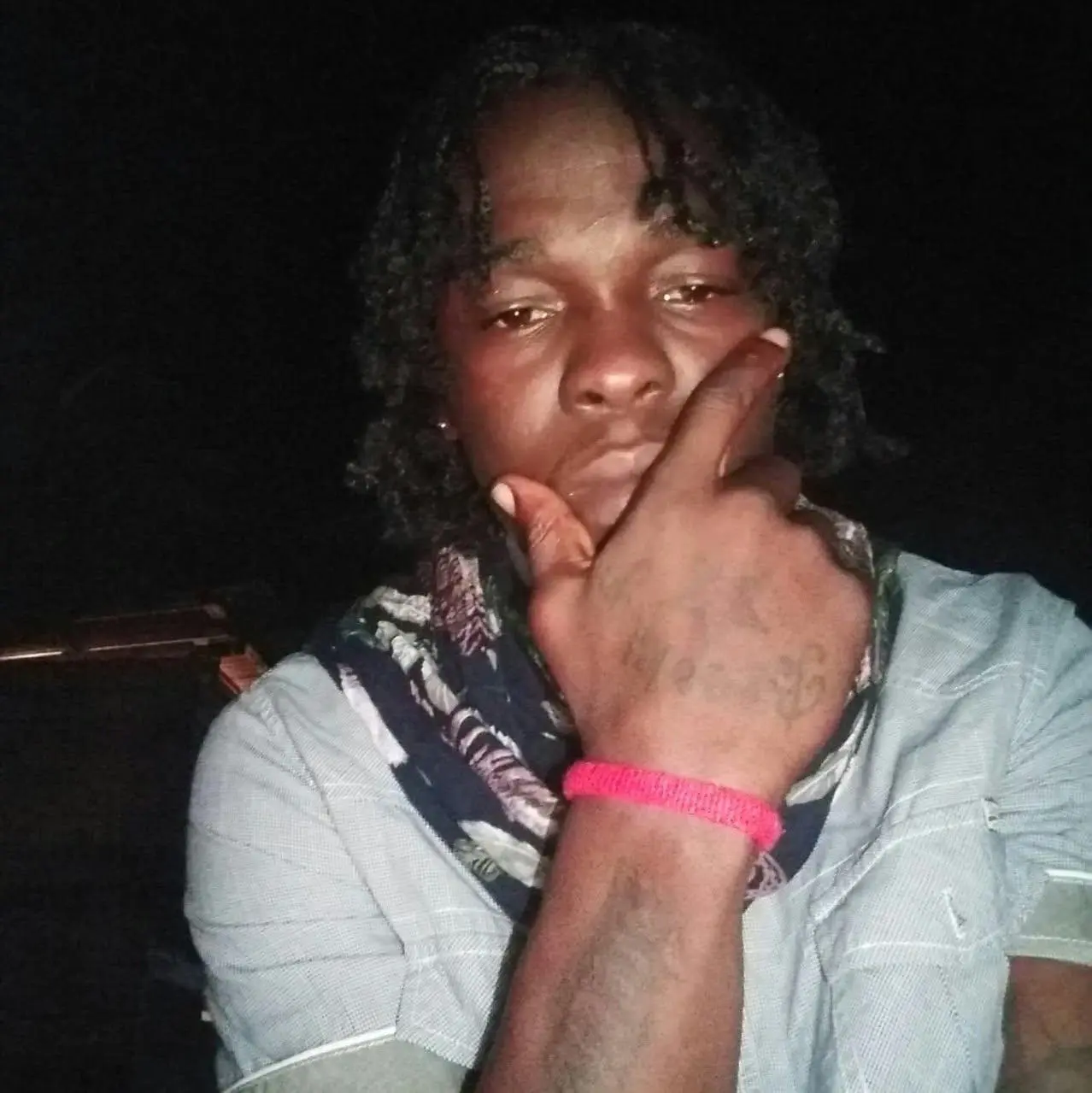
A 37-year-old security guard was shot dead by a masked gunman at Linda Supermarket on Sussex Street, Charlestown, yesterday afternoon, according to police reports.
Esan Rose, of Lot 11 Laing Avenue, was on duty at the supermarket at Lot 12 Sussex Street when he was attacked at around 3.05 pm. He was employed by CMC Security Service.
According to police reports, Rose was standing about five feet from the supermarket’s southern entrance when the gunman approached him. The suspect had arrived as the pillion rider on a red-and-white XR motorcycle, whose registration number is currently unknown.
After the suspect dismounted, the motorcycle rider left in an easterly direction along Sussex Street.
Police said the suspect, who was wearing a surgical mask and carrying a handgun, fired twice in Rose’s direction. One bullet struck the guard in the chest, causing him to collapse.
The gunman then ran from the supermarket, heading west along Sussex Street before turning north onto Charles Street.
Emergency medical personnel were summoned and Rose was pronounced dead by Dr Harikissoon of the Georgetown Public Hospital.
Police said Rose’s service pistol was found on the ground beside him, with nine live 9mm rounds in its magazine. Investigators also recovered a .32 spent shell and two live .32 rounds from the scene. The firearms and ammunition were lodged.
The shooting was captured by the supermarket’s CCTV cameras and the footage was extracted. Police were also reviewing other cameras in the area and footage available through the Command Centre as they sought to locate the gunman, the motorcycle and its rider.
Several persons were questioned and Rose’s body was taken to Memorial Gardens Funeral Home to await a post-mortem examination.
Speaking to the media, Rose’s stepson, Daniel, said he was struggling to come to terms with the killing.
He described Rose as the household’s main breadwinner, who rose at 6 am each day, helped his wife with chores and took him to work before heading to his own job. His mother similarly assisted a younger brother.
Daniel said he and his sister, the eldest children, also tried to contribute, but it was his mother and Rose who principally supported the household.
“When he is working mommy will be home with the kids or she would go and do her lil fine contract with the government…” he said.
Rose’s wife, Velincia Rose, was inconsolable as she spoke about her husband’s death and the loss of the family’s main provider.
“I can’t believe he is gone, best he did stay home and I would go out and do me thing, now me bread winner gone, now I gah come back out on the road,” she said through tears.
She also expressed concern about the conditions under which he worked. She said he had been required on several occasions to deal with dissatisfied customers on his employers’ behalf and that she had urged him to obtain a bulletproof vest.
Police investigations are continuing.
Rose’s killing is the latest involving guards at supermarkets.
Source: Kiskadee Watch
https://kiskadeewatch.com/guyana/meadowbrook-gardens-residents-demand-suspension-of-gpls-transmission-line-works/
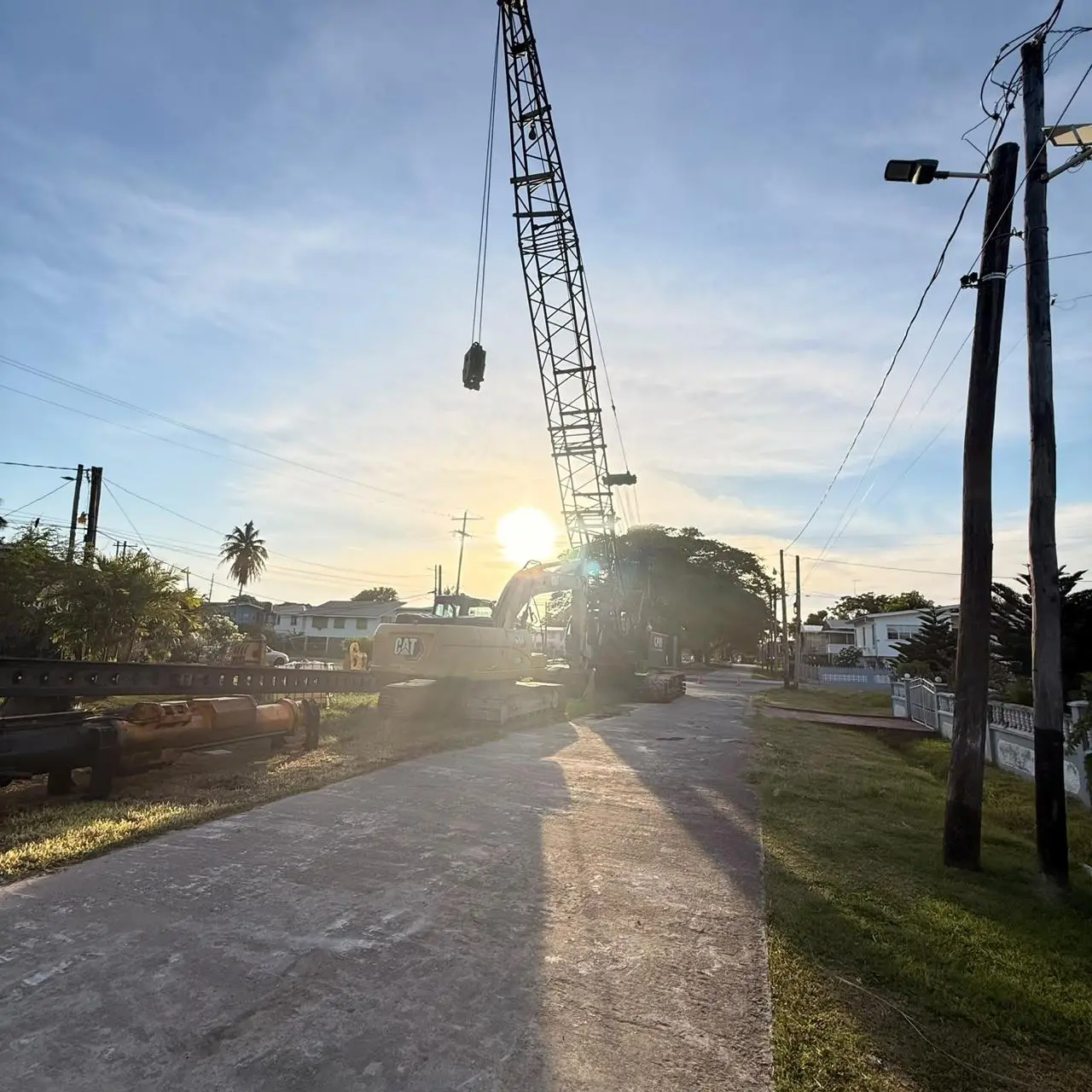
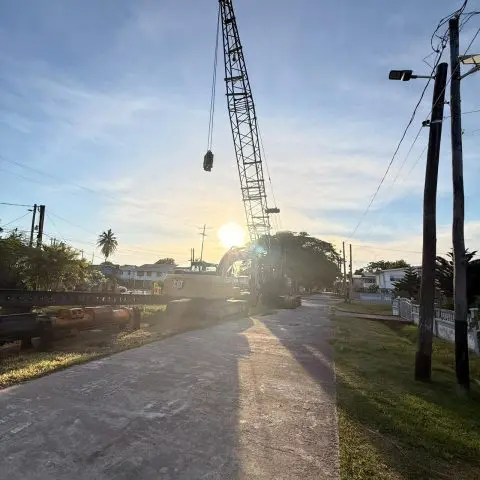
The Meadowbrook Gardens Community Group has called for the immediate suspension of electricity transmission line works through the residential community, saying construction has resumed despite a commitment by project representatives to halt activities along a disputed section.
In a statement issued yesterday, the group said residents had been requesting meaningful consultation since February over the proposed alignment, its proximity to homes, potential health and safety implications and the availability of alternative routes.
Despite those requests, it said, fundamental questions remained unanswered while construction proceeded.
The group called on the Guyana Power and Light Inc (GPL), the relevant project authorities and responsible government agencies to suspend the disputed works pending consultation, disclosure of relevant assessments and proper consideration of residents’ concerns.
It also demanded a written explanation for the resumption of construction following what it described as a commitment at a recent community meeting to halt work along that section.
Residents had understood the undertaking would provide an opportunity for further engagement and consideration of the issues raised. The resumption of work without satisfactory answers or a clear explanation had seriously undermined confidence in the consultation process, the group said.
“What is the purpose of consultation if legitimate questions remain unanswered, commitments are disregarded, and construction proceeds regardless of residents’ objections?” it asked.
The statement did not identify the project representatives who made the commitment or give the date of the meeting.
Questions over route
According to the group, residents formally sought consultation as early as February after learning that the proposed transmission alignment would affect Meadowbrook Gardens.
They questioned why the lines, previously proposed for another community where objections had been raised, were subsequently redirected towards their neighbourhood.
“Why was our residential community selected following objections from another community? What technical, environmental or safety considerations justified this decision?” the group asked.
It called for disclosure of the justification for the change, including the reasons for moving the route towards Meadowbrook Gardens.
Residents also identified reserves bordering the community which, they said, might offer an alternative to routing major transmission infrastructure through an established residential area.
The group requested a detailed technical explanation of why those reserves had not been utilised, together with an assessment of their feasibility as alternative transmission corridors.
It said residents had received neither satisfactory explanations nor supporting documents addressing the alleged rerouting and the proposed alternatives.
The group expressed concern that decisions affecting residents’ homes and daily lives were being implemented without sufficient transparency or consideration of their objections.
Safety and use of properties
Meadowbrook Gardens is an established community where children play outdoors, families gather on their lawns and residents hold community activities, the statement said.
“These are not vacant or unused spaces. They are essential parts of our homes, neighbourhood and daily lives.”
Based on the information presently available to residents, the group said, the proposed lines might pass within a few feet of homes and areas used by road users.
Its concerns include possible electrical hazards, the proximity of infrastructure to residential properties, restrictions on the use and enjoyment of homes and the implications of long-term exposure to electromagnetic fields.
The group cited the International Agency for Research on Cancer’s classification of extremely low-frequency magnetic fields as Group 2B, or possibly carcinogenic to humans. It noted that the classification was based primarily on epidemiological studies showing an association between elevated residential magnetic-field exposure and childhood leukaemia.
The group said that where reasonable alternatives existed, potential risks and unnecessary proximity to homes should be evaluated rather than dismissed.
It requested disclosure of the relevant environmental, health, engineering and safety assessments, including proposed clearances from homes, roads and public spaces, applicable safety standards, electromagnetic-field exposure assessments and any required environmental authorisations.
Independent review sought
The group also called for an independent technical and environmental review of the disputed alignment. This should include an objective comparison of alternative routes that could reduce potential impacts on residential properties and community spaces, it said.
It sought urgent intervention by the Environmental Protection Agency and other oversight authorities to examine whether the alignment and associated works had undergone appropriate environmental review, regulatory authorisation and public consultation.
A further meeting should be convened with community representatives, project decision-makers and qualified technical personnel, with all outstanding questions addressed before construction resumes along the disputed route, the group added.
“Meaningful consultation cannot simply be an exercise in informing residents of decisions already made. It must involve genuine engagement, access to relevant information, consideration of alternatives and accountability for commitments communicated to affected communities,” it said.
The statement acknowledged the importance of modernising electricity infrastructure and strengthening the national power supply, but said development must respect established communities and prioritise public safety.
“Our position has remained consistent: we are not opposed to electricity infrastructure development. We object to the disputed alignment through our residential community and the apparent failure to adequately consider safer or less intrusive alternatives.”
The group said the absence of an explanation for rejecting the bordering reserves was particularly concerning, given the proposed proximity of the lines to homes and frequently used community spaces.
The group added that residents had spent months attempting to engage constructively, requesting consultation and identifying alternatives.
They were entitled to know why their residential streets had been selected, why alternative corridors had not been adequately considered and what measures would protect public safety and residential wellbeing, it said.
“A commitment made to a community must carry meaning and accountability.”
The group said it remained willing to pursue a responsible resolution but would continue advocating for residents and for transparency and meaningful public participation in national development.
“Our homes are not simply points on an engineering drawing. They are where our families live, our children grow and our community thrives,” it said.
Source: Kiskadee Watch
https://kiskadeewatch.com/features/32-years-later-uk-woman-raises-20000-to-help-guyanese-saviour-retire/
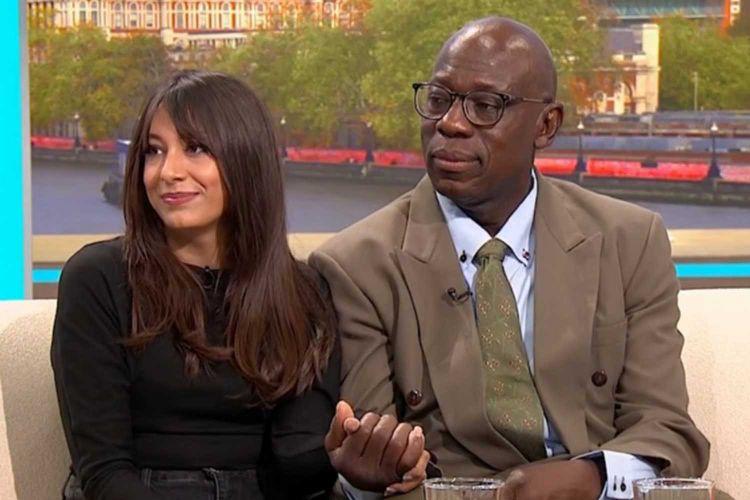
A woman who was found abandoned in a London telephone box as a newborn has raised approximately £20,000 to help the Guyanese man who rescued her retire, saying he has become the father she had longed for.
Joe Campbell, now a bus driver, and April Jones returned to ITV’s Good Morning Britain on October 5, ten years after their reunion, to discuss their relationship. Both became emotional during the interview, particularly April as she described the fatherly care Campbell had given her and her wish to help him retire.
“He’s been my rock. He doesn’t let me struggle. He doesn’t let me suffer,” April told the programme. “He filled that whole void that I’ve had of not having parents, not having my mum, not having my dad.”
April said she launched her 2016 appeal hoping to find both Campbell and her birth mother, but had doubted that the man who rescued her would remember her.
Campbell responded within 24 hours.
Reflecting on her childhood, April said a life-story book she received when she was eight had introduced her to the man who had found her and continued asking about her welfare.
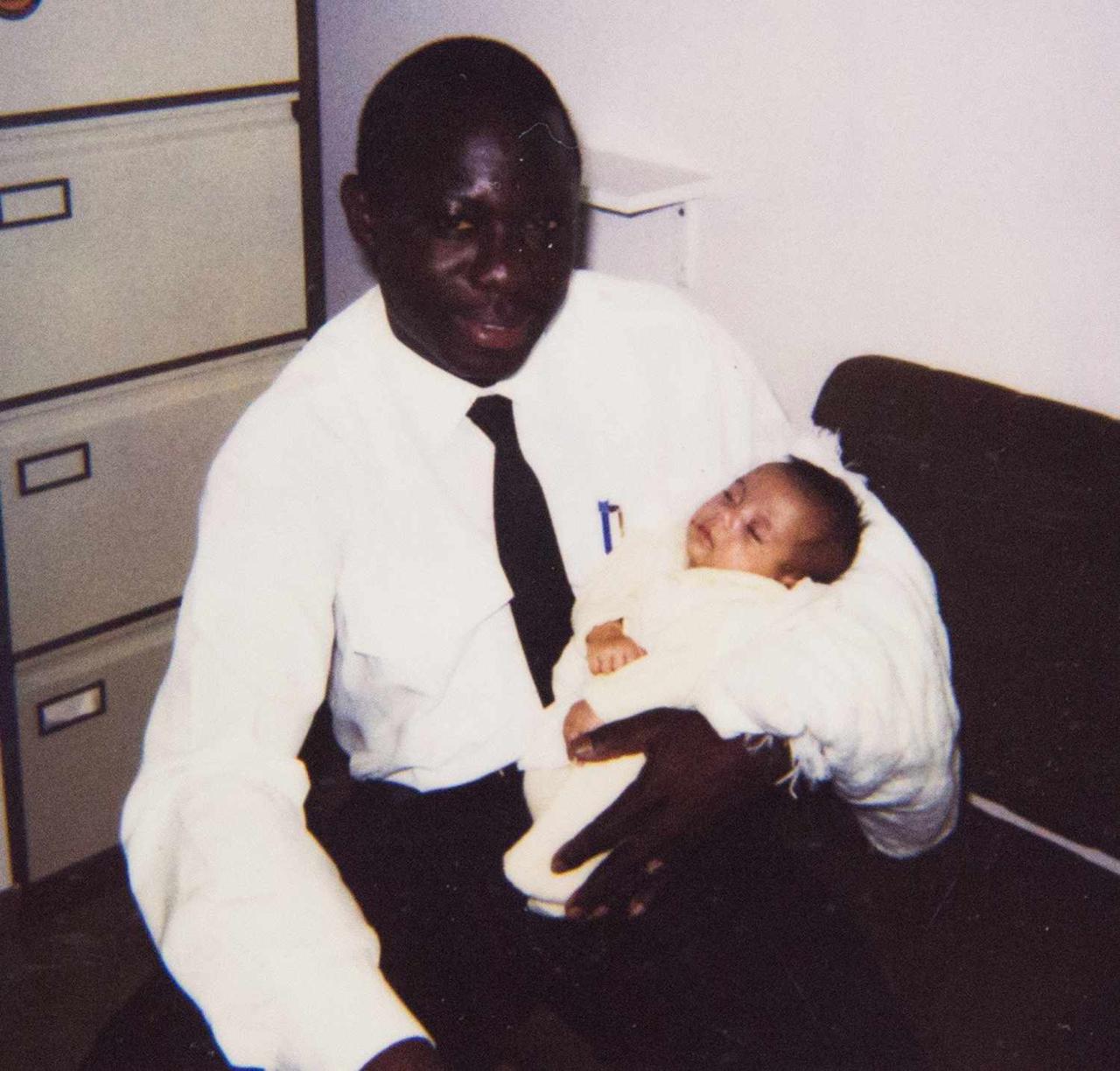
The book described someone who cared deeply about her and sent gifts, money and cards. That account stayed with her.
Campbell told the programme that he had wanted to take care of the baby himself. He was single and working in the civil service at the time, and said the authorities refused his request to keep her.
He was permitted to see her once afterwards, when a photograph was taken of him holding her, but subsequent requests for visits were declined.
“But I never stopped thinking about her,” he said. “I always wondered where she was and how she was doing.”
The opportunity to reconnect came in 2016 when a colleague placed a copy of the Metro newspaper on Campbell’s desk and pointed out an article about a woman searching for her rescuer.
Campbell said some details in the report, including his origins, were incorrect. However, he recognised the photograph accompanying the appeal because he had kept a copy of it.
He called his daughter Rihanna and told her he believed he had found April.
Although he had since had children of his own, Campbell said he had always told them about the baby he found.
“You’ve got a sister. She may not be biologically yours, but she is your sister,” he recalled telling them.
April said the relationship felt natural from their first embrace. She now regards Campbell’s children as her siblings, and they spend time together regularly.
“We are family. We feel like family,” she said.
Known as Kiran Sheikh when the reunion was reported in 2016, she told the programme that she changed her name back to April on her birthday this year as a surprise for Campbell, who had called her April from the beginning.
Her latest effort is to help him stop working following two knee replacements.
April said she decided to act after Campbell came to her home for a family dinner shortly after an operation, despite her intention to send food to him so that he could recover at home.
Seeing him limping and in pain prompted her to begin raising money. She said approximately £20,000 had been donated by the time of the interview, and Campbell had only learned about the effort a few days earlier.
“He provides for everyone, does everything for everyone, and I really want to try and do something back,” she said.
Campbell thanked her, but described himself as an ordinary person trying to do his best.
“Every child born has a right to have love bestowed upon them,” he said, expressing regret that he had not been able to raise April.
Recalling the night he found her, Campbell said he had returned to the telephone box because his father, who was in Guyana at the time, had not been home during his earlier call and he wanted to ensure both parents were well.
He initially mistook the baby for discarded wrapping near the telephone box, which stood beside a community centre.
Campbell clarified that April was wearing a babygrow rather than wrapped in a blanket. He remembered the April morning as unusually warm.
“So I take it divine intervention of some sort kept her alive,” he said.
Source: Kiskadee Watch
https://kiskadeewatch.com/guyana/daughter-of-missing-mv-barima-passenger-tells-coi-she-has-no-confidence-in-probe/
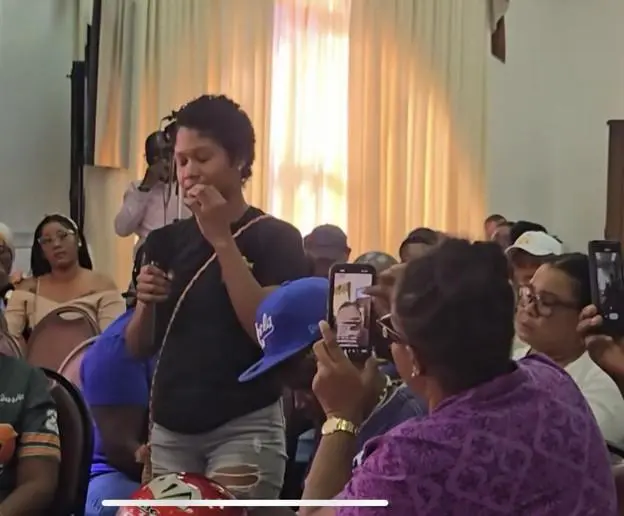
—says family still awaiting promised support
Dolly Cox, whose father remains missing following the MV Barima tragedy, on Wednesday told commissioners investigating the disaster that she had no confidence in the inquiry and that her family was still awaiting promised government assistance.
“I’m here to say that I do not trust y’all. I keep hearing promises and all are empty promises,” an anguished Cox said.
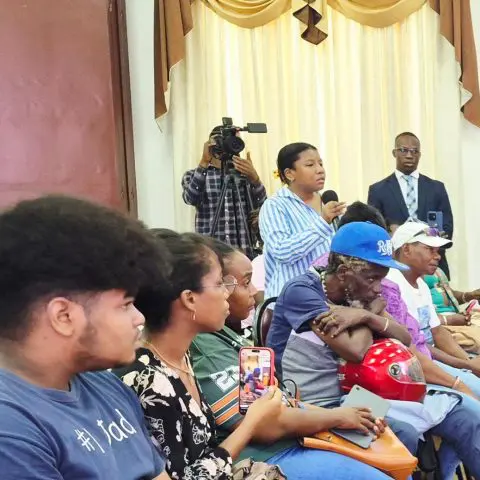
Her remarks came during an interactive meeting with relatives of victims at the Arthur Chung Conference Centre, Liliendaal. Kiskadee Watch reported that families pressed commissioners for answers about the recovery of the vessel and those still missing following the July 18 sinking.
Cox said she was the last person her father spoke with before the tragedy. She described him as a devoted father, a skilled mechanic and the family’s breadwinner.
According to Cox, her father was Port Kaituma’s only outboard-engine mechanic and had travelled aboard the vessel with plans to establish a business for her. He had also been constructing homes for his children.
She said his disappearance had left the family struggling financially. Her mother, who is ill and had not worked since meeting him, had been forced to seek employment.
“My father was the breadwinner and they did not help, nothing. My mother had to start working and she is sick. My father left four children in school that can’t go to school every day,” she said.
Cox told commissioners that government representatives had promised assistance for her mother, but the family had received none. They were also asked to submit a list of building materials needed for the homes her father had been constructing, she said.
“They told us to send a list of material that we need, and still we didn’t get no reply. They are not doing anything. And I don’t think y’all would do anything either.”
Cox said explaining her father’s absence to her younger siblings had been particularly painful.
“My sisters are here asking questions because they don’t really understand. What am I going to tell them? What should I say to my four-year-old sister? Daddy still in the sea?”
Without his remains, she said, the family had no gravesite at which to mourn.
“Even if we want to carry flowers, we got to go to the seaside and drop the flowers in the sea,” she said. “That’s how we got to grieve our father.”
The continued wait for the vessel to be raised was a central concern at Wednesday’s meeting. Kiskadee Watch reported that Royston Frank, whose son Rawle was a crew member, urged that its recovery be prioritised to secure evidence needed for the investigation.
Commissioner Dr Andrzej Jasionowski disclosed that BK International had been selected for the salvage operation and said preparations could take another week or two. Commissioners stressed that careful planning was necessary to avoid damaging the vessel and compromising evidence. They also explained that awarding the salvage contract was outside their authority and that other investigative work would continue while recovery was pending
Cox also recounted experiences aboard the MV Barima which she believed should have prompted concerns about its safety.
She said a fire had broken out in the engine room during one voyage, but the vessel was subsequently allowed to continue operating. On another occasion, she said, an engine failure left the vessel drifting for three days before assistance arrived.
Kiskadee Watch reported that commissioners assured relatives that their examination would extend beyond the vessel’s final voyage to its maintenance, mechanical failures, inspections and the institutions responsible for ferry operations.
“I am angry! I am angry because the same government that hired y’all to come and do y’all investigation is the same government that let that happen,” Cox said.
The MV Barima sank on July 18 off the Essequibo Coast while travelling from Georgetown to Port Kaituma. The disaster left scores dead and others missing, including Cox’s father, and prompted the establishment of a Commission of Inquiry into the circumstances surrounding the sinking. The vessel remains under water as relatives continue to press for its recovery.
Source: Kiskadee Watch
https://kiskadeewatch.com/guyana/housing-ministry-says-its-developing-27-recreational-facilities/
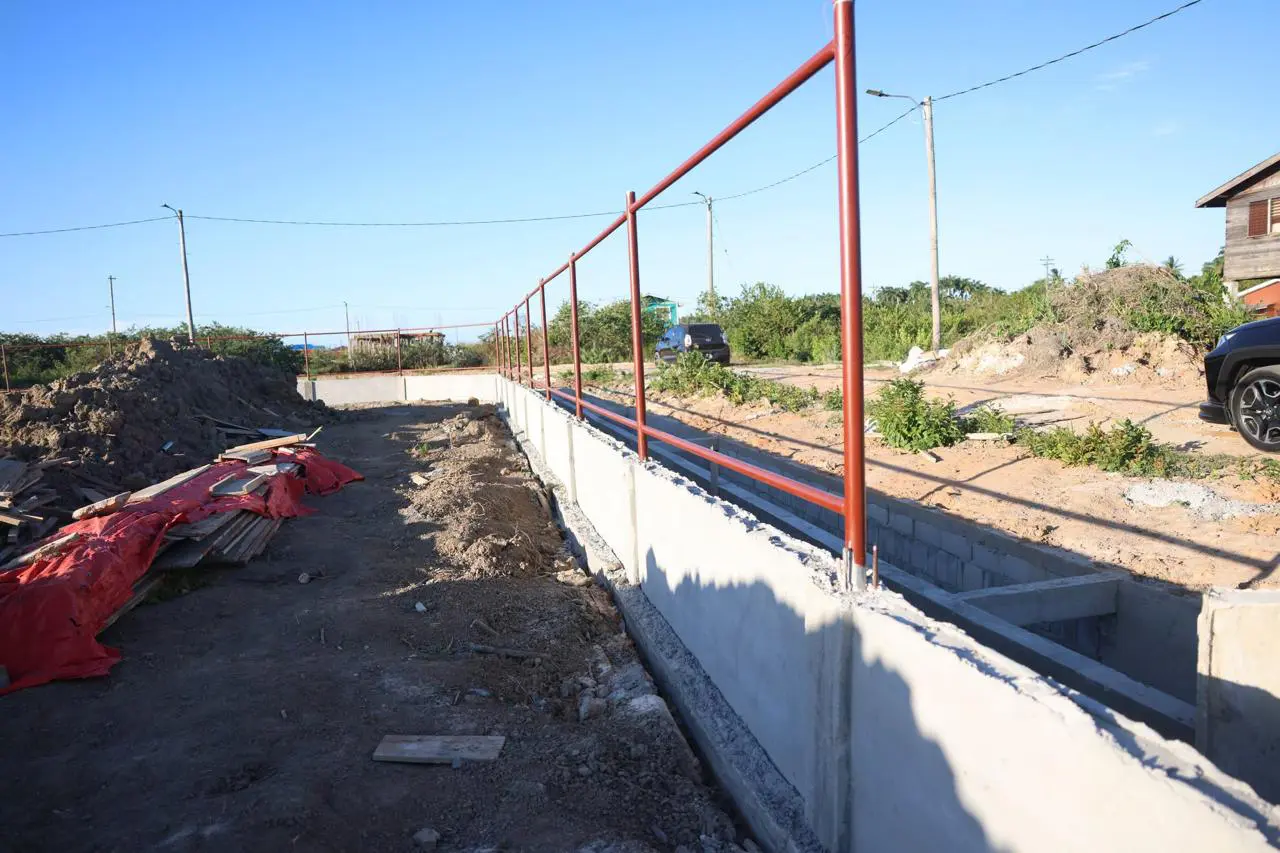
The Ministry of Housing says it is developing 27 recreational facilities across several regions, including 12 in Region Four, as part of its housing programme.
Housing Minister Collin Croal provided the update during an October 2 visit to the recreational ground under development at Le Reconnaissance, East Coast Demerara, according to a ministry release.
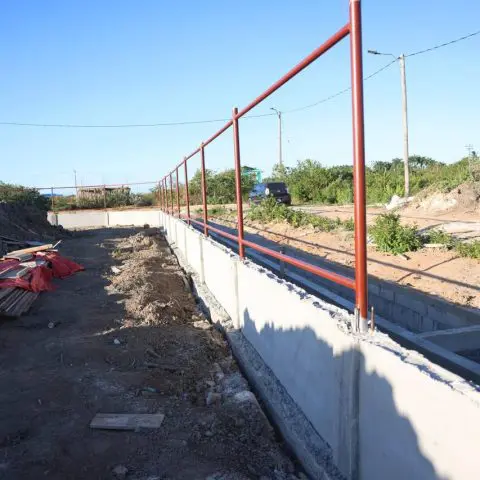
The first phase of work at that facility includes construction of a perimeter fence, concrete drainage around the ground and land levelling. A second phase, to be undertaken in collaboration with the Office of the First Lady, will include an exercise walkway, slides and other recreational amenities for children.
“We are enhancing the communities in which persons live. Recreational facilities provide an avenue for persons to exercise and a space for families to bring their children for leisure,” Croal was quoted as saying.
He said similar works were being undertaken in other communities where the ministry has ongoing housing programmes, with the aim of providing residents with accessible spaces for exercise and family activities.
The release did not provide the overall cost of the 27 facilities, a full list of their locations or completion dates.
Approximately 175 low-income houses form part of the housing programme at Le Reconnaissance. Kiskadee Watch reported on October 3 that a batch of 100 two-bedroom homes, valued at $5.6 million each, was approximately 15 per cent complete and scheduled for completion by the end of January 2027. All 100 had been allocated, and eight contractors were undertaking the work. Those units complement an earlier block of 75 homes.
Recreational amenities were among the facilities promised for the housing area when lots were allocated five years ago. Stabroek News reported in August 2021 that approximately 1,000 low- and moderate-income applicants received lots in the La Reconnaisance community through a housing drive.
At that time, Croal said the development would include educational, social, health, safety and recreational facilities, alongside roads, bridges, electricity and water infrastructure.
The ministry said the current recreational programme complements community infrastructure work being undertaken through the Ministries of Local Government and Regional Development and Public Works.
Source: Kiskadee Watch
https://kiskadeewatch.com/guyana/importer-withdraws-court-challenge-over-seized-guyanese-rice-in-suriname/
The importer of nearly 385 tonnes of Guyanese rice seized in Suriname yesterday withdrew his court challenge after the judge indicated that his application faced rejection because the required prior import licence had not been obtained, Starnieuws reported.
Bhagwatpersad Ramadhin’s withdrawal ended the urgent civil proceedings against the State without a final judgment on the merits. The rice remains seized, with no decision on its release, return or destruction announced in the report.
Authorities in Guyana have remained silent on the issue.
According to Starnieuws’ account of yesterday’s hearing, the judge made clear that a judicial decision could not conflict with existing legislation. Ramadhin was given the choice of withdrawing his application or having it rejected, and opted to withdraw.
The hearing addressed the requirement for prior approval from Suriname’s Ministry of Economic Affairs, Entrepreneurship and Technological Innovation. Rice is on the country’s list of goods subject to import licensing, and Ramadhin did not possess the required licence, the outlet reported.
The dispute involves both that licence and the separate phytosanitary permission required by the Ministry of Agriculture, Livestock and Fisheries. The latter ministry maintains that the shipment should be treated as suspected smuggled goods and handled under the applicable legal procedure.
Kiskadee Watch reported yesterday that Ramadhin had sought an order requiring the authorities to inspect the rice and allow its clearance if no phytosanitary risk was established.
He also wanted the State barred from returning, destroying or otherwise disposing of the cargo, and sought a penalty of SRD1 million per day for non-compliance with the requested orders.
The shipment arrived aboard the MV Falk for his rice factory in Nickerie. A phytosanitary certificate issued by Guyana’s National Plant Protection Organisation on September 29 recorded the cargo as 384,800 kilogrammes.
Customs seized the rice on Monday evening and placed it aboard the Falk under supervision and guard, Starnieuws reported on Wednesday.
Citing a Customs record, the outlet said poor internet connectivity had initially prevented officers from checking all supporting documents. Part of the shipment was released after an importer’s representative reportedly assured officers that the necessary paperwork had been uploaded.
When access to the system was restored, officers found required documents missing, halted further clearance and recalled the rice already removed from the port.
Agriculture Minister Mike Noersalim had initially announced that the cargo would be returned to Guyana. However, in an interview reported yesterday by Suriname Herald, he said returning it was now difficult because it had been intercepted and treated as smuggled goods.
He pointed to destruction as a possible legal option, but the report did not announce an order to destroy the rice. The dispute has centred on import approvals; the reports reviewed do not identify a finding that the shipment was contaminated.
Source: Kiskadee Watch
https://kiskadeewatch.com/guyana/partners-pledge-to-sustain-seabob-work-as-fish4acp-nears-completion/
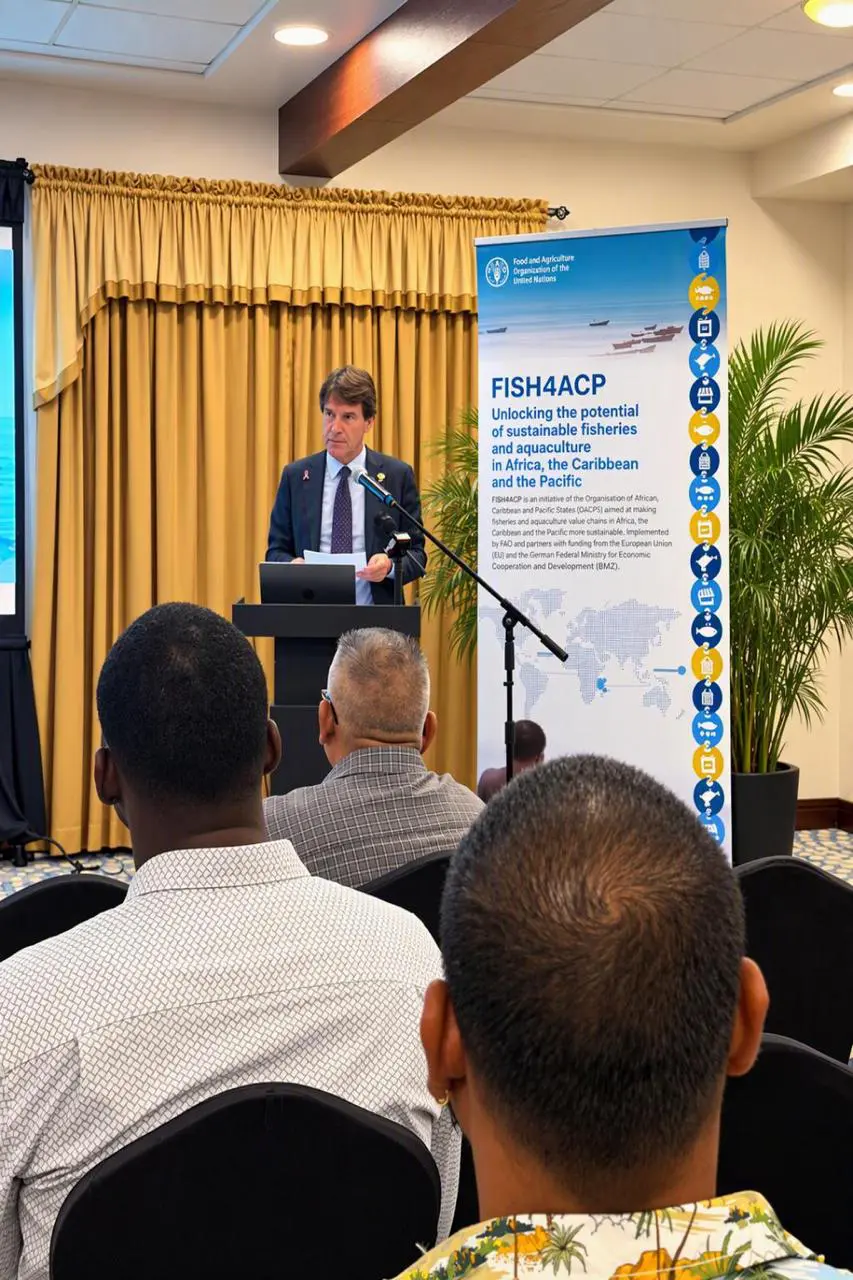
Government agencies, fishing organisations and industry partners have pledged to continue work to strengthen Guyana’s Atlantic seabob shrimp sector as a sustainability programme nears completion.
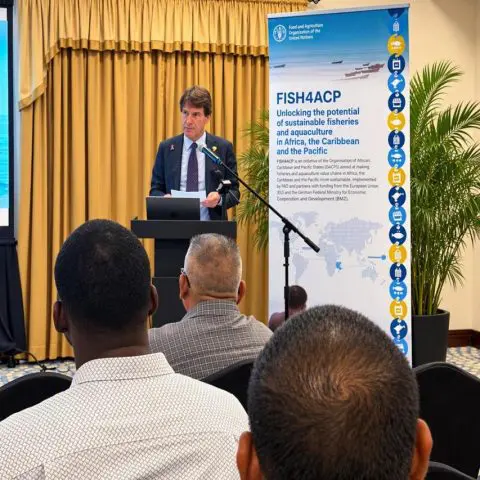
At a closing event in Georgetown yesterday, representatives reviewed the FISH4ACP programme’s results and discussed how to sustain improvements in fisheries data, stock management, food safety, safety at sea and the operation of fishing cooperatives, according to a release from the Food and Agriculture Organization of the United Nations (FAO).
FAO Representative in Guyana Dr Gillian Smith said the programme had advanced efforts to make the seabob sector more sustainable and resilient.
“It has improved data collection, stock management, food safety and quality, and safety at sea, with a focus on reinforcing fisheries cooperatives,” she said.
Among the initiatives introduced was CALIPSEO, an FAO-developed digital fisheries information system intended to help the Fisheries Department make decisions on supporting fishers and protecting stocks.
The programme also provided training in the safe handling of seabob products and developed a Safety Guide for Artisanal Seabob Fishers in Guyana.
Working with the International Labour Organization (ILO) and the Ministry of Labour’s Cooperatives Department, FISH4ACP supported artisanal fishing cooperatives and informal groups. Training covered governance, membership engagement, financial management and organisational planning.
Joni Musabayana, Director of the ILO Decent Work Team and Office for the Caribbean, said individual fishers and processors could face difficulties obtaining finance, reaching markets, buying affordable inputs and influencing decisions.
“However, as organised groups, you can pool resources and knowledge, strengthen governance, negotiate from a stronger position and make your voices heard much louder,” he said.
Dr Richard Blair, an adviser to CARICOM and the Ministry of Agriculture, said the government had invested almost $4 billion in the fisheries sector over 2025–2026. He said this included the refurbishment of landing sites and direct assistance to almost 6,000 fishers.
Blair also highlighted the establishment of the Seabob Working Group, which brings together government representatives, fishers, processors, exporters and researchers to address challenges in the sector.
“This collaborative approach will be crucial going forward,” he said.
Future work will be guided by a sector vision extending to 2032, aimed at strengthening Guyana’s position as a leading seabobexporter.
The objectives include sustainable industrial and artisanal fishing operations, stronger regulation and data collection, improved infrastructure for artisanal fishers, expanded cooperatives and greater opportunities for women and young people.
Aslin Singh, adviser to the Minister of Labour and Manpower Planning, said the Cooperatives Department would continue assisting groups with registration, management and record-keeping.
“Cooperatives are not social organisations; they are businesses that create opportunities for their members,” he said.
Singh urged members to manage their cooperatives transparently, involve the membership in decisions and continue learning from one another.
“We will also continue to work hand-in-hand with the Ministry of Agriculture, the Seabob Working Group, the ILO and FAO to protect and build on the achievements of FISH4ACP,” he added.
European Union Ambassador to Guyana, Suriname and CARICOM, Luca Pierantoni highlighted the programme’s digital improvements as important to accurate information and informed decision-making. He also suggested that Guyana could share its expanded capabilities with other countries in the region.
FISH4ACP is an initiative of the Organisation of African, Caribbean and Pacific States to improve the sustainability of fisheries and aquaculture sectors. It is implemented by FAO with funding from the European Union and Germany’s Federal Ministry for Economic Cooperation and Development.
Source: Kiskadee Watch
https://kiskadeewatch.com/opinion/letters/the-first-half-of-the-cheddi-jagan-october-story/
Dear Editor,
In response to Clement Rohee’s, “Cheddi Jagan was the central figure in the October 5th story,” (KW, October 8, 2026), I would like to remind Rohee that October 5th was actually the second half of the ‘Cheddi Jagan October story’, and were it not for the first half, there would have been no need for a second half.
On October 9, 1953, after only 133 days since the PPP won a landslide in British Guiana’s elections under adult suffrage, then British Prime Minister Winston Churchill, ordered a military operation he codenamed ‘Operation Windsor’.
The day earlier, on October 8, 1953, British warships and hundreds of troops arrived in British Guiana, and, the following day, October 9th, the then Governor-General of British Guiana, Alfred Savage, suspended the constitution, dismissed then Chief Minister Cheddi Jagan, and his cabinet, and imposed a state of emergency.
I won’t rehash the immediate aftermath Cheddi Jagan and the PPP endured after that October 9 ouster, suffice to say that the ouster was premised on Cold War fears of that era. Basically, the U.S-led West took action in British Guiana to prevent the PPP government from pursuing political, economic, social and labour reforms that could usher in a Marxist revolution and a communist state.
The West openly backed Forbes Burnham, not because of racial reasons as many have surmised, but ideological reasons. And despite promoting democracy, looked the other way when elections were rigged in 1968 and 1973, and again when the 1978 referendum was rigged, leading to the 1980 Constitution. The Cold War was still in effect during those developments.
After President Ronald Reagan was sworn in as U.S President on January 20, 1981, he took a strong stance against the former Soviet Union and its communist ideology, which then Soviet President Leonid Brezhnev appeared adamant about promoting when Soviet troops invaded Afghanistan in 1979 to prop up the socialist government in Kabul.
Brezhnev would die on November 10, 1982, and was succeeded by Andropov (1982-1984) and Chernenko (1984-1985). But during the Soviet invasion, the U.S covertly financed, armed and trained the Afghan mujahadeen to repel the Soviet troops, and the world watched as the Soviet Union withdrew its troops in humiliating defeat in February 1989.
The very next month, March 1989, the Soviet Union held its first ‘free elections’ under Mikhail Gorbachev, who became President on March 11, 1985, and introduced glasnost (openness and freedom of speech) and perestroika (economic restructuring) only to collapse on December 26, 1991.
By the time Cheddi Jagan became President on October 5, 1992, therefore, the former Soviet Union no longer existed as a superpower and was no longer a threat to the so-called ‘free world’. That signal ideological collapse opened the door for the West to no longer see the need for the PNC to keep rigging elections at the expense of the Jagan-led PPP. The last PNC government rigging of elections happened in 1985.
Against that backdrop, Rohee’s claim that Cheddi Jagan was the central figure in the October 5 (1992) story requires historical context that says, Cheddi was also the central figure in the October 9 (1953) story. Remove communism from Cheddi Jagan’s ideological vision in 1953 and there is no telling where Guyana would have been today under a truly visionary leader.
Unfortunately, with Cheddi out of the picture since March 1997, the PPP he founded to cater to the ordinary man and woman in Guyana has been hijacked by Bharrat Jagdeo to serve as a vehicle for self-empowerment and self-enrichment at the trough of government. And it just ironic that, in 2026, we can still read letters from PPP ‘old timers’ addressing everything except what the Jagdeo-led PPP is doing. Whereas the ‘C in PPP/C once stood for ‘Civic’, many believe the ‘C’ now stands for ‘Corrupt’.
Guyanese literally had to wait for Burnham to die in 1985 before the PNC started taking baby steps towards change, so do Guyanese now have to wait for Jagdeo to pass on before another attempt at change can be considered by the PPP? Maybe Rohee can tell Guyanese who is the second coming of Cheddi Jagan, sans the communism and the corruption.
Yours faithfully,
Emile Mervin
Source: Kiskadee Watch
https://kiskadeewatch.com/opinion/letters/what-guyanese-want-to-know-is-how-the-billion-barrels-of-oil-improved-their-lives-and-how-the-next-billion-will/
Dear Editor,
The announcement of Guyana’s billionth barrel of oil produced is being touted as a milestone. Indeed, it is.
First oil came in December 2019. Today, production has moved to almost 1 million barrels a day, crude oil exports have reached US$15 billion in the first half of 2026, while petroleum revenues are expected to approach US$6.5 billion for the year. Very big numbers, for little Guyana. However, seven years after first oil, the more important question is not how much oil we have produced but what that wealth has actually done for Guyanese and whether Guyana has a clear plan for where the next billion barrels should take the country.
Daily, the government would post big fancy numbers about economic growth. What we saw in government’s Mid-Year report is that the economy grew by 33.3 percent in the first half of 2026, while the non-oil economy grew by 10.1 percent. However, growth in the national accounts must be contrasted against the experience of Guyanese families daily.
As we look at those numbers, we must also pay attention to numbers, that show by how much consumer prices have increased. 4.4 percent in the first half of this year alone. As of last month, September, food prices were still 4.4 percent higher than a year earlier, transport and communication 4.1 percent higher, medical care 3.1 percent higher and miscellaneous goods and services 6.6 percent higher.
The real question Guyanese want an answer to is, of the billions being generated by oil, how does that translate into a sufficiently better standard of living for me?
The underlying weakness to that enquiry is not that Guyana lacks projects. It is that we lack a clearly articulated national development strategy into which those projects fit so as to show a sufficiently better standard of living.
Oil wealth should be the means by which Guyana builds an economy capable of standing when oil production eventually declines or prices drastically change. Guyanese can rest assure, it will. That then means we should see more deliberate investing in agriculture, manufacturing, education, health, housing, infrastructure, energy, technology, small business and Guyanese ownership. We cannot continue announcing projects as opportunities arise and then attempt to construct a national development philosophy around them. The national priorities must come first and the oil wealth must be directed towards achieving those priorities.
The Gas to Energy project demonstrates the danger of proceeding without that discipline. Guyanese were promised 300 megawatts of cheaper and more reliable electricity, originally expected around 2024. The project has been delayed, with full capacity now expected much later, while the original US$759 million contract has already increased significantly, alongside further financial demands and disputes. This is not just a construction problem. It is a question of how responsibly we are converting an exhaustible national resource into lasting national benefit. Oil money must not become a source of funding for weak project management, escalating costs and delays. The test is not how much we spend. The test is whether Guyanese receive the cheaper, more reliable electricity they were promised.
Guyanese must also examine how the wealth itself is being managed and distributed. Guyana is now producing and exporting oil on a scale that would have been unimaginable in generation gone by. However, the success of an oil economy cannot be measured only by the size of government revenue or the number of billions deposited into the Natural Resource Fund. The real measure is what those billions leave behind. Are we building productive industries? Are we creating skilled Guyanese workers? Are we increasing Guyanese ownership? Are we improving the quality of education and healthcare? Are we building infrastructure that will serve the country long after the oil declines? The Natural Resource Fund should ultimately be judged by the lasting national assets and opportunities created from the wealth it holds.
ExxonMobil has a clear commercial strategy for Guyana. It moved from discovery to first oil, expanded from one producing vessel to several, increased production beyond 900,000 barrels a day and has already mapped out further developments. The company knows where it wants its next billion barrels to take its business. Guyana must demonstrate that same clarity about where its next billion barrels will take the country. Guyanese need a long term national framework that determines how oil revenues are to be saved, invested and used to transform the productive economy, with clear priorities extending beyond the life of the petroleum sector.
The billionth barrel therefore should be more than a celebration for ExxonMobil and a major milestone for Guyana. It should be a moment of national reflection. Guyanese can acknowledge the jobs, investment and economic activities created by the petroleum sector while demanding greater accountability, stronger cost control, better project management, greater transparency and a coherent national development strategy.
The first billion barrels have made Guyana richer. The responsibility now is to make Guyanese feel richer and stronger. If the wealth beneath our waters does not produce a better life above them, then we have measured the success of the oil economy by the wrong standard.
Yours faithfully,
𝐇𝐨𝐧. 𝐊. 𝐒𝐡𝐚𝐫𝐦𝐚 𝐒𝐨𝐥𝐨𝐦𝐨𝐧
𝐌𝐞𝐦𝐛𝐞𝐫 𝐨𝐟 𝐏𝐚𝐫𝐥𝐢𝐚𝐦𝐞𝐧𝐭
𝐀𝐏𝐍𝐔 𝐑𝐞𝐩 𝐟𝐨𝐫 𝐍𝐚𝐭𝐮𝐫𝐚𝐥 𝐑𝐞𝐬𝐨𝐮𝐫𝐜𝐞𝐬
Source: Kiskadee Watch







Discussion