Democratic Takeover of Congress Could Reshape US-Guyana Relations
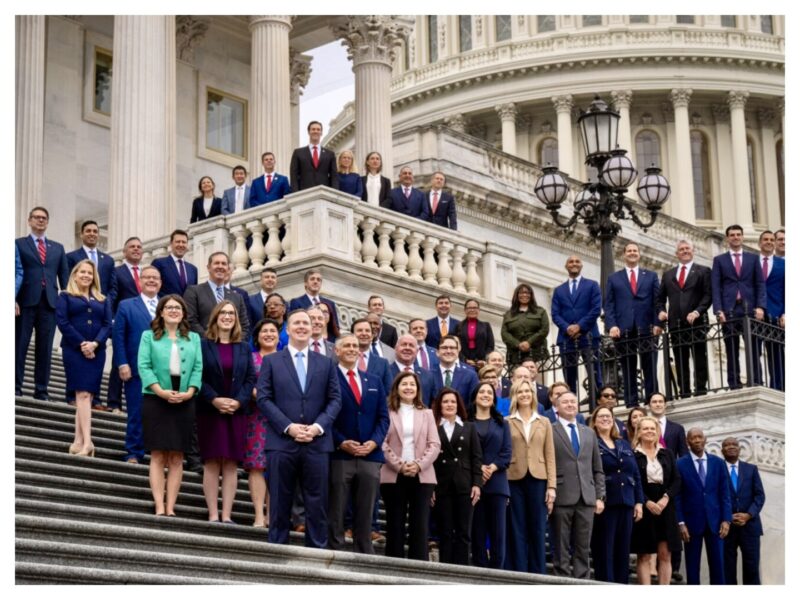
By Mark DaCosta- A dramatic realignment in United States politics has transferred control of both the House of Representatives and the Senate to the Democratic Party, establishing a powerful legislative counterweight to the second administration of President Donald Trump. Prompted by escalating household expenditure, widespread economic anxiety, and sinking approval ratings for the executive branch, American voters generated significant legislative turnarounds and remarkable individual victories across traditional party strongholds and swing territories alike. For Guyana, this fundamental shift in Washington’s power balance carries direct implications for regional trade policy, energy investment security, bilateral diplomatic engagement, and climate finance commitments across our nation and the wider Caribbean.
In the upper chamber of Congress, Democrats reclaimed control of the Senate, securing at least 54 seats to the Republicans’ 44, with races in Alaska and Mississippi still unresolved as of November 5. The party achieved a remarkable breakthrough by flipping seven Republican-held seats in Maine, Texas, Kansas, Ohio, Iowa, North Carolina and South Carolina. Among the most significant victories was Democrat Troy Jackson’s defeat of five-term Republican Senator Susan Collins in Maine, ending her nearly 30-year tenure in the Senate. Other notable victories included Adam Hamilton’s historic win in Kansas, James Talarico’s victory in Texas, and Roy Cooper’s defeat of Republican Michael Whatley in North Carolina. Democrats also secured victories in Michigan, where Abdul El-Sayed won his Senate race, marking another significant milestone for the party.
Simultaneously, Democratic candidates overturned the Republican majority in the House of Representatives, with CBS News projecting that Democrats could secure between 251 and 268 seats once all votes are counted. Among the notable victories was Wisconsin’s 1st Congressional District, where Democrat Mitchell Berman defeated incumbent Republican Bryan Steil, ending more than three decades of Republican representation in the district. Democrats also made significant gains in Texas, Pennsylvania, Iowa, Ohio, and North Carolina, flipping several Republican-held seats as part of a sweeping national electoral shift.
Governorship races produced equally historical milestones. In Texas, Democrat Gina Hinojosa unseated incumbent Governor Greg Abbott, becoming the state’s first Democratic chief executive since 1995 and its first Latina governor. Meanwhile, Florida voters elected Republican Representative Byron Donalds as the state’s first Black governor, demonstrating complex regional electoral shifts.
The shift in majorities prompted immediate leadership changes on Capitol Hill. House Democratic Leader Hakeem Jeffries is set to become Speaker of the House when the 120th Congress convenes in January 2027, pledging a focused push on economic relief and aggressive executive oversight. Conversely, outgoing Speaker Mike Johnson informed his staff that he will step down from House Republican leadership rather than seek the Minority Leader role, clearing the way for new party stewards.
Voter motivation centered heavily on pocketbook pressure. Almost ninety percent of electors identified rising inflation, cost-of-living burdens, and broader financial management as decisive issues. With President Trump’s public support falling to 38 percent prior to polling day, late campaign maneuvers — such as a proposed $5,000 dividend linked to maintaining single-party Republican governance — failed to reverse voter dissatisfaction.
This legislative turnover establishes divided government for the remainder of the presidential term. Bipartisan negotiations will now be mandatory for major domestic policy, tax measures, and deregulation initiatives. Crucially, Democratic majorities across both chambers hold full authority to issue subpoenas, convene public hearings, and scrutinise executive operations. Control of the Senate also gives Democrats final approval over cabinet appointments, executive nominations, and judicial selections, halting fast-track confirmations for conservative Supreme Court nominees.
For our nation, this changed legislative landscape in Washington introduces vital diplomatic and economic considerations. With Congress wielding robust oversight powers, US foreign assistance policies, trade frameworks, and international energy strategy will face closer scrutiny. For Guyana’s expanding energy sector and green economy initiatives, Democratic control of the Senate budget and committee chairs may offer greater support for regional climate mitigation funding and environmental safeguards, alongside closer legislative review of multinational corporate operations in the Caribbean. As our nation navigates these evolving international dynamics, policymakers in Georgetown will closely monitor how Capitol Hill’s new leadership shapes bilateral cooperation, security partnerships, and economic ties between the United States and Guyana.
Source: Village Voice News