Home Blog Page 88

Hughes Says Seeram Is in Prison, but Exact Location Remains Unclear

0

Attorney-at-law Nigel Hughes has confirmed that his client, Daniel Seeram, the National Border Patrol Director and former Region Four Chairman, is “in the prison”, but did not identify the facility holding the convicted official. The disclosure leaves critical questions unanswered about where Seeram is being detained and when the court’s remand order was finally executed.

Hughes, Seeram’s lead defence counsel, confirmed to Kaieteur News that his client is serving pre-sentencing detention in accordance with rulings by both the Magistrate’s Court and the High Court. However, sources at Lusignan Prison told the publication that Seeram had not been taken there.

The latest confirmation follows a controversy sparked by Opposition Leader Azruddin Mohamed, who said in a social media post on October 5 that checks at Lusignan Prison and Camp Street Prison in Georgetown indicated Seeram was not being held at either facility. Senior prison officials had confirmed Seeram had not been handed over by the police following the High Court ruling.

Hughes’ statement indicates that Seeram is now in a prison facility, but he has not disclosed which one or when his client was transferred. The authorities have not provided a clear public account of the circumstances surrounding his admission into prison.

Manickchand questions equal treatment

The controversy has also drawn comment from Minister of Local Government and Regional Development Priya Manickchand, who addressed the matter in a social media post.

Manickchand questioned whether the usual legal procedures were being followed after Seeram’s conviction and the decision to remand him pending sentencing. While acknowledging his right to pursue legal remedies, she questioned whether an order staying the remand had been made or sought.

“I don’t know what the facts are between Mr Seeram and the complainant. And I don’t need to know,” she said, noting that the court had heard the case, found Seeram guilty and ordered him remanded pending sentence.

She warned against making exceptions for particular individuals.

“Every single time we offer a ‘but this one is different’ we halt the progress we should be making. And it is time we stop.”

Manickchand also argued that the handling of such cases has implications for women who report domestic violence, saying victims must have confidence that their rights will be protected regardless of an accused person’s status or access to high-profile legal representation.

High Court upheld remand order

Seeram was found guilty on October 2 by Magistrate Abigail Gibbs of assault causing actual bodily harm against his former wife, Farzana Hamid. The case arose from an incident at their Cummings Lodge residence on September 11, 2023. He was remanded pending sentencing, scheduled for November 2, 2026.

Hughes subsequently applied to the High Court for judicial review of the magistrate’s decision, arguing that Seeram should not have been remanded before the court received the probation report, victim-impact statement and submissions on mitigating and aggravating circumstances.

On October 5, Justice Joy Persaud-Singh dismissed the application, finding no indication that Magistrate Gibbs had acted unlawfully, irrationally or outside her jurisdiction. The decision to refuse bail pending sentencing was upheld.

The unresolved issue is why the authorities’ earlier accounts of Seeram’s custody differed from Hughes’ subsequent confirmation. An authoritative explanation from the Guyana Police Force and the Guyana Prison Service would establish when he was transferred and where he is being held.

Seeram is scheduled to return to the Sparendaam Magistrate’s Court on November 2 for sentencing.


Source: Village Voice News
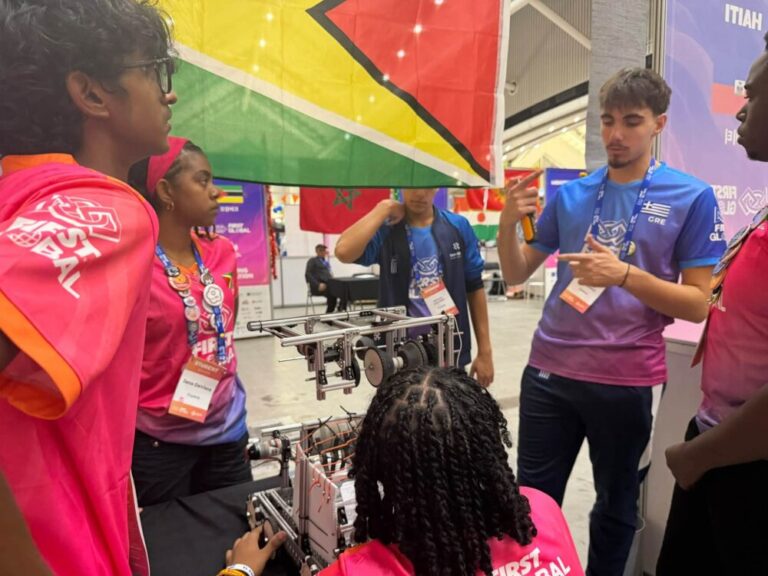
Guyana’s Young Robotics Team Shines on Global Stage

0

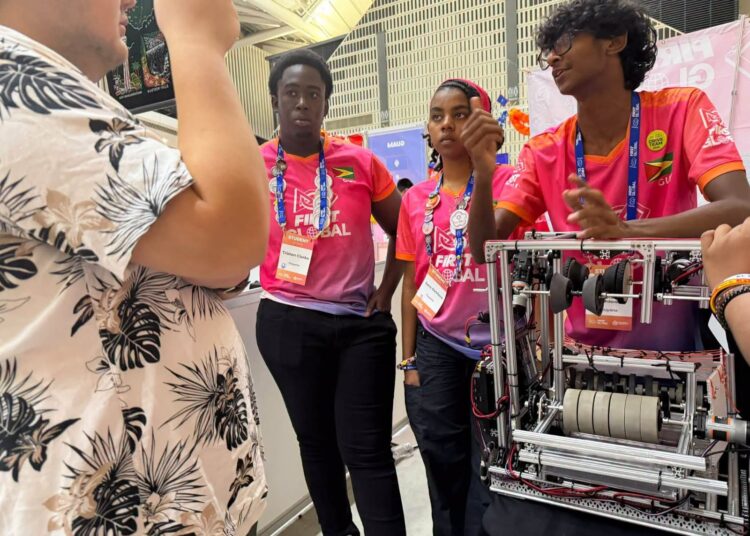
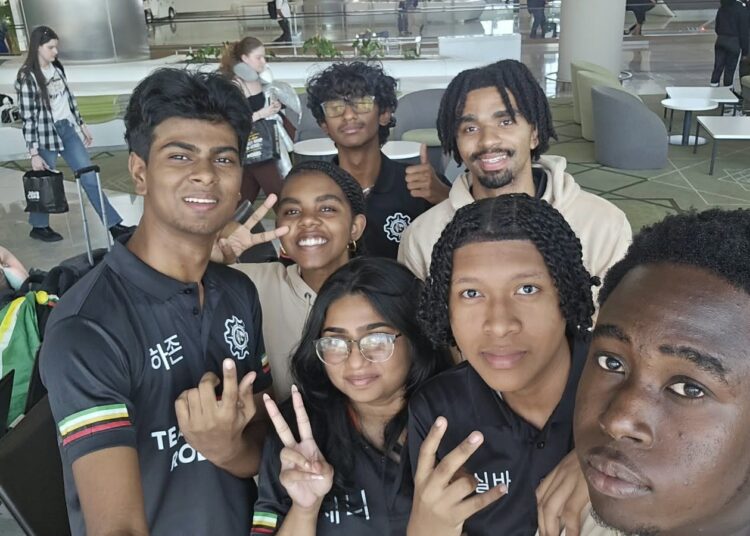
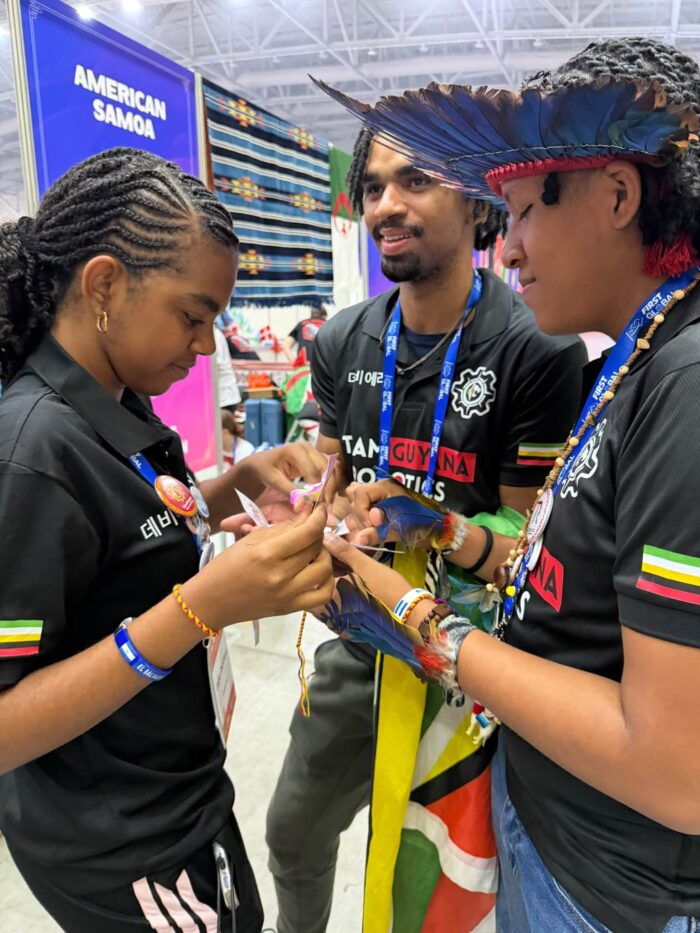
Team Guyana Robotics returns from South Korea with valuable international experience and the pride of having represented the country at the 2026 FIRST Global Challenge. The five-member team made an impressive early impact, climbing to 22nd place after its opening matches and breaking into the top 25 among more than 190 competing nations.

Guyana’s 84th-place finish placed the team within the top half of the field—an achievement in itself for the five young innovators. Beyond the ranking, the students gained invaluable international exposure, sharpened their technical skills and demonstrated that young Guyanese can compete on the global stage when given the opportunity.

The competition ran from October 7 to 10 in Incheon, South Korea, bringing together teams from more than 190 countries under the theme “Igniting Innovation”.

Guyana’s robot, named Panthera Harpia, was developed for a wildfire-themed challenge that tested students’ ability to design, programme and operate a machine to collect and place game pieces before completing a climbing task.

According to the official FIRST Global results, Guyana finished 84th with a ranking score of 154.8.

Uzbekistan-led alliance wins

Uzbekistan, China and Mexico finished first, second and third respectively in the final national-team rankings.

The winning alliance comprised Uzbekistan, Moldova, Venezuela and El Salvador, which collectively scored 1,060 points in the finals. The runner-up alliance scored 1,016, while the third-place alliance scored 1,009.

Alliance results are separate from individual national-team rankings, as teams from different countries combine their robots and performance to compete for the tournament title.

Jamaica earns gold and bronze

Jamaica also secured recognition, winning the Ustad Ahmad Lahori Award for Innovation in Engineering and sharing bronze with Nigeria in Engineering Documentation.

Jamaica finished 100th in the overall national-team rankings, demonstrating that technical awards can recognise innovation and engineering work beyond a team’s final position on the leaderboard.

The Jamaican delegation included students from several schools across the island. Its awards highlight the competition’s broader focus on creativity, technical documentation and problem-solving alongside match results.

2026 Team Guyana Robotics in Korea

More than a leaderboard

For Guyana’s students, the experience extended beyond points and rankings. Competing internationally exposed them to different engineering approaches, encouraged collaboration and gave them a demanding environment in which to apply their knowledge.

Before travelling, team members spoke about the months spent developing and rebuilding their robot, the challenges of synchronising mechanical systems with programming, and the importance of teamwork.

David Da Silva, 16, the team’s driver and lead engineer, described the challenge of getting the robot’s hardware to work effectively with its code. Eashan Harjohn, 18, identified teamwork as one of the biggest lessons of robotics.

The students also worked around limited preparation resources, including the absence of a full competition field for practice. Their efforts to test and improve the robot with the equipment available reflected the practical problem-solving that STEM education is designed to encourage.

Jana Deviera, the team’s only female student travelling to the competition, highlighted the importance of representing girls in robotics.

“I think it’s really great that I can be able to be an example to other girls, other young girls so they can see me and be empowered and they can know that they can also do this,” she said before the competition.

Her participation underscores the importance of encouraging more girls to explore engineering and technology.

2026 Team Robotics Guyana

STEMGuyana’s contribution

Team Guyana Robotics operates under STEMGuyana, founded by Dr Karen Abrams to expand access to science, technology, engineering and mathematics education and help young people develop practical skills.

Its programmes include robotics teams, coding activities, after-school clubs and Learning Pods designed to strengthen children’s academic and technical abilities. The organisation’s work across Guyana helps young people explore technology and learn through hands-on projects.

International competitions such as FIRST Global allow selected students to apply those skills in a challenging environment. Participants can also bring lessons home and inspire younger students to pursue robotics and other technology-driven fields.

The team’s participation has benefited from corporate and community support. MODEC has supported STEMGuyana’s robotics activities and Learning Pods programme, including expansion in Regions Two and Eight. ENet and APAN Energy Services also supported the team’s participation.

Such backing is essential because international competition requires equipment, mentorship, training, travel and time to test designs.

2026 Team Guyana Robotics in Korea (Team face book’s photo)

Commending the team

The five students deserve commendation for their determination, ingenuity and commitment to representing Guyana on the international stage at a time when technological innovation is becoming increasingly competitive. Despite working with limited resources, they rose to the challenge, tested their abilities against the world’s young innovators and gained experience that cannot be measured by a final ranking alone. Their 84th-place finish does not define their potential; the skills they developed, obstacles they overcame and international exposure they gained are achievements in their own right.

STEMGuyana also deserves recognition for helping turn young people’s curiosity into practical skills, creating opportunities for them to experiment, collaborate and discover what they are capable of achieving. But talent alone is not enough. These young innovators need sustained investment, modern equipment, mentorship and support from businesses, educators, communities and the wider society to compete on an increasingly demanding global stage.

Guyana’s early rise to 22nd place demonstrated that its young people can make their mark internationally. The experience gained in South Korea should now become a foundation for stronger preparation, greater ambition and improved performance in future competitions.

Ultimately, this journey is about more than robotics or rankings. It is about showing young Guyanese that their ideas have value, that limited resources need not extinguish ambition, and that with the right opportunities and support, they can help shape the technological future of their country. Their journey from Guyana to South Korea is not the end of an achievement, but a starting point for what they—and the next generation of Guyanese innovators—can accomplish.


Source: Village Voice News

28-Y-O killed during altercation at Amelia’s Ward

0

Romel Toney, a 28-year-old of Kiruni, Soesdyke-Linden Highway, was killed on Saturday night during an altercation at Amelia’s Ward, Linden.

Preliminary information revealed that sometime around 21:00h, Toney was involved in an altercation with another male, during which he sustained an injury to his neck. He subsequently died.

Police are currently conducting investigations into the circumstances surrounding the incident.

An update will follow as the probe continues.


Discover more from INews Guyana

Subscribe to get the latest posts sent to your email.


Source: INews Guyana

Where Is the Evidence of Agricultural Development in Region 10?

Dear Editor,

I noted the Regional Executive Officer (REO) for Region 10 making claims about progress in agricultural development. I respectfully challenge the officer to substantiate these claims with verifiable data rather than public statements.

Could the REO publish the acreage currently under cultivation in Region 10, along with a breakdown of the crops and other agricultural products being produced and their respective production volumes?

The public also deserves to know what percentage of the food supplied to Linden each month is produced locally and what percentage comes from outside the region. My understanding is that between 65 and 70 per cent of the food entering Linden comes from elsewhere. If the REO disputes this figure, the officer should publish the relevant data.

Agricultural development cannot be measured by promotional posts on Facebook or claims of progress. It must be demonstrated through land under cultivation, production volumes, investment, market access and the contribution of local farmers to the food supply.

The PPP/C Government must also answer for the longstanding concerns surrounding agricultural development in Linden and its surrounding communities. Why have the Wismar and Rockstone cooperatives reportedly not received the 500 acres of agricultural land for which they paid? What is preventing these farmers from accessing land they say they purchased for agricultural purposes?

In my view, agricultural production in Linden began to decline when the Surapana farm was shut down and cattle and other ruminants were removed from Moblissa along the Linden-Soesdyke Highway. The wells at Moblissa were also destroyed, although three were subsequently restored to operation under the APNU administration.

These developments raise important questions about the management of agricultural assets and the support provided to farmers over the years. The REO should explain what has been done to restore production, expand cultivation and create opportunities for farmers in Region 10.

I intend to examine the agricultural development claims being promoted on the REO’s Facebook page, one item at a time, and compare them with the realities confronting farmers and consumers in Linden.

The people of Region 10 deserve more than political rhetoric. They deserve an agricultural development plan with clear targets, timelines, budgets and measurable outcomes. Where is that plan? How much land will be brought under cultivation, what will be produced, and how will local farmers be supported to supply Linden’s markets?

The PPP/C Government must also explain why, after years in office, so many questions remain about the use of agricultural land and the development of local production.

The people of Linden should not have to depend so heavily on food brought in from elsewhere while the region’s agricultural potential remains underdeveloped. The REO should publish the figures, provide the plan and demonstrate what progress has actually been made.

Yours truly

Troy Glasgow


Source: Village Voice News
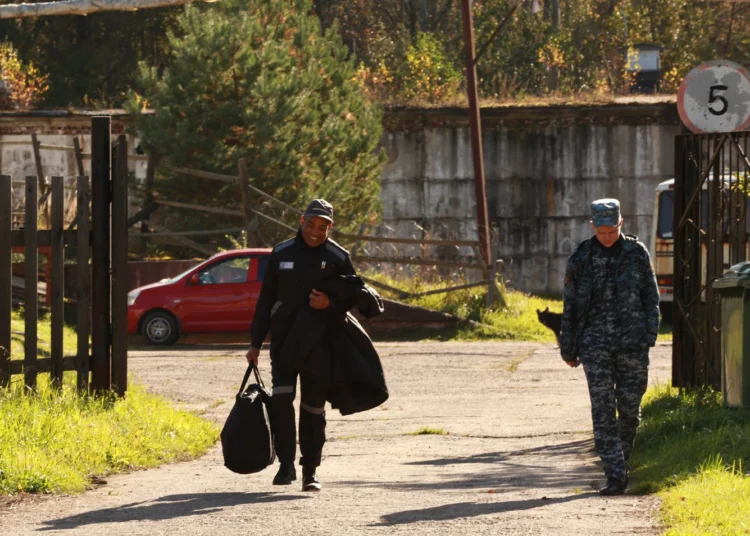
Guyanese Sean Pike Released After Five Years in Russian Prison

0

Guyanese-born Jehovah’s Witness Sean Pike has been released from a Russian prison after serving five years for alleged extremist activity linked to his faith, ending a lengthy incarceration marked by reported harsh detention conditions and his lawyer’s allegations of racial discrimination.

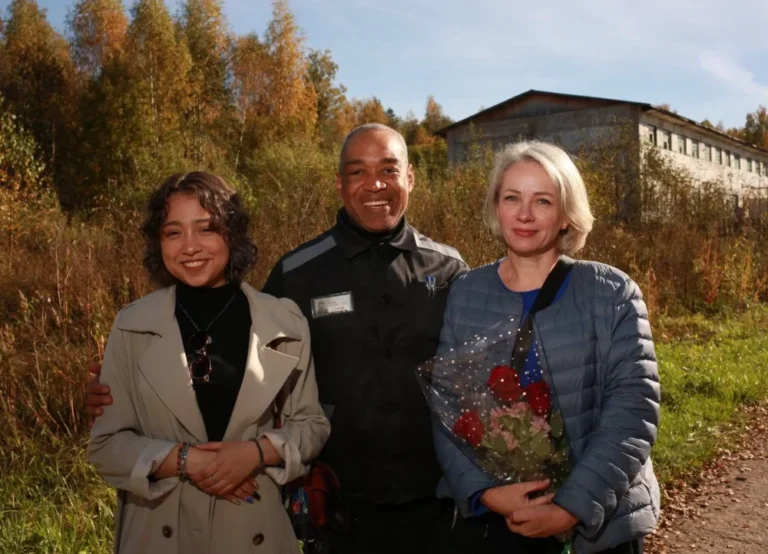
Pike, who was born in Georgetown in 1971 and lived in Russia for more than two decades, was released on October 2, 2026, from Penal Colony No. 9 in Russia’s Novgorod Region, according to reports published by Jehovah’s Witnesses.

His case has drawn attention to religious freedom in Russia, as well as allegations about the treatment he experienced while in custody.

Lawyer alleges racial discrimination

Pike was detained in Moscow in 2021 over his religious activities. According to an account of his detention, on August 27, 2021, when he was 49, he was placed in an overcrowded cell at Detention Centre No. 7 in Kapotnya, Moscow.

Although he was given a mattress, he was reportedly forced to sleep on the floor because of the conditions in the cell.

His lawyer attributed the treatment to what he described as everyday racism, arguing that Pike’s professional background and personal conduct did not justify the conditions in which he was held.

“High-class specialist Sean Pike is not a murderer, not a thief, and not involved in drugs. He’s a decent man. The attitude towards him is caused only by the color of his skin, this is just everyday racism,” his lawyer said.

The allegation adds a racial dimension to a case that has also raised concerns among Jehovah’s Witnesses about the treatment of members of their faith in Russia. The lawyer’s claim represents an allegation about the reasons for Pike’s treatment; the information available does not independently establish that racial discrimination was the cause.

Sean Pike (leaving the correctional institution- Jehovah Witness Russia. org photo

Conviction and imprisonment

Russian authorities prosecuted Pike for allegedly organising the activities of an extremist organisation, a charge linked to his association with Jehovah’s Witnesses.

He was convicted in December 2023 and sentenced to seven years in prison. His appeal was rejected in June 2025.

The prosecution followed Russia’s 2017 Supreme Court decision to ban the religious organisation and designate its entities as extremist. Jehovah’s Witnesses maintain that their members are being punished for practising their faith peacefully, while Russian authorities have pursued cases under laws relating to extremist activity.

Health concerns in custody

During his imprisonment, Pike reportedly contracted COVID-19 and developed hypertension. Following his release, he indicated that he needed a medical examination.

His release ends the prison term imposed by the Russian court, although reports indicate that he remains subject to a further year of restriction of freedom.

It has not been established whether he has returned to Guyana or intends to do so.

From Guyana to Russia

Pike was born in Georgetown in 1971 and studied at the Peoples’ Friendship University of Russia, also known as RUDN University. He previously worked for Guyana’s Ministry of Transport before spending more than 20 years in Russia.

He is married to Tatyana and has two teenage daughters.

His release brings an end to years of imprisonment and separation from his family, but questions surrounding his reported detention conditions and his lawyer’s allegations remain part of the wider debate over religious freedom and the treatment of minorities in Russia.

For Pike and his family, completing the sentence marks a significant turning point after years of uncertainty. His case also illustrates the profound consequences that criminal prosecution can have on individuals and their loved ones when religious activities become the basis for legal action.


Source: Village Voice News

Thomas Street Project Sparks Row Over Local Government’s Role

0

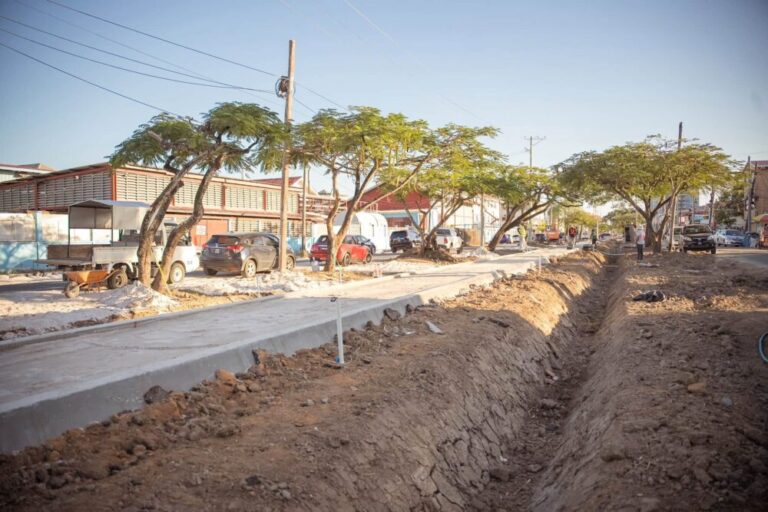
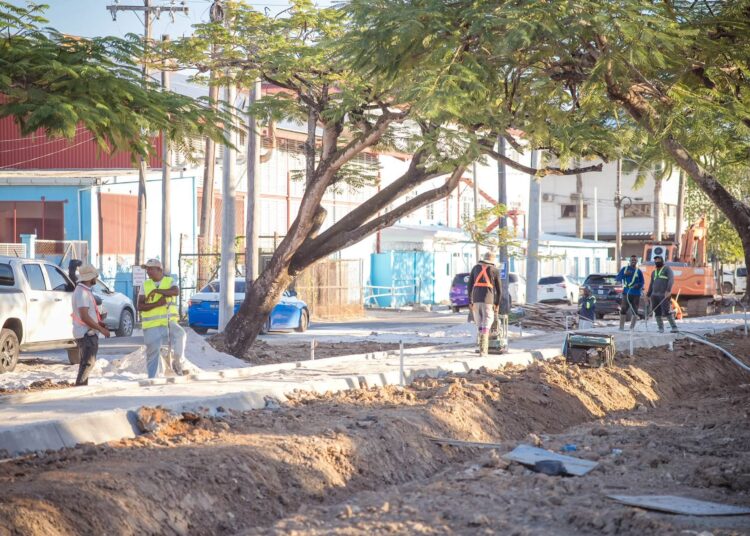
By Mark DaCosta-The Georgetown City Council was involved in the initial planning of the Thomas Street redevelopment but was subsequently sidelined from key decisions concerning the project’s final design and execution, a city councillor has disclosed, raising serious questions about transparency, accountability and respect for local government.

The concerns have been reinforced by former Mayor and Prime Minister Hamilton Green, who, in a letter published on October 7, 2026, criticised what he viewed as the failure to meaningfully involve municipal authorities in decisions affecting the capital.

At the heart of the controversy is a troubling question: what value does consultation have if an elected municipal authority participates in the early planning of a project but is excluded when critical decisions are made?

In an interview with Village Voice News, the councillor said the Council participated in the initiative’s initial planning, which involved a company that had collaborated with the King’s Foundation. Early discussions focused on improvements to the city’s markets and the wider urban environment.

However, the councillor informed that City Hall was left out as the initiative advanced to its final design and implementation. The councillor also argued that ideas developed through the municipality were subsequently pursued by the People’s Progressive Party/Civic (PPP/C) Government without adequate recognition of City Hall’s contribution.

The account raises concerns about whether the council was treated as a genuine partner or merely involved at the preliminary stage before decisions affecting the municipality and its residents were taken elsewhere.

Projects within Georgetown may require central government input and approval, but that makes coordination with City Hall more important, not less. The councillor said the municipality was not represented when the foundation followed up on the initiative, leaving questions about its involvement in the final arrangements.

Thomas Street project (President Ali’s facebook)

Green warns of democratic erosion

Green’s criticism extends beyond the details of the Thomas Street project to the principles of inclusionary democracy and the role of local government in national development.

In his letter, he described the situation as:

“A flagrant breach of a principal provision and the spirit of our constitution, which speaks of inclusionary democracy”.

Article 13 of Guyana’s Constitution provides for citizens’ participation in the decision-making processes of the State, particularly where decisions affect their well-being. Green’s concerns centre on whether that principle is being respected when decisions affecting Georgetown proceed without meaningful municipal involvement.

His remarks also reflect a broader concern about the relationship between central government and local authorities. When municipal leaders feel excluded from decisions affecting their communities, questions arise about whether local governance is being treated as a meaningful democratic institution or an administrative formality.

Green expressed his frustration in pointed terms:

“When will we stand up to be men and women and not mice?”

The rhetorical question conveys his concern that citizens and institutions are failing to challenge decisions they believe undermine democratic participation. His argument is that public involvement cannot be reduced to appearances or preliminary discussions; it must carry weight when decisions are made.

The former mayor also questioned whether Guyana was abandoning the principles and institutions established by earlier generations in the country’s journey towards independence.

“Why are we destroying the foundations which our fore-bearers built in our journey to independence?”

For Green, the implications extend well beyond the appearance of a renovated street. They concern the preservation of democratic values, the authority of elected local representatives and the right of communities to have a meaningful voice in decisions that shape their surroundings.

Thomas Street project (President Ali’s facebook)

Beyond appearances

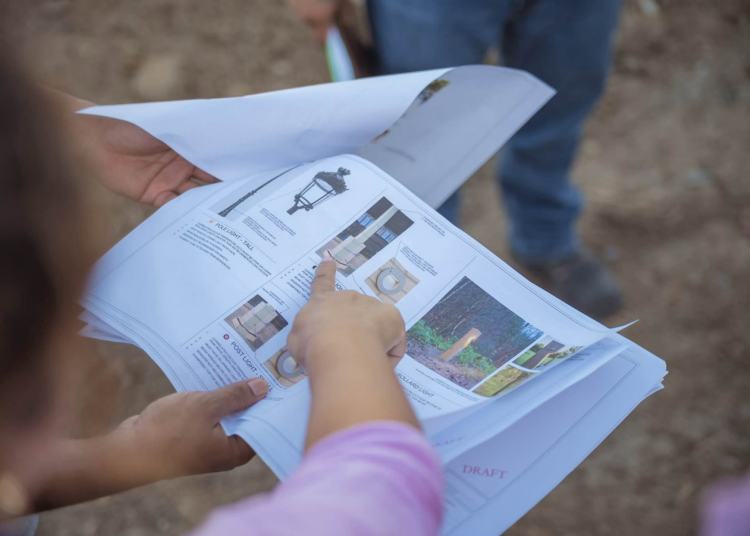
The Thomas Street redevelopment forms part of the Healthy Streets Initiative, which aims to create more pedestrian-friendly public spaces, introduce greenery and strengthen climate resilience along the corridor from Lamaha Street towards Church Street. The initiative is also aligned with Guyana’s Low Carbon Development Strategy 2030.

These objectives could improve the urban environment for residents, pedestrians and businesses. However, the value of the project will depend not only on its design but also on transparent decision-making, effective coordination and a credible plan for long-term maintenance.

The councillor questioned whether sufficient attention had been given to the resources and arrangements needed to maintain the area, including waste collection, cleanliness and ongoing upkeep. Without clear responsibility and adequate funding, a redeveloped public space can deteriorate after the initial investment.

A project should therefore be judged not simply by how it looks when completed, but by whether it remains clean, accessible and functional in the years ahead.

Thomas Street must be about more than appearances. It must also be a test of whether the Government respects local democracy, consults elected representatives and accounts to the public for how development decisions are made.

If City Hall is expected to help maintain the upgraded area, it should not be treated as an afterthought in the decisions that shape it. Georgetown’s residents deserve a project that delivers lasting public value, while the municipality deserves a meaningful role in determining the future of the city it is elected to serve.


Source: Village Voice News

Robert Corbin: A Warrior Who Understood the Value of Respect

0

Much has been said, and will continue to be said, about Robert Corbin since his passing on October 4. Today, I take the opportunity to reflect on the man I knew-a man who, despite political differences and disagreements, remained civil, respectful and willing to engage others without hostility.

In a political culture where disagreement is increasingly treated as disloyalty, where independent thought can invite personal attacks, and where too many confuse power with authority, Corbin demonstrated that one could hold firm convictions without surrendering the basic principles of respect and decency.

I first met Robert Corbin in 1968 in Linden, while he was campaigning to become General Secretary of the youth arm of his party, the People’s National Congress (PNC). We discussed several issues, agreeing on some and disagreeing on others. Yet, our differences did not prevent the development of a relationship that continued over the years.

On our second occasion of meeting in Kwakwani, Corbin had already secured his position in the Young Socialist Movement. Our engagement continued for a number of years, and I had reason to telephone him on several occasions during his time in the PNC Government and later as Leader of the Opposition.

One of Corbin’s strengths was his willingness to listen. Regardless of our differences, he would sit, listen intently to what was being said, and, when the appropriate time came, offer his response. He was a keen and intense listener, so much so that some might have mistaken his silence for disengagement. Those who knew him understood otherwise.

I listened to Corbin’s responses to presentations made in his capacity as Leader of the Opposition. On occasions when he visited me at the Guyana Trades Union Congress (GTUC) to discuss issues of common nature he would suggest that we continue our discussions in an informal and cordial setting. He understood that meaningful engagement did not always require a public platform, a confrontation or an audience.

Although Corbin and I, and at times leaders of the trade union movement, disagreed on issues, he was never discourteous in his dealings with us. He did not appear to carry grudges simply because another person held an independent position. That is a quality worth remembering, particularly in a society where too many public engagements have deteriorated into personal attacks and political hostility.

I want to believe that Corbin’s disposition was shaped not only by the family that raised him with what we call “grace and manners,” but also by the political culture in which he was nurtured.

Those of us who have been active in national life since the 1980s can recount countless instances of public disagreement with the political establishment, whether in government or opposition. Differences were not absent then, nor were political struggles without their difficulties. But the degree of personalised hostility that increasingly characterises political engagement today was not accepted by all as an honourable or necessary feature of public service.

There was an understanding that one could disagree with the government, challenge the opposition, defend workers’ interests or advance an independent position without automatically becoming a personal enemy. Political office did not relieve anyone of the obligation to respect others, and disagreement did not have to destroy the possibility of dialogue.

Corbin belonged to that tradition, and those characteristics remained evident in his conduct until the end.

During my last telephone conversation with Robert, we discussed our concerns about the declining conditions in our country and the growing intolerance in our national life. As was his nature, he listened attentively, interjected where necessary and offered his perspective. He impressed upon me that the circumstances confronting us represented challenges associated with Guyana’s politics, while encouraging me to stay the course and continue the fight.

Those words resonated with me because the struggle for workers’ rights, social justice, dignity and accountability does not end when the political circumstances become difficult. The trade union movement has a responsibility to continue speaking out, defending the rights of workers and challenging conditions that undermine the welfare of our people. That responsibility cannot be abandoned simply because the road ahead is difficult.

Corbin was a man, with the shortcomings that come with being human. I do not pretend that we agreed on everything or that he was without imperfections. But I can speak to my experience: he was civil and cordial in his engagements with me and with the trade union movement. He understood that disagreement was part of public life and that respect for another person’s right to hold a different view was essential.

Today, Robert Corbin’s work on earth is done. His passing provides an opportunity not merely to remember the political offices he held, but to reflect on the personal qualities he demonstrated and the value of preserving civility in our national discourse.

May his soul rest in eternal peace.

I extend my condolences to his wife, Carol, his children, other family members, and the People’s National Congress, the party he led and called his political home.

Farewell, warrior. May your contribution to Guyana’s political life, and the memory of the man who could disagree without disrespect, endure.


Source: Village Voice News

Bandits rob Canje businessman of over $10M cash

0


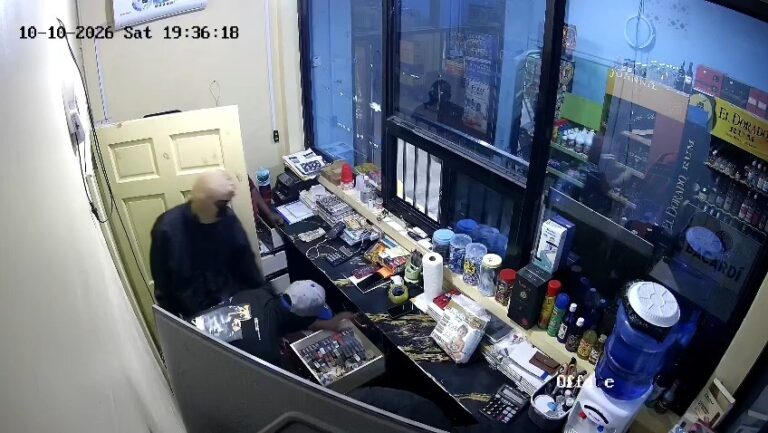
Three armed and masked men carted off with more than $10 million in cash after robbing a 57-year-old businessman at his No. 2 Village, East Canje, Berbice property.

The robbery occurred at about 19:35h on Saturday (October 10, 2026).

The Canje, Berbice, business that was robbed

According to police reports, the businessman was in the cashier area of his beverage depot, located on the lower flat of his premises, when three masked males, one armed with a handgun and the others with a baseball bat and cutlass, entered the establishment.

The suspects reportedly confronted the businessman and demanded money before relieving him of a quantity of cash, after which they fled the scene in a dark-grey motor car, making good their escape.

This publication was told that the bandits were able to get their hands on over $10 million in cash.

Nevertheless, police say no shots were fired and no injuries were reported during the incident.

CCTV footage was obtained and is being reviewed as part of the ongoing investigation.


Discover more from INews Guyana

Subscribe to get the latest posts sent to your email.


Source: INews Guyana

Kairuni man killed in Linden

0

Last Updated on Sunday, 11 October 2026, 11:12 by Written By Denis Chabrol

A 28-year old man of Kairuni,Linden-Soesdyke Highway was Saturday night stabbed to death in Amelia’s Ward, Linden.

The dead man has been identified as Romel Toney.

The Guyana Police Force said the stabbimg incident at about 9 PM stemmed from a disagreement.

“Preliminary information revealed that Toney was involved in an altercation with another male, during which he sustained an injury to his neck. He subsequently died,” police said in a statement.

Police said they were conducting investigations into the circumstances surrounding the incident.


Source: Demerara Waves

Masked armed bandits rob Corentyne businessman

0

Last Updated on Sunday, 11 October 2026, 10:56 by Written By Denis Chabrol

A Corentyne businessman was allegedly robbed of cash by three masked men early Saturday night, police said.

The Guyana Police Force did not say how much money was stolen or the name of the 57-year old businessman.

Police said Closed-Circuit Television (CCTV) footage was obtained and was being reviewed as part of the ongoing investigation.

Investigators said no shots were fired and no one was injured during the reported robbery under arms that occurred at 7:35 PM Saturday, October 10  at Number 2 Village, East Canje, Berbice.

Police were informed that the businessman was in the cashier area of his beverage depot, located on the lower flat of his premises, when three masked males, one armed with a handgun and the others with a baseball bat and cutlass, entered the establishment.

“The suspects reportedly confronted the businessman and demanded money before relieving him of a quantity of cash, after which they fled the scene in a dark-grey motor car, making good their escape,” police also said in a statement.


Source: Demerara Waves