
Source: Department of Public Information (DPI)
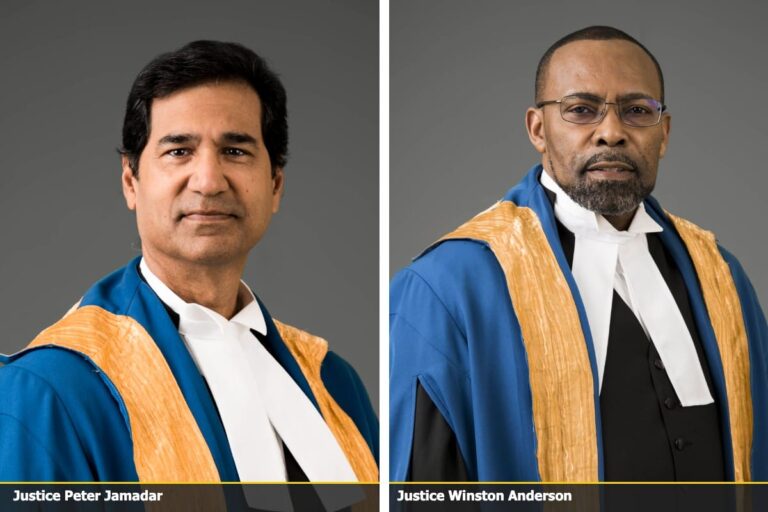
—questions enquiries into private affairs, treatment of administrative officer
Caribbean Court of Justice (CCJ) Judge Peter Jamadar says that he feels “targeted, harassed and bullied” following enquiries into his private affairs and the questioning of his administrative officer during an investigation into leaked judicial correspondence, Trinidad’s Sunday Express reported yesterday.
In a six-page email dated September 4, Jamadar questioned the legal authority for the enquiries and accused the court’s administration of an “abuse of power, administrative overreach”, according to the report.
The correspondence was addressed to CCJ President Justice Winston Anderson, the Regional Judicial and Legal Services Commission (RJLSC), which Justice Anderson also chairs, fellow judges and court staff. The Express said three court insiders verified the email and its contents.
The latest report follows the disclosure in August of internal correspondence revealing serious disagreements among judges over Anderson’s leadership, judicial panel assignments and the handling of cases. The controversy included concerns about proceedings involving Guyana’s Opposition Leader Azruddin Mohamed and his father, Nazar Mohamed.
According to the Express, Justice Jamadar alleged that information about his appointments and commitments outside his duties at the CCJ was sought without his knowledge through his assigned administrative officer, Candace Simmons-Peters.
He described the enquiry as “investigative and inquisitorial” and questioned the authority under which Justice Anderson or the court’s registrar, who also serves as secretary of the RJLSC, could obtain such information from her.
Justice Jamadar alleged that the circumstances were intended to “invite and/or coerce” Simmons-Peters into disclosing confidential information about his private affairs unrelated to her work.
He further alleged that on September 1, she was questioned separately by the court’s information systems manager, Ayinde Burgess, and later by Justice Anderson, in connection with an investigation into the disclosure of internal correspondence to the press. Burgess was reportedly appointed by Justice Anderson to oversee that investigation.
The questions allegedly covered Simmons-Peters’ access to Justice Jamadar’s files, documents she had printed for judges’ meetings and material prepared for an RJLSC-facilitated intervention. She was also asked about her communications with Justice Jamadar, whether she had worked on particular days and her arrival and departure times at the court.
Justice Jamadar said Simmons-Peters was required to surrender her court-issued computer to Burgess for examination and subsequently did so.
He also raised concern about questioning relating to Trinidad and Tobago’s Computer Misuse Act. According to his account, Justice Anderson referred to the possibility of a two-year prison sentence and indicated that investigations would continue to establish who had leaked the information.
“In both instances there is, in my opinion, a clear focus on and targeting of me and maybe more indirectly Ms Simmons-Peters, the CCJ’s Administrative Officer assigned to me,” Justice Jamadar wrote, according to the Express.
He questioned whether the enquiries had extended beyond the alleged leak and were being used to gather information about him. In particular, he argued that documents prepared for the RJLSC-facilitated intervention could not logically have been connected to the earlier disclosure of judicial correspondence.
Justice Jamadar asked Justice Anderson and the registrar to identify the legal and institutional authority for their actions, including the relevant treaties, statutes, regulations, policies and practices, applicable Trinidad and Tobago laws and international legal principles.
He also sought clarification on whether the RJLSC knew of, approved or supported the investigative actions, and questioned the appropriateness of the treatment of Simmons-Peters, particularly the references to possible criminal consequences.
The judge linked the enquiries to two other incidents which, taken together, he considered a pattern of targeting.
One concerned a judges’ meeting scheduled for September 4. Justice Jamadar said a prior commitment prevented him from attending in person, but he had offered to participate virtually. He became concerned when Justice Anderson’s position appeared to change from suggesting personal attendance to expecting it.
The other concerned an August judges’ meeting which Justice Jamadar and four colleagues had sought to postpone to allow an RJLSC-facilitated intervention.
According to Justice Jamadar, Justice Anderson subsequently told him that failure to attend could provide an occasion and reason to write to him. Justice Jamadar said another judge, Justice Maureen Rajnauth-Lee, received a similar email, while the other three judges seeking postponement did not. He questioned why the two appeared to have been singled out.
“Certainly, I feel targeted, harassed, and bullied (directly or indirectly) by their occurrence, and their proximity to the wider contexts that are related to the broader and unresolved impasse among the judges and the CCJ President,” the Express quoted him as writing.
Justice Jamadar also questioned whether Justice Anderson should participate in investigations involving judges or court staff when the president was himself closely involved in the underlying dispute. He raised further questions about the privileges and immunities afforded to judges under the agreement establishing the CCJ and its Protocol on Privileges and Immunities.
The Express said it sent questions to Justice Anderson, the court’s communications department and the RJLSC on September 30, requesting responses by October 7. A reminder was sent on October 5, but no response had been received up to its publication deadline.
The newspaper also reported that no outcome of the review into the earlier controversy had been announced by the court or the Commission.
The RJLSC’s proposed review had already attracted questions in Guyana about Justice Anderson’s dual role as the subject of allegations and chairman of the body overseeing their examination.
Kiskadee Watch reported on August 13 that Mohamed’s office called for Justice Anderson to be excluded from selecting investigators, setting the terms of reference, determining the evidence to be examined or influencing the findings.
The office acknowledged that the allegations did not, by themselves, establish that the ruling in the Mohameds’ appeal was wrong, but called for an independent investigation and disclosure of the review’s arrangements.
On July 29, the CCJ dismissed the Mohameds’ challenge to the Authority to Proceed issued in response to the United States’ extradition request and lifted a stay on the proceedings. Justice Anderson subsequently said all seven judges agreed that the appeal should be dismissed, although they differed on aspects of the reasoning.
Justice Anderson rejected allegations of panel manipulation and improper influence in his August response. He acknowledged removing Justice Chile Eboe-Osuji from a panel hearing a preliminary application in the D’Almada matter following a disagreement over courtroom attire but maintained that the decision had nothing to do with the judge’s opinions.
He also acknowledged that he might have handled the dress-code issue too forcefully. The court subsequently changed its panel-assignment arrangements to require all judges to sit in every matter unless formally excused for a legitimate reason, Kiskadee Watch reported.
In his August 14 statement, Justice Anderson also condemned the unauthorised disclosure of confidential judicial correspondence, arguing that it undermined trust in the confidentiality of deliberations and relations among judges.
More recently, in an October 5 message marking the opening of the judicial year, Justice Anderson reaffirmed the court’s independence and said its jurisprudence remained “strong, principled, and respected”. That message did not directly address the internal dispute, Kiskadee Watch reported.
Source: Kiskadee Watch

Briton John has given Guyana a reason to celebrate after racing to second place in the Elite Men’s Road Race at the Caribbean Cycling Union (CCU) Elite and Under-23 Championships in the Dominican Republic yesterday.
The reigning national road race champion secured the silver medal after completing the demanding 127.6-kilometre contest in three hours, 12 minutes and 47 seconds.
Puerto Rico’s Christopher Morales Fontán won the Caribbean title in 3:11:19, finishing one minute and 28 seconds ahead of John, while Bermuda’s Nicholas Narraway completed the podium in third place.
The race covered 12 laps and featured a strong regional field, with John emerging as one of the leading performers in the Elite Men’s category.
His silver medal also capped an encouraging championship appearance after he had earlier secured sixth place in the individual time trial on Saturday.
However, the road race produced mixed results for Guyana’s other representatives.
Andre Greene finished 29th with a time of 3:36:58, while Segun Hubbard and Ajani Cutting were among the riders who failed to complete the race.
Greene, meanwhile, finished alongside a group of riders that included Jamaica’s Andrew Ramsay and Khalil Francis, with all three credited with identical times.
The Guyanese contingent also included Under-23 cyclist Aaron Newton, who had earlier delivered a fifth-place finish in his category in the individual time trial.
John’s achievement was particularly significant given the level of competition in the Elite field, which included riders from Puerto Rico, Bermuda, French Guiana, Belize, Trinidad and Tobago, Jamaica and several other Caribbean territories.
Behind the three medal winners, French Guiana secured fourth and fifth places through Benjamin Le Ny and Julien Chane Foc, respectively.
Source: Kiskadee Watch
-says saved by life jacket that suddenly appeared
“When I get this life jacket, I tell myself all my family gone, my wife, my son, my two children, all them dead”
By Mia Anthony in Mabaruma
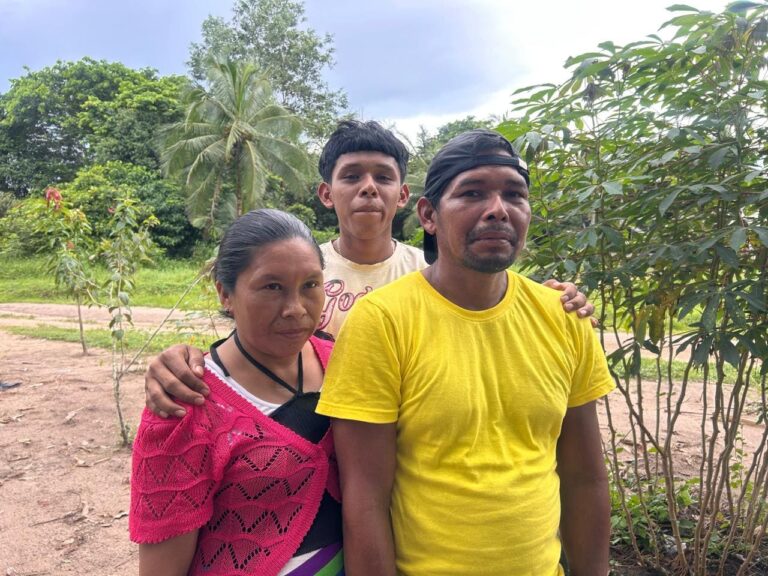
As the MV Barima Commission of Inquiry prepares to begin public hearings, survivor Grenville Smith is still grappling with the loss of his daughter, Shamera Smith, and grandson, Aarav Daniels, who died when the vessel capsized on July 18.
Smith survived approximately seven hours in the water before he was rescued, but during those long hours, he believed that his entire family had perished.
He had been travelling with his wife, Rosa Smith, their son, Alex Smith, their daughter, Shamera, and grandson, Aarav, when the vessel sank during its journey to Port Kaituma.
Recounting the ordeal to Kiskadee Watch ahead of the upcoming Commission of Inquiry sittings, Smith described the confusion aboard the vessel before it capsized, the desperate struggle to survive in the darkness and the moment he was reunited with his wife and son.
“When I get this life jacket, I tell myself all my family gone, my wife, my son, my two children, all them dead,” Smith recalled.
“That was the last thing I think to myself. I lost my whole family.”
Smith said the family had travelled to Georgetown for a funeral and was returning to the North West District when the tragedy occurred.
According to his account, the boat was already loaded when they boarded. However, additional cargo continued to be loaded while passengers were already aboard.
The vessel eventually departed at about 3:30 p.m. to 4 p.m., he recalled.
After securing a seat, Smith said he and his family settled in for the journey. But the space was cramped, leaving them with little room to rest.
Around 7 p.m., he told his children that he wanted to lie down. With insufficient space for everyone, his daughter lay across the seat, while his wife and grandson lay on the floor. Smith remained seated, resting but not sleeping.
He recalled that the boat was rocking heavily as the journey continued.
At some point that night, a police officer approached him and asked for $1,000. Smith said he had no money on him because the family’s cash was inside his wife’s shoulder bag, which she had been using as a pillow.
He subsequently became aware of concerns about water entering the vessel.
Smith said another person warned that water was accumulating below deck and that the situation could become dangerous quickly.
He recalled that the vessel appeared to make an initial movement before a second wave struck, after which he found himself under water.
“All passenger them… everybody is under water,” he said, describing the chaos as people screamed and struggled to escape.
Smith said he managed to make his way out of the vessel and surface. He recalled praying and asking God for forgiveness as he struggled to stay alive.
Then, in what he described as an extraordinary moment, a life jacket appeared in the water and became secured around his back.
He said the life jacket helped keep him afloat as the current carried him away from the sinking vessel.
Alone in the darkness, Smith believed he had lost his wife, son, daughter and grandson.
He remained in the water for about seven hours before a rescue boat arrived at approximately 5 a.m.
It was then that he saw his wife and son again.
“I feel comfortable again. I felt normal again,” he said, describing the relief of seeing them alive after believing they had died.
But the reunion was incomplete.
His daughter, Shamera, and grandson, Aarav, did not survive the tragedy.
Smith said the experience continues to weigh heavily on him, particularly at night, when he sometimes struggles to sleep because the memories return.
“Every day I try,” he said, acknowledging that the ordeal remains difficult to put behind him.
He said the family had been travelling with plans for the future, including the purchase of a vehicle to make it easier to transport his daughter to school.
Smith explained that he had worked and saved for the vehicle, describing the sacrifices he made to earn the money. He said the loss of his daughter and grandson has compounded the pain of an already devastating experience.
Despite his grief, Smith said his faith has helped him continue.
He believes God saved his life, pointing to the unexpected appearance of the life jacket that kept him afloat.
“I can’t believe how the life jacket come up to me,” he said, explaining that he sees his survival as an act of divine intervention.
Smith also expressed concerns about how survivors and affected families are coping with the aftermath of the tragedy.
He said that when contacted, he often tells those checking on him that he is doing well, even though the experience continues to affect him.
He questioned whether others could fully understand the trauma survivors endured, particularly those who spent hours in the water fearing for their lives and the lives of loved ones.
Asked about the support offered after the disaster, including mental health assistance and counselling, Smith said survivors may not always communicate the extent of their distress when asked how they are doing.
His account comes as the Commission of Inquiry prepares to examine the circumstances surrounding the sinking of the MV Barima, including the vessel’s seaworthiness, passenger and cargo operations, the actions of its crew and the search-and-rescue response.
The Commission is scheduled to begin public hearings on October 14, with survivors expected to give evidence. The inquiry is intended to establish what led to the tragedy and identify any failures or contributing factors.
For Smith, the inquiry comes against the backdrop of a loss that cannot be undone. He is left to navigate his grief while holding on to the belief that the same God who helped him survive the night will give him the strength to continue living.
Source: Kiskadee Watch

Dear Editor,
As public hearings for the Commission of Inquiry into the tragic sinking of the MV Barima begin, our nation stands on the threshold of a long-awaited search for truth. Yet, as a concerned citizen watching these proceedings unfold, I am deeply troubled by two questions that remain unaddressed: what happens to those who perjure themselves, or lie under oath, during this inquiry, and why has no one clearly communicated these legal realities to the public?
Official announcements have focused almost entirely on site visits, fleet records, and maritime logs. Virtually nothing has been communicated to ordinary citizens regarding the grave legal responsibilities and risks of giving sworn testimony. Misleading a Commission is a serious criminal offence under Guyanese law. Section 11 of the Commissions of Inquiry Act (Cap. 19:03) penalizes giving false evidence, reinforcing Title 21 of the Criminal Law (Offences) Act (Cap. 8:01), which treats perjury as a severe crime punishable by imprisonment.
Beyond formal statutory penalties, lying before the Commission inflicts immediate trauma on survivors and grieving families. Dishonest or evasive testimony denies victims closure and prevents us from uncovering the true systemic failures needed to safeguard Guyana’s waterways.
However, we must also recognize the intense pressure faced by the survivors themselves. Many are suffering from severe trauma and memory gaps, leaving them highly vulnerable during formal questioning. Without proper guidance, a traumatized survivor whose genuine account differs slightly from official logs risks being unfairly accused of misleading the Commission.
This is precisely why individuals, particularly survivors and key witnesses, must consider securing independent legal representation before testifying. A lawyer serves as a crucial shield: ensuring statements are accurate, protecting traumatized witnesses from coercive questioning, and safeguarding their rights, including future civil claims for compensation regarding an uninsured vessel.
The Commissioners and state authorities must make two things unmistakably clear immediately: anyone who intentionally perjures themselves will face swift legal action, and every witness, especially survivors, must be afforded the legal guidance and protection required to speak the truth safely.
Sincerely,
Keith Bernard
Source: Kiskadee Watch
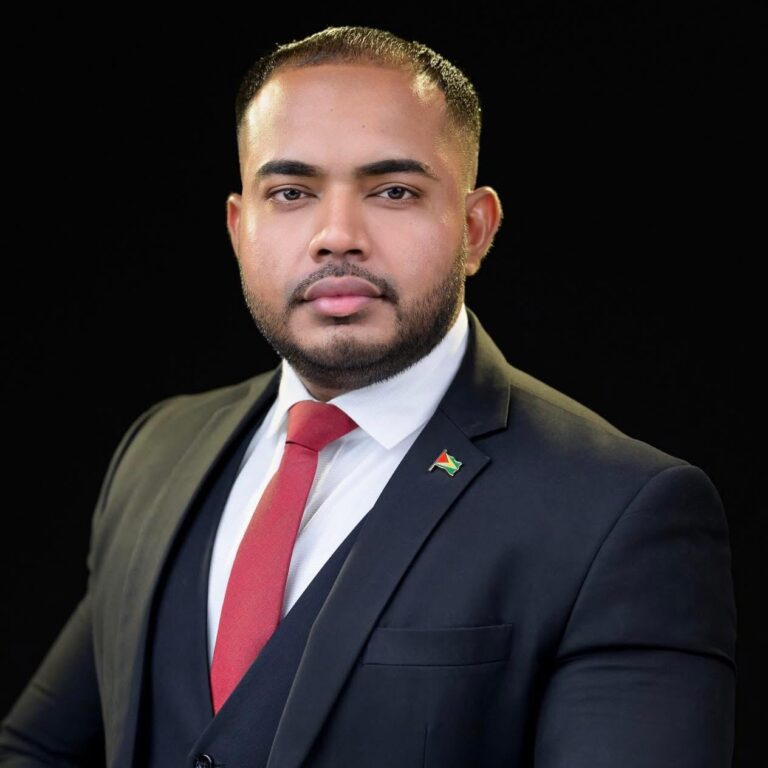
Attorney Nigel Hughes yesterday confirmed that he had consulted with his client, National Border Patrol Director Daniel Seeram, in prison and would be exploring all available legal options.
Hughes confirmed the visit when contacted by Kiskadee Watch.
Questioned about whether Seeram had disclosed where he was between the time he was remanded and when it was confirmed that he had not been handed over to the Guyana Prison Service, Hughes declined to provide details.
“Madam, all I’ll say is that I consulted with him in prison,” the attorney stated.
The confirmation comes after the Prison Service’s Public Relations Officer (PRO) told Kiskadee Watch on Friday that Seeram had never been handed over to prison authorities, despite a remand order issued after he was found guilty of assault causing actual bodily harm against his former wife, Farzana Hamid.
The uncertainty surrounding Seeram’s whereabouts prompted questions to both Director of Prisons Nicklon Elliot and Police Commissioner Clifton Hicken, neither of whom initially provided clarity on his location.
On Friday, Hicken told Kiskadee Watch that he would make inquiries and return the call, but subsequent calls went unanswered.
Elliott had referred Kiskadee Watch to the prisons PRO.
Seeram’s current whereabouts became a matter of public interest after the High Court on Monday dismissed his application for judicial review challenging Magistrate Gibbs’ decision to remand him pending sentencing.
Justice Joy Persaud-Singh ruled that the application had not met the criteria for judicial review and upheld the magistrate’s decision to refuse bail.
Seeram is scheduled to return to the Sparendaam Magistrate’s Court on November 2, 2026, for sentencing.
Hughes has indicated that he will explore all available legal options following the High Court’s ruling.
Hughes had earlier disclosed that Seeram had been transferred to the Camp Street prison on Friday night, leaving unanswered where he had been held since Monday’s dismissal of his High Court challenge to a magistrate’s remand order.
The disclosure by Hughes followed days of questions about whether Seeram had been delivered into prison custody after Justice Persaud-Singh declined on October 5 to disturb Magistrate Gibbs’ decision to remand him pending sentencing for assaulting his former wife.
While Hughes’s statement identifies Seeram’s current place of detention, an account is still needed of where he was between Monday’s ruling and Friday’s transfer, who had custody of him and why he was not handed over to the Prison Service during that period.
Seeram was convicted on October 2 of assault causing actual bodily harm against his former wife, Farzana Hamid, following a trial at the Sparendaam Magistrate’s Court. Magistrate Gibbs remanded him pending sentencing on November 2.
The conviction arose from an incident at the couple’s Cummings Lodge apartment on September 11, 2023. Hamid testified that Seeram repeatedly assaulted her and damaged her phone. Seeram denied assaulting her, maintaining that he pushed her while attempting to leave.
Magistrate Gibbs accepted Hamid’s evidence, rejected Seeram’s explanation for her injuries and found that the prosecution had proved its case beyond reasonable doubt. Seeram, who was Region Four Chairman and a PNCR executive at the time of the incident, has since left the party.
Source: Kiskadee Watch
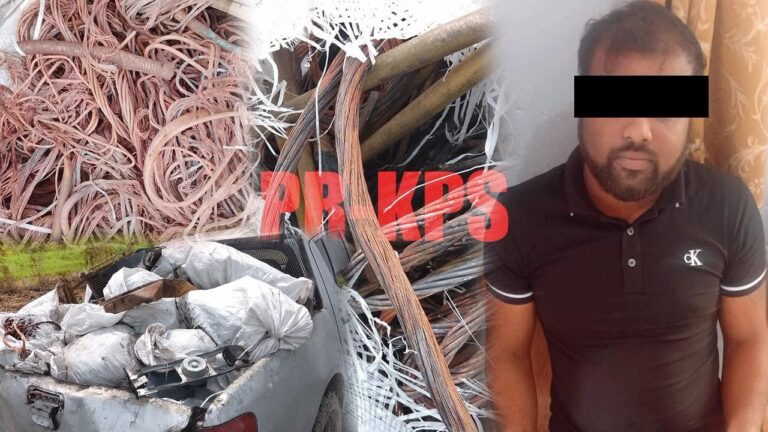
Surinamese police have seized approximately 850 kilograms of copper materials which they say were smuggled from Guyana, and detained a 30-year-old man following a vehicle search at the Burnside checkpoint in Coronie.
In a statement published on October 7, the Suriname Police Force said officers discovered the materials during a routine check in the early hours of Saturday, October 3. The driver was identified only by the initials I.B.
A search of the vehicle’s boot and back seat uncovered 30 polyethylene bags containing copper pipes, electrical cables and air-conditioning lines.
Police said their investigation indicated that the driver had purchased the goods in Nickerie, but he was unable to produce a receipt. Further inquiries established that the cargo had been smuggled into Suriname from Guyana, the statement alleged.
Following consultation with the Public Prosecution Service, the suspect was placed in custody. Both the copper materials and the vehicle were seized. Investigations are continuing.
The statement did not identify the supplier, disclose the driver’s nationality or specify how the materials crossed the border. It also did not say that the copper had been stolen.
The seizure comes against a background of copper theft in Guyana, including a recent case involving the Bharrat Jagdeo Demerara River Bridge.
Kiskadee Watch reported on September 6 that Roy Morgan, 39, had been sentenced to 12 months’ imprisonment after pleading guilty to stealing copper cable from the bridge. Police said the theft occurred between August 23 and September 1.
Tuschen businessman Mustafid Pashaw, called “Mustaf”, was separately charged with receiving stolen articles and granted G$300,000 bail.
Following that incident, the Ministry of Tourism, Industry and Commerce warned that licensed scrap-metal dealers found handling illegally obtained copper faced cancellation of their licences and prosecution. It also threatened to end the scrap-metal trade if illegal practices continued, Kiskadee Watch reported.
Copper theft has also affected telecommunications services. Stabroek News reported on January 21 this year that One Communications said its copper cables had been repeatedly targeted for their resale value during 2025, interrupting services to homes and businesses.
The company said reducing its copper network and replacing lines with fibre had helped lessen theft and vandalism-related disruptions.
Source: Kiskadee Watch
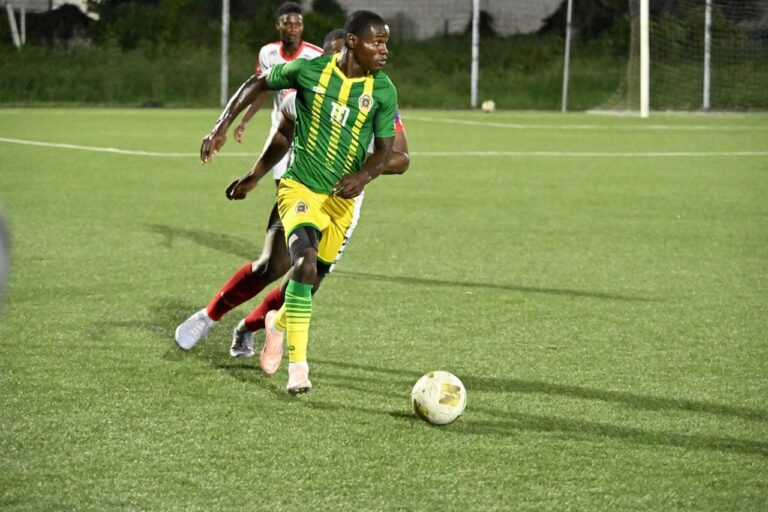
The Guyana Police Force FC scored three first-half goals to defeat Camptown FC 3-1, while the Guyana Defence Force FC cruised to a 3-0 victory over Anns Grove United as the GFF Elite League returned to action on Saturday night at the National Training Centre.
The double-header brought an end to a three-week pause in the competition due to the FIFA international window, with both disciplined services teams marking the restart with victories.
Police made the most of their attacking opportunities in the opening half against Camptown, scoring three times within 13 minutes.
Nicholas McArthur broke the deadlock in the 35th minute, and Ryan Hackett followed with another goal in the 39th to put Police firmly in control.
Camptown responded through Shane Jones in the 45th minute to make it 2-1, briefly raising hopes of a comeback.
However, Marcus Wilson struck in the third minute of first-half added time to restore Police’s two-goal lead and send them into the break with a 3-1 advantage.
Neither team added to the score in the second half, allowing Police to secure the victory.
Earlier in the evening, GDF delivered a comfortable performance against Anns Grove United, scoring twice in the opening 25 minutes before adding a late third.
Steffon Ramsay got the soldiers off to a strong start when he opened the scoring after just 10 minutes.
Abumchi Opara extended the lead in the 25th minute, leaving Anns Grove with plenty of work to do heading into the second half.
Despite going through the remainder of regulation time without another goal, GDF added the finishing touch when Colwyn Adams scored in the 90+3rd minute.
The result handed GDF a 3-0 victory and ensured that both matches on the night ended in favour of the disciplined services teams.
Source: Kiskadee Watch