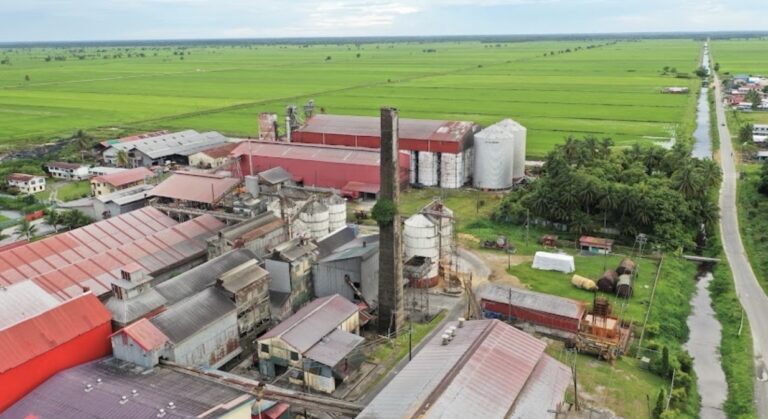
Caricom Rice Mills wishes to address recent public statements made on social media concerning specific parcels of land in the Somerset and Berks area on the Essequibo Coast.
1. Caricom Rice Mills is the Registered Owner
Caricom Rice Mills is the registered proprietor of the lands in question. Title has never been transferred to any other party.
2. The Transaction Was a Private Agreement That Was Never Concluded
In January, 2017 , the previous owners of Caricom Rice Mills ( Caricom)entered into private agreements of sale with certain individuals in order to quickly raise money. Those agreements expressly and impliedly provided that:
• the purchaser would pay a deposit;
• Caricom would retain possession of the lands;
• title would pass only upon payment of the balance within six months; and
• time was of the essence.
The balances were never paid. The agreements were never completed. Title was never transferred. No purchaser ever obtained possession. The Company was later sold.
3. No Steps Were Taken by the Purchaser for Nearly a Decade
For almost ten years, the individual now making public claims took no steps to pay the balance, to enforce the agreement, or to lodge any caution or prohibition against the land. Under Guyanese law, a purchaser who fails to perform and remains silent for such a prolonged period loses any right to enforce the agreement.
4. Caricom Has Acted in Good Faith
Although Caricom was legally entitled to forfeit the deposit, the Company has instead refunded the full amount paid. This reflects Caricom’s good faith and its desire to resolve the matter fairly, not any acknowledgment of the claims being made.
5. This Is a Private Legal Matter – Not a Government or Political Matter
This dispute arises from a private agreement of sale between private parties. It is governed exclusively by the laws of Guyana and the terms of the agreement itself. Neither the Government of Guyana nor any political actor has any legal role or authority in this private transaction. Any attempt to involve political institutions in a private contractual dispute is legally unfounded and would constitute an improper interference with the rights of a registered proprietor.
6. Caricom Will Protect Its Lawful Rights
Caricom Rice Mills will continue to rely on the established legal framework and, if necessary, the courts to vindicate its position as registered proprietor. The Company remains committed to the lawful development of its lands and to the growth of the communities in which it operates.
Discover more from INews Guyana
Subscribe to get the latest posts sent to your email.
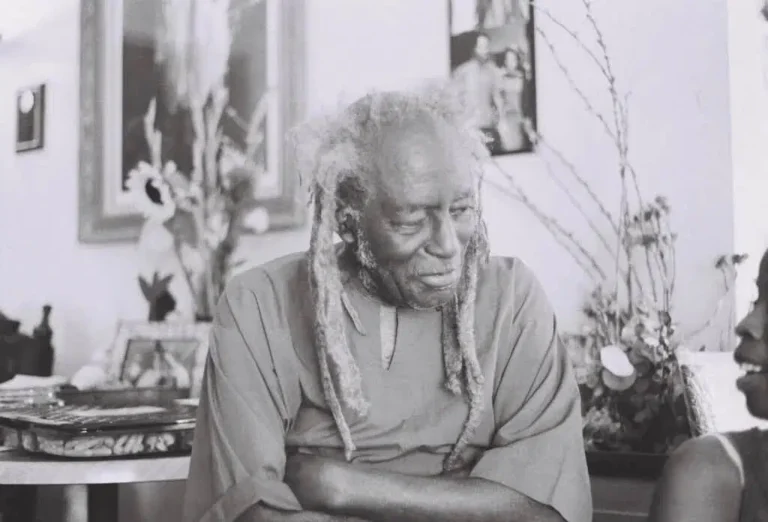
Veteran Politician Eusi Kwayana died on Saturday at the age of 101 years old.
The People’s National Congress Reform (PNCR)/ A Partnership for National Unity (APNU) in a statement noted that Kwayana, born on April 4, 1925, entered the political arena as a youth, dedicating his life to the struggles and aspirations of the Guyanese people.
“Eusi Kwayana was more than a politician; he was a teacher, a chronicler, and a conscience for our nation. His life spanned generations of our political evolution, and his counsel, integrity, and unwavering commitment to principle earned him the respect of friend and adversary alike,” the party noted.
Kwayana was a founding member of the Executive Committee of the People’s Progressive Party (PPP), Kwayana served as Minister of Communications and Works before Britain suspended the constitution and reimposed direct colonial rule.
Following political divisions in the 1950s, he became associated with the People’s National Congress (PNC) under Forbes Burnham and later helped establish the Working People’s Alliance (WPA), where he worked alongside the late Dr Walter Rodney.
The PNC/R noted that he remained a fearless and principled voice on matters of governance, justice, and national development. As a historian, he dedicated himself to recording and preserving our country’s story, ensuring that future generations would know the journey of our people and the sacrifices made along the way.
The party extended sincere condolences to his family, friends, and all who were touched by his life and work.
“May his legacy of service, scholarship, and sacrifice continue to inspire us all.”
As the Guyana National Bureau of Standards (GNBS) observes National Quality Week during October 11 – 17 and World Standards Day on October 14, it is most fitting to place the spotlight on a local company working to implement Standards – Gafsons Industries Limited (Gafoors). This company continues to strengthen its position in Guyana’s manufacturing sector through its commitment to quality and the application of Standards.
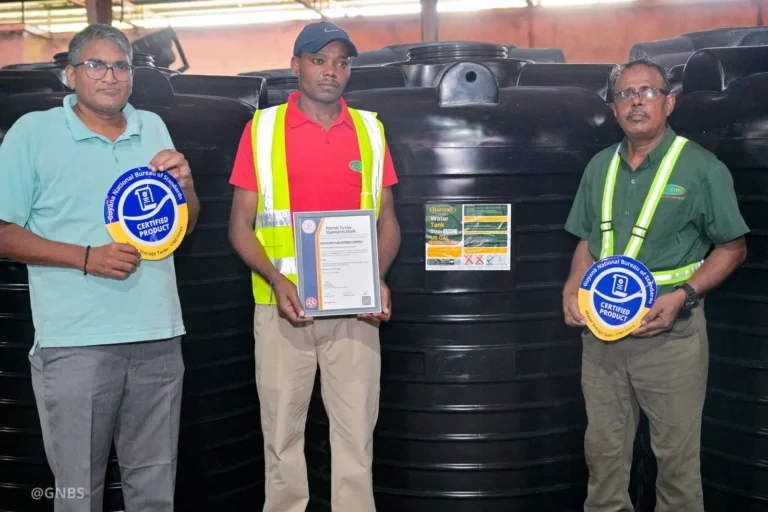
Over the years, Gafoors has worked to certify three of its locally manufactured products under the GNBS Product Certification Programme, with its most recent achievement being the certification of its 1,700-litre rotationally moulded polyethylene water storage tank.
The company has a long history in local manufacturing. According to Deputy Factory Manager, Mr. Jitendra Mishrah, Gafsons Industries began operations in 1953 and was incorporated in 1971. Under the leadership of the Executive Chairman, Mr. Sattaur Gafoor, the company has expanded its manufacturing operations significantly over the years. Today, its locally manufactured products include PVC pipes and fittings, polyethylene water storage tanks, shrink wrap, wallboard, silica board and construction buckets, among others. Mishrah indicated that the company is also pursuing several new manufacturing projects, including ultraviolet (UV) boards and Stone Plastic Composite products.
Mishrah explained that the company’s development as a local manufacturer was driven by a vision to produce more products in Guyana rather than relying solely on imported products, while simultaneously creating employment opportunities. He noted that this commitment to local production has allowed the company to expand its manufacturing capacity and contribute to employment in Guyana.
This commitment to local manufacturing has been complemented by the company’s longstanding participation in GNBS Product Certification Programme. Speaking about the importance of standards, Mishrah said, “You can’t have a counterfeit product coming to Guyana, and customers suffer for that. Like somebody is buying a pipe and a fitting, the fitting and pipe are not matching, so that is the reason why GNBS plays a very vital role in establishing production in this country, and that helps the customer; that helps the manufacturer.”
GNBS Head of Certification Services (ag), Keon Rankin, handing over the certificate to Deputy Factory Manager at Gafsons Industries, Jitendra Mishrah
Gafsons’ 4-inch concrete hollow blocks were first certified in June 2019 and are certified to GYS 215:2024 Standard. Meanwhile, its Polyvinyl Chloride (PVC) pipes, manufactured by its sister company Plastic Products Limited, have been certified by the GNBS since 2000 and currently conform to the GYS 107:2021 and GYS 99:2021 Standards.
Just last month, Gafsons Industries became the first Guyanese company to achieve certification for its 1,700-litre rotationally moulded polyethylene water storage tanks. The tanks were certified in accordance with GYS 588:2023 Standard, and the company was granted the right to use the National Standards Mark on the certified product.
For Gafsons Industries, product certification provides an important framework for maintaining the quality and consistency of its locally manufactured products. Mishrah described the requirements established by the GNBS as a ‘yardstick’ for manufacturers, adding, “The Bureau creates a yardstick for the manufacturer to follow. That makes us very stringent in following the standard. Once we follow the standard, that makes the product more qualitative to the customer, and they become very comfortable utilising the product.”
The certification process has also resulted in changes and improvements to Gafsons’ manufacturing and product identification processes. In the case of the certified water storage tank, Mishrah explained that the company standardised manufacturing parameters relating to areas such as the weight and quality of the tank to meet the standard’s requirements. Changes were also made to the product’s labelling, with information added to guide customers on installation, manufacturing requirements and other details.
Similar traceability measures are applied to the company’s certified PVC pipes. Certified pipes carry printed information identifying the applicable GNBS certification details, manufacturing date and time, and pipe size. These measures allow for greater product identification and traceability while providing customers with useful information about the certified products they purchase.
According to Mishrah, the GNBS Product Certification Programme has also strengthened customer confidence in locally manufactured products. Certification provides an added level of confidence because products bearing the GNBS certification mark have undergone an assessment process against the relevant standard.
Maintaining certification, however, requires an ongoing commitment from the manufacturer. “There is a constant effort being made to maintain the standard quality for the customer to get the benefit – we always try to improve”, Mishrah explained.
This commitment extends to the company’s plans to pursue certification for additional products. Mishrah said the company is working towards improving other sizes of its polyethylene water storage tanks as well as additional categories and sizes of PVC pipes. Where necessary, this may involve modifications to product designs and manufacturing parameters before the products are submitted to GNBS for certification.
Looking ahead, Gafsons Industries intends to continue improving its manufacturing processes and expanding the number of products that can satisfy certification requirements. Mishrah stated that his company would recommend the GNBS Product Certification Programme to other local manufacturers, noting that greater use of standards can create a more consistent marketplace for both manufacturers and consumers.
Businesses interested in becoming certified under the GNBS Product Certification Programme are encouraged to contact the GNBS Certification Services Department for guidance on the applicable requirements and certification process. For more information, contact the GNBS at 219-0064-66, WhatsApp 692-4627, or visit the GNBS website at www.gnbsgy.org.
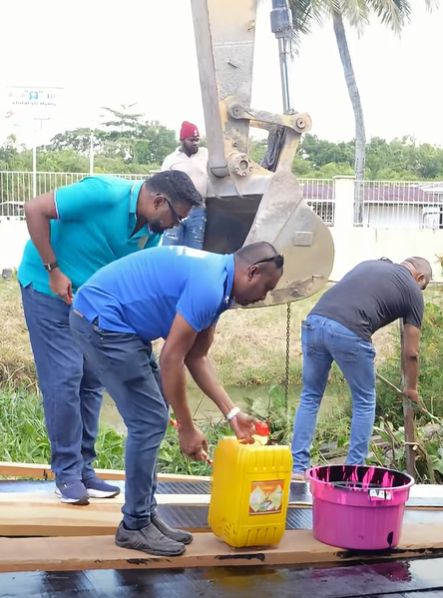
President Dr Mohamed Irfaan Ali joined members of Men on Mission (MoM) and private sector representatives to rebuild the access bridge to the Save R Kids Children’s Home at Cornelia Ida, West Coast Demerara.
Working through Saturday night and into Sunday morning, the team worked to complete the project, which would normally take about two weeks.
The intervention reflects President Ali’s vision of mobilising men and the private sector to take greater responsibility for the well-being of communities, particularly where infrastructure is essential to vulnerable children’s care and protection.
The head of state said the exercise was intended to establish a model that communities across Guyana could replicate by joining forces to address practical challenges affecting institutions that provide vital services.
“What we want to do is to demonstrate this as a model. In every community where there is a children’s home, or where there are facilities, we want the community to come together…to work on fixing these infrastructures that lead to important facilities like these.”
He noted that while the government continues to advance road construction and major public infrastructure, stronger partnerships with businesses and service institutions can help resolve specific needs that directly affect communities.
At Save R Kids, the bridge reconstruction is a targeted intervention in support of the children’s home, which receives assistance through the First Lady’s A Home for Every Child initiative, including support for utilities and other operational needs.
By late Saturday evening, the work had advanced to preparations for installing the beams and decking.
‘Authenticity Over Algorithms’: Beterverwagting’s Alabama Balances AI Innovation and Originality in Guyana’s Dancehall Era
By Antonio Dey | HGP Nightly News |
BETERVERWAGTING, EAST COAST DEMERARA — For prominent Guyanese dancehall and reggae recording artist Clifford Charles, widely known across the Caribbean diaspora as “Alabama” or “Bamma,” navigating the summit of local music culture required overcoming acute personal and systemic hurdles.
Deported from the United States at age 21, Charles faced what could have been a defining setback. Instead, he returned home to his native Beterverwagting (BV) on the East Coast of Demerara and turned to grassroots musical expression, building a discography centered on social commentary and working-class realities.
Now, as the inaugural 2024 Guyana Dancehall Monarch champion, Alabama weighs in on the rapid expansion of generative AI in modern production, arguing that while tools like Suno AI offer technical utility, human authenticity, distinct vocal identity, and lyrical originality must remain uncompromised.
Grassroots Roots: From ‘Dem Don’t Care’ to Jamaica’s Reggae Sting
Alabama’s emergence as a defining voice in Guyanese music developed through persistent live performance and conscious lyricism:
The 2006 Breakthrough: In 2006, Charles captured national attention with his hit single “Dem Don’t Care,” an acoustic social critique addressing youth disenfranchisement and systemic neglect.
Jamaica’s Reggae Sting (2008): Two years later, he represented Guyana on the stage of Jamaica’s famed Reggae Sting festival, testing his live delivery and stagecraft before one of the region’s most demanding dancehall audiences.
Major Regional Collaborations: Over his career, Charles shared stages and collaborated with prominent Caribbean stars, including Jamaican icons Buju Banton and Duane Stephenson.
“Well if the youths them is the future, why you shoot dem down… If you don’t give them the basic necessities… get with ease…” — Excerpt from “Dem Don’t Care”.
“If you do not have full control of the music you will not be able to grasp… As the music change, I still upgrade… to be different,” Alabama affirmed.
Generative AI and Music: Navigating Suno, Copyright, and Voice Cloning
As generative audio algorithms reshape song engineering, Alabama offered a candid perspective on how modern creatives should approach generative platforms like Suno:
Ethical Boundaries in Songwriting: Alabama explained that while he studies and adopts technological workflows to keep pace with global digital standards, he draws a hard line against delegating lyrical writing or synthetic vocal reproduction to neural networks.
Commercial Ownership vs. Free-Tier Traps: The BV-born artist warned that many casual users rely on free subscriptions, failing to realize they do not legally own the intellectual property or master rights generated by those engines. He urged serious producers to use paid tiers to secure clean commercial ownership of instrumentals, using the technology as a scaffold rather than a substitute for craftsmanship.
The Non-Negotiable Soul: Alabama cautioned that audiences immediately detect synthetic mimicry, warning that stripping away human vulnerability alienates listeners.
“I don’t really bash an artiste who is using, but I would consider how you using the AI…” Charles stated.
“We have to keep upgrading and have to be on the level of everybody in the world right now, but I would not use Artificial Intelligence to recreate my voice. I would not use it to help me write lyrics. I would use it to help me get a track together…”
“Most people use AI but not owning because they are on a free subscription… So you can own it,” he pointed out. “You cannot abuse AI. The people naturally want authenticity, and if the vocals is not you, the music is not you.”
Monarch Laurels and Preserving an Artistic Legacy
On the national competitive stage, Charles cemented his status in February 2024 by capturing the crown at Guyana’s Inaugural Dancehall Monarch Competition with his anthem “One Dan.” He returned to the national arena in 2025, securing joint second place alongside the late performer Lil Saint.
Looking ahead, the proud “Baronian” emphasized that Guyanese creatives must build strong self-marketing strategies, master copyright ownership, and pass professional tradecraft to the next generation of inner-city youth.
“We gotta make sure that we do the most that we have a legacy left,” Alabama concluded. “The country was not really facilitated to help us at that time… options before. And it ain’t saying the government is great, but I respect when I see a Minister trying.”
The sod-turning ceremony for Guyana’s first climate-controlled rice storage hub is set for Friday at Onderneeming, along the Essequibo Coast in Region Two.
Approximately 2,000 rice farmers will benefit from the initiative, which seeks to strengthen storage capacity, improve post-harvest management and support the rice industry’s growth.
Minister of Agriculture Zulfikar Mustapha inspects rice field
During an interview last Thursday, Minister of Agriculture Zulfikar Mustapha told the Department of Public Information(DPI) that the contract has been awarded and the first phase costs $1 billion.
The investment follows the government’s 2026 Budget commitment to increase rice-storage capacity through climate-controlled silos over the next five years.
The agriculture minister said the undertaking will be a game changer for farmers there, especially since paddy prices are usually very low in Essequibo.
The new facility is expected to provide an intended 10,000 tonnes of storage capacity to help farmers store paddy until they can get a better offer for their produce.
With the Guyana Development Bank now on stream, Minister Mustapha believes the agriculture landscape will change, allowing rice farmers to access loans that no longer make them indebted to millers.
“These soft loans coming out of the Guyana Development Bank, instead of going to the miller to take these inputs, they will have a small loan like $1 million, $1.5 million without any collateral, without any interest.”
KINGSTON, GEORGETOWN — Day two of the Caribbean Tourism Organization’s (CTO) State of the Tourism Industry Conference (SOTIC) 2026 placed regional integration and market competitiveness at center stage during a high-level Ministerial Panel discussion titled: “Competing for Tomorrow: Ministerial Priorities for Smart, Sustainable and Inclusive Caribbean Tourism.”
The panel brought together tourism ministers and policy leaders from Guyana, Saint Lucia, Anguilla, the British Virgin Islands (BVI), and the Turks and Caicos Islands to examine the strategic interventions Caribbean destinations need to adapt, compete, and thrive over the coming decade.
Addressing the central question of what single element the Caribbean must resolve to unlock sustainable growth, Guyana’s Minister of Tourism, Industry and Commerce Susan Rodrigues identified regional air and maritime connectivity as the indispensable foundation. Without seamless movement across member territories, Rodrigues warned, the region cannot achieve its collective goals for economic scale, inclusive community benefits, or climate resilience.
Unlocking Growth Through Seamless Regional Connectivity
Challenged to identify the single highest-priority bottleneck hindering Caribbean tourism expansion, Minister Rodrigues emphasized that marketing and product diversification will fall short if visitors and residents face fragmented, cost-prohibitive travel routes:
The Connectivity Imperative: Reliable intra-regional transport networks are essential to make multi-destination itineraries practical and spread visitors beyond traditional gateway hubs.
Fueling Community-Based Tourism: Rodrigues noted that connectivity directly enables community-based and eco-tourism enterprises, ensuring rural, riverain, and indigenous communities capture real visitor spend that they reinvest in local economies.
“We have to get connectivity right as a region for us to really grow and achieve the objectives that we have all been discussing,” Minister Rodrigues stated during the panel exchange.
Shared Strengths: Partnering to Capture Global Events
Addressing the tension between national competition and regional cooperation, Rodrigues argued that the Caribbean tourism product is strengthened far more by shared identity than by zero-sum competition:
Joint Event Bidding: Regional governments should align their marketing, logistics, and hospitality capacities to jointly attract and host large-scale global conferences, sporting tournaments, and cultural expositions.
Collective Brand Power: By packaging diverse offerings—combining the pristine rainforests, safaris, and eco-lodges of mainland South America with the classic marine and beach attractions of the island archipelagos—the region creates a far more compelling global draw.
“A lot of the projects we would like to work with our Caribbean regional partners to scale up, to go after the big events,” Rodrigues highlighted.
Tourism and Agriculture as Structural Buffers Against Shocks
Detailing Guyana’s macroeconomic strategy within the Caribbean context, Minister Rodrigues outlined how the administration is deploying oil and gas revenues to systematically insulate the wider economy:
Hedging Volatility: Guyana’s rapid expansion in oil production is intentionally paired with aggressive investments in non-oil productive sectors—specifically tourism and agriculture—to protect against global geopolitical conflicts, price swings, and commodity cycles.
Sustained Diversification: Building durable, competitive tourism assets ensures that national wealth generation remains resilient, sustainable, and capable of generating employment well beyond the lifecycle of extractive resources.
Regional Consensus: Preserving Culture and Elevating Communities
Ministers representing Saint Lucia, Anguilla, the British Virgin Islands, and the Turks and Caicos echoed the call for structural solidarity:
Community Reinvestment: Panelists agreed that tourism receipts must be deliberately channeled back into domestic communities to support cultural preservation, youth entrepreneurship, and local heritage assets.
Unified Advocacy: Ministers affirmed that joint aviation policies, harmonized border protocols, and collective sustainability frameworks remain the only effective path for the Caribbean to maintain its competitive edge on the global stage.
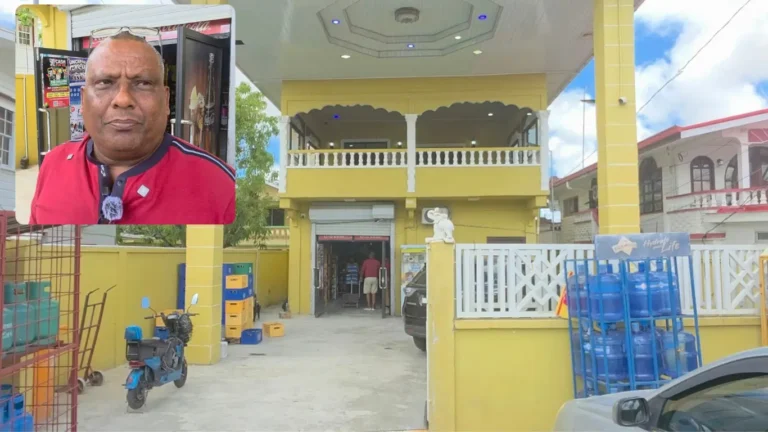
A 57-year-old Canje businessman and his family are left traumatised after they were robbed at gunpoint of approximately $3M by masked men on Saturday night.
Jagnarine Persaud, known as “Balram,” said the robbery occurred around 19:30 hours while he was attending to business at his premises.
Persaud explained that he was in the cashier area on the lower flat of the building, while his five-year-old son was in the yard. Several customers were also outside the business at the time.
He said the men entered the establishment, one armed with a handgun, while the other two carried a baseball bat and a cutlass.
According to Persaud, the men demanded all the money he had. They then forcibly opened a drawer and removed the cash from the day’s sales. However, after taking the money, the bandits demanded more. Persaud told them he had nothing else to give, prompting one of the men to threaten his life.
“They said, ‘Well, you got to dead, I gone shoot you,’” the businessman recounted.
Fearing that he would be killed, Persaud handed over the keys to another drawer containing a large sum of cash.
The men reportedly collected the money before escaping in a waiting dark-grey car.
Persaud described the ordeal as traumatic for himself and his family, noting that the bandits repeatedly threatened to kill him.
“Thank God I give them the money because they said, ‘Ahyuh gone die right here,’” he said.
He also disclosed that he had applied for a licensed firearm approximately six years ago, but the application was not approved.
Police have since confirmed that no shots were fired and no injuries were reported during the incident.
Investigators have obtained CCTV footage, which is being reviewed as they continue their probe into the robbery.
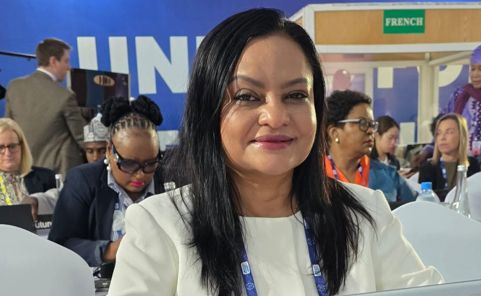
Guyana is calling for stronger international action to combat digital violence against women, with Minister of Human Services and Social Security Dr Vindhya Persaud urging the global community to establish clear accountability measures and strengthen protections for women participating in public life.
Minister Persaud made the call on October 5, 2026, when she addressed the Forum of Women Parliamentarians at the 153rd Assembly of the Inter-Parliamentary Union (IPU) in Arusha, Tanzania.
Dr Persaud advocated a global approach that goes beyond women’s representation in leadership to ensure they exercise meaningful influence over decisions affecting peace, security, economic development, and resource allocation.
Minister of Human Services and Social Security Dr Vindhya Persaud
She warned that the rapid expansion of digital abuse, including artificial intelligence-generated sexual images and coordinated online harassment, poses a growing threat to women’s participation in politics and other areas of public service.
“Digital violence threatens that promise,” she stated, referring to the principle that every girl should be able to aspire to public service without fear.
She explained that manipulated images and online attacks can damage reputations, undermine confidence and force women to reconsider their involvement in public life.
Drawing on her own experience with digital violence, the minister challenged the expectation that women should limit their visibility to protect themselves from online abuse, explaining that the digital environment allows harmful content to spread rapidly across borders, while anonymity can shield perpetrators and algorithms can amplify humiliation.
In addressing these challenges, Minister Persaud pointed to Guyana’s legislative framework, including its cybercrime legislation and the Family Violence Act 2024, as part of the country’s response to abuse and violence.
She outlined key provisions of the Family Violence Act, including the integration of civil and criminal measures, requirements for police to act when reports are made, protections allowing victims and their children to remain in their homes, and defined timelines for reporting and initiating charges.
The Ministry of Human Services and Social Security continues to provide training, psychosocial assistance and shelter services to support persons affected by violence.
Guyana is preparing for a comprehensive national conversation on digital violence during the annual 16 Days of Activism campaign, reinforcing the need to address emerging forms of abuse through public awareness, prevention and accountability.
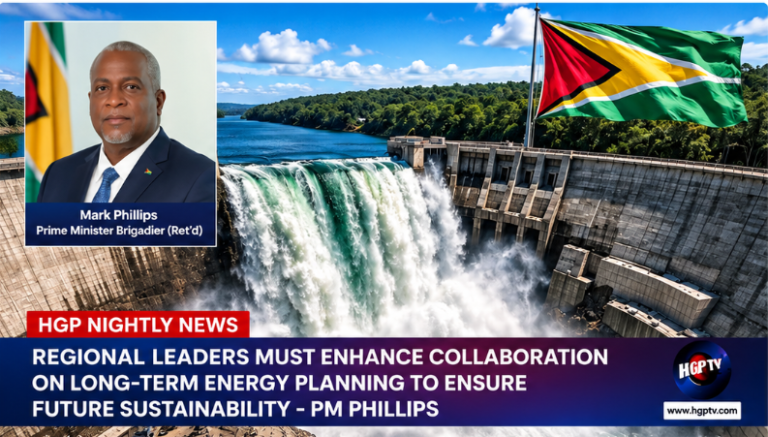
SANTO DOMINGO, DOMINICAN REPUBLIC — Prime Minister Brigadier (Ret’d) Mark Phillips has called on governments across Latin America and the Caribbean to urgently forge deeper partnerships on long-term energy planning, warning that the region must engineer power grids capable of withstanding surging consumer demand, climate vulnerabilities, and accelerated technological shifts.
Speaking at the 11th Latin American and Caribbean Energy Organization (OLADE) Energy Week in Santo Domingo, the Prime Minister emphasized that rapid economic growth, industrial expansion, urban migration, and broad digital transformation will put unprecedented strain on regional power infrastructure over the coming decades.
To prevent crippling bottlenecks, Phillips urged regional energy ministers to look beyond short-term generation shortages and design robust, low-carbon systems configured for the next 20 to 50 years.
Designing Grids for the Next Half-Century
Delivering Guyana’s national perspective before regional counterparts, Prime Minister Phillips stressed that energy security requires systemic modernization and structural agility:
Expanding Demand Drivers: Accelerated industrial activity, urbanization, and digitalization across Latin America and the Caribbean require proactive capacity planning rather than reactive emergency fixes.
Modern Grid Architecture: Power networks must rapidly transition into interconnected, smart, and flexible platforms capable of integrating fluctuating clean energy inputs.
“The energy system of the next decade must be more diversified, more resilient, more efficient, more digital and increasingly low carbon,” Prime Minister Phillips declared. “This requires us to plan not only for today’s needs, but for the economy and society we expect to have 20 or 50 years from now.”
Guyana’s Clean Energy Leap: G$37.7B Investment Drives 623% Capacity Surge
Highlighting Guyana’s domestic achievements under the Low Carbon Development Strategy (LCDS 2030), Prime Minister Phillips presented concrete milestones demonstrating how hydrocarbon revenues and climate finance are being deployed to green the national grid:
Massive Capital Deployment: Between 2020 and 2026, the Government of Guyana implemented or committed G$37.717 billion toward renewable energy projects and programmes.
623% Capacity Expansion: This capital injection drove an extraordinary 623% surge in national installed renewable energy capacity, expanding from 5.35 megawatts (MW) in 2019 to 38.72 MW in 2026.
Diversified Generation Assets: The national portfolio incorporates utility-scale solar photovoltaic (PV) farms, off-grid solar mini-grids in riverain and hinterland communities, rooftop solar installations across public and community facilities, the distribution of household solar kits, and the development of three dedicated hydropower plants.
Transition Strategy: The Prime Minister noted that Guyana’s energy blueprint strikes a practical balance by using natural gas as a transitionary fuel alongside hydro, solar, and wind to provide reliable baseload power while cutting carbon emissions.
Deepening Regional Integration Through OLADE
Turning to regional cooperation, Prime Minister Phillips reaffirmed Guyana’s active commitment to multilateral integration through OLADE:
Innovative Financing: Urging multilateral lenders to support tailored financing mechanisms for Caribbean small island developing states (SIDS) and low-lying coastal territories facing elevated borrowing costs.
Resilient Infrastructure & Interconnection: Calling for investments into climate-hardened power infrastructure and encouraging feasibility studies on cross-border electrical interconnections to share reserve margins.
Balanced Transformation: Reaffirming that regional energy transition must harmonize economic growth and industrialization with environmental stewardship and equitable social development.