Home Blog Page 43

Eusi Kwayana

0


(Kaieteur News) – The passing of Eusi Kwayana at 101 marks the end of an extraordinary chapter in Guyana’s political, educational and intellectual history. His life spanned colonial rule, the struggle for self-government, independence and the turbulent decades that shaped the modern Guyanese state. Few individuals have witnessed so much of the country’s evolution while contributing so significantly to the debates that defined it.

Born Sydney Evanson King on 4thApril, 1925, Kwayana became involved in community affairs in Buxton from an early age. His political journey began in the 1940s and eventually took him into the People’s Progressive Party (PPP), where he participated in the movement for self-government. Following the PPP’s victory in the 1953 elections, he served in the short-lived government as Minister of Communication and Works. The British suspension of the Constitution and removal of that administration from office marked an early and consequential episode in his political life.

Kwayana’s subsequent departure from the PPP did not end his involvement in national affairs. His political path took him through the People’s National Congress (PNC) before he became a founding member of the Working People’s Alliance (WPA) in 1974. His journey across these political organisations reflected a career shaped by changing convictions, ideological differences and a sustained interest in the direction of Guyana’s development.

Within the WPA, Kwayana served as an executive member, parliamentarian and contributor to the party’s publications. He remained associated with the movement until his death, maintaining a political presence that extended across generations. His involvement in the party also placed him within a movement that challenged the established political order and advocated democratic participation, social justice and a greater role for working people in national affairs.

Yet Kwayana’s contribution cannot be measured solely by the political organisations he helped build or the offices he occupied. His commitment to education was equally significant. Having entered the teaching profession at just 15, he founded County High School in Buxton in 1956, later renamed Republic Cooperative High School. This work demonstrated his belief in education as a means of expanding opportunities and strengthening communities.

His connection to Buxton remained central to his identity. Through teaching, community organising and writing, he sought to preserve the experiences and history of the people among whom he lived and worked. His life demonstrated that nation-building requires more than participation in political office; it also demands investment in education, culture and the development of future generations.

Kwayana was also an important figure in the promotion of African cultural consciousness and Pan-Africanism. He co-founded the African Society for Racial Equality in 1961 and the African Society for Cultural Relations with Independent Africa in 1964. Through these organisations, he contributed to efforts to strengthen African pride, dignity and cultural identity. His adoption of the name Eusi Kwayana, meaning “Black Man of Guyana” in Swahili, reflected this commitment.

As a historian and author, he documented important aspects of Guyana’s political and social development, including race relations, labour struggles, colonialism and the contributions of different communities. His publications, alongside his work in theatre and political writing, formed part of a sustained effort to understand the forces that shaped the country. His play, The Promised Land, won the Best Play prize in the Youth Category at the British Guiana Drama Festival in 1965.

Kwayana’s long life also offers an opportunity to reflect on the importance of political independence, integrity and principled disagreement. His career crossed party lines, and his experiences placed him among some of the most consequential movements and personalities in Guyana’s modern history. His legacy should therefore be examined thoughtfully, acknowledging both his contributions and the complexities of the political periods through which he lived.

Guyana must do more than issue tributes when its elder statesmen and national figures pass away. Their writings, experiences and historical records must be preserved and made accessible to younger generations. A country that neglects its history risks losing valuable lessons about leadership, democracy, cultural identity and the responsibilities of citizenship.

Eusi Kwayana devoted much of his life to teaching, writing, political activism and community development. His death at 101 closes a remarkable personal journey, but the questions he engaged with remain relevant. His legacy should inspire Guyanese to pursue knowledge, defend principle, participate meaningfully in public life and continue the work of building a more just and inclusive society.


Source: Kaieteur News

Jamadar feels ‘targeted, harassed and bullied’

0


…CCJ judge alleges ‘abuse of power’ in e-mail to President Anderson

A “greatly troubled” Caribbean Court of Justice (CCJ) Judge Peter Jamadar has complained that he feels “targeted, harassed and bullied” following what he described as an intrusion into his private affairs and the questioning of his assigned administrative officer.

At the heart of Justice Jamadar’s complaint, outlined in a 4th September, 2026, e-mail to CCJ president Winston Anderson, the Regional Judicial and Legal Services Commission (RJLSC), also headed by Justice Anderson, fellow judges and court staff, is an enquiry into his appointments and commitments, including activities outside his duties at the court.

‘Intrusion’

Jamadar alleged that information about his activities was sought without his knowledge through his administrative officer, Candace Simmons-Peters.

The e-mail and its contents were verified by three CCJ insiders to the Sunday Express.

In the e-mail, Jamadar described the enquiry as “investigative and inquisitorial” and questioned the authority under which the CCJ president or the CCJ registrar, who also serves as secretary of the RJLSC, sought information about his (Jamadar’s) non-CCJ activities from an employee assigned to him.

Jamadar feels ‘targeted, harassed and bullied’

Justice Peter Jamadar

He alleged the circumstances were intended to “invite and or coerce” Simmons-Peters into disclosing confidential, private and work unrelated information about his affairs.

According to Jamadar, the questioning of Simmons, Peters went further.

He alleged that on 1st September, she was questioned separately by CCJ information systems manager Ayinde Burgess, and later by Anderson, in connection with an apparent investigation into “the leak to the press” and possible breaches. Burgess was reportedly appointed by Anderson to oversee the leak investigation.

The latest development follows exclusive Sunday Express reports in August that exposed deep divisions within the CCJ. Five of the court’s six sitting judges had challenged aspects of the president’s leadership and raised concerns ranging from his administrative approach to allegations of “panel fixing” and attempts to influence cases.

The Sunday Express had obtained internal e-mail correspondence among the judges concerning the contentious issues.

In response, the CCJ president rejected allegations of judicial “panel fixing” in a statement issued on 14th August, 2026. He described the allegation that panels were manipulated to secure particular case outcomes as “wholly untrue”.

The controversy centres on allegations that judges were removed from or panels altered in ways that could influence judicial outcomes. Anderson maintains that the changes were administrative and not intended to influence the merits of any case. A probe had been initiated into this matter, as alluded to by Justice Jamadar in his 4th September e-mail, but no outcome has been reported by the CCJ or the RJLSC.

Enquiry into judge’s activities

In his six-page e-mail to Anderson, the RJLSC and judges on 4th September, Jamadar alleged that Simmons, Peters was questioned about whether she had access to his files, which documents she had printed for judges’ meetings, and material prepared in connection with an RJLSC, facilitated intervention.

She was also questioned about how she communicated with him, whether she had worked on particular days and her arrival and departure times at the CCJ, he said.

Jamadar further alleged that Simmons-Peters were required to surrender her CCJ assigned computer to Burgess for examination. She subsequently did so.

Jamadar feels ‘targeted, harassed and bullied’

CCJ President, Justice Winston Anderson

More troubling, he wrote, was a subsequent exchange in which Simmons-Peters was questioned about Trinidad and Tobago’s Computer Misuse Act and the possible consequences of breaching it.

Jamadar alleged that during the questioning, Anderson referred to the possibility of a two-year prison sentence and indicated that investigations would continue to establish who had leaked the information.

The incidents led Jamadar to question not only the treatment of his administrative officer but also whether the enquiries were being used to gather information about him.

“In both instances there are, in my opinion, a clear focus on and targeting of me and maybe more indirectly Ms. Simmons-Peters, the CCJ’s Administrative Officer assigned to me,” he wrote.

In the correspondence, Jamadar characterised the actions as an “abuse of power, administrative overreach” and raised concerns about what he considered infringements of his rights to privacy, due process and protection of the law.

He formally asked Anderson, in his capacity as CCJ president and chairperson of the RJLSC, and the CCJ registrar to identify the legal and institutional authority under which the enquiries were conducted.

He also requested the relevant CCJ treaties, statutes, regulations, policies and practices, together with applicable Trinidad and Tobago laws and international legal principles that would authorise such action.

Questionable investigative action

Of particular concern to Jamadar was the alleged attempt to obtain details of his judicial appointments outside the CCJ.

He argued that neither Anderson nor the CCJ registrar, in the latter’s capacity as RJLSC secretary, was entitled to seek such information from Simmons-Peters without first notifying him and obtaining his agreement.

Jamadar also questioned why documents connected to an RJLSC-facilitated intervention had become the subject of enquiries during the investigation into the alleged leak to the media.

He argued that those documents could not logically have been connected to the suspected disclosure of internal correspondence to the press.

The questions raised concerns that the enquiry had extended beyond the alleged leak and that the broader investigation was focused on him, Jamadar said.

He also sought to establish whether the RJLSC knew of, approved or supported the investigative actions being undertaken within the court.

In addition, he questioned whether the manner in which Simmons-Peters was interrogated was appropriate, particularly given the alleged references to possible criminal consequences.

Three incidents raise concerns

For Jamadar, the incidents could not be viewed in isolation. He pointed to three events that, in his view, demonstrated a pattern of targeting.

  1. The first involved a proposed judges’ meeting scheduled for 4th September. Jamadar said he had indicated that a prior commitment prevented him from attending in person, but he remained available to participate virtually.

He became concerned, he said, when Anderson’s position appeared to shift from a suggestion that judges attend in person to an expectation that they do so.

  1. The second incident involved the questioning of Simmons-Peters and the enquiries into Jamadar’s professional and personal commitments.
  2. The third concerned an earlier judges’ meeting in August. Jamadar said he and four other judges had sought to postpone that meeting to allow an RJLSC-facilitated intervention to take place.

According to Jamadar, Anderson subsequently told him that if he did not attend, “I suspect that will be an occasion and a reason for me to write to you”. He described this as “shocking”.

Jamadar said Justice Margaret Rajnauth-Lee received a similar e-mail, while the other three judges who sought the postponement did not.

He questioned why he and Rajnauth-Lee appeared to have been singled out.

Referring to the three incidents collectively, Jamadar wrote, “This pattern of targeting in relation to me, illustrated for the time being by these three incidents, raises great concerns in my mind. Troubling concerns.”

He added, “Certainly, I feel targeted, harassed, and bullied (directly or indirectly) by their occurrence, and their proximity to the wider contexts that are related to the broader and unresolved impasse among the judges and the CCJ President.”

Jamadar also questioned whether Anderson should play any role in investigations involving judges or court staff when, according to him, the president was himself closely involved in the underlying dispute.

He further raised questions about the privileges and immunities afforded to CCJ judges under the agreement establishing the CCJ and its Protocol on Privileges and Immunities.

The Sunday Express sent questions about Jamadar’s allegations to Justice Anderson, the court’s communications department and the RJLSC on 30th September, requesting responses by 7th October. The questions were resent on 5th October as a reminder. Up to press time last night, no response had been received. (Trinidad Express)


Source: Kaieteur News

Linden man shoots teen girlfriend dead, then kills himself

0


(Kaieteur News) – A 17-year-old student of the Linden Technical Institute and her 21-year-old boyfriend were found dead following a suspected murder-suicide at Block 22 Squatting Area, Wismar, Linden, on Monday afternoon.

The deceased have been identified as Toisha Andrews, who resided at Block 22 Squatting Area, and Anthony Kellon Malachi Cato, a 10-day worker of Phase Three, Murphy Street, Amelia’s Ward, Linden.

Linden man shoots teen girlfriend dead, then kills himself

DEAD: Toisha Andrews

Linden man shoots teen girlfriend dead, then kills himself

Dead: Anthony Kellon Malachi Cato

According to a police report, the incident occurred at about 16:30hrs on October 12, 2026, shortly after Andrews returned home from school.

The report stated that Cato, who was armed with a handgun, approached Andrews and discharged a round, striking her in the forehead and causing her to fall to the ground.

Cato then reportedly shot himself and fell to the ground, where he became motionless.

Andrews was subsequently taken to the Linden Hospital Complex, where she was pronounced dead on arrival.

Cato’s body remained at the scene, with a handgun found next to it, according to the report.

Police ranks were at the scene processing it as investigations continued.


Source: Kaieteur News

Pipeline repair

0


(Kaieteur News) – To hear ExxonMobil tell it, the global oil leader is the best partner that Guyana can ever have.  In the now customary manner, more often picked up by citizens, there is a disconnection between what ExxonMobil says, and what it does.  The most recent example of this company practice involves the gas pipeline off the village of Crane, West Coast Demerara.

ExxonMobil had a great opportunity to prove itself a trustworthy partner of citizens.  But the company would have none of that, flunked the trust test.  Instead of transparency in the manner of a bona fide partner, ExxonMobil’s managers did what they have always done.  They settled for stealth and secrecy on what is wrong with that pipeline near the Crane community.

If the pipeline has a defect it has a defect.  Concealing that fact does nothing for the defect.  It should be revealed so that this country’s citizens have some idea of what is going on in their oil sector, what is going on near to their community.  The difference is that the Crane pipeline repair is not happening 200 kilometers from shore.  It is happening in close proximity to the Crane shoreline.  Citizens have every right to know what is going on.  When pipeline repair is mentioned in Guyana, it is almost like surgery.  There is nothing routine about it, for those who are bracing for the scalpel.  It should be the same with villagers in the Crane area and those adjoining.

The works that ExxonMobil is doing may be maintenance, or follow-up, or tightening up on some part of the pipeline that cannot be left as it is.  To do so would be risky, have unknown consequences, none of them small.  Whatever the nature of the repair work off Crane, citizens have a right to know.  It is in their interests to know, since their welfare can be badly impacted, except that nobody knows how much so.  Keeping the repair work secret, refusing to share what the defects are, how many of them there are, and how they came about, can never be the way of a partner is a big oil business.  But having set this pattern of behavior on Guyana for a number of years, there is no way that ExxonMobil is going to change its ways.

Truth be told, company officials know that they can operate this way, and they will be allowed to get away with it.  The PPPC Government is the softest, as easy to roll as dough, partner that an oil company could wish for.  Those who fill leadership seats are pale with fright, and are filled with dread, at doing anything that the big players at ExxonMobil would interpret as threatening, even as pushing too hard.  And citizens are so preoccupied with finding affordable food to ease their hunger pangs, and disgusted at their sellout government and their treacherous political leaders, that they do not have the energy to put up a good fight.  Even when their own welfare is at stake.

The pipeline that is under some type of repairs is not one that is decades old, or has been in operation round the clock.  So, what could have gone wrong with it?  Did something go so wrong that such a development has to be hidden from the eyes of citizens?  This is one of the weaknesses that haunt people and companies that operate in secret, leaving many questions unanswered.  They have to keep operating and living with secrets.  We at this paper remind every citizen of this country about something they should never forget.  Guyana is exposed, and they are exposed.  In the event of an oil spill, a material pipeline defect (a number of them), the insurance plan that exists to protect Guyana and its peoples does not have much depth to it.  This fact is what makes it even more compulsory for ExxonMobil to be an open book, so that citizens know where they stand, have some idea of what is happening.  The government should not be casual about this.  Every citizen should take every pipeline development as if their life depended on it.


Source: Kaieteur News

65 women among 102 GSA graduates as agriculture sector expands

0


(Kaieteur News) – Sixty-five women accounted for nearly two-thirds of the 102 students who graduated from the Guyana School of Agriculture (GSA) on Tuesday, as the institution marked its 61st graduation ceremony amid growing demand for skilled professionals to support Guyana’s expanding agriculture sector.

The Class of 2026 comprised 65 females and 37 males who completed studies across six programmes at the school’s Mon Repos and Essequibo campuses. Of the graduates, 66 earned either Credit or Distinction, while 10 students referred in 2025 successfully completed their programmes this year, the Agriculture Ministry said in a press release.

65 women among 102 GSA graduates as agriculture sector expands

Agriculture Minister, Zulfikar Mustapha while handing out an award to one of the graduates.

Delivering the feature address, Agriculture Minister Zulfikar Mustapha highlighted the increasing participation of women in agricultural education, describing it as a reflection of the sector’s changing landscape and expanding professional opportunities.

The graduating class represented nine of Guyana’s 10 administrative regions, alongside 12 students from other Caribbean Community (CARICOM) countries, including 10 from Grenada and two from Saint Lucia. The graduation comes as the Government continues to increase investment in agriculture, with Mustapha reporting that the sector grew by 11.5 per cent in 2025, while budgetary allocations rose from $18.4 billion in 2020 to $113.2 billion in 2026.

He said the investments are supporting the modernisation of production systems, expansion of agricultural infrastructure, increased access to technology and new opportunities in crop and livestock production, agro-processing and other areas.

Against this backdrop, the minister stressed that institutions such as the GSA must ensure that graduates are equipped with the technical knowledge, practical skills and innovative thinking needed to meet the demands of a rapidly evolving sector. “For more than six decades, the Guyana School of Agriculture has played an important role in preparing men and women for service in agriculture and national development. Since its establishment in 1963, the institution has produced 4,497 graduates who have gone on to serve as farmers, extension officers, animal health professionals, foresters, agro-processors, researchers, and agricultural leaders,” Mustapha said.

He noted that the school’s expansion beyond its original agricultural programme to include Forestry, Fisheries, Agro-Processing, Animal Health and Veterinary Public Health, and Livestock Production and Management reflects the changing needs of the industry.

With technology advancing, consumer expectations evolving, markets becoming increasingly competitive and climate change affecting production, Mustapha said agricultural education must continue to adapt. “Our educational institutions must therefore continue to equip students with the knowledge, practical skills, and innovative thinking needed to respond to these developments,” he said.

65 women among 102 GSA graduates as agriculture sector expands

The GSA graduates and other officials including Minister of Agriculture, Zulfikar Mustapha.

The minister also urged young people to look beyond traditional farming and recognise opportunities in agricultural science, technology, business management, research, veterinary services, environmental management, logistics and marketing. He emphasised, however, that educational opportunities must be accompanied by access to financing and other resources to help young professionals establish businesses in farming, agro-processing and agricultural services.

“But access to education must be matched by access to opportunity. That is why the Government is also working to expand opportunities for young entrepreneurs,” he said, pointing to financing available through the Guyana Development Bank for eligible young entrepreneurs.

Mustapha also welcomed the GSA’s successful re-registration with the National Accreditation Council of Guyana through 2029, describing it as an important step in maintaining recognised educational standards and ensuring the continued relevance of its programmes. He highlighted partnerships with the Inter-American Institute for Cooperation on Agriculture (IICA) and EMC, which have supported training in hydroponics and protected agriculture. He also pointed to the introduction of digital farm record systems and collaboration with the National Agricultural Research and Extension Institute (NAREI) as efforts to strengthen the connection between training, research and practical production.

Among the outstanding graduates, Analesia D’Aguiar received the Chairman’s Prize for the best graduating student in the programmes offered at the Essequibo Campus. She completed the Certificate in Forestry programme with a grade point average (GPA) of 3.97, the highest recorded in the graduating class. Marlon O’Donoghue received the Chief Executive Officer’s Prize as the best graduating student in the two-year programmes offered at the Mon Repos Campus. He completed the Diploma in Agriculture programme with a GPA of 3.71.

Two Grenadian nationals, Jacob Thomas and Adonis Jones, were also recognised among the year’s outstanding performers. The Guyana School of Agriculture began operations at Mon Repos, East Coast Demerara, on 9th September, 1963. Over more than six decades, it has developed into a key institution for agricultural training, supplying professionals to support the country’s agricultural production and wider development.


Source: Kaieteur News

APNU backs legal action against NIS over $8,098 shortfall

0


(Kaieteur News) – A Partnership for National Unity (APNU) has thrown its support behind a court action  by attorney Christopher Ram, a pensioner and three trade unions against the National Insurance Board (NIB), seeking to compel the payment of minimum old-age pensions at the rate prescribed by law and recover arrears allegedly owed since 2021.

The application for judicial review was filed on Friday by Ram, pensioner Kalicharan Heera, the Union of Agricultural and Allied Workers, the United Minibus Union and the Guyana Market Vendors Union.

APNU backs legal action against NIS over $8,098 shortfall

General Manager of NIS, Holly Greaves

In a statement on Tuesday, APNU said at a time when the high cost of living continues to burden households, pensioners must receive every dollar to which they are legally entitled. It also said that it considers the legal action an important step in defending the rights, dignity and economic security of Guyana’s senior citizens.

“These payments are not acts of charity or government favours; they are entitlements protected by law,” APNU stressed.

The applicants are asking the court to declare that the minimum National Insurance Scheme (NIS) pension must be no less than 50% of the Public Service minimum wage, as stipulated under Regulation 4(b) of the NIS Benefit Regulations. They are also seeking an order compelling the board to pay the minimum pension at that rate, account for all outstanding payments since 2021 and settle the arrears with interest, including amounts owed to the estates of deceased pensioners.

According to the applicants, the lawful minimum pension currently stands at $51,173 monthly, but pensioners receiving the minimum benefit are being paid just $43,075, leaving a shortfall of $8,098 each month. They estimate that individuals who have received the minimum pension throughout the period since 2021 are owed approximately $510,300 each. Regulation 4(b) states that a pension shall “in no case” be less than 50% of the public service minimum wage.

“It is morally indefensible that in one of the world’s fastest-growing economies, elderly Guyanese should be forced to approach the courts to obtain pension payments to which they contend they are legally entitled. Guyana’s impressive GDP growth and expanding oil revenues must mean more than statistics, expensive infrastructure and government declarations of prosperity. They must translate into improved living standards, economic security and dignity for ordinary citizens,” APNU argued.

The party also outlined that the injustice was raised in parliament in 2024, when APNU Member of Parliament Annette Ferguson tabled a motion, seconded by Juretha Fernandes, MP, calling for retroactive payments to minimum-rate pensioners for the period 2021 to 2023.

APNU backs legal action against NIS over $8,098 shortfall

Senior Minister with responsibility for Finance Dr. Ashni Singh

It reminded that the motion was disallowed by Speaker Manzoor Nadir, denying parliament the opportunity to properly address an issue affecting some of our most vulnerable citizens. Rather than facilitate parliamentary consideration and a resolution, the PPP/C administration allowed the matter to remain unresolved.

APNU outlined that NIS exists to provide social protection to contributors and beneficiaries, not to frustrate legitimate claims. The party further stated that government must ensure that statutory agencies comply with their legal mandates and are held accountable when they fail to discharge their responsibilities.

Moreover, the party called on government and the NIB to urgently review the claims, establish the full extent of any outstanding legal entitlements, promptly settle arrears found to be due, and implement safeguards against future underpayments.

APNU also said the necessary financial provisions must also be made to honor these obligations.

The party stressed that the men and women who built sustained this country’s economy through decades of hardship must not be forgotten amid today’s prosperity.

“Their sacrifices helped lay the foundation for Guyana’s present economic opportunities, and they deserve to share in the benefits,” the party noted, adding that every responsible government has a fundamental duty to safeguard the welfare of its elderly population.

APNU maintained that good governance cannot be measured solely by the construction of roads, bridges and buildings but must also be judged by how the poor, elderly and vulnerable are provided for in the national budget, how effectively their legal rights are protected, and whether public institutions faithfully discharge their statutory responsibilities.

It added that access to adequate food, healthcare, housing, transportation and financial security must be central to national development, particularly as rising prices continue to erode the purchasing power of retirees.

“Guyana cannot claim meaningful progress while its elderly struggle to survive. Economic growth without social justice is incomplete development, and prosperity that excludes those who sacrificed to build this nation is prosperity without fairness,” the party further stated.


Source: Kaieteur News

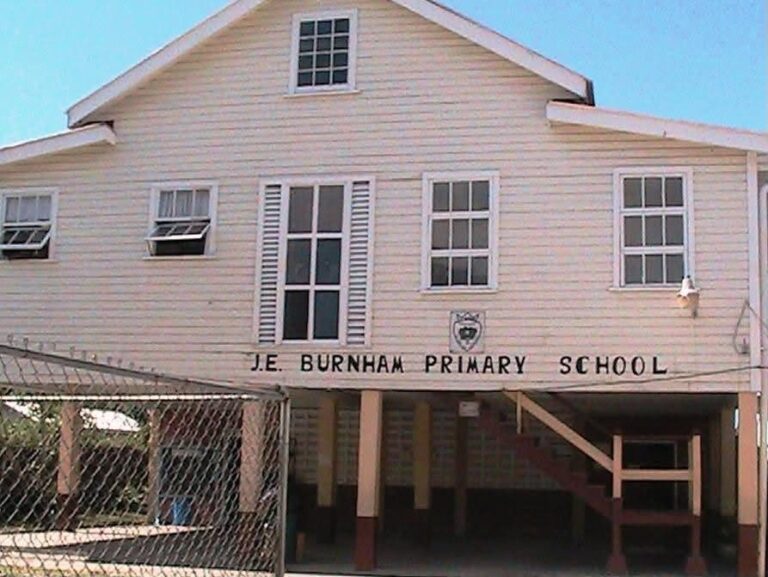
PNCR calls for halt to proposed closure of J.E Burnham Primary School

0


…demands broad consultation

(Kaieteur News) – The People’s National Congress Reform/A Partnership for National Unity (PNCR/APNU) has objected to the proposed closure of the J.E. Burnham Primary School on William Street, Kitty, Georgetown, and called on the government to halt the decision.

In a recent statement, the party expressed solidarity with the parents, students and teachers who are against the closure of the school. “We say to this government: consult the people. Listen to the people. You serve them, you do not rule over them,” the party said.

PNCR calls for halt to proposed closure of J.E Burnham Primary School

J.E Burnham Primary School

It underscored that parents deserve predictability and should not be subjected to abrupt decisions after making financial sacrifices to prepare their children for school. “The timing of this announcement, within the new school year, after parents have already spent scarce resources on uniforms, books, and school supplies, demonstrates a callous disregard for working-class Guyanese families,” the party said, adding that the move to close the school would directly affect household budgets.

PNCR/APNU demanded that the government immediately suspend any decision to close the school and conduct broad, genuine consultations with parents, students, teachers, the Kitty community and all relevant stakeholders.

The party also called on the government to publicly disclose the criteria used to identify J.E. Burnham Primary School for closure and explain why institutions bearing the Burnham name appear to be targeted.

Additionally, it demanded a guarantee that no teacher would face reprisals for expressing a legitimate opinion on the matter. The party said it had observed a pattern in the government’s decisions to close certain schools, pointing to the Winifred Gaskin Memorial School and Central High School, which it said were also associated with the name Burnham and the country’s national history.

“The same attitude was adopted toward the Winifred Gaskin Memorial School and Central High School, institutions likewise associated with the name Burnham and with our national history. We will not stand by and allow this government to systematically erase the name Burnham and our shared history from the landscape of Guyana. Schools are not merely buildings; they are custodians of memory, heritage, and community identity. To target them one after another is an act of political vengeance dressed up as policy,” PNCR/APNU said.

The party also expressed concern about what it described as a climate of fear among teachers, who it said had reportedly been intimidated into remaining silent and refraining from speaking out. PNCR/APNU said that when educators are afraid to voice dissent and institutions can be closed for ideological reasons, it points to the hallmarks of modern-day dictatorship.


Source: Kaieteur News
Court reserves ruling in Mohameds’ extradition fight

0


…Nandlall defends constitutionality of law, Forde challenges US assurances

(Kaieteur News) – Guyana’s Court of Appeal has reserved its ruling in the legal challenge brought by U.S.-indicted businessmen Nazar and Azruddin Mohamed, following a contentious hearing on Tuesday over the constitutionality of the country’s extradition laws and assurances provided by the United States Government.

The oral hearing before Guyana’s Court of Appeal took place on Tuesday as Attorney General Anil Nandlall, SC, and Senior Counsel Roysdale Forde clashed over the constitutionality of the nation’s extradition laws and diplomatic assurances provided by the United States government.

Court reserves ruling in Mohameds’ extradition fight

Senior Counsel Roysdale Forde

The appeal stems from a High Court decision by the Chief Justice, Navendra Singh that upheld the constitutional validity of the Fugitive Offenders Act and its 2009 amendments. That ruling previously cleared the way for the extradition proceedings to proceed in the Georgetown Magistrates’ Court.

Appearing before Chancellor of the Judiciary Roxane George and Justices of Appeal: Rishi Persaud and Nareshwar Harnanan, the legal teams debated whether the 1931 Extradition Treaty, originally between the United Kingdom and the United States and adopted by Guyana, and the local statute adequately protect against third-state extradition. Nandlall argued that the legal framework governing extradition in Guyana is well-settled, maintaining that both the existing treaty and long-standing case law protect individuals from being re-extradited from the U.S. to a third country. Nandlall revealed that to address the specific fears raised by the appellants, the Guyana Government obtained written diplomatic notes from the U.S. government confirming that the Mohameds would not be sent to a third state. “The fear that the Mohameds have expressed does not exist. It’s not real. It’s not founded in reality. The treaty protects against it, and we have an assurance that buttresses the provisions of the treaty,” Nandlall said, adding that the applicants’ arguments were “highly academic.”

Addressing constitutional claims, the Attorney General said that the appellants failed to show how the statute breaches specific constitutional guarantees. While acknowledging that Parliament’s power to amend legislation is subject to constitutional compliance, Nandlall emphasised that the judiciary’s power of review over legislative action is strictly limited to determining unconstitutionality.

“A court can’t say that I don’t like the provision of the statute… One singular power the court has, is to say that the legislation is inconsistent with and breaches the Constitution. Outside of that, the court has no other power,” Nandlall submitted.

Court reserves ruling in Mohameds’ extradition fight

Attorney General, Anil Nandlall

In response, Senior Counsel Forde, representing the Mohameds, maintained that the appeal carries merit, arguing that foundational legal precedents relied upon for decades were incorrectly decided. Forde contended that Section 8(3)(b) of the Fugitive Offenders Act requires specific statutory or treaty provisions regarding re-extradition and ministerial consent, which he argued are absent from the underlying treaty framework. He dismissed the relevance of the U.S. diplomatic notes, arguing that the treaty itself makes no provision for such arrangements.

“The assurance cannot be sufficient. In the first place, the treaty does not provide for an assurance… The law requires that the arrangement must be in place at the time the person is taken into custody,” Forde submitted to the bench.

Forde pointed out that the diplomatic notes were issued in early December, roughly five weeks after the Minister issued the Authority to Proceed in October. He argued that Section 8(3)(b) is intended to protect constitutional rights, specifically the protection of liberty under Article 139, by retaining ministerial oversight before a surrendered citizen can be transferred to a third nation.

Following the conclusion of oral submissions, the Court of Appeal adjourned the matter for a ruling on a date to be announced. Pending the appellate court’s decision, an existing conservatory order remains in effect, preventing the Georgetown Magistrates’ Court from handing down a final determination in the extradition committal proceedings. However, the Magistrates’ Court is permitted to continue hearing the extradition evidence in the interim.


Source: Kaieteur News

Contractor blames CEMCO for design flaws that crippled $1.4B Port Kaituma Stelling

0


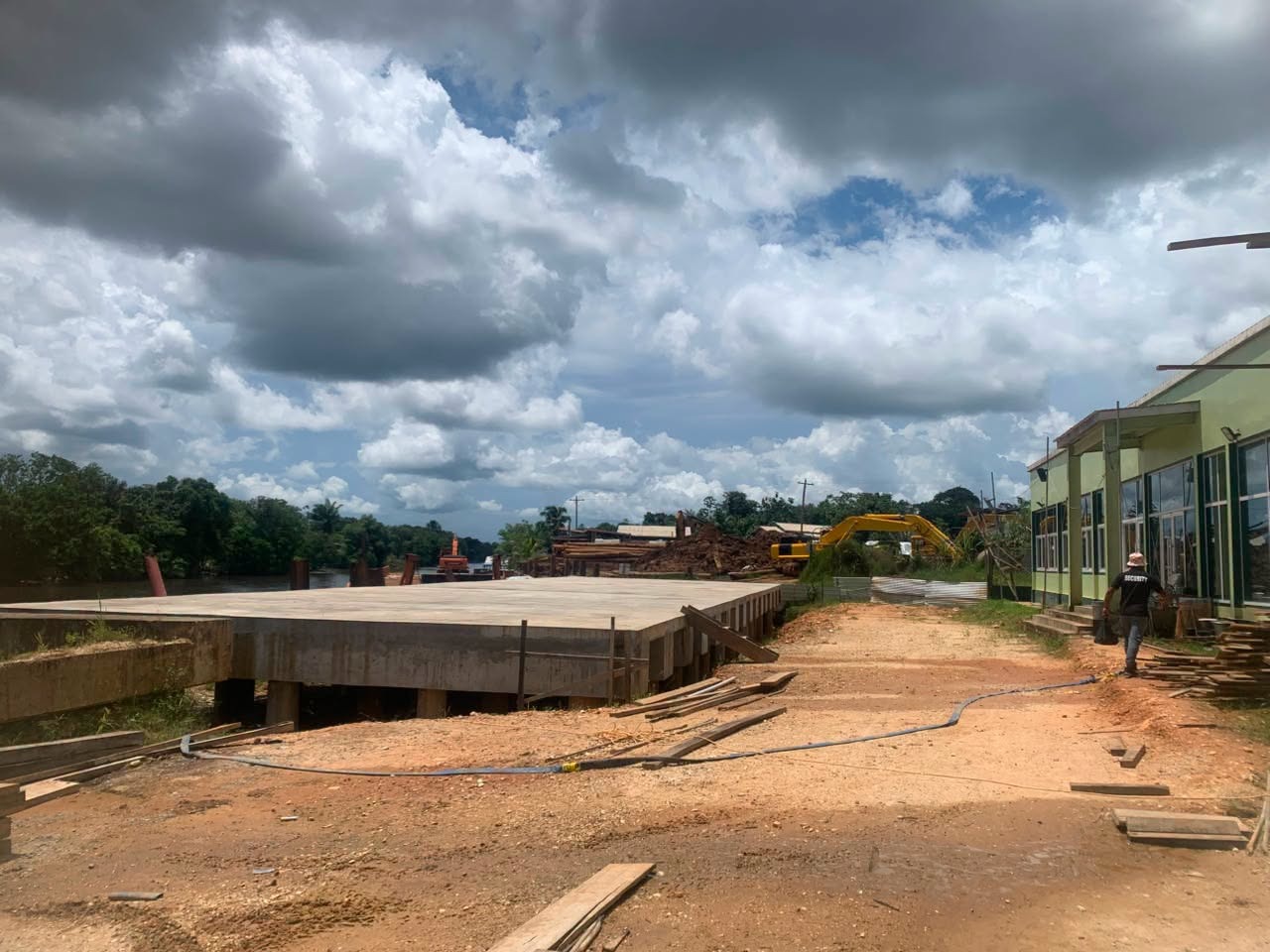
(Kaieteur News) – Contractor, Parmeshwar Jagmohan has blamed design flaws by engineering firm Caribbean Engineering and Management Consultants Inc. (CEMCO) for the structural failures that halted construction of the G$1.4 billion Port Kaituma Stelling, saying the defects emerged just two weeks before the facility was due for completion and forced work to stop.

Jagmohan, head of International Import and Supplies, explained that structural defects have emerged before the facility was set to be completed. “We found some snapping by the tie rod, and we informed the ministry, everything came to an abrupt halt,” Jagmohan said. Subsequent investigations by the Ministry of Public Works, the Transport and Harbours Department, and independent consultants exonerated the contractor after tie-rod samples sent to Canada for strength testing confirmed that the materials met exact contract specifications.

Contractor blames CEMCO for design flaws that crippled $1.4B Port Kaituma Stelling

Parmeshwar Jagmohan

Instead, multi-party evaluations exposed critical flaws in CEMCO’s initial design, including incomplete site research. “There were many errors from the consultant’s side. We had many meetings and they did accept, it was their fault,” Jagmohan revealed. He pointed out that soil testing was performed exclusively on land, leaving the underwater foundation completely unexamined.

“Only the drill hole was only done on land and a mirror that to suit the water, which is the river,” he noted, adding that his company has since refused to work further with CEMCO due to a total loss of confidence.

Opposition Member of Parliament, Ganesh Mahipaul also levelled heavy criticism against the project’s execution, stating that the stelling was structurally compromised long before ground was broken. “Imagine trying to build a house on soft mud instead of solid ground. No matter how well you build it, it will eventually start to sink or fail. That is essentially what happened here,” Mahipaul said. He argued that the contractor simply built according to the drawings provided, while the engineering firm failed to properly investigate the “Log Pond” site, a former sawmill filled with buried timber waste and unstable mud.

Contractor blames CEMCO for design flaws that crippled $1.4B Port Kaituma Stelling

Current state of the Port Kaituma stelling

Mahipaul further highlighted that steel anchor piles were never driven deep enough to reach firm ground, while an oversized concrete retaining wall and excessive backfill placed unbearable strain on the structure. “The supports failed. Some of the steel tie rods snapped under the pressure, causing sections of the retaining wall to collapse,” Mahipaul explained. He went on to question why CEMCO continues to receive major public works contracts, including oversight of the national Gas-to-Energy transmission and substations network, despite what he described as serious engineering failures at Port Kaituma.

The structural failure at Port Kaituma has carried tragic real-world consequences for hinterland commuters. The government’s US$12.7 million vessel, the MV Ma Lisha, acquired from India in April 2023 specifically to service Region One, has been unable to make its maiden voyage to Port Kaituma because the berth remains unusable. Public Works Minister Juan Edghill previously admitted to severe soil movement at the site, explaining that “we have built out the wharf for that boat to berth and everybody in the area knows there was significant movement of the soil and we had to break out a whole section and have it reconstructed.”

Edghill sparked further outrage by claiming that prior to the tragedy, the 87-year-old MV Barima was the preferred vessel for residents, a statement critics slammed as tone-deaf given that citizens had no other mode of river transport. Following the fatal capsizing of the aging vessel on 18th July, public grief across Guyana has transformed into relentless weekly demonstrations demanding Edghill’s immediate resignation.

Conducting a recent site visit alongside former Member of Parliament Ronald Cox, Shadow Public Works Minister Sherod Duncan confirmed that active construction at the stelling remains at a complete standstill. “The unfinished Stelling cannot now be separated from the tragedy of 18th July,” Duncan declared. “Had Minister of Public Works Juan Edghill ensure proper planning, competent engineering, rigorous supervision and timely completion of this project, that dependence could have ended before tragedy struck. That connection demands investigation and accountability at the highest level of the ministry.”

Alliance For Change (AFC) acting leader David Patterson joined the call for state accountability, framing the project as a textbook example of taxpayer-funded mismanagement. Duncan and Patterson are demanding the immediate public release of all engineering and geotechnical reports, contract variations, and payment records related to the stelling, alongside an independent, fleet-wide seaworthiness inspection of every state-passenger vessel. As public demonstrations outside the Office of the President continue to grow, opposition leaders maintain that ministerial responsibility must be enforced for the families who lost loved ones and for the citizens of Region One.


Source: Kaieteur News

GSA records largest graduating class in five years with 102 graduates

0

A total of 102 young people on Tuesday graduated from the Guyana School of Agriculture (GSA), making it the largest graduating class in five years.

Speaking at the graduation ceremony at Pegasus, the Minister of Agriculture Zulfikar Mustapha said the number of graduates had significantly increased from 84 last year.

Women accounted for 65 graduates, while 37 were men. Of the 102 graduates, 66 earned a credit or distinction.

“This achievement reflects your dedication, discipline, and commitment to learning,” he said.

The minister added that the growing participation of women and young people in agricultural education encourages the development of the institution.

The ceremony also recognised the first graduates of the Certificate in Livestock Production and Management programme, recently introduced to support the development of the country’s livestock industry.

Minister Mustapha said expanding domestic production requires trained professionals with skills in livestock management, animal health and production efficiency.

“I encourage you to use your training to make a meaningful contribution to this important area of agriculture,” he told the graduates.

As a result of this effort, more than $44 million was invested in the school’s livestock farm this year, including approximately $21.8 million for a new training centre and office.

The minister said the facility is strengthening practical instruction in livestock production, animal health and veterinary public health, giving students the hands-on experience needed for work in the sector.

He also urged graduates to continue learning beyond their certificates and diplomas, noting that agricultural professionals must adapt to changing production methods, new technology and increasingly competitive markets.

“The knowledge you have gained must be continually developed and applied or you will remain stagnant,” he said.

Graduates were further encouraged to explore new techniques, question established practices where better alternatives existed, and develop solutions to problems facing farmers and producers.

He explained that climate change and demands for higher standards are placing additional pressure on food production, making practical skills and innovative thinking increasingly important.

Meanwhile, since its establishment in 1963, GSA has produced 4,997 graduates. They have gone on to work as farmers, extension officers, animal health professionals, foresters, agro-processors, researchers and agricultural leaders.

The agriculture minister emphasised that this expansion reflects the need for agricultural education to respond to changes in society and the economy. [Department of Public Information]


Source: NEW ROOMS SITE