https://kiskadeewatch.com/guyana/one-communications-says-services-restored-after-cable-damage/







https://kiskadeewatch.com/guyana/one-communications-says-services-restored-after-cable-damage/

One Communications says a fibre cable damaged during construction work on Carifesta Avenue caused Wednesday’s disruption to its mobile data and fibre internet services.
In a statement issued yesterday, the company said contractors working for a private company unconnected to One Communications damaged a critical section of its fibre network at about 3.16 pm on Wednesday, September 23.
Technical teams began restoration work after the damage was identified and rerouted network traffic to reduce the effect on customers, the company said. Services resumed at reduced capacity approximately one hour after the incident, and what the company described as temporary full restoration was achieved at 12.05 am yesterday.
The damaged cable remains in a temporary configuration. One Communications said its engineers were assessing the best time to make a permanent repair while minimising any further disruption to customers and businesses. It did not give a date for that work.
The company said telecommunications infrastructure supports personal communications, businesses, financial services, healthcare, education, government operations and emergency communications. Protecting it was therefore important to public safety, economic stability and national resilience, it added.
Chief Executive Officer Abraham Smith thanked the Office of the Prime Minister, the Telecommunications Agency and Minister Juan Edghill for their support during the restoration effort. He also thanked the company’s engineers, technicians and operations teams, who he said worked through the night to restore service as quickly and safely as possible.
Community and Government Relations Manager Jasmin Harris said the company’s network extended across Guyana, with infrastructure both above and below ground. Damage to those facilities could disrupt service for thousands of customers, she said.
Harris urged contractors, developers and anyone planning excavation or construction work to contact One Communications beforehand so that its assets could be identified and protected. The company said enquiries about the location of its infrastructure and planned works could be sent to [email protected]@onecommgroup.com or made by calling 0777.
Source: Kiskadee Watch
https://kiskadeewatch.com/sports/cricket/sammy-india-series-a-chance-for-west-indies-to-assess-odi-progress/

(ESPN) West Indies head coach Daren Sammy sees the ODIs against India as an opportunity to see where his team stands in the format, while also attempting to end a two-decade wait for a bilateral series win in the country.
“It’s been 24 years, we’ve not won a series here in India,” Sammy said ahead of the first game on Sunday. “So it’s a great opportunity for us as a team to come out here and challenge ourselves and measure up ourselves as to where we are in ODIs. And I think it’s a great opportunity for us, the players that we have, to come and put in a good show against India and look to win a series, something we’ve not done in 24 years.”
With West Indies set to play the ODI World Cup qualifiers early next year after missing out on automatic qualification for the 2027 tournament, Sammy also views this three-match series, starting in Thiruvananthapuram, as an important part of the team’s preparation.
“If you have to win a major ICC event, especially in the white-ball format, you have to beat India,” he said. “And we playing them here at home in their conditions and performing well and winning gives us a fair idea as to what we could do as a team and how capable we are in competing on the world stage. Heading into the qualifiers in February, you know, that is our No. 1 focus – continuing to fine-tune the team so that when we go to the qualifiers, we put ourselves in a position to book our ticket to South Africa.”
West Indies missed out on automatic qualification for the next ODI World Cup. Only the top eight – besides co-hosts South Africa – qualify directly and they are at No. 10. Even a clean sweep against India will not be enough to overturn the deficit, which means West Indies need to go through the qualifiers for the third successive time.
Sammy, however, sees encouraging signs in the team’s progress, particularly that match-winning contributions are coming from several players rather than just one or two.
“The reality of the situation [is] we’ve not made it,” Sammy said. “However if we have to look back as to where we were and what we’ve been able to achieve as an ODI team, we’ve made some strides. Missing automatic qualification by six points, starting from where we were back then, which was, I think, 19 or 20 points behind, and accumulating those points, I thought we made a lot of strides in making a claim to automatic qualification.
“Shai Hope is not the only one scoring hundreds. We’ve gotten hundreds from different players… Amir Jangoo, the way he’s played, we’ve seen a glimpse of Sherfane [Rutherford]. I think in 2024-2025, we were looking for that type of form. Alzarri Joseph is back bowling well, just helped Antigua win a CPL title. So yes, we want to give everybody an opportunity in those three games.”
Sammy was also pleased with the emergence of wristspinner Vitel Lawes. The 19-year old made his ODI debut against New Zealand in July and picked up eight wickets in five games.
“Vitel, to me, he’s a find for us. What we saw in him that caused him to debut against New Zealand was all part of the planning and the processes we put in place. You’ve heard me for years talking about a wristspinner in the West Indies team. And Vitel, he came in and he immediately had an impact on the bowling unit for us. Still got a long way to go but we will continue with his development through either playing games or the specific work we’ve put in place for him. He’s worked really well with Nikita Miller and Ravi Rampaul here on tour. So yes, we’ll continue creating those opportunities for him and hopefully he could continue to grow. A little bit fast-tracked but we’re pleased with what he’s done so far.”
Source: Kiskadee Watch
– calling for the UN to become more effective by responding to the world’s ‘changing realities’
President Dr Mohamed Irfaan Ali has emphasised the leadership credentials of Guyana’s Permanent Representative to the United Nations, Ambassador Carolyn Rodrigues-Birkett, placing them firmly within the global conversation on the future of multilateralism, as he called for a United Nations capable of responding to the realities of a changing world.
Addressing the 81st Session of the United Nations General Assembly on Thursday, President Ali argued that restoring trust in the international system requires leadership prepared to bridge divisions, defend the principles of the UN Charter and transform multilateral commitments into meaningful action.

“The United Nations needs leadership that can bring its different organs, agencies, and programmes into greater unity of purpose. Leadership that can build bridges where division has become habitual,” President Ali told the Assembly.
Against this backdrop, the President formally advanced Guyana’s candidature of Ambassador Rodrigues-Birkett for Secretary-General, presenting her experience, convictions and record of service as aligned with the demands of an organisation navigating profound global challenges.
“We believe that her experience, her convictions, her record of service speak directly to the kind of leadership this moment demands,” he said.
President Ali’s presentation of Rodrigues-Birkett pointed to her emergence from a small Indigenous village and the barriers she overcame as an Indigenous woman.

He described her experience as ‘one shaped by struggle, sacrifice and commitment ‘.
According to the president, her work within the multilateral system and her understanding of both its possibilities and imperfections would be invaluable to the UN.
The head of state called on the Security Council and the wider UN membership to consider her candidature on its merits, noting that the Caribbean Community has endorsed her candidacy.
“Look beyond the small country that nominated her. CARICOM as a body has endorsed her, and let us rise to the challenge of giving this Indigenous woman the chance of helping us craft together the United Nations we want to see succeed,” President Ali said.
His appeal is part of a wider call for institutional renewal, including a Security Council that reflects contemporary geopolitical realities, a strengthened General Assembly and a UN that is more transparent, accountable and responsive.
President Ali maintained that the organisation’s current challenges should not be a reason to retreat from multilateralism, but rather an impetus to renew it.
For Guyana, Rodrigues-Birkett’s candidature is being advanced within a broader vision for a UN that can restore confidence, strengthen international cooperation and remain responsive to the needs of a changing global community.
The 2026 Amerindian Heritage Games officially got underway on Thursday evening at the Everest Sports Ground, Georgetown, bringing together athletes from across Guyana’s ten regions for four days of sports competition, while making way for talent development.
The ceremony, held under the theme “Observing Our Cultural Heritage During Our Diamond Jubilee,” featured a march past by the participating teams, cultural performances, and a parachuting display by the Guyana Defence Force.

Prime Minister, performing the duties of president, Brigadier (Ret’d) Mark Phillips officially declared the Games open.
He highlighted the importance of such an event in advancing the government’s One Guyana development approach and expanding opportunities for young people across the country.

“No longer must development be centred only on the coastline. Development must reach the communities in the hinterland,” the prime minister said.
He noted that the government has invested in sports infrastructure, equipment, trainers and coaches across hinterland communities, which has helped to strengthen sporting opportunities for young people.

The prime minister noted that the participation of hundreds of indigenous athletes is a demonstration of the government’s efforts to bridge the development divide.
“You have a government that is connected to the people. A government that will continue to support the development of sports in all your communities, in every region, every part of Guyana,” he said.

Also attending the opening ceremony was Minister of Amerindian Affairs Sarah Brown-Shadeek who also welcomed the athletes and highlighted the importance of sports in creating opportunities for young people from hinterland communities.

She said sports can serve as a stepping stone to wider opportunities, noting that several athletes who participated in previous editions of the games have gone on to represent Guyana at different levels.

Minister Brown-Shadeek said the 2026 Games will feature football, cricket, volleyball, archery and novelty events, while also welcoming the participation of new teams and defending champions.
Meanwhile, Minister of Culture, Youth and Sport Charles Ramson Jr. added that the Heritage Games represent more than a sports competition, describing them as a platform to recognise the talent that exists throughout Guyana.
“The games started as an idea, an idea that represents a belief in talent that exists in every single one of us as Guyanese people,” Minister Ramson said.

He pointed to continued investment in community grounds, noting that more than $1 billion has been invested in hinterland community grounds over the past five years.
Meanwhile, Minister within the Ministry of Culture, Youth and Sport, Steven Jacobs, during his brief remarks noted that the games also provide athletes with opportunities to be identified by national sporting associations.

“This is not only about competition, it’s about opportunities,” Minister Jacobs said, noting that representatives from football, cricket, volleyball and archery will be present to scout emerging talent.

The first night of competition continued with football, with Mahdia facing Paramakatoi, as the participating teams began their quest for honours in this year’s Games.

The 2026 Amerindian Heritage Games continue through Sunday, providing a platform for just over 700 male and female Indigenous athletes to compete, showcase their abilities and celebrate their heritage through sport and culture.
Last Updated on Thursday, 24 September 2026, 22:35 by Writer
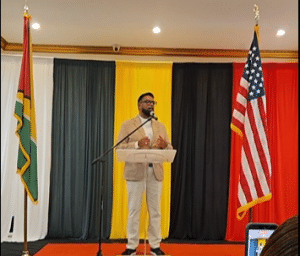
More than two months after the MV Barima ferry sank in the Atlantic Ocean off the Essequibo coast and claimed more than 100 lives, President Irfaan Ali late Thursday night said bids for salvaging the vessel were being evaluated to ensure the right company is picked.
“The technical people are evaluating those bids so that the company can be selected to do the salvaging. That is the reality,” he told a town hall meeting held in Jamaica, Queens, New York.
He rejected repeated suggestions in some quarters that his government was attempting to escape a probe.
“We are not hiding from salvaging. There is a process, and that process is ongoing. We are not hiding from investigation,” he said.
Of the estimated 179 passengers and crew members, 77 persons were rescued and 72 others went missing in the ferry tragedy on July 18.
Last Saturday, opposition A Partnership for National Unity (APNU) parliamentarian, Ganesh Mahipaul said, “Thirty-seven days after the EOI (Expressions of Interest) process closed, the Government has still not publicly provided the country with a contractor and a clear mobilisation date. That is inconsiderate. That is unacceptable and in my view, the manner in which this matter is being handled is becoming inhumane. Government cannot reduce the MV Barima tragedy to another file sitting on a desk somewhere in a Ministry. People died. The Government has a responsibility to demonstrate urgency in getting that vessel recovered.”
At the end of the August 14 deadline, nine companies had submitted EOIs and three submitted bids.
The bidders are Industrial Fabrications Inc. (InFab), BK International Inc and the Netherlands-headquartered KMS B.V.
President Ali also told the town hall meeting that the public tendering process was used to avoid any accusations that he picked a company that might be perceived to be linked to his friends.
KMB B.V. is associated with Koole Contractors that was hired five years ago for an initial GYD$787.6 million to remove sunken vessels from the Demerara River and along sections of the coast to ensure safety of marine traffic.
InFab has over the years done extensive emergency repairs to the now defunct floating Demerara Harbour Bridge.
According to the National Procurement and Tender Administration (NPTAB) records, KMB B.V. has offered to salvage the MV Barima about 10 miles off Devonshire Castle village, Essequibo Coast, for US$2,035,100.
InFab is proposing to do the job for US$1,895,000 while BK International’s asking price is US$1,034,000.
Among the terms of reference in the request for the EOI is that the salvager must be able to preserve forensic evidence for the Commission of Inquiry (CoI) into the incident.
The COI is yet to begin public hearings this month.
The captain, first mate and the Transport and Harbours Department’s goods superintendent are hoping to get their murder charges quashed based on arguments that there was an abuse of process.
Their lawyers say there should have been a marine accident investigation under the Shipping Act before the police were called in.
Subscribe to get the latest posts sent to your email.
Source: Demerara Waves
Prime Minister Mia Amor Mottley of Barbados has developed a rare quality in international diplomacy. She can speak with the moral urgency of an advocate, the precision of a lawyer and the pragmatism of a head of government, often within the same address.
The excerpt of her speech at the United Nations earlier today (September 24, 2026) featured in the accompanying video below is another example of a style that has become increasingly familiar on the international stage. Mottley asks nations to confront uncomfortable history, but she does so without making history a prison from which present generations cannot escape. She uses it instead as evidence, a record of human choices whose successes and failures should inform the choices being made today.
That distinction matters. Mottley has repeatedly returned to a simple proposition throughout her years in office: a world governed primarily by power will inevitably disadvantage countries that possess little of it. Small states therefore have a profound interest in international law, functioning multilateral institutions, equitable access to finance and rules that apply with reasonable consistency to powerful and vulnerable nations alike.
This is not a theme Mottley discovered recently. As early as her 2018 address at the Global Climate Action Summit, shortly after becoming Prime Minister, she argued that the physical survival of Caribbean island states was threatened by climate change.
At the United Nations in 2019, she spoke of the need for “fairness, equity” and an international order capable of accommodating the different circumstances of nations. She also argued that multilateralism provides small states with protection against the unrestricted exercise of power by larger countries. That argument has matured rather than disappeared.
Mottley’s speeches over the years reveal remarkable thematic consistency. Climate change, debt, development finance, inequality, colonial history, institutional reform and the vulnerability of small states might initially appear to be separate subjects. In Mottley’s international advocacy, they form parts of the same argument.
Her contention has been that the international system was largely constructed under political and economic circumstances very different from those confronting developing nations today.
That argument became particularly visible in her advocacy for reform of international development and climate finance through what became known as the Bridgetown Initiative. The initiative sought changes to the global financial architecture so that vulnerable and developing countries could obtain financing on terms better suited to climate shocks and development needs. The United Nations subsequently described the Bridgetown agenda as an effort to make finance work for “people, planet and prosperity.” This is where Mottley has moved beyond rhetoric.
It is relatively easy for political leaders to tell international institutions that the system is unfair. Humanity has accumulated a formidable supply of speeches explaining what is wrong with humanity. The more difficult task is proposing mechanisms through which it might be changed. Mottley has attempted to do that.
One of the most interesting characteristics of Mottley’s international speeches is her willingness to challenge powerful countries and institutions without routinely turning those challenges into personal attacks. That is a difficult political balance.
Diplomacy can become so cautious that nothing meaningful is said. Political rhetoric can move in the opposite direction, becoming so confrontational that audiences who might otherwise listen simply retreat to their respective positions. Mottley frequently operates somewhere between those extremes.
At the 2022 United Nations General Assembly, for example, she questioned the structure of the Bretton Woods institutions, challenged the representativeness of the G7 and G20, and called for reform of the Security Council and its veto structure. These were substantial criticisms of institutions dominated by the world’s most powerful states. Yet her broader argument was about inclusion rather than exclusion. That distinction helps explain her effectiveness.
Mottley can criticize the architecture of international power while continuing to engage those who benefit from that architecture. She can demand greater consideration for developing countries without suggesting that cooperation between wealthy and developing nations is either impossible or undesirable.
Her diplomacy therefore seeks something more useful than agreement with her diagnosis. It seeks participation in the remedy.
Another important feature of Mottley’s rhetoric is her use of history. For Caribbean societies, discussions about slavery, colonialism, exploitation and economic inequality can quickly become politically charged. There is no legitimate reason to sanitize that history. Equally, recounting historical injustice without identifying a path forward can leave nations arguing indefinitely over inherited grievances. Mottley’s approach frequently asks a different question. What can history teach us about the institutions we should construct now?
That allows her to discuss colonialism, slavery, racial inequality and economic exploitation while still appealing to countries on different sides of that history to participate in building something better. It is an important diplomatic skill because empathy cannot simply be demanded. It often has to be cultivated.
Effective diplomacy requires a leader to explain the experience of one society in terms that another society can understand without requiring either side to surrender its identity. Mottley has demonstrated an unusual ability to do precisely that.
Her message to wealthy countries is rarely that prosperity itself is objectionable. Her argument is that the international system should provide poorer and vulnerable countries with a realistic opportunity to achieve prosperity themselves.
Her climate argument follows much the same construction. Small island states contributed relatively little to the accumulated greenhouse gases driving climate change, yet they face disproportionately severe consequences. The answer, in her formulation, is not simply assigning blame. It is constructing financial mechanisms that allow vulnerable countries to survive, adapt and develop.
The United Nations itself has recognized the reach of that advocacy. In 2021, Mottley was named a UN Champion of the Earth for Policy Leadership, with the UN Environment Program highlighting her advocacy for vulnerable developing states and climate finance.
Mottley became Barbados’ eighth Prime Minister and its first female Prime Minister following the 2018 general election. Her political career, however, stretches back decades. She was first elected to Parliament in 1994 and previously served in portfolios including education, home affairs, economic affairs and as Attorney-General and Deputy Prime Minister. That experience is evident when she speaks internationally.
She does not sound like a leader who suddenly discovered foreign policy after becoming Prime Minister. There is an understanding of institutions, law, economics and political negotiation beneath the rhetoric.
It also helps explain why a country with a population and economic weight that could easily be overlooked in international affairs has acquired such visibility in debates over climate finance and reform of the international financial system.
UN Secretary-General António Guterres has publicly described Barbados as an influential regional leader and praised Mottley’s international advocacy, particularly on climate change, debt, development and the circumstances facing small island developing states.
Her 2025 address to the 80th United Nations General Assembly extended the same philosophy into another increasingly fractured international environment. She addressed overlapping financial, social, geopolitical and climate crises while again questioning whether existing global institutions remain capable of responding effectively. The consistency is important.
Political charisma can command a room. It cannot by itself sustain an international policy agenda. Mottley’s influence has increasingly rested on combining rhetoric with specific proposals.
Guyana Graphic’s assessment is that Mia Amor Mottley represents one of the most consequential political voices to emerge from the modern Caribbean.
That is an editorial judgment, rather than a measurable fact. Political leadership should ultimately be assessed against domestic outcomes as well as international reputation, and Barbadians themselves will continue to judge her government’s record. But her international contribution can be examined separately.
On that stage, Mottley has demonstrated an unusual combination of charisma, intellectual command, political instinct and diplomatic discipline. More importantly, she has refused to accept the proposition that the size of one’s country should determine the size of one’s voice.
Barbados cannot compel the major powers to change the international financial architecture. It cannot dictate climate policy to the world’s largest economies. It cannot independently restructure the United Nations.
Mottley nevertheless behaves as though Barbados has both the right and responsibility to participate fully in those debates. That may ultimately be one of the most important examples she offers other Caribbean leaders. Small countries need not behave as spectators in the international system.
There is also something broader occurring in Mottley’s diplomacy. When she speaks about climate vulnerability, debt or access to development financing, Barbados frequently becomes a platform for concerns shared by countries thousands of miles beyond the Caribbean.
Pacific island nations threatened by rising seas, African countries confronting debt and development constraints, Caribbean economies repeatedly exposed to hurricanes and other developing states struggling with the cost of capital can recognize elements of their own circumstances in her arguments.
She has consequently become an important advocate for a constituency much larger than Barbados. Her strongest speeches do something particularly difficult. They challenge without automatically alienating. They remind without simply accusing. They demand change while leaving space for those being challenged to become participants in that change. There is firmness, but there is also an invitation. That is diplomacy at its most useful.
The Caribbean has produced many formidable international figures. Its small population has never prevented the region from contributing disproportionately to diplomacy, literature, economics, law, culture and political thought.
Mottley belongs within that tradition. Her example also offers a lesson for contemporary Caribbean leadership. A small country’s influence does not have to correspond to its population, military strength or gross domestic product. Influence can come from preparation, intellectual credibility, consistency and the ability to articulate an argument that other countries recognize as relevant to their own circumstances.
The speech featured here demonstrates that principle again. Mottley is prepared to confront the failures of the international system, but she does not appear interested in destroying international cooperation. She wants that cooperation to work better.
She invokes history, but her destination is the future. She speaks for Barbados, yet deliberately broadens the conversation to include countries and peoples whose economic and political influence often leaves them unheard.
And perhaps that explains much of her international appeal. Mia Mottley does not ask the world to forget its history. She asks it to understand that history well enough to avoid repeating its failures.
For a world again confronting war, inequality, climate disruption, economic uncertainty and growing distrust of international institutions, that is a message worth examining, regardless of one’s political perspective.
The measure of leadership is ultimately found not in applause following a speech, but in whether ideas survive after the room has emptied.
Mia Amor Mottley’s ideas have increasingly entered the international conversation. For Barbados, for the Caribbean and for developing societies seeking a meaningful voice in determining the rules under which they must live, that alone is significant.
Source: Guyana Graphic
Guy Expo 2026 is positioning investment, innovation and enterprise at the centre of Guyana’s next phase of economic opportunity, as the four-day exhibition prepares to bring businesses, customers, investors and partners together at the National Exhibition Centre, Sophia, from November 12 to 15.
Minister of Tourism, Industry and Commerce, Susan Rodrigues, officially launched Guy Expo 2026 at the National Exhibition Centre, describing the longstanding exhibition as an important platform for showcasing Guyanese talent, creativity and enterprise while creating opportunities for businesses to expand and build new partnerships.

“The future is shaped by the investments we make today,” Minister Rodrigues said, underscoring the central message of this year’s Expo, which is being held under the theme, “Creating Tomorrow’s Opportunities Through Today’s Investments.”
Guy Expo, which began in 1995, has grown from a local exhibition into a major business platform where enterprises can showcase their products and services, connect with customers, build partnerships and explore new markets.
The 30th anniversary edition held last year was the largest in the Expo’s history at the time.
Minister Rodrigues said the 2026 theme reflects the direction in which Guyana is moving, noting that future opportunities depend on investments being made today in businesses, skills, technology, infrastructure and ideas.
She pointed out that investment is not limited to large scale capital, but also includes a small business owner purchasing new equipment, an entrepreneur investing in training, a manufacturer improving product quality or a young person developing a new skill.

“These decisions may seem small on their own but collectively they build stronger businesses, create employment and expand the opportunities available to our people,” she said.
The minister said Guy Expo will continue to provide businesses with opportunities for business to business engagement, allowing exhibitors to meet potential customers, partners, investors and suppliers while exploring avenues to enter new markets.
The growing tourism sector is also creating new opportunities for Guyanese businesses.
She noted that Guyana welcomed 453,489 visitors in 2025, while 320,174 visitors had already arrived by the end of August 2026. August recorded 48,582 arrivals, the highest August on record.
With visitor arrivals projected to exceed 500,000 by year end and an ambition of reaching one million visitors by 2030, Rodrigues said the growth presents opportunities for hotels, restaurants, tour operators, transportation providers, artisans, farmers, entertainers and community businesses.
At the same time, access to finance remains an important component of business development, with the Guyana Development Bank providing another avenue for entrepreneurs to access financing of up to $3 million, alongside technical assistance and business development support.
Through its agencies and programmes, the Ministry of Tourism, Industry and Commerce is also supporting entrepreneurs through training, business development, standards, market access and other forms of assistance.
“Our objective is to see more Guyanese businesses growing, employing more people, producing more locally and becoming competitive in regional and international markets,” Minister Rodrigues said.
Guy Expo 2026 will provide exhibitors with opportunities to forge connections, identify new customers, develop partnerships and explore avenues for growth.
As Guy Expo moves beyond its first 30 years, the focus is now turning towards the businesses, products, markets and opportunities that will shape its next chapter and contribute to a more dynamic Guyanese economy.
Source: Department of Public Information (DPI)
Forensic accountant Terrence Jaskaran maintained under cross-examination on Thursday that his report on the 2020 Region Four election results was complete, notwithstanding the unavailability of five of 879 certified Statements of Poll for his tabulation.
The maximum number of votes contained in five SoPs would ordinarily not exceed about 1,000, an amount wholly inconsequential to the 2020 election result and to the substantial discrepancies identified in Jaskaran’s analysis.
The defense’s challenge on Thursday focused on the five unavailable SoPs and on the password protection of the computer Jaskaran used to compile his work.

Jaskaran’s evidence is that the five missing documents were expressly recorded as a limitation in his report, while the remaining 874 certified SOPs were analysed against the figures GECOM used for its March 5 and March 13 declarations.
Prosecutor Latchmie Rahamat said Jaskaran repeatedly explained that the report itself disclosed the absence of the five SoPs.
“His report, he says and insisted repeatedly, was complete because he noted those limitations and he termed it a limitation in his report,” Rahamat said.
Rahamat said Jaskaran’s position was that his conclusions were based on every certified SoP made available to him.

“Mr Jaskaran maintains the accuracy of his report … [and] did present a complete report based on all the certified SoPs that were given to him.”
She said the accountant tabulated the votes from the certified SoPs provided, then compared his District Four calculations with the figures used by GECOM to make false declarations on March 5 and March 13, 2020.
“He took those SOPs, the certified copies, and he compared the District Four calculations that he made with the declarations from the 5th and the 13th of March 2020,” she said.
The prosecutor said Jaskaran outlined the steps he took to ensure the security of his electronic work on a police issued laptop computer.
Rahamat said Jaskaran testified that he alone controlled access to the laptop used for the exercise.
Jaskaran told the court that “he placed a password on that laptop that he alone had,” Rahamat said.
Jaskaran told the court that he would frequently review his work to verify that the information he had inputted was not tampered with.
Rahamat said Jaskaran rejected any suggestion that the data he entered could have been altered.Court adjourned at 3:15 PM on Thursday, with Jaskaran still under cross-examination.
The matter resumes on Monday, when Daniels is expected to continue questioning the accountant before the prosecution conducts re-examination.
Principal Magistrate McGusty had set aside Friday for the trial but said she could not be excused from Bail Court duties. .
The interruption comes amid public concerns about the pace of proceedings, with both prosecution and defence having made adjustments to accommodate the trial.
No hearing is scheduled for Friday.
Source: Department of Public Information (DPI)
Last Updated on Thursday, 24 September 2026, 22:27 by Writer

The Full Court has struck down sections of a High Court ruling in a case brought by the Austrian healthcare infrastructure provider, VAM Engineering GmbH, paving the way for the government to take over two hospital sites at Ogle, East Coast Demerara and New Amsterdam, Berbice and continue construction works.
“In short, the Ministry of Health is now cleared to take possession of the sites, containers, equipment and associated construction materials and to proceed with the projects as it sees fit,” the Attorney General’s Chambers said in a statement.
The Full Court presided over by Chief Justice Navindra Singh and Justice Zamilla Ally-Seepaul set aside five orders made against the State by Justice Renita Singh on 6 August 2026.
According to the Attorney General’s Chambers, the Full Court upheld arguments by the State that the Preservation Orders granted by Justice Renita Singh “cannot stand.”
The Full Court reasoned that they are inconsistent with the trial judge’s own findings.
“Their legal foundation was inadequately established and their substantive effect was not properly considered.”
The Court held that section 16 of the State Liability and Proceedings Act prohibits injunctions against the State in proceedings of this kind.
That prohibition could not be circumvented by describing orders regulating the State’s conduct as preservation orders or by relying on the Civil Procedure Rules, the Attorney General’s Chambers said.
The Court also found that the orders lacked the necessary statutory basis under the Arbitration Act 2024 and conflicted with the trial judge’s own findings that there was no urgency and that damages were an adequate remedy.
The High Court’s refusal of VAMED’s applications for conservatory and restraining orders remains undisturbed, as does its order referring the underlying contract dispute to arbitration, the Attorney General said.
The Court awarded the Attorney General GY$500,000 in costs.
The dispute concerns the Ministry of Health’s termination of construction contracts for the Georgetown Paediatric and Maternal Hospital (GMPH) and the New Amsterdam Hospital Campus (NAHC).
The High Court had ordered that the Ministry of Health preserve the GMPH and the NAHC sites, preserve the 52 containers and equipment on the GMPH site and to not open nor interfere with same.
The court had also ordered that VAMED Engineering preserve the 52 containers and equipment on the GMPH site and not to open or interfere with same, and the company’s security personnel only are allowed access to the GMPH site only for the sole purpose of securing the 52 containers and equipment.
The Ministry of Health was also ordered to preserve all contractor’s documents, property designs, plan and intellectual property.”
The Court stated: “This appeal concerns the validity of five Preservation Orders made by the Learned Judge, following her refusal to grant Conservatory and Restraining Orders sought by VAMED Engineering against the Ministry of Health. The central question is whether having refused the substantive interim relief sought on both jurisdictional and discretionary grounds, the Learned Trial Judge could nevertheless make substantially similar orders under the guise of preserving property.”
The Appellant was represented by Attorney General Mohabir Anil Nandlall, Ms Shoshana V. Lall and Ms Prithima Kissoon and Mr Joshua Cullen of the Attorney General’s Chambers.
The Respondent was represented by Mr Nigel Hughes of Hughes, Fields and Stoby.
Subscribe to get the latest posts sent to your email.
Source: Demerara Waves
Last Updated on Thursday, 24 September 2026, 21:38 by Writer
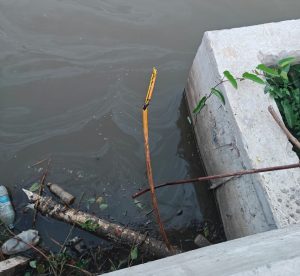
One Communications’ mobile data and fibre internet services were fully restored early Thursday morning after technicians repaired a section of the company’s fibre network infrastructure that was damaged by a private company not associated with the telecoms provider, the company said.
“Upon identifying the issue, technical teams immediately initiated restoration efforts and implemented network rerouting measures to minimize customer impact. Services were restored at a reduced capacity approximately one hour after the incident, with temporary full restoration achieved at 12:05 AM,” One Communications said in a statement.
One Communications said the Internet outage began at 3:16 Wednesday afternoon when the unnamed private company conducting construction works along Carifesta Avenue damaged a critical section of the company’s fibre network infrastructure, affecting both mobile data and fibre internet services.
The company said it planned to fix the cable permanently without causing a major disruption to internet services.
“While services have been restored, the damaged cable remains in a temporary configuration. Engineering teams are currently assessing the most appropriate window to complete a permanent repair while minimizing any potential impact on customers and businesses,” said One Communications.
Abraham Smith, Chief Executive Officer of One Communications, thanked the Government of Guyana and the company’s technical teams for their support throughout the incident.
“I would like to express our sincere appreciation to the Office of the Prime Minister, the Telecommunications Agency, and Minister Juan Edghill for their support and engagement throughout the restoration process. We are also deeply grateful to our engineers, technicians, and operations teams who worked tirelessly through the night to restore services as quickly and safely as possible. Their dedication, professionalism, and commitment were instrumental in returning our customers to service.”
Jasmin Harris, Community and Government Relations Manager at One Communications, emphasised the importance of protecting critical telecommunications infrastructure.
“Our telecommunications network spans communities and businesses throughout Guyana, with critical infrastructure located both above and below ground. Damage to these facilities can result in widespread service disruptions affecting thousands of customers. We encourage all contractors, developers, and individuals planning excavation or construction work to contact us before digging so that these assets can be properly identified and protected.”
For asset location and infrastructure inquiries, the company encourages persons and organizations to email plannedworks@onecommgroup.com or contact 0777 before commencing excavation or construction activities.
One Communications said telecommunications infrastructure is critical to modern life, supporting personal communications, businesses, financial services, healthcare, education, government operations, and emergency communications.
Protecting this infrastructure is essential to national resilience, public safety, and economic stability, the company added.
As a long-standing partner in Guyana’s development and digital transformation, One Communications says it remains committed to delivering reliable connectivity that supports economic growth, business operations, and communities across the country.
One Communications thanked its customers, business partners, and stakeholders for their patience and understanding during the restoration effort and remains committed to strengthening and protecting the infrastructure that keeps Guyana connected.
Subscribe to get the latest posts sent to your email.
Source: Demerara Waves


Discussion