https://kiskadeewatch.com/guyana/business/sandals-to-earn-about-us600m-a-year-royal-caribbean-deal-implies/







https://kiskadeewatch.com/guyana/business/sandals-to-earn-about-us600m-a-year-royal-caribbean-deal-implies/
(Jamaica Gleaner) Royal Caribbean Group’s agreement to buy half of Sandals Resorts International implies the Jamaican hotel chain will earn roughly US$600 million a year in earnings before interest, tax, depreciation and amortisation (EBITDA), which puts it on par with some of Europe’s largest resort groups.
Royal Caribbean said on Wednesday it will pay about US$3 billion for a 50 per cent equity interest in Sandals and Beaches resorts, “representing a forward EBITDA multiple of approximately 10x”.
Those two figures give the market its first public measure of the privately held group’s profitability. A 10-times multiple on a US$3-billion price for half the business points to about US$300 million in annual forward EBITDA for that stake, or roughly US$600 million for the whole group. The deal values Sandals at about US$6 billion. Sandals did not respond up to press time on the figures.
Neither company has disclosed Sandals’ revenue or profit, and the forward multiple refers to expected earnings rather than past results.
That puts Sandals roughly level with Spain’s Meliá Hotels International, which reported 2025 EBITDA, excluding capital gains, of €544.7 million, up 2.1 per cent. Meliá targets at least €565 million this year.
Riu Hotels & Resorts, the Spanish family-owned chain and one of Sandals’ main rivals in the Caribbean, earns more. Riu reported EBITDA of €702 million for 2024, covering the 51 hotels in its newly merged operating company.
Sandals earns about half as much as Hyatt Hotels, which operates several all-inclusive resorts in the region. Hyatt reported 2025 adjusted EBITDA of US$1.16 billion, up 5.8 per cent, and said Hurricane Melissa contributed to a fourth-quarter fall in its distribution earnings.
The largest chains operate on a different scale. Marriott International’s 2025 adjusted EBITDA rose 8.0 per cent to US$5.38 billion and Hilton Worldwide reported US$3.73 billion. Both earn most of their income from franchise and management fees, while Sandals owns and operates its roughly 17 resorts.
Butch Stewart founded Sandals in Jamaica in 1981, and the company has since grown into one of the Caribbean’s best-known hospitality brands. It operates the Sandals and Beaches resort brands across the region and employs about 20,000 people.
A completed deal would mark a major push by Royal Caribbean beyond its core cruise business into the all-inclusive resort market, and would likely rank among the largest transactions involving a Caribbean tourism company. Royal Caribbean already operates private destinations for its cruise passengers and has sought to expand its land-based offerings.
Royal Caribbean has secured committed debt financing from Morgan Stanley to fund the purchase. It expects the deal to close in early 2027, subject to customary approvals, and to add to its earnings next year.
Royal Caribbean Chairman and Chief Executive Officer Jason Liberty and Sandals Executive Chairman Adam Stewart will jointly lead the joint venture’s board. Stewart will keep his role guiding the resort group’s long-term strategy. Existing reservations, loyalty programmes and resort operations will continue unchanged. BofA Securities and PJT Partners advised Sandals, while Perella Weinberg Partners and Morgan Stanley advised Royal Caribbean.
Source: Kiskadee Watch
One Communications stated on Tuesday that its mobile data and fibre internet services were restored at a reduced capacity following a disruption caused by a private company carrying out construction works along Carifesta Avenue, Georgetown.
According to the telecommunications company, contractors damaged a critical section of its fibre network at approximately 15:16h on Wednesday, affecting both mobile data and fibre internet services.
Technical teams responded immediately after the damage was identified, launching restoration efforts and implementing network rerouting measures to reduce the impact on customers.
Services were restored at reduced capacity approximately one hour after the incident, with temporary full restoration achieved at 12:05h.
One Communications said the damaged cable remains in a temporary configuration, and its engineering teams are currently assessing the most suitable time to carry out a permanent repair while minimising any potential disruption to customers and businesses.
“Telecommunications infrastructure is critical to modern life, supporting personal communications, businesses, financial services, healthcare, education, Government operations, and emergency communications. Protecting this infrastructure is essential to national resilience, public safety, and economic stability,” the company stated.
One Communications related that, as a long-standing partner in Guyana’s development and digital transformation, it remains committed to providing reliable connectivity to support economic growth, business operations and communities across the country.
Chief Executive Officer (CEO) of One Communications, Abraham Smith, expressed gratitude to the Government and the company’s technical teams for their support throughout the incident.
“I would like to express our sincere appreciation to the Office of the Prime Minister, the Telecommunications Agency, and Minister Juan Edghill for their support and engagement throughout the restoration process. We are also deeply grateful to our engineers, technicians, and operations teams who worked tirelessly through the night to restore services as quickly and safely as possible. Their dedication, professionalism, and commitment were instrumental in returning our customers to service.”
Meanwhile, Community and Government Relations Manager Jasmin Harris underscored the importance of protecting critical telecommunications infrastructure.
“Our telecommunications network spans communities and businesses throughout Guyana, with critical infrastructure located both above and below ground. Damage to these facilities can result in widespread service disruptions affecting thousands of customers. We encourage all contractors, developers, and individuals planning excavation or construction work to contact us before digging so that these assets can be properly identified and protected.”
One Communications said it remains committed to strengthening and protecting the infrastructure that keeps Guyana connected.
Source: INews Guyana
(Kaieteur News) – Modern threats to judicial independence rarely present as explicit commands or direct violence. Instead, they operate by subtly “arranging the atmosphere” to teach judges which decisions carry high personal and institutional costs, prominent legal scholar Professor Justice Courtney Abel warned regional jurists.
Delivering an address on current tensions between judicial independence and the rule of law in the Caribbean, Justice Abel used a series of real-world pressure points, including travel restrictions, prolonged acting appointments, and emerging technologies, to question whether judges across the Commonwealth Caribbean remain the true authors of their rulings or are being reduced to mere scribes.

Professor Justice Courtney Abel
His keynote remarks came against the immediate backdrop of an incident on Saturday, September 19, 2026, where High Court Judge Gino Persaud was prevented from boarding a flight in Miami en route to the summit after his U.S. visa was placed under review.
Justice Abel framed the airport disruption as a vivid demonstration of how collateral power operates in small postcolonial states. Justice Persaud had previously presided over contentious tax cases involving high-profile figures, rendering rulings adverse to the Guyanese state that drew public criticism from government leadership.
While acknowledging that no foreign power is required to explain its immigration decisions, Justice Abel asserted that timing and context cannot be ignored.
“A sanction need not announce its name,” Justice Abel stated. “When an unexplained exercise of foreign executive power materially affects a serving judge after politically sensitive decisions, at what point does a private immigration matter become a public question of judicial independence?”
He cautioned that the true impact extends beyond any single jurist: “The question is larger than Justice Persaud. It concerns the judge who comes next. What message does the unexplained closing of one gate send to every judge who must later approach another?”
Drawing on his personal experience as a former judge in Belize, Justice Abel described how subtle pressures compromise judicial autonomy long before a formal constitutional breach occurs.
“Power does not always command. More often, it arranges the atmosphere,” he noted. “It may prolong an acting appointment until expectation and insecurity merge. It may criticise a judgment without confronting its reasons. It may alter security arrangements… No direction is given. No threat is recorded.”
“The old assault was visible. The judge was removed. The court was closed. The judgment was ignored,” Justice Abel added. “The modern assault may leave no fingerprints. It may never tell the judge what to decide. It may merely teach the judge what decisions are costly.” Turning to internal constitutional vulnerabilities, Justice Abel targeted Guyana’s decades-long failure to substantively fill its top judicial posts, the Chancellor of the Judiciary and the Chief Justice. Article 127 of Guyana’s Constitution mandates agreement between the President and the Leader of the Opposition for substantive appointments, a design that has generated a 20-year stalemate.
Justice Abel characterised this reliance on long-term acting roles as “permanent temporariness”…a contradiction that undermines institutional security. He questioned whether heads of judiciary can remain fully secure while political actors hold the power to decide if their appointments will ever be finalised, urging regional leaders to move away from inherited adversarial politics toward conciliatory, “truly Caribbean” frameworks for consensus.
Justice Abel further invoked the postcolonial Caribbean concept of freedom as “self-authorship”…the capacity of a people and its institutions to write their own destinies rather than act out scripts written by external actors. Within this framework, judicial authorship demands that judgments remain strictly bounded by law, reason, and evidence…free from political, foreign, or digital interference.
He closed with a warning against the uncritical adoption of Generative Artificial Intelligence in chambers, cautioning that surrendering judicial reasoning to automated tools represents a voluntary forfeiture of the pen.
“AI may assist judgment. It must never become its hidden author,” Justice Abel concluded. “For when the judgment is complete and the final story told, the judge must remain its author…and never merely its scribe.”
Source: Kaieteur News
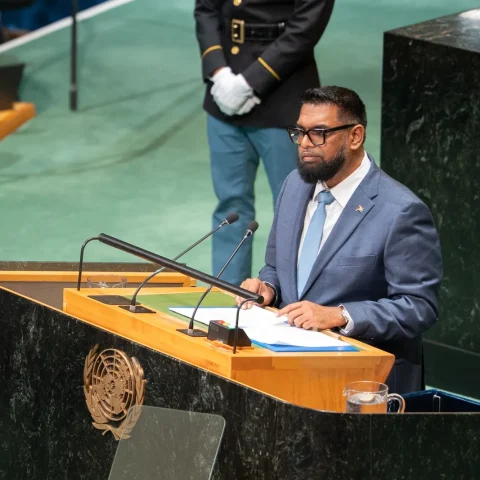
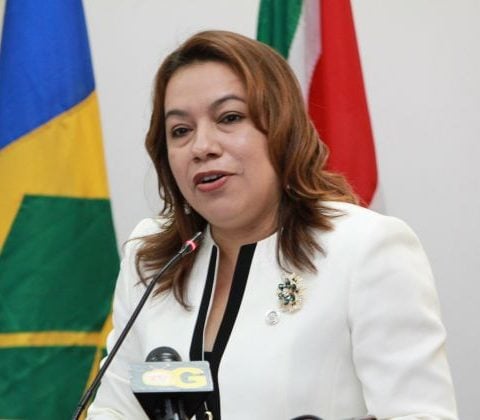
(Kaieteur News) – President Irfaan Ali on Thursday made a direct appeal to the five permanent members of the United Nations Security Council to endorse Ambassador Carolyn Rodrigues-Birkett as the next UN Secretary-General, urging world leaders to look past Guyana’s size and evaluate her candidacy on its merits.
Addressing the UN General Assembly, President Ali formally placed Rodrigues-Birkett’s nomination before the Security Council and the broader assembly, framing her candidacy as a historic opportunity to elect an Indigenous woman capable of restoring trust in a fractured multilateral system. “In the humblest of ways, I call on the P5, the Security Council, and every member here to look beyond the small country that nominated her,” President Ali said. “CARICOM as a body has endorsed her. And let us rise to the challenge of giving this Indigenous woman the chance of helping us craft together the United Nations we want to see succeed.”

Ambassador Carolyn Rodrigues-Birkett
The Security Council, specifically its five permanent members, the United States, the United Kingdom, France, China, and Russia, holds the sole responsibility of recommending a Secretary-General candidate to the General Assembly for appointment. Highlighting her journey from a small Indigenous village, President Ali praised Rodrigues-Birkett’s rise against systemic odds, citing her background as foundational to her leadership style. “An Indigenous woman coming from a small Indigenous village, defying the odds.. the odds against Indigenous persons, the odds against women, the odds against poverty…defying every challenge and rising to the top amidst those challenges,” Ali stated. “Her character is built on struggle, sacrifice, and commitment. Her accomplishments are crafted in her humanity.”
Rodrigues-Birkett, who serves as Guyana’s Permanent Representative to the UN and previously held positions as Minister of Foreign Affairs and Minister of Amerindian Affairs, brings extensive diplomatic and policy experience to the nomination. President Ali argued that the UN requires leadership capable of bridging deep global divides between the Global North and South, as well as developed and developing nations. “We need a Secretary-General who will defend the Charter not only when it is politically convenient, but precisely when its principles are under pressure,” President Ali added, urging UN representatives to consider her record of service and commitment to the international order. The Caribbean Community (CARICOM) has formally endorsed Rodrigues-Birkett, unifying regional support behind her campaign as deliberations for the UN’s top post approach.
Earlier this week the New York Times reported that the contest to succeed United Nations Secretary-General António Guterres has become increasingly complicated with the United States reportedly opposed to Rodrigues-Birkett. According to the newspaper, Washington has indicated that it would block Rodrigues-Birkett’s candidacy because of her public position on Israel’s actions in Gaza, which she has described as genocide. Rodrigues-Birkett, Guyana’s Permanent Representative to the United Nations and a former Foreign Minister, has been one of the strongest contenders in the race. She emerged as the leading candidate in the Security Council’s second informal straw poll but slipped narrowly behind Costa Rica’s Rebeca Grynspan in the third round.
The latest poll gave Grynspan nine “encourage” votes, five “discourage” votes and one “no opinion.” Rodrigues-Birkett received eight “encourage” votes, six “discourage” votes and one “no opinion.” Because the voting is conducted secretly, the identities of the countries casting the negative votes have not been disclosed. The secretary-general must secure at least nine votes in the 15-member Security Council and, critically, cannot receive a veto from any of its five permanent members: the United States, China, Russia, Britain or France. The issue of Gaza has been a significant element of Rodrigues-Birkett’s diplomatic record at the United Nations. In 2024, while addressing the Security Council on behalf of Guyana, she said there was “a veritable genocide taking place in Gaza.” The NYT report identifies that position as the reason for Washington’s reported opposition to her candidacy.
The United States has not publicly endorsed another candidate. A State Department official said Washington was seeking someone who would pursue substantial reform of the UN, improve management and significantly streamline the organisation. The United States is not alone in signalling opposition to particular candidates. Russia has reportedly indicated that it would veto Rafael Grossi, the Director General of the International Atomic Energy Agency, because of disagreements over his handling of the dispute surrounding the Zaporizhzhia nuclear power plant during the Russia-Ukraine war.
The United States had also opposed Michelle Bachelet, the former Chilean president and former UN human rights chief, over her positions on abortion. Bachelet subsequently withdrew from the race. administration has vetoed a resolution calling for an end to the war in Gaza since Israel’s military offensive began in October of last year.”
The first poll in July showed Grynspan narrowly ahead and the second vote last month placed n Rodrigues Birkett in the top spot. Eight candidates are vying to succeed Antonio Guterres, who steps down at the end of this year after two five-year terms. It is still possible for more candidates to enter the race, Reuters reported on Sunday. Richard Gowan, director of global issues and institutions at the International Crisis Group, said neither Grynspan nor Rodrigues Birkett seem to be able to make a decisive breakthrough and “it is time for some of the weaker candidates to bow out of the race.” “I think these figures may encourage any additional candidates who are waiting in the wings to jump into the race quite soon,” said Gowan.
Source: Kaieteur News
Local private bodies are being called upon to play a greater role in efforts to create the enabling environment for investments in Guyana’s gas resources.
This call was made by the President of ExxonMobil Guyana Limited (EMGL), Alistair Routledge, during the Georgetown Chamber of Commerce and Industry’s (GCCI) 2026 Energy Luncheon held on Thursday under the theme “Beyond the Barrel: Oil, Gas, Growth, and the Guyanese Contractor”.
The United States oil major has already laid a US$1 billion pipeline to bring natural gas from the Liza field offshore to the Gas-to-Energy (GtE) project site at Wales, West Bank Demerara, where a power plant and Natural Gas Liquids (NGL) facility are being built.
The pipeline will start delivering gas later this year to generate power.
However, the Guyana Government is pursuing another massive gas development project in Region Six (East Berbice-Corentyne) that would require a much larger pipeline. Routledge had previously said this second pipeline would cost approximately US$2 billion – double the cost of the existing infrastructure.
But the EMGL President noted on Thursday that before such a huge investment is made, the necessary foundation must be laid.
“The paths that we’re on, with the Government, to bring that gas to shore at Wales and Berbice is a huge opportunity to deliver more jobs, more investments onshore – more industries – and to diversify the economic development of the country. But it’s complicated because you have to tie that offshore development and production through a pipeline to onshore demand.”
“So, that is where we are. We’re trying to match up what some anchor gas purchases are, whether those are in data centres, aluminium melting, or more power generation for the country. We need some significant gas demand in order to make the foundational investments in the pipeline to bring the gas onshore and all the associated infrastructure that goes with it,” Routledge noted.
According to the ExxonMobil Guyana head, foreign investors will be looking for certain security before injecting their capital and expertise into the local market. These include certainty of gas supply, which industry to invest in, the investment terms, and who the potential partners are to work with in Guyana.
This, Routledge says, is where local bodies like GCCI, the Private Sector Commission (PSC), and even the Berbice business chambers must step up.
“[They] have a vital role to play. A vital role in helping those with capital and those with expertise to come into Guyana and deploy it wisely. Helping local businesses to be a part of it, the business associations and chambers are critical,” he posited.
Similarly, important in laying the foundation to attract foreign investment is a clear roadmap for the industry, and according to the EMGL President, Guyanese business leaders must also be involved in this process.
“There are a lot of discussions ongoing about where the development zone should be [in Berbice]… because until we can say, ‘Here is the land where everything will be built; here is where the deep-water port will be’, there is not a lot of belief externally that there is a roadmap for how this will happen.”
“We can call on the Government, and they clearly play a leading role, but we all have expertise and knowledge that should be part of and contribute to those decisions… So, I think a bigger discussion would be beneficial, but we do need to move quickly to bring clarity to what that location is,” the ExxonMobil Guyana boss emphasised.
Nevertheless, Routledge believes that there is massive potential and value to be had from developing Guyana’s gas resources – a view that Public Utilities and Aviation Minister Deodat Indar also shared while delivering the keynote address at the Chamber’s Energy Luncheon on Thursday.
Zoning in on gas development, the Minister called on businesses to study where the sector is heading, identify areas in which they can build expertise, and invest in the people, systems, and partnerships needed to compete. He cited opportunities expected to emerge from the Gas-to-Energy development, including gas utilisation, storage, transportation, and downstream industries.
According to Indar, Guyanese companies should begin building the technical knowledge and capacity needed to participate.
“If you don’t know about gas, you have to learn. You have to bring somebody who knows or find a partner who understands the business,” he said. “You have the C5+ [carbon five plus] gas, which are the aromatics and the pentanes that help to make gasoline. You have the isobutanes… that make deodorants that you spray. We haven’t even gone to that area as yet. We have refrigeration gas… fertilisers… so you have all of these things that you can do to monetise the gas.”
While the Guyana Government is yet to explore all the possible value-added products that come from gas, it has already moved ahead with plans to start bottling cooking gas, and proposals have already been received from companies interested in undertaking this.
But with the impending Berbice gas development expected to bring a larger volume of gas, Minister Indar contended that many opportunities will be available for locals.
“Berbice Development is a whole new ball game because that side will have more gas available for use on land… Just think about that: five times the amount of gas for use in Berbice. It tells you where gas is going… I don’t know if anybody in this room knows about installation and how to maintain the gas pipelines… but it is coming, and you have to have Private Sector people like yourself with partners to handle it,” he asserted.
Further drawing on the theme of Thursday’s luncheon, Indar went on to encourage local businesses to look beyond oil production and position themselves for the growing range of opportunities emerging across the wider economy, including areas such as logistics, transportation, warehousing, construction, certification, specialised technical services, training, and waste management, among others.
Source: INews Guyana
UNITED NATIONS, Sept 24 (Reuters) – Prime Minister Benjamin Netanyahu mounted a forceful defense of Israel’s actions in the region at the UN on Thursday, seeking to counter growing international isolation ahead of elections he could lose, as dozens of delegates streamed out.
The walkout underscored the competing pressures facing Netanyahu, who is battling mounting criticism abroad over the Gaza war while campaigning reelection at home ahead of an October 27 vote.
The divisions over Israel’s conduct were on display as Netanyahu began speaking, with dozens of delegates walking out in protest. He called them “moral cowards,” while supporters in the gallery chanted in Hebrew: “The people of Israel live.”
Netanyahu used his address to berate New York Mayor Zohran Mamdani for calling him a war criminal, Western European leaders for what he called succumbing to “antisemitic mobs,” and to accuse both Qatar and Turkey of spreading lies about Israel.
“You tried to stop me from coming here. You tried. You tried to silence me. Well, you can’t silence me. You can’t silence the truth,” Netanyahu, Israel’s longest-serving leader, said of Mamdani.

Delegates walk out as Israel’s Prime Minister Benjamin Netanyahu addresses the 81st United Nations General Assembly at UN headquarters in New York City, US, September 24, 2026
Mamdani campaigned for office on a promise to have Netanyahu arrested for alleged war crimes should he visit the largest US city but later said he determined he lacked the legal authority to do so. This week, Mamdani described Netanyahu as “the architect of a horrific genocide against Palestinians.” Making his first visit to New York since Mamdani took office in January, Netanyahu said: “Here’s a simple truth: Israel didn’t commit genocide. Israel prevented genocide.” He accused Mamdani of supporting Hamas militants, something Mamdani has denied.
“To all those spreading these lies about my country and about our brave soldiers, whether they sit in this hall or in the office of the antisemitic mayor of New York, I say this: Shame on you!” Netanyahu said.
In a statement, Mamdani said: “As he has done time and again, Prime Minister Netanyahu used his speech to repeat baseless lies meant to sanitize his genocide of Palestinians. Yet no lie can change the fact that he remains the subject of an International Criminal Court arrest warrant alleging war crimes and crimes against humanity.”
With general elections less than five weeks away, Netanyahu spoke for about 40 minutes in what amounted to a campaign-style speech, broadcast live in evening prime time on all four of the main Israeli television channels. Ahead of his speech, Netanyahu’s government paid to place 500 pro-Israel and anti-Iran billboards and dozens of trucks carrying messages in support of Israel across Manhattan, Netanyahu’s office said in a statement.
With opinion polls showing Netanyahu’s bloc trailing rivals ahead of the election, he used speech to showcase what he described as Israel’s fight on seven fronts.
As in past UN appearances, Netanyahu used props, holding up a pager linked to an attack that killed and wounded Iran-backed Hezbollah members in Lebanon and a Starlink satellite internet receiver he said he would leave for the Iranian delegation.
“So when they inevitably defect, they too will be able to freely tell their story on social media,” he said, adding that it was only a matter of time before the Iranian authorities would be toppled by the people.
Several hundred protesters gathered near the United Nations, with dozens blocking traffic and chanting, “Stop arming Israel, let Gaza live” and “Stop arming Israel, let Iran live.” Police detained them.
Netanyahu was making a short visit to the US for his UN address and, unusually, without a planned meeting with US President Donald Trump, whom he praised during his speech.
“We will continue to defend our state. We will continue to win because we have no other choice. In this battle against the barbarians, we’ve had no greater partner than President Trump. I thank him. I thank him for his bold leadership,” he said.
Israel has faced deepening diplomatic isolation since launching its war in Gaza in response to the Hamas-led attacks on Israel nearly three years ago.
Netanyahu is unable to travel to many countries because of an International Criminal Court arrest warrants issued against him and his then-defense minister as well as the then-military commander of Hamas in 2024.
Earlier this month, once-steadfast allies Britain, France and Canada announced sanctions targeting Israeli settlements in the occupied West Bank, which drew a muted response from Washington.
“The leaders of these countries have chosen to succumb to the antisemitic mobs. They’ve chosen weakness. They’ve chosen appeasement,” Netanyahu said.
He played down worsening violence in the occupied West Bank by Israeli settlers, describing it as “a handful of young juvenile delinquents, about 150 in number, who throw stones, who chop down olive trees.”
“Occasionally … they lit some fires. I can’t stand that. I won’t stand for vigilantism. We’re a country of law.”
Source: Kaieteur News
(Kaieteur News) – A 16-year-old boy drowned while attempting to cross the fast-flowing Siparuni River at Rock Bar, Region Eight, police said.
Dead is Bentley Joseph Jnr., of Circuitville, Yarrowkabra, Soesdyke-Linden Highway. Police said Joseph and several others had travelled from their camp to an area known as Tunnel to engage in mining activities. According to preliminary investigations, on Sunday, 20th September, Joseph and his cousin were attempting to cross the Siparuni River on foot at Rock Bar when Joseph reportedly fell into the rapidly flowing water.
He reportedly attempted to swim but subsequently went under and failed to resurface. An alarm was raised and a search was launched for the teenager. Two days later, on Tuesday, 22nd September, at about 6:24hrs, Joseph’s body was found floating in the river. Police ranks who examined the body reported that there were no visible marks of violence and no indication of foul play.
The body was transported to the Linden Hospital Complex, where a doctor pronounced Joseph dead on arrival. It was subsequently taken to Memorial Gardens Funeral Home, where it is awaiting a post-mortem examination. Police said investigations are ongoing.
Source: Kaieteur News
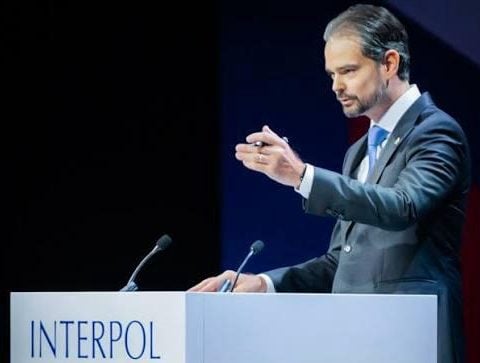
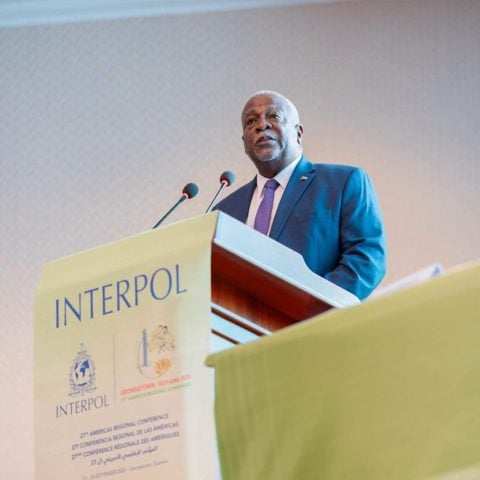
(Kaieteur News) – Transnational criminal networks are becoming increasingly sophisticated, operating like corporations while exploiting maritime routes, cryptocurrency networks and legitimate economic sectors to move drugs, people, weapons and illicit money, Secretary General of INTERPOL Valdecy Urquiza warned on Wednesday.
Addressing the opening of the 27th INTERPOL Americas Regional Conference at the Arthur Chung Conference Centre (ACCC), Urquiza said the Americas is central to global security and that developments at the region’s ports, borders and digital networks have consequences far beyond the hemisphere.
“We are no longer confronting isolated cartels or local street gangs. We are confronting the diversified transnational criminal enterprise acting like corporations,” he said.

Secretary General of INTERPOL, Valdecy Urquiza.
Urquiza, who is INTERPOL’s first Secretary General from Latin America, said the organisation’s focus must now be on turning strategy into action and producing results on the front lines. He pointed to the convergence of several forms of organised crime, noting that the maritime corridors used to transport narcotics are also being exploited for human trafficking, wildlife trafficking and firearms smuggling.
At the same time, AI-driven cyber fraud is generating illicit proceeds that can be moved through complex cryptocurrency networks within seconds. Urquiza highlighted the continuing threat posed by synthetic opioids, particularly fentanyl, in North America, while noting that precursor chemicals are being transported through Pacific shipping hubs and across the Americas at industrial scale.
In the Caribbean, he said criminal groups are exploiting the region’s geography and maritime routes to facilitate the movement of narcotics, while illicit firearms move south, fuelling violence. “Cocaine remains the financial lifeblood of groups across Central and South America,” he said, adding that the scale of the cocaine trade has created another major challenge for criminal organisations — how to move, conceal and launder their proceeds.
According to Urquiza, an increasing number of criminal syndicates are addressing that challenge by investing drug proceeds in illegal gold mining. He pointed to Operation Guyana Shield as an example of how law enforcement agencies can follow the money behind organised crime. “Alongside our hosts and regional partners, you started on the front line, seizing illegal timber and gold. You follow the trail record by record, shell company by shell company, uncovering the illicit mercury supply chains and the laundered profits behind them,” he said.
Urquiza said the operation demonstrated that simply seizing illegal goods is not enough to dismantle criminal organisations. “Seizures take away their cargo and following the money takes away their business,” he said. He announced that INTERPOL will launch a new Silver Notices Initiative at its General Assembly later this year in Hong Kong, China, aimed at helping member countries trace and disrupt illicit assets across borders before they can be reinvested in criminal activity.
Fourteen countries from the Americas will participate in the pilot initiative, with Urquiza expressing hope that all member countries will support the initiative and that it will eventually become permanent.
Meanwhile, Commissioner of Police Dr. Clifton Hicken said the increasingly transnational nature of crime means that effective policing can no longer depend solely on national capabilities.
“Effective policing does not only depend on national capability but also on sustained international cooperation,” Hicken said. Welcoming delegates to Guyana for the 27th INTERPOL Americas Regional Conference, Hicken said international cooperation is an operational necessity for Guyana, given its geographic location, extensive Atlantic coastline and borders with Brazil, Suriname and Venezuela.
He said Guyana’s vast forests and river networks support economic and regional integration but also create vulnerabilities to narcotics trafficking, firearms trafficking, migrant smuggling, human trafficking and illegal mining. The country’s expanding international connectivity, he added, also demands greater vigilance against cybercrime, financial crime, money laundering and other technology-enabled threats.
“No country, regardless of its size or capabilities, can succeed in isolation,” Hicken said.
He noted that criminal networks routinely operate across jurisdictions, exploiting differences between countries while rapidly adapting their methods. “Accordingly, law enforcement agencies must be equally connected, coordinated, and adaptable,” he said. Hicken said INTERPOL provides the global policing architecture needed to facilitate that cooperation, through its databases, secure communications network, operational support, specialised training and criminal intelligence capabilities. These tools, he said, allow member countries to identify wanted persons, trace illicit firearms, share investigative information and coordinate operations across borders.
Source: Kaieteur News
(Kaieteur News) – The Full Court on Tuesday lifted preservation orders against the State in a dispute involving Vienna-based healthcare infrastructure company VAMED Engineering GmbH over the construction of the Georgetown Paediatric and Maternal Hospital (GPMH) and the New Amsterdam Hospital Campus (NAHC).
The ruling clears the way for the Ministry of Health to take possession of the project sites, containers, equipment and construction materials and proceed with the projects.
According to a press release from the Attorney General Chambers, Attorney General Anil Nandlall, SC, had appealed orders made against the State in proceedings brought by VAMED. In the Full Court, Chief Justice Navindra Singh and Justice Zamilla Ally-Seepaul set aside five orders made by Justice Renita Singh on August 6, 2026. Justice Singh had ordered the Ministry of Health to preserve the GPMH and NAHC sites, as well as 52 containers and equipment at the GPMH site, and prohibited the ministry from opening or interfering with them.

The Guyana Paediatric and Maternal Hospital
VAMED was similarly ordered to preserve the containers and equipment, while its security personnel were permitted access to the GPMH site solely to secure the items. The ministry was also ordered to preserve contractors’ documents, property, designs, plans and intellectual property. In its decision, the Full Court said the appeal concerned the validity of the five preservation orders made after the trial judge had refused VAMED’s applications for conservatory and restraining orders against the Ministry of Health.
The Full Court questioned whether, having refused the substantive interim relief sought by VAMED on both jurisdictional and discretionary grounds, the trial judge could nevertheless make substantially similar orders by characterising them as measures to preserve property.
“For the reasons which follow, we find that the Preservation Orders cannot stand. They are inconsistent with the Learned Trial Judge’s findings. Their legal foundation was inadequately established and their substantive effect was not properly considered,” the Full Court stated.
The Court held that Section 16 of the State Liability and Proceedings Act prohibits injunctions against the State in proceedings of this nature.
That prohibition, it said, could not be circumvented by describing orders regulating the State’s conduct as preservation orders or by relying on the Civil Procedure Rules.
The Full Court also found that the orders lacked the necessary statutory foundation under the Arbitration Act 2024 and conflicted with the trial judge’s findings that there was no urgency and that damages would constitute an adequate remedy.
The High Court’s refusal of VAMED’s applications for conservatory and restraining orders remains in place, as does its decision to refer the underlying contractual dispute to arbitration.
The Full Court also awarded the Attorney General GY$500,000 in costs.
At the hearing, the State was represented by Attorney General Nandlall, along with Shoshana V. Lall, Prithima Kissoon and Joshua Cullen of the Attorney General’s Chambers. VAMED was represented by Nigel Hughes of Hughes, Fields and Stoby.
Source: Kaieteur News
WASHINGTON – Chinese President Xi Jinping said on Thursday that he is ready to work with US President Donald Trump to steer the giant ship of China-US relationship on a steady course toward the future.
Addressing an arrival ceremony at the White House, Xi said that he is visiting the United States at Trump’s invitation to carry on their friendship, expand cooperation and promote the well-being of the two peoples. China and the United States should strengthen communication, cooperate with sincerity and coexist in peace, he noted. Xi said he and Trump encourage government departments, such as those in charge of foreign affairs, economic matters, financial cooperation, law enforcement and people-to-people exchanges, to catch up on strengthening contact.
China-US cooperation may not solve every problem in the world, but without it, it would be hard to solve many of the world’s problems, Xi said.
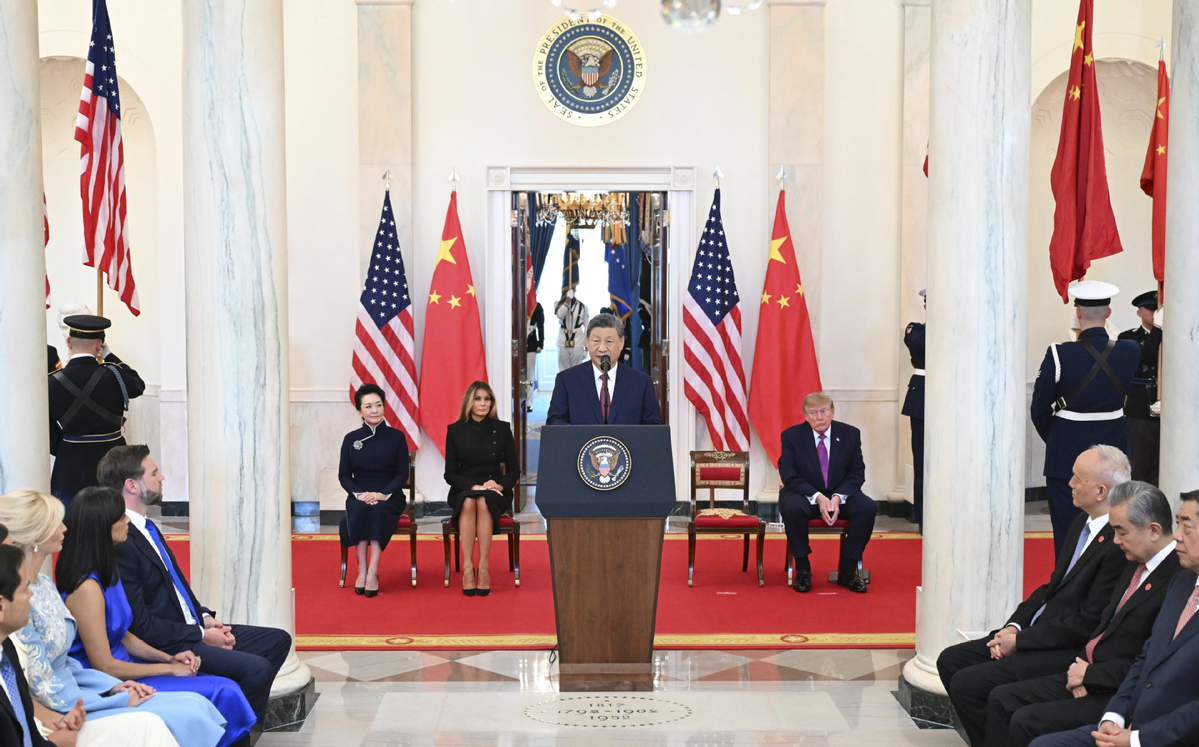
Chinese President Xi Jinping addresses a welcome ceremony held by US President Donald Trump at the White House in Washington, DC, the United States, Sept 24, 2026. Trump held a welcome ceremony for Xi, who is on a state visit to the United States, at the White House on Thursday. [Photo/Xinhua]
China keeps its door wide open, welcomes American companies wanting to invest and do business in China, Xi said. “We hope Chinese companies are treated fairly here in the United States. Working together, we can lengthen the list of cooperation and shorten the list of issues.”
Both China and the United States are leading nations in artificial intelligence (AI), Xi said, noting that the two countries have both the capability and responsibility to develop and manage AI for good and ensure that the development of AI is always under human control and serves the well-being of the people.
On counternarcotics and law enforcement, the Chinese side is willing to strengthen cooperation with the United States, Xi said. “Our two sides may also increase direct flights to facilitate two-way travel and trade.”
China and the United States do not need to avoid mentioning competition, but the competition should be a healthy one and should be kept within bounds, he said, adding that it should be a race of catching up with one another, not a wrestle in which one either wins or loses.
China and the United States must hold the line of no conflict and no confrontation, Xi said. “We can certainly find the right path for our two great countries to get along on this planet we both call home.”
Chinese and US militaries should maintain regular dialogue and improve mechanisms for crisis communication and prevention, Xi said, adding that the Thucydides Trap can be overcome.
Xi announced an invitation for 100,000 young Americans to visit China for exchanges and study in the coming five years. He also declared that in a few days, a pair of pandas will come to their new home in Zoo Atlanta and meet with the American people. (CHINA DAILY)
Source: Kaieteur News
Discussion