𝐕𝐢𝐜𝐭𝐨𝐫𝐲 𝐕𝐚𝐥𝐥𝐞𝐲 𝐂𝐨𝐦𝐦𝐮𝐧𝐢𝐭𝐲 𝐂𝐞𝐧𝐭𝐫𝐞 𝐭𝐨 𝐛𝐞 𝐫𝐞𝐛𝐮𝐢𝐥𝐭
The Victory Valley Community Centre is… See more
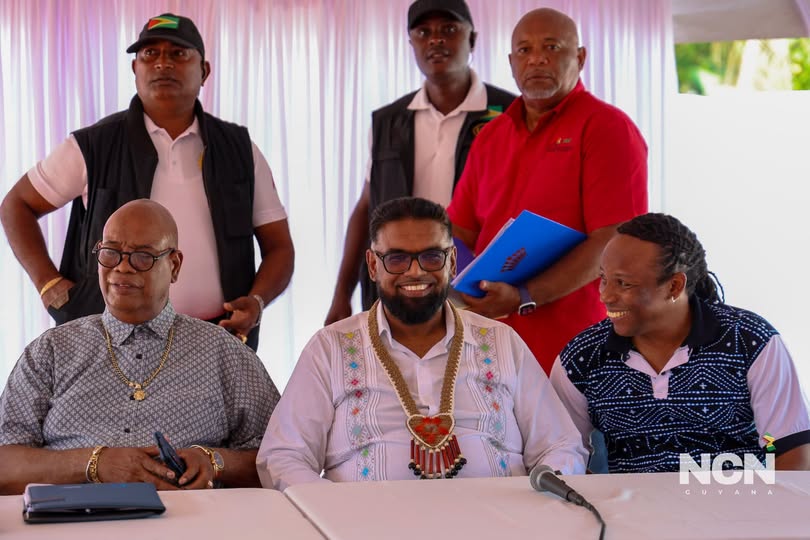
𝐕𝐢𝐜𝐭𝐨𝐫𝐲 𝐕𝐚𝐥𝐥𝐞𝐲 𝐂𝐨𝐦𝐦𝐮𝐧𝐢𝐭𝐲 𝐂𝐞𝐧𝐭𝐫𝐞 𝐭𝐨 𝐛𝐞 𝐫𝐞𝐛𝐮𝐢𝐥𝐭
The Victory Valley Community Centre is… See more
President Dr. Irfaan Ali continues his three-day Cabinet outreach in Region 10, meeting with residents of Victory valley alongside Minister of Public Works, Bishop Juan… See more
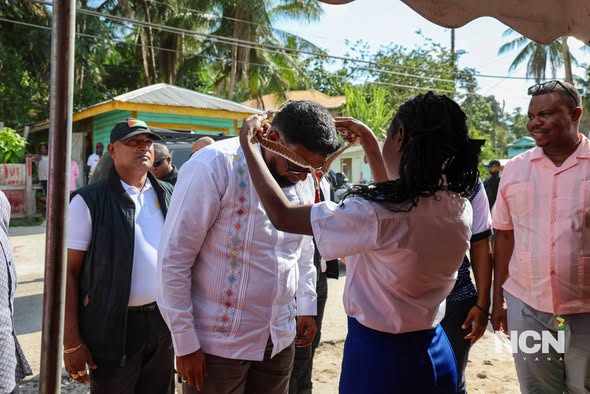
Victory Valley, thank you for turn out at President Ali’s Cabinet Outreach to your community. … See more
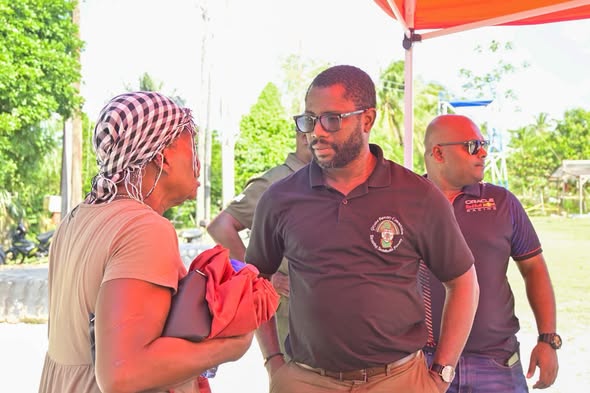
Additional scenes || As part of a Cabinet Outreach to Region 10, happening today, Wednesday 2nd September 2026, Minister of Natural Resources, Hon. Vickram Bharrat, met… See more
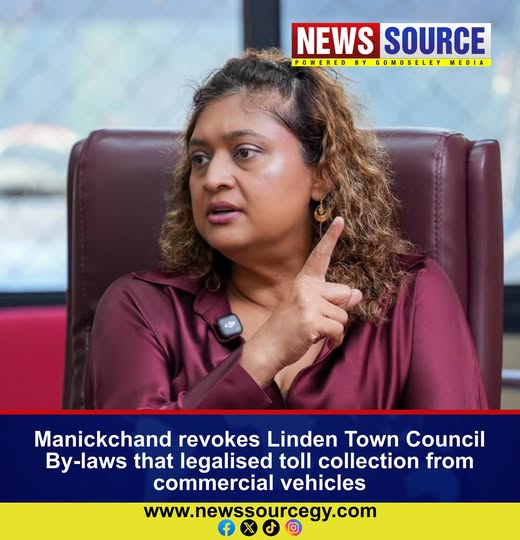
NEWS Source: Hours after the Mayor of Linden cited the Linden Town Council By-laws that were gazetted in 2016 and allowed for the collection of tolls from commercial ve… See more
Mings Products & Services Ltd. (MPS), the Georgetown based company founded by Mr. Stanley Ming and Dr. Michele Ming, celebrated its 35th anniversary on August 8, 2026, under the theme “Thank You, Guyana.” The milestone caps three and a half decades of growth for a business that started small and became one of the country’s most trusted names in quality products and technology.
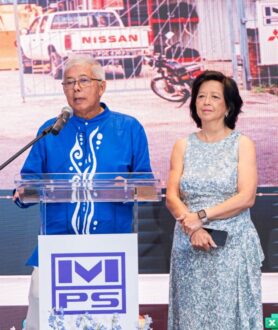
MPS began in 1990 as a three person company led by Mr. Stanley and Dr. Michele Ming, operating out of space rented on Urquhart Street from June Mendes of Farfan and Mendes. From that modest beginning, the Ming family built a company grounded in a simple belief: MPS’s success would depend on the upliftment of the Tiger Bay community and on providing genuinely high quality services and products to its customers.
Thirty five years and multiple generations later, MPS says it remains deeply indebted to its staff, its countrywide customers, and the Tiger Bay community for everything they have contributed to the company’s story.
According to the company, MPS has thrived for 35 years because thousands of customers across all ten regions of Guyana have repeatedly trusted it with their patronage. Rather than simply reselling products, MPS researched, tested, and imported unique, world renowned products from manufacturers in the USA, Canada, Japan, China, Taiwan, Thailand, and India. Over the last five years, the company has also explored joint ventures in production and processing, renewable energy, and commercial scale construction, ensuring it continues to meet the evolving needs of its customers.
MPS has long prided itself on being an innovative business. In its sixteenth year, the company was awarded a replica Samurai sword for its sterling performance across Latin America and the Caribbean. Over the years, MPS has marketed and sold the Yamaha brand of outboard engines, motorcycles, all terrain vehicles, generators, water pumps, fiberglass boats and water vehicles, all backed by after sales service the company says is unmatched in Guyana and beyond.
In May 1997, a message from the Yamaha Motor Co. in Japan praised the company directly, stating that MPS’s administration, communication, and response to requests from Yamaha Motor Co. was once again second to none, and complimenting the entire team at MPS as among the most pleasant and professional in the Caribbean and worldwide.
MPS also credits the partnerships it has built along the way, including those with School of the Nations, led by the O’Toole family; German’s Restaurant, led by Clinton and Hubert Urling; Mings Optical, led by Director Dr. Michele Ming; Mattai’s Supermarket, led by Mr. Harry Mattai; and the Guyana Foundation, led by Supriya Singh Bodden, among many other groups working to make Guyana a better place for its citizens.
Few relationships define MPS’s history the way its bond with the Tiger Bay community does. The company describes Tiger Bay as a reliable force behind its success, a community that provided MPS with a safe environment to work in and that taught the company what a community can become when someone believes in it.
Over the years, MPS was able to provide health insurance for the children of Tiger Bay and, in partnership with School of the Nations, helped fund extra classes in computer science and other subjects.
One moment stands out in the company’s history. When MPS’s premises caught fire in 2011, residents of Tiger Bay took control of the situation, moving vehicles, motorcycles, and equipment to the compound of School of the Nations to keep them safe. When the company later reconciled its inventory, every single item that had been removed from the site was accounted for, and MPS was able to reopen the very next day. MPS calls it a remarkable confirmation of the trust and loyalty between the company and the residents of Tiger Bay, adding that the community is part of the company’s DNA and that this anniversary is just as much about Tiger Bay as it is about MPS.
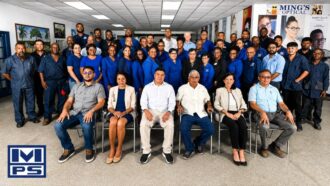
MPS also used the anniversary to pay tribute to its staff, some of whom have spent their entire working lives with the company. MPS describes itself as a diverse company that values inclusion and equity, a meritocracy with an authentic family work environment where everyone, regardless of rank, mixes freely in the company’s dining areas.
The company points to leadership management training, mentorship, private health and life insurance, tuition reimbursement, maternity leave, and internal promotions as investments it has made in its people over the years. Of MPS’s sixty six total staff members, twenty eight have served the company for more than ten years, including seven staff with more than 30 years of service, four with more than 20 years, four now celebrating their 20 year milestone, six with 15 years and over, and seven more with over 10 years.
The company also acknowledged the sacrifices its staff made during the COVID pandemic and honored the memory of its late Technical Director, Colin Ming, who was tragically lost after being struck by a reckless ambulance driver following years of dedicated service to MPS.
With the entire range of Yamaha products, along with the products and services of FMC Products & Services, the M Group, MDepot, and Mings Optical, the MPS Group of Companies says it has proudly served communities along the Berbice, Demerara, Essequibo, and Pomeroon rivers for decades. In some instances, MPS has worked alongside Banks DIH, along with support from Mr. Clifford Reis and Shell Antilles, to provide boats, engines, fuel, and life jackets at no charge so that school children living along riverain communities could commute between their homes and schools.
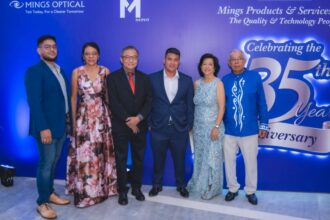
The 35th anniversary also marks a transition in leadership. MPS’s future is now guided by Calvin Ming as Chairman and John Chin as Chief Executive Officer, supported by Directors Audrey Ford, Samuel Ming, and Michele and Stanley Ming. The team says it is already working to expand the company’s products and services portfolio, with further announcements expected soon.
Central to that future is ISIKA, an Amerindian word meaning “to give” or “to share.” MPS describes ISIKA as its vision for a state of the art, inclusive, multicultural, and multireligious community on the Essequibo River, planned to break ground in 2027, complete with schools, hospitals, a marina, and more, owned and operated by the very people who will call it home.
In closing out its anniversary message, the Owners, Management, and Staff of MPS expressed their gratitude to all Guyanese for the opportunity to serve the country over the past 35 years, describing the milestone as only one step in a longer journey and thanking everyone who has helped make the company successful.
MPS’s associated companies include FMC Products & Services Inc., The M Group (Guyana) Ltd., Mings Optical, and MDepot.
Source: Guyana Graphic
Guyanese and Caribbean readers with an interest in leadership, business, and personal growth now have a compelling new title to add to their reading list. “The Global Influence Code” by Dr. Colvin Heath-London examines what it truly takes to lead with credibility in a world where borders matter less and less, and where trust has become one of the most valuable currencies a leader can hold.
Rather than focusing on management tactics or corporate strategy, the book turns its attention to the human qualities that inspire people to listen, collaborate, and believe in a leader’s vision. Dr. Heath-London argues that lasting influence does not come automatically with a title or a position. Instead, it grows from credibility, integrity, empathy, and consistent action over time.
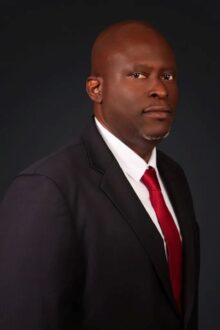
Dr. Colvin Heath-London brings more than three decades of international business and leadership experience to this work. Over the course of his career, he has worked with governments, multinational corporations, financial institutions, and private organizations throughout the Caribbean, North America, Latin America, Africa, Europe, and Asia.
Those years of cross border experience exposed him to many different leadership styles and gave him countless opportunities to observe how trust is built in different cultural settings. Despite the variety of industries and regions, he found one pattern held true everywhere. People place their confidence in leaders who communicate clearly, act with integrity, and respect the perspectives of others.
Holding a Doctor of Business Administration, Dr. Heath-London combines academic research with practical lessons drawn from international negotiations, infrastructure development, strategic partnerships, and organizational leadership. “The Global Influence Code” brings these two worlds together, translating years of observation into guidance that readers can apply in their own leadership journeys, whatever industry or region they call home.
Throughout the book, one message stands out clearly. Trust is the foundation of every meaningful relationship, whether someone is leading an international project, managing a local team, or negotiating with global partners. People respond to leaders who show honesty, consistency, and respect, and Dr. Heath-London explains that this kind of influence is earned over time through dependable behavior rather than through credentials alone.
Cultural awareness is another central theme. As organizations increasingly bring together people with different values, communication styles, and expectations, understanding those differences becomes essential to building strong working relationships and avoiding unnecessary misunderstandings. The book offers practical frameworks that encourage readers to observe carefully, communicate thoughtfully, and build connections based on mutual understanding, whether they work in business, government, education, or the nonprofit sector.
This flexible, adaptable approach is part of what makes the book valuable for such a wide readership, from experienced executives to emerging professionals who are preparing to step into leadership roles for the first time.
Dr. Colvin Heath-London is an international business executive, leadership strategist, consultant, and author dedicated to helping leaders build trust and influence across cultures. His work spans infrastructure development, international business, organizational leadership, investment, and strategic partnerships across multiple regions of the world. Through consulting, executive education, public speaking, and writing, he continues to share leadership frameworks that promote ethical decision making, effective communication, and meaningful collaboration.
As he shared in a recent interview about the book, “Influence is not granted by title or position. It is earned through character, consistency, humility, and genuine respect for others.”
“The Global Influence Code” is available now on Amazon in Kindle, paperback, and hardcover editions. Readers interested in learning more about building trust and credibility across cultures can purchase the book directly at: https://www.amazon.com/dp/B0HC7MGHLT
For readers who want a deeper look before buying, a full review and author interview are available on Bitgog at the following link: https://bitgog.com/bookreviews/nonfiction/selfhelp/dr-colvin-heath-london-the-global-influence-code/
Source: Guyana Graphic
Georgetown. The United States Department of State has announced that Deputy Secretary of State Christopher Landau will travel to Trinidad and Tobago and Guyana from August 9 through 12, 2026, in the latest sign of Washington’s growing focus on the southern Caribbean.
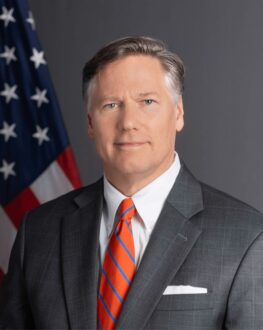
According to the Office of the Spokesperson, Deputy Secretary Landau will first stop in Trinidad and Tobago, where he is scheduled to meet Prime Minister Kamla Persad Bissessar to strengthen the bilateral relationship, including shared energy and security priorities and expanded economic cooperation. From there he will travel to Guyana to meet President Irfaan Ali and members of Cabinet, with talks focused on expanding bilateral economic cooperation, strengthening investment opportunities, and enhancing collaboration in strategic sectors including energy and critical minerals.
The State Department framed the trip as evidence of a broader commitment. Officials said the visit underscores the United States’ intent to strengthen partnerships across the hemisphere and to advance shared priorities such as regional security, energy resilience, and economic prosperity.
This trip does not stand alone. It follows a string of high level American engagements with Guyana over the past year, including a December visit by senior Department of War officials who signed a Statement of Intent to expand military cooperation, and, only days before Landau’s arrival, an announcement by the Department of War of an $85.5 million investment in Guyana’s bauxite sector to secure critical minerals for national defense. Add to that Guyana’s participation in the Americas Counter Cartel Joint Security Declaration and continuing joint exercises between the Guyana Defence Force and United States Southern Command, and a clear pattern emerges. Washington is treating Guyana, and the wider southern Caribbean, as a priority rather than an afterthought.
The timing matters. The visit comes against a backdrop of heightened regional tension involving Venezuela, whose government continues to press its long standing claim over Guyana’s Essequibo region and has adopted an increasingly assertive military posture along the border. American officials have repeatedly framed their engagement with Guyana in terms of supporting the country’s sovereignty and territorial integrity, and this visit is likely to be read, in Georgetown and in Caracas alike, as a continuation of that message.
For Washington, the benefits of this kind of high level engagement are straightforward. Guyana offers a rapidly growing offshore oil sector, expanding mineral resources now tied directly to American defense supply chains, and a government that has shown consistent willingness to deepen security and economic cooperation. By sending a deputy secretary rather than a lower ranking official, the State Department signals that Guyana and Trinidad and Tobago are viewed as significant partners, not routine stops.
There is also a geopolitical dimension. Strengthening ties with Guyana and Trinidad and Tobago allows the United States to counterbalance Chinese economic engagement in the region and to present a united front with regional partners at a moment when Venezuela’s posture is unsettling the southern Caribbean. Energy resilience is another driver. Trinidad and Tobago’s natural gas sector and Guyana’s oil and mineral wealth both matter to American energy and industrial planning.
For Guyana, a visit of this profile carries real potential benefits. It offers another opportunity to advance discussions on investment, trade, and security that could translate into jobs, infrastructure, and expanded market access for Guyanese goods and services. It also reinforces the diplomatic backing that Guyana has sought as it manages its dispute with Venezuela, at a time when international support carries real weight.
At the same time, Guyanese citizens and policymakers should approach these engagements with clear eyed pragmatism rather than simple celebration. Deepening reliance on any single foreign partner, however powerful and well intentioned, carries risk. Guyana’s economy and security posture benefit most when the country can engage confidently with multiple partners, including the United States, the United Kingdom, the European Union, CARICOM neighbors, and others, without becoming overly dependent on one. Citizens deserve clarity on what specific commitments, if any, emerge from these meetings regarding investment terms, local job creation, technology transfer, and the extent of any expanded security cooperation, including whether it involves an increased American military footprint.
Pairing this visit with Trinidad and Tobago is not incidental. Port of Spain has emerged as another close Washington partner in the region, with recent engagements touching on energy security, counter narcotics cooperation, and support for stabilizing Haiti. A joint itinerary suggests the United States is pursuing a coordinated southern Caribbean strategy rather than a series of disconnected bilateral relationships, which could strengthen CARICOM members’ collective leverage if they choose to coordinate their own responses and requests.
For the average Guyanese or Trinidadian citizen, a cabinet level visit and a press release can feel distant from daily concerns such as the cost of living, employment, and public services. The real test of this visit’s value will be whether the discussions produce tangible outcomes: new investment that creates jobs, expanded trade that benefits local businesses, and security cooperation that genuinely improves safety without compromising national decision making.
For American citizens, sustained diplomatic and economic engagement in the Caribbean represents an investment of attention and resources justified by energy security, critical mineral access, and regional stability, all of which carry indirect benefits at home, from steadier energy markets to reduced dependence on strategic competitors for essential materials.
Deputy Secretary Landau’s trip is best understood as another chapter in a rapidly evolving relationship rather than a single defining event. The direction is clear. The United States is investing diplomatic capital, security cooperation, and now direct financial resources in Guyana and its immediate neighborhood. What remains to be defined, and what Guyanese citizens have every right to ask their government to define clearly, is the precise balance of benefits and obligations this deepening partnership will bring, and whether the terms being negotiated in Georgetown this week will serve Guyana’s long term development as much as they serve Washington’s strategic interests.
Source: United States Department of State, Office of the Spokesperson, press release, August 2026.
Source: Guyana Graphic
GEORGETOWN, Guyana, August 8, 2026 – The United States Department of War has announced an $85.5 million equity investment agreement with Strategic Bauxite USA, LLC, aimed at securing a critical supply of high-grade bauxite from Guyana and reducing American dependence on China and Chinese-controlled sources.
The announcement, made on August 7, represents a significant development in the economic and strategic relationship between Guyana and the United States.
According to the Department of War, the $85.5 million investment through its Industrial Base Analysis and Sustainment program will be combined with an additional $64.5 million in private-sector investment, bringing the combined commitment to approximately $150 million. The money will be used to acquire and expand the First Bauxite mine in Guyana, establish additional calcination capacity for primary processing, and support a subsequent project to construct a brown-fused alumina facility in the United States. (U.S. Department of War)
The implications extend well beyond another foreign investment in Guyana’s mining sector and this project places Guyana directly within the United States’ national security supply chain.
Why Guyana’s Bauxite Matters to the United States
Refractory-grade bauxite is a specialized, high-purity material capable of producing products that withstand extreme temperatures. The Department of War says the material is required for heat shields, thermal barriers, turbine engines and components used in guided missiles, rockets, military aircraft and space systems. It also has important civilian applications in steel and aluminum production, industrial furnaces and energy infrastructure.
The United States currently depends heavily on imported refractory-grade bauxite, much of it coming directly from China or Chinese-owned entities and Washington now wants to change that.
Once the Guyana-linked project becomes fully operational, the Department of War expects it to supply 100 percent of U.S. military demand for brown-fused alumina and 100 percent of total U.S. demand for refractory-grade bauxite.
That is an extraordinary strategic role for Guyana and means that a mineral extracted from Guyanese soil could eventually become essential to America’s military readiness and important sections of its industrial economy.
The U.S. government is therefore no longer viewing Guyana solely through the prism of oil, regional diplomacy or the Venezuela border controversy. Guyana’s mineral resources are increasingly becoming part of America’s broader national security calculations.
The Benefits for the United States
For Washington, the advantages are clear. The United States reduces its exposure to China for a strategically important mineral. It moves part of a critical supply chain into the Western Hemisphere. It gains access to a country with which it already has expanding diplomatic, economic and security relations.
Assistant Secretary of War for Industrial Base Policy Michael Cadenazzi said the agreement is intended to ensure that critical materials within the Western Hemisphere remain in supply chains that protect the United States and its allies.
That statement deserves attention in Guyana. This is not simply an American company purchasing Guyanese ore on the international market. The U.S. government itself is investing public money because it considers the resource important to national defense.
Washington also gains diversification. Any serious confrontation involving China could expose vulnerabilities in supply chains for minerals, electronics, batteries, rare earths and other materials required by modern military and industrial systems. Establishing a reliable source in Guyana reduces some of that risk.
What Guyana Could Gain
For Guyana, the potential benefits are substantial. First Bauxite operates the Bonasika mines between the Essequibo and Demerara Rivers. The company says the operation has a mine life exceeding 20 years and contains additional mineral resources, including high-purity quartz sand and clays. (First Bauxite)
Expansion could mean additional employment, training, infrastructure, transportation activity, contracts for Guyanese businesses and increased government revenues and there is another potentially more important benefit. Guyana now has leverage.
If a mineral located beneath Guyanese territory becomes essential enough for the United States government to invest directly in securing its supply, Guyana should negotiate from the position of a strategic supplier rather than simply that of a developing country exporting raw material. The country should seek technology transfer, specialized training, scholarships, engineering development, infrastructure improvements and opportunities for Guyanese companies to participate throughout the supply chain.
Guyana should also insist that as much processing and value creation as economically practical takes place inside Guyana. That distinction matters.
A country can possess enormous natural resources and still capture only a fraction of their ultimate economic value if it exports raw materials while processing, manufacturing, intellectual property and advanced industrial activity occur elsewhere. Guyana has lived through that economic model before.
The Question Guyanese Should Be Asking
The Department of War announcement therefore raises an important question: How much of the approximately $150 million investment will actually remain in Guyana?
The American release states that funding will acquire and expand the Guyanese mine, develop new calcination facilities for primary processing, and contribute to a subsequent brown-fused alumina facility in the United States.
The distribution of those investments matters. Guyanese citizens should know how much money will be invested directly in Guyana, how many permanent jobs will be created, what wages will be paid, what taxes and royalties will accrue to the state, what environmental obligations apply, and what percentage of goods and services will be purchased from Guyanese businesses.
They should also know what commitments have been made concerning reclamation and environmental restoration after mining.
Those are not anti-investment questions. They are the questions responsible governments ask when managing resources that belong to their citizens.
A Familiar Risk for Guyana
Guyana must be careful that history does not repeat itself.
For generations, developing countries have exported raw commodities while industrialized countries captured much of the greater value from refining, manufacturing and distribution. Bauxite is particularly relevant to that history.
Guyana has been a major bauxite producer for more than a century, yet the country never developed the scale of downstream aluminum manufacturing that might have transformed the mineral into a much larger domestic industrial sector.
Oil has now created similar debates about local content, refining, petrochemicals, skills development and how much economic value remains inside Guyana. The same discussion should begin immediately with this bauxite expansion.
If Guyana possesses a mineral important enough to become part of the American defense industrial base, the objective should not simply be to dig it from the ground and ship it overseas. The objective should be to convert the resource into long-term Guyanese economic capacity.
Environmental and Community Concerns
Expansion of mining also brings environmental consequences. Mining can affect forests, waterways, wildlife habitats and nearby communities. Larger operations can increase road and river traffic and require expanded waste-management and land-reclamation programs.
The investment therefore requires strong and independent environmental oversight. Guyana should require publicly understandable environmental monitoring, reclamation obligations, water-quality testing and regular disclosure of compliance.
Communities affected by mining should also have a meaningful role in the process. The economic argument for development becomes considerably weaker if national benefits arrive at the expense of communities located closest to the resource.
Guyana’s Strategic Position Is Changing
There is also a geopolitical dimension that Guyanese policymakers cannot ignore.
Guyana already supplies significant quantities of petroleum to international markets and hosts one of the world’s most important emerging offshore oil developments. Now another Guyanese natural resource is being incorporated into an American strategic supply chain. At the same time, Guyana has strengthened security cooperation with Washington.
In March, Guyana joined the U.S.-led Americas Counter-Cartel Joint Security Declaration, which calls for increased cooperation on border security, narcotics trafficking, transnational crime and protection of critical infrastructure. (DPI) The relationship is therefore developing simultaneously across energy, minerals, defense, diplomacy and security.
That can benefit Guyana enormously but it also requires sophisticated diplomacy.
Guyana has relationships with the United States, China, Canada, the United Kingdom, the European Union, Brazil, India, CARICOM and other international partners. The country should protect its sovereign ability to work with multiple partners while recognizing that its resources increasingly carry strategic importance to major powers.
What This Means for Ordinary Guyanese
For the average Guyanese citizen, announcements involving tens of millions of U.S. dollars can sound impressive while having little immediate connection to daily life. That is precisely why the measurements of success must change.
The real test should be whether investments such as this produce better-paying jobs, technical careers, apprenticeships, contracts for local businesses, improved infrastructure and greater national revenues.
A Significant Opportunity, if Managed Properly
The U.S. announcement should be welcomed as further evidence of Guyana’s growing economic and strategic importance. However, the true measure of success will not be the size of the investment alone, but how effectively Guyana converts this opportunity into lasting benefits for its citizens.
A major American government investment linked directly to national defense represents confidence in Guyana’s resources and the stability of the bilateral relationship. But Guyana should not measure success by the size of the announcement.
The United States is pursuing a clearly defined national interest. It wants a secure supply of a critical mineral, reduced dependence on China and greater resilience for its defense industrial base.
There is nothing improper about that. Governments are expected to pursue the interests of their citizens, however Guyana must demonstrate the same discipline.
Its objective should be equally clear: obtain maximum sustainable economic value from a finite national resource while protecting the environment, creating skilled employment and ensuring that Guyanese citizens receive a fair return.
The United States has identified what it needs from Guyana. Guyana must now clearly define what Guyana and its citizens expect in return.
Source: U.S. Department of War, August 7, 2026 press release
Source: Guyana Graphic
I am a graduate of the Old Bookers Apprentice Training Centre located at Port Mourant, Berbice. I am from the 1967 intake and graduated in 1972.
There was a constant repetitive statement used by every instructor at that institution which I and my colleagues are unlikely to ever forget, “Accidents don’t happen, they are caused.”
The fire at Mahdia which incinerated 20 children just did not happen, it was caused. The MV Barima catastrophe did not just happen, it was caused.
I hear talk of a Commission of Inquiry (COI) being set up and the finding is likely to lead to the discipline of some low level employee who could be easily sacrificed.
I would simply take the opportunity to highlight some of the probable reasons for these horrible incidents. This government, under the PPPC operates with an arrogance seldom seen in any democracy. The average citizen in this country is made to feel that his or her opinion does not count. People offering ideas, suggestions or advice are simply ignored or dismissed because the government knows it all. The individual may stand a chance if they are perceived to be a senior PPP party official or a known supporter of the PPPC. Any perceived member of the opposition is treated with absolute disregard.
That is why when these embarrassing accidents occur people don’t want to hear this foolish chatter about “we must all come together” or “let’s keep politics out of this.” These catastrophes just don’t happen, they are caused.
Another cause that I could mention is the level of corruption tolerated by the PPPC. There are few countries or governments that can be considered free of corruption, So, no one expects Guyana to be spotless but on the other hand Guyana must be described as one of the most corrupt, and this situation cannot be tolerated by any sane person.
If persons who were connected to the operational aspects of the ferry could make an extra dollar they would do so. They would take the chance because even if caught they would get away with it or just with a slight rap on the fingers.
Overloading was part of this corrupt practice only that this time, things fell apart. However, if two weeks ago someone had written about this to the Government no one would have taken any action.
A third cause of accidents is this Government’s propensity to cover up. Rather than fixing a problem the Government would rather spend four times the cost in trying to prove their infallibility. Most times when the Administration talks about investigations and enquiries it is an excuse for stalling and riding out the storm.
Finally, I must comment on traffic situation. These heavy sand trucks race along the roads at tremendous speeds. Numerous persons have written on this matter. Whenever one of the monsters kill some children or diplomats we should stand by to hear more stupid excuses and another Commission of Inquiry set up to buy time.
Aubrey Retemyer
Source: Guyana Graphic