Guyana medal tally climbs to 14 at FESUPO Championships
Guyana’s medal tally at the 2026 South American Powerlifting Championships in Santiago, Chile, climbed to 14 on Friday following strong performances from Duarte Hetsberger, Matthew Maycock, Demetri Chan, and Olsen Batson.
The quartet competed across the Masters One, Open and Junior divisions as Guyana moved from six medals to 14 at the championships, which are being hosted by the Chilean Federation under the South American Powerlifting Federation (FESUPO).
Hetsberger led the way in the 83kg Masters One division, securing overall silver along with silver in the bench press and bronze medals in the squat and deadlift.
He finished with a 575kg total after recording a 195kg squat, 140kg bench press and 240kg deadlift. Hetsberger entered the deadlift segment in third place overall but improved his standing to finish second. Uruguay’s Richard Marquez won the overall gold after a 250kg deadlift pushed his total to 582.5kg, while Peru’s Dennis Chafloque finished with 565kg.
In the 83kg Open division, Demetri Chan secured silver in the bench press with a 150kg effort
Maycock, also competing in the 83kg Masters One class, finished with a 555kg total from a 205kg squat, 105kg bench press and 245kg deadlift. In his first international competition, he successfully completed eight of his nine attempts, missing only his final 110kg bench press.
In the 83kg Open division, Chan secured silver in the bench press with a 150kg effort. He placed fifth overall with a 620kg total after squatting 215kg and deadlifting 255kg.
Batson added another medal in the Junior 93kg division with bronze in the squat. After the bar slipped from his back on his opening attempt before he received the rack command, Batson recovered to lift 275kg on his second attempt.
Uruguay’s Alejo Ramiro Brunz won squat gold with a record 290.5kg, while Brazil’s Davi Valdez took silver with 285kg. Batson later recorded a 142.5kg bench press and 240kg deadlift to finish sixth overall with a total of 657.5kg.
Guyana’s medal count at the championships now stands at three gold, seven silver and four bronze for a total of 14 medals.
Discover more from Guyana Times
Subscribe to get the latest posts sent to your email.
Wednesday’s opening of the 27th INTERPOL Americas Regional Conference brought with it the deeply troubling warning that criminal syndicates in the region are increasingly employing illegal gold mining to move and conceal profits from the cocaine trade.
INTERPOL Secretary General Valdecy Urquiza described criminal groups that operate across several illicit markets at once. The same routes used to transport narcotics, he said, could also carry trafficked people, firearms and wildlife, while profits from cyber fraud could move swiftly through cryptocurrency networks.
“A growing number of syndicates are solving this by moving their drug capital straight into illegal gold mining,” he said after describing the difficulty traffickers face in moving and concealing cash.
Mr Urquiza pointed to Operation Guyana Shield, conducted last December by authorities in Guyana, Brazil, French Guiana and Suriname, as an example of what investigators could uncover by following both the goods and the money. Officers seized gold and timber and traced mercury supplies and the proceeds behind them, he said.
INTERPOL reported that in January the operation involved more than 24,500 checks on people and vehicles and led to 198 arrests across the four jurisdictions. Among those detained were three men in Guyana suspected of gold smuggling and money laundering. INTERPOL said they were found with unprocessed gold and US$590,000 in cash.
INTERPOL President Lucas Philippe, addressing the same conference, said illegal mining increasingly intersected with firearms and drug trafficking, illicit finance and exploitation of people. He described Operation Guyana Shield as an illustration of that mix of crimes: officers looking into illegal gold mining also encountered firearms, cash, drugs, mercury and mining equipment.
Anyone with a remote understanding of the Guyana landscape would immediately recognize this country as a prime candidate for this phantasmagoria highlighted at the conference. All the elements are present here: poor control over borders, lax enforcement in gold mining fields, years of massive smuggling of gold in all directions, evidence of large scale drug trafficking as epitomized by the 2024 seizure of 4.4 tonnes of cocaine buried in bunkers in the northwest, smuggling of mercury, the flow of illicit firearms, human trafficking and also the unauthorized trade in wildlife.
All of these intersect at various times in different directions and also reflect on the shadowy movement of foreign currency which has created shortages for businessmen who have had to bear their chafe lest they annoy the government.
What worsens all of these problems is the high perception of and likelihood of entrenched corruption in all parts of the various chains that feed these illegal industries. The government and its law enforcement arms don’t appear to have a fix on the scale of these problems and a plan. The Ministry of Natural Resources has hyped up the recent arrests of a small number of illicit miners. This is hardly where the major threat is posed and as has always been the case with cocaine the big players have evaded capture and Guyana will remain on their radar.
The only hint of good news is that INTERPOL is developing a regional task force model to help police map criminal networks, identify senior targets and plan operations. Mr Urquiza spoke of one task force based at its regional bureau in Buenos Aires and another dedicated to the Caribbean. Under the model, national authorities would choose targets and plan actions, with INTERPOL providing support. He also said 14 countries from the Americas were participating in the pilot of INTERPOL’s Silver Notice system, which helps police seek information about assets linked to crime.
INTERPOL could clearly be of immense assistance provided that the government is committed to this task. That commitment has been called into question by the state’s proclivity to want to control watchdogs and regulators. Its ongoing assault on the independence of the civil society component of the Multi Stakeholder Forum of the Guyana-Extractive Industries Transparency Initiative is a case in point.
The sobering news from this INTERPOL conference should be one of the missions taken up immediately by the Natural Resources sectoral committee of Parliament when the recess is over. It should invite testimony from the security services, the Financial Intelligence Unit, the Guyana Geology and Mines Commission, the Guyana Gold Board and the Regions One, Seven, Eight and Nine administrations. The stakes are quite high.
You reached the end of this article without encountering a paywall.
That is deliberate. We believe reliable journalism about Guyana should be available to everyone from the hinterland to the coast, including those who cannot afford to pay for it. But investigating, reporting and publishing every story takes time, energy and resources. Keeping our journalism open depends on the commitment of readers who can chip in and contribute to help cover the cost for everyone.
Please join the Kiskadee family by taking a subscription. Every contribution counts to our commitment to our journalists, to our readers, and to independent, public-interest journalism.
And please spread the word. One one dutty build dam!
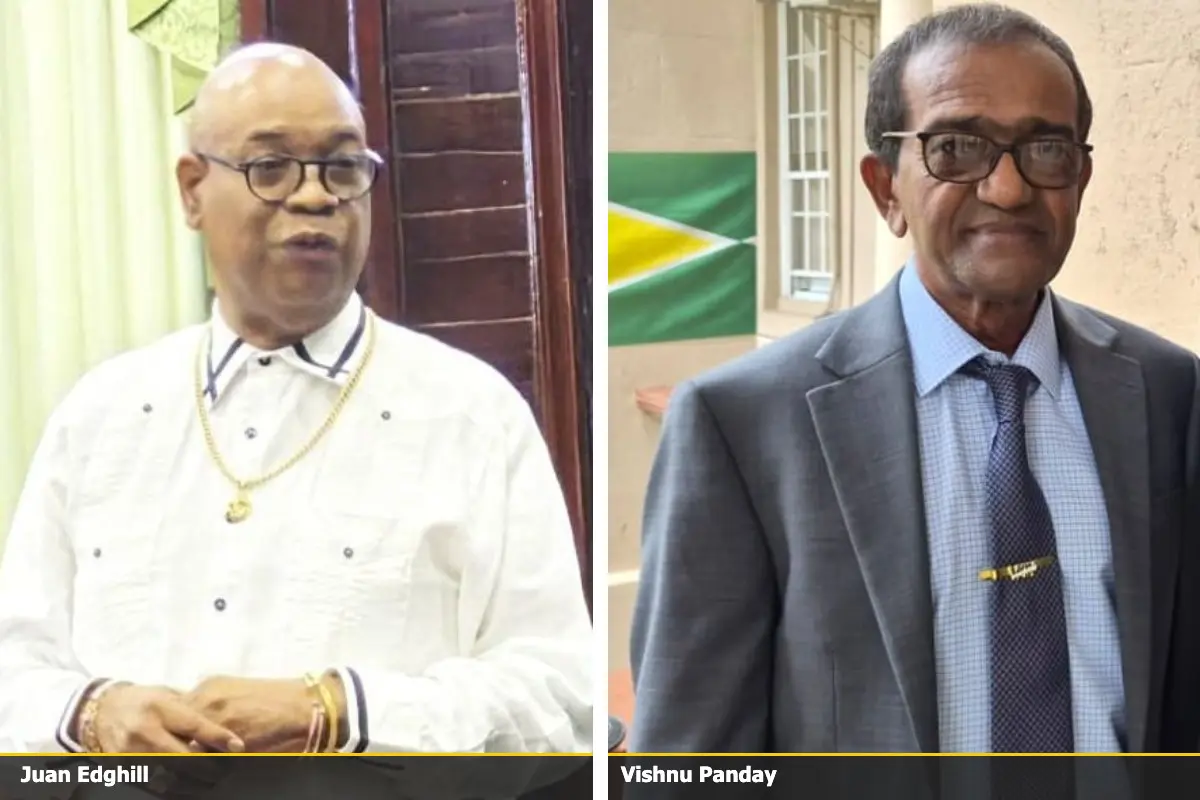
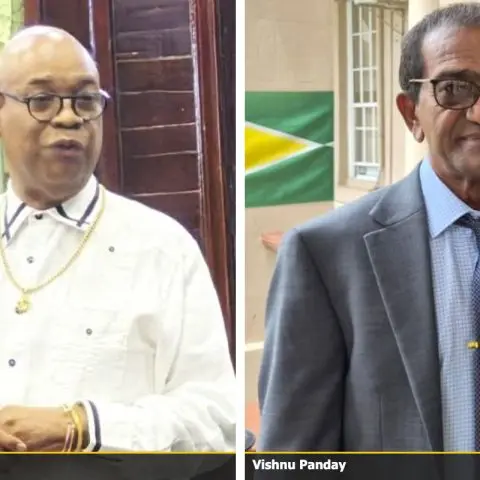
Public Works Minister Juan Edghill yesterday announced plans to take a proposal to the Public Accounts Committee (PAC) aimed at clearing its longstanding backlog and bringing the committee’s scrutiny of government accounts up to date, but PAC Chairman Vishnu Panday says he will not support any approach that compromises detailed examination of the Auditor General’s reports.
Speaking at the official handing over of the Auditor General’s Report for the fiscal year 2025 in the Parliament Chamber, Public Buildings, Brickdam, Georgetown, Edghill, a member of the PAC, said the committee has been discussing ways to address the backlog and intends to present a proposal at its next sitting.
“There has been a lot of conversations about the backlog in terms of what is being examined at the PAC,” Edghill said. “It will be good for me to indicate that we intend at the next sitting of the PAC to bring a proposal that will make the backlog current, so that when we get the next AG report of 2026 in 2027, we will be examining 2026.”
Edghill said the proposal would bring an end to the prolonged public discussion surrounding the committee’s backlog.
“This discussion and long debate that has been in the media about the backlog and the backlog and the backlog; we have debated and discussed this and we will be coming with a proposal of how we can make that backlog current,” he said.
However, speaking with Kiskadee Watch after the meeting, Panday said he is concerned that the proposed “fast-tracking”could result in the committee avoiding the detailed scrutiny expected of it. “Edghill’s statement on fast-tracking the backlog of work has to do… to avoid scrutiny and extensive details on the AG’s report for the backlogged years,” Panday posited, adding, “That by itself is viewed very seriously by me and other members on the PAC.”
He noted though that Edghill has not yet outlined the details of the proposal and therefore he could not say precisely what approach will be taken. “He did say that by 2027, we will be scrutinizing the 2026 report. At this point, I will be eagerly and anxiously awaiting to see what Minister Edghill and the members of the PPP will be presenting to the PAC.”
The chairman said he understood Edghill’s proposal to involve combining the outstanding reports but warned that he would not automatically support such an approach. “He seems to want to combine all of the backlog years and to have a combined approach. I would not be too inclined unless I am satisfied that the combined reports make sense to do,” he said, adding, “If not, I will not be inclined to follow that suggestion. We will go through every report in details to ensure that we justify the public’s expectations.”
The PAC has been grappling with a substantial backlog of Auditor General’s reports and in August, Panday said the committee was already six years behind in scrutinising the reports. He warned that based on the historical pace of its work, clearing the backlog could take until 2032.
He had previously said that infrequent meetings and absenteeism by committee members had contributed to the backlog. When he was elected PAC chairman in June, he pledged to address the delays and said he wanted to review documentation from the last report completed in 2018 before determining the way forward.
Former Auditor General Anand Goolsarran has proposed a two-pronged approach to the problem, suggesting that the full nine-member PAC examine the latest available audited public accounts while a five-member subcommittee deals with the backlogged years from 2019 to 2023.
The PAC’s current membership includes five government members – Edghill, Minister of Parliamentary Affairs and Governance Gail Teixeira, Deputy Speaker Vishwa Mahadeo, Suresh Singh and Sanjeev Datadin – and four opposition members including Panday, Nandranie Singh, Juretha Fernandes and Ganesh Mahipaul.
You reached the end of this article without encountering a paywall.
That is deliberate. We believe reliable journalism about Guyana should be available to everyone from the hinterland to the coast, including those who cannot afford to pay for it. But investigating, reporting and publishing every story takes time, energy and resources. Keeping our journalism open depends on the commitment of readers who can chip in and contribute to help cover the cost for everyone.
Please join the Kiskadee family by taking a subscription. Every contribution counts to our commitment to our journalists, to our readers, and to independent, public-interest journalism.
And please spread the word. One one dutty build dam!
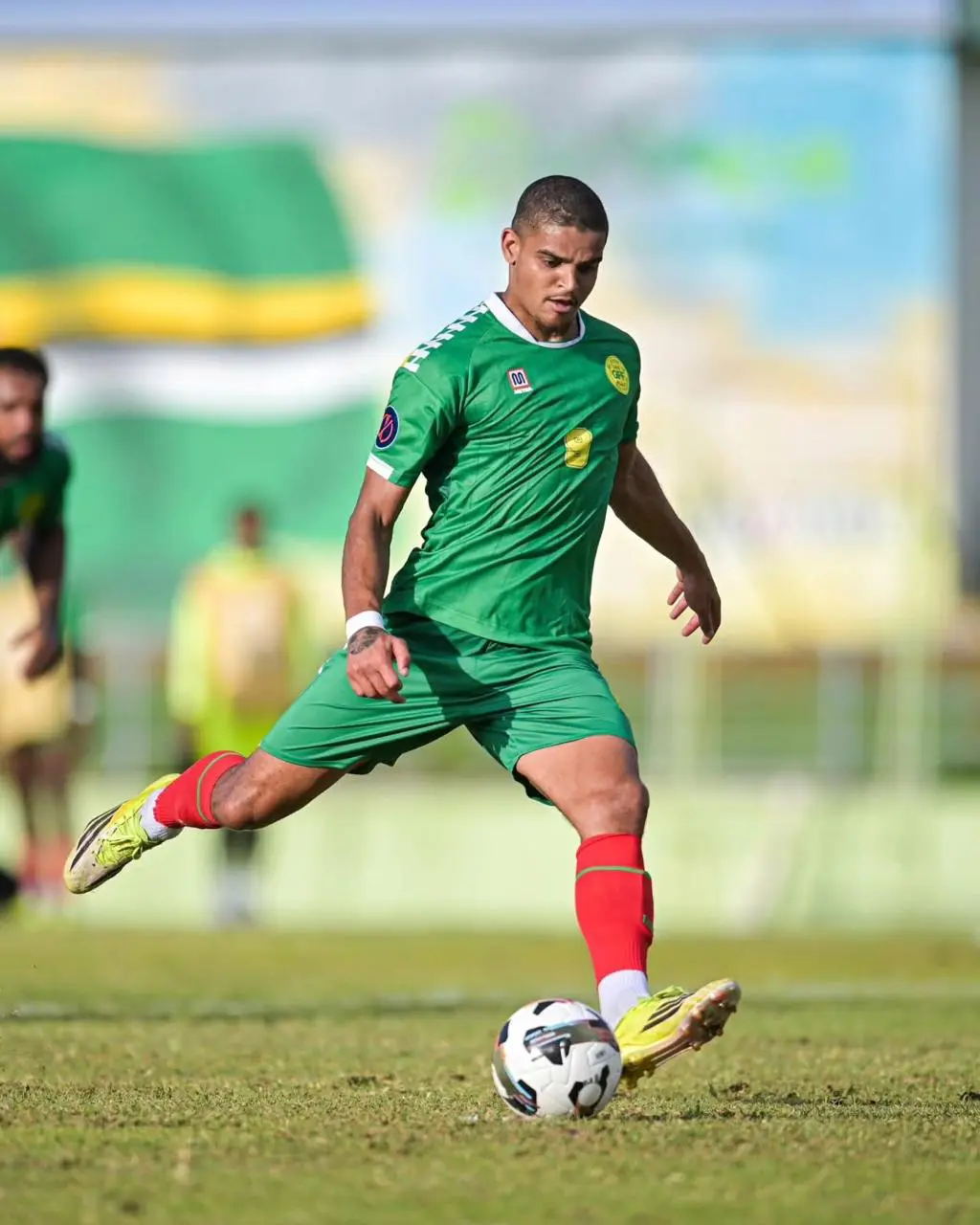
Osaze DeRosario delivered the decisive moment in the 78th minute, calmly converting from the penalty spot.
The Guyana Golden Jaguars opened their 2026/27 Concacaf Nations League campaign with a 1-0 victory over Puerto Rico on Thursday at Windsor Park Stadium in Roseau, Dominica.
Osaze DeRosario delivered the decisive moment in the 78th minute, calmly converting from the penalty spot to hand Guyana all three points in their League B, Group A opener.
The encounter remained scoreless throughout the first half, with neither side able to find the breakthrough. The contest remained tight after the interval as both teams battled for control and clear opportunities were limited.
Guyana eventually earned a penalty with 12 minutes remaining and Seattle Sounders FC forward DeRosario made no mistake, finding the back of the net to put the Golden Jaguars ahead.
The national side then protected the narrow advantage through the closing stages to begin the campaign on a winning note. The victory gave Guyana their first three points in Group A, which also includes Dominica and the Cayman Islands.
The Golden Jaguars will return to action on Sunday, September 27 against the Cayman Islands at Windsor Park Stadium. They are then scheduled to face Dominica away on October 1 and again on October 4.
The Nations League campaign also forms part of the qualification pathway for the 2027 Concacaf Gold Cup. The four League B group winners will qualify directly, while the two best second-place teams will advance to the Gold Cup Preliminary Round.
Guyana last appeared at the Concacaf Gold Cup in 2019 and will be aiming to use the six-match group stage to push for a return to the regional tournament.
You reached the end of this article without encountering a paywall.
That is deliberate. We believe reliable journalism about Guyana should be available to everyone from the hinterland to the coast, including those who cannot afford to pay for it. But investigating, reporting and publishing every story takes time, energy and resources. Keeping our journalism open depends on the commitment of readers who can chip in and contribute to help cover the cost for everyone.
Please join the Kiskadee family by taking a subscription. Every contribution counts to our commitment to our journalists, to our readers, and to independent, public-interest journalism.
And please spread the word. One one dutty build dam!
Some want to rebuild their lives in Guyana, while others say they have no plans to return permanently. Members of the Guyanese diaspora in New York shared contrasting views about life back home ahead of a packed meeting with President Irfaan Ali on Thursday evening.
The views were captured in a live video by Yvonne Deonarine as Guyanese gathered outside the Jericho Palace Banquet Hall in Queens Village, New York, waiting to be allowed inside to meet the President.
The event attracted a major turnout, with Guyanese from New York, Florida, other parts of the United States and Canada travelling to be part of the engagement.
For some, the prospect of returning home remains very real. Persons interviewed said they could see themselves eventually coming back to Guyana, with some expressing a desire to build houses and establish themselves back home.
Others said they did not see themselves returning to Guyana to live permanently, saying they would only come back in an emergency or when necessary.
Several persons nevertheless acknowledged developments taking place under the Ali administration, particularly infrastructure projects, the construction of new highways and the establishment or expansion of various industries. But even among those who praised the developments, there was a recognition that more changes are needed. Healthcare was one issue that produced contrasting views.
Some persons pointed to Guyana’s free healthcare system as an advantage over the United States, where healthcare can come with significant costs. Another woman interviewed during the live video, however, offered a different perspective, saying she did not trust the Guyanese healthcare system as much as she trusted the healthcare system in the United States.
MV Barima
The MV Barima tragedy also featured prominently among the concerns raised by persons outside the venue. One Guyanese woman said she hoped the President would ensure that the families affected by the tragedy are properly taken care of and that a full investigation is conducted. She said accountability was necessary and that the circumstances surrounding the disaster must be established to help prevent a similar tragedy from occurring again.
The MV Barima sank on July 18 while travelling from Georgetown to Port Kaituma, resulting in a major search-and-recovery operation and the deaths of dozens of people.
Addressing the gathering on the concerns surrounding the vessel, Ali said there was “nothing to hide” and pointed to the Commission of Inquiry and the ongoing process to select a company to salvage the vessel.
“Let me make it very clear, there’s nothing to hide, we’ve appointed one of the most accredited commission of enquiries you can find,” Ali said.
He said the Commission of Inquiry had started its work and that the government subsequently went through a public tender process to identify a company capable of salvaging the vessel.
“If the president has picked a company, they can say he picked a friend. We went through a public process,” Ali said, adding that bids had been received and were being evaluated by technical personnel.
He said the process would result in the selection of a company to undertake the salvaging of the MV Barima.
“That is the reality. We are not hiding from salvaging. There is a process and that process is ongoing,” the President said.
Ali also said he would not interfere with the work of the Commission of Inquiry.
“We are not hiding from investigation. The COI is doing its work right now. I will not interfere with the work of the COI,” he said.
“We are not going to shy away from any question. We are going to address every single question.”
More than two months after the tragedy, hearings by the COI have not begun and the vessel is still to be salvaged.
A letter submitted to Kiskadee Watch by commentator Vishnu Bisram described the turnout as the largest he had personally observed at a Caribbean leader’s diaspora engagement over nearly five decades of reporting.
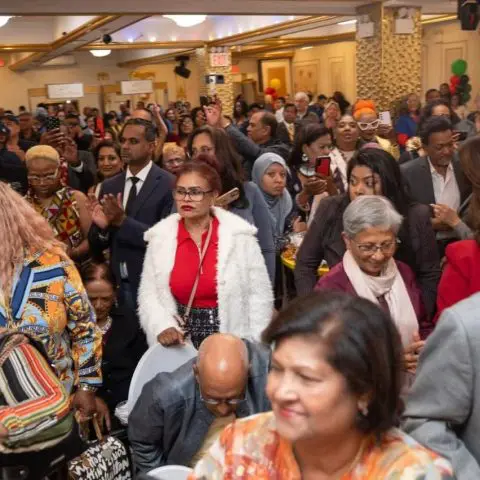
Bisram estimated that about 2,000 people were outside, with many reportedly waiting for more than two hours to enter a venue that could accommodate only a fraction of the crowd. Some people reportedly left after waiting.
When Ali arrived, however, he stopped outside the banquet hall and greeted members of the crowd before making his way inside.
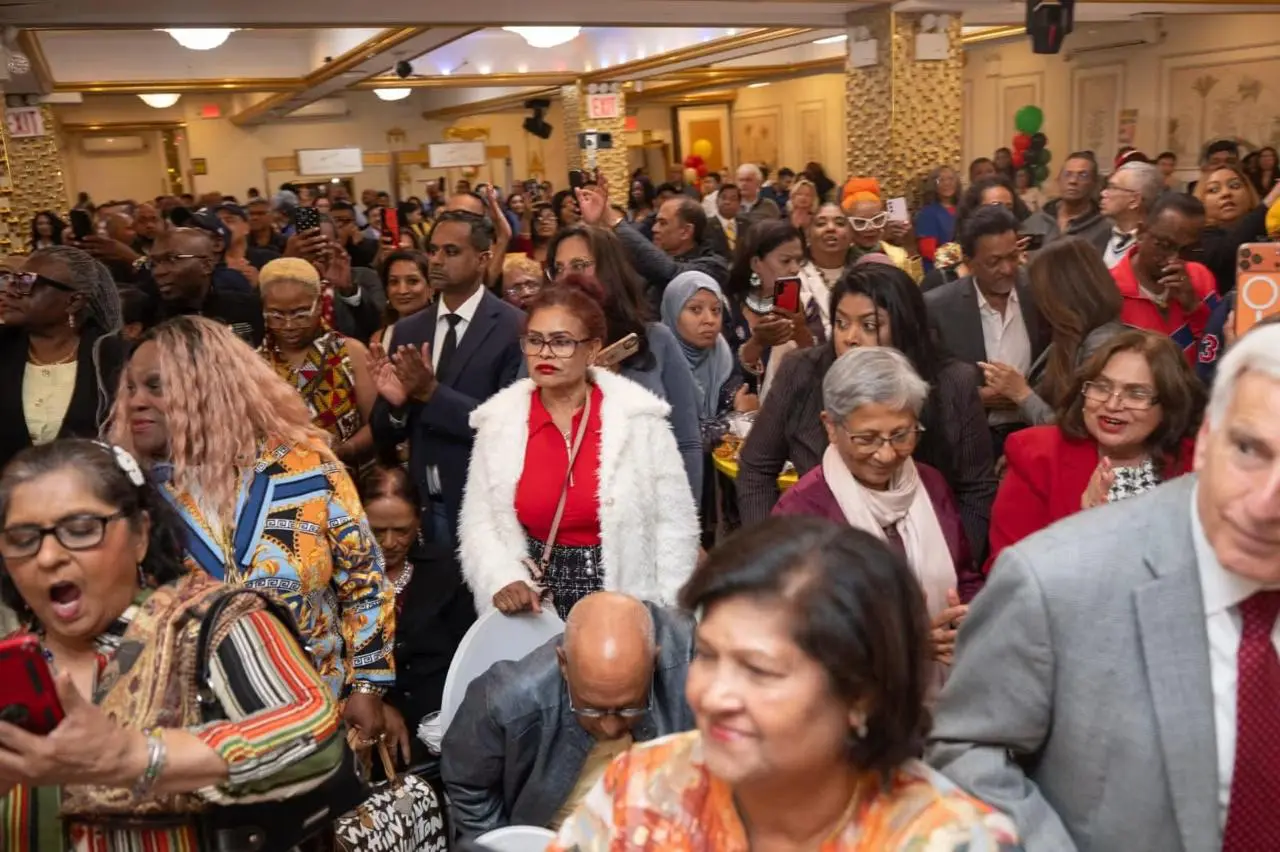
Photographs of Ali interacting with members of the diaspora were subsequently shared on his Facebook page. Inside, hundreds of Guyanese filled the banquet hall for the President’s meet-and-greet.
Not the same
Ali also told Guyanese that the country they left behind is changing rapidly.
“Guyana is not the same as you knew it. Guyana is punching in every ring. We’re in every conversation,” he said, adding that the country is preparing for “the second phase of transformation.”
Ali pointed to what he described as 160,000 new jobs, more than 50,000 households, over 5,000 kilometres of new roads, more than 100 new schools and extensions to more than 160 existing schools as achievements over the past five years.
Looking ahead, Ali outlined an ambitious development agenda that includes a deep-water port, additional power generation, the Wales Economic Development Zone, data centres, port facilities, hotels, hospitals, airport expansion, a fertiliser plant and a gas bottling facility.
He said the scale of Guyana’s expansion requires greater investment in people, skills and technology, while maintaining the country’s openness to international expertise and capital. Education and healthcare also featured prominently in his presentation.
Ali pointed to free tertiary education opportunities, thousands of scholarships and expanded teacher training as measures aimed at preparing Guyanese for the emerging economy.
He also highlighted specialised cardiac surgery for children at no cost to families and plans for a modern oncology centre of excellence and a women and maternal hospital.
The President announced plans to modernise public-service delivery through digital platforms and introduce a national payment system to make transactions more accessible to Guyanese at home and abroad.
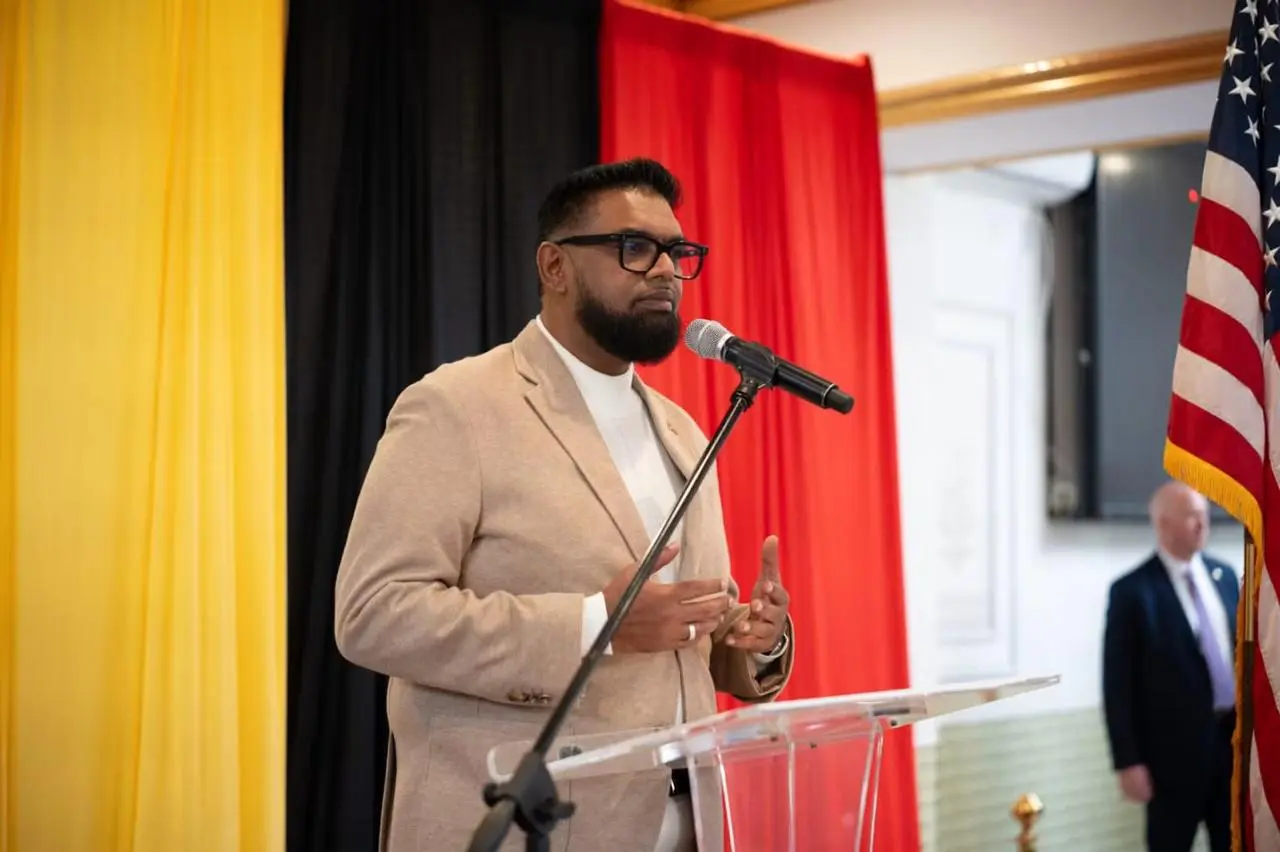
Irfaan Ali speaking at the event
Ali encouraged Guyanese living overseas to maintain their connection with Guyana and take advantage of investment opportunities emerging across the economy.
He announced that a special investment vehicle will soon be launched to mobilise resources from the diaspora for projects including the planned fertiliser plant and gas bottling facility.
“Our diaspora is an important part of Guyana’s development,” Ali said. “No matter where you live, this land remains home and you have an important role in shaping its future.”
He thanked the diaspora for its love, support and commitment to Guyana, describing the turnout as a powerful reminder of the connection overseas-based Guyanese continue to have with their homeland.
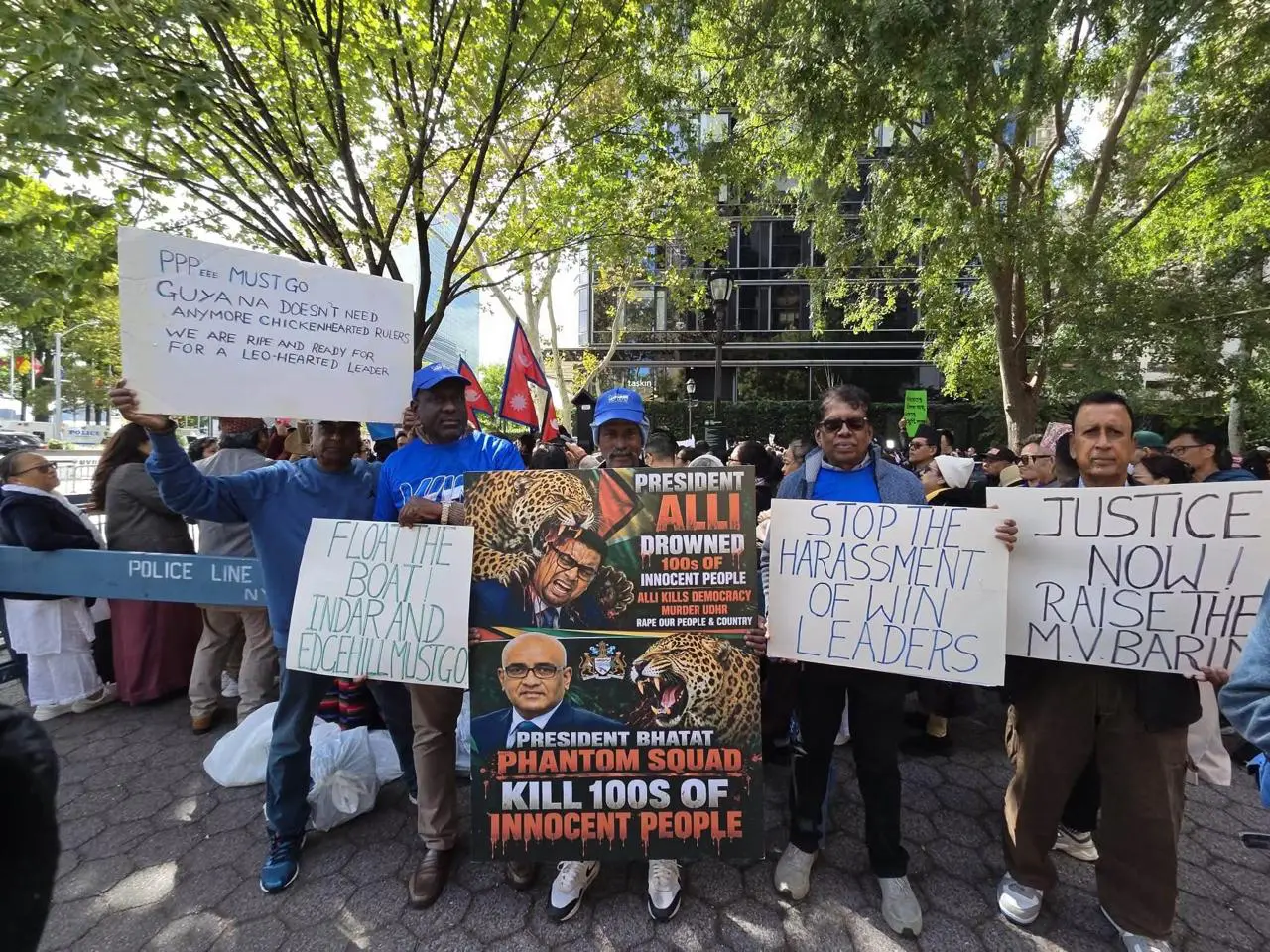
Protesters outside the UN
The President also reflected on Guyana’s presence at the United Nations earlier in the day, saying he became emotional while witnessing CARICOM leaders show their support for Guyana’s candidate for Secretary-General of the United Nations.
Ali criticised what he described as negative coverage by two Guyanese news outlets of the candidate’s prospects, saying they chose to focus on reports that the United States would veto the candidacy. He did not identify the outlets but this report was carried by Kiskadee Watch.
Ali said that rather than repeating that narrative, patriotic behaviour required citizens to make the case for their country and its candidate.
Protest
Earlier in the day, while Ali was delivering Guyana’s address to the United Nations General Assembly, supporters of the opposition We Invest in Nationhood (WIN) Party staged a protest outside the UN headquarters.
The WIN New York Chapter said the protest was intended to highlight what it described as the “harsh realities” facing Guyanese at home.
The protesters raised concerns including alleged political persecution of Opposition Leader Azruddin Mohamed, Opposition MPs, staff and supporters, poverty and the cost of living, democracy and human rights, judicial independence, alleged political interference in policing, corruption and a lack of accountability.
The MV Barima tragedy was among the central issues raised.
The protesters demanded: “RAISE THE BOAT!”
They called for the vessel to be recovered, evidence preserved, the full circumstances surrounding the disaster established, those responsible held accountable and affected families properly compensated.
The protest took place as Ali delivered his address to the General Assembly, during which he spoke about inequality, the rule of law and development.
Ali said there could be no enduring prosperity where inequality deepens and spoke of a world where law restrains power. He also said development must not merely make economies richer, but must make societies better.
WIN supporters said those principles must also apply in Guyana.
You reached the end of this article without encountering a paywall.
That is deliberate. We believe reliable journalism about Guyana should be available to everyone from the hinterland to the coast, including those who cannot afford to pay for it. But investigating, reporting and publishing every story takes time, energy and resources. Keeping our journalism open depends on the commitment of readers who can chip in and contribute to help cover the cost for everyone.
Please join the Kiskadee family by taking a subscription. Every contribution counts to our commitment to our journalists, to our readers, and to independent, public-interest journalism.
And please spread the word. One one dutty build dam!
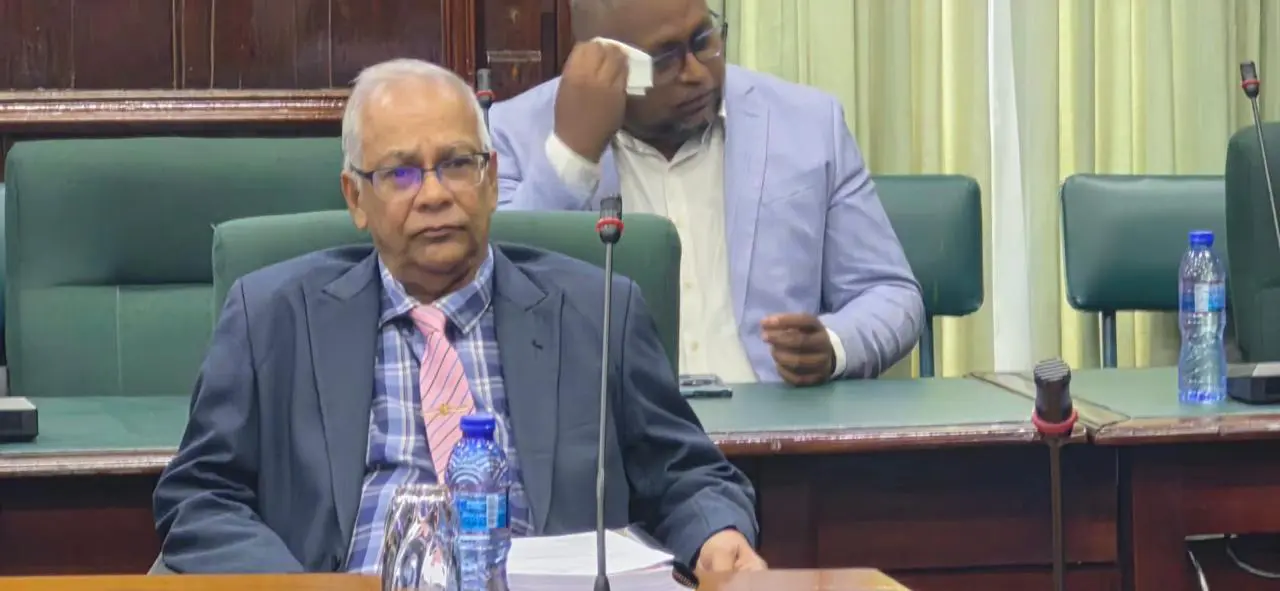
Auditor General Deodat Sharma at yesterday’s meeting
-says President should be asked
Auditor General Deodat Sharma yesterday declined to comment on his two-year extension in office despite questions over his continued tenure beyond the statutory retirement age. Instead, he told reporters they should question President Irfaan Ali about the matter.
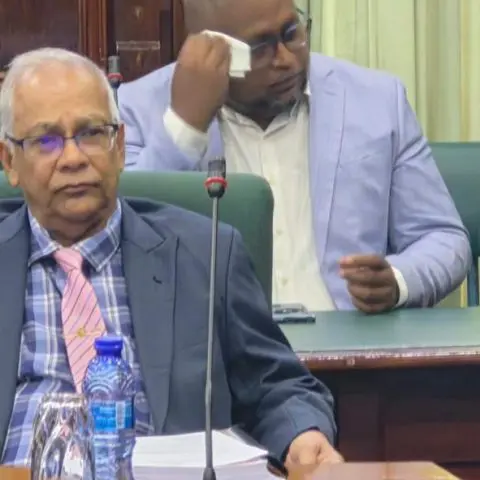
Sharma was responding to questions from media operatives after he officially handed over the Auditor General’s Report for the fiscal year 2025 in the Parliament Chamber, Public Buildings, Brickdam, Georgetown.
Sharma repeatedly declined to comment on the issue, telling reporters, “No comment. You could ask the President,” despite several attempts to get an explanation from him.
A Partnership for National Unity (APNU) Member of Parliament (MP) Ganesh Mahipaul told reporters after the ceremony that the opposition does not support the extension of Sharma’s tenure, noting that its position is based on principle rather than Sharma as an individual.
“The extension of the Auditor General is not something that we support. And that is not because of Deodat Sharma, the individual. It is a matter of principle,” Mahipaul said.
He observed that persons who have reached the statutory retirement age should make way for others within the institution to advance their careers.
“We believe whenever someone has reached the age of retirement, they should go their merry way and allow others to elevate. So that everyone can have a fair cut of the pie to participate and hold offices,” he said.
According to Mahipaul, extending Sharma’s tenure prevents other senior officers within the Auditor General’s Office from being considered for the position and can affect staff morale.
“It is depriving other officers within that very Auditor General’s Office from aspiring to become Auditor General,” he said. “It is depriving other officers from having the morale, the upliftment in terms of their work ethics and so on.”
Attorney General and Minister of Legal Affairs Anil Nandlall SC said recently that the Government is prepared to defend its decision to allow Sharma to remain in office.
Nandlall acknowledged that legal action has been threatened over Sharma’s continued occupation of the office, but said the Government remains confident that its position is legally sound. “I understand that they have written and have threatened legal action. Whatever actions are filed will be defended,” Nandlall had told Kiskadee Watch.
He said that the Government would not have taken the decision to allow Sharma to remain in office if it was not satisfied that the decision was legally defensible.
“The government would not have made such a decision if it did not believe in the legal correctness of it,” he stated.
Former Auditor General Anand Goolsarran, through attorney Christopher Ram, has formally challenged Sharma’s continued tenure. Ram has asked the Attorney General to explain the constitutional and legal basis for Sharma remaining in office and whether any extension, reappointment or other authorisation was granted. He has indicated that judicial review proceedings could be filed if the Government does not provide a satisfactory explanation.
Public Accounts Committee Chairman Vishnu Panday has also questioned Sharma’s continued tenure, saying there appears to be no provision allowing him to remain beyond the prescribed retirement age. Panday also raised concerns about the additional cost to taxpayers and questioned what happened to the succession plan for the Auditor General’s Office.
If the matter reaches court, Goolsarran could seek declarations that Sharma vacated the office upon reaching 68, that the position is vacant, and an injunction preventing Sharma from continuing to act as Auditor General. He could alternatively seek to have any purported extension of Sharma’s tenure quashed.
You reached the end of this article without encountering a paywall.
That is deliberate. We believe reliable journalism about Guyana should be available to everyone from the hinterland to the coast, including those who cannot afford to pay for it. But investigating, reporting and publishing every story takes time, energy and resources. Keeping our journalism open depends on the commitment of readers who can chip in and contribute to help cover the cost for everyone.
Please join the Kiskadee family by taking a subscription. Every contribution counts to our commitment to our journalists, to our readers, and to independent, public-interest journalism.
And please spread the word. One one dutty build dam!
WIN Member of Parliament Vishnu Panday has called for regular talks between President Irfaan Ali and Opposition Leader Azruddin Mohamed, saying the absence of direct engagement has been a missed opportunity more than a year after the general election.
In a statement on his Facebook page, Panday proposed what he called a national ‘modus vivendi’, or a practical way for the government and opposition to work together on matters of public interest while continuing to disagree politically.
“The past year was without any attempt at formal discussion with the Opposition Leader,” he said. He argued that the government, which holds the mandate and resources to act, should take the first step towards direct talks with Mohamed.
Panday proposed an all-party committee on the cost of living, oil revenue, crime, migration and electricity supply. He also called for quarterly briefings at which the opposition would receive the same government data as the administration, and a joint task force on flooding, drought, youth unemployment, housing and land distribution.
A separate forum, including government and opposition representatives, the private sector and community leaders, should meet twice a month, he said. Its minutes should be published so that citizens could see where the parties agreed and disagreed.
Panday said the proposal was neither a coalition nor a surrender of political principles. Without a means of discussing national concerns, he argued, the two sides would continue to talk about each other rather than with each other, while public trust and long-term planning suffered.
His criticism of the lack of engagement comes after WIN MPs declined an invitation announced by Ali earlier this month for meetings with members of two parliamentary committees. WIN said at the time that the invitation bypassed Mohamed in his capacity as Opposition Leader and had been issued without an agenda.
Mohamed was elected Opposition Leader in January, following WIN’s emergence as the main opposition party in the September 2025 general election. WIN and APNU held talks in August on matters including GECOM representation, the Region Ten council impasse and nominations to the Local Government Commission, but reported no final decisions on those issues
Panday also used his statement to criticise the government’s response to the MV *Barima* tragedy. He said families were still waiting for the vessel to be recovered and accused the administration of failing to treat the matter with sufficient urgency. The vessel sank on July 18. Three financial bids for its salvage were opened on September 8, but the wreck remained submerged when families and an activist renewed their calls for answers this month.
The MP further raised questions about the size and financing of Ali’s farm near Long Creek. Mohamed has alleged that the property covers approximately 150 acres. Ali has rejected that estimate, saying the farm covers about 60 to 70 acres and was financed through loans. He has said he has nothing to hide and would show the property publicly, but had not given a date for doing so when asked at an August press conference.
Panday made wider allegations about delays on public projects, the finances of government officials and decisions involving land and agriculture. The statement did not provide documents establishing those claims. He also cited concern about migration, but gave no source for the figures he advanced.
Despite his criticisms, Panday said the opposition should engage constructively if invited to direct talks on national issues. He maintained that a formal forum would allow debate to continue in the National Assembly while giving both sides a way to pursue practical agreements.
You reached the end of this article without encountering a paywall.
That is deliberate. We believe reliable journalism about Guyana should be available to everyone from the hinterland to the coast, including those who cannot afford to pay for it. But investigating, reporting and publishing every story takes time, energy and resources. Keeping our journalism open depends on the commitment of readers who can chip in and contribute to help cover the cost for everyone.
Please join the Kiskadee family by taking a subscription. Every contribution counts to our commitment to our journalists, to our readers, and to independent, public-interest journalism.
And please spread the word. One one dutty build dam!
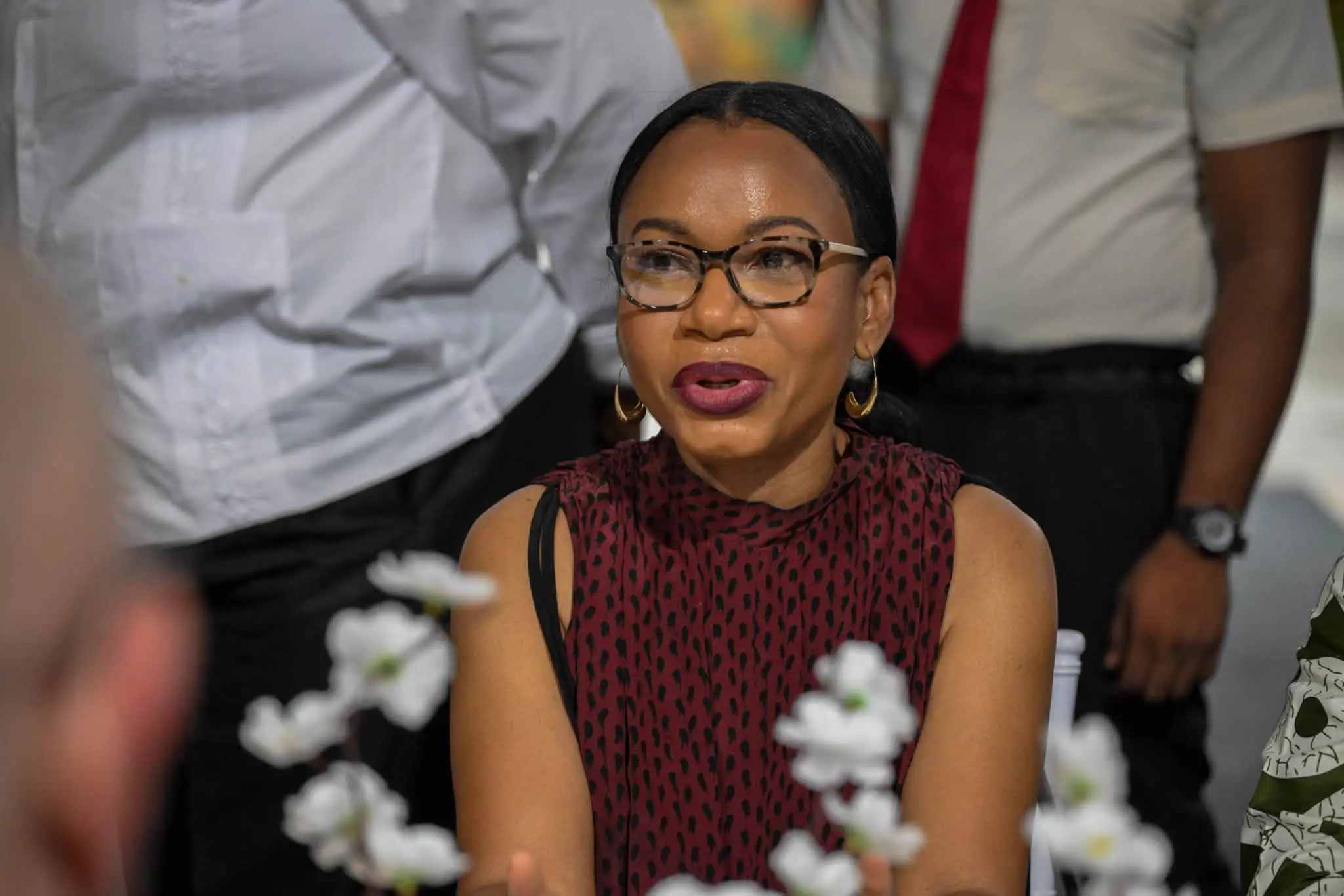
Home Affairs Minister Oneidge Walrond at a cocktail reception for the Interpol conference.
Successive national budgets allocated approximately $467 billion to public safety and security between 2020 and 2026, Home Affairs Minister Oneidge Walrond told the INTERPOL Americas Regional Conference in Georgetown on Wednesday.
She said $100 billion was budgeted for the security sector this year, including support for the Guyana Police Force. The spending, she said, was intended to strengthen police facilities, mobility, training, investigative work, border security, communications and technology.
Walrond presented the figures while arguing that Guyana needed a security system capable of responding to the risks accompanying economic growth and increased international connections.
“Today, security can no longer be understood simply as responding to crime after it occurs,” she said. Protecting people, borders, institutions and critical infrastructure also required anticipating new threats, she told the conference held at the Arthur Chung Conference Centre.
The minister said Guyana was moving towards an integrated system in which the police, Immigration Department, Customs Anti-Narcotic Unit and other agencies would share information and coordinate their work more closely. She called for greater use of INTERPOL’s databases, notices and secure I-24/7 communications network, along with stronger border screening and joint investigations.
“Investment at home must be matched by cooperation abroad,” she said.
Walrond listed narcotics and firearms trafficking, trafficking in persons, migrant smuggling, cybercrime, financial crime and money laundering among the threats facing Guyana and its neighbours. Criminal groups exploited legitimate transport and trade, financial systems, digital platforms and differences between national laws, she said.
“When information moves quickly and partners act together, criminals have fewer places to hide,” she told delegates.
Police Commissioner Clifton Hicken also described international cooperation as an operational necessity for Guyana. Its land borders, Atlantic coast, forests and river network supported trade and regional links but also created openings for trafficking, illegal mining and other cross-border crimes, he said.
Hicken told the conference that INTERPOL’s National Central Bureau in Georgetown exchanged thousands of requests, alerts and notifications annually with counterparts abroad. He said the exchanges assisted investigations involving wanted persons, stolen travel documents, firearms and vehicles.
Walrond urged delegates to judge the conference by practical changes after they returned home: whether intelligence moved faster, border systems were better connected and officers knew their counterparts in other jurisdictions. The success of the meeting, she said, would not be measured simply by the number of discussions held.
You reached the end of this article without encountering a paywall.
That is deliberate. We believe reliable journalism about Guyana should be available to everyone from the hinterland to the coast, including those who cannot afford to pay for it. But investigating, reporting and publishing every story takes time, energy and resources. Keeping our journalism open depends on the commitment of readers who can chip in and contribute to help cover the cost for everyone.
Please join the Kiskadee family by taking a subscription. Every contribution counts to our commitment to our journalists, to our readers, and to independent, public-interest journalism.
And please spread the word. One one dutty build dam!
A visceral manifestation of geopolitical gravity unfolded on a sidewalk in Queens Village amongst the diaspora. The relentless autumn wind did nothing to deter the hundreds who stood tightly queued for over two hours, waiting for a fleeting chance to squeeze inside a packed community ballroom. They were not there for a standard diaspora campaign rally; they were waiting to hear their visiting President. The image on that cool, windy Thursday night of some 2,000 people waiting for over two hours on a long winding virtually stagnant line to get into a small ballroom in one of the heartland areas of the Guyanese diaspora, to “meet and greet” visiting President Irfaan Ali, says something about the message they wish to send to the President and about their renewed interest in and strong ties with their former homeland and about their President, his likability and popularity and also the issues they have and would like to be addressed. The most revealing aspect of the engagement was not the president inside speaking to the gathering. It was the line outside! I was at multiple events in which Irfaan Jagdeo, Ramotar, Jagan, Janet, Michael Manley, Basdeo Panday, Maurice Bishop, Kamla Persad-Bissessar, ANR Robinson, Patrick Manning, Keith Rowley, Edward Seaga, Bruce Golding, PJ Patterson, Portia Simpson engaged their diasporas. Manley and Jagan pulled huge crowds. I never saw such a crowd and such long lines to meet and greet a ruler as that for Irfaan.
There has been a growing emotional relationship between Guyana and its diaspora ever since the country discovered and started producing oil by Exxon resulting in the fastest growing economy. It is not merely a story about the crowded small room and the long line of so many and the inconvenient, patiently waiting outside or of the logistical challenge of accommodating such a large audience in a room that could accommodate only 200, stretched to 250. It is a picture of a community demonstrating, in very physical terms, that a distance of 2500 miles has not diminished their interest in the country they left behind. They wanted to meet their President as they did in many engagements over the decades.
A large crowd waiting hours to meet Irfaan presented a striking picture against his earlier engagements. People do not stand in a line for that length of time simply because a politician happens to be in town. For many in the Guyanese diaspora, meeting the president represented an opportunity to connect personally with him and the homeland. They wanted to hear directly about what is happening in Guyana, as previous Presidents or Prime Ministers related during their visits. They always spoke the language that their bases wanted to hear. Some in the audience came to challenge the President on issues that they feel matter to them and their families and to other Guyanese and a couple did, I was told. Some came at the open public event to meet the leader of their country who they never met or to offer support or to experience the rare moment when the highest office in their country comes within reach. And there were a few who came to protest (as they did outside the venue across the street under the protection of the New York police) and some protesters or opponents came inside the hall and voiced concerns.
The extraordinary size of the crowd, the largest I observed at any engagement of a Caribbean ruler, reflects the diaspora’s interest in their homeland as well as Guyana’s changing place in the world, all because of oil and Exxon’s role in it. The country has undergone a dramatic economic transformation over the last seven years since the production of major offshore oil reserves by Exxon. Thousands of jobs have been created over the last seven years. President Ali has made infrastructure, healthcare, education and economic development central themes of his administration, arguing that oil revenues should be translated into tangible improvements in people’s lives. He has given out two national cash grants in addition to various grants to targeted recipients (children, retirees, workers, and seniors).
For Guyanese observing from abroad or at home, the transformation of their country carries a particular fascination. Many left a country that was economically very different, poor, backward, unpaved streets, little food, tensions, during the 1960s to 2020 from the Guyana being discussed today. They now see new roads, bridges, the longest (Dr Jagdeo) bridge over a river in the Caribbean, highways, hospitals, housing projects, unlimited food, and other developments being promoted as evidence of a more prosperous future. Whether every government promise or the country’s real potential is ultimately fulfilled is a legitimate question, but the sheer interest in hearing about Guyana’s development direction is unmistakable.
But there is a more symbolic lesson as well. A crowd of this size should not be understood automatically as a political endorsement. People attend political gatherings for many different reasons. Some may be enthusiastic supporters. Some may be curious. Some may want to raise concerns. Others may simply want to see the president of their ancestral homeland. And a few came to protest on the other side of the hall. What it unquestionably demonstrates is that Guyanese diaspora is paying attention to their former country or the homeland of their fore-parents; there were many born Americans there. That matters because the diaspora has occupied a unique position in the country’s development. Guyanese abroad have contributed since the 1960s through remittances, investments, rehabilitation of homes, family support as well as funding of community projects including schools, professional expertise and cultural connections.
The responsibility of the government now is to ensure that such enthusiasm is met with meaningful engagement — questions, answers, accountability and continued conversation after the ballroom empties.
Yours truly,
Vishnu Bisram
You reached the end of this article without encountering a paywall.
That is deliberate. We believe reliable journalism about Guyana should be available to everyone from the hinterland to the coast, including those who cannot afford to pay for it. But investigating, reporting and publishing every story takes time, energy and resources. Keeping our journalism open depends on the commitment of readers who can chip in and contribute to help cover the cost for everyone.
Please join the Kiskadee family by taking a subscription. Every contribution counts to our commitment to our journalists, to our readers, and to independent, public-interest journalism.
And please spread the word. One one dutty build dam!
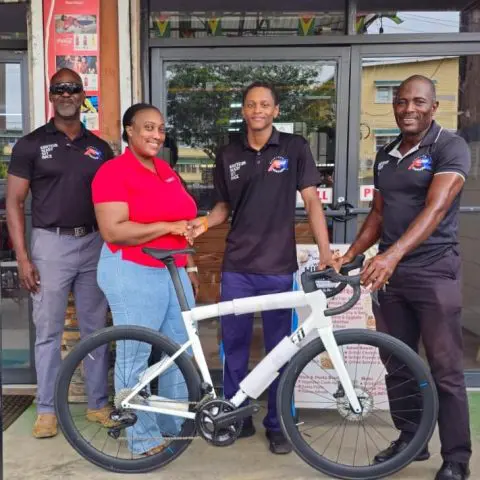
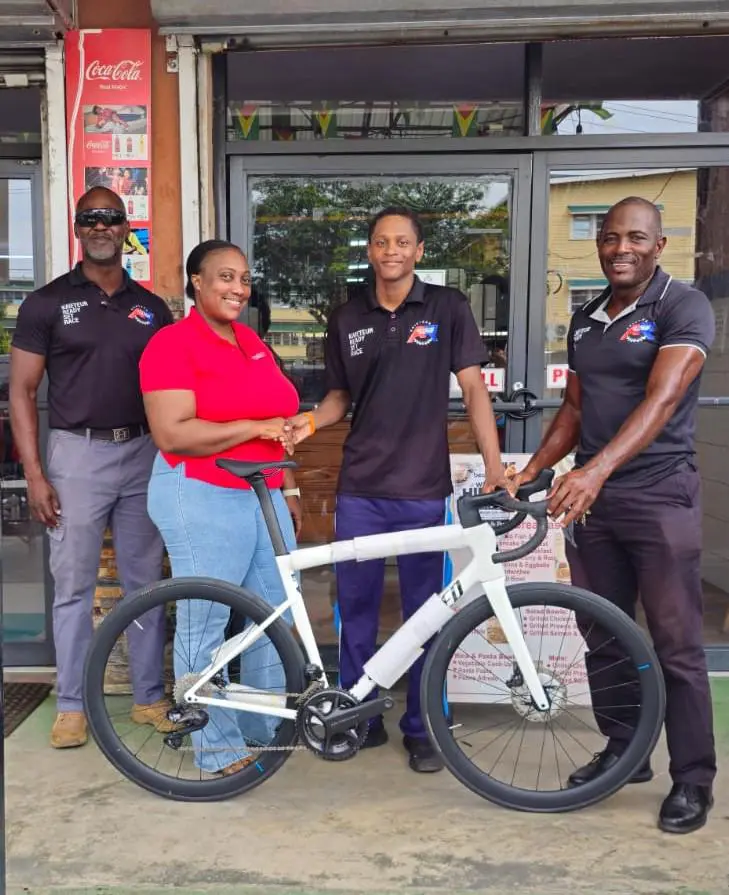
National Under-23 champion Ajani Cutting (2nd from right) with his newly acquired bicycle. Sharing the moment was Simba Willams – KARCC Treasurer, Kwame Fortune – Team Mate, and Donita Fedee (Beacon Cafe).
Ajani Cutting’s preparations to represent Guyana at next month’s Caribbean Cycling Championships have received a timely boost, with Beacon Cafe funding the acquisition of a new elite road racing bicycle after a crash destroyed his previous bike.
The national Under-23 champion has been officially selected for the Guyana squad heading to the Dominican Republic for the October 8–13, 2026 championships. The team is scheduled to depart on October 8.
His participation had been thrown into doubt on Sunday, September 20, when he crashed during the annual Victor Macedo Memorial Road Race. Although Cutting escaped without life-threatening injuries, his bicycle was left unusable.
The crash, which occurred in the Belladrum area on the West Coast of Berbice, prompted an urgent online appeal for help securing a replacement before the national team’s departure.
Beacon Cafe owner Ramdeo Kumar and his team answered that appeal, according to the Kaieteur Attack Racing Cycling Club (KARCC). Kumar has initiated and is funding the acquisition process, giving Cutting crucial support as the regional competition approaches.
For Cutting, the intervention has brought relief after an unsettling setback. He said losing his bicycle so close to the championships had been devastating, and expressed gratitude to Kumar and Beacon Cafe for helping him prepare to represent Guyana.
KARCC said the response was especially valuable because of the short time available to find a replacement. Without it, the club said, the national Under-23 champion’s participation would have been in serious jeopardy.
The club also acknowledged Kumar’s longstanding support for its riders and local sports development. It said Beacon Cafe had repeatedly assisted when athletes faced difficulties, and thanked the entire team for responding quickly to Cutting’s situation.
With the acquisition process underway, KARCC will keep supporters informed about Cutting’s preparations and the national squad’s travel itinerary ahead of the October 8 departure.
You reached the end of this article without encountering a paywall.
That is deliberate. We believe reliable journalism about Guyana should be available to everyone from the hinterland to the coast, including those who cannot afford to pay for it. But investigating, reporting and publishing every story takes time, energy and resources. Keeping our journalism open depends on the commitment of readers who can chip in and contribute to help cover the cost for everyone.
Please join the Kiskadee family by taking a subscription. Every contribution counts to our commitment to our journalists, to our readers, and to independent, public-interest journalism.
And please spread the word. One one dutty build dam!













Discussion