Home Blog Page 246

Turn the Global Super League into the Guyana Super League

0


(Kaieteur News) – Dem Boys Seh let we stop pretending.  The Global Super League sound impressive, but a tournament does not become “global” simply because the word global is printed on the poster. If the world’s leading T20 teams are not coming, if the television audience is not massive, and if the tournament is never going to eclipse the Caribbean Premier League, then perhaps is time to stop trying to make it something it clearly is not.

Dem Boys seh: turn it around. Instead of pouring money into a tournament chasing an international audience that apparently does not know it exists, reconceptualise it as a National Super League—a serious, properly organised Guyanese T20 competition designed to develop Guyanese cricket.

Because Guyana got a bigger problem than the GSL’s balance sheet. We need players for now and de future.

First-class cricket is limited. So where are local players going to get the competitive cricket they need? Right here.

With the improved infrastructure  across the country, there is no reason Georgetown and Berbice cannot be playing each other regularly in a proper national club competition. Let clubs build teams. Let businesses sponsor them. Let players from Essequibo, Demerara, Berbice and Georgetown compete. Let selectors watch them. Let young talent emerge naturally instead of waiting for somebody to discover a 19-year-old by accident while buying a roti.

Dem Boys seh the franchise holders of the GSL should invite corporate Guyana to come aboard and help build something sustainable. Call it the Guyana National Super League. Invite Guyanese disapora teams from New York, Toronto and London.  Give it proper promotion, television coverage, wider sponsorship and prize money.

The GSL will never conquer the world. But it can help Guyana conquer the decline of Guyanese cricket. Because the future of Guyanese cricket cannot depend on importing stars and hoping our youngsters learn by watching them. Stars can entertain. Leagues develop players.

So leh we stop chasing the world and start building Guyana. Dem Boys seh that would be one global idea worth stealing.

Talk half. Leff half.


Source: Kaieteur News

Kashif & Shanghai Tournament returns to Linden roots

0


…tournament kickoff set for December 13 

By Rawle Toney

(Kaieteur News) – The Kashif & Shanghai Knockout Tournament is set to make a long-awaited return to Linden on December 13, rekindling one of Guyana’s most celebrated football traditions and bringing the competition back to the town that served as its home for many years.

The tournament, which has been a major fixture on Guyana’s sporting calendar since its inception on Boxing Day in 1990, will be staged exclusively in Linden, with matches scheduled for the Bayroc National Stadium and the recently reconstructed Mackenzie Sports Club Ground.

Kashif Muhammad, co-director of the tournament alongside Aubrey ‘Shanghai’ Major, confirmed the return during a visit to both venues as preparations intensify for the revival of the popular knockout competition.

Kashif & Shanghai Tournament returns to Linden roots

Kashif Muhammad and team at the Mackenzie Sports Club Ground.

The Mackenzie Sports Club Ground holds particular significance to the tournament’s history, having hosted the finals before the competition moved away from Linden to the Guyana National Stadium.

The last final staged in the Mining Town was played in 2008, when Alpha United defeated Topp XX to capture the title.

Muhammad said this year’s tournament will feature only First Division clubs from across the country, with Elite League teams excluded from the competition.

As a result, former champions Slingerz FC, Camptown and Fruta Conquerors will not participate, as the organisers have opted to maintain the tournament as a First Division competition.

More details surrounding the participating clubs, sponsorship arrangements, prize structure and other aspects of the tournament are expected to be unveiled at the official launch, scheduled for Saturday, October 3, in Linden.

The return represents a significant moment for both Linden and the Kashif & Shanghai brand, which has built a rich history of producing competitive encounters and memorable finals.

Linden’s Topp XX remains the tournament’s most successful club, having captured the coveted title five times. The club’s first triumph came in the 1994/95 season, when it defeated fellow Linden side Milerock 2-1.

Topp XX returned to the winner’s circle in 1996/97 with a 3-0 victory over Pele, before claiming consecutive titles in 1999/00 and 2000/01.

Their fourth championship came after a 3-1 win over Conquerors, while the following year they overcame Camptown on penalties after a 1-1 draw.

The Linden powerhouse captured its fifth and most recent title in 2005/06, defeating Alpha United 1-0.

Milerock, another of Linden’s historic football clubs, won the tournament three times, while Alpha United captured two championships.

The competition’s roll of honour also includes Eagles United, Botafogo, Camptown, Beacon’s, Pele, Victoria Kings, Conquerors, Western Tigers, Buxton United and Slingerz FC, as well as Trinidad and Tobago clubs Doc’s Khelwalaas, Joe Public and Caledonia AIA.

The tournament has also produced its share of dramatic finals, including the 1992/93 championship, when Botafogo and Central Hikers shared the trophy after their final ended in a draw.

The most recent edition on record was held in 2015, when Slingerz FC defeated Alpha United 2-0.

Now, after years away from its traditional home, the Kashif & Shanghai tournament is returning to Linden, with the organisers banking on the town’s football heritage, renovated facilities and passionate supporters to provide the backdrop for a new chapter in the competition’s history.


Source: Kaieteur News

Courts Pee Wee U11 Football Round II: schools resume battle for group points today

0


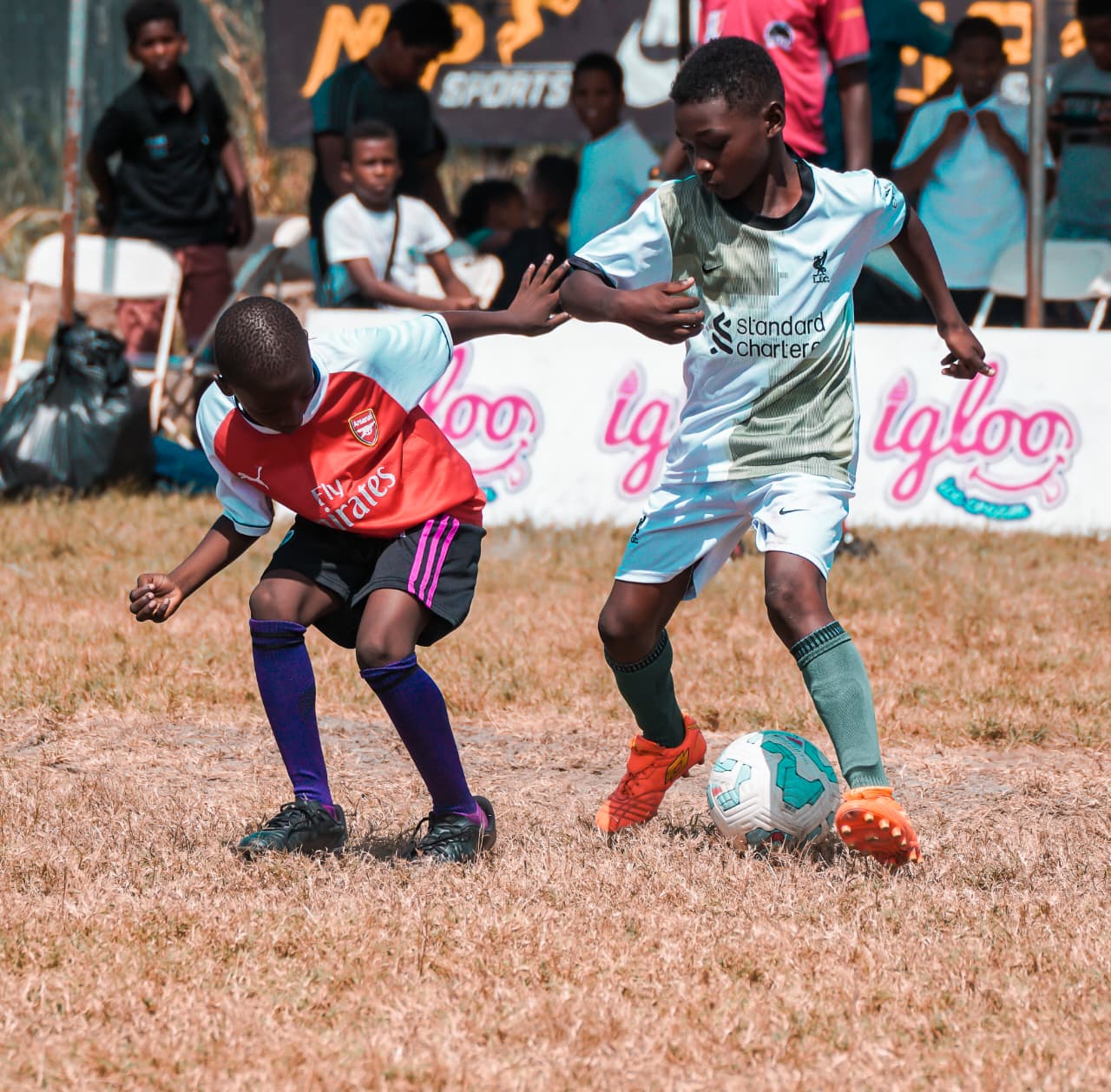
(Kaieteur News) – The race for valuable group points resumes today when the Petra Organisation’s Courts Optical Pee Wee Under-11 Football Tournament returns to the Ministry of Education ground on Carifesta Avenue, with 12 matches scheduled from midday.

Following a lively opening round last weekend, several primary schools have already shown signs of their groups stage ambitions, while others will be looking to make amends as the battle for places in the next round intensifies.

St John the Baptist Primary made a massive return on opening day, cruising to a 6-0 victory over Queenstown Primary, while West Ruimveldt Primary also opened its campaign with a decisive victory against St Aloysius Primary.

Courts Pee Wee U11 Football Round II: schools resume battle for group points today

Crucial stage! Several schools will be hoping to secure maximum points today as Courts Pee Wee Football enters round II action.

Defending champions Leonora Primary began their title defence in composed fashion, securing a 3-0 win over Soesdyke Primary, while hinterland representatives Santa Rosa and Waramuri also kept their qualification hopes alive with positive opening-round results.

With 18 matches already completed, the pressure now increases as teams seek to strengthen their positions and finish among the leading sides in their respective groups.

St John the Baptist will return to the field at noon, facing St Pius Primary, who were held to a 1-1 draw by Colaaco Primary in their opening match.

At the same time, Tucville Primary will meet Potaro Primary, while Goed Fortuin Primary tackles Redeemer Primary.

The second wave of matches begins at 1:00pm, with F.E. Pollard Primary and St Aloysius Primary both searching for their first points. Ann’s Grove Primary will face St Theresa Primary, while Colaaco and Queenstown will battle for valuable points in their group.

After that, three more encounters are set for 2:00pm, with St Gabriel’s Primary taking on Soesdyke Primary, Leonora facing Belladrum Primary and Georgetown International Academy (GIA) Team 1 seeking a second win against St Steven’s Primary.

The day’s programme concludes from 3:00pm, when Marian Academy faces Stella Maris Primary, West Ruimveldt meets GIA Team 2 and Genesis Academy tackles Plaisance Orphanage.

Courts Optical remains the tournament’s title sponsor, with support from Sterling Products Limited (Igloo Ice Cream), Demerara Mutual Life, MVP Sports, SkyTec Enterprise Inc. and the Ministry of Culture, Youth and Sport. The tournament is being staged with the approval of the Ministry of Education.

With every point becoming increasingly important, today’s action promises another competitive day as the schools continue their push for places in the knockout phase.


Source: Kaieteur News

Mottley backs CARICOM reparatory justice plan

0


(Kaieteur News) – The wounds left by slavery remain raw, Barbados Prime Minister Mia Mottley told the United Nations on Thursday, as she called for honest engagement on reparatory justice.

Mottley, addressing the 81st Session of the UN General Assembly, said Caribbean countries continue to carry the scars of the trafficking and enslavement of Africans and must pursue healing through reparatory justice.

“We in Barbados accept the moral responsibility of removing the cross of slavery with its horrific consequences,” Mottley said.

“We must effect healing through reparatory justice. For it is the right thing to do.”

Mottley backs CARICOM reparatory justice plan

Barbados Prime Minister, Mia Mottley

Mottley noted that the UN General Assembly passed a resolution on March 25 recognising the trafficking of enslaved Africans and the racialised chattel enslavement of Africans as the gravest crime against humanity.

She also pointed to Barbados’ history, noting that the country passed its first slave code in 1661, while other countries later followed with similar laws, including France’s Code Noir of 1685.

“That Code Noir was only repealed this year. And hence the wounds are still raw,” she said.

Mottley said CARICOM heads of government approved the revised CARICOM Ten-Point Plan for Reparatory Justice in July.

“For the Caribbean, for Africa and for those countries concerned, the honest engagement must begin,” she said.

She also thanked Ghanaian President John Mahama for coming to the table on the issue.

Mottley stressed that the call for reparations does not remove the responsibility of Caribbean countries to address their own challenges.

“We do not ask for reparations without accepting responsibility for our own self-repair, which we have undertaken for decades,” she said.

She linked the legacy of slavery to inequalities that remain within international power structures and the global financial system.

Mottley said addressing those inequalities is necessary if the world is serious about restoring trust and creating a more equal international system.


Source: Kaieteur News

The long line in Queens: What Guyanese diaspora turnout for Irfaan means

0


Dear Editor,

Avisceral manifestation of geopolitical gravity unfolded on a sidewalk in Queens Village amongst the diaspora. The relentless autumn wind did nothing to deter the hundreds who stood tightly queued for over two hours, waiting for a fleeting chance to squeeze inside a packed community ballroom. They were not there for a standard diaspora campaign rally; they were waiting to hear their visiting President. The image on that cool, windy Thursday night of some 2,000 people waiting for over two hours on a long winding virtually stagnant line to get into a small ballroom in one of the heartland areas of the Guyanese diaspora, to “meet and greet” visiting President Irfaan Ali, says something about the message they wish to send to the president and about their renewed interest in and strong ties with their former homeland and about their president, his likability and popularity and also the issues they have and would like to be addressed. The most revealing aspect of the engagement was not the president inside speaking to the gathering. It was the line outside! I covered as a writer, rulers from Guyana, Trinidad and other Caribbean states. I was at multiple events in which Irfaan Jagdeo, Ramotar, Jagan, Janet, Michael Manley, Basdeo Panday, Maurice Bishop, Kamla Persad Bissessar, ANR Robinson, Patrick Manning, Keith Rowley, Edward Seaga, Bruce Golding, PJ Patterson, Portia Simpson engaged their diasporas. Manley and Jagan pulled huge crowds. I never saw such a crowd and such long lines to meet and greet a ruler as that for Irfaan. It was by far the largest I observed in my near fifty years of reporting on such events for local community and international publications and in studying, researching and writing about overseas Guyanese.

There has been a growing emotional relationship between Guyana and its diaspora ever since the country discovered and started producing oil by Exxon resulting in the fastest growing economy. It is not merely a story about the crowded small room and the long line of so many and the inconvenient, patiently waiting outside or of the logistical challenge of accommodating such a large audience in a room that could accommodate only 200, stretched to 250. It is a picture of a community demonstrating, in very physical terms, that a distance of 2500 miles has not diminished their interest in the country they left behind. They wanted to meet their President as they did in many engagements over the decades. And this writer was at virtually every diaspora engagement going (as a writer or reporter or a protester or an organizer of a protest) going back to 1977.

Recent visits by President Ali (and Jagdeo as well as Jagan and Janet) to New York (Queens) area have repeatedly drawn enthusiastic Guyanese audiences. In 2021, 2022, 2023, and 2024, Irfaan met members of the diaspora in Queens and Brooklyn, where discussions touched on Guyana’s politics, development, energy resources, education, healthcare, agriculture, and appealing to Guyanese abroad contributing to the country’s future. In 2025, at another Queens meet-and-greet at Russo on the Bay in Howard Beach drew hundreds in a packed banquet hall and enthusiastic applause. Irfaan knew how to work the crowd from experience and he did so magnificently and cheerfully. This reporter did not get inside the Queens Village Hall to observe the engagement but was told about the warm reception inside and observed the enthusiasm of the crowd outside.

Against the background of a large crowd waiting hours to meet Irfaan presented a striking picture against his earlier engagements. People do not stand in a line for that length of time simply because a politician happens to be in town. For many in the Guyanese diaspora, meeting the president represented an opportunity to connect personally with him and the homeland. They wanted to hear directly about what is happening in Guyana, as previous Presidents or Prime Ministers related during their visits. They always spoke the language that their bases wanted to hear. Some in the audience came to challenge the President on issues that they feel matter to them and their families and to other Guyanese and a couple did, I was told. Some came at the open public event to meet the leader of their country who they never met or to offer support or to experience the rare moment when the highest office in their country comes within reach. And there were a few who came to protest (as they did outside the venue across the street under the protection of the New York police) and some protesters or opponents came inside the hall and voiced concerns.

There is also something deeply Guyanese or Caribbean about such gatherings of leaders engaging diasporas. Politics often extends beyond ballot boxes and campaign platforms in Guyana. Diaspora engagements have become social, cultural and personal platforms as well as opportunities to update the diaspora about what is happening at home. It must be noted that the president is not simply a constitutional figure in Guyana; he is more than that, an informant to the diaspora as are other officials, of policies of the government, its progress, development, and more. For members of any diaspora, the ruler (and other officials) is a living connection to their country, their former community, their parents, grandparents, villages, towns, childhood memories and relatives still living in Guyana.

The extraordinary size of the crowd, the largest I observed at any engagement of a Caribbean ruler, reflects the diaspora’s interest in their homeland as well as Guyana’s changing place in the world, all because of oil and Exxon’s role in it. The country has undergone a dramatic economic transformation over the last seven years since the production of major offshore oil reserves by Exxon. Thousands of jobs have been created over the last seven years. President Ali has made infrastructure, healthcare, education and economic development central themes of his administration, arguing that oil revenues should be translated into tangible improvements in people’s lives. He has given out three national cash grants in addition to various grants to targeted recipients (children, retirees, workers, and seniors).

I was there from 1977 observing attendance as the diaspora engaged political leaders (rulers and opposition). They were very small in the 1970s of dozens, increased to a few hundreds in the 1980s, and rapidly increasing in size during the 1990s and thereafter as more Guyanese settled in NY. No doubt, last Thursdays was the largest crowd, albeit of less than a seventh being able to get inside the hall. The President owes the diaspora another visit in a bigger hall.

For Guyanese observing from abroad or at home, the transformation of their country carries a particular fascination. Many left a country that was economically very different, poor, backward, unpaved streets, little food, tensions, during the 1960s to 2020 from the Guyana being discussed today. They now see new roads, bridges, the longest (Dr. Jagdeo) bridge over a river in the Caribbean, highways, hospitals, housing projects, unlimited food, and other developments being promoted as evidence of a more prosperous future. Whether every government promise or the country’s real potential is ultimately fulfilled is a legitimate question, but the sheer interest in hearing about Guyana’s development direction is unmistakable.

Yet the long wait to meet the President also raises another point: the demand to see a president is vastly greater than the capacity of the venue. When the crowd becomes several times larger than the room, the event has outgrown its physical setting. The lesson for organizers is straightforward: plan for a large crowd. A community that turns out in such numbers deserves a comfortable arrangement.

But there is a more symbolic lesson as well. A crowd of this size should not be understood automatically as a political endorsement. People attend political gatherings for many different reasons. Some may be enthusiastic supporters. Some may be curious. Some may want to raise concerns. Others may simply want to see the president of their ancestral homeland. And a few came to protest on the other side of the hall. What it unquestionably demonstrates is that Guyanese diaspora is paying attention to their former country or the homeland of their fore-parents; there were many born Americans there. That matters because the diaspora has occupied a unique position in the country’s development. Guyanese abroad have contributed since the 1960s through remittances, investments, rehabilitation of homes, family support as well as funding of community projects including schools, professional expertise and cultural connections. They live outside the country, but their economic and emotional relationships with Guyana remain significant. President Ali himself has repeatedly emphasized the importance of maintaining those connections. At his 2025 Queens gathering, he thanked compatriots for continuing to support and keep Guyana in their hearts while building lives in New York and appealed to them to invest in their former homeland.

What else do people waiting with hours passing and them standing shoulder to shoulder, talking, checking their phones, waiting for security and for a door to open to let them in? That line represents something larger than one political meeting. It is a snapshot of a diaspora that remains emotionally invested in the fortunes of Guyana and eager to engage with the people who govern it.

The responsibility of the government now is to ensure that such enthusiasm is met with meaningful engagement — questions, answers, accountability and continued conversation after the ballroom empties. The organizers should have selected a hall that could at a minimum accommodate over 1,000.

With such a large crowd willing to wait two hours just for the opportunity to see their president, the message from Queens is unmistakable: Guyana may be thousands of miles away, but for many Guyanese New Yorkers, it is never far from their minds.

Planners should have anticipated that a populist President would have a large turnout. Long undulating line outside the venue to get in. Disappointed people left. The President accommodated those who waited on line to engage him, taking a pix with them which was posted on his Facebook page. There was a protest and the participants have every right to tell their story.

Yours truly,

Vishnu Bisram


Source: Kaieteur News

Masters Cricket World Cup logistics coming along nicely, says Tournament Director Singh

0


(Kaieteur News) – Preparation for a historic global cricketing spectacle has entered its final, fine-tuned execution phase as Guyana gets ready to host the International Masters Cricket (IMC) Over-40s World Cup from October 17 to November 1.

Tournament Director Raj Singh recently confirmed in an exclusive interview that planning has intensified after high-level meetings with the Government of Guyana, the Guyana Police Force, and the Guyana Defence Force.

Masters Cricket World Cup logistics coming along nicely, says Tournament Director Singh

World Cup Masters Tournament Director Raj Singh said planning and logistics have not been without its challenges but progression remains unbeaten ahead of the tournament.

The collaborative sessions successfully outlined a comprehensive security and logistical master plan to accommodate the incoming global stars.

The tournament will feature 16 international teams competing in 72 matches across 10 premium venues.

Fans will have the opportunity to see elite veteran talent at no cost, as general admission to all venues remains free.

“It has been a lot of work getting everything in place, but we are on top of things so far,” Singh shared during an exclusive update.

Regional grounds from Berbice to Essequibo are currently undergoing rigorous evaluations to ensure absolute readiness. Notable venues include the iconic Georgetown Cricket Club (GCC) at Bourda and the newly opened Anna Regina Stadium.

Masters Cricket World Cup logistics coming along nicely, says Tournament Director Singh

Sponsorship continues to roll in for the event.

To guarantee seamless operations, the police force is establishing dedicated escort services to safely transport players from the airport to hotels and venues.

While general admission is free, organizers are offering an upgraded experience at the Guyana National Stadium at Providence.

Spectators seeking premium comfort and air conditioning can purchase season tickets for 10 to 12 luxury private booths, which are reportedly selling rapidly.

For the global audience, fans can track the action via the official World Cup digital hub at worldcup.winthemasters.org. The platform will host live streaming links, photographs, schedules, and official match results.

Corporate backing continues to roll in for the massive sports tourism venture. JAGS Aviation has stepped up as the platinum sponsor, covering accommodation for the West Indies squads and domestic flights to transport 120 personnel to Essequibo.

The Government of Guyana is funding the opening ceremonies, while brands like Reboot Energy Drink (Gold Sponsor), BM Soat Auto Sales (Silver Sponsor), and 519 Guyana have finalized lucrative partnerships.

Off-pitch, Singh emphasized that the true beauty of structured Masters cricket lies in its promotion of a healthy lifestyle for former players.

“This platform keeps people continuously active, promotes healthy living, and creates a win-win situation for families and the country,” Singh outlined.

Singh noted that younger cricketers can learn valuable lessons from the dedication and fitness exhibited by the competitors, who continue to keep their bodies and minds healthy. With such competitions on the rise, the tournament director believes the Masters format will offer tremendous value to the cricket fraternity, showcasing the long-term impact of the sport through its past ambassadors. (Clifton Ross)


Source: Kaieteur News

Walk out!

0


(Kaieteur News) – There are times when professional rivalry becomes a luxury and solidarity becomes a duty. Washington has just provided one.

The Trump administration has barred CNN, MS NOW and Politico from the White House, accusing them of publishing what President Donald Trump calls “fake news.” The three organisations have challenged the decision in court, arguing that their exclusion violates their constitutional rights.

The White House television pool is an arrangement among the major U.S. television networks under which one network at a time is designated to provide the television coverage of presidential events that cannot accommodate all broadcasters. The network assigned to the pool supplies the live video and audio feed, which is then made available to the other networks and broadcasters, allowing the public to see and hear the president even when physical space is limited. The participating networks — ABC, CBS, NBC, Fox News and CNN — rotate this responsibility

CNN was scheduled to perform its turn in the White House television pool. The other members of that pool — ABC, CBS, NBC and Fox News — could simply have stepped into the breach. They did not. Instead, they collectively refused to replace CNN.

The decision meant that the presidential television pool was suspended for events that CNN had been scheduled to cover. The networks declared that the public has a vital interest in receiving accurate and independent information about its government and that no administration should restrict a news organisation because it objects to its reporting. Even Fox News, which is perceived in some quarters as being pro-Trump,   stood with the other networks.

That is what solidarity looks like. The American networks were effectively defending a principle. They were also saying that today it is CNN; tomorrow it could be us.

The White House’s aversion to criticism is well known. Reporters have been publicly berated, dismissed and personally attacked during presidential encounters, part of a broader and well-documented antagonism between the president and sections of the press.

The answer from the American networks has decisive. The networks have signalled clearly that they will not be part of any scheme to help replace those who the White House has excluded.

Guyana should pay attention. We have no shortage of experience with the political abuse of journalists. The Guyana Press Association has documented complaints of harassment, aggression, intimidation, verbal attacks, preferential access for favoured media and the sidelining of organisations regarded as unfriendly. It has specifically recorded incidents involving journalists being berated or insulted by politicians and concerns about attempts to create self-censorship within the profession.

Journalists have been shouted at. They have been insulted. They have had their questions attacked rather than answered. Media houses have complained about selective access. The GPA has even warned of “creeping information control” and criticised what it called “pseudo press conferences” in which questioning is choreographed and follow-ups restricted.

The sad reality however is that the Guyanese media has sometimes permitted itself to be divided by the very political forces whose conduct it ought to scrutinise.

This column has repeatedly criticised the treatment of journalists at political press conferences and questioned why the media should allow itself to become the captive audience of partisan propaganda. It argued that in the recent past, sections of the press had become willing participants in weekly gatherings at Freedom House where matters of government were discussed by the governing party, effectively blurring the distinction between party and State.

If government business is being discussed at a party headquarters, the media has a right to report it. But the media should also ask itself whether, by repeatedly treating partisan briefings as substitutes for official government press conferences, it is allowing politicians to determine the means through which government is questioned.

Guyana’s media houses need to discover the courage of collective self-interest. They need not like one another. They need not endorse one another’s editorial positions. But there should be certain lines that no respectable press corps permits the political establishment to cross.

An insult to one journalist is an insult to the profession. Exclusion of one media house is a warning to all media houses. Intimidation of one reporter is an invitation to intimidate another.

Guyana’s media must learn that when one journalist is demeaned, the entire profession is diminished. If at a press conference, a reporter is publicly insulted, humiliated or bullied for asking a legitimate question, the other journalists present should not sit silently, take notes and wait their turn. They should put down their notebooks, switch off their recorders and cameras and walk out together.

No government official should be allowed to abuse one journalist while the rest remain in their seats hoping to get the next question. The message should be unmistakable: insult one of us, and you have lost all of us. That is professional solidarity. And sometimes the most powerful question a press corps can ask is the question it collectively refuses to hear.

(The views expressed in this article are those of the author and do not necessarily reflect the opinions of this newspaper.)


Source: Kaieteur News

Georgetown and East Coast Demerara zone set for high-stakes Lotto/Let’sBet T10 Tapeball

0


(Kaieteur News) – The battle for the fourth and final spot in the Lotto/Let’sBet One Guyana T10 Tapeball Blast National Finals intensifies this weekend as 32 teams prepare to battle across four venues in the Georgetown and East Coast Demerara zones, starting today, September 26.

With three regional champions already waiting in the wings, this final zonal leg promises high-octane tapeball action as local heavyweights clash for a pathway to the $2 million national purse at the Anna Regina National Stadium on October 11

Round-of-32 action bowls off across four grounds on Saturday, featuring 16 knockout matches scheduled in four back-to-back time slots starting from 09:30h.

Georgetown and East Coast Demerara zone set for high-stakes Lotto/Let’sBet T10 Tapeball

Round-of-32 action bowls off across four grounds on Saturday, featuring 16 knockout matches scheduled in four back-to-back time slots starting from 09:30h.

At the Malteenoes Sports Club, M.O.P.W – Marvels meet Pure Entertainment in the morning opener, followed by Guyana Police Force Academy taking on Intruders at 11:30h, GPL facing Phantom XI at 13:30h, and Kuru Kururu Top Strikers meeting Titans Rams at 15:30h.

Over at Ogle Ground, Strikers take on FC ER Gladiators at 09:30h, Vipers All-Stars face Diamond Gunnerz at 11:30h, Parliament Rangers meet TG Titans at 13:30h, and Super Strikers lock horns with AJM/SVC in the late afternoon slot.

Simultaneously, the Better Hope Community Centre Ground will see hosts Better Hope CC open against Team Dungeon at 09:30h, before Maverick All-Stars face VP XI at 11:30h, Team Upsetterz meet Fusion All-Stars at 13:30h, and Young Rivals Sports Club take on Team Corruption at 15:30h.

Rounding out the opening day at the Lusignan Community Centre Ground, Dream XI All Stars tackle GLC All Stars in the 09:30h match, followed by Royal Raptors clashing with Housing Warriors at 11:30h, Team RAP taking on Stripling Warriors at 13:30h, and Hope Estate CC closing out the day against Avinash All-Stars at 15:30h.

The tournament format leaves no margin for error, with the 16 winning teams moving rapidly into the Round of 16 on Sunday, September 27, where matches will be split between the Demerara Cricket Club (DCC) and Lusignan across four time slots from 09:30h to 15:30h.

The remaining eight teams will then converge at Lusignan on Saturday, October 3, for all four quarter-final showdowns, setting up the grand zonal climax on Sunday, October 4, at the Enmore Community Centre Ground. Enmore will host the semi-finals at 10:30h and 12:30h, followed by the zonal final at 15:30h.

Tournament Director John Ramsingh emphasised the competitive calibre of the teams involved, noting that fans can expect a galaxy of stars on display throughout this final qualification leg.

The GT/ECD zonal champion will pocket $500,000 and join Berbice winners Grillmaster Sip N Play All-Stars, East Bank/West Demerara champions Mahdia – Movements Family, and Essequibo title-holders Lusignan Bulls DTP II in the national grand finale.

In addition to the team prizes—which feature $2 million for the overall national champion, $1 million for the runner-up, and $500,000 each for the losing semi-finalists—individual excellence will be heavily rewarded.

The tournament’s Most Valuable Player will drive away with a brand-new motorbike and $150,000 in cash, while the top run-scorer and leading wicket-taker will each earn $100,000 and a television set.

Admission remains free across all venues throughout the weekend, though organisers remind patrons that coolers will not be permitted for the quarter-finals and zonal finals.


Source: Kaieteur News

CARICOM endorses new Action Plan on Health and Climate Change developed with PAHO/WHO support

0


(PAHO) Ministers of Health of CARICOM Members and Associate Member States have endorsed the Caribbean Action Plan on Health and Climate Change (2026–2031), a new regional framework developed with the support of the Pan American Health Organization/World Health Organisation (PAHO/WHO) to help countries strengthen resilient and sustainable health systems and protect communities from the growing health impacts of climate change.

The endorsement took place during the 53rd Meeting of the Council for Human and Social Development, Health (COHSOD-Health), held at PAHO Headquarters in Washington, D.C., ahead of the 63rd PAHO Directing Council. 

Across the Caribbean, climate change and environmental hazards are increasingly affecting health through hurricanes, extreme heat, flooding, droughts and shifting transmission patterns of vector-borne diseases. Hurricanes have damaged hospitals, health centers and outposts, disrupting essential health services, while changing environmental conditions continue to affect the spread of diseases such as dengue.

Small Island Developing States (SIDS) in the Caribbean face particular vulnerabilities due to their geography, economic structures and exposure to natural hazards. Protecting health systems from these threats is essential to maintaining access to health services and safeguarding health gains achieved across the region.

CARICOM endorses new Action Plan on Health and Climate Change developed with PAHO/WHO support

Ministers of Health from the Caribbean Community endorsed the regional framework during the 53rd Meeting of the Council for Human and Social Development, Health (COHSOD-Health), in Washington, D.C.

Developed through a PAHO/WHO-led consultative process involving countries and partners across the Caribbean region, the new Action Plan sets out regional priorities for strengthening health sector preparedness, resilience and sustainability while supporting countries in addressing current and future health challenges associated with environmental and climate-related risks.

“This new regional Action Plan reflects a shared commitment to strengthening health systems and protecting communities across the Caribbean from the health risks associated with climate and environmental threats,” said Dr. Jarbas Barbosa, Director of PAHO. “Caribbean countries are demonstrating leadership on an issue that requires coordinated action across sectors. As implementation moves forward, PAHO will continue supporting Member States through technical cooperation and capacity-building to strengthen resilience and sustainability in the health sector.”

“This updated Plan reflects both the progress made across the Caribbean and the challenges that remain,” said Dr. Daniel Buss, Chief of PAHO’s Climate Change and Environmental Determinants of Health Unit. “It places greater emphasis on strengthening health system resilience, improving access to financing, and ensuring that countries have the tools needed to protect populations most at risk from health threats associated with climate change.”

The Plan is organized around four strategic lines of action:

  • Governance and leadership. Embedding health in national and regional climate decision-making, with sustained political engagement through CARICOM.
  • Climate-resilient health systems. Strengthening climate-informed disease surveillance, early warning systems, resilient infrastructure, and workforce preparedness.
  • Low-carbon health systems. Reducing the health sector’s own carbon footprint through renewable energy, efficient operations, sustainable procurement, and climate-smart waste management.
  • Resources and financing. Mobilizing domestic and international climate finance, including access to the Green Climate Fund, the Adaptation Fund, and other mechanisms, to sustain long-term implementation.

The Action Plan is also recognized as a public health good under the PAHO-CARICOM Joint Subregional Cooperation Strategy 2025–2029, reinforcing the shared commitment of CARICOM and PAHO/WHO to strengthening health sector resilience across the Caribbean.

The updated Plan builds on measurable gains achieved under its 2019-2023 predecessor. Caribbean countries developed Health National Adaptation Plans, trained more than 2,500 health professionals in climate change and health across 15 countries, expanded multi-hazard early warning systems to seven countries, and brought health facilities in seven countries up to PAHO’s SMART (Safe and Green) standards. These achievements helped lay the foundation for the next phase of regional action.

The updated framework was shaped through regional consultations with Member States conducted between 2025 and 2026, including virtual consultations, an in-person meeting in Bridgetown, Barbados, and successive rounds of technical review.

It is anchored in the WHO Global Plan of Action on Climate Change and Health, the WHO Operational Framework for Climate-Resilient Health Systems, and PAHO’s Policy for Strengthening Equity-Oriented Health Sector Action on Climate Change and Health.

Implementation will be country-led, with PAHO/WHO supporting Member States throughout the process.

“PAHO/WHO will continue to provide technical cooperation directly to Ministries of Health and will work through partnerships with CARICOM, CARPHA, academia, civil society and the private sector to expand the reach of our support, while joining Member States in mobilizing the resources needed to implement this Plan,” said Leah-Mari Richards, Chief of the PAHO/WHO Subregional Program for the Caribbean.

Ministries of Health are encouraged to lead implementation in collaboration with other line ministries responsible for climate change, environment, finance, disaster risk management, energy, water and sanitation, and agriculture. Countries are also encouraged to align national strategies and action plans with the region’s priorities.


Source: Kaieteur News

Updating the software: Beyond Georgetown celebrations and backdam exploitation

0


​Dear Editor,

​Shadow Natural Resources Minister Sharma Solomon hit a raw national nerve this week when he cautioned against celebrating Indigenous people in Georgetown while abandoning them at the backdam. His critique exposes a fundamental, hypocritical glitch in how Guyana manages its resources, its geography, and its first peoples.

​Solomon’s observation that an Indigenous Toshao is forced to physically stand in front of heavy excavators at Chinese Landing or Tassawini to protect ancestral lands is not an isolated governance failure. It is the direct consequence of running a US$21 billion 21st-century economy on an outdated, 18th-century colonial software operating system.

​For months, I have argued in these pages that Guyana’s modern “hardware” our coastal highways, oil infrastructure, and glittering Georgetown hotels is being built on a corrupted cultural software. At the core of this operating system is an entrenched, paternalistic authority structure that treats citizens not as equal partners, but as subjects to be managed. Nowhere is this Massamentality more obvious than in our institutional posture toward Amerindian communities.

​On the international stage, Guyana rightly accepts accolades and carbon credit revenue for preserving its standing forests under the Low Carbon Development Strategy (LCDS). Yet, as Solomon rightly notes, the state turns around and treats the underground mineral wealth beneath those very forests as “somebody else’s business.” We praise Indigenous communities as global guardians of nature when it suits our environmental marketing, but reduce them to physical obstacles when a mining permit or state-backed interest enters the hinterland.

​This double standard is rooted in our historic, uncritical devotion to a “coastal civilization.” As I have detailed in my writings on the necessity of a “Southern Turn” and the need to move “Beyond the Plantation,” our coastal political class remains trapped in a colonial extractivist mindset. The coast treats the interior merely as a resource frontier to be plundered for timber, gold, and minerals, rather than a living human landscape defined by ancient sovereignty, rich cultures, and sophisticated ecological wisdom.

​By marginalising Indigenous voices when gold is discovered, we commit a double tragedy. First, we violate the fundamental rights of our First Peoples, subjecting their creeks to toxic mercury, degrading their fishing grounds, and forcing leaders to put their lives on the line for legal titles that should be inviolable. Second, we shut the door on the very knowledge systems needed to transform Guyana’s broader political and cultural life.

​To build a genuine “Orange Economy” or any truly creative, democratic public sphere we cannot rely on performative listening or top-down mandates from Georgetown. We must execute a profound, humble, and open engagement with our interior. We must learn from the relational architecture and deep spirituality of our Indigenous communities, whose ways of thinking offer a completely different, sustainable template for human organization and resource stewardship.

​A government that truly listens would not force a Toshao to blockade an excavator to be heard. It would recognize that the dollar beneath the soil can never be worth more than the life and culture above it. It is time to update our national software: to respect Amerindian land sovereignty in practice, to audit overlapping mining boundaries honestly, and to embrace the interior not as an extractive backdam, but as the philosophical and moral core of Guyana’s sovereign future.

​Sincerely,

​Dr. Walter H. Persaud


Source: Kaieteur News