Home Blog Page 230

ASL to construct Fixed-Base Operator facility – News Room Guyana

0

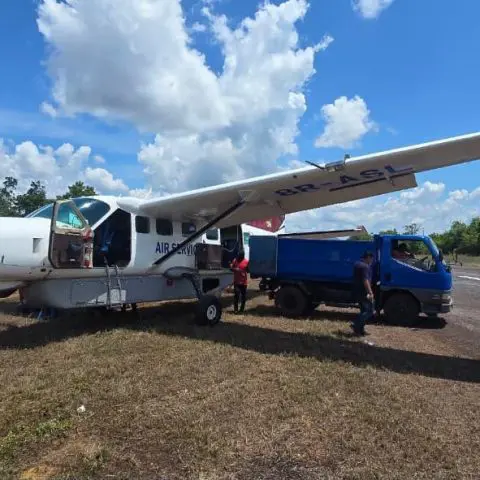
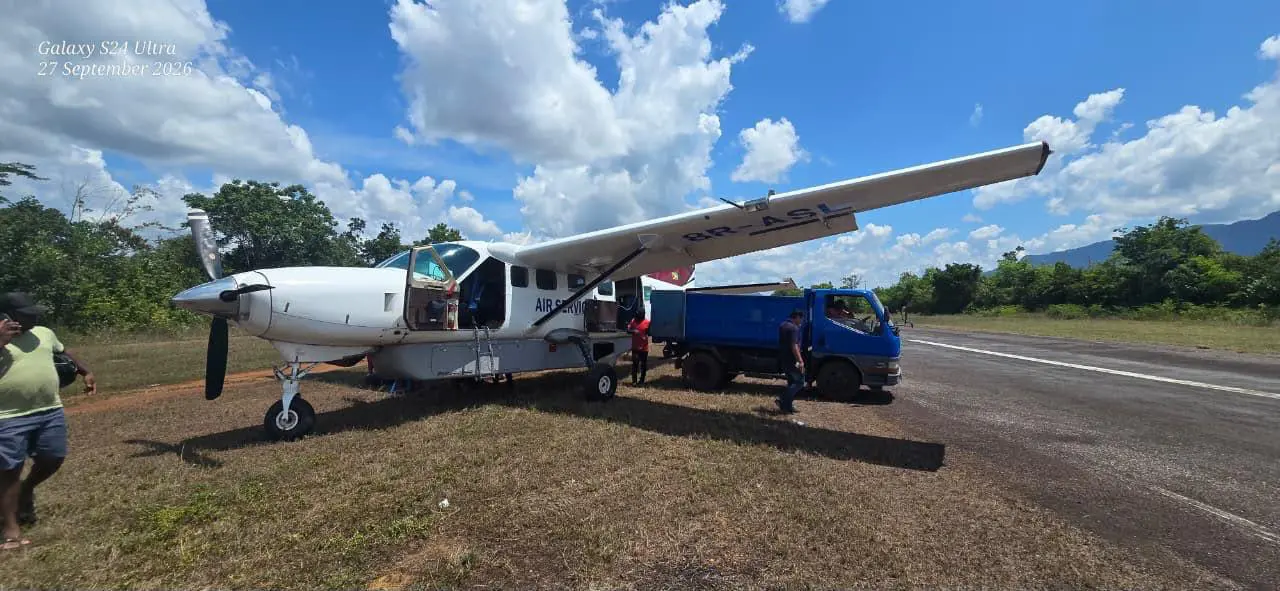
Air Services Limited (ASL) is set to construct Guyana’s first Fixed-Base Operator (FBO) facility as the local aviation company expands its operations to meet growing demand associated with the country’s economic development.

The planned facility, according to ASL, is expected to raise the standard of executive aviation services in Guyana, providing dedicated services for business and corporate aircraft. These will include passenger handling, VIP lounges and concierge services, as well as aircraft ground handling, refuelling and flight dispatching.

The facility will also provide specialised mechanical, maintenance and engineering support for corporate aircraft, further strengthening Guyana’s aviation infrastructure.

The FBO forms part of a wider expansion programme by ASL, the company said in a statement on Sunday. It noted that the company has made significant investments in its fleet and operations over the past two years. The company said it has added seven new aircraft to its fleet during this period, representing a multi-million-dollar investment aimed at increasing flight schedules, passenger capacity and the reliability of air transport services across Guyana.

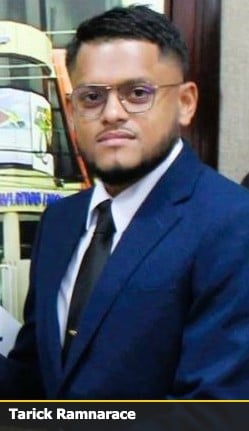
Accountable Manager of ASL, Captain Tarick Ramnarace, said the company’s investment programme reflects its confidence in Guyana’s economic growth and its commitment to supporting national development.

“We strongly believe in the Government’s vision for the economic transformation of Guyana, and ASL is fully committed to playing an active role in driving that momentum,” Ramnarace said. “Our heavy investments demonstrate our complete confidence in the local economy and the administration’s policies. We are happy to invest directly into Guyana’s future,” he noted.

ASL’s expansion comes as the company continues to provide air transport services to communities across the country, particularly in the hinterland. The company currently serves communities spanning Regions One through Ten and provides passenger and cargo transportation to remote areas, including the movement of food and other essential supplies.

The airline also conducts emergency medical evacuation, or medevac, operations across Guyana, providing air transportation for patients in remote communities who require urgent medical care.

In addition to expanding its fleet, ASL has increased its daily flight schedules by as much as 30 per cent, with additional departures being offered across the country to meet increasing demand.

The company’s expansion is also extending into specialised aviation services. Its rotary-wing division is expanding its helicopter fleet to support charter, utility and logistical operations, including those associated with major industrial and offshore projects, the company said in its statement.

ASL is also upgrading its agricultural aviation fleet to increase aerial application capabilities in support of Guyana’s growing and modernising agricultural sector.

The expansion is expected to generate employment opportunities, with ASL projecting the creation of approximately 150 new jobs. The company currently employs more than 300 people, with its workforce drawn from communities across Regions One through Ten.

ASL is also investing in the development of Guyanese aviation professionals by sponsoring local mechanics and pilots and supporting their technical training and flight qualifications through its accredited training programmes.

According to the company, the initiative is intended to strengthen the local aviation workforce by ensuring that more Guyanese professionals are trained to operate, maintain and support the country’s expanding aviation sector.

With more than five decades of experience connecting hinterland communities with urban centres, ASL said its current expansion builds on its longstanding role in Guyana’s aviation industry.

The company is also laying the groundwork for future regional charter services as demand for international and business travel continues to grow.

“We have successfully connected our hinterland communities to the rest of Guyana,” Ramnarace said. “Now, as we sponsor the next generation of local pilots and mechanics, construct our new FBO, and prepare for regional charters, we are taking the next major step forward in Guyana’s aviation history. This expansion is just the beginning.”


Source: NEW ROOMS SITE
GWI opens $100 five-gallon water refill station in Vergenoegen

0

https://kiskadeewatch.com/guyana/gwi-opens-100-five-gallon-water-refill-station-in-vergenoegen/

GWI opens $100 five-gallon water refill station in Vergenoegen


Refilling water

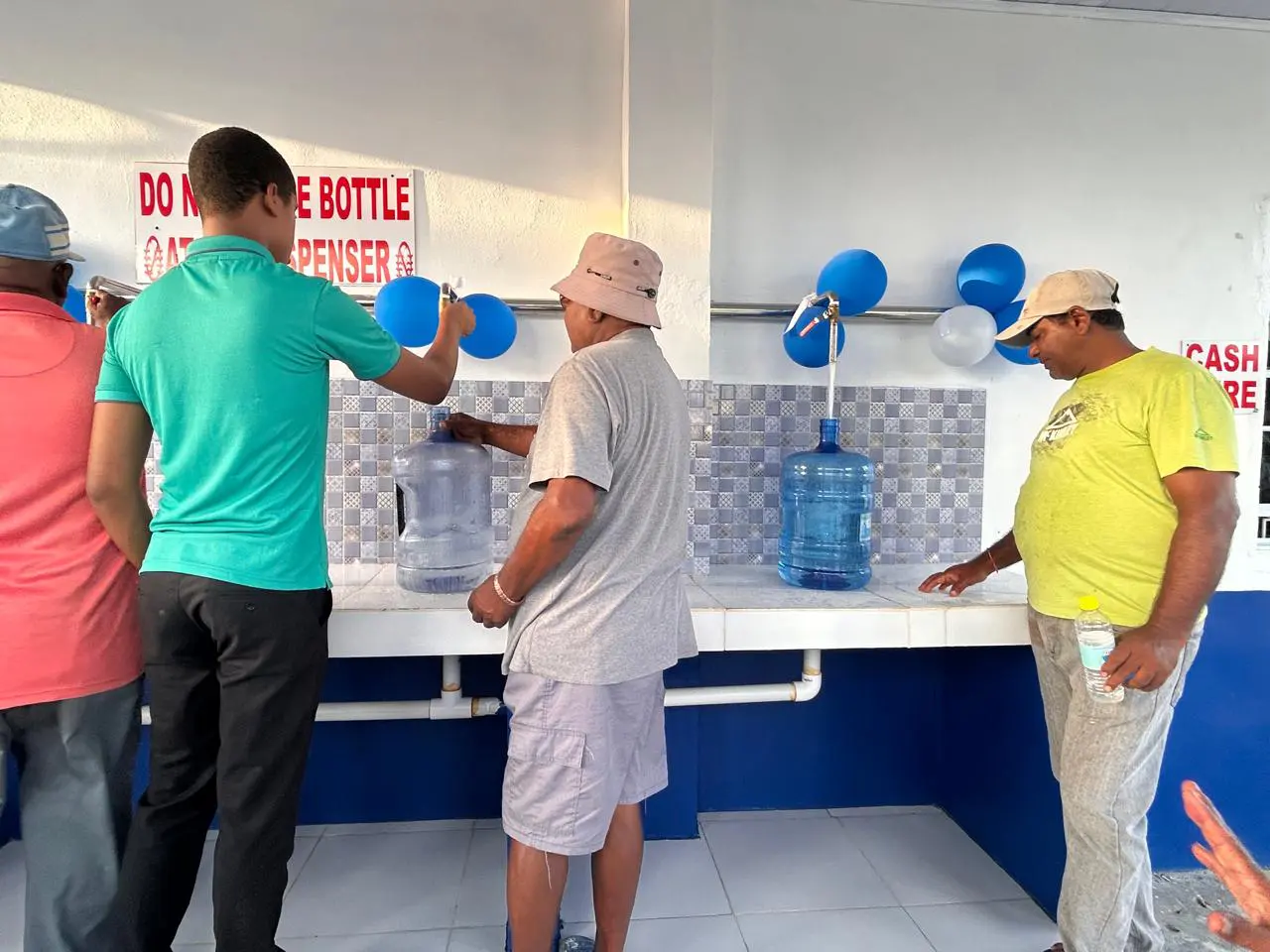
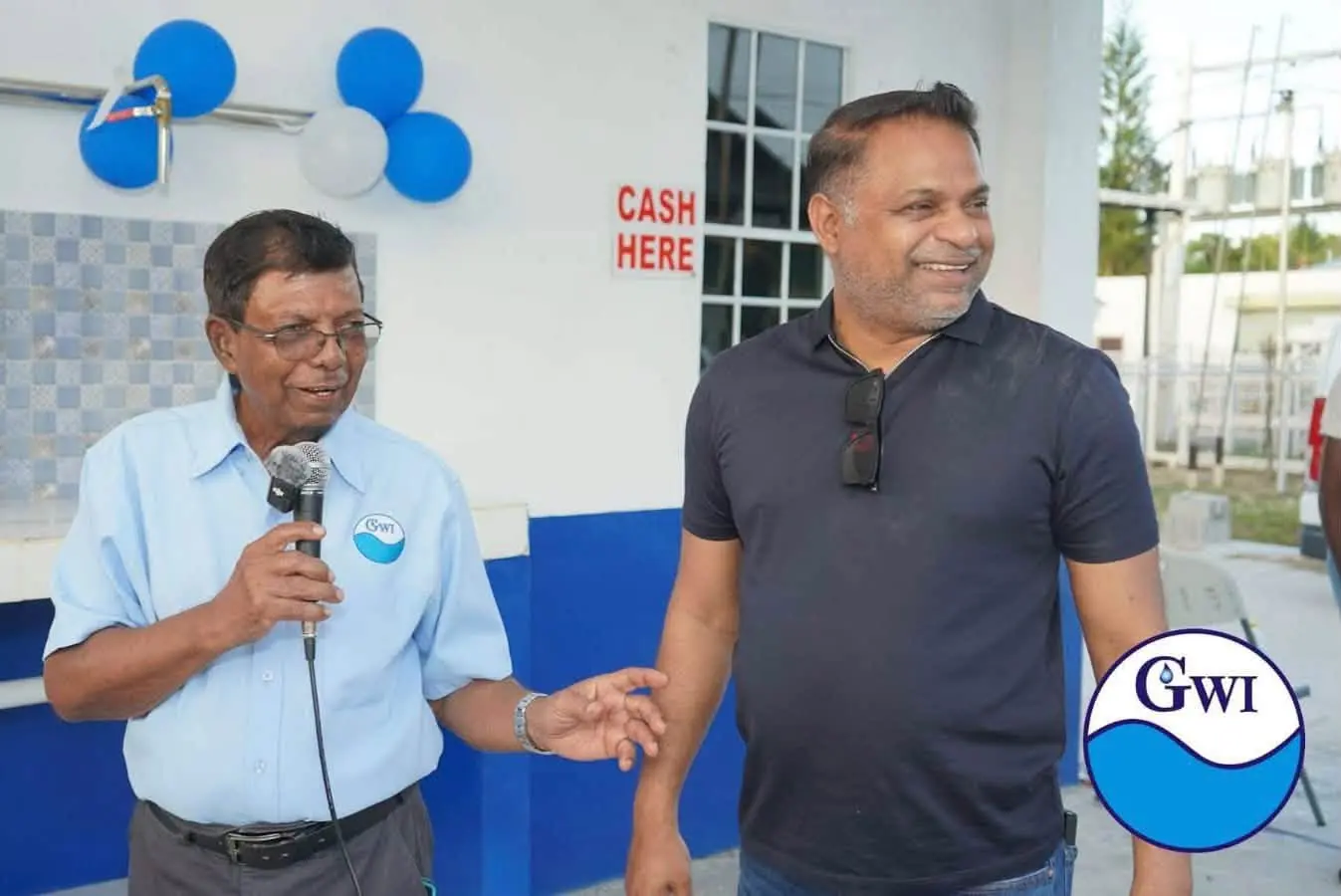
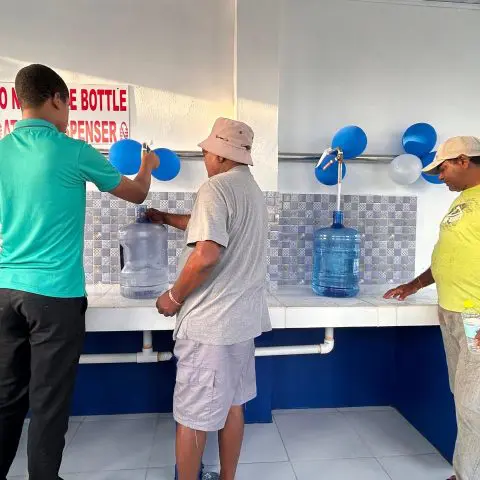
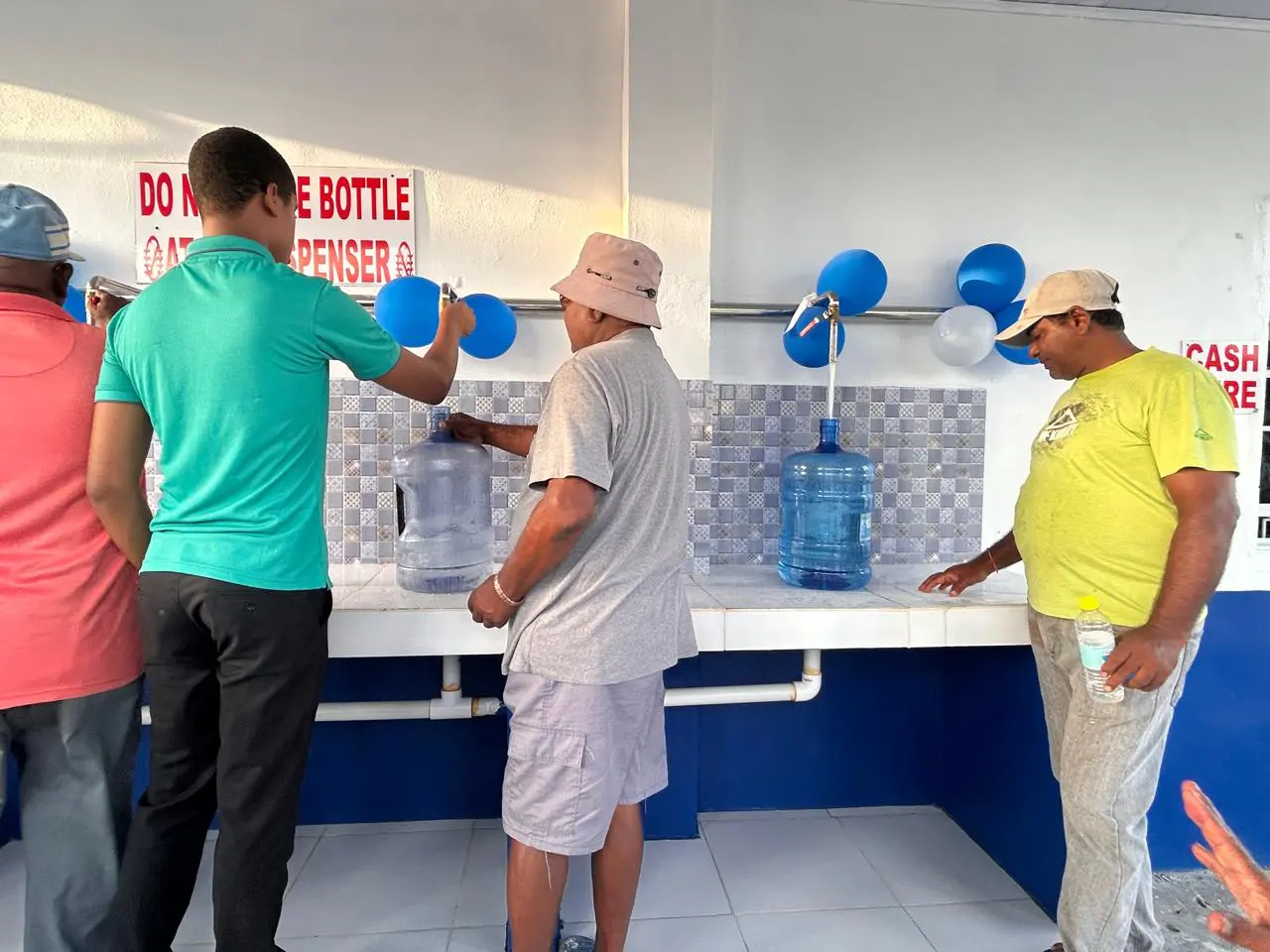
Residents without direct access to purified water in Vergenoegen and surrounding communities can now fill a five-gallon container for just $100, following the official opening of a Guyana Water Incorporated (GWI) water refilling station in Vergenoegen, Region Three yesterday.

The new facility is intended to provide a low-cost option for residents in areas where households either do not have water connections or are forced to pay significantly more to access water.

The water filling staton

Minister of Public Utilities and Aviation Deodat Indar said the initiative could make a significant difference for families in communities such as Tuschen and Zeelugt, particularly those living in the backlands and along the dams who have limited access to purified water.

Indar said residents in these areas often pay significantly more for water, making the $100 five-gallon refill an important alternative for families who need water for cooking, preparing meals and other daily household needs.

“It’s a simple thing in the eyes of many, but it means a lot for people who does not have access to purified water so they can consume directly,” Indar said.

GWI Chief Executive Officer Shaik Baksh said the Vergenoegen station is one of several water refilling facilities being established across Guyana, with GWI targeting at least two or three stations in each region.

Stations have already been opened in Region Two, Port Mourant in Region Six and Pouderoyen in Region 3, while Baksh said additional stations are planned for communities including Bartica and Linden.

According to Baksh, the initiative followed a visit to GWI by President Irfaan Ali, who gave the utility a mandate to expand water services to communities across the country.

Indar said the government is also working to extend the treated-water network to residents who currently lack direct access.

He disclosed that GWI is constructing a new transmission line from the Vega treatment plant to supply purified water to residents in the backlands of Tuschen.

A new well is also being drilled at Vergenoegen, while additional wells are being developed in Meten-Meer-Zorg, Leonora, Stewartville and Wales to expand access to water in growing communities.

Indar also addressed problems with existing distribution infrastructure in new housing areas, saying some water lines have been vandalised, with sections of the mains and connections at trench crossings removed.

He said GWI is working with the Central Housing and Planning Authority (CH&PA) to repair the damaged infrastructure so that water can be supplied to affected residents.

According to Indar, once the distribution lines are restored, GWI may initially provide water on a scheduled basis, allowing residents to fill their tanks while the system is expanded.

Indar also urged residents not to vandalise water infrastructure, stressing that the facilities are intended to serve the communities.

He encouraged residents to report damage or other problems with the water system so that GWI can respond and carry out the necessary repairs.

The Vergenoegen water shop forms part of GWI’s broader programme to make treated water more accessible and affordable across Guyana.

You reached the end of this article without encountering a paywall.

That is deliberate. We believe reliable journalism about Guyana should be available to everyone from the hinterland to the coast, including those who cannot afford to pay for it. But investigating, reporting and publishing every story takes time, energy and resources. Keeping our journalism open depends on the commitment of readers who can chip in and contribute to help cover the cost for everyone.

Please join the Kiskadee family by taking a subscription. Every contribution counts to our commitment to our journalists, to our readers, and to independent, public-interest journalism.

And please spread the word. One one dutty build dam!


Become a supporter


Source: Kiskadee Watch

The necessity of access to information in the education of the nation

0

https://kiskadeewatch.com/opinion/letters/the-necessity-of-access-to-information-in-the-education-of-the-nation/

Letters To The Editor

The necessity of access to information in the education of the nation

Dear Editor,

              Right thinking people in the 21st century do not want to remain at the mercy of tyrants and thieves that can infest the political system. To be sure, there were such people throughout the ages, but the increasing regulation of savagery requires a commensurate increase in available information. We are already aware that access to information in science and technology has multiplied the institutions of learning to try to encompass everyone born on Earth. There are still inequalities, but the ideals of the education system have largely allowed the sharing of knowledge via peer reviewed academic publication and international conferences.

              In its own words, “UNESCO, the United Nations Educational, Scientific and Cultural Organization, is a specialized agency dedicated to strengthening international cooperation in the fields of education, science, culture, and information.” So, “recognizing the significance of access to information, the 74th UN General Assembly proclaimed 28 September as the International Day for Universal Access to Information (IDUAI) at the UN level in October 2019.”  

I have invested many years as an educator in my country. I want to stress what I have said before about the necessity of access to information in the education of the nation. As a student in the days when we still had functioning railroads, the applied maths textbooks were replete with problems about the powers, resistances and velocities of locomotives. The chemistry textbooks and examination syllabi considered the extraction of aluminium from bauxite. These were left over from colonial priorities. Why can’t we now have oil and gas extraction, finance and economics in our curricula? The obvious answer is that the government controlled institutions like the Bureau of Statistics do not release sufficient true figures to local university researchers, who will be unable to distill it into credible bits for secondary and primary schools.  

Colleagues Cyril Hunte and Mike Persaud wrote about the necessity of knowing what natural resources we have. Kaieteur News (in print!) and Kiskadee Watch used up space to publish their large blank table on a variety of natural resources. Years before, I had submitted an equally big blank table on only oil and gas to the Ministry of Natural Resources to no avail. This is the state of ignorance we are kept in about what we own. I even asked the Commissioner of Information, but he used the bad Access to Information Act, with designed impunity, to give no reply and no reason for no reply to this citizen. The government feels it knows what is good for Guyanese, but what they might designate as expedience is really only a mask for a lack of accountability, which encourages similar behaviour all down the chain of command until it manifests itself in disasters like road and river transport accidents. Selective enforcement is used to keep critics quiet and perpetuate the enrichment of the few at the expense of the many. 

The government and its apologists claim that information can be found in Bank of Guyana reports. This insults thinking citizens. There is no way to see how such figures are composed and distributed. They declare the amount of oil money every quarter that goes into the NRF, but refuse, e.g., to supply details of the breakdown of the extraction into oil produced and sold, oil used for operations, and losses. There must be oilfield development plans, but none are published so that citizens can track the state of our natural resource against what is extracted and the expected remainder, and the latter’s state. 

Our useless Commissioner of Information should be writing something like what I am writing, as a paid advertisement in national news outlets, and taking pro-active interest in disseminating details of information that add up and balance. UNESCO says, “We set standards, produce tools and develop knowledge to create solutions to some of the greatest challenges of our time, and foster a world of greater equality and peace.” So far, we are left to perceive that the secrecies of the political bosses deny citizens this kind of knowledge and opportunity to create solutions; they look instead to colonize themselves to the foreign exploiters, making their personal fortunes, not ours.

Yours sincerely,

Alfred Bhulai

Access to Information advocate

You reached the end of this article without encountering a paywall.

That is deliberate. We believe reliable journalism about Guyana should be available to everyone from the hinterland to the coast, including those who cannot afford to pay for it. But investigating, reporting and publishing every story takes time, energy and resources. Keeping our journalism open depends on the commitment of readers who can chip in and contribute to help cover the cost for everyone.

Please join the Kiskadee family by taking a subscription. Every contribution counts to our commitment to our journalists, to our readers, and to independent, public-interest journalism.

And please spread the word. One one dutty build dam!


Become a supporter


Source: Kiskadee Watch

GWI to drill 14 wells for new housing schemes amid water shortages

0

https://kiskadeewatch.com/guyana/gwi-to-drill-14-wells-for-new-housing-schemes-amid-water-shortages/

GWI to drill 14 wells for new housing schemes amid water shortages


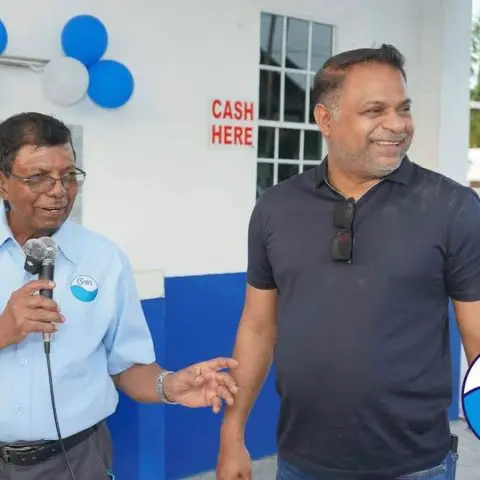
Shaik Baksh (left) and Minister of Public Utilities Deodat Indar at the opening of the filling station yesterday.

The Guyana Water Incorporated (GWI) is set to drill 14 new wells to provide water to residents of housing developments across the country, as the utility moves to address growing water-supply challenges in expanding communities.

GWI Chief Executive Officer Shaik Baksh announced the planned works during the opening of the utility’s water refilling station at Vergenoegen, Region Three, saying the wells will target new housing areas developed by the Central Housing and Planning Authority (CH&PA).

Among the Region Three communities identified are Meten-Meer-Zorg, De Kinderen, Leonora and Stewartville, with Baksh saying drilling could begin as early as October or November, subject to the contractor process.

“We will be drilling 14 wells, new wells for those areas, targeting those areas,” Baksh said.

He acknowledged that residents moving into the new housing schemes may face difficulties in the meantime, explaining that the existing water system cannot simply be extended to some of the developments because of their size and location.

“As you move into those areas you might face some hardships now, but the existing system cannot extend because these are huge, large schemes,” Baksh said.

The announcement comes against the backdrop of ongoing water problems in some of the very communities identified for additional infrastructure.

Residents of the Meten-Meer-Zorg Housing Scheme previously told Kiskadee Watch that they have gone more than two years without a reliable water supply, forcing families to spend heavily on water or turn to alternative sources.

Resident Lorna Cornelius said she pays approximately $400 for a five-gallon bottle of water, but cannot afford to purchase enough to meet all of her household’s needs.

With two children attending secondary school, Cornelius said the lack of water has even forced her to use water from a nearby trench to wash their school clothes.

Residents told Kiskadee Watch that they collect rainwater when possible and use nearby trenches and makeshift ponds for activities such as washing, while purchasing water for drinking and cooking.

The situation has placed an additional financial burden on households that have already paid hundreds of thousands of dollars for their house lots.

Baksh said GWI is moving to address the water-supply gap through a combination of new wells and larger treatment infrastructure.

He said a major surface-water treatment plant is planned for Region Three, near the back of Stewartville, which would draw water from the Boerasirie Conservancy and supply new housing areas along the West Coast corridor.

The project is expected to take approximately two years once construction begins.

GWI also plans to install another treatment plant at LBI to serve the East Coast corridor.

Baksh said the broader objective is to ensure that residents of the new housing developments eventually receive treated water.

“We’re on the move to ensure that the new housing areas get treated water also,” he said.

He acknowledged, however, that the infrastructure projects will take time to complete and urged residents to be patient as GWI works to expand the system.

The planned investments come as housing development continues to push farther into areas where existing water infrastructure was not designed to serve the growing population.

Baksh said GWI has identified nearly 80 new housing developments that require water infrastructure.

The utility is therefore pursuing both immediate and long-term solutions, with the 14 wells expected to provide additional sources of water while larger treatment plants and transmission systems are developed.

For residents of communities such as Meten-Meer-Zorg, the planned works could eventually address a problem they say has persisted for years, but the immediate challenge remains accessing reliable water while the new infrastructure is being put in place.

You reached the end of this article without encountering a paywall.

That is deliberate. We believe reliable journalism about Guyana should be available to everyone from the hinterland to the coast, including those who cannot afford to pay for it. But investigating, reporting and publishing every story takes time, energy and resources. Keeping our journalism open depends on the commitment of readers who can chip in and contribute to help cover the cost for everyone.

Please join the Kiskadee family by taking a subscription. Every contribution counts to our commitment to our journalists, to our readers, and to independent, public-interest journalism.

And please spread the word. One one dutty build dam!


Become a supporter


Source: Kiskadee Watch

Manickchand unveils changes to Georgetown garbage collection 

0

https://kiskadeewatch.com/guyana/manickchand-unveils-changes-to-georgetown-garbage-collection/

Manickchand unveils changes to Georgetown garbage collection 


Priya Manickchand (DPI photo)

Minister of Local Government Priya Manickchand says changes are being made to Georgetown’s garbage collection system, including the removal of a 48-hour grace period for private contractors to correct missed pickups.

In a video posted to her Facebook page on Friday, Manickchand said garbage contractors currently have up to 48 hours under their contracts with City Hall to address failures to collect garbage.

She said the arrangement contributes to garbage remaining on the streets, creating problems with flies, mosquitoes, animals scattering waste and garbage entering drains and waterways.

Manickchand said discussions with garbage collectors have resulted in an agreement to change the 48-hour provision. Under the proposed arrangement, City Hall would undertake the collection itself and charge the contractor if a pickup is missed.

She also announced plans to collaborate with City Hall to reinstitute pickup of carpet waste, which she said has not been routinely collected since around 2016 or 2017.

According to Manickchand, skip bins have also been placed at locations where illegal dumping has become common, while City Hall is instituting a second garbage collection in densely populated communities in collaboration with the Ministry of Local Government.

She urged residents to stop dumping garbage on streets and said the Government is also working with the Environmental Protection Agency and the Guyana Police Force to enforce anti-littering laws through the Municipal Court.

Manickchand said enforcement would apply regardless of a person’s age, occupation, political affiliation or other circumstances.

The Minister further said the garbage collection approach would be extended to Neighbourhood Democratic Councils across the country, using government-provided tractors, trailers and garbage trucks, with independent monitors reporting directly to the Ministry.

She said the objective is to improve garbage collection and address the accumulation of waste in Georgetown and communities across the country.

“Get ready for a clean city,” Manickchand said, while acknowledging that achieving the changes would not be easy.

You reached the end of this article without encountering a paywall.

That is deliberate. We believe reliable journalism about Guyana should be available to everyone from the hinterland to the coast, including those who cannot afford to pay for it. But investigating, reporting and publishing every story takes time, energy and resources. Keeping our journalism open depends on the commitment of readers who can chip in and contribute to help cover the cost for everyone.

Please join the Kiskadee family by taking a subscription. Every contribution counts to our commitment to our journalists, to our readers, and to independent, public-interest journalism.

And please spread the word. One one dutty build dam!


Become a supporter


Source: Kiskadee Watch

Mighty Sparrow’s early Guyana tours helped shape a calypso legend

0

https://kiskadeewatch.com/guyana/mighty-sparrows-early-guyana-tours-helped-shape-a-calypso-legend/

Mighty Sparrow’s early Guyana tours helped shape a calypso legend


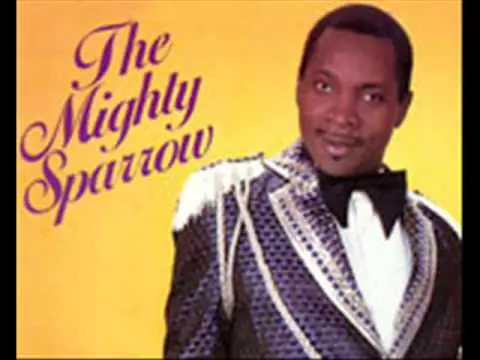
Slinger Francisco, the Mighty Sparrow

Slinger Francisco, the Mighty Sparrow, whose voice, wit and social commentary helped carry calypso far beyond the Carnival tents of Trinidad and Tobago, died yesterday in New York. He was 91.

His daughter Karen Francisco said in a Facebook post that he died peacefully, surrounded by family, after a brief illness. She described him as an institution in entertainment, admired as a singer, songwriter and mentor, but remembered by those closest to him as a husband, father, grandfather, great-grandfather, life partner and friend. 

Born on July 9, 1935, in Grand Roi, Grenada, Sparrow grew up in Trinidad and Tobago. According to that country’s National Archives, he made his calypso debut at the Old Brigade Tent in South Quay in 1955. The following year, Jean and Dinah won him both the Calypso King crown and the Road March title, establishing the young performer as a major force in the art form. He would go on to win each competition eight times and twice take the Calypso King of Kings title. 

His catalogue ranged from the playful and suggestive to pointed examinations of politics, education, race and Caribbean identity. Songs such as Jean and Dinah, No Money, No Love, Slave, Education, Federation and Phillip My Dear showed the breadth of a performer who could entertain a crowd while asking it to consider the society around it. A tribute concert staged in Trinidad last year for his 90th birthday brought together younger and veteran singers to perform songs from across that career. 

Guyana formed part of Sparrow’s story before his first great Carnival triumph. As Stabroek News reported in a 2009 account of Guyanese promoter Cyril Shaw, the young singer was left in British Guiana with other performers after a 1955 tour and was introduced to Shaw, who took him into a troupe travelling through the interior. Shaw recalled difficult journeys and poor accommodation, but said Sparrow’s singing and determination kept the troupe’s spirits up. Sparrow became a favourite on the tour, performing songs that included High Cost of Living. 

Shaw arranged for him to return after the 1956 Carnival and urged him to win the calypso crown first. Sparrow did so with Jean and Dinah, also taking the Road March title. Shaw later became his manager and travelled with him internationally. When Shaw died in 2012, Sparrow acknowledged the promoter’s contribution, saying: “Cyril Shaw is the man!”

Sparrow’s connection with Guyanese audiences endured. Ahead of a Georgetown concert in 2014, he told reporters of his affection for Guyana and recalled the many tours he had made here. He said audiences in different parts of the country joined in his performances and gave him energy on stage. Although he had suffered serious illness the year before, he still treated reporters at that appearance to an impromptu song.

Trinidad and Tobago Prime Minister Kamla Persad-Bissessar said yesterday that the country had lost a patriot and an ambassador for its culture. Sparrow’s music, she said, had made people laugh, think and feel proud of who they were. She extended condolences to his family on behalf of the government and people of Trinidad and Tobago.

The PNCR and APNU also extended condolences, saying generations of Guyanese had enjoyed and cherished his work. The parties said Sparrow used calypso for storytelling, humour and social commentary, and that his music chronicled the experiences and aspirations of Caribbean people.

The National Archives of Trinidad noted that Sparrow performed across the Caribbean, Africa, the United States, Canada and Europe. Among the honours he received were an honorary Doctor of Letters from the University of the West Indies in 1987, Trinidad and Tobago’s Chaconia Medal (Gold) in 1993 and the Order of the Caribbean Community in 2001. He was appointed an Officer of the Order of the British Empire in 2015 for services to culture. CARICOM has described him as an entertainer and social commentator whose songs gave expression to the region’s politics, history and daily life. 

Karen Francisco said the family took comfort in her father’s Christian faith. Sparrow was baptised into the Seventh-day Adventist Church in New York in 2022, an event reported at the time by Stabroek News. The family said it was preparing an appropriate gathering to celebrate his life.

You reached the end of this article without encountering a paywall.

That is deliberate. We believe reliable journalism about Guyana should be available to everyone from the hinterland to the coast, including those who cannot afford to pay for it. But investigating, reporting and publishing every story takes time, energy and resources. Keeping our journalism open depends on the commitment of readers who can chip in and contribute to help cover the cost for everyone.

Please join the Kiskadee family by taking a subscription. Every contribution counts to our commitment to our journalists, to our readers, and to independent, public-interest journalism.

And please spread the word. One one dutty build dam!


Become a supporter


Source: Kiskadee Watch