https://kiskadeewatch.com/guyana/coi-secretary-unable-to-say-whether-ministers-will-testify-in-mv-barima-inquiry/







https://kiskadeewatch.com/guyana/coi-secretary-unable-to-say-whether-ministers-will-testify-in-mv-barima-inquiry/
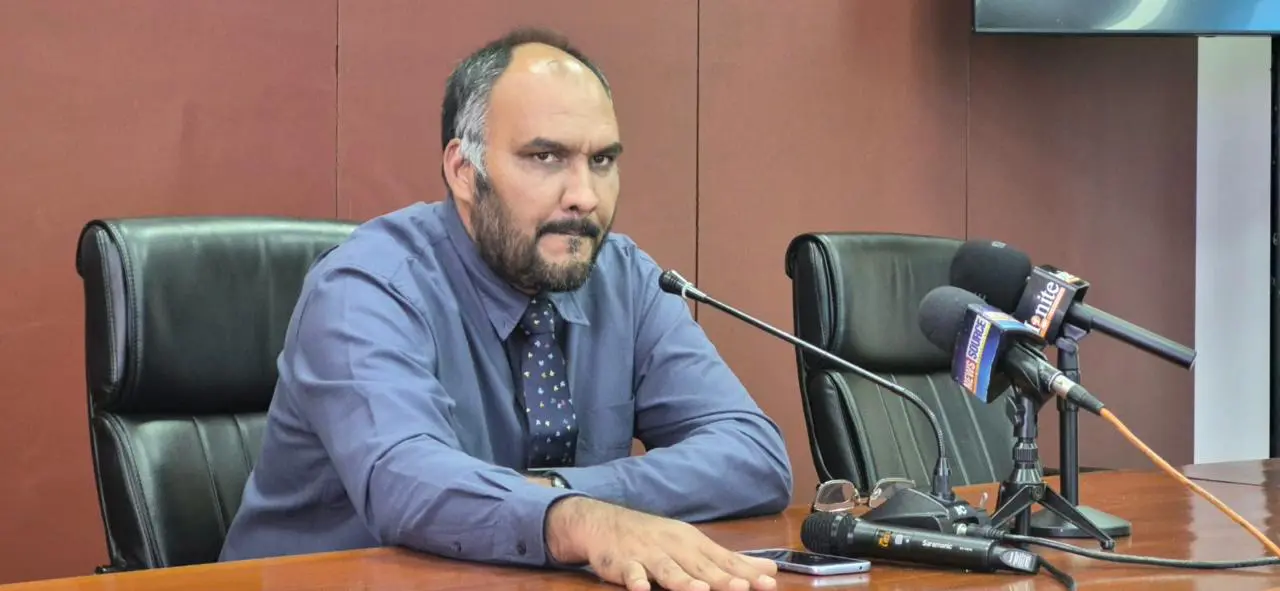
Secretary to the Commission of Inquiry (COI) into the MV Barima tragedy Javed Shadick was today unable to say whether Public Works Minister Juan Edghill and Minister of Public Utilities and Aviation Deodat Indar will be called to testify when the Commission begins its formal work next week Wednesday.
Shadick met with members of the media at the Arthur Chung Conference Centre, Liliendaal, where the COI’s secretariat is located, and was asked by Kiskadee Watch whether the two ministers, whose portfolios include responsibility for areas connected to maritime infrastructure and public works, would be among those summoned to give evidence before the Commission.
He said that he could not say at this stage whether Indar and Edghill would be called to testify. The two ministers have come under intense pressure to resign over the catastrophe.
The Commission is expected to officially begin taking evidence next Wednesday as it moves into the substantive phase of its inquiry into the MV Barima disaster.
The vessel capsized off Guyana’s coast in August, resulting in the deaths of dozens of people and leaving 76 survivors. The COI is expected to unravel details about the vessel’s condition, regulatory oversight, passenger safety and the circumstances surrounding its operation.
The Commission is further tasked with examining the circumstances surrounding the disaster and determining what factors contributed to the loss of life.
The Commission’s proceedings are expected to provide an opportunity for witnesses and other relevant parties to present information about the circumstances before, during and after the tragedy.
The inquiry comes in the face of public concern from relatives of victims, survivors, civil society groups and opposition figures over accountability for the disaster.
The government has previously announced that the inquiry would be conducted by an international commission, with the aim of establishing the facts surrounding the tragedy and making recommendations to prevent a recurrence.
Source: Kiskadee Watch
The Presidential Commission of Inquiry (COI) into the MV Barima tragedy will meet survivors and relatives of those who died in Georgetown, Mabaruma and Port Kaituma, before it begins taking evidence at its first sitting next Wednesday.
Secretary to the Commission, Javed Shadick outlined the schedule at a press conference on Tuesday at the Arthur Chung Conference Centre (ACCC).
He told reporters that the community meetings are outreach sessions and that formal testimony will be heard only when the Commission sits.

“At these meetings, there is no evidence to be taken,” he said.
The Commission opens formally at 10:00 on Wednesday (October 7). In the afternoon, Commissioners will meet families and survivors living on the coast.
On Thursday from around 09:00, the Commissioners will tour the Kingston wharf, the Maritime Administrative Department (MARAD) and the Transport and Harbours Department (T&HD).
They will also visit two dry-dock facilities on the East Bank of Demerara on Friday.

On Monday, they travel to Mabaruma to view the waterfront facility and meet families and survivors from surrounding communities. The same programme follows at Port Kaituma on Tuesday.
The secretary noted that several Commissioners are shipping experts.
He said the site visits will allow them to see conditions, and the relevant parties will later be called before the Commission.
Counsel for the Commission will interview persons believed to know about the events. Witnesses fall broadly into first responders, officials, survivors, and families of the deceased.
“Our initial count, we’re looking at more than 100 witnesses,” the Secretary said.
A public notice inviting interested persons to testify remains open.
The Commission is also considering hearings outside Georgetown, including in Region One.
The secretary said turnout at this week’s family meetings will guide that decision. He added that arrangements are being made to assist persons who do not speak English.
The Commission’s original two-month timeframe will be extended. The final report will be prepared once all evidence is heard, with an initial estimate of about six months.
The Commission’s secretariat has been operating since August 3. Documents have already been submitted and are being reviewed by the Commissioners.
Hearings will begin at 09:00 daily, though the Secretary said times may be adjusted.
The CoI was established under Section 2(1) of the Commissions of Inquiry Act, Chapter 19:03, to investigate the circumstances surrounding the capsizing and sinking of the MV Barima, owned and operated by the Transport and Harbours Department, on the night of July 18, 2026.
The commission is expected to submit its findings, observations and recommendations to President Dr Mohamed Irfaan Ali upon completion of its work.
The five-member commission is chaired by Justice Godfrey Phillip Smith of Belize, CARICOM High-Level Representative for Law and Criminal Justice and an Ad Hoc Justice of the Eastern Caribbean Court of Appeal.
The other members are: Dr Andrzej Jasionowski of Poland, a Naval Architect and Marine Engineer who has advised on investigations into several major maritime disasters; Captain Hamada Fouda, Senior Maritime Surveyor and Compliance Auditor with the Maritime Authority of Jamaica; Nyree Dawn Alfonso of Trinidad and Tobago, an Attorney-at-Law with expertise in Admiralty and Maritime Law; and Rear Admiral (Ret’d) Hayden Pritchard of Trinidad and Tobago, a maritime professional with decades of experience in maritime operations and maritime security.

The government has maintained that it has nothing to hide and has met with families of the deceased and survivors throughout and after the ordeal.
The families and survivors of the MV Barima tragedy were offered counselling and other services by the Ministries of Health and Human Services and Social Security.
They were assisted in burying their loved ones with the support of the government. No one was offered a financial settlement. From the start of the tragedy,
President Dr Mohamed Irfaan Ali said that he was saddened by the incident. He flew to the region to meet with families as search and rescue operations were underway.
Shortly after, President Ali announced the COI and said it had been given a broad mandate to examine every relevant aspect of the disaster.

It will also determine the facts surrounding the sinking and identify its causes and contributing factors. The COI will assess compliance with maritime laws and operational standards and review the effectiveness of the search, among other areas.
“The families who have suffered unimaginable loss await these answers. Future generations deserve the assurance that every lesson that can be learned from this tragedy will indeed be learned,” President Ali said.
Emphasising the commission’s independence, the president has said its composition reflects the highest standards of professionalism and impartiality.
He noted that the commissioners collectively possess internationally recognised expertise in law, marine engineering, maritime operations, maritime regulation and disaster investigations, adding that their experience will enhance the credibility and thoroughness of the inquiry.
He also assured the commissioners that the government will provide all administrative, technical, financial and logistical support required to enable a comprehensive and independent investigation.
President Ali expressed confidence that the commission will execute its mandate with diligence, integrity and fairness, while providing the answers the nation seeks following one of Guyana’s worst maritime tragedies.
The CoI was established under Section 2(1) of the Commissions of Inquiry Act, Chapter 19:03, to investigate the circumstances surrounding the capsizing and sinking of the MV Barima, owned and operated by the Transport and Harbours Department, on the night of July 18, 2026.
The commission is expected to submit its findings, observations, and recommendations to President Ali upon completion of its work. Of the estimated 179 passengers and crew who were aboard the MV Barima, 72 bodies were recovered, 30 could not be accounted for, and 76 were rescued.
The Commission of Inquiry into the MV Barima tragedy will begin formal hearings on October 14, with more than 100 witnesses expected to give evidence as investigators seek to determine what led to the vessel’s capsizing and sinking on July 18 last year.
Secretary to the Commission, Javed Shadick, made the disclosure on Tuesday during a press briefing outlining the Commission’s schedule and preparations for the start of evidence taking.
The hearings will be held at the Arthur Chung Conference Centre (ACCC) at Liliendaal, where the Commission Secretariat is based. Proceedings will run from Mondays to Fridays, between 9:00h and 16:00h. Interpreters and counselors will be available where necessary.
Shadick explained that the witnesses have been divided into several broad categories, including first responders, government officials, survivors, and relatives of those who died in the tragedy.
However, despite a public notice issued last week inviting persons with information to come forward, only one survivor has so far contacted the Secretariat indicating an intention to testify. Prior to the start of formal hearings, the commissioners will undertake a series of meetings and site visits.

The Commission will officially begin its work at 10:00h on October 7, when the commissioners are scheduled to meet with families of survivors from Regions Three, Four, and Five.
On October 8, they will visit Kingston Wharf, the Maritime Administration Department (MARAD), and the Transport and Harbours Department. The following day, October 9, the commissioners will inspect two dry-dock facilities on the East Bank of Demerara. The Commission will then travel to Mabaruma and Port Kaituma on October 12 and 13, respectively, to meet with survivors and relatives and visit wharf facilities.
Shadick emphasized that these engagements will not form part of the formal evidence-taking process. The Commission has been tasked with determining the full circumstances surrounding the MV Barima tragedy.
Meanwhile, the Commission was initially given two months to complete its work, but Shadick said an extension will be necessary due to the volume of evidence expected and the number of witnesses to be heard. He estimated that the Commission could take about six months to complete its work, although the final timeline will depend largely on how long the evidence-gathering process takes.
The five-member Commission is chaired by Belizean Justice Godfrey Phillip Smith. Its other members are Captain Hamada Fouda, Nyree Dawn Alfonso, Rear Admiral (Ret’d) Hayden Pritchard, and Dr. Andrzej Jasionowski.
The MV Barima capsized on Saturday, July 18, 2026, approximately 9.3 nautical miles off Devonshire Castle on the Essequibo Coast. The passenger and cargo ferry had departed the Kingston Goods Wharf in Georgetown at about 15:15h on its scheduled voyage to Port Kaituma.
However, at about 23:01h, the vessel transmitted a distress signal after encountering difficulties off the Essequibo Coast near the mouth of the Pomeroon River. A total of 179 people, including 18 crew members, were onboard. The disaster claimed 73 lives, while 76 people survived, and approximately 30 remain unaccounted for.
Source: INews Guyana
https://kiskadeewatch.com/world/caribbean/cuba-and-us-maintain-channels-of-communication-but-no-negotiations-diplomat-says/
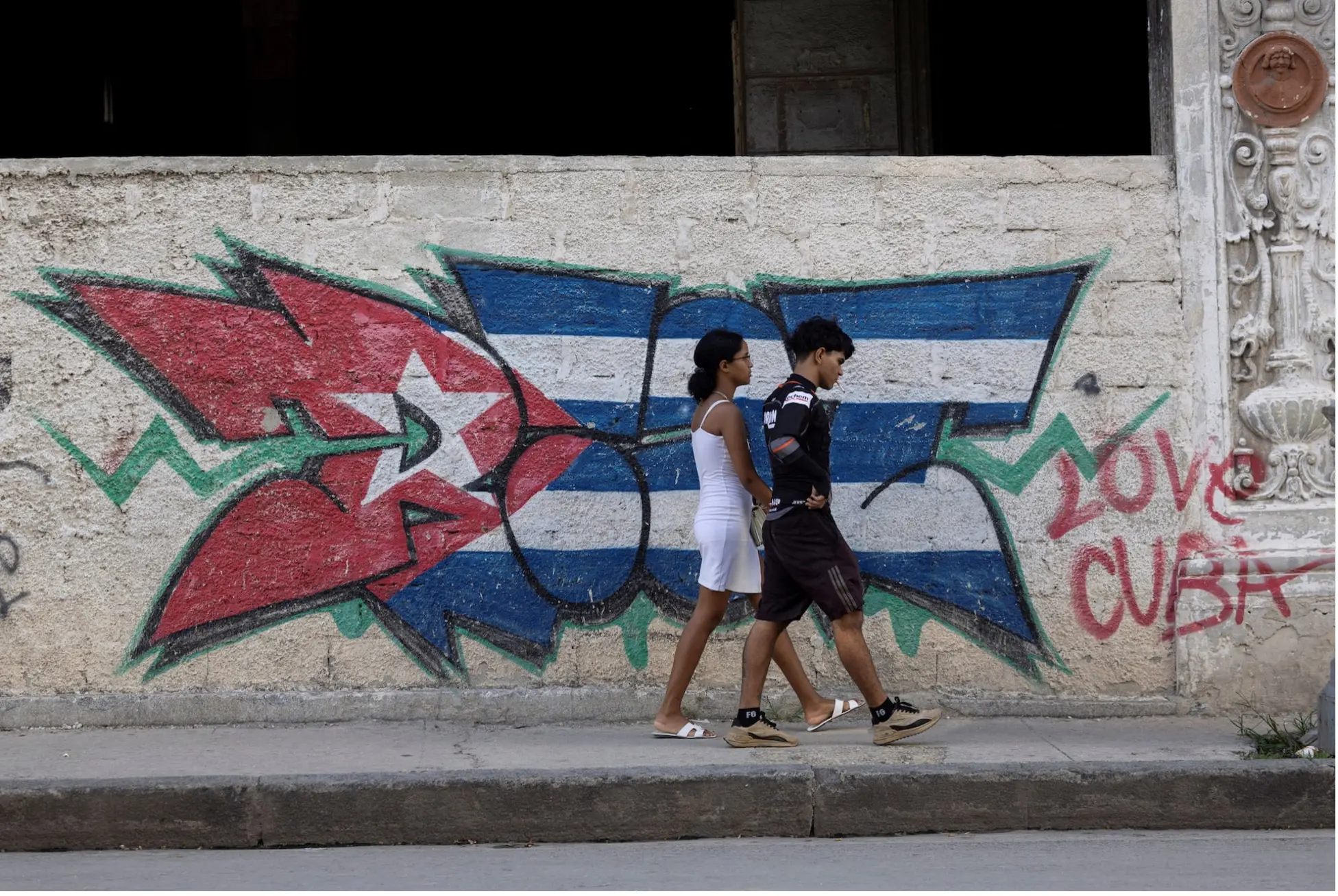
WASHINGTON, (Reuters) – Cuba and the United States have maintained “channels of communication” but are not engaged in any formal negotiations, Havana’s top diplomat in Washington told Reuters, as the Trump administration pursues a pressure campaign against the Communist-ruled island.
In an interview on Monday, Lianys Torres Rivera, chargé d’affaires at the embassy in Washington, said Cuba remains open to a “respectful” dialogue but is “not naive” about President Donald Trump’s threats and has increased preparations to defend itself against any US military action.
The latest US-Cuba diplomatic contacts have included meetings, phone calls and WhatsApp messages, but the two sides have made no progress toward a negotiating agenda or restarting official talks, she said.
“What we have with the US is channels of communication,” Torres Rivera said. She declined to provide details on the timing, topics and participants.
Her description of the communications appears to fall short of Trump’s assertion at the United Nations last month that Secretary of State Marco Rubio was “deep into negotiations” with Havana. Trump also called Cuba a “failed state” and predicted its government would fall. The Cuban delegation walked out in protest.
A US State Department spokesperson said: “It does not come to our surprise that the Cuban regime is circulating this propaganda. In all reality, talks are ongoing and the regime has been unwilling thus far to agree to anything that would help the Cuban people, ultimately, threatening its total control.”
Trump has openly stated that his goal is to fundamentally change Cuba’s government. A US-imposed oil blockade has put the country under severe strain as it contends with fuel shortages and blackouts exacerbated by failing infrastructure. UN human rights experts have condemned the oil blockade as a violation of international law.
Cuban Foreign Minister Bruno Rodriguez said at the end of June that talks initiated earlier this year with the US had stalled, and in early September that no talks were under way or planned.
Torres Rivera said Cuba’s “red line” remains that Havana is unwilling to negotiate any changes in its political system, seeing Trump’s demands for the removal of the Cuban leadership as a violation of sovereignty.
She rejected the Trump administration’s claims that Cuba was a threat to US national security or is interfering in US domestic affairs, and said Washington was using such accusations as a pretext to continue squeezing the island economically in what she called “collective punishment.”
A US official, responding to Reuters questions, reiterated Trump’s assertion that “we will not allow a haven for foreign adversaries to threaten America on our own doorstep.”
The Trump administration tightened the embargo against Cuba last week, further restricting travel there by Americans and access to US banking for its private sector.
Those measures, said Torres Rivera, contradict US insistence that it wants Cuba to expand private enterprise.
Facing US pressure, Cuba unveiled free-market reforms in June that, if fully implemented, would represent the biggest change to the island’s socialist economy since former leader Fidel Castro took control in 1959.
But Washington says the reforms do not go far enough and has also called for “free and fair” elections.
Despite the gaps, Trump predicted late last month that the US and Cuba “will make a deal,” adding, ”I don’t think we’ll need the military.”
But the Cuban government remains wary.
“Cuba has always been preparing for an aggression from the US,” Torres Rivera said. “And we are increasing our capabilities now more than ever before … It is to defend ourselves.”
Source: Kiskadee Watch
For small entrepreneurs in Region Nine, building a business is becoming a journey supported at each stage, from learning how to manage and grow an enterprise, to gaining access to modern production facilities, and now, financing through the Guyana Development Bank to take those businesses to the next level.
For Vanessa Khan, co-founder of Diva Herbal Teas, that journey began with support from the Small Business Bureau, which she said provided training, guidance, and opportunities to market her products.
The support has helped her move from having traditional knowledge of medicinal herbs to developing a product that can be packaged and taken to market.
“Oh, it has done a lot, because just from basic knowledge of herbal bush, as we would say, to being able to have a marketable product, being able to reach out to my fellow members of the community, and give them a healthier alternative, it has done great for us,” she said.

Through the Small Business Bureau’s support, entrepreneurs can access training and guidance in areas such as business planning, financial management, marketing and developing their enterprises, skills that are critical as small businesses move beyond simply having a product to building a sustainable operation.
For Vanessa, the next challenge was production.
Diva Herbal Teas produces nine varieties locally, but previously, some of the services needed to finish and prepare the products for market required going outside the region, even across the border to Brazil.
The new agro-processing facility in Lethem means services and equipment that entrepreneurs previously had to seek elsewhere can now be accessed closer to home, while the facility also provides a larger and safer environment for processing.
“Now that we have this space, I only hope that I don’t run out of raw materials to be processed,” she noted.

That increased capacity is also creating opportunities for entrepreneurs like Sharla Fernandez, whose business connects agro-processing with farmers and suppliers across Region Nine.

Fernandez said the new machinery can significantly reduce the time and labour. Where producers once spent days on aspects of the process, the equipment can help them produce faster and in larger quantities.
“I feel it is less time-consuming and provides a facility free of charge for the persons that are coming and use it, so it will help a lot,” she stated.
As an entrepreneur who works with farmers and suppliers from different communities, greater processing capacity can create more demand for locally produced crops, giving farmers a stronger market for what they grow.
And now, as these businesses build their production capacity, another piece of the puzzle is coming into place.
The Guyana Development Bank is now operational, providing financing of up to G$3 million to eligible small and medium-sized businesses.
For entrepreneurs like Vanessa and Sharla, access to that financing could mean moving from having the equipment and skills to actually having the financial resources to buy more raw materials, increase production, improve packaging, reach new markets, and expand their businesses.

For Vanessa, that could mean taking Diva Herbal Teas beyond its current nine varieties and investing in the next stage of the business.
“We’re hoping to expand with the facilities that we have. I can introduce new flavours for new health benefits. People are becoming more health-conscious. So we look forward to the blossoming of this business,” she noted.
For Sharla, financing could strengthen the network she is already building between her business and farmers across Region Nine, allowing greater quantities of local produce to be processed and brought to market.
“This is one opportunity we cannot miss. Let us take all the opportunities, and to all small entrepreneurs like me, I encourage you to take every opportunity you can get; everything you need is available here,” she said.
From training and business development to access to modern equipment and production facilities, and now financing of up to G$3 million, the government is providing opportunities for entrepreneurs that can help turn small enterprises into businesses with the capacity to grow.
Foreign companies are guests of the state and should not contribute to conflict, discrimination or confusion among the citizens of Guyana.
Citizens of Guyana who are progressive and even partially conscious want improvements. Many of these critics held the APNU accountable, just as they are now holding the PPP accountable. It is because of their work and their sacrifices that changes are made, and that formerly oppressed people begin to benefit from the nation’s patrimony. But this publication has received increasing complaints that foreign companies are discriminating against individuals and NGOs identified by the PPP. This must stop. Foreign companies must stay out of politics.
This publication has received reports that ministers and government leaders have approached foreign companies, albeit informally, to dissuade them from offering support to people and programs and opportunities which benefit citizens of Guyana. Some are even encouraged to fund competition programs to undermine programs managed by local Guyanese who are not beholden to the PPP government.
The temptation is understandable, when the ruling party offers preferential treatment, faster approvals, or the promise of future deals in exchange for cooperation, it can seem like good business sense to play along. But what is true, and what every foreign executive in Georgetown needs to understand, is that the same PPP folks who gaff with you will stab you in the back at the first opportunity. Additionally, we share this free tip; if you are represent a foreign company applying to do a deal and you have been waiting months for “approval,” you are being duped by the PPP. The delay is not bureaucracy. They either plan to steal your idea with another company or they’re exercising leverage and testing your willingness to be used. Government leaders can make any deal happen in this country in days.
So foreign companies must stay out of politics. Obey the local laws. Allow equal access to opportunity and your business will survive when the government changes, additionally, you will not contribute to civil conflict which inevitably happens when people are disenfranchised and they decide to no longer endure.
This is not merely ethical advice. It is wise. The foreign company that allows itself to be enlisted as an instrument of one party’s vendetta today will find itself on the wrong side of the ledger tomorrow. Your “loyalty” will be entered into evidence. Your contracts, your licenses, your operating rights, all will be reviewed by the incoming government with the same suspicion you helped to cultivate. This is not a hypothetical risk. It is the plain logic of a country where political power alternates and where the wounds of past conflicts remain fresh.
The United Nations Global Compact is explicit that businesses operating in high-risk environments should adopt policies across racial, religious and ethnic divides on hiring and workplace practices, develop anti-corruption and human rights policies, and establish strategic social investment as part of genuine stakeholder engagement. The International Chamber of Commerce adds that companies in governance crises should avoid hasty decisions under pressure and use their influence to mitigate adverse human rights impacts. Discriminating against critics and cooperating with political suppression directly violates both.
Yet the complaints keep coming. Individuals and NGOs are being quietly blacklisted. Access is being denied. Opportunities are being withheld. And the common thread in these complaints is that the names on the list are those the PPP has identified as its opponents. This is not neutrality. This is complicity. And it is being carried out, in some cases, by companies that claim to uphold international standards and corporate social responsibility.
The business case for staying out of politics is as strong as the moral one. Legal risk is real; Guyanese law prohibits discrimination on the basis of political opinion, and foreign companies that cooperate with suppression may face local litigation and international arbitration. Reputational risk is real; international investors and consumers increasingly scrutinise corporate conduct in high-risk countries, and entanglement in political persecution carries a price. Market risk is real; when power changes hands, the company that was seen as a tool of the outgoing regime becomes a target of the incoming one. And operational risk is real; a business that depends on political favour for its survival has no independent foundation and will not survive the next election.
So what should foreign companies do? Stay politically neutral. Do not give special treatment to any party. Do not cooperate with any act of political suppression. Obey local law, especially anti-discrimination and labour law, and ensure that all Guyanese citizens, regardless of political affiliation, enjoy equal access to employment and business opportunity. Establish transparent grievance mechanisms so that all stakeholders, including critics, can raise concerns fairly and without fear of retaliation. Document every instance of political pressure. If a government official asks you to discriminate against a specific individual or organisation, keep a written record. This is not only legal protection. It is insurance for the next change of government. And apply international standards, the UN Global Compact, ICC guidance, and the UN Guiding Principles on Business and Human Rights, because these standards exist precisely to protect businesses from this kind of pressure.
Guyana stands at a moment of extraordinary opportunity. The nation’s patrimony is beginning to flow, and the question of who benefits is being contested in the public square. That contest is healthy. It is the work of a functioning democracy. But foreign companies are not players in that contest. They are guests. And guests who take sides in a family quarrel should not be surprised when they are asked to leave.
Stay out of politics. The progressive citizens of Guyana, those who sacrificed to hold power accountable, deserve foreign partners who respect their struggle, not foreign companies that help to punish it. The choice is yours, and the record you create today will be read by the government of tomorrow.
Source: Village Voice News
Guyanese and visitors to Georgetown are expected to experience a transformed Zoo and Botanical Gardens within approximately three years, as the government advances a major redevelopment programme designed to create a modern nature, wildlife, education, and recreation destination in the heart of the capital.
The redevelopment, being undertaken through the Protected Areas Commission (PAC), is already underway, with construction focused on site preparation, demolition of obsolete structures, foundations, internal roads, drainage and other supporting infrastructure.
Foreign Secretary and Chairman of the Protected Areas Commission, Robert Persaud, told the Department of Public Information (DPI) that the project is being advanced to deliver a facility that preserves the Gardens’ character while introducing experiences designed for future generations.

“The vision is for the gardens to continue to be a place of connection, with new ways to experience nature in Georgetown.”
Central to the transformation is converting the existing zoo into a Wildlife Sanctuary, featuring larger, more natural habitats, improved animal care facilities, and spaces that give animals more opportunities to express natural behaviours.
The redevelopment will also introduce a new entrance along Homestretch Avenue, a Discovery Centre featuring an aquarium, themed gardens, improved waterways and walkways over the ponds.
A SkyTrail through the treetops will connect five observation towers, while other planned attractions include a Roraima inspired waterfall, canoe facilities, internal shuttle services and a nature inspired children’s play area.


An amphitheatre is also taking shape along Homestretch Avenue near the corner opposite the National Cultural Centre, creating another venue for performances, storytelling, exhibitions and community gatherings.
The plans retain the mature trees and familiar landmarks that have long formed part of the gardens’ identity, while introducing new infrastructure that will broaden how visitors interact with the space.
For families, the redevelopment is expected to offer opportunities for outdoor recreation and discovery, with themed gardens, wildlife encounters, bird watching, canoeing, shaded seating and accessible pathways.
The Discovery Centre will provide an important educational component, allowing students and visitors to learn about Guyana’s biodiversity through interactive experiences involving the aquarium, gardens and wildlife habitats.
The project is also expected to strengthen the Gardens’ role within Georgetown’s wider tourism offering, with opportunities being explored for local guides, entrepreneurs, businesses and community partners to participate in the visitor experience.

Animal welfare remains a key consideration throughout construction.
The animals currently remain on site under the daily supervision of the facility’s veterinarian and animal care personnel. Officials say retaining them at the Gardens avoids the risks associated with transportation and unfamiliar surroundings while construction continues around them.
As new habitats are completed and certified as safe, animals will gradually be moved into their permanent environments.
The redevelopment also provides scope for specialised conservation initiatives, including breeding and rehabilitation programmes for species such as macaws and sun parakeets. Where appropriate, release into the wild will be considered.
The facility is also expected to play a greater role in responding to wildlife that cannot safely return to nature. This includes animals surrendered by individuals who are no longer able to care for them or wildlife encountered as human interactions with animals increase.
Potential exchanges with other zoological institutions could eventually broaden the range of species available for educational purposes, subject to strict animal health, veterinary and welfare requirements.
The gardens will also continue to provide habitat for free living species within Georgetown. Areas will retain a more natural character, providing food and shelter for birds and other wildlife.


The redevelopment programme is targeting the completion of foundations and internal roads, alongside the removal of most old enclosures, by the end of 2026.
CNQC is the main contractor, supported by SRKN in engineering advice and supervision. CNQC’s previous work on the Guyana China Friendship Park at Joe Vieira Park is also informing confidence in the contractor’s capacity to deliver the project.
Construction is being accelerated during the extended dry period, while the temporary closure of the facility allows work to proceed safely and limits public activity around construction zones and animals.
Engineering assessments are being undertaken to address soil conditions, drainage and the requirements of larger structures, while attention is also being given to the long term maintenance of the upgraded facility.
Staff training, recruitment planning, plant propagation and preparations for future partnerships with botanical gardens are also being undertaken ahead of the reopening.
“As we attempt something at this scale here for the first time, we are doing our best to minimise disturbance while taking the time to learn and adjust where needed,” he said.
With construction progressing and the foundation for the new experience taking shape, the historic gardens are being repositioned not simply as a restored facility, but as a modern national destination that brings nature closer to the people of Guyana.
Source: Department of Public Information (DPI)
Prime Minister Gaston Browne is calling on commercial banks in Antigua and Barbuda to take greater risks and put more of their money into domestic lending, arguing that the financial sector should play a larger role in driving economic development.
Speaking Saturday on the Browne and Browne Show, Browne said that while the country’s economy and fiscal position remain strong, he continues to have concerns about what he described as the conservative lending practices of banks.
“In terms of the banking sector, we’re still having a little issue there in terms of the conservative aspects of the banking sector and our lending of money,” Browne said.
He suggested that banks are placing too much emphasis on holding or investing funds overseas rather than financing businesses and other economic activity locally.
“Literally just banking monies overseas and depending on their returns on their securities,” Browne said.
The prime minister said financial institutions should assume a greater role in financing Antigua and Barbuda’s development.
“I still think that they have a more significant role to play in economic development,” he said.
Browne called on banks to become “less risk-averse” and serve as “a catalyst for that matter, for strong economic growth and development within the country.”
His comments came as he discussed the broader state of the economy and the government’s efforts to encourage entrepreneurship and local manufacturing.
Browne pointed to increased demand for financing through the government-backed Entrepreneurial Development Fund as evidence of growing interest in starting and expanding businesses.
“Every week we get applications for entrepreneurial funding,” Browne said. “So I’m very happy with the increase in entrepreneurship.”
He highlighted emerging local manufacturing operations, including a new three-ply toilet paper product being made in Antigua and Barbuda, plans for a larger toilet paper operation that intends to export, and a brewery being developed by Antigua Distillery.
“So in manufacturing, we’re seeing some improvements,” Browne said.
He also urged consumers to support locally manufactured goods as more products enter the market.
“As products are being produced locally, we must support our own,” Browne said. “We want to encourage you to buy local.”
Browne’s remarks suggest the government wants increased private-sector lending to complement public financing programmes and provide local entrepreneurs with greater access to capital as Antigua and Barbuda seeks to expand domestic business and manufacturing.
Antigua Newsroom
Source: Village Voice News
Four more people were killed in Caribbean waters on Sunday. Washington will not say where, will not say who, and will not show what. Our fisherfolk – and our governments – deserve better than a press release without coordinates.
MONTEGO BAY, Jamaica, -Calvin G Brown | Somewhere in the Caribbean Sea on Sunday, October 4, a small boat burst into flames and four human beings ceased to exist. That is the sum total of what the United States has chosen to tell us.
US Southern Command (SOUTHCOM) announced that its Joint Task Force Western Hemisphere had carried out a “lethal, kinetic strike” on a “go-fast vessel” operating along “established narco-trafficking routes in the Caribbean.” No coordinates. No nearest landfall. No names. No nationalities. No cargo shown. Even Reuters, which distributed SOUTHCOM’s footage, said the location and date could not be verified.
Sunday’s attack takes the Trump regime’s maritime campaign, branded Operation Southern Spear, to at least 235 dead across 70 strikes since September 2025. That is 235 people, and not one of them was brought before a court.
Who were they? Prove it.
Washington calls every one of the dead a “narco-terrorist.” It has never shown us why: no seized cargo, no names released to grieving families, no evidence placed before any court. Without proof, no Caribbean person is obliged to accept that label. And every one of us is entitled to ask whether the four killed on Sunday were men who went to sea for fish, as our people have done for centuries.
That question is not plucked from the air. We have been here before.
From Las Cuevas to Canouan
In October 2025, Chad Joseph, 26, and Rishi Samaroo of Las Cuevas, Trinidad, were among six people killed in a strike off Venezuela. Their families say the two men had been fishing off the Venezuelan coast and working on farms there, and were simply coming home. Joseph’s mother and Samaroo’s sister are now suing the US government in federal court in Boston, the first case of its kind.
On February 13 this year, the strikes came closer still. The St Vincent and the Grenadines Coast Guard says one took place about 32 miles east of Canouan, inside SVG’s own Exclusive Economic Zone. Prime Minister Godwin Friday said two Saint Lucian nationals died, and his government admitted it had received no official information on the circumstances. Burnt hulls drifted ashore, and families recognised the boats of relatives who never returned.
When SOUTHCOM says only “the Caribbean,” that is not reassurance. The Caribbean is everywhere our fisherfolk go.
The Caribbean is the Pedro Bank. It is the fish aggregating devices of the Grenadines. It is the water off Negril, Lucea and Morant Point.
Painting targets on our own boats
Consider the advice SVG’s Coast Guard has been forced to give its people: file float plans, stay in contact, and paint your vessels in bright colours. Read that again. Caribbean fishermen are being told to make themselves visible to someone else’s missile and hope it hesitates.
Fishermen in Trinidad and St Vincent report staying ashore or hugging the coast, and Trinidad’s fishing-charter bookings have fallen. Every day a boat stays in harbour means a day without wages and less fish on Caribbean tables. For coastal communities this is food security, not foreign policy.
Washington’s case, and why it fails
Fairness demands the other side be heard. President Trump says the United States is in an “armed conflict” with cartels and that the strikes save American lives from overdoses. It would be dishonest to pretend no Caribbean boat ever carries contraband; poverty pushes some fishermen into the trade.
But that is exactly why interdiction, arrest and trial exist: to separate the guilty from the innocent. A missile cannot do that. For decades the US Coast Guard has stopped, boarded and prosecuted smugglers in these waters under shiprider agreements, including Jamaica’s. Last month, UN experts warned that the strikes violate international law and may amount to crimes against humanity. A regime confident of its evidence would publish it.
CARICOM’s divided voice
CARICOM has answered with one phrase, repeated like a prayer: the Caribbean must remain a “Zone of Peace.” Heads of Government said so in October 2025, with Trinidad and Tobago alone reserving its position. In February, at the 50th summit in St Kitts, Prime Minister Kamla Persad-Bissessar openly rejected the idea, standing by her earlier call for traffickers to be killed “violently.”
Seventy strikes later, the communiqués have saved no one.
What CARICOM must demand
Silence and vague formulas are no longer neutrality. They are complicity. CARICOM’s Heads of Government should, collectively and publicly, demand:
Our forebears fished these waters long before there was a Southern Command. The sea is our inheritance, not Washington’s firing range. If CARICOM cannot find its voice for 235 dead, it should ask itself whom it speaks for.
WiredJA
Source: Village Voice News
In a final where momentum swung wildly under the afternoon sun at the Police Sports Club ground in Eve Leary, Regal Legends overcame a dizzying mid-innings wobble to capture the 2026 Prime Minister’s Softball Cup Over-50 Legends title, defeating Fisherman XI by four wickets with ten balls to spare.
Skipper Troy Gobin produced a match-winning display, tearing through the lower order with a four-wicket haul before holding his nerve alongside Khemchand Kenny Dindyal in an unbroken seventh-wicket rescue stand.
Opting to field after winning the toss, Regal immediately asserted control as Richard Driffield and David Harper ripped through the top order. Fisherman XI were left reeling at 3 for 3 in the third over, a horror start highlighted by the early departure of prolific opener Uniss Yusuf for just 1.
Veteran left-hander Jagdesh Persaud then led a spirited counter-offensive, briefly turning the tide. Smashing eight towering sixes in a belligerent 64, Persaud anchored a 101-run fourth-wicket recovery alongside Latchman Mohan (19) to put Fisherman back on track.
However, once Roy Persaud bowled the dangerous left-hander, the innings disintegrated rapidly. Gobin returned to wreak havoc with his seamers, finishing with 4 for 29 in 3.1 overs as Fisherman lost their last six wickets for 30 runs, folding for 134 in 18.1 overs.
Regal’s chase launched in characteristically aggressive fashion through opener Troy Lewis, who spanked a quick-fire 20 before holing out to long-on.


Spinner Manoj Arjune then threatened to turn the match on its head, taking 3 for 30 in a probing four-over spell that sent Regal’s middle order packing and left them scrambling at 79 for 6 in the 13th over.
With the outcome on a razor’s edge, Gobin joined Dindyal to steady the ship with an ice-cold, unbeaten 59-run partnership. Dindyal anchored with a calculated 34 not out, while Gobin went on the offensive, blasting a 17-ball 30 with five boundaries and a six to seal the crown without further alarms.
Gobin was named Player of the Match for his all-round display and also finished as the tournament’s leading wicket-taker with 12 scalps, earning a microwave for his efforts.
Player-of-the-Tournament honours went to Fisherman’s Yusuf, whose campaign haul of 261 runs and six wickets earned him a three-piece living room suite and a floor-model water dispenser.
Regal Legends collected the $800,000 top prize and trophy, while Fisherman XI took home $200,000 as runners-up.
In the day’s other major finals at Eve Leary, Ariel/Trophy Stall dominated the Over-40 division with a blistering 98-run win over Regal, powered by explosive centuries from Safraz Karim (113) and Richard Latif (100 not out).
Meanwhile, 4R Lioness captured the female title after knocking out defending champions Supreme Stars in the semi-finals and easily chasing down Bacchus XI’s target of 76 with 23 balls to spare, led by a Player-of-the-Match performance from Sherry-Ann Frazer (35).
Tournament patron and Prime Minister of Guyana, Brigadier (Ret’d) Mark Phillips, handed out the main trophies alongside Georgetown Softball Cricket League Inc. President Ian John, promising an expanded 10th-anniversary edition in 2027.
Source: NEW ROOMS SITE


Discussion