Home Blog Page 120

Eight schools set for battle as Republic Bank Under-18 Football League returns October 18 – News Room Guyana

0

The seventh edition of the Republic Bank Under-18 Secondary Schools’ Football League was officially launched at the bank’s New Market Street head office on Thursday, setting the stage for an intense seven-week battle for national supremacy and a golden ticket to December’s KFC International Goodwill Tournament.

Organised by the Petra Organisation, the single round-robin competition will see eight top institutions—Chase Academic Foundation, Santa Rosa Secondary, Three Miles Secondary, New Amsterdam Secondary, Annandale Secondary, Charlestown Secondary, West Ruimveldt Secondary, and St Joseph High School—compete every Sunday from October 18 to 29 November at the Ministry of Education Ground on Carifesta Avenue.

Defending champions Chase Academic Foundation, who completed a flawless campaign in 2025 with seven wins from seven, enter as firm favourites.

Because Chase have already qualified for December’s international showpiece as defending KFC champions, the available qualification spot will pass to the league runners-up should Chase retain their domestic title.

Republic Bank Guyana Managing Director Dr Toussant Boyce expressed immense pride in the bank’s continued sponsorship, highlighting the transformative power of grassroots competition for young athletes.

“So, when I say that this tournament showcases some of the finest young football talent across Guyana, it’s because I’ve seen it last year, and I look forward to seeing it again this year,” Dr Boyce shared. “So, we are proud as Republic Bank to once again support this initiative and to play a role in creating opportunities for you, our nation’s youth, both on and off the field.”

Addressing the competing players directly, Dr Boyce added: “Each of these teams, you’ve earned your place through hard work, commitment and determination, and over the coming weeks, you will not only compete for the championship, but you will also have the opportunity to represent Guyana on the international stage, and I can tell you that that should be a life-changing event for those of you who get the opportunity to make it.”

Petra Organisation Co-Director Troy Mendonca underscored the administrative and competitive value of a structured league system in developing top-tier talent capable of holding their own regionally.

“Any administrator will tell you that competition is a key aspect in administrating football, much less a league,” Mendonca explained.

“And to have a league, especially at youth level, is one of the best things to happen in any football arena. In fact, our defending champions for the past two years won our international tournament against teams from Jamaica, Trinidad, and, who knows, other countries, all of which are big on school football. And so, to have a company in Republic Bank supporting us once again, we want to give a big thank you.”

The tournament also received formal endorsements from government and education stakeholders. Representing the Ministry of Culture, Youth and Sport, Director of Youth Suresh Singh highlighted ongoing state investments in community infrastructure.

“We understand that we love our sports, and investment is taking place so that facilities at the community level can be readily available to you so that you can use them to develop your area, and the lights are there for you to use them in the evenings whenever necessary,” Singh stated. “So, we have to look holistically at what is the plan and how we can contribute towards the plan.”

Allied Arts Head Nicholas Fraser, speaking on behalf of the Education Ministry, emphasised the core character-building values inherent in competitive sports.

“There’s a lot going on for football in schools, and so, at this time, you would want to ensure that we continue to stick close to those principles we had when we began,” Fraser noted.

“The principles of fair play, discipline. These are important elements you can learn from sport, and we as a Ministry of Education understand they are very difficult to teach in front of a chalkboard. So, we encourage these sorts of competitions and activities with children, especially as it relates to sport, and if we are to do it correctly, we wholeheartedly endorse it.”

Beyond the coveted international qualification place, the competition offers significant financial rewards for school infrastructure.

The league champions will receive $400,000 toward a school project of their choice, with second, third, and fourth place earning $250,000, $125,000, and $75,000, respectively, for institutional development.


Source: NEW ROOMS SITE

Regal Super Centre hands over more individual prizes as One Guyana T10 Tapeball Blast prepares for grand finale – News Room Guyana

0

Retail giant Regal Super Centre officially presented additional individual awards for the Lotto/Let’sBet One Guyana T10 Tapeball Blast on Thursday, handing over three television sets to the tournament’s top performers and a lucky spectator, after already presenting the brand-new motorbike for the Most Valuable Player.

The presentation marks the fourth consecutive edition in which Regal Super Centre has sponsored the complete suite of individual player awards, ensuring that while the $2 million top prize remains the primary objective for competing teams, individual brilliance carries life-changing incentives.

Alongside the brand-new motorbike, the tournament’s Most Valuable Player will take home $150,000 in cash.

The leading run-scorer and top wicket-taker will each collect $100,000 in cash plus a television set, while the Player of the Final will receive $75,000, and the players finishing with the Super Strike Rate (minimum of 12 balls) and Best Economy Rate (minimum of 12 balls) will each receive $50,000.

Speaking at the handing-over ceremony, Regal Super Centre representative Rehanna Gobin expressed the company’s pride in supporting grassroots cricket from the competition’s inception.

“We have loved this tournament and supported it since year one,” Gobin said. “To see how the One Guyana T10 Tapeball Blast has expanded across the country is incredible, and Regal Super Centre is always happy to stand behind an event that brings communities together and showcases local talent.”

Receiving the prizes on behalf of the tournament management, One Guyana T10 Tapeball Blast representative Romario Samroo thanked Regal Super Centre for their unwavering corporate backing.

“Regal Super Centre has been a cornerstone partner of this tournament from day one,” Samroo noted. “Their commitment to rewarding individual excellence adds immense value to the competition, giving players extra motivation to perform at their absolute best. We are deeply grateful for their continued partnership.”

The national finale takes center stage on Sunday, October 11, at the Anna Regina National Stadium in Essequibo, where four elite teams—GrillMaster Sip N Play All-Stars, Mahdia (Movements Family), Lusignan Bulls DTP II, and Kemol Savory’s SVC/AJM CC—will clash for national supremacy.

Beyond the $2 million winners’ purse, the runners-up will pocket $1 million, while both losing semi-finalists will take home $500,000 each.

The action-packed schedule bowls off at 14:30 local time with the opening semi-final between GrillMaster Sip N Play All-Stars and Mahdia (Movements Family), before SVC/AJM CC take on Lusignan Bulls DTP II at 16:30.

A fast-paced six-over women’s exhibition match between Tapakuma (Elite Warriors) and Capoey United will light up the venue at 18:30, paving the way for the grand final under lights at 19:30.


Source: NEW ROOMS SITE

Prudent macroeconomic policies, investments supporting Guyana’s strong growth – IMF

0


See statement below on:

IMF Executive Board Concludes 2026 Article IV Consultation with Guyana

October 8, 2026

  • Guyana’s economy continues to grow rapidly, driven by strong oil and non-oil activity, with the outlook remaining highly favorable.
  • Prudent macroeconomic policies, rising oil revenues, growing buffers, and strong public and private investment underpin stability and continued growth.
  • Policies should continue to preserve macroeconomic and financial stability, strengthen policy frameworks, and support diversification and durable inclusive growth.

Washington, DC: The Executive Board of the International Monetary Fund (IMF) concluded the Article IV Consultation with Guyana.[1]

Guyana’s economy continues to expand at one of the highest rates in the world, supported by strong oil production and robust, broad-based non-oil activity. Real GDP grew by over 19 percent in 2025, with oil and non-oil GDP increasing by 21 percent and 14 percent, respectively, as oil production exceeded 900,000 barrels per day, labor market conditions strengthened further, and private credit supported economic activity. These trends broadly continued in the first half of 2026. Average inflation remained contained at 3.3 percent in 2025 but edged up in 2026, reflecting higher global energy and food prices. The external position strengthened further, with the current account surplus widening, gross international reserves reaching about US$1.4 billion, and the Natural Resource Fund (NRF) accumulating about US$3.3 billion (over 12 percent of GDP) by end-2025.

Strong oil revenues helped narrow the overall fiscal deficit to 5.5 percent of GDP in 2025 while large public investments continued. The non-oil primary deficit as a share of non-oil GDP also declined slightly. The accumulation of oil revenue in the NRF has helped build external and fiscal buffers, and investments in physical and human capital have supported non-oil growth and social outcomes. Monetary operations have helped contain liquidity and exchange rate pressures, while fiscal and supply-side measures have cushioned near-term price pressures. Economic fundamentals remain strong, while wage and competitiveness indicators warrant continued monitoring.

Executive Board Assessment[2]

Prudent macroeconomic policies continue to support Guyana’s strong growth. The authorities’ development strategy appropriately emphasizes diversification, resilience, and sustainability, while building buffers through continued rapid NRF accumulation and maintaining one of the lowest debt-to-GDP ratios in the Western Hemisphere. Large public investments in physical and human capital are supporting non-oil growth and social outcomes. Monetary operations have helped contain liquidity and exchange rate pressures, while fiscal and supply-side measures have cushioned near-term price pressures. Against this background, available indicators do not point to clear overheating or competitiveness pressures, though strong wage growth and wage-based real exchange rate measures warrant close monitoring.

Guyana’s economy continues to expand at a very rapid pace, supported by robust oil and non-oil activity. Real GDP grew by over 19 percent in 2025, following average growth of nearly 40 percent during 2023–24. Oil production exceeded expectations, while broad-based non-oil growth remained robust, led by construction and supported by agriculture, mining, and manufacturing. Labor market conditions improved, and credit growth remained strong. Inflation remained contained in 2025 but picked up by mid-2026, reflecting higher global energy and food prices. The overall fiscal deficit narrowed by nearly two percentage points to 5.5 percent of GDP in 2025, reflecting strong oil revenue while large public investment continued. Rising oil production and a decline in oil-related service imports strengthened the external position, which is assessed to be broadly in line with the level implied by fundamentals and desirable policies in 2025.

The outlook remains highly favorable amid broadly balanced risks. Oil production is expected to continue expanding, and non-oil growth is projected to average about 7 percent over the medium term. The external and fiscal positions should strengthen as new oil fields come onstream. Amid elevated global uncertainty, upside risks stem from further oil discoveries, stronger construction, and higher oil prices, while downside risks include oil price volatility, overheating pressures, and climate shocks.

The fiscal deficit is expected to widen somewhat in 2026 due to transfers and electricity subsidies before improving in 2027. If oil prices remain persistently high, a larger share of additional revenue should be saved in line with absorptive capacity. Spending should continue to prioritize productivity-enhancing projects and support for the vulnerable, while strengthening spending oversight and the performance of some key public enterprises. Consideration should be given to improving the targeting of subsidies, and broad price-mitigating measures should be gradually replaced with targeted support.

Building on the authorities’ strong commitment to fiscal responsibility, a comprehensive medium- and long-term fiscal strategy would help preserve fiscal sustainability and intergenerational equity. Existing budget frameworks provide a strong basis for further developing medium- and long-term fiscal guideposts. The non-oil primary balance could serve as the main operational target, strengthening gradually over the next decade to a level consistent with a chosen long-run anchor, such as preserving the real per capita value of NRF assets. During the transition, public spending should remain aligned with development needs and absorptive capacity, accounting also for the high cost of public service delivery in a low population density country such as Guyana.

Monetary policy should remain consistent with the stabilized exchange rate arrangement and price stability. Liquidity should be managed through FX operations, as needed, and greater use of treasury bills and reserve requirements, to keep broad money growth broadly aligned with nominal non-oil GDP growth. Additional tightening would be warranted if demand, credit, or exchange rate pressures intensify. Over time, strengthening the monetary framework by activating the interest rate channel, deepening financial markets, improving macroprudential tools, and gradually reducing broad price-mitigating measures would enhance transmission. The current exchange rate regime remains appropriate, while greater flexibility could be considered over the medium term to facilitate macroeconomic adjustment and enhance resilience to shocks.

The banking system remains well capitalized, liquid, and with improving asset quality. Staff welcomes continued vigilance in safeguarding financial stability, including with respect to concentration risks. Developing a comprehensive macroprudential framework would further help safeguard financial stability and enhance policy formulation and implementation. Rapid housing market growth warrants continued close monitoring, supported by developing a real estate price index. Cybersecurity standards should also be enhanced as financial services become increasingly digital.

Staff welcomes ongoing efforts to strengthen public sector transparency, service delivery, and governance. Priorities include resolving outstanding cost-oil audits, improving the timeliness of public enterprise and agency accounts, further strengthening audit capacity, especially in the oil and gas sector, and ensuring consistent compliance with the procurement framework as public spending expands. Efforts to strengthen AML/CFT and anti-corruption frameworks should continue, including by strengthening the Integrity Commission and the asset declaration regime.

Guyana is advancing toward a cleaner and more cost-effective energy mix while remaining at the forefront of market-based forest conservation. The Gas-to-Energy project is expected to reduce reliance on fuel-based power generation, lower energy costs, and support competitiveness. Broader diversification efforts should continue to strengthen human capital, expand employment opportunities, address labor shortages, and improve food security. Strengthening resilience to climate risks, through investments in sea defenses, drainage, and climate-resilient agriculture, remains key.

Staff welcomes continued efforts to strengthen official statistics. Priorities include updating national accounts and price statistics, further strengthening external statistics, maintaining regular labor force surveys, publishing more complete census results, and rolling out a new household budget survey. These improvements are critical to strengthen the evidence base for policymaking and assess the impact of policies.


Source: INews Guyana

PM Phillips calls for stronger regional energy cooperation at OLACDE meeting


…highlights Guyana’s progress in renewable energy development 

Santo Domingo, Dominican Republic – Prime Minister, Brigadier (Ret’d) Mark Phillips urged regional leaders to enhance collaboration on long-term energy planning to ensure sustainability and viability for the future.

Delivering his intervention during the Ministerial Dialogue at the 11th Latin American and Caribbean Energy Organization (OLACDE) Energy Week in Santo Domingo, Dominican Republic, Prime Minister Phillips emphasised that countries across Latin America and the Caribbean must develop energy systems capable of responding to increasing electricity demand, climate-related risks and rapid technological advancements.

He noted that economic growth, industrialisation, urbanisation and digitalisation will significantly increase energy requirements across the region in the coming years, making it necessary for governments to plan beyond immediate generation needs.

“The energy system of the next decade must be more diversified, more resilient, more efficient, more digital and increasingly low carbon. This requires us to plan not only for today’s needs, but for the economy and society we expect to have 20 or 50 years from now.”

Highlighting Guyana’s national energy strategy as an example, the Prime Minister reaffirmed the Government’s commitment to its Low Carbon Development Strategy (LCDS) 2030, which guides the development of a diversified energy supply comprising natural gas, hydropower, solar, wind and other technologies.

He emphasised that Guyana’s approach recognises the importance of utilising its natural resources to advance national development while maintaining its longstanding commitment to environmental sustainability.

“Guyana is an emerging oil and gas producer and, simultaneously, a country with approximately 85 per cent forest cover and a longstanding commitment to low-carbon development. We do not regard these realities as contradictory. Rather, our responsibility is to manage our natural resources strategically and sustainably, and to use them to accelerate national development and the transformation of our energy system.”

Prime Minister Phillips reported that renewable energy projects and programmes implemented or committed between 2020 and 2026 represent G$37.717 billion in investments, contributing to a 623 percent increase in installed renewable energy capacity, from 5.35 megawatts (MW) in 2019 to 38.72 MW in 2026.

These initiatives include 13 utility-scale solar photovoltaic farms, 57 solar mini-grids, three hydropower plants, the distribution of 37,730 solar home energy systems and 239 rooftop solar photovoltaic systems on public and community buildings.

Based on projects committed through 2031, Guyana’s installed renewable energy capacity is expected to reach 77.14 MW, almost doubling the 2026 level.

The Prime Minister further explained that natural gas will play an important role in replacing more carbon-intensive imported fuels used in electricity generation by improving energy security and supporting lower electricity costs. Adding to this, renewable energy development and battery storage will continue to expand.

The Prime Minister also highlighted the role of grid modernisation, digitalisation and AI in improving energy planning, demand forecasting and predictive maintenance, noting that these technologies can strengthen the reliability of electricity systems. He cautioned, however, that the growing use of AI and data centres will drive up electricity demand, which will require greater investment in cybersecurity, data governance and technical expertise.

On the just energy transition, he stressed that expanding energy access must bring tangible improvements to people’s lives, particularly in developing communities.

“We must ensure that hinterland, riverine and Indigenous communities, vulnerable households, workers and businesses are not left behind. This requires expanding access to reliable and affordable energy, creating opportunities for local employment and enterprise, investing in skills and technical capacity, and ensuring meaningful community participation in energy development.”

Prime Minister Phillips noted that decentralised renewable energy systems are already transforming communities by supporting education, healthcare, communications, entrepreneurship, and local economic activity.

On regional integration, he highlighted the importance of continued collaboration through OLACDE, focusing on innovative financing solutions, climate-resilient infrastructure, and expanding energy interconnection where feasible.

The Guyanese Prime Minister also reaffirmed Guyana’s commitment to working with regional partners to advance a shared energy agenda that balances economic transformation, environmental sustainability and improved livelihoods.


Source: INews Guyana

Teen motorcyclist dies in Eccles accident

0

𝑭𝒂𝒕𝒂𝒍 𝑨𝒄𝒄𝒊𝒅𝒆𝒏𝒕 𝒂𝒕 𝑬𝒄𝒄𝒍𝒆𝒔 𝑨𝒄𝒄𝒆𝒔𝒔 𝑹𝒐𝒂𝒅, 𝑬𝒂𝒔𝒕 𝑩𝒂𝒏𝒌 𝑫𝒆𝒎𝒆𝒓𝒂𝒓𝒂 𝑼𝒏𝒅𝒆𝒓 𝑰𝒏𝒗𝒆𝒔𝒕𝒊𝒈𝒂𝒕𝒊𝒐𝒏

Police are investigating a fatal accident which occurred on Wednesday October 7, 2026, about 16:00hrs, on Eccles Access Road (Dumpsite Road), East Bank Demerara, involving motorcycle #CL 5461, driven by

Vitor Leca-De Alencar, a 16-year-old resident of Green Acres, East Bank Demerara, was killed after crashing into a lantern pole along the Eccles (Dumpsite Road) Access Road, EBD.

The accident occurred at around 16:00h on Wednesday (October 7, 2026).

According to police reports, initial enquiries revealed that the teen was driving motorcycle #CL 5461, proceeding west along the southern carriageway of Eccles Access Road, reportedly at a fast rate of speed, when he lost control while negotiating a right bend and collided with a lamp pole situated on the median separating the two carriageways.

As a result of the collision, Alencar fell onto the road surface and sustained injuries to his head and other parts of his body.

Emergency Medical Technicians (EMTs) were summoned to the scene, where Alencar was examined and pronounced dead by a doctor on duty.

His body was subsequently escorted to Memorial Gardens Funeral Home, where it awaits a post-mortem examination.

Investigations are ongoing.


Source: INews Guyana

Venezuelan national nabbed with ganja

0


A 24-year-old Venezuelan national of Port Kaituma, Region One (Barima-Waini) was arrested after he was found in possession of 11.2 grams of cannabis.

The discovery was made during a mobile patrol conducted on Thursday (October 8, 2026) at about 11:30h at Hima Top Main Road, Matthews Ridge, North-West District in Region One.

During the patrol, ranks intercepted an ATV with two occupants, a 24-year-old driver of Fitzburg, Port Kaituma and the 24-year-old Venezuelan national of Port Kaituma.

A search was conducted on the occupants, during which ranks found 10 small transparent ziplock bags containing a quantity of leaves, seeds and stems suspected to be cannabis in the possession of the Venezuelan national.

The 24-year-old Venezuelan national was arrested and escorted to the Matthews Ridge Police Station, along with the suspected cannabis, which was weighed in his presence and amounted to 11.2 grams before being lodged.

The suspect remains in Police custody as investigations continue.


Source: INews Guyana

Guyana’s Judiciary cited by US State Dept for sloth in trafficking, other major criminal trials – Guyana Times

0

Guyana’s Judiciary cited by US State Dept for sloth in trafficking, other major criminal trials

…country retains Tier 1 status in TIP report despite fewer victims referred for care

The United States Department of State has lamented the sloth within Guyana’s judicial system, highlighting that major criminal trials, such as for Trafficking in Persons (TIP), take as long as four years to be completed.
This comment was made in the State Department’s 2026 Trafficking in Persons Report, which was released on Thursday. The report assesses Government efforts around the world to combat human trafficking.
Guyana once again secured a Tier One ranking in this latest TIP report. This, according to the State Department, was as a result of the Government’s continued demonstration of serious and sustained efforts to combat human trafficking, including prosecuting alleged traffickers, detaining one trafficker convicted in absentia during the previous reporting period, conducting training for officials on victim identification and trauma-informed approaches, and opening a transition home for victims.
It was noted that in 2025, the Guyana Government reported 16 investigations were initiated: eight for sex trafficking, seven for forced labour, and one for an unspecified form of trafficking. They also prosecuted four suspects – two for sex trafficking and two for forced labour – and convicted one trafficker for sex trafficking, who was sentenced to at least 48 months’ imprisonment. This is compared with investigating 31 cases, prosecuting three suspects, and convicting one trafficker in 2024.
The reported highlighted one case where a suspected trafficker was charged with labour trafficking, but the Government settled the case rather than pursuing a criminal conviction. The defendant was ordered to pay the victim for unpaid wages, as well as their transportation to their home country.
But even as the State Department commended the Government on the updated Combating Trafficking of Persons Act of 2023, criminalised sex trafficking and labour trafficking with stringent penalties such as five years to life imprisonment, it similarly bemoaned the prolonged length of time the local judiciary takes to finish a case.
“The judicial process remained slow, with trafficking and other major criminal trials taking an average of two years and up to four years to complete because of shortages of trained court personnel, postponements at the request of the defence or prosecution, and delays in preparing cases for trial,” the report stated.

Identify victims
Nevertheless, the State Department went on to laud the Guyana Government for the continued conduct of anti-trafficking training for law enforcement officials, including Police, Judges, immigration officers, and other key officials on identifying trafficking indicators, victim-centred and trauma-informed approaches to investigations and prosecutions, victim protection, interviewing techniques, and evidence handling.
Additionally, it was reported that Guyana identified 390 victims in 2025, including 296 women and eight girls who were exploited in sex trafficking, 85 adult males in forced labour, and one boy who was exploited in an unspecified form of trafficking, compared to 416 victims in 2024.
The victims included 15 Guyanese nationals and 375 foreign nationals from Venezuela, Brazil, Cuba, the Dominican Republic, India, and Colombia. Of these, 25 victims were referred for care.
According to the State Department, Guyanese officials did not always screen sufficiently for trafficking indicators among certain at-risk populations, including Chinese workers.
“Observers noted the Government did not vet for trafficking risks in its agreements with the Chinese Government for projects through the Belt and Road Initiative… For example, despite reporting it screened Chinese national workers upon their arrival and inspected worksites of Chinese workers, the Government did not report identifying any trafficking victims among this at-risk population… Chinese nationals working on Chinese state-affiliated projects through the Belt and Road Initiative as well as mining sites owned by China-based companies, face conditions indicative of forced labour,” the report noted.
Another at-risk population highlighted was the Cuban workers in Guyana. The State Department noted the bilateral health cooperation agreement between Guyana and the Cuban Government ended earlier this year. In 2025, there were 370 Cuban regime-affiliated workers in Guyana, and 110 of them took up the Guyanese Government offer to stay and work here after the arrangement ended.
However, the State Department says that the Guyana Government did not consistently ensure workers who remained in the country received their wages from the Cuban regime.

In the same vein, the report pointed to the lack of effort to effectively regulate labour recruiters and hold them civilly as well as criminally liable for fraudulent recruitment. It outlined that while the Government had undertaken a review of the legislation for four years, it did not finalise any updates to the laws.
“The Recruitment of Workers Act and the Employment Exchanges Act provided the legislative framework for labour recruitment, but the Government did not have any laws prohibiting employers, recruiters, or labour agents from charging workers recruitment fees, switching contracts without the workers’ consent, or withholding wages as a means of keeping workers in a state of compelled service, despite an influx of in-country recruitment agencies targeting workers for the country’s burgeoning oil sector,” it stated.

Decrease protection efforts
Meanwhile, the State Department also noted that while Guyana has met the minimum standards when it comes to its TIP standards, there was decreased funding for protection and prevention efforts.
In 2025, the Government allocated $116.9 million for victim services directly and to NGO shelters, a decrease compared with $132.6 million earmarked in 2024.
Previously, the Government operated and fully funded four shelters for adults and one shelter for children, and in July 2025, it completed construction of a 30-person transition home. However, NGOs have reported the Government closed some shelters in 2025, possibly resulting in the re-victimisation of some victims.
Similarly, the report highlighted that while the Government increased overall efforts to prevent trafficking, allocations to these efforts were significantly reduced from $169.5 million in 2024 to $83,250,204 last year.
Nevertheless, the State Department says that the Government conducted public awareness activities targeting vulnerable populations in regions with particular risks, including hotel operators, miners, leaders of indigenous communities, policing groups, private security firms, and schools.
Additionally, three anti-trafficking hotlines are operated to assist potential trafficking victims, including two for English speakers and one for Spanish speakers, which recorded 15 reports of alleged human trafficking during the reporting period. While noting that cell phone coverage in many mining areas was poor, thus limiting the efficacy of the hotline among communities vulnerable to trafficking, the introduction of a QR code system in July 2025 made reporting human trafficking easier for the public.
According to the State Department, human trafficking occurs primarily in interior and remote regions, with some cases in urban locations across Guyana. Traffickers exploit victims in forced labour in mining, agriculture, forestry, construction, domestic service, and in shops with migrants, women, and young people from rural and minority communities, as well as children, among the most at risk for human trafficking.


Discover more from Guyana Times

Subscribe to get the latest posts sent to your email.


Source: Guyana Times

IMF upbeat on Guyana’s projected 22.3% growth outlook – Guyana Times

0

IMF upbeat on Guyana’s projected 22.3% growth outlook

…say oil revenues, investment, prudent policies support growth, economic stability

Guyana’s economy is projected to grow by 22.3 per cent in 2026, supported by expanding oil production and continued growth in non-oil sectors, as the International Monetary Fund (IMF) has called for stronger fiscal planning, improved Public Sector oversight and policies to ensure the country’s oil wealth supports long-term, inclusive development.
The projections are contained in the IMF’s October 8, 2026, report following the conclusion of its Article IV Consultation with Guyana. The report assessed the country’s recent economic performance, medium-term outlook and policy priorities for maintaining macroeconomic and financial stability.
The IMF said Guyana continued to expand at one of the highest rates in the world, with real Gross Domestic Product (GDP) growing by 19.3 per cent in 2025, following an average growth of nearly 40 per cent during 2023 and 2024.
The expansion was driven by strong oil production and broad-based activity in the non-oil economy. Oil GDP grew by 21.1 per cent in 2025, while non-oil GDP increased by 14 per cent, supported by construction, agriculture, mining and manufacturing.
Oil production exceeded 900,000 barrels per day during the year, while stronger labour market conditions and private sector credit also supported economic activity. According to the IMF, these trends broadly continued during the first half of 2026.
The Fund projects real GDP growth of 22.3 per cent in 2026, with oil GDP expected to expand by 26.1 per cent and non-oil GDP by 10.2 per cent.
Oil production is expected to continue increasing as new fields come onstream, while non-oil economic activity is projected to remain strong over the medium term. The IMF estimates that non-oil growth will average approximately seven per cent over that period.
The report said the outlook remained favourable, although risks included fluctuations in international oil prices, possible overheating pressures and climate-related shocks. Further oil discoveries, stronger construction activity and higher oil prices were identified as potential sources of additional growth.

Oil savings
The IMF said rising oil revenues had helped strengthen Guyana’s fiscal and external positions while allowing the Government to continue investing in physical and human capital.
The overall fiscal deficit narrowed to 5.5 per cent of GDP in 2025, compared with 7.3 per cent in 2024. The reduction occurred as oil revenues increased, despite continued large-scale public investment.
The non-oil primary deficit as a share of non-oil GDP also declined slightly during 2025.
The Fund noted that the accumulation of oil revenues in the Natural Resource Fund (NRF) had helped build fiscal and external buffers. By the end of 2025, the fund had accumulated approximately US$3.3 billion, equivalent to more than 12 per cent of GDP.
Gross international reserves reached approximately US$1.4 billion in 2025, while the current account surplus widened as oil production increased and oil-related service imports declined.
The IMF assessed Guyana’s external position in 2025 as broadly consistent with the level implied by the country’s economic fundamentals and desirable policies.
The report also noted that Guyana maintained one of the lowest debt-to-GDP ratios in the Western Hemisphere, while investments in infrastructure and human capital continued to support non-oil growth and social outcomes.
However, the IMF projected that the overall fiscal deficit would widen to 6.4 per cent of GDP in 2026, partly reflecting transfers and electricity subsidies, before improving in 2027.
Against this background, the Fund recommended that Guyana continue strengthening its fiscal framework to ensure that oil revenues are managed in a manner that preserves economic stability and supports development over the long term.
It said that if oil prices remained persistently high, a larger share of additional oil revenue should be saved, taking into account the economy’s capacity to absorb increased spending.
The IMF also recommended that public expenditure continue to prioritise productivity-enhancing projects and assistance for vulnerable groups, while improving spending oversight and the performance of key public enterprises.
It called for consideration to be given to improving the targeting of subsidies and gradually replacing broad price-mitigation measures with more targeted support.

Long-term planning
The Fund said a comprehensive medium- and long-term fiscal strategy would help preserve fiscal sustainability and intergenerational equity as Guyana continues to benefit from oil production.
It noted that existing budget frameworks provided a strong foundation for developing clearer fiscal benchmarks to guide the management of oil revenues and public expenditure.
The IMF suggested that the non-oil primary balance could serve as the main operational fiscal target, strengthening gradually over the next decade to a level consistent with a selected long-term objective.
One possible objective identified in the report was preserving the real per capita value of assets held in the Natural Resource Fund.
The Fund said public spending during this transition should remain aligned with Guyana’s development needs and capacity to absorb investment efficiently. It also noted that the high cost of delivering public services in a country with a low population density should be taken into account.

Well capitalised
The report assessed Guyana’s banking system as well capitalised and liquid, with asset quality improving.
Nevertheless, the IMF called for continued vigilance in safeguarding financial stability, particularly in relation to concentration risks.
It recommended developing a comprehensive macroprudential framework to strengthen the identification and management of risks within the financial system and improve policy formulation and implementation.
The Fund also identified rapid growth in the housing market as an area requiring close monitoring and recommended developing a real estate price index to improve the assessment of market trends.
As financial services become increasingly digital, the IMF said cybersecurity standards should also be enhanced.
Accountability
The IMF welcomed ongoing efforts to improve Public Sector transparency, service delivery and governance but identified several areas requiring further attention as public spending expands.
These include resolving outstanding cost-oil audits, improving the timely publication of accounts by public enterprises and Government agencies, and strengthening audit capacity, particularly in the oil and gas sector.
The Fund also stressed the importance of consistent compliance with the public procurement framework.
It recommended continued efforts to strengthen anti-money laundering and counter-terrorism financing arrangements, alongside improvements to the country’s anti-corruption framework.
Strengthening the Integrity Commission and the asset declaration regime were identified as additional priorities.

Diversification
Apart from the oil sector, the IMF said Guyana’s development strategy should continue to focus on diversification, resilience and sustainability.
The Fund noted that the country was advancing towards a cleaner and more cost-effective energy mix while maintaining its position in market-based forest conservation.
The Gas-to-Energy project is expected to reduce reliance on fuel-based power generation, lower energy costs and support the competitiveness of the economy.
The IMF also identified strengthening human capital, expanding employment opportunities, addressing labour shortages and improving food security as important components of the country’s diversification efforts.
Climate resilience was another priority highlighted in the report, with investments in sea defences, drainage systems and climate-resilient agriculture identified as important to reducing exposure to climate-related risks.

Economic data
The IMF also welcomed efforts to strengthen Guyana’s official statistics, noting that reliable and timely data were important for effective policymaking and assessing the impact of Government policies.
Priorities include updating national accounts and price statistics, further improving external sector statistics, maintaining regular labour force surveys and publishing more complete census results.
The rollout of a new household budget survey was also identified as an important step in strengthening the evidence available to policymakers.


Discover more from Guyana Times

Subscribe to get the latest posts sent to your email.


Source: Guyana Times

MV Barima CoI: Commissioners get hands-on with site inspection at Kingston wharf  – Guyana Times

0

MV Barima CoI: Commissioners get hands-on with site inspection at Kingston wharf 

The Commission of Inquiry (CoI) into the MV Barima tragedy, chaired by Justice Godfrey Phillip Smith, conducted a site visit on Thursday at the Transport and Harbours Department (T&HD) wharf in Kingston, Georgetown.

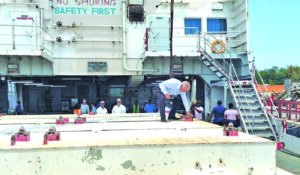
Members of the Commission of Inquiry into the MV Barima tragedy during a site visit to the Transport and Harbours Department wharf at Kingston, Georgetown, on Thursday09

All the other members of the Commission, including Captain Hamada Fouda, Nyree Dawn Alfonso, Rear Admiral (Ret’d) Hayden Pritchard, and Dr Andrzej Jasionowski, were also at the site visit.
Speaking at the wharf following the visit, Secretary to the Commission and Attorney-at-Law Javid Shadick said the Commissioners visited the Transport and Harbours Department wharf in Kingston, Georgetown, where they inspected the bond area, passenger facilities, and the MV Militia, which was docked at the port.
The Commissioners also visited the Transport and Harbours Department’s building in Kingston.
Meanwhile, in explaining the importance of the investigation, Shadick noted that the Commissioners each specialise in different areas.
“As you would know, the terms of reference are very broad, and what we are doing is that the Commissioners, each one of them, have their own speciality; they’re all persons who are in the maritime area, so they are the ones who would have wanted to do the inspection. The terms of reference also cater for a lot of recommendations, etc. And that is what they have been doing.”
The CoI into the MV Barima tragedy commenced its work on Wednesday, with the Commissioners meeting with witnesses.
During that meeting, families were informed that the contract to salvage the sunken vessel had been awarded to Guyanese-owned company BK International for $1.3 billion.
The relatives were also told that the process of raising the MV Barima could begin before the end of October, nearly three months after the vessel capsized, killing 73 persons, with another 30 remaining unaccounted for.
In addition, the Commissioners assured the families that the inquiry would be conducted over a six-month period without interference.
They also disclosed that, since their appointment, they had collected documents and statements that must be verified before they could be admitted as evidence.
Government Ministers responsible for the maritime sector could be called to testify before the CoI into the July 18 capsizing and sinking of the MV Barima if their evidence is considered necessary.
Commission Chairman Justice Godfrey Smith made the position clear during the inquiry’s preliminary public hearing on Wednesday, while stressing that Commissioners would first have to assess the evidence before determining who should be called.
Asked whether Ministers would be required to testify, Smith said, “And if it becomes clear that we require the evidence of a Minister, they will be asked to come before the Commission.”
Smith said the Commission would not make assumptions about responsibility before examining the available evidence.
The inquiry is expected to examine the roles of the Maritime Administration Department (MARAD) and the Transport and Harbours Department, including vessel inspection, certification, maintenance, supervision and regulatory enforcement.
It will also consider whether the country’s maritime safety framework was adequate and whether existing requirements were properly implemented.
The inquiry will examine six broad areas: the vessel’s seaworthiness and safety; passenger and cargo operations; crew qualifications and conduct; search, rescue, and recovery efforts; regulatory and institutional oversight; and human factors and emergency decision-making.
The response following the sinking will also come under scrutiny, including the actions of public authorities, emergency services and maritime agencies.
The Commission will examine available resources, communications received and transmitted, and decisions taken during rescue and recovery operations.
Smith said more than 100 potential witnesses had been referred to during the proceedings, although the Commission has not confirmed a final number.
The MV Barima capsized and sank on July 18, 2026, approximately 9.3 nautical miles off Devonshire Castle on the Essequibo Coast.
The passenger and cargo ferry had departed the Kingston Goods Wharf in Georgetown at about 15:15h on its scheduled journey to Port Kaituma in the North West District.
However, at about 23:01h, the vessel transmitted a distress signal after encountering difficulties off the Essequibo Coast near the mouth of the Pomeroon River.
A total of 179 persons, including 18 crew members, were onboard. The disaster claimed 73 lives, while 76 persons survived, and approximately 30 remain unaccounted for.
Three Transport and Harbours Department (T&HD) employees have since been charged with murder over the tragedy. The accused were all members of the MV Barima’s crew on July 18, the day of the fatal incident. They are Captain Kevin Price, called “KP”, 40, of Melanie Damishana, East Coast Demerara (ECD); chief mate Rondell Dwayne Roberts, 42, of Grove Public Road, East Bank Demerara (EBD); and goods superintendent Delon Granderson, 33, of Fellowship, West Coast Demerara (WCB).


Discover more from Guyana Times

Subscribe to get the latest posts sent to your email.


Source: Guyana Times

Miner stabbed to death; reputed wife chopped during domestic dispute – Guyana Times

0

Miner stabbed to death; reputed wife chopped during domestic dispute

A domestic dispute between a couple has left 34-year-old Ziggy Webster, a gold miner of 111 Miles, Mahdia Airstrip, Region Eight (Potaro-Siparuni), dead, and his reputed wife nursing chop wounds about her body.

Dead: Ziggy Webster

The incident reportedly occurred on Thursday at Noitgedacht Backdam, Potaro, Region Eight.
Based on reports received, Webster and his 27-year-old reputed wife, a cook, were involved in an argument at their camp during which he allegedly dealt several chops to her body with a cutlass, causing her to sustain injuries.
In retaliation, the woman armed herself with a kitchen knife and stabbed the now-deceased man in the buttock. The injured couple were taken to the Mahdia District Hospital, where Webster succumbed to his injuries.
His reputed wife remains hospitalised in a stable condition under Police guard as investigations continue.


Discover more from Guyana Times

Subscribe to get the latest posts sent to your email.


Source: Guyana Times