Home Blog Page 118

Sanitary Pads Enter the Caribbean at 20 Per Cent Duty. The Region Imports US$85 Million of Them and Exports US$1 Million.

0

The rate is set by the Community, not by any one country. Heading 96.19 of the Revised Common External Tariff of the Caribbean Community covers “Sanitary towels (pads) and tampons, napkins and napkin liners for babies and similar articles, of any materials”, and every subheading beneath it carries 20 per cent. Guyana’s own First Schedule reproduces the figure exactly.

That is why Vice President Bharrat Jagdeo said on 14 August 2025 that “the tariff is a Common External Tariff so to remove you have to notify CARICOM”. He was describing the instrument accurately.

What does the tariff actually say?

A tariff rate is a choice, and the choices on either side of this one show it. The two headings printed immediately above and below sanitary products in the Community’s schedule carry different rates.

Heading Goods CET rate
9618.00 Tailors’ dummies; animated displays for shop window dressing 0-5%
96.19 Sanitary towels (pads) and tampons, napkins and napkin liners 20%
9620.00 Monopods, bipods and tripods 10%

Source: Revised Common External Tariff of the Caribbean Community, HS 2017, revised 11 April 2018.

The Community reserves its high rates for goods it makes. Its own schedule states the principle: the list of items ineligible for duty exemption “includes those items produced in the Caribbean Community in quantities which are considered adequate to justify the application of tariff protection”.

The same document goes further for this heading than a rate alone. It creates three separate subheadings under 56.01 whose description is the manufacture of these goods, and gives each of them 0-5 per cent.

Subheading Description as it appears in the tariff Rate
5601.21 10 Wadding for use in the manufacture of sanitary towels and tampons, of cotton 0-5%
5601.22 10 Wadding for use in the manufacture of sanitary towels and tampons, of man-made fibres 0-5%
5601.29 10 Wadding for use in the manufacture of sanitary towels and tampons, other 0-5%
5601.21 30 Articles of wadding, of cotton 20%

Ordinary articles of wadding in the same subheadings pay 20 per cent. The reduced rate is specific to wadding destined for sanitary manufacture.

The raw material enters at 0 to 5 per cent and the finished pad at 20 per cent. Somebody designed that gap, and they designed it for a factory.

Who does the 20 per cent protect?

United Nations Comtrade records what each state actually ships. In 2023 the eight CARICOM members reporting trade in heading 9619 imported US$84.7 million of it and exported US$1.06 million.

Member state Imports US$ Exports US$
Trinidad and Tobago 27,894,468 348,473
Jamaica 20,959,929 569,729
Guyana 12,614,104 67
Bahamas 8,927,623 341
Antigua and Barbuda 7,120,154 144,166
Belize 4,052,235 none recorded
Grenada 1,916,479 none recorded
Dominica 1,246,414 none recorded
Total 84,731,406 1,062,776

United Nations Comtrade, 2023, partner world. Saint Lucia, St Vincent and the Grenadines, St Kitts and Nevis and Suriname returned no record for the year and are not in the total, so regional imports are higher than the figure shown.

Exports are 1.25 per cent of imports. Guyana’s figure for 2023 is sixty-seven United States dollars, against US$12.6 million of imports, and the five-year series holds the same shape: US$95,187 exported in 2020, US$191 in 2021, US$21,022 in 2022, US$2,333 in 2024.

An export figure is not a production figure, and the caution runs one way only. Some of the Antiguan and Trinidadian tonnage is likely re-export rather than manufacture, which would make regional production smaller than these numbers rather than larger.

One regional manufacturer is named in the trade literature. A feminine hygiene manufacturers directory lists Agostini Industries Ltd of Port of Spain producing “Fancy Free” maxi pads and “Secure” feminine napkins. On the public record this newspaper can find, that entry is the single source for current Caribbean production of these goods, and it carries no date.

The company’s own account does not support it. Agostini Limited lists its subsidiaries across pharmaceuticals and healthcare, consumer products, energy and industrial services, and restaurants and retail. Neither brand appears, and no subsidiary is described as making sanitary towels, tampons or any feminine hygiene product. Two of the eighteen are described as manufacturers: Carlisle Laboratories, which has made medicines and vitamins since 1961, and Intersol Limited, a manufacturer of personal care products under the DIQUEZ range. On the public record this newspaper can find, neither is said to produce goods under heading 96.19.

The input tells the same story as the output. The tariff admits sanitary wadding at 0 to 5 per cent precisely so that it can be converted into pads here, so the volume of wadding coming in is a measure of whether anyone is converting. In 2023 the twelve CARICOM members reporting the trade imported US$2,175,202 of wadding under headings 5601.21, 5601.22 and 5601.29, some 661 tonnes. Against US$84.7 million of finished imports, the input is 2.6 per cent of the finished bill.

The largest importer was Trinidad and Tobago, at US$821,604 and 203 tonnes, followed by Jamaica at US$447,713 and Suriname at US$326,225. Guyana took US$57,891. Two cautions belong with those figures. United Nations Comtrade reports at six digits, and at that level the headings cover wadding of cotton, of man-made fibres and of other textiles, which is also cotton wool, medical swabs and cosmetic pads; only the national subheadings ending 10 are the sanitary-grade lines, and they are in the tariff rather than in the trade data. And Trinidad, the largest importer of the input, is where the one company ever named as a producer is based. The figures are consistent with conversion on a small scale and equally consistent with none.

A Chinese producer is meanwhile registering to sell here. The Official Gazette of 3 October 2026 published a trademark application by Quanzhou Era Sanitary Products Co. Ltd of Jinjiang City, Fujian Province, filed on 2 January 2026, covering “Sanitary towels, sanitary pads, babies’ napkins [diapers]” and related goods in International Class 5.

That matters for what the tariff is doing. A 20 per cent rate on every subheading of 96.19 is the rate the Common External Tariff reserves for goods the region makes. The region’s own trade figures show exports at 1.25 per cent of imports, and the single company ever named as a producer does not list the products today.

La Caribena News put six questions to the Caribbean Private Sector Organisation on 28 September 2026, asking whether its record identifies any current manufacturer under heading 96.19 in CARICOM, what regional production volume is and what share of the import bill existing capacity could meet, whether any assessment of regional demand and supply has ever been carried out for the heading, whether it considers the 20 per cent rate still necessary, and whether it would support a member state seeking suspension of the rate under Article 83 of the Revised Treaty of Chaguaramas. A response was requested by 5 October. The organisation had not responded by the time of publication.

At 20 per cent, the duty on the imports in the table above comes to roughly US$16.9 million a year before exemptions. Guyana’s own share, on 2024 imports of US$10.8 million, is about US$2.17 million.

What did Guyana promise, and what has been gazetted?

President Irfaan Ali told a rally at Bath, Region Five, on 10 August 2025: “we have decided in our Manifesto that we are going to remove all taxes on sanitary supply”. News Room reported the measure was expected to take effect in the next budget.

On the instruments, it has not. A census of Guyana’s E-Gazette between 1 September 2025 and 7 October 2026 returns no Customs Duties (Amendment of First Schedule) Order and no VAT (Amendment of Schedules) Order. The eleven publications issued between 16 September and 7 October 2026 were downloaded and searched for this report; none contains either order. The Budget 2026 speech, delivered by Dr Ashni Singh on 27 January 2026, returns no mention of menstrual, hygiene, feminine, napkin, tampon or diaper across 109 pages and 38,596 words. Act No. 3 of 2026, the only tax statute of the period, amends the Customs First Schedule for security equipment, double-cab vehicles and outboard motors.

The commitment has been reported internationally as completed. Health Policy Watch published a piece by Leslie Ramsammy on 23 November 2025 stating that “In August 2025, Guyana’s President Irfaan Ali removed all taxes and customs duties on feminine hygiene products”. Contemporaneous Guyanese reporting of the same remarks uses the future tense, recording that the President announced the government would remove the remaining taxes.

Two taxes sit on these goods and they behave differently. Value-added tax on sanitary napkins and panty liners is zero under Schedule I, paragraph 14(c) of the VAT Act, and the Guyana Revenue Authority’s published list of zero-rated supplies still reads that way. Tampons are named in neither schedule, so on the instruments a tampon is standard-rated at 14 per cent. The customs duty is 20 per cent on all of it.

How does the Caribbean compare on removing the tax?

Better than the Americas average, on the measure that is normally used. Calderón-Villarreal, writing in The Lancet Regional Health Americas in 2024, reviewed 57 countries and territories and found that ten had eliminated taxation on menstrual products since 2012: Jamaica first in 2012, then Canada, Saint Kitts and Nevis in 2015, Trinidad and Tobago in 2016, Guyana in 2017, Colombia, Puerto Rico, Mexico, Ecuador, and Barbados in 2022. Taxes still applied in 63.2 per cent of locations in 2022 at an average rate of 11.2 per cent.

The Caribbean sits worse than that headline suggests. More than half of locations in the sub-region still taxed the products: 68.8 per cent of countries and 50 per cent of territories, a list that includes Antigua and Barbuda, Dominica, Grenada, Saint Lucia and St Vincent and the Grenadines, all of them CARICOM members paying the same 20 per cent at the border.

The measure itself has a limit worth stating. A full-text search of that study returns no occurrence of “tariff”, “duty”, “import duty” or “import tax”. The two appearances of “customs” are inside citation web addresses. The literature that ranks countries on the tampon tax counts consumption taxes and does not count the border duty, which is how Guyana appears on a list of countries that eliminated the tax while charging 20 per cent on every consignment that lands.

Guyana has moved on supply rather than on price. The Menstrual Hygiene Initiative, launched in 2021 and championed by First Lady Arya Ali with support from the United Nations Population Fund, has given more than 32,000 school-age girls free sanitary pads, and has extended to Region Eight. The Ministry of Education found that one third of female secondary school students struggle to afford or access them.

What would removing it take?

A route that exists and has been used. Suspension of the Common External Tariff runs under Article 83 of the Revised Treaty of Chaguaramas, granted to member states and subject to review by the Council for Trade and Economic Development. The tariff carries standing lists of such suspensions, List A for indefinite grants and List D for additional grants to Belize, St Kitts and Nevis and other OECS states.

Heading 96.19 appears in none of them. It is not in List A, not in List C, not in List D, and not in the list of commodities ineligible for conditional duty exemption, which is where the Community records the goods it has judged to be regionally produced in adequate quantities. The 20 per cent stands unqualified.

Guyana has worked the mechanism before. A single objection from Guyana reopened a Community tariff decision on paint, recorded in How One Objection From Guyana Reopened a CARICOM Tariff Decision. The procedural routes available to a member state that wants a rate changed were set out in CARICOM Gives a Business Three Ways to Raise a Trade Barrier.

Regional financing and procurement for women’s enterprise were examined in The Mothers Built the Lane. Resource It..

What the title card shows

20 per cent: the Common External Tariff rate on every subheading of heading 96.19, sanitary towels, tampons, napkins and napkin liners, in the Revised Common External Tariff of the Caribbean Community, HS 2017, revised 11 April 2018. 0-5 per cent: the rate the same tariff gives to wadding under subheadings 5601.21 10, 5601.22 10 and 5601.29 10, described in the instrument as being for use in the manufacture of sanitary towels and tampons. US$84.7 million: imports of heading 9619 by the eight CARICOM states reporting to United Nations Comtrade in 2023. US$1.06 million: their exports in the same year, 1.25 per cent of imports. US$67: Guyana’s recorded exports of the heading in 2023, against US$12.6 million of imports. 10 August 2025: the date President Irfaan Ali said at Bath, Region Five, that all taxes on sanitary supply would be removed. 329: publications in Guyana’s E-Gazette between 1 September 2025 and 16 September 2026, none of them an Order amending the duty. 32,000: school-age girls given free pads under the Menstrual Hygiene Initiative.

Frequently Asked Questions

What duty do sanitary pads and tampons pay entering Guyana?

Twenty per cent. The rate is set by heading 96.19 of the CARICOM Common External Tariff and reproduced in Guyana’s Customs Act First Schedule, which names sanitary towels and tampons expressly at subheadings 9619.00 11 and 9619.00 21. Value-added tax on sanitary napkins and panty liners is separately zero-rated.

Are tampons treated the same as sanitary pads in Guyana?

Not for VAT. Schedule I, paragraph 14(c) of the VAT Act zero-rates “sanitary napkins or panty liners” and does not name tampons, so on the instruments a tampon is standard-rated at 14 per cent. For customs duty they are treated identically, both at 20 per cent, because the tariff names them together.

Did Guyana remove the tax on menstrual products in August 2025?

President Ali committed to removing it on 10 August 2025. No implementing instrument has been published. A census of Guyana’s E-Gazette publications between 1 September 2025 and 7 October 2026 found no amending Order, and Budget 2026 contained no such measure. At least one international publication has reported the removal as completed.

Why does CARICOM tax these goods at 20 per cent?

Twenty per cent is the band the Common External Tariff applies to goods produced within the Community in quantities considered adequate to justify tariff protection. The tariff also admits the raw wadding for making them at 0-5 per cent, a structure that assumes regional manufacture.

How would the duty be removed?

Through Article 83 of the Revised Treaty of Chaguaramas, which allows a member state to seek suspension of the Common External Tariff subject to review by the Council for Trade and Economic Development. Heading 96.19 does not currently appear in any of the tariff’s standing suspension lists.

Disclosure

Theon Alleyne, the proprietor of La Caribeña News, is an investor in Women’s Haven Guyana, a woman-owned company and the Guyanese arm of a Caribbean brand founded in the Cayman Islands and The Bahamas. Its product range includes sanitary pads, tampons and liners falling under heading 96.19. A reduction in the duty described here would affect that business. He is also a director of the Guyana Manufacturing and Services Association, whose membership includes manufacturers that benefit from Common External Tariff protection on other headings.


Source: Village Voice News
Terrence Campbell’s Open Letter to Prime Minister Mia Mottley Raises Concerns Over Democracy in Guyana – Guyana Graphic – Current & Historical Events & Figures

0

In a strongly worded letter addressed to Barbadian Prime Minister Mia Amor Mottley, Guyanese businessman Terrence Campbell has raised serious concerns about the state of democracy in Guyana. His letter, dated recently, was also sent to several Caribbean leaders, diplomatic missions, and international media outlets, seeking intervention before what he describes as a deepening slide into autocracy.

Campbell’s message directly references a statement made by Prime Minister Mottley in June 2020 regarding Guyana’s disputed elections, in which she advocated for inclusivity in governance, stating that “there must be room for all regardless of who wins and who loses.” However, in his letter, Campbell laments that this vision has not materialized, asserting that there is “only room for the winners and a close circle of friends.”

Allegations of Victimization

Campbell details his alleged victimization since the elections, including an incident in September 2020 when he was granted a waiver on penalties and interest by the Guyana Revenue Authority (GRA). He claims that this routine waiver has since been weaponized against him by Vice President Bharrat Jagdeo, who, according to Campbell, has used it as a tool for defamation.

Additionally, he alleges that he has been falsely labeled a racist and subjected to fabricated charges reported to the police. He further claims to have been placed under extensive police surveillance on 24 occasions and has received threats of further police action. While he acknowledges that authorities may deny these claims, he asserts that he possesses evidence to substantiate them.

A Call for Intervention

Campbell’s letter expresses deep concern about the erosion of democratic principles in Guyana, warning that the current trajectory could lead to increased social unrest. By reaching out to Prime Minister Mottley and other regional leaders – including Dr. Keith Rowley (Trinidad and Tobago), Ralph Gonsalves (St. Vincent and the Grenadines), Gaston Browne (Antigua and Barbuda), Dickon Mitchell (Grenada), and Chan Santokhi (Suriname) – he seeks their attention and intervention.

Diplomatic representatives from the United States, the United Kingdom, the European Union, and Canada have also been copied in the correspondence, signaling Campbell’s attempt to garner international scrutiny over the situation in Guyana.

The Broader Implications

Campbell’s claims, if accurate, paint a troubling picture of Guyana’s political landscape, raising questions about press freedom, political victimization, and the rule of law. His concerns echo broader fears that democratic institutions in the country may be under threat, particularly in the lead-up to future elections.

Prime Minister Mottley, known for her outspoken stance on regional governance and democracy, has yet to publicly respond to Campbell’s letter. However, given her previous role in advocating for a free and fair election process in Guyana, it remains to be seen whether she or other regional leaders will address these concerns.

Campbell concludes his letter with a plea for action: “There must be room for all.” Whether his call will lead to tangible responses from the international community remains uncertain, but it undeniably highlights the persistent political tensions in Guyana and the challenges facing its democratic framework.


Source: Guyana Graphic

U.S. Invests $85.5M in Guyana Bauxite as Critical Mineral Becomes Part of American Defense Supply Chain – Guyana Graphic – Current & Historical Events & Figures

0

GEORGETOWN, Guyana, August 8, 2026 – The United States Department of War has announced an $85.5 million equity investment agreement with Strategic Bauxite USA, LLC, aimed at securing a critical supply of high-grade bauxite from Guyana and reducing American dependence on China and Chinese-controlled sources.

The announcement, made on August 7, represents a significant development in the economic and strategic relationship between Guyana and the United States.

According to the Department of War, the $85.5 million investment through its Industrial Base Analysis and Sustainment program will be combined with an additional $64.5 million in private-sector investment, bringing the combined commitment to approximately $150 million. The money will be used to acquire and expand the First Bauxite mine in Guyana, establish additional calcination capacity for primary processing, and support a subsequent project to construct a brown-fused alumina facility in the United States. (U.S. Department of War)

The implications extend well beyond another foreign investment in Guyana’s mining sector and this project places Guyana directly within the United States’ national security supply chain.

Why Guyana’s Bauxite Matters to the United States

Refractory-grade bauxite is a specialized, high-purity material capable of producing products that withstand extreme temperatures. The Department of War says the material is required for heat shields, thermal barriers, turbine engines and components used in guided missiles, rockets, military aircraft and space systems. It also has important civilian applications in steel and aluminum production, industrial furnaces and energy infrastructure.

The United States currently depends heavily on imported refractory-grade bauxite, much of it coming directly from China or Chinese-owned entities and Washington now wants to change that.

Once the Guyana-linked project becomes fully operational, the Department of War expects it to supply 100 percent of U.S. military demand for brown-fused alumina and 100 percent of total U.S. demand for refractory-grade bauxite.

That is an extraordinary strategic role for Guyana and means that a mineral extracted from Guyanese soil could eventually become essential to America’s military readiness and important sections of its industrial economy.

The U.S. government is therefore no longer viewing Guyana solely through the prism of oil, regional diplomacy or the Venezuela border controversy. Guyana’s mineral resources are increasingly becoming part of America’s broader national security calculations.

The Benefits for the United States

For Washington, the advantages are clear. The United States reduces its exposure to China for a strategically important mineral. It moves part of a critical supply chain into the Western Hemisphere. It gains access to a country with which it already has expanding diplomatic, economic and security relations.

Assistant Secretary of War for Industrial Base Policy Michael Cadenazzi said the agreement is intended to ensure that critical materials within the Western Hemisphere remain in supply chains that protect the United States and its allies.

That statement deserves attention in Guyana. This is not simply an American company purchasing Guyanese ore on the international market. The U.S. government itself is investing public money because it considers the resource important to national defense.

Washington also gains diversification. Any serious confrontation involving China could expose vulnerabilities in supply chains for minerals, electronics, batteries, rare earths and other materials required by modern military and industrial systems. Establishing a reliable source in Guyana reduces some of that risk.

What Guyana Could Gain

For Guyana, the potential benefits are substantial. First Bauxite operates the Bonasika mines between the Essequibo and Demerara Rivers. The company says the operation has a mine life exceeding 20 years and contains additional mineral resources, including high-purity quartz sand and clays. (First Bauxite)

Expansion could mean additional employment, training, infrastructure, transportation activity, contracts for Guyanese businesses and increased government revenues and there is another potentially more important benefit. Guyana now has leverage.

If a mineral located beneath Guyanese territory becomes essential enough for the United States government to invest directly in securing its supply, Guyana should negotiate from the position of a strategic supplier rather than simply that of a developing country exporting raw material. The country should seek technology transfer, specialized training, scholarships, engineering development, infrastructure improvements and opportunities for Guyanese companies to participate throughout the supply chain.

Guyana should also insist that as much processing and value creation as economically practical takes place inside Guyana. That distinction matters.

A country can possess enormous natural resources and still capture only a fraction of their ultimate economic value if it exports raw materials while processing, manufacturing, intellectual property and advanced industrial activity occur elsewhere. Guyana has lived through that economic model before.

The Question Guyanese Should Be Asking

The Department of War announcement therefore raises an important question: How much of the approximately $150 million investment will actually remain in Guyana?

The American release states that funding will acquire and expand the Guyanese mine, develop new calcination facilities for primary processing, and contribute to a subsequent brown-fused alumina facility in the United States.

The distribution of those investments matters. Guyanese citizens should know how much money will be invested directly in Guyana, how many permanent jobs will be created, what wages will be paid, what taxes and royalties will accrue to the state, what environmental obligations apply, and what percentage of goods and services will be purchased from Guyanese businesses.

They should also know what commitments have been made concerning reclamation and environmental restoration after mining.

Those are not anti-investment questions. They are the questions responsible governments ask when managing resources that belong to their citizens.

A Familiar Risk for Guyana

Guyana must be careful that history does not repeat itself.

For generations, developing countries have exported raw commodities while industrialized countries captured much of the greater value from refining, manufacturing and distribution. Bauxite is particularly relevant to that history.

Guyana has been a major bauxite producer for more than a century, yet the country never developed the scale of downstream aluminum manufacturing that might have transformed the mineral into a much larger domestic industrial sector.

Oil has now created similar debates about local content, refining, petrochemicals, skills development and how much economic value remains inside Guyana. The same discussion should begin immediately with this bauxite expansion.

If Guyana possesses a mineral important enough to become part of the American defense industrial base, the objective should not simply be to dig it from the ground and ship it overseas. The objective should be to convert the resource into long-term Guyanese economic capacity.

Environmental and Community Concerns

Expansion of mining also brings environmental consequences. Mining can affect forests, waterways, wildlife habitats and nearby communities. Larger operations can increase road and river traffic and require expanded waste-management and land-reclamation programs.

The investment therefore requires strong and independent environmental oversight. Guyana should require publicly understandable environmental monitoring, reclamation obligations, water-quality testing and regular disclosure of compliance.

Communities affected by mining should also have a meaningful role in the process. The economic argument for development becomes considerably weaker if national benefits arrive at the expense of communities located closest to the resource.

Guyana’s Strategic Position Is Changing

There is also a geopolitical dimension that Guyanese policymakers cannot ignore.

Guyana already supplies significant quantities of petroleum to international markets and hosts one of the world’s most important emerging offshore oil developments. Now another Guyanese natural resource is being incorporated into an American strategic supply chain. At the same time, Guyana has strengthened security cooperation with Washington.

In March, Guyana joined the U.S.-led Americas Counter-Cartel Joint Security Declaration, which calls for increased cooperation on border security, narcotics trafficking, transnational crime and protection of critical infrastructure. (DPI) The relationship is therefore developing simultaneously across energy, minerals, defense, diplomacy and security.

That can benefit Guyana enormously but it also requires sophisticated diplomacy.

Guyana has relationships with the United States, China, Canada, the United Kingdom, the European Union, Brazil, India, CARICOM and other international partners. The country should protect its sovereign ability to work with multiple partners while recognizing that its resources increasingly carry strategic importance to major powers.

What This Means for Ordinary Guyanese 

For the average Guyanese citizen, announcements involving tens of millions of U.S. dollars can sound impressive while having little immediate connection to daily life. That is precisely why the measurements of success must change.

The real test should be whether investments such as this produce better-paying jobs, technical careers, apprenticeships, contracts for local businesses, improved infrastructure and greater national revenues.

  • Guyana should publish the economic terms governing the operation to the greatest extent permitted by law.
  • Citizens should be able to determine what Guyana receives for every tonne of bauxite extracted.
  • They should know what tax concessions have been granted.
  • They should know how many Guyanese workers will be employed.
  • They should know how environmental liabilities will be funded.
  • They should know whether processing facilities can eventually be expanded in Guyana.
  • And they should know whether the government has negotiated meaningful opportunities for Guyanese engineers, geologists, technicians, contractors and businesses to participate in higher-value activities throughout the industrial supply chain.

A Significant Opportunity, if Managed Properly

The U.S. announcement should be welcomed as further evidence of Guyana’s growing economic and strategic importance. However, the true measure of success will not be the size of the investment alone, but how effectively Guyana converts this opportunity into lasting benefits for its citizens.

A major American government investment linked directly to national defense represents confidence in Guyana’s resources and the stability of the bilateral relationship. But Guyana should not measure success by the size of the announcement.

The United States is pursuing a clearly defined national interest. It wants a secure supply of a critical mineral, reduced dependence on China and greater resilience for its defense industrial base.

There is nothing improper about that. Governments are expected to pursue the interests of their citizens, however Guyana must demonstrate the same discipline.

Its objective should be equally clear: obtain maximum sustainable economic value from a finite national resource while protecting the environment, creating skilled employment and ensuring that Guyanese citizens receive a fair return.

The United States has identified what it needs from Guyana. Guyana must now clearly define what Guyana and its citizens expect in return.

Source: U.S. Department of War, August 7, 2026 press release


Source: Guyana Graphic

Deputy Secretary Landau Heads to Georgetown as Washington Deepens Its Caribbean Push – Guyana Graphic – Current & Historical Events & Figures

0

Georgetown. The United States Department of State has announced that Deputy Secretary of State Christopher Landau will travel to Trinidad and Tobago and Guyana from August 9 through 12, 2026, in the latest sign of Washington’s growing focus on the southern Caribbean.

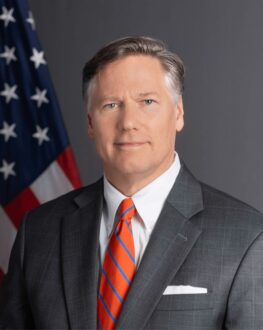
Deputy Secretary of State, Christopher Landau

According to the Office of the Spokesperson, Deputy Secretary Landau will first stop in Trinidad and Tobago, where he is scheduled to meet Prime Minister Kamla Persad Bissessar to strengthen the bilateral relationship, including shared energy and security priorities and expanded economic cooperation. From there he will travel to Guyana to meet President Irfaan Ali and members of Cabinet, with talks focused on expanding bilateral economic cooperation, strengthening investment opportunities, and enhancing collaboration in strategic sectors including energy and critical minerals.

The State Department framed the trip as evidence of a broader commitment. Officials said the visit underscores the United States’ intent to strengthen partnerships across the hemisphere and to advance shared priorities such as regional security, energy resilience, and economic prosperity.

A Visit That Fits a Larger Pattern

This trip does not stand alone. It follows a string of high level American engagements with Guyana over the past year, including a December visit by senior Department of War officials who signed a Statement of Intent to expand military cooperation, and, only days before Landau’s arrival, an announcement by the Department of War of an $85.5 million investment in Guyana’s bauxite sector to secure critical minerals for national defense. Add to that Guyana’s participation in the Americas Counter Cartel Joint Security Declaration and continuing joint exercises between the Guyana Defence Force and United States Southern Command, and a clear pattern emerges. Washington is treating Guyana, and the wider southern Caribbean, as a priority rather than an afterthought.

The timing matters. The visit comes against a backdrop of heightened regional tension involving Venezuela, whose government continues to press its long standing claim over Guyana’s Essequibo region and has adopted an increasingly assertive military posture along the border. American officials have repeatedly framed their engagement with Guyana in terms of supporting the country’s sovereignty and territorial integrity, and this visit is likely to be read, in Georgetown and in Caracas alike, as a continuation of that message.

What the United States Stands to Gain

For Washington, the benefits of this kind of high level engagement are straightforward. Guyana offers a rapidly growing offshore oil sector, expanding mineral resources now tied directly to American defense supply chains, and a government that has shown consistent willingness to deepen security and economic cooperation. By sending a deputy secretary rather than a lower ranking official, the State Department signals that Guyana and Trinidad and Tobago are viewed as significant partners, not routine stops.

There is also a geopolitical dimension. Strengthening ties with Guyana and Trinidad and Tobago allows the United States to counterbalance Chinese economic engagement in the region and to present a united front with regional partners at a moment when Venezuela’s posture is unsettling the southern Caribbean. Energy resilience is another driver. Trinidad and Tobago’s natural gas sector and Guyana’s oil and mineral wealth both matter to American energy and industrial planning.

What Guyana Stands to Gain, and What It Should Watch For

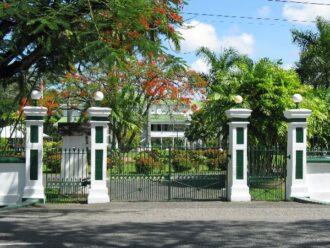
State House, Georgetown, Guyana

For Guyana, a visit of this profile carries real potential benefits. It offers another opportunity to advance discussions on investment, trade, and security that could translate into jobs, infrastructure, and expanded market access for Guyanese goods and services. It also reinforces the diplomatic backing that Guyana has sought as it manages its dispute with Venezuela, at a time when international support carries real weight.

At the same time, Guyanese citizens and policymakers should approach these engagements with clear eyed pragmatism rather than simple celebration. Deepening reliance on any single foreign partner, however powerful and well intentioned, carries risk. Guyana’s economy and security posture benefit most when the country can engage confidently with multiple partners, including the United States, the United Kingdom, the European Union, CARICOM neighbors, and others, without becoming overly dependent on one. Citizens deserve clarity on what specific commitments, if any, emerge from these meetings regarding investment terms, local job creation, technology transfer, and the extent of any expanded security cooperation, including whether it involves an increased American military footprint.

The Regional Angle: Trinidad and Tobago

Pairing this visit with Trinidad and Tobago is not incidental. Port of Spain has emerged as another close Washington partner in the region, with recent engagements touching on energy security, counter narcotics cooperation, and support for stabilizing Haiti. A joint itinerary suggests the United States is pursuing a coordinated southern Caribbean strategy rather than a series of disconnected bilateral relationships, which could strengthen CARICOM members’ collective leverage if they choose to coordinate their own responses and requests.

Implications for Ordinary Citizens

For the average Guyanese or Trinidadian citizen, a cabinet level visit and a press release can feel distant from daily concerns such as the cost of living, employment, and public services. The real test of this visit’s value will be whether the discussions produce tangible outcomes: new investment that creates jobs, expanded trade that benefits local businesses, and security cooperation that genuinely improves safety without compromising national decision making.

For American citizens, sustained diplomatic and economic engagement in the Caribbean represents an investment of attention and resources justified by energy security, critical mineral access, and regional stability, all of which carry indirect benefits at home, from steadier energy markets to reduced dependence on strategic competitors for essential materials.

A Relationship Still Being Defined

Deputy Secretary Landau’s trip is best understood as another chapter in a rapidly evolving relationship rather than a single defining event. The direction is clear. The United States is investing diplomatic capital, security cooperation, and now direct financial resources in Guyana and its immediate neighborhood. What remains to be defined, and what Guyanese citizens have every right to ask their government to define clearly, is the precise balance of benefits and obligations this deepening partnership will bring, and whether the terms being negotiated in Georgetown this week will serve Guyana’s long term development as much as they serve Washington’s strategic interests.

Source: United States Department of State, Office of the Spokesperson, press release, August 2026.


Source: Guyana Graphic

New Book “The Global Influence Code” by Dr. Colvin Heath-London Explores the Art of Leading Across Cultures – Guyana Graphic – Current & Historical Events & Figures

0

Guyanese and Caribbean readers with an interest in leadership, business, and personal growth now have a compelling new title to add to their reading list. “The Global Influence Code” by Dr. Colvin Heath-London examines what it truly takes to lead with credibility in a world where borders matter less and less, and where trust has become one of the most valuable currencies a leader can hold.

Rather than focusing on management tactics or corporate strategy, the book turns its attention to the human qualities that inspire people to listen, collaborate, and believe in a leader’s vision. Dr. Heath-London argues that lasting influence does not come automatically with a title or a position. Instead, it grows from credibility, integrity, empathy, and consistent action over time.

A Message Shaped by a Global Career

Dr. Colvin Heath-London

Dr. Colvin Heath-London brings more than three decades of international business and leadership experience to this work. Over the course of his career, he has worked with governments, multinational corporations, financial institutions, and private organizations throughout the Caribbean, North America, Latin America, Africa, Europe, and Asia.

Those years of cross border experience exposed him to many different leadership styles and gave him countless opportunities to observe how trust is built in different cultural settings. Despite the variety of industries and regions, he found one pattern held true everywhere. People place their confidence in leaders who communicate clearly, act with integrity, and respect the perspectives of others.

Holding a Doctor of Business Administration, Dr. Heath-London combines academic research with practical lessons drawn from international negotiations, infrastructure development, strategic partnerships, and organizational leadership. “The Global Influence Code” brings these two worlds together, translating years of observation into guidance that readers can apply in their own leadership journeys, whatever industry or region they call home.

What Readers Will Take Away

Throughout the book, one message stands out clearly. Trust is the foundation of every meaningful relationship, whether someone is leading an international project, managing a local team, or negotiating with global partners. People respond to leaders who show honesty, consistency, and respect, and Dr. Heath-London explains that this kind of influence is earned over time through dependable behavior rather than through credentials alone.

Cultural awareness is another central theme. As organizations increasingly bring together people with different values, communication styles, and expectations, understanding those differences becomes essential to building strong working relationships and avoiding unnecessary misunderstandings. The book offers practical frameworks that encourage readers to observe carefully, communicate thoughtfully, and build connections based on mutual understanding, whether they work in business, government, education, or the nonprofit sector.

This flexible, adaptable approach is part of what makes the book valuable for such a wide readership, from experienced executives to emerging professionals who are preparing to step into leadership roles for the first time.

About the Author

Dr. Colvin Heath-London is an international business executive, leadership strategist, consultant, and author dedicated to helping leaders build trust and influence across cultures. His work spans infrastructure development, international business, organizational leadership, investment, and strategic partnerships across multiple regions of the world. Through consulting, executive education, public speaking, and writing, he continues to share leadership frameworks that promote ethical decision making, effective communication, and meaningful collaboration.

As he shared in a recent interview about the book, “Influence is not granted by title or position. It is earned through character, consistency, humility, and genuine respect for others.”

Where to Find the Book

“The Global Influence Code” is available now on Amazon in Kindle, paperback, and hardcover editions. Readers interested in learning more about building trust and credibility across cultures can purchase the book directly at: https://www.amazon.com/dp/B0HC7MGHLT

For readers who want a deeper look before buying, a full review and author interview are available on Bitgog at the following link: https://bitgog.com/bookreviews/nonfiction/selfhelp/dr-colvin-heath-london-the-global-influence-code/


Source: Guyana Graphic

Press Release: Ministry of Agriculture rejects these unsubstantiated statements that one hundred pounds of Chicken is contaminated and within Guyana

0

Press Release: Ministry of Agriculture rejects these unsubstantiated statements that one hundred pounds of Chicken is contaminated and within Guyana

The Ministry of Agriculture rejects claims made by Dorwain Bess, co-founder of VPAC, suggesting that approximately one million pounds of contaminated chicken may be on the local market for purchase and consumption by Guyanese.

These claims are without supporting evidence and have the potential to create unnecessary fear among consumers and undermine public confidence in the relevant government agencies’ ability to safeguard the country’s food supply.

There is no evidence to support claims that the chicken being imported temporarily into Guyana through the New Guyana Marketing Corporation (NGMC) in contaminated.

Guyana has established sanitary and phytosanitary (SPS) measures governing the importation of agricultural and food products. These measures are in keeping with international food safety and animal health standards and are designed to protect consumers, safeguard local agricultural production and prevent the introduction and spread of animal diseases.

All poultry imported through the NGMC must satisfy the necessary sanitary, veterinary, and food-safety requirements. These include certification and approval procedures in the country of origin, along with the required inspections and regulatory oversight in Guyana. The NGMC also ensures that appropriate transportation and handling measures are maintained throughout the importation and distribution process.

In the case of chicken imported from Brazil, the Guyana Livestock Development Authority (GLDA) issues the necessary no-objection only after the relevant requirements have been satisfied. This includes consideration of the animal-health status of the exporting country and monitoring of diseases such as Highly Pathogenic Avian Influenza and Newcastle disease.

Upon arrival in Guyana, the GLDA, the Veterinary Public Health Unit, the Ministry of Health, and other relevant authorities inspect and oversee imported poultry products before clearing them for distribution.

The public can therefore rest assured that food safety remains a priority and that the established sanitary, phytosanitary, and veterinary requirements will not be compromised.

Persons who have established social media platforms under the guise of creating a space for balanced dialogue and public interest have a responsibility to provide credible evidence and verified information. Any legitimate concerns relating to food safety should be reported to the relevant authorities so that they can be properly investigated.

The Government remains fully committed to protecting consumers, supporting local producers and ensuring that all imported food products meet the required standards of safety, quality and hygiene.

CATEGORIES
TAGS


Source: Department of Public Information (DPI)

BK International Inc. And Industrial Fabrication Awarded Contract To Salvage The MV Barima, Opposition Leader Questions Award – HGPTV – Guyana’s Nightly News and Entertainment Channel

0
HomeNewsBK International Inc. And Industrial Fabrication Awarded Contract To Salvage The MV…

BK International Inc. And Industrial Fabrication Awarded Contract To Salvage The MV Barima, Opposition Leader Questions Award

By Alethea Grant | HGP Nightly News |

LILIENDAAL, EAST COAST DEMERARA — Polish Naval Architect and Marine Engineer Dr. Andrzej Jasionowski has revealed that he has formally engaged local contracting giant BK International Inc.—in joint venture with Industrial Fabrication Inc.—as the “preferred” team selected to execute the complex underwater salvage of the ill-fated state-operated ferry, MV Barima.

The technical disclosure was delivered during Wednesday’s closed-door preliminary engagement between commissioners, survivors, bereaved relatives, and legal stakeholders at the Arthur Chung Conference Centre (ACCC) in Liliendaal.

The procurement selection immediately ignited a fierce political rebuke from Leader of the Opposition Azruddin Mohamed, who questioned BK International’s maritime technical competence to safely recover the wreckage, while simultaneously lodging accusations of bias against sitting commissioners on the Presidential Commission of Inquiry (CoI).

The Salvage Tender: Preserving Forensic Value on the Ocean Floor

The MV Barima has remained submerged on the seabed off the Essequibo Coast for 82 days since its catastrophic sinking on July 18, 2026.

Addressing families and commissioners, Dr. Jasionowski confirmed the procurement contenders and stressed that unhurried technical precision is imperative to safeguard critical forensic evidence:

  • The Bidding Field: Formal bids were tendered by a consortium comprising BK International Inc. and Industrial Fabrication Inc. alongside an international maritime salvage outfit from the Netherlands, KMS B.V.
  • Forensic Integrity: Dr. Jasionowski emphasized that despite 82 days of submersion in Atlantic currents, the hull, engine room, and cargo holds still contain decisive physical clues.
  • Risks of Hull Fracture: The marine expert warned that hasty or poorly engineered recovery attempts could compromise the structural integrity of the ferry, potentially tearing the vessel apart during hoisting and destroying vital evidence.

“I have met with them personally yesterday to discuss those plans so that no damage to the evidence and the plan will be careful,” Dr. Jasionowski stated regarding his discussions with BK International.

“In terms of revealing the name of the company we assume will be appointed, maybe I was not supposed to reveal it, but you ask me the question and I tell you what I know. I also say we understand that it is the preferred choice.”

“The expediency… if you do it haphazardly you may break the boat up as you raise it,” he cautioned.

Commission Divergence: Findings Not Wholly Dependent on Salvage

While commissioners may potentially observe the salvage operation firsthand, Commissioner Rear Admiral (Ret’d) Gary Best / Hayden Pritchard offered a critical procedural distinction:

  • Evidence vs. Salvage: The retired military commander stated that while the panel remains hopeful BK International can execute the operation, the CoI’s overarching findings, accountability determinations, and maritime safety recommendations are not entirely dependent on whether the physical hull is brought to the surface.
  • Broader Inquiry Lines: Witness testimonies, maintenance logs, voyage manifests, and regulatory compliance records will provide substantial grounds for findings regardless of the vessel’s recovery status.

Opposition Leader Mohamed Rebukes Contract Award and Panel Impartiality

Taking the floor during the Wednesday session, Opposition Leader Azruddin Mohamed challenged both the technical prudence of the salvage award and the independence of the inquiry panel:

  • Technical Competence Questioned: Mohamed questioned whether BK International possesses the specialized marine equipment, saturation divers, and technical pedigree required to raise a sunken passenger vessel from the open Atlantic.
  • Salvage Must Precede Hearings: The Opposition Leader maintained that physical inspection of the vessel is the fundamental determining factor in uncovering the root cause of the disaster, arguing that public hearings should be paused until the ship is docked.
  • Allegations of Compromise: Expressing “no confidence” in the panel, Mohamed openly accused commissioners of personal and structural conflicts of interest, alleging close ties to political figures and President Dr. Irfaan Ali.

“I think before commencing the CoI, we should raise the boat. We could have floated that boat two days after the tragedy,” Mohamed insisted.

“We have commissioners sitting in front of us who I know… I want to question their association with dishonorable Keoma Griffith. I would like to know your association with Griffith… death of their children,” Mohamed asserted.

“We have another commissioner sitting right in front of us where he is very close to the one and only uncaring and dictator President Irfaan Ali.”

Mohamed called on the Commission to guarantee that the eventual final report is released directly and transparently to the Guyanese public.

The MV Barima disaster claimed the lives of dozens of passengers and crew members en route to Port Kaituma, with more than 100 casualties reported and several individuals still unaccounted for. Formal public evidentiary hearings are slated to commence on Wednesday, October 14, 2026, at the Arthur Chung Conference Centre.