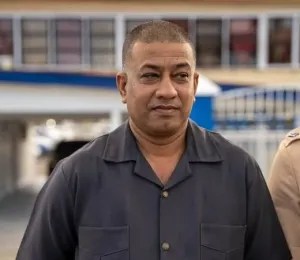
The Guyana Lottery Company on Friday said it relaunched its iLottery site for the purchasing and playing of all lottery games.
The site was relaunched on Wednesday, October 7, 2026,marking a significant milestone for the company and is designed to offer an enhanced and responsible player experience.
‘The improved iLottery platform responds to the growing demand for innovative, entertaining lottery options by making play more convenient and accessible for our technology-driven players. It is designed to increase player engagement, improve operational efficiency, and provide a secure and responsible gaming environment,” the company said in a statement.
Bringing greater convenience to its players across Guyana, Guyana Lottery Company says they can now enjoy all their favourite lottery games online at https://letsbetgy.com/lottery, or by selecting the Play Online option on the Guyana Lottery website at www.guyanalottery.com.
GLC says online customers can login to their existing accounts and play from our menu of lottery games including their favorite Jackpot game-LottoSupa6, Play4, Daily Millions, Lucky3 and many others.
The company says players must be 18 years older and must be able to complete the required identity verification process to register for an account. The platform utilizes geolocation technology to confirm a player’s location before they can purchase a ticket. As such, only persons located in Guyana are permitted to play.
Players can also purchase credit for their account from any of the Lottery’s authorized agents countrywide.
Ms. Kalima Ali, Director and General Manager of the company, noted that the changes are in keeping with the company’s mission of delivering a seamless experience for players that prioritize responsible gaming. We thank our players for their patience and understanding during the upgrades and look forward to creating more fun and entertaining lottery options for everyone.
In June of 2026 the company also relaunched its Let’s Bet Playsite offering players a Worldclass platform to enjoy all their favorite sports content and games.
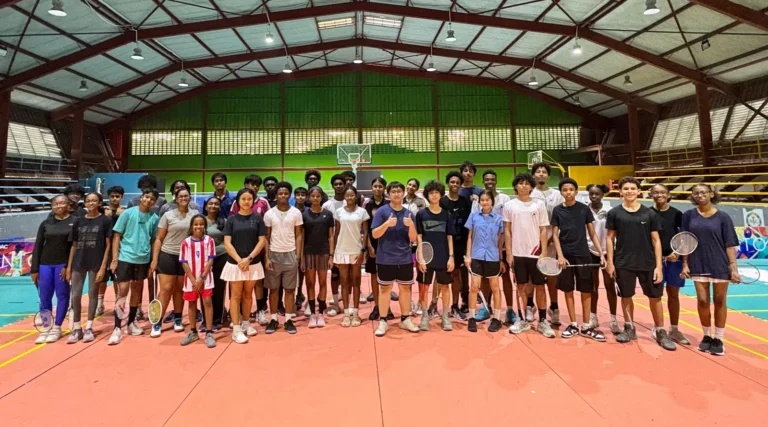
The Guyana Badminton Association (GBA) officially served off the National Junior and Senior Badminton Tournament on Thursday evening at the National Gymnasium, Mandela Avenue, bringing together the country’s best and most promising players for an exciting display of talent, skill, and competition.
The tournament, which runs over the next few days, will feature matches in Men’s and Women’s Singles, as well as junior events in Singles, Doubles, and Mixed Doubles, across multiple age categories.
The opening day delivered on the promise of thrilling rallies and top-quality performances from athletes representing clubs and schools nationwide.
The GBA said: “Spectators and supporters are encouraged to attend and witness the high level of badminton being played locally as the sport continues to grow in popularity across Guyana.”
A total of 79 junior players are competing across the various categories.
See below summarised results from the opening day
Key- (BS– Boys Singles, GS– Girls Singles, XD– Mixed Doubles, BD– Boys Doubles)
Grief, Skepticism, and Outrage Fill ACCC as MV Barima Survivors Recount Chilling Moments of Capsizing
By Marvin Cato | HGP Nightly News |
LILIENDAAL, EAST COAST DEMERARA — A deep and pervasive mistrust in state-led inquiries swept through the Arthur Chung Conference Centre (ACCC) on Wednesday as survivors and bereaved relatives of the MV Barima disaster confronted commissioners, demanding to know whether the tribunal can deliver genuine legal accountability or merely serve as another procedural buffer for state negligence.
The closed-door preliminary engagement, organized ahead of formal public hearings, quickly shifted into a series of harrowing eyewitness accounts detailing the terrifying moments of the July 18, 2026 sinking off the Essequibo Coast.
Speakers repeatedly pointed to critical institutional failures, chronic overcrowding, inaccessible life jackets, mechanical negligence, and last-minute cargo overloading as the direct causes of one of the deadliest maritime catastrophes in modern Guyanese history.
Chilling Eyewitness Accounts: Clinging to Cargo in the Dark
The emotional core of Wednesday’s consultation centered on raw testimonies from those who fought for survival when the vessel overturned in open water:
Samantha Ramit’s Tragic Loss: Survivor Samantha Ramit, who boarded the ferry accompanied by eight of her grandchildren, recounted how four of the children survived while four tragically drowned—including an infant whose remains have never been recovered.
Inaccessible Safety Gear: Ramit told commissioners that life-saving flotation equipment was completely inaccessible to passengers seated in the central compartments of the vessel, leaving parents and guardians powerless as water engulfed the deck.
Clinging to Floating Debris: Unable to swim, Ramit survived only by kicking frantically toward the surface and grabbing onto a floating cargo crate in the darkness.
“I couldn’t swim, but I just keep pulling up, pulling up in my hand, I’m kicking and I reach up to the surface and there was a box,” Ramit recounted through tears.
“I placed the hand from the box… when I watch as this lady will pull up, it’s a lady. I ask her one question, I say, ‘You got strength?’”
Mechanical Compromise and Last-Minute Cargo Overloading
Another male survivor provided technical details regarding the ferry’s operational condition before it capsized, alleging that the vessel was dangerously compromised before leaving port:
Operating on a Single Engine: The survivor revealed to the panel that the ferry was operating on only one functional engine, which lacked the propulsion required to maneuver out of danger once water entered the hull. Once flooding began, he stated, the underpowered vessel became an unavoidable “arm of death.”
The Last-Minute Generator Burden: The witness condemned the decision by port operators to load two heavy industrial standby generators onto the vessel just prior to departure, noting that the equipment was forced onto a boat already weighed down to capacity, creating an imminent catastrophe.
Salvage Delays:Jasmine Cort, who lost both her father and uncle—the operators of the ship’s canteen—directly pressed the Commission on why the wreckage remains on the ocean floor 82 days post-sinking, questioning whether the panel will address the ongoing delays in raising the hull.
Outrage Over Relief Efforts: The G$20,000 Insult
Families also criticized the state’s post-disaster welfare response, calling the relief packages negligible compared to the loss of their primary providers:
Inadequate Financial Aid: One widow testified that a state social worker visited her home and offered a one-off stipend of $20,000 (GYD). “My husband was my breadwinner. What can $20,000 do for me now? Who will pay my bills? Guyanese don’t get justice. Everything just disappears,” she told the panel.
Hinterland Families Devastated:Dolly Cox, whose deceased father served as the sole outboard marine engine mechanic in Port Kaituma, expressed anger over unfulfilled administrative pledges. Cox testified that her sickly mother was forced to seek manual employment, while four of her school-aged siblings have been unable to attend classes regularly following the loss of their household’s financial support.
Legal Hurdles: Commission Explains Limits on Imprisoned Witnesses
Responding to the frustration and lack of confidence voiced by the room, Chairman of the Commission Justice Godfrey P. Smith explained the constitutional boundaries governing the tribunal:
Privilege Against Self-Incrimination: Justice Smith clarified that because criminal charges have already been instituted against key individuals involved in the incident, standard constitutional safeguards against self-incrimination prevent the Commission from compelling those incarcerated ranks to deliver oral evidence during the inquiry.
Commitment to Uncovering Systemic Faults: Despite the inability to compel charged figures to testify orally, the five-member commission assured families that it remains focused on auditing documentary records, administrative maintenance logs, and regulatory oversight systems to identify institutional liability.
Public evidentiary hearings are scheduled to formally commence on Wednesday, October 14, 2026, at the Arthur Chung Conference Centre.
HGP NIGHTLY NEWS – “It affected me a great lot. Work, everything.” Those were the words of 65-year-old Neil Fredericks after walking out of the Berbice High Court a free man on Thursday, following his acquittal on two child sexual offence charges.
An emotional Fredericks expressed relief after a 12-member jury returned not-guilty verdicts on both counts, ending a case he said had taken a significant toll on his reputation and livelihood.
“I feel so good,” Fredericks told reporters outside the courthouse. The New Amsterdam pensioner, who worked as a heavy-duty vehicle operator, said the allegations affected his ability to work and how he was viewed within his community.
“Seeing that people you love and that you try to help out in this life try to sink you. It affected me a great lot. Work, everything. I would like to say thank the Lord,” he said.
Fredericks maintained that he is well known in the community and said many persons could attest to his character. He also thanked his attorney following the verdict.
His trial began earlier this week before Justice Peter Hugh at the Berbice High Court.Fredericks had pleaded not guilty to sexual activity with a child under 16 and rape of a child under 16.
The prosecution alleged that the offences occurred between March 2020 and October 2021 and involved a child who was reportedly between 10 and 11 years old at the time.
When proceedings resumed on Thursday, the jury retired to consider the case before returning not-guilty verdicts on both charges.
Justice Hugh subsequently discharged the jury and told Fredericks he was free to leave. Fredericks was represented by attorney Charlyn Artiga, while prosecutor Marisa Edwards appeared for the State.
Meanwhile, the child’s family reportedly indicated following the verdict that they intend to explore further legal action.
The Guyana Power and Light (GPL) was Friday mum on calls by residents of Meadowbrook Gardens for suspension of gas-to-energy transmission line works over safety and health concerns including the possibility of cancer.
“Residents remain deeply concerned about potential electrical safety hazards, the proximity of transmission infrastructure to residential properties, possible restrictions on the use and enjoyment of their homes, and the implications of long-term exposure to electromagnetic fields.
We believe that where reasonable alternatives may exist, potential risks and unnecessary proximity to homes should be properly evaluated rather than dismissed,” they said.
They backed up their health concern by citing information from the World Health Organisation (WHO) specialised cancer research agency, the International Agency for Research on Cancer (IARC), that states classified extremely low-frequency magnetic fields, including those associated with electricity transmission systems, as Group 2B — “possibly carcinogenic to humans.”
“This classification was based primarily on epidemiological studies identifying an association between prolonged residential exposure to elevated magnetic fields and childhood leukaemia,” the residents said in a statement.
GPL’s executive team leader Kesh Nandlall did not immediately respond to queries about how the power company was addressing the residents’ concerns.
The community accused the power company of breaking its promise to suspend works.
The Meadowbrook Gardens Community Group said they were outraged and profoundly disappointed over the resumption of works involving the installation of major electricity transmission lines through our residential community, “despite commitments made during a recent meeting with project representatives that works along the disputed section would be halted.”
They said that latest development was particularly troubling because residents have been requesting meaningful consultation since February 2026, raising legitimate concerns about the proposed transmission route, its proximity to residential properties, potential health and safety implications, and the availability of alternative alignments.
“Despite months of requests, fundamental questions remain unanswered. Yet construction activities have resumed,” the community said.
The residents said they questioned why the transmission lines, previously proposed for another community where objections had been raised, were subsequently rerouted towards Meadowbrook Gardens.
Residents say they also questioned why the project could not utilise the existing reserves bordering Meadowbrook Gardens, which may offer an alternative to routing major transmission infrastructure through established residential areas. They also want to know why these existing reserves not been utilised or adequately evaluated as alternative routes
“These are reasonable and important questions. To date, residents have not received satisfactory explanations, technical justifications or supporting documentation addressing either issue,” they said.
Meadowbrook Gardens residents say they are living in an established residential community where children regularly play outdoors, families gather on their lawns, and residents host community activities and events.
“These are not vacant or unused spaces. They are essential parts of our homes, neighbourhood and daily lives.
Based on information presently available to residents, the proposed transmission lines may pass a few feet from our homes and areas used by road users,” they said.
The Meadowbrook Gardens Community made it clear that hey are not opposed to the gas-to-energy project but were upset that the GPL had ultimately blanked their concerns. “Our homes are not simply points on an engineering drawing. They are where our families live,our children grow and our communities thrive,” they added.
Santo Domingo, Dominican Republic – Prime Minister, Brigadier (Ret’d), the Honourable Mark Phillips urged regional leaders to enhance collaboration on long-term energy planning to ensure sustainability and viability for the future.
Delivering his intervention during the Ministerial Dialogue at the 11th Latin American and Caribbean Energy Organization (OLACDE) Energy Week in Santo Domingo, Dominican Republic, Prime Minister Phillips emphasised that countries across Latin America and the Caribbean must develop energy systems capable of responding to increasing electricity demand, climate-related risks and rapid technological advancements. He noted that economic growth, industrialisation, urbanisation and digitalisation will significantly increase energy requirements across the region in the coming years, making it necessary for governments to plan beyond immediate generation needs. “The energy system of the next decade must be more diversified, more resilient, more efficient, more digital and increasingly low carbon. This requires us to plan not only for today’s needs, but for the economy and society we expect to have 20 or 50 years from now.” Highlighting Guyana’s national energy strategy as an example, the Prime Minister reaffirmed the Government’s commitment to its Low Carbon Development Strategy (LCDS) 2030, which guides the development of a diversified energy supply comprising natural gas, hydropower, solar, wind and other technologies. He emphasised that Guyana’s approach recognises the importance of utilising its natural resources to advance national development while maintaining its longstanding commitment to environmental sustainability. “Guyana is an emerging oil and gas producer and, simultaneously, a country with approximately 85 per cent forest cover and a longstanding commitment to low-carbon development. We do not regard these realities as contradictory. Rather, our responsibility is to manage our natural resources strategically and sustainably, and to use them to accelerate national development and the transformation of our energy system.” Prime Minister Phillips reported that renewable energy projects and programmes implemented or committed between 2020 and 2026 represent G$37.717 billion in investments, contributing to a 623 percent increase in installed renewable energy capacity, from 5.35 megawatts (MW) in 2019 to 38.72 MW in 2026. These initiatives include 13 utility-scale solar photovoltaic farms, 57 solar mini-grids, three hydropower plants, the distribution of 37,730 solar home energy systems and 239 rooftop solar photovoltaic systems on public and community buildings. Based on projects committed through 2031, Guyana’s installed renewable energy capacity is expected to reach 77.14 MW, almost doubling the 2026 level. The Prime Minister further explained that natural gas will play an important role in replacing more carbon-intensive imported fuels used in electricity generation by improving energy security and supporting lower electricity costs. Adding to this, renewable energy development and battery storage will continue to expand.
The Prime Minister also highlighted the role of grid modernisation, digitalisation and AI in improving energy planning, demand forecasting and predictive maintenance, noting that these technologies can strengthen the reliability of electricity systems. He cautioned, however, that the growing use of AI and data centres will drive up electricity demand, which will require greater investment in cybersecurity, data governance and technical expertise. On the just energy transition, he stressed that expanding energy access must bring tangible improvements to people’s lives, particularly in developing communities. “We must ensure that hinterland, riverine and Indigenous communities, vulnerable households, workers and businesses are not left behind. This requires expanding access to reliable and affordable energy, creating opportunities for local employment and enterprise, investing in skills and technical capacity, and ensuring meaningful community participation in energy development.” Prime Minister Phillips noted that decentralised renewable energy systems are already transforming communities by supporting education, healthcare, communications, entrepreneurship, and local economic activity. On regional integration, he highlighted the importance of continued collaboration through OLACDE, focusing on innovative financing solutions, climate-resilient infrastructure, and expanding energy interconnection where feasible. The Guyanese Prime Minister also reaffirmed Guyana’s commitment to working with regional partners to advance a shared energy agenda that balances economic transformation, environmental sustainability and improved livelihoods.
The University of Guyana’s Fourth Graduate Research Symposium concluded last Friday with a strong focus on how research, collaboration and interdisciplinary thinking can help Guyana and the wider Caribbean respond to increasingly complex development challenges.
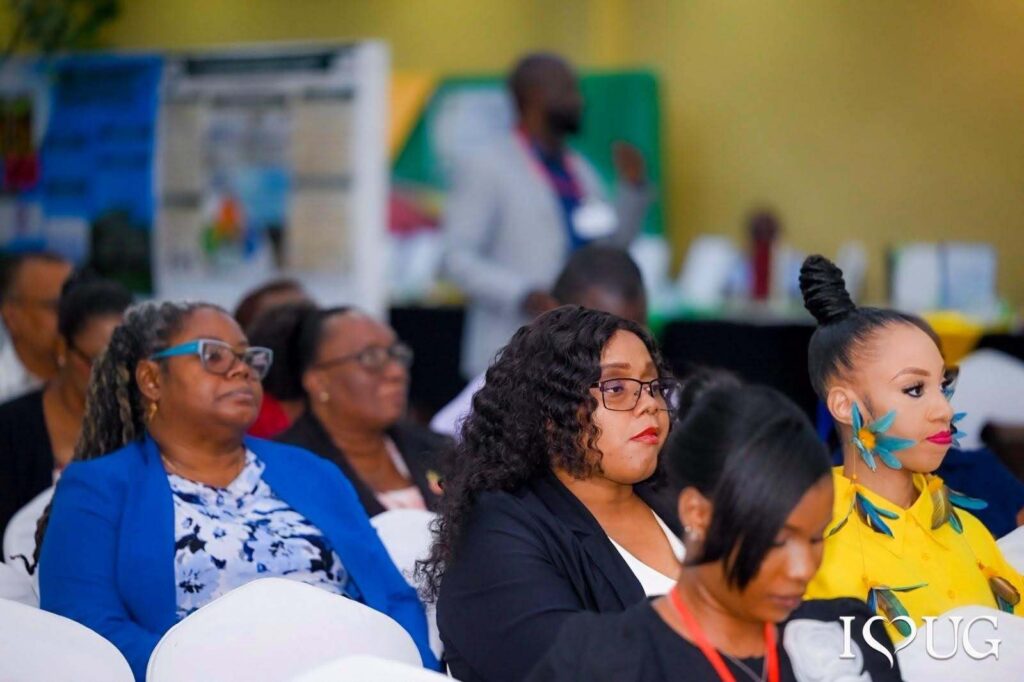
The symposium was held from Wednesday, September 30 to Friday, October 2, 2026, at the Ramada Princess Hotel, Georgetown, under the theme “Resilience for the 21st Century: Navigating Complexity Through Multidisciplinary and Interdisciplinary Collaboration.” It brought together graduate researchers, academics, government representatives, development partners and other stakeholders from Guyana and the wider Caribbean, with an estimated 100 participants joining sessions daily in person and virtually.
Graduate researchers, academics, government representatives, development partners and other stakeholders gathered at the Ramada Princess Hotel, Georgetown, for the University of Guyana’s Fourth Graduate Research Symposium, held from September 30 to October 2, 2026, under the theme “Resilience for the 21st Century: Navigating Complexity Through Multidisciplinary and Interdisciplinary Collaboration.”
In her remarks at the opening ceremony, Dean of the University of Guyana School of Graduate Studies (UGSGSR), Professor Paulette Bynoe, highlighted its significance in amplifying the work of graduate researchers, while facilitating constructive feedback and engagement beyond their individual disciplines. While emphasising that graduate research should extend beyond a thesis or dissertation, she said, “Research is about equipping our researchers to ask important questions, interrogate evidence, engage with different perspectives and ultimately contribute knowledge that can inform policy, professional practice and decision-making.”
Representatives from the collaborating institutions reinforced the importance of connectedness between research and national priorities and practical action. To this end, Biodiversity Specialist at the Ministry of Natural Resources, Dr. Colin Henry, highlighted the need to consider resource management through economic, social and environmental lenses, while underscoring the value of graduate research in sustainable resource management, environmental monitoring and ecosystem restoration. “Resilience requires looking at resource extraction from combined economic, social, and ecological lenses,” Dr. Henry said, noting that graduate research on Guyana’s soils, forests, rivers and mining areas can provide empirical evidence to support effective and sustainable environmental policy.
In centering the role of evidence and open inquiry in informing policy and decision-making as Guyana undergoes significant economic and social transformation, UNDP Resident Representative, Ms Katy Thompson, said, “Resilience for us is around the capacity to ask difficult questions, to review evidence, to develop policy based on that evidence, and to be open to challenging our assumptions.” Similarly, Project Specialist with IICA, Ms Jenelle Blackman, highlighted the need for research that translates from knowledge to practical solutions, investment and adoption, particularly in agriculture and rural development. Meanwhile, Vice President of Conservation International Guyana, Mr. Curtis Bernard, described the symposium as an investment in knowledge, dialogue and people, while Conservation Director of WWF-Guianas, Ms. Aeisha Williams, further highlighted evidence-based research as essential to developing solutions for people and nature.
The importance of interdisciplinary research was further underscored by Professor Emanuel Cummings, who noted that many of the challenges confronting societies today cannot be addressed within a single discipline. He cited climate change, public health, artificial intelligence, economic inequality and other complexities as distinct yet intertwined and noted the University’s interdisciplinary education and research within its graduate programmes to build human capacity while driving development.
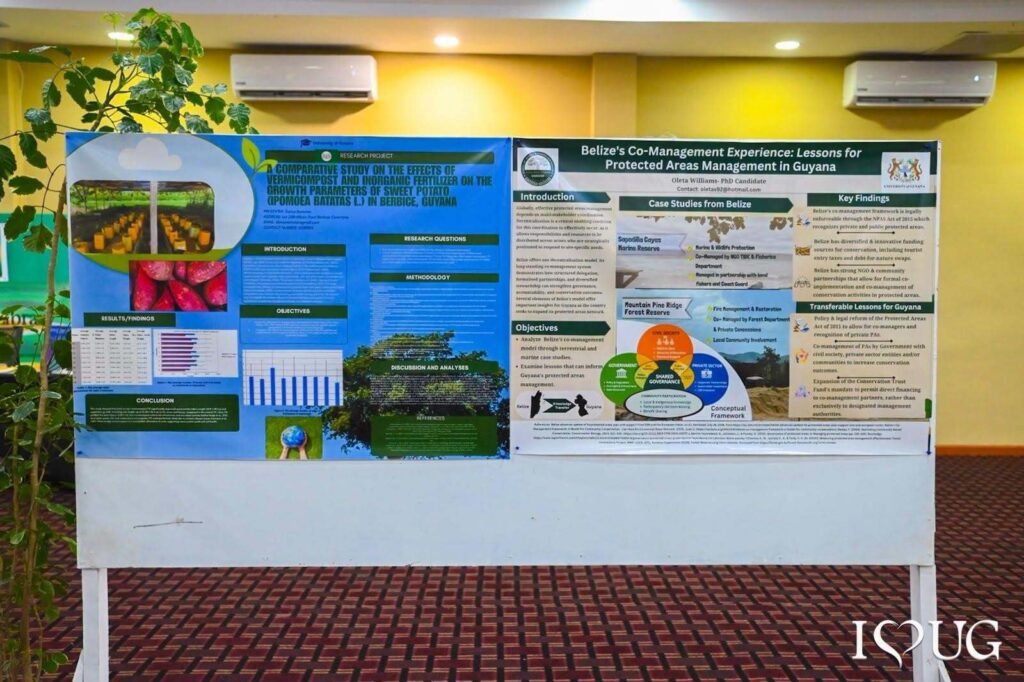
Graduate researchers display their research during the poster presentation segment of the University of Guyana’s Fourth Graduate Research Symposium, held under the theme “Resilience for the 21st Century: Navigating Complexity Through Multidisciplinary and Interdisciplinary Collaboration.”
The keynote address, “Researching for Resilience,” was delivered by Professor Michael Taylor, former Dean of the Faculty of Science and Technology at The University of the West Indies, Mona Campus. Drawing on examples including flooding, extreme heat and El Niño, Professor Taylor examined how disruptions increasingly compound over time, cascade across interconnected systems and complicate human development. He challenged researchers to consider whether their work is helping societies anticipate emerging challenges and respond at a pace and scale that match the disruptions being faced. “The ultimate test of resilience cannot simply be whether our infrastructure survives. It must also be whether people are able to continue to live, develop, and thrive, notwithstanding disruption,” he said.
Professor Taylor called for a new approach to resilience research centred on Vision, Integration and Partnership (VIP). On vision, he encouraged researchers to anticipate emerging challenges, vulnerabilities and interactions rather than simply respond after disruption occurs. He also noted the potential of artificial intelligence and other technologies to help researchers identify patterns and integrate information, while maintaining the importance of human judgement and critical thought. “In a rapidly changing world, anticipation itself becomes part of resilience,” he said.
The second element, integration, requires researchers to move beyond disciplinary silos while recognising the value of disciplinary expertise. Professor Taylor stressed that complex resilience challenges require researchers to work across fields and develop questions collectively. “It demands the humility to recognize when our own individual discipline is just not enough,” he said. “It means asking, can we frame the problem together? Can we develop the questions together? And can we understand how the pieces interact together?” Professor Taylor said.
Partnership, the third element, calls for stronger connections between researchers, communities, governments, the private sector and civil society, as well as greater collaboration between Guyana and the wider Caribbean and Amazon region. “Partnership changes the research question,” Professor Taylor said, emphasising that meaningful collaboration can influence not only how research is conducted but also how its findings are applied. “For resilience is not achieved when our next paper is published. But rather, when the knowledge in that table changes what happens next,” he concluded.
Across the three-day technical programme, researchers examined resilience from a range of disciplinary and sectoral perspectives. Day One focused on knowledge, culture and creative expression in building resilient societies, as well as human health, well-being and systems of care in a changing world. Presentations explored how culture, health, social systems and knowledge can contribute to resilience and strengthen responses to changing conditions.
Day Two shifted attention to sustainable food, agriculture and forest systems; engineering, technology and digital innovation; and economic, social and governance systems. Graduate researchers examined issues including climate-resilient agriculture, food security, renewable energy, flood risk, river surveillance, economic development, public safety, taxation and inflation.
The symposium also featured research from participants beyond Guyana, including Bangladesh, Bermuda, Jamaica, Brazil, Trinidad and Tobago and Belize. Their presentations added regional and international perspectives on issues including climate-resilient health systems, nurse migration, surrogacy, legal education, racial equity and climate resilience.
The final day focused on planetary resilience, environmental change, natural systems and Earth processes. Presentations addressed urban development, river ecosystems, climate change and informal settlements, environmental governance, biodiversity, drainage infrastructure, community revitalisation and food-price shocks.
The technical sessions collectively demonstrated the breadth of research required to understand and respond to resilience challenges, while reinforcing the importance of connecting knowledge across disciplines and translating research findings into practical responses.
Day three also featured three-minute and five-minute research competitions, alongside poster and oral presentations, giving graduate researchers opportunities to communicate their work to diverse audiences in concise and accessible formats. The symposium also recognised outstanding graduate research through its awards and presentation competitions. Mr. Asaad Abdool received the Best Oral Presentation Award, while Ms. Oleta Williams received the Best Poster Presentation Award. The Outstanding Graduate Research Award was presented to Ms. Uoreanna Aalayah Lake, with Mr. Renee France receiving the Emerging Graduate Research Award. Mr. Leonard Oxford won the 5-Minute Competition, while Dr. Louisa Daggers was awarded first place in the 3-Minute Competition.
The symposium concluded with a report on key findings and discussions, and remarks from graduate-student representative, Dr. Louisa Daggers, and closing remarks from Professor Judith Rosales of the School of Graduate Studies and Research.
The Food and Agriculture Organization of the United Nations (FAO) in collaboration with the Ministry of Agriculture and other key partners will soon complete the FISH4ACP programme in Guyana. The main aim for this programme was to build a stronger Atlantic Seabob shrimp value chain.
At the closing Lagacy Event today in Georgetown, representatives from government, the private sector, fisherfolk organisations, development partners and project beneficiaries reviewed the results and discussed future efforts to build on these achievements.
Achievements highlighted
The FAO Representative for Guyana, Dr. Gillian Smith, highlighted the concrete achievements of the work to boost the country’s shrimp value chain.
“FISH4ACP has significantly advanced the plan to upgrade the Atlantic Seabob value chain and make it more sustainable, well-managed and resilient. It has improved data collection, stock management, food safety and quality, and safety at sea, with a focus on reinforcing fisheries cooperatives,” she said.
FISH4ACP introduced CALIPSEO, a digital fisheries information system developed by FAO. Data from it enables the fisheries department to make decisions that support fishers, strengthen the sector and protect fish stocks for the future. The programme has also delivered training on the safe and healthy handling of Seabob products. To help fishers stay safe at work, it has developed a manual containing practical advice, the Safety Guide for Artisanal Seabob Fishers in Guyana.
The programme has also supported cooperatives made up of artisanal fishers and worked with informal groups. This was made possible by working with the International Labour Organization (ILO) and the Cooperatives Department of the Ministry of Labour. The support provided included training in governance, membership engagement, financial management and organizational planning.
Joni Musabayana, Director, ILO Decent Work Team and Office for the Caribbean, stressed the transformative power of developing cooperatives. “One fisher or processor alone may struggle to secure finance, reach better markets, buy inputs at a reasonable cost, influence decisions or access services,” he said. “However, as organised groups, you can pool resources and knowledge, strengthen governance, negotiate from a stronger position and make your voices heard much louder.”
Handing over the baton
Participants at the legacy event discussed how institutions, fishing communities and industry partners could continue the work that the programme has done over the years.
Dr. Richard Blair, Advisor to CARICOM and the Ministry of Agriculture, highlighted the Government’s continued support for the fisheries sector, having invested almost $4 billion from 2025-2026, including the refurbishment of landing sites and direct assistance to almost 6,000 fishers. He also highlighted the Seabob Working Group as a key FISH4ACP achievement, bringing government, fishers, processors, exporters and researchers together to address sector challenges. “This collaborative approach will be crucial going forward,” he said.
Future efforts will be guided by a vision statement that outlines a 10-year period ending in 2032. The aim is to strengthen Guyana’s position as a leading exporter of seabob shrimp globally. The plan is to do this by ensuring a sustainable and resilient industrial and artisanal value chain that is well-regulated and supported by data, with improved infrastructure for artisanal fishers, expand fish cooperatives and continue empower women and youth.
“Cooperatives are not social organisations; they are businesses that create opportunities for their members,” said Mr. Aslin Singh, Advisor to the Minister of Labour and Manpower Planning. He noted that the Department of Cooperatives will continue to support cooperatives with registration, management and proper record-keeping. “We will also continue to work hand-in-hand with the Ministry of Agriculture, the Seabob Working Group, the ILO and FAO to protect and build on the achievements of FISH4ACP,” he said.
Mr. Singh reminded fisherfolk that cooperatives belong to their members and encouraged them to manage with integrity and transparency, involve members in decision-making, and continue learning from one another.
Luca Pierantoni, the EU’s Ambassador to Guyana, Suriname and CARICOM, said, “FISH4ACP has done impressive work to make the shrimp value chain stronger and more sustainable, especially in areas like digital infrastructure upgrading which is critical for ensuring accurate information and informed decision-making. In future, it would be great to see Guyana spread its expanded capacities to other countries in the region.”
HGP NIGHTLY NEWS – Deputy Commissioner of Police and Head of the Special Organised Crime Unit, Fizal Karimbaksh, has been sent on leave pending the outcome of an investigation into allegations of rape and threatening behaviour made against him.
The Guyana Police Force announced the decision on Thursday, following mounting public scrutiny over Karimbaksh remaining on active duty while allegations against him were being investigated.
According to the Force, Police Commissioner Clifton Hicken established a team to conduct what it described as a thorough investigation after receiving the report.
The female police officer who made the allegations has also been removed from SOCU Headquarters and seconded to Regional Police Division 4 ‘A’.
The Police Force said the allegations are being treated with the seriousness they warrant and pledged that the investigation will be conducted professionally and impartially, in accordance with established procedures.
It also said due process will be afforded to all parties involved.
Karimbaksh’s placement on leave follows calls from several quarters for him to be removed from operational duties while the allegations are investigated.
The allegations against the senior police officer have not been proven, and no finding of wrongdoing has been made against him.
Police said the investigation remains ongoing and further information will be released as necessary.
…as police open probe into rape, gun threats allegations
(Kaieteur News) – Deputy Commissioner of Police, Fizal Karimbaksh has been sent on leave pending the outcome of an investigation into allegations of rape and threatening behaviour made against him by a woman who worked under him.
In a press statement the Guyana Police Force said that following the receipt of the report, Commissioner of Police, Clifton Hicken, established a team to conduct a thorough investigation into the allegations. The Guyana Police Force said it wished to assure the public that the allegations are being treated with the seriousness they warrant and that the investigation will be conducted professionally, impartially and in accordance with established procedures.
Deputy Commissioner of Police, Fizal Karimbaksh
The Force said it remains committed to ensuring that due process is afforded to all parties involved. Investigations are ongoing and further information will be provided as necessary. Karimbaksh, head of the Special Organised Crime Unit (SOCU) is accused of sexual assault, threats to the life of a female inspector including an alleged incident in which a firearm was pointed at her. Last week Friday, Home Affairs Minister, Oneidge Walrond had disclosed that an official investigation had commenced into the allegations. Yesterday’s development came several days of calls from political parties and civil society groups for Karimbaksh to be removed from operational duties and placed on administrative leave while an independent investigation is conducted.
Earlier this week a broad coalition of civil society organisations, activists, academics, religious representatives and individuals is demanding urgent action over allegations of sexual violence involving senior officials, arguing that men in positions of power must be held accountable regardless of their political, professional or social connections. The civil society signatories, however, say the situation raises fundamental questions about accountability within the Guyana Police Force and the wider system for dealing with gender-based violence. “Men in positions of power across the spectrum in Guyana, including those with ministerial positions, or exercising leadership roles in political parties including the political party in Government have to take responsibility and action for their continuing and appalling, disgusting, abusive and criminal behaviour towards women,” they said.
They pointed specifically to the Karimbaksh allegations. The signatories are demanding that an independent investigation and special independent prosecutor be appointed to deal with the allegations against Karimbaksh. They questioned whether survivors and the wider public can have confidence in police investigating allegations against one of its most senior officers. “Justice must not only be served, it must appear to be served,” they said. Also adding its voice to the issue was the Women and Gender Equality Commission (WGEC) questioning the apparent lack of action by the senior management of the Guyana Police Force and warning that the matter has become a test of whether powerful officials can be held accountable. In a statement issued on Monday, WGEC Chairperson Indranie Chandarpal said the commission was particularly concerned about the “deafening silence” from the executive management of the police force, despite the allegations having reportedly been made months ago. WGEC said the circumstances are especially troubling because the alleged victim is herself a serving member of the organisation mandated to protect citizens. “What is particularly unacceptable in this instance, is that serving members of the Guyana Police Force, who are mandated to serve and protect the public, are themselves subject to sexual abuse from within their own institution,” the commission said.
It noted that victims of sexual exploitation in workplaces often face fear, embarrassment and concerns about retaliation, all of which can discourage them from reporting. According to the commission, those concerns become even more acute when the alleged perpetrator is a senior official with significant authority. The WGEC stressed that every Guyanese has a right to work in a safe environment and should not have to choose between personal safety, dignity and livelihood. “Human Rights are meaningless if those who violate it are protected by the very institutions charged with upholding said rights,” the commission warned.
It said the responsibility for protecting rights rests particularly with those who have a duty of care, including ministers, agency heads and law-enforcement authorities. The commission said the latest allegations therefore go beyond the individuals involved and raise fundamental questions about institutional accountability. “This case represents a test of Guyana’s institutions on whether they are capable of holding the ‘powerful’ accountable,” Chandarpal said. “It is therefore an imperative that we must not fail in this instance.”