Home Blog Page 102

St. Kitts And Nevis Wrap Up Another Brilliant Republic Bank ‘Five For Fun’ Programme

0

St. Paul’s Primary rewrites history books

Basseterre, St. Kitts and Nevis – St. Paul’s Primary made history on Saturday, September 26, becoming the first school from St. Kitts to be crowned champions of the Republic Bank Five for Fun Cricket programme as the 2026 edition came to an exciting close at Brown Hill Play Field in Nevis.

For the first three years of the programme in the twin-island federation, the championship title was dominated by schools from Nevis. St Paul’s Primary ended that run in spectacular fashion, bringing the national crown to St. Kitts for the first time.

The Republic Bank Five for Fun Cricket programme is designed to support grassroots cricket development across the region. The programme has been running in St. Kitts and Nevis since 2023 and has reached hundreds of primary school pupils, with a format that places emphasis on fun, inclusion, teamwork and the development of fundamental cricket skills.

Brown Hill Play Field was transformed into a festive celebration of youth cricket, with St. Paul’s Primary taking center stage after an exciting day of competition.

The action on the field was followed by a lively closing ceremony, where the outstanding teams and individual performers were recognised and rewarded for their achievements throughout the programme.

Participation certificates were presented to all schools, Halliday Smith Primary, Violet Petty Primary, St. Paul’s Primary and Sandy Point Primary School of St. Kitts as well as Elizabeth Pemberton Primary, Ivor Walters Primary, Joycelyn Liburd Primary and Charlestown Primary School from Nevis

There were many broad smiles and excited cheers as the individual awards were announced.

Best Batter: Zackeem Bailey – Charlestown Primary School
Best Bowler: Jahquendre Dasent – St Paul’s Primary School
Best Fielder: Kayloma Woods – St Paul’s Primary School
Most Valuable Player: Zakeem Bailey – Charlestown Primary School

Loud applause followed the announcement of Elizabeth Pemberton Primary School as the recipient of the ‘Spirit of the Games’ award, recognising the school’s outstanding display of sportsmanship and team spirit.

In the National Final, Charlestown Primary School finished as runners-up and received their medals and trophy from Permanent Secretary of the Ministry of Education, Mrs. Lisa Romayne Pistana.

The spotlight then turned to the new national champions, St. Paul’s Primary. The school’s eight pupils and two coaches proudly collected their medals and championship trophy from Country Manager, Republic Bank, St. Kitts, Mrs. Pamela Herbert-Daniel.

The closing ceremony also featured remarks from several key stakeholders who have played an important role in the development of the Republic Bank Five for Fun programme in St. Kitts and Nevis.

President of the Nevis Cricket Association, Carlisle Powell, said,

“The response to the Republic Bank Five for Fun programme in Nevis has been overwhelming. Beyond the cricketing skills being developed, the programme has brought children together, encouraged teamwork and created a greater appreciation for the sport. We are proud to have been part of this initiative and to see our young cricketers experience the excitement of competing at this level. We look forward to building on this foundation and continuing to provide opportunities for the next generation of cricketers”

President of the St. Kitts Cricket Association, Dennis Phillip, stated,

“The Republic Bank Five for Fun programme has provided our young cricketers with a wonderful opportunity to develop their skills while enjoying the game in a fun and positive environment. We are extremely pleased with the enthusiasm and participation demonstrated by the schools throughout St. Kitts. The National Festival Finals are a fitting culmination of the programme, and we commend Republic Bank, Cricket West Indies, the St. Kitts Cricket Association and all our partners for investing in the future of cricket and creating meaningful opportunities for our children.”

Senior Sports Officer in the Ministry of Sport, Carl Tuckett said:

“The Republic Bank Five for Fun programme represents an excellent example of how sport can be used to engage our young people, develop their skills and instil important values from an early age. The enthusiasm demonstrated by the participating schools and young cricketers throughout St. Kitts and Nevis has been truly encouraging. The National Festival Finals provide a fitting celebration of their hard work and development, and we commend Republic Bank, Cricket West Indies, the local cricket associations, the Ministry of Education, coaches, teachers and volunteers for their collective commitment to creating meaningful sporting opportunities for our children.”

Permanent Secretary of the Ministry of Education, Lisa Romayne Pistana, remarked,

“The Ministry of Education is pleased to support the Republic Bank Five for Fun programme, which aligns strongly with our commitment to the holistic development of our students. Programmes such as this provide our children with opportunities to develop important values such as teamwork, discipline, leadership and sportsmanship, while promoting healthy and active lifestyles. We commend Republic Bank, Cricket West Indies, the local cricket associations, coaches, teachers and volunteers for their collective efforts in making this initiative a success and, most importantly, for investing in the development of our children.”

The programme concluded with a vote of thanks which came after the featured remarks from Manager of the Republic Bank Nevis Branch, Tesia Burton, said:

“For Republic Bank, Five for Fun represents our investment in young people. We believe sports has the power to build confidence, character and important life skills that extend far beyond the cricket field. Through Five for Fun, children are given an opportunity to learn about teamwork, discipline, resilience and ambition, while developing a love for a game that is such an important part of who we are as Caribbean people.

This year is particularly special as we celebrate the fourth staging of Five for Fun in St. Kitts and Nevis. Over those four years, we have had the privilege of watching children pick up a bat or ball, discover their abilities and, in some cases, continue along the cricket development pathway. That is the kind of impact that makes this programme meaningful to us at Republic Bank.

Thank you to the coaches, teachers, parents, cricket associations, Cricket West Indies, officials and everyone who contributed to making another season possible.

St Kitts and Nevis is the second territory to bring the curtains down on its Republic Bank Five for Fun programme for 2026, following St. Lucia.

This leaves Guyana, Barbados and Trinidad & Tobago to conclude their respective Five for Fun programmes, as the regional initiative continues to provide young cricketers with opportunities to develop their skills while enjoying the spirit of the game.


Source: Village Voice News

Dr. Barnett Urges CARICOM to Reset Regional Integration

0

CARICOM Secretary-General Carla Barnett says regional integration must move beyond trade liberalisation to build productive capacity, reduce external dependence and strengthen the Caribbean’s resilience amid global uncertainty.

Caribbean Community (CARICOM) Secretary-General Dr Carla Barnett has called for a strategic overhaul of regional integration, identifying food and energy security, transportation, productive transformation and digital development as priorities for strengthening the region’s economic resilience and competitiveness.

Speaking on Thursday at the 41st Session of the Economic Commission for Latin America and the Caribbean (ECLAC) in the Dominican Republic, Barnett said the traditional approach to regional integration, centred largely on expanding markets and liberalising trade, was no longer sufficient to meet the challenges confronting Caribbean states.

Small economies, she noted, are increasingly exposed to geopolitical uncertainty, technological disruption, climate change and intensifying competition for investment and productive capabilities.

“Regional integration must now be viewed as a strategic development platform to drive economic transformation, enhance resilience, and advance the Region’s strategic participation in an increasingly uncertain, complex and competitive global economy,” Barnett said.

She was speaking during a panel discussion titled “A New Stage of Regional Integration: What to Do and How to Move Forward,” which brought together regional government representatives, integration officials and private sector leaders.

Barnett said CARICOM was seeking to deepen the CARICOM Single Market and Economy (CSME) through sectoral cooperation focused on practical results, economic security and stronger engagement with international markets.

Food and energy security featured prominently in her assessment. She said reducing the Caribbean’s dependence on imported food must be treated as a regional development and resilience strategy, supported by cooperation in agricultural production, research, climate-smart farming, technology and logistics.

She also called for greater regional collaboration on renewable energy, energy efficiency, regulatory coordination and climate financing to reduce external dependence and support more competitive production.

Transportation and connectivity were identified as another critical priority, with Barnett arguing that efficient and affordable shipping, air services, ports, airports and logistics systems were essential to trade, tourism, investment and labour mobility.

Improved regional transportation would allow Caribbean producers to source inputs more efficiently, access neighbouring markets and participate more effectively in Latin American and global supply chains.

On economic diversification, Barnett warned that Caribbean economies remained vulnerable to external shocks because of their dependence on a limited range of activities.

She said regional integration must therefore focus on building competitive industries and value chains rather than merely connecting markets.

Priority sectors include agro-processing, green manufacturing, pharmaceuticals, creative industries, digital services and logistics.

Barnett pointed to CARICOM’s recently approved Industrial Policy as a framework for helping member states develop complementary productive capabilities rather than competing against one another for the same opportunities.

She also stressed the need for stronger regional financial systems, including interoperable payment platforms, improved access to financing for small and medium-sized businesses, and coordinated investment in climate adaptation and resilient infrastructure.

Digital transformation and artificial intelligence, she added, could improve productivity, reduce transaction costs and expand market access, provided countries invest in digital infrastructure, cybersecurity, regulatory frameworks and skills development.

Barnett also highlighted the Protocol on Enhanced Cooperation, which allows willing and able member states to advance agreed initiatives without requiring every member to participate simultaneously.

She cited the free movement arrangement implemented by four CARICOM member states on October 1, 2025, as an example of cooperation that could improve the allocation of skills and human resources across participating countries.

In closing, Barnett called for stronger partnerships between CARICOM and Latin America to expand productive investment, technological cooperation, trade diversification and more resilient regional supply chains.

She said closer collaboration between the two regions could strengthen their collective ability to navigate an increasingly complex global economy.


Source: Village Voice News

APNU Blasts Ali, Jagdeo Over Democratic Failures

0

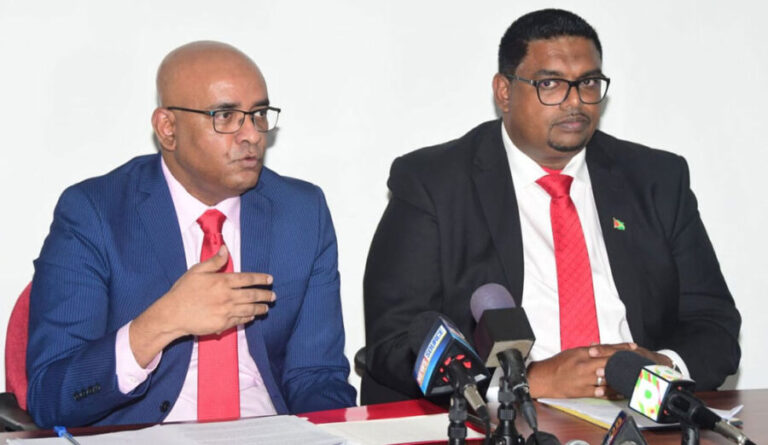
The A Partnership for National Unity (APNU) has challenged President Irfaan Ali and the People’s Progressive Party/Civic (PPP/C) General Secretary Bharrat Jagdeo to match their praise of democracy with action, citing weakened local government institutions, alleged electoral inequalities, concerns over state media bias and questions about compliance with court rulings.

In a sharply worded statement issued Friday, the coalition challenged the two senior PPP/C figures over their October 5 statements praising free elections, an independent judiciary, a strong Parliament and a free press, arguing that the government’s actions contradict those principles.

“Democracy cannot be speeches about 1992 while all the democratic institutions are being weakened or destroyed by the government,” APNU declared.

The criticism comes amid continuing political disagreements over electoral transparency, the independence of public institutions and the administration of local democratic organs following the September 2025 general and regional elections.

APNU argued that the government’s democratic credentials must be judged by its conduct in office rather than its public declarations, pointing to the failure to reconstitute the Local Government Commission, concerns about state media coverage, disputes over compliance with court rulings and resistance to the proposed introduction of biometric voter verification.

Local democracy under scrutiny

The coalition highlighted the continued absence of the Local Government Commission, whose tenure expired in April 2024. The commission provides independent oversight of staffing and related matters in local democratic organs.

APNU said the prolonged absence of the body, combined with complaints of central-government interference, undermines the ability of elected local representatives to serve their communities independently.

“Local councils must not be treated as administrative branches of the governing party or punished because voters chose representatives from another party.”

The coalition called on the government to restore the commission, provide adequate resources to municipalities and neighbourhood democratic councils, and respect their statutory authority without political interference or discrimination.

The issue is particularly significant because local government is intended to give communities a direct voice in decisions affecting their neighbourhoods, services and development.

Election observers and state media

APNU also challenged the government’s record on electoral fairness, citing findings it attributed to European Union and Commonwealth observer missions following the September 2025 elections.

According to the coalition, the observers identified disproportionate coverage favouring the incumbent, bias in state media reporting, unequal access to campaign resources and insufficient campaign-finance safeguards.

APNU condemned what it described as the PPP/C’s “effective dominance of state-funded political messaging” and demanded a genuinely independent public media system, fair access for competing political parties, transparent government advertising and enforceable rules against the partisan use of public resources.

The coalition’s criticism raises questions about the use of publicly funded communication platforms and whether political parties compete on an equitable footing during election campaigns.

Government’s record on court rulings questioned

The statement also questioned the government’s handling of the Guyana Teachers’ Union dispute, in which the High Court ruled in 2024.

APNU said the union reported in 2025 that the Ministry of Education had failed to resume deductions and remittances of union dues following the court ruling.

While acknowledging that the government had the right to appeal a judgment, the coalition argued that respect for judicial independence must extend to compliance with binding court orders.

“An appeal is a lawful right; ignoring a binding order is not. A government that praises judicial independence must show respect for it, particularly when judges rule against the executive.”

APNU called for a clear public accounting of the orders in force and the government’s compliance. Its statement did not detail the specific orders or provide the government’s explanation for the reported failure to resume remittances.

Renewed push for biometric verification

Electoral reform remains another major point of contention. APNU reiterated its support for legislation permitting biometric verification at polling stations, arguing that the measure could help prevent voter impersonation and strengthen public confidence in elections.

The coalition acknowledged the need to protect eligible voters from disenfranchisement but maintained that the risks could be addressed through reliable equipment, accessible procedures and independent auditing.

“The Commonwealth observers recommended addressing biometric registration and verification early in the next electoral cycle,” APNU said.

The PPP/C has raised concerns that biometric verification could exclude eligible voters. APNU countered that a properly designed and legislated system could provide safeguards while improving the credibility of the electoral process.

The coalition also demanded stronger accountability by the Guyana Elections Commission (GECOM), timely publication of polling-station results, audits and enforceable rules governing campaign financing and the use of state resources.

APNU calls for public pressure

APNU proposed a time-bound programme of democratic reforms, including reconstituting the Local Government Commission, protecting local councils from partisan interference, amending electoral laws to allow biometric verification, guaranteeing fair access to state media and ensuring compliance with court orders.

It also urged citizens, professional associations, trade unions, faith communities, young people, businesses and civil society organisations to press for accountability beyond election periods.

“Private concern, occasional outrage and social-media complaints are not enough.”

The coalition warned against relying on international partners to resolve Guyana’s democratic challenges, arguing that meaningful change must come from citizens demanding accountability from their own institutions.

“What is needed is the recognition that the vote belongs to the people, the Constitution binds those in power, and democracy is a daily obligation.”

APNU’s statement sets out a series of demands that, if implemented, would require legislative action, institutional changes and consultation among political parties and other stakeholders.

The allegations and criticisms remain the coalition’s assessment of the government’s record. Responses from Ali, Jagdeo, the government and GECOM were not included in the release.

APNU ended with a direct challenge to the governing party and the electorate: “Demand democracy in practice, not merely in proclamation.”


Source: Village Voice News

Trump says Nobel committee not awarding him Peace Prize leaves ‘indelible stain’ on Norway

0

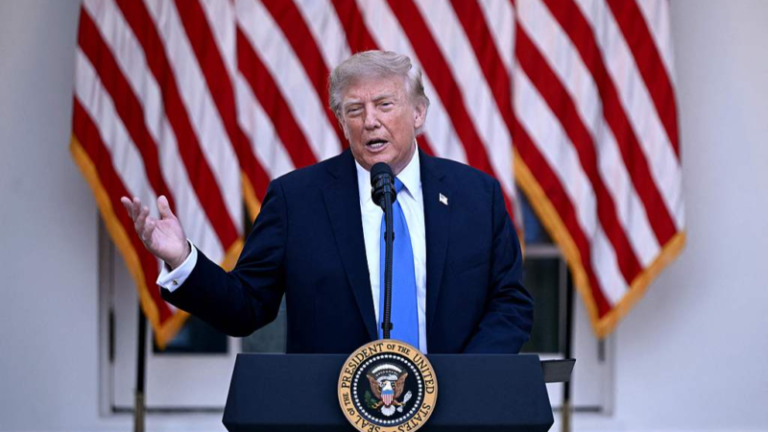
(NBC News)- President Donald Trump lamented that the Norwegian Nobel Committee chose not to award him with its annual Peace Prize on Friday, telling rallygoers the decision leaves “an indelible stain on the country of Norway.”

Speaking at a rally in Syracuse to boost New York Republicans, Trump listed off all of the accomplishments he believes have earned him the right to win the Nobel Peace Prize, including efforts to end or prevent conflicts in Africa and Asia and for having “saved more lives than anyone in history.”

Earlier Friday, the committee awarded the prize to Navi Pillay, an 85-year-old South African legal pioneer who led a United Nations panel that concluded Israel committed genocide in Gaza.

“I’ve never heard of the person,” Trump said. “I know a lot of people. I never heard of this particular person, but congratulations, anyway. … The United States of America, represented by me as your president, should have received the Nobel Peace Prize, but didn’t.”

Navanethem (Navi) Pillay

“And this is an indelible stain on the country of Norway and those people that made such a disgraceful and embarrassing decision,” Trump continued. “The Nobel Peace Prize has been forever discredited by a handful of radical ideologues who are antidemocracy and really enemies of civilization, and we will not forget Norway, that you didn’t give this prize with the greatest record in history.”

The president added that he should have received eight Nobel Peace Prizes for his efforts because he claimed to have ended eight ongoing conflicts. The president did not mention the war in Ukraine, which has raged on through his presidency as his administration has failed to bring the conflict to an end. And in the Middle East, the president earlier this year launched an ongoing war with Iran.

Trump said the committee’s choice to award the prize to Pillay “is just another sign of how Norway and all these others are ripping off our country.”

Throughout his second term, the president has made clear his ambition to secure a Nobel Peace Prize, and his allies have said he deserves it for efforts to end the war in Gaza in addition to other conflicts. Earlier this year, Venezuelan opposition leader María Corina Machado, the 2025 winner, offered to share her prize with him as she sought his support for her efforts in Venezuela after the Trump administration removed President Nicolás Maduro from power.

After learning of her award at a law gathering in Germany on Friday, Pillay joked to the crowd: “If you clap a little bit more, I may share this prize with Trump.”

The president was in Syracuse to boost the candidacy of GOP gubernatorial nominee Bruce Blakeman and state Republicans. He shouted out Saritha Komatireddy, the Republican nominee for state attorney general too, before attacking sitting state Attorney General Letitia James, a Democrat he has often clashed with.

“And on Election Day, New Yorkers should tell both [Gov. Kathy] Hochul and that disgusting Letitia dog — she’s a dog — you’re fired, get the hell out of here.”

The Trump administration has so far failed multiple times in its efforts to prosecute James, who spearheaded an investigation into his business dealings that led to a state judge ruling he had conspired to manipulate his net worth and ordering him to pay a fine of more than $350 million. The fine was later thrown out on appeal by a state court.

“Donald Trump is in Syracuse supporting the only attorney general candidate who clerked for Brett Kavanaugh, the man who ended Roe v. Wade,” a James campaign spokesperson said in response to the president’s comments. “The contrast is crystal clear and we welcome it.”


Source: Village Voice News

Ram, Unions Take NIS to Court Over Pension Arrears

0

Attorney-at-law and chartered accountant Christopher Ram, a pensioner and three trade unions have taken the National Insurance Board (NIB) to the High Court, seeking to compel the payment of statutory minimum old-age pensions at the rate prescribed by law and recover arrears allegedly accumulated since January 2021.

The applicants estimate that pensioners who received the minimum rate throughout the period could each be owed approximately $510,300, as they challenge what they describe as the Board’s failure to adjust payments in line with increases in the Public Service minimum wage.

The judicial review application, filed on Thursday, names Ram, pensioner Kalicharan Heera, the Union of Agricultural and Allied Workers, the United Minibus Union and the Guyana Market Vendors Union.

At the centre of the dispute is Regulation 4(b) of the National Insurance Scheme (NIS) Benefit Regulations, which stipulates that an old-age pension shall “in no case” be less than 50 per cent of the Public Service minimum wage.

The applicants contend that the Board broadly honoured this requirement until 2020 but failed to maintain the statutory minimum as public sector wages increased in subsequent years.

According to their calculations, the minimum pension should now be $51,173 monthly, compared with the $43,075 currently paid to minimum-rate pensioners. That represents an alleged shortfall of $8,098 every month.

The applicants are asking the court to declare that the 50 per cent threshold is mandatory, order the Board to pay pensions at the legally prescribed rate, and require an accounting of all arrears since 2021, together with interest. They are also seeking payment of outstanding sums due to the estates of pensioners who have died.

“The NIS has never doubted its obligation. The Benefit Regulations set it out, and the NIS website, Annual Reports and actuarial reports repeated it: the minimum pension must not be less than 50% of the Public Service minimum wage,” the applicants said in a statement.

The dispute has previously been raised through political and administrative channels.

In 2024, Opposition Member of Parliament Annette Ferguson tabled a motion, seconded by Juretha Fernandes, calling on the Government to make retroactive payments to minimum pensioners for 2021 to 2023. According to the applicants, the Speaker rejected the motion, leaving the pensioners without the proposed payments.

The latest court action follows a letter sent on October 1 by Ram and 10 unions to the NIS Board, warning that legal proceedings would follow over the alleged arrears. The letter was addressed to the Board’s secretary and copied to its chairman, the NIS general manager and Senior Minister in the Office of the President with Responsibility for Finance, Dr Ashni Singh.

The applicants said the Board failed to provide a satisfactory response, prompting them to seek judicial intervention.

They have also questioned the Government’s handling of the matter, pointing to Singh’s responsibilities in relation to the NIS, the financial administration framework overseeing the Board and the regulations governing benefits. They argue that increases in the Public Service minimum wage should have triggered corresponding adjustments to the minimum pension.

The applicants further rely on section 34(2) of the National Insurance and Social Security Act, arguing that Parliament is required to make up any shortfall in the National Insurance Fund if the Scheme cannot meet its legal obligations.

Ram has previously warned that the total arrears could amount to billions of dollars, depending on the number of pensioners affected and the period for which payments are owed.

The proceedings are to be served on the National Insurance Board and the Attorney General, the Government’s chief legal adviser.

The applicants have called for the matter to be resolved promptly, arguing that the case concerns pensioners who may have been denied payments guaranteed under the law. The court will be asked to determine the Board’s legal obligations and whether the relief sought, including retroactive payments and interest, should be granted.


Source: Village Voice News

Nowhere to Hide: Inside the Quota-Driven Immigration Dragnet Engulfing Caribbean Communities in America

0

As the Trump regime pushes ICE toward 3,000 arrests per day, the Caribbean diaspora finds itself caught in an enforcement machine that has abolished every safe space — from churches and hospitals to school gates and asylum interviews

By Calvin G Brown (WiredJA) – There was a time — measured not in decades but in months — when a Jamaican mother dropping her child at school in Brooklyn could do so without scanning the street for unmarked federal vehicles. When a Trinidadian grandmother attending Mass at her parish church in Miami could worship without wondering whether the men in the back pew carried badges. When a Guyanese father driving to his construction job in Houston could be pulled over for a broken taillight without being detained, cuffed, and entered into a deportation pipeline.  That time is over.

The Trump regime’s Immigration and Customs Enforcement apparatus has, through a systematic dismantling of longstanding protections and a relentless escalation of arrest quotas, transformed virtually every space in American public life into a potential enforcement zone. For Caribbean nationals — whether undocumented, holding expired visas, awaiting asylum decisions, or in some documented cases holding valid work permits — there is now, quite literally, nowhere in America that is safe from detention.

The quota machine

The numbers tell a story of escalation that has accelerated with each passing month. In January 2025, the White House directed ICE field offices to meet a quota of 75 arrests per day each — roughly 1,200 to 1,500 nationally. By May 2025, White House Deputy Chief of Staff Stephen Miller and then-Homeland Security Secretary Kristi Noem delivered a new directive in a meeting so aggressive that senior ICE officials feared being fired: 3,000 arrests per day, or more than one million per year.

Miller subsequently confirmed the figure on Fox News. The Department of Justice later told a federal court that no such quota exists and that enforcement is based on “individualized assessments” — a direct contradiction of Miller’s own public statements.

The reality on the ground has fallen somewhere between the rhetoric and the denial. ICE recorded more than 43,000 arrests in June 2026 alone — an average of 1,438 per day, the highest monthly total since Trump’s return to office. In late June, more than 10,000 people were detained in a five-day period, roughly 2,000 per day, with the White House pushing for that pace to become the new operational baseline.

More recently, ICE agents have been called into mandatory seven-day work weeks under a “100% manpower surge effort” pushed, according to agency sources, at the last minute. The regime’s appetite for higher numbers shows no sign of diminishing.

The abolition of safe spaces

What makes the current enforcement regime qualitatively different from any previous administration — including Trump’s first term — is the systematic elimination of every location that was once considered off-limits.

On January 21, 2025, the Department of Homeland Security revoked the Biden-era sensitive locations policy, a directive first enacted in 2011 that prohibited ICE and Customs and Border Protection officers from making arrests at schools, houses of worship, hospitals, shelters, funerals, weddings, and public demonstrations. DHS declared that “criminals will no longer be able to hide in America’s schools and churches.”

The consequences have radiated across every dimension of daily life. Caribbean nationals in the United States can now be targeted for enforcement and detention at their homes; during vehicle stops on their way to work; at their workplaces, including construction sites; at USCIS field offices during immigration interviews, including asylum interviews; at routine ICE check-ins; at airports and other transportation hubs; on university campuses; during school drop-offs and pick-ups; in hospitals; and at houses of worship.

This is not theoretical. The American Immigration Lawyers Association has documented ICE arrests at USCIS field offices in multiple cities, where people attending required immigration interviews — a mandatory part of the legal process — have been detained on the spot. Internal ICE documents obtained by the Washington Post showed officers instructed to arrest people at courthouses immediately after judges dismissed their cases.

ICE agents began appearing at major US airports in force from March 2026, targeting foreign nationals with expired visas — a dramatic expansion from the previous practice of only detaining those with existing removal orders. Immigration attorneys report that the airport sweeps have caught tech professionals, asylum applicants, and spouses of US citizens with pending green card applications.

The vehicle stop programme became so aggressive — and so deadly — that it generated its own crisis. Since January 2025, federal immigration agents have shot and killed at least eleven people, with nineteen of twenty-two shooting incidents involving officers firing at people in vehicles during traffic stops.

In a single week in July 2026, ICE agents killed two men during traffic stops — Lorenzo Salgado Araujo in Houston and a Colombian national in Biddeford, Maine — prompting DHS Secretary Markwayne Mullin to temporarily suspend most vehicle stops. President Trump overruled the suspension within twenty-four hours, declaring on Truth Social that the traffic stop is “one of I.C.E.’s most important and effective Crime Fighting tools.”

The Caribbean in the crosshairs

For the Caribbean diaspora, these enforcement patterns carry a particular sting. Jamaicans have been specifically named in multiple ICE enforcement announcements. In January 2026, DHS identified Jamaican nationals among those detained in operations that the agency characterised as targeting “the worst of the worst.”

In June 2026, Caribbean nationals from Jamaica, Trinidad and Tobago, Guyana, the Dominican Republic, Belize, and St. Vincent and the Grenadines were among fifty-eight people arrested in a single New York metropolitan area operation.

But the data tells a more troubling story than the administration’s rhetoric suggests. In June 2025, less than one-third of ICE arrests involved individuals with criminal convictions. The largest single category of arrests has consistently been immigrants with no criminal history whatsoever — a pattern that immigration scholars at Syracuse University’s Deportation Data Project have documented month after month.

ICE insiders have told the New York Post that the quota system is “killing morale” and forcing agents to deprioritise dangerous criminals in favour of easier targets — precisely the outcome that immigration enforcement professionals warned about from the beginning.

For Caribbean communities in the United States, this means that the net has widened far beyond the convicted criminals that dominate DHS press releases. Overstayed visas, pending asylum cases, lapsed Temporary Protected Status, even attendance at a mandatory immigration interview — any of these can now trigger detention.

Immigration attorneys who serve Caribbean clients in Florida and New York report that families are avoiding medical care, pulling children from school, and skipping required court appearances rather than risk encounters with an enforcement apparatus that has declared every public space fair game.

A question for Caribbean governments

The silence from Caribbean capitals on the scale and nature of this enforcement regime is itself a story. CARICOM governments, which maintain diplomatic channels with Washington and depend heavily on diaspora remittances, have offered little public comment on the abolition of sensitive location protections or the quota-driven enforcement that has swept up their nationals regardless of criminal history.

Jamaica’s government was advised as early as January 2025 to “brace itself for a flood of returnees.” Whether it has done so — whether reception infrastructure, reintegration programmes, and diplomatic representations are commensurate with the scale of what is unfolding — remains an open and urgent question.

What is not in question is this: for Caribbean nationals in the United States, the enforcement architecture of 2026 has made every space — sacred, medical, educational, judicial — into a potential point of capture. The quota demands it. The policy permits it. And the silence from home enables it.


Source: Village Voice News

Guyana targets end-of-year onion self-sufficiency as cultivation expands to four regions

0

Guyana is aiming to end onion imports by the end of this year as the government expands local production, with Region Nine expected to lead cultivation alongside Regions Two, Five and Six.

Minister of Agriculture Zulfikar Mustapha said the country is targeting approximately 500 acres of onion cultivation as part of efforts to meet domestic demand through locally grown produce.

“At the end of this year we will not import any onions. Region Nine will produce all the bulk of our needs, plus Region Two, Region Five and Region Six,” the minister said.

Guyana began onion production as part of an integrated farming approach aimed at diversifying agricultural output, reducing reliance on imported produce and creating additional income opportunities for farmers.

Approximately 2000 bags of onions stored for distribution across Guyana

The initial pilot project in Region Nine, Upper Takutu-Upper Essequibo, recorded a harvest valued at more than $15 million, demonstrating the potential for local onion cultivation to contribute to the country’s food supply.

Minister Mustapha said the initiative forms part of a broader crop diversification drive that includes corn, soya, broccoli, cauliflower, carrots and lettuce, among other high-value crops.

Onions harvested at Manari Creek, Lethem

He noted that farmers are embracing the integrated farming approach and encouraged interested persons to contact the National Agricultural Research and Extension Institute (NAREI) to explore opportunities to cultivate onions.

The government is prepared to support farmers who wish to enter the sector, including those with relatively small plots of land.

“I have already passed instructions that as long as they have an acre or two, we’ll work along with them. We will try as much as possible to provide the planting material, and we will give them all the technical guidance so that they can come on board,” Minister Mustapha said.

Through the expansion of onion cultivation and support for farmers, the government is seeking to strengthen domestic production capacity and move Guyana closer to meeting its onion needs without depending on imports.

This move forms part of the Caribbean Community’s (CARICOM) target of reducing the region’s food import bill by 25 per cent by 2030.

CATEGORIES
TAGS


Source: Department of Public Information (DPI)

Tourism Booms, but Guyana’s Litter and Waste Crisis Persists

0

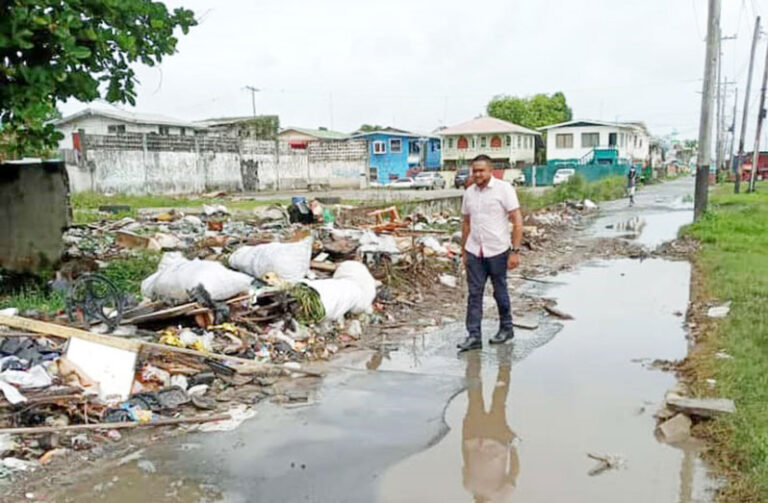
Guyana’s tourism industry is reaching new heights, with visitor arrivals setting records and international conferences bringing thousands of people to the country. Yet persistent littering, weak enforcement and limited resources for waste management pose challenges to maintaining a clean and healthy environment.

The problem raises questions about how effectively Guyana can protect the natural assets it promotes to international visitors while pursuing its ambitions to become a leading destination for sustainable tourism.

Director of the Guyana Tourism Authority (GTA), Kamrul Baksh, acknowledged that littering remains a longstanding challenge, saying the Government is pursuing public education and enforcement measures to address it.

Speaking to reporters on Thursday, October 8, during the State of the Tourism Industry Conference (SOTIC) at the Atlantic Suites by Hyatt in Kingston, Georgetown, Baksh said:

“The trash problem that we speak about globally, it is a problem and it is something that we at the government level are intervening on.”

Among the measures being pursued are fines for people caught littering. The Environmental Protection Agency (EPA) has also begun sharing video footage identifying individuals responsible for littering, with the aim of strengthening accountability.

Baksh said lasting improvements would require both public education and enforcement.

“Previously, this would be entirely filthy and littered, but it is two things. It is one on the education part and I think very importantly the enforcement of it.”

However, tackling littering is only one part of Guyana’s wider solid waste management challenge. Maintaining a healthy environment also requires reliable garbage collection, adequate disposal facilities, sufficient funding and equipment, and the consistent application of environmental laws.

Tourism Booms, but Guyana’s Litter and Waste Crisis Persists

Weak enforcement and limited resources can undermine efforts to keep communities, roadsides, waterways and other public spaces clean. Fines and awareness campaigns may discourage irresponsible disposal, but their effectiveness will depend on whether authorities can enforce the rules consistently and provide the infrastructure needed to manage waste.

The challenge is particularly significant as Guyana’s tourism industry expands.

Baksh reported that Guyana welcomed close to half a million visitors last year, a record for the country, while arrivals between January and September 2026 continued to show strong momentum.

Guyana has also hosted more than 20 conferences and exhibitions this year, attracting over 20,000 attendees, including more than 12,000 visitors who travelled specifically for those events. Increased air connectivity and investment in accommodation are supporting the sector’s growth.

Approximately 80 per cent of Guyana is covered by rainforest, and its rivers, wildlife and cultural heritage remain central to its tourism appeal. Indigenous communities also contribute through community-based tourism ventures in which residents own and operate businesses and reinvest earnings in their communities.

Baksh said:

“The communities own the land, they own the assets, they run the business, they control the profits, they reinvest the profits, so that is a distinct feature.”

The GTA is also advancing sustainability standards across the industry. Baksh said Guyana had demonstrated 60 per cent compliance with relevant green practices and was working to extend certification among accommodation providers and tour operators.

The Authority is pursuing opportunities in adventure tourism, cultural immersion, sports tourism, health and wellness, and agritourism. A national tourism policy is being prepared to guide the sector over the next five years.

The conference, organised by the Caribbean Tourism Organisation under the theme “Tourism Futures: Smart, Sustainable, and Inclusive,” brought together government representatives, private sector leaders and other stakeholders to discuss the future of Caribbean tourism.

Guyana’s tourism ambitions will depend not only on attracting more visitors, but also on protecting the environment and maintaining clean, safe and welcoming public spaces. Without stronger waste management systems, adequate resources and consistent enforcement, persistent littering risks undermining the image of a sustainable destination the country is seeking to promote.


Source: Village Voice News

India detains thousands, locks down Delhi to foil election chief protest

0

NEW DELHI,  (Reuters) – Police detained more than 2,000 protesters and the founder of ​the “Cockroach” youth movement in Delhi today as security forces locked down parts of the capital to thwart a rally demanding the resignation of India’s election chief.

Thousands of police ‌and paramilitary personnel were deployed across the city, mobile internet services were suspended in the central business district and dozens of metro stations and markets were shut as authorities moved to stop a demonstration organised by the Cockroach movement.

The protest was aimed at Chief Election Commissioner Gyanesh Kumar over a revision of voter lists that critics say disproportionately benefits Prime Minister Narendra Modi’s ruling Bharatiya Janata Party (BJP).

The movement had planned to gather thousands of people at Jantar Mantar in central Delhi, but ​the area was sealed off by security forces before the demonstration began.

A home ministry official, speaking on condition of anonymity, told Reuters more than 2,000 people were detained in Delhi. ​Local media said about 400 protesters were held in India’s financial hub, Mumbai.

There was no immediate comment from police on the detentions.

Small protests broke out elsewhere ⁠in Delhi, including at a popular crafts market and the memorial to freedom movement leader Mahatma Gandhi, with demonstrators demanding Kumar’s resignation.

“Long live the revolution,” some young protesters chanted as police chased them ​and dragged scores of others into buses to be taken away, even as more arrived, a Reuters witness said.

“This is violating the rights of the people and the country will not tolerate this anymore,” Yogendra ​Solanki told Reuters as police escorted him away.

MOVEMENT LEADERS HELD

Police detained Cockroach Janta Party founder Abhijeet Dipke and senior leaders Saurav Das and Ashutosh Ranka when their flight from Mumbai landed in Delhi, the group said in a statement.

Television footage showed Dipke challenging officers who approached him on board the aircraft.

“I have come to be arrested, arrest me … I am not afraid of you guys,” he said.

“No, this is not an arrest,” one officer replied. “Please cooperate.”

The movement condemned what ​it called the “authoritarian detention” of its leaders, demanded their release and vowed to continue protesting.

“We will continue our protest tomorrow, day after … until Gyanesh Kumar resigns. We will be on the streets,” CJP leader ​Ajinkya Shinde told reporters.

CJP also said authorities refused to provide updates on the leaders’ whereabouts or health, even after news arrived of the death of Dipke’s grandmother. Police said Dipke was informed of her death and was ‌offered help to ⁠return home for the funeral.

Some opposition lawmakers and former chief ministers Mamata Banerjee of West Bengal, Arvind Kejriwal of Delhi, and Pinarayi Vijayan of Kerala were also detained, TV channels showed.

Representatives of two digital news outlets said police briefly detained four of their reporters while they were covering the demonstrations. A Reuters journalist was also detained briefly before being released.

Across the capital of about 20 million people, security forces set up checkpoints on major roads and entry points, boarded buses searching for protesters and inspected vehicles. Barricades and concrete blocks disrupted traffic while anti-riot vehicles equipped with tear-gas launchers guarded key routes.

NEW CHALLENGE TO MODI

The ​demonstrations represent one of the most serious tests ​yet for Modi, stemming from allegations that election ⁠authorities improperly revised voter rolls ahead of recent state polls.

Protests intensified after the Indian Express reported last week that two election commissioners had questioned Kumar’s voter-list revisions that removed roughly 130 million names from voter lists.

Kumar has not commented but the Election Commission and the BJP have denied allegations of wrongdoing.

The ​BJP says its electoral success reflects Modi’s popularity and India’s economic growth, and accuses opposition parties of spreading misinformation.

The near daily protests come just months after ​demonstrations over exam paper leaks ⁠forced his education minister to quit.

The unrest also comes ahead of a series of important state elections beginning in early 2027.

Rahul Gandhi, leader of the main opposition Congress party, said Modi’s opponents would not back down.

A senior BJP member, Ravi Shankar Prasad, said the party was not opposed to demonstrations but the street protests had been “weaponised” by rivals due to election defeats.

DELETIONS AFFECTED STATE POLLS, OPPOSITION ALLEGES

Opposition parties say the deletions affected the outcome ⁠of recent ​state elections won by the BJP and have cast a shadow over voting in the world’s largest democracy.

Election Commission data show ​about 130 million voter entries were removed during the verification exercise, including 63 million people who had relocated, 30 million who could not be traced and 28 million who had died.

The commission says the removals relate to entries identified during the draft ​revision process and that any eligible voter incorrectly deleted can re-enrol.


Source: Kiskadee Watch

Venezuela’s Machado calls for elections by July, FT reports

0

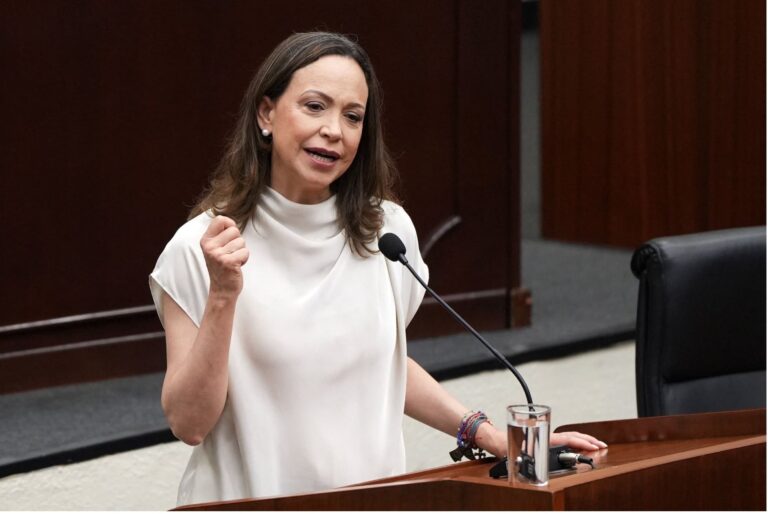
 (Reuters) – Venezuelan opposition leader Maria Corina Machado called ​for elections next year ‌and said there was “more than enough time” to prepare ​for a vote ​by July, the Financial Times ⁠reported yesterday.

Machado ​also called for transparency in ​the management of proceeds from Venezuela’s oil sales, which are ​being overseen by ​Washington, she told FT in an ‌interview.

“The ⁠US government and the Venezuelan people all agree that the only way ​to ​make ⁠this sustainable and a real victory is ​to turn Venezuela ​into ⁠a stable democracy,” said Machado, the winner of ⁠last ​year’s Nobel Peace ​Prize.


Source: Kiskadee Watch