Oil-rich Guyana urged to swap crude for cheaper fuel
…as gas price soars at the pump
By Davina Bagot
(Kaieteur News) – Guyana has cemented its position as the world’s fastest-growing economy, driven by its rapidly expanding oil sector. But despite pumping close to one million barrels of crude per day, structural bottlenecks are preventing this windfall from shielding its domestic market against stubborn inflation, driven by soaring fuel prices.
To address the situation the country currently finds itself in, an international energy analyst has suggested that Guyana explore an initiative that involves swapping its sweet light crude in exchange for refined fuels that can cushion the high prices burdening citizens in the oil rich nation.
Over the weekend, it was reported that the Guyana Oil Company Limited (GUYOIL) hiked fuel prices by 13%, taking the price of gasoline to $258 and diesel prices to $318 per litre.
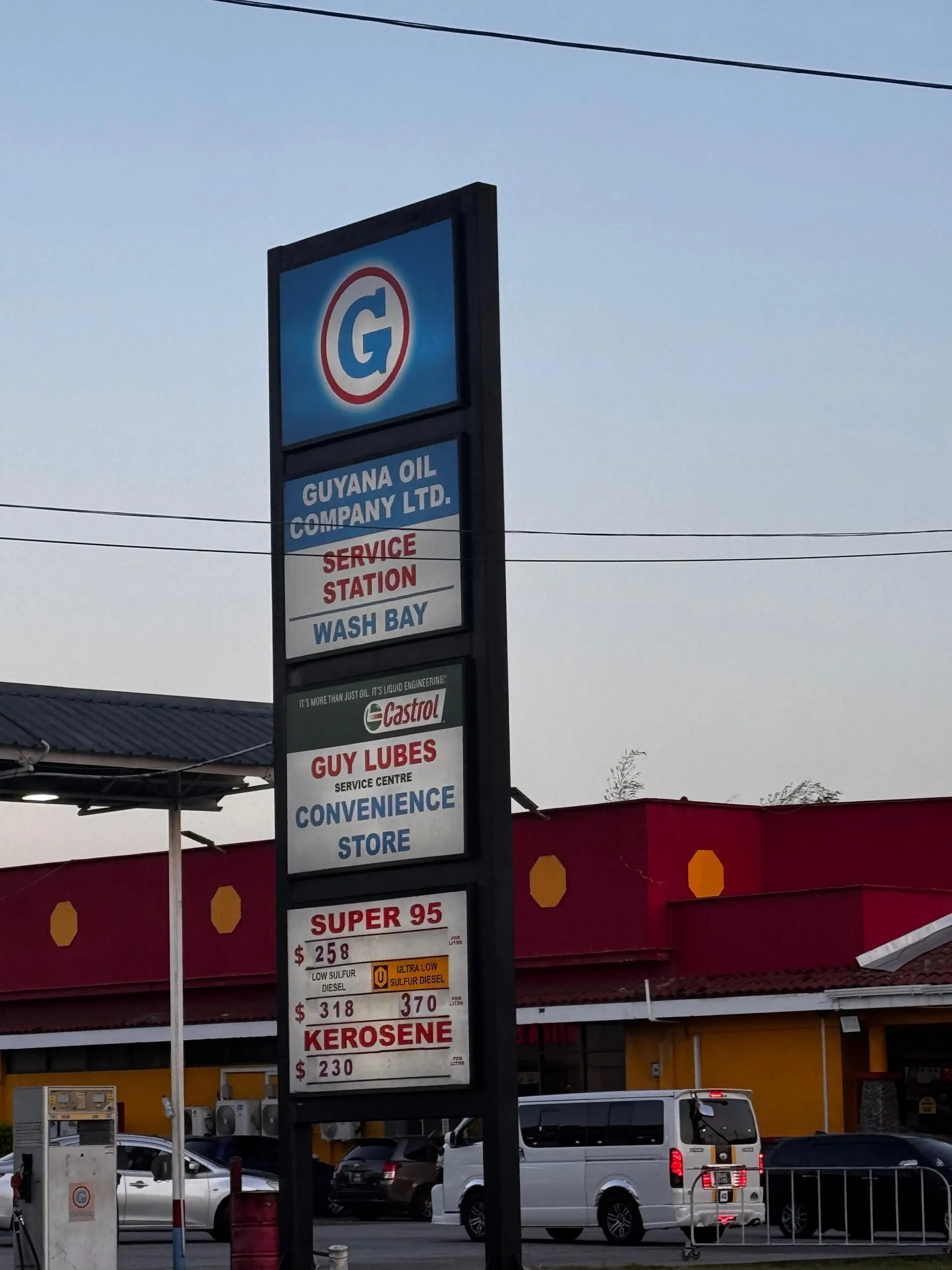
Fuel prices have increased significantly across the country
In the absence of a refinery, Guyana imports expensive refined fuels to power its grid and economy, leaving working-class citizens to shoulder escalating costs of living, high freight rates, and frequent power outages managed by the state utility, Guyana Power and Light (GPL).
The struggle underscores a critical challenge for emerging petrostates: translating export revenues into domestic energy security amid a volatile geopolitical landscape.
The urgency for a localised solution has been magnified by a deepening global energy crisis, with Middle East conflicts disrupting tanker traffic through the Strait of Hormuz and targeted Ukrainian drone strikes crippling Russian refining infrastructure throughout 2025 and 2026. The situation has caused global diesel supplies to fall and instead of buffering itself against this volatility, Guyana operates almost entirely on the spot market for its refined fuel imports.
In an interview with this newspaper, the energy analyst pointed out that the country lacks a multi-month Strategic Petroleum Reserve (SPR)—a standard macroeconomic tool used by sovereign nations to stabilise prices.
“During an international supply shock, a government can release state-owned, stockpiled fuel from an SPR to artificially lower local pump prices and maintain market liquidity,” the analyst said, requesting to be unnamed.
The analyst noted that this physical buffer hurts the working class, who are forced to absorb imported inflation while the same volatility guarantees high returns for private fuel importers.
To this end, the source suggested, “One heavily debated strategy is the implementation of a crude-to-distillate swap arrangement, paired with the creation of a Strategic Fuel Reserve. Under a swap agreement, a producing nation leverages its share of equity crude—in Guyana’s case, its profit oil allocations—directly exchanging it with global trading houses or refiners for equivalent volumes of refined products like diesel and Heavy Fuel Oil (HFO).”
It was explained that the model is designed to bypass the international spot market entirely.
“When structured transparently, swaps eliminate heavy logistics markups, mitigate currency exchange pressures, and secure a predictable supply of distillates to keep vital assets like Karpowerships and GuySuCo mills operational,” the analyst said.
Further, the sources suggested that if Guyana were to stockpile swapped distillates in a domestic Strategic Fuel Reserve, the economic ripple effects would be substantial.
“By subsidising or stabilising the price of diesel at the pump using its own resource equity, the government could immediately lower operational costs for domestic manufacturers and slash transportation freight rates.”
Lowering the cost of transporting agricultural produce could help cool food inflation and offer tangible relief to consumers.
Economists frequently warn of the “Dutch Disease”—where an influx of foreign oil capital drives up local currency and prices, hollows out other sectors, and leaves the population struggling to afford everyday necessities.
While Guyana’s GDP figures continue to draw recognition from global financial institutions, market watchers stress that without bridging the gap between offshore production and onshore energy costs-whether through finalised infrastructure or strategic swap mechanisms-the domestic economy will remain acutely vulnerable to the very global price shocks its oil exports help to supply.
Source: Kaieteur News