Kit Nascimento’s memoir promises to offer a rare insider’s perspective

Dear Editor,
Christopher “Kit” Nascimento is, and remains, an iconic—and often controversial—Guyanese figure. A relative of prominent businessman Peter D’Aguiar, Nascimento is perhaps one of the few Guyanese alive today whose political career and public life stretch back to the turbulent, traumatic years before independence. Few have occupied such a vantage point from which to observe, participate in, and influence Guyana’s political evolution.
His forthcoming memoir, scheduled for publication in December 2026, promises to reveal some remarkable and, at times, startling details about the personalities who shaped Guyana’s political landscape. For instance, who would have imagined that Burnham required his ministers to sign letters of resignation before assuming office, which he conveniently kept on file? Or that Burnham reportedly flirted with several women, including Miriam Makeba, the celebrated South African singer and civil rights activist, who visited Guyana as Burnham’s guest in 1972?
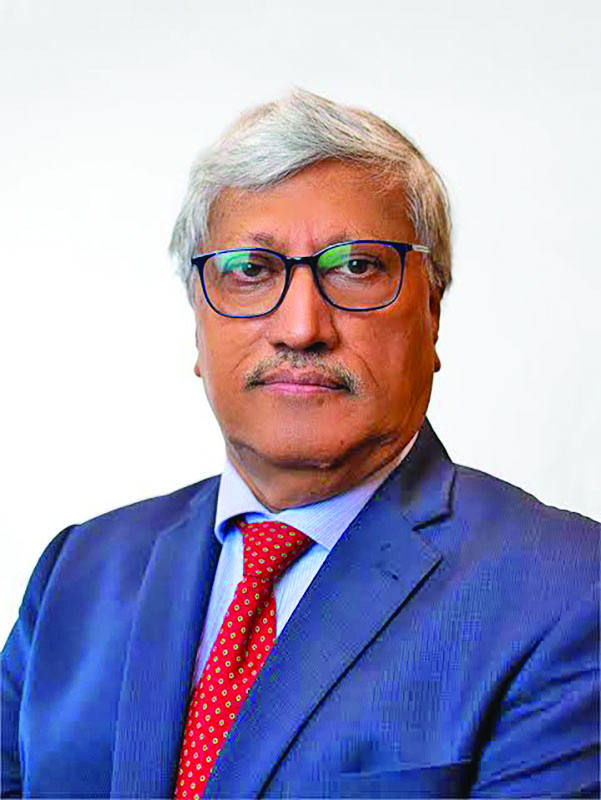
Nascimento has asked me to write a commentary for his memoirs, which, for Guyanese with long memories, will undoubtedly stir controversy and rekindle some old political debates. Yet, beyond the political gossip, personal anecdotes, and colourful revelations, the forthcoming publication of Nascimento’s memoir introduces a much more substantial historical narrative. Those interested in Guyanese history and politics will find considerable value in his frank, accessible, and reader-friendly account, particularly his recollections of the critical turning points in which he played a central role. These roles include his call for adopting proportional representation before the 1964 electoral system, his advocacy of a New World Information and Communication Order, and his role in defending the Guyana Government’s position internationally after the Jonestown tragedy in 1978.
One of the more striking political ironies in Nascimento’s life concerns his relationship with Cheddi Jagan. When Nascimento managed the Daily Chronicle, his aggressive line of questioning led Jagan to declare him persona non grata at his press conferences. Today, in a remarkable reversal of political fortunes, Nascimento chairs President Irfaan Ali’s Presidential Press Conferences. Few individuals have witnessed such a dramatic transformation in Guyana’s political and ideological orientation, much less participated in it from such contrasting positions.
In retrospect, Nascimento’s uncompromising anti-communist ideology and support for a market-oriented economy during the 1960s appear to have found a curious vindication in Guyana’s present economic trajectory, even as the country has moved into an entirely different political and economic era (which he and Peter D’Aguiar fought for in the 1960s). History, as they say, has a way of producing unexpected ironies.
However, I found another side of Nascimento’s life experiences particularly fascinating. Beyond the political intrigues and public controversies, he was apparently a formidable sportsman—a boxer, swimmer, race-car driver, and rugby player. His involvement in motor racing and rugby is especially interesting, given how both later became established sporting pursuits in Guyana – much to his credit.
Nascimento is, therefore, much more than a political commentator or a controversial figure from another era. His memoirs promise to offer a rare insider’s perspective on the personalities, intrigues, ideological battles, and defining moments of modern Guyanese history. Readers may disagree with some of his interpretations, question some of his recollections, or find themselves surprised by his revelations. But they would be hard-pressed to dismiss the historical value of a firsthand account by someone who was not merely watching Guyana’s history unfold, but actively shaping it.
That, perhaps, is the real value of Nascimento’s memoirs.
Sincerely,
Baytoram Ramharack
Source: Kiskadee Watch